The Livable City - National Geographic Learning
←
→
Page content transcription
If your browser does not render page correctly, please read the page content below
U N I T
          7
The Livable
City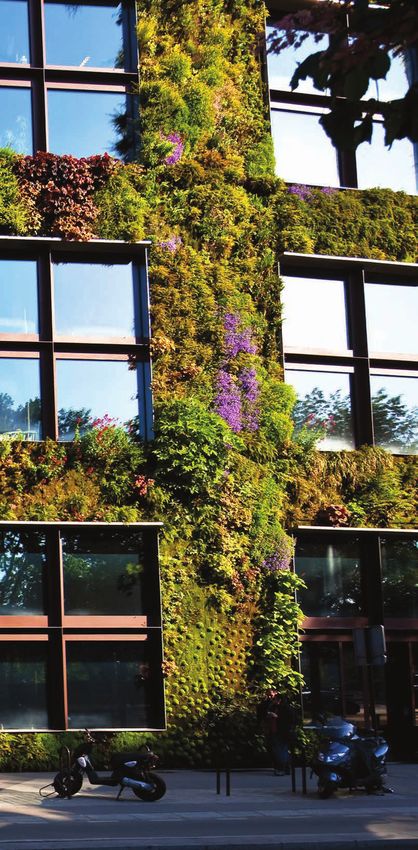
THINK AND
                                              DISCUSS
                                              1 Read the unit title. What is a
                                                 “livable city”?
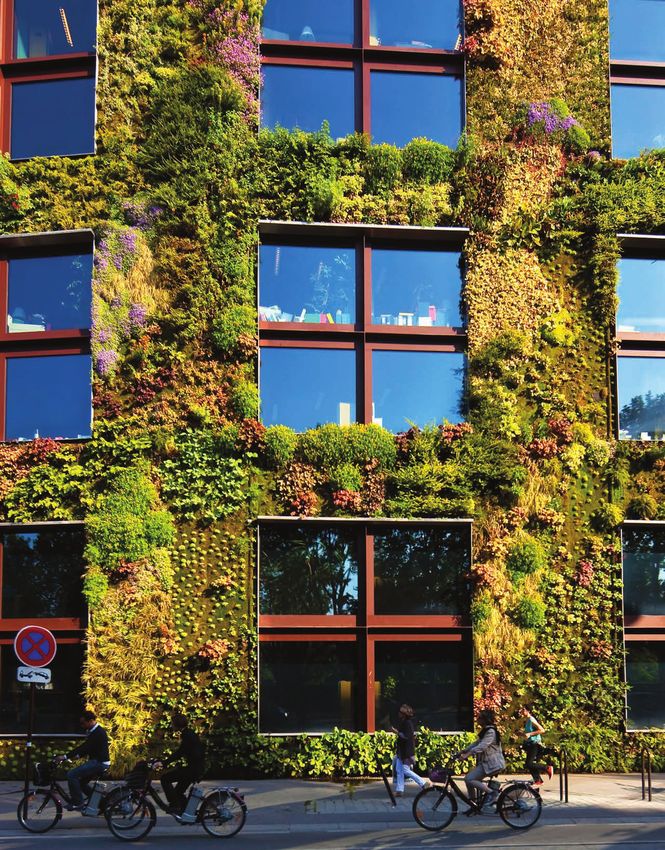
                                              2 Look at the photo and read
                                                 the caption. What is the
                                                 connection between the unit
                                                 title and this building?

                                              Part 1
                                              Public Space and the Livable City
                                              Listening
                                               Listen for Problems and Solutions
                                              Speaking
                                               Talk about Solutions
                                              Pronunciation
                                               Linking

                                              Part 2
                                                     TalkS
                                              Moshe Safdie
                                              How to reinvent the apartment
                                              building
                                              Note Taking
                                               Review Your Notes

                                              Put It Together
                                              Communicate
                                               Give an Individual Presentation
                                              Presentation Skill
                                               Organize a Problem–Solution
A vertical garden on the Quai Branly Museum    Presentation
in Paris, France

                                                                                   123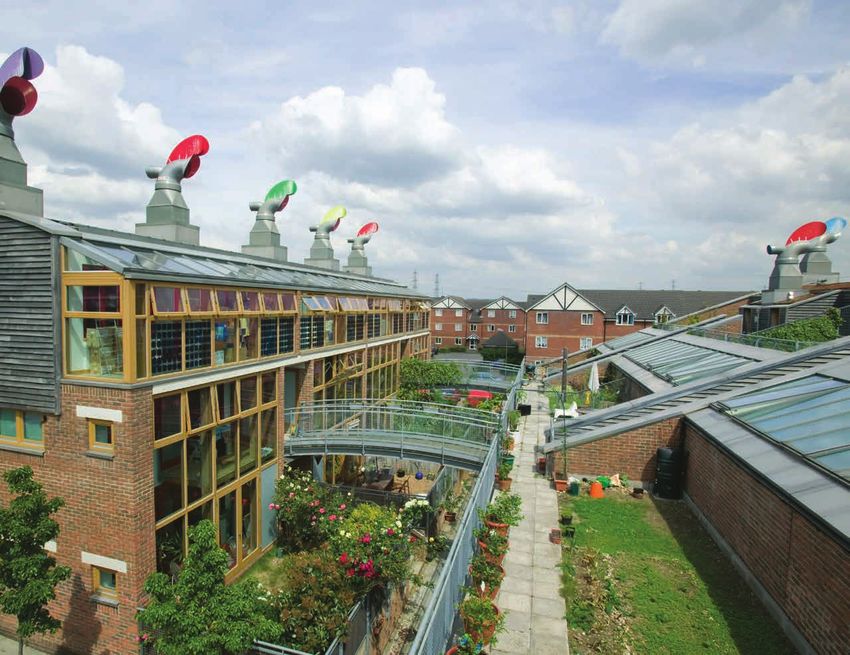
PART 1          Public Space and the Livable City

      BEFORE YOU LISTEN

      A	 COMMUNICATE Work in a small group. Discuss these questions.

          1. Look at the photo. What kind of place is this? Where do you think it is? What do
             you think people do in this place?
          2. Describe a big city near you.
          3. Do you live in a big city? If yes, do you like living there? Why, or why not? If not,
             do you want to live in a big city? Why, or why not?

      B      2.23 COLLABORATE You will listen to a lecture about public space and the
          livable city. Listen to an excerpt from the beginning of the lecture. Then with your
          group, answer the professor’s question: What’s a “livable” city?

                                                                 Bedzed in London is the UK’s first large-scale environmentally friendly
                                                                 community with homes, offices, a college, and community facilities.

124 Unit 7 The Livable City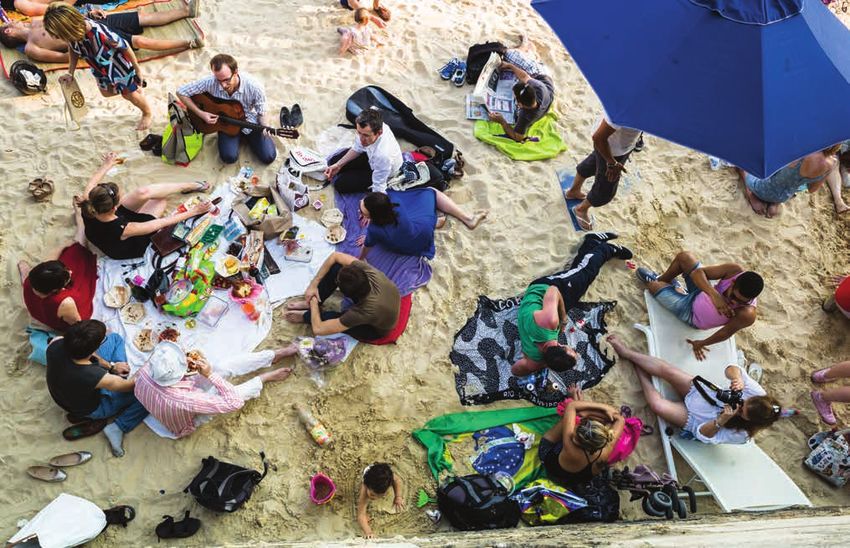
Vocabulary

C         2.24 Read and listen to the sentences with words from the lecture. Guess the
    meaning of each bold word or phrase. Then write each word or phrase next to its
    definition.

    a. San Francisco is an attractive city. It has beautiful views and good-looking
       buildings.
    b. Cities that have large public parks include Mexico City and Moscow. People who
       live in these cities can use the parks for free.
    c. A museum exhibit can draw a big crowd of people. For example, over 154,000
       people came to the “Titanic” exhibit at the National Mississippi River Museum.
    d. Cities that have safe places to walk and exercise help people to lead healthier
       lives.
    e. The Walt Disney Concert Hall is a famous performance center in Los Angeles,
       California. You can see orchestras from all over the world there.
    f. Many cities provide places for teens to hang out. At these places, they can meet
       friends and participate in activities, such as rock climbing and other sports.
    g. An open sewer is a danger to public health. In modern cities, underground pipes
       safely carry waste water away from homes and businesses.
    h. Paris-Plage is an area for recreation on the River Seine in Paris, France. It has
       a sandy beach, a swimming pool, and areas for inline skating, playing volleyball,
       and other activities.
    i. San Francisco residents enjoy city life. Most of the people who live there like
       living in a big city.
    j. Cars and pedestrians both need to watch out for each other in order to make city
       streets safe. Walkers and drivers are both responsible for avoiding accidents.

              pedestrians
     1.                            (n) people walking on a sidewalk, across a street, or down a road

     2.                            (v) attract

     3.                        	(adj) nice-looking

     4.                            (v) spend time in a place

     5.                            (n) fun things to do, such as sports, hobbies, and amusements

     6.                        	(n) a place for presentations of ceremonies or works of art (drama, music,
                                   dance, etc.) for an audience

     7.                        	(n) people who live in a certain place

     8.                            (adj) meant for use by the people

     9.                            (v) experience

    10.                            (n) a tunnel or pipe that carries waste and liquid from kitchens and showers

                                                                                                          PART 1 125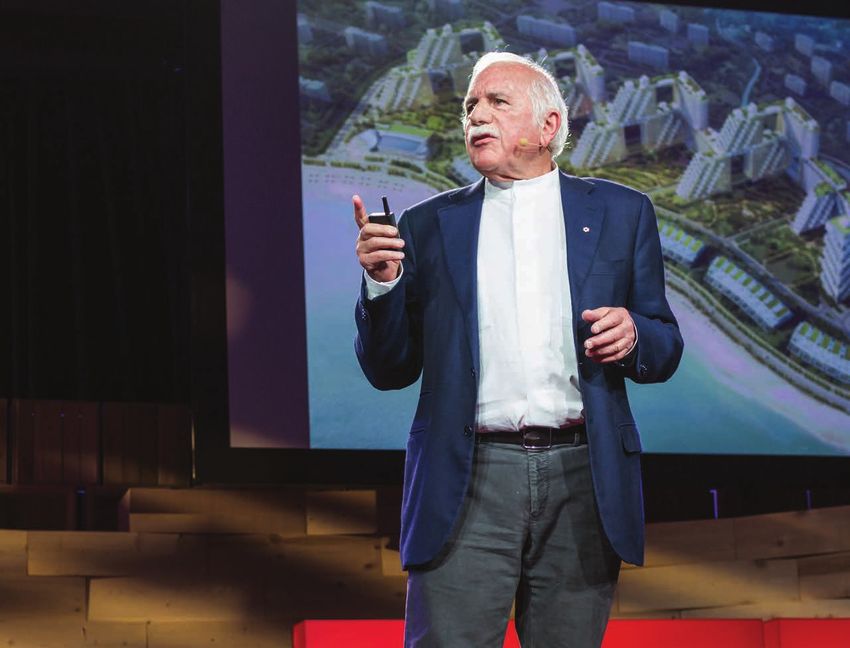
D COMMUNICATE Work with a partner. Take turns asking and answering the
        questions. Use the words in bold in your answers.

                A: What types of recreation do you enjoy most?
                B: For recreation, I like to go swimming and play volleyball.

           1. What types of recreation do you enjoy most?
           2. In your opinion, what is the most attractive city in the world? Why?
           3. Where do you and your friends usually hang out on the weekends?
           4. Have you ever been to a performance center? Where? What did you see there?
           5. Are there any streets just for pedestrians in your city? Are pedestrian-only streets a
              good idea? Why, or why not?

      LISTEN

      E	     2.25     1.34 LISTEN FOR MAIN IDEAS Read the statements. Then listen to the lecture.
           Check [✓] the statement that best expresses the main idea of the entire lecture.

           1.           	Public spaces should be
                                                               Skateboarding at Factoría Joven
                          clean and attractive.
           2.           	Factoría Joven is an
                          example of a good public
                          space.
           3.           	Public spaces can make
                          cities more livable.
           4.           	Good public spaces
                          improve the environment.
           5.           	Good public spaces draw
                          people together.

                LISTENING SKILL Listen for Problems and Solutions

                Recognizing problems and connecting them with their solutions is an important
                listening skill. To recognize and connect problems and solutions, listen for the
                following signal words and phrases:
                Signals for Problems:
                  The / One problem / issue / challenge (with . . . ) is . . .
                Signals for Solutions:
                  The / One solution / answer / response is . . .
                  This . . . solves / addresses / deals with the problem

126 Unit 7 The Livable City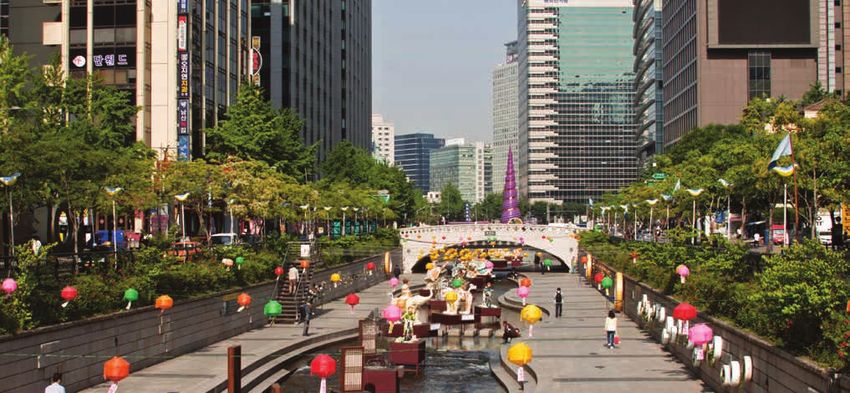
F          2.26 LISTEN FOR DETAILS Listen to three excerpts from the lecture. Match
     each place with the problem it solves. There is one extra problem.

                           Place                                        Problem

      1.           Factoria Joven                     a. bad air
      2.           Cheonggyecheon Park                b. lack of fresh food
      3.           Gosford Glow Footpath              c. lack of activities for young people
                                                      d. dangerous areas

G	      2.27 LISTEN FOR DETAILS Listen to segments from the lecture. Match each
     detail in the box with the correct public space. Write the letters of the details in the
     correct places in the mind map below.

      a. was designed for young d. has walls you can                g. saves electricity
          people                     paint on
                                                                      h. makes walking safer
      b. is open 24 hours a day      e. was covered by a
                                                                      i. is in South Korea
      c. is in Australia                 freeway
                                     f. is in Spain

                                             Cheonggyecheon                           Gosford Glow
             Factoria Joven
                                                  Park                                  Footpath

H	 COMMUNICATE Work in a small group. Discuss your answers to these questions.
   Give reasons for your answers.

     1. Which public space described in the lecture would you like to visit? Why?
     2. Which one do you think is the most interesting? Why?
     3. Which one is the most useful? Why?

                                                                                                     PART 1 127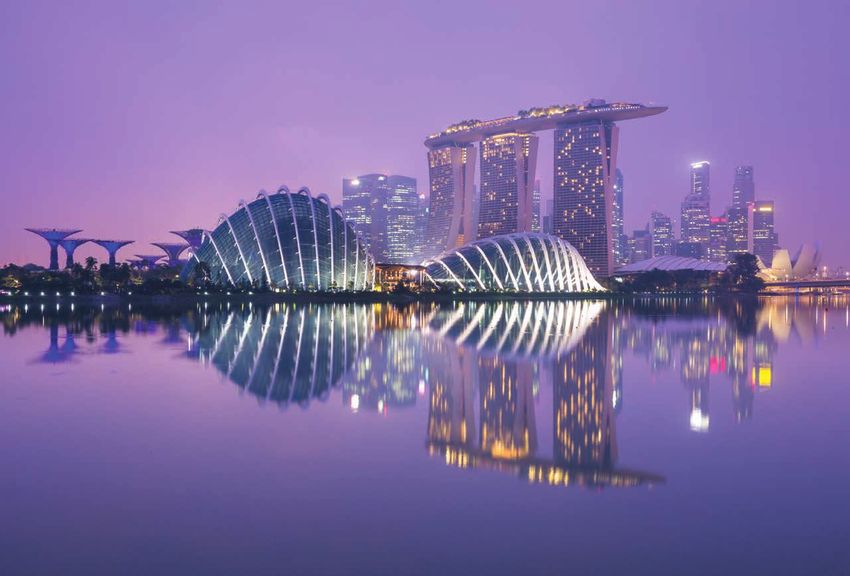
After You LISTEN

      I   THINK CRITICALLY Reflect. Work in a small group. Look at the list of
          characteristics (typical qualities) that make a public space more livable. Then
          complete the Venn diagram by answering the questions.

             a. is safe                                            e. helps people connect with nature
             b. has activities for people to do                    f. saves energy
             c. attracts people                                    g. adds beauty
             d. helps make the environment healthier

          1. What characteristics do Factoria Joven, Cheonggyecheon Park, and Gosford
             Glow Path have in common? Write the letters in the space where the three
             circles overlap.
          2. Which characteristics do two of the places share? Write those letters in the
             spaces where the two circles overlap.
          3. Finally, do any characteristics belong to just one place? Write those letters in the
             space where the circles do not overlap.

                                                  Factoria Joven

                                                        All

                          Cheonggyecheon Park                           Gosford Glow Path

          4. Now discuss your answer to this question with your group:
             Which characteristic do you think is the most important one for a public space
             to have?

128 Unit 7 The Livable City
Cheonggyecheon Stream,
                                                                                     Seoul, South Korea

SPEAKING

   SPEAKING SKILL Talk about Solutions

  To talk about solutions, speakers use the words and phrases you learned in the
  Listening Skill box on page 126. When using these signal words and phrases, you
  should try to vary your word choice to avoid too much repetition.
  For example:
          One issue in big cities is the lack of space. High-rise buildings can
     address this problem. Tall buildings solve this issue by taking up vertical
     space, which is unlimited. Another response is creating public spaces. Public
     spaces are a good solution because they provide people with places to meet
     outside their homes.

J THINK CRITICALLY Analyze. Work in a small group. Think about the conditions
  in big cities. Look at the list of issues below and add two of your own ideas. Then
  think of two possible solutions for each issue.

         Issues                                        Possible Solutions

    crime           1.                                         2.

    crowds          1.                                         2.

    traffic         1.                                         2.

    noise           1.                                         2.

    your idea       1.                                         2.

    your idea       1.                                         2.

                                                                                                         PART 1 129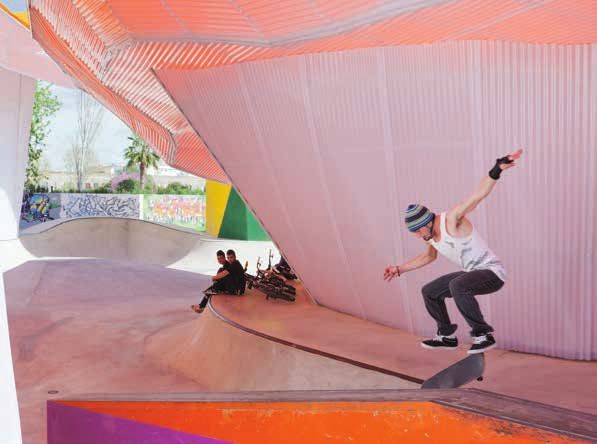
K Report to the class your possible solutions to the issues in exercise J. Use solution
        words and phrases.

               A: One issue in big cities is crime. A good solution is better street lights.
               B: Another response to crime is to have more police officers.

          PRONUNCIATION SKILL                Linking

          English speakers often connect words when they talk. For example, they often
          connect the final consonant sound of one word to the first vowel sound in the
          next word. This makes the two words sound like one word. This is called linking.
          It’s important to recognize linking sounds so you can better understand English
          speakers. Also, if you link sounds, your speech will sound more natural.
          Listen to how the following words are linked.

               2.28 first of all    what’s a           some are

      L       2.29 Listen to some sentences from the lecture. Draw lines to connect the
          linked sounds.

          1. These are common problems.

          2. It’s attractive.

          3. It attracts about 150 young people each day.

          4. Let’s take a look at some examples.

          5. They also solve other problems of city life.

      M        2.30 Listen and complete the sentences with the words you hear.

          1.                          Merida, Spain.

          2.                          the outside.

          3. And that’s what we’re going to                             today.

          4. Then it became                             sewer.

          5. People come to the                             night, just to look at it.

      N Work with a partner. Take turns reading the sentences in exercises L and M with
        linked sounds.

130 Unit 7 The Livable City
PART 2
How to reinvent the
apartment building
“ There has to
be another way of
doing this.
”
BEFORE YOU WATCH
A THINK CRITICALLY Predict. Read the title and information about the TED
speaker. Reinvent means to do something in a new way. Why might the TED
speaker want to reinvent apartment buildings? Tell your class.
MOSHE SAFDIE Architect
Moshe Safdie is an Israeli/Canadian/American architect. He designs apartments,
museums, airports, and other structures. He is interested in public spaces that
improve cities and towns. Safdie also builds apartments that let in natural light
and include lots of open space and gardens. He wants his apartments to help
people connect to nature, even when they live in big, crowded cities.
Moshe Safdie’s idea worth spreading is that we can plan today for livable cities
of the future. We can create apartment buildings and other structures that
connect people more closely with each other and with the natural world.
PART 2 131B COMMUNICATE Work with a partner. Discuss your answers to the questions.
A: Apartment buildings in big cities often have a main front door. They usually
don’t have gardens.
B: Actually, they often don’t have much space around them at all.
1. Describe the typical apartment building in a large city. What does it look like?
2. What are some good things about living in a big apartment building in a large
city? What are some bad things?
3. In his TED Talk, Safdie talks about both urban (city) areas and suburbs, small
cities or towns outside large cities. What are some good things about living in a
suburb? What are some bad things?
VOCABULARY
C 2.31 The sentences below will help you learn words and phrases in the TED
Talk. Read and listen to the sentences. Choose the meaning of each bold word or
phrase.
1. Safdie designs middle-income housing projects. They might be too expensive
for some people, but you don’t have to be rich to live in them.
a. high-income b. average-income c. low-income
2. It costs a lot to live in Tokyo and San Francisco. However, Mumbai, India, is one
of the most affordable cities in the world.
a. crowded b. dangerous c. inexpensive
3. People who live in the suburbs have to drive a lot. One way to sustain the
suburbs is to move businesses into them so people don’t have to drive so much.
a. visit b. keep c. destroy
4. The Outdoor Sculpture Collection at Western Washington University is a public
space that is integrated with an outdoor art gallery. Students can sit and talk
and enjoy art at the same time.
a. separated from b. combined with c. inside of
5. We need to look at city living in a new way. For example, we need to rethink the
way we create housing in crowded cities.
a. reconsider b. forget c. remind
6. Safdie built a unique housing project: Each unit is like a house. Residents don’t
feel like their home is attached to another person’s home.
a. apartment b. amount c. project
7. The population density of large cities gave Safdie an idea: Can we build housing
projects that don’t feel crowded, even if the city itself is crowded?
a. cost b. amount of crime c. closeness
132 Unit 7 The Livable City8. It costs a lot of money to live in Tokyo. For example, it’s extremely expensive to
buy an apartment there.
a. somewhat b. very c. not at all
9. The architects took an old office building and completely reconfigured it. They
put shops on the ground floor and apartments on the top floors.
a. changed the structure b. destroyed it c. kept the original design
10.
A popular concept in architecture is creating spaces that help people connect
with nature.
a. issue b. project c. idea
D COMMUNICATE Work in a small group. Read and answer the questions. Use the
words in bold in your answers.
A: What is your idea of the perfect housing unit? What features does it have?
B: The perfect housing unit is big and has lots of windows.
1. What is your idea of the perfect housing unit? What features does it have?
2. Where do middle-income families live in your area?
3. What are some examples of affordable places to live? What makes them
affordable?
4. What are some popular concepts about making cities more livable?
WATCH
E 1.35 WATCH FOR MAIN IDEAS Watch segment 1 of the edited TED Talk.
What is the issue that Safdie describes? What is the solution? Check [✓] the
correct answers.
Issue
1. The need to make cities less crowded and more like suburbs
2. The need to improve life for people who live in apartments
3. The need to let more light into apartments
Solution
1. Move people out of cities.
2. Add gardens to apartments.
3. Make apartments like houses.
WORDS IN THE TALK
prevailing (adj): having the most influence
promenades (n): special areas for walking
PART 2 133F THINK CRITICALLY Infer. In segment 1, Safdie refers to public high-rise buildings
in cities such as New York and Philadelphia, and to the people “who have no
choice” about living in them. Work with a partner. Discuss your answers to these
questions.
1 Who do you think Safdie is describing?
2 Why do some people have no choice about where they live?
The Marina Bay Sands hotel complex in Marina Bay,
Singapore, designed by Moshe Safdie
134 Unit 7 The Livable Citylearnmore Most new homes that were built in the U.S. during the 1960s
were in suburbs, large areas outside of big cities. It was part of the “American
Dream” to leave the city and live in the suburbs, where the air was clean and
the schools were good. In the suburbs, homes were far from businesses. Also,
there often was no public transportation, so people had to drive everywhere.
This is still true today in many U.S. suburbs, but good public transportation and
walkable areas are now being developed.
G 1.36 WATCH FOR DETAILS Watch segment 2 of the edited TED Talk. As you
watch, pay attention to details that explain how Habitat solves the problem Safdie is
concerned about. Complete the notes with words from the box. You can use some
words more than once.
urban apartments garden public community
incomes three hours parks longest light
New York City, U.S.
above offices
1
gardens and open space for the
2
each apartment has its own
3
lets in lots of
4
Qinhuangdao, China
for people with middle
5
each apartment lets in of light in winter
6
Singapore (1st example) & Colombo, Sri Lanka
also for people with average
7
has gardens, streets, and
8 9
Singapore (2nd example)
promenades and parks integrated with life
10
gardens
11
“sky park” with jogging paths, restaurants, and the world’s
12
swimming pool
PART 2 135NOTE-TAKING Skill Review Your Notes
When you take notes during a presentation, you should review them soon
afterward to make sure you understand them. If you remember more information,
add it to your notes. If you didn’t understand something or you think you might
have missed some important information, ask a classmate or your teacher for
help. Look at the example of notes the student took in Exercise G.
Singapore (1st example) & Colombo, Sri Lanka
also for people with average incomes
gardens, ???? streets, and parks
Now notice how two students discuss their notes.
A: For the first Singapore example, I didn’t get the type of
streets. What do you have?
B: I have “community” . . . “community streets.”
A: Oh, okay. Thanks.
H CHECK YOUR NOTES Review your notes. Did you get everything? Compare your
notes with a partner. Ask your partner questions about any answers that you are
not sure about.
I 1.37 EXPAND YOUR VOCABULARY Watch the excerpts from the TED Talk.
Guess the meanings of the phrases in the box.
are prevailing came up with and so on and so forth touch on
J WATCH MORE Go to TED.com to watch the full TED talk by Moshe Safdie.
AFTER YOU WATCH
K THINK CRITICALLY Infer. In his talk, Safdie says, “We can’t sustain suburbs, so
let’s design a building which gives the qualities of a house to each unit.” Work with
a partner. Discuss your answers to these questions.
1. Why do you think Safdie says that we can’t sustain suburbs?
2. What are some “qualities of a house” that Safdie mentions?
136 Unit 7 The Livable CityL THINK CRITICALLY Interpret an Infographic. Work with a partner. Look at the infographic
and chart. Discuss your answers to these questions.
1. Between which years does the infographic show changes in livability?
2. Which five cities became less livable during this period?
3. Which three cities became more livable during this period?
4. Which country had the greatest number of livable cities in 2015?
Harare, Zimbabwe,
5. What characteristics is the livability index based on?
Kathmandu, Nepal
The World’s Most Livable Cities
Change in “livability” score
INCREASE
CHANGE IN CITY
NO CHANGE SCORE 2010-2015
DECREASE 0.1 1 10 20 30
•
•
• Kiev, Ukraine
Paris, France •
• Detroit, US • Kathmandu, Nepal
Tripoli, Libya •
Honolulu, US
• Damascus,
• Syria
Best cities
2015, based on livability index*
Rank City Country
Harare, Zimbabwe1 Melbourne Australia
•
2 Vienna Austria
3 Vancouver Canada
4 Toronto Canada
5= Calgary Canada
5= Adelaide Australia
7 Sydney Australia
Source: Economist Intelligence Unit 8 Perth Australia
9 Auckland New Zealand
10= Helsinki Finland
10= Zurich Switzerland
WORDS IN THE INFOGRAPHIC * Based on 30 factors spread across five
infrastructure (n): roads, water, electricity, and other basic things that help a country’s
people and economy areas: stability, infrastructure, education,
stability (n): a state of very little change or upset health care, and environment
PART 2 137Put It Together
A THINK CRITICALLY Synthesize. Work in a small group. Answer these questions.
Use examples from the lecture in Part 1 and the TED Talk in Part 2 in your
discussion.
1. What did planners do to make cities more livable?
2. In your opinion, which of the planners’ ideas is the most useful or important? Why?
B THINK CRITICALLY Analyze. Are there any public spaces, buildings, or other
projects in your area that are similar to the ones in the Part 1 lecture or the TED
Talk? If yes, list them. Explain how they draw people together, increase safety, help
people connect with nature, or make your area more livable in some way. If no,
propose a space, building, or other project that your community should consider.
COMMUNICATE
ASSIGNMENT: Give an Individual Presentation You will give an individual
presentation about a building or public space that makes a city or town more
livable. Explain how this building or space solves a problem of city living.
Parisians and tourists at Paris Plage
on the bank of the Seine River
in Paris, France
138 Unit 7 The Livable CityPREPARE
PRESENTATION SKILL Organize a Problem–Solution Presentation
There are several ways to organize a presentation about a problem and its
solution. Two options are given below. With either, remember to start with some
background information so the audience understands the context.
1. Describe the problem first and then explain the solution.
Introduction: Background information-Gosford is a city on the coast of New
South Wales in Australia.
Problem: Needed a safe way for people to cross the railroad tracks
Solution: Created a beautiful, energy-efficient, lighted path
2. Describe the solution first and then suggest how it solves a problem.
Introduction: Background information-Gosford is a city on the coast of New
South Wales in Australia.
Solution: Built a lighted path that uses minerals
Problem solved: No safe way for people to cross the railroad tracks
C COLLABORATE Think about your answers in exercise B. Choose your topic.
Decide if you are going to talk about a building or a public space.
D Decide how you will organize your problem-solution presentation. Choose option 1
or option 2 below and complete the outline with information about your topic.
OPTION 1
Topic: (What is the name of the building or public space?)
1. Introduction: (Where is it? Or: Where will it be?)
2. Problem(s): (What problem(s) does your building or public space solve?)
3. Solution: (Explain in detail how your building or public space solves or
will solve the problem(s).)
put it together 139A biker rides along a path in Amsterdam that
glows with solar-powered lights.
OPTION 2
Topic: (What is the name of the building or public space?)
1. Introduction: (Where is it? Or: Where will it be?)
2. Solution: (Describe the solution: What it is/what it will be, what it does/what it will
do, and other interesting features about it.)
3. How it solved the problem(s): (Explain in detail how your building or public space
solved or will solve the problem(s).)
140 Unit 7 The Livable CityE PRACTICE Work with a partner. Practice your presentation. As you practice:
• Use problem–solution words to introduce problems and describe solutions.
• Remember to link words.
F Read the rubric on page 183 before you present. Notice how your presentation
will be evaluated. Keep these categories in mind as you present and watch your
classmates’ presentations.
PRESENT
G Give your presentation to a small group. Watch your classmates’ presentations.
After you watch each one, provide feedback using the rubric as a guide. Add notes
or any other feedback you want to share.
H THINK CRITICALLY Evaluate. In a small group, discuss the feedback you
received. Discuss what you did well and what might make your presentation
stronger.
REFLECT
Reflect on what you have learned. Check [✓] your progress.
I can listen for problems and solutions.
talk about solutions.
understand and use linking.
review my notes.
organize a problem–solution presentation.
I understand the meanings of these words and phrases and can use them.
Circle those you know. Underline those you need to work more on.
affordable extremely pedestrian resident AWL
attractive hang out performance space rethink
concept AWL integrate with AWL public sewer
density lead reconfigure sustain AWL
draw middle-income AWL recreation unit
put it together 141You can also read


