THE ROUTE TOWARDS A CASHLESS SOCIETY - THE CASE OF SWEDEN - Associate Professor Niklas Arvidsson
←
→
Page content transcription
If your browser does not render page correctly, please read the page content below
THE ROUTE TOWARDS A
CASHLESS SOCIETY – THE CASE
       OF SWEDEN
  Associate Professor Niklas Arvidsson

             March 17, 2016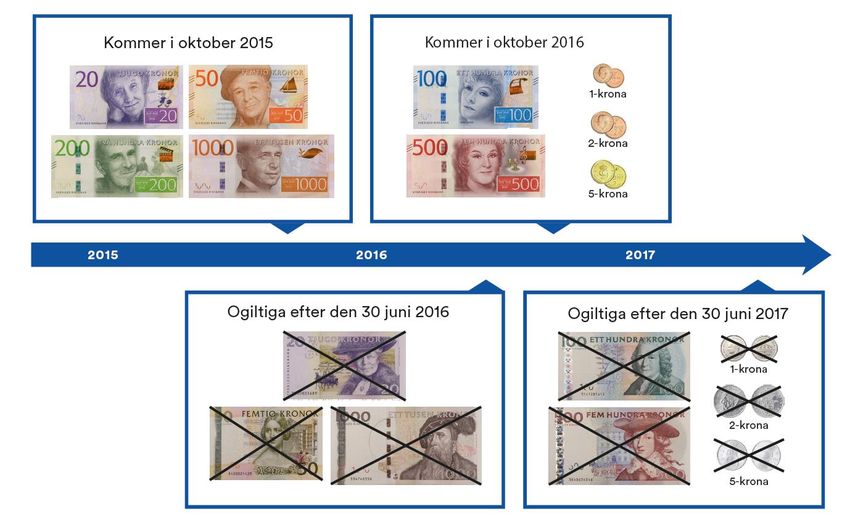
Niklas Arvidsson
•   Associate Professor at the Royal Institute of Technology (KTH)

•   Research on innovation and change (in industrial systems and organizations)
    focusing on the payment system via projects like:
     – Effects on retail industries from new payment services
     – Swish - a disruptive mobile payment service?
     – MBT MBT – Mobile Payments – More than Transactions
     – Part in proof of Concept-test of a mobile payment service in Sweden
     – The cashless society
     – The Future of the Payment System

•   Ph.D. Stockholm School of Economics 1999

niklas.arvidsson@indek.kth.se
www.indek.kth.se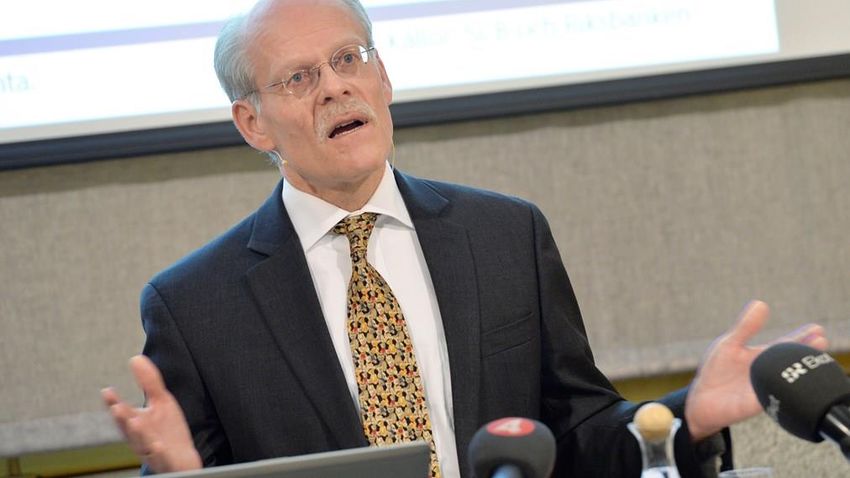
CONCLUSIONS
•   The development in Sweden has a long tradition from the middle of the 20th century where
    actions and cooperation between critical actors have promoted electronic payment services.
     –   The backbone of this system is bank accounts into which wages and salaries are paid.
     –   The last years show a strong substitution effect where mobile payment services – like Swish – replace cash payments.

•   Politicians have generally left the development of payment services to the market, i.e. it is
    banks, card operators, payment receivers, payment service providers, telecom operators,
    automated clearing houses, payers, etc. that determine the development of the system.

•   Sweden may well become a cashless society, but not before the year 2030. The actual use of
    cash, however, can become marginal in 5-10 years, i.e. after 2020.
     –   Sweden is in a "tipping point" in a slow decrease in the use of cash is turning into into a quicker decrease.

•   Consumers put high trust in the payment system and its actors which in combination with a
    strong technology-interest among Swedes lead to a willingness to use electronic payment
    services.

                                                                                                                            3
SWEDEN – TOWARDS A CASHLESS
SOCIETY?

CRITICAL EVENTS IN SWEDEN
•   1960s: companies started to pay wages and salaries directly to employees’ bank
    accounts (electronically) instead of via cash. This laid the foundation for an
    electronic banking system. The employers saved costs, the banks got new
    customers, unions agreed as long as banks did not charge consumers for cash
    withdrawals, and employees liked it.

•   1990s: the system for card payments was built and checks were phased out via
    new fees. Again, banks, merchants and consumers saw benefits from this.

•   Mid-2000s: unions in public transportation, banking and merchants became active
    to reduce the use of cash from a work environment perspective. Too many, too
    brutal and too costly robberies of buses, banks and merchants motivated unions to
    take action (Tryggare rörelsen, Kontantfritt.nu)
CRITICAL EVENTS IN SWEDEN
•   Mid-2000s: banks, telecom operators and new firms say business potential in
    launching new payment services and intensified their efforts to develop such
    services.

•   December 12, 2012, at 00.12: the new mobile payment service Swish was
    launched in Sweden. It is a service that initially enabled real-time transactions
    between consumers (person-to-person payments) without fees and became a
    natural and efficient substitute to cash.

•   2010s: E-commerce grows which means that payments increasingly become
    electronic and new actors are strong in the area of mobile payments and Internet-
    payments (Apple, Google, Paypal, Klarna, Seamless, Izettle, etc.) which is attractive
    for young people that are active on the Internet.

•   ….the story continues on a daily basis with new actors, innovations and regulations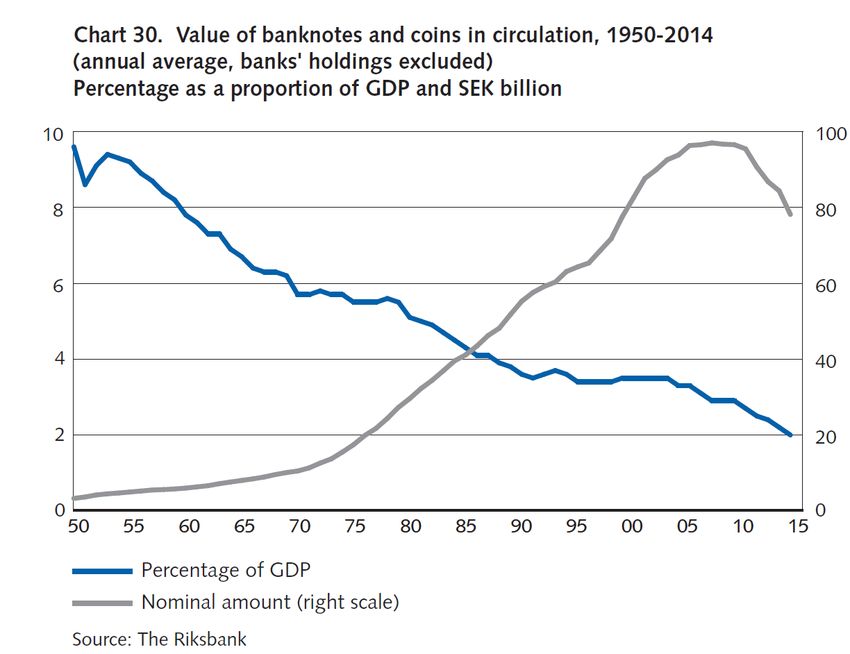
SWEDEN HAS FEW CASH TRANSACTIONS
  AND MANY CARD TRANSACTIONS
                                                      Number of card
                                                     transactions and
                                                       value of card
                                                        transaction
                                                          increase
                                                         constantly

                                                     Number of ATM
                                                     withdrawals of
                                                    cash and value of
                                                    ATM withdrawals
                                                    of cash decrease
                                                        constantly

              Around 20 % of proximity payments (in stores) are made
              with cash and close to 80 % are card payments.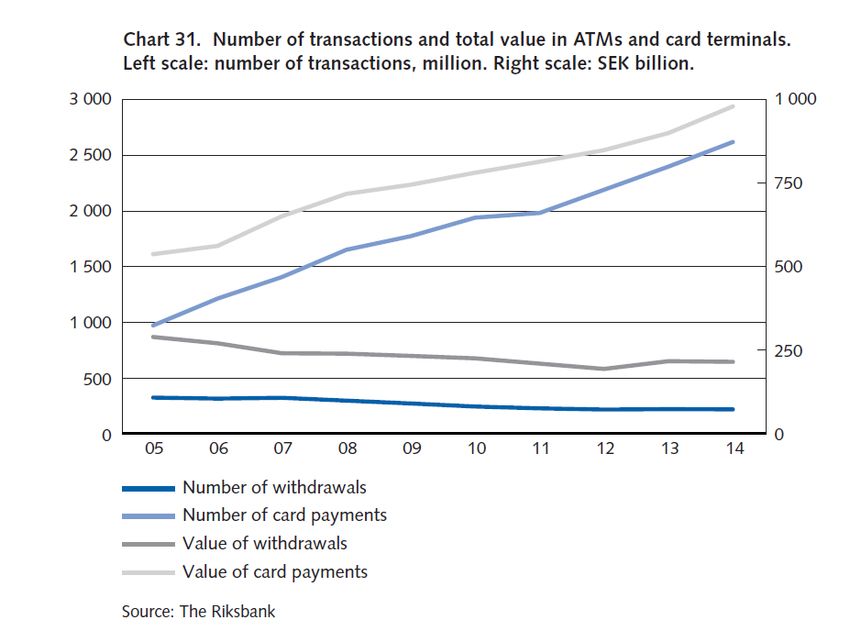
CASH-IN-CIRCULATION RELATED TO GDP (2014)
              Countries / regions              Cash-in-circulation as share of GDP (M0/GDP; %)

              Chile                                                      30,2

              Bulgaria                                                   12,2

              Colombia                                                   12,2

              Hungary                                                    10,8

              Czech Republic                                             10,1

              Euro-zone                                                   9,7

              Poland                                                      7,4

              USA                                                     7,1 (2010)

              Romania                                                     5,9

              Croatia                                                     5,6

              Lithuania                                                   3,7

              UK                                                          3,5

              Denmark                                                     3,0

              Sweden                                                      2,0
Sources: European Central Bank (ECB), Sveriges Riksbank and www.knoema.com
HISTORY OF CASH IN SWEDEN

                             This is extraordinary

                      Value of cash-in-circulation:
                  77 BSEK in 2015 (around 9.2 BUSD)
                     Cash / GDP: < 2.0 % in 2015
SWEDISH BILLS AND COINS IN CIRCULATION

                                December    December      Change in 2015
                                 31, 2014    31, 2015          (%)
Value of bills and coins in       83,2         73,5           -11,7 %
circulation (billion SEK)
Value of bills in circulation     77,9         68,2           -12,5 %
(billion SEK)
Value of coins in circulation      5,3          5,3              0
(billion SEK)
Number of bills in                335          317             -5,4 %
circulation (billion)
Number of coins in                1 926       1 905            -1,1 %
circulation (million)

  Source: Sveriges Riksbank
                                            Note: 1 EURO = 8.40 SEK in 2015
WILL SWEDEN BECOME CASHLESS?
PAYMENT MERCHANTS BANKS CASH-IN- TOTAL
SERVICE TRANSIT
PROVIDERS SERVICE
(PSP) COMPANY
BEFORE 2020 0 0 1 0 1
BETWEEN 5 2 4 1 12
2020 AND
2030
BETWEEN 16 4 5 4 29
2030 AND
2050
NEVER 4 0 2 9 15
Answers from participants in four workshops and one survey
11
Source: Arvidsson, N. 2013. Det kontantlösa samhället (The cashless society)WILL SWEDEN BECOME CASHLESS?
• These are the answers from a study of 1000 Swedes
• Do you think Sweden will become a cashless society?
– Yes, after 40 years from now: 3 percent
– Yes, after 30 years from now: 6 percent
– Yes, after 20 years from now: 22 percent
– Yes, after 10 years from now: 23 percent
– Yes, it is already cashless: 2 percent
– No, never: 39 percent
Source: Det kontantlösa samhället (undersökning Insight Intelligence m fl; hösten 2013)THE FUTURE OF CASH IN SWEDEN
• We expect a slow decrease of the use of cash – unless critical
events lead to a more rapid development.
• …the question is if there exists a tipping point after which the
decrease of the use of cash speeds up as there will be fewer
and fewer that accepts cash as a means of payments.
– Tipping point: ”that magic moment when ideas, trends and social
behavior cross a threshold, tip and spread like wildfire” (Malcolm
Gladwell)
13THE CRITICAL FACTOR: A TIPPING POINT
”…three characteristics – one, contagiousness; two, the fact that
little causes can have big effects; and three, that change
happens not gradually but at one dramatic moment – are the
same principles that define how measles moves through a grade-
school classroom or the flu attacks every winter. Of the three,
the third trait – the idea that epidemics can rise or fall in one
dramatic moment – is the most important, because it is the
principle that makes sense of the first two and that permits the
greatest insight into why modern change happens the way it
does. The name given to that one dramatic in an epidemic when
everything change all at once is the Tipping Point”.
(From: ”The Tipping Point – How little things can make a big difference”, Malcolm Gladwell, p. 9).
14TIPPING POINT
• We expect a slow decrease of the use of cash – unless critical
events lead to a more rapid development.
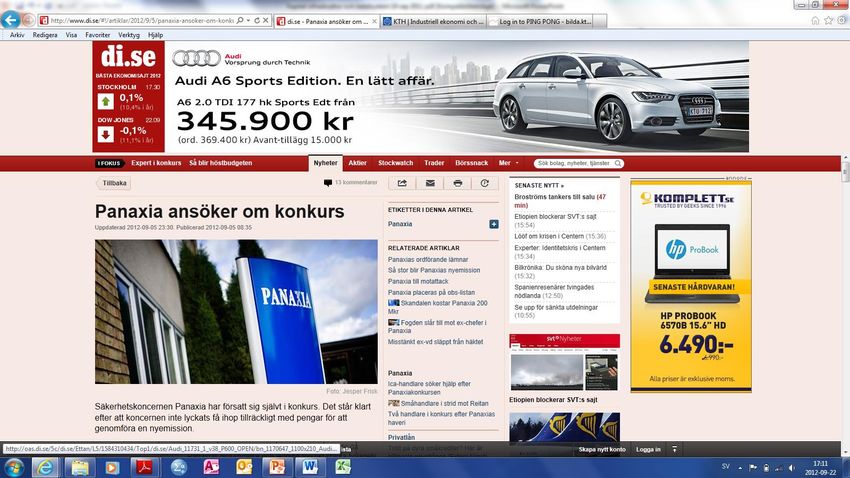
– The bankrupcy of Panaxia (cash in transit service company) led to lost trust in
cash and increased fees for cash services as the competition decreased
15TIPPING POINT
• We expect a slow decrease of the use of cash – unless critical
events lead to a more rapid development.
– The bankrupcy of Panaxia (cash in transit service company) led to lost trust in
cash and increased fees for cash services as the competition decreased
– Social costs of cash payments are higher than social costs of card payments
(since the fixed costs of cash are split on few transactions)
17ECONOMIC COSTS – CASH AND CARDS
The social costs of a card payment was estimated to be 5,55 SEK while the social costs of a
cash payment was estimated to be 8,32 SEK (2013)
Norway Denmark Italy (2009) Sweden Hungary
(2007) (2009) (2009) (2009)
Cash
Social costs per 8.6 10.5 3.5 8.3 2.8
transaction (SEK)
Cards (proximity and remote payments; all cards)
Social costs per 7.2 5.9 12.6 5.6 10.8
transaction (SEK)
The economic cost of cash payments is higher than that of card payments, and
if this concern becomes critical, politicians could initiate action to get rid of
cash.
Sources: Banca d’Italia (2012), Danmarks nationalbank (2012), Gresvik & Haare (2009), Schmiedel m.fl. (2012), Segendorf & Jansson (2012), and Turján et al (2011)TIPPING POINT
• We expect a slow decrease of the use of cash – unless critical
events lead to a more rapid development.
– The bankrupcy of Panaxia (cash in transit service company) led to lost trust in
cash and increased fees for cash services as the competition decreased
– Social costs of cash payments are higher than social costs of card payments
(since the fixed costs of cash are split on few transactions)
– New bills and coins
• Economic life of bills and coins – which is decided by risk of forgery
• Temporay increase and long-term decrease
• Critical test of the system – will it succeed or not? This will affect credibility.
• Banks and merchants decide to stop accepting cash before the introduction of new
bills and coins in order to avoid work and potential problem related to this event
19NEW BILLS AND COINS IN SWEDEN
Launched in October 2015 Launched in October 2016
Not valid after June 30 2016 Not valid after June 30 2017
20TIPPING POINT
• We expect a slow decrease of the use of cash – unless critical
events lead to a more rapid development.
– The bankrupcy of Panaxia (cash in transit service company) led to lost trust in
cash and increased fees for cash services as the competition decreased
– Social costs of cash payments are higher than social costs of card payments
(since the fixed costs of cash are split on few transactions)
– New bills and coins
• Economic life of bills and coins – which is decided by risk of forgery
• Temporay increase and long-term decrease
• Critical test of the system – will it succeed or not? This will affect credibility.
• Banks and merchants decide to stop accepting cash before the introduction of new
bills and coins in order to avoid work and potential problem related to this event
– Banks and merchant activities aiming at reducing the use of cash in Sweden
(Tryggare rörelsen av Sparbanken, SL, Kungsängen, Telia, osv.)
– The introduction of substitutes to cash (Swish)
21THE PAYMENT SERVICE SWISH IS A
SUBSTITUTE TO CASH
September 26, 2014 May 12, 2015 February 11, 2016
• Providers • Providers • Providers
– Danske Bank, – Danske Bank, – Danske Bank,
Handelsbanken, Handelsbanken, ICA Handelsbanken, ICA
Länsförsäkringar, Banken, Banken,
Nordea, SEB, Länsförsäkringar, Länsförsäkringar,
Skandia, Nordea, SEB, Nordea, SEB, Skandia,
Sparbanken Syd, Skandia, Sparbanken Syd,
Sparbanken Sparbanken Syd, Sparbanken Öresund
Öresund och Sparbanken och Swedbank och
Swedbank och Öresund och Sparbankerna.
Sparbankerna. Swedbank och • 4 million users
• 1,6 million users Sparbankerna.
• 2,6 million users • 113 000 new users
• 130 000 new users each month
each month • 222 000 new users
each month • Transactions worth
• Transactions worth 4,8 Billion SEK per
1,1 Billion SEK per • Transactions worth month
month 2,6 Billion SEK per
month
Source: www.getswish.seTIPPING POINT
• We expect a slow decrease of the use of cash – unless critical
events lead to a more rapid development.
– The bankrupcy of Panaxia (cash in transit service company) led to lost trust in
cash and increased fees for cash services as the competition decreased
– Social costs of cash payments are higher than social costs of card payments
(since the fixed costs of cash are split on few transactions)
– New bills and coins
• Economic life of bills and coins – which is decided by risk of forgery
• Temporay increase and long-term decrease
• Critical test of the system – will it succeed or not? This will affect credibility.
• Banks and merchants decide to stop accepting cash before the introduction of new
bills and coins in order to avoid work and potential problem related to this event
– Banks and merchant activities aiming at reducing the use of cash in Sweden
(Tryggare rörelsen av Sparbanken, SL, Kungsängen, Telia, osv.)
– The introduction of substitutes to cash (Swish)
23SWEDEN – IN THE MIDDLE OF A TIPPING POINT
Many indicators show that Sweden is in the middle of a tipping point where
the decrease of cash is strong
• More bank offices are not offering cash handling services
• More merchants are not accepting cash – which is possible
• More consumers turn to alternatives to cash
• If more and more payers and payees act to stop using cash there will be a
reduction of the benefits with cash and a self-reinforcing spiral toward a
cashless society can be set in motion
24IN THIS TIPPING POINT; INTEROPERABILITY OF CASH IS
DECREASING, WHICH MAKES CASH LESS ATTRACTIVE
Payment receiver Payer
Payment receiver Payer
Payment receiver Payer
Payment receiver Payer
Payment receiver Payer
THE CASH SERVICE SYSTEM
Payment receiver Payer
Payment receiver Payer
”We do not accept cash” ”We do not use cash”
Payment receiver Payer
Payment receiver Payer
Payment receiver Payer
Payment receiver PayerTHE LEGAL SITUATION OF CASH
• Central bank law1 stipulates that cash is legal tender and
should be accepted by those receiving a payment
• Commercial law (Avtalsrätten) states that two parties – a
merchant and a consumer – can enter an agreement where
the central bank law is set aside
– If a store has a sign saying that cash is not accepted as a way to pay in
this store, the consumer is assumed to have entered this agreement if
he/she steps into the store and wants to buy something.
• If should be noted that this situation has not been tested and
tried in the Supreme Court of Sweden and we are therefore
not entirely certain on this.
1. Riksbankslagen - Lagen (1988:1385) om Sveriges riksbank i dess lydelse den 1 juli 2012ACTORS IN THE PROCESS TO A CASHLESS SOCIETY
• Government/authorities and consumers have potentially strong power to
influence the development of the use of cash use but it is in practice banks
and merchants that drives the process.
• Merchants, banks and card companies are likely to be the main winners
from a transition to a cashless society.
• The losers will be industries that has business services connected to cash
(cash-in-transit services, cash registers, ATM-machines, etc.) and
consumers who depend on cash to make payments and/or to receive
moeny.
27THE GOVERNMENT OF SWEDEN The Government has the following objectives for cash handling in the society: • Everybody in the society should have access to basic payment services. It is primarily the market that should provide such services and the Government should oversee this. The responsibility of the state should only cover those towns and areas where basic payment services are not provided by the market. • Companies, organizations and persons should have good accessibility to services like withdrawals and deposits of cash. • The state has a responsibility for these services if the market does not provide them. http://www.regeringen.se/artiklar/2015/05/en-fungerande-kontanthantering/
THE ROLE OF SVERIGES RIKSBANK IN
            CASH HANDLING
•   The Riksbank:
     –    Does not govern how much cash is in circulation in society; this is instead determined by demand from the general public.
     –    The Riksbank is responsible for providing Sweden with banknotes and coins. The Riksbank's tasks include
             •   issuing banknotes and coins
             •   destroying worn-out banknotes and coins
             •   redeeming invalid banknotes

•   Printing cash (SEK) is outsourced to a private company

•   The banks' cash depots and cash-in-transit services provide society with cash
     –    The Riksbank issues cash to banks and bank-owned companies. Acting together, the five largest banks have formed Bankernas Depå
          AB (BDB) to provide cash to society. When cash is needed by society, BDB collects it from the Riksbank. The cash is then transferred
          from BDB to the banks and the retail trade by means of cash-in-transit services. ATMs, bank accounts and the retail trade provide the
          public with access to cash.
     –    When the cash becomes worn out, it is returned (via the banks, the retail trade and cash-in-transit services) to BDB, which then
          returns it to the Riksbank for destruction.
                                                                                                                Bank /ATM
                                                                   Riksbank
                                                                                         Cash in transit
                                                                                            service                                   Consumers
                                                                                           company
                                                                      BDB
                                                                                                                Merchants

•   The Riksbank formed the Cash Handling Advisory Board in 2006. The Cash Handling Advisory Board is a forum for the
    discussion of issues in the field of cash handling in society.
Ingves pressar bankerna
om kontanter
Allt färre bankkontor hanterar kontanter, trots att många
fortfarande behöver den tjänsten. Det är inte rimligt, skriver
Riksbankens chef Stefan Ingves på onsdagens DN Debatt där han
kräver att bankerna tar ansvar för kunderna.
Antalet kontanthanterande bankkontor har halverats den
senaste fem åren, skriver Ingves, och under den perioden har
över 150 kontor stängts helt. Han konstaterar att många – allt
från privatpersoner till företag – upplever det som ett problem,
inte minst att sätta in.
Med hänvisning till den pågående betaltjänstutredningen kräver
Ingves att bankerna tar ansvar för problemet. Han föreslår ett
The Governor Sveriges
lagkrav på en rimlig nivå för människors tillgång på bankkontor
med kontanter, inte minst äldre och glesbygdsboende påverkas
Riksbank Stefan Ingves
av bristen.
is arguing that banks
Eftersom banker fungerar som ett slags mellanhand i gränslandet
hushåll, näringsliv och offentlig sektor är de utsatta för särskilda
should provide
risker. För dessa har bankerna försetts med den så kallade
insättningsgarantin som försäkrar majoriteten av kundernas
cash handling services
kapital.
Garantin är naturligtvis en trygghet också för småsparare, men
även bankernas verksamhet skyddas av den. ”En rimlig
(www.dn.se on March
motprestation är att bankerna säkerställer att deras kunder kan
betala och ta betalt på ett någorlunda enkelt sätt”, skriver Stefan 16, 2016)
Ingves.
www.dn.se March 16 2016 http://www.dn.se/ekonomi/ingves-
pressar-bankerna-om-kontanter/A CASH REBELLION IN SWEDEN
• The companies in the cash handling system (cash-in-transit service companies,
guard companies, etc.) has launched a campaign arguing that cash must remain in
Sweden. It is led by the former chief of police Björn Eriksson.
• They say that banks promote a cashless society simply because they would earn
higher profits if cash is replaced by electronic services.
• They argue that cash must be kept since: they guarantee integrity for persons; they
reduce segregation in our society; smaller companies and people in rural areas are
dependent on cash; the payment system would be more vulnerable is cash
disappears; and electronic money tend to increase debt and poor financial control
by consumers.
http://www.kontantupproret.se/ARGUMENTS AGAINST A CASHLESS SOCIETY
• Efficiency: Cash is the most efficient payment service for low-value payments.
• Integrity: Many do not want all payments to be traced (No Big Brother society!)
• Access: Not all will be able to access and use card and/or mobile payments – what will
happen to homeless people, temporary immigrants, those without bank accounts and/or
mobile phones?
• Effects / implications:
– There are questions whether crime will be reduced or increased if cash disappears? Some say it will increase.
– There are many – including journalists – arguing that a cashless society only would benefit banks and card operators.
– Some argue that a cashless society will create unemployment since some of the cash-related jobs will disappear.
There are business models that will fail.
– A 100 percent electronic payment system (including mobile payment services) may be vulnerable. What if systems for
electricity and/or Internet breaks down?CRITICAL CHALLENGES ON THE ROUTE
TOWARDS A CASHLESS SOCIETY
• To create reliability and trust in new services that substitute cash
• To develop emergency plans for a payment system without cash
• To develop business models and business systems that provide potential business
opportunities and possibilities for entrepreneurial firms and competitive services
• To realize high interoperability for new services
• To make sure laws, regulations, public procurement, governmental support etc.
lead to open and competitive markets
• To have transparent plans and ideas for how societal gains from an improved
payment system are shared and invested
• To engage consumers in the change process
33SOME POSSIBILITIES • Invest in infrastructure for electronic banking – payments, savings and loans – with the central bank as a key actor. Make electronic accounts for all the backbone of the system. Also include features as identification, security, speed, availability, costs/fees, easiness in this process. • Use public procurement to build demand for advanced payment services that can substitute cash. And make sure it includes services for all (incl. elderly, unbanked, etc.). • Make sure actors – banks, card operators, payment service providers, merchants, consumers, etc. – have incentives to reduce the use of cash. • Ensure a level playing field for payment services – each service (cash, cards, mobile payment services, etc.) should stand on it’s own feet.
CONCLUSIONS
CONCLUSIONS
•   The development in Sweden has a long tradition from the middle of the 20th century where
    actions and cooperation between critical actors have promoted electronic payment services.
     –   The backbone of this system is bank accounts into which wages and salaries are paid.
     –   The last years show a strong substitution effect where mobile payment services – like Swish – replace cash payments.

•   Politicians have generally left the development of payment services to the market, i.e. it is
    banks, card operators, payment receivers, payment service providers, telecom operators,
    automated clearing houses, payers, etc. that determine the development of the system.

•   Sweden may well become a cashless society, but not before the year 2030. The actual use of
    cash, however, can become marginal in 5-10 years, i.e. after 2020.
     –   Sweden is in a "tipping point" in a slow decrease in the use of cash is turning into into a quicker decrease.

•   Consumers put high trust in the payment system and its actors which in combination with a
    strong technology-interest among Swedes lead to a willingness to use electronic payment
    services.

                                                                                                                           36
THANK YOU!
niklas.arvidsson@indek.kth.seYou can also read


