The World of Work and COVID-19 - Policy Brief: JUNE 2020 - United Nations ...
←
→
Page content transcription
If your browser does not render page correctly, please read the page content below
Policy Brief:
The World of Work
    and COVID-19

            JUNE 2020
This brief was produced with the support of a number United Nations entities, led by the International Labor Organization. Copyright is retained by the United Nations.
Table of Contents

EXECUTIVE SUMMARY........................................................................................2

1.    GLOBAL CONTEXT: THE WORLD OF WORK BEFORE COVID-19...................5

2.    THE IMPACT OF COVID-19 ON THE WORLD OF WORK................................7

3.    POLICY RECOMMENDATIONS....................................................................15

CONCLUSION......................................................................................................24

                                                                                 THE WORLD OF WORK AND COVID-19 1
Executive Summary
The COVID-19 pandemic has turned the world inequalities and government interventions.
of work upside down. It is having a dramatic Those toiling in the informal economy – often
effect on the jobs, livelihoods and well-being without rights at work and social protections –
of workers and their families and on enter- suffered a sixty percent decline in earnings in
prises across the globe, particularly the small the first month of the crisis alone. Young people
and medium sized. While certain sectors and account for more than four in ten employed
industries have successfully moved online, globally in hard-hit sectors. Combined with
pointing the way towards exciting innovations disruptions in education and training, this
in the world of work, millions of workers have places them at risk of becoming a ‘lockdown
lost their livelihoods and many more – espe- generation’ that will carry the impacts of this
cially women who are concentrated in highly
crisis with them for a long time. Women are dis-
exposed sectors – remain at risk. As with so
proportionately employed in critically affected
many aspects of this pandemic, the impacts
sectors such as service, hospitality, tourism and
are falling disproportionately on those who
are also impacted by the shifting of economic
were already in precarious circumstances and
activity into the domestic sphere, where they
who can least absorb the additional blow.
carry the majority of increasing levels of unpaid
Measures necessary to mitigate the impacts care work.3 Small and medium-sized enterprises
of the COVID-19 virus have had significant – the engine of the global economy – are suf-
knock-on effects on societies and econo- fering immensely and many may not recover. As
mies. By mid-May 94 percent of the world’s is the case for the entire crisis, those living in
workers were living in countries with some developing countries and fragile contexts face
type of workplace closure measures in place.1 the most dramatic risks or have least resilience.
Massive losses in working hours which are
equivalent to 305 million full-time jobs are The near-term prognosis is worrisome. Many
predicted for the 2nd quarter 2020, while 38 of those people who have lost their jobs and
percent of the workforce – some 1.25 billion their livelihoods in recent months will not be
workers – is employed in high-risk sectors.2 able to re-enter labour markets any time soon.
This is particularly the case for women, who
The impacts of these developments vary consid- may be disproportionately amongst the first
erably between groups of people and countries, out and the last to return, due to gender dis-
depending to a large extent on pre-existing crimination and precarious working conditions,
2 THE WORLD OF WORK AND COVID-19including low wages, increased care burdens future of greater flexibility and sustainability.
and opportunity costs of working, especially But fears also grew regarding the downsides
given the gender pay gap, as well as existing of imminent effects of new technologies on
obstacles to the formal economy. Persons with the future of work, as new technological inno-
disabilities, already facing exclusion in employ- vations underpinning the Fourth Industrial
ment, are also more likely to experience greater Revolution, such as network technology, Big
difficulties returning to work during recovery. Data, 3-D printing, artificial intelligence and
robotics, transform the very nature of work
The long-term impacts are also of concern. and risk deepening gaps and inequalities.
These challenges will have a severe impact
on efforts to reduce poverty and inequality, In the face of all these trends, there is
putting SDG achievement further at risk. They a risk that massive unemployment and
also risk adding fuel to an already burning loss of income from COVID-19 could fur-
fire of discontent and anxiety in the world of ther erode social cohesion and destabilize
work. Despite its promises, globalization – per- countries in both the North and the South,
haps the most defining feature of the world socially, politically and economically.
economy over the last several decades - and
has not always benefited all people and econ-
omies. In many countries, income inequality Policy Responses
has been rising steeply since the 1980s. The
This policy brief presents the stark conse-
global labour income share was 51.4 per-
quences of COVID-19 in an already precarious
cent in 2017, down from 53.7 percent in 2014,
world of work and provides practical options
while the remaining capital share increased4 .
to recover better. The pandemic is causing
Before the crisis hit, 7.1% of the world’s work-
ers were living in extreme poverty5 . Women immense pain, suffering and anxiety for peo-
were almost half as likely to be employed as ple across the world. Workers and business
men and were overrepresented in low-paid, owners face a particularly uncertain future. But
unprotected jobs. 267 million young people with smart timely action at all levels, a focus
were not in employment, education or train- on decent and productive employment, and the
ing . International Trade Union Confederation
6 2030 Agenda as our compass, we can emerge
research suggests that as many as 107 countries from this crisis stronger, together, with better
may still be excluding groups of workers from jobs and a more equal and greener future. To
the right to establish or join a trade union.
7
minimize the impact of this crisis on workers
and businesses, governments, partners and
At the same time, the current crisis shows how
international organizations have taken a range
much economies and labour markets depend
of bold measures. Over 170 countries, for
on each other. This interdependence should
example, have allocated a total of $9 trillion to
be redefined going forward to generate a
fiscal stimulus plans. Building on these steps
more inclusive and sustainable world for all.
and in order to accelerate the transition to a
COVID-19 also accelerated certain trends, par- more inclusive, and sustainable and resilient
ticularly digitization and the move to remote world, large-scale and proactive policy actions
work, in some cases auguring a promising should be pursued in the following three areas.
THE WORLD OF WORK AND COVID-19 31. PROVIDE IMMEDIATE SUPPORT FOR AT-RISK 3. CREATING DECENT AND PRODUCTIVE
WORKERS, ENTERPRISES, JOBS JOBS FOR A GREEN, INCLUSIVE,
AND INCOMES AND RESILIENT RECOVERY
Urgent steps are required in the short-term to The world of work will not and should not
avoid enterprise closures, job losses and income look the same after this crisis. The fragilities
decline and mitigate the shift in work and labour and fault lines exposed by the crisis need to
into the domestic sphere. Interventions should be tackled. What is needed is a coordinated
build on existing institutions, while steering global, regional and national effort to cre-
workers and enterprises towards sustainable ate decent and productive jobs for all as the
development for a better and stronger recovery. foundation of a green, inclusive and resilient
recovery. In doing so, demographic shifts
2. ENSURE A COMPREHENSIVE APPROACH
in ageing societies as well as the transition
TO RETURNING TO WORK
towards climate neutral economies, which saw
increased support from wide parts of societies
Combatting the pandemic and restarting the
before the crisis began, need to be considered.
economy are not competing priorities. On the
Decisions taken now will have dramatic impli-
contrary, they must go together. Returning to
cations for current and future generations.
work does not mean giving up on protecting
the health of workers or forgoing hard-won
gains to supress the spread of the virus. And
protecting health does not mean keeping enter-
prises and economic activity locked down.
Policies should ensure that both happens at
the same time. A holistic view will be needed
as key decisions are taken. For instance,
decisions on reopening schools should con-
sider prospects on care provision that will
likely hamper women’s return to work.
4 THE WORLD OF WORK AND COVID-191. Global Context:
The world of work before COVID-19
8
The world of work before COVID-19 was rid- low wages that trapped them in poverty. For
dled with inequalities and problems. Only 57 9
instance, more than 85 percent of African work-
percent of people of working age (3.3 billion ers were informally employed and informality
people, 1.3 billion women and 2,0 billion men) was also the reality for the majority of people
were employed. 188 million were unemployed . 10
in Asia, Latin America and the Middle East.
The majority of those with a job worked in Informal employment was particularly high
the informal economy, most without rights at among women (62 percent), and dominant in
work, without social protection and earning agriculture and services. Skills mismatches
FIGURE 1: GLOBAL LABOUR MARKET INDICATORS BEFORE COVID-19
Working-age population: 5.7 billion
2 billion informal (35%) 1.3 billion formal (22%)
Employed: 3.3 billion (57%) Out of labour force: 2.3 billion (39%)
Total labour
underutilization:
473 million
Time-related Unemployed: Potential
Underemployment: 188 million (40%) labour force:
165 million (35%) 119 million (25%)
Youth working-age population (15-24 years): 1.2 billion
Youth in employment: Youth in education or training (not employed): Youth not in employment,
429 million (36%) 509 million (42%) education or training:
267 million (22%)
Note: Persons in time-related underemployment are employed persons whose working time is insufficient in relation to a more desirable
employment situation in which they are willing and available to engage. The potential labour force consists of people who were actively seeking
employment, were not available to start work in the reference week, but would become available within a short subsequent period (unavailable
jobseekers), or who were not actively seeking employment but wanted to work and were available in the reference week (available potential
jobseekers). Young people in employment may simultaneously be in education or training.
Source: ILOSTAT, ILO modelled estimates, November 2019.
THE WORLD OF WORK AND COVID-19 5were a common challenge all over the world. in employment, education or training (NEET).
Involuntary temporary and part-time work, as This figure reached almost 40% for young
well as new forms of work, were on the rise, lead- women in lower-middle income countries.12
ing to a feeling of increased insecurity amongst
workers and enterprises, especially micro, small Persons with disabilities faced significant
and medium sized enterprises (MSMEs). exclusions in all areas of the world of work
before the crisis: the employment-to-population
Some groups of the population were par- ratio of persons with disabilities aged 15 and
ticularly disadvantaged and the next chap- older was almost half that of persons without
ter elborates on how those groups have disabilities. Employed persons with disabilities
been further affected by COVID-19. tended to earn lower wages than their counter-
parts without disabilities. Lack of accessible
For example, youth unemployment rates workplaces and reasonable accommodation
were about 3 times as high as those of adults posed further obstacles in the employment
before the crisis hit.11 More than three out of of persons with disabilities. In most countries
four of the world’s young workers had informal social protection systems offer little support
jobs prior to the onset of the crisis compared to persons with disabilities and their fami-
with 60 per cent of adults aged 25 and above. lies – only 28% of persons with significant
And around one-fifth of young people world- disabilities have access to disability benefits
wide, or 267 million young people, were not globally, and only 1% in low-income countries.
6 THE WORLD OF WORK AND COVID-192. The impact of COVID-19 on the
world of work
Policymakers responded decisively to COVID-19 Altogether 94 percent of the world’s workers
with necessary measures to slow the spread are living in countries with some type of work-
of the virus and to save and protect lives. place closure measures in place (figure 2).
Lockdowns and other restrictive measures
to contain the pandemic have had a devas- Trade, foreign direct investment, and global
tating impact on already weak labour mar- supply chains are being interrupted with dire
kets, as well as production and consumption. effects for production processes and associated
FIGURE 2: EMPLOYMENT IN COUNTRIES WITH WORKPLACE CLOSURES
Share of the world’s employed living in countries with required workplace closures for all but essential workplaces
Share of the world’s employed living in countries with recommended workplace closures
Share of the world’s employed living in countries with required workplace closures for some sectors or categories of workers
100%
90%
80%
70%
60%
50%
40%
30%
20%
10%
0%
01-Jan 09-Jan 17-Jan 25-Jan 02-Feb 10-Feb 18-Feb 26-Feb 05-Mar 13-Mar 21-Mar 29-Mar 06-Apr 14-Apr 22-Apr 30-Apr 08-May 16-May
The shares of employed in countries with required workplace closures for some sectors or categories of workers and recommended workplace
closures are stacked with that of those in countries with required workplace closures for all but essential workplaces.
Source: International Labour Organization (ILO) COVID-19 Monitor, 4th Edition, 27 May 2020
THE WORLD OF WORK AND COVID-19 7FIGURE 3. DROP IN WORKING HOURS IN THE FIRST
AND SECOND QUARTERS OF 2020 IS SEVERE
Estimated percentage drop in aggregate working hours compared to the pre-crisis baseline
(4th quarter 2019, seasonally adjusted)
1st quarter 2020 2nd quarter 2020
World 4.8% 10.7%
1st quarter 2020 2nd quarter 2020
Lower-income countries 1.7% 8.8%
Lower-middle income countries 1.9% 11.4%
Upper-middle income countries 8.8% 9.9%
High-income countries 2.3% 12.2%
1st quarter 2020 2nd quarter 2020
Africa 1.7% 9.5%
Americas 1.7% 13.1%
Arab States 2.1% 10.3%
Asia and the Pacific 6.5% 10.0%
Europe and the Central Asia 3.0% 12.9%
Source: International Labour Organization (ILO) COVID-19 Monitor, 4th Edition, 27 May 2020
jobs. Where social protection systems were inequality are likely to increase significantly.15
weak or absent, millions of people have been Revised estimates from the World Bank sug-
left without an income. Unemployment is gest that the number of people living in poverty
already skyrocketing in many countries and could increase by 70-100 million, which would
hours worked in all countries and regions are be the first increase in poverty since 1998, from
estimated by the ILO to have fallen dramat- 632 million people in 2019.16 The number of
ically by 10.7 percent in the second quarter those remaining poor even though they work
of 2020 relative to the last quarter of 2019, is estimated to increase by up to 35 million.17
which is equivalent to 305 million full-time
jobs (assuming a 48-hour working week).13
Sectoral risks
The pandemic has exposed inequalities and
social fissures in societies that are hitting hard Globally, around 38 percent of the workforce
the most vulnerable and marginalized groups.14 – some 1.25 billion workers - is employed in
As a result, multidimensional poverty and high-risk sectors (table 2). These sectors are
8 THE WORLD OF WORK AND COVID-19TABLE 1: WORKERS AT RISK: SECTORAL PERSPECTIVE
Current
impact of
Baseline employment situation
Economic sector crisis on
(global estimates for 2020 prior to COVID-19)
economic
output
Share in Wage ratio (av.
Level of Share of
global monthly sector
employment women
employment earnings/av. total
(000s) (percent)
(percent) earnings)
Education Low 176560 5.3 1.23 61.8
Human health and social work
Low 136244 4.1 1.14 70.4
activities
Public administration and
defence; compulsory social Low 144241 4.3 1.35 31.5
security
Utilities Low 26589 0.8 1.07 18.8
Low-
Agriculture; forestry and fishing 880373 26.5 0.72 37.1
Medium*
Construction Medium 257041 7.7 1.03 7.3
Financial and insurance
Medium 52237 1.6 1.72 47.1
activities
Mining and quarrying Medium 21714 0.7 1.46 15.1
Arts, entertainment and Medium-
179857 5.4 0.69 57.2
recreation, and other services high*
Transport; storage and Medium-
204217 6.1 1.19 14.3
communication high*
Accommodation and food service High 143661 4.3 0.71 54.1
Real estate; business and
High 156878 4.7 0.97 38.2
administrative activities
Manufacturing High 463091 13.9 0.95 38.7
Wholesale and retail trade;
repair of motor vehicles and High 481951 14.5 0.86 43.6
motorcycles
Source: International Labour Organization (ILO) Monitor: COVID-19 and the world of work, 3rd Edition, 29 April 2020. * - denotes sectors that include
sub-sectors that have been affected in different ways. For example, parts of manufacturing have been hit hard (e.g. automobile industry in Europe), while
other segments less so.
THE WORLD OF WORK AND COVID-19 9FIGURE 4: GENDER DIFFERENCES REGARDING THE IMPACT
OF THE CRISIS IN THE INFORMAL ECONOMY
World High risk Medium-high Medium risk Low-medium Low risk
sectors risk sectors sectors risk sectors
Significantly Men 32 12 16 39 2
impacted Women 42 11 2 40 4
High income High risk Medium-high Medium risk Low-medium Low risk
countries sectors risk sectors sectors risk sectors
Significantly Men 47 17 23 7 6
impacted Women 51 18 5 5 22
Upper middle High risk Medium-high Medium risk Low-medium Low risk
income countries sectors risk sectors sectors risk sectors
Significantly Men 39 13 17 29 2
impacted Women 56 14 2 25 4
Lower middle High risk Medium-high Medium risk Low-medium Low risk
income countries sectors risk sectors sectors risk sectors
Significantly Men 31 12 15 40 2
impacted Women 37 9 3 49 3
Low income High risk Medium-high Medium risk Low-medium Low risk
countries sectors risk sectors sectors risk sectors
Significantly Men 17 7 8 67 1
impacted Women 28 10 2 60 1
Source: International Labour Organization (ILO) Monitor: COVID-19 and the world of work, 3rd Edition, 29 April 2020
labour intensive and employ millions of often Tourism-related activities make a large con-
low-paid, low-skilled workers. Workers in the four tribution to GDP and employment in many
sectors that have experienced the most “drastic” regions. Directly or indirectly, tourism activities
labour market effects of the disease and fall- provide about 10 percent of all employment18 .
ing production are: food and accommodation Since the onset of the COVID-19 crisis, inter-
(144 million workers), retail and wholesale (482 national tourism has practically stopped.
million); business services and administration The majority of the workforce is employed in
(157 million); and manufacturing (463 million). MSMEs, which have been disproportionately
10 THE WORLD OF WORK AND COVID-19affected.19 Across the world, women make up exposure to health and safety risks as their work
most workers in the tourism industry, espe- involves strong interaction with co-workers
cially in the low-wage part of this sector. or customers, while lacking adequate protec-
tion, such as masks or hand disinfectants.
Table 1 and figure 4 only classify sectors by the
current risk (meaning the early phases of this Moreover, in many developing countries, MSMEs
crisis). However, over time some of the sectors also operate predominantly in the informal
will see an increased risk. Agriculture for exam- sector. Given the difficulties of their formal-
ple provides livelihoods to more than one billion ization through business registration in the
people worldwide and remains the backbone best of times, many MSMEs will not be able to
of many low-income countries, accounting for access assistance packages during the crisis.
60.4 percent of employment and contributing
up to two-thirds of gross domestic product in
some countries. This sector risks losing jobs Care work
and livelihoods due to longer-term disruptions in
Workers in care sectors, between 60 and 70
trade and supply chains with devastating impact
percent of which are women, are a particularly
on already high poverty rates in rural areas20 .
vulnerable group of workers, with low wages,
In terms of occupational health risks, the hard- often informally employed and with little rec-
est-hit workers are all those who are involved in ognition.22 Many of them have had work cease
essential production and services sectors that or were particularly vulnerable to health risks
continue to work, often without the necessary (e.g., care workers for older people as keep-
social distancing, protective equipment and ing a physical distance is not possible).
other OSH related measures. These frontline
Unpaid care work, where women performed
workers deserve special attention from gov-
more than three times as much as men before
ernments to ensure maximum protection.
the crisis, has increased during the pandemic
lockdowns, further constraining women’s access
to employment and impacting physical and
Informal economy
mental health stressors. In addition, female
workers hit hardest21 care workers who try to combine the addi-
tional duties at home with the request for long
Informal economy workers are particularly vul-
shifts at work have to carry a disproportioned
nerable to lockdown measures. Their earnings
part of the societal burden of this crisis.23
in the first month of the crisis are estimated to
have declined by 60 percent globally (around 80
percent in Africa and Latin America). The rate of Enterprises at risk
relative poverty, which is defined as the propor-
tion of workers with monthly earnings that fall The effect of the crisis on micro, small and
below 50 percent of the median earnings in the medium enterprises is especially severe because
population, is expected to increase by almost 34 of higher levels of vulnerability and lower resil-
percentage points globally for informal workers. ience related to their size. Over 50 percent of
These massive income impacts among informal small and medium enterprises in OECD coun-
workers should be seen along with their greater tries could fail over the next few months24 . A
THE WORLD OF WORK AND COVID-19 11widespread collapse of MSMEs that are the attributable to the concentration of women in
economic backbones and main job providers service provision sectors, which are hardest-hit
in many countries will have a strong impact on by lockdown measures. This is particularly
national economies and global growth pros- the case in Northern America and in Europe,
pects, on perceptions and expectations, and where more women than men are employed in
even on the financial sector, which may already at-risk sectors. Emergency and recovery meas-
be under strain as a result of non-performing ures should take these figures into account.
portfolios. In some countries, a deterioration of
the financial situation of MSMEs could have sys- Young people are affected disproportionally
temic effects on the banking sector as a whole. 25 during any crisis and even more so during the
current crisis. Before the onset of the COVID-
Approximately 47 million employers, some 54 19 pandemic, 178 million youth around the
percent of all employers worldwide, operate world, or more than 4 out of every 10 young
businesses in the hardest-hit sectors of manu- persons employed globally, were working in
facturing, accommodation and food services, wholesale and retail trade, manufacturing,
wholesale and retail trade and real estate and accommodation and food services and other
business activities which account for more
26
services, including real estate, which have been
than 30 percent of GDP on average.27 An addi- hit hard by the crisis. Education and training of
tional 389 million own-account workers are youth has been severely disrupted 31. The latest
engaged in these four sectors. Taking together labour force data reveals that unemployment
employers and own-account workers, some for young people, particularly young women,
436 million enterprises worldwide are operat- has increased more and at a faster pace than
ing and working in the hardest-hit sectors28 . for prime-age adults. Due to these effects, the
risk of a “lock-down generation” is high. Some
While small economic units around the globe economic policy responses – such as fiscal
play a major role as providers of jobs, particu- and monetary policies, bailouts and tax relief,
larly in low and middle-income countries, 29 and mortgage freezes, waivers of interests on stu-
particularly for women, 30 they often lack access dent and business loans – are not designed to
to credit, have few assets and are the least likely address the particular needs of young people.
to benefit from fiscal measures in general and
the current crisis related stimulus packages. The virus is not just threatening the lives and
safety of older persons, but it is also threatening
their social networks, their access to health ser-
Hardest-hit groups vices, their pensions and their jobs.32 The income
and employment impacts will be large given
In addition to the impacts associated with that, at a global level, the share of older persons
unpaid care work outlined above, women are in the labour force has increased by almost 10
overrepresented in the service sectors hit by the percentage points in the past three decades 33 .
pandemic, such as retail, accommodation and This increase was often the result of economic
food services, and domestic work. On the whole, necessity, particularly since less than 20 percent
almost half of all pre-crisis women workers are of older persons of retirement age receive a pen-
at high risk of being hit by the crisis. This dis- sion in many developing countries, so losing this
advantage is unique to the COVID-19 crisis and option will lead to increases in old-age poverty34 .
12 THE WORLD OF WORK AND COVID-19Refugees and migrant workers have been platform and gig economy with non-standard
particularly affected by the economic conse- employment relationships or alternative work
quences of the virus. They tend to be concen- arrangements, also tend to be characterized by
trated in sectors with high levels of temporary, reduced benefits and protection for workers.
informal or unprotected work characterised by The massive number of low-skilled-low-wage
low wages and lack of social protection, includ- workers also carry a higher risk of being hit
ing in care work.35 For many migrants, losing by the crisis. Data is scarce but reports from
their jobs not only has direct implications for different sources, and evidence and experi-
their own income situation but will also lead ence from past crises leave no doubt that the
to declines in remittances. Getting their jobs impact on all of them will be devastating.
back will be further hindered through the loss
of visas, work or residence permits and renew-
als.36 Refugees, meanwhile, often struggle with Risks ahead
legal access to labour markets, inclusion in
The economic shock of this crisis, with
national social protection responses, access
impacts on both the supply and demand
to financial service and credits, and freedom of
sides of economies, is not just a question
movement. For many refugees, loss of income
of a short-term disruption of growth pat-
has led to an inability to meet basic needs.
terns but rather risks becoming an unprec-
There are over 67 million domestic workers edented global economic contraction, with
worldwide, 75 percent of whom are working devastating impacts on employment.
informally, 80 percent are migrants and the
The translation from the short-term impact
vast majority are women. These workers play
towards a long-term economic recession is the
a key role in ensuring the health and safety of
result of a vicious spiral (figure 5) that kicks
the families and households for which they
in when measures taken to retain jobs are
work, from cleaning ad cooking, to caring for
not quick and big enough, with consequently
children, the ill and the elderly. Their physical
high un- and under-employment. As a result,
proximity to the families in their care put them
economies will be faced with reductions in
at an elevated risk of exposure to COVID-19.
consumption (through lower labour income)
This risk is compounded when they care for
and production. Extended unemployment will
the ill, have long commutes on public trans-
also have a long-lasting impact on labour sup-
portation, or work for multiple households.
ply through losses in workers’ capabilities.
If they become ill, many domestic workers
do not have access to health care, sickness
All this will further suppress aggregate
benefits or employment injury benefits.37
demand and supply, with a severe negative
impact on poverty and inequality and possible
Labour market vulnerabilities are worsening for
many other groups, including persons with dis- consequences for social cohesion (evident
abilities, indigenous peoples and members of in some cases where debates about recov-
disadvantaged ethnic groups, refugees, inter- ery have become divisive). We have seen in
nally displaced people, smallholder farmers many developing countries that poverty and
and others. New business models, such as the environmental degradation come together.
THE WORLD OF WORK AND COVID-19 13FIGURE 5: ECONOMIC CHANNELLING MECHANISMS -
THE NEGATIVE EMPLOYMENT SPIRAL
lockdowns
Immediate production
income losses
and job losses
decreasing supply decreasing demand
decreasing investment and more losses
of jobs and workers’ capabilities
deteriorating of increasing poverty
social cohesion and inequalities
with environmental
degradation
Prolonged recession
with devastating impacts on
economy, jobs and society
14 THE WORLD OF WORK AND COVID-193. Policy recommendations
To soften the impact of the deepest global stakeholders need to centre their responses
recession since the Second World War, govern- around three key priorities and a range of
ments and other key stakeholders, including associated actions, as outlined below.
the private sector, need to take coordinated,
timely and sustained large-scale action. Critical to each of these recommendations is
adequate fiscal space. The Secretary-General
Interventions will differ depending on the stage has called for rescue packages equivalent to
of the recovery process, but through all phases, more than 10 percent of global gross domestic
the key question for decision-makers will be product.38 This will necessitate that budget rev-
how to use their scarce resources to enhance enues, expenditures and financing are re-exam-
income security; create and retain decent jobs; ined, as well as contingent liabilities. No option
strengthen the social and ecological fabric of our should be excluded: reducing military spend-
economies and transition towards a “better nor- ing, stepping up anti-corruption, tax reforms,
mal” – one that is human-centred, inclusive and
solidarity funds, etc. In terms of supporting
accessible, gender-responsive, and sustainable.
developing countries, greater international
cooperation is urgently needed, including by
Many countries have already taken strong actions
that serve as a good basis (see Box 1). Building providing liquidity and financial assistance; and
on these actions, governments and other by relieving or postponing payment of foreign
BOX 1: COUNTRY RESPONSES
Countries all over the world have reacted to the 63,600 jobs with a focus on women and young
current crisis, often with unprecedentedly large people, many of whom had migrated home to rural
areas from locked-down cities.
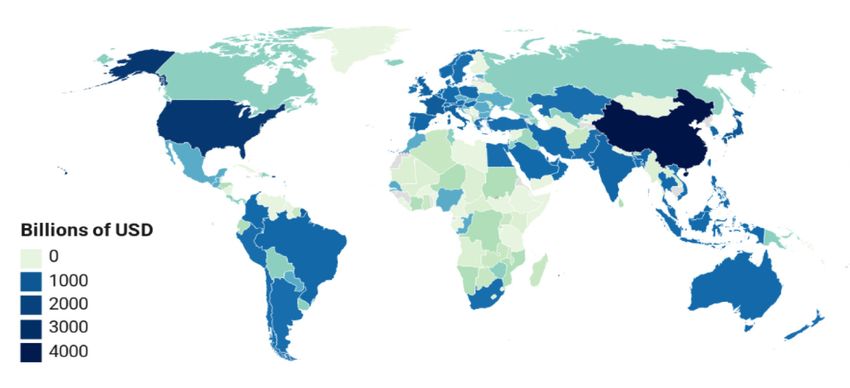
interventions. Over 170 countries have allocated a
total of $9 trillion in fiscal stimulus plans.39 Some
Malaysia’s employment insurance provides a
innovative examples include:
wage subsidy programme to assist employers in
retaining their workers for up to three months.
Pakistan’s economic relief package includes
Enterprises receiving support will be required to
measures to bring poorest workers back to work retain their employees for at least six months after
through building natural infrastructure (“The 10 the three months of support, and will have to pro-
Billion Trees project”). The programme created vide training, including on digital skills.
THE WORLD OF WORK AND COVID-19 15BOX 1: COUNTRY RESPONSES (continued)
Italy extended income support (80 percent of In the Philippines informal workers who have
the gross salary) to workers in enterprises with temporarily lost their livelihood can benefit from
financial difficulties, to all economic sectors and temporary employment programmes involving
to enterprises with less than 15 employees, which disinfection/sanitation of their houses and imme-
are normally not eligible for such support. Lump- diate vicinity; beneficiaries will receive training on
sum income compensation is also provided to the safety and health, with minimum wage and group
self-employed and external contractors. micro-insurance.
Spain is providing income support for the self-em- Chile’s Central Bank has intervened to reduce pol-
ployed, members of cooperatives and workers icy rates, announced a bond purchase programme,
and coordinated financial sector measures to
whose employment has been temporarily sus-
accommodate regulatory credit requirements to
pended, even if they would not have normally
increase credit to enterprises and consumers.
received unemployment benefits.
Colombia introduced new credit lines supporting
Ethiopia has prohibited laying off workers and
different sector activities and payroll and loan pay-
terminating employment.
ments for SMEs and announced payroll subsidy
equivalent to 40 percent of the minimum wage per
Madagascar deferred payment of contributions to
worker for businesses with reduced revenues.
the social security fund for all companies without
incurring any penalties for late payment.
South Africa set up a tripartite ‘Coronavirus
Response Task Team’ to address: workplace adap-
Rwanda amended the scheme of the Community
tation measures, a workers’ compensation fund for
Based Health Insurance (“Mutuelle”) to ease
special/sick leave and an unemployment insurance
access to health services and remove the waiting
fund, support for companies in distress, avoidance
period between inscription and accessing medical
of stigmatization or discrimination against possible
services.
carriers/sufferers of COVID-19; macroeconomic
impacts and appropriate policy responses; food
Brazil used a mobile app to identify informal work-
security (including school meals).
ers who are not in any government register but are
entitled to assistance due to the COVID-19 crisis. Germany has been able to safeguard a signifi-
cant number of jobs by expanding access to its
Burkina Faso introduced cash transfers to infor-
well-tested and institutionalized short-term work
mal sector workers to help informal fruit and vege- (Kurzarbeit) programme, which covers workers’
table retailers affected by the situation, particularly wages in companies under distress. Effective exist-
women. ing institution and mechanisms facelifted a smooth
and quick implementation.
Cabo Verde provided a one-off $100 payment to
30,000 informal workers. Iceland is asking line ministries to describe how
potential investments might benefit women and men
Namibia provided a one-off emergency income differently. This allows the Government to take this
grant to formal and informal workers who lost their information into account in the decision-making
jobs, in addition to wage subsidies and various process and better-understand the collective impact
worker loan schemes. of the overall package on gender equality objectives.
16 THE WORLD OF WORK AND COVID-19FIGURE 6: FISCAL STIMULI AROUND THE WORLD
Total monetary value of fiscal stimuli announced, including spending or tax cuts, as of May 24 2020
BIllions of USD
0FIGURE 7: COUNTRIES WITH AND
WITHOUT SOCIAL PROTECTION RESPONSES, BY REGION
World 84.7% 15.3%
Africa 87.0% 13.0%
Americas 82.0% 18.0%
Arab States 66.7% 33.3%
Asia and the Pacific 76.1% 23.9%
Europe and the Central Asia 95.0% 5.0%
With social protection response Without social protection response
Source: https://www.social-protection.org/gimi/ShowWiki.action?id=3417, last update 26/05/2020
young people, migrant workers and other groups (for example, organizations of per-
groups that find it particularly hard to re-en- sons with disabilities) will help to identify
ter labour markets once they are forced to the challenges and find agreeable solutions.
exit.41 Policies should look specifically at the Measures to alleviate care work should be
needs of families with regard to child care. put in place, including the expansion of the
statutory length of paid sick leave, parental
• Sustaining business (especially MSMEs’) leave, as well as income support to enable
operations. Concrete actions should sup- people to self-isolate, care for sick family
port the implementation of health measures; members, or care for children in lockdown.42
ensure liquidity; cover basic fixed costs;
provide credit; avoid lay-offs; and incentivize • Immediately rewarding essential workers
innovative changes, for example, regarding who hold the system together. Economies
workplace adjustments and alternative work and societies would collapse immediately
modalities, teleworking arrangements, etc. if it was not for the essential work of care
workers, environmental services workers
• Avoiding increasing vulnerabilities through and others. In the short run, rewarding them
gender-responsive, inclusive, accessible with bonus payments or compensatory
and targeted measures, based on social time might partially help to avoid exploita-
dialogue. Measures should be designed tion and lead to some motivation of such
in a targeted manner. Formal and informal workers that often have to go beyond their
barriers that prevent vulnerable groups, physical and mental limits during these dif-
including refugees and migrant workers, ficult times. This is not to replace long-term
and especially women within these groups, measures that need to be put in place to
from retaining or accessing jobs should be give these workers the necessary recogni-
overcome. Dialogue between Governments, tion beyond the current crisis. This should
workers’ and employers’ organizations, and include relooking at structural inequalities
representative organizations of marginalized in economic models that distort value.
18 THE WORLD OF WORK AND COVID-19strong social dialogue 43 workers and employ-
B. ENSURING A ers will manage to identify their needs, in
COMPREHENSIVE APPROACH particular those of women and persons
TO RETURNING TO WORK with disabilities, and defend their rights.
The false dichotomy between returning to work • Taking a holistic approach and sequencing
with childcare and schools. The reopening
and protecting health needs to be dispelled. As
of businesses and the formal economy, but
lockdown and other restrictive measures are
ongoing closure of care facilities and schools,
relaxed, strong measures at national and sub-na-
tional level will be needed, based on social risks setting women back a generation of
dialogue, to help enterprises to open again and progress on labour force participation. All
workers to return to work as safely and quickly return to work policies should consider
as possible. Failure to take adequate precau- sequencing with schools reopening and
tions risks a resurgence of the virus that will only adopting measures to mitigate impacts,
prolong the crisis. In addition, measures need including providing for care support.
to be put in place to support workers, and par-
ticularly women, to deal with their care responsi-
• Effective testing and tracing (T&T). Testing
and tracing is strongly associated with lower
bilities. Discretionary fiscal stimulus measures
labour market disruptions. ILO estimates
should not be withdrawn before a broad-based
suggest that testing and tracing can help
recovery in economic and employment growth.
to reduce working hour losses by as much
Experience from previous crises shows that
as 50 percent, 44 as it may help countries
swinging the spending pendulum towards fiscal
tightening too soon will undermine recovery. rely less on drastic measures, improve
public confidence in economic activities
Policy actions would address the following: and support workplace operations.
• Safe and accessible work-places. To • Well-designed active labour market policies
make workplaces safe, similar measures (ALMPs), including public employment pro-
may be necessary as those taken for grammes (PEPs). Well designed and imple-
essential workers during the acute health mented ALMPs, including public employment
crisis phase. Measures relating to occu- programmes, in line with broader and more
pational safety and health (OSH), social comprehensive national employment poli-
protection coverage, anti-discrimination cies, will be the most important instruments
and others may also be needed. Different to get those people who have lost their jobs
arrangements may be required for per- back to work, create new jobs and help to
sons with disabilities, such as priority to match well-trained workers with enterprises.
work from home or placed in paid leave.
• Capability-building measures for those
• Respect for the needs and rights of work- facing uncertain transitions. With the
ers and employers. The implementation of expected changes in the world of work as
flexible schemes to promote job retention a result of the crisis and also as a result of
and job sharing until the recovery is secured the mega-drivers in the world of work, some
can be one option to address the needs people will have to transition to new sectors
of workers and employers alike. Through and occupations as well as new forms of
THE WORLD OF WORK AND COVID-19 19work. While the recovery process is taking opening up working modalities that seemed
shape, they should have the opportunity to be impossible before, allowing for greater flexibility
(re-)trained, build digital skills and capabilities and perhaps also sustainability. We also see a
that help them to cope with the transition. strong debate in countries on how to best use
the crisis to introduce the needed steps for
• Flexibility in continuing alternative work sustainable structural transformation policies,
modalities for populations-at-risk. The including to rapidly reduce greenhouse gas
elderly and those with existing health con- emissions; reduce inequalities and address
ditions, persons with disabilities, as well invisible and unpaid care work. Together with
as employees who have continued car- the increased public environmental awareness
egiving responsibilities brought about by that was so strong when the crisis hit, this is
the pandemic or were already pre-existing a good start, but more needs to be done.
should be given the possibility to partic-
ipate in labour markets despite their ina- The decisions taken now around the recovery
bility to physically go to their workplace. will have dramatic implications for current
and future generations. What is needed is rec-
• Look beyond the short-term impact. ognition that creating decent and productive
From the very beginning, all of the meas- jobs for all in a green, inclusive and resilient
ures taken should be implemented in a economy is the smartest path to recovery and
manner to pave the way to decent job to delivering on the goals of the 2030 Agenda
creation, climate-resilient recovery and and the Paris Agreement on Climate Change.
more inclusive and gender-responsive We cannot afford to miss this opportunity.
labour markets to ensure sustainable
development and resilient societies. The In this regard, policy actions would
ILO provides guidance in this regard. 45 address the following:
• Social Protection: Expenditure on social
C. CREATING DECENT AND protection need to be seen as an invest-
ment in people, not a burden or charity,
PRODUCTIVE JOBS FOR A
and should therefore be anchored in
GREEN, INCLUSIVE, AND
domestic resources. Stop-gap measures
RESILIENT RECOVERY should be transformed into sustainable
social protection mechanisms for all,
The world of work will not and should not look based on a fair sharing of the cost between
the same after this crisis. Some changes are employers, workers and governments.46
already visible: We see a much-strengthened
focus on making workplaces safer, beyond • Accelerating the transition to formality. The
COVID-related health issues. We see a height- COVID-19 crisis serves as a reminder of the
ened recognition of the work of health and crucial need to make the transition from the
care workers and other frontline professions. informal to the formal economy a priority area
We see much greater recognition of the need in national policies. Economic recovery, while
for adequate social protection, including necessary, will not by itself reduce informal-
social health protection, sickness benefits and ity; suitable public policies are also essential.
unemployment protection. We see technology ILO provides guidance in that regard.47
20 THE WORLD OF WORK AND COVID-19• Job creation through greening economies these are enabling rights for the realization
and investments in nature. With the right of better wages and working conditions.
policies in place to promote greener econ- Regarding unpaid care, work policies should
omies, millions of new jobs can be created be put in place to recognize, reduce and redis-
globally by 2030. In one estimate, renewable tribute unpaid care work. This includes the
energy projects create twice as many jobs promotion of active labour market policies
as fossil fuel investments.48 These new that support the attachment, reintegration
jobs can be created by adopting sustaina- and progress of unpaid carers into the labour
ble practices in the energy sector, including
force. Recognition of unpaid care work in the
changes in the energy mix, promoting the
formal economy is also crucial. This would
use of electric vehicles and improving the
place value on the hours spent in this sphere
energy efficiency of buildings.49 Investing in a
and inform policies that can better redistrib-
balance of diverse forms of sustainable infra-
ute and reduce this work, allowing for greater
structure and low-emission building materials
equality as well as increased formal labour
will also support employment creation and
market participation and income generation.
income generation.50 Jobs, sustainable food,
water supplies and livelihoods of the poor
• Prioritizing skills and jobs for young people:
overwhelmingly depend on the productive
To avoid a lock-down generation and long-
capacity of nature, therefore the greening
term negative impact in terms of career
of economies should include investments
development, employment, labour market
in nature-based solutions, including farm
and entrepreneurship policies should explic-
and non-farm job creation. We also need a
itly target youth. This includes a focus on
shift of taxation from payroll to carbon.
those experiencing a disruption to their
education and training, along with those in
• Investment in the care economy. Well-
work-based learning (e.g. apprentices), new
resourced and well-functioning health and
labour market entrants, the unemployed
care systems not only save lives and make
and those who are in the informal economy
economies more resilient for future health
and are underemployed. Specific measures
crises but they also bring important eco-
include active labour market policies aligned
nomic benefits:51 A ‘high road’ to care work
to sectoral priorities in the post-COVID
would result in 269 million additional jobs
economy, ensuring access to education and
compared with the number of jobs in 2015.
training for those who are currently excluded,
This implies public and private expenditure
support for those who continue or return to
on health and education of US$18.4 trillion.52
education, training and work-based learn-
Occupational risk management needs to
ing, and promoting youth entrepreneurship.
become part of health and care systems.
Involving young people in the formulation
Policies would ensure that care jobs in health,
of employment and labour market policies
including domestic workers and personal
will ensure better outcomes for youth.
care workers, and in education, including
early childhood education, are better paid and • Private sector policies with a specific
provide decent working conditions, as this focus on MSMEs and public-private part-
is a prerequisite for good quality care provi- nerships. Building a sustainable business
sion. This also includes the right to collective environment and supporting MSMEs will
bargaining and freedom of association since be key to the recovery process. Targeted
THE WORLD OF WORK AND COVID-19 21BOX 2: PRIVATE SECTOR INITIATIVES
Companies globally are taking measures to limit 6. Amfori published guidelines for their mem-
adverse effects of the COVID-19 crisis trying to bers on responsible purchasing practices during
ensure that financial impacts will not be made at COVID-19.
the expense of workers’ rights and welfare in their
operations and in their global supply chains. 7. ICTI Ethical Toy Program published a respon-
sible purchasing practice guidance to support
1. A Special Appeal from the United Nations Global buyers during COVID-19. The guidance offers
Compact to encourage business leaders every- best-practice recommendations for purchasing
where to use the Ten Principles as their guide in practices to help buyers manage risks, protect
responding to the crisis. business continuity and safeguard workers.
2. Call to Action in the Garment Industry: 8. The Responsible Business Alliance created a
Collaboration between stakeholders in the global resource hub to provide timely information for its
garment industry to support manufacturers to members on coronavirus-related supply chain
survive the economic disruption caused by the issues, including related to responsible business
COVID-19 pandemic and to protect garment work- conduct in company supply chains during the
ers’ income, health and employment (see list of outbreak to protect the rights and well-being of
endorsing organizations). workers.
3. A joint statement of the International 9. The International Organization of Employers
Organization of Employers and the International (IOE) is mobilising its network to provide infor-
Trade Union Confederation on COVID-19. mation on business and employer organisations’
efforts to support members with safety and health
4. Employers and workers in specific social and measures, preventive actions to minimise disrup-
economic sectors have developed joint statements tion to productivity, strategies for mitigation of
and calls for action to protect workers and support financial losses, and overview of government initi-
enterprises. atives to reduce economic stress on business, and
IOE Guidance for business on surviving Covid-19
5. The International Chamber of Commerce (ICC) and coming out strong.
has launched a Call to Action to Save Our SMEs
“SOS” campaign to shine a spotlight on the dev- 10. The World Economic Forum (WEF) launched
astating impact of COVID-19 on SMEs and their the workforce principles as a guiding tool for Chief
employees, ensure effective policy and fiscal Human Resources Officers (CHROs) and other
responses at both the international and national business leaders.
levels and provide resources and tools to SMEs to
help them navigate this economic shock.
support for MSMEs should focus on social as social enterprise, inclusive business and
and environmental sustainability. Strong impact investing.53 Making MSMEs energy
supply chain connections allow SMEs and and resource-efficient will increase their
their supply chain partners to support each competitiveness and profitability. Bringing
other. Building alliances among large and in the creative and financial resources of the
small businesses will also be key. The cur- private sector at early stages will contribute
rent crisis can also be an opportunity to to easing the recovery process. For example,
build innovative business models – such public-private partnerships could start right
22 THE WORLD OF WORK AND COVID-19away to provide (i) affordable internet access • Targeted policies for hard-hit groups. Many
to all; (ii) affordable, effective and efficient of the policy measures already taken do
“digital wallets” and payment options for all. not reach the most vulnerable groups ade-
quately57 and targeted employment policies
• Leveraging new technologies: Structural are needed. Public works programmes and
transformation will require the use of new employment guarantee schemes shown to
technologies and careful consideration be effective means to reach out to vulnera-
regarding the future of work. When investing
ble workers, including those in the informal
in technology, it is important to keep in mind
economy. Also, local, community-based
that these technologies should be the basis
initiatives can work quickly and cater to spe-
for creating the human-centred future that
cific needs. Ensuring that robust minimum
we want. Closing the digital divide needs
wage floors are in place can help the hard-
to be part of such action, accompanied by
est-hit groups and prevent wage deflation.
investment in digital skills and prepared-
ness for digital changes. With change also
comes the responsibility to regulate so that
Action at the global level
workers are protected from any negative
side effects. For the good management of Besides interventions at the macro level, it is
remote work, for example, the right to dis-
important for the multilateral system to help
connect, the right to a good and safe working
countries through policy advice, ensuring policy
environment, and the protection of work-
coherence and setting international parame-
ers’ data, should be properly addressed.
ters for an employment-led recovery process.
• Sectoral policies for hard-hit sectors and Keeping markets and borders open needs to be
structural transformation. ILO’s analysis fostered at the global level. In this regard, there
of the impact of the pandemic in ten sec- is a need for coordination in the area of trade
tors 54 highlights how targeted support for and investment policies at regional levels and
sector-specific strategies and sustainable
in identifying the ways to make bilateral and
industrial policies should go hand in hand
regional trade and investment agreements more
and be stepped up, in consultation with
inclusive and employment friendly. Coordinated
employers’ and workers’ organizations.55
Sectoral policies can support the expansion action is also needed to address fiscal incon-
of women’s employment in high produc- sistencies that undermine national budgets,
tivity sectors, contributing to breaking up such as transfer pricing, tax heavens, fossil fuel
gender segregation. From the perspective subsidization and tax avoidance, and to forge a
of structural transformation, agriculture is strategy for a fair and sustainable governance
one of the sectors to focus on: Ensuring the of the digital economy. When countries that are
continued functioning of global and national
in a situation of conflict or extreme fragility for
food supply chains will be crucial in securing
other reasons do not have the means for policy
food supply and preventing a food crisis.
interventions, international solidarity is needed
Given that agricultural workers experience
the highest incidence of working poverty to help those most in need beyond humani-
-creating decent income opportunities while tarian aid. United Nations Country Teams are
adhering to safety and health measures already providing support through joint data,
will be key in fighting global poverty.56 analysis and policy/programme design.
THE WORLD OF WORK AND COVID-19 23Conclusion
Building the future we want through the creation Social dialogue has proven to be an effective
of decent employment opportunities will only means for identifying specific local conditions
happen with the right policies in place. These and needs and is also a source of innovative
policies should build on existing normative and creative solutions. Within a whole-of-so-
frameworks. In that sense, policies are best ciety approach, all stakeholders should
guided by the 2030 Agenda on Sustainable participate in setting the commonly agreed
Development, the Paris Agreement on Climate parameters for a sustainable recovery.
Change and the ILO Centenary Declaration for
the Future of Work. A wide range of International A reset to the past is not an option. The level
Labour Standards58 on employment, occupa- of change and transformation required to
tional safety and health, social protection, wage rebuild the global economy goes beyond
protection, MSME promotion or workplace building back better. The need to create jobs
cooperation contain specific guidance on policy and livelihoods for millions requires balanc-
measures that would encourage a human-cen- ing the socioeconomic system with the eco-
tred approach to the crisis and its recovery.
system, investing in skills, infrastructure and
In addition, policies need to be informed technology and promoting - through fiscal
by reliable and relevant analysis and evi- stimulus and beyond - a shift towards a more
dence. For this evidence-based approach, human-centred and inclusive digitalisation,
it is critical for countries to strengthen more investment in the care economy and a
the collection and the quality of data. greener and gender-equal economy for all.
24 THE WORLD OF WORK AND COVID-19You can also read


