U.S. Seniors Housing & Care Investor Survey - H1 2021 - CBRE
←
→
Page content transcription
If your browser does not render page correctly, please read the page content below

U.S. SENIORS HOUSING & CARE INVESTOR SURVEY UPDATE

  H1 2021

  U.S. Seniors Housing
  & Care Investor Survey

                                                     Project: Ventana CCRC by Buckner
                                                                          Dallas, Texas
                                                                         Architect: HKS
                                                                   Interior Design: IDA
                                                           Landscape: Talley Associates
                                                     Photography: Sargent Photography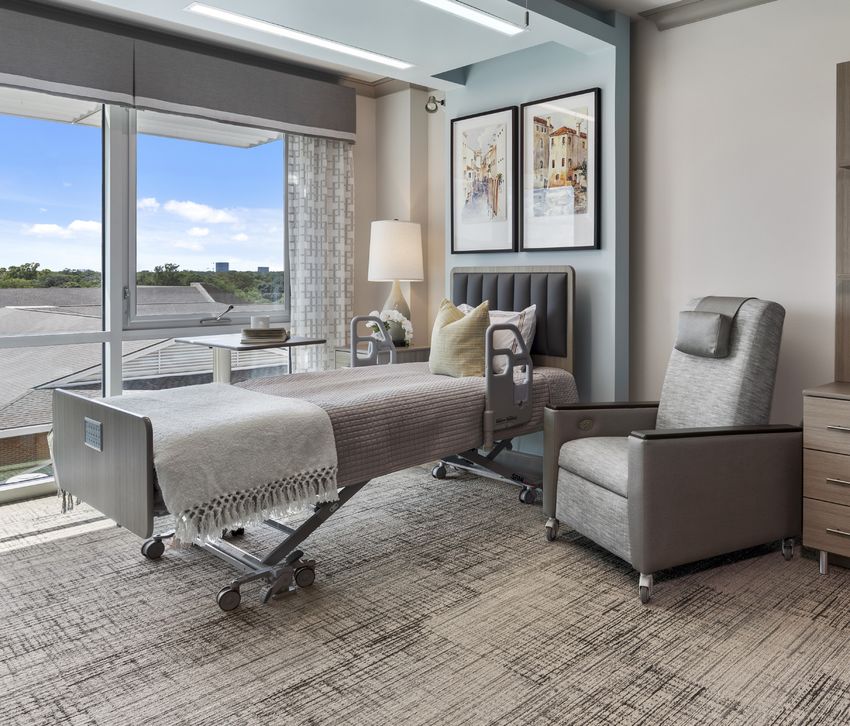
U.S. SENIORS HOUSING & CARE INVESTOR SURVEY UPDATE                                              H1 2021

U.S. Seniors Housing & Care
Investor Survey
As the 10th consecutive survey, this H1 2021        When juxtaposed with H1 2020 results, the H2
CBRE Seniors Housing & Care Investor Survey is      2020 survey provided real-time market insight into
a product of consistent reporting methodology       the impact of COVID-19 within seniors housing.
and pertinent and actionable market intelligence.   This H1 2021 survey’s objective is to identify post-
In the most recent surveys, respondents have        pandemic recovery trends in the seniors housing &
provided a much-needed window into ongoing          care industry. The data is based on market sentiment
changes in market conditions as a result of the     collected from seniors housing investors, developers,
COVID-19 pandemic. The H1 2020 survey closed        lenders and brokers throughout the United States.
at the end of February 2020, providing insights     We thank all the respondents for providing their
into the last pre-pandemic market sentiment.        vital insights on the state of the market.

                                                                                       Project: CC Young
                                                                                            Dallas, Texas
                                                                                          Architect: HKS
                                                                 Interior Design: Faulkner Design Group
                                                                            Landscape: Talley Associates
                                                                                      Photography: HKS

CBRE Valuation & Advisory Services                                                       © 2021 CBRE, Inc. | 2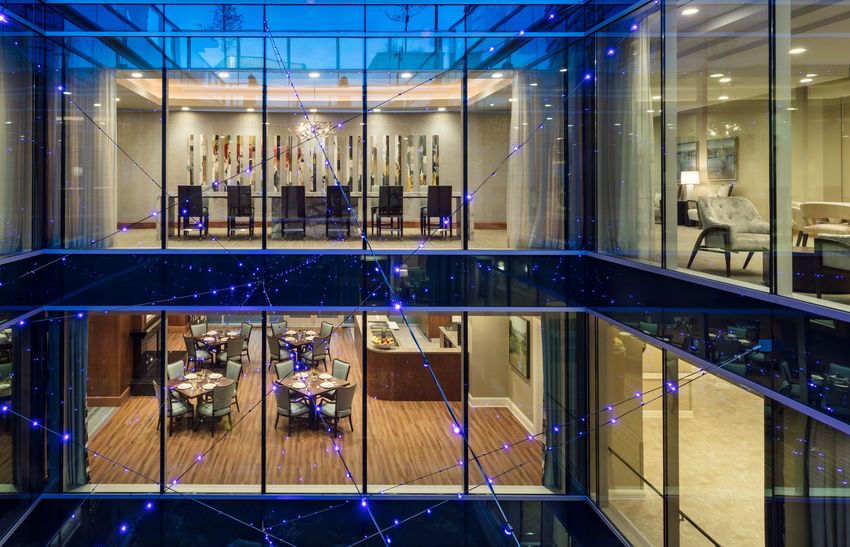
U.S. SENIORS HOUSING & CARE INVESTOR SURVEY UPDATE                                                                                            H1 2021

                                                                                                                 Project: CC Young
                                                                                                                      Dallas, Texas
                                                                                                                    Architect: HKS
                                                                                           Interior Design: Faulkner Design Group
                                                                                                      Landscape: Talley Associates
                                                                                                          Photography: Green Sofa

Highlights of
Seniors Housing Trends
• Capitalization Rates: While not fully                             Figure 1: Survey Respondent Categories (%)
  recovered, the average cap rate during this                       Senior Housing Investor Survey, H2 2020 (Inner Ring) and H1 2021 (Outer Ring).
  survey (H1 2021) indicated a period-over-
  period (P-o-P) compression of -13 basis points
  (bps), an improvement from the +31 bps,
  P-o-P expansion during the prior survey.                                      9 9                                                    Mix of Respondents
                                                                                                                               Mix of Respondents
                                                                                                     23        23
                                                                                 9 9
                                                                                                21        21                    Broker Broker
• The vast majority of the respondents opined
                                                                                                                                 Institutional Investor Investor
                                                                                                                                            Institutional
  that they expect positive census trends,                        28 2826 26
  or a recovery from the negative census trends                                                                                  REIT        REIT
                                                                                                     19
                                                                                                           1619
  that resulted from the COVID-19 pandemic.                                                                         16           Developer
                                                                                19          6                                                Develo per
• The Active Adult product type re-emerged                                            19         7 6                             Private Capital Investor
                                                                                17                         7                                 Private Capital Investor
  at the top of the investor opportunity list,                                       17                                          Other
                                                                                                                                             Other
  which was also coincided with the largest
  compression in cap rates, an average
  of -32 bps, among all property types.

      Overall Cap Rate   Active       Independent   Assisted            Memory              Skilled Nursing         Continuing Care Retirement Community/
                         Adult (AA)   Living (IL)   Living (AL)         Care (MC)           Facility (SNF)          Life Plan Community (CCRC/LPC)
   Average (bps) P-o-P         -32         -12            -7                   -6                    -18                  -4

CBRE Valuation & Advisory Services                                                                                               © 2021 CBRE, Inc. | 3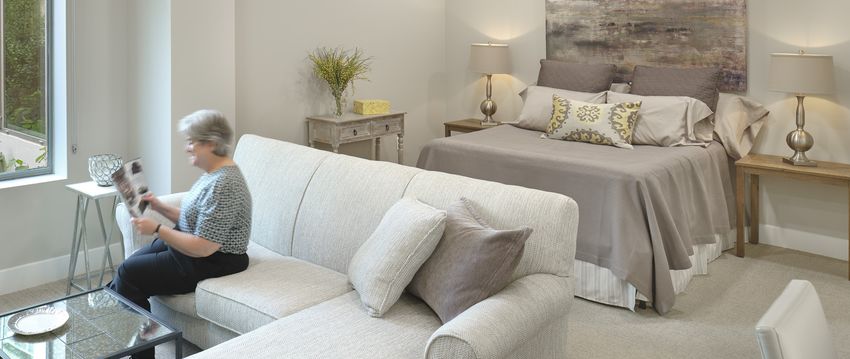
U.S. SENIORS HOUSING & CARE INVESTOR SURVEY UPDATE                                                                                                      H1 2021

                                       Investor Survey Results
                                       For this H1 2021 survey, seniors housing cap rates                                           Following Active Adult assets, Independent Living
                                       showed overall compression from H2 2020 levels. This                                         and Skilled Nursing, representing the upper and
                                       trend was preceded by the expansion of rates between                                         lower ends of the acuity spectrums, showed the
                                       the H1 2020 (pre-pandemic) to H2 2020 survey periods.                                        highest compression in cap rates of -12 bps and
                                                                                                                                    -18 bps, respectively. Care levels showing the least
                                       Class A core assets led the overall compression at
                                                                                                                                    amount of movement in rates were comprised of
                                       -22 to -32 bps, with the exception of Memory Care,
                                                                                                                                    Assisted Living, Memory Care, and CCRC/LPC
                                       which showed a more modest change of -8 bps.
                                                                                                                                    communities at -7 bps, -6 bps and -4 bps, respectively.
                                       Active Adult rates showed the most significant
                                                                                                                                    Class A and Class B assets fared the best, with
                                       movement, with overall compression of -32 bps.
                                                                                                                                    indicated compression of -14 bps and -16 bps,
                                       When looking at the impacts of the COVID-19
                                                                                                                                    which were trailed by Class C assets at -10 bps.
                                       pandemic, lower-acuity communities tended to fare
                                       the best, with Active Adult and Independent Living                                           Overall, the cap rates for this period compressed
                                       communities leading the way. Consistent with the                                             by -13 bps, a stark improvement from the P-o-P
                                       analysis in the H2 2020 survey, the Active Adult                                             expansion of +31 bps during the prior report
                                       segment has yet to find its definitive place in                                               (H2 2020). Not fully recovered to pre-pandemic
                                       the market and continues to depart from its                                                  levels, the market is showing a greater degree of
                                       consideration as a pseudo-multifamily product,                                               variation in investment thesis, with indications
                                       toward a seniors housing classification.                                                     primarily showing cautious optimism.

Figure 2: Seniors Housing & Care - Capitalization Rates
Figure 2: Seniors Housing & Care - Capitalization Rates
                                                                      Cla ss A                                                  Cla ss B                                           Cla ss C
                                                                                             C ha ng e                                          C ha ng e                                            C ha ng e
                                               L ow - H i g h ( % )       Avg . (% )                     L ow - H i g h ( % )      Avg . (% )               L ow - H i g h ( % )      Avg . (% )
                                                                                              (b p s)                                            (b p s)                                              (b p s)
             Active Adult                        3.0    -   8.0                 4 .9            -32       4.0    -   9.0                 5 .8      -32       5.0    -   10.0                6 .8        -36
             Independent Living                  3.0    -   7.0                 5 .3            -22       4.0    -   9.0                 6 .4      -14       5.0    -   10.0                7 .4        -11
             Assisted Living                     4.0    -   8.0                 6 .1            -24       5.0    -   10.0                7 .2        -9      6.0    -   11.0                8 .4            2
 Core

             Memory Care                         5.0    -   10.0                7 .1              -8      5.0    -   10.0                7 .8      -15       6.0    -   11.0                8 .9          -1
             Skilled Nursing                     9.0    -   13.0              1 0 .9            -23       9.0    -   14.0              1 1 .7      -24      11.0    -   16.0              1 3 .3        -33
             CCRC/LPC                            5.0    -   10.0                7 .0            -24       6.0    -   11.0                8 .2      -14       7.0    -   12.0                9 .3          -1

             Active Adult                        3.0    -   8.0                 5 .5            -29       4.0    -   9.0                 6 .3      -38       5.0    -   10.0                7 .2        -25
             Independent Living                  4.0    -   9.0                 6 .2            -10       5.0    -   10.0                7 .1      -12       6.0    -   11.0                8 .1          0
 Non-Core

             Assisted Living                     5.0    -   10.0                6 .9              0       5.0    -   10.0                7 .6       -8       6.0    -   11.0                8 .6         -3
             Memory Care                         5.0    -   10.0                7 .5             -1       5.0    -   10.0                8 .1       -7       6.0    -   11.0                9 .0         -6
             Skilled Nursing                     9.0    -   14.0              1 1 .5             -3      10.0    -   16.0              1 2 .1      -15      11.0    -   16.0              1 3 .7         -9
             CCRC/LPC                            6.0    -   11.0                8 .1              8       7.0    -   11.0                8 .7       -3       8.0    -   12.0                9 .7          8

Average Change per Class                                                                        -14                                                -16                                                  -10
CBRE Seniors Housing Investor Survey results, H1 2021; change from H2 2020, Survey.
Source: CBRE Seniors Housing & Care Investor Survey Results, H1 2021, Change from H2 2020 Survey.

                                       CBRE Valuation & Advisory Services                                                                                                           © 2021 CBRE, Inc. | 4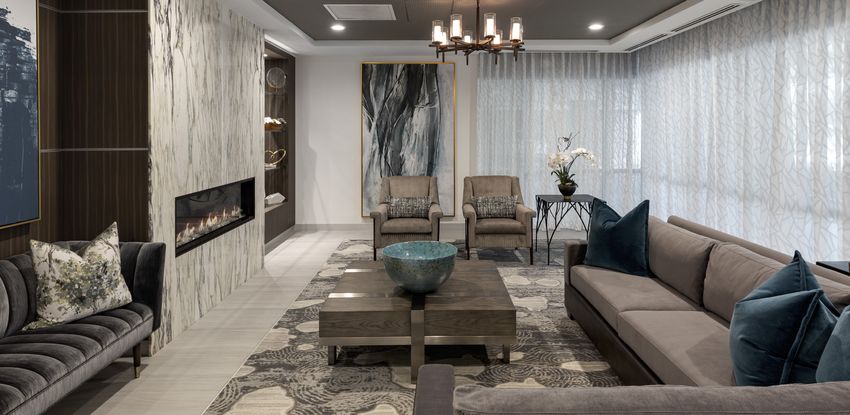
U.S. SENIORS HOUSING & CARE INVESTOR SURVEY UPDATE                                                                                                                H1 2021

                                          The spread between core and non-core assets                                                 The most significant increase in class/location
                                          increased from 41 bps for the H2 2020 to 51 bps                                             spread occurred between the Class A/C, core
                                          during this report (H1 2021), representing a flight to                                      Assisted Living and CCRC/LPC investment classes,
                                          quality. This delta in the spread is the most significant                                   with expansion of 26 bps and 23 bps, respectively.
                                          for Independent Living and CCRC/LPC communities,                                            Locationally, between core and non-core, a
                                          at 77 bps and 66 bps, respectively.                                                         majority of the asset classes showed expansion,
                                          Categorically, the Class A/B, non-core assets showed                                        further indicating an investor move toward quality,
                                          an across-the-board compression in cap rate spread.                                         higher-barrier markets.

Figure 3: Seniors Housing & Care Cap Rate Spreads
Figure 3: Seniors Housing & Care - Capitalization Rate Spreads & Internal Rate of Return
                                         I nv e s t m e nt C l a s s S p r e a d s ( b p s )                                                  L oc a t i on S p r e a d s - C or e v s . Non- C or e ( b p s )
                                          A-B             C ha ng e          B-C               C ha ng e   A-C   C ha ng e                            A          C ha ng e          B          C ha ng e          C   C ha ng e
             Active Adult                  93                   0             95                   -4      188       -5      Active Adult            59              2              46            -6             45      12
             Independent Living           107                   9            102                     2     209       11      Independent Living      88             12              71             2             72      11
             Assisted Living              115                 15             122                   11      237       26      Assisted Living         86             24              34             1             18      -5
  Core

             Memory Care                   66                 -8             110                   15      176         7     Memory Care             37              7              25             8             13      -5
             Skilled Nursing               77                 -2             163                   -9      241      -11      Skilled Nursing         55             19              35             9             32      25
             CCRC/LPC                     117                 10             116                   13      234       23      CCRC/LPC                112            32              53            11             32       9

             Active Adult                   79                -9               94                 14       174       5
             Independent Living             90                -2              102                 12       193      10
  Non-Core

             Assisted Living                63                -8              106                  5       169      -3
             Memory Care                    55                -6               98                  1       152      -5
             Skilled Nursing                58               -12              160                  7       218      -5
             CCRC/LPC                       58               -11               95                 11       153      -1
CBRE Seniors Housing Investor Survey results, H1 2021; change from H2 2020, Survey.
Source: CBRE Seniors Housing & Care Investor Survey Results, H1 2021, Change from H2 2020 Survey.

      Project: Legacy Midtown Park
      by Legacy Senior Communities
      Dallas, Texas
      Architect: HKS
      Interior Design: StudioSIX5
      Landscape: Talley Associates
      Photography: HKS

                                          CBRE Valuation & Advisory Services                                                                                                                        © 2021 CBRE, Inc. | 5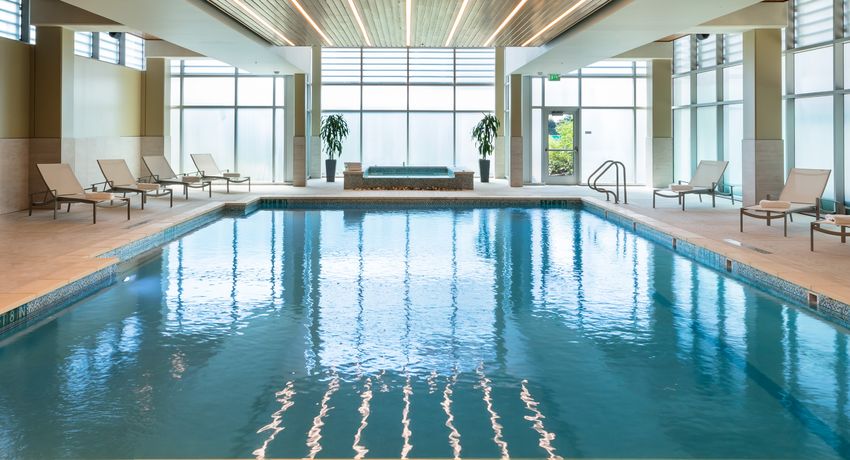
U.S. SENIORS HOUSING & CARE INVESTOR SURVEY UPDATE                                                                                           H1 2021

Cap Rate Trends
Given its long history, starting in 2014, the CBRE                                         Historically, cap rates showed overall compression.
Seniors Housing & Care Investor Survey includes the                                        While the COVID-19 pandemic reversed this trend, in
following cap rate trends as consolidated from each of                                     this survey period, rates trendedback downward for all
the past ten surveys.                                                                      care levels.

Figure 4:4:
Figure   Seniors Housing
            Seniors      & Care -&Historical
                     Housing       Care -Cap   Rate Trends
                                             Historical Capitalization Rate Trends

%                                              Indepentent Living                         Assisted Living                Memory Care
  8.50

  8.25

  8.00

  7.75

  7.50

  7.25

  7.00

  6.75
     H1 2014              H2 2015             H1 2016               H1 2017   H2 2017         H1 2018       H1 2019   H1 2020          H2 2020       H1 2021

    %                                                                               Skilled Nursing
12.80

12.65

12.50

12.35

12.20
    H1 2014               H2 2015             H1 2016               H1 2017   H2 2017         H1 2018       H1 2019   H1 2020          H2 2020       H1 2021

    %                                                                                   CCRC/LPC
  9.00

  8.85

  8.70

  8.55

  8.40

  8.25
     H1 2014              H2 2015              H1 2016              H1 2017   H2 2017          H1 2018      H1 2019   H1 2020          H2 2020       H1 2021
Note: Time periods represent when surveys were done.
Note: Time periods represent when surveys were done.
CBRE
Source:Seniors HousingHousing
         CBRE Seniors  Investor& Survey results,Survey
                                 Care Investor   H1 2021.
                                                       Results, H1 2021.

CBRE Valuation & Advisory Services                                                                                               © 2021 CBRE, Inc. | 6
U.S. SENIORS HOUSING & CARE INVESTOR SURVEY UPDATE H1 2021
Investment &
Operational Expectations
Survey respondents were asked a series of questions impact of the COVID-19 pandemic on the industry, an
regarding market trend perspectives for near-term additional line of questions was added for this survey.
expectations. Incorporating consideration for the
Respondents were asked where they see the biggest
opportunity for investment.
After two reporting periods of Assisted Living Figure 5: Biggest Opportunity for Investment (%)
leading this category, Active Adult has once Figure 5: BiggesSenior
t OpHousing
portuInvestor
nity fSurvey,
or InvH2es2020
tme(Inner
nt (Ring)
%) and H1 2021 (Outer Ring).
again emerged as the seniors housing’s biggest
opportunity for investment interest (31%). Of the 5 5
6 6 Active Adult Active Adult
remaining care levels, the lower-acuity product,
8 8 227 15
including Active Adult, Independent Living and 11 31 31 IndependentIndependent
Living Livin g
Assisted Living, accounted for a collective 82%
33 Assisted Livin g
Assisted Living
of responses. Both Memory Care and Skilled 12
100 22 Memory CareMemory Care
Nursing showed significant declines in investor
perception of opportunity, indicative of market 12
28 28 Nursing CareNursin g Care
11
sentiment associated with the risk of 733
higher-acuity operations. 23 23 CCRC/LPC CCRC/LPC
CBRE Seniors Housing Investor Survey, H2 2020 (Inner Ring) and H1 2021 (Outer Ring).
Respondents were asked about their 12-month outlook
for seniors housing census levels.
During this period, the indicated expectation Figure 6: 12-Months Census Level Outlook (%)
of recovery from the COVID-19 pandemic was
Figure 6Senior
: 12Housing
-MonInvestor
th CeSurvey,
nsusH2L2020
evel(Inner
OutRing)
lookand(%
H1 2021 (Outer Ring).
)
evident with a positive outlook of an increasing
F ig u re 6 : 1 2 - Mo n t h C e n s u s L e v e l O u t lo o k ( % )
census comprised of 90% of respondents, a 6 4
20-percentage point increase over the H2 2020 6 14 4 No Change
15
survey. Those expecting further declines in census
14 15 No Change
levels declined by over half, or from 14% (in H2 Increase
2020) to 6% (H1 2021) of respondents. Increase
Decrease
Decrease
70
70 90
90
CBRE Seniors Housing Investor Survey, H2 2020 (Inner Ring) and H1 2021 (Outer Ring).
CBRE Seniors Housing Investor Survey, H2 2020 (Inner Ring) and H1 2021 (Outer Ring).
CBRE Valuation & Advisory Services © 2021 CBRE, Inc. | 7U.S. SENIORS HOUSING & CARE INVESTOR SURVEY UPDATE H1 2021
Operational Expectations
Since the end of Q1 2020, operators have faced Of the timeline segments, the 0-6 months and 6-12
significant headwinds as a result of the COVID-19 months periods showed significant increases of 13%
pandemic. These operational challenges included to 26% and 34% to 43% respectively, a trend that is
elevated expenses, mostly comprised of increased indicative of an improvement in expectations. Notably,
payroll as well as sanitation and PPE. Respondents while 85% of responses showed a trend towards a
were asked about their underwriting of elevated reduced timeline for elevated COVID-19 expenses, the
expenses since the onset of the pandemic, and 69% number of respondents who forecast these expenses into
of them indicated that they will incorporate COVID-19- perpetuity more than doubled, or increased from 7% to
related expenses during the preceding 12 months. 15%, a trend that requires our attention in the near term.
Figure 7: Length of Elevated Operating Expense Underwriting
Senior Housing Investor Survey, H2 2020 (Inner Ring) and H1 2021 (Outer Ring).
F ig u re 7 : L e n g t h o f E le v a t e d O p e ra t in g E x p e n s e U n d e rw rit in g
0-6 Months
15
7 13 26 6-12 Months
9 18 12-18 Months
7 18-24 Months
34
28 In Perpetuity
Into Perpetuity
43
CBRE Seniors Housing Investor Survey, H2 2020 (Inner Ring) and H1 2021 (Outer Ring).
Project: Ventana CCRC by Buckner
Dallas, Texas
Architect: HKS
Interior Design: IDA
Landscape: Talley Associates
Photography: Sargent Photography
CBRE Valuation & Advisory Services © 2021 CBRE, Inc. | 8U.S. SENIORS HOUSING & CARE INVESTOR SURVEY UPDATE H1 2021
Census Recovery and Rate Underwriting
As the COVID-19 pandemic has directly impacted their expected changes in seniors housing residential
seniors housing and care communities on a national rental rates, occupancy levels and rates of absorption
basis, respondents were asked to provide insight into for new development during the next 12 months.
For communities that lost census during the COVID-19 pandemic, what is your projected period to reach pre-COVID stabilized levels:
I nd e p e nd e nt
R e s p ons e A c t i v e A d ul t A s s i s t e d L i v i ng M e m or y C a r e S ki l l e d Nu r s i ng C C R C /L P C
L i v i ng
0 - 6 M ont hs 2 2 .0 % 15.3% 6.9% 7.0% 5.1% 5.3%
6 - 1 2 M ont hs 3 6 .0 % 3 0 .6 % 2 5 .0 % 3 1 .0 % 2 8 .2 % 3 1 .6 %
1 2 - 1 8 M ont hs 2 2 .0 % 3 3 .3 % 3 7 .5 % 3 5 .2 % 4 3 .6 % 3 6 .8 %
1 8 - 2 4 M ont hs 14.0% 12.5% 2 0 .8 % 12.7% 12.8% 2 1 .1 %
24+ Months 6.0% 8.3% 9.7% 14.1% 10.3% 5.3%
P r i m a r y I nd i c a t i ons
0 - 1 8 M ont hs 8 0 .0 % - - - - -
6 - 1 8 M ont hs - 6 3 .9 % 6 2 .5 % 6 6 .2 % 7 1 .8 % 6 8 .4 %
6 - 2 4 M ont hs - - 8 3 .3 % - - 8 9 .5 %
CBRE Seniors Housing Investor Survey results, H1 2021.
For communities that lost occupancy during the COVID-19 pandemic, what absorption rate (units/month) are you underwriting to reach pre-COVID
stabilized levels?
I nd e p e nd e nt
R e s p ons e ( Uni t s /M ont h) A c t i v e A d ul t A s s i s t e d L i v i ng M e m or y C a r e S ki l l e d Nu r s i ng C C R C /L P C
L i v i ng
1-3 2 8 .6 % 3 9 .4 % 5 6 .2 % 6 1 .1 % 3 5 .3 % 3 7 .1 %
3-6 4 0 .8 % 4 7 .9 % 2 7 .4 % 2 7 .8 % 3 8 .2 % 3 4 .3 %
6-9 24.5% 8.5% 8.2% 4.2% 11.8% 14.3%
9+ 6.1% 4.2% 8.2% 6.9% 14.7% 14.3%
P r i m a r y I nd i c a t i ons
1-6 6 9 .4 % 8 7 .3 % 8 3 .6 % 8 8 .9 % 7 3 .5 % 7 1 .4 %
CBRE Seniors Housing Investor Survey results, H1 2021.
How are you underwriting rental rate trends during the preceding 12 months:
I nd e p e nd e nt
R e s p ons e A c t i v e A d ul t A s s i s t e d L i v i ng M e m or y C a r e S ki l l e d Nu r s i ng C C R C /L P C
L i v i ng
Increase 7%+ 2.4% 2.4% 2.4% 2.4% 1.2% 1.2%
Increase 3-7% 13.3% 14.5% 19.3% 15.7% 6.0% 7.2%
I nc r e a s e 1 - 3 % 4 2 .2 % 5 4 .2 % 3 8 .6 % 3 4 .9 % 2 1 .7 % 3 3 .7 %
Fla t 3 4 .9 % 2 7 .7 % 3 1 .3 % 3 7 .3 % 6 1 .4 % 5 0 .6 %
Decrease 1-3% 1.2% 1.2% 7.2% 8.4% 4.8% 2.4%
Decrease 3%+ 6.0% 0.0% 1.2% 1.2% 4.8% 4.8%
P r i m a r y I nd i c a t i ons
F l a t & I nc r e a s e 1 - 3 % 7 7 .1 % 8 1 .9 % 6 9 .9 % 772.2%
2 .3 % 8 3 .1 % 8 4 .3 %
CBRE Seniors Housing Investor Survey results, H1 2021.
Source: CBRE Seniors Housing & Care Investor Survey Results, H1 2021.
CBRE Valuation & Advisory Services © 2021 CBRE, Inc. | 9U.S. SENIORS HOUSING & CARE INVESTOR SURVEY UPDATE H1 2021
Appendix
Investment Class competitive advantage, and the amenities and finish are
considered fair to average for the market. These properties
Classifications are in non-core locations and are typically greater than 25
Since its first publication in 2014, the CBRE Seniors Housing years old with wood-frame construction. Additionally, these
& Care Investor Survey methodology has been consistent, properties lack modern amenities and common area, and
resulting in a long legacy of data continuity. The definitions typically feature a more “institutional” design, with resident
for classifying asset investment class and location have been units located on long, narrow wings or hallways.
included within this appendix.
For nursing care properties, Class C includes a primarily
CLASS A Medicaid payer mix, and functional obsolescence with
The best-quality assets in the most desirable locations, fully outdated mechanical systems. The majority of rooms are
or near fully leased, at or above market rent for the area, to semi-private or wards with substandard ventilation systems
residents of higher income levels and net worth, primarily and may not meet all life safety code requirements.
private pay. High-quality finishes and amenities, state-of-the-
art systems, exceptional accessibility, high-quality FF&E,
advanced technology and call systems, a strong reputation Locational Classifications
within the market, and the ability to capture a greater than CORE
proportionate share of the target market. Class A properties
Properties that are typically located in the denser parts
are primarily located in core markets, but can also be found
of metropolitan areas with higher barriers to entry.
in non-core markets and are typically less than 10 years old
These properties are typically located within the top
with steel-frame or concrete-block construction.
140 Metropolitan Statistical Areas (MSAs). They represent
For nursing care properties, this would include locations higher-density product, two-story-plus buildings, and are
on or near the campus of a major health care provider, most commonly found in mature neighborhoods. Core
state-of-the-art therapy space, a large percentage of private seniors housing product can also be found in higher-density
units, and above market quality mix (Medicare census). suburban neighborhoods with favorable demand growth
and depth of the target population.
CLASS B
Properties competing for a wide range of residents, For nursing homes, this would include properties located in
with rents in the average range for the area and potential states with Certificate of Need (CON) regulations and a
prevalence of subsidized rents. Building finishes are moratorium on additional CON-licensed beds. Properties
average to good for the area and the systems are adequate.
also may be located in a state that has a history of strong
The technology and call systems are adequate, but are
Medicaid reimbursement.
becoming dated. The building does not compete with
Class A in terms of pricing or amenities offered with the
NON-CORE
ability to capture its proportionate share of the market.
Class B properties are in core or non-core markets and are Properties within a market area that is outside the city
typically between 10 and 25 years old with wood, concrete- center with a less-concentrated population, smaller
block or steel-frame construction. MSAs, and lower-density land use than is typically found
in the metropolitan or non-metropolitan areas altogether.
For nursing care properties, the payer mix is consistent Non-core markets are considered thin from a target
with the market average, functional design, stable demographic standpoint. Markets with little to no barriers
census, small and/or slightly dated therapy space, use
to entry with below average income levels and target
of improvements with primarily semi-private units (with
population growth. There is typically a large amount
or without a small number of private units) and meets
of undeveloped land surrounding the area for potential
all life safety code requirements.
new development.
CLASS C
For nursing homes, this would include properties located
Buildings competing for residents requiring functional
in states with no CON regulations or moratoriums on
space at rents below the average for the area, potentially with
additional CON-licensed beds. Non-core also includes
a high prevalence of subsidies. Properties operating with
facilities located in states where reimbursement for
higher-than-average vacancy levels, with an inability to
Medicaid is low, or with budgetary restraints.
capture its proportionate share of the market. The physical
property requires capital investment to improve the
CBRE Valuation & Advisory Services © 2021 CBRE, Inc. | 10U.S. SENIORS HOUSING & CARE INVESTOR SURVEY UPDATE H1 2021
CBRE Valuation & Advisory Services would like to express our sincere gratitude to all
our clients and colleagues who participated in this survey.
Valuation & Advisory Services
James A. Graber, MAI Daniel Lincoln, MAI
Managing Director | National Practice Leader Director
Seniors Housing & Healthcare Seniors Housing & Healthcare
+1 347 722 0225 +1 205 515 5985
james.graber@cbre.com daniel.lincoln@cbre.com
Jordan R. Lee, MAI Andy Kepchar, MAI
Vice President Vice President
Seniors Housing & Healthcare Seniors Housing & Healthcare
RJ DeBee III Anne Gompel, MAI
Vice President Vice President
Seniors Housing & Healthcare Seniors Housing & Healthcare
To learn more about CBRE Seniors Housing Valuation & Advisory, please visit site at cbre.com/shvas
Project: Ventana CCRC by Buckner
Dallas, Texas
Architect: HKS
Interior Design: IDA
Landscape: Talley Associates
Photography: Sargent Photography
Disclaimer: Information contained herein, including projections, has been obtained from sources believed to be reliable. While we do not doubt its accuracy, we have not verified
it and make no guarantee, warranty or representation about it. It is your responsibility to confirm independently its accuracy and completeness. This information is presented
exclusively for use by CBRE clients and professionals and all rights to the material are reserved and cannot be reproduced without prior written permission of CBRE.
All COVID-19 related materials have been developed with information from the World Health Organization, Center for Disease Control & Prevention, and strategic suppliers pro-
viding services in affected regions. They may not be suitable for application to all facilities or situations. Ultimately, occupiers and landlords must make their own strategic deci-
sions for their individual stakeholders and workplaces. CBRE’s guidance is intended to initiate those discussions and expedite the process. We make no representations or warran-
ties regarding the accuracy or completeness of this material. CBRE disclaims all liability arising from use of these materials by others.You can also read


