Ultrasound-Guided Fine-Needle Aspiration - College of ...
←
→
Page content transcription
If your browser does not render page correctly, please read the page content below

Ultrasound-Guided
                                           Fine-Needle
                                           Aspiration
                                           Advanced Practical Pathology
                                           Program

Disclaimer: Advanced Practical Pathology Programs (AP3) are intended to be learning activities.
Completion of this program alone does not necessarily indicate competence. The CAP does not endorse,
guarantee, or warrant, and expressly disclaims, any and all liability for the job performance of physicians
participating in the program.

This Ultrasound-Guided Fine-Needle Aspiration AP3 manual is current as of Feb 4, 2021. Information is
subject to change.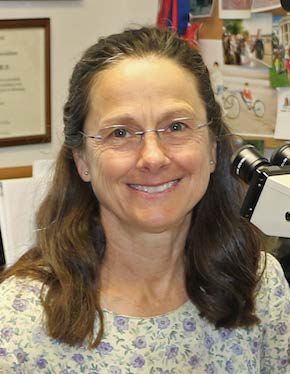
Table of Contents
Overview ..................................................................................................................................3
Program Purpose ....................................................................................................................3
Program Elements ...................................................................................................................4
Core Faculty.............................................................................................................................6
Core Curriculum ......................................................................................................................8
        Accreditation ............................................................................................................... 8
        Faculty-Led Modules .................................................................................................. 8
Workshop Agenda .................................................................................................................11
Additional Participation Information ....................................................................................12
        Enrollment ................................................................................................................. 12
        Assessment Scheduling ........................................................................................... 12
        Program Completion................................................................................................. 12
        Certificate Notification .............................................................................................. 12
Certificate Maintenance.........................................................................................................13
        USFNA Certificate of Recognition Maintenance and Renewal Requirements ...... 13
        Performance Documentation ................................................................................... 13
        Evaluation Criteria .................................................................................................... 13
        Maintenance and Renewal Fee................................................................................. 13
        Notification of Maintenance and Renewal Deadline ............................................... 13
Program Registration ............................................................................................................14
        How to Access the Registration Form ..................................................................... 14
        How to Register......................................................................................................... 14
        Registration Fees*..................................................................................................... 14
        AP3 Program Completion.......................................................................................... 14
        Cancellation Policy ................................................................................................... 14
        Withdrawal and Refund Policy for AP3 Participation .............................................. 14
Program Registration, cont’d................................................................................................15
Questions?.............................................................................................................................15

                                                                                                                             2|Page
                                     © 2021 College of American Pathologist. All rights reserved.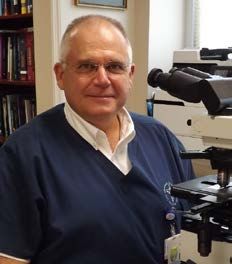
Overview
Congratulations on your desire to find out more about the College of American Pathologists
(CAP) Advanced Practical Pathology Program in USFNA (USFNA AP3)—or perhaps you have
already decided to apply! This manual will address your questions regarding program eligibility,
design, and requirements for obtaining your USFNA Certificate of Recognition.

The CAP created the USFNA AP3 for licensed pathologists who are currently performing FNAs
and who want to expand their practice to include ultrasound-guided FNA. As a result of
completing the USFNA AP3, qualified program participants should be able to:

    •   Create a slide smear that includes evenly spread, preserved cells from obtained
        samples.
    •   Verbalize the basics of ultrasound physics, transducers, and ultrasound image patterns
        such as artifacts.
    •   Describe the basics of ultrasound equipment operation in preparation for performing the
        USFNA procedure including examination of neck anatomy.
    •   Identify the ultrasound criteria, diagnostic status (eg, benign, malignant, and
        indeterminate), and parts of the lesion to sample from provided course images.
    •   Demonstrate specific needle techniques on a phantom device to guide the needle into
        specific targets using ultrasound guidance.
    •   Determine correct CPT codes and modifiers using sample patient cases.

To participate in the USFNA AP3, you must meet eligibility requirements, submit the registration
form, and pay the registration fee. Participants will receive notification regarding the disposition
of their application within one to two weeks from the date when it was submitted.

Read on to learn how the USFNA AP3 provides you with the opportunity to learn the new skills
and be recognized in an emerging area for pathologists!

Note: Advanced Practical Pathology Programs are intended to be learning activities. Completion of this
program alone does not necessarily indicate competence. The CAP does not endorse, guarantee, nor
warrant (and expressly disclaims) any and all liability for the job performance of physicians who
participate in this program.

Program Purpose
The CAP is the leading organization of board-certified pathologists. The CAP serves patients,
pathologists, and the public by fostering and advocating excellence in the practice of pathology
and laboratory medicine. The CAP seeks to create new and enhanced roles for the pathologist
over the next generation, as well as create greater recognition for pathologists as physicians
who are actively involved on the patient care team. The USFNA AP3 directly contributes to the
organizations vision of transforming the role of the pathologist as a leading health care provider
in a practical, coordinated, and systematic manner.

This AP3 provides significant hands-on practice on how to place needles into lesions using
ultrasound guidance. A noted pathologist and candidate who achieved one of the first
certificates of recognition made the following comments about the CAP USFNA AP3.
•   Dedicated practice on the phantom is one of the first and key steps in the acquisition of
    USFNA skills.

                                                                                            3|Page
                           © 2021 College of American Pathologist. All rights reserved.
Program Purpose, cont’d
•   Indeed, ultrasound is a tool that the pathologist can easily learn and that provides a new
    dimension to patient care. Any pathologist who routinely performs FNAs can easily
    incorporate ultrasound to augment the care that he or she already provides.
•   Ultrasound imaging allows the pathologist to better understand the target in many ways that
    are not available by using a manually-directed sampling.
•   USFNA allows for a more thorough sampling of a palpable nodule.
•   If a pathologist is strongly motivated to provide the very best care for patients, he/she
    should give careful consideration to adding USFNA to his/her practice and should do so
    now.

During the two-day workshop, participants have several hours of practice using the ultrasound
equipment in order to perform FNAs under expert supervision.

The following groups and people will benefit from pathologists earning a USFNA AP3 Certificate
of Recognition.
•   Laboratories and pathology departments/groups: It is anticipated that some
    laboratories and pathology groups will directly purchase the program on behalf of an
    employed/contracted pathologist. Laboratories and pathology groups who do so will benefit
    from having increased confidence in the oversight of their USFNA programs and increasing
    the visibility of these programs to others. They may become preferred providers of the
    USFNA procedure. The availability of one or many pathologists holding USFNA certificates
    can position the laboratory, department, or group as a local expert in USFNA best practices
    (and may attract pathology recruits who aspire to work with recognized mentors in best
    practice settings).
•   Most importantly, the patients: The availability of one or more pathologists with USFNA
    certificates in the health care setting provides patients the assurance that their FNA test
    results are accurate and timely. Accurate test results facilitate the inputs to the clinician’s
    treatment decisions.

Program Elements
The CAP designed the USFNA AP3 for pathologists with intermediate or higher skill level in
performing fine-needle aspirations who wish to expand their practice to include USFNA
techniques. Participants who will benefit the most from the USFNA pathology program will
include pathologists who have successfully completed at least 50 FNA procedures in the
current year (including performance of tasks such as patient interaction, specimen collection
[including the placement of the FNA needle], pathology interpretation of the sample, and the
sign out of the pathology report). Setting prerequisites is a common method for targeting
education programs.

                                                                                          4|Page
                          © 2021 College of American Pathologist. All rights reserved.
Program Elements, cont’d
All CAP AP3 Programs have four elements as specified below.

  CAP AP3
                      USFNA AP3 Elements
  Elements
  1. Qualifications   • Participants must be American Board of Pathology (ABP) certified in
                        anatomic pathology (AP) or anatomic pathology/clinical pathology
                        (AP/CP) or
                      • Royal College of Physicians and Surgeons of Canada (RCPS) certified
                        or
                      • American Osteopathic Board of Pathology (AOBP) certified
                      ∗ International participants who are not certified by the above and have
                        been board certified in their country of residence must contact the CAP in
                        order to determine eligibility. Eligibility will be determined on a case-by-
                        case basis.
  2. Core             • Participants must complete the CAP’s USFNA AP3 Workshop prework
  Curriculum            and workshop (16 CME credits).
                      • The USFNA Workshop prework takes approximately six hours to
                        complete and must be completed before attending the workshop.
                        Currently, no CME credit is available for completing the prework. The
                        prework consists of reading and watching videos.
                      • The USFNA Workshop is two days of instructor-led training and
                        assessment. Class size is structured to ensure individualized attention.
                      • The USFNA AP3 (the “program”) is an education program that may
                        include training exercises in which program participants volunteer to act
                        as “mock patients” to facilitate the learning experience. Any such
                        exercises do not involve the provision, rendering, or receipt of medical
                        services.
                      • Go to pages 11 to 13 to see a more detailed description of the content
                        and activities that are taught in the workshop.
  3. Cognitive        Participants must successfully complete a cognitive assessment.
    Assessment        • The USFNA cognitive assessment will consist of multiple-choice
                         questions and will be delivered online in a proctored environment.
                      • Participants are eligible to take the cognitive assessment after completing
                         the required USFNA AP3 core curriculum (see element 2, above) and
                         successfully passing the two practical assessments (see element 4,
                         below). It is strongly recommended that participants take the cognitive
                         assessment within three weeks of completing the workshop.
                      • The USFNA AP3 cognitive assessment will be delivered through an
                         arrangement with a testing vendor—PSI (http://corporate.psionline.com/).
                         AP3 participants will be responsible for all associated travel expenses to a
                         nearby testing center and for contacting PSI to arrange a time to take the
                         assessment. For details on how to schedule an assessment in a nearby
                         testing site, please refer to the Candidate Information Bulletin.
                      • Participants who do not receive a passing score may retake the cognitive
                         assessment up to two times. Assessment retakes will be available
                         through the testing vendor. After a second retake attempt, participants
                         who do not pass are no longer eligible to receive the certificate of
                         recognition. The participant is responsible for all associated travel
                         expenses.

                                                                                         5|Page
                          © 2021 College of American Pathologist. All rights reserved.
Program Elements, cont’d
CAP AP3 Elements USFNA AP3 Elements
4. Practical Participants must successfully complete two practical assessments at
Assessment the faculty-led workshop (which consist of the following).
• Experience each assessment separately in a private setting during
the workshop. The two assessments are slide smear and
(ultrasound-guided) needle placement.
• Skills to be assessed on the slide smear practical assessment
include:
o Expelling
o Dividing
o Creating the smear
o Inspecting the smear visually
• Skills to be assessed on the needle placement practical assessment
include:
o Equipment preparation
o Patient preparation
o Viewing anatomy under ultrasound
o Measuring a target lesion in a phantom
o Needle placement using a parallel and perpendicular
approach
• Participants who do not pass the practical assessments may retake
the assessment up to two times. Additional practice and coaching is
available to participants who do not pass on the first or the second
attempt.
Participants who successfully complete the USFNA AP3 elements will receive a certificate of
recognition (valid for a five-year period). If participants do not successfully complete all required
elements of the certificate of recognition, no certificate will be awarded. Refer to AP3 Participant
Handbook page 8 for the appeals process information.
Core Faculty
Susan D. Rollins, MD, FCAP, is a pathologist and founder of
the Outpatient Cytopathology Center, Johnson City, Tennessee.
She is board certified by the American Board of Pathology in
cytopathology and anatomic and clinical pathology. In 2010, she
was the recipient of the CAP Excellence in Education Award for
work developing and teaching the CAP AP3 USFNA course. In
March 2017, she was given the Papanicolaou Society of
Cytopathology Yolanda Oertel Interventional Cytopathologist
Award. She is the author of numerous articles in the field of
cytopathology and serves as a faculty member for cytopathology
courses that are taught on a national level.
6|Page
© 2021 College of American Pathologist. All rights reserved.Core Faculty, cont.’d
Mark Gerrard Hanly, MB ChB, FCAP, is currently the chief
medical officer of SEPALabs and system laboratory medical
director for Baptist Health and Baptist MD Anderson Cancer
Center in Jacksonville, Florida. He is board certified in
anatomical pathology and cytopathology by the Royal College of
Pathologists and by the American Board of Pathology. Dr. Hanly
completed fellowships at the Medical College of Georgia and
University of Texas MD Anderson Cancer Center. After working
overseas for a number of years he returned to the US and was
director of surgical pathology at the Medical College of Georgia
until 1997. He opened an fine-needle aspiration clinic in
Brunswick, Georgia, in 1997. In active daily practice, Dr. Hanly is
clinical faculty at the Medical College of Georgia and is professor
of laboratory science at the College of Coastal Georgia in
Brunswick, Georgia, and Florida State College Jacksonville.
David Lieu, MD, MBA, RDMS, FCAP, is a pathologist and
founder of the Fine Needle Aspiration Medical Group, Alhambra,
California. He is board certified in anatomic and clinical
pathology and cytopathology. In addition, he is a registered
diagnostic medical sonographer in breast ultrasound and
question writer for the American Registry for Diagnostic Medical
Sonography (ARDSM) registry examinations in sonographic
principles and instrumentation and breast ultrasound. Dr. Lieu
performs over 2,000 biopsies per year on thyroid, breast, head
and neck, salivary glands, axilla, and lymph nodes, and other
superficial sites. He has published papers on USFNA and has
been a speaker and visiting professor at various universities in
the United States, Europe, and Asia. He is also a certified
instructor in head and neck ultrasound for the American College
of Surgeons.
Mikhail Tismenetsky, MD, FCAP, is a pathologist at Englewood
Hospital and Medical Center, Englewood, New Jersey. Dr.
Tismenetsky is a recipient of College of American Pathologists
Excellence in Education Award for his contribution to the
development of the USFNA certificate program. He has been a
faculty member of the USFNA course for the past six years and
has taught this technique to hundreds of pathologists. Dr.
Tismenetsky holds an assistant clinical professor appointment at
Icahn School of Medicine at Mount Sinai Hospital.
7|Page
© 2021 College of American Pathologist. All rights reserved.Core Curriculum
Accreditation
The College of American Pathologists (CAP) is accredited by the Accreditation Council
for Continuing Medical Education (ACCME) to provide continuing medical education for
physicians.
Faculty-Led Modules
Workshop Welcome
Length: 15 minutes
This module is divided into two sections. In the first portion of the module an overview
of the course, goals, objectives, and participant schedule is discussed. We will
introduce why performing USFNAs is such a transformational skill for the field of
pathology. In addition, various patient care settings will be introduced (showing how a
USFNA practice may be implemented).
USFNA Coming of Age
Length: 15 minutes
The second portion of the module provides background on the acceptance of USFNA
as a diagnostic modality for palpable lesions and identifies future directions and uses
of USFNA and the role of the pathologists.
Slide Preparation Techniques (Including Assessment)
Length: 2 hours
The goal of this module includes obtaining samples and using proper technique to
create a slide smear that includes evenly spread, preserved cells. Participants will
learn the proper way to create slide smears, given a chance to practice, and then will
be assessed on their ability to demonstrate the proper techniques.
Module Objectives
• Perform the steps to create a slide smear with evenly spread and well-preserved
harvest.
o Expel the harvest onto a slide in preparation for smearing.
o Create smear of ideal harvest containing mostly epithelial, inflammatory, or
mesenchymal cells representative of the target lesion.
o Demonstrate concentration and smear preparation technique in a harvest with
significant dilution with blood or other fluid content.
o Identify features of a well-crafted smear including: even thickness, well-
preserved cells throughout material, oval smear configuration, etc.
o Create more than one smear from a single harvest.
• Visually identify potential errors that can occur when creating a slide smear.
o Recognize artifacts caused by deficiencies in sample preparation technique
for example lines/empty areas indicating scraping, etc.
o Analyze smears for various artifacts caused by suboptimal sample preparation
technique.
• Describe how to correct your technique to avoid errors in the slide smear creation
process.
8|Page
© 2021 College of American Pathologist. All rights reserved.Ultrasound Physics with Applications
Length: 2.5 hours
The goal of this module is to help participants understand the basics of ultrasound
physics, transducers, and ultrasound image patterns (such as artifacts) so that they
can effectively use this tool for the USFNA procedure. This module provides an
overview and practice of ultrasound equipment operation in preparation for performing
the USFNA procedure (including the examination of neck anatomy). The USFNA AP3
(the “program”) is an education program that may include training exercises in which
program participants volunteer to act as “mock patients” to facilitate the learning
experience. Any such exercises do not involve the provision, rendering, or receipt of
medical services.
Module Objectives
• Describe the principles of sound (including speed, frequency and hertz,
wavelength, attenuation, and echo patterns in tissue).
• Explain ultrasound features such as focal zone, time gain compensation,
extended field of view, and resolution.
• Explain how transducers work.
• Describe color-flow and power Doppler.
• Describe specific image patterns that are key in the interpretation of ultrasound
images.
• Identify common physical elements of ultrasound equipment.
• Describe the functional use of the common elements.
• Identify variable elements of ultrasound equipment and how they are used in the
USFNA procedure.
• Using ultrasound equipment, identify neck/thyroid anatomy in an ultrasound
image.
• Demonstrate correct ways to position the transducer for optimal viewing of the
thyroid anatomy.
• Identify key aspects of annotating an ultrasound image.
• Using ultrasound and a phantom, demonstrate reaching a target and visualizing
the needle.
Ultrasound Criteria
Length: 1 hour
The goal of this module is to review various ultrasound features, echo patterns, and
margins using various case studies and ultrasound examples.
Module Objectives
• Identify sonographic criteria and use them to determine if a lesion favors a benign
or malignant diagnosis.
• Identify parts of the lesion to sample.
9|Page
© 2021 College of American Pathologist. All rights reserved.Needle Placement
Length: 2 hours plus optional dinner-time practice
The goal of this module is to teach participants (using ultrasound guidance) how to
demonstrate specific needle techniques on a phantom device in order to guide the
needle into the specific targets.
Module Objectives
• Demonstrate how to acquire a sample from a lesion.
• Demonstrate how to measure lesions in three dimensions.
• Use ultrasound to guide the needle.
• Identify the needle placement techniques best suited for the abnormality type and
location.
Communication and Patient Cases
Length: 70 minutes
This module provides a short segment on communication skills and focuses on the
common (and not so common) diseases that are found in the breast, thyroid, and in
the other anatomic areas. Participants will present and discuss cases in small groups
and come to the final diagnosis.
Module Objectives
• Identify communication methods that can be used during the patient initial
assessment, procedure, and post-procedure.
• Discuss communication skills required when delivering findings that are
detrimental to the patient.
• Identify questions that will aid in the development of a differential diagnosis.
• Identify specific areas for biopsy based on imaging studies provided.
Medical Coding
Length: 30 minutes
Faculty will discuss the current codes, recent changes, and modifiers that they use in
order to get the proper reimbursement. Since what is allowable varies across states
and geographic locations, our faculty will provide inputs based on their work setting.
Tips on where to go to get proper advice will also be discussed.
Module Objectives
• Discuss medical coding procedures for USFNA procedures.
• Identify appropriate patient reporting procedures.
• Provide direct communications to and from referring physicians.
Practical Assessment for Needle Placement
Length: 2 hours
This module provides an opportunity for participants to practice specific elements of
USFNA process and provides direct faculty feedback prior to taking the practical
assessment.
Module Objectives
• Conduct a physical exam.
• Prepare ultrasound equipment and patient.
• Measure and annotate a lesion.
• Complete needle placement into a lesion and sampling.
10 | P a g e
© 2021 College of American Pathologist. All rights reserved.• Guide the needle using the following technical approaches:
o Perpendicular approach (shorter distance).
o Parallel approach (view the needle).
o For mixed solid and cystic lesions, insert the needle into the solid part.
Workshop Agenda
Participants should plan on staying for the entire workshop as completion of all CME is a
requirement to obtain the certificate of recognition. In addition, early departure from the
workshop may impact performance of the cognitive and practical assessments.
Prior to attending the workshop, participants should complete the online prework
materials. The workshop is two days in length. The agenda is provided below.
USFNA AP3 Workshop Agenda
DAY 1
7:00–8:00 AM Check-in and Continental Breakfast
8:00–8:30 AM Module 1: Workshop Introduction and FNA Coming of Age
8:30–10:30 AM Module 2: Slide Preparation Techniques and Assessment
10:30–10:45 AM Morning Break
10:45–11:45 AM Module 3: Ultrasound Physics With Applications, Part 1
11:45 AM–12:45 PM Group Lunch
12:45–2:15 PM Module 3: Ultrasound Physics With Applications, Part 2
2:15–3:15 PM Module 4: Ultrasound Criteria
3:15–3:30 PM Afternoon Break
3:30–5:30 PM Module 5: Needle Placement
5:30–7:30 PM Additional Needle Placement Practice/Open Lab (optional)
DAY 2
7:00–7:30 AM Continental Breakfast
7:30–8:00 AM Day 2 Opening and Recap of Day 1
8:00–9:30 AM Module 6: Communication Skills and Patient Cases
9:30–10:00 AM Module 7: Medical Coding
10:00–10:15 AM Morning Break
10:15 AM–Noon Module 8: Needle Placement Assessment Practice
Group Lunch (Optional US Core Needle Biopsy Demonstration 20
12:00–12:50 PM
Minutes)
12:50–1:00 PM Module 9: Workshop Closing (concludes of education portion)
1:00–2:30 PM Needle Placement Practical Assessment
2:30–2:45 PM Afternoon Break
2:45–4:00 PM Needle Placement Practical Assessment, cont’d
11 | P a g e
© 2021 College of American Pathologist. All rights reserved.Additional Participation Information
Enrollment
• There is no CME-only option with the USFNA AP3.
• The cognitive and practical assessments are only available to USFNA AP3 participants.
Assessment Scheduling
For maximum learning and performance effectiveness, the CAP advises program participants
to follow the guidelines that are provided below.
Completion Guidelines
CME Cognitive Assessment Practical Assessment
Participants should It is strongly recommended that The practical assessments
complete the USFNA AP3 participants take the cognitive (slide preparation and needle
core curriculum before assessment at a nearby PSI placement) are completed
completing the cognitive testing site within three weeks of during the USFNA workshop.
assessment. completing the USFNA AP3 Participants are given up to
Workshop. three chances to pass each of
the two practical assessments.
(http://corporate.psionline.com/) Participants who do not pass
For details on how to schedule the practical assessments are
an assessment at a nearby not eligible to take the
testing site, please refer to the cognitive assessment.
informational email that you will
receive from CAP Learning once
you have registered for the
program.
Program Completion
USFNA AP3 participants need to complete the CME and submit assessment requirements
within one year following completion of the workshop. Otherwise, a new application and
enrollment fee are required.
Certificate Notification
Upon receipt of all components of the program, the CAP will notify the participant in three
months if the participant met all of the requirements for successful completion of the USFNA
AP3 Certificate of Recognition. The participant will receive the certificate in four to six weeks
after notification.
12 | P a g e
© 2021 College of American Pathologist. All rights reserved.Certificate Maintenance
USFNA Certificate of Recognition Maintenance and Renewal Requirements
The USFNA maintenance and renewal requirement is intended to ensure that USFNA
Certificate of Recognition holders maintain and apply an appropriate level of expertise in the
conduct of USFNAs in support of their practices (in order to ensure quality patient care). To be
eligible for USFNA certificate renewal, the certificate holder must submit performance
documentation (as outlined below).
Performance Documentation
The certificate holder must submit five original pathology reports that include the results from a
USFNA procedure. Each report must include the following:
• A procedure date that is no more than 12 months prior to the date of the renewal
application.
• Documentation that the certificate holder performed the USFNA procedure.
• A clearly stated final diagnosis.
Note: All reports should adhere to the standard report format of your laboratory.
Please note that in accordance with HIPPA guidelines, all patient identification information
must be removed from the reports prior to submission. This includes all patient identifying
information (eg, name, date of birth, account number, phone number), specimen identification
information (case and block number), and accession numbers.
Further, to facilitate a blind review of assessment submissions and to ensure an objective and
reliable scoring process, we ask that you remove all physician identification information from
the reports prior to submission. This includes your name, the name and contact information of
your institution, and the names of the reference laboratories (and other physicians) involved
with the case.
Evaluation Criteria
The standard pathology reports will be evaluated by content experts in order to ensure that
they contain adequate documentation of the USFNA procedure and clear diagnosis information
(based on the procedure). These criteria include:
• Patient demographics (age, gender, and other pertinent or customary case information)
• Date of the procedure
• Adequacy statement
• Anatomical site and location
• Sampling method
• Final diagnosis
Maintenance and Renewal Fee
The fee for maintenance and renewal is $200. This does not include the costs that are
associated with participation in CAP USFNA Technical Updates or other CME.
Notification of Maintenance and Renewal Deadline
The CAP Learning will notify the certificate holder one year in advance of the date his/her
certificate expires. Additional reminder notifications will be sent six months, three months, and
one month prior to the expiration date.
13 | P a g e
© 2021 College of American Pathologist. All rights reserved.Program Registration
How to Access the Registration Form
The USFNA AP3 registration form is located on the CAP Learning site on the Advanced
Practical Pathology Programs (AP3s) page. You will need to answer “yes” to at least one of the
eligibility requirements. If you do not meet the eligibility requirements, but you are interested in
this program, please contact ap3@cap.org.
How to Register
In order to start the USFNA AP3 enrollment process, submit your completed USFNA AP3
registration form, along with your payment via email to ap3@cap.org, fax to 847-832-8006, or
mail to:
College of American Pathologists
CAP Learning, AP3
325 Waukegan Road
Northfield, IL 60093
Registration Fees*
The USFNA AP3 fee includes all online activities, the two-day workshop, the cognitive
assessment, the practical assessment, and the CAP certificate of recognition (upon successful
completion of all AP3 requirements). The current member/nonmember fee for the USFNA AP3
program is located on the registration form.
*Fees exclude travel expenses (airfare, lodging, some meals, etc).
AP3 Program Completion
USFNA AP3 participants need to complete and pass the CME and the cognitive assessment
and practical assessment within one year following the completion of the workshop. Otherwise,
a new registration form and enrollment fee is required.
Cancellation Policy
Please contact the CAP should you decide to cancel your registration in the program. The CAP
will refund your registration fee (less a $100 processing fee) if you cancel prior to beginning the
curriculum. After that, the CAP will consider refunds on a case-by-case basis. No refunds will
be issued for online activity cancellations that are received after the activity work is initiated.
Should you need to cancel your workshop registration, please contact the CAP as soon as
possible. The CAP will apply your payment to a future USFNA AP3 (provided that you cancel
within two weeks prior to the workshop).
The CAP reserves the right to cancel any AP3 CME workshop without prior notice for
insufficient preregistration or for any other reason. The CAP is not responsible for airline or
hotel cancellation penalties or any other losses that are incurred as a result of cancellation.
Withdrawal and Refund Policy for AP3 Participation
Participants may withdraw from the CAP AP3 at any time. To withdraw, please submit a written
request to the CAP Council on Education. If you currently hold a USFNA AP3 Certificate of
Recognition, the effective date of the certificate will cease on either the date of notification or
on a future date that you specify (provided that the future date is no later than the anniversary
date of the certificate).
14 | P a g e
© 2021 College of American Pathologist. All rights reserved.Program Registration, cont’d
The CAP will manage participant requests for a program fee refund on a case-by-case basis.
You must submit your refund request in writing separately from your request to withdraw from
the CAP AP3. The CAP will refund your registration fee (less a $100 processing fee) if the
request to withdraw occurs prior to you beginning the CAP AP3 curriculum.
Questions?
Please contact:
College of American Pathologists
CAP Learning, AP3
325 Waukegan Road
Northfield, IL 60093
Phone: 800-323-4040 option 1
Fax: 847-832-8006
Email: ap3@cap.org
Find additional information on this and other AP3 programs on the CAP Learning site at
cap.org/learning.
15 | P a g e
© 2021 College of American Pathologist. All rights reserved.You can also read


