Understanding mental health problems - Mind
←
→
Page content transcription
If your browser does not render page correctly, please read the page content below

Understanding mental health problems
About this booklet
This booklet is for anyone who experiences problems
with their mental health.

It explains what mental health problems are, what may
cause them, and the many different kinds of treatment
and services that are available.

It also addresses some common misconceptions, provides
guidance on what friends and family can do to help, and
gives details of where to find more information and support.

  The information in this booklet was researched, written and edited by
  Mind’s Information Team. It was informed by feedback from people with
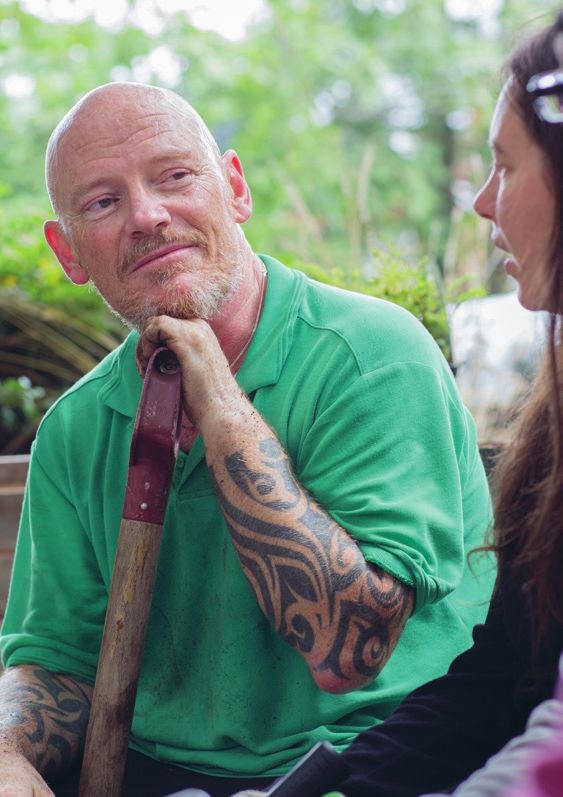
  personal experience of the topic, with our thanks. Everyone you see in
  our photos, or read quotes from, are real people who’ve experienced
  mental health problems. References are available on request from
  mindinfoteam@mind.org.uk

  We really value your feedback. If you’d like to tell us what you think
  please email us at contact@mind.org.uk

Contents

What are mental health problems?                              2
What types of mental health problem are there?                8
What difficult feelings and behaviours might I experience?   16
What causes mental health problems?                          20
How are mental health problems diagnosed?                    24
What can I do to help myself cope?                           28
What treatments are available?                               34
What support services are available?                         40
Will I recover?                                              44
How can I deal with stigma?                                  46
Alice’s story                                                48
How can friends and family help?                             50
Useful contacts                                              55

                                          1
What are mental
health problems?
This section describes some different approaches to
mental health and mental illness, and dispels some
common misconceptions.

2

What are mental health problems?

   I now know that if I felt there was
   something wrong, it’s because there was...
   mental health is a spectrum and you should
   feel able to decide where and when you are
   on that spectrum.

In many ways, mental health is just like physical health: everybody
has it and we need to take care of it.

Good mental health means being generally able to think, feel and
react in the ways that you need and want to live your life. But if you
go through a period of poor mental health you might find the ways
you’re frequently thinking, feeling or reacting become difficult, or even
impossible, to cope with. This can feel just as bad as a physical illness,
or even worse.

You might be given a diagnosis of a particular type of mental health
problem (see p.8). Or you might not have any particular diagnosis, but
still be finding things very difficult. Everyone’s experience is different
and can change at different times.

                                             3
Am I the only one who feels this way?
Experiencing a mental health problem is often upsetting, confusing
and frightening – particularly at first. If you become unwell, you may
feel that it’s a sign of weakness, or that you are ‘losing your mind’.

These fears are often reinforced by the negative (and often unrealistic)
way that people experiencing mental health problems are shown on TV,
in films and by the media. This may stop you from talking about your
problems, or seeking help. This, in turn, is likely to increase your distress
and sense of isolation.

However, in reality, mental health problems are a common human
experience. Most people know someone who has experienced a mental
health problem – they affect around one in four people in any given
year. They can happen to all kinds of people from all walks of life.
And it’s likely that, when you find a combination of self-care, treatment
and support that works for you, you will get better.

4
What are mental health problems?

Different approaches to mental health problems
There are various approaches to mental health and mental illness
around the world. Most health professionals in the UK agree on
a similar set of clinical diagnoses and treatments for mental health
problems. We have chosen to reflect this approach in this booklet,
as these are the terms and treatment models that you are most
likely to come across if you seek help in England or Wales.

However, not everyone finds it helpful to think about their mental
health this way. Depending on your traditions and beliefs you
might have different ideas about how best to cope. In many
cultures, emotional wellbeing is closely associated with religious
or spiritual life. And your difficult experiences may be just one
part of how you understand your identity overall.

We use the phrase ‘mental health problems’, as many people have
told us this feels helpful for them. But you might be more familiar
with terms such as ‘poor emotional health’, ‘overloaded’, ‘burnt out’
or ‘overwhelmed’. Or you may feel that terms such as ‘mental
illness’ or ‘mental health issues’ describe your experiences better,
or are easier to explain to other people in your life.

However you understand your own experiences, and whatever
terms you prefer to use, we hope that you will find the information
in this booklet useful when considering different options for care
and support.

                                         5
Are people with mental health problems
dangerous?
Some people think there is an automatic link between mental health
problems and being a danger to others. This is an idea that is reinforced
by sensationalised stories in the media. However, the most common
mental health problems have no significant link to violent behaviour.
The proportion of people living with a mental health problem who
commit a violent crime is extremely small. There are lots of reasons
someone might commit a violent crime, and factors such as drug and
alcohol misuse are far more likely to be the cause of violent behaviour.
But many people are still worried about talking about how they’re
feeling, or seeking help, because of the fear and stigma of being seen
as dangerous.
It’s important to remember that experiencing difficult thoughts, feelings
and behaviours when you’re unwell is common, and it’s extremely
unlikely to mean you may harm another person.
The stigma of being violent and dangerous
is the worst for me. I am a caring and
empathetic soul who would do anything for
the people I love.
6What types of mental
health problem are there?
There are many different mental health diagnoses.
Some have similar symptoms, so you may experience
the symptoms of more than one mental health problem,
or be given several diagnoses at once.
This section provides a brief description of a few of the
more common and often-discussed mental health problems.
Visit mind.org.uk/info for more detailed
information about all these mental health problems,
and many others not covered in this booklet.
8What types of mental health problem are there?
Anxiety problems
Anxiety is what we feel when we are worried, tense or afraid –
particularly about things that are about to happen, or which we think
could happen in the future.
Occasional anxiety is a normal human experience. But if your feelings
of anxiety are very strong, or last for a long time, they can be
overwhelming. You might also experience unpleasant physical symptoms
such as sleep problems, an upset stomach and panic attacks (see p.17).
Depending on your symptoms you might be diagnosed with a particular
anxiety disorder. But it’s also possible to experience problems with
anxiety without having a diagnosis of a specific disorder.
Phobias
A phobia is an extreme form of fear or anxiety triggered by a particular
situation (such as going outside) or object (such as spiders), even when
it’s very unlikely to be dangerous. A fear becomes a phobia if the fear
is out of proportion to the danger, it lasts for more than six months,
and has a significant impact on how you live your day-to-day life.
Going out of the house is a challenge
because I have a fear of panicking and feel
that I’m being watched or judged.
9Depression
Depression is a feeling of low mood that lasts for a long time and
affects your everyday life. It can make you feel hopeless, despairing,
guilty, worthless, unmotivated and exhausted. It can affect your
self-esteem, sleep, appetite, sex drive and your physical health.
In its mildest form, depression doesn’t stop you leading a normal
life, but it makes everything harder to do and seem less worthwhile.
At its most severe depression can make you feel suicidal, and be
life-threatening.
There are also some common specific forms of depression, such as:
•• Perinatal depression – depression that occurs in pregnancy
(antenatal depression) or up to two years after becoming a parent
(postnatal depression).
•• Seasonal affective disorder (SAD) – depression that is experienced at
a particular time of year or during a particular season (usually winter).
10What types of mental health problem are there?
Obsessive-compulsive disorder (OCD)
Obsessive-compulsive disorder is a type of anxiety disorder. The term
is often misused in daily conversation – for example, you might hear
people talk about being ‘a bit OCD’, if they like things to be neat and
tidy. But the reality of this disorder is a lot more complex and serious.
OCD has two main parts:
•• Obsessions – unwelcome thoughts, images, urges, worries or
doubts that repeatedly appear in your mind.
•• Compulsions – activities that you feel you have to do to reduce the
anxiety caused by the obsession. The process of repeating these
compulsions is often distressing, and any relief you feel doesn’t
usually last long.
Eating problems
Eating problems are not just about food. They can be about difficult and
painful feelings which you may be finding hard to face or resolve. Lots
of people think that if you have an eating problem you will be over- or
underweight, and that being a certain weight is always associated with
a specific eating problem – but this is a myth. Anyone, regardless of
age, gender or weight, can be affected by eating problems.
The most common eating disorder diagnoses are anorexia, bulimia
and binge eating disorder. But it’s also possible to have a very difficult
relationship with food and not fit the criteria for any specific diagnosis.
This can be just as hard to live with as a diagnosed eating disorder.
11Bipolar disorder
Bipolar disorder (once called manic depression) mainly affects
your mood. With this diagnosis you are likely to have times when
you experience:
•• manic or hypomanic episodes (feeling high)
•• depressive episodes (feeling low)
•• potentially some psychotic symptoms (see p.18).
Everyone has variations in their mood, but in bipolar disorder these
changes can be very distressing and have a serious impact on your life.
You may feel that your high and low moods are extreme, and that
swings in your mood are overwhelming. In between, you might have
stable times where you experience fewer symptoms.
The hardest thing to explain is the racing
thoughts when I’m manic. It’s like I’ve got
four brains and they’re all on overdrive...
it can be scary but also euphoric at the
same time.
12What types of mental health problem are there?
Schizophrenia
Views on schizophrenia have changed over the years. Lots of people
question whether it’s really a distinct condition, or actually a few
different conditions that overlap. But you may still be given this
diagnosis if you experience symptoms such as:
•• psychosis (see p.18)
•• disorganised thinking and speech
•• feeling disconnected from your feelings
•• difficulty concentrating
•• wanting to avoid people
•• a lack of interest in things
•• not wanting to look after yourself.
Because psychiatric experts disagree about what schizophrenia is, some
people argue that this term shouldn’t be used at all. Others think the
name of the condition doesn’t matter, and prefer to just focus on
helping you manage your symptoms and meeting your individual needs.
13Personality disorders Personality disorder is a type of mental health problem where your attitudes, beliefs and behaviours cause you longstanding problems in your life. If you have this diagnosis it doesn’t mean that you’re fundamentally different from other people – but you may regularly experience difficulties with how you think about yourself and others, and find it very difficult to change these unwanted patterns. There are several different categories and types of personality disorder. The two most commonly diagnosed are borderline personality disorder (BPD, sometimes also called ‘emotionally unstable personality disorder’) and antisocial personality disorder (ASPD). However, most people who are diagnosed with a particular personality disorder don’t fit any single category very clearly or consistently. Also, the term ‘personality disorder’ can sound very judgemental. Because of this it is a particularly controversial diagnosis. Some psychiatrists disagree with using it. And many people who are given this label find it more helpful to explain their experiences in other ways. 14
What difficult feelings
and behaviours might
I experience?
This section provides a brief overview of some difficult
feelings and behaviours which are often associated with
mental health problems.

            Visit mind.org.uk/info for more detailed
            information about all these topics, including
            options for care and support.

16
What difficult feelings and behaviours might I experience?
Panic attacks
Panic attacks are a type of fear response. They’re an exaggeration
of your body’s normal response to danger, stress or excitement.
During a panic attack physical symptoms can build up very quickly,
including:
•• a pounding heartbeat or chest pains
•• sweating and nausea (feeling sick)
•• feeling faint and unable to breathe
•• shaky limbs, or feeling like your legs are turning to jelly
•• feeling as if you aren’t connected to your body.
It’s easy to mistake these for the signs of a heart attack or another
serious medical problem. You might feel very afraid that you’re losing
control, going to faint or even going to die.
Self-harm
Self-harm is when you hurt yourself as a way of dealing with very
difficult feelings, painful memories or overwhelming situations and
experiences. You may not know why you self-harm, but it can be a
means of expressing feelings that you can’t put into words or think
clearly about.
After self-harming you may feel a short-term sense of release, but the
cause of your distress is unlikely to have gone away. Self-harm can also
bring up very difficult emotions and could make you feel worse.
17Psychosis
Psychosis (also called a psychotic experience or psychotic episode)
is when you perceive or interpret reality in a very different way from
people around you. The most common types of psychosis are:
•• hallucinations, such as hearing voices or having visions
•• delusions, such as paranoia.
Psychosis affects people in different ways. You might experience it once,
have short episodes throughout your life, or live with it most of the time.
It’s also possible to have a psychotic experience without ever being
diagnosed with a particular mental health problem.
Some people have a positive experience of psychosis. You may find it
comforting, or feel that it helps you understand the world or makes you
more creative.
Psychosis felt as though I was in
wonderland. None of my family or friends
understood why... I had a calling from a
voice in sky. I was lost and lonely.
18What difficult feelings and behaviours might I experience?
Suicidal feelings
Many people experience suicidal thoughts and feelings at some point
in their lifetime. They can be very unpleasant, intrusive and frightening,
but having thoughts about suicide doesn’t necessarily mean that you
intend to act on them. Most people don’t go on to attempt to take their
own lives.
However, if you feel you may act on suicidal feelings and become unable
to keep yourself safe then this a mental health emergency. It’s important
to treat it as seriously as you would any physical health emergency, and
seek urgent help – for example by dialling 999, going to your nearest
A&E, or calling the Samaritans on 116 123 (see pp.59–61 for details
of other helplines you could call).
19What causes mental
health problems?
This section describes some possible factors involved in
developing a mental health problem, and addresses some
common misconceptions.
It’s important to remember that just because we may
not know exactly what causes someone to experience
a mental health problem, this doesn’t mean that it is any
less serious than any other illness, any less deserving of
recognition and treatment, or any easier to recover from.
For me, it started when my mother died.
After struggling and burying things deeper,
I finally cracked.
20What causes mental health problems?
Mental health problems can have a wide range of causes. It’s likely
that for many people there is a complicated combination of factors –
although different people may be more deeply affected by certain
things than others.
For example, the following factors could potentially result in a period
of poor mental health:
•• childhood abuse, trauma, or neglect
•• domestic violence, bullying or other abuse as an adult
•• social isolation or loneliness
•• experiencing discrimination and stigma
•• social disadvantage, poverty or debt
•• bereavement (losing someone close to you)
•• severe or long-term stress
•• having a long-term physical health condition
•• unemployment or losing your job
•• homelessness or poor housing
•• being a long-term carer for someone
•• drug and alcohol misuse
•• significant trauma as an adult, such as military combat, being
involved in a serious incident in which you feared for your life,
or being the victim of a violent crime
•• physical causes – for example, a head injury or a neurological
condition such as epilepsy can have an impact on your behaviour
and mood. (It’s important to rule out potential physical causes
before seeking further treatment).
Although lifestyle factors including work, diet, drugs and lack of sleep
can all affect your mental health, if you experience a mental health
problem there are usually other factors as well.
21Do mental health problems run in families? Research suggests that some mental health problems may run in families. For example, if you have a parent with schizophrenia, you are more likely to develop schizophrenia yourself. But no one knows if this is because of our genes or because of other factors, such as the environment we grow up in, or the ways of thinking, coping and behaving that we may learn from our parents. Although the development of some mental health problems may be influenced by our genes, researchers haven’t found any specific genes that definitely cause mental health problems. And many people who experience a mental health problem don’t have any parents, children or other relatives with the same condition. Is brain chemistry a factor? The human brain is extremely complicated. Some research suggests that mental health problems may be linked to a variation in certain brain chemicals (such as serotonin and dopamine), but no one really understands how or why. Arguments that someone’s brain chemistry is the cause of mental health problems are very weak. But even though there’s no strong evidence to say that any mental health problems are caused by a chemical imbalance in our brains, you might find some people still use brain chemistry to explain them. 22
What causes mental health problems?

Reasons for this might include:

 •• Some psychiatric medications work by acting on chemicals in the
    brain, and there’s lots of evidence to show that medication can be
    effective in treating some symptoms of mental health problems
    (although drugs don’t work for everyone).

 •• Mental health problems can feel very personal and be hard to
    understand, so the idea that there could be a distinct physical cause
    for difficult thoughts, feelings and behaviours might make it feel
    easier to talk openly about your experiences and ask for help.

                                           23
How are mental health
problems diagnosed?
This section addresses some common questions about
getting a diagnosis.
Visit mind.org.uk/seekinghelp for tips on talking
to your GP about your mental health, and how to
prepare for appointments.
24How are mental health problems diagnosed?
Getting the diagnosis gave me something
to work with and find the words to describe
what was happening.
To diagnose a mental health problem, doctors will look at:
•• what you’re experiencing (groupings of certain feelings, behaviours
and physical symptoms may suggest different diagnoses)
•• how long you’ve been experiencing these things
•• the impact it’s having on your life.
To do this they may ask you questions about your mood, thoughts and
behaviours – sometimes by using questionnaires or forms. They will
base your diagnosis on what you describe. For example, if you tell your
doctor you’ve been experiencing low mood, low energy and a lack of
interest in usual activities for more than two weeks, they may give
you a diagnosis of depression. If your symptoms change you might
find you are given different diagnoses over time.
Having a diagnosis does not necessarily mean that you are unwell right
now. You could have a diagnosis of a mental health problem but, at the
moment, be able to manage it and function well at work and at home.
Or you might not have a particular diagnosis, but still be struggling.
25Who can diagnose me? For common problems such as depression and anxiety, your GP may be able to give you a diagnosis after one or two appointments. For less common problems you’ll need to be referred to a mental health specialist (such as a psychiatrist), and they may want to see you over a longer period of time before making a diagnosis. What if I don’t find my diagnosis helpful? Receiving a diagnosis can be a positive experience. You might feel relieved that you can put a name to what’s wrong, and it can help you and your doctor discuss what kind of treatment might work best for you. However, a lot of people, including some doctors and psychiatrists, feel the medical model of diagnosis and treatment is not enough. For example, you might feel that the diagnosis you’re given doesn’t fully fit your experiences, or that it’s simplistic and puts you in a box. Other factors – such as your background, lifestyle and other personal circumstances – may be just as important in understanding what you’re experiencing and working out how best to help you feel better. A diagnosis does not have to shape your entire life, and may come to be a relatively minor part of your identity. 26
What can I do to help
myself cope?
Self-care techniques and general lifestyle changes can
help manage the symptoms of many mental health
problems. They may also help prevent some problems
from developing or getting worse.

This section provides some ideas for looking after
yourself. These activities can be particularly valuable if
you don’t want to try medication or talking therapies, or
you’re having to wait a while for treatment on the NHS.

If these strategies work well for you then you may
find you don’t need any formal treatment. However,
it’s important to remember that there is unlikely to be
an instant solution. Recovering from a mental health
problem is likely to take time, energy and work.

28
What can I do to help myself cope?

Stay aware of your mental health
 •• Tell people what helps. If certain treatments have helped in the
    past, tell your doctor. Let your friends and family know how they
    can support you.

 •• Spot your early warning signs. Try to be aware of how you’re feeling
    and watch out for any signs you might be becoming unwell, so you
    can get support as soon as possible.

 •• Keep a mood diary. Tracking your moods can help you to work out
    what makes you feel better or worse. You can then take steps to
    avoid, change or prepare for difficult situations. You can create your
    own mood diary or find one online.

  I really have to remember to be kind to
  myself and actually try to function when I’m
  unwell. Otherwise things spiral even faster.

                                            29
Nourish your social life Feeling connected to other people is important. It can help you to feel valued and confident about yourself, and can give you a different perspective on things. If you can, try to spend some time connecting with friends and family – even a text or phone call can make a difference. If you don’t have supportive friends and family around you and are feeling isolated, there are other ways you can make connections. For example, you could try going to community events where you might have some interests or experiences in common with other people there, or joining a group like a local book club or sports team. Try peer support When you experience a mental health problem it can feel like no one understands. Peer support brings together people who’ve had similar experiences to support each other. This can offer many benefits, such as: •• feeling accepted for who you are •• increased self-confidence •• meeting new people and using your experiences to help others •• finding out new information and places for support •• challenging stigma and discrimination. Mind runs both online and offline peer support services (see p.56 for details). 30
What can I do to help myself cope?

Make time for therapeutic activities
There are various techniques and therapies you can safely practise
on your own. For example:

 •• Relaxation – you may already know what helps you relax, like
    having a bath, listening to music or taking your dog for a walk.
    If you know that a certain activity helps you feel more relaxed,
    make sure you set aside time to do it.

 •• Mindfulness – mindfulness is a therapeutic technique that involves
    being more aware of the present moment. Practising mindfulness
    can help you become more aware of your own moods and
    reactions, but not everyone finds it helpful.

 •• Getting into nature – getting out into a green environment, such
    as a park or the countryside, is especially good for you. Even if
    you don’t have a garden or aren’t very mobile, caring for plants
    or animals indoors can still help you get some benefits from nature.

Contact a specialist organisation
If you have a particular mental health diagnosis, or would like help
in a specific aspect of your life, there may be specialist charities and
organisations out there who can offer support. Contact Mind’s Infoline
for suggestions (contact details on p.56).

                                            31
Look after your physical health
Taking steps to look after your physical health can help you manage
your mental health too.
•• Get enough sleep. Rest when you can. This can help you have
the energy to cope with difficult feelings and experiences.
•• Avoid recreational drugs and alcohol. While you might want to use
recreational drugs or alcohol to cope with difficult feelings, in the
long run they can make you feel a lot worse.
•• Make time for personal care. When you’re experiencing a mental
health problem, it’s easy for personal care to not feel like a priority.
But small everyday things, such as taking a shower and getting fully
dressed, can make a big difference to how you feel.
•• Eat healthily. What you eat, and when you eat, can make a big
difference to how well you feel.
•• Keep physically active. Regular exercise doesn’t have to be very
strenuous or sporty to be effective – to start with you could try
gentle exercise like going for a short walk, yoga or swimming.
The important thing is to pick something you enjoy doing, so
you’re more likely to stick with it.
32What treatments
are available?
The two most common forms of treatment offered though
the NHS are talking therapies and psychiatric medication,
although there are various alternative treatments you could
also try. This section gives an overview.
Visit mind.org.uk/treatments for more detailed
information about talking therapies, medication, and
other treatment options.
34What treatments are available?
Talking therapies
Talking therapies provide a regular time and space for you to talk about
your thoughts and experiences and explore difficult feelings with a
trained professional. This could help you to:
•• deal with a specific problem
•• cope with upsetting memories or experiences
•• improve your relationships
•• develop more helpful ways of living day-to-day.
You may hear various terms used to describe talking therapies, including
counselling, psychotherapy or psychological therapy. These terms are all
used to describe the same general style of treatment.
The most common type of talking therapy available through the NHS
is cognitive behavioural therapy (CBT), but there are lots of others. It’s
important to find a style and a therapist that you feel comfortable with.
NHS waiting lists for therapy can be long, so some people choose to
access therapy through the private sector – but this isn’t an option for
everyone because it usually involves paying a fee.
The counselling and therapy services listed on pp.58–59 may be able
to help you find a local service that suits you.
35What is cognitive behavioural therapy (CBT)?
Cognitive behavioural therapy (CBT) is a relatively short-term treatment
which aims to identify connections between your thoughts, feelings
and behaviours, and to help you develop practical skills to manage
any negative patterns that may be causing you difficulties.
Evidence suggests that CBT can be an effective treatment for a range
of mental health problems. However, although many people can benefit
from CBT, not everyone finds it helpful. You might find that it just
doesn’t suit you, or doesn’t meet your needs.
The NICE guidelines
The National Institute for Health and Care Excellence
(NICE) is the organisation that produces official clinical guidelines
on best practice in healthcare. Any treatment your doctor offers
you will ideally follow what NICE recommends for your diagnosis.
These guidelines are based on published evidence, expert
contributions and real life experiences. They are officially for
use in England, but may be used in Wales and other parts of
the UK too.
However, although healthcare professionals are all encouraged
to follow the NICE guidelines, unfortunately access to
recommended treatments still varies enormously across
the NHS (see p.60 for details).
36What treatments are available?
Talking things through with a counsellor or
therapist really helps me to see things more
rationally and make connections between
reality and inside my head.
Medication
Depending on your diagnosis and your medical history, your doctor
might offer to prescribe you some psychiatric medication. This might be:
•• Antidepressants – mainly prescribed for depression, but also
sometimes anxiety, obsessive-compulsive disorder (OCD) and
eating problems.
•• Sleeping pills and minor tranquillisers – these can help you sleep
if you experience severe sleep problems, or calm you down if
you experience severe anxiety.
•• Antipsychotics – these can reduce distressing symptoms of
psychosis and schizophrenia. They can also sometimes help
control severe anxiety, and experiences of mania or hypomania
(feeling high).
•• Mood stabilisers (including lithium) – these can help stabilise
your mood if you experience extreme mood swings, for example
if you have a diagnosis of bipolar disorder. They’re also sometimes
prescribed for severe depression.
37Medication can’t cure mental health problems, but it can ease many
symptoms and help you to cope at work and at home, which many
people find helpful.
However, drugs can sometimes have unpleasant side effects that may
make you feel worse rather than better. They can also be difficult to
withdraw from, or be harmful if you take too much. And it’s important
to remember that drugs don’t work the same way for everyone. If you
don’t get on with one drug you’ve been prescribed, your doctor may
be able to recommend a different one you could try.
Before prescribing you any medication, your doctor should clearly
explain what it’s for and explain any possible risks and benefits,
so you can make an informed decision about whether or not you
want to take it.
Visit mind.org.uk/medication for more questions
to ask your doctor, and information on coming off
medication safely.
38What treatments are available?
Arts and creative therapies
Arts and creative therapies are a way of using the arts (music, painting,
dance or drama) to express and understand yourself in a therapeutic
environment, with a trained therapist. This can be especially helpful if
you find it difficult to talk about your problems and how you are feeling.
Complementary and alternative therapies
Some people find complementary and alternative therapies helpful
to manage stress and other common symptoms of mental health
problems. These can include things like yoga, meditation, aromatherapy,
hypnotherapy, herbal remedies and acupuncture.
The clinical evidence for these options is not as robust as it is for other
treatments, but you may find they work for you.
39What support services are available? If your mental health problems are severe or longer lasting, or the treatment your doctor has offered you isn’t working, they can refer you to specialist mental health services. This section provides a brief overview of various services which are available to support you in the community and in times of crisis. 40
What support services are available?

   My crisis team have been with me on three
   separate occasions for two months at a time,
   sometimes visiting twice a day to keep me
   out of hospital.

Community mental health teams (CMHTs)
CMHTs support people with mental health problems living in the
community, and also their carers. The team may include a community
psychiatric nurse (CPN), a psychologist, an occupational therapist, a
counsellor and a community support worker, as well as a social worker.

Often, a member of the team will be appointed as your care coordinator,
to keep in regular contact with you and help plan your care.

Social (or community) care
Social care is any care or support you need to carry out day-to-day
tasks which you’re finding difficult. This could include help with
managing money or improving relationships, transport to attend
appointments or services, or assistance with benefits and housing
applications.

You can ask your doctor or community mental health team
(CMHT) to refer you to social services, or you can contact your
Local Authority directly to ask for a needs assessment (find their
details online at gov.uk/find-local-council).

                                            41
Residential care
If you aren’t able to cope on your own at home, there are other options
for housing. You might be able to access:
•• Hostels – these are short-term accommodation, with supervision,
to help you until you can live more independently.
•• Residential care homes – these offer a much higher level of support
for people with severe mental health problems.
•• Therapeutic communities – these are for short stays, with group
or individual therapy as part of their rehabilitation programmes.
•• Supported housing schemes – these help you to live independently,
in furnished accommodation, with the back-up of a mental health
support worker in case you need extra help.
Crisis intervention
In most areas, you should have access to a crisis resolution and home
treatment team (CRHT), often just called the ‘crisis team’. These teams
can support you through a crisis at home.
If you don’t have access to a local crisis service, you could:
•• get an emergency appointment with your doctor
•• call a helpline (see pp.59–61 for details)
•• go to the Accident and Emergency (A&E) department at a local
hospital or call 999 if you are at immediate risk.
42What support services are available?
Campaigning for excellent crisis care
While we know that excellent crisis services do
exist, unfortunately they’re not consistently
available everywhere. We know how frustrating
and difficult it can be to cope with services that
don’t provide the precise help you need, exactly
when you need it. That’s why we’re campaigning
to improve crisis care across England and Wales.
Visit mind.org.uk/campaigns to find out more,
and see how you can get involved.
Hospital treatment
Hospital inpatient services support people with severe mental health
problems, or people who are experiencing a crisis. Most hospital
admissions are voluntary, but if you are assessed and judged to be at
risk of harming yourself or others, you can be detained under a section
of the Mental Health Act 1983 (in England and Wales). This is often
called being sectioned. How long you stay in hospital will depend on
your personal situation.
Being treated in hospital can mean you have faster access to treatment,
round-the-clock support and are kept safe during a crisis. Some people
find hospital a positive experience, while others find it unpleasant,
as you might be far away from your support network, in an unfamiliar
place or be there against your will.
Visit mind.org.uk/rights for information on
sectioning, leaving hospital and other legal topics.
43Will I recover?
With time you do learn to cope... I have
struggled for 15 years with my mental
health problem, but every year I seem to
get stronger and better at coping with it!
44Will I recover?
It is possible to recover from mental health problems, and many people
do – especially after accessing support. Your symptoms may return from
time to time, but when you’ve discovered which self-care techniques
and treatments and work best for you, you’re more likely to feel
confident in managing them.
If you’re experiencing a more serious mental health problem, it’s still
possible to find ways to manage your symptoms. For many people,
recovery doesn’t necessarily mean going back to how your life was
before, but learning new ways to live your life the way you want to,
and gaining control over areas of your life that might have felt out of
control before.
However, it’s important to remember that recovery is a journey and it
won’t always be straightforward. You might find it more helpful to focus
on learning more about yourself and developing ways to cope, rather
than trying to get rid of every symptom of your mental health problem.
What recovery means to you will be personal, but for most people,
the most important thing is to find ways to live the kind of life you want.
45How can I deal with stigma? 46
How can I deal with stigma?

Unfortunately, not everyone understands mental health problems.
Some people may have misconceptions about what certain diagnoses
mean. They may also use language you find dismissive, offensive or
hurtful. This can be very upsetting – especially if someone who feels
this way is a family member, colleague or a healthcare professional.

But it’s important to remember that you aren’t alone, and you don’t
have to put up with people treating you badly.

Here are some options for you to think about:

 •• Show people reliable information (such as this booklet or the
    information on Mind’s website) to help them understand more
    about what your diagnosis really means.

 •• Get more involved in your treatment. Do your own research, ask
    questions, and get support from friends and family if you can.

 •• Contact an advocate. If you’re struggling to access the help you
    deserve, consider contacting an advocate to help make your voice
    heard. The organisations listed on p.58 may be able to help you
    find a local advocacy service.

 •• Know your rights. Visit mind.org.uk/rights for information on your
    legal rights in England and Wales.

 •• Get involved with Mind. Find out more about the many ways you
    can help us create change for the better on p.63.

                                           47
Alice’s story
I experienced being kidnapped and assaulted when I was 17.
Until my mid-twenties I just got on with life saying “Oh another
bad thing has happened, ok, but I’ve survived, learned from it and
life is good”. It makes sense looking back that past trauma played
a part in how I was living my life, but at the time I was unaware
of the damage done.
It was only when the pressures intensified in my home life
(where I was caring for my sick brother and trying to salvage
the relationship with my partner), and work life (managing a large
project with high stress levels), that my symptoms worsened.
I was finding it hard to concentrate, missing appointments and
losing track of conversations. I wasn’t able to read and I wasn’t
sleeping, there was too much to do and too many things to think
about. I’d be in tears or deeply frustrated one minute and then
very distant the next. Nothing felt good and it seemed no matter
how hard I tried things were getting away from me.
At the time I simply didn’t realise how ill I was. I kept saying “I just
need to rest and I’ll be ok”. It took my partner being really frank
with me and a subsequent trip to the GP for me to start to realise
I wasn’t well. At that point it was still classed as depression and
anxiety and I was given a few weeks off work and referred for
cognitive behavioural therapy (CBT).
The CBT sessions helped, although I had had to wait a few
months, but I needed deeper support. So I arranged to see
a psychotherapist. It was during that time that I had my first
flashback. One evening I was at home and then suddenly I was
48back in ‘that room’ with my attacker and overwhelmingly terrified.
Suddenly my past was in my here and now and I genuinely
thought I was going mad. But it led to me being treated for post-
traumatic stress disorder (PTSD), which helped me turn the corner.
Psychotherapy was hard work and at times I hated the process,
but slowly and surely I emerged the other side with a much
healthier approach. I have a number of things I do daily and
weekly as well as staying social, active and present. Sometimes
just a cuppa with a friend can help, or getting out on a walk.
I know if I leave it too long before asking for help I’m more unwell,
and have to climb higher and harder to get back up again. It helps
that I have friends and family who know, and will reach out to me.
So often I hear ‘but you are recovered now – right?’. Recovery
is different for everybody. For me, I am largely able to regulate
my condition and I have autonomy over my life again. But because
of what I have experienced I will always need to put effort into
keeping well, and that means sometimes I’m not able to work or
be as social as I’d like. Some days I am exhausted just having a
shower, others days I can climb up a hillside. But I am still me
on brighter days or harder days, and I am managing as best I can.
Visit mind.org.uk/yourstories to read more
real life experiences people have shared about
mental health problems.
49How can friends and family help? It can be very difficult to see someone who you care about becoming unwell, but you don’t need to be an expert on mental health to offer support. Small, everyday actions can make a big difference. This section is for friends and family who would like to support someone who is experiencing a mental health problem. 50
How can friends and family help?

Show your support
If you know someone has been unwell, don’t be afraid to ask how they
are. They might want to talk about it, or they might not. But just letting
them know they don’t have to avoid the issue with you is important.
Spending time together lets them know you care, and can help you
understand what they’re going through.

Ask how you can help
Everyone will want support at different times and in different ways,
so ask how you can help. It might be useful to help keep track of
medication, or give support at a doctor’s appointment. If your friend
wants to get more exercise, you could do this together, or if your
partner is affected by lack of sleep, you could help them get into
a regular sleeping pattern.

   Sometimes all you need is a hug and for
   someone to tell you that you’re going to
   get there.

                                            51
Be open-minded Phrases like ‘cheer up’ and ‘pull yourself together’ definitely don’t help. Try to be non-judgemental and listen. Someone experiencing a mental health problem often knows best what’s helpful for them. Don’t just talk about mental health Keep in mind that having a mental health problem is just one aspect of your friend or family member’s life. Most people don’t want to be defined by their mental health problem, so keep talking about the things you’ve always talked about together. Show trust and respect Trust and respect between you and your friend or family member are very important – they help to rebuild and maintain a sense of self- esteem, which a mental health problem can seriously damage. It can also help you to cope a bit better if you can see your support having a positive impact on the person you care about. 52
How can friends and family help?

Look after yourself
Supporting someone else can sometimes be stressful. Making sure that
you look after your own wellbeing can mean that you have the energy,
time and distance you need to be able to help. For example:

 •• Set boundaries and don’t take too much on. If you become unwell
    yourself you won’t be able to offer as much support.

 •• Share your caring role with others, if you can. It’s often easier
    to support someone if you’re not doing it alone.

 •• Talk to someone about how you’re feeling. You may want to be
    careful about how much information you share about the person
    you’re supporting, but talking about your own feelings with
    someone you trust can help you feel supported too.

Get support
You may be entitled to social care support from your Local Authority
to help you care for your friend or family member. You can contact
them directly and ask for a carers assessment (see p.41 for more
about social care).

The charity Carers UK provide more information and support for
carers (contact details on p.59).

                                            53
Useful contacts
Every year, one in four of us will experience a mental
health problem. But many of us struggle to get the right
support when we need it. We at Mind believe no one
should have to face a mental health problem alone.
This section explains how we can help you, and provides
details of many more organisations you can turn to for
information and support.
Thanks to the web information from the
Mind site I have gained more understanding
than ever before of the state and place
I was in. I also use Mind’s online support
community for encouragement and support.
It is such a loving caring place.
55How we at Mind can help you
Helplines
Our Infoline and Legal Line
provide mental health information Mind Infoline
to thousands of people across call: 0300 123 3393
England and Wales each year. text: 86463
We’ll listen without judgement, email: info@mind.org.uk
look into options for support near
you, and help you work out your Mind Legal Line
next steps. We’re open 9am– call: 0300 466 6463
6pm, Monday–Friday. email: legal@mind.org.uk
Online Local Minds
community Our network of local Mind
We know that when people branches across England
use their own experiences and Wales provide services
to help each other they can such as talking therapies,
feel less alone and isolated. peer support groups and
advocacy.
We run a supportive online
community for anyone Call our Infoline to find
experiencing a mental out details of your nearest
health problem. However local Mind, or visit
you’re feeling right now, our mind.org.uk/localminds,
community is a safe place to and then contact
listen, share and be heard. them directly to see
Find out more and join in at what they offer.
mind.org.uk/community
56Free online resources Visit mind.org.uk/info to
We publish reliable, up-to- read or download any of our
date information on over 100 information pages for free.
mental health topics, such as:
Our most popular online
•• mental health diagnoses resources are also available
translated into Welsh.
•• drugs and treatments
•• tips for getting and
staying well
•• your legal rights
Free printed booklets •• How to manage stress
We produce many other •• How to manage anger
booklets like this one. If you’d
•• Coping with student life
like to read more, we can send
you up to three of these titles •• Coping with working life
for free: •• Coping when supporting
someone else
•• Understanding mental •• Supporting someone who
health problems feels suicidal
•• Understanding anxiety
and panic attacks To order you can email
•• Understanding depression publications@mind.org.uk or
telephone 0844 448 4448, or
•• Seeking help for a mental
visit mind.org.uk/shop
health problem
57More useful contacts
Advocacy and activism Time to Change
web: time-to-change.org.uk
Advocacy Support (England)
Cymru (ASC) web: timetochangewales.org.uk
tel: 02920 540 444 (Wales)
web: ascymru.org.uk National campaigns to end stigma
Mental health advocacy services and discrimination against people
and support for people in Wales. with mental health problems in
England and Wales.
National Survivor
User Network (NSUN) VoiceAbility
web: nsun.org.uk web: voiceability.org
Independent network of people Provides advocacy services
who have experience mental across England.
health problems, working to
change things for the better.
Counselling and therapy
POhWER British Association
tel: 03004 562 370 for Counselling and
web: pohwer.net Psychotherapy (BACP)
Provides advocacy services tel: 01455 883 300
across England. web: bacp.co.uk
See sister website
itsgoodtotalk.org.uk for
details of local practitioners.
58Counselling Directory C.A.L.L. (Community Advice
web: counselling-directory.org.uk and Listening Line)
helpline: 0800 132 737
Online directory of professionally
web: callhelpline.org.uk
registered counsellors and
psychotherapists. Provides listening services,
information and support for
people experiencing a mental
Improved Access
health problem in Wales.
to Psychological
Therapies (IAPT)
web: iapt.nhs.uk/services Carers UK
adviceline: 0808 808 7777
Information about your local NHS
web: carersuk.org
services and how you can access
them (in England). Information and support for
anyone who is a regular carer
for another person.
Information, helplines
and support
Cruse Bereavement Care
helpline: 0844 477 9400
Campaign Against Living web: cruse.org.uk
Miserably (CALM)
helpline: 0800 58 58 58 Support for anyone affected by
web: thecalmzone.net the death of someone close.
Provides listening services,
information and support for men Disability Rights UK
at risk of suicide. web: disabilityrightsuk.org
Information and support for
people living with a disability,
including contact details of local
disability groups.
59More useful contacts
Hafal NHS Choices
web: hafal.org web: nhs.uk
Welsh charity for people with Provides information on a wide
serious mental illness and their range of health and social care
carers. Provides information and topics. Can help you find NHS
recovery support services all services near you.
around Wales.
PAPYRUS
MindOut HOPELineUK: 0800 068 41 41
web: mindout.org.uk web: papyrus-uk.org
Brighton-based mental health Runs a helpline for people
charity offering information and under 35 who are experiencing
support for anyone who identifies suicidal feelings.
as LGBTQ+.
Samaritans
The National Institute for 24-hour helpline: 116 123
Health and Care Excellence (freephone)
(NICE) email: jo@samaritans.org
web: nice.org.uk Freepost: RSRB-KKBY-CYJK,
PO Box 90 90, Stirling FK8 2SA
Information and clinical guidelines
web: samaritans.org
on recommended treatments for
different conditions.
Emotional support for anyone
feeling down, experiencing
distress or struggling to cope.
60Sane Student Minds
SANEline: 0300 304 7000 web: studentminds.org.uk
(4.30pm–10.30pm)
Mental health support
web: sane.org.uk
for students.
Offers emotional support and
information to anyone affected
Survivors of Bereavement
by mental health problems.
by Suicide
helpline: 0300 111 5065
The Silver Line web: uksobs.org
helpline: 08004 708 090
Provides information and support
(freephone)
groups for adults who have lost
web: thesilverline.org.uk
someone to suicide.
Provides support, information,
advice and friendship to older
YoungMinds
people (over the age of 55)
parent helpline: 0808 802 5544
who feel lonely or isolated.
web: youngminds.org.uk
Information for both parents
and young people.
61Your notes 62
How to get involved with Mind
We’re a passionate community of people who want anyone with a
mental health problem to get the support and respect they deserve.
Your support makes a big difference in our work to create change
for the better. You can become part of our community and help us
in a number of ways:

Campaign with us                      Become a member
Stand up and speak out on the         Our members are at the heart of
real issues that affect people with   our work. Become a Mind member
mental health problems every day.     and play a part in everything we
Find out more at                      do. Find out more at
mind.org.uk/campaign                  mind.org.uk/members

Share your story                      Support your
As guest blogger, vlogger or          local Mind shop
media volunteer, your experiences     You’ll be surprised what you can
of living with – or supporting        find in our high street shops.
someone with – a mental health        See what’s on offer, drop off
problem can have a big impact.        some donations or consider
Find out more at                      volunteering. Find out more at
mind.org.uk/yourstories               mind.org.uk/mindshops

         Give or raise money
         It’s your kind donations and amazing fundraising efforts
         that help us make booklets like this one available for free.
         There are so many ways you can support us, from making
         a monthly donation to holding a fundraising event, or doing
         a sponsored run. Find out more at mind.org.uk/give

Discover more ways to get involved at mind.org.uk/get-involved
We’re Mind, the mental health charity for England and Wales.
We believe no one should have to face a mental health
problem alone.
We’re here for you. Today. Now. We’re on your doorstep,
on the end of a phone or online. Whether you’re stressed,
depressed or in crisis. We’ll listen, give you advice, support
and fight your corner. And we’ll push for a better deal and
respect for everyone experiencing a mental health problem.
Contact our Infoline
Call: 0300 123 3393
Text: 86463
Find us online
@MindCharity
@mindcharity
facebook.com/mindforbettermentalhealth
mind.org.uk
© Mind, 2018 edition.
To be updated in 2021.
ISBN 978-1-910494-23-3
No reproduction without permission.
Mind is a registered charity (219830)
Mind (National Association for Mental
Health) London E15 4BQYou can also read


