2020 topics The societal challenge 'Health, demographic change and well-being' - Business Finland
←
→
Page content transcription
If your browser does not render page correctly, please read the page content below
2020 topics
                                          The societal challenge
                                          'Health, demographic change
                                          and well-being'
Henriette van Eijl                                                  Monika Lanzenberger,
Deputy Head of Unit Economic & Social          Unit eHealth, Wellbeing and Ageing, Digital
Transitions                                   Society, Trust and Cybersecurity Directorate,
Stéphane Hogan                                                               'DG CONNECT
Head of Sector Stakeholder engagement
People Directorate - DG Research & Innovation
                                                          NCP meeting, Brussels, 2 July 2019
Research and innovation – a growing priority for the EU
      Horizon 2020 supports Commission priorities

                                                 Horizon 2020

                                  • Couple research to innovation
                                  • Provide evidence-base for addressing
                                    societal challenges, supporting EU
 • Jobs, growth & investment        policies and better regulation

 • Digital single market          • Strengthen research capacities and
                                    innovation strategies across all
                                    Member States
 • EU – a stronger global actor
                                  • Multidisciplinary and synergies
                                  • Address people's concerns

                                                                           2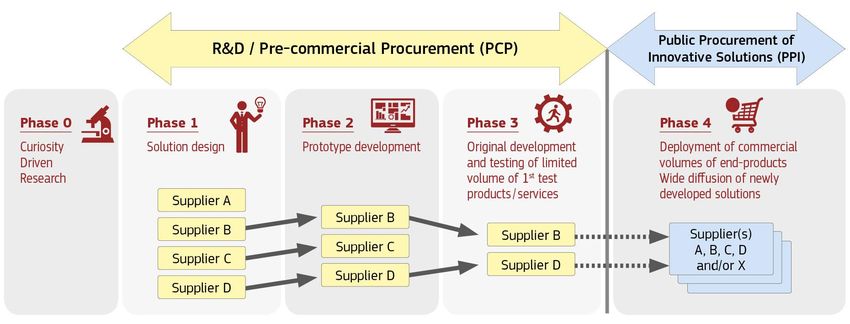
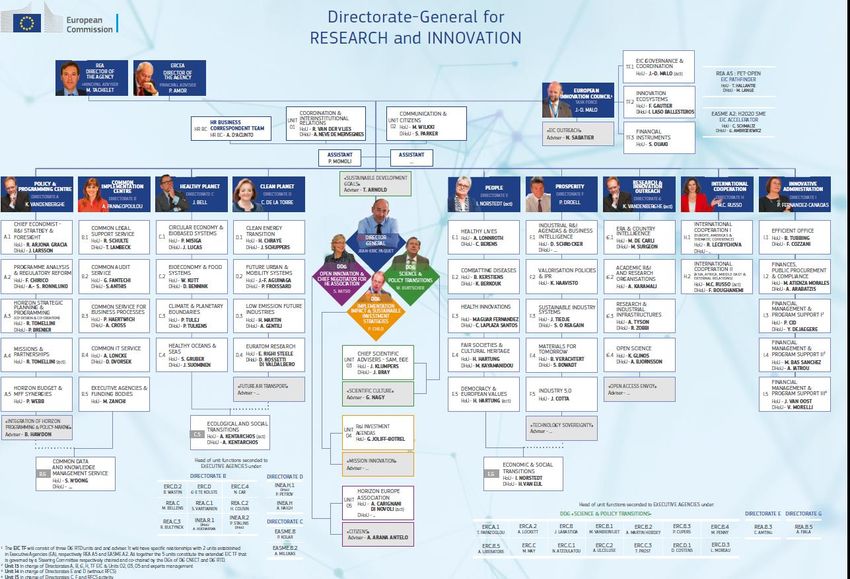
EC DG Research and Innovation has reorganised…

                                        E1, E2,
                                        E3:
                                        health
                                        units

                                E6: NCP & PC for
                                Health, SSH and NMBP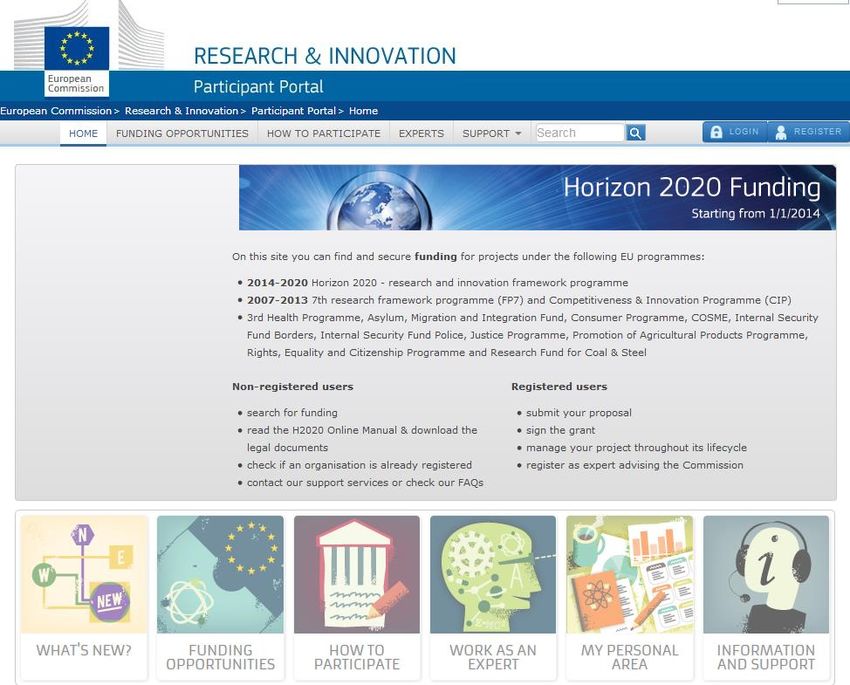
Health Research in Horizon 2020

                                  4
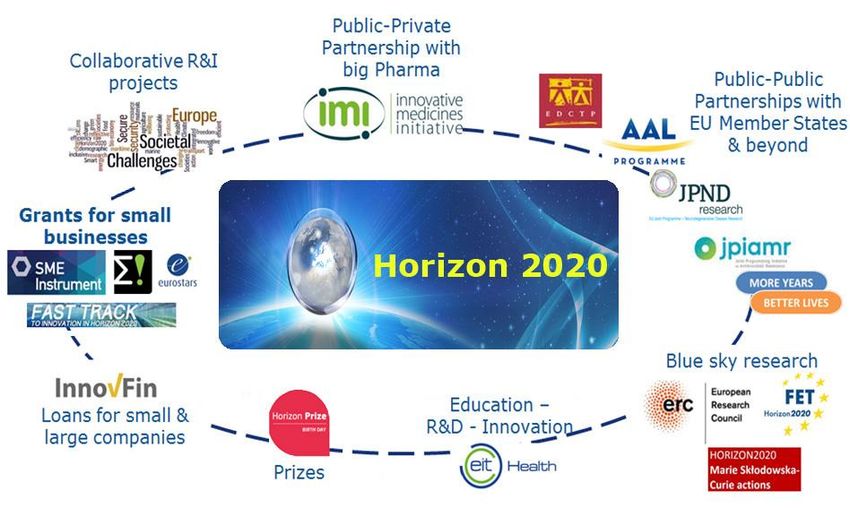
EU Framework programme for Health research 2020 Heath-related topics from NMBP Programme NMBP-21-2020: Biological scaffolds for tissue regeneration and repair [RIA: two-stage, deadlines 12 December 2019 / 14 May 2020] EU grant: €4-6M per proposal (budget for topic €17M) NMBP-23-2020: Next generation Organ-on-chip [RIA-LS: two-stage, deadlines 12 December 2019 / 14 May 2020] EU grant: €4-6M per proposal, with lump sum funding (budget for topic €18M) WP 2020 (pre)publication: 4 June 2019 https://ec.europa.eu/programmes/horizon2020/en/nmbp-work- programme-2018-2020-preparation
Your NCP colleagues in NMBP and SSH:

• Industrial Leadership KET Part (Nanotechnologies, Advanced
 Materials and Advanced Manufacturing and Processing) of
 the HORIZON 2020:
NMP TeAm 4: www.nmpteam.eu

• Societal Challenge 6 ("Europe in a changing world: inclusive,
 innovative and reflective societies") in Horizon 2020:
Net4Society: www.net4society.eu
European Innovation Council: pilot 2018-2020
           € 2.7 billion to support +5,000 SMEs and innovators

       ECOSYSTEM SUPPORT: COACHING, MENTORING for all SME beneficiaries

                                                                                               MARKET CREATING
  Early stage
                  Test and co-create   Feasibility /
science & tech                                                                   Scale up
                     Demonstrate,        Startup            Development
Emerging tech,                                                                  Investment
                        validate
Visionary ideas

  FET-OPEN
                          FTI             SME                  SME
    Future
                     Fast Track to     Instrument           Instrument         Soft blending
   Emerging
                      Innovation         Phase 1              Phase 2
 Technologies

                                        EIC Inducement Prizes
                                        1. Innovative Batteries for eVehicles
                                        2. Fuel from the Sun: Artificial Photosynthesis
                                        3. Early Warning for Epidemics
                                        4. Blockchains for Social Good
                                        5. Low-Cost Space Launch
                                        6. Affordable-HighTech for Humanitarian Aid

                                                                                                             7
Health collaborative research –
   7 priorities for 2018–2020           Innovative health
                                        and care industry

          Personalised medicine

                                   Innovative health, and
                                       care systems -
                                     Integration of care
           Decoding the role of
           the environment for
                health and         Digital transformation in
                well-being             Health and Care

                                        Trusted Big Data
                                          solutions and
         Infectious diseases and        Cybersecurity for
         improving global health        Health and Care

                                                               8
7 priorities implemented via SC1 Work Programme
           2018–2020 through 3 Calls for proposals
Call 'Better Health and care, economic
growth and sustainable health systems'
5+1 main priorities & 21+3 topics (linked to next Call)

Call 'Digital transformation in Health and
Care'
8+3 topics (In previous call)

Call 'Trusted digital solutions and
Cybersecurity in Health and Care'
2 topics

Other Actions 2018–2019
7 items open for 2020

                                                          9
Priority 1

  Priority 1 – Personalised medicine

  •   Aim: delivering personalised health and care to    benefit patients and
      citizens
  •   Focus: complex disorders, human microbiome, rare diseases and data
      sharing for enabling personalised medicine, economic models, reinforcing
      international and regional collaboration

  POLICY DRIVERS + SUPPORT FOR:

  Council conclusions on Personalised Medicine

  International Consortium on Personalised Medicine

  European Reference Networks
SC1-BHC-06-2020: Digital diagnostics – developing tools for
supporting clinical decisions by integrating various
diagnostic data
Scope
To develop tools, platforms or services that will use information provided by most
relevant diagnostic means for a particular area, resulting in an accurate, detailed,
structured, systemic and prioritized assessment of the health status in a patient
These tools/platforms/services should contribute to improving diagnosis and clinical
decision, not only integrate existing data, and should involve intelligent human-
computer interface solutions to facilitate its daily use in clinical practice.
Expected impact
Increase EU's capacity to innovate in the area of medical instruments technologies
Improve the quality and sustainability of healthcare systems
Contribute to the growth of the European diagnostics sector, in particular for SMEs.
Reinforce EU's role among world leaders in the production of medical diagnostic
devices.
Practical aspects
Research and Innovation Action, 40 M€ – 8-15 M€/proposal
11HCO-01-2020: Actions in support of the International
Consortium for Personalised Medicine
Scope
Support the implementation of the ICPerMed Action Plan including actions such
as:
Support the building of PM networks with third countries (for the 2020 call:
focus on Africa).
Continuation of the work done by the ICPerMed secretariat.
Expected impact
Support the implementation of the IC PerMed goals.
International aspect: Integrating the country/group of countries into
ICPerMed activities. Support wider adoption of standards developed in
Europe. Contribute towards the UN Sustainable Development Goal 3: Ensure
healthy lives and promote well-being for all at all ages
ICPerMed secretariat: Ensure continuity of the operations of ICPerMed
beyond 2020. Increase the visibility of the consortium and provide
harmonised vision for the further development of personalised medicine
Practical aspects
Coordination and support action, 4 M€ – 1.5-2 M€/proposal
1
2SC1-HCO-03-2020: Bridging the divide in health research and
innovation – boosting return on investment
Scope
Focus on widening countries and leveraging on ESIF investments
Support to carry out institutional reforms, in terms of governance,
science evaluation, internationalisation, attracting and retaining talents
Building on earlier “bridging-the-divide” CSAs (2014 and 2017)
Expected impact
Institutional culture that rewards scientific performance and innovation
Better embeddedness in international networks
Increased participation in Horizon projects
Practical aspects
Coordination and Support Action, 2 M€ – 1.5-2 M€/proposal
13SC1-HCO-14-2020: ERA-NET: Sustained collaboration of national and regional programmes in cancer research Scope Align national, regional and charity research funding programmes on translational cancer research by implementing a transnational call with EU co-funding and additional calls without EU co-funding. Demonstrate potential impact and leverage at national and EU level using key indicators. Expected impact Identification of common research and innovation priorities, taking into account international developments where relevant. Leveraged funding, based on a common strategic research agenda. Streamlined national, regional and foundation or charity-based practices in organising research and innovation funding. Demonstrated sharing of data and analyses of funded cancer research and their impact. Practical aspects ERA-NET Cofund, 5 M€ – min. 5 M€/proposal 14
SC1-HCO-16-2020: ERA-NET: Sustained collaboration of national and regional programmes in research on brain- related diseases and disorders of the nervous system Scope To sustainably coordinate national and regional research programmes in brain-related diseases (excluding neurodegenerative) by implementing transnational calls with EU co-funding Promote wider collaboration between funded ERA-Net projects and pertinent H2020- funded projects and international partners More comprehensive and wider data sharing and early consideration of translational pathways are inherent requirements for the transnational calls Financial resources from foundations, charities and transnational initiatives should also be considered Collaboration with the EU funded European Brain Research Area (EBRA) Coordination and Support Action (CSA) should be foreseen Expected impact Joint investment of national and regional programmes in brain-related neurological diseases Increased common activities of national research programmes and projects Leveraging synergies & Contribution to the establishment of Brain research ERA Practical aspects 15 ERA-NET Cofund, 5 M€ – min. 5 M€/proposal
SC1-HCO-17-2020: Coordinating and supporting research on
the human microbiome in Europe and beyond
Scope
Synergistic collaboration across research programmes on human
microbiome
Complement, support and enhance cooperation within Europe and
beyond
Harmonisation and standardisation of procedures, sample collection,
processing of microbiome data
Expected impact
Concrete methods, standards, procedures and in vivo models
Increased comparability of microbiome data, more meaningful results
Practical aspects
Coordination and Support Action, 2 M€ – 1.5-2 M€/proposal
16Priority 2
Priority 2 – Innovative health and care industry
• Aim: turn innovative knowledge and technologies into practical
applications benefiting citizens, healthcare systems and businesses
• Focus: regenerative medicine, advanced therapeutics and regulatory
science
• Complementarity with the SME instrument, the Fast Track to
Innovation and the Innovative Medicines Initiative (IMI)
POLICY DRIVERS + SUPPORT FOR:
Upgrading the single marketSC1-BHC-08-2020: New interventions for Non-
Communicable Diseases
Scope
Conduct early stage clinical trial(s) to validate novel or refined
healthcare interventions for patients suffering from non-
communicable diseases (any combination)
Expected impact
Candidate healthcare interventions with meaningful advances in
clinical practice and care for patients with non-communicable
diseases, for late stage clinical trials.
Potential to improve patient-centred outcomes and to impact on the
disease burden of individual patients and health care systems
following validation, in late stage clinical trials.
Practical aspects
Research and Innovation Action, 80 M€ – 4-6 M€/proposal
18SC1-BHC-11-2020: Advancing the safety assessment of
chemicals without the use of animal testing
Scope
Integrative approaches in human biology and related toxicity pathways to
propose and demonstrate scientifically valid means for comprehensive
safety assessment of chemicals without animal testing
Establish the scientific credibility of the approaches for a variety of relevant
decision-making contexts and regulatory requirements
Cooperation with complementary initiatives in and outside the EU,
including with industry and JRC
Expected impact
Non-animal solutions for safety assessment of chemicals
Recognition from regulatory bodies for safety assessment practice
Uptake and commercial exploitation
Contribution to 3Rs (Replace, Reduce, Refine)
Practical aspects
Research and Innovation Action, 60 M€ – 10-20 M€/proposal
19SC1-HCO-18-2020: Developing methodological approaches
for improved clinical investigation and evaluation of high-
risk medical devices
Scope
Analysis and review of current clinical investigation and evaluation designs
for high-risk medical devices
Development of new methodologies for generating sound clinical data
coming from different sources incl. real-world data, adapted for conformity
assessment and continuous clinical evaluation
Networking and exchange of best practices among regulators and developers
with goal to establish pool of expertise.
Expected impact
High quality clinical data for conformity assessment and market access
Improved knowledge of legislative frameworks and regulatory requirements
Improved evidence of safety and efficacy for patients and health systems.
Practical aspects
Coordination and Support Action, 2 M€ – 1-2 M€/proposal
20SC1-HCO-19-2020: Reliable and accessible information on
cell and gene-based therapies
Scope
Proposals should offer well-structured and detailed strategies to convey
accurate and up-to-date information on cell and gene-based therapies using
multiple contemporary modalities, including a website. The consortium
should consist of diverse actors and could include experts in science
communication, patients’ representatives, industry, SMEs, clinical and
academic researchers as well as the major European learned societies in
the field.
All communication material/information should be translated to English and
dedicated to at least researchers, patients, and the public.
A series of communication events should be organised, also open to the
public, where innovative technologies could be presented and discussed.
Proposals should create an information source on the practical steps
needed for cell and gene-based therapy development (one-stop shop
information relating to manufacturing guidelines, regulatory requirements,
intellectual property rights, market acceptability and ethical matters).
Proposals should provide a strategy on how they will liaise with regulatory
agencies and include a realistic sustainability plan.
Sustainability should be ensured for at least 5 years after the end of the
project.
21SC1-HCO-19-2020: Reliable and accessible information on cell and gene-based therapies Expected impact Better informed decision making by patients and the public, due to objective, accurate and transparent communications of the latest developments and actual treatments available in the field in order to avoid misconceptions Better informed decision making by regulatory and healthcare authorities, due to better access to reliable and updated information, and to stronger synergies and knowledge sharing between decision-makers and other stakeholders including advanced therapies learned societies. Improved products development, by providing the research community and patients with a high-quality information source. Practical aspects The Commission considers that proposals requesting a contribution from the EU between EUR 1.5 and 2 million would allow this specific challenge to be addressed appropriately. Nonetheless, this does not preclude submission and selection of proposals requesting other amounts. ONE proposal to be funded. 22
Priority 3

 Priority 3 – Infectious diseases and improving global health

  •   Aim: fighting infectious diseases and the growing threat of antimicrobial
      resistance; addressing the needs of the most vulnerable and the global
      increase in chronic diseases
  •   Focus: emerging infectious diseases, poverty and neglected diseases,
      stratified host-directed approaches to communicable diseases, maternal
      and child health, global collaboration on non-communicable diseases
      (cohorts, brain research, hypertension, diabetes, cancer)

  POLICY DRIVERS + SUPPORT FOR:

 Global Research
 Collaboration for                                         Global Action Plan   Global Alliance for
 Infectious Disease                   European &           on antimicrobial     Chronic Diseases
 Preparedness                         Developing           resistance
                                      Countries Clinical
                                      Trials Partnership
               European One Health
               Action Plan against
               Antimicrobial Resistance
SC1-BHC-17-2020: Global Alliance for Chronic Diseases
(GACD) - Prevention and/or early diagnosis of cancer
Scope
Implementation research (also promising interventions)
Prevention and/or early diagnosis of cancer on in LMIC and/or in
vulnerable populations in HIC
Expected impact
Advance local, regional or national cancer prevention and/or early
diagnostic health policies
Inform health service providers, policy and decision makers on
effective scaling up of cancer interventions at local, regional, and
national levels
Provide pathway to cancer care for the patients diagnosed with cancer
Practical aspects
Research and innovation action, 20 M€ – 1-3 M€/proposal
Part of the GACD scientific community
24SC1-BHC-20A-2020: Pre-commercial procurement (PCP) for
integrated care solution
Scope
PCP targeting consortia of procurers with similar procurement needs that want
to procure together the development of innovative integrated care solutions;
i.e. organisational solutions, personal-health and self-care solutions,
professional care solutions, ICT-based solutions, among other.
Expected impact
Reduced fragmentation of demand for innovative solutions in the area of
integrated care;
Increased opportunities for wide market uptake and economies of scale for
the supply through joint specifications, wide publication of results and where
relevant contribution to standardisation, regulation or certification.
Practical aspects
Pre-Commercial Procurement – up to 5-6 million EUR/proposal (up to 90% of
total budget)
25
Total budget BHC-20: 25 M€SC1-BHC-20B-2020: Public procurement of innovative
solutions (PPI) for diagnostics for infectious diseases
Scope
Implementation of rapid diagnostic tools for infectious diseases in clinical
practice.
Expected impact
Contribute to the EU One Health Action Plan on Antimicrobial Resistance
Create new opportunities for market uptake and economies of scale for the
supply side of rapid diagnostics in the area of respiratory tract infections
across the EU
Practical aspects
Public Procurement of Innovative solutions – 3 to 5 million EUR/proposal (35%
of the total budget)
26
Total budget BHC-20: 25 M€SC1-BHC-33-2020: Addressing low vaccine uptake
Scope
To increase the understanding of the determinants of low vaccine uptake in
specific contexts in the EU and/or Associated Countries (AC), develop and
test strategies/interventions to increase vaccination rates; include a strategy
to measure the impact of the proposed interventions. The finding must be
gathered onto a set of recommendations useful for public health authorities.
Proposals to include social science and public health related disciplines, and
create links with existing European and/or international initiatives.
Expected impact
Contribute to increase vaccine coverage in Europe
Develop practical and readily implementable guidelines to aid public health
authorities in Europe to increase vaccination rates
Work towards meeting the goals on vaccination set out in President
Juncker's State of the Union address (2017) and Council Recommendations
on strengthened cooperation against vaccine preventable diseases
Practical aspects
Research and innovation action, 9 M€ – 2-3 M€/proposal
27SC1-BHC-34-2020: New approaches for clinical
management and prevention of resistant bacterial
infections in high prevalence settings
Scope
Proposals should focus on the identification of best practices, and the
development and validation of interventions, infection prevention and
clinical management plans for dealing with resistant bacterial infections in
high prevalence settings. The research needs to take into account the
variety and capacities of local health care/nosocomial infrastructures, and
the trends of resistance patterns on local, national and international level.
The research needs to lead to management plans.
Expected impact
Availability of tested cost effective models for prevention and treatment of
bacterial infections in health care settings with high prevalence levels of
resistant infections.
Reduced spread of resistant hospital acquired infections in these settings.
Knowledge that can be of use for other countries around the globe,
including low and middle income countries, benefitting their local population
Practical aspects
Research and innovation action, 25 M€ – 10-15 M€/proposal
28SC1-BHC-35-2020: Creation of a European wide sustainable
network for harmonised large-scale clinical research
studies for infectious diseases
Scope
Proposals should set up a European-wide multidisciplinary network able to
provide a platform for a rapid response in the conduct of clinical studies in
relation to any severe infection. The initial clinical studies to be performed
should be included in the proposal, whereas criteria and processes for
including further clinical studies in the project should be clearly described. This
should include provisions for flexibility in case of new scientific developments
Expected impact
Reduced cost and time through efficiently implemented clinical trials for
diagnosis, prevention and treatment of infections.
Create and strengthen the operational capacity and the infrastructures for
providing realtime evidence for optimal medical intervention and practice in
infectious diseases.
Contribute to existing EU policies on vaccines and AMR
Practical aspects
Research and innovation action, 30 M€ – 25-30 M€/proposal
29SC1-HCO-07-2020: ERA-NET to support the Joint Programming Initiative on Antimicrobial resistance (JPIAMR) Scope Proposals should pool the necessary financial resources from national or regional research programmes in the area of AMR by implementing a transnational joint call resulting in grants with EU co-funding. This should scale up the implementation of the JPIAMR Strategic Research Agenda and the European One Health Action Plan against AMR. Proposals should aim at supporting research and innovation for the development and testing of strategies and methodologies to reduce the transmission and spread of AMR take the full One Health approach into account. Expected impact Funding of research proposals on a topic identified in the JPIAMR Strategic research agenda, which needs to be addressed at European level or wider, and which is complementary to topics of the EC work programmes. Leverage transnational excellent research with EU-added value in the area of AMR. Practical aspects ERA-NET Cofund, 5 M€ – min. 5 M€/proposal 30
Priority 4

Priority 4 – Innovative health and care systems –
   Integration of care

 •   Aim: develop effective, accessible and sustainable health interventions and
     integrated care systems
 •   Focus: mental health in the workplace, novel approaches for palliative
     care, implementation of personalised medicine, HTA, innovation in health
     care

 POLICY DRIVERS + SUPPORT FOR:

 Upgrading the single market

 Cross-border healthcare Directive
SC1-BHC-24-2020: Healthcare interventions for the
management of the elderly multimorbid patient
Scope
effective, integrated patient-centred approaches
improve management of multimorbid elderly patients
increase quality of life of the elderly patient
simplify the care pathway of multimorbid patients
Expected impact
better management of multimorbid elderly patients
cost containment in healthcare interventions
Practical aspects
Research and Innovation Action, 50 M€ – 4-6 M€/proposal
32SC1-BHC-37-2020: Towards the new generation of clinical
trials – trials methodology research
Scope
Methodology research to develop innovative solutions in order to improve
the design, conduct and analysis of clinical trials.
Identification of best practices to prevent bottlenecks in execution of clinical
trial (e.g., issues related to patient recruitment, adherence and compliance,
governance, ethics, sex and gender-based analysis, data sharing).
Identification and validation of methods that will improve the generalizability
of evidence generated through differently designed trials, including
personalized medicine approaches and combinatorial interventions.
Expected impact
Improved relevance, quality and efficiency of clinical trials conducted with
public funding
Potential to establish a novel clinical trial methodology supported by
regulatory authorities.
Practical aspects
Research and Innovation Action Lump Sum, 6 M€ – 4-6 M€/proposal
33SC1-HCO-20-2020: Coordination of clinical research activities
of the European Reference Networks
Scope
Coordinate the research and innovation actions of the ERNs
Identify the research priorities to be tackled by ERNs
Facilitate the clinical research collaborations among ERNs and beyond
Coordinate of the clinical research activities of ERNs with the major initiatives
of rare diseases research, the International Rare Diseases Research
Consortium (IRDiRC) & the European Joint Programme on Rare Diseases (EJP
RD)
Expected impact
Contribute to IRDiRC’s goal, by 2027, to enable accurate diagnosis, care and
available therapy of a rare disease within one year of consulting a doctor
Enhance synergy with the Connecting Europe Facility Programme and the EU
Health Programme
Contribute to a European ecosystem for rare diseases bringing efficiently
results of research and innovation to the benefit of the patient
Practical aspects
34
Coordination and Support Action, 2 M€ – 1.5-2M€/proposalPriority 5
Priority 5 – Decoding the role of the environment, including
climate change, for health and well-being
• Aim: improving the risk assessment of environment on health and well-being,
and the related socio-economic impact and developing mitigation measures.
• Focus: new testing/screening methods to identify endocrine disrupting
chemicals, the development of the 'human exposome' (to allow the assessment
of lifelong environmental influences on individuals) and to set the priorities for a
new research agenda
POLICY DRIVERS + SUPPORT FOR:
REACH and EU related
The 7th Environment Sustainable The UNFCCC policies
Action Programme (EAP) Development Goals Paris Agreement
WHO Environment and Health Process
(since 1989)SC1-BHC-29-2020: Innovative actions for improving urban
health and wellbeing - addressing environment, climate and
socioeconomic factors
Scope
develop and test effective actions and/or policies for improved urban health
and wellbeing in Europe. (where applicable, health inequalities and
environmental aspects should be addressed).
Expected Impact
More robust evidence for policy making on improvement of urban health in
the EU
Improve population health, physical and/or mental health in urban areas of
the EU
Inclusion of vulnerable groups and gender aspects and address any health
inequities in urban area.
Practical aspects
Research and innovation action, 35 M€ – 4-5 M€/proposal
36SC1-BHC-36-2020: Micro- and nano-plastics in our
environment: Understanding exposures and impacts on
human health
Scope
Produce scientific data in support of improved human health hazard and risk
assessment of micro and/or nanoplastics
A list of knowledge gaps included as a suggestion
Expected Impact
Better understanding of health impacts of exposure to micro- and/or nano-
plastics, including preliminary investigations into long-term impacts.
Innovation in human health hazard and risk assessment methodologies of
micro- and/or nano-plastics.
Contribution to the health-relevant aims of the European Strategy for Plastics in
a Circular Economy202 and of the Bioeconomy Strategy.
Practical aspects
Research and innovation action, 25 M€ – 4-6 M€/proposal
Clustering of selected projects; JRC involvement
37Priority 6
CALL – Digital transformation in Health and Care
• Better access to healthcare and sustainability of health and care systems
• To empower the participation of citizens and facilitate the transformation of
health and care services to more digitised, person-centred and community-
based care models
• eHealth and mHealth
• ICT for Active and Healthy Ageing
IMPACT: to maximise the potential of the digital economy in the health and care
sectors
POLICY DRIVERS:
Connected Digital European Cloud European Free Flow Silver Economy
Single Market Initiative of Data initiative initiativeCall 1. Better health and care …
SC1-DTH-12-2020: Use of Real-World Data to advance
research on the management of complex chronic
conditions
Scope: clinical research integrating Real World Data (RWD), either newly
acquired or from existing sources, and linking them with data collected with a
research purpose if relevant. Use of RWD to improve the clinical management of
adults with complex chronic conditions (CCC).
Expected impact
Demonstrate the potential of the use of Real World Data to advance clinical
research on complex chronic conditions;
Demonstrate potential and use of RWD by health authorities to understand
safety, quality and effectiveness of therapies;
Improve the clinical outcomes as well as quality of life of CCC patients;
Advance the understanding of management of complex diseases;
Contribution to the cross-border health data exchange and to the DSM.
Practical aspects
Research and Innovation action, 41 M€ - 4-6M€/proposal 39SC1-DTH-13-2020: Implementation research for scaling up and transfer of innovative solutions involving digital tools for people-centred care Scope To make health services more patient-centred, prevention- oriented responsive, safe, effective, and efficient Identify the facilitators of and barriers to scaling-up/transfer comprehensive interventions/innovations in health services and care Innovative interventions, based on the use of digital solutions, well researched, and supported by sufficient evidence Expected impact Improving the functioning and sustainability of health systems, put emphasis on prevention, greater health equity and additional societal benefits. Create a framework and strategy for a large-scale implementation of an intervention to facilitate the transferability of these practices. Practical aspects Research and Innovation action, 20 M€ - 3-4M€/proposal 40
SC1-HCC-10-2020: Towards a Health research and
innovation Cloud: Capitalising on data sharing
initiatives in health research
Scope:
Building on existing EU data-intensive initiatives, design an
implementation roadmap for a FAIR health research data portal
respecting legal and ethics requirements.
Define and promote, among research projects, procedures to make data
FAIR as well as a standard way of communicating such data, so that any
IT-system can easily provide metadata to the portal.
Build a community to align strategies and capitalise on the work done
Develop two use cases to test the above.
Expected impact
A catalogue of all relevant publicly-funded health research databases,
allowing access to high quality health research data (link to EOSC).
Through use cases, demonstrate the added value of close collaboration
between health researchers and healthcare providers.
Practical aspects
Coordination and Support Action, 3 M€ - 2-3 M€/proposal
41Call 2. Digital transformation in Health and Care
SC1-DTH-02-2020: Personalised early risk prediction,
prevention and intervention based on Artificial
Intelligence and Big Data technologies
Scope
• Innovative ICT solutions through data, data analytics,
advanced or novel digital technologies, services, products,
organisational changes (also including citizens data
ownership and increasing health literacy)
• Validation and active stakeholder engagement in the
design
• Personalised early risk prediction, prevention and
intervention approaches and better understanding of
disease symptoms and effects and behavioural changes
• Addressing the needs of individuals, improving the uptake
of preventive approaches and leading to more effective
health and care systems)
42SC1-DTH-02-2020: Personalised early risk prediction,
prevention and intervention based on Artificial
Intelligence and Big Data technologies
Expected impact
Adequate information on personalised risk prediction,
prevention and intervention
Clear improvements of outcomes for individuals, care
systems and wider society and contribution to new health
and care pathways
Large-scale collection of user-generated data in
compliance with data protection, privacy and security rules
and principles
Practical aspects
Research and Innovation action, 32 M€ - 4-6 M€/proposal
43SC1-DTH-04-2020: International cooperation in smart
living environments for ageing people
Scope
• Develop and validate new solutions that provide
personalised advice, guidance and follow-up by smart living
environments for ageing people, supporting independent
active and healthy lifestyles, fostering social participation
and avoiding social exclusion (considering ethics, privacy,
security and regulatory aspects, gender issues),
• Building on active user engagement
• Validation in realistic test sites (eg. home or care centres)
• Collaboration with Japan (standardisation)
• Collaboration with Canada (Transitions in Care Initiative)
44SC1-DTH-04-2020: International cooperation in smart
living environments for ageing people
Expected impact
Independent living, and quality of life of older persons compared
to current state of the art;
Usefulness and effectiveness of personalized recommendations
and follow-up in terms of the goals of preserving physical,
cognitive, mental and social well-being for as long as possible;
Evidence of user-centred design and innovation, effective ways of
human computer interaction, and user acceptance;
Fostering social participation and reducing social exclusion’s risks;
Validation of non-obtrusive technology for physical, cognitive,
social and mental wellbeing;
Strengthened international cooperation in Research and
Innovation on ICT for AHA.
Practical aspects
Research and Innovation action, 8 M€ - 2-4 M€/proposal
45SC1-DTH-06-2020: Accelerating the uptake of computer
simulations for testing medicines and medical devices
Scope
• Develop innovative scientific and technological computer
modelling solutions for testing medicines and/or medical
devices based on multidisciplinary research
• Also explore and inform of the reasons for failure and
suggest improvements
• Measures for validation of the in-silico results
• Benefit for human health, environment and animal welfare
should be analysed
• Engagement with regulators and consideration of the
regulatory framework
46SC1-DTH-06-2020: Accelerating the uptake of computer
simulations for testing medicines and medical devices
Expected impact
Adoption of computer simulations and translation into the clinic and the
market
Increasing the trust of users, investors and stakeholders at industry and
academia
Redesigning current drug clinical trials by integrating in-silico methods
using digitised, personalised testing environments
Engagement with regulators, consideration of the regulatory framework
Reducing size and duration of human clinical trials and/or reducing
animal testing
Increased efficacy and patient safety
Reducing development costs and/or shorter time-to-market
Setting standards for computer modelling solutions for testing
Open, reusable data and in silico models
Practical aspects
Research and Innovation action, 32 M€ - 6-8 M€/proposal
47SC1-DTH-14-2020: Pre-commercial Procurement for
Digital Health and Care Solutions
Scope
• Support health and care service provider to procure the development of
digital services, facilitating the transition to integrated care models
across health and social services and country-specific cross-institutional
set-ups
• Address key challenges such as patient empowerment, self-management,
patient safety, patient involvement, chronic disease management,
diagnosing, hospital logistics, skills and independent living by ICT-based
solutions such as, e-Health, telemedicine, and mHealth - to be defined
through the market consultation process, validation of benefits
• Driven by clearly identified user needs and public and/or private
procurers
• Interoperable solutions based on open platforms, best practices and
standardisation initiatives
• Facilitate the early adoption and transferability
• Compliance with ethical standards, patients’ rights and privacy protection
48Innovation Procurement: PCP + PPI
Complementarity
• PCP to steer the development of solutions towards concrete public
sector needs, whilst comparing/validating alternative solution
approaches from various vendors
• PPI to act as launching customer / early adopter / first buyer of
innovative commercial end-solutions newly arriving on the market
49SC1-DTH-14-2020: Pre-commercial Procurement for
Digital Health and Care Solutions
Expected impact
Established path to innovation, evidence of benefits of disruptive
technologies that can support the development of sustainable
business models, improved user and market engagement,
strengthened procurement community, evidence of healthy
innovation ecosystems. Evidence in key performance areas i.e.,
quality in health and care, sustainability of the delivery system
and economic value.
Increased opportunities for solution uptake across wider
international procurement markets by aiming at interoperable
solutions validated through field testing.
Practical aspects
Pre-Commercial Procurement - 9 M€ - 4-5M€/proposal
50SC1-HCC-06-2020: Coordination and Support to better
data and secure cross-border digital infrastructures
building on European capacities for genomics and
personalised medicine
Scope
• Develop coordination mechanisms for sharing expertise and
securely linking genomic and other health data (e.g. electronic
health records, registries) together with national initiatives
building on project results and stakeholder activities taking into
account legal and ethical requirements
• Identify and facilitate the exchange of best practices between
relevant R&I projects, initiatives and other stakeholders
• Provide overview of relevant standards for data quality, security,
interoperability, privacy and ethics, concept for sustainability
• Identify critical elements for transparent governance of a digital
infrastructure enabling the cross-border linking of genomic and
other health data in Europe
51SC1-HCC-06-2020: Coordination and Support to better data and secure cross-border digital infrastructures building on European capacities for genomics and personalised medicine Expected impact Agreed standards and mechanisms for the cross-border linking and analysis of genomic and other health data with potential for wide-spread adoption across Europe Adequate basis for developing a cross-border digital infrastructure for linking genomic and other health data in Europe Best possible and secure use of genomic and other health data for personalized medicine Adequate basis for investment decisions in personalized medicine (both private and public) based on expected returns Support Europe’s global leadership in personalized medicine Practical aspects Coordination and Support Action, 52 4 M€ - up to 4 M€/proposal
SC1-HCC-07-2020: Support for European eHealth
  Interoperability roadmap for deployment

 Scope
 • Support deployment and monitoring of eHealth
   interoperability in real life interoperable digital platforms
   and solutions for use by citizens, researchers, health
   services and the workforce across border
 • For significant number of citizens in several Member States
   accessing and providing their own health data
 • Consider interoperability of EHR across national borders,
   empowered European citizen, compliance with the General
   Data Protection Regulation, Network and Information
   Systems Directive, ethics and legal issues
 • Build on the Commission Recommendation on the
   European EHR exchange format and relevant activities of
   the eHealth Network                                             53
SC1-HCC-07-2020: Support for European eHealth
Interoperability roadmap for deployment
Expected impact
Citizen-centred secure electronic health data use
Cross-border and inter-institutional interoperability solutions
Improved health conditions, healthy working conditions and quality of life
and health economics and occupational health
Citizens’ management of own healthy life continuum across borders,
actors and confinements;
Accessibility, control and portability of health data for citizens;
Open, extensible and harmonisation-based citizen health records solution
for service and app developers;
Easy and safe for citizens to provide and donate their health data for
research;
Requirements, specifications and guidelines for the exchange of images,
image reports, laboratory results and discharge letters
Integration with Connecting Europe Facility
Practical aspects
Coordination and Support Action,
3 M€ - up to 3 M€/proposal 54SC1-HCC-08-2020: Scaling up innovation for active and
healthy ageing
Scope
• Facilitate further uptake by actively involving partners from the
European Innovation Partnership on Active and Healthy ageing as
well as other relevant stakeholder groups and R&I projects, at
European, national and regional levels
• Focus on successful support to supply and demand sides (also
facilitating regular exchanges) in implementing scaling up
strategies and large-scale deployment (incl. twinning
programmes, capacity building for local and regional authorities)
• Long-term investment strategy leveraging and blending funding
sources from European, national and/or regional
programmes/promotional banks and private investments, also
involving new players
• recommendations or guidelines for public health authorities
• Fields: mHealth solutions for active and healthy ageing, smart
age-friendly homes and independent living, chronic disease
management
55SC1-HCC-08-2020: Scaling up innovation for active and healthy ageing Expected impact Accelerated progress on scaling-up digital innovation for active and healthy ageing across the EU. Contribution of the policy activities to i) The Quality of Life of the EU population, ii) The Sustainability of Health and Care delivery and iii) Economic growth and job-creation Increased levels of investment by public authorities and private investors in digital innovation for health and active ageing. Wider commitment to investment leading to successful and cost- effective implementation of digitally-enabled, person-centred care solutions Enhanced market conditions that can facilitate economies of scale for the suppliers of technology and services Practical aspects Coordination and Support Action, 2 M€ - 1.5-2M€/proposal 56
SC1-HCC-09-2020: Supporting deployment of eHealth in
  low and lower middle income countries in Africa for
  better health outcomes
 Scope
 • Support the coordination of a registry of relevant existing e-
   Health solutions with their services and potential for low and
   lower middle income African countries or regions
 • Roadmap and strategic implementation plans building on the
   requirements of end-user communities and policy makers
 • Take into account national and regional policies and (best)
   practices regarding health and care services and health
   infrastructures, incl. lessons learned from existing eHealth
   policies and programmes at all levels of the health system
 • Build on relevant existing and emerging initiatives and capacities
   in Europe and Africa for future cooperation and deployment
 • Consideration of ethics and data protection of health data, socio-
   economic and gender issues
 • Involvement of relevant stakeholders (incl. end-users) through
   national, regional and international workshops and
   communication and dissemination actions                              57
SC1-HCC-09-2020: Supporting deployment of eHealth in low and lower middle income countries in Africa for better health outcomes Expected impact Higher level of international cooperation and networking in eHealth programmes and policies between European countries or regions and low and middle income African countries, focusing on areas that are beneficial to the target countries / regions and their citizens in eHealth Increased opportunities for e-health innovators, patients, medical staff and health system stakeholders in Europe and Africa Better accessibility of eHealth Services Practical aspects Coordination and Support Action, 2 M€ - 1.5-2 M€/proposal 58
Priority 7

CALL – Trusted digital solutions and Cybersecurity in
  Health and Care
• Multidisciplinary technologies and solutions in health and care
  with a focus on cybersecurity
• Secure and user-driven ICT-based solutions in early risk
  detection and interventions
• Aggregation of a variety of new and existing data sources

FOCUS AREAS
• Digitising and transforming European industry and services
• Boosting the effectiveness of the Security Union

POLICY DRIVERS :

 Connected Digital     Big Data in      European Data
  Single Market        healthcare    Protection Regulation
DT-TDS-04-2020: AI for Genomics and Personalised
  Medicine

 Scope
 • Demonstrate the potential and benefits of AI technologies for
   advancing research and personalised medicine through the
   linking of relevant genomics data and repositories, according
   to adequate organisational, regulatory, security, ethical and
   technical requirements
 • Develop and test AI solutions for linking genomics repositories
   across the EU, including banks of "-omics" and health related
   data, biobanks and other registries - supporting clinical
   research, decision making, diagnostic capacity in personalised
   medicine
 • potential to build a large-scale distributed repository of
   relevant genomic data and other -omics and medical data for
   AI solutions
 • compliance with the relevant privacy, cybersecurity, ethical and
   legal rule (incl. exchange of cross-border data)                   60
DT-TDS-04-2020: AI for Genomics and Personalised Medicine Expected impact Development and testing of effective AI technologies on genomics and other linked –omics and healthdata repositories Promoting the sharing of data and infrastructure for prevention and personalised medicine research, linking with ongoing '-omics' and human cell mapping initiatives, secure access and cross-border exchange, interoperability of relevant registries Measuring patient-based value healthcare outcomes Supporting the pooling of health data and resources across the EU Standards for genomic data generation, analysis, privacy and sharing Providing open, reusable data for prevention, genomics and personalised medicine research. Trust of users on AI solutions to process and link genomics data with other –omics and health related data for better decision-making and value-based patient health outcomes Practical aspects Research and Innovation action, 61 35 M€ – up to 10 M€/proposal
DT-TDS-05-2020: AI for Health Imaging
Scope
AI tools and analytics for prevention, prediction and treatment
of the most common forms of cancer while providing solutions
to securely share health images across Europe
Set up and contribute to populate a large interoperable
repository of health images enabling the development, testing
and validation of AI–based health imaging solutions to improve
diagnosis, disease prediction and follow-up
High quality, interoperable, anonymised or pseudo-anonymised
data sets of annotated cases, based on data donorship, using
open APIs
Ethics, security requirements and data protection legislation
Evidence establishing the AI tools safety, validity,
reproducibility, usability, reliability and usefulness for better
health outcomes
Explaion reasoning behind AI-based conclusions and
recommendations, possible failures and inaccuracies
62DT-TDS-05-2020: AI for Health Imaging Expected impact Creation of a EU-wide repository of health images dedicated to the most common forms of cancer, enabling experimentation of AI- based solutions to improve diagnosis, treatment and follow-up and contribute to a more precise and personalised management of cancer Developing technical, organisational and ethical standards for AI for health imaging Promoting access to anonymised health image data sets to be made more openly reusable across the EU for training AI applications Increasing trust in AI solutions among users (healthcare professionals and patients), investors and stakeholders at industry and academia Practical aspects Research and Innovation action, 35 M€ – 8-10 M€/proposal 63
Call deadlines
                              Digital transformation in Health & Care
  Better Health and care,
   economic growth and             Trusted digital solutions and
sustainable health systems         Cybersecurity in Health & Care

  BHC + HCO + DTH-12 and
                                     Other DTH, HCC & TDS-04 topics
      HCC-10 call topics
                                     Calls open: 19 November 2019
  Calls open: 4 July 2019
                                       Calls close: 22 April 2020
  Calls close: 7 April 2020

                                                    Exceptions
                 Exceptions                 HCC-06, HCC-07 & TDS-05
  BHC-08, BHC-24-, BHC-28 & DTH-13-2020      Call opens: 9 July 2019
               Two-Stage call              Closes: 13 November 2019
          Call opens: 4 July 2019
   1st stage closes: 24 September 2019
      2nd stage closes: 7 April 2020

                                                                      64
Jointly funded topic in Information and Communication Technologies
DT-ICT-12-2020: AI for the smart hospital of the future
Scope
Pilot demonstrators that deliver innovative AI-based solutions in health and
care settings (e.g. hospital, primary care facility or care home)
Support clinical diagnosis and treatment, etc. carried out with clinical
outcomes comparable to human delivered procedures and with comparable
results
May address any aspect of health facility operations across their range of
functions, such as diagnostics, treatments, logistical aspects, measured
against health and care metrics
Consider wider dimensions such as impact on resources, staff training and
alignment with existing practice
Build AI-based systems that combine digital and physical services that
support individualised and integrated care solutions in care facilities
Integrate health and care partners in the design of the pilots
at scale” benefits in efficiency or cost reduction and demonstrate the
effectiveness of any novel service models in providing economic justification
for scale-up investment
Address privacy and cybersecurity issues
Align with actions of DT-ICT-02-2018: Robotics -Digital Innovation Hubs
65DT-ICT-12-2020: AI for the smart hospital of the future
Expected impact
European-led AI based pilots for the smart hospital of the future,
enabled by open system platforms
Effectiveness of AI based technologies, such as smart robots, in
a range of healthcare tasks, developing deployable applications
Engagement of healthcare policy makers, investors, stakeholders
Reaching a high leveraging effect on other sources of funding, in
particular regional and national funding
Trust and acceptance building in the AI technology among all
stakeholders (including patients, their formal and informal
caregivers, decision makers, etc.).
Practical aspects
Innovation action, 40 M€ – 7-10 M€/proposal, submission dealine:
22 Apr 2020
66Participant portal – one–stop shop
• Call topics
• NCPs
• Expert registration
• Documents
• Project officers' list for questions
• FAQs
• Rules for participation
• Upload project reports
https://ec.europa.eu/info/funding-
tenders/opportunities/portal/screen/home
67Participation of UK entities
• until the UK leaves the EU, EU law continues to apply to and within
the UK, when it comes to rights and obligations; this includes the
eligibility of UK legal entities to fully participate and receive
funding in Horizon 2020 actions
• eligibility criteria must be complied with for the entire duration of
the grant
• if the United Kingdom withdraws from the EU during the
grant period without concluding an agreement with the EU
ensuring in particular that British applicants continue to be
eligible, they will cease to be eligible to receive EU funding (while
continuing, where possible, to participate) or be required to leave
the project on the basis of Article 50 of the grant agreement
68Thank you!
@EUScienceInnov
#InvestEUresearch
#EUHealthResearch
http://ec.europa.eu/research/health
https://ec.europa.eu/info/funding-
tenders/opportunities/portal/screen/home
https://ec.europa.eu/programmes/horizon2020/en/what-work-
programme
69You can also read


