UNHCR Flash Update on Lebanon: Beirut Port Explosions
←
→
Page content transcription
If your browser does not render page correctly, please read the page content below
SITUATION REPORT

UNHCR Flash Update on Lebanon:
Beirut Port Explosions
20 September 2020

 Situation Overview                                                 Operational update

• The response to the Beirut port explosion is shifting         •    UNHCR is coordinating and responding directly
  gears. Humanitarian actors’ immediate emergency                    to needs in the shelter and protection sectors,
  activities, including UNHCR’s, are clearly transitioning           appealing for USD 35 million (USD 32.5 million and
  to the next phase. The focus is now on medium-term                 USD 2.5 million respectively). In total, UNHCR aims to
  responses to support affected women, girls, men                    reach over 100,000 affected persons through all its
  and boys that remain in the affected areas or that                 interventions.
  have moved away. The greatest needs expressed
  remain shelter, food and cash assistance. In parallel,        •    Our sector coordination aims to bring partners
  development approaches and longer-term activities                  together and gain consensus on standards, prevent
  are being activated by the UN, World Bank and                      gaps and overlaps, maximize efficiency of aid, and
  European Union.                                                    encourage accountability to affected populations. For
                                                                     instance, repair and rehabilitation standards have been
• Despite a relative stabilization in the situation, the 4           harmonized with partners, emergency cash assistance
  August explosion is still very present, economically,              for Protection is consistent between partners, while
  psychologically and in terms of visible physical                   prevention of sexual exploitation and abuse (PSEA)
  damage. The fire that erupted in the port on 10                    measures are being strengthened and mainstreamed
  September continued to burn at low levels for the                  throughout sector interventions. The shelter sector
  following days, emitting fumes in the areas most                   leadership has also been actively engaged with the
  affected by the explosion and entering homes that                  Lebanese Armed Forces’ Forward Emergency Room
  are still without windows. Repair and rehabilitation               (FER) to ensure smooth collaboration.
  of dwellings is a clear priority, especially in view
  of the approaching winter. Affected persons will              •    We are also supporting the overall coordination with
  continue to need support to recover from the multiple              expertise in information management and mapping,
  consequences of the blast.                                         since the beginning of the response. In particular,
                                                                     the zoning system developed by UNHCR remains the
                                                   Funded            key tool to prevent overlap and duplication. Beyond
                                                   4%                humanitarian actors, it has also been adopted by the
                                                   USD 1.3M          Lebanese Armed Forces assigned by the Government
                                                                     to coordinate the emergency from the Government’s
                                                                     side.

   Unfunded
   96%
   USD 33.7M

   UNHCR has re-allocated flexible funding in order to assist
   affected populations in a timely manner. We however still
   require over USD 33.7 million.

www.unhcr.org                                                                                                             1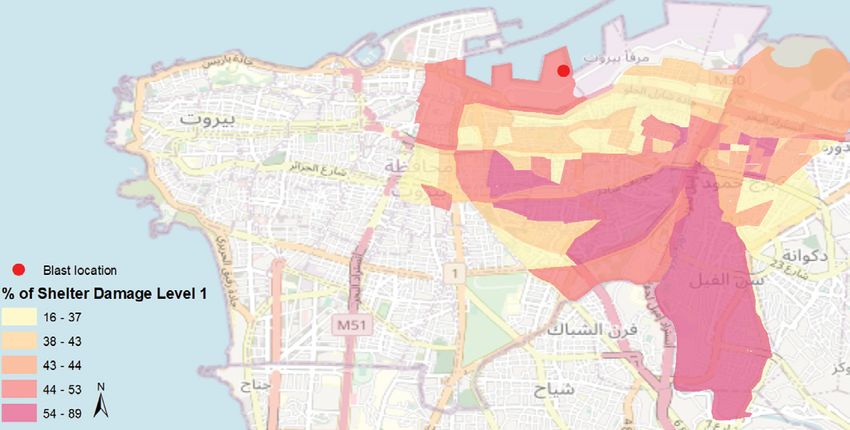
UNHCR FLASH UPDATE ON LEBANON / 20 SEPTEMBER 2020

 Protection

• In order to address mental health and psychosocial            support, they will be considered for ECA. In the current
  issues, prevent sexual and gender violence and                context, one-time cash grant of USD 500 is provided
  provide tailored support to particularly vulnerable           to families to spend according to their immediate
  persons, our specialized partners who had well-               priorities, e.g., food, medication, everyday items,
  established and functioning projects have immediately         clothes, transport, etc. ECAs can be provided in the
  expanded them to address the needs of persons                 context of individualized support, in complement with
  affected by the 4 August explosion. UNHCR also                other services such as MHPSS, or as a standalone
  maintains mobile teams on the ground who engage               form of assistance. ECA also helps prevent negative
  and work with communities to jointly assess and               coping strategies that families may be forced to adopt
  address protection, legal and psychological needs,            to earn or save money, putting them into dangerous
  monitor the possible emergence of new needs or risks          or harmful situations.
  and the evolution of social tensions between different
  groups in the community.                                    • As of 16 September, we have been able to support the
                                                                following individuals:
• Over 1,600 individuals have been identified as in
  need of specific support. Their situation has been            - Over 5,400 exchanges with affected individuals
  referred to programmes funded by UNHCR and other                through home visits and outreach activities;
  agencies offering: mental health and psychosocial
  support (MHPSS); individual support; emergency                - Over 420 persons were engaged in individual
  cash assistance (ECA); services for persons with                support with our partners to ensure they receive
  specific needs, such as persons living with disabilities;       appropriate and tailored assistance;
  individual rehabilitation services; and legal aid.
                                                                - Over 140 households received ECA, reaching over
• UNHCR’s mobile teams are currently supporting                   470 individuals, helping them to pay for their most
  partners to manage the high number of urgent                    basic needs;
  individual follow-up needed. They are notably
  conducting individual assessments to distribute cash          - Over 750 persons received specialized mental
  support (ECA) to the most vulnerable families in the            health and psychosocial support, in addition to the
  shortest time possible.                                         wider scale psychological first aid provided initially
                                                                  at community level;
• How does Emergency Cash Assistance work? When
  a household or an individual are in a situation of            - Over 200 persons were assisted with legal advice.
  vulnerability that can be helped by providing financial

                                                                                              Lebanese and non-Lebanese
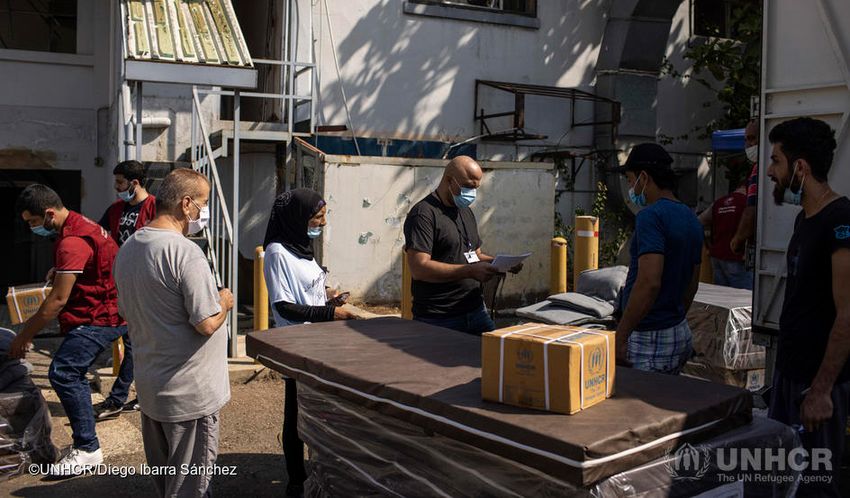
                                                                                              families receive core relief
                                                                                              items in Karantina, near the
                                                                                              location of the Beirut port
                                                                                              explosion.

www.unhcr.org                                                                                                          2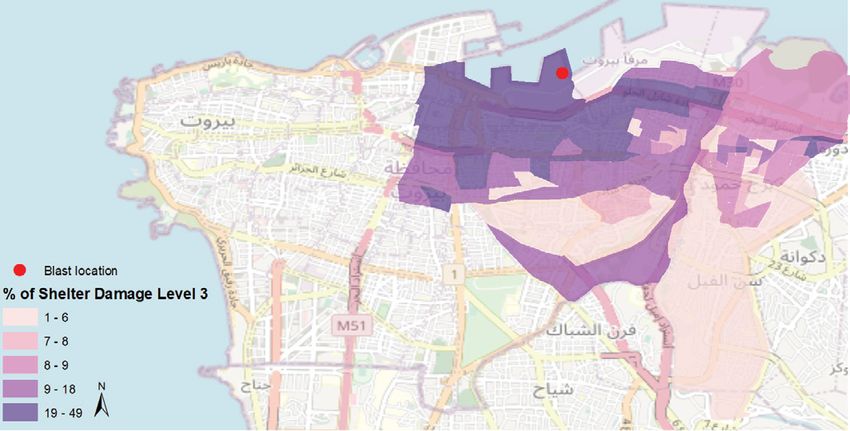
UNHCR FLASH UPDATE ON LEBANON / 20 SEPTEMBER 2020
Shelter
• Household level technical assessments are well • In addition, UNHCR is distributing targeted core relief
underway for minor repairs and rehabilitation up items (CRI) to 350 families, comprising over 1,500
to USD 1,500 and USD 4,500 respectively. These individuals that were identified since the end of August
assessments validate the need for and feasibility of in Karantina. New mattresses, blankets and kitchen
repairs, and result in a list of quantified interventions sets will replace those that were damaged at the
to bring homes to a similar or better state than they time of the explosion or support families who could
were before the blast. Repairs are to be implemented otherwise not afford them. Around 71% of recipient
directly through a contractor or through the tenant/ families are Lebanese and 27% are Syrian. Close to a
owner of the apartment should they choose so. In all third of these families have received their CRIs at the
cases, cash will be disbursed in installments with close time of writing.
monitoring from our partners to ensure works progress
as planned and are up to agreed quality. • While the emergency response is critical before
winter, the impact of the blast will have a long-lasting
• UNHCR started Post Distribution Monitoring (PDM) effect of affected individuals and communities.
for the 6,500 weatherproofing shelter kits that have UNHCR is already actively linking these interventions
already been distributed to assess their impact. A to development frameworks – including the
large sample of recipients of these kits are being World Bank, EU and UN Reform, Recovery and
contacted to understand how they used the materials Reconstruction framework – a critical step in the
provided, how the distribution process was evaluated transition from immediate humanitarian programmes
and whether there are any lessons to be learnt. to more sustainable support. We are notably taking
Beirut Blast – UNHCR’s role in minor Repair and Rehabilitation – as of 17 September 2020 a leadership role shaping work for
UNHCR’s role in minor repair and rehabilitation
the Housing sector, in line with our
leadership role in the humanitarian
shelter response, and are also co-
Mdaouar
leading the Social Sustainability and
foncière
Beirut Inclusion sector.
Central
District
Aain el-Mraisse !
foncière Mina el-Hosn Marfa'
Bourj Hammoud
foncière foncière
Ras
Beyrouth Saifi
Zqaq Rmeil
foncière foncière
el-Blat foncière
foncière
Bachoura
foncière
Msaitbe
foncière
Achrafieh
foncière
Mazraa
foncière
Legend Sin el Fil
Areas allocated to UNHCR and our partners
! Blast location Allocated zones
for minor repairs and rehabilitation activities
Buffer distance UNHCR Dekouane
1Km Other
are highlighted in blue. Areas allocated to
2Km No coverage Furn
Ech-Chebbak
other actors are highlighted in yellow.
3Km
© OpenStreetMap (and) contributors, CC-BY-SA
Sinn El-Fil
UNHCR Lebanon is grateful for the support of its donors to our response to the Beirut Explosions, including donors
of flexible funds and private donors.
Australia | Canada | Finland | France | Germany | Japan | Norway | Sweden | Switzerland | United States of America
UNHCR Lebanon Operation
Funding:
USD 607.5 million requested for the 47% funded as of 14 Septemebr 2020
UNHCR Lebanon operation in 2020 (USD 285.2 million received)
For more details, please contact:
Anna King, Senior External Relations Officer, UNHCR Lebanon, at kinga@unhcr.org
www.unhcr.org 3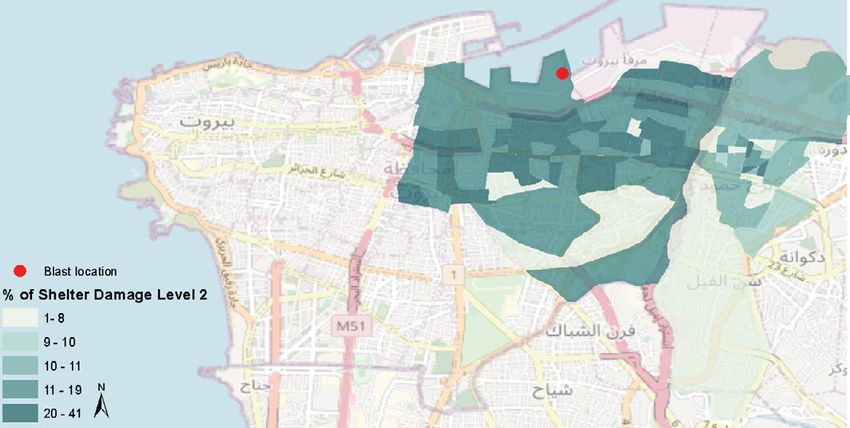
Beirut Port Explosions: Shelter Sector Dashboard (September 2020)
Background Level 1: minor damage to property (by zone) Response
On August 4th, a warehouse at the Beirut Port exploded, The sector worked with OCHA, the Lebanese Armed Forces
causing widespread casualties and material damage. It is and the Lebanese Red Cross to divide the affected area into
estimated that the explosions directly impacted around 300,000 operational zones for coordinating assessments and
individuals living in an estimated 77,000 apartments located assistance. It also categorised the zones by pre-blast
across 10,000 buildings within three kilometres of the socio-economic status to guide targeting based on vulnerability.
epicentre. This has led to the displacement of households to
areas within and outside of the immediately impacted area. Based on the MSNA, the most urgent needs have been
However, a majority of affected households continue to reside addressed through the distribution of 7,062 shelter
within their damaged buildings. weatherproofing kits (benefitting more than 21,000 people) and
cash for rent (115 HH to date). Shelter partners are moving
Needs forward with support for minor repairs (1,207 HH to date) and
rehabilitation (95 HH to date), reflecting a transition from the
The initial rapid shelter assessment is based on key informant immediate to the medium-term response.
interviews and rapid field surveillance of damage levels across
12,305 apartments (12% of total in affected area) in 2,833 Partners have assisted the municipalities of Beirut and Bourj
buildings (21% of total in affected area). Level 2: moderate damage to property (by zone) Hammoud with early recovery-oriented building-level
assessments of damage that has already informed evacuation
Apartments considered in level 1 have minor damages to notices by the authorities (over 200 buildings in Beirut alone)
property such as broken glass, doors, locks, collapse of false and will help guide support to responding to unsound buildings.
ceiling. There are no structural damages at this level. The
shelter remains habitable with no or minor compromises on Gaps Lorem ipsum
safety, security and access to services, including water, Lorem ipsum
sanitation and electricity. Against an estimated total need of 65,831 units, partners have
confirmed funding for 10,487 minor repairs and rehabilitations.
Apartments considered in level 2 have moderate damages to Funding is in the pipeline for a further 14,270 units, should
property, more than level 1, though still with no apparent these funds be secured, a gap of 41,074 units remains.
structural damage. At this level the apartment is either not Minor 16% 19% 64%
habitable or habitable with safety and security of the premises repair
compromised. Services including water, sanitation and 14% 30% 57% Confirmed Pipeline Gap
Rehab.
electricity are not or may be only partly accessible. 0 10000 20000 30000 40000 50000 60000
Apartments and buildings within level 3 show heavy damages Shelter sector appealing partners (in Flash Appeal)
of structural (load-bearing) and/or architectural elements, with Level 3: heavy damage to property (by zone)
possible collapse presenting acute risk at both resident ACTED, AVSI, Care, Caritas, CISP, Concern Worldwide, CRS,
household and community/street level. Several buildings have Dorcas Lebanon, Esri Lebanon, Habitat for Humanity, ILO,
collapsed either immediately or within days after the explosion. INTERSOS, IOM, Islamic Relief, Leb Relief, Makhzoumi
Foundation, Medair, Mercy-USA, NRC, Nusaned, PCPM,
Estimated number of damaged apartments (MSNA) PUAMI, Save the Children, Solidarites, SOS Children's Villages
Lebanon, UNDP, UN-Habitat, UNHCR
Minor
Level 1 52,003
damage 49
Sector
Moderate partners
5%
Level 2 damage 13,828
$95M funded
Heavy Appealed for
Level 3 11,459
damage (across 1,520 buildings) by partners*
0 10,000 20,000 30,000 40,000 50,000 60,000
The boundaries and names shown and the designations used on this map do not imply official endorsement or acceptance by the United Nations. * Through Flash Appeal, total needs to be addressed through expanded partner capacity, development actors and others operating outside of the FA
Creation date: 18 September 2020 Sources: Flash Appeal, MSNA (data as of 4/9/20), Sector 4W, FTS Feedback: hurkmans@unhcr.org www.humanitarianresponse.info/operations/lebanon/shelter Icons: OCHA, Shelter Centre
You can also read


