9 Capital Research Center
←
→
Page content transcription
If your browser does not render page correctly, please read the page content below
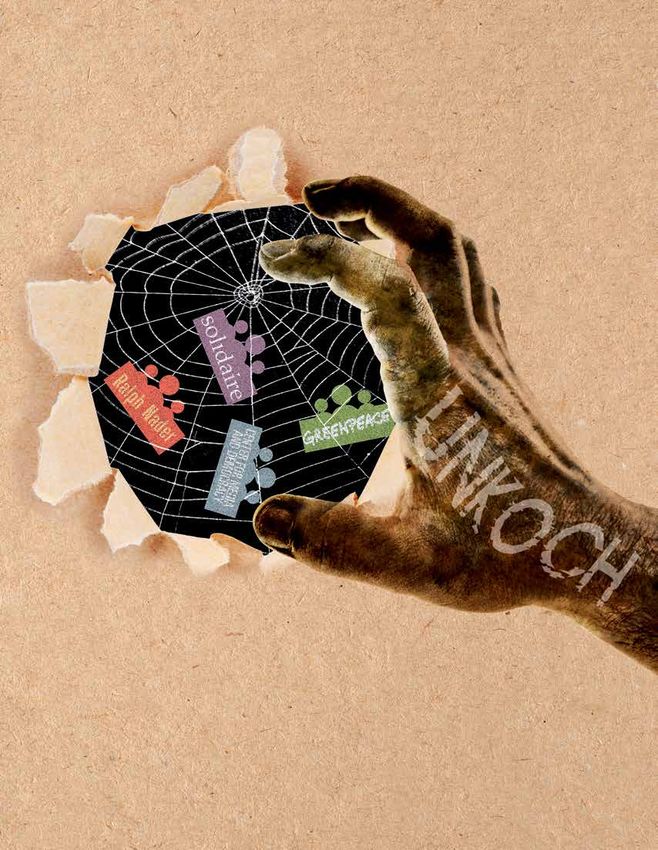
THE HYPOCRISY OF
“UNKOCH MY CAMPUS”:    ALSO IN THIS ISSUE:
ANOTHER ATTACK ON
                       9                     15                  23
CAMPUS FREE SPEECH     Five Alternatives     A Look at           Exposing the Dark
                       to Gun Bans that      Labor’s Signature   Side of “Science-
PAGE 33                Can Save Lives        Legislation         Activism”

                 www.CapitalResearch.org

ISSUE 5, 2018
                                           CONTENTS
  3                                             5   FOUNDATION WATCH
                                                    A Sweeter Future for Girard College?
                                                    By Martin Morse Wooster
  COMMENTARY
  Extremist Southern
  Poverty Law Center
  Now Has Half a
  BILLION Dollars to
  Attack Conservatives
                                                9   SPECIAL REPORT
                                                    Five Charities You Can Support
                                                    That Will Save More Lives
  By Matthew Vadum                                  Than Banning “Assault” Rifles
                                                    By Steve Warner
Capital Research is a monthly
publication of the Capital Research
Center (CRC), a nonpartisan education

                                               15   LABOR WATCH
and research organization, classified by
the IRS as a 501(c)(3) public charity.
CRC is an independent, tax-exempt                   Labor’s Signature Legislation
institution governed by an independent
board of trustees. We rely on private
financial support from the general                  By Michael Watson
public—individuals, foundations,
and corporations—for our income.
We accept no government funds and
perform no contract work.
CRC was established in 1984 to promote
a better understanding of charity and
philanthropy. We support the principles
of individual liberty, a free market
economy, and limited constitutional
                                               23   DECEPTION & MISDIRECTION
                                                    Mad “Science”: Exposing the
                                                    AAAS and the Dark Side
government—the cornerstones of                      of Science-activism
American society, which make possible               By Hayden Ludwig
wise and generous philanthropic giving.
CAPITAL RESEARCH CENTER
1513 16th Street NW

                                               33
Washington, DC 20036
202.483.6900
                                                    ORGANIZATION TRENDS
CapitalResearch.org
                                                    UnKoch My Campus Has a
Contact@CapitalResearch.org
                                                    Transparency Problem
Internship inquiries are welcome.
                                                    By Christine Ravold
Publisher, Scott Walter
Editor-in-Chief, Kristen Eastlick
Editor, Christine Ravold
Photo Editor, Gayle Yiotis
Cover image: Lori Schulman
Want to know more about the donors, foundations, nonprofits, activists,
         and others working to influence public policy? Visit:

                        INFLUENCE
                        WATCH.ORG

  Launched by Capital Research Center in August 2017, InfluenceWatch
  will bring unprecedented transparency to the history, motives, and
  interconnections of all entities involved in the advocacy movement.
  Today, our growing website includes 4,500 pages and 300 full
                 profiles, with more added each week.

               L e a r n m o r e a t I n f l u e n c e Wa t c h . o r g
COMMENTARY
                       EXTREMIST SOUTHERN POVERTY LAW CENTER NOW
                    HAS HALF A BILLION DOLLARS TO ATTACK CONSERVATIVES
                                                        By Matthew Vadum

The Southern Poverty Law Center (SPLC) is stockpiling close

                                                                                                                                       Credit: Bill Littman. License: https://goo.gl/9ypMcM.
to half a billion dollars to blacklist conservatives, slander its
critics, and redefine what “hate” means in America today.
As the Capital Research Center first reported, the SPLC dis-
closed in a new IRS filing that it had $477 million in assets
in October after taking in an astounding $136 million that
year. The year before, it had total revenue of $58 million
which means that total revenue skyrocketed over 200 percent
in a single year.
There has been no comparable leap in bigotry or poverty.
Even vague statistics about so-called “hate crime” don’t
reflect such a massive shift. So why is the SPLC taking in
more money than ever?

 The SPLC’s involvement in YouTube’s
policing of mainstream conservative
voices is just one example that ought to
worry Americans.
Posing as a civil rights watchdog, the SPLC lumps main-
stream conservatives in with fringe extremists, white-su-
premacists, and neo-Nazis as a matter of policy. According to
the SPLC, opposition to open borders and multiculturalism
initiatives is indicative of hate and all political expression of   Posing as a civil rights watchdog, the SPLC lumps mainstream
those views is “hate speech.”                                       conservatives in with fringe extremists, white-supremacists, and
                                                                    neo-Nazis as a matter of policy.
The SPLC’s involvement in YouTube’s policing of main-
stream conservative voices is just one example that ought
to worry Americans. The SPLC’s Heidi Beirich confirms               Yet legitimate right-leaning organizations like the Family
her group crushes non-leftist political expression as part of       Research Council (FRC) and the Alliance Defending Free-
YouTube’s “Trusted Flaggers” program. YouTube (owned by             dom (ADF) have been labeled “hate groups,” even though
Google) has suspended the accounts of countless conserva-           they adhere to conventional religious values.
tives and demonetized them, that is, revoked their ability to
collect ad revenues based on viewership.                            The FRC’s legitimate religion-based aversion to same-sex
                                                                    marriage and the ADF’s good-faith defense of religious
An organization doesn’t need to be hateful or violent to
make it onto the center’s Hate Map. The SPLC says a hate
group “has beliefs or practices that attack or malign an entire     Matthew Vadum is CRC’s senior vice president. This op-ed
class of people, typically for their immutable characteristics.”    first appeared in the Washington Examiner.

CAPITAL RESEARCH CENTER                                                                                                           3
freedom and expression aren’t hateful The document was originally posted in
Credit: Tim Pierce. License: https://goo.gl/VqG5FH.
in any way. They are just the “wrong December 2016 “as a resource for jour-
ideas” as determined by the SPLC. nalists to identify promoters of hateful
propaganda; but it included a number
“Sometimes the press will describe us as of liberal reformers such as Nawaz, a
monitoring hate groups,” former SPLC former Islamic extremist who has since
spokesman Mark Potok has said. “I dedicated his life to combating the hate-
want to say plainly that our aim in life ful ideology,” according to
is to destroy these groups, completely National Review.
destroy them,” using a “strictly ideolog-
ical process.” Last fall, the Department of Defense’s
Office of Diversity Management
In other words, as Potok admits, the and Equal Opportunity removed
SPLC polices thought crimes. all SPLC-provided training material
Against this Orwellian backdrop, the pertaining to extremist groups. In the
Center’s stratospheric holdings are documents, the SPLC compared Roman
virtually unheard of in the world of Catholics and Protestants to al-Qaeda.
tax-exempt 501(c)(3) political Left-wing journalist Alexander
Under pressure from Capital Research
advocacy nonprofits. Cockburn said Dees’ fundraising
Center and other groups, GuideStar,
letters have been “scaring dollars out
If anything, the ascendency of Pres- whose website provides a massive data-
of the pockets of trembling liberals
ident Trump has been good for the base of information on other nonprofits,
aghast at his lurid depictions of hate-
SPLC’s bottom line. Fomenting out- did an about-face and announced it
sodden America.”
rage to turn a profit is the specialty of would no longer flag nonprofits on its
SPLC co-founder Morris Dees, a mas- site that the SPLC labels “hate groups.”
ter fundraiser and longtime Democrat On the other hand, Twitter succumbed to leftist agita-
insider. Dees spends his days whipping up hysteria over tiny tors and began purging users in December, according to
fringe-right groups and falsely portraying President Trump SPLC-inspired criteria.
as a racist, would-be fascist dictator.
Such an ideological cleansing was needed at Twitter, the
JoAnn Wypijewski of the Nation once described Dees as SPLC claimed, because “the racist ‘alt-right’—a collection of
a “millionaire huckster.” Left-wing journalist Alexander far-right ideologies, groups and individuals who believe mul-
Cockburn said Dees’ fundraising letters have been “scaring ticultural forces are using ‘political correctness’ to undermine
dollars out of the pockets of trembling liberals aghast at his white people” had rushed to the social media platform.
lurid depictions of hate-sodden America.”
Of course, skepticism of multiculturalism and political cor-
But sometimes the good guys triumph over the SPLC. rectness isn’t extremist in any way. Conservatives today are
Recently, the SPLC deleted the “Field Guide to Anti-Mus- naturally suspicious of both.
lim Extremists” from its website after Maajid Nawaz threat- And that’s what really enrages the radicals at the SPLC.
ened legal action for including him on the list.
Under pressure from Capital Research Center and other groups,
GuideStar announced it would no longer flag nonprofits that the
SPLC labels “ hate groups.”
4 ISSUE 5, 2018
FOUNDATION WATCH
                                 A SWEETER FUTURE FOR GIRARD COLLEGE?
          The Hershey Trust could redeem itself by rescuing another historic Philadelphia-area school
                                                     By Martin Morse Wooster

                                                                                                                                          Credit: CBS Sunday Morning/Youtube screenshot.
                                                                                                                                                           License: https://goo.gl/hEeZPc.
Summary: In the last issue of Capital Research magazine,
Martin Morse Wooster explored the complicated history of the
Hershey Trust which operates and funds the Milton Hershey
School. Because of the unique structure of the bank—which
owns a majority of The Hershey Company and all of the
Hershey Entertainment and Resorts Company—manages a
$12 billion endowment. Managing such wealth is anything but
easy. After a series of articles in the Philadelphia Inquirer in
2010 exposed problems related to the management of the Her-
shey School and the Hershey Trust, many began to wonder if the
organization should look for other ways to put the vast Hershey
fortune to good use: The Hershey School has a ready-made cause      The Hershey Trust is devoted to protecting the interests of the
in Girard College, a similar organization that has been sadly       Milton Hershey School, founded as an orphanage in 1909 by
mismanaged by the city of Philadelphia for over 150 years.          philanthropist and chocolate millionaire Milton Hershey.
Could there be a solution that might save both these venerable
philanthropic institutions?
                                                                    The Philadelphia Inquirer polled readers on the same ques-
                                                                    tion after reporter Bob Fernandez exposed some of the
As I reported in an article appearing in Issue 3, 2018, the
                                                                    excesses of the Milton Hershey School and the Hershey
organization controlling the Hershey Company is the
                                                                    Trust, in a series of articles in late 2016. The respondents
Hershey Trust, devoted to protecting the interests of the
                                                                    had all sorts of ideas about what the Hershey School and
Milton Hershey School, founded as an orphanage in 1909
                                                                    (or) the Trust should do. Suggestions ranged from the Trust’s
by philanthropist and chocolate millionaire Milton Hershey.
                                                                    investing more in foster care to funding charter schools
Today, the school is a cost-free boarding school for children
                                                                    in Philadelphia. But the most concrete reform the readers
from lower income families. Indeed, with an endowment
                                                                    suggested was some sort of merger or alliance with a small,
of over $12 billion, the Milton Hershey School is wealthier
                                                                    historic Pennsylvania boarding school for elementary and
than any secondary school in the U.S. Were the Milton
                                                                    secondary school students called Girard College.
Hershey School a foundation, its endowment would make
it the third largest in the U.S., at $12.2 billion, slightly less
than the Ford Foundation’s $12.4 billion.
                                                                    Martin Morse Wooster is a senior fellow at the Capital
Unfortunately, Hershey’s seemingly unlimited wealth has             Research Center. He has written extensively on the
brought its share of problems. The Trust has experienced            history of philanthropy. In addition to the three previous
scandals ranging from excessive pay for directors and trust-        editions of his guidebook for modern philanthropy, How
ees and the inappropriate use of resources for real estate          Great Philanthropists Failed and You can Succeed
speculation, to the abuse of children at the school. Here’s         at Protecting your Legacy. Wooster also wrote Great
a thoughtful solution: Perhaps the Trust should expand              Philanthropic Mistakes (Hudson Institute), Should
the scope of its philanthropy beyond its range of current           Foundations Live Forever? (Capital Research Center),
grantees. But if it were to do something with its billions          Games Universities Play: And How Donors Can Avoid
other than run the Milton Hershey School, what should that          Them (Pope Center for Higher Education Policy), among
something be?                                                       other books.

CAPITAL RESEARCH CENTER                                                                                                               5
Girard: A Perfect Contrast to Hershey?                             might select the studies, as well as the classes of persons,
                                                                   who were to receive his bounty without being compellable
Like the Hershey School, Girard College was created by a           to make religious instruction part of these studies.”
great philanthropist for students from low-income families.
But while the Hershey School has far too much money,               Girard’s will, as originally implemented, limited the student
Girard College has far too little.                                 body at Girard College to “poor white male orphans.” (In
                                                                   those days, the term frequently meant “fatherless.”) In 1965
The wealth that endowed Girard College came from Stephen           a group of African-Americans decided to challenge this
Girard (1750-1831) a French immigrant who owned a fleet            portion of Girard’s directives. Martin Luther King Jr. led a
of merchant ships. When he died in 1831, he left $7.5 mil-         march in front of the school, declaring that Girard College’s
lion to the city of Philadelphia to endow Girard College—a         walls would fall like the walls of Jericho. In Commonwealth
titanic sum at the time, half as much as the federal budget.       of Pennsylvania v. Brown (1968) the Pennsylvania Supreme
Even today, the school appropriately recognizes its formation      Court declared the racial restrictions of Girard’s will void, a
as “an unprecedented act of philanthropy.”                         decision upheld by the Supreme Court of the United States.
                                                                   The first African-American male students followed in
Stephen Girard’s will has been a source of philanthropic
                                                                   September of 1968. In 1984, the gender restrictions specified
controversy from the beginning of probate in 1831, through
                                                                   in Stephen Girard’s will disappeared, as did criteria regarding
the 19th and 20th centuries and into the 21st. The first
                                                                   orphans. Today, Girard College, like the Milton Hershey
challenge to the will came from Girard’s relatives, the Vidals,
                                                                   School, admits students of both sexes from low-income
who wanted the will voided and the money given to them.
                                                                   households that may have one or both parents still living.
The challenge eventually reached the U.S. Supreme Court
in 1844, where the Vidals hired orator Daniel Webster to
represent them. Webster, in a nine-hour speech lasting three

                                                                                                                                      Credit: loc.gov. License: https://goo.gl/My9J9C.
days, chose to attack a clause where Girard said he would
“enjoin and require that no ecclesiastic, missionary, or min-
ister of any sect whatsoever shall ever hold or exercise any
station or duty whatsoever in the said college; nor shall any
such person be admitted for any purpose, or as a visitor, within
the premises appropriated to the purposes of the college.”

 While the Hershey School has far too
much money, Girard College has far
too little.

Webster argued that America was a Christian nation, and
Girard’s will would promote atheism. Moreover, he said,
Pennsylvania was not an “infidel state” but has “a Christian
origin—a Christian code of laws.”
But in Vidal v. Girard’s Executors, the Supreme Court unan-
imously rejected Webster’s arguments and upheld Girard’s
will. The case, for the first time, ensured that donor intent
would be part of American law. Justice Joseph Story, writing
for the majority, maintained that Girard did not stipulate
Christianity would not be taught at Girard College, only           The wealth that endowed Girard College came from Stephen
that ministers would not be allowed to preach there. “In           Girard (1750-1831) a French immigrant who owned a fleet of
America, it has been thought,” Justice Story wrote, “in the        merchant ships.
absence of any express legal prohibitions, that the donor

6                                                                                                                     ISSUE 5, 2018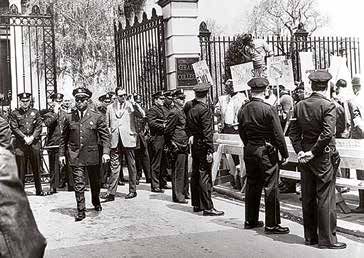
by 2038. The board of managers of the City Trusts then

                                                                    Credit: NARA. License: https://goo.gl/4woXtj.
                                                                                                                    petitioned the Orphans Court to allow Girard College to
                                                                                                                    change from a boarding school for elementary and second-
                                                                                                                    ary school students into a day school that stopped educating
                                                                                                                    students after the eighth grade. The high school, under this
                                                                                                                    plan, would close.
                                                                                                                    The Philadelphia Inquirer, in an editorial, contrasted the
                                                                                                                    Girard College battle with the ongoing struggles over the
                                                                                                                    Barnes Foundation (another venerable Philadelphia insti-
                                                                                                                    tution, in this case an art museum created by Albert C.
                                                                                                                    Barnes) which had been the subject of what can be described
                                                                                                                    as a hostile takeover by the Pew Charitable Trusts, the
                                                                                                                    Annenberg Foundation, and the Lenfest Foundation:

In 1965 a group of African-Americans decided to challenge                                                                   Tycoons hoping to better society from beyond the
Girard’s directive limiting students to “poor white male                                                                    grave might consider living (and dying) somewhere
orphans.” Martin Luther King Jr. led a march in front of the                                                                other than Pennsylvania,” the newspaper declared.
school, declaring that Girard College’s walls would fall like the                                                           “This is, after all, the state where Albert Barnes’s
walls of Jericho.                                                                                                           idiosyncratic suburban art school was repurposed as
                                                                                                                            a downtown museum, and where the school under-
                                                                                                                            written by Milton Hershey’s fortune has been mired
                                                                                                                            in inexplicable investments and state investigations.

When a City Is Executor of a Will                                                                                   (I discuss the Barnes Foundation case in my book How Great
                                                                                                                    Philanthropists Failed and How You Can Protect Your Legacy,
Girard, however, made a serious mistake when he requested                                                           published by Capital Research Center.)
that the city of Philadelphia administer his estate. The city,
through its Board of City Trusts, proved to be a bad man-                                                           While the Inquirer endorsed the reductions, it declared
ager of the Girard Estate, which has a diversified portfolio,                                                       that “as a Philadelphia trust, it has been overseen mainly by
including a subdivision in South Philadelphia that sur-                                                             politicians and the politically connected” and that “Girard
rounds a house that once was Stephen Girard’s summer                                                                College has to change a long-standing trajectory that has it
home. The estate’s value in 2013 was $230 million, a miser-                                                         slowly building nothing out of something.”
able rate of return on an estate that has been in existence for
over 175 years. A 1997 Philadelphia Inquirer investigation
found that during a decade when the stock market boomed,
the Girard Estate lost a third of its value, as the Board of                                                         Vidal v. Girard’s Executors, for the first
City Trusts invested the money in a coal-mining company,                                                            time, ensured that donor intent would be
helicopter hangars, and a hotel, without getting the required
permission from Philadelphia Orphans Court.                                                                         part of American law.
The first decade of the 20th century saw Girard College’s
budget decline by a million dollars a year, with most of                                                            After the announcement, Girard College partially reversed
the budget being used to maintain its splendid, but decay-                                                          its earlier decision, stating that the high school would stay
ing buildings. Enrollment fell from 800 to 400 students                                                             open at least through the end of the 2014-15 school year.
between 2007 and 2013, and the school suffered from $111                                                            The College’s leadership then faced a trial in Philadelphia
million worth of deferred maintenance.                                                                              Orphans Court during which Judge Joseph D. O’Keefe
                                                                                                                    made two rulings: In January 2014, he denied the Girard
Girard College administrators first responded to the bud-                                                           College Alumni Association standing. Then, in August
get crisis by eliminating weekend boarding, requiring its                                                           2014, he proved himself a champion of donor intent by
students to leave campus every Friday night. Then in 2013,                                                          rejecting the City Trusts of Philadelphia’s petition.
they dropped a bigger bomb: The City Trusts of Philadel-
phia board of directors announced unless the school made                                                            “The design of Girard College as a boarding school,
dramatic changes, the Girard Estate would be spent out                                                              intended to provide a residence, as well as an education, to

CAPITAL RESEARCH CENTER                                                                                                                                                             7
Students receive full scholarships (in excess of $60,000 per year) to attend Girard College.
its students is reflected in the very terms of the will,” Judge Second, the restrictions on limiting grants to the Milton
O’Keefe wrote, adding that under the terms of Stephen Hershey School should be removed, as long as the restric-
Girard’s will, students should “remain in the college until tions on ensuring that the funds be used only for helping
they shall respectively arrive at between fourteen and eigh- deserving low-income children get a good education remain
teen years of age.” in place. Perhaps Hershey’s fortune could be used to create
a private operating foundation, albeit one where the Milton
The City Trusts of Philadelphia announced that it would Hershey School is the largest single recipient. In my view,
appeal Judge O’Keefe’s decision, but the appeals failed; the best way to ensure that Hershey’s wealth is focused on
Girard College remains a boarding school for elementary the founder’s original goal is for this operating foundation
and secondary students. to fund scholarships that would enable any eligible student
Today, enrollment stands at just over 300 students. Attend- from southern Pennsylvania to pay half tuition at a qualified
ees receive full scholarships (in excess of $60,000 per year) to private school, including the quasi-private Girard College.
attend the institution. Students, who must be “academically Since the goal is to distort Milton Hershey’s wishes as little
capable” live in gender and grade-level based groups. While as possible, scholarships would be a better vehicle for his
they spend the week in the boarding school environment, wealth than either creating new charter schools or directly
they are sent home on Friday afternoons and return on funding Girard College.
Sunday night. According to the school’s website:
Credit: Screenshot. License: https://goo.gl/S7cAZh.
In the spirit of Stephen Girard, Girard College edu-
cates the whole child. Nowhere is this more evident
than in the residential program. Students learn life
lessons about living in a community, enrich their
school-day educational experiences, and pursue the
school’s core values of integrity, respect, self-disci-
pline, compassion and responsibility.
In the April 2018 update I wrote a about the Milton
Hershey School (available at CapitalResearch.org), I
explained two possible modifications to the Hershey Trust
that would empower its board to put the organization’s “The design of Girard College as a boarding school, intended
embarrassing wealth to more meaningful use. The first to provide a residence, as well as an education, to its students is
adjustment would expand the geographic spending limit reflected in the very terms of the will,” Judge O’Keefe wrote.
from the current footprint of Derry Township (a 27 square
mile patch of land in south-central Pennsylvania where the
Clearly, Philadelphians—and philanthropically minded
persons everywhere—can see the importance of preserving
an institution like Girard College. The Hershey Trust should
The value of Girard’s estate in 2013 was explore the possibility of using part of its endowment to aid
$230 million, a miserable rate of return that struggling school. But a better use of Milton Hershey’s
funds would be to award scholarships to worthy students
on an estate that has been in existence for than to fund Girard College directly.
over 175 years. Without some meaningful changes to its disbursement policies,
the Hershey Trust’s endowment will grow haphazardly, like an
amoeba, an oddly unfortunate consequence of vast wealth that
city of Hershey is located) to encompass all of southeastern
has in the past enabled scandal and financial impropriety.
Pennsylvania, including York, Lancaster, Harrisburg, and
Philadelphia. As I wrote in my update, “Milton Hershey did
not want to create a national organization with his fortune, Read previous articles from the Foundation Watch series
he wanted to help his fellow southeastern Pennsylvanians.” online at CapitalResearch.org/category/foundation-watch/.
8 ISSUE 5, 2018SPECIAL REPORT
FIVE CHARITIES YOU CAN SUPPORT THAT WILL
SAVE MORE LIVES THAN BANNING “ASSAULT” RIFLES
By Steve Warner
Credit: Lorie Shaull. License: https://goo.gl/7QXMn4.
Summary: In the wake of highly publicized school shootings,
Americans of all stripes wonder what can realistically be done to
prevent such heartbreaking tragedies. Activists often point to leg-
islation or political action to limit access to weapons. However,
there are many proven measures that will save lives without
compromising American’s Second Amendment rights.
A few days after the ghastly massacre of 26 parishioners at a
Baptist church in Sutherland Springs, Texas, on November
5, 2017, Senator Diane Feinstein announced that she and
22 other Senate Democrats were “introducing an updated
Assault Weapons Ban for one reason: so that after every mass
shooting with a military-style assault weapon, the American
Everytown’s president John Feinblatt said, ‘’ it’s time to elect
people will know that a tool to reduce these massacres is
leaders who will finally act to save lives from gun violence.’’
sitting in the Senate, ready for debate and a vote.”1
Former Supreme Court Associate Justice, John Paul Stevens
Three months later, following the February 14, 2018 mass called for the repeal of the Second Amendment, which he
shooting at Stoneman Douglas High School in Parkland, dismissed as “a relic of the 18th century.”
Florida, that left 17 dead including 14 students, Michael
Bloomberg’s Everytown for Gun Safety organization
reported $800,000 in unsolicited donations. Said Every- of us.”4 The Giffords Law Center to Prevent Gun Violence
town’s president John Feinblatt, ‘’it’s time to elect leaders chimed in, declaring that assault weapons “popular among
who will finally act to save lives from gun violence.’’2 mass shooters…pose a distinct threat to the safety and secu-
Former Supreme Court Associate Justice, John Paul rity of the American people.”5 And a weepy Jimmy Kimmel
Stevens also joined the chorus, calling for the repeal of the told his late-night audience, “Maybe I’m nuts, but I would
Second Amendment, which he dismissed as “a relic of the like to think we could put politics aside and agree that no
18th century.”3 American citizen needs an M-16 or 10 of them.”
But let’s take a breath and ask a basic question: Do the num-
bers justify the panic? The gun-controllers’ own go-to source
for statistics suggests not: According to the non-profit Gun
There exist no media-driven, ultra- Violence Archive (GVA), 121 people were killed in 2017
hyped efforts to outlaw household in “mass shootings” with “assault weapons.” GVA defines
a mass shooting as “four or more people shot or killed in a
chemicals, cars, or stairs. single incident, not including the shooter,” and an “assault
weapon” as AR-15s, AK-47s, and “All variants defined by
law enforcement.”6 To provide some perspective from the
Meanwhile, anti-gun proponents in the media continue to 2015 Unintentional Injury Deaths report of the Centers for
assign a surreal lethality to the “assault weapon.” In Rolling Disease Control and Prevention (CDC), 121 Americans die
Stone, Tim Dickinson lamented that while the gun makers every 22 hours from accidental poisoning, every 29 hours
have grown richer with an increase in AR-15 sales, “…the
mass-market boom of the AR has been horrific for the rest Steve Warner is a freelance writer living in south Florida.
CAPITAL RESEARCH CENTER 9that as recently as 2015 approximately 3,700 infants died
Credit: California National Guard. License: https://goo.gl/cNfJHr.
from Sudden Unexpected Infant Death Syndrome (SUIDS).
In 43 percent of SUIDS cases, the cause was determined
to be the more commonly known Sudden Infant Death
Syndrome (SIDS), defined by CDC as “the death of an
infant less than 1 year of age that cannot be explained after a
thorough investigation is conducted.”
Another 25 percent of SUIDS cases resulted from the
accidental suffocation caused when soft bedding covers an
infant’s nose and mouth, or when an infant is put to sleep
in a bed with an adult who while sleeping rolls on top of
or against the infant. In the remaining 32 percent of the
SUIDs cases, labeled “unknown,” the causal investigations
Senator Diane Feinstein announced that she and 22 other had not been completed.9
Senate Democrats were “ introducing an updated Assault
Doctors still can’t say for sure what causes SIDS, but the
Weapons Ban...so that after every mass shooting...the American
National Institutes of Health reports a dramatic 50 percent
people will know that a tool to reduce these massacres is sitting
reduction in cases during the first five years of the “Back
in the Senate, ready for debate and a vote.”
to Sleep” campaign,10 suggesting that many of past SIDS
deaths could very well have been caused by accidental
suffocation. Assuming conservatively then, that one-half of
in motor vehicle accidents, and every 32 hours from falls.7 the “unknowns” and one-quarter of the SIDS deaths were
And yet, there exist no media-driven, ultra-hyped efforts to actually caused by suffocation, that would mean more than
outlaw household chemicals, cars, or stairs. 1,900 infants died in 2015 from very preventable causes. As
medical experts learn more, that number will likely increase.
Similar in appearance to the U.S. military’s M-16 rifle, the
semi-automatic AR-15 is scary to many Americans igno-
rant of its capabilities and actual frequency of use in mass
shootings. As Michael Rosenwald pointed out in a 2016
Washington Post essay, “Lost in the diatribes about banning In Broward County, Florida, home of
assault weapons is this inconvenient fact: the vast majority Stoneman Douglas High School and
of mass shooters use handguns, not assault rifles, in their
attacks. That includes Seung-Hui Cho, who used two hand- ground zero for the “assault weapons” ban,
guns, including a Glock 19, in 2007 to kill 32 people at SUIDS cases have been historically high.
Virginia Tech University, the previous worst mass shooting
in American history.”8
In Broward County, Florida, home of Stoneman Douglas
Needless to say, every human life lost to gun violence is a High School and ground zero for the “assault weapons” ban,
horrible tragedy. But banning “assault weapons” will not SUIDS cases have been historically high. In response to this
necessarily save lives: for those Americans genuinely passion- unfortunate distinction, Fort Lauderdale Fire and Rescue has
ate about reducing preventable deaths—especially of chil- teamed up with the non-profit Healthy Mothers, Healthy
dren—here is a short list of unsung charities that will save Babies of Broward County to create a program called Direct
more lives this year alone than any ban on “assault weapons” On Scene Education (DOSE), which trains all first respond-
would save in the next hundred. ers to identify infant safe sleep hazards while responding
to emergency and non-emergency calls. If Fire and Rescue
personnel encounter an infant or expectant mother, they will
Healthy Mothers, Healthy Babies Coalition quickly perform a “pediatric assessment” and provide a Baby
Safe Sleep Kit. Hazards found in the home or in the infant’s
of Broward County sleep space, are identified and removed; family members
Any mother who has given birth in a hospital anywhere in are educated as to why vigilance regarding an infant’s sleep
the U.S. in the past 25 years, has been given “Back to Sleep” space is critical. Also, if a crib or other suitable sleep space is
or “Sleep Safe” training. Nevertheless, the CDC has reported lacking, first responders will alert Healthy Mothers, Healthy
10 ISSUE 5, 2018Babies which provides cribs, sheets, sleep sacks, and pacifiers child in America the opportunity to learn to swim—regard-
to needy families at no charge. less of race, gender or financial circumstances.” Local Make
a Splash providers throughout the country have collectively
DOSE has proved a very popular program and is now being provided free and reduced-cost swim lessons for nearly
run in seven other states. Its co-founder James Carroll, Cap- 5 million children since 2007.14
tain of Fort Lauderdale Fire and Rescue says he “…hopes
that someday it will become a standard of care in all fire Of course, swim lessons alone won’t prevent every accidental
departments to understand and recognize safe sleep hazards.” drowning, but a 2009 “case-control” study funded by the
National Institute of Child Health and Human Develop-
Sadly, Healthy Mothers, Healthy Babies and similar organi- ment found that taking formal swim lessons accounted for
zations around the country struggle to raise enough funds an 88 percent reduction in the risk of drowning in chil-
to keep up with the demand for cribs. In 2017, the Broward dren 1 to 4 years old.15 In May 2017, Michael Bloomberg
organization ran through its donations before the end of committed an additional $25 million to his personal
the year; caring staff members then dipped into their own philanthropy’s 2012 Drowning Prevention Program, though
pockets to buy more cribs. this funding was earmarked for Bangladesh and the Philip-
pines.16 At the end of 2016, Make a Splash’s total assets were
$36,229;17 their subsidized swimming lessons cost as little as
Credit: pinsdaddy.com. License: https://goo.gl/18Ps1K.
ten dollars per class.
Eddie Eagle
Accidental firearm deaths have fallen substantially in the last
20 years; this statistic courtesy of the National Safety Coun-
cil and the CDC. During that same period, despite soaring
gun sales, the per capita rate of accidental gun deaths has
decreased nearly 50 percent. Nonetheless, GVA reports that
National Institutes of Health statistics show a dramatic 50 there were still nearly 500 accidental—many would call
percent reduction in cases during the first five years of the “Back them negligent—deaths from firearms in 2017. Curiously,
to Sleep” campaign, suggesting that many of past SIDS deaths Bloomberg’s Everytown for Gun Safety does not actually
could very well have been caused by accidental suffocation. offer courses in gun safety. And when contacted by this
author, the nonprofit’s representative could not provide rec-
ommendations for organizations that provide such training.
Make a Splash Meanwhile, according to a University of Washington School
of Public Health study published in July 2017, in Injury
Nearly 4,000 people drown in the United States every year. Prevention, only 61 percent of firearm owners reported that
According to the CDC, drowning is the number one cause they had received formal firearm training.18 The National
of unintentional deaths for children 1 to 4 years old and Rifle Association (NRA), National Shooting Sports Foun-
the number two cause of death for those 5 to 9 years-old.11 dation (NSSF), USA Shooting, and sporting goods stores,
From 2005 to 2009, the rate of unintentional drowning for shooting clubs, and gun ranges across the country are
black and Hispanic Americans was significantly higher than trying to improve this statistic: The NRA’s 125,000 certified
that of whites across all age groups.12 A 2017 study by the instructors alone train nearly one million gun owners a year
University of Memphis commissioned by the USA Swim- in safe handling techniques and basic shooting.19
ming Foundation found that 64 percent of black children
and 79 percent of children in families whose annual income
is less than $50,000 have “low or no swim ability.”
But there’s a silver lining here; the University of Memphis
study also shows a 5 to 10 percent improvement since 2010 Eddie Eagle focuses on four steps if a
in swimming ability for all children in the U.S.13 This is due
in large part to initiatives like USA Swimming Foundation’s
child comes across a gun: “Stop! Don’t
Make a Splash, a program “which aims to provide every touch. Run away. Tell a grown-up.”
CAPITAL RESEARCH CENTER 11Credit: Brian Jameson. License: https://goo.gl/5scZo6.
According to the CDC, firearm suicides in 2015 comprised nearly two-thirds of all firearm fatalities that year. While the percentage
of suicides involving firearms declined over the preceding 15 years, firearms were still used in over 50 percent of suicides in 2015.
By the end of 2017, the NRA’s nonprofit foundation had tions. While acknowledging that safe storage has not yet
introduced its Eddie Eagle GunSafe program to 29 million been widely studied, the Government Accountability Office
American children from pre-kindergarten through sixth (GAO) reports that current research suggests “following safe
grade. Developed by a task force of “educators, school firearm storage practices reduces the likelihood of injuries
administrators, curriculum specialists, urban housing safety and deaths.”21 To get the message out and kits distributed,
officials, clinical psychologists, law enforcement officials, NSSF hosts gun lock distribution events in communi-
and National Rifle Association firearm safety experts,” ties across the country; it has also created a public service
Eddie Eagle focuses on four easy-to-remember steps if a announcement (PSA) called “Safety is a Habit,” which airs
child ever comes across a gun: “Stop! Don’t touch. Run on local TV and radio stations and is posted on billboards,
away. Tell a grown-up.” websites, and various social media platforms. NSSF also
partners with law enforcement, suicide prevention organi-
Early childhood curriculum specialist Dr. Lisa Monroe of zations, faith-based organizations, shooting sports groups,
the University of Oklahoma created handy instructor guides. health care facilities, and youth organizations, including the
The program makes no “value judgments” about firearms; Boy Scouts and the 4-H Club.22
firearm ownership is never promoted.20 The NRA Founda-
tion also promotes firearm safety through its sponsorships of
basic firearm training courses, hunter education, and train-
ing to enhance marksmanship skills of those participating in American Foundation for Suicide Prevention
the shooting sports, including the Boy Scouts of America, According to the CDC there were 22,018 firearm suicides
the Naval Sea Cadets, and high school Junior Reserve Offi- in 2015, comprising nearly two-thirds of all firearm fatalities
cer Training Corps (JROTC) programs. The foundation also that year. While the percentage of suicides involving firearms
funds the Refuse to be a Victim program, providing materi- declined steadily over the preceding 15 years, firearms were
als and training to women on how to take proactive steps to still used in over 50 percent of suicides in 2015.23 Acknowl-
avoid violent situations. edging this tragic statistic and the reality that upwards of
30 percent of Americans have guns in their homes, the
American Foundation for Suicide Prevention (AFSP) has
Project ChildSafe taken the unconventional approach of partnering with the
firearm industry, through their partnership with NSSF, in
Project ChildSafe—the NSSF’s program dedicated to an aggressive bid to reduce firearm suicides. The AFSP has
responsible gun ownership and safe storage of guns—has set an ambitious goal for the partnership to save 9,000 lives
distributed 37 million free safety kits to date. These kits by 2025. To this end, they have created a Suicide Prevention
include a cable-style gun lock and safe gun handling instruc-
12 ISSUE 5, 2018Toolkit aimed at firearm retailers, shooting ranges, and gun Massachusetts, New York, Connecticut, Hawaii, Maryland,
owners to help them understand the risk factors and warn- Rhode Island, Illinois, Pennsylvania, or Washington, D.C.
ing signs associated with suicide and to know where to
find assistance. While the nebulous term “assault weapons” makes for a
good sound bite, it serves no purpose other than to inflame
The AFSP carefully stays away from political action related passions by injecting yet another emotional element into the
to gun policy, and receives no funding from NSSF, firearm gun control debate. There is a real danger here: over-heated,
manufacturers, the NRA, or other gun lobbying organiza- politically motivated gun control rhetoric exaggerates the
tions. But the AFSP is bullish on its unusual partnership: harm done by Constitutionally-protected semi-automatic
“By working with the National Shooting Sports Founda- rifles, thus diverting sorely-needed attention and resources
tion, we are systematically disseminating suicide prevention from more lethal perils.
education to thousands of gun retail stores, shooting ranges
and gun owners nationwide.” The AFSP argues that pro-
viding public education resources to the firearm-owning
community will help get the word out to those “who may be
Endnotes
1
Senators Introduce Assault Weapons Ban. Press Release. Diane Feinstein,
concerned about a friend or family member who is feeling United States Senator for California. Accessed April 14, 2018. https://
suicidal and who may be operating a firearm.” In a simi- www.feinstein.senate.gov/public/index.cfm/press-releases?ID=8B3E8400-
larly conciliatory acknowledgement, the NSSF echoes the 766E-4B5E-B59B-C800BB52A973
AFSP’s contention that “there is very strong evidence that 2
“Money flowing to gun control groups as manufacturers struggle.”
when those who are suicidal do not have access to a chosen BostonGlobe.com. February 16, 2018. https://www.bostonglobe.com/
method for suicide, most do not typically shift to a different news/nation/2018/02/16/money-flowing-gun-control-groups-manufacturers-
method.” Both organizations seem to agree that an appro- struggle/y6t40yK4NT02VIoCNdIsnK/story.html
priate course of action is separating a suicidal person from 3
Stevens, John Paul. “Repeal the Second Amendment.” The New York
his firearm through safe storage or temporary removal of the Times. March 27, 2018. https://www.nytimes.com/2018/03/27/opinion/
firearm from the home. john-paul-stevens-repeal-second-amendment.html
4
Dickinson, Tim. “All-American Killer: How the AR-15 Became Mass
Shooters’ Weapon of Choice.” Rolling Stone. February 22, 2018. https://
www.rollingstone.com/politics/features/how-the-ar-15-became-mass-shooters-
Through its partnership with NSSF, the weapon-of-choice-w451452
AFSP has set an ambitious goal to save 5
“Assault Weapons.” Giffords Law Center to Prevent Gun Violence.
Accessed April 14, 2018. http://lawcenter.giffords.org/gun-laws/policy-areas/
9,000 lives by 2025. hardware-ammunition/assault-weapons/
6
“Search Incidents.” Gun Violence Archive. Accessed April 14, 2018.
A great deal has been written elsewhere about the true http://www.gunviolencearchive.org/query
motives of those who would ban “assault weapons.” What 7
“10 Leading Causes of Injury Deaths by Age Group Highlighting
the actual numbers show is that saving lives is not one of Unintentional Injury Deaths, United States—2015.” Centers for
them. A recent report by Everytown admits as much: Disease Control and Prevention. Accessed April 14, 2018. https://www.
cdc.gov/injury/wisqars/pdf/leading_causes_of_injury_deaths_highlighting_
The true picture of mass shootings in the U.S. is unintentional_injury_2015-a.pdf
different than headlines suggest. While there are
prominent attacks on public places—like the Pulse
8
Rosenwald, Michael. “Why banning AR-15s and other assault weapons
won’t stop mass shootings.” The Washington Post. June 16, 2016. https://
nightclub in Orlando—the majority of… shootings
www.washingtonpost.com/news/local/wp/2016/06/16/why-banning-ar-15s-
occur in the home, between spouses, partners, and and-other-assault-weapons-wont-stop-mass-shootings/?noredirect=on&utm_
family members. Furthermore, the fatalities…were term=.d5dafdd0759a
not unavoidable. Often, the shooters never should 9
“Sudden Unexpected Infant Death and Sudden Infant Death
have had access to a gun in the first place—either
Syndrome.” Centers for Disease Control and Prevention. Published April
because they were prohibited from possessing 17, 2017. Accessed November 13, 2017. https://www.cdc.gov/sids/data.htm
firearms or they had recently exhibited dangerous
behavior.
10
“Progress in Reducing SIDS.” Eunice Kennedy Shriver National
Institute of Child Health and Human Development. National Institutes
of Health. U.S. Department of Health and Human Services. Accessed
Indeed. Plenty of laws are already on the books and then November 13, 2017. https://www.nichd.nih.gov/sts/about/SIDS/Pages/
some—just ask any gun owner in California, New Jersey, progress.aspx
CAPITAL RESEARCH CENTER 1311
“10 Leading Causes of Injury Deaths by Age Group Highlighting 17
Return of Organization Exempt From Income Tax: Make a Splash.
Unintentional Injury Deaths, United States – 2015.” Centers for Disease (IRS Form 990). 2016.
Control and Prevention. Accessed November 7, 2017. https://www.cdc.
gov/injury/wisqars/pdf/leading_causes_of_injury_deaths_highlighting_
18
“Formal firearm training among adults in the USA: results of a
unintentional_injury_2015-a.pdf national survey.” Injury Prevention. Published July 11, 2017. Accessed
April 28, 2018. http://injuryprevention.bmj.com/content/early/2017/07/11/
12
“Gateway to Health Communication & Social Marketing Practice– injuryprev-2017-042352
Drowning.” Centers for Disease Control and Prevention. Published
September 15, 2017. Accessed November 8, 2017. https://www.cdc.gov/
19
“Firearm Training.” NRA.org. Accessed April 28, 2018. https://
healthcommunication/toolstemplates/entertainmented/tips/Drowning.html firearmtraining.nra.org/
13
“USA Swimming Foundation Announces 5–10 Percent Increase in
20
“Eddie Eagle GunSafe® Program.” NRA.org. Accessed April 28, 2018.
Swimming Ability Among U.S. Children. USA Swimming Foundation.” https://eddieeagle.nra.org/about/
Published July 13, 2017. Accessed November 8, 2017. https://www. 21
“PERSONAL FIREARMS: Programs that Promote Safe Storage
usaswimmingfoundation.org/utility/landing-pages/news/2017/05/25/
and Research on Their Effectiveness.” United States Government
usa-swimming-foundation-announces-5-10-percent-increase-in-swimming-
Accountability Office. September, 2017. P. 9. https://www.gao.gov/
ability-among-u.s.-children
assets/690/687239.pdf
14
“Celebrating 10 years of Make a Splash.” Make a Splash. Accessed 22
“A program to promote gun safety and education.” Project ChildSafe.
November 8, 2017. https://www.usaswimmingfoundation.org/home/make-
Accessed April 28, 2018. http://www.projectchildsafe.org/
a-splash
23
“National Center for Health Statistics—Suicide and Self-Inflicted
15
“Association Between Swimming Lessons and Drowning in Childhood.”
Injury.” Centers for Disease Control and Prevention. Published March 17,
Archives of Pediatrics & Adolescent Medicine. Published March 2,
2017. Accessed April 28, 2018. https://www.cdc.gov/nchs/fastats/suicide.htm
2009. Accessed November 8, 2017. https://jamanetwork.com/journals/
jamapediatrics/fullarticle/381058
Read previous Special Reports from CRC online at
16
“Drowning Prevention Program.” Bloomberg Philanthropies. Accessed
November 8, 2017. https://www.bloomberg.org/program/public-health/ CapitalResearch.org/category/special-report/.
drowning-prevention-program/#overviewLABOR WATCH
LABOR’S SIGNATURE LEGISLATION
The “Workplace Democracy Act” would overhaul the National Labor Relations Act to favor unions
By Michael Watson
Credit: Gage Skidmore. License: https://goo.gl/Y5GuhJ.
Summary: U.S. Sen. Bernie Sanders and Big Labor-backed
Democrats have proposed a radical change to the fundamen-
tal private-sector labor law of the United States, the National
Labor Relations Act. The 83 year-old law, amended twice in the
1940s and 1950s to combat union abuses, governs the forma-
tion, operation, and powers of private-sector unions.
In early May, a group of pro-Big Labor Democrats led
by self-described Democratic socialist former Presidential
candidate Sen. Bernie Sanders (I-Vermont) introduced one
of the most extreme economic policy proposals in recent his-
tory. Titled the “Workplace Democracy Act,” the bill would
restrict free speech, force employees to pay fees to unions by
which they would rather not be represented, and function-
ally abolish the secret ballot vote on organizing unions by A group of pro-Big Labor Democrats led by self-described
amending the National Labor Relations Act (NRLA)—the Democratic socialist former Presidential candidate Sen. Bernie
principal federal law governing the operation and organizing Sanders (I-Vermont) introduced one of the most extreme
of labor unions in the private sector and their relations with economic policy proposals in recent history.
management representatives.
Like the Workplace Democracy Act’s predecessor, the
Obama era’s so-called “Employee Free Choice Act” (EFCA),
the bill comes with a misleading title and a laundry list The First Laws Governing Unionized Labor
of favors to Big Labor—a key political patron of Sanders Prior to the New Deal and the passage of the original
and the Democratic Senators who have co-sponsored his NLRA (sometimes called the Wagner Act after its chief
sponsor, Sen. Robert F. Wagner (D-N.Y.)), collective bar-
gaining was limited by court orders and rules, which allowed
employers to choose not to hire union members or negotiate
The Workplace Democracy Act comes with unions.
with a misleading title and a laundry However, during the Progressive Era the federal government
began recognizing and establishing labor union privileges.
list of favors to Big Labor, and is, in fact, In 1914, syndicate labor unionism—using anti-competitive
more extremist than EFCA. practices to organize workers for mutual benefit—was legal-
ized by the Clayton Act, which exempted labor unions from
anti-trust laws. The Clayton Act did not require employers
measure. In many ways, the new proposal is, in fact, more
extremist than EFCA, which would have certified union
organizing through a public process (known as “card check”) Michael Watson is CRC’s research director and managing
rather than the current system of mostly secret-ballot editor of InfluenceWatch.org, our online directory of the
votes. EFCA died while facing a bipartisan filibuster in the donors, foundations, activists, organizations, PACs, and
then-supermajority Democratic-controlled Senate. government agencies influencing public policy debates.
CAPITAL RESEARCH CENTER 15to negotiate with labor unions, but it did place restrictions unions supported the Wagner Act as it guaranteed man-
on court orders to halt strikes and picketing. In 1926, datory collective bargaining with a labor union organized
Congress enacted its first nationwide labor relations law, the under its provisions. The law was signed in July and imme-
Railway Labor Act (RLA), to govern collective bargaining in diately challenged by business groups; after the “switch in
the railroad industry to resolve a series of rail strikes. time that saved nine”—when swing justices on the Supreme
Court switched from striking down expansive New Deal
After the financial crisis of 1929 initiated the Great Depres- central planning to supporting it after President Roosevelt
sion, political pressure for a national union law surged. In threatened to “pack” the Court by expanding the bench and
1932, Congress passed the Norris-LaGuardia Act, which adding more New Deal-supporting Justices—the law was
prevented employers from adding provisions prohibiting upheld in 1937.
labor union membership to employment contracts (also
called “yellow dog” contract provisions) and restricted the
use of court injunctions to end strikes.
After the election of President Franklin Roosevelt and the During the Obama administration,
initiation of the New Deal economic central planning
programs, a national collective bargaining law became a
the hyperpartisan NLRB overturned
labor union priority. The National Industrial Recovery Act legal precedents which had stood for a
(NIRA), the centerpiece legislation of the First New Deal,
contained a collective bargaining provision. Unions, then
combined 4,500 years.
organized into the American Federation of Labor (AFL),
complained that NIRA had no mechanism for formalizing The original Wagner Act contained five principal provisions:
recognition of labor unions, enabling management to ignore prohibiting management to “interfere, restrain, or coerce”
the collective bargaining provisions. employees seeking to organize for mutual benefit; prohibit-
ing management from interfering in the internal adminis-
tration of labor organizations; prohibiting employers from
Credit: FDR library. License: https://goo.gl/LZCN5c.
discriminating against employees based on union member-
ship or union support, including strike action; prohibiting
management retaliation against employees who made formal
labor complaints; and compelling employers to bargain
collectively with labor unions. The Act also established a
National Labor Relations Board (NLRB) to prosecute and
adjudicate these provisions outside of the regular federal
court system.
The NLRA applies to the vast majority of private sector
workplaces outside the agricultural, railroad, and airline
industries. Collective bargaining in the railroad and airline
industries is governed by the Railway Labor Act, a 1926 law
New Deal Democrats in Congress fundamentally restructured passed as a compromise between labor and management
American labor law through the passage of the original NLRA interests in the railroad industry that was later extended to
(Wagner Act), which labor unions supported as it guaranteed airlines and expanded to ensure mandatory collective bar-
mandatory collective bargaining with a labor union organized gaining; collective bargaining in the public sector is regu-
under its provisions. lated by state laws, which vary widely.
Due in part to the prominence of African Americans among
farm laborers in the 1930s and the strength of segregationist
NIRA was found unconstitutional by the Supreme Court Dixiecrats in President Roosevelt’s New Deal coalition, agri-
in May 1935, spurring the AFL to push for a new national cultural workers were excluded from the NLRA. While some
mandatory collective bargaining law. New Deal Democrats states (most prominently California) have extended collec-
in Congress then fundamentally restructured American tive bargaining laws to farmworkers, the federal government
labor law through the passage of the original NLRA. Labor has not.
16 ISSUE 5, 2018majority on the NLRB.) The President also appoints the head
Credit: Franklin D. Roosevelt Presidential Library & Museum. License: https://goo.gl/ZqeDKb.
of the agency’s prosecutorial arm (the General Counsel).
This explicit partisan structure results in frequent reversals in
applicable legal precedent. During the Obama administra-
tion, the NLRB overturned precedents which had stood for
a combined 4,500 years, and the NLRB under Republican
control is seeking to restore a number of those precedents.
For example, NLRB General Counsel Peter Robb advised
the Board to withdraw “ambush election” regulatory pro-
cedures approved under the Obama administration. The
NLRB is likely to overturn the Obama-era rule, passed at
the urging of unions who sought to shorten the timeframe
for advising employees of the potential downsides of union-
ization. (For more on the Trump-era NLRB’s battles over
precedents, see “Under New Management,” Capital Research,
Issue 1, 2018.)
Restraints on Management
One of the reasons that the AFL was disappointed by the
collective bargaining provisions of the old NIRA was that
The Wagner Act also privileged striking, by guaranteeing the employers were able to arrange management-controlled
right of employees to “concerted activity” and protecting strikers “company unions” even when companies did not ignore
from being fired. the collective bargaining provisions entirely. To ensure that
organized labor would be able to compel management to
bargain, the Wagner Act required employers to bargain
collectively with any organization of a majority of employ-
ees’ choosing—in practice, almost always a unit of a major
The NLRB national labor union.
The NLRB would go on to create a body of law expanding
The Wagner Act stipulated that a union would be formed
the NLRA’s application and implications for the U.S. econ-
for a so-called “bargaining unit” of employees in a simi-
omy through its prosecution and judgment of violations of
lar-enough class of jobs if a simple majority supported the
the Act, known as “unfair labor practices.” The NLRB may
union. Under NLRA procedures, the union can demand
also engage in regulatory rulemaking like a traditional arm
(and in practice always demands) “exclusive representation”
of the executive branch.
or “monopoly bargaining,” which compels all members of
The NLRB process is modeled on judicial procedure, but it the bargaining unit to be negotiated for by the union if the
is not a proper court system. NLRB cases are first heard by simple majority support threshold is met.
any of a series of administrative law judges (ALJs)—execu-
The Wagner Act also prevented employers from controlling
tive branch officials appointed to civil service-style positions
or interfering in the unions of their company’s employees;
by competitive examination. They are not Presidentially
the provision has been interpreted to prohibit not only
appointed Article III judges (the traditional federal judicial
captive “company unions” but almost all non-adversarial
branch) or even Article I judges (special-jurisdiction legis-
employer-employee labor relations arrangements, most nota-
lative courts like the U.S. Bankruptcy Court) who rule on
bly German-style “works councils.”
cases. Instead, NLRB ALJ decisions may be appealed to the
five-member presidentially appointed board. By conven- The Wagner Act also privileged striking, by guaranteeing
tion, the President’s political party is guaranteed a one-vote the right of employees to “concerted activity” and protect-
majority on the five-member final tribunal—though Senate ing strikers from being fired. A court decision in 1938 gave
partisanship means that the Board is often short of members employers the ability to hire replacement workers but held
and that the established partisan majority may not exist in that strikers must be reinstated if new positions opened after
practice. (As of May 2018, there is a one-vote Republican the strike ended. Continued on Page 20
CAPITAL RESEARCH CENTER 17You can also read


