VET & ELICOS STUDENT HANDBOOK - QIBA
←
→
Page content transcription
If your browser does not render page correctly, please read the page content below
VET & ELICOS STUDENT HANDBOOK

            2021
            Version 6.9

                           Queensland International Business Academy
             Level 2 108 Margaret Street BRISBANE QLD 4000 t: 07 3186 6449
             Level 10 140 Elizabeth Street SYDNEY NSW 2000 t: 02 9267 3040
                                  info@qiba.edu.au     www.qiba.edu.au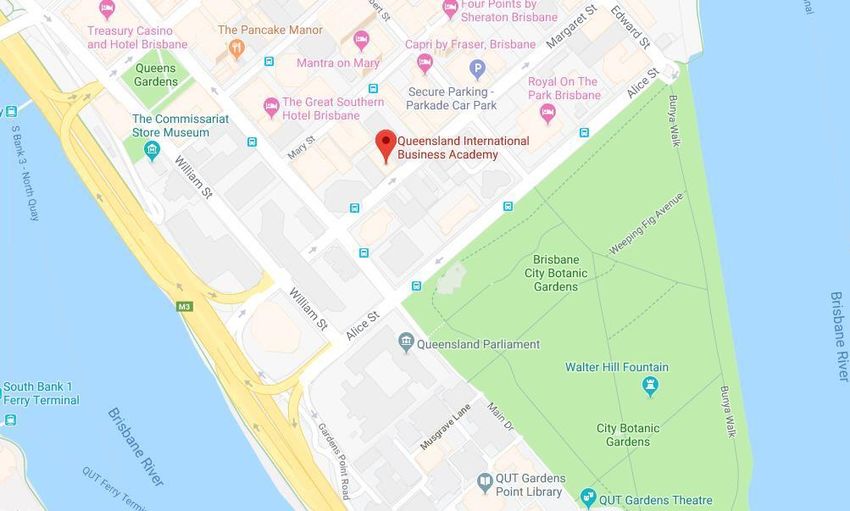
TABLE OF CONTENTS

    Welcome............................................................................................................................................................ 5
    About QIBA ........................................................................................................................................................ 5
    Useful Contacts ................................................................................................................................................. 5
    QIBA Provider Details........................................................................................................................................ 6
    Accreditation ..................................................................................................................................................... 6
    Campus Locations ............................................................................................................................................. 7
    Brisbane Campus ............................................................................................................................................... 7
    Sydney Campus .................................................................................................................................................. 8
    Campus Facilities ............................................................................................................................................... 9
    Classrooms ......................................................................................................................................................... 9
    Student Services Hub ......................................................................................................................................... 9
    Internet and Computer Access .......................................................................................................................... 9
    QIBA Courses ..................................................................................................................................................... 9
    ELICOS English Language Programs .................................................................................................................. 9
    Nationally Recognised Training (VET) Courses ............................................................................................... 10
    Entry Requirements ........................................................................................................................................ 11
    Recognition of Prior Learning (RPL) & Credit Transfers ................................................................................. 11
    Overseas Student Health Cover (OSHC) ......................................................................................................... 12
    Meeting Your Student Visa Requirements ..................................................................................................... 12
    Satisfactory Attendance (Vet & ELICOS) .......................................................................................................... 13
    Satisfactory Course Progress Requirements .................................................................................................... 13
    Non Commencement of Studies ...................................................................................................................... 14
    Course Extensions ........................................................................................................................................... 14
    Student Transfer – International Students ..................................................................................................... 15
    Issuing Releases............................................................................................................................................... 15
    Enrolling a Transferring Student to QIBA ....................................................................................................... 16
    Student Support Services ................................................................................................................................ 16
    Student Orientation ......................................................................................................................................... 16
    Learning Resources Centres ............................................................................................................................. 17
    Arrival Services ................................................................................................................................................. 17
    ESOS Framework .............................................................................................................................................. 17
    Student’s Rights .............................................................................................................................................. 17
    Unique Student Identifier (USI) ...................................................................................................................... 18
    Student Code of Conduct ................................................................................................................................ 19
    QIBA Privacy Guarantee................................................................................................................................... 19
    Use of QIBA Computer Facilities ...................................................................................................................... 20
    Schedule of Additional Fees ............................................................................................................................ 20
    Non-payment of Fees ...................................................................................................................................... 20
    QIBA Refunds .................................................................................................................................................. 21
    Requests for Refund of Tuition Fees ................................................................................................................ 21
Outline of Refunds ........................................................................................................................................... 21
QIBA Cooling Off Period ................................................................................................................................... 22
If QIBA is unable to deliver a course – Tuition Protection Service (TPS) ....................................................... 23
Studying Vocational Education (Certificate IV, Diploma and Advanced Diploma) ....................................... 23
Competency-Based Training & Assessment Process ....................................................................................... 23
Re-assessment ................................................................................................................................................. 24
Our Trainers..................................................................................................................................................... 24
Training and Assessment ................................................................................................................................ 24
Assessment Methods ....................................................................................................................................... 24
Student Resources and Facilities ..................................................................................................................... 25
Address and contact details ............................................................................................................................ 25
Accessing Your Records................................................................................................................................... 26
Changes to Terms and Conditions .................................................................................................................. 26
QIBA Education Agents ................................................................................................................................... 27
QIBA Complaints and Appeals Process ........................................................................................................... 28
QIBA Deferring, Suspending or Cancelling an Enrolment .............................................................................. 33
Student Initiated Deferral or Suspension ........................................................................................................ 33
Student Initiated Cancellation ......................................................................................................................... 33
Provider Initiated Deferral ............................................................................................................................... 33
Provider Initiated Suspension or Cancellation ................................................................................................. 33
Notification of a Suspension or Cancellation ................................................................................................... 34
Compassionate and Compelling circumstances ............................................................................................. 34
Definition ......................................................................................................................................................... 34
Guidelines for Compassionate and Compelling Circumstances ....................................................................... 35
QIBA Training Safety Arrangements ............................................................................................................... 35
First Aid ............................................................................................................................................................ 35
Critical Incident ............................................................................................................................................... 35
Emergency Procedures.................................................................................................................................... 36
Personal safety................................................................................................................................................. 36
Sun and Water ................................................................................................................................................. 36
Fire Safety ........................................................................................................................................................ 37
Protection under Australian Consumer Law .................................................................................................. 37
Continuous Improvement ............................................................................................................................... 37
Suggesting Improvements ............................................................................................................................... 37
Learner Satisfaction survey .............................................................................................................................. 38
School Aged Dependants ................................................................................................................................ 38
3Living and Studying in Australia ...................................................................................................................... 38
Climate ............................................................................................................................................................. 38
Accomodation while living in Australia ............................................................................................................ 39
Home Stay / Private Board .............................................................................................................................. 39
Hostels & Guesthouses .................................................................................................................................... 39
Private Leasing / Rentals .................................................................................................................................. 39
Living Costs ...................................................................................................................................................... 39
Accomodation Costs ........................................................................................................................................ 40
General Costs ................................................................................................................................................... 40
Australian Skills Quality Authority ................................................................................................................. 40
Checklist .......................................................................................................................................................... 41
Changes to Terms and Conditions .................................................................................................................. 41
Working in Australia ....................................................................................................................................... 41
Finding Work .................................................................................................................................................... 41
Your Rights ....................................................................................................................................................... 42
Useful Local Services (Brisbane) ..................................................................................................................... 43
Useful Local Services (Sydney) ........................................................................................................................ 45
Other Useful Contacts – Including Student Guidance and welfare ............................................................... 47
For FURTHER INFORMATION .......................................................................................................................... 48
4WELCOME
Thank you for your interest in Queensland International Business Academy, also known as QIBA. The
purpose of this handbook is to introduce you to the services available to you here and provide you
with some general information about our courses and processes.
This handbook is designed to answer your questions about QIBA and living in the beautiful cities of
Sydney and Brisbane.
ABOUT QIBA
QIBA is a CRICOS Registered Training Organisation (RTO) that meets federal and state educational
standards and an approved ELICOS Provider. QIBA is equipped with air-conditioned classrooms,
additional learning resources, student recreational areas including computer labs with free access to
the internet through the student Wi-Fi. QIBA delivers a range of courses including Nationally
Recognised Training package qualifications and ELICOS programs and all courses are taught by
qualified and experienced trainers, assessors and teachers.
USEFUL CONTACTS
Services Name Email Phone Number
Maria Garcia (Brisbane) maria.garcia@qiba.edu.au +61 7 3186 6449
CAMPUS Administrators
Kate Lee (Sydney) kate.lee@qiba.edu.au +61 2 9267 3040
VET & ELICOS Academic
Maria Garcia maria.garcia@qiba.edu.au +61 7 3186 6449
Manager
Compliance & Risk Manager Sally Mooney sally.mooney@qiba.edu.au +61 (0) 455 504 416
Student Services
• LMS queries Austin Huang austin.huang@qiba.edu.au
+61 7 3186 6449
• Complaints and Appeals Celia Tseng celia.tseng@qiba.edu.au
• Student Visa
Maria Garcia (Brisbane) maria.garcia@qiba.edu.au +61 7 3186 6449
Critical Incidents
Kate Lee (Sydney) kate@qiba.edu.au +61 2 9267 3040
First Aid Officers Kate Lee kate.lee@qiba.edu.au
+61 2 9267 3040
SYDNEY CAMPUS Sarthak Joshi sarthak.joshi@qiba.edu.au
maria.garcia@qiba.edu.au
First Aid Officers Maria Garcia
austin.huang@qiba.edu.au +61 7 3186 6449
BRISBANE CAMPUS Austin Huang
5Student Welfare Officer Helen Anderson helen.anderson@qiba.edu.au +61 7 3186 6449
After Hours Emergency
Sally Mooney sally.mooney@qiba.edu.au 0455 504 416
Contact:
QIBA PROVIDER DETAILS
CRICOS Provider Number 01515J
RTO Provider Number 5304
Australian Business Number (ABN) 35 071 667 108
ACCREDITATION
QIBA is a CRICOS Registered Training Organisation (RTO) that meets federal and state educational
standards. QIBA delivers a range of courses including Nationally Recognised Training package
qualifications and all courses are taught by qualified and experienced trainers, teachers and assessors.
QIBA is responsible under its registration with the Australian Skills Quality Authority for the quality of
the training and assessment being delivered on your chosen course and is also responsible for the
issuance of any AQF certificate that may result based on your achievement of the course
requirements.
6CAMPUS LOCATIONS
BRISBANE CAMPUS
Level 2 telephone: (+61) 7 3186 6449
108 Margaret Street email: info@qiba.edu.au
Brisbane
Queensland 4000 Australia website: https://www.qiba.edu.au/
Queensland International Business Academy (QIBA) Brisbane campus is conveniently located in the city
of Brisbane next to the beautiful Brisbane City Botanic Gardens. It is a 15-minute walk from Central
Railway Station and easy to travel to by bus (See the red marker on the map below).
To plan your trip using public transport, please visit:
https://jp.translink.com.au/plan-your-journey/journey-planner
7SYDNEY CAMPUS
Level 10 telephone: (+61) 2 9267 3040
140 Elizabeth Street email: info@qiba.edu.au
Sydney
New South Wales 2000 Australia website: http://www.qiba.edu.au/
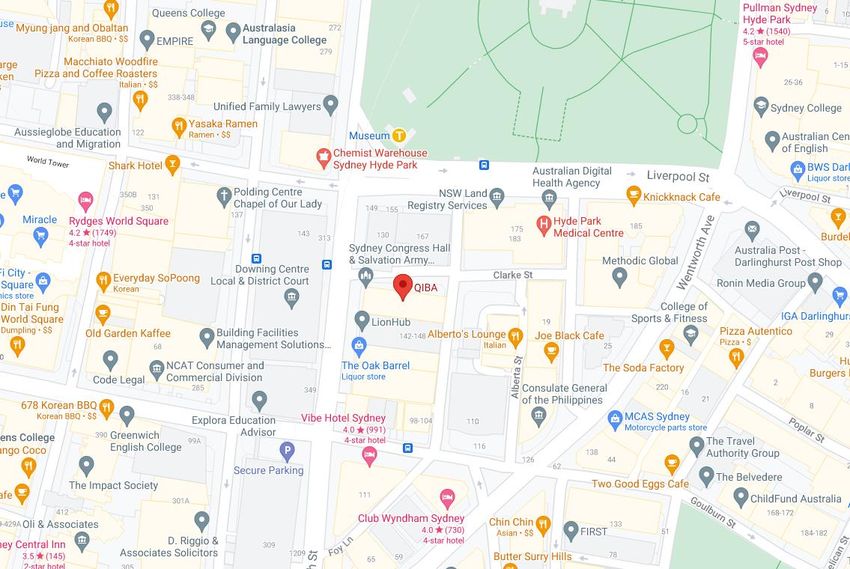
Queensland International Business Academy (QIBA) Sydney campus is conveniently located in the
heart of Sydney city at Level 10 of 140 Elizabeth Street (see the red marker on the map below).
It is a short 2-minute walk from Museum train station and a 7-minute walk from Town Hall station.
To plan your trip using public transport, please visit https://transportnsw.info/
8CAMPUS FACILITIES
QIBA has suitable facilities and resources available to International Students and provides support and
guidance in all areas of the student’s life.
CLASSROOMS
All classrooms are air-conditioned and are furnished with appropriate classroom furniture and
equipment for effective learning to take place.
STUDENT SERVICES HUB
QIBA provides a student services hub for students to relax, meet others, and converse in English. The
hub is also used to find information on social activities, and other general information related to
international students living in Australia.
In Sydney, this area is tbc and in Brisbane, it is on Level 2.
INTERNET AND COMPUTER ACCESS
There is shared access to computers and the internet for student use within the college. It will enable
you to conduct research and access web-based e-mails during college hours. Please ensure you save
your work onto a USB as work saved on computers will not be saved.
QIBA COURSES
QIBA provides a range of courses for students to improve your proficiency in English and a range of
vocational education and training courses to improve career options for the future.
ELICOS ENGLISH LANGUAGE PROGRAMS
Course CRICOS Duration
General English 20 hours/week 080115D 4 to 24 weeks
https://www.qiba.edu.au/080115d/
English for Academic Study 20 hours/week 022758E 4 to 24 weeks
https://www.qiba.edu.au/022758e/
PTE-A Exam Preparation Course 20 hours/week 096939K 4 to 24 weeks
https://www.qiba.edu.au/096939k/
9NATIONALLY RECOGNISED TRAINING (VET) COURSES
Course CRICOS Duration
ICT50220 Diploma of Information Technology 105442A 78 weeks
https://www.qiba.edu.au/diploma-of-it/
ICT60220 Advanced Diploma of Information Technology 105443M 52 weeks
https://www.qiba.edu.au/advanced-diploma-of-it/
BSB50120 Diploma of Business (Operations) 105446H 52 weeks
https://www.qiba.edu.au/diploma-of-business/
BSB50420 Diploma of Leadership and Management 104132A 52 weeks
https://www.qiba.edu.au/diploma-of-leadership-and-management/
BSB60420 Advanced Diploma of Leadership and Management 105445J 52 weeks
https://www.qiba.edu.au/adv-diploma-of-leadership-management/
10904NAT Diploma of Social Media Marketing 105447G 52 weeks
https://www.qiba.edu.au/diploma-of-smm/
BSB80120 Graduate Diploma of Management (Learning) 105444K 52 weeks
https://www.qiba.edu.au/graduate-diploma-of-management/
10ENTRY REQUIREMENTS
For entry into the English language courses, you will be assessed based on your prior English language
scores, or on a QIBA English Placement Test.
For entry to Vocational training courses, you will need to provide evidence of your English language
proficiency and meet academic entry requirements.
Vocational training courses English language requirements
Diploma and Advanced Diploma courses IELTS 5.5 or its equivalent and/or above or
Upper intermediate Level of General English at
QIBA
Vocational training courses Academic requirements
Diploma and Advanced Diploma courses Have completed an equivalent secondary
schooling level of an Australian Higher School
Certificate
*All candidates must be 18 years or over.
RECOGNITION OF PRIOR LEARNING (RPL) & CREDIT TRANSFERS
Competency-based training places emphasis on the workplace application of attained knowledge and
skills - not how long spent in training or the amount of knowledge acquired in a formal learning
environment. You may be able to shorten the length of your chosen course by measuring your skills
acquired through work or life experiences, or through qualifications obtained from formal studies or
training.
Australian Qualifications and Statements of Attainment that have been issued by any other Registered
Training Organisation (RTO) will be recognised by QIBA and you will not be required to complete
these units again. To apply for Credit Transfer students must be able to present their original
Qualification or Statement of Attainment with National codes and titles that match the current course
a student is enrolled in.
Where a student has gained skills and knowledge from sources such as life experience, work
experience, and other related learning experiences, they may be able to demonstrate their
competence in required skills and knowledge by completing a Recognition of Prior Learning (RPL)
application. This requires the students to provide detailed explanation of how the learning was gained
and provide evidence of how such skills and knowledge meet the detailed requirements of the Unit of
Competence recognition is being applied for.
11Please note that gaining RPL or Course Credit may reduce the length of your Confirmation of
Enrolment. For further information, please refer to our policy page on our website.
www.qiba.edu.au/policies-forms-2/
OVERSEAS STUDENT HEALTH COVER (OSHC)
As an International Student, it is a condition of your Student Visa that you have Overseas Student
Health Cover (OSHC) for the entire duration of your stay in Australia. OSHC gives you access to out of
hospital and in hospital medical services to help you maintain your health.
When applying for your student visa you will be asked to provide evidence of having OSHC for the
entire duration of your stay in Australia.
Some students may be exempt from enrolling in the OSHC such as students from countries whose
governments have reciprocal health agreements in Australia. You should determine if you are eligible
before you apply for your visa to come to Australia.
For more information please see:
https://internationaleducation.gov.au/Regulatory-
Information/Documents/OSHC%20fact%20sheet%20-
%20for%20education%20providers.pdf
MEETING YOUR STUDENT VISA REQUIREMENTS
If you are granted a visa, you must abide by its conditions and failure to do so may result in the
cancellation of your visa. These conditions include, but are not limited to:
• Working for up to 40 hours per fortnight while your course is in session (there is no limit on
the number of hours an international student can work during recognised vacation periods
offered by your provider.
• Remaining enrolled in a registered course that is the same level as, or at a higher level than,
the course for which you were granted a visa.
• Maintaining satisfactory attendance in your course for each study period as required by
QIBA.
• Maintaining satisfactory course progress for each study period as required by QIBA.
• Maintaining Overseas Student Health Cover (OSHC) during your stay in Australia.
• Notifying QIBA immediately of any change to your residential address, contact number
and/or email address.
For more information on visa conditions for students please see the Australian Department of Home
Affairs information at:
12https://www.homeaffairs.gov.au/trav/stud/more/visa-conditions/visa-conditions-students
SATISFACTORY ATTENDANCE (VET & ELICOS)
Students enrolled in VET and ELICOS courses are required to maintain a full time study load as part of
the Student Visa requirements, which means 20 hours a week. The attendance of the student is
monitored by QIBA. Where a student is at risk of falling below the required 80% attendance, QIBA will
counsel the student to help prevent an unsatisfactory attendance report.
The process is as follows:
• You must attend 80 % of your scheduled hours (20 hours per week)
• Your minimum attendance requirement will be worked out as 80% of the number of weeks
you are studying at 20 hours per week
• Your teacher will record attendance on the roll and record P for present and A for absent.
QIBA has a 15 minute late policy. If you are late to class you will be marked absent after 15
minutes. This applies to the start of class and class breaks.
• Please provide a medical certificate to your teacher if you have been absent due to illness or
any other health issue (physical or mental).
• Every week your attendance level will be calculated and if at risk of being below 80% over
your study period, you will be sent a warning letter.
• QIBA will help you to improve your attendance by counselling you and you may be sent a
second warning letter if this still doesn’t improve and be required to come for an
intervention interview.
• Any student who is absent for 3 days in a row without approval must come for an immediate
intervention interview.
• If you still do not improve attendance after 2 warnings and an intervention then QIBA will
notify you in writing of our intention to report you to the Department of Home Affairs.
• You will have 20 days to appeal this decision.
• QIBA may decide not to report you if you are attending 70% and you have evidence of
genuine reasons, such as medical certificates.
• After the appeal process is finished and there is no resolution QIBA will cancel the COE.
SATISFACTORY COURSE PROGRESS REQUIREMENTS
All international students are required to maintain satisfactory academic progress as a condition of
their Visa. This progress is also monitored by QIBA and support and guidance will be given where
progress is not being achieved.
Intervention strategies will be implemented for students who are at a risk of not achieving a
satisfactory course progress. In VET this means where a student is unable to maintain the required
1350% competency requirement over two consecutive Terms and in ELICOS this means when a student
in unable to meet 50% of the learning outcomes over two consecutive terms of study.
If you cannot meet the 50% progress requirement in one term you will be designated as an ‘’at risk’’
student, interviewed and put on an intervention contract. The contract will outline the steps you must
take to maintain satisfactory progress.
Possible intervention strategies may include:
• Extra tuition
• Reducing workload
• Study support
• Changing enrolment if it is too difficult
• Attending make up classes
• Extension in course duration
• Mentoring programs
• Access to counselling services
• English language support
• Or a combination of the above to suit individual students needs.
QIBA will help you by advising you on how to improve and by offering you learning or English
language support according to your needs but if you continue to make unsatisfactory progress after
an intervention then you may be reported to the Australian Department of Home Affairs and possible
cancellation of the visa.
If this happens you will have 20 days to appeal and if the appeal is unsuccessful your COE will be
cancelled.
NON COMMENCEMENT OF STUDIES
If a student does not begin their studies at the scheduled commencement date and time or has not
contacted QIBA by the commencement date, QIBA will withdraw them from their course or suspend
their enrolment until the next available commencement date (which ever has the least detrimental
effect on the student). International students will be reported to The Department of Home Affairs
within 14 working days of the scheduled commencement date.
COURSE EXTENSIONS
QIBA can only extend the duration of your course for the following reasons:
• There are compassionate or compelling circumstances with evidence
• You are undertaking an intervention to meet course progress requirements and need more
time to complete your course, or
14• You have applied to defer or suspend your course and it has been approved.
STUDENT TRANSFER – INTERNATIONAL STUDENTS
QIBA is restricted from enrolling or transferring students between registered providers before the
student has completed six months of their principal course of study in accordance with Standard 7 of
the National code 2018, except in the following cases:
• The provider or the course in which the student is enrolled has ceased to be registered;
• The releasing provider has had a sanction imposed that prevents the overseas student from
continuing his or her course;
• The releasing provider has agreed to the release and recorded this in PRISMS;
• Any government sponsor considers the change to be in the student’s best interest.
After completion of the first six months of the principal course no restrictions apply.
ISSUING RELEASES
RELEASING A STUDENT TO STUDY AT ANOTHER REGISTERED TRAINING ORGANISATION BEFORE
COMPLETION OF SIX MONTHS OF PRINCIPAL COURSE
International students wishing to transfer from QIBA to another registered course provider before
completing six months of their principal course must complete a transfer application form. After the
application has been evaluated, QIBA will notify the student within 10 working days of the outcome of
their transfer request.
The following conditions are essential for international students wishing to transfer from QIBA to
another registered provider:
• The student must have a valid enrolment offer from the receiving provider.
A RELEASE WILL NORMALLY BE GRANTED IN THE FOLLOWING SITUATIONS BECAUSE THE TRANSFER IS
IN YOUR BEST INTERESTS
• You are unable to achieve satisfactory progress at the level you are studying; or
• There is evidence of compassionate and compelling circumstances; or
• QIBA is unable to continue to provide the course as outlined in the written agreement; or
• There is evidence that your reasonable expectations about your current course are not
being met; or
• There is evidence that you were misled by QIBA or by an agent representing QIBA about the
course and the course is therefore unsuitable to your needs or study objectives; or
• An appeal on another matter results in a decision or recommendation for your release.
A RELEASE WILL NORMALLY NOT BE GRANTED IN THE FOLLOWING SITUATIONS:
15• Student fees are in arrears;
• The proposed transfer will jeopardise the student’s progression through a package of
courses;
• QIBA is concerned that your application to transfer is a consequence of the adverse
influence of another party;
• You cannot provide a letter from another registered provider confirming that a valid
enrolment offer has been made.
If a release is refused, reasons for the refusal will be documented in writing and the student will be
informed of their rights of appeal using QIBA’s Complaints and Appeals Procedure.
ENROLLING A TRANSFERRING STUDENT TO QIBA
QIBA will not knowingly enrol a student wishing to transfer from another registered provider’s course
before they have completed six months of their principal course of study.
QIBA may accept a transferring student before they have completed six months of their principal
course of study if one or more of the following conditions occur:
• The original provider has ceased to be registered or the course in which the student is
enrolled has ceased to be registered;
• The original provider has released the student;
• The original provider has had a sanction imposed on its registration by the Australian
government or state or territory government that prevents the student from continuing his
or her principal course, or
• Any government sponsor of the student considers the change to be in the student’s best
interest and has provided written support for that change.
STUDENT SUPPORT SERVICES
Being an international student is exciting, but it can also be challenging. QIBA has designated Student
Support Officers who can be approached to gain advice on academic and personal issues. The Student
Support Officers offer professional and confidential advice in areas where they can help. All the
services provided by student support or student welfare are free of cost.
They can also provide links to external sources of support where QIBA does not have the appropriate
level of support on campus that is appropriate to the students’ needs. These external links may have
fees so please check with the service before you make any appointments.
STUDENT ORIENTATION
16You must attend your scheduled Orientation and you will be notified of the exact date and time of the
Orientation for your course.
Orientation will cover important information you need to know during your studies with QIBA and
your time in Australia.
Information discussed at Orientation will include but may not be limited to:
• Support services available to assist overseas students and to help you adjust to study and life
in Australia
• English language and study assistance programs
• Any relevant legal services
• Emergency and health services
• QIBA’s facilities and resources
• Complaints and appeals processes
• Requirements for course attendance and progress as appropriate
• Support services available for any personal issues which may affect your life in Australia
• Information on employment rights and how to resolve work issues
LEARNING RESOURCES CENTRES
QIBA has a learning resource centre with computers, English language and vocational learning
materials. If you wish to borrow an item, please see the Student Services Hub staff.
The State Library of NSW is in Macquarie Street and is located near the Sydney campus. It is free for
students to join, you will only need an ID and a home address.
In Brisbane, there is a public library located at Brisbane Square, 266 George Street, Brisbane.
ARRIVAL SERVICES
Please let us know if you would like a representative of QIBA to meet you at the airport. If you make
this arrangement a representative of QIBA will greet you at the airport and transfer you to your pre-
arranged accommodation.
ESOS FRAMEWORK
The Australian Government wants overseas students in Australia to have a safe, enjoyable and
rewarding place to study. Australia’s laws promote quality education and Consumer Protection
guarantee for overseas students. These laws are known as the ESOS framework and they include the
Education Services for Overseas Students (ESOS) Act 2000 and the National Code 2018.
STUDENT’S RIGHTS
17The ESOS framework protects your rights, including:
• The right to receive, before enrolling, current and accurate information about the courses,
fees, modes of study information from your provider and your provider’s agent.
• The right to sign a written agreement with your provider before or as you pay fees, setting
out the services to be provided, fees payable and information about refunds of course
money. You should keep a copy of your written agreement.
• The right to get the education you paid for. The ESOS framework includes consumer
protection that will allow you to receive a refund or to be placed in another course if your
provider is unable to teach your course.
The ESOS framework sets out the standards Australian education providers offering education
services to overseas students must obey. These standards cover a range of information you have a
right to know and services that must be offered, including:
• orientation and access to support services to help you study and adjust to life in Australia
• who the contact officer or officers is for overseas students
• if you can apply for course credit
• when your enrolment can be deferred, suspended or cancelled
• what your provider’s requirements are for satisfactory progress in the courses you study and
what support is available if you are not progressing well
• if attendance will be monitored for your course, and
• A complaints and appeals process.
• One of the standards does not allow another education provider to enrol a student who
wants to transfer to another course, but has not completed six months of the final course of
study you plan to undertake in Australia. If you want to transfer beforehand you need your
provider’s permission.
• For further information on the ESOS Framework and the protection of international students
please click here
UNIQUE STUDENT IDENTIFIER (USI)
If you are studying nationally recognised training in Australia you are required to have a Unique
Student Identifier (USI). Your USI links to an online account that contains all your training records and
results (transcript) that you have completed from 1 January 2015 onwards.
When applying for a job or enrolling in further study, you will often need to provide your training
records and results (transcript).
You can access your USI account online from your computer, tablet or smart phone anytime.
18It's free and easy to create your own USI and will only take a few minutes of your time. If you don not
have one, you will need to create one at Orientation.
STUDENT CODE OF CONDUCT
The purpose of the Student Code of Conduct is to ensure that there is a peaceful and conducive study
and work environment at QIBA for all students and staff. This Student Code of Conduct applies to all
students of the QIBA, across all courses and locations. Students are required to follow all rules of QIBA
and the instructions from staff representing QIBA. Students are required to act in a non-
discriminatory manner at all times and respect the rights of other students, staff and visitors. Students
are also required to adhere to academic rules and regulations as directed by QIBA or its
representatives. Where a student is found to have acted in a way that QIBA deems to be misconduct,
then QIBA may implement disciplinary action in the form of suspension or cancellation of a student’s
enrolment.
Click here to see our Student Code of Conduct
QIBA PRIVACY GUARANTEE
In accordance with our Privacy policy, we are committed to protecting the privacy and personal
information of all of our students. Except as required under the Australian Skills Quality Authority
(ASQA) Standards for Registered Training Organisations, Government designated authorities,
Government Contracts or by law, information about a participant will not be disclosed to a third party
without the consent of the participant.
QIBA may pass on a student’s details in the following situations:
• When a government designated authority requests student information (e.g. the
Department of Immigration checking students’ information, enrolment attendance, progress
details).
• Appeals processes that the student has taken outside of QIBA.
• Verification of results required by another training organisation when the student is
enrolling in other courses.
• Where a student is a minor and a guardian is acting on behalf of the parents, QIBA may
provide the guardian or parents information related the student’s enrolment.
• Where providing the information is required as a duty of care to ensure the safety of the
student.
Access by participants to their personal records is available upon request. A copy of the Privacy Policy
is also available upon request and on the QIBA website.
Find this policy located: Privacy and Personal Information Policy
19USE OF QIBA COMPUTER FACILITIES
Each campus has computers available for student use at all times in opening hours. QIBA expects
students to act responsibly in computer rooms and follow these guidelines:
• Save your files to a USB or email them to yourself as all files saved on the Desktop will be
deleted upon restart
• No food in the computer area and only water to drink
• No downloading videos and/or music
• Inappropriate or offensive sites will be blocked
• Please log off and turn off the monitor at the end of your session.
SCHEDULE OF ADDITIONAL FEES
Below is a list of fees that you may encounter while studying at QIBA. Please contact our student
services hub if you have any questions about these fees. They are also displayed on our website
www.qiba.edu.au/future_students/#schedule
Reason Fee
Replacement Student ID Card $20.00
Replacement Certificate/Testamur (original copy is provided free of $50.00
charge)
Additional Statement of Attainment (one Statement of Attainment will $50.00
be provided free of charge)
Late payment of term fees (all courses) $100 per month
VET Late submission of assessment fee (per assessment task) $100 per unit
VET Reassessment fee for 3rd submission of an assessment (per $100.00 per task
assessment task)
VET RPL Assessment (per unit of competency) $250.00 per unit
VET Unit re-enrolment (if required) $500.00 per unit
NON-PAYMENT OF FEES
QIBA reserves the right to take any or all of the following actions should a student not have paid their
fees and charges:
a. bar access to the computers
b. bar access to lessons
c. bar access to examinations
d. withhold transcripts, certificates and other documents
20e. suspend or dismiss the student from the College
f. collect an administrative and interest fee on the amount outstanding
g. pursue legal action to recover the debt.
If students continue to default on payment of fees and charges, legal action may be taken to recover
the debt. QIBA reserves the right to recover from the student the costs of any such action taken.
QIBA REFUNDS
QIBA will ensure that all students are treated fairly and with integrity when applying for refunds. All
applications for refund must be made in writing using the form available on our website.
REQUESTS FOR REFUND OF TUITION FEES
A student who wishes to apply for a Refund in accordance with this Refund Policy should do so by
filling in a Refund Application Form and submitting it to QIBA. The Refund Application Form can be
found on the QIBA website.
OUTLINE OF REFUNDS
Reason Refund Amount
the course does not start on the starting date notified in the Letter of Full refund
Offer and Written Agreement
the course is discontinued after it starts and before it is completed; Full refund
stops being provided after it starts and before it is completed
the course is not provided fully/not being delivered to the student Full refund
because QIBA has a sanction imposed by a government regulator
an offer of a place is withdrawn by QIBA and no incorrect or incomplete Full refund
information has been provided by the student
a student is unable to obtain a student visa Full refund
a student cannot commence the course because of illness or a disability Full refund
where there is death of a close family member of the student (parent, Full refund
sibling, spouse or child)
If a student who has accepted an offer of a place gives more than 28 Partial Refund – full
days written notice before the commencement of the study period that refund of prepaid tuition
they will not be undertaking the course, the tuition fees paid for the fees (less application fee)
study period are refundable less the application fee
21Where a student has not met the conditions included in the letter of Partial Refund – full
offer and withdraws 1 – 28 days before Course commencement, the refund of prepaid tuition
tuition fees paid for the term period will be refunded less the fees (less application fee)
application fee
Where a student withdraws from a course 1 – 28 days before the Partial Refund – 50% of
course commencement, except for the reasons set out in 1.6, 50% of the prepaid tuition fees
the tuition fees paid thus far will be refunded. The application fee will will be refunded (the
not be refunded. application fee is non
refundable)
Where QIBA terminates a students’ enrolment, because of a failure to No refund
comply with QIBA policies such as the Student Code of Conduct, or
unsatisfactory course progress or attendance
If a student’s visa is cancelled during a study period No refund
If the student withdraws from a course after the course start date No refund
If QIBA makes an offer and the student provides incorrect or No refund
incomplete information, the offer will be withdrawn and no refund will
be payable
Refunds will be paid within 14 days for the following reasons:
a. a course doesn’t start on the agreed starting date; or
b. a course is stopped after the course has commenced and before it is completed or
c. a course is not fully provided to the student because of a sanction put on QIBA.
In all other circumstances agreed refunds will be paid within 28 days of receiving the completed
Refund Application Form with supporting documentation as required.
For more information see the QIBA Fee Refund Policy (VET and ELICOS) on the website
https://www.qiba.edu.au
QIBA COOLING OFF PERIOD
QIBA provide a ten (10) business day cooling off period to students, during which time the student can
withdraw their acceptance. THE COOLING OFF PERIOD COMMENCES FROM THE DATE THE STUDENT
SIGNS THE LETTER OF OFFER (AND PAYMENT AGREEMENT). A full refund of prepaid tuition fees (less
the Application Fee) is available to the student during this period so long as the course has not yet
commenced.
22IF QIBA IS UNABLE TO DELIVER A COURSE – TUITION PROTECTION SERVICE (TPS)
The Tuition Protection Service (TPS) is an initiative of the Australian Government to assist
international students whose education providers are unable to fully deliver their course of study. The
TPS ensures that international students are able to either:
a. complete their studies in another course or with another education provider; or
b. receive a refund of their unspent tuition fees.
In the unlikely event QIBA is unable to deliver a course a learner has paid for, and does not meet their
obligations to either offer an alternative course accepted by the learner or pay a refund of unspent
prepaid tuition fees (this is called a provider’s ‘default obligations’), the TPS will assist the learner in
finding an alternative course or to get a refund if a suitable alternative is not found.
For further information regarding TPS click here.
STUDYING VOCATIONAL EDUCATION (CERTIFICATE IV, DIPLOMA AND ADVANCED
DIPLOMA)
COMPETENCY-BASED TRAINING & ASSESSMENT PROCESS
Competency-based training (CBT) is an approach to vocational education and training that emphasises
on what a person can do in the workplace as a result of completing a training program. The aim of
competency-based training is to ensure that vocational education and training programs better meet
the needs of Australia’s industries and enterprises.
Outcomes from competency-based training reflect workplace duties, working environment and
performance requirements. This should include performing higher level duties such as planning,
problem solving and managing tasks through to completion. The focus of competency-based training
is not how much you know, but your ability to apply your knowledge and skills to the standards
required in the workplace. Competency-based training programs are made up of Units of Competency
(subjects) that contain specific learning outcomes, which are based on standards set by industry.
Delivery of training will occur in a classroom using workplace simulations and workplace learning may
apply to ensure an overall understanding of all skills and knowledge is available. QIBA has structured
the Competency-based training to be delivered in the classroom as the main form of delivering
training to international students.
Assessment is the process of collecting evidence and making judgments on whether competency has
been achieved. The purpose of assessment is to confirm that an individual can perform the standard
expected in the workplace, as expressed in the relevant endorsed industry or enterprise competency
standards. Assessments through these courses will require students to complete a variety of written
work, oral questions, practical demonstrations, and assignment / portfolio presentations.
23Assessments must be the student’s own work (not completed by another person, copied or
plagiarised) and must be submitted by the due time and date. Students must meet the Satisfactory
Course Progress Requirements to maintain their enrolment in their course.
RE-ASSESSMENT
Students who are assessed as not yet competent are to be provided with detailed verbal and written
feedback to assist them to identify the gaps in their knowledge and skills to be addressed through
further training. These students are to be provided with additional training and learning support to
target their specific gaps in knowledge and/or skills and prepare them for additional assessment.
It is the policy of QIBA to provide two opportunities for additional training and re- assessment at no
additional cost to the student. Students who require additional training and re-assessment after they
have exhausted their two opportunites will be required to pay a fee for additionsl training and re-
assessment. Please refer to the current fee schedule to identify the re-assessment fee.
OUR TRAINERS
Our Trainers and Assessors are qualified, dedicated professionals who have current industry
experience and qualifications in a range of industries. Their industry experience is kept continually up
to date by participating in professional development activities, therefore giving our students the best
practical industry experience.
At QIBA, we deliver a nationally accredited qualification via training face-to-face. When you study
with QIBA, your Trainer will always be there to assist you throughout your course. Our trainers deliver
their training in a way that students will enjoy.
TRAINING AND ASSESSMENT
At QIBA, we engage and train students towards successful completion of their qualification with a
wide variety of learning and assessment methods to address individual needs.
Our Trainers and Assessors measure learning progress and assess students in a fair and equitable
manner aligned with the requirements of the relevant VET accredited course and the principles of
assessment and rules of evidence outlined in the Standards for Registered Training Organisations
(RTOs) 2015.
ASSESSMENT METHODS
Assessments are structured throughout the course. Students who are unable to achieve competency,
will be provided with additional academic and non-academic support as mentioned in the QIBA
24Student Intervention Policy. Students are required to achieve competency across all tasks to
demonstrate overall competence in the unit. This course includes a variety of assessment methods
including:
• Practical demonstration / Observation
• Questioning
• Interview
• Case study/Scenario Problem solving
• Role play
• Assignment
• Written test/Knowledge Test
• Report
• Assignments
• Portfolio
• Short questions and answers
• Project
• Presentations
STUDENT RESOURCES AND FACILITIES
Students will be provided with access to the following resources required to complete the
qualification successfully upon enrollment:
• Classroom
• Tables and chairs
• Whiteboard
• Data projector
• VCR/DVD Player and TV
• Computer Lab
• PPT Slides
• MS Office
• Unit of Competency
• Assessments
ADDRESS AND CONTACT DETAILS
Student visa requires you to notify QIBA of your residential address in Australia within 7 days of
arriving in Australia. Further, it is a condition of your Student visa to notify QIBA of any change to your
residential address, phone number and/or email address within 7 days of the change. It is your
responsibility to ensure that you always update your address details ensuring you receive important
information including details related to your course, fees etc.
25When providing QIBA with these changes it must be submitted via the Change of Details Form;
located on the QIBA website under Administration Forms https://www.qiba.edu.au/policies-forms-2/
ACCESSING YOUR RECORDS
You are entitled to have access to your records. These records include:
• student file,
• learning and assessment record,
• administrative records,
• AQF certificates including a re-issuance of a statement of attainment or qualification which
has been previously issued.
You may require these records to monitor your progress. Whilst these records will be retained by
QIBA, you are welcome to have access anytime just ask the student support staff and it will be
organised immediately.
You can access hard copy records and reports from our student management system, but only
relating to you.
In the case of accessing a reissuance of a previously issued Statement of Attainment or Qualification
certificate, if you have lost or misplaced your AQF certificate you may obtain a reissued certificate
from QIBA. To obtain this you must complete the Student Request Form and return this to Student
Services. The cost of $50.00 will apply for each re-issued AQF certificate.
Reissued AQF certificates will be an exact duplicate of the original with the exception of small wording
at the bottom of the document which identifies the certificate as reissued. AQF certificates may only
be collected in person or can be posted via registered post.
CHANGES TO TERMS AND CONDITIONS
QIBA reserves the right to amend the conditions of the learner’s enrolment at any time. If
amendments are made that effect the learner’s enrolment the learner will be informed 7 days prior to
changes taking effect.
26You can also read


