Victorian Social Enterprise Strategy 2021-2025 - Creating greater opportunity, inclusion and impact - Department ...
←
→
Page content transcription
If your browser does not render page correctly, please read the page content below

Victorian
Social
Enterprise
Strategy
2021-2025
—

Creating greater
opportunity, inclusion
and impact

Acknowledgement
of Aboriginal Victoria
We proudly acknowledge the First
Peoples of Victoria and their ongoing
strength in practicing the world’s oldest
living culture. We acknowledge the
Traditional Owners of the lands and waters
on which we live and work and pay our
respects to their Elders past and present.

Victorian Traditional Owners maintain that their
sovereignty has never been ceded. Since time
immemorial, Victorian Traditional Owners have
practiced their laws, customs and languages, and
nurtured Country through their spiritual, material and
economic connections to land, water and resources.

We acknowledge that while Aboriginal Victorians are
strong in their culture and identity, there are long-lasting,
far-reaching and intergenerational consequences of
colonisation and dispossession. The reality of colonisation
involved the establishment of laws and policies with the
specific intent of excluding Aboriginal people and their laws,
customs, cultures and traditions. We acknowledge that the
impact and structures of colonisation still exist today.

Finally, we acknowledge the invaluable contributions of all those
who have paved the way and fought for the rights of Aboriginal
people, including the right to self-determination. We also recognise
the ongoing contribution of Aboriginal people and communities
to Victorian life and how this continues to enrich our society more
broadly. Through the strength, resilience and pride of Aboriginal
Victorians, their cultures, communities and economies endure and
continue to grow and thrive today.

Language statement
We recognise the diversity of Aboriginal people living throughout
Victoria. Whilst the terms ‘Koorie’ or ‘Koori’ are commonly used
to describe Aboriginal people of southeast Australia, we have
used the term ‘Aboriginal’ to include all people of Aboriginal
and Torres Strait Islander descent who are living in Victoria.
The use of the words ‘our’ and ‘we’ throughout this document
refers to the Victorian Government.

Pictured: Clothing The
                        Gaps co-founders Laura
                       Thompson (Gunditjmara)
                             and Sarah Sheridan
                         in front of their flagship
                     store. Clothing The Gaps is
                    a Victorian Aboriginal social
                 enterprise that exists as a self-
                 determining vehicle working to
                add years to Aboriginal people’s
          lives through both the brand and the
          Clothing The Gaps Foundation. They
         are a fresh and dynamic fashion label
         managed by health professionals that
      celebrates Aboriginal people and culture.
    They produce clothing with a meaning and
 encourage people to wear their values to unite
 non-Aboriginal and Aboriginal people through
fashion and causes, one of which is Closing the
       Gap. Image courtesy Clothing The Gaps.
Image by Journey by Light Photography,
courtesy of Sweet Justice.
Contents

Minister’s Foreword                                                              6
Message from the Chair of the Social Enterprise
Strategy Reference Group                                                         7
Introduction                                                                     8
A connected policy landscape                                                    11
A snapshot of the social enterprise sector in Victoria                          12
Key achievements to date                                                        14
  Elevating the voice of the sector - Social Enterprise
  Network Victoria (SENVIC)                                                     14
  Growing market opportunities through certification                            14
  Growing the market through the Social Procurement Framework                   15
  Supporting robust research and evidence                                       16
  Developing skills and capability across the sector - Boost Your
  Business Social Enterprise Capability Voucher Stream                          17          5

  Driving innovation and collaboration to solve complex problems                18
  Supporting Work Integration Social Enterprises                               20
  Supporting regional and rural enterprises                                     22
  Fostering social entrepreneurship                                            24
  Aboriginal social enterprises                                                25
A strategy to create greater opportunity, inclusion and impact                 28
Themes and Action Areas                                                        30
  Theme 1: Building business skills and capability and
  capturing impact                                                             30
  Theme 2: Enhancing recognition and access to innovative
  financing to scale impact                                                     31
  Theme 3: Fostering a connected and innovative social
  enterprise ecosystem across Victoria                                         32
  Theme 4: Opening doors for social enterprises across government              34
Next steps                                                                     37
Acknowledgements                                                               38

                                                              Victorian Social Enterprise
                                                                      Strategy 2021-2025
Minister’s
    Foreword

    Victoria leads the nation in its efforts to        Through this Strategy, we are committed to
    support the social enterprise sector and           unlocking significant potential for our social
    recognises the important contribution              enterprise sector through the government’s
    social enterprises make to our economy             Social Procurement Framework and inclusive
    and society.                                       employment policy settings. By directing
                                                       a growing portion of our own purchasing
    The Social Enterprise Strategy 2021-25 builds      toward social enterprises, the Victorian
    on the strong foundations of the first Strategy.   Government can both grow the sector and
    It sets an ambitious agenda for a thriving         drive social outcomes through our spending.
    Victorian social enterprise sector – creating
    jobs, fostering social entrepreneurship and        I would like to thank the social enterprise
    supplying the marketplace with quality and         sector for their deep engagement in the
    diverse goods and services.                        development of this Strategy. The feedback
                                                       we received from extensive consultation has
    Our social enterprise sector is already the        been key to shaping this ambitious Strategy.
    largest in Australia, with over 3,500 social       Our Social Enterprise Strategy Reference
6
    enterprises employing around 60,000 people,        Group has guided the development of this
    and generating $5.2 billion to our economy         Strategy and ensured that it reflects the
    every year. Among a wide range of social,          aspirations of Victoria’s social entrepreneurs
    economic, cultural and environmental               – I thank them for this.
    benefits, the sector’s growth has enabled
    Victorians facing barriers to work to gain         Finally, I’d also like to thank The Hon. Jane
    meaningful employment in supportive                Garrett MP, Parliamentary Secretary for Jobs,
    workplaces.                                        for leading the development of this Strategy.
                                                       Jane is passionate about social enterprise.
    It is vital that our progress does not stop        I know she has loved working with the sector
    here, which is why we are committing to            on this Strategy and is excited about leading
    a sustained focus on supporting social             the work on its implementation.
    enterprises right across government. By
    opening doors and embedding opportunities          It is a privilege to have such a strong social
    for the sector across our systems and              enterprise sector in Victoria and we look
    processes, we will enable the sector to realise    forward to working with social enterprises
    its full potential and do what it does best –      across the state in the years to come.
    create real impact.
                                                       The Hon. Jaala Pulford MP
                                                       Minister for Employment
                                                       Minister for Small Business

    Victorian Social Enterprise
    Strategy 2021-2025
Message from the Chair
of the Social Enterprise
Strategy Reference Group

It has been a great privilege to have          Ultimately, we know that to support a
overseen the development of this new           thriving social enterprise sector that can
Strategy.                                      create real impact and is well placed
                                               to respond to persistent and emerging
As part of the process, I was fortunate
                                               challenges, government must play its part
to visit several social enterprises to gain
                                               as an enabler. I am pleased that through
first-hand insights into their operations
                                               extensive consultation with Victorian
and impact, alongside listening to experts
                                               Government departments and agencies,
from the Reference Group provide
                                               local governments, the Commonwealth and
invaluable advice about how government
                                               international counterparts, we were able
can best support the sector. It is an
                                               to identify key opportunities to open doors
understatement to say that I have been
                                               for the sector – including leveraging off our
truly inspired by the sector’s creativity,
                                               existing social procurement and inclusive
collaboration, resilience, and ability to
                                               employment policy settings. Transforming
deliver tangible benefits to our society.
                                               the way government does business with the                               7
I am proud to say that this Strategy           sector will be instrumental to driving the
has been informed by a rigorous policy         sector’s growth, alongside efforts to build
development process – through which            skills and capability, unlock capital and
we consulted widely over many months           build a coordinated, cohesive ecosystem.
to capture the diverse needs of the
                                               I look forward to building on the Victorian
sector. This included garnering rich data
                                               Government’s strong partnership with
from over 50 high quality submissions
                                               the sector, to not only realise inclusive
and workshops with Aboriginal social
                                               employment outcomes for all Victorians,
enterprises, philanthropic foundations and
                                               but to also stimulate a dynamic and
employment focussed social enterprises.
                                               flourishing social enterprise sector that
We also wanted to ensure the new Strategy
                                               delivers environmental, cultural, social and
was grounded in the most recent, best
                                               real economic value to Victoria.
practice evidence, and built upon learnings
from the first Strategy. To facilitate this,   The Hon. Jane Garrett MLC
we undertook an independent evaluation         Parliamentary Secretary for Jobs
of the first Strategy and developed a
Discussion Paper informed by a review of
existing evidence, research, key issues and
gaps undertaken by the Centre for Social
Impact, Swinburne University.

                                                                                         Victorian Social Enterprise
                                                                                                 Strategy 2021-2025
Introduction

    The Victorian social enterprise sector has grown rapidly                       Social enterprises positively benefit our society in many
    over the past decade and is incredibly diverse, with                           ways, most importantly through job creation – with the
    enterprises operating across a broad range of industries                       net employment effect for new social enterprises being
    and locations. Social enterprises in Victoria represent                        larger than that of commercial firms. By providing
    various sizes - ranging from solo entrepreneurs, to small                      meaningful and supportive transitional employment
    (fewer than 20 employees), medium (20-200 employees)                           pathways for those experiencing barriers - including
    and large enterprises (more than 200 employees).1 In                           young people, people with disability, Aboriginal
    Australia, social enterprises operate under various legal                      Australians, women and culturally and linguistically
    structures, with over 70% of social enterprises in Victoria                    diverse communities - social enterprises play a key role
    incorporated as not-for-profits, and many others as for-                       in supporting an inclusive Victorian labour market. By
    profit businesses.2                                                            empowering individuals and supporting their health,
                                                                                   wellbeing and autonomy, in turn, social enterprises
    To drive a consistent approach, the government is                              also deliver savings to government across the social
    guided by the definition of a social enterprise outlined                       services system, including welfare, health and housing
    in the Finding Australia’s Social Enterprise Sector                            costs.3 More broadly, social enterprises facilitate local
    Report 2016, as follows:                                                       economic development and the provision of services
                                                                                   in thin markets. This is particularly important in rural
                                                                                   and regional communities where they play a key role
         Social enterprises are:
                                                                                   in addressing service gaps, supporting social inclusion
                    Led by an economic, social, cultural or                        and community strengthening.
8                   environmental mission consistent with
                                                                                   From an economic standpoint, the sector makes up
                    a public or community benefit
                                                                                   an important part of the Victorian economy, delivering
                                                                                   over $5.2 billion annually through the provision of high
                    Derive a substantial portion of their                          quality, local goods and services. Research shows
                    income from trade                                              that, as a whole, the sector is mature and financially
                                                                                   sustainable, with many enterprises sustainably
                                                                                   operating over multiple decades and being as efficient
                    Reinvest the majority of their profit/
                                                                                   and productive as other small to medium enterprises.4
                    surplus in the fulfilment of their mission
                                                                                   In fact, international research has shown that in
                                                                                   many cases social enterprises double society’s return
                                                                                   on investment.5 Importantly, much of the revenue
    Social enterprises have a unique business ethic –                              generated by Victorian social enterprises is re-invested
    which blends business principles, market                                       locally, which helps to support a resilient and diverse
    characteristics and values such as competition,                                state economy.
    diversification and entrepreneurship, with a primary
    ‘purpose driven’ mindset. This requires them to be
    creative in unlocking capital through a variety of
    means to simultaneously create social and economic
    value and be financially sustainable.

    1   Australian Bureau of Statistics (2001) Small Businesses in Australia, available from: www.abs.gov.au/ausstats/abs@.nsf/mf/1321.0.
    2   Castellas, E., Barraket, J., Hiruy, K., and Suchowerska, R. (2017) ‘Map for Impact: The Victorian Social Enterprise Mapping Project’, Hawthorn:
        Centre for Social Impact Swinburne.
    3   Barraket, J., Qian, J. and Riseley, E. (2019) ‘Social Enterprise: A people-centred approach to employment services’, Report for Westpac
        Foundation, Australia: Westpac Foundation and the Centre for Social Impact Swinburne.
    4   Abbott, M. et al (2019) ‘Evaluating the labour productivity of social enterprises in comparison to SMEs in Australia’, Social Enterprise Journal, 15
        (2), 179-194.
    5   Rotz, D., Maxwell, N., and Dunn, A. (2015) ‘Economic self-sufficiency and life stability one year after starting a social enterprise job’, Mathematica
        Policy Research, Oakland, 44.

    Victorian Social Enterprise
    Strategy 2021-2025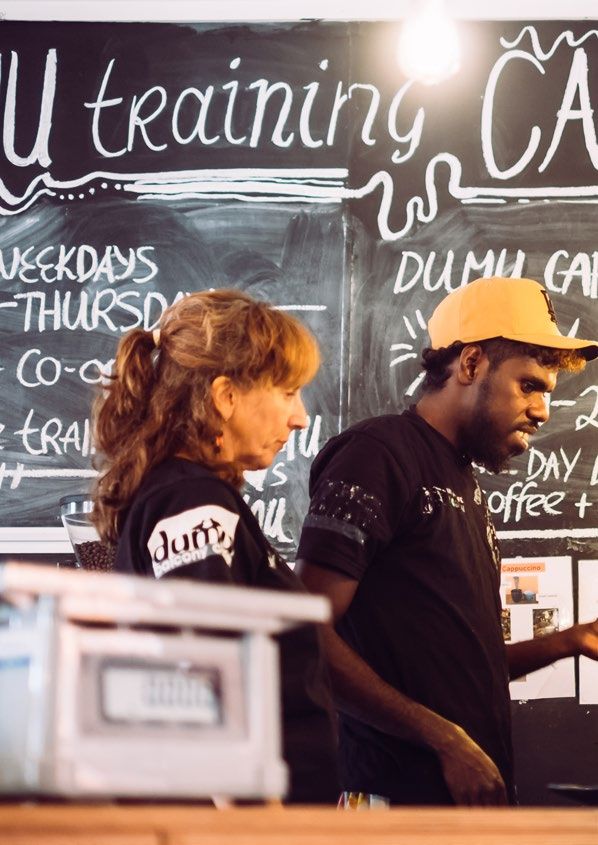
Globally, the social enterprise movement has grown
significantly over the past decade. The coronavirus
pandemic has challenged social enterprises but also
provided countless examples of social enterprises
across the world stepping up using agile and innovative
approaches to address and mitigate both persistent
and emerging challenges. Global connectivity of the
sector continues to strengthen year-on-year – with
important initiatives such as Catalyst 2030 linking
social entrepreneurs and other actors across the globe
to develop bold, new, people-centric approaches to
achieving the United Nations Sustainable Development
Goals. Recognising that effective social and
environmental innovation to address complex adaptive
challenges requires systems thinking, governments
around the world, including Victoria, are increasingly
partnering with social enterprises and others to
take collaborative and coordinated action.

                                                                                        9

An employee at
STREAT’s Cromwell
Street Café. Image
courtesy of
STREAT.

                                                          Victorian Social Enterprise
                                                                  Strategy 2021-2025
10

                                   Image courtesy of
     Victorian Social Enterprise   Good Cycles.
     Strategy 2021-2025
A connected
policy landscape
Alongside the Victorian Government’s significant better connect and unlock opportunities for the sector,
investments in Jobs Victoria services to support so that social enterprises can play an even greater role
jobseekers, the social enterprise sector will continue to in creating jobs, and delivering enhanced economic
play an important role in helping Victoria achieve its and social value to the Victorian community.
ambitious inclusive employment objectives.
This Strategy sets an ambitious agenda for Victoria,
In addition, through government’s active ongoing with a suite of actions across four thematic areas:
commitment and investments to further embed the
Social Procurement Framework across government and 1. Building business skills and capability and capturing
the corporate sector, paired with an unprecedented impact
pipeline of investments in infrastructure and social 2. Enhancing recognition and access to innovative
services, countless opportunities will be unlocked to financing to scale impact
enable social enterprises to scale. 3. Fostering a connected and innovative social
enterprise ecosystem across Victoria
Building on the strong foundations of the first Strategy, 4. Opening doors for social enterprises across
the Social Enterprise Strategy 2021-25 seeks to grow, government.
11
Figure 1: Relationship between social enterprise, social procurement and inclusive employment outcomes
Victorian Social Victorian Social
Enterprise More jobs and Procurement
Strategy Framework
an inclusive
social
economy
Jobs Victoria
Victorian Social Enterprise
Strategy 2021-2025A snapshot of the social enterprise
sector in Victoria
The Map for Impact project (2017),6 commissioned by the Victorian Government under the first Strategy remains
the most comprehensive census of Victorian social enterprises to date.
Impact on our economy Top 5 social missions
$5.2 billion Create opportunity for people to participate in their
community (40%)
in economic impact
60,000
Provide needed goods or services to a specific area (31%)
jobs created by Victorian social enterprises
(1.8% of the Victorian workforce) Provide needed goods or services to a specific group (30%)
3,500 Generate income to reinvest in charitable services or
community activities (20%)
social enterprises across Victoria
12 Generate meaningful employment opportunities for
people from a specific group (13%)
53%
of Victorian social enterprises
are under 10 years old Industries social enterprises
with an average age of 19 years and median age of 10 years.
operate in and reach
Victorian social enterprises operate across all industries,
Key beneficiaries and cohorts but a high proportion are part of the service economy.
The most cited target beneficiaries of Victorian social
enterprises were a particular geographic area, people 29% in Cultural and
Recreational Services
experiencing disadvantage, and people with disability.
60,000 jobs, including: 20% in Retail Trade
12,000
jobs for people with disability
15% in Health and
Social Assistance
4,000
jobs for long-term unemployed people
985
jobs created for Aboriginal Australians
29% of Victorian social enterprises
trade internationally
of Victorian social enterprises
42,000 volunteers in the community 55% income comes from trade
(being products/services)
6 Castellas, E., Barraket, J., Hiruy, K. and Suchowerska, R. (2017) ‘Map for Impact: The Victorian Social Enterprise Mapping Project’, Hawthorn:
Centre for Social Impact Swinburne.
Victorian Social Enterprise
Strategy 2021-2025Opportunities for growth
developing accessible and comparable social
75% more procurement opportunities 66%
impact measurement tools
access to development and
69% 64% more policy support for social enterprises
training opportunities
access to appropriate and networking opportunities and a more
66% 62%
affordable finance cohesive ecosystem
Where social enterprises Barriers to business development
are located Social enterprises highlight several barriers to growing
their business:
Almost half of Victorian social enterprises target their
support toward a specific geographic community, and 54% – we have limited time or the
most of that support is for Victorians. resources to devote to marketing
43% 38% – we are undercapitalised
of Victorian social enterprises
are located in regional areas 38% – consumers have limited awareness
13
of social value of social enterprises
81% 32% – buyers underestimate the quality
of work social enterprises can deliver
of Victorian social enterprises’
trade takes place in Victoria
29% – we don’t have enough time to
invest in relationships
84% 26% – potential customers don’t
of the social impact of Victorian understand we can meet needs
social enterprises is within Victoria
26% – government/corporate bids/
contracts are often too big for our scale
Size and legal forms 24% – public policies are not supportive
The majority of Victorian social enterprises (73%) are of social enterprises
small (fewer than 20 employees), while 22% are medium
(20-200 employees) and 5% are large (more than 200 22% – our brand is not strong enough
employees), and they take on a variety of legal forms. to win us new business
31% are an Incorporated Association 22% – corporate policies are not
supportive of social enterprises
26% are a Company Limited by Guarantee
20% – pitching for work is too time/
cost intensive
20% are a Pty Ltd Company
20% – government/corporate bids/
contracts are too complex/hard to
23% classified as Other
understand
Victorian Social Enterprise
Strategy 2021-2025Key achievements to date
Since the first Strategy was launched, great progress
has been made towards developing a thriving social
Growing market
enterprise sector in Victoria. This includes efforts to opportunities through
support a more connected ecosystem, grow the
market through social procurement opportunities,
certification
drive a robust research and evidence agenda and Since 2016, the Victorian
build business skills and capability across the sector. Government has supported
Social Traders’ certification of
Elevating the voice of the sector social enterprises, which has
been instrumental in building
- Social Enterprise Network the credibility of the sector and strengthening
Victoria (SENVIC) connections between social enterprises,
government and corporate buyers. Social Traders
As a key initiative under the first Strategy, has also played a key role in providing contract
the government provided $1.5 million to readiness and other business support to enable
support the establishment of SENVIC social enterprises to access larger contracts and
to elevate the voice of the sector and achieve scale. As of May 2021, Social Traders had
facilitate the growth of a coordinated, certified over 224 Victorian social enterprises
connected social enterprise ecosystem in Victoria. Since and had 65 buyer members based in Victoria.
being founded in 2018 by key leaders from the Victorian Social Traders has facilitated more than $169
social enterprise sector, SENVIC has expanded rapidly, million in sales for certified social enterprises
14 operating across metropolitan and regional Victoria, and with its Victorian business and government buyer
has established a strong brand and digital presence. members, resulting in 1081 jobs for vulnerable
Through the delivery of in-person and virtual events, the people facing significant barriers to work. Since
network has bridged connections across geographic and 2018 the organisation has strengthened its focus
sector boundaries to promote greater collaboration and towards stimulating the social procurement
sharing of resources and information. SENVIC has also marketplace for social enterprises, playing a
fostered peer-to-peer learning to strengthen the network complementary role to SENVIC’s efforts to foster
of social enterprises in Victoria and has played a key the social enterprise ecosystem’s development.
role in national advocacy efforts through the Alliance of
Social Enterprise Networks Australia (ASENA).
A SENVIC networking event at Sibling Café, a social enterprise by Kinfolk. Image courtesy of SENVIC.A worker at social enterprise Outlook Environmental’s Hampton Park facility. Image courtesy Outlook Australia.
Growing the market through the
Social Procurement Framework
The whole-of-Victorian-Government Social Procurement “The Social Procurement Framework
Framework, launched in April 2018, is a landmark
has been critical to Outlook Australia
achievement of the first Strategy. The Framework seeks
realising new contract opportunities
to harness government’s significant buying power to
with a diverse range of corporate 15
maximise social, economic and environmental benefits
from the goods, services and construction it procures. buyers. These opportunities have
Through the implementation of the Framework, directly translated into thousands of
government has focused on: hours of work for our staff annually,
• delivering fair and inclusive employment who would otherwise have faced
opportunities significant barriers to securing
• facilitating supplier diversity meaningful employment.”
• purchasing from social enterprises Sam Sondhi, Chief Executive Officer, Outlook
and Aboriginal businesses (Aust) Ltd.
• encouraging environmental sustainability.
In the 2019/20 financial year, Victorian Government “The Social Procurement Framework
departments and agencies directly spent $14.1 million has been instrumental in changing
with 79 certified social enterprises and $83 million the way businesses approach social
with 273 social enterprises that were identified by
procurement”.
the Map for Impact project. In the same period,
Dan Renfrey, Regional Sustainable
the major road and rail projects indirectly spent
Procurement Manager, Boral.
$15.3 million with social enterprises.
The Victorian Government Social Procurement
Framework has supported greater supplier diversity,
including through engaging Aboriginal businesses
as partners and suppliers. The Social Procurement
Framework includes an Aboriginal procurement target delivery partners, Kinaway Chamber of Commerce,
to support self-determination, the growth of Victorian plays an instrumental role in connecting government
Aboriginal businesses, and to ensure Aboriginal people and private sector buyers to Aboriginal businesses
get better outcomes from government spending. As through their business directory, networking events and
part of these efforts, one of the government’s key business development programs.
Victorian Social Enterprise
Strategy 2021-2025From 1 July 2019 to 30 June 2020 the Victorian
Government directly spent $36.9 million with 90 verified
Supporting robust research
Victorian Aboriginal businesses, and $9.3 million with and evidence
37 other Aboriginal organisations. A total of $124.5
million was also spent indirectly through contractors In 2017, the Victorian Government commissioned the
with Aboriginal businesses across major road and rail Map for Impact Project (Project),8 which was undertaken
projects. Encouragingly, there was a 176% increase by the Centre for Social Impact at Swinburne University
in the purchase of goods, services and construction of Technology (CSI Swinburne). The Project produced
from Aboriginal businesses and a 35% increase in the first searchable map of social enterprises across
the number of Aboriginal businesses engaged, as metropolitan and regional areas of Victoria, a database
compared to 2018/19.7 of Victorian social enterprises and intermediaries, and
a report describing the organisational characteristics,
activities and impacts of Victoria’s social enterprises.
In 2020, to ensure the new Social Enterprise Strategy
was informed by domestic and international best
practice, the Victorian Government funded CSI
Swinburne to undertake a research and evidence
review of the key challenges and opportunities for
the social enterprise ecosystem. This review then
informed a Discussion Paper9 which was made publicly
available to guide consultations on the new Strategy.
Alongside these efforts, government has recognised the
importance of making best practice research openly
available to capture learnings and foster information
Jadah Pleiter, CEO, Panku - an Aboriginal business and social benefit sharing across the sector. To enable this, government
supplier under the Social Procurement Framework. Image courtesy
Panku Safety Solutions.
has supported the development of an online evidence
16 portal - the Social Entrepreneurship Evidence
Space. The portal enables social enterprises and
entrepreneurs to access a “one stop shop” of evidence-
based data and research reports related to the social
economy to inform and improve practice, both of which
are integral to the sector’s sustainability and growth.
“The Victorian Aboriginal and Torres
Strait Islander business sector has
grown substantially on the back of
the Social Procurement Framework.
This is only the beginning – as
business capabilities and capacities
increase, so will the opportunity for
larger and long-term contracts that
will provide the economic benefits
to our Aboriginal and Torres Strait
Islander businesses and people.”
Scott McCartney, Chief Executive Officer,
Kinaway Chamber of Commerce.
CSI Swinburne’s ‘Social Entrepreneurship Evidence Space’ portal
and ‘Map for Impact’ website, available at seespace.com.au and
mapforimpact.com.au.
7 Victorian Government Department of Treasury and Finance and Department of Jobs, Precincts and Regions (2020) ‘Whole of Victorian
Government Social Procurement Framework Annual Report 2019-20’, Melbourne.
8 Castellas, E., Barraket, J., Hiruy, K., and Suchowerska, R. (2017) ‘Map for Impact: The Victorian Social Enterprise Mapping Project’, Hawthorn:
Centre for Social Impact Swinburne.
9 Victorian Department of Jobs, Precincts and Regions (2020) ‘Discussion Paper for a renewed Victorian Social Enterprise Strategy’, Melbourne.
Victorian Social Enterprise
Strategy 2021-2025Developing skills and
capability across the
sector – Boost Your
Business Social Enterprise
Capability Voucher Stream
Across four grant rounds, the Victorian
Government provided $1.62 million to build
the business capability and skills of social
enterprises to support their viability,
sustainability, growth and impact. In total,
59 social enterprises benefited from a
total of 74 vouchers which were used
to access specialist expertise from
registered service providers.
17
Staff making coffee at Dumu Balcony Cafe, an Aboriginal
owned, for-purpose, training café in Bright. Dumu Balcony
Cafe utilised a Boost Your Business voucher to support
work to refine their business model and grow their social
impact. Image courtesy of Dumu Balcony Cafe.
Victorian Social Enterprise
Strategy 2021-2025Driving innovation and collaboration
to solve complex problems
In Australia and abroad, the social enterprise sector power. While many have been coordinated across
is often characterised as embodying a spirit of geographical boundaries focussing on specific
collaboration, mutual support and encouragement, problems, other collaborative efforts have emerged
where enterprises work together to develop solutions from the co-location of enterprises in clusters. Despite
to some of the most pressing problems facing society.10 limited research to date on social enterprise clusters in
As the Victorian social enterprise sector continues to Victoria, evidence from the United Kingdom suggests
grow each year, there are several emerging innovative that clustering social enterprises has positive effects on
and collaborative projects, such as those outlined the survival of new enterprises, fostering innovation and
below. These efforts have facilitated knowledge creating a local entrepreneurial “buzz”.11
exchange, resource and asset sharing and have
enabled enterprises to leverage greater purchasing
MOVING FEAST
At the start of the COVID-19 pandemic in early 2020, social
enterprise STREAT rapidly mobilised Moving Feast - a
collaborative project amongst social enterprises to build a
fairer and more regenerative food system in Victoria. Initially,
18 the project focussed on providing culturally appropriate
produce and meals to groups facing food insecurity during
the pandemic. Throughout 2020, the participating 17 social
enterprises grew over 60,000 food plants, packed over
30,000 produce boxes, cooked over 130,000 meals for
vulnerable communities, created wellbeing materials to
accompany food, and developed over 20 food retail products
to sell through their various channels. Encouraged by their
early success, the collective started to plan longer-term
projects in other areas such as food system training and
employment pathways, urban farming, circular economies,
First Nations food system work, food eco-tourism, food retail,
and connecting city and regional food systems. In 2021, the
collective was successful in gaining a $1.5 million Working
for Victoria grant and additional philanthropic funding to
run an 18-month pilot project to create new training and
employment pathways for marginalised young people into
horticulture and regenerative urban farming. The project is
an impressive example of creating an innovative networked
approach to address a complex problem, and how to harness
the collective skills, assets and energy across a broad range Food relief packages by the Moving Feast network ready for
of stakeholders to improve human and planetary health. distribution. Image courtesy of Cultivating Community.
10 Pinch, S. and Sunley, P. (2016) ‘Do Urban Social Enterprises benefit from agglomeration? Evidence from Four UK cities’, Regional Studies, 50:9, 1290-1301.
11 Ibid; Wennberg, K. and Lindqvist, G. (2007) ‘How do entrepreneurs in clusters contribute to economic growth?’, SSE/EFI Working Paper Series In
business Administration, Stockholm.
Victorian Social Enterprise
Strategy 2021-202519
A young person carrying out bicycle maintenance. Image courtesy of Good Cycles.
GOOD CYCLES
Good Cycles provides employment pathways for young In addition to providing bike servicing, Good Cycles
people experiencing barriers to work, while concurrently now also deliver bike share schemes, waste logistics,
driving efforts to create more sustainable, livable carshare cleaning, and a variety of civil works services
cities. Since its inception in 2013, the social enterprise across Australia. The Victorian Government has also
has provided bike servicing training and employment supported Good Cycles to establish a place-based
opportunities for young people from disadvantaged social enterprise cluster in Melbourne’s central business
backgrounds across Melbourne and Geelong. Since district. In association with five other social enterprises,
2018, over 671 young people have participated in the this ambitious project will foster collaboration and
program which has enabled them to gain confidence, provide up to 800 transitional employment opportunities
transferrable skills and facilitated pathways to secure to vulnerable young Victorians over the next eight years.
employment in the longer term. More recently, the The project is leveraging existing assets by activating
organisation utilised its second Boost Your Business underutilised space in central Melbourne to ensure the
Social Enterprise Capability Voucher to expand its precinct is accessible to the young people involved in its
mission to support sustainable cities through its work. programs and broader clientele.
Victorian Social Enterprise
Strategy 2021-2025Supporting Work Integration Social Enterprises
Work Integration Social Enterprises (WISEs) are social Around one third of Victorian social enterprises identify
enterprises that create meaningful employment as WISEs and operate across a variety of industries,
opportunities and pathways to employment for people including hospitality and healthcare. Importantly, studies
experiencing disadvantage and facing complex have found that WISEs produce better employment
barriers to economic participation.12 They are people- outcomes than mainstream employment services for
centred, inclusive workplaces, which typically provide people experiencing significant disadvantage and have
wraparound programs and services for employees, been shown to be as efficient and more productive than
such as health, education and wellbeing supports. their commercial counterparts.13 Other research has
Government recognises the important role that found that WISEs play a key role in improving people’s
WISEs play in driving inclusive economic growth and livelihoods while directly reducing the costs of welfare,
addressing gaps in the employment services system. health and housing services.14
STREAT
STREAT is a WISE that strives for all young people to background research with Social Ventures Australia into
have a strong sense of inclusion and belonging, and be international best-practice programs to support young
thriving with a healthy self, job and home. The enterprise people transitioning from prison and intervention points
operates a portfolio of hospitality businesses that enable that could be targeted. From this rich evidence base,
marginalised young people to access the necessary STREAT kickstarted a cafe, bakery and training program
support and skills development to gain employment. onsite at the Parkville Youth Justice Centre which
Since its inception in 2010, STREAT has provided over improves the outcomes for young people transitioning
20
600 young trainees with pathways into the food service out of the justice system.
industry. Trainees come from a range of backgrounds
and situations and generally face multiple barriers to
work and training, including homelessness, alcohol and
other drug use, mental health issues, learning issues
and experience with the youth justice system. Young
people participating in the program are given 12 months
of intensive support in two parts: 6 months of ‘Learning’
where they gain over 500 hours of accredited skills,
on-the-job training, life skills and personalised support;
and 6 months of ‘Earning’ where they undertake over
700 hours of paid work alongside receiving employment
transition support. STREAT has also built strong
partnerships with government to reduce recidivism rates
among young people exiting the state’s youth prisons. In
2017, STREAT partnered with the Victorian Department of
Health and Human Services (DHHS) and the Department
of Justice and Community Safety (DJCS) to develop
the ‘Thyme Out program’ which creates more effective
transitions for young people from the Malmsbury and
Parkville Youth Justice Centres. To further expand
impact, in 2018, STREAT used a Boost Your Business Young people engaged with STREAT’s programs spend time with
Social Enterprise Capability voucher to undertake Magic, STREAT’s therapy dog. Image courtesy of STREAT.
12 Barraket, J., Qian, J. and Riseley, E. (2019) Social Enterprise: A people-centred approach to employment services, Report for Westpac Foundation,
Australia: Westpac Foundation and the Centre for Social Impact Swinburne.
13 Ibid.
14 Ibid.
Victorian Social Enterprise
Strategy 2021-2025LOCAL TRANSIT
Local Transit provides East African refugees
and migrants with income and development
opportunities as wheelchair accessible vehicle
drivers for people with disabilities. During the
COVID-19 restrictions in Melbourne, Local Transit
was able to provide drivers with work providing rail
replacement shuttle buses for Metro Trains, as well
as provide essential deliveries to vulnerable migrant
families and non-essential patient transfers for
people with disabilities. Alongside this, Local Transit
established a mobile vehicle disinfecting team. The
support Local Transit received from Impact Co.
through a Boost Your Business Social Enterprise
Open Spaces festival at the historic Abbotsford Convent. Capability voucher enabled the business to scale,
Image by Charlie Kinross. including through securing its first major contract
with Metro Trains to undertake a public transport
trial. Business support provided by Impact Co.
WORKING FOR VICTORIA enabled the organisation to prepare for critical
WAGE SUBSIDY meetings, negotiate and manage contracts,
engage with government stakeholders, and fulfil
The Victorian Government’s Working for Victoria reporting requirements. The support has also
program was developed to create employment been instrumental in enabling Local Transit to
undertake long term business planning through the 21
opportunities for people who lost their jobs due to
the COVID-19 pandemic, and to deliver valuable development of a Strategic Plan.
community services. The program has provided
up to 100% wage subsidies for new jobs created “Support through the voucher has
in eligible Victorian social enterprises. As part of given me the confidence to access
the assessment criteria, social enterprises had to larger contracts, engage with industry
demonstrate ongoing capacity to fund the roles for
and government to provide better
a further six months beyond the life of the subsidy.
Across 2020/21, a total of 20 social enterprises transport for people with disabilities,
benefited from $6.27 million in wage subsidies and develop a network of professional,
under the program, enabling the creation of 171 trained wheelchair accessible vehicle
new full-time equivalent roles.
drivers from East Africa.”
“The impacts of the pandemic on Ali Warsame, Managing Director, Local Transit.
the Abbotsford Convent’s people-
dependent revenue streams have
been significant. The Working for
Victoria Program has supported
the Convent by providing 15 new
positions to help revive the precinct
and provide a lasting legacy that we
can continue to build upon.”
John Di Natale, Chief Operating Officer,
Abbotsford Convent.
Image courtesy of Local Transit.
Victorian Social Enterprise
Strategy 2021-2025Supporting regional and
rural enterprises
Social enterprises play a crucial role in addressing point for communities, responding to unmet needs of
market gaps, particularly in regional and rural the places in which they are embedded. They are truly
communities. In Victoria, social enterprises in rural and ‘place-based’, and social entrepreneurs in regional
regional areas are diverse, operating under a variety and rural communities tend to be highly resourceful in
of business models, including for-profit, not-for-profit their ability to leverage resources and capability within
and co-operative structures. They provide a relatively narrower markets. Similarly, they must be agile and
broad range of services compared to metro-based resilient to effectively respond to both environmental
enterprises and are in many cases an important anchor and economic shocks.
BAW BAW FOOD HUB
Baw Baw Food Hub (the Hub) is a community
food social enterprise that facilitates the
growth of ecological farming practices and
makes fresh, local, organic food available
to West Gippsland communities. The Hub
supplies weekly vegetable boxes and an
22 extensive range of other products through
its Warragul grocery store, online orders
and deliveries. It provides a marketplace for
around 60 farmers and food producers, and
generates local employment, volunteering
opportunities and community connections
via various events and educational programs.
The Hub benefited greatly from the Boost
your Business Social Enterprise Capability
voucher, as it enabled the enterprise to access
extensive mentoring and business support
from CERES Fair Food, a much larger social
enterprise also trading in local and organic
foods. The advice provided was instrumental
in strengthening the organisation’s business
model to support its financial viability,
particularly during the height of the COVID-19
pandemic. For example, during the lockdown
period, the Hub rapidly adapted to meet
local needs by shifting exclusively to online
trading through the Open Food Network. More
broadly, the business support has been critical
in assisting the organisation to move its
operations to a larger premises and scale its Baw Baw Food Hub’s market store in Warragul. Images by Lynda
operations and impact. Hoare (above) and Dianne Glass (below).
Victorian Social Enterprise
Strategy 2021-202523
Image by Studio Aton, courtesy of Hepburn Wind.
HEPBURN WIND
Hepburn Wind is a community-owned wind farm of agriculture and energy production. This work
co-operative located near Daylesford, Victoria. mitigated risk for Hepburn Wind as the
The enterprise seeks to create environmental, co-operative didn’t have the in-house expertise
economic and social benefits for members, nor the budget to fund innovation in agribusiness.
neighbours and community while acting as a As a result of the support, Hepburn Wind
lighthouse to others, demonstrating a successful identified a business opportunity for ‘behind-
community energy model. As a renewable energy the-meter’ energy with a potential agricultural
generator, Hepburn Wind derives income from customer. To further develop this opportunity
electricity sales, Renewable Energy Certificates the co-operative acquired a second voucher to
and from its carbon offset product - Community work with TDi in 2020. The capacity building that
Green. A Boost Your Business Social Enterprise occurred as a result of the vouchers has been
Capability voucher enabled Hepburn Wind to invaluable and provided Hepburn Wind with a
work with The Difference Incubator (TDi) to strong foundation from which to scale operations
explore new income streams at the intersection and impact in the longer term.
Victorian Social Enterprise
Strategy 2021-2025Fostering social entrepreneurship
The Victorian Government is committed to facilitating government has also funded initiatives to ensure that
social entrepreneurship in Victoria, including social enterprises are resilient, sustainable, and able to
through its support for various ideation, start-up and respond to economic shocks.
accelerator programs. Alongside these efforts, the
THE SOCIAL STARTUP THE AUSTRALIAN
STUDIO, CSI SWINBURNE CENTRE FOR RURAL
ENTREPRENEURSHIP
In 2020, the Victorian Government supported
the Social Startup Studio’s Social Enterprise (ACRE)
Fundamentals program, which provides a
ACRE is a social enterprise that is driving the renewal
comprehensive suite of publicly accessible
of Australia’s rural communities so that future
resources for people and organisations considering
generations may thrive. Through ACRE’s Social
starting a social enterprise. The program includes
Enterprise Schools Initiative and its partnership
information, workbook activities and tools about
with renowned Scottish learning organisation the
introducing a social enterprise, designing for
Social Enterprise Academy, ACRE provides targeted
impact, business model elements and feasibility
leadership and enterprise development programs
considerations. In addition to these resources,
for school aged students, social entrepreneurs and
from September 2020 to June 2021, 16 virtual
community leaders across Victoria. To ensure a
workshops were held to enrich learning, with
coordinated approach to entrepreneurship uplift
around 25 participants attending each workshop.
24 across rural Victoria, the Victorian Government
Government also supported the Social Startup
has supported SENVIC’s partnership with ACRE
Studio to provide clinic-based support for social
to establish local sub-networks across regional
enterprises impacted by the COVID-19 pandemic
Victoria and deliver a suite of learning and
and the 2019/20 bushfires. The support has helped
development programs. This work has already
existing social enterprises better understand gaps
enabled over 100 social entrepreneurs to combine
in their current business model and operations, and
forces with their communities to solve local issues
optimise financial sustainability and social impact
whilst creating sustainable businesses. ACRE also
by identifying new business opportunities and/or
supports communities to become agile, resilient and
adjusting and improving their business models.
enterprising, including through leveraging assets.
In 2016, ACRE led
the community
buyback of the Old
Beechworth Gaol
through a consortium
of local investment
and philanthropic
support. The site
is fast becoming
a vibrant hub and
demonstration site for
the role community-
led rejuvenation can
play in building new
localised economies.
An employee at Sweet Justice, a training and work
experience social enterprise engaged with the Social A student participating in ACRE’s Social Enterprise Schools
Startup Studio. Image by Journey by Light Photography. program. Image courtesy of ACRE.
Victorian Social Enterprise
Strategy 2021-2025Aboriginal social enterprises
The Victorian Government is committed to supporting Procurement Framework. Government also recognises
Aboriginal social enterprises, business and that while the values and business models of many
entrepreneurs to prosper, recognising the important Aboriginal businesses align strongly with those of
role they play in enabling self-determination and social enterprises, many may not identify as social
realising economic prosperity for Aboriginal Victorians. enterprises. In this respect, the government remains
Importantly, they provide culturally safe, inclusive committed to adopting a flexible approach to working
employment opportunities which foster Aboriginal social and partnering with Aboriginal businesses, enterprises
entrepreneurship and leadership. Aboriginal social and organisations to deliver strong employment and
enterprises, businesses and entrepreneurs make vital economic outcomes for all Aboriginal Victorians.
contributions to the state’s economy and deliver tangible
social benefits to the community, including encouraging This Strategy recognises that Aboriginal people know
greater understanding of, and respect for Aboriginal what is best for themselves, their families and their
culture and communities across Victoria. communities. It aligns with the Victorian Government’s
broader commitment to Treaty, the Victorian Aboriginal
Through this Strategy, the government is committed Affairs Framework 2018-2023 and the Closing the
to supporting Aboriginal social enterprises to access Gap Implementation Plan. In particular, the Strategy
the culturally appropriate resources they need supports commitments for government to improve life
to build financial sustainability, achieve growth outcomes for Aboriginal Victorians through economic
and scale social impact, as well as access market participation and employment.
opportunities, including those arising from the Social
25
BLACK DUCK FOODS LTD
Black Duck Foods is an Aboriginal social enterprise in a culturally appropriate way. Alongside the
committed to traditional food growing practices environmental benefits of the enterprise’s work,
that care for Country and return economic the cultural intellectual property underpinning
benefits directly to First Nations peoples. It was this knowledge system has important economic
established to reintroduce traditional farming benefits for Aboriginal Victorians and Traditional
practices across native grains and tubers, protect Owner Groups.
the environment and preserve and celebrate
Aboriginal cultural knowledge. In 2019, Black Duck
Foods received a Boost Your Business Social
Enterprise Capability voucher, which enabled
them to engage Social Ventures Australia to
support the development and communication of
the organisation’s Theory of Change. This strategic
support enabled the enterprise to acquire the
financial and community support necessary to
scale up the business’s operations – including
expanding its traditional food systems and sharing
its story with other Aboriginal groups across
Victoria. Through its work, Black Duck Foods
showcases the critical role traditional knowledges
play in revolutionising the agricultural system
to ensure that land is effectively managed for
future generations, and food security is addressed Native grass and seeds. Image courtesy of Black Duck Foods.
Victorian Social Enterprise
Strategy 2021-2025Raising Victoria’s profile on
the global stage – Social
Enterprise World Forum
The government has supported Victorian social
enterprises to participate in several editions of
the Social Enterprise World Forum, which is held
annually and attended by leading policy makers,
social enterprise experts and practitioners
from around the world. The event plays an
instrumental role in driving the global social
enterprise movement, fostering knowledge
sharing and showcasing solutions that
contribute to a more sustainable and inclusive
future. Forum attendees have developed
long lasting connections with counterparts
abroad, which in turn has informed local policy
development and enabled export opportunities
in global markets.
26
SENVIC founding members at the Social Enterprise World Forum 2019.
Image courtesy of SENVIC.
Cerys ap Rees, from Cultivating
Community, preparing to deliver fresh
produce to people experiencing food
insecurity, as part of the Moving Feast
collective. Image courtesy of Cultivating
Community.
Victorian Social Enterprise
Strategy 2021-202527
Victorian Social Enterprise
Strategy 2021-2025Image courtesy of ACRE.
28
Victorian Social Enterprise
Strategy 2021-2025A strategy to create greater
opportunity, inclusion and impact
Victoria’s first Social Enterprise Strategy was pivotal with the sector – including strengthening alignment
in promoting the value and benefit of a strong, vibrant with government services and exploring ways to foster
social enterprise sector. Building on this firm foundation, social entrepreneurship across the education system.
the Social Enterprise Strategy 2021-25 seeks to grow, Targeted efforts will improve recognition of the sector
connect and enhance social enterprises, so that the across government and the broader community, and
sector can play an even greater role in creating inclusive help enterprises scale through unlocking access to
employment opportunities and delivering economic and innovative financing. Broader efforts outlined in this
social value to the Victorian community. Strategy to drive national collaboration will not only
improve strategic alignment and systems thinking, but
The Strategy centres on four key themes and a range
also inspire other jurisdictions to transform their own
of supporting actions under each. Each theme on
social economies.
its own is geared towards enhancing the capability
of, and opportunities available to, social enterprises. The Victorian Government is investing to deliver on
Importantly, the actions will support social enterprises the Strategy and its key themes. When combined with
operating across all markets, industries and geographic unprecedented investment in job creation and inclusive
locations, including those operating in regional and rural employment in the 2020/21 and 2021/22 Victorian State
Victoria. The themes are interconnected and mutually Budgets, the social enterprise sector has access to new
reinforcing – actions under one theme will support opportunities to build a more inclusive economy and
delivery of another. Taken as a whole, the themes will: create jobs for those that need them. This additional
strengthen and foster growth of the sector; create new 29
funding will help raise their profile, connect them with
opportunities for social enterprises to sell their goods more business opportunities, and strengthen the sector,
and services; build a coordinated ‘ecosystem’ across including in regional Victoria.
Victoria; and, improve the measurement and reporting
of the outcomes achieved by social enterprises. The Social Enterprise Strategy 2021-25 outlines the
The Strategy also provides a cohesive approach to critical actions needed to be taken by government and
transforming government’s approach to better working its partners to ensure that this vision is realised.
Theme 1 Theme 2 Theme 3 Theme 4
— — — —
Building business Enhancing Fostering a Opening doors
skills and recognition connected for social
capability and access and innovative enterprises
and capturing to innovative social enterprise across
impact financing to scale ecosystem across government
impact Victoria
Victorian Social Enterprise
Strategy 2021-2025Themes and Action Areas
Theme 1
Building business skills and capability and capturing impact
Social enterprises in Victoria are predominantly small financial sustainability and developing the pipeline for
to medium enterprises (SMEs) and face similar issues quality, investable Victorian social enterprises. Sector
to other SMEs and start-ups, such as building business consultations have highlighted that the hybrid nature of
acumen, accessing funding, business planning, marketing, the social enterprise business model typically requires
budgeting and tendering. Building skills, capability and tailored and differentiated supports depending on the
know-how of social enterprises operating in consumer, maturity of the social enterprise.
business and government markets is critical to enabling
ACTIONS OBJECTIVES
1.1
Support business skills across the social enterprise • Social enterprises have the business acumen and
development lifecycle capabilities they need to scale and compete in existing
Government will support programs and initiatives to build and new markets.
business skills and capability across the sector to facilitate • A diverse intermediary sector exists to support a strong
the sustainability and growth of social enterprises. A social enterprise ecosystem.
range of partner organisations and intermediary services • Government is playing an active role in developing the
30 will ensure the sector can access supports that meet sector to grow, create new jobs and scale impact.
their unique needs. Support will cut across the business
lifecycle from ideation and start-ups to procurement and
investment ready organisations, onwards to mature social
enterprises, and be inclusive of enterprises operating in a
variety of markets and geographies.
1.2 Demonstrate impact and social value • Social enterprises have improved capability to capture,
Government recognises that the ability to demonstrate, analyse and report the impacts of their programs and
communicate and understand impact is crucial to the services.
attraction of investment and long-term sustainability of the • Improved impact measurement across the sector will
sector. The development of a holistic and flexible model to facilitate greater transparency and confidence in the
track impact will be explored to support greater consistency sector’s impact, which in turn will support the attraction
in impact measurement across the sector, while ensuring of private and philanthropic investment.
social enterprises have flexibility to tailor approaches to their • Publicly reported outcomes will improve public awareness
individual needs. Within this context, government will also and perception of the social enterprise business model.
support programs and initiatives to strengthen the sector’s
data, evaluation and monitoring skills. Exploration of ways
government can better leverage its existing data sets to
support the sector will also be undertaken.
1.3 Support research to grow the evidence base • Social enterprises and intermediaries can readily access
Building on the Map for Impact project, government will evidence on what works in various contexts to guide
support further research to ascertain the state of the business planning.
sector, its impact and value to the Victorian economy. • A strong evidence base on best practice in social
This will include supporting a publicly accessible entrepreneurship and enterprise will ensure government
social entrepreneurship evidence portal for a range of policy, programs and supports are grounded in evidence
users including policy makers, social entrepreneurs, and effectively respond to the sector’s needs.
intermediaries and investors. Rich system-wide and
localised data will inform government policy and support
efforts to promote the sector to the community, businesses
and investors.
Victorian Social Enterprise
Strategy 2021-2025You can also read


