Quill - The Viera Literary Society
←
→
Page content transcription
If your browser does not render page correctly, please read the page content below

Quill
 THE

   VIERA LITERARY REVIEW
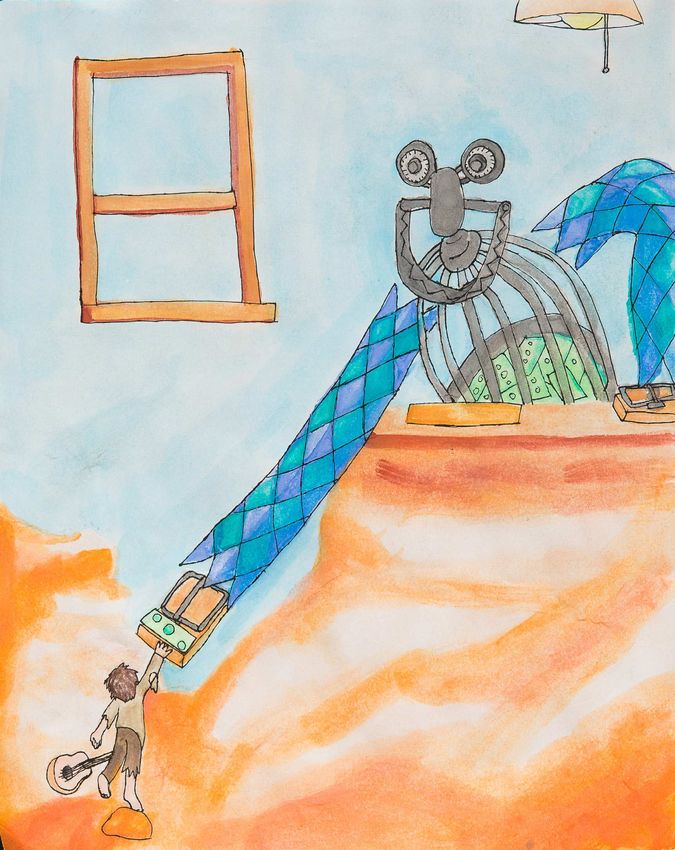
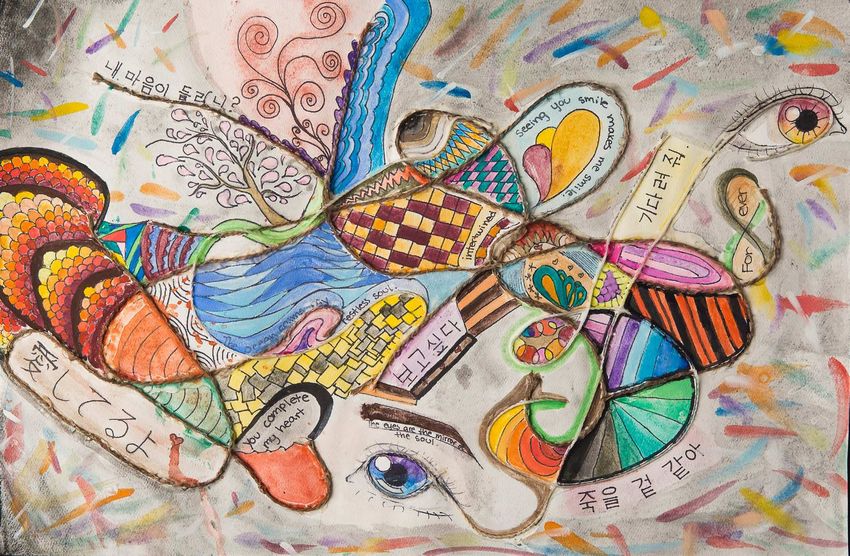
THE QUILL 2019

FREEFORM THOUGHTS
ALEX DOUGHERTY

I LIKE THESE THINGS
SAGE PRUSSEL
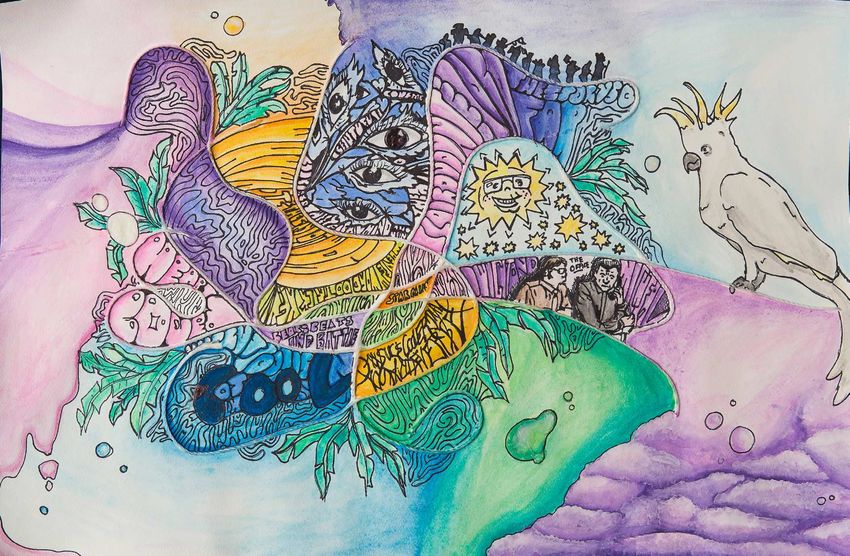
THE QUILL 2019

                 Editor-in-Chief Bella Troia
                 Assistant Editor Amber Breese
                 Managing Editor Jillian Loretoni
                 Assistant Managing Editor Julian Delvalle Pabon
                 Acquisitions Editor Kensley Fowler

                 Editors
                 Adiv Ahsan, Kelly Carmer, Morgan Ciliberti, Treshawn Clinard,
                 Jaydin Gentile, Adam Hajo, Elijah Kelia, Noah Lambert

                 Special thanks to
                 Kevin Cook, Eloise Evans, Kelly McWilliams, Agile Milton,
                 Ron Peters, Suzanne Smith, and Sherri Vig.

                 Cover Art
                 Caitlin Amick

                 Faculty Advisor Meisje Connor
                 Art Director Mark Cole

                 The Quill: Viera Literary Review is a publication of Viera High School, Melbourne, Florida
                 Sarah Robinson, Principal.

                 © 2019 Viera High School
THE QUILL 2019

TABLE OF CONTENTS
FREEFORM THOUGHTS                  1   FICTION
ALEX DOUGHERTY
                                       LINUS THE LONELY LITHIUM LLAMA           30
I LIKE THESE THINGS                1   ESTHER FRANCOM
SAGE PRUSSEL
                                       THE FLIGHT OF LIFE                       32
REALITY OF THE MIND                4   OLIVIA RAMIREZ
KAITLYN BRADNEY
                                       LAKE BENEATH A CLOUD                     34
GARDEN DREAMS                      4   JUSTIN SANTOS
EVA LA MANNA
                                       SWEETENER                                36
                                       KAITLYN LEVON
WHERE I’M FROM
POEMS BASED ON “WHERE I’M FROM”
                                       THE SPACE                                37
                                       SYDNEY SANCHEZ
BY GEORGE ELLA LYON
I AM FROM MOVING TRUCKS            6   LOVE ON ICE                              38
                                       KYLIE HIMEBAUGH
VERONICA FERNANDEZ
WHAT HAS SHAPED MY LIFE            7   COWARDICE                                40
                                       DALTON CRAVENS
SELMA BURKE-EDDIB
SUNDAY MORNING BACON               8
JAYDIN GENTILE                         PLAYS
I AM FROM KEYS                     9   WHY WE BROKE UP                          42
JUSTIN LEE                             SARAH BOESKEN

I AM FROM STORY BOOKS             10   BANKROBBER                               58
SABRINA ANTOINE                        SEBASTIAN GRIFFIN

I AM FROM THE LOCK BOX            11   NATURAL                                  60
ANGELENA RODRIGUEZ                     SAGE PRUSSEL

I AM FROM THE STORM               12
CAMERON COX                            NONFICTION
THE GIRL FROM THE WEST            13   DEAN-O                                   62
NUHA HAQUE                             KAREN DIMEO
DREAM CATCHER                     14   L’APPEL DU VIDE                          64
TRINITY HENDRICKS                      DANIEL THEW
                                       THE MOON                                 66
SHOES & STOCKINGS                      NICOLE BLANCHARD

NATALIE’S STORY                   16
JORDAN WILKES                          POETRY
SILENTLY SLIPPING                 19   A HAIKU FOR EVERY CLASS I’M
EMMA SCHEINBART                        TAKING RIGHT NOW                         68
STOCKINGS                         20   KEVEN LUCIANO
MANUELA CORREA                         WITHOUT YOU                              69
MOCCASINS                         21   MORGAN CILIBERTI
EMILY SIMONS                           TITELIST PRO V1                          70
                                       BRIANA GABE
FAMOUS FIRST LINES                     SCHOOL EXCUSES                           71
INSPIRED WRITINGS                      JENSEN THURMAN, JAYDIN GENTILE,
                                       JULIAN DELVALLE, JILLIAN LORETONI,
EQUILIBRIUM                       24   MORGAN CILIBERTI, ADIV AHSAN,
JAVONNE A. RICE                        KENSLEY FOWLER, NOAH LAMBERT
OPPOSITE DAY                      26
JAYLA TORRES
WHO I AM                          27
MIGUEL COOK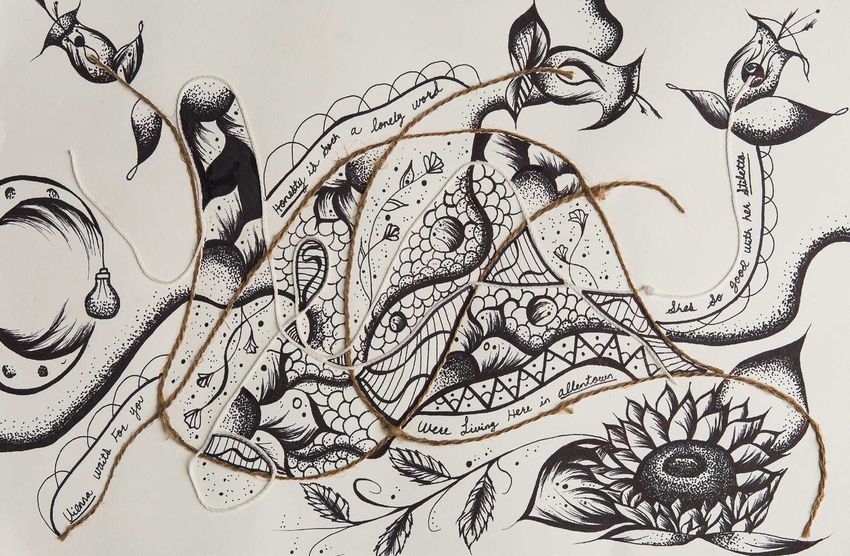
THE QUILL 2019

                 REALITY OF THE MIND
                 KAITLYN BRADNEY

                 GARDEN DREAMS
                 EVA LA MANNA
4
THE QUILL 2019
WHERE I’M FROM
poems based on “where i’m from”
by george ella lyon
5THE QUILL 2019
I AM FROM MOVING TRUCKS
Veronica Fernandez
I am from moving trucks,
from Amazon and packing everything away.
I am from the fresh wooden boards and coated paint
(Fluorescent, smooth, the wet drops staining).
I am from the aloe vera,
the salty waves
that helped me heal my wounds.
I am from the quinceañeras and untameable hair,
from Fernandez and Pierini and Ramos.
I am from the vibrant salsa music and smoky home-cooked meals.
from Dream Big! and Beauty is Pain!
I am from my First Communion at the Catholic Church,
studying the Bible and cheerfully singing.
I’m from the Miami beaches and the cultural country of Spain,
crunchy tequeños and warm panettone.
From the vicious rip current I was vacuumed into,
the sleight-of-hand skill of getting what I wished,
and the ambulance dragging my father away after a broken bloody nose.
I am from the dusty attic, illed with old crippling furniture of my childhood,
musty torn-apart nursery books that once fastened me asleep.
I’m from my collection of games that inspired me to become a princess,
memories of the roots from my ancestors who lived long before me,
Crinkled photographs of my youth shaping me into who I am today.
6THE QUILL 2019
WHAT HAS SHAPED MY LIFE
Selma Burke-Eddib
I am from ceiling fans,
from Barilla and Victorian wallpaper.
I am from the snowy trees and the chicken coop across the lawn of the ancient house,
towering over the road.
I am from the evergreens, the marsh
where moose and deer graze
and trek through.
I am from holiday feasts and dark eyes,
from Irene and Youseff and Kelly.
I am from the soldiers and intellectuals,
from Who taught you that? and Wake up!
I am from the moon and the stars who answer my father’s prayers,
I’m from icy roads winding through old cities where witches burned,
from tajine and rotini,
from the trail of feathers on the kitchen loor,
the shadows in my sister’s closet,
and the gunshot in Connecticut.
I am from the boxes in my grandmother’s house,
illed with traces of the past long forgotten,
still and distant,
faded images of a young child
who I fail to recognize as myself.
7THE QUILL 2019
SUNDAY MORNING BACON
Jaydin Gentile
I am from Publix-brand pastries,
from Under Armor and Boombah.
I am from the charming home most would call scant.
I am from the avocado tree that is yet to produce,
the oak where the swings once hung,
whose history I know as well as my own.
I am from Sunday-morning bacon and eggs and family love,
from Mom and Dad and Dominick.
I am from the nail-biters and idgety ingers,
from Do your best! and Take those earbuds out, I’m talking to you!
I am from delighting myself in the Lord and receiving the desires of my heart.
I’m from the small house on the corner of the street,
from the only home I’ve ever known,
from soufles and overcooked chicken that we all pretend to love.
I am from the loud laughter of my brother,
the oldies radio station my dad loves so dearly,
and the unconditional love my mother holds for our family.
I am from the thick photo albums hidden in the drawers of the television stand,
only seeing the light of day when someone is feeling particularly nostalgic.
I am the happy faces my parents wear while reminiscing,
the laughter and giddiness we all feel while hearing the stories the albums tell.
8THE QUILL 2019
I AM FROM KEYS
Justin Lee
I am from keys,
from Yamaha and music.
I am from the shells on a beach
(calm, peaceful, cool to the touch).
I am from the palm leaves,
the sunlowers,
swaying in whatever direction
life takes me.
I am from celebration and peace,
from Tracy and Chooho,
from manners and respect.
I am from the Savior who saves from evil,
who gave his life for a person
like me.
I’m from Florida and Korea,
beef and soup,
comforting the heart and soul.
from the stories at night from mom,
the lessons with my dad,
and the help from my sister
with life.
I am from the bookshelves,
illed with memories
good and bad,
faces that have come and gone,
different worlds from each page.
Past these pages
will be the memories of this cruel world.
9THE QUILL 2019
I AM FROM STORY BOOKS
Sabrina Antoine
I am from story books,
From Scholastic Book Fairs and hidden library corners.
I am from the patch of grass in the front yard
(yellow and dry, it crunched underfoot).
I am from the evergreen shrubs,
The towering oak tree that still hunches over
The hard asphalt driveway.
I’m from crimson-striped mints and Ph.D.’s,
From Keanna and Renee, and Laura.
I’m from the silent strategists
And renowned gossips.
From You kids these days! and When I was a child…
I am from stiff collars and knee-high socks.
I’m from covert wrinkled notes, passed during class,
As we chorused pious phrases long before they held any meaning —
Robots of repetition.
I’m from Patterson and the Caribbean,
Sticky pholourie and spicy curry.
From the car keys my mother forgot on top of her car,
The cat ears my sister wore to school,
And the scar my brother bears from rolling off his bed.
I am from the dusty box in the garage,
From gradually yellowing photos.
Surrounded by faces and priceless memories.
I exist as part of a whole —
A growing branch on a family tree.
10THE QUILL 2019
I AM FROM THE LOCK BOX
Angelena Rodriguez
I am from music, from trumpets and violins.
I am from the creatures and critters clustered in the tall grasses of my back ield.
I am from the expansive boulder range and the buttercup patches in which I would frolic
looking for the perfect bud for my mother.
I am from bonires and beautiful smiles, from the Winters and the Rodriguezes.
I am from the nurturing and the strictness.
From I’m not your friend, I’m your father and
If anything were to happen to you,
I’d go with you ‘cause I can’t be without you.
I am from Romans 8:38–39: “I am convinced that neither death nor life, neither angels nor demons,
neither the present nor the future, nor any powers,
neither height nor depth, nor anything else in all creation, will be able to separate us from the love
of God that is in Christ Jesus our Lord.”
I am from Melbourne, Florida and the middle of Puerto Rico
And potato pancakes and pasteles.
From the reassurance my mother provided in the hospital,
The emotions she kept locked away to shield me.
I am from the lock box,
Where relatives and memories hide away.
A stash of sweet passions and broken hearts,
Moments created before my existence, water rippled by a stone.
11THE QUILL 2019
I AM FROM THE STORM
Cameron Cox
I am from a bowling ball,
From Storm and Roto Grip.
I am from the least aggressive
To the most aggressive.
I am from the bowling alley,
The freshly oiled lanes
That I bowl on
I am from the strikes and spares,
From Pitch Black and
Drive and Kegel.
I am from the best and the worst.
From Strike it up and Spare it up.
I am from the know-it-all pro shop.
I’m from the Storm headquarters,
Phase II and Surelock.
From the cracked Torrent, the over-aggressive
Surelock and the Black Pearl
That got stuck in the ball return.
I am from the Storm, where good frames equal good games.
12THE QUILL 2019
THE GIRL FROM THE WEST
Nuha Haque
I am from piles of tissues
From Converse
And restless nights
I am from water views
And encouragement
From His & Her
And She
I am from full mouths
And hugs disguised as squeezes
From Eat your veggies
And Do well in school
I am from Foothills and the moon
Must be on schedule
Covered and protected
I’m from the Grand Canyon State
And Pleasant Valley
From white rice
And Mediterranean food
From the loss of my Grandfather from his
Battle with cancer
From the dreams I dreamt about it
And the other losses I’ve been through
I am from the walls
The books with images of
Many familiar faces
In that closet and that drawer
Hidden underneath even more
Memories and fun
This is who I am
13THE QUILL 2019
DREAM CATCHER
TRINITY HENDRICKS
14THE QUILL 2019
SHOES & STOCKINGS
15THE QUILL 2019
NATALIE’S STORY
Jordan Wilkes
When my kids entered high school, naturally, they asked me about my own high school experience.
It was the usual questions about what classes to take or what clubs to join. Then, my oldest
daughter asked me, “What was, like, your craziest story from high school?”
I contemplated telling them about Bobby Jones’ legendary Halloween party or the big playoff
football game. But, one story kept creeping up in the back of mind. I tried to forget about it over
the years. Sometimes, I was successful. Other times, all I could think about was Natalie Greene.
Natalie’s story wasn’t something you tell your kids or even other adults.
Grant High School was small, meaning everyone knew each other and their business. Some drama
that happened in the irst period would reach the entire school by lunchtime. However, the school’s
small stature didn’t diminish the signiicance of status and popularity for the students. Natalie
Greene knew that best; she was one of the most beautiful girls on campus.
I can remember that she always smiled at everyone-didn’t matter if you were her friend or not. You
could hear her bubbly laugh lightly bounce throughout the halls. She talked a mile a minute. She
was humble and sweet, the personiication of sugar. However, her modesty about her model igure
ended at her legs. They were long, even, and dainty. She always talked about her routines to keep
them fresh and clean to other girls in the locker room. She wore heels and a skirt every day, not to
be stylish, but to accentuate her calves. She joked about getting them insured one day, but all the
kids knew that she seriously had money set aside just for that. Her legs were her prized possession,
and, believe me, no one disagreed.
Senior year, Natalie was driving home from her part-time job when a semi-truck lost control and
crashed into Natalie’s Volkswagen. She disappeared from school for weeks in recovery. We all felt
this emptiness in class. The happiness and positive energy that used to light up the room now left
us in the dark. Her friends tried reaching out to her, but they never got an answer. Of course, when
teenagers are left in speculation, rumors start to circulate.
“I think that she’s in a coma!” suggested Sue.
“I heard that she had to get a heart transplant. Ew! I can’t even imagine,” whispered Tiffany.
“I know that she had a brain injury, and she has to learn to read again. It’s so sad,” asserted Robert.
Eventually, Natalie returned to school. She didn’t have any scars, casts, or crutches. She didn’t walk
or talk funny. She could read and solve equations with ease. Everyone expected her to be different,
a new person since the accident. But, to their delighted surprise, she was good-old perfect Natalie.
No one noticed any changes. But I did.
16THE QUILL 2019
She still wore skirts and heels, like always, but, now, she wore stockings with them. Every day,
she appeared in these thick, dark stockings that covered most of her legs. I thought they were a
new fashion trend, but she wore them no matter what. Even when it was boiling hot outside, she
continued to sweat in them. Never took them off.
Even when she was in her gym outit for P.E., she wore basketball shorts, bright white tennis shoes,
and black stockings. Never took them off. She didn’t act like she was hiding something, but she was.
In homeroom, I sat in the desk behind her. On the day of her famed return, I noticed that her
perfume–a fruity vanilla scent–was stronger than normal. I didn’t complain because the smell was
pleasant and made me think of a romance from summer camp. However, each day after that, it
seemed to only grow more potent. By the end, it was borderline intoxicating.
I also started to notice that she kept idgeting with the stockings. Every ive minutes it seemed like
she was pulling them up, making extra sure they were past her knees. Every other ive minutes it
seemed like she was searching around for holes or tears in the coarse fabric. She was undeniably
obsessed with them. Soon, I became obsessed, too.
Gradually, my curiosity transformed into an ugly craving for answers. I found myself staring at the
stockings each morning in homeroom, hoping that my x-ray vision would kick in. I thought it would
always remain a mystery to me, and I would go insane trying to igure it out twenty years later. I wish
that I never did ind out.
In mid-November, I was scribbling some notes down before the irst bell rang. Natalie gracefully
placed her bag next to her desk, and she slowly lowered herself into the rickety seat. I became
drunk on the perfume scent, almost gagging. Before I could politely ask her to wear less perfume,
the other scent hit my nose. Beneath the excessively sweet aroma was a foul, rotting stench. It was
subtle, but it was deinitely there. The putrid odor triggered one thought: dead animal.
For the rest of the school day, I couldn’t stop thinking about that smell. It was seared into my brain.
Calculus. Dead animal. Physics. Rotting lesh. English. Spoiled blood. When the inal bell rang, I was
more than over it.
I followed Natalie out of the school as she walked over to her car. I had a strange sense of anger.
How dare she rack my brain all day?
I called out, “Hey, Natalie! Stop for a sec.”
She smiled, “Hi there, Nick. What’s going on?”
17THE QUILL 2019
I paused. I didn’t plan to get this far. What was I supposed to say? Why are you so crazy about your
stockings? Why do you smell?
“Uh, so I just...I wanted to know...about your, you know...stockings.”
I saw a glimpse of panic in her eyes.
“Oh, they are just the biggest craze in France right now,” she quickly answered.
“Oh, okay.”
She smiled one last time and swiveled back around, heading toward her car again. I wasn’t satisied
with that answer. Something was uncomfortably wrong.
Without thinking, I took out my pocket knife. As she was occupied with putting her bag in the back
seat, I came up behind her, very softly, and slashed her stockings–forceful enough to rip the seam
but precise enough to avoid slicing her leg. The thick, dark fabric tore away silently and fell away
from the leg, revealing the underlying secret. She linched out of surprise. I linched out of terror.
Her leg was a cadaver. From below the knee, all I could see was a poorly reattached lump of loose,
decaying skin. A swirl of muted, distressed colors consumed the leg. Craters in the skin proudly
presented degrading muscle and, in some areas, snapshots of the fractured bone. Old blood was
sporadically caked on the rim of the craters and laps of skin. The ghost of a leg seemed to cry out
in misery, “Just let me die.”
Her hands were shaking as her eyes traveled from her leg to my eyes. Her face was on the verge of
bursting with a blur of emotions–fear, sadness, surprise, shame. Tears started to swell in the corners.
She shook her head as she sobbed out, “They had to amputate my leg from the accident. They
were just gonna throw it away. I wanted my beautiful leg.”
I didn’t say anything. I couldn’t say anything. I was stuck in a surreal state of shock. She tried to
ind understanding, a sign of approval, in my face. She desperately wanted me to say that she was
justiied and she wasn’t crazy and she was brave and she was still beautiful and she was the same
person before the accident, all at once.
“I just really loved my legs. I couldn’t–I just couldn’t bear to lose it. You understand, right?” she
blubbered out.
I continued to stare, only focusing on the intense dryness of my mouth and the goosebumps on my
arms. She turned away, hopped into the car, and drove away. Her desk in homeroom was empty
the next day. No more perfume. No more adjusting the stockings. Her friends said that she moved
away to a private school, never knowing the truth about her legs. Classes carried on like normal
without her, as I carried the weight of her horrifying secret.
People will really do anything to keep the things they love.
18THE QUILL 2019
SILENTLY SLIPPING
Emma Scheinbart
Charlotte lay in bed, staring at the ceiling until the clock read 4:00 AM. Careful not to wake her
husband as he lay sprawled across the living room couch, she held her breath and crept towards
the bathroom to get ready. Once safe inside the musty bathroom, she slipped on her cold nylon
stockings to cover the dark black and blue bruises that shattered her thin legs. Her uniform for the
local diner hung plastered against the door, mocking at her and the long day ahead. As she put on
her uniform she made sure to not look in the mirror, for she was afraid of what might be relected.
She tightly clutched her shoes and jacket in one hand as she made her way to the front door. She
moved past her husband as silently as a doe, and for a second she remembered the taste of their
wedding cake. Stale air from the drafty hallway crawled down her throat as she stepped into her
worn shoes. Not until she had caught the 4:30 AM bus, and the monotonous humming of the bus
engine drowned her thoughts, could she inally breathe.
Charlotte and George Stein were married three days before he was drafted into the Vietnam War.
The wedding was small: immediate family members and a few close friends. George returned after
the war a different man. Sure, he still had a thick head of hair, green eyes, and a small scar on his
left arm from childhood rowdiness, but something had changed. Every day, Charlotte told herself
that he would get better, that he would go back to work as a teacher and life would continue as she
remembered, but the madness did not end.
So the quiet mornings lingered and Charlotte slipped on her stockings every day, enduring months
and years of pain from a war she never fought in. The bulletproof vests worn by George in the war
were no different than Charlotte’s stockings: both served as protection from the war. Charlotte’s
stockings masked her from the reality of George’s state, for no human can exist sanely under
the conditions of absolute reality. She returned home each day drunk on the lies she had to tell
herself to stay alive. George continued to ight in the unknown war as he drank his days away and
infected Charlotte’s soul with the same madness, pain, and fear he experienced. Each night George
would say, “I am sorry; I will change,” and each morning Charlotte continued to silently slip on her
stockings.
19THE QUILL 2019
STOCKINGS
Manuela Correa
BEEP BEEP BEEP. Her alarm rips her away from her dream once again. She had been dreaming of
her irst love, the one she fell for madly, the one she thought would last forever. Now, however, she
knows the truth. Life sometimes skews from the plan.
She forces her body out of bed, fully aware that she leaves a piece of herself behind, every time.
She drags her heavy feet to the shower, but not even water — the universal solvent — can dilute what
clings to her skin. With her hair, face, and eyes wet, she sees the relection in the mirror but can
only focus on the dark eyes, the ones that have lost their glow. She can’t even tell the difference
between her cornea and iris, but it’s not like anyone would pay attention to her eyes.
She returns to her room and searches for her “uniform,” rolling up the black fabric that covers her
skin every day. As it clings to her leg, she feels more naked than ever: She is used to showing her
bare skin, but that piece of clothing that covers her imperfections exposes her.
She has a scar on her left leg from when she was ten. She broke a glass, and a piece of it cut
her childish calf. No one notices that little white mark now; it is covered by the darkness of the
stockings that only come off when she returns home.
She again gazes at herself in the mirror. She asks if this is what she truly wants for herself and
repeats her mantras: “Everything happens for a reason. Everything will be all right.”
As she questions herself, she ixes the stockings high on her thighs as they stubbornly roll down her
legs. They have faded with time, like her eyes. They have holes and pieces of seam coming out of
the corners, yet they continue to rise from the wardrobe to face each day.
As she walks out the door, she promises herself that this work is temporary; she is better than this.
The hours go by as she walks in the streets. The holes in the stockings seem to grow wider, and
the seam lines become more apparent. She checks the cash she hides in her lingerie: not even ifty
dollars. She walks home, keeping her eyes low, avoiding the judgment in people’s eyes, the same
look the mirrored image gave her before.
As she opens her door, she immediately takes off that nylon second skin. She cleans her face, hair,
and eyes, and returns to bed. She looks at the ceiling and furrows her brows as she ponders her
future. She touches the clean shaved leg that is marked with childish innocence. She falls asleep,
dreaming once again of her adolescent plans and aspirations.
BEEP BEEP BEEP. Her alarm resonates. This is a nightmare she will not wake up from.
20THE QUILL 2019
MOCCASINS
Emily Simons
When I was ten my mom got me a pair of moccasin slippers, identical to a pair she loved and wore
religiously. I hated them, these ugly, fat moccasins, trying to be a mix between a lip-lop and
an Ugg, with added “support.” God, they were awful, but Ma seemed happy, so I took them and
immediately threw them in my closet. I didn’t think much about them for six years. Actually, I didn’t
think about them at all until the night after my mom’s irst stroke, when I carried her ugly, stupid
moccasins to her at the hospital.
When i was young I didn’t understand Ma’s obsession with these shoes. All I knew was that they
were her go-to, doctor-visit, Emily’s-sick-again-for-the-billionth-time shoes. It seems to me now that
they were her comfort shoes, like a meal you have when you are sick. She didn’t put them on that
night, which should have been one of the warning signs something was wrong. I didn’t think much
about it as I calmed her down or talked to doctors, too busy focusing on her fear and the confusion
over her calling for grandma, who died nine years before. It was later, when I was watching her
sleep, terriied she would be gone if I slept, that I noticed her favorite slippers were gone. The next
day, after about 30 minutes of sleep, I drove home and got them. When I gave them to her I thought
she would never take them off, but time passed and now she never wears them. But I do.
The slippers are old now, worn with holes of grey overcoming the black inner soles. But they don’t
feel worn; they feel somehow more comfortable than before. The toe of the moccasin looks almost
new, and the bottom of the sole is completely intact. The fuzzy inside is gone, but the plush lining
remains. They still aren’t beautiful: far too clunky and structured, as there is an inserted “arch
support” that doesn’t give way. But although the arch support is covered there is no heel support
to be found in these moccasins, no protection there at all. So in the winter the heel is too cold, and
in the summer the toes are too hot.
Recently I have taken to wearing the moccasins at home with mom, though I refuse to wear them
anywhere else. The moccasins are by far the most out of place thing in my room, stuck back in their
little corner, exempt from the mess that surrounds them, and, perhaps most unusually, are always
returned to their proper place. Ma doesn’t look for them anymore, or even try to ask where they
are. Nor does she notice me wearing them as I make dinner or help her clean up her room. But no
matter how much I wear them, they are still, by far, the worst gift I have ever received.
21THE QUILL 2019 22
THE QUILL 2019

FAMOUS FIRST LINES
          inspired writings

                                         23
THE QUILL 2019
EQUILIBRIUM
JaVonne A. Rice
“It was a dark and stormy night.” Edward Bulwer-Lytton, Paul Clifford (1830)
One late evening on a dark stormy night, a scientist by the name of Atamai Tao was working
on a machine that could change the shape of the world. For eight years, Dr. Tao had worked
for a company called Ingen, dedicated to the advancement of mankind. It was hard to miss the
illuminated skyscraper, as it was almost the size of the Empire State Building, but Dr.Tao’s small lab
was the size of an orthodontist’s work area. He worked with plenty of other scientists–or he used to.
He kept to himself most of the time. Ever since he lost everything, he’d lost the will to interact with
people.
The device he was creating could access the human brain. The machine allowed Dr. Tao to invade
the mind, and by doing this he could make them do whatever he wanted. All he needed to do was
to sit in his chair and put on the helmet he made, so that when a person went to sleep, Dr. Tao could
access their brain through the helmet. It was easier to manipulate the mind while it was sleeping.
With the help of his machine, Dr. Tao could make people believe that their actual life was all a
dream. He could make their dreams a reality. If a person appeared to him as a threat, he could
make them believe they lived in another world. His intentions were not selish or immoral; he
wished only to unify all the minds of mankind to end conlict.
Great things, however, can not develop without great faults. Dr. Tao had overcome many obstacles
in his life. Losing everyone he loved, for example. His mother and father were robbed, then killed in
their sleep. His girlfriend was killed in a shootout in the mall with other bystanders. Dr. Tao couldn’t
go a day without thinking, “Why can’t we all live in peace?” As he put the inishing touches on his
machine, he inally igured out the answer.
“They want to prove a point,” he said out loud. “They want to make their mark on the world, whether
it be nonviolent or violent. As long as they make their mark, that’s all that matters.” Dr. Tao looked at
the ground and then looked up at his glorious machine. “This will be the last mark a man will leave
on this world.”
He heard clapping behind him. Dr. Tao turned around to see another scientist named Sarah
Goodman.
“Bravo! Bravo!” she scoffed at the madman standing before her. Dr. Tao gave her an irritated look.
“Don’t think for a second none of us know what’s been going on in your line of work. The chairman
of our company is here today, so please don’t rattle on about world peace around him.”
Dr. Tao looked out the window. “Hey! Hey, I’m talking to you!” Still he didn’t respond. “Are you
kidding me? Four years ago, and look at you now! All you do is tinker with that machine and not
24THE QUILL 2019
talk to anyone!” Sarah looked at the rain and back at Dr.Tao. “Look, every single day you’ve been
cooped up in your lab. It’s not healthy! Everyone is worried about you … I’m worried about you,
Atamai.” Dr. Tao turned and started walking towards Sarah and held her in his arms.
“You don’t need to worry about anything; no one has to worry anymore.” He reached inside his lab
coat, pulled out a syringe half full of morphine, and stuck it in the side of her neck.
Sarah shoved Dr.Tao away from her. “Why did you do that? Are you crazy?” She stumbled towards
the wall, using her hands to keep from falling to the ground.
“Why did I do that, you ask? The thing is, Sarah, as much as you care for me, I don’t care for you. The
thing I care most about is world peace, not being in a petty relationship with you. Understand?”
Sarah collapsed to the ground, and slowly began to fall asleep. “You! You’re a heartless human
being! How can you talk about peace when you can do whatever you want to any person’s mind?
They deserve to be free, not sent to some kind of mental prison you created!”
Dr. Tao turned away from Sarah and looked out the window at the gloomy storm. “That is not my
goal. I want what’s best for everyone. Think about it, Sarah. No more violence, no more war, no
more world hunger. The only way to achieve that goal is if we’re all united, not torn apart. And
in order to achieve my goal, I put general anesthesia through the ventilation system. It’ll spread
throughout the building, and, when everyone falls asleep, I’ll take control of their minds. Since the
chairman is here, I’ll be able to take over the company.” He opened one of the cabinets, took out a
gas mask, and put it on his face.
“In case you’re wondering why I stuck that syringe in your neck, it’s because the A/C is about to
come on, plus you were annoying me. My plan could have backired because of you!” He turned
away from the cabinet and saw that Sarah had already fallen asleep. “I guess I was talking to myself.
That’s ine. I tend to do that.” He put the helmet on his head.
“Today, the world will change for the better.”
25THE QUILL 2019
OPPOSITE DAY
Jayla Torres
“It was a bright, cold day in April, and the clocks were striking thirteen.”
George Orwell, 1984 (1949)
It was a bright, cold day in April, and the clocks were striking thirteen. I took a break from typing
and looked inside at the bright sun as it sank below the ground. My morning felt very peaceful until
I saw the clock. It was well past thirteen.
I lew out of my seat and took my shoes off. My dog meowed and batted at the shoe strings. The
dirt under my desk shifted as I stood up and walked towards my closet to ind what I would wear
for the night. After shufling through several pairs of pajamas, I inally found the pair I wanted — the
ones with the kittens. I hung up the shirt and jeans I was wearing before and put on my new outit
for the day.
For a bit, I forgot about the time. The sky was turning several shades darker as the morning
progressed. Panic ensued as the realization came over me that I would actually be late for work.
I rushed to my desk and shut off my computer. My dog ran after me as my feet took me towards the
door. I was going to be late! My boss would deinitely be mad.
The door burst open as I ran inside. The moon hung under the ceiling over me during my journey to
work. The door was in my view, but I was already late. I’ve never been late to work.
The clock showed the time — 13:59. I burst through the door straight into my boss who was waiting
patiently for me.
“You’re late.” He said sternly. “Get to work instantly.”
I sulked and did a walk of shame to my desk. I couldn’t believe that I was only a minute late. How
could I be such a failure?
As I walked into my ofice, another employee came in behind me. The clock read 14:01.
“You’re early!” My boss said in delight to the person.
The trees swayed beside my bed as I entered my ofice.
“Time to get to work,” I said, as I put on my shoes and tucked myself in.
26THE QUILL 2019
WHO I AM
Miguel Cook
“Do I look lonely?” Brendon Urie, “Death of a Bachelor” (2016)
Do I look lonely?
Some say I am not; most think otherwise.
There is a saying that goes, “What you think of yourself is what others think of you.”
I know I act different. I am not like others.
I do not have an explanation, nor a reason.
I do not know what to think of myself,
So maybe others don’t know what to think of me.
It all depends on one’s view.
I can act funny, act dumb, act serious, act happy, act sad, act annoying, act exuberant.
Is there a time when I won’t need to act at all?
What happens then?
What do I do? Nothing is expected,
And nothing is required.
I keep to myself, and nothing has an inluence on me.
Only then, if I am noticed, can you truly determine my state of mind.
Only then can you determine who and what I am.
So — do I look lonely?
27THE QUILL 2019 28
THE QUILL 2019

FICTION

                     29
THE QUILL 2019
LINUS THE LONELY LITHIUM LLAMA
Esther Francom
In the rich land of Empirical Forms lived Linus the Lonely Lithium Llama. Besides being lonely, he
was silvery-white and his favorite number was three. He tried to make friends with the Alkali Gang,
but they mocked him because of the many moles that covered his body.
“You have so many moles, I bet you have more than 6.022 !” exclaimed Nancy the Salty Sodium
Salamander.
Karen the Proud Potassium Pig chided, “Have you even bothered to count them?”
“He’s so nearsighted, he probably doesn’t even know he has them!” chuckled Robert the Rabid
Rubidium Rabbit.
“I doubt anyone could love a moley beast,” remarked Caesar the Self-Centered Cesium Centipede.
This was all Linus could bear, as he had an incredibly low melting point. He lowered his head
shamefully.
“Come on guys, he’s not even worth our time. Let’s go bond with some other friends,” suggested
Francine the Frank Francium Ferret. With that, the group dissociated and left Linus to wallow in his
self-pity.
As we all know, love can This treatment continued periodically, corroding Linus’s
self- esteem, until one day when he happened upon a
sometimes hurt, and
small pool in the woods. The pool was perfectly calm
every self-respecting and peaceful, illed with only the purest distilled water in
chemist knows that all the land of Empirical Forms. The Lithium Llama had
alkali metals and water never seen such a site, and it illed him with awe. As he
curiously approached the pool, he saw another Lithium
react violently when
Llama on the surface of the still water. Seeing another of
they meet his kind sent a volt of joy through his soul.
“Hello my comrade! I feel as though fate has brought us together today. I’m so glad to discover that
there is someone out there like me! Do they make fun of you the way they make fun of me?”
The llama in the pool stared sympathetically back at him.
“I see you understand my troubles. I feel as though they have disrupted my equilibrium. I need to
ind a way to reduce my mental stress. Will you help me?”
To Linus’s great delight, his new friend smiled at him.
30THE QUILL 2019
“Thank you ever so much! By the way, my name is Linus the Lonely Lithium Llama. What is your
name?”
Silence met his ears.
“Oh! Do you not have a name? How horrible! Do you mind if I call you Le Chatelier?”
Silence again.
“I’ll take that as a yes. Wait … are you trapped in this pool?”
The llama peered back with an inquisitive look.
“Oh no! I will come back tomorrow so we can work on a solution for setting you free.”
The next day, Linus returned with a lattice, but the llama in the pool could not climb out. He tried
day after day, and spent many hours conferring with his silent yet dense friend. As time passed,
Linus grew to love the mysterious llama in the crystal pool.
As we all know, love can sometimes hurt, and every self-respecting chemist knows that alkali metals
and water react violently when they meet. One day, Linus the Lonely Lithium Llama decided to lean
forward to get a better look at this new love. He noticed that the llama had moles on his body, a fact
that he hadn’t realized before due to his nearsightedness. He leaned forward even more to get a
better look and recognized his own relection. As he lost his balance, he cried,
“HOLY MOLEY!”
31THE QUILL 2019
THE FLIGHT OF LIFE
Olivia Ramirez
Ten days. A father stood peering down at a quiet newborn. His loving gaze lingered over her new,
pink skin and curled ingers. He could stand there for hours watching her lungs ill with peaceful
breaths. The dimly lit room relected meticulous preparation. The walls had been painted an
inviting, pastel pink. Above the white, wooden crib and crisp bedding hung an array of delicate
paper butterlies. The father removed his glasses, let out a slow sigh, then whispered tender words
over the child: “Deja que tu corazón guíe tus alas.”
Six months. Crawling on her stomach, the giddy baby explored the fascinating ground around
her. Plush toys surrounded her tiny body on the living room loor. She willed her growing muscles
to slowly hoist herself up to her feet. Then, hastily clutching a corner of the couch and bouncing
herself up and down, she let out an accomplished squeal.
Two years. The focused toddler wore a stained smock and sat in front of a wide easel. Gripping a
fat cup of diluted yellow paint, she added to the burst of colorful handprints before her. Humming
lightly to a familiar tune, she continued to create with wide eyes and a happy smile.
Six years. Lining the bedspread, an audience of beaming Barbies sat politely, awaiting the show.
Finally, the fashion icon herself emerged from behind the closet door. Her shimmering purple
dress, chain of pearls, crooked earrings, and smudged red lipstick stunned the crowd. She
conidently strutted around the perimeter of the room, giggling at the pride of her sensational
fashion.
Twelve years. She was backstage a few minutes before the beginning of the Nutcracker Ballet
performance. Butterlies circled her stomach as she thought of her upcoming solo. Her
apprehensive eyes peeked through a crack in the curtains. Rows and rows of illed seats sat
before the stage. Her dainty body was decorated with an elegant costume. A tight bun of hair, a
suggestion of make-up, an itchy tutu, soft tights, and lat dance shoes. At the cue of the announcer,
she smoothed her tutu one last time and made her way out to center stage.
Seventeen years. She was dolled up in a itting black mermaid dress. A delicate bundle of lowers
sat on her right wrist. She posed for an endless number of photos — some with a group of friends
and others next to her dreamy, sandy-haired, “just friend” of a date. With a quick kiss on her father’s
cheek, she hurried off to dinner and the ever-anticipated school dance.
Twenty years. Her hair was messily wrapped up into a bun with two pencils poking through. She
sat at a desk crowded with snacks and overwhelmed with art history textbooks and papers. Her
dedicated eyes scanned countless pages of words and images and words. She occasionally
scribbled signiicant notes in a journal, all for the preparation of essays and approaching exams.
Twenty-three years. Breathing in the raw scents of the Chinese land around her, she stood, a mere
32THE QUILL 2019
speck on the enguling sight of the Great Wall. She remained Breathing in the
still, surveying the lush tufts of green vegetation surrounding the
raw scents of
endless scene. Beside the rolling hills that screamed of majesty,
she felt empowered and free. The ache at the soles of her feet and the Chinese land
pressure of her oversized backpack fell away. Her ears were sharply around her, she
attuned to the calm breeze. Her eyes locked into the sight of a stood, a mere
passing lutter of vibrant blue butterlies. She closed her eyes and
speck on the
dreamt of keeping the memory forever.
enguling sight
Twenty-ive years. The day that she had imagined a thousand of the Great Wall.
different ways before. A magniicent, white gown with carefully
designed lacework draped over her body. Behind, a river of tulle gracefully followed her luid
movements. Her hair was crafted into silky braids that fed into a bun of positioned locks. Her face
held an expression of the utmost poise. She formed a modest, upward curve of one corner of
her mouth at the thought of the joy that was soon to come. There was a glimmer of a tear in her
eye at the touch of her father’s warm hand. She longingly watched the sight of her sandy-haired
love waiting at the end. The melody, the affectionate smiles, every step she took became forever
imprinted in her soul.
Twenty-seven years. The loor of an empty room is covered with a drop cloth and scattered painting
materials. A cracked open window lets a refreshing breeze inside. She has been hard at work for
hours, and her clothes are illed with streaks of paint. She gazes at the freshly painted mural before
her. A bold, beautiful butterly. Its marvelous wings extend outward in a radiant fan. Her heart
claps at a sweet memory, and a tender look spreads onto her face. She lightly lays a hand over her
growing belly and whispers, “Let your heart guide your wings.”
33THE QUILL 2019
LAKE BENEATH A CLOUD
Justin Santos
I’ve never ridden a pickup truck before. Hell, I’ve barely ever been outside. Being trapped inside
the walls takes a serious toll on one’s life experience. I’ve read countless books and studied
incessantly, but nothing could prepare me for what was really out there. So, as I lay dying beneath
the shade of a calm cloud, I write the only truths that I have found: taking the irst step will carry you
far, following your heart will provide all you need, and life is as valuable as you make it. As cliché as
it sounds, those truths, along with help from a silver truck, a stranger, and a lake, have altered my
life drastically.
Taking the First Step
I never knew what an unorthodox childhood I had. I presumed my development was normal
because it was all I knew.
I lived in a large room with white walls and a bed, toilet, bookshelves, and a window. The bed
held white linens, the bookshelves were painted white, and the toilet was a bright porcelain. Even
my caretakers wore only white coats and khaki pants. The only deviation in color came from the
window. It would show brilliant shades of orange, ominous hues of gray, and terrifying tones of
black. I feared the blackness because it made everything seem unknown. But one thing I knew
would always be present was the big silver machine directly outside the window: its large tires,
long body, silver inish, and ive blank windows were a constant for me.
A dark red luid
My interactions with other people were limited to a short time with
the caretakers during lesson times. I had toys, but most of them
consisted of numerals. Free time was spent reading or staring out lowed out of
the window. My only friends were Shakespeare, Nietzsche, Edgar my back. I was
Allen Poe, and Voltaire. They taught me everything I knew about wrapped in
love, loss, beauty, ugliness, fear, and bravery. There was still much
white cloth, and
to learn, though.
needles created
Caretakers came in at light’s brightest and light’s lowest. I timed protrusions in my
my escape when the darkness swallowed the world. I took the skin.
irst step towards the window, smashed the glass with a copy of
Orwell’s 1984, and sprinted towards the silver machine.
Following Your Heart
My heart pounded into my head. The silver machine had the word “Chevy” printed on it, and for a
brief moment I pictured it as my Argo as I sailed into mythology.
A loud noise popped behind me, I felt a sharp pain in my back, and I collapsed.
34THE QUILL 2019
As I awoke, I saw the face of beauty beyond description. She sat behind a wheel with her feet
pressed on a pedal. She smiled a bright smile at me, but said no words. I had known love from
Shakespeare, but not even his words could describe the feeling that came over me. Neither of us
spoke; I would not have dared to ruin the perfection of the moment.
A dark red luid lowed out of my back. I was wrapped in white cloth, and needles created
protrusions in my skin.
The angel sat me up in my seat and let me stare out the window. We were in motion on a long
stretch of road that formed a circle. A large lake was trapped in the circle of road. Its relective
surface sent me into a daydream:
I am in France with the beautiful stranger; we dine on croissants and stare at the Eiffel Tower. I have
never tasted a croissant nor seen the Eiffel Tower, but I can taste the buttery bread and see the
outline of the tower. I feel a rush that sends me to the Himalayas. I am among faceless men in robes,
and we sit together in tranquility. I picture the Globe Theater. I sip a cup of tea as an enactment of
Romeo and Juliet rolls past my eyes. My heart has guided my head to places I can only imagine.
Life is As Valuable as You Make It
The angel laid me down in a meadow. As I lay relecting, I thought of the silver Chevy truck. It was a
chariot that carried me to freedom, a dream that had always been present but also out of reach, an
escape from mediocrity to possibilities previously unimagined.
As I lay relecting, I pictured the lake. Its glassy surface relected the beauty of the world to my
eyes. It showed me a life I could have lived but did not. Its transparency revealed my inner dreams,
yet also reminded me that I may not survive the journey around the water’s body. As I lay relecting,
I painted the stranger’s face, the face of love untainted by words and unstained by age.
I lived a life that was not lived. I had dreams that will remain dreams. I spent my time trapped within
the box of fear. An unloved child who lost his parents. I was shot by a bullet. I drove miles in my
Chevy. I met the love of my life but never spoke a word to her. Here I lie, an old man, the life leaking
out of me, underneath a cloud.
35THE QUILL 2019
SWEETENER
Kaitlyn Levon
Sophie loved her mom, Maria, more than anyone else in the whole world. She was caring and fun;
she had dance parties with her daughter every morning to wake her up. Even at ive, Sophie could
tell her mom was special, that she seemed to sparkle in a way other people didn’t. Sophie’s mom
always tucked Sophie into bed with her bear, Peaches, and kissed her on the forehead; Sophie
would wipe off the lipstick and they both would laugh, then her mom would start baking in the
kitchen. Maria usually made pound cake with peaches; it was her husband’s favorite. He said the
dish reminded him of her: “So sweet and pretty; a real simple dish,” he would say.
Maria gathered her ingredients and turned up the volume
The cries from the
on the radio. She stirred the ingredients, inhaling the vanilla
as she mixed it into the batter. She slowly added lour to the kitchen sounded
mixture and frowned when little bubbles of imperfection nothing like her
popped up in her batter. She stirred more and more rapidly, mom, more like the
sprinkled the remaining lour over the peaches, and folded
incoherent sobs of
them into the batter. She hated to leave a hot oven with
nothing to warm. It was dark outside and her husband still had
the visitors at her
not arrived, but maybe that was all right. She didn’t have the daddy’s hospital
cake ready, anyway.
Maria poured a vodka and cheered to herself. The loor was too cool to lie on, but, if she angled
herself just right, she could watch her pretty pound cake rise in the oven. She took iery sips, lay
down on the cold loor, and then sat back up again to drink.
Maria’s crying always scared Sophie at night. The cries from the kitchen sounded nothing like her
mom, more like the incoherent sobs of the visitors at her daddy’s hospital. Sophie always hugged
Peaches tighter and wait for the oven timer to ding.
When the oven dinged, it woke Maria from her drunken sleep.She reached into the oven with bare
hands in her stupor, gasping at the searing pain that lashed on her ingertips. It helped though;
she needed her focus back. Her husband would be home soon and she still needed to glaze the
cake and add candied peaches. She arranged her pretty little cake in its glass casket and covered
it in jeweled peaches. She went to her room and caked her face in powder and gloss. She sliced the
cake into perfect portions and smoothed the glaze on top. She slipped into satin gloves to hide the
burns on her hands.
Sophie’s father came home to a beautiful wife in satin gloves and a slice of pound cake with
peaches. Maria’s smile dazzled, and, from the dining room, Sophie’s snores could be heard.
36THE QUILL 2019
THE SPACE
Sydney Sanchez
Emily stood at the front of her class giving the speech she’d been working on all week. She’d
rehearsed this topic a million times, but her ingers still traced the star-shaped hole on the necklace
she never took off; the cool silver felt comforting between her ingers.
“Emily — put your hand down. Stop idgeting,” her teacher scolded. She dropped her hand from the
necklace and presented the last few lines of her speech. Emily walked home that day, the cold air
sharp through the holes in her sweater. She called out the usual, “I’m home,” expecting the usual
silence in return from her dad.
She had found the necklace last winter with her mom. The wind
She left nothing. No
had chilled them to the bones as they stumbled upon a small
phone call. No note. boutique amongst the shops that lined the river. The dainty silver
Only Emily and her necklace with the star-shaped hole caught Emily’s eye. Her mom
father, left wondering. had bought it for her as an early Christmas present, and that
was the last night she saw her mom. She left nothing. No phone
call. No note. Only Emily and her father, left wondering. The star-shaped hole in the middle of the
necklace felt empty.
That had been almost a year ago.Since the day her mom left, her dad hadn’t been the same, and
Emily had accepted that now. She put her backpack in her room and sat on her bed. Her phone
buzzed in her pocket and she took it out; three messages from her friend appeared on the screen.
Emily had promised her she would go to the new restaurant by the river and work on yet another
project for their speech class. This time the speech was on westward expansion — riveting. Emily
knew she could come up with a quick excuse not to go, but she sent her friend an “On my way!”
text, grabbed her binder, and headed out the door.
The restaurant was nothing special to Emily — some new vegan thing her friend was into — but
Emily pretended to enjoy it, and she got her speech done, anyway. Emily and her friend parted
ways and she walked along the river, passing the red and green lights that relected on the water.
A brisk wind blew through Emily’s hair, and she pulled her binder closer to her as she grabbed her
necklace, tracing the star-shaped hole. She stopped on the boardwalk that overlooked the river
and the little shops that outlined the shoreline. A gust of wind blew the outline of her speech out of
her binder.
“Of course that would happen,” Emily said as she ran towards the paper. It caught at the end of the
boardwalk, but someone reached it before her, picking it up and reading the title.
“Wow, westward expansion, huh? Riveting,” he said with a smirk. He reached out his hand toward
Emily. Emily grabbed the paper and noticed something small on his arm, relecting the light
coming from the surrounding shops. A small silver star hung from the thin bracelet around his wrist.
She looked up at him, and the star-shaped hole didn’t seem as empty now.
37THE QUILL 2019
LOVE ON ICE
Kylie Himebaugh
I’ve been waiting for this for about a week now. Jack asked me to go with him because he wanted
to hang out with me. It’s been a couple months since we have actually spent time together. I’ve
been through a lot. It’s been hard for me to get out of the house because my grandma passed away
three months ago. Out of the blue, Jack texted me about a week ago and wanted to go ice skating.
It was unusual for him to randomly ask me to go somewhere, but I was elated that he did. We are
really good friends, but I’ve always wanted more. He doesn’t know that, though.
Jack’s dad died during freshman year, and it’s been hard for him. This year, he has gotten a lot
better. He’s on the school’s baseball team, and he also is out of the house more. We have almost
every class together except sixth period biology. He’s a really caring guy. Even though Christmas is
less than two weeks away, he has volunteered his time at the children’s hospital. I got to go one day
with him, and I was just shocked at the way he was with the kids. I loved seeing that smile return to
his face.
Now I’m rushing around because I only have thirty minutes to get ready before Jack picks me up —
above all, I have nothing to wear. Great. I search my closet for something long-sleeved and cozy. I
ind a rosy pink, leece sweater and some black pants to go with my boots. I race to the bathroom
to do my hair. I grab the curling iron and do some bouncy curls. I quickly put my makeup on. The
second I grab my purse and my knitted hat off my bed, the doorbell rings. Just in time.
When I get down the stairs, I open the door to ind Jack in a navy blue sweater with jeans, his hair
lipped to the right, like always. “Hey, Bella. Wow, you look great.”
“Thank you,” I say, blushing. “Let me go to tell my mom we’re leaving.” I ind my mom in her ofice,
typing away on the computer. “Mom, I’m leaving.”
“Okay. Be safe. Love you,” she says with a smile.
“Love you, too.” I head out and slide in the passenger seat.
When we arrive, we get our skates and head onto the ice. Jack used to take lessons, so he shows
off some tricks. I watch, holding onto the wall, trying to go around the rink at least once. He comes
over to me and holds his hand out for me. I hesitate, then wrap my arm around his. He glides slowly
while we talk. “So, I saw Daisy last weekend.” His older sister went away to college last year.
“Oh, really? How is she?”
“She’s good. Her grades are doing well, too.” He can’t look me in the eyes. I know he misses her a lot
when she is away. I only got to meet her once last summer when she invited Jack and me to go to
Splashtown — it was the one of the greatest times we’ve had. At the water park, she told me, while
38THE QUILL 2019
Jack was going to get snacks, that I had helped him through
Jack’s dad died
the rough times and that I have been really good for him. I
during freshman smiled, thinking back at that. He’s been really good for me, too.
year, and it’s been
hard for him. “Listen.” Our favorite song, Jingle Bell Rock, plays loud on the
speakers. We laugh and sing along while holding hands. He
spins me and does some tricks on his own, everyone staring at us singing off-key. We go to the
snack shop for hot chocolate — it warms my cold body up. We sit at one of the tables overseeing the
rink. He smiles at me with his green eyes staring into mine. “I’m glad you came, Bella.”
“Me, too. I’m having so much fun.” My grandma’s favorite song, White Christmas, comes on. I smile,
and I know she’s smiling with me too.
“Do you want to go one more time around?” he asks.
“I’d love to.” He grabs my hand as we head into the rink. The lights dim a little. As we skate, I think
about how this night couldn’t get any better. He pulls me close and wraps his arm around me as we
glide side by side.
We’re one of the last to leave. We walk across the street to the park. As we walk on the sidewalk,
hand-in-hand, the lights above twinkle in the darkness. Christmas music plays on the speakers
down the street loud enough for us to hear. We stop right under the mistletoe and the whole world
seems to disappear. He looks at me and whispers, “Traditions need to be carried on.” Then, we kiss.
I was wrong. The night did get better.
39You can also read


