WATER SECTOR Green Growth National Action Plan 2021-2025 - Global Green Growth Institute
←
→
Page content transcription
If your browser does not render page correctly, please read the page content below
WATER SECTOR
   Green Growth National
   Action Plan 2021-2025

    Agriculture   Energy   Waste   Water   Tourism   Transport
ii    Green Growth National Action Plan 2021-2025

     Copyright © July 2020

     This report should be referenced as follows:
     MoEnv. “Water Sector Green Growth National Action
     Plan 2021-2025,” 2020. Amman, The Hashemite
     Kingdom of Jordan.

     Text from this report can be quoted provided the
     source is acknowledged.
His Majesty King Abdullah II Ibn Al Hussein

Economic leadership is by definition forward-looking. And forward‑looking
engagement will send a powerful message, a message of hope for my
people and for yours.
WATER SECTOR
   Green Growth National
   Action Plan 2021-2025

   Agriculture   Energy   Waste   Water   Tourism   Transport
v    Water Sector
     Foreword by the Minister of Environment

    Foreword by the Minister
    of Environment
    The Ministry of Environment has been taking               While infrastructure investments and donor support
    solid action to support Jordan’s green growth             will be critical to stabilize this risk, private sector
    transformation. In 2017, the Cabinet approved the         investment in the green growth vision is equally
    National Green Growth Plan, which established             important. In many ways, the world is already
    green growth as a top national priority. Jordan’s         moving toward a greener future. The spread
    green growth vision – economic growth which is            of renewable energy, electric transportation,
    environmentally sustainable and socially inclusive –      technology that saves water and energy resources,
    puts a strong emphasis on the importance of building      and innovations that promote the circular economy
    resilience. This is needed for our economy to be          are taking off globally. The task for Jordan is
    able to absorb external shocks such as the negative       harnessing these green developments into growth
    consequences of COVID-19, and the ability to restore      and employment-creation opportunities.
    itself and continue growing.
                                                              I would like to express my gratitude to the Global
    In this context, I am proud to present the next step in   Green Growth Institute for their partnership and
    implementing this vision, the Green Growth National       technical support in the process of developing
    Action Plan 2021-2025. The development of this            Jordan’s green growth agenda. The Ministry of
    plan lies at the heart of our continuous efforts and      Environment is committed to supporting green
    ambitions to support environmental and climate            growth implementation in the 2021-2025 period,
    action in Jordan, while also achieving our sustainable    and beyond.
    economic growth objectives.

    During the process of developing this plan, the
    Ministry of Environment has taken impressive efforts
    to strengthen its partnerships with the government
    institutions responsible for governing the six green
    economy sectors identified in the Jordan Vision 2025.
    These include: Agriculture, Energy, Waste, Water
    Tourism and Transport. Through a deeply collaborative
    approach, we were able to identify 86 priority enabling
    policy actions and projects that can trigger green
    growth. Many of these actions are ready for the support
    of donors, partners, and private sector investors.

    Our world is facing the most challenging economic
    circumstances in a century as we work to contain the
    COVID-19 pandemic and adapt to a new normal way
    of life. As for our Kingdom, I am proud to say that the
    government acted decisively to stop the spread of the
    virus, implementing measures that saved potentially
    thousands of lives. However, response has come at a
    cost, with our economy and the economic security of       Dr. Saleh Al-Kharabsheh
    our citizens once again at risk.                          Minister of Environment
vi    Green Growth National Action Plan 2021-2025

     Acknowledgements
     The Green Growth National Action Plan 2021‑2025             Appreciation also goes to all the entities that
     (GG-NAP) was developed by the Ministry of                   were integral to the success of this report, as they
     Environment with the support of the Global Green            generously provided the project team with their
     Growth Institute (GGGI), under the leadership of H.E        knowledge and expertise. These include: Prime
     Dr. Saleh Al Kharabsheh, Minister of Environment            Ministry, Ministry of Planning and International
     and benefited significantly from the effective              Cooperation, Ministry of Agriculture, Ministry of
     directions of H.E. Eng. Ahmad Al Qatarneh, the              Energy and Mineral Resources, Ministry of Water and
     Secretary General of the Ministry of Environment.           Irrigation, Ministry of Local Administration, Ministry
     Tremendous support was provided by the Technical            of Transport, Ministry of Tourism and Antiquities,
     Advisor to the Minister and Director of the Green           Ministry of Public Works and Housing, Ministry
     Economy Unit, Dr. Jihad Alsawair.                           of Industry and Trade, Ministry of Finance, Jordan
                                                                 Renewable Energy and Energy Efficiency Fund, Cities
     Special acknowledgment goes to the sector focal             and Villages Development Bank, Greater Amman
     points at the six key line ministries for their extensive   Municipality, Aqaba Special Economic Zone Authority,
     input and coordination support throughout the               Jordan Enterprise Development Corporation, the
     development process. Appreciation also goes to the          Jordan Chamber of Industry, Jordan Chamber of
     GGGI for their technical assistance throughout the          Commerce, Association of Banks in Jordan, Higher
     project and their continued commitment to support           Council for Science and Technology, Royal Scientific
     Jordan’s transition to a green economy.                     Society, Department of Statistics, National Agriculture
                                                                 Research Center, Water Authority, the Jordan Valley
     The GG-NAP required a vast amount of expertise,             Authority, GIZ, UNDP, NDC Partnership, EBRD, EU,
     research, consultation, and effort to complete. The         AFD, FAO and World Bank.
     finalization of the document would not have been
     possible without the dedication of all the individuals      Lastly, special thanks to the hundreds of individuals who
     and organizations who worked together throughout            participated in meetings, workshops, reviews, etc. for
     the development process. We would like to express           providing valuable information and feedback during
     our deepest appreciation to those who have worked           the drafting process. This contribution in the interest
     on shaping and guiding this action plan over the past       of supporting the Government of Jordan and its green
     two years.                                                  growth ambitions is sincerely appreciated.
vii Water Sector
Project and Technical Team
Project Team
Ministry of Environment, Green Economy Unit
Dr. Jihad Alsawair (Project Lead) / Technical Advisor Thaer Al-Momani/ Ministry of Water and Irrigation
to the Minister of Environment and Director of Green Rushdi Sheikh/ Ministry of Local Administration
Economy Unit
Afrah Al Hajjaj / Green Economy Unit
Hanin Abuhamra / Green Economy Unit GGGI’s Team of National and International
Shan Bader / Green Economy Unit Green Growth Experts
Dr. Maha Al-Zu’bi
Global Green Growth Institute Majdi Salameh
Rishi Basak
Ahmed Al Amra / Country Representative, GGGI-Jordan Ingvild Solvang
Marshall Brown (Project Manager) / Senior Program Jan Stelter
Officer, GGGI-Jordan Dr. James Seong-cheol Kang
Diana Alejandra Quezada Avila
Dr. Hussam Khasawneh
Sector Line Ministries, Green Growth Focal Points Donovan Storey
Christina Cheong
Mohammed El Shebli / Ministry of Agriculture Laila Kasuri
Shorouq AbdelGhani / Ministry of Energy and Theresa Sayavong
Mineral Resources Mark Gibson
Nadia Al-Qudah / Ministry of Tourism and Antiquities Mahfuzur Rahman
Raja’ Bayer/ Ministry of Transport
Technical Support
Ministry of Environment
Belal Shaqarin / Director, Climate Change Directorate Nisreen Al Araj / Greater Amman Municipality
Belal Qtaishat / Director, Natural Resource Wafa’ Saleh / Ministry of Water and Irrigation
Projection Directorate Naimeh Ibseileh / Water Authority of Jordan
Dr. Mohammad Khashashneh / Director, Hazardous Abeer Nassar / Jordan Valley Authority
Substances and Waste Management Directorate Dr. Wael Ababneh / Ministry of Energy and
Heba Zabalawi / Hazardous Substances and Waste Mineral Resources
Management Directorate Lina Mobaideen / Jordan Renewable Energy and
Energy Efficiency Fund
Dr. Ayman Soleiman / Aqaba Special Economic
Other National Institutions Zone Authority
Hotaf Yassien / Aqaba Special Economic
Sudki Hamdan / Department of Statistics Zone Authority
Dr. Nizar Haddad / National Agriculture Waed Al-Jaafreh / Ministry of Planning and
Research Center International Cooperation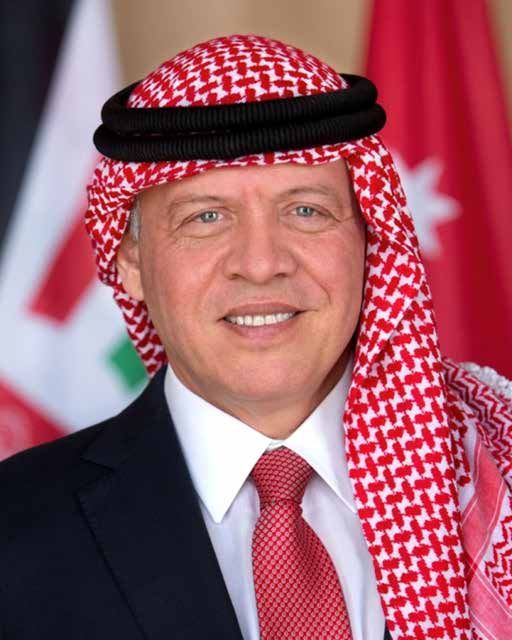
viii   Green Growth National Action Plan 2021-2025

       Contents
       List of Abbreviations                                ix

       About the Green Growth National Action               x
       Plan 2021-2025
       Executive Summary                                   xiv

                                                                  3.   Water Sector Sub-Objectives
                                                                       and Action Selection                              15

                                                                  3.1 Water Sector Green Growth Sub-Objectives           15
                                                                  3.2 Translating Green Growth Priorities into Actions   17

        1. A Green Growth Framework                               4. Implementation
            for the Water Sector                           01          Arrangements                                      20

        1.1 Enhanced Natural Capital                       02     4.1 Action Implementation                              20
        1.2 Sustainable Economic Growth                    03     4.2 Future Planning and the next phase (post-2025)     24
        1.3 Social Development and Poverty Reduction       03
        1.4 Resource Efficiency                            04
        1.5 Climate Change Adaptation and Mitigation       05

        2. Assessing Green Growth in                              5. Water Sector Green Growth
            Jordan’s Water Sector                          06          Actions 2021-2025                                 25

        2.1 Water Sector Green Growth Situation Analysis   06
        2.2 Current Water Sector Strategic Priorities      12
        2.3 Water Sector Stakeholders                      14

                                                                 ANNEX 1: Water Sector Green Growth                      69
                                                                 Results Framework
ix    Water Sector
      List of Abbreviations

     List of Abbreviations

     ADC       Aqaba Development Corporation               MoAg     Ministry of Agriculture
     BOT       Build Operate Transfer                      MoEnv    Ministry of Environment
     CO2       Carbon dioxide                              MoF      Ministry of Finance
     CBO       Community based organization                MOLA     Ministry of Local Administration
     CIP       Clean-in-place                              MOPIC    Ministry of Planning and International
                                                                    Cooperation
     DOS       Department of Statistics
                                                           MtCO2e   Million metric tons of CO2e emissions
     DPs       Displaced peoples
                                                           MWI      Ministry of Water and Irrigation
     EBRD      European Bank for Reconstruction
               and Development                             NARC     National Agriculture Research Center
     EbA       Ecobased                                    NDC      Nationally Determined Contribution
     EE        Energy efficiency                           NGO      Non-Governmental Organization
     EU        European Union                              NRW      Non-revenue water
     FSM       Fecal sludge management                     NWS      National Water Strategy 2016-2025
     GAM       Greater Amman Municipality                  O&M      Operation and maintenance
     GCF       Green Climate Fund                          PPP      Public-private partnerships
     GDP       Gross Domestic Product                      RE       Renewable energy
     GG-NAP Green Growth National Action Plan              RECP     Resource Efficient and Cleaner Production
     GGGI      Global Green Growth Institute               RO       Reverse osmosis
     GHG       Greenhouse gas                              RSS      Royal Scientific Society
     GIS       Geographic Information System               RWH      Rainwater harvesting
     GIZ       Deutsche Gesellschaft für Internationale    SDC      Swiss Agency for Development and
               Zusammenarbeit                                       Cooperation
     GoJ       Government of Jordan                        SDGs     Sustainable Development Goals
     ISSRAR    Sanitation Solutions for Underserved        SMEs     Small and medium-sized enterprises
               Communities in Jordan
                                                           TBD      To be determined
     IUCN      International Union for Conservation of
     ROWA      Nature - Regional Office for West Asia      tCO2e    Metric tons of CO2e emissions

     JICA      Japan International Cooperation Agency      TEST     Transfer of Environmentally Sound
                                                                    Technology
     JVA       Jordan Valley Authority
                                                           UNICEF   United Nations Children’s Fund
     JWP       Joint Work Programme
                                                           UPMU     Utility Performance Monitoring Unit
     LID       Low Impact Development
                                                           WAJ      Water Authority of Jordan
     M&E       Monitoring and evaluation
                                                           WASH     Water, Sanitation and Hygiene
     MCM       Million cubic meters
                                                           WWT      Wastewater treatment
     MENA      Middle East and North Africa
                                                           WWTP     Wastewater treatment plant
     MITS      Ministry of Industry and Trade and Supply
                                                           ZCI      Zarqa Chamber of Industry
x       Green Growth National Action Plan 2021-2025

    About the Green Growth
    National Action Plan
    2021‑2025
    Jordan’s primary national development strategy                                         to make ends meet.6 High public debt and a likely
    Jordan Vision 2025 has set high ambitions for the                                      reduction in foreign investment and tourism sector
    country’s socioeconomic development in the 2015-                                       revenues will further test the long-term resilience
    2025 period. With this strategy, Jordan hopes to                                       of the economy. The economy is now estimated to
    achieve an economic growth rate of 7.5% in 2025,                                       shrink by about 3.5%, unemployment is expected
    while striving to bring the poverty and unemployment                                   to exceed 20%, and pressures on natural resources
    rates as low as 8% and 9.17%1, respectively. To                                        (particularly water) and vulnerable communities
    achieve this vision, the government has defined a                                      to intensify.7
    set of priorities and actions based on strong private
    sector development and resilience to external                                          This unprecedented set of circumstances is a serious
    economic shocks. While the environment and climate                                     challenge in the short term, but it presents an
    change are not central features in the Jordan Vision                                   opportunity for the Government of Jordan to refocus
    2025, several environmental priorities are addressed,                                  its efforts on designing an economic growth approach
    including climate change adaptation, water and                                         that will foster long-term resilience. Green growth is
    energy efficiency, waste management and natural                                        one strategic approach that can support this effort.
    resource protection. Importantly, the document calls                                   The Ministry of Environment began developing the
    for the development of the green economy in six                                        Green Growth National Action Plan 2021-2025 in
    targeted sectors: Energy, Transport, Water, Waste,                                     late 2018 as a next step toward implementation of
    Agriculture and Tourism.2                                                              the recommendations in the National Green Growth
                                                                                           Plan, under the request of the Cabinet of Ministers.
    Throughout 2018 and 2019, Jordan’s economy                                             The GG-NAP outlines sector-level green growth
    experienced a steady but low growth, with real GDP                                     frameworks and actions for the Agriculture, Energy,
    at just under 2.0%. Substantial efforts have been                                      Tourism, Transport, Waste and Water sectors to
    taken to address the central government’s debt,                                        support implementation of Jordan’s green growth
    which reached 99.1% in 2019, including through                                         vision and strengthen future ability to recovery
    introducing fiscal reforms such as the passage of                                      and contain shocks from catastrophic events such
    the 2019 Income Tax Law.3 However, in early 2020,                                      as COVID 19.
    Jordan, like the rest of the world, was shaken by the
    global COVID19 pandemic. The implementation of
    public health measures to limit the spread of the virus                                The Green Growth National Action
    brought the economy to a standstill, leaving many                                      Plan 2021-2025 lays out pathways for
    Jordanians worse-off.4 This new economic situation
                                                                                           sustainable development that will increase
    poses a significant risk to Jordan in the short term.
    With an unemployment rate of 19%5 at the end of                                        resilience, strengthening Jordan’s capacity to
    2019 and a slowdown of business-as-usual economic                                      contain shocks and recover from catastrophic
    activity, families and small business will struggle                                    events such as COVID-19.

    1
      GoJ. “Jordan 2025: A National Vision and Strategy,” 2015.
    2
      GoJ. “Jordan 2025: A National Vision and Strategy,” 2015.
    3
      The World Bank. “Jordan’s Economic Update — April 2020,” 2020.
    4
      Reuters. “Many Jordanians struggling as country emerges from COVID-19 lockdown, U.N. agency says,” 2020.
    5
      Department of Statistics, 2019.
    6
      UNDP. “Impact of COVID-19 on Households in Jordan”,2020.
    7
      The World Bank. “Jordan’s Economic Update — April 2020,” 2020.
xi Water Sector
About the Green Growth National Action Plan 2021-2025
Green growth, defined as “Economic Growth that is approved the report “A National Green Growth
environmentally sustainable and socially inclusive”,8 Plan for Jordan” (NGGP). Having received a special
is a multi-sector development approach that is aligned mention by the League of Arab States for being a
with both the 2030 Sustainable Development Agenda best practice example to be replicated in the region,
and Jordan’s Nationally Determined Contributions the NGGP assesses Jordan’s green growth potential
(NDC) under the Paris climate change agreement and creates a roadmap to achieve a green economy
of 2015. In 2017, as a first step towards achieving transition in Jordan through strategic direction and
green growth in Jordan, the Cabinet of Ministers recommendations (Box 1).
BOX 1
About the National Green Growth Plan for Jordan
The NGGP charts out a plan for Jordan to achieve an expanding
yet sustainable and resilient economy that ensures the creation
of green jobs for its citizens and increased investment in green
projects. The NGGP uses a cost-benefit analysis approach
to identify the challenges and opportunities for project
implementation and focuses on tackling these barriers in the
six green growth sectors: Agriculture, Energy, Tourism, Transport,
Waste and Water. Four driving principles of green growth
are identified and mainstreamed across the actions in the
Green Growth National Action Plan 2021-2025:
Transparent governance processes and enforcement
of legislation
Mechanisms to incentivize green growth
Integrated planning processes that value societal impacts
Behavior shifts and capacity building
To achieve the strategic vision laid out in the NGGP, principles of green growth implementation (see Box 2).
the Ministry of Environment (MoEnv) worked in Detailed descriptions of priority policy and investment
partnership with key national stakeholders to develop actions are included in the sector action plans, which
the Green Growth National Action Plan 2021–2025 will serve as the core of Jordan’s green growth, climate
(GG-NAP). The GG-NAP is presented through a series change and sustainable development agendas in the
of six national action plans that serve as sector‑level 2021 to 2025 period. Some of these are already under
green growth agendas. Each GG-NAP provides consideration by donors and investors. Many are
implementable actions to achieve the five national included in Jordan’s NDC Action Plan and are climate
green growth objectives and embody the four driving finance opportunities.
8
Global Green Growth Institute. “GGGI’s Strategy 2030,” 2019.xii Green Growth National Action Plan 2021-2025
BOX 2
Why the Green Growth National Action Plan 2021-2025?
The next step towards implementing the recommendations of the National Green Growth Plan for Jordan,
the Action Plan for Agriculture, Energy, Tourism, Transport, Water, and Waste sectors:
Elaborates and mainstreams green growth, climate change and sustainable development objectives
1
into sectoral strategic frameworks. This will encourage formulation of greener projects, and the
implementation of policies that will strengthen the enabling environment for greener investment and
private sector development. These priorities are aligned with the SDGs and the NDC Action Plan9 as
well as national sector-level priorities, which will further prepare the government to mainstream
sustainable development into the post-Jordan Vision 2025 national development plan.
2
Strengthens cross-sector collaboration. Multi-stakeholder coordination and collaboration is central to
designing and implementing green growth actions, as it can maximize co-benefits. The overall
development process and the actions in each sectoral plan were intentionally designed to enhance such
collaboration. Such activities lead to increased awareness and behavior change among decision makers,
which can further strengthen the enabling environment for future investment in green growth.
3
Emphasizes the importance of improving the enabling environment for green growth. During the
initial phase of green growth implementation in Jordan, substantial focus on the enabling environment
is needed. Each action description identifies the enabling actions (such as supporting technical
assistance programs) required for the responsible institution to be more successful in securing
investment for implementation – either from public budget, private sector investors or donors.
The development of the action plan was undertaken The GG-NAPs were developed with technical support
through a highly collaborative approach between from the Global Green Growth Institute (GGGI), who
the Ministry of Environment and the line ministries worked with the Ministry of Environment to conduct
responsible for guiding each sector. Sector-level green wide-ranging stakeholder consultations in 2018 and
growth focal points were established and ministerial 2019. The strategic objectives, sector sub-objectives
leadership was engaged through the Higher Steering and actions were identified and formulated through an
Committee for Green Economy to secure endorsement. iterative process linked as closely as possible to existing
This experience demonstrated the important and sectoral priorities. Non-government stakeholders and
growing role the Ministry of Environment plays in experts were also consulted to ensure alignment with
facilitating action across different issue areas. The broader sectoral priorities, and to bridge local context
network of green growth and climate action advocates and international best practice.
developed in recent years is a powerful tool for
implementing green growth in Jordan.
9
Clima-Med EU. “Jordan approves NDC Action Plan to achieve the implementation of its commitments to the Paris Agreement,” 2019.xiii Water Sector
About the Green Growth National Action Plan 2021-2025
Figure 1 shows a summary of the green growth planning
and implementation in Jordan.
Greener Sustainable
Projects Economic Growth
Stronger Enabling Social
Environment for Development and
Green Investment Poverty Reduction
Green SME Climate Change
Analyzes the Development Adaptation and
challenges and Mitigation
opportunities for
green growth Operationalizes green growth
implementation concepts into sectoral objectives
and actions; Green Employment Resource
in Jordan; Opportunities Efficiency
Provides a Establishes a network of green
roadmap for growth advocates across
implementation; government; Increased Enhanced
Sets the stage for future national Awareness and Natural Capital
development planning; Behavior Change
Green Growth Planning Action Green Growth
and Mainstreaming Implementation Impacts
FIGURE 1
Green Growth Planning and Implementation in Jordanxiv Green Growth National Action Plan 2021-2025
Executive Summary
The Water Sector Green Growth Action National change, as well as long-term economic growth. The
Action Plan 2021-2025 (GG-NAP) outlines a green water sector’s performance is closely linked to that of
growth framework and actions for the sector aligned with other sectors. For example, addressing inefficiencies
the National Green Growth Plan (NGGP), Jordan Vision in water pumping can reduce energy consumption at
2025, and Nationally Determined Contributions (NDCs) pumping stations. Implementation of water efficiency
under the Paris agreement. technologies on farms and installation of water
harvesting at a large scale can reduce the pressure on
At the heart of the green growth approach lies the water networks.
leveraging of the sector’s resilience through economic
growth that is environmentally sustainable and socially The Water Sector GG-NAP has been developed with
inclusive. The GG-NAP outlines five national green these aims in mind, and would lead to the following
growth objectives on which the Agriculture Sector GG-NAP transformational impacts:
was developed:
Addressing key challenges related to both
1. Enhance Natural Capital management on the supply and on the demand
2. Sustainable Economic Growth side, through implementation of infrastructure and
3. Social Development and Poverty Reduction building community stewardship of resources;
4. Resource Efficiency Introducing incentives and financing mechanisms
5. Climate Change Adaptation and Mitigation to reduce the overall cost burden of water resource
management on public resources;
From these five national objectives, the Water Sector Increasing access to water and sanitation for
GG-NAP identifies 16 sector sub-objectives that serve to vulnerable members of society, including school
mainstream the overarching green growth objectives into children and displaced persons;
water sector policies and investments. Increasing the capacity of public sector decision
makers to use incentive structures, data, and policy
Extreme water scarcity is one of Jordan’s greatest innovations in water sector management.
sustainability challenges, threatening its economic
growth potential, environmental sustainability, and The Ministry of Environment (MoEnv) and the Ministry
social development. Jordan is one of the most water of Water and Irrigation (MWI) worked in partnership
scarce countries in the world10, as a result of naturally with the support of national stakeholders and the Global
low occurring water resources, recurring droughts, Green Growth Institute (GGGI) in order to identify 19
overconsumption of water, and inefficiencies in priority actions aimed at accelerating green growth
distribution. Climate change is exacerbating this through the water sector (Table 1). The implementation
situation, linked to a decrease of 20% in annual of these actions is estimated to cost USD 964,290,000,
precipitation over the last few decades and severe which will require a mix of public, private sector and
water shortages. Water pollution, limited surface water donor support for implementation. The actions include:
supplies, and over abstraction have all taken a toll on
ecosystem services.11 13 investment preparation and demonstration
actions. These projects are at various levels of
The current National Water Strategy 2016-202512 readiness: some require feasibility analysis, while
and the Water Sector Capital Investment Plan13 have others are investment-ready. Many are suitable
set the pace for national efforts to manage water and candidates for public-private partnerships or
recognize the need for critical reforms and a shift direct private sector investment, and others are
towards more sustainable water planning, allocation, opportunities to leverage climate finance.
and demand management. The green growth approach
promotes testing and innovation, market-based or
decentralized approaches to create opportunities
from these challenges – including green jobs, improved
sector financial sustainability, and resilience to climate
10
MWI. “Water Reallocation Policy 2016,” 2017.
11
IWMI. “Groundwater Governance in Jordan: The case of Azraq Basin,” 2017.
12
MWI. “National Water Strategy 2016-2025,” 2016.
13
MWI. “Water Sector Capital Investment Plan 2016-2025,” 2016.xv Water Sector
Executive Summary
6 enabling policy and institutional reform 9 out of 19 of these actions contribute to the objective
actions. Given the current gaps in available of Climate Change Adaptation and Mitigation, which
fiscal resources, these actions intend to attract are considered to be “Climate Action Priorities”. In
investment by addressing policy barriers and addition, some of them can also be found in Jordan’s
capacity gaps that lead to higher costs, risk levels NDC Action Plan and forthcoming Green Climate
or uncertainty in decision making. These include Fund Country Programme.
programs to support innovation, institutional
reform and coordination.
TABLE 1
025
Summary of Jordan’s Water Sector Green Growth Action Plan 2021-2
Relevant Green Growth Objectives
Implementation Cost
Resource Efficiency
Poverty Reduction
Economic Growth
Enhanced Natural
Development and
Total Estimated
Climate change
Mitigation and
Action Title
Sustainable
Adaptation
Capital
(USD)
Social
WR01 #
Implement capacity building program for evidence- 760,000
informed investmentdecision making in the water sector x x
Establish a rainwater harvesting project financing 15,000,000
WR02
facility to support projects that argument rural and x x x
urban water supply
Implement Key Wastewater Treatment Projects to 69,400,000
WR03
improve Water Supply Augmentation x
Establish incentives for pollution prevention with 950,000
WR04
industry in the Zarqa River Basin x
Construct dams and implement a parallel community 66,900,000
WR05
water resource stewardship programs for several x x x
communities in the Jordan Valley
Technical Assistance to suppport water efficiency 4,140,000
WR06
in businesses, industries and commercial activities x x x
(Based on SwitchMed Experience)
Implement Water Supply Improvement Project for 2,300,000
WR08 WR07
Balqaa Governorate x x x x
Improve irrigation efficiency in the Jordan Valley 28,500,000
(Mid-Ghors) x x x
Increasing willingness of end user stakeholder to 1,000,000
WR09
accept wastewater reuse in Jordan x x
Construct an industrial wastewater treatment plant 27,700,000
WR10
in Zarqa x x x x
Enhance the Energy Efficiency in the well fields and 71,000,000
WR11
Pumping Stations x x x
Increase the resilience of displaced persons and 7,000,000
WR12
host communities to climate change-related water x x x
and climate change challenges
Programming to increase the availability of WASH 1,500,000
WR13
in Schools and strengthening WinS standards for x x x
climate change impactsxvi Green Growth National Action Plan 2021-2025
Improve implementation of decentralized water 5,640,000
WR14 supply and sanitation solutions in Al-Azraq x x
Implement a program of Performance-based 66,000,000
WR15
Contracts to Achieve Non-revenue Water (NRW) x x x x
Reduction
Reduce water losses and increase water savings in 500,000
WR19 WR18 WR17 WR16
King Abdullah Canal x x x x
Expand the As Samra Wastewater Treatment Plant 325,000,000
(Phase III) x
Undertake feasibility studies to explore storm 15,000,000
water systems and groundwater filtration x x
Undertake Desalination of Seawater at the Gulf of 255,000,000
Aqaba through Renewable Energy Sources x x x1 Water Sector
A Green Growth Framework for the Water Sector
1. A Green Growth Framework
for the Water Sector
Green growth is a new strategic approach for the unique institutional setup, political and economic
Government of Jordan (GoJ) that integrates principles realities, and long-term growth ambitions. National-
of inclusive, sustainable economic growth into the level plans and strategies were reviewed and used as
existing national context and priorities. Implementing inputs to guide and shape the objectives, which were
this green growth approach will allow Jordan to later developed into sector-level sub-objectives (see
achieve its socioeconomic development targets while Chapter 3). The Water Sector Green Growth National
simultaneously addressing environmental risks and Action plan (GG-NAP) 2021-2025 was developed as a
climate change – all of which are critical to achieving partnership between the MoEnv and the MWI, with
the Sustainable Development Goals (SDGs), as green growth focal points established within the latter,
shown in Figure 2 below. At the outset of the green and technical support from the Water Authority of
growth planning process, visioning exercises and Jordan (WAJ) and Jordan Valley Authority (JVA) in
consultations were held with national stakeholders order to ensure consistent feedback from the technical
through which five national green growth objectives and management levels. Figure 3 shows the process for
were established.14 These objectives reflect Jordan’s developing the water sector GG-NAP.
DECENT WORK AND LIFE LIFE
ECONOMIC GROWTH
Sustainable Economic Growth BELOW WATER
Enhanced Natural Capital ON LAND
Improve the enabling environment for Improving the quantity and quality of
INDUSTRY, INNOVATION
green growth by creating opportunities to REDUCED
natural resources used to generate CLEAN WATER
AND INFRASTRUCTURE INEQUALITIES AND SANITATION
participate in the green economy across all economic growth and ecosystem services
sectors and members of society. that support economic activities.
SUSTAINABLE CITIES
AND COMMUNITIES النمو االقتصادي واالستدامة AFFORDABLE AND
CLEAN ENERGY (رأس املال الطبيعي )املوارد الطبيعية NO
POVERTY
تحسني البيئة التمكينيه للنمو األخرض من خالل خلق فرص تحسني كمية ونوعية املوارد الطبيعية املستخدمة لدعم النمو
للمشاركة يف االقتصاد األخرض عرب القطاعات املختلفة االقتصادي وخدمات النظم اإليكولوجية التي تدعم األنشطة
CLIMATE
ACTION
.ومشاركه كافة رشائح املجتمع RESPONSIBLE
CONSUMPTION
.االقتصادية GENDER
EQUALITY
AND PRODUCTION
Climate Change Adaptation Resource Efficiency Social Development and
and Mitigation Improving the efficiency of the Poverty Reduction
Improving how resilient Jordan’s economy process of converting resources into Improve the way in which the benefits
is to ecological and climate-related shocks economic outputs. of economic development are
and risks and reducing the economy’s distributed across different genders,
impact on global climate change. كفاءة استخدام املوارد social groups and regions.
تحسني كفاءة استخدام املوارد الطبيعيه وعملية
خطر التغري املناخي والتكيف والتخفيف .تحويلها إىل مخرجات اقتصادية التنميه االجتامعيه والحد من الفقر
تحسني مرونة االقتصاد األردين يف مواجهة الصدمات واملخاطر تحسني الطريقة التي يتم بها توزيع فوائد التنمية
البيئية واملناخية والحد من تأثري االقتصاد عىل تغري املناخ االقتصادية للوصول اىل مختلف الفئات و كافة املجموعات
.العاملي .االجتامعية واملناطق
FIGURE 2
SDGs
Relationship between the Five National Green Growth Objectives and
14
This process reflected and built on the 5 green growth outcomes proposed in the National Green Growth Plan.2 Green Growth National Action Plan 2021-2025
National Kickoff Sector Preliminary Bilateral Action Plan
Workshop Consultation Validation Consultations Validation and
Workshop Workshop and Action Approvals
Over 200 Formulation Process
national
Small group and Presentation of
stakeholders
bilateral sector sub- Additional Review committee
from all sectors
consultations; objectives and expert meetings meeting;
and types of
action proposals to deliver on
institutions; Technical visit Green Growth
received; validation
from water sector Technical
Green growth workshop
green growth Feedback Committee review;
capacity building feedback;
experts to collect summarized as:
and visioning Cabinet review
and refine actions. 1. Increase private Technical support
workshop. and approval.
sector consultation; and deep-dive
for action
2. Use formulation.
market-based
mechanisms where
possible;
3. Be more
innovative;
FIGURE 3
Process for Developing the Water Sector GG-NAP
The water sector is governed under the policy agenda (commercial, industrial, and agricultural), as well as
laid out in the National Water Strategy 2016-2025 municipal and domestic consumption of water resources.
(NWS), which covers issues of water supply, water The following sections describe the relationship between
governance, and the economic, environmental, and social each of Jordan’s national green growth objectives and
context in which water is used. This includes the public the water sector in a general sense, while a situation
management of water resources, the private sector analysis for the Jordan context is available in Chapter 2.
1.1 Enhanced Natural Capital
Jordan’s first national green growth objective is to enhance ignored. Green growth seeks to leverage opportunities
the country’s natural capital. For that purpose, it aims to for economic development and poverty alleviation
improve the quality and quantity of natural resources without degrading a country’s natural capital, in
used to generate economic growth and provide this case, working to enhance both the quantity and
ecosystem services that support economic activities. quality of water. National policy making (strategies,
plans, laws, regulations, etc.) and investment planning
There are two main sources of water to support processes can be improved by assessing the tradeoffs
economic growth and ecosystem services: surface associated with natural resource use, and ensure
water and groundwater. Across the globe, both surface that the water’s economic value is accounted for, and
water and groundwater are fast becoming a scarce any loss of environmental resources is costed and/or
resource, despite its high value to economic activities mitigated against in implementation.
as a growth enabler. From a quality standpoint, the
water resource base is degraded due to pollution and Sustainable Development Goals: 6 (Clean Water and
over-abstraction. Unregulated industries that dump Sanitation), 14 (Life below Water), 15 (Life on Land).
waste, agricultural run-off, and mismanaged solid
waste leachate further deteriorate local water quality.
In areas with declining water supply, pollution creates
a vicious cycle (as sufficient flows can replenish the
water quality), and this can be costly (if not impossible)
to remediate, especially in the case of groundwater.
While there is broad recognition of the importance
of water as an enabler of economic activity, its
contribution to sustaining ecosystem services is often3 Water Sector
A Green Growth Framework for the Water Sector
1.2 Sustainable Economic Growth
Jordan’s second national green growth objective is to Water has estimated that 78% of jobs constituting the
ensure sustainable economic growth. In particular, global workforce are dependent on water. In the Arab
the aim is to improve the enabling environment for region, water scarcity remains a structural challenge
the creation of long-term, inclusive socioeconomic that hinders sustainable development. Here, water
development, as detailed in the Jordan Vision 2025. scarcity can have a domino effect on communities,
leading to declines in local commerce, reduced income,
The cross-cutting nature of a wide range of water reduced tax revenues, and increased migration due to
issues places it at the center of the paradigm for a lack of employment opportunities, which can cause
green growth. Water is an engine for growth and overcrowding of major cities. Poor water quality can
sustainability, and it plays a critical role in enabling also set back economic growth as it constrains health
green growth. Because water is a key input for many and productivity, reduces the ability of establishing
sectors, the sector’s financial sustainability promotes economic activities, reduces the value of property and
national economic growth and long-term economic assets, and increases water treatment costs.
sustainability. For example, successful investment in
water infrastructure and water security ensures that Sustainable Development Goals: 8 (Good Jobs
households, businesses, industry, and farms have the and Economic Growth), 9 (Industry, Innovation and
adequate access they need to be productive, healthy Infrastructure), 16 (Peace, Justice and Strong Institutions).
citizens. Water is also a driver of employment: UN-
1.3 Social Development and
Poverty Reduction
Jordan’s third national green growth objective is to achieve recognizes women and men with a sense of equity, and
social development and poverty reduction. To this end, it the poor and marginalized as not simply vulnerable, but as
aims to increase the equity by distributing the benefits active agents of change for more sustainable growth.
of economic development and access to services Access to water is essential for health, education,
across the society. gender equality, and personal security, and is a
necessary enabler of social development and poverty
Social development and poverty reduction are central reduction. Inadequate access to water supply traps
concepts to Jordan’s long-term development agenda households and communities in a state of vulnerability
and are a core component of inclusive green growth. and poverty. Lack of access to safe, and indeed to
Achieving this objective requires special attention to significant quantities of water in sufficient quality
reducing inequalities in society, unlocking access to for productive uses contributes to poverty and has
opportunity to experience the benefits of growth for clear impacts on poor people’s livelihoods, health,
all members of society. Gender equality and women’s and vulnerability to crises of all sorts. Providing
empowerment are policy agendas that help support equal access to drinking water for the general public,
social development and poverty reduction, and they are a especially the poor and marginalized, is a means to
critical part of overall economic growth. A 2015 McKinsey improve human health, livelihoods, gender equality,
study found that women generate only 37% of global and economic development. Neglecting water can
Gross Domestic Product (GDP), but that closing this gap have potentially catastrophic impacts on economies
could add between USD 12 and 28 trillion to the global and livelihoods, and could reverse hard-won gains in
economy15. In the Middle East and North Africa (MENA) poverty reduction, job creation, and development.
region, women generate only 18% of GDP, suggesting
greater inclusion is a major economic growth opportunity. Given the existing context of social inequities, water
Furthermore, access for marginalized groups and those scarcity and climate change are likely to have more
excluded from markets, services and spaces are required disproportionate impacts on women, children, refugees
for sustainable growth. Accordingly, green growth and displaced communities. These groups will suffer the
15
McKinsey Global Institute. “How advancing women’s equality can add $12 trillion to global growth,” 2015.4 Green Growth National Action Plan 2021-2025
most from the shortage of water, difficulty of securing Sustainable Development Goals: 1 (No Poverty), 4
clean water as well as the sanitation for households and (Quality Education) 5 (Gender Equality), 10 (Reduced
farms, which consequently will affect negatively the Inequalities).
society in these areas and their way of life. Increasing
water scarcity will render marginalized groups,
refugees and women as extremely vulnerable. Green
growth aims to address social and gender dimensions
through focusing on climate resilience and building
capacity among vulnerable groups to allow them to
adapt better to climate change and water scarcity.
1.4 Resource Efficiency
Jordan’s fourth national green growth objective is to water resource provision and use - from extraction,
achieve resource efficiency. This can be defined as to transport, consumption, disposal, treatment, and
improving the efficiency – reducing the wastefulness – retransmission for reuse. By doing so, government
of the economy by achieving a higher efficiency in the and private sector investors can achieve cost savings,
production and consumption of economic outputs. economic efficiency, and long-term sustainability.
Traditionally, economic growth has been characterized Improving water efficiency allows countries to reduce
by an initially high rate of natural resource water scarcity and maximize the benefits provided by
consumption per capita, followed by a period of existing water infrastructure. It also frees up water
declining natural resource consumption past a certain for other uses, such as additional commercial or
rate of economic growth. However, with extreme business activities, drinking water for communities or
population growth and the looming threat of global providing ecosystem services, reducing environmental
climate change, the global community has recognized degradation. Without efficiency gains, global demand
the need to shift the economic growth trend towards for water will outstrip currently accessible supplies
more sustainable consumption and production – by 40% by 203016. Improving water efficiency means
greater shared prosperity with less waste. To achieve increasing water productivity by reducing the intensity
resource efficiency and natural resource decoupling of water use and level of pollution from socioeconomic
substantial shifts in technology, policies and behaviors activities. In principle, this can be achieved by
are necessary. Reshaping traditional processes maximizing the value of water, improving the allocation
of natural resource consumption and realigning of water among competing water uses so as to obtain
incentives is critical. This will require visionary greater socioeconomic value per drop of water,
leadership in government and business, and well- ensuring environmental flows, and improving technical
coordinated efforts across all segments of society. efficiency of water services and the management
efficiency of their provision over the complete life
Jordan is a resource scarce country, with very low cycle. In practice, water efficiency can be improved
availability of water resources, few energy resources using many approaches, including investing in better
(petroleum oil or natural gas) and a relatively small physical infrastructure and technology, fostering
percent of arable land and soil compared to the total changes in user behavior, and developing integrated
land mass. At the same time, growing population and approaches to water management.
urbanization are placing pressures on resource use and
generating high volumes of waste, which is expensive Sustainable Development Goals: 7 (Affordable and
and increasingly difficult to manage. Governments Clean Energy), 9 (Industry, Innovation and Infrastructure),
can leverage these pressures into opportunities by 12 (Sustainable Consumption and Production).
increasing resource use efficiency at all points across
16
2030 Water Resources Group. 2009.5 Water Sector
A Green Growth Framework for the Water Sector
1.5 Climate Change Adaptation
and Mitigation
Jordan’s fifth national objective is to achieve climate change through which climate change impacts will be felt by
adaptation and mitigation, which is expressed as improving the Earth’s ecosystems and people’s livelihood and
Jordan’s resilience to the effects of climate change and well-being. With the expected decrease in total water
decreasing the country’s total greenhouse gas (GHG) availability that climate change will bring to the Arab
emissions. This objective is consistent with the Paris region, and to bridge the rapidly increasing gap between
climate change targets, which is the global community’s demand and supply, several soft- and hard-path solutions
plan to respond to the global climate crisis. Actions taken to manage water are being explored, led, and facilitated
to address climate change adaptation and mitigation by the government. Prioritization and climate-proofing
can also be found in Jordan’s National Determined of all water solutions is important for adopting a greener
Contribution (NDC) to the Paris Agreement. approach to water management and making the sector
an integral part of national SDG implementation.
Global climate change is poised to make the issue of
water scarcity and its intensity much more critical in Sustainable Development Goals: 7 (Affordable
the coming decades. The water sector is an especially and Clean Energy), 11 (Sustainable Cities and
important player in the area of climate change Communities), 13 (Climate Action).
adaptation, because water is the primary medium6 Green Growth National Action Plan 2021-2025
2. Assessing Green Growth in
Jordan’s Water Sector
2.1 Water Sector Green Growth
Situation Analysis
Natural Capital. Water is naturally scarce in Jordan, Few, if any, of these industries have preventive plans
and studies confirm that it will continue to grow to treat contaminated industrial wastewater before
scarcer due to climate change. At the current rate it is dumped into the Zarqa River.18 At the same time,
of extraction and consumption, the available water about 80% of the river’s flow comes from the As-
supply is insufficient to sustainably support economic Samra wastewater treatment plant (WWTP) during
activities while at the same time providing critical dry weather, making it a major component of the total
environmental services. In 2017, the estimated water water supply.19 The protection and rehabilitation of the
demand for industry, agriculture, and municipal Zarqa River is a matter of environmental sustainability,
use was 1,412 million cubic meter (MCM) while but the formal lack of recognition of the economic
sustainable supply averaged around 875MCM. With impact of water for environmental services has led to a
a growing population and underinvestment in water lack of action to restore and protect key water bodies
efficiency measures and water scarcity as results like the Zarqa River, major watersheds, and aquifers.
of climate change, at current rates of use, there will
simply not be enough water to both continue economic Because of the gaps in the quantity, reliability, and
growth and ensure environmental sustainability. quality of surface water sources, the Jordanian
population relies mainly on groundwater for its
There are two main sources of water to support domestic water supply. Farmers use groundwater to
economic growth and ecosystem services: surface irrigate crops, leading to competition from municipal
water and groundwater. Surface water contributes and agricultural sectors, with withdrawal exceeding the
around 27% of Jordan’s total water supply from the safe yield. It is estimated that groundwater resources
Jordan (shared with Israel), Yarmouk (shared with are being heavily exploited and over-abstracted at
Syria), and Zarqa Rivers. However, as two of the three twice the rate of replenishment. The consequences
rivers are transboundary with Jordan as a downstream of these actions are serious and include a permanent
country, upstream diversion and pumping have directly lowering of the groundwater table, salinity, and
affected water availability in Jordan. At the same deteriorating quality of groundwater.
time, water quality has deteriorated sharply, with high
levels of salinity and pollution as a result of agricultural The environmental impact of current water practices
fertilizer use and infiltration of untreated wastewater was estimated at 71.3 million JD in 2017 alone.20
upstream from Israel and the West Bank. Rehabilitating a degraded water resource base is, at
best, costly, and potentially impossible, as they are
The Zarqa River is the only major river completely intrinsically linked to other natural capital, such as
within Jordan’s jurisdiction, and its waters are also land and forests. Failure to sustain and protect water
highly polluted. The Zarqa Governorate is Jordan’s resources, for example, threatens the long-term
most industrially populated area, housing around 15.3% sustainability of the agriculture sector which, in turn,
of the country’s small to medium-sized industries17. threatens food security, livelihoods, and life. These
17
Economic and Social Council. “State of the country Report,” 2011.
18
Mohsen, Mousa S. “Water Strategies and Potential of Desalination in Jordan.” Desalination 203, no. 1–3 (2007): 27–46.
19
Al-Zahiri, Abed. “Assessment of Performance of Wastewater Treatment Plants in Jordan.” International Journal of Civil and Environmental Engineering, no. 893 (2015): 1–6.
20
MWI. “Jordan Water Sector Facts and Figures 2017,” 2017.7 Water Sector
Assessing Green Growth in Jordan’s Water Sector
interlinkages are often overlooked in traditional water focused on supplying this demand through large-
resource planning, and in Jordan they are typically scale infrastructure investments. To finance this
only considered during the environmental impact infrastructure, significant foreign aid in the form of
assessments of projects, rather than during long-term loans is often required, which has contributed to the
economic planning. Ensuring that the economic value ballooning of Jordan’s public debt, currently standing
of water across sectors is properly assessed requires at 94.4% of the GDP21. MWI’s Capital Investment
that the value of water in providing ecosystem Plan suggests that this sector’s financing needs will
services is understood and that actions are taken to continue to grow.
ensure sustainability. While this may lead to difficult
short-term trade-offs, it can also foster innovation, However, the financial sustainability of sector’s
awareness, and pave the way toward a more utilities is a more serious threat to the country’s ability
sustainable approach to water resource management. to achieve sustainable economic growth. Utilities
continue to struggle to achieve cost recovery, and,
Jordan will increasingly face the need to make trade- as a result, fiscal resources are required. In 2018,
offs with how it allocates and uses its limited water the sector’s revenues only covered two-thirds of its
resources. To do so, it will be critical to maintain costs, which were equal to 1% of the GDP. The gap in
strong systems for data to be used for decision its ability to pay resulted in an increase of the sector’s
making and effective protocols, ensuring fair, efficient, budget deficit to over 300 million JOD at the end of
and transparent resource allocation. Innovations in 2018.22 One source of the strain is the high level of
acquiring and saving water in a sustainable way, such non-revenue water (NRW) – water that is supplied
as reusing treated wastewater for irrigation and to distribution networks but is unbilled to end-users.
developing policies and strategies to manage demand, NRW is the result of a combination of factors, including
are being implemented. Policies that result in water illegal extraction, leakages in the system infrastructure,
allocation based on its full economic value, investment in under-registration and inability to collect payments.
decentralized water storage options that do not lock in NRW has steadily increased since 2007, standing at
too much capital (such as rainwater harvesting (RWH)) 48%23 in 2017, equal to around 65 liters per capita
and widespread awareness and behavior change per day24. While the government aims to reduce NRW
campaigns can still be explored and scaled. Investment to 25%, performance against this target has not been
in WWTP upgrades that allow for reuse can further strong (Figure 4).
catalyze a shift from a linear to a circular economy.
Jordan’s three utility companies are owned by WAJ,
Sustainable Economic Growth. Economic growth within and efforts have been taken to corporatize their
Jordan is highly dependent on the water sector, given operations. The Aqaba Water Company (AWC) has
the sector’s close relationship with the agriculture reduced NRW levels significantly, while Miyahuna
sector and its high energy consumption. The key (Amman) and the Yarmouk Water Company (YWC)
threats to sustainable economic growth from within have recorded continuing high losses. Although the
the water sector include a historical overemphasis government has made progress in reducing losses and
on water supply (while achieving a low return on this theft, further reforms are needed to comply with the
investment), challenges to the financial sustainability Government’s Structural Benchmark Plan, a sovereign
of the water utilities, and a number of policy gaps and debt-reduction plan which aims to improve operation
incentive structures that make the sector a drag on and maintenance (O&M) cost recovery in the water
fiscal resources and growth. sector by 2021. To this end, Miyahuna Company has
expanded its jurisdiction to cover both Irbid and Zarqa.
Jordan has made impressive achievements in The government is working with utilities to more
expanding access to drinking water and sanitation quickly identify leakages in physical infrastructure
to near-universal levels. While this is a great through the use of technologies such as SCADA
advancement for social development purposes, and leak detection systems. WAJ is also working
incentive structures and subsidies have also to improve the enforcement regimes around illegal
perpetuated access to low-cost water for agricultural water extraction, working with communities to quickly
and industrial intensification. The government has identify and stop water theft.
21
EBRD. “Jordan Country Strategy 2020-2025,” 2020.
22
The Jordan Times. “Water Ministry reform path introduces green energy sources to sector,” 2019.
23
MWI. “Jordan Water Sector Facts and Figures 2017,” 2017.
24
MWI. “Water Reallocation Policy,” 2016.You can also read


