Welcome to the Master of Science in Occupational and Environmental Hygiene Program - UBC School of Population and Public ...
←
→
Page content transcription
If your browser does not render page correctly, please read the page content below
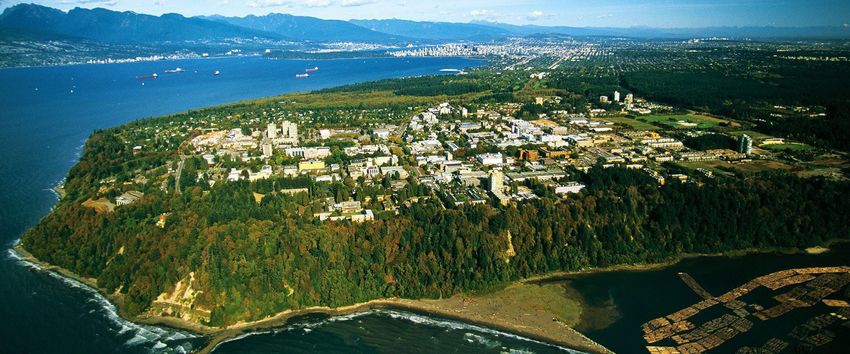
Welcome to the Master of Science in
Occupational and Environmental Hygiene
Program
MSc OEH Student Handbook 2019-20

                                             Contents
Welcome to the MSc OEH Program                                                       3

Program Overview                                                                     3

UBC Life                                                                             4

Life in Vancouver                                                                    5

The School of Population and Public Health                                           6

Life at SPPH                                                                         7

Graduate and Postdoctoral Studies                                                    8

MSc-OEH Program & Requirements                                                       9

OEH Course Schedule                                                                 10

Scholarships, Awards, and Bursaries                                                 11

Careers and Alumni                                                                  11

Graduation                                                                          11

UBC Student Services                                                                12

Contact Us                                                                          13

                                                                                     2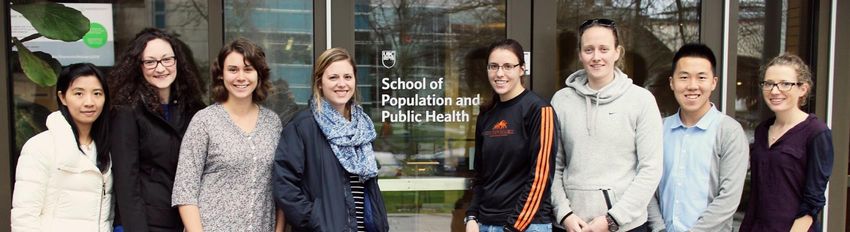
MSc OEH Student Handbook 2019-20

            Welcome to the OEH program
Congratulations on being accepted into the Master of Science -                       Program Overview
Occupational and Environmental Hygiene (MSc OEH) program, and
welcome to the School of Population and Public Health at UBC.        The MSc OEH program is one of the only programs in Western
                                                                     Canada to offer a graduate degree in hygiene. Hygiene is the
Before we begin, we’d like to acknowledge the unceded,               science that recognizes hazards through application of
traditional territory of the Musqueam people, upon which UBC’s       toxicology and epidemiology, evaluates exposures in
Point Grey campus is located.                                        workplaces and communities, and controls hazards through
                                                                     use of engineering principles with the ultimate goal of
                                                                     eliminating or reducing the hazard.
The OEH program is highly competitive and you are joining a very
distinguished group of graduate students. Starting a graduate
program is exciting and we are here to support you throughout        The UBC OEH program is unique in offering its program in two
your entire academic program.                                        options: the project (practicum) option and the thesis option.
                                                                     The typical project option timeline is structured so that all
In this guide, you’ll find information about the steps you need to   academic coursework can be completed within 20 months.
take to meet the program requirements, so it’s important that        The average time for a thesis student to complete their course
you read it thoroughly.                                              work and research varies between 24 and 36 months.

It’s also important to remember that it is ultimately your           For more information, see the Program Requirements section of the
responsibility to make sure you know and complete all                website.
requirements to finish this program, so it’s a great idea to
familiarize yourself with this guide and the program website:        OEH graduates gain skills that allow them opportunities to work
                                                                     in the public and private sectors, healthcare, agriculture
http://spph.ubc.ca/programs/msc-oeh                                  industry, regulatory agencies, academia, and more.

This guide also contains more general information about the
School, the University and Vancouver, but if you have any further
questions, we are always here to help and you can find contact
details on the Contact Us page.

We wish you all the best in the program, and we look forward to
meeting you.

                                                                                                                              3
MSc OEH Student Handbook 2019-20

                                                                                   which courses may qualify for a credit transfer or an exemption and contact
                               UBC Life                                            spph.msc-oeh@ubc.ca before you begin the program.
Start date
                                                                                   UBC Canvas
The first day of classes for Winter Term 1 is September 3rd .There will be a
SPPH Orientation session in the morning, followed by an OEH orientation.           Canvas is UBC's primary learning platform for delivering online course
The Faculty of Graduate and Postdoctoral Studies usually holds a UBC               content. Here you will be able to share, view course materials online
orientation the week prior to classes starting. For more information on            through UBC’s Learning Technology Hub, Canvas, using your CWL login.
Grad Orientation events please visit Graduate student orientation                  Click here to acquaint yourself with this system.

Faculty Advisor                                                                    UBC Card
All students are assigned a Faculty Advisor over the summer, chosen with           Once you have registered with SSC, you can visit the UBC Bookstore to pick
your career goals and interests in mind. Your Advisor will be a mentor for         up your UBC card, which is your Library card, student ID card and voting
you throughout your program, and be available to help you with things like         identification for student elections, for more information click here
course selection, choosing between thesis and project options, and general
information about the University and the School. We highly recommend               UBC Library
introducing yourself to your Advisor prior to planning and registering for         Once you have your UBC card, you can take advantage of the UBC Library
courses. If, for any reason, you want to change your Advisor, please let us        system. You will need the barcode number on the back of your UBC card
know.                                                                              to log onto the Library network. Your PIN is the last five digits of the same
You will also be assigned a 2nd year MSc OEH student as a “buddy”. Your            barcode. At UBC, library branches focus on particular subjects and are
buddy can help you with all the questions you might have, from local               located near related academic departments. To see a map showing the
Vancouver pubs to advice on course electives.                                      location of all library branches on campus, click here.

Campus-Wide Login (CWL) & Email Account                                            Your First Month at UBC
Once you have your UBC Student Number, you can apply for a CWL                     There are lots of fun events in the first month of the program to which you
username and password, which will allow you access to all UBC systems              will be invited. We encourage you to attend these events as it’s a great way
(including email). If you have not registered for a CWL yet, you can do so via     to meet your new peers, faculty, staff and affiliated organizations. You will
UBC IT. We recommend that you set up a UBC email account for written               receive further information regarding each of these events throughout the
UBC communication                                                                  summer, but you can also check the Graduate Student Society Events
                                                                                   Calendar here.
Student Service Centre (SSC)
The SSC is the system that you use to perform all UBC administrative tasks
such as register for courses, pay fees online, access grades and transcripts.
It is also where you keep your address and email information up-to-date.
The contact information in the SSC is what Graduate and Postdoctoral                                      Want to Storm the Wall?
Studies and the Registrar’s Office will use, so it is important that you keep it
updated. Please note that your password is original set to your birth date
(YYMMDD).

Tuition & Other UBC Fees
You will need to pay your UBC tuition and student fees when you start
classes in September. UBC graduate program fees are paid three times
per year, in September, January, and May, for the duration of the program            Afterwards, you can relax in the knowledge of a wall well stormed at the
regardless of number of courses taken. The only way for students not to pay                               Party at the Plaza. Click here
fees is to be on a leave of absence.

Course Registration
Before you begin the program, you will need to register in your first term
courses via SSC. UBC will contact you with the date that registration opens
(usually in June). Students can add or drop courses via the SSC until the
second week of term. You can find out deadlines to add or drop courses,
and more, in the UBC Calendar.

Credit Transfers & Exemptions
If you think that you have taken a course that may be transferable to the
MSc degree, please read the Faculty of Graduate Studies policy to find out
                                                                                                           Photo credit: Bronwyn Davies | UBC Recreation Intramurals

                                                                                                                                                          4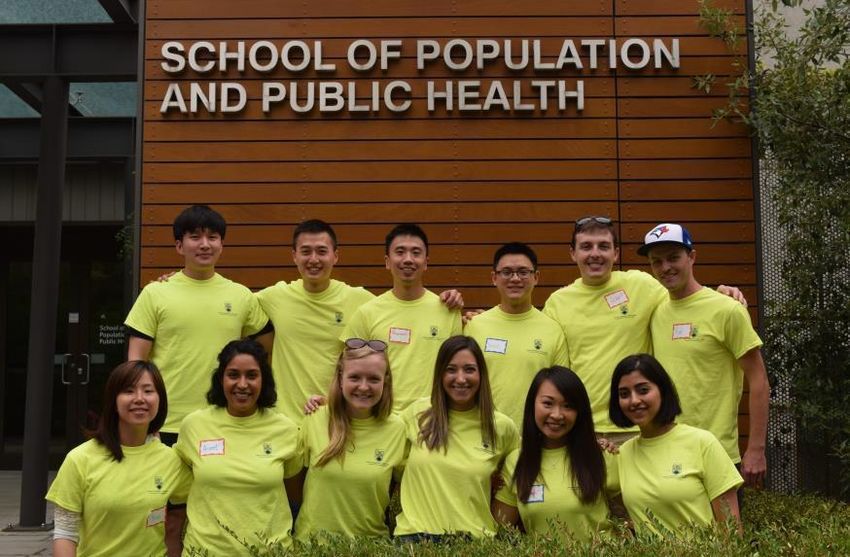
MSc OEH Student Handbook 2019-20

                                                                                The downtown area offers the Vancouver Art Gallery, theatres such
                                                                                as the Orpheum, Queen Elizabeth, the Vogue, and cinemas such as
                                                                                      the Dunbar, Fifth Avenue, Rio and Scotiabank Theatres.
                                                                                   Vancouver is home to frequent fantastic festivals, including the
                                                                                Vancouver International Film Festival, JFL Northwest, the Vancouver
                                                                                Fringe Festival, the Jazz Festival, the Vancouver Pride Parade and the
                                                                                       Surrey Vaisakhi Parade. Link here for Vancouver events
                                                                                 Vancouver is famous for its proximity to snow sports hubs, such as
                                                                                 Cypress, Whistler and Grouse, so snowboarding lovers should pack
                                                                                 their board wax. Free shuttle is now open between downtown and
                                                                                                        Grouse, check here .

                   Life in Vancouver
Transportation
Public transport (Translink) to and from UBC is excellent. When you are
a full-time UBC student, your student funds will pay for a mandatory
‘U-Pass/Compass Card’, which will allow you to travel on any method of
transportation (bus, Skytrain, Seabus) at any time. You can apply for U-
Pass exemptions for courses without scheduled classes such as summer
Coop placements. Please check here for more information.

There are many designated bicycle routes in Vancouver and some buses
can carry up to two bicycles – useful for the uphill ride to UBC. More
information about bicycle routes, including a map, can be found on the
TransLink website or from UBC’s Campus and Community Planning.

Fitness
There are several gyms and fitness facilities on campus including the
Student Rec Centre, ARC Fitness, the UBC Bodyworks and a Gold’s Gym in
the Village. Most have student membership pricing. There is also a
                                                                                 Less well known but still well worth a visit is the Nitobe Memorial
swimming pool on campus. Visit UBC Rec for more information.
                                                                                Garden, a traditional Japanese Tea and Stroll garden, while the blue
                                                                                whale skeleton in the nearby Beaty Biodiversity Museum is an awe-
Parking                                                                                                    inspiring sight.
A variety of parking options are available on the UBC campus. Be
forewarned: regulations can be confusing and change with construction            Those looking for an arts fix can head over to the Morris and Helen
and special events. - read signs carefully! Students can purchase a UBC         Belkin Art Gallery or the Chan Centre for Performing Arts, while fresh
parking permit or pay hourly for the Health Sciences Parkade (the nearest         air fanciers can check out the 40 hectare model farm located on
lot).                                                                                              campus or the Botanical Gardens.

Accommodation
If you’re looking to rent accommodation, useful sources include Craigslist,
PadMapper, Kijiji and AMS Rentline, run by the UBC Alma Mater Society
and geared towards students. Short term accommodation options include
Hostelling International and Airbnb.

The Great Outdoors
Vancouver is an active community surrounded by beautiful mountains,
beaches and forests. Cycling is a popular method of transportation in and
around Vancouver. Around UBC, there are numerous parks, walking,
running, biking trails, several beaches, as well as the newly constructed
Arbutus Corridor. See list of the top spots in and around Vancouver

                                                                                                                                                5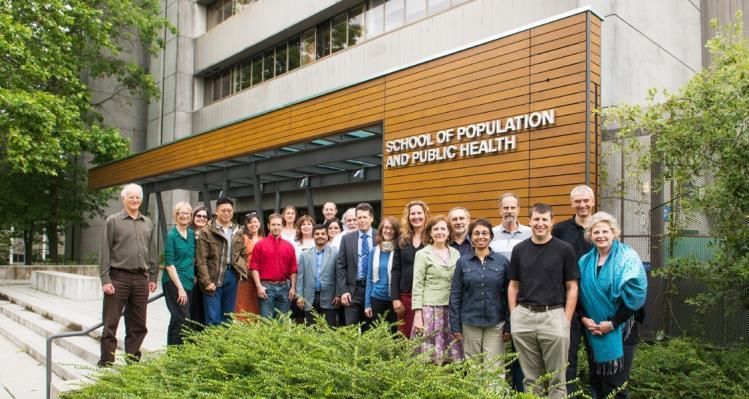
MSc OEH Student Handbook 2019-20

The School of Population and Public Health                                     Printing, photocopying and faxing
                                                                               Printers, photocopiers and fax machines are available for students in
School of Population and Public Health                                         the SPPH building. Please contact the SPPH receptionist at
Your home base is the School of Population and Public Health building on       info@spph.ubc.ca to obtain a copy account. There are also a number of
the UBC Point Grey campus. The address is 2206 East Mall, Vancouver, BC,       libraries close by, which contain printing facilities.
V6T 1Z3. Most SPPH classes are held in this building, and you will also find   There is a small printer in the Level 3 Student Office, and if you have a
staff and faculty offices here.                                                laptop to hook up to the printer (and download software), you may use this
                                                                               printer free of charge. Please notify Karen Bartlett when supplies (toner,
You can access the common areas from 8:30 am to 4:30 pm, while the
                                                                               paper) are running low.
lobby and study space in the basement remain open until 8:00 pm. If you
are studying late, you may want to use the Safe Walk service.
                                                                               Environment
                                                                               We all care about sustainability and the environment, and we hope you
                                                                               do too. You will find recycling facilities on all floors, bins for composting
                                                                               organic waste, and bins for cans and bottles. Separate bins are available for
                                                                               refundable drink containers. If you would like to be involved in the SPPH
                                                                               Sustainability Committee, please contact Karen Bartlett. They are often
                                                                               looking for helpers and would welcome your enthusiasm.

                                                                               Facilities
                                                                               The SPPH building has two private showers on the basement level, as well as
                                                                               assigned lockers, generally reserved for those who ride their bikes to UBC. If
                                                                               you would like a locker, speak to the SPPH receptionist at info@spph.ubc.ca
                                                                               to see if any are free. There are also lockers in the Level 3 Student Office,
                                                                               which you can sign up for by contacting Karen Bartlett (based on
                                                                               availability).
                                                                               There is a small kitchen to the right of reception, and a larger kitchen on the
Computers
                                                                               second and third floors, which contain communal fridges, dishwashers,
There is a computer lab on the basement level of the SPPH Building.
                                                                               kettles, microwaves and toasters. MSC-OEH students are welcome to use
Passwords for the computers are posted on the wall and access is free.
                                                                               the 3rd floor kitchen at any time.
There are also two computers located in room 144 on the main floor. You
may inquire at the SPPH reception on this. Public computers are also
available at most of the UBC Libraries. Please see link here. Woodward         Evacuation assembly points
Library is the closest to SPPH.                                                It’s important to note that in the unlikely case of a fire or other emergency
                                                                               that requires evacuation from the SPPH building, you should exit the
                                                                               building from the front, cross the road (East Mall) and gather in front of
Email and Contact Lists                                                        Michael Smith Laboratories (2185 East Mall), under the cover.
We need your email address to add you to various student listserv groups
for both MSc OEH and SPPH communications. Please advise the program            In the event of an earthquake, you should get into an open area, away from
coordinator of any changes to your contact information. Also remember to       buildings and proceed to your emergency meeting location. For further
keep your contact information up to date in the SSC & G+PS. These are used     information contact Stefan Mladenovic
to contact you so must be current at all times.

                                                                                                                                                    6
MSc OEH Student Handbook 2019-20

                              Life at SPPH                                      graduate students and Teaching Assistants.

                                                                                Job Opportunities
Created in 2008, and part of the Faculty of Medicine, the School has            Many SPPH students work as Teaching or Research Assistants during their
four divisions: Epidemiology, Biostatistics and Public Health Practice;         studies. You can find information about all opportunities on the SPPH
Health in Populations; Health Services and Policy; and Occupational and         website. Applications for TA’s open in early spring each year. Generally
Environmental Health. SPPH looks to create, share and apply knowledge           students do not TA in their first year, as they are all taking the core courses.
through research to improve the health of the public around the world.          UBC Careers is another excellent resource for job seeking. Also, your email
                                                                                address will be added to a listserve called “OEH Impactor”, which often has
Grand Rounds, OEH Seminars and PD Workshops                                     career opportunities in the OEH field advertised through emails from
                                                                                companies and alumni.
OEH Seminar series is held on Fridays during the academic year. This is
where the best of current research in our field is presented. Attendance is
mandatory. Past seminars can be viewed here.                                        Bike share program
The OEH Professional Development Course series is a combination of various          UBC has recently started the smart bike sharing to deliver bike share at the
OEH related topics talks,, career building workshops and training for               Vancouver campus. Prices range from $1 a ride to discounted memberships.
Practicum placements. During Term 1, these sessions will be held on                 Visit Dropbike to learn about the ‘dockless’ bike share
Thursdays from 9 to 10.30AM.and for Term 2 on Fridays from 1:45 to              .
3:15PM. Attendance is mandatory for both SPPH 598 and SPPH 599..
                                                                                Student Representation & Feedback
Grand Rounds is a monthly seminar series held during the academic year          We have OEH student reps in the School, attending the OEH Division
involving both faculty and guest speakers. It’s a great way to meet other       monthly meetings, as well as various committees in SPPH, to make sure
students and faculty and discover the breadth of research which occurs at the   your interests are represented. Please contact Shaine if you would like to
School. Watch out for announcements on upcoming speakers. Click here to         get involved.
view our previous talks.                                                        OEH runs two Student Feedback sessions per year. All students are expected
                                                                                to attend, and these are beneficial in helping our program be the best that
SPPH and OEH Websites                                                           we can, and provide updates and changes for future students.
The SPPH website, www.spph.ubc.ca, is an incredibly useful resource which
can answer many student queries and is continually updated with                 Student Communications
information about course schedules, course outlines, listing of faculty and     A weekly newsletter is sent to students detailing upcoming awards
staff, various events, etc.                                                     deadlines, job opportunities, call for abstracts, events of interest, and
                                                                                relevant workshops and courses.
The MSc OEH website is also a great resource for current students. There is
information on the program, credits/requirements, project/thesis options,
awards, alumni and careers.

Centre for Teaching, Learning and Technology
The Graduate Student Program, run by the Centre for Teaching, Learning
and Technology (CTLT), offers a variety of workshops, seminars, and one-on-
one coaching on teaching and related topics. Workshops are free for UBC

                                                                                                                                                       7
MSc OEH Student Handbook 2019-20

          Graduate and Postdoctoral Studies                                  GPS Workshops
                                                                             The Graduate Pathways to Success (GPS) program is a palette of non-credit
What is G+PS?                                                                workshops, seminars and activities designed to complement your
Established in 1949, Graduate and Postdoctoral Studies (G+PS) is the         graduate program’s academic curriculum and mentorship experience as
governing body for all graduate programs at UBC.                             well as the OEH short course requirement. They fill up fast!

G+PS approval is required for a whole host of issues relating to students:   Scholarships, Awards and Bursaries
course approvals, status in the program, program progress, graduation,       Graduate and Postdoctoral Studies administers most graduate awards and
etc. You can use this G+PS webpage as reference for your program.            their Award Database is a great resource for all students. MSc OEH students
A G+PS Student Orientation is planned for the end of August - keep an        have won numerous awards in the past, so feel free to apply to multiple
eye out here for date and time confirmation.                                 awards. Click here for a list of SPPH internal awards.
                                                                             Some awards are for thesis-based programs only and this should be
Common OEH student queries                                                   indicated in the award description. If you are unsure, you can contact G+PS
Click on the topics below to find answers to Frequently Asked Questions      Be sure to check the process guidelines for each award and plan accordingly.
regarding policies and procedures that are set out by G+PS. Don’t
                                                                             Some awards require more than one internal (SPPH) and external signatures
hesitate to contact us at the OEH Program for any further questions.
                                                                             which are required by the submission deadline.
  • Part-time status                                                         It’s a good idea to check in with the OEH Program Coordinator for guidance
  Students who wish to enter the program on part-time basis must obtain      when applying
  approval from the program director and graduate program advisor as
  part of the admission process. Many restrictions are imposed on part-      Graduate Student Travel Fund
  time studies and it can be more expensive as the student fees are          Awarded once per degree program, the Travel Fund provides one-time
  assessed on a different schedule. Part time study has particular           travel support up to a maximum of $500 per graduate student who presents
  implications for international students. Please read here the section of   a paper or poster at an official conference or symposium while they are
  the G+PS website carefully if you are considering this option.             enrolled full-time in a graduate degree program. Travel awards are issued by
                                                                             the Faculty of Graduate Studies.
  • Leave of Absence
                                                                             OEH Travel Fund
  • Western Deans’ Agreement                                                 Students may be eligible to apply for travel support to a maximum of $400 to
  • G+PS forms                                                               present a poster or paper to an official conference or symposium. This is
                                                                             issued through the OEH division.
  • Graduation
                                                                             Cascadia Conference
Academic Progress and Policy                                                 This joint conference between UBC, UW, and SFU, is held every year. It is
Master’s degree students are expected to maintain a good academic            usually held in early January and runs for 2 days. All first year OEH students
standing throughout their program. A minimum of 60% must be obtained         are eligible for partial financial support to attend. In order to cross the
in any course taken by a student enrolled in a Master’s degree program       Canada/US border, students require a passport. International students
for the student to be granted pass standing, and only six credits of pass    may need to apply for a visa earlier in the term. click here
standing (60-67%) may be counted towards a Master’s degree program. For
all other courses, a minimum of 68% must be obtained. You can read the
academic progress policy for further information.

                                                                                                                                                   8
MSc OEH Student Handbook 2019-20

                                                                               Relationships between OEH Courses
The MSc OEH Program & Requirements                                             There are three core areas of expertise in Occupational and Environmental
                                                                               Hygiene, areas that are key skills to learn for practicing in this field. They
Term start dates
Winter Term I begins on Tuesday, September 3rd, 2019,                          Recognition         Evaluation      and Control
Winter Term II begins Monday, January 6th, 2020.                               You can emphasize certain aspects of hygiene to cover all areas broadly.
                                                                               Knowing and understanding these concepts are central to the MSc OEH
Program Requirements                                                           degree, for either the Project or Thesis route.
The MSc OEH program offers two options for students to choose from -           If you are unsure about which areas to study, or have general questions
the Project Option and the Thesis Option - both which require the              about what courses can lead to a particular desired competency you wish
completion of 42 credits.                                                      to graduate with, it is highly recommended that you speak with your
Depending on which program option you choose, some course selections           faculty advisor about your course selections.
differ. When deciding on which program option is best suited for you,          Required course SPPH 535 Principles of Occupational & Environmental
students may speak with their advisors, the Program Director or any OEH        Hygiene will teach students the breadth of these areas of expertise. The
Faculty. The decision does not need to be predetermined upon entry to          courses below are where you can expect to learn more about each area:
the MSc OEH program – students are given until December to declare
which option they wish to take. Below is a quick guide to both options:        Recognition:
                                                                               SPPH 533 (3)Toxicology & Public Health
                                                 Project Option                SPPH 522 (3) Topics in Environmental Health (Required course)
                                                                               SPPH 534 (3) Occupational Health and Illness Processes
    • 21 credits of Required              • 15 credits of Required
                                            courses (including 6
                                                                               Evaluation:
      courses (including 12
      credits for thesis)                   credits for project)               SPPH 502 (3) Epidemiological Methods 1 (Required course)
    • 9 credits of recommended            • 18 credits recommended             SPPH 567 (3) Quantitative Methods for Assessment & Analysis of Exposure
      elective courses                      elective courses                   Data
    • 12 credits of elective              • 9 credits of faculty approved      SPPH 562 (3) Chemical and Biological Hazard Measurement
      courses (Faculty approval)            electives                          Control:
    • OEH Seminars                        • OEH Seminars                           Ev
                                          • Chemical Safety short course       SPPHalu
                                                                                     563 (3) Technical Aspects of Chemical & Biological Hazard Control SPPH
    • Chemical Safety short course
                                          • 2 Short Courses                    565 ati
                                                                                   (3) Ergonomics
    • 2 Short Courses
                                          • Capstone                           SPPHon:
                                                                                     568 (3) Safety
    • Oral Exam (thesis defense)
                                                                               SPPH 569 (previously MECH 505) (3) Acoustics & Vibration
                                                                               SPPH 522 (3) Topics in Environmental Health (This is a required course to round
                                                                               out the Practice of Hygiene)
For more information on the program options please check here and for
the short courses required see here.
                                                                               Elective Courses
                                                                               As mentioned previously, the program requires some recommended
To access various MSc policies and forms see here.
                                                                               Elective Courses and some secondary electives. See here for a full list of
Important note about the Project Option : It is important to note that         all OEH courses.
the Summer Practicum required for the project option is not guaranteed to      The list of recommended electives includes courses that will help students
students. Though we have not yet had an instance where we could not find       with the core areas of expertise (mentioned above), or to focus on a
a placement for a student, it’s imperative to understand that the practicum    particular area such as Environmental Health. These credits are to build on
is based on how many jobs we receive from prospective host companies,          the required courses to create a focused set of skills based on your interests
and also on each students performance with applications and the interview      or career goals.
process. If students cannot be placed, it is a possibility that students may   The list of secondary electives is primarily made up of other SPPH
need to switch to a thesis option.                                             courses (full list here), and courses from other departments that have a
                                                                               relevant focus, such as Occupational Health. This list is for guidance
                                                                               only, and students are allowed to choose any elective course relevant
                                                                               to their program work to make up the elective credits. Note that any
                                                                               courses taken outside of SPPH need Program Director approval.
                                                                               There are many factors that play into course selection; thesis work, co-op
                                                                               prep, career goals, and most importantly - graduating with the full suite of
                                                                               core competencies you will need to begin your career.
                                                                               For this reason it is very important to check with your faculty advisor or
                                                                               Program Director
                                                                                    .

                                                                                                                                                    9
MSc OEH Student Handbook 2019-20

                                     Course Schedule 2019-2021
                                              TERMS I & IV
Time       Monday          Tuesday                Wednesday      Thursday            Friday
  8:00
  8:30                                                                                          First
  9:00                                                        Prof Dev (PD)     SPPH 563        year
  9:30                                                        Koehorn            Sterling       Second
 10:00   SPPH 535        SPPH 569             SPPH 569        9 - 10:30         9 - 12:00       year
 10:30   Bartlett        Davies               Davies          SPPH 569                          Both First &
 11:00   10 - 11:30      10 - 11:30           10 - 11:30      Davies                            Second Year
 11:30                                                        10:30 - 12
 12:00
                                                                                                Note Term 1 Prof
 12:30                                                        SPPH 566          Seminar         Development
  1:00   SPPH 566                                             Shum              12:30 - 1:30    Workshop on Thursdays
  1:30   Shum                                                 12:30 - 2
  2:00   1 - 2:30                                                               SPPH 535
  2:30                   SPPH 502                                               Bartlett
  3:00                   Dummer                                                 2 - 3:30
  3:30                   2:30 - 5:30
  4:00   SPPH 565
  4:30   Overduin
  5:00   Ergonomics
  5:30   4 - 7:00        SPPH 532
         (ALTERNATES
  6:00   with SPPH568)   Nicol at SFU
  6:30                   5:30 - 8:30
                                              TERMS II & V
Time       Monday          Tuesday                Wednesday      Thursday            Friday
  9:00                                        SPPH 562                          SPPH 567        First
  9:30                                        Davies                            Henderson       year
 10:00                                        10 - 12:00                        9 - 12:00       Both First &
 10:30                                                                                          Second Year
 11:00                   SPPH 562
 11:30                   Davies                                                                 *Capstone SPPH 534
 12:00                   11 - 1:00                                                              Second year only
 12:30                                                                          Seminar
  1:00                                                        SPPH 533          12:30 - 1:30    SPPH 522
  1:30                   *SPPH 534                            Bartlett          Prof Dev (PD)   Erickson
  2:00                   Capstone                             Afshari           Koehoorn        DL in 2020
  2:30                   Brauer                               1 - 4:00          1:45 - 3:15
  3:00                   1:30 - 4:30

                                                                 Note Term 2 Prof Dev
                                      TERM III May - August      workshop on Fridays
                                           SPPH 598
                                           SPPH 599

                                                                                                                     10
MSc OEH Student Handbook 2019-20
UBC Scholarships, Awards and Fellowships OEH Awards (cont’d) Application Deadlines
Application Deadlines
Kay Teschke/Murray Hodgson
Award September 2019
Affiliated Fellowships Early Grace and Alexander September 2019
December
All UBC graduate students are eligible MacInness Award, $1000
CIHR Masters Awards (CGS) September 2019
Roberta Ellis Award, $1000 March 2020
Canadian citizens or permanent residents who are Awarded by OEH Pgm
undertaking a research project.
Graduation
Aboriginal Fellowship Scholarships Mid- to late You can apply to graduate via the Student Service Center. For more
January information about graduation, please click here.
All Aboriginal students are eligible but priority is
given to those whose traditional territory falls, at The G+PS website has detailed explanations of the graduation process.
least in part, within Canada
Tuition fee reversal
Once you have met all the graduation requirements, paperwork will be
submitted to G+PS for program completion. You will be making a formal
application for graduation through the Student Services Centre. Make sure
OEH Award Application Deadlines your UBC financial account is settled. Please contact the Tuition Fee
WorkSafeBC Research Training Awards, See website Payment Office at Brock Hall to request a refund of any remaining portion
$20,000+ and $2,500 travel/research fund for -2020 of the term's tuition fees. Only full months of tuition can be refunded.
MSc or PhD students who are studying dates Note: remember to apply for graduation in your last semester if you are
occupational health and safety research in B.C expecting to graduate!. Please see Applying to Graduate for more
information.
Getting Registered as a Hygienist
AIHA BC-Yukon Award, $1,000 February/
Preference will be given to applicants who March – After graduation, students are encouraged to apply to write the
demonstrate a genuine effort to be involved check preliminary exam for certification with the Canadian Registration Board
in the AIHA BC Yukon Section via attendance website for of Occupational Hygienists (CRBOH). Annual membership fees are $255
at monthly meetings and participation in the exact 2020 (2019) and you can register through the website.
Mentoring Program dates
AIHF Scholarship February Careers and Alumni
American Industrial Hygiene Foundation A survey of OEH alumni found 31% of respondents were first employed in
awards to students dedicated to studying Government, be it local, provincial or federal; 25% in the Education sector;
industrial hygiene 21% in Private Industry, and 15% in Consulting.
A.L. Riegert Award, approx $650-$1,000 Awarded by For more information on MSc OEH Alumni and careers see our website here
Given to the full-time student with the highest OEH program
.
average in 15 credits of a minimum of 18 core
credits taken in the first year of the MSc program.
UREA Formaldehyde Foam Insulation Action Spring
Association Bursary, approx. $500
Awarded to student investigating toxic
chemicals and pollutants, with particular
emphasis on their effects on human health.
BC Air Quality Awards See website
There are scholarship awards for students for deadline
researching air quality and environmental for each
health; Robert Caton Scholarship. David Bates award
Scholarship, and CLEAR Fund Scholarship
11MSc OEH Student Handbook 2019-20
UBC Student Services
A list of all Student Services for UBC students, including food services,
housing, counseling, clubs, and more can be found here. graduate advisor available to all students and offers career resources and
advice, orientations, and much more.
Wellness Centre
This clinic is located at UBC Life Building, Wellness Peer Educators are Aboriginal Services
trained student volunteers who can answer your questions, talk with Aboriginal Students at UBC have access to the First Nations House of
you, and recommend resources for everyday concerns related to health, Learning, whose mandate is to make the University’s vast resources more
relationships, and workload. Drop in to the Wellness Centre, to talk with accessible to Aboriginal Peoples, and to improve the University’s ability
a Wellness Advisor or attend number of “Health & Wellness” programs. to meet the needs of First Nations, Métis, and Inuit. The Longhouse is a
valuable support network for our Aboriginal students.
Counselling services
UBC’s Counselling Services offers free counselling for students, and can help Pride UBC
with issues such as stress and depression. Located on campus, you can make The Pride Collective provides information and support for people
an initial appointment for 30 minutes to determine the most appropriate identifying as gay, lesbian, bisexual, transgender and two-spirit, as well as
services for you in your follow-up appointments. education to the wider UBC community, and hosts social events such as
Outweek in February. Students are welcome to hang out in the Collective’s
Enrolment Services lounge at NEST 2103, which is open weekdays for study and socializing.
Enrolment Services can help you with financial support, tuition and fee
payments, and obtaining transcripts, as well as course scheduling. The Graduate Student Society
organization is located in Brock Hall. The Graduate Student Society (GSS) looks out for your interests as a
graduate student, be they academic, social, cultural or recreational. The GSS
Safe Walk has a great calendar of events for graduate students, from coffee socials
The UBC campus is large, and if you need to walk a fairly long distance to softball leagues to time management workshops. The Society has a
alone, or at night, it’s highly recommended to use the UBC Safewalk graduate only space, the GSS Loft, Room 4202 in the AMS Nest.
program. Call 604.822.5355 and they will send you a co-ed team of walkers
to accompany you. They work closely with campus security and RCMP, and Sexual Assault Support Centre
easy to spot - look for the red jacket, flashlight and clipboard. You can also The AMS Sexual Assault Support Centre provides free and confidential
use the UBC Blue Phones around campus if you’re ever feeling unsafe. support services to anyone who needs it at UBC, including support groups,
advocacy, short-term and crisis emotional support, and a lending library.
Access and Diversity The Centre is located in the Nest in Room 3127.
Access and Diversity provides support and leadership around accessibility
for people with disabilities. The organization can help students with International Student Support
disabilities when it comes to taking exams, academic work, and student If you’re arriving from outside Canada, there’s a lot of support available
loans, among many other services. Access and Diversity has several to you as an international student through International Student
locations on campus. Development.
UBC has tools for improving your English, managing cultural transitions and
CSI&C homesickness, as well as guides to banking.
The Centre for Student Involvement and Careers (CSI&C) has a resident
12MSc OEH Student Handbook 2019-20
Contact Us
Leaders in their field These are your key contacts in the MSc OEH program. Please feel free to
contact us if you have any questions or need help. Don’t forget that you
have your faculty advisor and your student buddy that you can contact as
well!
Dr. Karen Bartlett, MSc OEH Program Director
Dr. Bartlett’s office is on the third floor, room SPPH 364.
Please call 604-822-6019 or email karen.bartlett@ubc.ca
for appointments.
Gina Abernethy, Professional Programs Manager for
MHA, MPH, MSc OEH
First floor, Rm. SPPH 171, Tel 604-822-9207 or email
In a recent alumni survey of 49 respondents, when asked gina.abernethy@ubc.ca
how OEH instructors and courses influenced and affected
their careers, all respondents were positive. Shaine Meghji, MSc OEH Program Coordinator
First floor, Rm SPPH 166
Best to contact first if you’re unsure of who to ask a
particular question. Call 604-822-2827
or email spph.msc-oeh@ubc.ca.
Dr. Mieke Koehoorn, MSc OEH -,
Practicum Coordinator
Dr. Koehoorn’s office is on the second floor, room SPPH
293, 2206 West Mall.
Please call 604-822-5756 or email
mieke.koehoorn@ubc.ca for appointments.
Dr. Christopher McLeod,
Head - Occupational and Environmental
Health Division
Dr. McLeod’s office is on the third floor, room 331.
Please call 604-822-4994 or email
chris.mcleod@ubc.ca for appointments.
SPPH Reception
Located at the reception desk in the lobby on the first
floor of the SPPH building. The receptionist can help with
finding rooms, faculty offices, booking meetings, and
obtaining computer lab passwords. You can email
Christine Kerr at info@spph.ubc.ca
Click here to learn more about SPPH Staff & Faculty, all
of whom are happy to help students with any questions
or support!
13You can also read


