Welcome to the MIDDLE PRIMARY - SPEAKER: MDM. SITI ROHAIYAH PANG Ag LH Maths (MP) Note to parents: Softcopy of slides will be made available ...
←
→
Page content transcription
If your browser does not render page correctly, please read the page content below
Welcome to the
 MIDDLE PRIMARY
 (Primary 3 & 4)
 MATHS Workshop for Parents
                                 SPEAKER: MDM. SITI ROHAIYAH PANG
                                                       Ag LH Maths (MP)    1
Note to parents: Softcopy of slides will be made available online on the
school website after the workshop.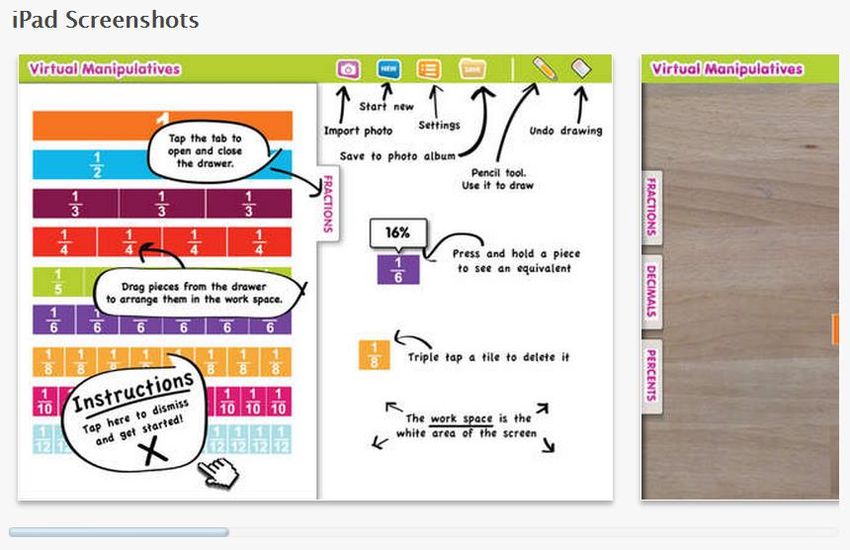
“Coming together is a beginning;
keeping together is progress;
working together is success.” Henry Ford

                          “Before anything else,
                          preparation is the key to success.”
                          Alexander Graham Bell

                                                                2
“Perseverance, secret of all triumphs.” Victor Hugo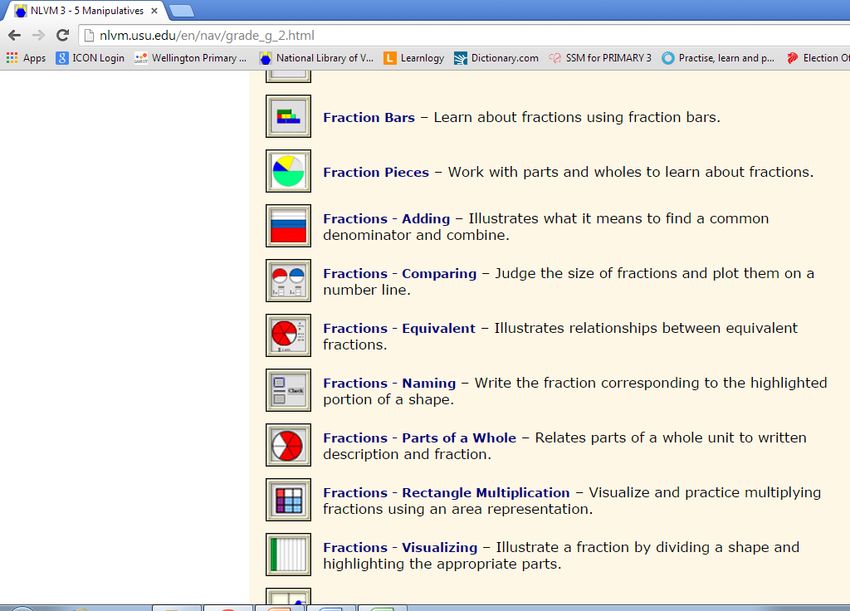
1. Syllabus review & its implications

2. Primary 3 Topics

3. Primary 4 Topics

4. Supporting you child

5. Assessment matters
                                        3

6. Hands on activities
Syllabus review
   The new Primary Mathematics Syllabus is implemented
   level by level starting from Primary One in 2013.

   The implementation schedule is as follows:
Year    2013      2014        2015        2016        2017         2018
Level   Primary 1 Primary 2   Primary 3   Primary 4   Primary 5    Primary 6
                                                      Standard     Standard
                                                      Maths &      Maths &
                                                      Foundation   Foundation
                                                      Maths        Maths
   Notes: The online syllabus document will be updated
   yearly according to the implementation schedule.
   First edition: April 2012                                                    4
                                                      Source: MOE Website
Implications
• 2015 Primary 3 students follow the new syllabus

• Implementation of new syllabus for Primary 4 will
  be next year (i.e. 2016).

• 2015 Primary 4 students follow 2007 Syllabus and
  hence are not affected by the change even when
  they are in Primary 6 (PSLE).

                                                      5
Topics (Total marks: 80) Whole Numbers Numbers up to 10 000 Addition and Subtraction Multiplication and division Fractions Equivalent fractions (includes simplest forms) Addition and subtraction Measurement (Length, Mass and Volume) Measurement (Area and Perimeter) Time Money Geometry Angles Perpendicular and Parallel Lines 6 Data Analysis (Bar Graphs)
Topics (Total marks: 100)
Whole Numbers
   Numbers up to 100 000
   Multiplication and division
   Factors and multiples
Fractions
   Mixed numbers and improper fractions
   Addition and subtraction
   Fraction of a set of objects
   Multiplication
Decimals
   Decimals up to 3 decimal places
   Addition and subtraction
Measurement (Time, Money, Area and Perimeter)
Geometry
   Symmetry                                     7
   Tessellation*
Data Analysis (Tables and Graphs)
How parents can help?
Let’s acknowledge the following: -
Every child is unique!
Some children may need more practice than others.
Know your child’s strengths and weaknesses in
Mathematics (e.g. feedback from teachers and
online material)
8
Give a reasonable amount of practice accordingly.Help your child to:
• See the importance and relevance of Mathematics in
everyday life. E.g. shopping and infographic(s)
• Master the multiplication tables (songs, rhymes & tricks)
This will help makes the mastery of the multiplication
and division algorithms seem less daunting.
Multiplication 7 Rock song: https://youtu.be/uvqTizEfrhU
Multiplication Made Easy: https://youtu.be/R2IQB9I7zX0
8 Times Table Trick: https://youtu.be/-C-e33iVBTM
9 Times table hand trick: https://youtu.be/Wu3JSnRaaV0
9 Times Table hand trick: https://youtu.be/jJC5ny6YT4M
• Have sufficient daily practice in Mathematics
o Koobits (Self-Practice, Homework, Challenges)
• Set a reasonable time limit for your child to 9
complete work at home.• Be involved in your child’s learning in school and at
home.
Ask What have you learnt today? Anything new?
Show me what you mean.
Praise Efforts, improvements, new learning
Encourage If they get stuck, guide/remind them
of sources that they can refer to e.g. LMS, Koobits,
class blog, books etc.
• Ensure that your child attends school regularly and
punctually.
10
• Ensure your child revises and completes his/her work
(written and online e.g. Koobits – Parent Register)Levels Cognitive Level
Knowledge items require students to recall
specific mathematical facts, concepts, rules
Knowledge
and formulae, and perform straightforward
computations.
Comprehension items require students to
interpret data and use mathematical concepts,
Comprehension
rules and formulae to solve routine or familiar
mathematical problems.
Application and Analysis items require students to
analyse data and/or apply mathematical
Application and concepts, rules and formulae in a complex
Analysis situation, and solve unfamiliar or non-routine*
problems.
* In the school context, students may be exposed to questions that are not part of the
routine questions of the regular practices. 11
If the question involve a complex situation, even though students may be familiar with
similar questions, these questions should remain as application and analysis questions.1. Multiple-choice Question (MCQ) – Section A (2 marks each)
For each question, four options are provided of which only one is
the correct answer.
A candidate has to choose one of the options as his correct answer.
2. Short-answer Question (SAQ) – Section B (2 marks each)
For each question, a candidate has to write his answer in the space
provided.
Any unit required in an answer is provided and a candidate has to
give his answer in that unit.
3. Structured / Long-answer Question (LAQ)
– Section C (abt 3 to 4 marks each)
For each question, a candidate has to show his method of solution
12
(working steps) clearly and write his answer(s) in the space(s)
provided.Primary 3
• Whole Numbers:
• Solve up to 2-step word problems involving
the 4 operations
• Money:
• Solve word problems involving + / ̶ of money
in decimal notation.
• Fraction:
• Add and subtract two related fractions within 13
one whole.Primary 4
• Whole Numbers:
• Solve up to 3-step word problems involving the 4 operations
• Decimals:
• Solve up to 2-step word problems involving the 4 operations
• Money:
• Solve word problems involving the 4 operations of money in
decimal notation.
• Fraction:
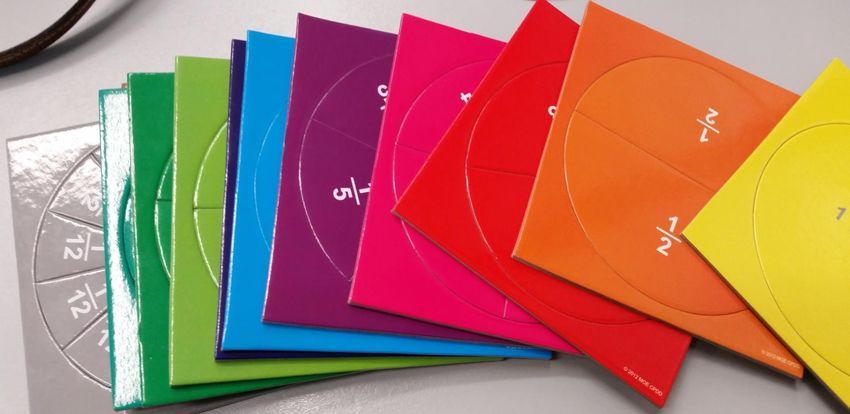
• Solve up to 2-step word problems involving +, ̶ , x. 14SSM concrete manipulatives Fraction discs for students
National Library of Virtual
Manipulatives
http://nlvm.usu.edu/en/nav/vlibrary.h
VM App in iPad
Fractions (Primary 4)
Number of girls: 5
Number of boys: 7
a) Express the number of boys as a fraction of the number of
children. 7
12
b) Express the number of girls as a fraction of the number of
boys. 5
7
Note: Total number of children 5 + 7 = 12 18Time (Start, Duration, End)
Primary 3
A movie started at 11.45 a.m.
The movie was 2 hours and 25 minutes long?
What time did the movie end?
The movie ended at 2.10 p.m.
Primary 4
A movie started at 1145.
19
The movie was 2 hours and 25 minutes long?
What time did the movie end? Answer: 1410Q&A
Primary 4, Section C
Question 43 (Chapter 3, Topic: Word Problems)
Let’s try this
(Similar weak item in Koobits)
Mary earns $2400 every month.
She spends $1250 on food and $208 on utilities monthly.
She saves the rest of the money.
How much can she save in 3 years?
Correct method
Amount spent in total 1250 + 208 = 1458
Amount saved 2400 – 1458 = 942 (Method mark: 1)
1 year = 12 months
3 years = 12 x 3 = 36 (Method mark: 1)
942 x 36 = 33 912 (Method mark: 1 and Answer mark: 1)
Answer: $33 912
Conceptual Difficulty 21
Students did not realise that there are 36 months in 3 years.
Common error: $942 x 3 = $2826Primary 4, Section B
Question 37 (Chapter 3, Topic: Word Problems)
Let’s try this
A baker is paid $18 for 3 hours of work.
How much is he paid if he works 6 hours a day for 5 days?
Correct method 1 Correct method 2
6 ÷ 3 = 2 groups of 3h 18 ÷ 3 = 6
$18 x 2 = $36 per day 6 x 6 = 36
$36 x 5 = $180 for 5 days 36 x 5 = $180 for 5 days
Answer: $180
Conceptual difficulty
Students generally had difficulty grasping the different ideas/concepts such 22
as the amount of money paid for work done, over a period of time
i.e., number of hours over a few days.Primary 4, Section C
Question 45 (Question is similar to the last
Let’s try this
question in the heuristic worksheet)
Kate, Royce and Jimmy have a total of 1872 stamps.
Kate has three times as many stamps as Royce.
Jimmy has 88 fewer stamps than Kate.
How many stamps does Jimmy have?
23
Which model is correct?
Difficulty
Students are not able to draw the correct model to demonstrate understanding of question.Primary 4, Section C
Question 45 (Question is similar to the last
Let’s try this
question in the heuristic worksheet)
Kate, Royce and Jimmy have a total of 1872 stamps.
Kate has three times as many stamps as Royce.
Jimmy has 88 fewer stamps than Kate.
How many stamps does Jimmy have?
7 units 1872 + 88 = 1960 (Method mark: 1)
1 unit 1960 ÷ 7 = 280 (Method mark: 1) 24
3 units 280 x 3 = 840
Jimmy 840 – 88 = 752 (Method mark: 1 and Answer mark: 1) Answer: 752Primary 4, Section B
Question 40 (Chapter 3, Topic: Word Problems)
Let’s try this
At a carnival, each child pays $7 for the ticket.
For every 4 children that pay, another child enters for free.
How many children are there in a group that pays $210?
Conceptual difficulties
Students generally found it difficult to:
understand the context of paying and non-paying (free) children
Common error:
210 ÷ 7 = 30 or 210 ÷ 5 = 42
4+1=5
30 ÷ 5 = 6
30 + 2 + 6 = 38 or 30 + 6 = 36
grasping the different ideas and concepts i.e., money, tickets and number 25
of children are all used interchangeably.Primary 4, Section B
Question 40 (Chapter 3, Topic: Word Problems)
Let’s try this
At a carnival, each child pays $7 for the ticket.
For every 4 children that pay, another child enters for
free.
How many children are there in a group that pays
$210?
Correct method
Step 1 210 ÷ 7 = 30 paying children
Step 2 30 ÷ 4 = 7 R 2
(means 7 groups of paying children in groups of 4 and 2 paying
children)
Step 3 30 paying children + 7 children entering for free = 37 (Total) 26
Answer: 37 children27
You can also read


