Winter 2021
at       | cmu.edu/osher
←
→
Page content transcription
If your browser does not render page correctly, please read the page content below

Winter 2021 at | cmu.edu/osher
CONSIDER A GIFT TO OSHER

                                                                                          To make a contribution to the Osher Annual
                                                                                          Fund, please call the office at 412.268.7489, go
                                                                                          through the Osher website with a credit card, or
                                                                                          mail a check to the office. Thank you in advance
                                                                                          for your generosity.

BOARD OF DIRECTORS                          CURRICULUM COMMITTEE                          OFFICE STAFF
Allan Hribar, President                     Gary Bates (Lecture Chair)                    Lyn Decker, Executive Director
Jan Hawkins, Vice-President                 Les Berkowitz                                 Olivia McCann, Administrator / Programs
Marcia Taylor, Treasurer                    John Brown                                    Chelsea Prestia, Administrator / Publications
Jim Reitz, Past President                   Maureen Brown                                 Kate Lehman, Administrator / General Office
Ann Augustine, Secretary &                  Flip Conti
                 Membership Chair           Lyn Decker (STSG)
Mark Winer, Board Represtative to           Mary Duquin                                   CATALOG EDITORS
              Executive Committee           Anna Estop                                    Chelsea Prestia, Editor
Rosalie Barsotti
                                            Marilyn Maiello                               Olivia McCann
Jeffrey Holst
                                            Enid Miller                                   Kate Lehman
Ann Isaac
                                            Diane Pastorkovich                            Lyn Decker
Sankar Seetharama
                                            Antoinette Petrucci
Raja Sooriamurthi
                                            Helen-Faye Rosenblum (SLSG)
Jeffrey Swoger
                                            Judy Rubinstein                               CONTACT INFORMATION
Randy Weinberg
                                            Rochelle Steiner                              Osher Lifelong Learning Institute
Richard Wellins
                                            Jeffrey Swoger (SLSG)                         Carnegie Mellon University
                                            Randy Weinberg (STSG)                         4614 Wean Hall
                                            Stanley Winikoff                              5000 Forbes Avenue
Rebecca Culyba,                                                                           Pittsburgh, PA 15213-3815
Associate Provost
and University Liaison

                                                                                          Please include your return address
                                                                                          on all mail sent to the Osher office.
                                                                                          Phone: 412.268.7489
                                                                                          Email: osher@cmu.edu
                                                                                          Website: cmu.edu/osher

       ON THE COVER
       .
       Front Cover: Olivia McCann
       Additional catalog images courtesy of wikimedia commons, pexels, and Dominic M. Mercier
OSHER at Carnegie Mellon | Winter 2021
   What interests you? Find your courses by topic.
ARTS & HUMANITIES                           LEARN BY DOING                               SCIENCE
Art                                         Art                                          Architecture
Language                                    Crafts / Hobbies                             Environment
Literature                                  Dance / Exercise                             Life Science
Music                                       Finance / Insurance                          Medical
                                            Games
BUSINESS &                                  Language                                     SOCIAL SCIENCE
COMMERCE                                    Self-Improvement                             Contemporary Topics /
Economics                                   Technology                                   Sociology
Law                                         Wellness                                     History
                                            Writing                                      Pittsburgh
                                                                                         Politics / Government
                                                                                         Psychology
                                                                                         Religion / Philosophy
General Info
Directors & Staff Front Cover
Index by
Study Leader Name             54-56
Campus Map                    58-59
                                                  IMPORTANT!
General Information
& Policies                    60-61               It is in your best interest to register online.
Parking & Transportation          60              Paper registrations will be delayed and
Bad Weather                       60              processed one week after registration opens.

Values & Expectations             61
Skip Dates                        62
Refund Policy                     62
                                                                        Session Dates
Registration Info                 62
                                                                        Session One: Aug. 31 – Oct. 23
                                                                          List of Courses by Day: pgs. 44-48

                                                                        Session Two: Oct. 26 – Dec. 18
                                                                          List of Courses by Day: pgs. 49-53

The course descriptions and biographies have been edited with an eye to preserving the voice and spirit of our study leaders.
412.268.7489                                                   3                                          e: osher@cmu.edu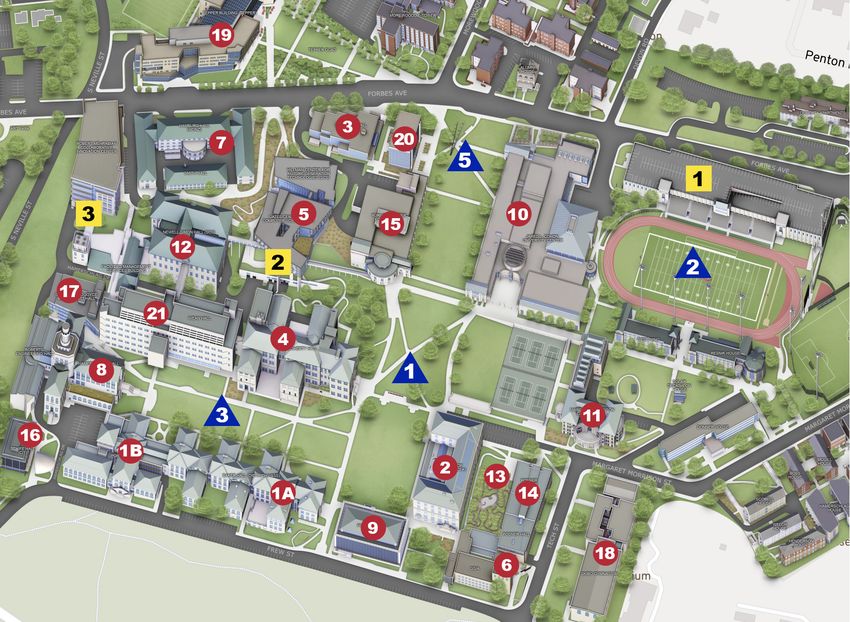
CAN YOU HELP?
Most of us have multiple good causes that we support annually with our donations and bequests. Each of
these speaks to our hearts, our volunteer time, and also to our wallets. Most years Osher at CMU has reached
out to our members with a low key annual appeal ask. For many years our organization has had the good
fortune of having a balanced budget and little need to ask our members to help cover our operating expenses.
This year is different in that the pandemic has put a tremendous strain on our economy and many people and
organizations are hurting. We unfortunately are falling into this category too.

While our focus this last year has been the on the build out of our new home in Cyert Hall and raising funds
to pay for it, we find ourselves in a strange new position. Because of the Covid-19 Pandemic and having to
move as many courses as possible to Zoom, our income has unexpectedly dropped. Unfortunately, we fear it
will continue to do so.

To help facilitate the sudden transition from in-person classes to online classes, the staff and many volunteers
have been offering almost daily Zoom lessons to both our study leaders and members with the hope that
everyone will attend classes, now on Zoom. With everyone having to shelter at home until there is a cure or a
vaccine, we naturally thought that everyone would want to spend some of their at home time by continuing
to take Osher courses on Zoom. We seemed to have misjudged this as it seems many of our members are
either not interested in doing so or are uncomfortable using Zoom.

This significant drop in attendance this summer and potentially for the fall has resulted in a projected
$100,000+ drop in our income for our 2020-2021 fiscal year. To try and make up some of the anticipated
losses major decisions have been made to cut expenses. The Finance committee recently met and developed
a bare-bones budget which froze the staff salaries and benefits, cut out the printing of our cherished catalogs,
and pulled back on as many of our expenses as possible.

How can you help Osher remain a vital and vibrant part of the Pittsburgh community? It is pretty simple. If
each member would donate about $60.00 we should be able to break even financially. If this is not possible,
any size donation would be helpful and much appreciated.

If by chance we do would have a positive balance in our budget at the end of the year because of your
generous donation to our general fund, the extra income will be redirected to our 4.0 campaign - which we
have temporarily put on hold because of the pandemic.

Thank you for helping to make our 2020-2021 year possible!

  Yours truly,

  Al Hribar
  Osher at CMU President

To make your donation, please either go to our website and donate online using a credit card or mail a check
to Osher LL Institute at CMU / 5000 Forbes Ave./ Pittsburgh, PA / 15213.

OSHER | Winter 2021                                    4                                      w: cmu.edu/osher

ARTS & HUMANITIES
Art | Cinema/Film | Literature | Music

ART                                                                   Art And Politics:
                                                                      What Happened Between The Wars
                                                                      Study Leader: Cynthia Weisfield
Andy Warhol’s World History
                                                                      • 4 Classes: Jan. 12 – Feb. 2                    Class ID: 3558
Study Leader: Warhol Museum
                                                                      • Tuesday, 10:45 AM - 12:45 PM
• 5 Classes: Jan. 15 – Feb. 12               Class ID: 3646           • Online Event
• Friday, 1:00 PM - 2:00 PM
                                                                      Art is usually analyzed by formalistic considerations such
• Online Event
                                                                      as line, shape, and color. This course will augment that
This course will examine how historical events in the                 trope by examining art as a socio-political phenomenon
United States and around the world impacted the artwork               reflective of a time, place and society. That concept will be
and life of Andy Warhol. Generally each meeting will                  made clear by a study of representative objects through-
focus on a different decade of Warhol’s life; from the 1930s          out history, followed by a deep look at how art was used as
to the 1980s. We will cover topics such as the Great                  a defining societal mechanism between the wars by Italy,
Depression, World War II, the Red Scare, the assassina-               Russia, and Germany. Classes have been revised to incor-
tion of JFK, Ping-pong Diplomacy, the Iranian Revolution,             porate both totally new material and key information
and the AIDS epidemic. Participants are encouraged to                 from some of the Fall, 2020 handouts.
share their own memories of the historical events we dis-             Cynthia F. Weisfield is an art historian with a degree from the
cuss. The presentations will feature artworks from the                University of Chicago. She is a freelance writer concentrating on
permanent collection of the Andy Warhol Museum,                       art topics, writing regularly for The Journal of the Print World. She
including works rarely on public display. Many critics                was also a contributor to the important national exhibition,
considered Warhol to be “a mirror of his time;” this course           “Women of Abstract Expressionism”.
offers an artistic and historical perspective on the times
that he reflected in his art.
Grace Marston is a Gallery Educator at the Andy Warhol
Museum. She has worked at the museum for over nine years and
aspires to become the preeminent Warhol scholar of her genera-
tion. She has conducted gallery talks, tours, and workshops for
audiences of all ages and backgrounds. She specializes in
LGBTQ+ Education, Senior Education, and research projects.

412.268.7489                                                      5                                               e: osher@cmu.edu
ARTS & HUMANITIES |                                                 Cinema/Film

CINEMA/FILM                                                              Films Of Charles And Ray Eames
                                                                         Study Leader: Jeffrey Swoger

A Night At The Movies                                                    • 5 Classes: Mar. 8 – Apr. 5                   Class ID: 3571
                                                                         • Monday, 11:00 AM - 12:30 PM
Study Leader: Stanley Winikoff, Jeffrey Swoger                           • Online Event
• 6 Classes: Mar. 10 – Apr. 14                Class ID: 3662
                                                                         In addition to designing their iconic chairs, Charles
• Wednesday, 3:30 PM - 5:00 PM                                           Eames and his wife Ray were multi-talented designers,
• Online Event                                                           architects and filmmakers. This course will view a selec-
                                                                         tion from their legacy of over 100 films — some short and
This class explores our love affair with the movies and the              whimsical, and some a bit longer and more serious. The
motion picture industry’s stars, its stories, and its continu-           Eames Design Office was world-famous for communicat-
ally evolving production techniques that, when properly                  ing complex ideas and information in an easy to digest
and artistically combined, entertain us. Our class is struc-             manner with finely honed visual and intellectual ele-
tured so that we watch the selected movies independently                 gance. These striking films are wonderful examples of
at home and meet virtually to discuss them from a variety                their extraordinary communicative skills. Most are enter-
of angles including plot creation and storytelling. All of               taining, eye opening and thought-provoking. In many
the movie choices are available the Carnegie Library of                  ways, they are the forerunners of the documentaries we’ve
Pittsburgh and on numerous streaming services.                           come to cherish from Ken Burns and PBS. Discussion of
Stanley Winikoff is a retired trial lawyer who has loved movies          the films will enrich the classes.
since his father took him to see English comedies at the Squirrel
                                                                         Jeffrey Swoger has had a life-long passion for classical music,
Hill Theatre in the 1950’s. He is Chair of the Osher Curriculum
                                                                         beginning with a seventh grade music appreciation class and
Committee.
                                                                         continuing through high school, college and adulthood. His long
Jeffrey Swoger has taught a variety of Osher courses including a         associations with the Chicago Symphony Orchestra afforded
survey course on the short films of Charles and Ray Eames as             him the opportunity to hear extraordinary musical performances
well as courses on music and architecture. He is also a member           on a weekly basis. Since the orchestra had its own full-time cho-
of the Curriculum Committee.                                             rus, large-scale choral works like Requiems were performed
                                                                         regularly. Stunning recordings of the Berlioz and Verdi Requi-
                                                                         ems in the early ‘60’s began a life-long love, and exploration, of
                                                                         this very special orchestral/choral genre, one which has attracted
                                                                         such a wide-ranging creative outpouring from important com-
                                                                         posers across the centuries.

                                     Drop a Course
                                     Did you know you can drop a course by visiting
                                     the "quick links" section of our website, cmu.
                                     edu/osher? It is available 24/7. You don't have
                                     to sign in!

OSHER | Winter 2021                                                  6                                              w: cmu.edu/osher
Literature        | ARTS & HUMANITIES
LITERATURE                                                              Writing -
                                                                        An Art, A Craft, And A Skill
                                                                        Study Leader: Michael Mariani
Respect: Images Of Women
In Literature And Life                                                  • 6 Classes: Jan. 14 – Feb. 18                 Class ID: 3623
                                                                        • Thursday, 9:00 AM - 10:30 AM
Study Leader: Linda Hurwitz                                             • Online Event
• 5 Classes: Mar. 10 – Apr. 7   Class ID: 3663
                                                                        This six class introductory writing course includes meth-
• Wednesday, 9:00 AM - 10:00 AM                                         ods of brainstorming, drafting, directed critiquing with a
• Online Event                                                          small empathetic audience, and learning how to improve
                                                                        personal writing. Professional and amateur prose will be
Women are viewed as darlings, wives, mothers, bitches,                  used to demonstrate the qualities of of good writing. Class
goddesses, old maids, and as liberated! Examine these                   pieces may include: autobiography, biography, memory,
images through short stories together. Discuss how they                 character, or short stories. Writing multiple drafts allow
are relevant in today’s world.                                          the possibilities of strong diction, figurative language, and
Linda F. Hurwitz has a masters Degree in English and has                imagery to carve nuances of meaning and emotion. Skills
taught middle school, high school and adult learners for many           are increased as ideas are developed through pre-writing,
years. She has taught at Osher, at Chathams and at Pitts Informal       composing, drafting, critiquing, editing, and finalizing.
studies programs and has initiated and lead book clubs since            Techniques studied and practiced include the use of mul-
1972. She was a school administrator and Director of the Holo-          tiple brainstorming methods, concision fixes, sentence
caust Center of UJF of Pittsburgh                                       variety, and avoiding: passive voice, clichés, jargon, wordi-
                                                                        ness and euphemisms. Writing is a developmental process
                                                                        that transforms, clarifies, defines when crafting expres-
                                                                        sion. Writing is an adventure and an exploration of the
                                                                        power of the word and the power within the writer.
                                                                        Mike Mariani is a retired English / Reading / Writing teacher of
                                                                        45 years (middle school, high school, and community college).
                                                                        He received his B.S. in Education from Duquesne ( cum laude)
                                                                        and Masters in English from Catholic University. A love of read-
                                                                        ing and literature spawned a love of writing and its analysis as
                                                                        well. A writer’s secrets are all in the open so an appreciation of
                                                                        literature enhanced the appreciation of writing. An active study
                                                                        of literature can come from reflective writing, a literary passage
                                                                        or poem, a memory of an experience and its meaning. Mariani’s
                                                                        study brought published writers to his classes to discuss the pro-
                                                                        cess of writing including spy novelist Larry Bond, Pulitzer Prize
                                                                        poet Henry Taylor, DC Poet and Laureate Dolores Kendrick. Mr.
                                                                        Mariani also heard Maya Angelou and John Irving among others.
                                                                        Their insight added greatly to his writing classes. Mr. Mariani
                                                                        has published poetry in Virginia Writing and op-ed articles in
                                                                        Journal newspapers. He has designed three writing courses while
                                                                        teaching in Fairfax County, VA: Creative Writing - a half year
                                                                        course, Creative Writing - a year long course, and Advanced
                                                                        Composition - year long.

412.268.7489                                                        7                                             e: osher@cmu.edu
ARTS & HUMANITIES |                                                    Literature

Pleasures Of Poetry                                                         Wendell Berry In Winter
Study Leader: Judith Robinson                                               Study Leader: Gloriana St Clair
• 5 Classes: Mar. 8 – Apr. 5                    Class ID: 3611              • 6 Classes: Jan. 21 – Apr. 1                   Class ID: 3637
• Monday, 11:00 AM - 12:30 PM                                               • Thursday, 1:00 PM - 2:30 PM
• Online Event                                                              • Online Event
Poetry expands and enhances life. This course is designed                   Helen-Fay Rosenblum’s short story course introduced me
for those who wish to explore the best of modern and clas-                  to Kentucky writer Wendell Berry, author, essayist, poet,
sical poetic voices, with a special emphasis on bringing                    and environmentalist. In this discussion course, students
pleasure to participants who may not have experienced                       will read and discuss a sampling of his novels. Before the
poetry—for whatever reason—- until now. Writing is an                       first class begins, read Nathan Coulter, for second class
option, including an opportunity to “workshop” with the                     Remembering, and for third class A World Lost—all in Three
class. Listening is a requirement!                                          Short Novels (2002). Then we will move on to Jayber Crow
Judith R. Robinson is an editor, teacher, fiction writer, poet, and         (2000), Hannah Coulter (2004), and Andy Catlett: Early
visual artist. A 1980 summa cum laude graduate of the Univer-               Travels (2006). All of these stories are set in Berry’s fic-
sity of Pittsburgh, she is listed in the Directory of American Poets        tional Kentucky town Port William. Other bookie friends
and Writers. She has published 75+ poems, five poetry collec-               have thoroughly enjoyed reading and discussing Berry’s
tions, one fiction collection, and one novel; edited or co-edited           fiction. The course meets every other week to allow for
twelve poetry collections. Her paintings have been widely exhib-            reading.
ited and can be seen at her website: judithrrobinson.com. She
has taught at Osher at Carnegie Mellon University and the Uni-              Please note: Class dates: Jan 21, Feb 4 &18, Mar 4 &18, Apri 1
versity of Pittsburgh. Her newest collection is Carousel, 2017,             Gloriana St. Clair served as the Dean of University Libraries at
Lummox Press; newest edited collection is Speak, Speak, poetry              Carnegie Mellon University from 1998 to 2014, when she
of Gene Hirsch, 2020, Cyberwit Publishing, Allahabad, India.                became the Inaugural Dean Emerita. During many of those
                                                                            years, she also served as the University liaison with Academy for
                                                                            Lifelong Learning and subsequently Osher Lifelong Learning at
                                                                            Carnegie Mellon University. She holds a B.A. and Ph.D. in litera-
                                                                            ture from the University of Oklahoma; a master’s degree in
                                                                            library science from the University of California, Berkeley; and
                                                                            an M.B.A. from the University of Texas. She enjoys teaching,
                                                                            reading, writing, arithmetic, big computer projects (Million
                                                                            Book project, Olive project), playing bridge, swimming, listen-
                                                                            ing, and much, much more.

OSHER | Winter 2021                                                     8                                               w: cmu.edu/osher
Literature        | ARTS & HUMANITIES
Short Stories: “In Short”                                               Great And Notable Novels
Study Leader: Helen-Faye Rosenblum                                      Read And Revisited
                                                                        Study Leader: Mary Schinhofen, Helen-Faye
• 6 Classes: Jan. 11 – Feb. 22*               Class ID: 3585
                                                                        Rosenblum
• Monday, 1:00 PM - 3:00 PM
• Online Event                                                          • 6 Classes: Jan. 14 – Mar. 25                 Class ID: 3627
 *Note: Class will not meet on Jan. 18                                  • Thursday, 1:00 PM - 3:00 PM
                                                                        • Online Event
• 6 Classes: Jan. 11 – Feb. 22*               Class ID: 3586
• Monday, 3:30 PM - 5:30 PM                                             With an emphasis upon earlier works and canonical selec-
• Online Event                                                          tions, the Great Novels study group will read and discuss
 *Note: Class will not meet on Jan. 18                                  significant novels of the 18th, 19th, 20th, and occasion-
                                                                        ally the 21st centuries. From the vantage point of age and
Practitioners and students of the art and craft of short fic-           experience, what insights can we share now that were not
tion often ask themselves (and each other) where stories                available during a previous reading? This course provides
begin and end. How do we draw the line between truth                    opportunities to read novels that we may have “saved for
and fact, fiction and memoir, fantasy and memory? In this               later” or ones that we never knew existed. Class members
course, participants will use a variety of contemporary                 are encouraged to lead a book discussion session. The
short stories to address the questions. The answers may be              class meets on alternate weeks.
elusive, but the quest will be gripping. We will use fresh              Please note: classes meet: Jan 14 & 28, Feb 11 & 25, Mar 11 &25)
stories every term, so that the course description is the
same, but the content is always fresh.                                  Mary Schinhofen earned a B.A. degree in literature and phi-
                                                                        losophy and went on to raise a family and teach English literature
Helen-Faye Rosenblum, a Phi Beta Kappa graduate of Chatham              at the University School in Shadyside. She has since retired in
College, also received undergraduate and graduate education at          order to devote more time to reading, writing, and watercolor
Barnard College and the University of Pittsburgh. She is the            painting. An Osher member, she is deeply and passionately com-
author of two novels published by Putnam with further work in           mitted to the continuing education of everyone, especially those
progress. Her first novel,Minerva’s Turn, won the Ohioana State         who have purportedly reached the age of wisdom. Teaching this
Library Award for fiction. She has reviewed books and the arts          class fulfills a lifelong dream of hers.
for the Cleveland Plain Dealer, the Pittsburgh Press and numerous       Ken Joseph is a graduate of St. John’s College (Annapolis) and
smaller publications and radio stations. She has taught and lec-        the Duquesne University School of Law. He spent most of his
tured in many venues, from universities and public schools to the       working life as an attorney and has always enjoyed reading and
U.S. Correctional System in Ohio. She is a past president of            discussing good literature
A.L.L. (Osher).
                                                                        Thomas A. Lazaroff is a graduate of Pennsylvania State Univer-
                                                                        sity and the University of Michigan Law School. He has served as
                                                                        a longtime study leader for the Great Novels and Writers Read
                                                                        and Revisited course. He is a member of Osher.
                                                                        See Helen-Faye Rosenblum, previous page

412.268.7489                                                        9                                             e: osher@cmu.edu
ARTS & HUMANITIES |                                                Literature

                                                                        The World Of Agatha Christie
                                                                        Study Leader: Mark Banister
                                                                        • 4 Classes: Mar. 9 – Mar. 30                  Class ID: 3583
                                                                        • Tuesday, 1:00 PM - 2:30 PM
                                                                        • Online Event
                                                                        Author Agatha Christie is the best-selling novelist in the
                                                                        world, with over two billion copies of her books sold. (She
                                                                        is outsold only by Shakespeare!) In addition to having
                                                                        66+ novels and 150+ short stories published, she is the
                                                                        author of more than a dozen plays, including the longest
                                                                        running play in the world, The Mousetrap. We will discuss
                                                                        her books, the movie and TV adaptations, and her theater
                                                                        work. We will also view clips from the many TV and movie
                                                                        adaptations. Her fascinating life will be discussed, includ-
                                                                        ing her mysterious disappearance and her marriage to a
Jane Austen’s Emma                                                      famous archaeologist, and their effects on her writing.
And Pride & Prejudice                                                   The class is suitable for both newcomers to her work and
Study Leader: Allison Thompson                                          long-time fans. The content has been updated a bit from
                                                                        the previous class, to reflect some of the more recent
• 6 Classes: Jan. 11 – Feb. 22*               Class ID: 3543            updates of her works.
• Monday, 9:00 AM - 10:30 AM                                            Mark Banister retired from the Environmental Health and
• Online Event                                                          Safety Office at Carnegie Mellon in 2017. He has been a ravenous
 *Note: Class will not meet on Jan. 18                                  reader of Christie and collector of all things Agatha since he was
                                                                        a mere youth.
Everyone loves the sparkling Miss Elizabeth Bennet, but
even Austen herself described Emma Wodehouse as a
heroine that only she herself would love. We’ll explore the
worlds of Meryton and Highbury as we enjoy reading Aus-
ten’s works.
Allison Thompson is an historian with a focus on social dance
of the 18th century, a musician, and an English country dance
leader. She is a Life Member of the Jane Austen Society of North
America, has presented papers at meetings of various JASNA
chapters, and is at work finalizing her book on dances from Jane
Austen’s Assembly Rooms.” She has taught several courses for
Osher on Austen.

OSHER | Winter 2021                                                10                                              w: cmu.edu/osher
Literature | Music | ARTS & HUMANITIES
Such Friends: Perkins, MUSIC
Fitzgerald And Hemingway
Study Leader: Kathleen Donnelly
From The Page To The Stage:
• 2 Classes: Feb. 25 and Mar. 4 Class ID: 3589 Secrets Of Practicing
• Thursday, 11:00 AM - 12:30 PM
• Online Event Study Leader: Monique Mead Materials Fee: $2*
• 4 Classes: Mar. 12 – Apr. 2 Class ID: 3582
In the 1920s, F. Scott Fitzgerald was the first major author
that legendary Scribner’s editor Maxwell Perkins discov- • Friday, 1:00 PM - 2:30 PM
ered and developed. We will look at how they first got to • Online Event
know each other, Perkins’ encouragement of Fitzgerald
through his first two hit novels, their work on The Great What can the life cycle of a butterfly teach us about musi-
Gatsby, and their personal friendship until Fitzgerald’s cal performance? Monique is eager to share her new con-
early death in 1940. In the second session we will explore cept that portrays practicing as an organic process of
how Fitzgerald brought the unknown novelist he heard so growth, transformation, and ultimate freedom. This
much about in Paris, Ernest Hemingway, to Perkins’ course is intended for anyone who has played an instru-
attention. The three had a rocky relationship over the ment or is simply curious about what happens in the pri-
years when they were creating great American literature. vacy of a practice room. It offers practical tips, personal
No prior knowledge of their novels is necessary, but this stories, and performances by prominent musicians who
could be a good excuse to read or re-read some of them. have mastered the art of practicing.
Kathleen Dixon Donnelly has been involved in teaching and Monique Mead, violinist, is a passionate ambassador of classical
the creative process for over 40 years. Her dissertation for her music enjoys a rich career as a performer, educator, and innova-
Ph.D. in Communications from Dublin City University, Such tor. Inspired and mentored by Leonard Bernstein, Mead has
Friends, was on the creative development of writers in early 20th devoted her performing career to nurturing new audiences and
century salons, including the Irish Literary Renaissance, the deepening the musical experience for seasoned concertgoers.
Bloomsbury group, the Americans in Paris in the 1920s, and the Her programs with major orchestras and festivals in the United
Algonquin Round Table. Kathleen’s thesis for her MBA from States and Europe have drawn international acclaim for their
Duquesne University was Manager as Muse: A Case Study of popular appeal and innovative approach. In Pittsburgh, Monique
Maxwell Perkins’ Work with F. Scott Fitzgerald, Ernest Heming- serves as Director of Music Entrepreneurship at Carnegie Mel-
way, and Thomas Wolfe. She also has a BA in English, Theatre lon School of Music and teaches violin faculty of the Preparatory
and Art from Lycoming College in Williamsport, PA, and an MA School. With a passion for wellness, she is Artistic Director of a
in Education and a Diploma in Writing from Birmingham City Chamber Music Festival at Rancho la Puerta, voted the world’s
University [BCU] in the UK. Kathleen recently retired as a senior #1 Destination Spa in 2020. She is also founder and Executive
lecturer at BCU. She has done presentations to many lifelong Director of a summer strings camp in Olympic National Park.
learning groups in the UK and the US, as well as The Southbank Mead enjoys yoga, hiking, homegrown cuisine. With her two tal-
Center, the English-Speaking Union, and The Florida Center for ented teens, Isabel and Tino, she presented a 12-concert socially-
the Book. She also posts about early 20th century writers at distanced Porch Concert series in Shadyside to bring people
suchfriends.wordpress.com and on Twitter, @SuchFriends. together and support struggling local musicians during the
Kathleen and her Irish husband Tony Dixon recently relocated pandemic.
from the UK to her hometown of Pittsburgh, Pennsylvania. *Materials fees are not refundable; information on page 78.
412.268.7489 11 e: osher@cmu.eduLEARN BY DOING | Music
War And Pieces: Music: What’s In An Interpretation?
How Music Reacts To Conflict Study Leader: Flavio Chamis
Study Leader: Owen Cantor • 3 Classes: Jan. 12 – Jan. 26 Class ID: 3624
• 3 Classes: Jan. 13 – Jan. 27 Class ID: 3552 • Tuesday, 1:00 PM - 2:30 PM
• Wednesday, 9:00 AM - 10:30 AM • Online Event
• Online Event
This course will provide a comparative study between sev-
Throughout the history of classical and contemporary eral different approaches to the exact same musical score,
music, composers have reacted to conflict by crystalizing and how different artists insert their creative insights into
emotions for their audience in the language of music. the relatively strict framework provided by the composer.
Some good examples are Benjamin Britten’s War Requiem, Carefully chosen examples of solo, chamber, orchestral,
Haydn’s Mass in the Time of War, and even Tcaikovsky’s and vocal works will be heard, including comparisons
1812 Overture. From musical bomb blasts to silly calvary between performances on original and modern instru-
charges, great composers, enmeshed in their own world, ments. Additionally, Flavio will provide the musical and
reflect upon the topical news of the day—-often with historical context of the selected works, which may also
etherial results. We will examine this phenomenon with include some jazz, Brazilian, or even pop oldies.
music and history from Mozart and Beethoven, to Randy Flavio Chamis, a native of Sao Paulo, Brazil, trained in conduct-
Rainbow. It’s going to be an interesting ride. ing and composition at Tel Aviv University and in Detmold, Ger-
many, at the Nordwestdeutsche Musikakademie. He served in
Owen Cantor, D.M.D., was founder and music director of the
Vienna as music director of the Villa Lobos Ensemble. While in
Summerfest Chamber Music Festival, which presented 14 sum-
Europe, he recorded with the Berlin Radio Symphony Orchestra
mers of wonderful chamber works under the stars in Fox Chapel,
and the Nouvelle Philharmonic de Radio France. Among his
PA. Before and during his early years as a practicing dentist, Dr.
European engagements were performances at the Musikverein
Cantor was a freelance French horn player, one of the last stu-
in Vienna, the Wiener Festwochen, and the Royal Festival Hall
dents of the renowned Forrest Standley of Carnegie Mellon Uni-
in London. In 1985, Chamis became conducting assistant to
versity. Dr. Cantor has performed, taught, and presented music
Leonard Bernstein, leading the Israeli Philharmonic in prepara-
in countless local venues. For 10 summers, he was a participant
tion for tours of Europe, Japan, and the United States, in 1986
and trustee at the Chamber Music Conference and Composers’
conducting rehearsals for the world premiere of Bernstein’s Jubi-
Forum at Bennington, VT. Dr. Cantor has served as a board
lee Games (later renamed Concerto for Orchestra) and assisting
member and advisor to nearly all of the musical organizations in
Maestro Bernstein on the European tour of the London Sym-
Pittsburgh. He has taught as an artist lecturer in the School of
phony Orchestra. In 1987 Chamis became the music director of
Music at Carnegie Mellon’s College of Fine Arts and has lectured
the Porto Alegre Symphony Orchestra in Brazil. In Brazil, he
in the Behavioral Sciences Department in the University of Pitts-
conducted all the major orchestras and performed on Brazilian
burgh’s School of Dental Medicine. At Pitt, Dr. Cantor won the
radio and television. He serves as guest conductor throughout
Chancellor’s Award, a university-wide prize recognizing out-
Europe and Latin America. He is a composer of a wide range of
standing teaching. He is the founder of Cantor, Masterson and
styles, from solo, chamber, and symphonic pieces to jazz and Bra-
Pounds Dental Associates, recognized by Pittsburgh Magazine as
zilian music. He has also written the text for many of his vocal
a leader in the Pittsburgh healthcare community.
compositions. He lectures on both Brazilian and classical music
and since 2008 has been a permanent member of the Screening
Committee of the Latin Grammy. He has lived in Pittsburgh
since 1994. He and his wife, Tatjana, associate principal violist of
the Pittsburgh Symphony, have three children.
OSHER | Winter 2021 12 w: cmu.edu/osherMusic | LEARN BY DOING
Symphony No. 1 Degenerate:
Study Leader: James Gorton Jewish Music Of The Nazi Era
Study Leader: Daniel Muller
• 4 Classes: Mar. 9 – Mar. 30 Class ID: 3651
• Tuesday, 1:00 PM - 2:30 PM • 4 Classes: Mar. 8 – Mar. 29 Class ID: 3599
• Online Event • Monday, 1:00 PM - 3:00 PM
• Online Event
A survey of first symphonies by selected composers of
various eras—some familiar and some surprises. During World War II, the Nazis nearly removed a genera-
James Gorton was Co-Principal Oboist of the Pittsburgh Sym- tion of music. They allowed no exceptions, pursuing
phony from 1971-2012. He is a current faculty member of Carn- established masters and young prodigies for their heri-
egie Mellon University and Duquesne University. tage, political beliefs, or musical aesthetic. We will define
Nazi artistic ideals and follow artists from prominence to
obscurity. Stops along the way include the ghetto Terezin,
where arts flourished despite grim conditions, and Amer-
ica, where expatriate Jews revitalized musical culture.
Daniel Muller, saxophonist, has been a winner of the Pittsburgh
Concert Society Major Artists Competition, a quarterfinalist in
the Fischoff National Chamber Music Competition, and a fea-
tured artist on numerous concert series in Pennsylvania. A grad-
uate of Carnegie Mellon and Duquesne Universities, Muller
studied with tenor saxophone pioneer James Houlik.
412.268.7489 13 e: osher@cmu.eduBUSINESS & COMMERCE
Economics | Law
ECONOMICS Trust And Property Rights:
Foundation Of Economy
Study Leader: Jack Ochs
Taxation - History & Impact
On American Society • 4 Classes: Jan. 11 – Feb. 8* Class ID: 3547
• Monday, 11:00 AM - 12:30 PM
Study Leader: Hobart Harris • Online Event
• 4 Classes: Jan. 13 – Feb. 3 Class ID: 3608 *Note: Class will not meet on Jan. 18
• Wednesday, 3:00 PM - 4:30 PM
Why can strangers conduct business without legally
• Online Event enforceable contracts? Why did the Mafia and Standard
and Poors betray the trust placed in them? Why are more
Through most of history, the arrangement of taxes, who
firms choosing ‘outsourcing? Why did the cod disappear
pays and who benefits, has been one of the most impor-
off Cape Cod? What does the great enclosure movement
tant determinants of the relative economic and political
in English history and urban renewal in the United States
standing of various classes. This course examines those
have in common? Intellectual property raises issues of its
relationships and attempts to characterize their structure
own. Patents are intended to promote technical progress.
and impacts within modern American society. We will
But Bill Gates said that if computer programs had been
review taxation in previous societies such as in France
patentable prior to 1981 there would be at a standstill
before the Revolution, Roman systems, etc., and how
today. We’ll also consider the impact of digital technology
these systems supported the Class structures and relative
on the future of copyright.
well-being of the various groups in their societies. A final
section will review current American taxation and how it Jack Ochs, a Pittsburgh native, retired as Professor of Economics
contributes to the economic inequality that we are cur- at the University of Pittsburgh. His research and teaching
rently so concerned with. focused on experimental economics and public policy. Since
retiring, he has enjoyed developing courses for lifelong learning
Hobart Harris earned his Ph.D in Social and Industrial Psychol- programs.
ogy from the University of Pittsburgh. After working in Social
Welfare research, he became a consultant to major US Corpora-
tions supporting IT acquisitions and Business Process Analyses.
Towards the end of his career, he focused primarily on financial
analyses of major corporate initiatives. His clients included two
of the top three US automakers, two of the largest US Banks, and
three of the top Health Insurers in the US, as well as a number of
healthcare systems, manufacturers and telecom companies.
The Curriculum Committee is always
looking for new study leaders to teach
interesting courses for us. If you, or
someone you know, is interested, go to the
“Teach For Us” page on our website to
submit a proposal.
OSHER | Winter 2021 14 w: cmu.edu/osherEconomics | Law | BUSINESS & COMMERCE
After 70 Good Years, LAW
Rough Times Ahead
Study Leader: Stephen Blank
From Trial Through Appeal
• 2 Classes: Feb. 23 and Mar. 2 Class ID: 3545
Study Leader: Errol Miller
• Tuesday, 1:00 PM - 3:00 PM
• Online Event • 6 Classes: Jan. 12 – Feb. 16 Class ID: 3588
• Tuesday, 9:00 AM - 10:30 AM
After World War II, change across many sectors of society
• Online Event
was linear — incremental and predictable. Today we are
moving rapidly into a world in which change in critical This course addresses the Criminal Justice System from
areas will be discontinuous, veering toward chaotic — trial through appeal, including 1) prosecutorial discretion
chaotic in the sense of our being much less able to antici- in offenses charged and plea bargaining, 2) use of defen-
pate what is likely to happen next. Driven by technology, dant’s alleged mental illness as insanity defense or to delay
climate change, and demography, many core assumptions trial because he is “ incompetent to stand trial”, 3) non-
about how the world works are coming undone, and we criminal alternatives for dealing with mental illness such
face rough times ahead as we have to relearn how things as civil commitment, 4) post trial choices for sentencing
work and make profound adjustments in how individuals including probation, parole, community service, and
and institutions try to meet the demands of this new era. types of prisons, and 5) imposition of other non-detention
Focusing on cases — automobiles, education, agriculture, penalties such as restrictions on residency, gun ownership
and pandemics for example — the course examines where and voting. Classes are enhanced by articles from the
we have come from, and where we may be heading. media, emailed prior to each session. Much new material
Stephen Blank’s career has spanned the academic, business and is used to reflect changes since the last time the course
not-for-profit communities. His academic careers, at Harvard was taught. Sometimes, a guest speaker such as a defense
and Pitt and later at Pace University was bridged by work in The attorney, prosecutor, police officer or ex offender is
Conference Board and by his role as a founding partner of Mul- invited. This course can be taken independently of Ques-
tiNational Strategies, an international management consulting tioning the Criminal Justice System from Arrest to Trial.
firm. Blank’s research on infrastructure, economic integration
and logistics is well recognized, as are his writings on British, Errol Miller graduated from Dartmouth College and Harvard
Canadian and North American politics. He served as Bissell Vis- Law School, has practiced law for 50+ years, and been an Osher
iting Professor at the University of Toronto and Ross Distin- Study Leader since 2004, offering six different classes. Trust &
guished Visiting Professor at Western Washington University Estates draws on his 30+ year experience in planning and
and was awarded three Fulbright Professorships. He was Manag- administering estates and as a frequent lecturer in Elder Law
ing Director of an alliance of four North American business Continuing Legal Education seminars. “From Arrest to Trial”
schools, and headed the largest Canadian-North American and “From Trial through Appeal” reflect a lifelong interest in the
focused public affairs program in the US. In a change of pace, criminal justice system, experience clerking for a PA Supreme
Blank and his wife headed a major project looking at the impact Court Justice, post-conviction appeals, avid study of current
of global change on arts and cultural institutions, leading to sev- criminal justice events, participation in local reform groups (
eral conferences at MOMA. A member of the Council on For- B-Pep, the Alliance for Police Accountability, ACLU, Cease-
eign Relations, he was awarded L’Ordre National du Quebec by FirePA), and views on how coordinating criminal justice and
the Government of Quebec. He serves as Senior Fellow of the mental health principles can help produce criminal justice
Institute for Science, Society and Policy at the University of reform. “Those Who Trespass Against Us” addresses torts cases
Ottawa. Blank was educated at Dartmouth, Cambridge Univer- (Civil Wrongs) with practical advice for non-lawyers on the prin-
sity and Harvard. ciples behind most civil cases. “The Current Supreme Court”
reviews major decisions of the Roberts’ Supreme Court and what
we might expect as court membership changes. “Introduction to
Real Estate Law” explains the legal principles surrounding real
estate transactions. In each course, Errol displays his sense of
humor used as the principal writer of 23 annual Allegheny
County Bar Association topical satirical reviews.
412.268.7489 15 e: osher@cmu.eduBUSINESS & COMMERCE | Law Med-Mal 101: Observations Of An Expert Witness Study Leader: Richard Daffner • 4 Classes: Mar. 9 – Mar. 30 Class ID: 3602 • Tuesday, 9:00 AM - 10:30 AM • Online Event Medical malpractice (med-mal) is an unfortunate occur- rence in our society. However, not all unsatisfactory medi- cal results are due to negligence. This course will define the Standard of Care obligation that all physicians have and will explore all the elements encountered in the world of med-mal, illustrated with actual cases from the study leader’s experience over 30 years as an expert wit- ness in radiology. The course will be divided into three parts: Part 1 will define malpractice and applicable legal terms; Part 2 will review the four key elements that define med-mal: the physician-patient relationship, actual injury or harm, breach of the Standard of Care (negligence) by the provider, direct causal relationship between the neg- ligence, and the outcome; Part 3 will have the class par- ticipants act as the jury as illustrative cases are presented. Each case will undergo a “root cause analysis.” In addition, the points of law that affected the outcome will be demonstrated. Richard H. Daffner, M.D.F.A.C.R. is a retired radiologist who worked at Allegheny General Hospital for 30 years as director of the Division of Musculoskeletal, Trauma, and Emergency Imag- ing. He is a Certified Instructor in Wilderness First Aid, by the Emergency Care & Safety Institute and the Boy Scouts of Amer- ica. His academic credentials include medical school faculty appointments at the University of Louisville, Duke University, Drexel University, and Temple University, where he is Emeritus Clinical Professor of Radiology. He is the author of Clinical Radi- ology: The Essentials, a text for medical students and Imaging of Vertebral Trauma. OSHER | Winter 2021 16 w: cmu.edu/osher
LEARN BY DOING
Art | Crafts/Hobbies | Dance/Exercise | Finance/Insurance | Games | Language | Self Improvement |
Wellness | Writing

ART                                                                        CRAFTS/HOBBIES

Figure Drawing                                                             Beginning Genealogy
Study Leader: Betsy Bangley                   Materials Fee: $36*          Study Leader: Amy Welch
• 6 Classes: Jan. 15 – Feb. 19                       Class ID: 3567        • 5 Classes: Mar. 11 – Apr. 8                  Class ID: 3685
• Friday, 9:30 AM - 12:00 PM                                               • Thursday, 11:00 AM - 12:30 PM
• Online Event                                                             • Online Event
• 6 Classes: Mar. 12 – Apr. 16                       Class ID: 3568        Digging into your family tree is a little more complicated
• Friday, 9:30 AM - 12:00 PM                                               than certain TV commercials make it sound. Learn how
• Online Event                                                             to start collecting information about your ancestors from
                                                                           your living family members, where to look for records to
Discover a new world of artistic exploration and connect                   back up the information you collect (and bust a few family
with humanity by learning to draw another human being.                     myths along the way), preserving family treasures, and
Beginning artists will learn the basics of observational                   how to bring everything together to build your family his-
drawing in a supportive environment, while experienced                     tory. The course will cover research physical and digital
artists will enjoy honing their skills through the open stu-               sources and search techniques to make the most of your
dio format of the class. Our model will hold a variety of                  research time. Students should plan to actively participate
poses for us to observe and sketch. Each week we will start                in genealogical research to apply the strategies discussed
with quick gesture sketches and move on to longer draw-                    in class. No textbook is required; the instructor will pro-
ings. You’ll be surprised at the progress you make as you                  vide worksheets and a list of freely available articles that
develop your new creative skills! Bring a pad of newsprint,                students can review when relevant for each class. The
drawing paper, a soft pencil, and charcoal.                                course is for beginners as well as genealogists who want to
                                                                           get back to basics and revisit earlier work.
Betsy Bangley has had a lifelong love of drawing. She has kept a
nature journal of sketches and observations for over 20 years,             Amy Welch is the Lead Librarian in the Pennsylvania Depart-
and currently holds open studio figure drawing sessions with her           ment at the Carnegie Library of Pittsburgh. In addition to sup-
husband, David, at a variety of venues in the Pittsburgh area,             porting genealogists in their research at the library, she is Past
including at their country home in Beaver County. Betsy teaches            President of Western Pennsylvania Genealogical Society and the
Figure Drawing and other courses in the arts and humanities at             current Program Committee chair. Amy also teaches Digitiza-
the Community College of Beaver County through the Continu-                tion of History and Archival Management for Southern New
ing Education and Workforce Development Department.                        Hampshire University’s Public History program. She is probably
*Materials fees are not refundable; information on page 78.
                                                                           not connected to any Welches in your family tree unless they
                                                                           were from Maine.

412.268.7489                                                          17                                             e: osher@cmu.edu
LEARN BY DOING | Crafts/Hobbies Mosaic Knitting Mosaic Crocheting Study Leader: Barbara Gengler Study Leader: Barbara Gengler • 5 Classes: Jan. 13 – Feb. 10 Class ID: 3614 • 5 Classes: Mar. 10 – Apr. 7 Class ID: 3615 • Wednesday, 1:00 PM - 2:30 PM • Wednesday, 1:00 PM - 2:30 PM • Online Event • Online Event Both knitting and crocheting have multiple techniques Both knitting and crocheting have multiple techniques for creating patterns with multiple color. Some can be for creating patterns with multiple color. Some can be challenging. Both Mosaic Knitting and Mosaic Crochet- challenging. Both Mosaic Knitting and Mosaic Crochet- ing are a beginner friendly way to produce works with two ing are a beginner friendly way to produce works with two or more colors, while working with one color per row. or more colors, while working with one color per row. Mosaic knitting uses the slip stitch and changes colors Mosaic knitting uses the slip stitch and changes colors after two rows to produce patterns. Mosaic crocheting after two rows to produce patterns. Mosaic crocheting uses the double crochet stitch to go in front of the prior uses the double crochet stitch to go in front of the prior row’s stitches. Either can be done by someone with the row’s stitches. Either can be done by someone with the very basic skills. Two separate classes explore similar con- very basic skills. Two separate classes explore similar con- cepts and similar patterns. You’ll begin with a small cepts and similar patterns. You’ll begin with a small swatch to learn the mosaic technique in the first week. In swatch to learn the mosaic technique in the first week. In subsequent weeks, you’ll have the option to choose your subsequent weeks, you’ll have the option to choose your own mosaic project or work on a supplied mosaic pattern own mosaic project or work on a supplied mosaic pattern to knit- or crochet-along with your classmates. It’s always to knit- or crochet-along with your classmates. It’s always fun to see the same pattern created in different colors! fun to see the same pattern created in different colors! Barbara Gengler is a serial hobbyist who has played with fiber, See Barbara Gengler, previous page glass, silver, and wood to create quilts, windows, vases, jewelry, musical instruments, and other functional art. As in her work developing software solutions, she enjoyed the challenge of cre- ating functional solutions using resources and materials at hand. While some hobbies have come and gone, she always returns to her knitting and crocheting roots. OSHER | Winter 2021 18 w: cmu.edu/osher
Dance/Exercise               | LEARN BY DOING
DANCE/EXERCISE                                                             Get Fit -
                                                                           A Fun Latin Cardio Workout
                                                                           Study Leader: Connie Pollack
Better Balance!
Steady And Strong                                                          • 8 Classes: Jan. 13 – Mar. 3                 Class ID: 3653
                                                                           • Wednesday, 1:15 PM - 2:30 PM
Study Leader: Diane Markovitz                                              • Online Event
• 6 Classes: Jan. 14 – Feb. 18                  Class ID: 3684             • 8 Classes: Mar. 10 – Apr. 28                Class ID: 3654
• Thursday, 3:30 PM - 4:30 PM                                              • Wednesday, 1:15 PM - 2:30 PM
• Online Event                                                             • Online Event
Are you looking for an exerciseprogram designed to
                                                                           Are you looking for a new way to jazz up your exercise
improve your everydaylife? Try Better Balance! Steady
                                                                           routine? Come groove to an energetic mix of hip-hop,
And Strong. Work with a Physical Therapist to learn bal-
                                                                           international, and Latin-inspired music, and dance move-
ance and core strengtheningexercises. Come join the fun
                                                                           ments like the cha-cha, salsa, samba, and more. This class
and learn a program designed to improve your posture
                                                                           embraces all levels of ability by providing step-by-step
and daily function while also decreasing your risk of falls
                                                                           instruction, demonstration, and modified moves. No
and injury.No special equipment is necessary and all exer-
                                                                           prior experience is necessary! This class is like no other
cises are completed sitting or standing. This program is
                                                                           because it gives you a full-body workout that incorporates
suitable for beginners yet appropriate for thosewith more
                                                                           aerobic dance movements, muscle toning, stretching, and
exercise experience as it is able to be adapted to fit indi-
                                                                           relaxation exercises. It’s a great way to build your cardio
vidual needs. Participants will be given instructions on
                                                                           fitness while having fun, and is perfect for both men and
how to complete this program at home for continued ben-
                                                                           women who enjoy being active. Each session consists of
efits. Wear comfortable clothes and supportive shoes and
                                                                           warm-up exercises, Latin cardio dance segments, weights,
have water and a sturdy chair (not on wheels!) close by.
                                                                           stretching, and cool down. Please wear comfortable shoes
Diane Markovitz is a licensed physical therapist with twenty               and bring a water bottle, towel or mat for floor exercises,
eight years of experience and a degree from Marquette Univer-              and light hand weights. Try it — you’ll like it!
sity’s School of Physical Therapy. She loves developing and teach-
ing group exercise classes as it provides her with a way to use her        Connie Pollack has been teaching aerobic dance to adults for
physical therapy experience to reach more people. Her goal is to           the past 15 years at Congregation Beth Shalom. She loves singing
help individuals acquire the confidence and skills necessary to            and dancing to music and enjoys choreographing energetic and
continue these programs on their own and improve their daily               fun routines. With a degree in health and physical education, she
lives.                                                                     taught physical education to students of all ages for 15 years
                                                                           before obtaining her master’s degree in school counseling and
                                                                           transitioning to the field of college consulting. Currently, she
                                                                           works as a private college counselor in Squirrel Hill and helps
                                                                           students with their college or graduate school selection and
                                                                           application process, and tutors students in English, writing,
                                                                           reading, and test prep. She has always been passionate about
                                                                           teaching, encouraging fitness and exercise, and volunteering in
                                                                           her community.

412.268.7489                                                          19                                            e: osher@cmu.edu
LEARN BY DOING | Dance/Exercise Tuesday’s Move It Or Lose It Thursday’s Move It Or Lose It Study Leader: Elsa Limbach Study Leader: Elsa Limbach • 6 Classes: Jan. 26 – Mar. 2 Class ID: 3647 • 6 Classes: Jan. 28 – Mar. 4 Class ID: 3649 • Tuesday, 10:00 AM - 11:30 AM • Thursday, 10:00 AM - 11:30 AM • Online Event • Online Event • 6 Classes: Mar. 23 – Apr. 27 Class ID: 3648 • 6 Classes: Mar. 25 – Apr. 29 Class ID: 3650 • Tuesday, 10:00 AM - 11:30 AM • Thursday, 10:00 AM - 11:30 AM • Online Event • Online Event Enhance your own gift of movement with this class Enhance your own gift of movement with this class designed for the inner dancer hiding inside your mature designed for the inner dancer hiding inside your mature body. Discover how attention to the way you move can body. Discover how attention to the way you move can increase your energy and make daily activities more com- increase your energy and make daily activities more com- fortable. As we age, our movement repertoire narrows. By fortable. As we age, our movement repertoire narrows. By increasing the variety and range of our movements, we increasing the variety and range of our movements, we can better maintain and even enhance our physical capa- can better maintain and even enhance our physical capa- bilities. Accompanied by an eclectic array of recorded bilities. Accompanied by an eclectic array of recorded music, each class begins with gentle standing and seated music, each class begins with gentle standing and seated floor exercises, and culminates in movement combina- floor exercises, and culminates in movement combina- tions to excite that inner dancer. The focus is on breath, tions to excite that inner dancer. The focus is on breath, flexibility, coordination, and balance. No prior experience flexibility, coordination, and balance. No prior experience is necessary — only a willingness to expand your move- is necessary — only a willingness to expand your move- ment horizons. Please bring a yoga mat or thick towel for ment horizons. Please bring a yoga mat or thick towel for the floor exercises. the floor exercises. Please note: For physical activity courses we encourage everyone to Please note: For physical activity courses we encourage everyone to consult with a physician who can help assess fitness for participation. consult with a physician who can help assess fitness for participation. Please be aware that we do not have trained medical personnel on the Please be aware that we do not have trained medical personnel on the premises during any courses with physical activity. premises during any courses with physical activity. Elsa Limbach was a founding member of Dance Alloy and artis- Elsa Limbach was a founding member of Dance Alloy and artis- tic director of the company from 1984-1991. She continued her tic director of the company from 1984-1991. She continued her dance career as a freelance artist in Europe, teaching, choreo- dance career as a freelance artist in Europe, teaching, choreo- graphing, and performing. During this time, Elsa was awarded a graphing, and performing. During this time, Elsa was awarded a Fulbright lectureship to teach at the National Academy of The- Fulbright lectureship to teach at the National Academy of The- ater and Film Arts in Sofia, Bulgaria. In addition to extensive ater and Film Arts in Sofia, Bulgaria. In addition to extensive training in contemporary dance and classical ballet, Elsa is fond training in contemporary dance and classical ballet, Elsa is fond of Bulgarian folk dance. of Bulgarian folk dance. OSHER | Winter 2021 20 w: cmu.edu/osher
Finance/Insurance                 | LEARN BY DOING
FINANCE/INSURANCE                                                         Understanding And Managing
                                                                          Your Personal Finances
                                                                          Study Leader: Marcia Semper
Seasoned Investors
                                                                          • 5 Classes: Jan. 12 – Feb. 9                  Class ID: 3560
Study Leader: Brett Pechersky
                                                                          • Tuesday, 1:00 PM - 2:30 PM
• 5 Classes: Jan. 13 – Feb. 10                 Class ID: 3592             • Online Event
• Wednesday, 1:00 PM - 2:30 PM
                                                                          Are you faced with the responsibility to manage your per-
• Online Event
                                                                          sonal finances with no prior experience? This course will
Have you lost money with your investment accounts or                      help you develop your ability to understand your personal
401(k) over the years? This course can help both novice                   finances and your confidence to make better financial
and advanced investors discover ways to sidestep major                    decisions. Another key benefit is the potential to decrease
losses through modern investment techniques. Looking                      your stress in fulfilling these critical and challenging
to protect your retirement? Learn why stocks and mutual                   responsibilities. The wide range of topics includes income
funds fluctuate in value and study various procedures to                  (interest, dividends, IRAs, Social Security), expenses
help you track your performance. Additional items to be                   (budgeting), investments (stocks, bonds, money markets,
discussed include mutual fund analysis, loss control strat-               mutual funds, stock market, asset allocation), estate plan-
egies, professional charting techniques, free online                      ning (gifts, financial and health powers of attorney, wills,
research websites, portfolio management tools, and stock                  trusts), income taxes (income and deductions), and insur-
selection methodologies. This course is designed for both                 ance (health, long-term care, life).
conservative and aggressive investors. Investment experi-                 Marcia Semper is a graduate of Carnegie Mellon University
ence is required. Computer/Internet experience is pre-                    with a degree in math and of Case Western Reserve University
ferred, but not required. Supplemental materials include                  with an M.B.A. degree in finance. She is retired from IBM where
Investor’s Business Daily newspaper (free trial available in              as a systems engineering and marketing manager, she led teams
class).                                                                   implementing information technology solutions to large compa-
                                                                          nies’ needs. After retirement, she taught management, market-
Brett Pechersky, a graduate of Penn State University, is an ener-         ing, and finance courses as an adjunct instructor in the Penn
getic speaker who has given numerous lectures across the coun-            State University (New Kensington) Department of Business. She
try. His educational courses, including “Seasoned Investors”,             is currently a professional organizer, helping clients manage
have been offered through the Franklin Regional Adult School              their personal finances including mail, bill paying, budget, debt,
and the Osher Lifelong Learning Institute at Carnegie Mellon              and taxes.
University. He offers his educational programming to the Ameri-
can Association of Individual Investors and leads their Investor’s
Business Daily SIG in Pittsburgh. He is an active business com-
munity member.

412.268.7489                                                         21                                             e: osher@cmu.edu
You can also read


