Women in Science A STORYTELLING SHOWCASE - WHO | World Health Organization
←
→
Page content transcription
If your browser does not render page correctly, please read the page content below
A STORYTELLING SHOWCASE

Women in Science
Women in science: a storytelling showcase
ISBN 978-92-4-002189-1 (electronic version)
ISBN 978-92-4-002190-7 (print version)

© World Health Organization 2021
Some rights reserved. This work is available
under the Creative Commons Attribution-
NonCommercial-ShareAlike 3.0 IGO licence (CC
BY-NC-SA 3.0 IGO; https://creativecommons.
org/licenses/by-nc-sa/3.0/igo).

Under the terms of this licence, you may                 Third-party materials. If you wish to reuse
copy, redistribute and adapt the work for non-           material from this work that is attributed to a third
commercial purposes, provided the work is                party, such as tables, figures or images, it is your
appropriately cited, as indicated below. In any          responsibility to determine whether permission is
use of this work, there should be no suggestion          needed for that reuse and to obtain permission
that WHO endorses any specific organization,             from the copyright holder. The risk of claims
products or services. The use of the WHO logo            resulting from infringement of any third-party-
is not permitted. If you adapt the work, then            owned component in the work rests solely with
you must license your work under the same or             the user.
equivalent Creative Commons licence. If you
create a translation of this work, you should add        General disclaimers. The designations
the following disclaimer along with the suggested        employed and the presentation of the material
citation: “This translation was not created by the       in this publication do not imply the expression
World Health Organization (WHO). WHO is not              of any opinion whatsoever on the part of WHO
responsible for the content or accuracy of this          concerning the legal status of any country,
translation. The original English edition shall be the   territory, city or area or of its authorities, or
binding and authentic edition”.                          concerning the delimitation of its frontiers or
                                                         boundaries. Dotted and dashed lines on maps
Any mediation relating to disputes arising under         represent approximate border lines for which there
the licence shall be conducted in accordance             may not yet be full agreement.
with the mediation rules of the World Intellectual
Property Organization (http://www.wipo.int/amc/          The mention of specific companies or of certain
en/mediation/rules/).                                    manufacturers’ products does not imply that
                                                         they are endorsed or recommended by WHO in
Suggested citation. Women in science: a                  preference to others of a similar nature that are not
storytelling showcase. Geneva: World Health              mentioned. Errors and omissions excepted, the
Organization; 2021. Licence: CC BY-NC-SA 3.0 IGO.        names of proprietary products are distinguished
                                                         by initial capital letters.
Cataloguing-in-Publication (CIP) data. CIP data
are available at http://apps.who.int/iris.               All reasonable precautions have been taken by
                                                         WHO to verify the information contained in this
Sales, rights and licensing. To purchase WHO             publication. However, the published material is
publications, see http://apps.who.int/bookorders.        being distributed without warranty of any kind,
To submit requests for commercial use and queries        either expressed or implied. The responsibility for
on rights and licensing, see http://www. who.int/        the interpretation and use of the material lies with
about/licensing.                                         the reader. In no event shall WHO be liable for
                                                         damages arising from its use.

2                                                                  TDRG WOMAN IN RESEARCH COMPENDIUM | 2021
PLEASE CLICK ON THE PROFILES TO READ MORE

                                   Contents
Preface					 iv                                     - Dr Atupele Kapito-Tembo		        20

Introduction to TDR Global		            01          - Professor Mary Ann Lansang       22

Introduction to the compendium          02          - Professor Lenore Manderson       26

Profiles                                            - Dr Apio Brenda Okech 		          29

  - Professor Pascale Allotey		         05          - Dr Atinuke Olaleye			            31

  - Professor Uche Amazigo		            08          - Professor Hannah Opokua Akuffo   33

  - Dr Clara Atieno Agutu		             12          - Dr Lyda Osorio			                35

  - Professor Jacqueline Azumi Badaki   14          - Dr Ewurama D.a. Owusu		          39

  - Dr Razia Fatima                     16          - Professor Rosanna Peeling		      41

  - Dr Margaret Gyapong		               18        In Closing                           46

                                                                                            iii
Preface
TDR Global Compendium                               researchers. Women researchers and scientists
A selection of passionate journeys in               have a lot to bring to the table, just like their
research and science                                men colleagues, and this compendium aims to
                                                    showcase their strides and sacrifices.
I was exposed to scientific research from a
young age, seeing first-hand how labs and           A particular word of thanks goes to TDR
experimental research worked thanks to my           Global’s senior expert advisors for their
father’s career in genetics. During medical         continued passion and dedicated contribution
school, I was drawn to working with children        to TDR over a great number of years. Professor
and helping those who did not have a voice—         Hannah Akuffo, Professor Lenore Manderson,
perhaps something I’ve inherited from my            Professor Mary Ann Lansang, Professor Pascale
mother, a remarkable woman who instilled a          Allotey, Professor Rosanna Peeling, and
sense of responsibility and empathy in me and       Professor Uche Amazigo—we salute you. You
my two sisters.                                     can also find their stories in the compendium.

After studying and working abroad, in               May you find hope, wisdom, and knowledge
1991 I returned to India, where I worked            in these pages, and the courage to use your
on tuberculosis research. The disease was           expertise in the pursuit of lifting up those who
responsible for respiratory illness and mortality   need it most.
amongst adults and children, and there were
many hurdles to overcome while working in           “Thank you to all the women featured in
this field. Working at the National Institute for   the compendium for sharing your stories
Research in Tuberculosis (NIRT) in Chennai          – sometimes, even challenging stories to
revealed the immense potential that research        reflect on.”
has in tackling TB. However, scientific
research should not be conducted in isolation;
researchers, practitioners and policy makers
should work together and build collaborations
to fight diseases. That is precisely what TDR
Global is here for—finding experts and building
collaborations.

I had the pleasure of working as a coordinator
at TDR from 2009 to 2011, and over the years,
I have seen TDR Global grow into a vibrant
worldwide community of passionate scientists
and researchers from all walks of life with
different skill sets, interests and knowledge.
This community will always be rooted in
collaboration, mentoring and knowledge
sharing.

In this compendium, you will find many inspiring
stories from TDR Global’s women in research
and science around the globe.                              DR SOUMYA SWAMINATHAN
                                                          WHO Chief Scientist. TDR Special
We focused on women’s journeys to inspire and                Programme Coordinator
invigorate the next generation of scientists and

iv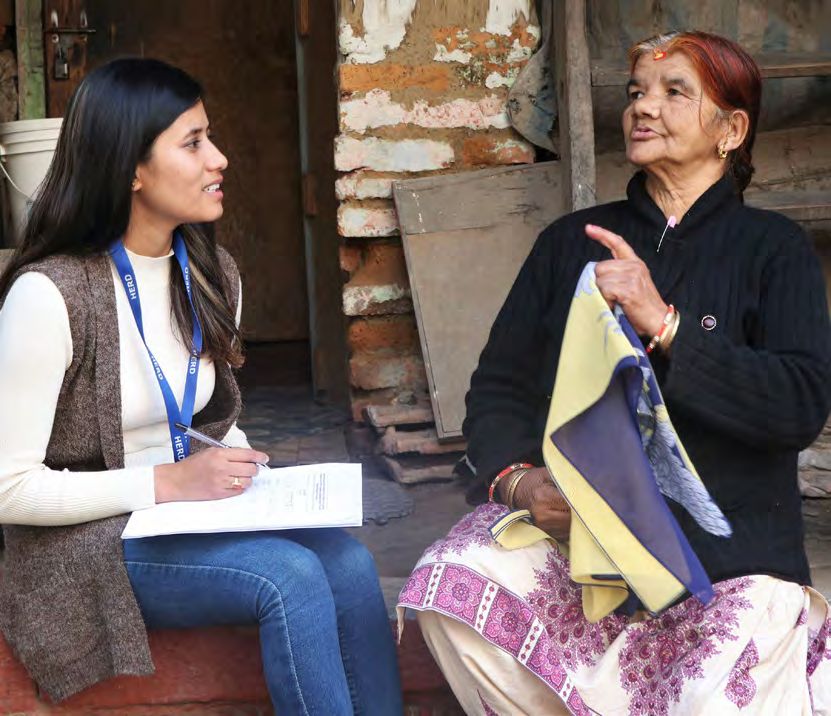
TDR Global
WATCH VIDEO
https://bit.ly/3re30KH
For over 40 years, TDR has been working hard at tapestry transforms into a colourful picture or
fighting infectious diseases of poverty, engaging beautiful design with intricate details.
researchers and experts from all over the world
in its efforts. Each individual brings unique TDR Global is exceptional in the same way as
knowledge, and together they make up a vibrant the colourful patterns on a tapestry because we
scientific community called TDR Global. are a combination of many unique individuals.
Each member has their own expertise, culture,
TDR Global is committed to driving and and background, creating a bigger, more
encouraging mentoring of young scientists and powerful picture. Despite the complexity of the
fostering research collaborations. bigger picture, it connects us all in our shared
field of interest.
However, you may wonder:
We connect expert mentors with young
How can such a
scientists, local research communities with
global and regional networks, and a shared,
diverse group of people golden thread holds all of this together:
form a community? A commitment to fight
Picture a single tapestry thread that can be
woven into many rows. Naturally, this single
diseases of poverty
thread has its limitations as it cannot create through research and
pictures or patterns on its own. If you add more
threads, carefully weaving the thin fibres, the innovation.
INTRODUCTION TO TDR GLOBAL 1
Meet some of the brilliant
women woven into our tapestry
The TDR Global tapestry consists of many            Confident, strong women on their way to
unique individuals working in the research and      greatness.
science field—intelligent, courageous individuals
with a thirst to join our fight against diseases    On the following pages, you will share in their
of poverty. One such thread in our tapestry         journeys, challenges, and opportunities. You
belongs to our women scientists—adding their        will read about the power of mentorship and
unique expertise, culture, and backgrounds to       learn how these remarkable scientists navigated
enrich the bigger picture.                          motherhood, marriage, cultural responsibilities,
                                                    and their careers.
We created a collection of inspiring stories to
showcase the incredible work of a range of          By reading how they bravely overcame
women scientists. The vision of this TDR Global     obstacles in our shared fight against diseases of
compendium is to motivate those working in the      poverty, you will see how women are continually
field by sharing success stories of these women     adding to their fields of research and the
in research.                                        immense strides they have taken to help achieve
                                                    TDR’s vision.
It all started a few years ago when TDR
interviewed a group of women scientists we          We believe that these women’s stories have a
have supported at some point in their careers to    rightful place in the history of scientific research.
track their progress and careers since. With this
compendium, we decided to go one step further
and re-interviewed the women from the original
group of interviewees to get in-depth knowledge
of their one-of-a-kind journeys as women in
science. These scientists come from several
locations—Colombia, Ghana, Kenya, Malawi,
Mali, Morocco, Myanmar, Nigeria, Pakistan,
Philippines, Somalia, South Africa, Sudan,
Swaziland (Eswatini), Uganda, and the United
Kingdom of Great Britain and Northern Ireland,
to name a few.

Each woman featured in the compendium
has her own unique story to tell. None of their
paths were without its challenges, but it is how
they reacted, embraced, and overcame these
pressures that impressed us.

“By telling these stories, we are celebrating
TDR Global’s unique women scientists, their
incredible achievements, and the impact they
have made in their communities as well as in
their scientific fields—sometimes in
astonishing and unplanned ways.”

2                                                            WOMEN IN SCIENCE: A STORYTELLING SHOWCASE
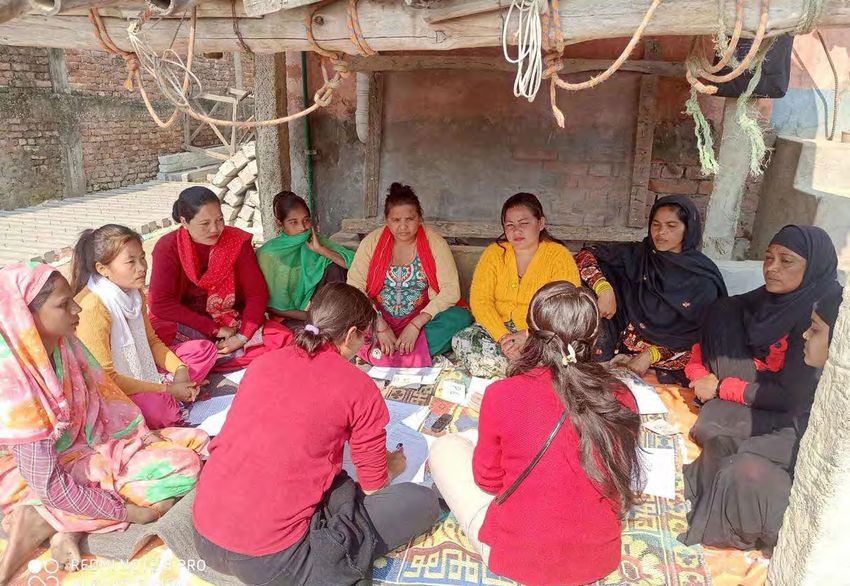
Photo credit: HERD International (Nepal)

       “TDR GLOBAL IS ABOUT YOU;
            IT IS ABOUT US.”
                                 BEATRICE HALPAAP
     TDR Programme Innovation and Management, Unit Head. TDR Global Initiative Lead.

  First and foremost, TDR Global aims to support
  its community of scientists and experts — the
  very people at the helm of fighting infectious
  diseases of poverty.
  We are here to nurture, guide, and encourage our experts to learn and share their knowledge
  continuously. Young scientists should have the opportunity to work side-by-side with the best
  in the industry, and the research sector benefits from collaboration among scientists.

  We’re grateful to see that we’re well en route to achieving that vision of supporting our
  scientific community.

 INTRODUCTION TO THE COMPENDIUM                                                                   3
Here are some direct quotes from our women
in science about their relationship with TDR
and the TDR Global community:
“There is something to be learnt scientific results about a previously
and shared at every stage of unknown role of Natural Killer
personal development. And TDR (NK) Cells in the control of
showed me that.” leishmaniasis. The grant was vital.”
“TDR’s support enabled me to “I became the kind of medical
focus on my passion — building anthropologist I am in part because
the capacity of early career of TDR. I was on a steep learning
researchers to conduct clinical curve to be able to add value to
research through structured TDR.”
training programmes in
collaboration with academia and
industry partners.”
“We established a national network “It was a special kind of
of health research for women in experience. It felt like a family. I felt
Malawi, called Women in Infectious connected, I had the opportunity
Disease and Health Research in to meet other scientists from
Malawi (WIIDREM). The TDR grant other countries, and TDR tracked
helped me to form this group.” our progress. TDR’s support and
collaboration meant and continues
“The fellowship opened many to mean a lot to me.”
opportunities, and the networking
proved very instrumental. We now
even have a Facebook page for “Through TDR, I have been able to
doctors who are moms in Kenya.” meet other mentors who have
“The TDR grant allowed me to helped me get where I am.”
obtain some of my most pivotal
4 WOMEN IN SCIENCE: A STORYTELLING SHOWCASEhttps://bit.ly/3qyIdRK
PROFESSOR
PASCALE
ALLOTEY
“Being an African woman in
research at a time of growing
awareness of the issues propelled me
into spaces I would not have otherwise
TDR’S M
G A
IN
expected to reach.” 23
N
N
DA
CHAMPIO
TE FOR
YEARS
With a background as a midwife and nurse,
Professor Pascale Allotey quickly recognized
gender inequalities in her line of work and
embraced the opportunities given to her to focus
on gender research. As a Ghanaian, the cultural “It was an advantage at the
values and traditional gender roles proved to be time that there weren’t that
challenging, especially from senior women in
the family, who had other expectations for her. many African researchers
Professor Allotey remembers comments like:
“What’s all this education nonsense? Get on with
who also focused on
getting married and having kids sooner, rather gender.”
than later.”
Overcoming discrimination.
Working in Ghana was, at times, also a frustrating
experience, particularly in the health area. Professor Allotey has experienced first-hand
Hierarchies intersect both with gender and in the discrimination associated with gender and,
the health professions. Firstly, because she was interestingly, age as well. Early on in her career,
a woman and secondly, she was not a medical she looked a lot younger than her real age, and it
doctor to gain legitimacy in the field. However, made it more challenging to be taken seriously as a
Professor Allotey was one of the few researchers to woman, a researcher, and an academic. She recalls
pursue a research career, and with her background a specific incident while in her thirties when she
in nursing, knowledge of research, and combination was invited to do her very first keynote address at a
of epidemiology and anthropology, she was able to tropical medicine conference.
carve out a niche area of expertise.
PROFILES 5She was still breastfeeding and travelling with her
son at that time. Determined to be taken seriously,
“It’s a good ongoing
she decided she had to look a bit older and went relationship with TDR. It’s
to the local store for a professional make-over.
like having an aunt you can
“Afterwards, I walked out towards the tube station, call on when you need her.
and this old lady came up to me and said, ‘Shame
on you, teenage mom with her baby!’ Alas, the She’s not with you all the
make-up was a wasted effort.” time, but she’s available if
Later in her career, while working and living in Asia you need her.”
where the gender dynamics are quite strong, she
had to learn to negotiate the role of the messenger Know what you want and pursue it
in dissemination and delivery of ideas. wholeheartedly.
“If I wanted to make an impact, I had to remember Her advice to young women is to be genuinely
that the same message coming from me as a comfortable within themselves and know what
woman, and as an African woman, was not as they want. Very often, women end up having
impactful as when it was delivered by a male regrets about what they did and did not do.
colleague. I learned to be comfortable with that.
I have no desperate desire to be in the limelight.” “A lot of the gender roles and pressures come from
women as well as the rest of society. Make your
Joining hands with TDR. choice, deal with your decision and make sure
you’re comfortable with it and run with it – manage
Professor Allotey’s first interaction with TDR was your success.”
during the data collection phase for her PhD
thesis. She was working on a study exploring During her career, Professor Allotey remained
tropical diseases during pregnancy. very clear about her goals and made a conscious
decision that she would not take on any
opportunities if she doesn’t feel she can contribute
“It was just serendipitous. to it. She was not interested in taking up leadership
TDR was beginning to positions early on in her career. However, she was
sober-minded about how leadership works and the
introduce social sciences dynamics of power distribution.
research into the tropical
“Understanding leadership is about being able to
diseases programme, so assess what is going on, the dynamics of change.
they invited me to join the You don’t have to fit into a specific personality type
to be a leader.”
gender task force.”
She advises young women to learn the art of
The opportunity to serve on various TDR reading a room in order to become leaders of
committees as a technical advisor has been change. Take note of the decision makers and the
a real privilege, enabling her to contribute subtle power dynamics within the room.
while also learning about policy formulation,
political processes, and political prioritization. “Take your time to become an intelligent listener
Another benefit of the relationship with TDR is and observer to understand what is happening.
the opportunity to co-develop capacity training Some of it will be about race, power, or gender
programmes with colleagues from low- and dynamics. Be clear about what you want from that
middle-income countries, and Professor Allotey is interaction. Learn from it and use it to make the
still serving on TDR advisory groups. change that is needed.”
6 WOMEN IN SCIENCE: A STORYTELLING SHOWCASECareer Highlights
1984 – 1993 Community-based public health nurse and midwife
1992 Master of Public Health degree at the University of Western Australia
1996 PhD in Public Health at the University of Western Australia
1994 – 1997 Joined TDR’s Task Force on Gender and Tropical Diseases
2004 – 2009 Professor of Race, Diversity and Professional Practice at Brunel University London
2017 – 2018 Co-Chair of the Gender and Rights Advisory Panel of HRP, the WHO-based
Special Programme of Research, Development and Research Training in Human
Reproduction
2006 – 2011 Member of TDR’s Scientific and Technical Advisory Committee (STAC)
2009 – 2017 Professor of Global Health, Monash University Malaysia
1987 – 1989 Ran workshops for academic staff on supervision of higher degree research at the
University of Ghana
2019 Developed the massive open online course (MOOC) on implementation research
with TDR
2017 – present Director of the United Nations University – International Institute for Global Health,
hosted by the Malaysian Government
2016 – 2020 Member of the TDR Intervention and Implementation Research Scientific
Working Group
PROFILES 7https://bit.ly/3rhIXen
PROFESSOR
UCHE
AMAZIGO
“I love listening to rural people and
engaging in dialogue with them.
It opened up my specific avenue of
TDR’S M
research work.”
G A
IN
43
N
N
DA
CHAMPIO
TE FOR
YEARS
Professor Uche Amazigo recalls how she drove
her car to a remote village in Nigeria to meet with “I had taken some photographs of a young
local women and adolescents who suffered from girl with disfiguring and ugly skin lesions and
severe skin lesions, and how her vehicle would unrelenting itching. Upon receiving the pictures,
break down in remote areas at night. She had TDR advised me to focus on onchocerciasis. They
to wait for her husband to help her—once in the guided me and awarded research funds. With
middle of a forest. This scenario was just but one their guidance and great support in science, I
challenge she had to face during that time, and her invited a social scientist, Dr Dan Obikeze, and we
determination and passion for assisting women conducted a multi-disciplinary research.”
with onchocerciasis (river blindness) never faltered
as she remained focused on her vision. A hands-on approach to conducting research.
Her work on onchocerciasis skin disease with its The rural women allowed Professor Amazigo
unrelenting itching began in 1990 while visiting to join their local women’s meetings where
health centres in Etteh, south-east Nigeria to they shared their intimate stories about the
discuss proper nutrition and health advice with skin disease, which was a common occurrence
local women and adolescents. While she was amongst the locals.
initially interested in schistosomiasis, TDR’s
Director, Dr Tore Godal, and social scientist, Dr “They exposed their skin to me and shared how
Carlo Vlassoff, advised her to rather submit a the itchy rashes and infections would affect their
proposal on the river blindness disease. marriages and the impact it had on breastfeeding.
That’s how I came up with the pioneering research.”
8 WOMEN IN SCIENCE: A STORYTELLING SHOWCASEAfter Professor Amazigo finished her research programme they benefit from is priceless.”
report, she submitted it to a journal which, By remaining focused on her passion and listening
unfortunately, rejected it. Depressed but not to the adolescents and women themselves—not
deterred, she resubmitted it for publication and other scientists, researchers, or health experts—
wrote her next paper focusing on the detrimental Professor Amazigo was able to collect rich,
effects onchocercal skin disease and itching have invaluable primary research data that allowed
on breastfeeding and marriage. the people’s voices to be heard. It led to the
empowerment of community members, where they
Her research approach created a lot of designed a programme to address their health
opportunities for her. TDR even produced a needs themselves.
documentary on her research project, which was
shown at WHO’s World Health Assembly in 1992. Using her remarkable passion, Professor Amazigo
played an extensive role in the global repositioning
“All of that happened of river blindless, from prevention and control, to
elimination.
because I listened to women,
Acknowledging those in support of your cause.
and I followed my heart.”
Professor Amazigo’s rewarding 42-year affiliation
Community-driven solutions. with TDR has made many things possible in
a health area affecting a lot of women and
Even after Professor Amazigo completed her adolescents in rural parts of sub-Saharan Africa.
research on the effect the onchocercal skin disease TDR’s funding, guidance, networking and training
had on women and adolescent girls, she kept on social sciences and anthropology, proved
going back for several years to determine the social instrumental throughout her career.
consequences of the skin disfigurement.
“I learnt things that were extremely vital for me later “I remember a presentation
in life when I became the director of the African
Programme for Onchocerciasis Control (APOC).
I made to the TDR board in
The WHO, World Bank, UNDP, donor countries, 2011, and I showed a number
and nongovernmental development organizations
(NGDO) led by The Carter Center, launched APOC,
of the African women that
and TDR acted as the research arm. It was my TDR assisted and the impact
responsibility as the scientist to APOC to defend
the community-driven approach at meetings which they have made. It was all
included board meetings, technical meetings, and because of the research
global meetings with donors.”
background and the support
The first-hand knowledge she had gained by
listening to women in rural communities at
we received from TDR.”
meetings enabled her to contribute significantly to
TDR helped groom Professor Amazigo into the
the design of the community-directed treatment
incredible scientist she is today and played a big
programme.
role in her professional journey.
“There is inestimable value in asking the community
Her esteemed career includes many highlights
to be key stakeholders and to contribute to the
such as delivering high-level presentations in Oslo
design of the delivery system. I always used this
and other cities around the world, making a film
as a compass to ensure that I was on the right
for the World Health Assembly, and receiving the
path, despite the difficulties I faced. The benefit
prestigious Prince Mahidol Award in Public Health
of listening to the community in designing any
in 2012.
PROFILES 9Practical tips towards achieving your vision and assisting
the vulnerable.
Any researcher, young or old, can learn a lot from Professor Amazigo’s approach to advancing your
career while making a difference in the community. She shares some of her tips.
1. Perseverance. Have a clear vision and remain focused on it. “Design a programme in your mind and
heart; a problem or challenge you are very much attached to and that you would like to deal with.”
2. Engage in research that improves human lives, especially the vulnerable and poor. When you
have found a health topic that speaks to you, ask those difficult questions, and have a mentor to
support and guide your passion. “As an individual, you find that the little bit of research you did that
could help to transform lives, is the work you’ll be most proud of, and pleased with.”
3. Don’t interpret every negative response or attitude from anyone as an attack on you because
you’re a woman. Follow step one again – persevere, remain focused on your vision, and don’t be
discouraged. “My PhD supervisor used to tell me: ‘Do not waste your energy on negative things’. We
must look towards finding solutions instead of focusing on our problems.”
“Hearing others’ stories are far more enriching than some of the academic work we do.”
Career Highlights
1977 PhD in Biology and Medical Parasitology at the University of Vienna, Austria
1978 TDR fellowship for post-doctoral studies at the University of Bonn, Bernhard-
Nocht Institute of Tropical Medicine, Hamburg and Institute of Virology, Essen,
Germany; earned Diploma in Tropical Medicine & Parasitology
1978 – 1996 Lecturer and Senior Lecturer, Department of Zoology and Parasitology,
University of Nigeria, Nsukka, Nigeria
1990 TDR Research grant to study the effects of onchocercal (River blindness) skin
disease on adolescent girls
1990 – 1991 Pioneered research on the social consequences of onchocercal skin disease
on adolescent girls and women in Nigeria. This groundbreaking research was
instrumental to the expansion of River blindness control to additional 19
countries in sub-Saharan Africa
1991 – 1992 Takemi Fellow in International Health, Harvard School of Public Health, Boston,
USA
1993 – 2005 Served on numerous TDR committees including Onchocerciasis and lymphatic
Filariasis Operational Research Task Force
1996 – 2001 First scientist to World Health Organization African Programme for
Onchocerciasis Control (WHO/APOC), Ouagadougou, Burkina Faso
10 WOMEN IN SCIENCE: A STORYTELLING SHOWCASE1996 – 2005 I played a key role in the development and scaling up of community-
directed treatment with ivermectin (CDTI) strategy, adopted for
distribution of medicines to eliminate neglected tropical diseases (NTD);
and TDR research on community-directed interventions (CDI)
2001 – 2005 Chief, Sustainable Drug Distribution Unit, WHO/APOC
Mentored and trained health workers on CDTI strategy in 19 APOC countries
2005 – 2011 Director WHO/APOC, Ouagadougou, Burkina Faso. Retired from WHO in 2011
2009 Instrumental to repositioning WHO/ APOC from a control to an elimination
Programme
Honorary Fellow of the Royal Society of Tropical Medicine and Hygiene, UK
2012 Won the prestigious Prince Mahidol Award in Public Health, Thailand
2012 – present Trustee and Advisor to foundations and international agencies including
Sightsavers UK, TY Danjuma Foundation, Nigeria and Merck for Mothers
Global Advisory Board on Maternal Mortality, USA
2013 Honorary Doctor of Science (honoris causa) degree from the University of
KwaZulu-Natal in South Africa
2013 – present Founder and CEO, Pan-African Community Initiative on Education & Health
(PACIEH), Nigeria. Developed a community-managed school health and
nutrition programme
2014 Professor of Medical Parasitology and Public Health (adjunct) in the
department of Parasitology and Entomology, Nnamdi Azikiwe University, Awka,
Nigeria
2015 Elected Fellow of the Nigerian Academy of Science
2016 – present Serves on the TDR Advisory Committee on Social Innovation in Health Initiative
(SIHI)
2017 – present Member of Advisory Board, University of Ibadan Research Foundation (UIRF),
Nigeria
2018 Recipient of Hallmark of Labour Award, Nigeria for outstanding contribution in
Medical Sciences
2021 Member, National COVID-19 Coordinating Committee
PROFILES 11https://bit.ly/3e8YEkf
DR CLARA ATIENO
AGUTU
“It takes a village. Don’t feel
bad when you have to rely on
other people to achieve what
you want to.”
Dr Clara Agutu is a natural-born leader and her careful consideration, Dr Agutu accepted the
colleagues at KEMRI Wellcome Trust Research TDR fellowship and her daughter travelled to
Programme (KWTRP) in Kilifi, Kenya, where Belgium with the best travel companion, her
she worked as a coordinator and trial manager mother. Although her mother only had a 3-month
for the REALITY trial from 2013 to 2015, urged visa and had to travel back to Kenya to re-apply,
her to apply for the TDR Clinical Research and the assistance and support were life-changing.
Development Fellowship. She was awarded Despite all the sacrifices, financially and at
the TDR fellowship at GlaxoSmithKline (GSK) home, Dr Agutu is convinced that it contributed
in Belgium, which proved to be a catalyst for towards the greater good.
her career by providing her with a platform
to gain knowledge on the complete process “It was the right decision for me, career-wise.
of conducting clinical trials. Armed with this The fellowship opened many opportunities, and
experience and hands-on mastery, she went the networking proved very instrumental. We
back to her home country where she currently now even have a Facebook page for doctors
works on clinical and vaccine trials. who are moms in Kenya to provide support and
encouragement to moms considering abroad
Strike while the iron is hot. placements.”
Although Dr Agutu took advantage of the TDR Diversify your skills and build a better career.
fellowship when it came across her path, it was
by no means an easy decision, especially with TDR opened up plenty of golden opportunities
a 6-month-old baby and partner at home. After for Dr Agutu. From budgeting and understanding
12 WOMEN IN SCIENCE: A STORYTELLING SHOWCASEmulticountry perspectives, internal structures, regular basis; they were very hands-on about
approval processes, and expected timelines, the the process, and I loved my placement.
fellowship allowed Dr Agutu to see, understand, I understood what the process would be going
and implement the entire vaccine development into this fellowship, and that helped a lot.”
process. With the unique network at her disposal,
she realized that it could provide an entirely new Weighing the pros and cons to make better
branch of intelligence and know-how. decisions.
She met with people from different areas, asked Dr Agutu shares some advice on making hard
questions, and formulated a rich understanding decisions: First, weigh up all the factors. What
of how clinical trials are conducted holistically. are the things you will be risking? Secondly,
if you have children, how old are they and do
“I spoke to people in pre-clinical studies, you have a good support network to step in
toxicology, safety, marketing, and even and help? If you do have a healthy support
the regulatory department. Working in the system, strike while the iron is hot and take
developing world, I understand the process and the opportunities that present itself. Finally,
the chain; it’s of immense value to me now. I remember that all of your hard work will better
would never have that understanding without your family’s future too.
the support from TDR.”
“Your decisions affect your family and their well-
The support from the TDR and GSK teams was being. What you decide will also teach your
a welcome comfort for Dr Agutu. She says her children: you can be independent, you won’t
“fantastic supervisor” Dr Opokua Ofori-Anyinam, hold back, and you can advance your career.”
was like a second mom, showing her around in
Belgium and introducing her to people. “Your journey is not isolated, you have to lean
on others, and your success will be everyone’s
“The TDR team communicated with me on a success.”
Career Highlights
2004 – 2009 Bachelor of Medicine and Surgery (MBChB) at the University of Nairobi, Kenya
2010 – 2011 Medical Internship at Kenyatta National Referral Hospital, Nairobi, Kenya
2011 – 2012 Master’s degree in Public Health (MPH) at the University of Nottingham in the
United Kingdom of Great Britain and Northern Ireland
2013 – 2015 Trial coordinator and physician for a multi-centre HIV trial called REALITY
(http://www.controlledtrials.com/ISRCTN43622374)
2016 TDR Clinical Research and Development Fellowship at GlaxoSmithKline in
Belgium
2017 TDR Re-Integration Grant
2017 – 2021 PhD Fellow (Clinical Epidemiology and Public Health) hosted at KEMRI Wellcome
Trust Research Programme, Kilifi, Kenya funded by a competitive award from
Sub-Saharan African Network for TB/HIV research Excellence (SANTHE)
Co-Investigator, study coordinator and clinician in a number of clinical and
vaccine trials such as Tambua Mapema Plus Study; an HIV testing intervention
trial (ClinicalTrials.gov Identifier: NCT03508908), HIV CORE 006; an HIV vaccine
trial (ClinicalTrials.gov Identifier: NCT04553016) and the CopCov Trial; a
randomised, placebo-controlled prophylaxis trial for COVID-19 prevention
(ClinicalTrials.gov Identifier: NCT04303507)
PROFILES 13https://bit.ly/37sz9pL
PROFESSOR
JACQUELINE AZUMI
BADAKI
“Being a woman and having
to juggle family responsibilities
with your career should not be a reason not
to advance progressively in one’s career.”
After becoming an Associate professor at the research implementation and management of large
Federal University Lokoja (FUL), Professor multidisciplinary teams. These projects provided
Jackie Badaki of Nigeria watched as younger opportunities for multidisciplinary proposal
colleagues struggled just as she had to balance development and data analysis workshops in
the demands of family and career. Now, she is different socio-cultural settings.
actively mentoring other women academics, and
her passion for mentorship went even further “The exposure I got from these grant projects not
when she established a training and mentorship only sharpened my skills in proposal development
consultation for all individuals in science, and analytical skills, but also built my self-
regardless of their gender. Professor Badaki confidence. Besides personal growth, I also got to
received four TDR grants where she worked as experience other cultures aside from mine.”
co-investigator. Later in 2014, she was awarded a
TDR grant as the principal investigator. Professor Badaki led several teams while working
as the principal investigator for a study that
“A lot of opportunities presented itself, especially evaluated the UK Department for International
after the 2014 TDR grant, where I was the principal Development (DFID)-funded projects on neglected
investigator.” tropical diseases (NTD) in parts of northern Nigeria.
She was also invited as an expert panel member
When opportunity knocks. at the German-African Cooperation Projects in
Infectiology Conference in 2017.
Her formative years working as co-investigator
on TDR grants molded Professor Badaki into the “There were lots of opportunities after the TDR
scientist she is today with hands-on training in grant. But there have also been challenges,
14 WOMEN IN SCIENCE: A STORYTELLING SHOWCASEespecially living in a very chauvinistic society, who will also help you make fewer mistakes.
but I was able to successfully hold my own, even “Women scientists in Nigeria – we can’t run
though it might’ve come across as arrogant.” away from our family responsibilities. But
She has been consulting for international maternity leave affects employment, and we
developmental agencies focused on control of want institutions to take this into account – to
neglected tropical diseases and rural health for appreciate the many challenges women face.
more than a decade as a trainer and project Also, you need measurable and very realistic
evaluator. Professor Badaki has trained more career goals to work with and, of course, be
than 300 lymphoedema patients and 500 health prepared to be mentored.” Professor Badaki’s
workers across northern Nigeria in lymphoedema passion and belief in mentorship are evident from
management procedures. She has been the lead her mentee beneficiaries: “Professor Badaki’s
consultant for Sightsavers International in the insights on academic and work career have been
independent evaluation of its NTD programme for very beneficial. She has helped me to develop
five years (2014 – 2018). and improve my personal and professional
skills beyond what involvement in universitçy
No gain without pain. life could offer me. Engaging in the mentoring
relationship has not only enabled me to meet a
Professor Badaki was realistic about the sacrifices teacher, someone who I have learnt greatly from
she had to make to arrive where she is today. She professionally, but also a life-long friend.”
worked hard to succeed and is a firm believer - Helen Edogbanya, Nigeria
that women can advance in their careers while
juggling family responsibilities. Her advice is to get “Challenges are part of living and are necessary to
a mentor you can relate to on all levels, a mentor know who we are.”
Career Highlights
2000 Principal Investigator, WHO/APOC Operations Research on “Assessment of patterns
of participation of women in purdah in CDTI activities”
2001 Co-Investigator, Community Self-Management of Adenolymphangitis and
Lymphoedema in North-Eastern Nigeria.
2003 – 2006 Co-Investigator, Application of Community-directed Interventions (CDI) to health
problems in North-Eastern Nigeria
2008 Co-Investigator, Role of Rapid Diagnostic Tests for Malaria at Community Level
Management of Under-Five Febrile Illnesses in North-Eastern Nigeria.
2008 Support Consultant, to the Ministry of Higher Education, Sudan. Trained over 30
senior academic staff on grant wining proposal development.
2014 – 2015 Principal Investigator, Development of a Culturally Friendly and Sustainable
Research Career Initiative for Women Scientists from Diverse Settings in Nigeria.
2016 Lead Consultant, PATHS2, an affiliate of DFID, UK. Responsible for operational
research related to public-private partnership initiatives within Nigeria
2017 Expert Panel member at the German-African Projects in Infectiology Conference.
Hamburg Germany.
2018 Professor at Federal University Lokoja, Kogi State. Nigeria.
2019 Actively participated in the development of National Guidelines for Lymphatic
Filariasis Morbidity Management and Disability Prevention in Nigeria.
2020 Member, University Council, Federal University Lokoja, Nigeria
PROFILES 15https://bit.ly/385yBqg
DR RAZIA
FATIMA
“Motivation, dedication,
and setting high goals are
essential success factors for
women in research.”
Currently Chief of Research at the Common Unit to Enarson and Professor Anthony Harries.”
manage tuberculosis (TB), AIDS and malaria under
the Federal Ministry of Health of Pakistan, Dr Razia Enthusiastic about the potential impact of the
Fatima started her career in 2001 at a rural health course, Dr Fatima decided to launch the SORT IT
centre in the remote Rawalpindi District. capacity-building initiative in her home country in
2016.
Six years later in 2008, after completing her
master’s degree in London with WHO support, Fall seven times. Stand up eight.
she was part of the country’s National TB Control
Programme – the starting point of an impactful It was a challenging experience for Dr Fatima
career in research. Dr Fatima reached a tipping to bring the highly prized SORT IT initiative to
point in her career in 2009 when she attended an Pakistan; potential stakeholders were not very
operational research course supported by TDR receptive to this idea initially, and funding was
called SORT IT (Structured Operational Research slow to stream in.
and Training IniTiative).
“It was challenging. After a series of meetings
“Unfortunately, generally speaking, being a within the country and continuous support from
woman in research was not quite welcomed in the my host of mentors, I was finally able to launch
male-dominated culture in my country. But I was the same SORT IT course in Pakistan from 2016
blessed to attend SORT IT, where I received lots of onwards, through a small grant scheme by TDR
encouragement from my mentors Professor Donald and Global Fund co-financing.”
16 WOMEN IN SCIENCE: A STORYTELLING SHOWCASETDR’s support was an important catalyst to the “I am currently part of 50-plus international
success of SORT IT in Pakistan. The operational research papers in international journals, and
research-focused initiative brought about positive many brought about positive policy changes for
change with more women showing their interest my country.”
to join Dr Fatima’s capable team of trained
researchers. Research financing remains a Never give up.
significant bottleneck – a much-needed resource
to onboard more talented researchers to continue Dr Fatima’s passion for positive change is seen
the fight against TB and other diseases of public through all the work she is doing in Pakistan.
health importance. A phrase uttered by her old mentor, Dr Khalife
Bile Mohammad, in 2008 while she was
TDR’s involvement – the spark to ignite change. completing her master’s degree through a WHO
fellowship at the London School of Hygiene &
The SORT IT initiative trained more than 50 Tropical Medicine, served as constant reminder
researchers in Pakistan, of which 40% were throughout her journey:
women. Dr Fatima mainly focused on Pakistan’s
missing TB cases, collaborating with private “You can never cross the ocean unless you have
providers to expand networks and, ultimately, the courage to lose sight of the shore.”
minimise under-reporting. She’s a visionary in TB
control and has published numerous research
papers either as principal or co-author.
“Don’t feel alone in your
ideas to bring about
She presented her success story to the TDR Joint
Coordinating Board in 2018, and a feature story change. Be strong, and one
in TDR News helped her to advocate her research day you will bring
vision for Pakistan.
the change.”
Career Highlights
2001 Medical degree from Pakistan
2002 – 2008 Women Medical officer in a remote Basic health unit
2008 Joined National TB Control Program Pakistan
2008 Masters in Science in Epidemiology from London School of Hygiene and Tropical
Medicine
2009 Master of Public Health degree from Pakistan
2015 Doctoral degree in Public Health from University of Bergen, Norway
2016 ongoing Led and organized SORT IT courses in Pakistan
2017 Promoted to Chief research position The common Unit to manage TB, AIDS
and Malaria
PROFILES 17https://bit.ly/381zu38
PROFESSOR
MARGARET
GYAPONG
“Don’t expect any special
treatment because you’re
a woman.”
TDR’S M
G A
IN
23
N
N
DA
CHAMPIO
TE FOR
YEARS
When Dr Margaret Gyapong accepted the task
to head the Dodowa Health Research Centre in
Ghana, she made a conscious decision to lead seen as its heroine. She was recognized for her
the institution and its team by example, leaving achievements with the Heroine of Health Award
a legacy of an internationally acclaimed centre conferred by General Electric Healthcare and
that conducts research at the highest level. Back Women in Global Health, which she received at the
then in 2005, there were three research centres World Health Assembly in Geneva.
in Ghana. Two of the centres, led by men, were
well-established in the research field and enjoyed Be the architect of your own destiny.
international recognition. With a fire in her belly and
determination to exclude situations where non- The late Dr Sam Adjei had a lasting impact on Dr
performance might rear its head, Dr Gyapong made Gyapong’s career. He was her boss whilst working
her mark as the first woman to lead a research at the Health Research Unit of the Ghana Health
centre in the Ghana Health Service. Walking into Service from 1995 to 2000 after which another
the three-room office, her team consisted of an director took over for the remaining 5 years Dr
accountant, four research assistants and two other Gyapong worked at the Health Research Unit of
women with bachelor’s degrees. the Ghana Health Service (later to become the
Research and Development Division of the Ghana
“Twelve years later, I left the institution when I had Health Service), but more than that, he was a
achieved my goal of transforming the place into a leader who believed in women.
centre of excellence to the best of my ability.”
Today, the centre is highly regarded globally for The workplace environment he created
implementation research, and Dr Gyapong is encouraged his staff, of which 80% were women,
18 WOMEN IN SCIENCE: A STORYTELLING SHOWCASEto work hard and to enjoy it. Despite this, Dr and committees. The funding was also consistent,
Gyapong doesn’t recall any preferential treatment provided that TDR had confidence in you.
or opportunities as a woman in research.
“The proposal enhancement workshops that
“Of course, there were calls for proposals that helped young scientists further develop their
particularly encouraged women to apply. However, proposals, and the mentorship were exceptional.”
I am sure I got those grants not because I was Tips for an approach that works for you and not
a woman but because the proposals were against you. As for most women who work in
technically sound.” science and research, motherhood remains a
significant challenge.
Support and collaboration to stand the test of
time. “I had a lot of family support, but if I had to do it
all over again, I would strategize better to spend
Dr Gyapong received two research capacity- just a little more time with my young children.”
building grants from TDR in the 1990s to pursue
her master’s degree and PhD. “It was a special kind Dr Gyapong shares her top three tips on balancing
of experience. It felt like a family. I felt connected, it all while pursuing excellence in your career:
I had the opportunity to meet scientists from other
countries, and TDR tracked our progress. TDR’s 1. Don’t expect any special treatment because
support and collaboration meant and continue to you’re a woman.
mean a lot to me.” 2. Work hard, pursue excellence, and have high
standards in all that you do.
Something Dr Gyapong will never forget is the fact 3. Don’t put your whole life on hold for marriage
that TDR had a special interest in all its grantees, and children; pick up and move on.
with regular follow-ups on each of them. The
institution also engaged its trainees on task forces And, remember: “Quitters never win.”
Career Highlights
2006 Adjunct Professor of International Global Health Georgetown University
2005 – 2016 Director, Dodowa Health Research Centre, Ghana Health Service
2011 Member Scientific Advisory Group WHO/Implementation Research
2014 – 2017 Ghana Social Science Lead COUNTDOWN Consortium
2016 Chair EDCTP Implementation Research Review Group
2017 Member Swiss TPH External Review Board
2017 – 2018 Full Professor and Director Centre for Health Policy and implementation research.
Instrumental in having the centre classified WHO/TDR Satellite training Centre
for Implementation Research
2017 Heroine of Health Award for drawing attention to the needs of women suffering
from the consequences of Neglected Tropical Diseases
2018 Co Authored 4 chapters of the WHO/TDR implementation Research Toolkit
2018 WHO/NTD Scientific Technical and Advisory Group
2019 Director Institute of Health Research University of Health and Allied Sciences
2019 WHO/AFRO Advisory Committee on Health Research and Development
2021 Member Board of Trustees. Royal Commonwealth Society for the blind
(Sight Savers)
PROFILES 19https://bit.ly/3pwVXes
DR ATUPELE
KAPITO-TEMBO
“We need to help each other,
and other women in the field.
By sticking together and empowering
others irrespective of what level you’re
on, we can rise together.”
Dr Atupele Kapito-Tembo is a medical doctor This much-needed networking platform
and deputy director of the MAC-Communicable encourages interaction and allows women to
Diseases Action Centre at the University of identify specific challenges affecting their
Malawi College of Medicine. As a leader and advancement in health research and find locally
key implementation researcher supporting feasible solutions.
immunization services in Malawi, she directly
assists the Ministry of Health in the fight against Furthermore, they find solutions for shared
infectious diseases. health issues affecting Malawians. It also
provides a valuable connection point for young
It’s her passion to not only use her strong aspiring women interested in research.
leadership skills to support research and health
programmes, but also to inspire, mentor, and Women across Malawi from a broad variety
support other young women through the wider of institutions are members of WIDREM. The
national women research network she has network created invaluable connections for
established. Dr Kapito-Tembo, including the opportunity
to attend a workshop by a German research
“We established a national network of health foundation to advance WIDREM network, share
research for women in Malawi, called Women experiences, and build new collaborations.
in Infectious Disease and Health Research in
Malawi (WIDREM). The TDR grant helped me to Events like these offer promising platforms
form this network. It’s all about allowing other where Dr Kapito-Tembo can share her passion
women and young researchers in the health field for supporting women working in science.
to flourish.”
20 WOMEN IN SCIENCE: A STORYTELLING SHOWCASEDuring her studies, there were only men as has mostly been seen as a man’s world which
mentors; but now a new era of women mentors propelled her to work even harder and to take
has dawned. on opportunities – even if it meant creating
something by herself.
Creating a platform for change.
Culturally, there is an expectation that she must
Dr Kapito-Tembo knows first-hand that women wear many hats; a balancing act she handles
researchers in Malawi have a great need with grace.
for fellow women mentors who experience
the same societal pressures and cultural “Apart from the nuclear family, we also have
expectations. In her case, she did not have an extended family culture in Malawi, and
this support and guidance from other women being a medical doctor, there is an expectation
mentors whom she could relate to on a cultural that one should take care of community and
level. extended family members including the sick. It’s
a cultural expectation, and together with other
Now, she’s adamant about nurturing the community responsibilities, it becomes a lot
WIDREM network for women to grow and more challenging to be a woman researcher in
advance their careers despite all the challenges. our Malawian context.”
Determination to challenge the status quo. Her commitment to family responsibilities and
her drive to establish herself as an independent
As a woman in science and research, Dr Kapito- researcher who supports health programmes
Tembo is determined to be independent and makes her a real example for any woman
to create her own niche. In Malawi, research practising or interested in research.
Career Highlights
Medical doctor
District Health Officer for Blantyre in Malawi
Masters and PhD in Public Health and Infectious Diseases Epidemiology (USA)
Joined a research institution focusing on malaria and communicable diseases
TDR Grant
Collaborative Initiative for Paediatric HIV Education and Research (CIPHER) Grant
Deputy director of the Malaria Alert Centre at the University of Malawi College of Medicine
Deputy Head of Public Health Department in the School of Public Health and Family Medicine at
University of Malawi College of Medicine
Leader and key implementation researcher in immunisation services and infectious diseases in
Malawi, assisting the Ministry of Health
Established the Women in Infectious Disease and Health Research in Malawi (WIDREM)
PROFILES 21https://bit.ly/3uTKbif
PROFESSOR
MARY ANN
LANSANG
“If you follow the limited track of your
own specialty, you miss out on so many
aspects that will help you translate
research into practice. It’s so important to G
TDR’S M
A
IN
31
N
N
DA
seek out other people.”
CHAMPIO
TE FOR
YEARS
Collaborating with scientists from different fields,
perspectives, and countries has proven to be
highly beneficial for Professor Mary Ann Lansang
throughout her medical and research career. Based
in the Philippines, she has been monumental in the A new dawn of connection with TDR.
country’s fight against various infectious diseases,
including malaria and tuberculosis – both protracted Professor Lansang first learned about TDR while
battles that require determination, patience, and working on a malaria programme with other
persistence. research institutions around the globe. She recalls
working as a scientist with the late Dr Richard
Living and working in the Philippines, Professor Morrow, an esteemed epidemiologist, on a TDR
Lansang experienced no real discrimination capacity-building programme called Field Links
in terms of women researchers’ perceived for Intervention and Control Studies (FIELDLINCS)
capability. However, many physicians in the in Geneva, Switzerland. The year was 1990, and
country, regardless of their gender, prefer working the internet was brand new. It only just made its
as medical practitioners since researchers earn appearance across the border from Geneva, and
much less. Although there is a considerable need together with Dr Morrow, they started utilizing
for increased research in the country, there are the new technology to communicate with field
significant challenges, such as securing funding researchers.
and navigating the infrastructure and culture for
research.
“It was a great time. TDR has
“Sadly, we lose some of our best local researchers always managed to connect
to the global health community. There are very few
opportunities to do good research that pays well in a diverse group of scientists
our setting.” all over the globe.”
22 WOMEN IN SCIENCE: A STORYTELLING SHOWCASETeamwork and collaboration at the heart of it all. 2. Seek out networking opportunities.
As mentioned, networking plays a vital role in the
TDR’s unique ability to foster a collaborative bond advancement of one’s career, and also of science
between scientists and institutions has made a in general. “It is so important to seek out other
significant impact on Professor Lansang’s career. scientists and look for different perspectives when
doing research. “
“TDR’s grants have been essential in pushing
research to a point where it can be sustainable.” 3. Find a good mentor.
A successful mentoring relationship is a two-way
By encouraging a ‘twinning relationship’ approach, street. Professor Lansang mentions learning a
where local institutions are paired with scientists lot from her mentees, saying their ideas are fresh
from a different country, the TDR grants have and all they need is the right stimulation. “Having
transformed the capacity-building space and regular interactions with your mentor can be
encouraged real collaboration between parties. very helpful. Mentors can provide opportunities,
This approach enables researchers and scientists encouragement, and sometimes even new ideas.
to tap into each other’s expertise, benefitting The TDR Global community is very keen on
and learning from one another, while also having fostering a pool of mentors that can be matched
access to technology that might otherwise not be with young researchers.”
available.
4. Finally, connect research with context.
“This twinning approach also naturally encourages Context is everything when it comes to research.
the formation of networking relationships. It goes Knowledge is rich—it’s more than mere data and
way beyond the lifespan of the grants.” information.
Another TDR attribute that Professor Lansang
values is TDR’s emphasis on gender equality.
“Researchers need to
understand the context of
“In my early days as a researcher in the
Philippines, I was not aware of any gender the research and how it can
discrimination, making me gender blind to some be adapted or adopted into
of the research issues. But at TDR, there was an
opportunity to raise that often-forgotten issue of a policy context. We need to
gender equality.”
understand the context of
The cornerstones of success. policymakers and decision-
Professor Lansang shares four pieces of advice
makers—the why, what,
for women researchers on their journey to where, and when; not only
successfully translate research into practice:
the how.”
1. Be persistent.
Unfortunately, working in the research industry, The knowledge management book Learning to
you will experience setbacks—not all research Fly, by Chris Collison and Geoff Parcell, proved
delivers positive results, and even more so when inspirational to Dr Lansang throughout her career.
there are limited resources. “It’s good to practice It uses the analogy of eagles, high up in the
the virtues of being patient and persistent in mountains, with their offspring having to learn how
research.” to fall out of their nests in order to ultimately fly.
PROFILES 23You can also read


