Working On Campus GUIDE FOR ESSENTIAL EMPLOYEES - Learn more at www.mtsac.edu/health - Mt. SAC
←
→
Page content transcription
If your browser does not render page correctly, please read the page content below
GUIDE FOR ESSENTIAL EMPLOYEES

Working
On Campus

        Learn more at www.mtsac.edu/health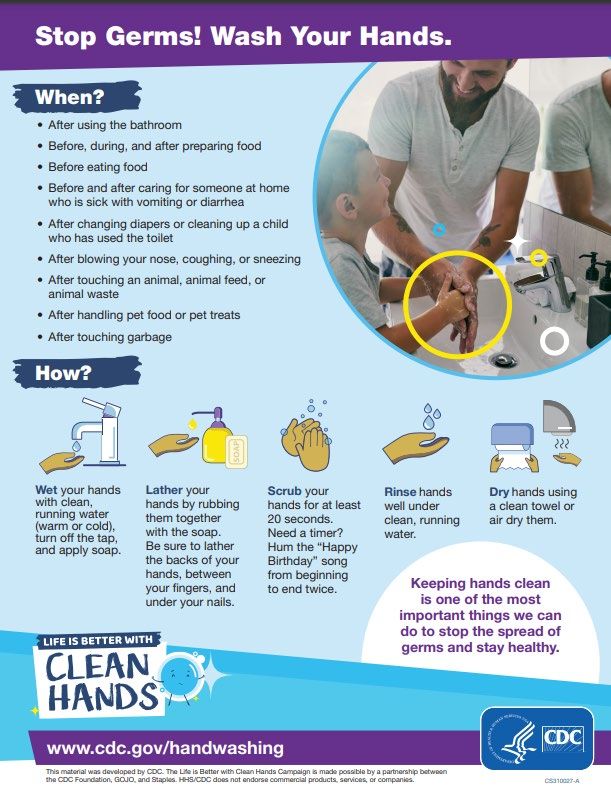
TABLE OF CONTENTS

 3 Keeping Employees Safe
                                         Every employee plays
 6 Employee Responsibilities             a KEY role in avoiding
                                         exposure and limiting
 7 Employee Face Covering Requirements
                                         infection. Together,
 8 Daily COVID-19 Self-Check
                                         we can support the
                                         health and well-being
     Reporting COVID-19 Exposure and
 9                                       of our entire campus
     Symptoms
                                         community.
 9 Employee COVID-19 Leave

 9 Testing Information and Sites

10 FAQs

15 Supplemental Information

                                                           2|P a g e
                                                           8/13/2021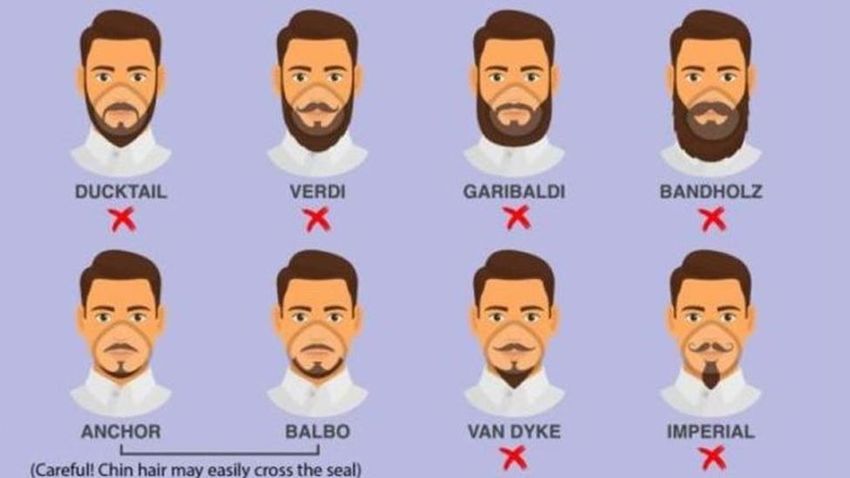
KEEPING EMPLOYEES SAFE

 Mt. SAC is taking every precaution to ensure our workplaces are safe. The District is
 following federal and county health and safety guidelines, as well as guidance from our
 state and local governments. We have implemented practices for disinfection and
 employee safety following Cal/OSHA guidelines and will continue to modify these
 practices as the situation changes.

 In order to continue keeping our workplace safe and healthy, the following policies and
 procedures have been implemented by the District.

                             IMPORTANT MT. SAC CONTACTS

HR Analyst - Leaves and EEO                      Director, Student Health Services
Nerissa Uiagalelei                               Marti Whitford
hraccommodations@mtsac.edu                       mwhitford@mtsac.edu

Risk Management Specialist                       Police & Campus Safety
Andrea Solarzano                                 Mike Williams
asolorzano14@mtsac.edu                           mike.williams@mtsac.edu

Director, Safety and Risk Management             Public Information Officer
Duetta Langevin                                  Jill Dolan
dlangevin@mtsac.edu                              jdolan@mtsac.edu

Emergency and Environmental Manager              Marketing & Communication
Sayeed Wadud                                     (Emergency Alerts)
swadud@mtsac.edu                                 Uyen Mai
                                                 umai@mtsac.edu

                                                                                     3|P a g e
                                                                                     8/13/2021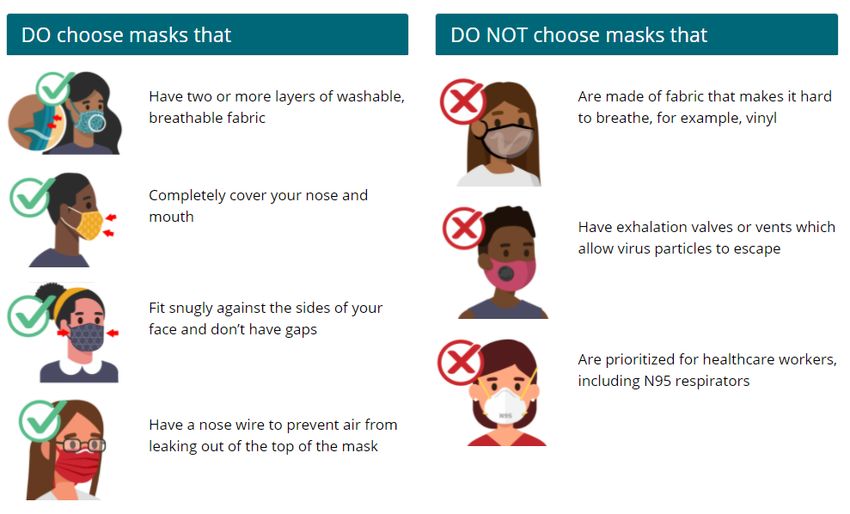
Before coming to campus, employees must self-
check daily for any symptoms of COVID-19 prior to Symptom Checker
leaving home and entering the workplace.
CDC Guidelines: Employees who
Informational signage is posted throughout
have symptoms when they arrive
campus related to current safety measures and
requirements in place related to COVID-19. Signs at work or become sick during
may be updated as the healthcare crisis changes. the day shall immediately notify
Common areas and frequently touched surfaces their manager and Human
are disinfected throughout the day in high use Resources and go home.
areas.
Disinfecting supplies (i.e., disinfecting wipes) will Employees with the following
be available for employee use. Employees are symptoms may have COVID- 19:
encouraged to disinfect their workspaces Fever
throughout the workday.
Hand sanitizer, soap, and paper towels will be
Cough
readily available in all restrooms, and hand Shortness of breath or
sanitizer and disinfecting wipes will be available difficulty breathing
throughout campus office areas.
Chills
HVAC systems have been inspected, ventilation has
been maximized, and purification has been Fatigue
increased where feasible.
Muscle or body aches
There are no physical distancing or barrier
requirements regardless of employee vaccination Headache
status with the following exceptions: Sore throat, Congestion, or
• The College will evaluate whether it is necessary Runny Nose
to implement physical distancing and barriers
during an outbreak (3 or more cases in an New loss of taste or smell
exposed group of employees). Other symptoms (less
• The College will implement physical distancing common): GI symptoms
and barriers during a major outbreak (20 or like nausea, vomiting, or
more cases in an exposed group of employees).
gastrointestinal distress
Employees who develop symptoms shall complete
the Employee Health Check Form, notify Human
Resources immediately, notify their manager, and
stay home and isolate, following the direction
provided by Human Resources. Human Resources
will follow Cal/OSHA rules regarding exposures.
4|P a g e
8/13/2021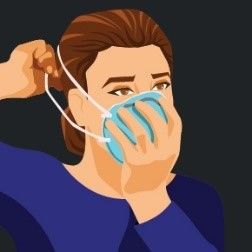
Employees who are identified as close contacts of a
known or suspected COVID case shall notify Human How and When
Resources for further direction. Human Resources
will follow Cal/OSHA rules regarding close contact to Wear a
exposure. Face Covering
Mandatory employee training is required and
conducted through Keenan Safe Colleges.
Employees can find the training topics by searching A surgical mask, a medical
in POD Connect. Employees must complete prior to procedure mask, a respirator
returning to campus: worn voluntarily, or a tightly
woven fabric or non-woven
• Coronavirus: Awareness (10 min)
material of at least two
• Coronavirus: Cleaning and Disinfecting your layers.
Workplace (10 min)
A face covering has no visible
• Coronavirus: Reopening Your Organization (8 min) holes or openings and must
• Coronavirus: Managing Stress and Anxiety (12 cover the nose and mouth.
min – optional) A face covering does not
Employees not available to work on a particular day include a scarf, ski mask,
must utilize available leaves options. Additional balaclava, bandana,
information can be found at turtleneck, collar, or single
www.mtsac.edu/health/employee-resources.html. layer of fabric.
Mt. SAC shall provide face
coverings to employees upon
request, regardless of
vaccination status.
5|P a g e
8/13/2021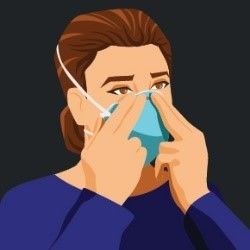
EMPLOYEE RESPONSIBILITIES

Adherence to the following guidelines will assure the ongoing safety and health of everyone in our
College community. Each and every Mt. SAC employee is expected to:

REVIEW: Prior to reporting to campus for the first       COVER: Cover your nose and mouth when
time, read this Working on Campus Guide and view         sneezing or coughing and wash your hands
the coronavirus training videos in POD Connect.          afterward. If you have these symptoms, complete
IMPORTANT: This training is required!                    the Employee Health Check, notify Human
                                                         Resources and your manager, and go home
SELF-CHECK: Each day, before coming to work, you         immediately.
must self-check for symptoms using the checklist on
Page 8. You must complete the Employee Health            BE AWARE: Avoid touching your face, eyes, and
Check and stay home if you are sick, and inform          mouth.
Human Resources and your manager. Employees
experiencing illness will use their available leave      PHYSICAL CONTACT: Avoid physical contact. Do
options. If symptoms appear during the course of a       not shake hands, high-five or hug. Close contact
workday, complete the Employee Health Check,             spreads the virus.
notify Human Resources and your manager, and go
                                                         AVOID SHARING: Avoid using other employees’
home immediately. Always keep Human Resources
                                                         phones, desks, offices, pens, or other work tools
informed and complete the appropriate leave
                                                         and equipment, whenever possible. If spaces or
paperwork in a timely manner.
                                                         tools are shared, clean thoroughly between use
PRACTICE SAFETY: Employees are encouraged to             and/or shifts.
keep their work areas clean via the products
                                                         EXPRESS CONCERNS: Talk to your manager and
supplied to their departments. Follow disinfecting
                                                         Human Resources if you have concerns, such as a
product instructions when cleaning your work
                                                         health condition that may place you or someone
areas throughout the day and/or at the end of your
                                                         in your household at high risk.
shift.
                                                         ASK QUESTIONS: Ask questions to assure you
HAND WASH FREQUENTLY: Wash your hands
                                                         understand what is expected of you. Reach out to
frequently, especially before you eat or touch your
                                                         your manager if you cannot find an answer after
face, and after you eat or use the restroom. If you
                                                         reviewing the Frequently Asked Questions in this
cannot wash your hands for 20 seconds with soap and
                                                         guide.
water, use a hand sanitizer with at least 60% alcohol.
                                                         PRACTICE KINDNESS: Understand that this is a
FOLLOW: Follow all College protocols and practices
                                                         unique and stressful time for everyone, and an
for the safety and health of everyone on campus.
                                                         extra bit of kindness right now can go a long way.
VIRTUAL MEETINGS:         Virtual meetings may           Remember you are part of a community, and we
continue to take the place of in-person meetings,        must treat our community members with
when possible.                                           compassion and kindness.

                                                                                                  6|P a g e
                                                                                                   8/13/2021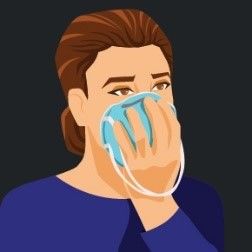
EMPLOYEE FACE COVERING
                       REQUIREMENTS
The County of Los Angeles Department of Public Health issued a new Health Officer Order with an
effective date of July 17, 2021. Following this health order, Mt. SAC will again require masks for anyone
indoors, regardless of vaccination status. This includes any classes, labs, and meetings held inside. It’s
also important that masks are worn properly.

There are few exceptions to the face covering requirement, such as a situation where a mask can impede
workplace safety or as a result of a medical condition. Students who do not follow instructions to wear
face coverings indoors are subject to student disciplinary action, per AP 5520 – Student Discipline
Procedures.

    •   EMPLOYEE accommodations can be made through Human Resources at
        hraccommodations@mtsac.edu.
    •   STUDENT accommodations can be made through the ACCESS Office, which provides accessibility
        resources for students, at access@mtsac.edu or (909) 274-4290.

Face coverings are available on campus.

    •   EMPLOYEES can pick up a single face covering from Police & Campus Safety or their Division
        Office. They can also request additional supplies for in-person classes through the Office of Risk
        Management's Online PPE Request Form at www.mtsac.edu/health/employee-resources.html.
    •   STUDENTS can pick up a face covering from their professors, who have classroom safety kits in
        each classroom. There will also be mask dispensers in various locations across campus

Employees shall ensure that required face coverings are clean and undamaged, and that they
are worn over the nose and mouth. Face shields are not a replacement for face coverings,
although they may be worn together for additional protection.

When employees are required to wear face coverings, the following exceptions apply:
  a. When an employee is alone in a room.
    b. While eating or drinking at the workplace, provided employees are at least six feet apart.
    c. Employees wearing respirators (i.e., N-95 Masks) required by the employer.
    d. Employees who cannot wear face coverings due to a medical or mental health condition or
       disability, or who are hearing-impaired or communicating with a hearing-impaired person, and
       have been cleared by Human Resources.
    e. Specific tasks which cannot feasibly be performed with a face covering and for which employees
       have been cleared by Human Resources. This exception is limited to the time period in which such
       tasks are actually being performed.

Employees exempted through the Human Resources FEHA/ADA accommodations process from wearing
face coverings due to a medical condition, mental health condition, or disability shall wear an effective

                                                                                                  7|P a g e
                                                                                                  8/13/2021
non-restrictive alternative, such as a face shield with a drape on the bottom, if their condition or disability
permits it.

Any employee not wearing a face covering, pursuant to the exceptions and not wearing a non-restrictive
alternative when allowed, shall be at least six feet apart from all other persons unless the unmasked
employee is either fully vaccinated or tested at least weekly for COVID-19 during paid time and at no cost
to the employee. The College may not use the provisions as an alternative to face coverings when face
coverings are otherwise required.

The College shall not prevent any employee from wearing a face covering when not required, unless it
would create a safety hazard, such as interfering with the safe operation of equipment.

The College shall provide face coverings to employees upon request, regardless of vaccination status.

                                                                                                    8|P a g e
                                                                                                    8/13/2021
DAILY COVID-19 SELF-CHECK
Review this COVID-19 Daily Self-Check EACH DAY before reporting to work and answer
the following questions. If you reply YES to any of the questions, complete the Employee
Health Check, stay home, and inform Human Resources and your manager IMMEDIATELY. If
you start to feel sick during your shift, contact Human Resources and your manager
IMMEDIATELY.
1. Has anyone in your home been instructed by a health care provider to self-isolate?
Yes No
2. Have you been instructed by a health care provider to self-quarantine based on your
close contact with a confirmed or suspected COVID-19 case?
Yes No
3. Do you have a fever or feeling feverish such as chills or sweating?
Yes No
4. Do you have a cough?
Yes No
5. Do you have a sore throat?
Yes No
6. Do you have mild or moderate difficulty breathing?
Yes No
7. Do you have muscle aches or body ache?
Yes No
8. Do you have a headache?
Yes No
9. Have you experienced vomiting or diarrhea?
Yes No
10. Do you have congestion or a runny nose?
Yes No
11. Have you experienced a new loss of taste or smell?
Yes No
12. Other symptoms
Yes No
9|P a g e
8/13/2021REPORTING COVID-19
EXPOSURE AND SYMPTOMS
In order to protect everyone’s health and safety, Human Resources needs to be informed if
anyone on campus has had contact with someone diagnosed with COVID-19 or having
symptoms of COVID-19. If you have had contact with someone diagnosed with COVID-19, or if
you are having symptoms of COVID-19, it must be reported immediately to Human Resources.
Human Resources will inform your manager should you need to be taken off work. Students
who have had contact with someone diagnosed with COVID-19 or having symptoms of COVID-
19 need inform the Student Health Center.
EMPLOYEE COVID-19 LEAVE
Emergency Paid Sick Leave (EPSL) and
Emergency Family and Medical Leave Expansion Act ("EFMLA") Guidelines
In addition to Board Policies, Administrative Procedures, and provisions in Collective Bargaining
Agreements, there are new laws requiring community college districts to provide Emergency Paid
Sick Leave to all employees regardless of status and classification.
For additional information regarding COVID-19 leave, please refer to the following link to a form
or contact Human Resources at hraccommodations@mtsac.edu: COVID-19 Leave Form.
TESTING INFORMATION AND SITES
For information regarding testing and testing sites for Los Angeles County, please refer to the LA
COUNTY TESTING website.
10 | P a g e
8/13/2021FREQUENTLY ASKED QUESTIONS
What are the symptoms of COVID-19?
People with COVID-19 have had a wide range of symptoms reported – ranging from mild
symptoms to severe illness. Symptoms may appear 2-14 days after exposure to the virus. People
with the following symptoms may have COVID-19:
• Mild or moderate difficulty breathing
• Fever or feeling feverish (such as chills, sweating, etc.)
• Cough
• Muscle aches or body aches
• Headache
• Sore throat
• New loss of taste or smell
• Congestion or runny nose
• Other less common symptoms have been reported, including gastrointestinal symptoms like
nausea, vomiting, or diarrhea.
For more information, visit the Centers for Disease Control and Prevention website.
How is COVID-19 spread?
• The virus is spread when an infected person breathes out droplets and small particles that
contain the virus.
• Between people who are in close contact with one another (within about 6 feet).
• Through respiratory droplets produced when an infected person coughs, sneezes, or talks.
• These droplets can be breathed in by other people or land on their eyes, noses, or mouths.
• COVID-19 can be spread by people who are not showing symptoms.
• Touching eyes, nose, or mouth with hands that have the virus on them.
For more information, review the Centers for Disease Control and Prevention website.
How long do I need to wash my hands?
Wash your hands often with soap and water for at least 20 seconds especially after you have
been in a public place, before you eat, or after blowing your nose, coughing, or sneezing. If soap
and water are not readily available, use a hand sanitizer that contains at least 60% alcohol. Cover
11 | P a g e
8/13/2021all surfaces of your hands and rub them together until they feel dry. Additionally, avoid touching
your eyes, nose, and mouth with unwashed hands.
For more information, visit the CDC Prevention webpage.
What do I do if I am feeling sick and think that I may have COVID-19 or I have
been exposed to COVID-19?
Employees must communicate with Human Resources and follow the guidelines from your
healthcare provider. Guidelines related to exposure can also be found on the CDC website.
Students must notify Student Health Center.
Am I still required to complete the Employee Health Check Smartsheet daily
before coming to work?
No. You are still required to conduct a symptom check at home before coming into work, but no
longer need to complete the form if you are NOT experiencing symptoms. You will only complete
the Employee Health Check Form if you are experiencing symptoms.
Are all physical distancing requirements gone?
Changes for the general public in California eliminated physical distancing and barrier
requirements regardless of vaccination status. There are several exceptions that may apply:
• The College may implement additional protective measures than are required, including the
use of physical distancing and barriers.
• The College will continue to review requirements to assess workplace hazards and implement
controls to prevent transmission of disease. There may be circumstances in which the College
determines that physical distancing is necessary in the workplace.
• During an outbreak (3 or more employees in an exposed group), the College will be required
to evaluate whether physical distancing or barriers are necessary to control the transmission
of COVID-19.
• Physical distancing and barriers must be used in a major outbreak (20 or more employees in
an exposed group) for all employees, regardless of vaccination status.
What is an employer’s obligation to provide respirators (i.e., NIOSH-approved N-
95 masks)?
The College will provide respirators in two scenarios: (1) to any unvaccinated employee who
works with others indoors or in a vehicle and who requests one and (2) where there is a major
outbreak, to any employees in the exposed group for voluntary use. The respirator must be the
right size, and the employee should follow the information on Page 16 for instruction on how to
get a good “seal,” or fit. Employees may request an N-95 mask through the PPE Request Form.
12 | P a g e
8/13/2021What does it mean to “provide respirators (i.e., NIOSH-approved N-95 mask) upon
request”?
The College will provide the respirator upon request by the employee. Basic instructions are
provided on Page 16 and employees may request a fit test.
In a major outbreak, respirators will be offered to employees regardless of vaccination status and
without waiting for a request from the employee. The College will offer respirators immediately
upon determining a major outbreak is underway.
How soon does a respirator need to be provided after an employee requests it?
The College will provide requested respirators to unvaccinated employees as soon as available.
Cal/OSHA will not cite the College as long as it makes a good faith effort to provide respirators as
soon as possible to employees that request them.
Why is Cal/OSHA requiring respirators be offered to unvaccinated persons?
Cal/OSHA is requiring voluntary respirators because California is phasing out physical distancing,
and a well-fitting respirator reduces the risk of infection better than physical distancing alone,
and because respirators are readily available. This as an alternative protection for unvaccinated
employees.
How often must an employer provide an employee with a new respirator?
For voluntary use, the need to replace a respirator varies with use and environment. Filtering
facepiece respirators are disposable respirators that cannot be cleaned or disinfected. They must
be replaced if they get damaged, deformed, dirty, or difficult to breathe through.
Who has to wear face coverings?
Face coverings are required indoors and in vehicles for unvaccinated employees. Employees in
certain indoor settings must wear a face covering regardless of vaccination status if required by
a California Department of Public Health order.
Though face coverings are generally not required outdoors, unvaccinated employees must wear
face coverings if they are unable to maintain a six-foot distance from others. The College will
provide face coverings to unvaccinated persons and make them available to vaccinated persons
upon request.
13 | P a g e
8/13/2021Are there exceptions to wearing face coverings indoors for unvaccinated
employees?
Yes. The most common exceptions for unvaccinated employees are:
• When alone in a room or vehicle.
• When eating or drinking and six feet away from others.
• When an accommodation is required and the employee has been cleared by Human
Resources.
• When job duties make a face covering infeasible or create a hazard and the employee has
been cleared by Human Resources.
EMPLOYEE accommodations can be made through Human Resources at
hraccommodations@mtsac.edu.
STUDENT accommodations can be made through the ACCESS Office, which provides
accessibility resources for students, at access@mtsac.edu or (909) 274-4290.
Are employees protected from retaliation if they choose to wear a face covering,
even if not required to do so?
Yes. The College will not retaliate against employees for wearing face coverings, including when
the employee is wearing a face covering voluntarily. It is essential not to make assumptions
about vaccination status based on wearing or not wearing a face covering.
Is documentation required for an employee to work without a face covering
indoors?
Yes. Per Los Angeles County health order, everyone must wear a face covering indoors and on
public transportation regardless of vaccination status. Employees who require an exception from
the face covering requirement must receive an accommodation through Human Resources at
hraccommodations@mtsac.edu.
Can you ask another employee about their vaccination status?
No. Vaccination status will be collected by Human Resources through a confidential process.
What if the employee declines to provide their vaccination status to Human
Resources?
The College is not obligated to require employees to submit proof of being fully
vaccinated. Absent such a requirement, an employee has the right to decline to state if they are
vaccinated or not. In that case, the College must treat the employee as unvaccinated and must
not take disciplinary or discriminatory action against the employee. If the employee is deemed
14 | P a g e
8/13/2021unvaccinated, they will be required to wear a face mask unless cleared by Human Resources as
an accommodations’ exception.
What are the testing requirements?
The College will offer testing at no cost to employees during paid time to:
• Symptomatic unvaccinated employees, regardless of whether there is a known exposure.
• Unvaccinated employees after an exposure. Fully vaccinated employees without symptoms
do not need to be tested or quarantined after close contacts with COVID-19 unless they
have symptoms.
• Vaccinated employees after an exposure if they develop symptoms.
• Unvaccinated employees in an outbreak.
• All employees in a major outbreak.
Employees must also follow the procedures listed in this Guide.
15 | P a g e
8/13/2021SUPPLEMENTAL MATERIALS
FACE MASKS DO’S AND DON’TS
IMPORTANT NOTE ABOUT FACE COVERINGS AND WARMER TEMPERATURES:
As temperatures begin to rise, take care to consume more water so that you do not get
dehydrated and overheat. Face coverings should fit snug on your face, but not so tight
that they interfere with your breathing.
CDC Tips on face coverings can be found on the CDC website.
16 | P a g e
8/13/2021HANDWASHING TIPS
17 | P a g e
8/13/2021PROPER WAY TO USE AN N-95 MASK
1. Place the respirator over your nose and under your chin. If the respirator has two straps,
place one strap below the ears and one strap above. If you’re wearing a hat, it should go
over the straps.
2. Use your fingertips from both hands to mold the nose clip firmly against your nose and
face. Do not pinch with one hand.
3. Be sure to conduct a user seal check every time you put on the respirator. This should be
done before you enter a room. Your respirator may have instructions on how to conduct a
user seal check.
4. If you feel dizzy, lightheaded, or nauseated, leave the room, remove your respirator and
get medical attention.
5. Discard the respirator when: (1) it becomes more difficult to breathe through it, (2) if it
becomes dirty, or (3) the respirator becomes damaged.
6. Do NOT TOUCH the front of the respirator! It may be contaminated.
7. Keep your respirator clean and dry. Be sure to read and follow the manufacturer’s
recommendations on use and storage.
8. Facial hair will cause the respirator to leak, so users should be clean-shaven. Some types of
facial hair are acceptable as long as the facial hair does not lie along the sealing area of the
respirator.
18 | P a g e
8/13/2021You can also read


