WORLD MONUMENTS WATCH 2021 - Commemorative Edition - World Monuments Fund
←
→
Page content transcription
If your browser does not render page correctly, please read the page content below
WORLD MONUMENTS WATCH 2021
Commemorative Edition
CONTENTS
INTRODUCTION                                                        THIS YEAR AT WMF
   3
             Introduction from
             Bénédicte de Montlaur.                                 36        Responding to a Year of
                                                                              Extraordinary Challenges
                                                                              We reflect on this year’s many challenges
                                                                              and the opportunities they revealed.

  4
             55 Years of Excellence in
             Cultural Heritage Preservation.

                                                                    38        A Community Unites to Rebuild
                                                                              Char Narayan Temple in the
                                                                              Wake of an Earthquake
WORLD MONUMENTS FUND                                                          Discover the collaborative process of
                                                                              reconstructing this iconic temple in Kathmandu.

AROUND THE GLOBE
  6          Our Presence Around the World
             Explore our extensive network of affiliate offices
                                                                    42        WMF Responds to Unanticipated
                                                                              Challenges at Osmania Women’s
             and regional representatives.
                                                                              College in Hyderabad
                                                                              Explore our long history at this former British
                                                                              Residency in India.

  8          WMF Spain

                                                                    44
             Learn about our first international affiliate office
             and key projects.
                                                                              Bunce Island: A Memorial
                                                                              to the Dark History of
                                                                              Man’s Inhumanity
12           WMF Portugal
             Explore our innovative work at the Tower of Belém
             and the iconic Jerónimos Monastery and Church.
                                                                              WMF’s work at Bunce Island secures the
                                                                              survival of one of the most important heritage
                                                                              sites related to the slave trade in West Africa.

16           WMF Britain
             Discover the far-reaching work spearheaded
             by our affiliate office in the UK.
                                                                    46        Kesennuma and the Great East
                                                                              Japan Earthquake: A Story of
                                                                              Resilience and Recovery
                                                                              Learn about the Kesennuma Historic

20
                                                                              Cityscape project.
             WMF Peru
             See how a call to rehabilitate a part of Cusco’s

                                                                    48
             Historic Center blossomed into our South American
             affiliate office.
                                                                              A Year in Events
                                                                              Lectures, celebrations, and award ceremonies
                                                                              brought together new friends.

24           WMF India
             Discover the achievements of the latest addition to
             the WMF affiliate family.

                                                                    JOIN US
LOOKING TO THE FUTURE                                               52        Become a Member
                                                                              Join WMF and make a lasting
                                                                              difference for cultural heritage.

28           Global Challenges to Cultural
             Heritage Preservation
             WMF Vice President of Programs, Jonathan S. Bell,
             explores World Monuments Fund’s role in the future
                                                                    54        More Ways to Give
                                                                              Discover the many programs at WMF,
                                                                              including our new Junior Board.
             of heritage preservation.

                                                                    56        International Council
                                                                              Experience the world’s treasured places as only
                                                                              a member of our International Council can.

                                                                    58        Legacy Society
Cover: Angkor Wat at sunrise.
                                                                              Learn about the 55 for 55 Bequest Challenge
Opposite page: A detail of the                                                and become a member of our Legacy Society.
takienta, an earthen dwelling

                                                                    60
made in Koutammakou, Land of
                                                                              Thank You to Our Supporters
the Batammariba—a 2020 World                                                  World Monuments Fund’s work couldn’t
Monuments Watch site.                                                         be done without you!

                                                                                                                      Watch | 2021   1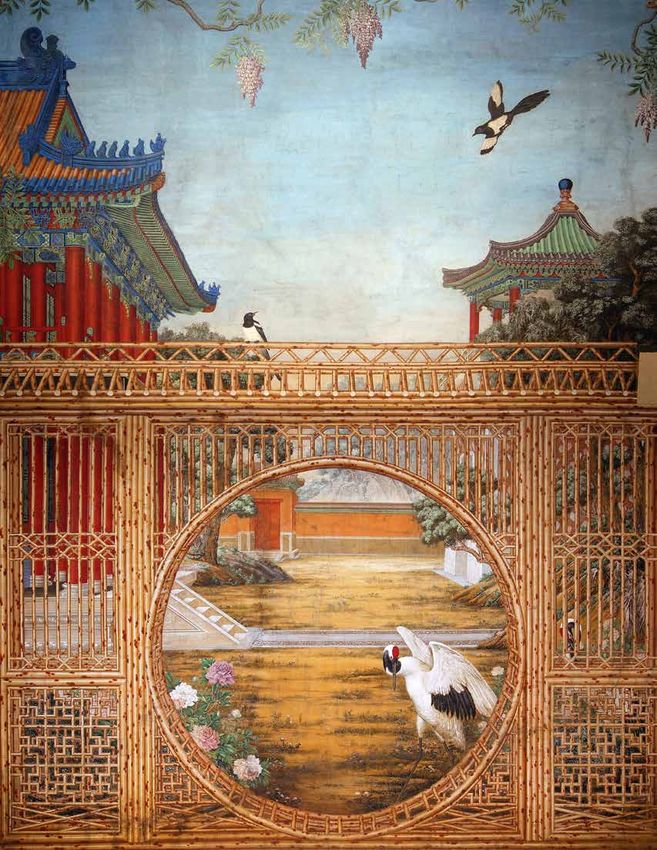
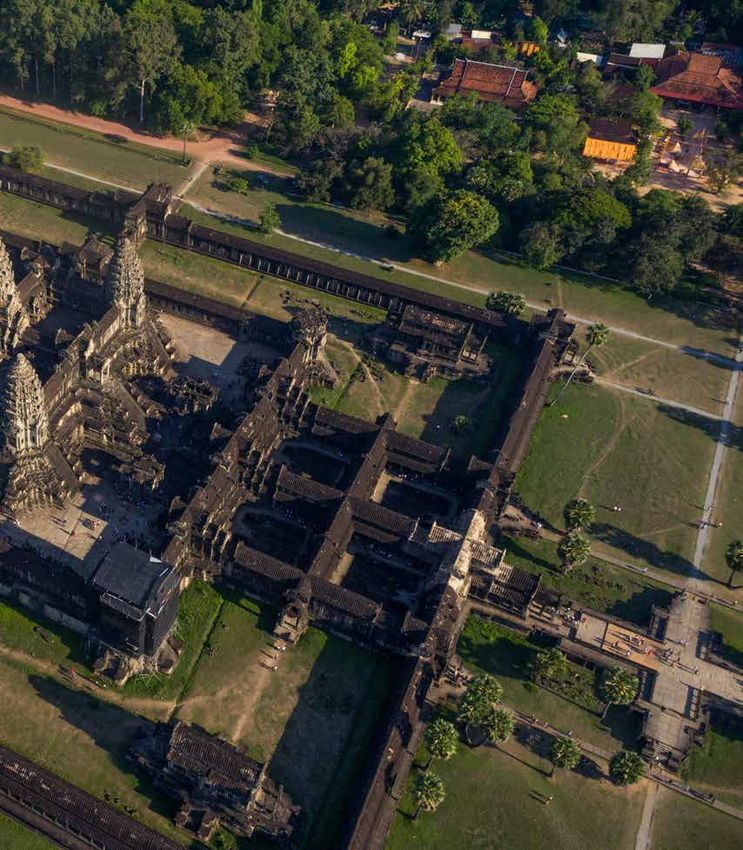
Our teams at Angkor
Archaeological Park—and all
around the world—are standing
stronger than ever.

2    wmf.org
Dear Friends,
World Monuments Fund brings together those who see in places and
monuments extraordinary examples of human achievement and are inspired by
their potential to contribute to more inclusive, safe, resilient, and sustainable
communities everywhere.

For the past fifty-five years, WMF has turned this inspiration into action, completing more than 700
heritage projects around the world to safeguard the globe’s irreplaceable cultural sites and to help turn
them into a source of enrichment for local communities and mutual understanding between people
around the globe.

                              And there is so much more we have yet to accomplish. As our planet and
                              its inhabitants face dramatic and unparalleled change, multiple threats are
                              taking their toll on the world’s cultural treasures: climate change, economic
                              and cultural globalization, rapid urbanization, conflicts, natural disasters,
                              mass tourism, and, underlying them all, the loss of traditional techniques
                              and the inexorable passage of time.

                              WMF must adapt to these challenges. We must strengthen our global
                              presence, finding the right balance between local empowerment and global
                              impact via an expanded network of affiliates and partners. We must choose
                              field projects that present local solutions to the most pressing global
                              challenges facing historic sites. We must continue to raise awareness and
                              encourage others to join us on our mission.

Marked by an unprecedented global pandemic, 2020 was a year of unique challenges. The suspension
of on-site work spread uncertainty and sometimes hindered our ability to move forward. Occasions for
celebration, such as the completion of our projects at Chancellerie d’Orléans, Qianlong Garden, and the
Ta Som Temple, were delayed. In the face of these headwinds, it was truly inspiring to see our team come
together, fighting for the values of WMF and determined to continue its efforts. From the support we
provided to staff around the globe in moments of need to the development of our Bridge to Crafts Careers
and Stonemasonry Training capacity-building programs, the expansion of our digital programming, and
the completion of projects in Nepal and Sierra Leone, among others, the breadth of our accomplishments
this year is a testament to our ability to overcome.

As our inability to travel and adequately communicate contributes to the sense of disconnectedness that
is feeding the rise of nationalism and isolationism everywhere, our mission is more important than ever.
By connecting the present with both the past and the future, our work has the potential to help create
a better world—a world where people can interact with each other’s cultures and histories, learn from
them, and find in them a source of opportunity. A world where communities around the globe grow
together, safeguarding our shared accomplishments while also building empathy and understanding.

So, stand with us in these difficult times. For this 55th anniversary, which also marks my first year at
WMF, I am filled with confidence for our future. Together, we will tackle 2021 with more courage and
strength than ever.

Bénédicte de Montlaur
President and CEO

                                                                                              Watch | 2021   3
1988
1965
1978 The Jewish Heritage
Program is
WMF’s first project in established with
Asia begins at the support of Hon.
Gokarna complex in
Kathmandu.
Ronald S. Lauder. 1993
Since 1988, WMF’s
Jewish Heritage A WMF affiliate is
established in
1985
Program has
supported Portugal and
conservation work at begins work on the
nearly 60 diverse Tower of Belém.
sites in 27 countries,
1995
including France,
Greece, Hungary,
India, Lithuania,
Morocco, and Poland.
Major support was WMF launches the
also provided to the Watch, a biennial
World Monuments Endowment by Mrs. selection of at-risk
Fund, then called Joyce Z. Greenberg. cultural heritage sites
International Fund for that combine great
Monuments (IFM), is Colonel Gray retires, historical significance
founded by Colonel Bonnie Burnham is
1988 with contemporary
James A. Gray, appointed as WMF begins its first social impact, with
inspired by the Executive Director, project in China at American Express as
challenges facing and IFM becomes Xiannongtan (Temple founding sponsor.
the Leaning Tower World Monuments of Agriculture), The first Watch is
of Pisa. Fund. Beijing. released in 1996.
1966
WMF begins a
preservation project
1985
A conservation
program is launched
1989 1995
A WMF affiliate is
at Lalibela, Ethiopia, for earthquake- established in Britain,
its first in Africa. damaged 20th-century supported by the
murals in Mexico City. Paul Mellon Fund for
Architectural
1967 1988
Preservation in Great
Britain. The
restoration of the
Small Concert Room
“
at St. George’s Hall
in Liverpool is WMF
WMF’s first mission Britain’s first project.
to Angkor in
Cambodia, where
WMF is an WMF is the first
Western organization
1996
In December, the
organization The Hadrian Award is
established to honor
to survey temples
since the 1950s.
landmark judgment of
the Supreme Court of
that follows up
international leaders India on the Taj Mahal
who have advanced in the case of M.C.
the understanding, 1992
on its promises.
Mehta vs. Union of
appreciation, and A WMF affiliate India & Others noted
preservation of the is established
Once we commit
that the Taj was
world’s art and in Spain. threatened by
architecture. The first deterioration caused, in
to a monument, The Easter Island
Committee is
recipient is Carlo De
Benedetti. Subsequent
part, by environmental
pollution, quoting
you can trust a formed with the
Chilean government.
honorees include His
Royal Highness The
WMF’s designation as
an endangered site in
positive change Tours to raise Prince of Wales its judgment. M.C.
awareness begin. (1990), His Highness Mehta nominated the
The Aga Khan (1996),
will happen to it.
site to the first World
and Phyllis Lambert Monuments Watch
(1997), among many as one of the 100
others. most endangered
- HRH Doña Pilar de Borbón
sites of 1996.
4 wmf.org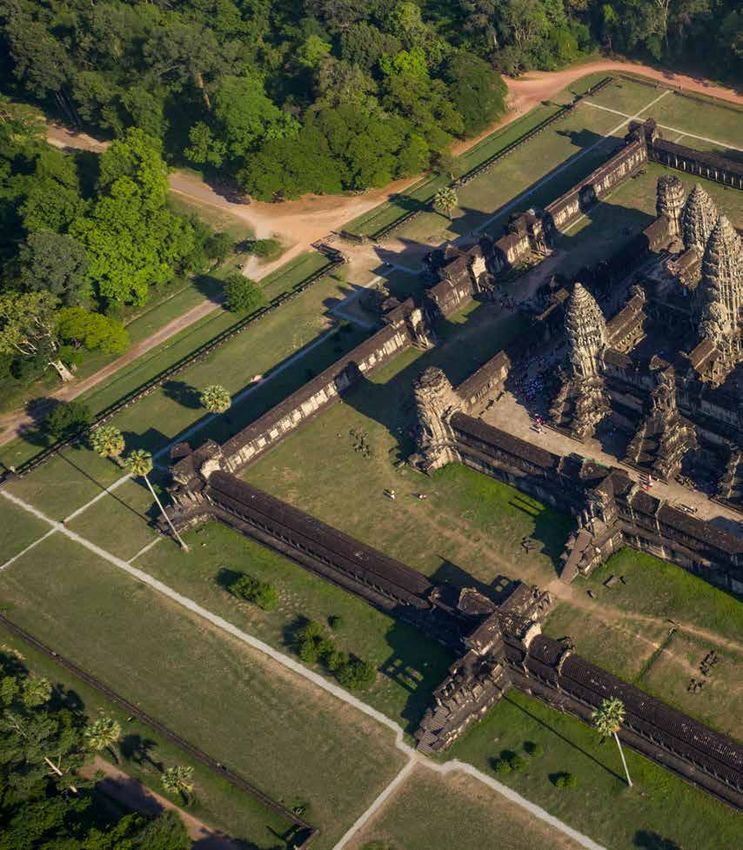
1999 2020
The Robert W. Wilson 2019
Challenge to WMF, in partnership
Conserve Our with the AAACRHSC
Heritage is created, 2016 and the Birmingham
providing more than 2007 Civil Rights Institute,
World Heritage Sites
2011
$100 million to Global climate launches Voices of
nearly 200 heritage in Nepal are added Alabama, an oral
change is recognized
sites over the next to the 2016 World history project
for the first time as a
decade. Monuments Watch illuminating 20 Civil
major threat in the
following the massive Rights sites—included
2008 World
earthquake on
2002
Monuments Watch. on the 2018 World
April 25, 2015. Monuments The Relief Fund is
Watch—through established in
2008 WMF launches
CRAFT 2017
storytelling. response to the
COVID-19 pandemic.
Funds raised helped
2019
(Conservation support teams of
WMF launches the Resources for conservators and
World Monuments Architectural preservation workers
Fund/Knoll Interiors, Furniture, at Shwe-nandaw
Modernism Prize to and Training), an Kyaung in Mandalay,
raise awareness educational Erbil Citadel in Iraq,
about modern program designed Osmania Women’s
Work begins at preservation success to meet critical College in Hyderabad,
Qianlong Garden, in stories. The first prize conservation needs and Angkor
Beijing, China, in is awarded to in China. The Archaeological Park
partnership with the Brenne Gesellschaft program sprung in Cambodia.
Palace Museum. von Architekten from the
mbH, headed by conservation A capacity-building
Winfried Brenne and project that WMF training program 2020
2002 Franz Jaschke, for began with the launches in Mafraq, The third edition of
Work begins at their restoration of Palace Museum in Jordan. This is WMF celebrates 30 WMF’s capacity-
Stowe House the Bauhaus- 2002, working on WMF’s first years of conservation building training
(1680-1780) in designed ADGB the Qianlong capacity-building work at Angkor Wat program designed for
Buckinghamshire, Trade Union School Garden in Beijing’s program designed Archaeological Park refugees launches in
Great Britain. in Bernau, Germany. Forbidden City. for refugees. in Cambodia. Tripoli, Lebanon.
2003
The Paul Mellon
Lecture series
2010 2011
WMF begins work to
preserve cultural
2017
WMF launches
Watch magazine, an
2019 2020
WMF’s Bridge to
Crafts Careers
begins, supported by heritage sites annual publication program expands to
the Paul Mellon In the face of
damaged in the celebrating success increasing threats include landscape
Education Fund. tsunami that was stories and progress training in addition to
from climate change,
caused by the Great at our project sites natural disaster, stonemasonry.
East Japan around the world. human conflict, and
2005 Earthquake.
2020
more, WMF
Following Hurricane
2018
establishes the Crisis
Katrina, post- Response Program
catastrophe 2014 to provide resources
preservation programs for early recovery
A WMF affiliate is
are established in actions so that
established in Peru.
New Orleans. heritage sites can
help build community
2007 2015
resiliency, create
economic
opportunity, and
strengthen social
WMF launches the cohesion in the wake
WMF begins work at of disaster.
Babylon in partnership Bridge to Crafts WMF collaborates
with Iraq’s State Careers program with Google’s Arts & WMF celebrates 55
Board of Antiquities WMF moves into (B2CC) to provide Culture platform to years of excellence
and Heritage (SBAH) its current office underrepresented highlight Iraqi in cultural heritage
with the support of space in the young adults with heritage and the with its first-ever
the U.S. Ambassador’s Empire State hands-on technical challenges faced in virtual gala that will
Fund for Cultural Building in training in masonry preserving it. take guests on a tour
Preservation (AFCP). New York City. restoration and the of WMF sites around
The AFCP has since opportunity for the globe.
awarded 50 grants to placement in a 2018
support WMF projects stable career. Lisa Ackerman,
worldwide. longtime WMF
Executive Vice
2015 President and Chief
A WMF affiliate is Operating Officer, is
established in India. named Interim Chief
Executive Officer.
Watch | 2021 5
World                                                       WMF Britain
                                                            London

Monuments
Fund                      WMF Headquarters
                          New York City

Around the
Globe                    Latin America
                         and Caribbean
                                                                WMF Spain
                                                                Madrid

                                             WMF Portugal
                                             Lisbon
              WMF Peru
              Lima

6   wmf.org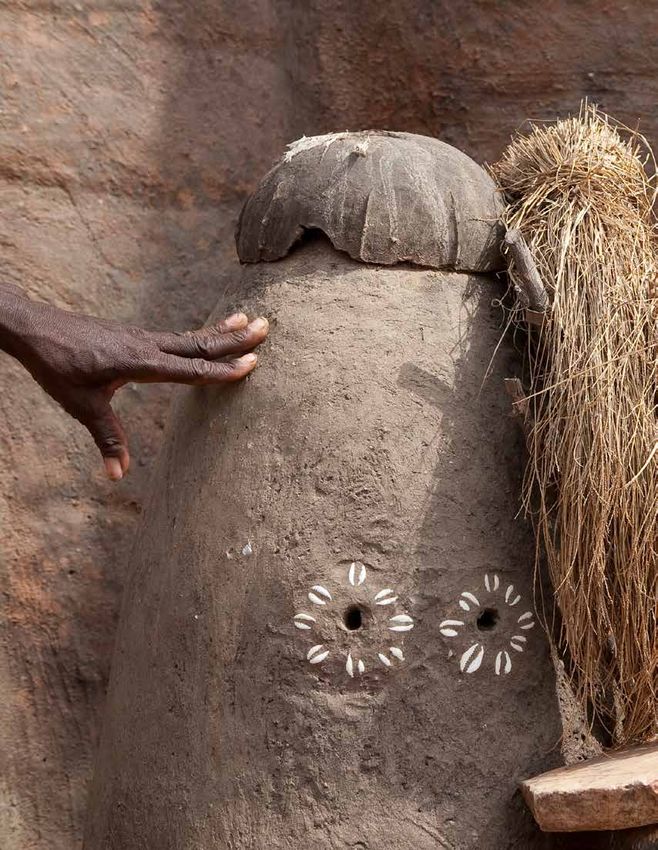
Affiliate Office     Regional Representative    For more than 55 years, World Monuments Fund
                                                           has applied proven and effective techniques to the
                                                           preservation of more than 700 cultural heritage
                                                           sites in 112 countries around the globe.

                                                           Headquartered in New York City, WMF’s network
                                                           of professionals in China, Japan, the Middle East,
                                                           Africa, Southeast Asia, Latin America and the
                                                           Caribbean, and its affiliate offices in Britain, India,
                                                           Peru, Portugal, and Spain, currently oversee
                                                           63 active projects in 40 countries.

                                                             China
           Middle East and
           North Africa

                                                                                          Japan

                              WMF India
                                                          Southeast Asia
                              Mumbai

Sub-Saharan Africa

                                                                                                  Watch | 2021       7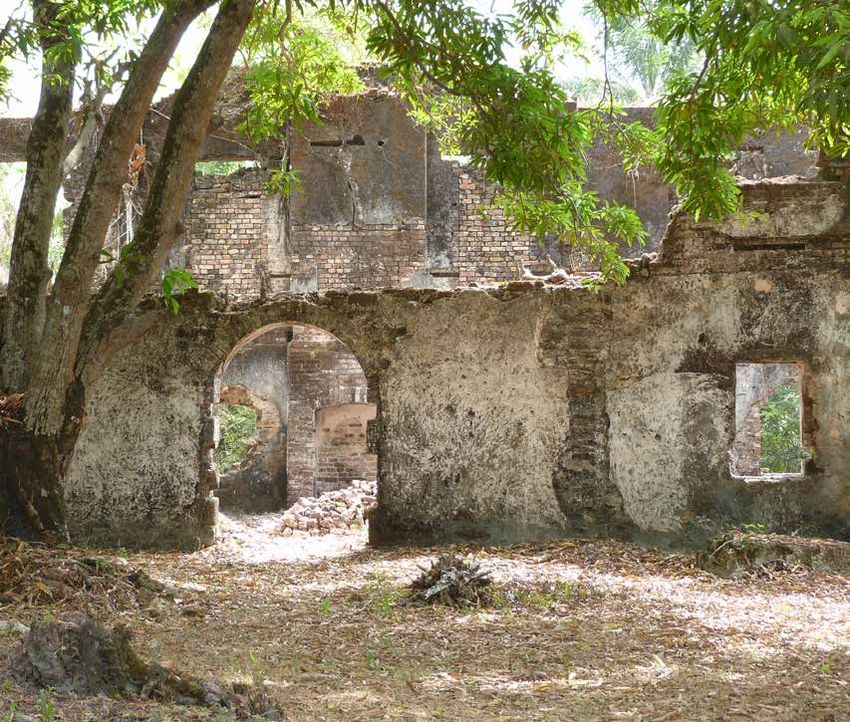
An example of Antoni Gaudí’s work
at The Güell Pavilions in Barcelona’s
Pedralbes neighborhood, a 2014
World Monuments Watch site.

8     wmf.org
WMF

Spain                                   (Est. 1992)

Board President: Juan Carlos Fierro Jiménez-Lopera
Executive Director: Pablo Longoria

I
    n October 1979, El País, one of Spain’s most influential
    newspapers, reported World Monuments Fund’s first
    involvement in the country. Then known as the International
Fund for Monuments (IFM) and represented by Colonel James A.
Gray, WMF committed $10,000 toward the restoration of seven
15th-century choir chairs in the Oviedo Cathedral. Three years
later, the same newspaper reported on the inauguration of 28 of
the historic choir chairs, all restored by WMF.

Colonel Gray visited Spain multiple times in the following years,
collaborating with Franklin Murphy and Marilyn Perry from the
Kress Foundation to develop projects at the Toledo Cathedral and
supporting the Salas family’s restoration of the Convento de la
Coria in Trujillo. Eventually, World Monuments Fund established
the European Preservation Program, and projects were
implemented across Spain, such as the restoration of the temple,
gardens, and cloister of the Royal Monastery of Guadalupe in the
Villuercas Mountains of southwestern central Spain.

The official establishment of WMF Spain in 1992 led to
collaborations with both local and international companies, as
well as Spanish governmental institutions, to restore numerous
monuments throughout Spain, such as the Santa Maria la Mayor
in Toro, the Roman Theater in Málaga, and Santa Cueva in Cádiz.

Important restoration projects have continued to develop thanks
to support from the Robert W. Wilson Challenge to Conserve Our
Heritage Program and American Express, the most recent being
the Courtyard Houses of Axerquía, which were included on the
2020 World Monuments Watch.

As WMF Spain’s work continues with the precautions
necessitated by the ongoing pandemic, 2021 will bring exciting
new projects, such as the restoration of original paintings at the
Church of Santiago de Peñalba, a unique example of 10th-century
architecture in El Bierzo, León. Reviving these paintings will
support tourism in this quiet region of rural Spain.

                                                                     Watch | 2021   9
ALHAMBRA
(2011-2020)
Throughout 2020, WMF continued its collaboration with
Alhambra, supporting its conservation work at the palace of
Alhambra, in Granada, as well as in the historical neighborhood
of Albaicín, where WMF supports Alhambra’s initiative to
restore monuments and promote sustainable tourism in
the city.
Between 2015 and 2017, WMF restored the Oratorio del Partal,
a 14th-century private mosque for Sultan Yusuf I, in
partnership with the Council of Alhambra and the Robert W.
Wilson Challenge. In 2019, the project received the Europa
Nostra Grand Prize in Conservation for the outstanding quality
of the restoration. World Monuments Fund Spain is the only
private organization with a seat on the Alhambra Council, with
which it has maintained a close partnership since 2015.
Clockwise from top left: Alhambra
Arrayanes Garden; Façade of Santa
Paula; Paleolithic cave art at La
Garma; Alhambra Oratorio del Partal.
10 wmf.orgLA GARMA CAVE IN CANTABRIA
(2017-Present)
Since 2017, World Monuments Fund Spain has collaborated
with the Stuart Weitzman Foundation to preserve the Cantabria
Prehistoric Caves, unique archaeological sites dating back to
the Paleolithic age. The cave of La Garma, part of the world-
renowned network of karst caves located in Cantabria in
Northern Spain, was sealed by a landslide around 15,000 years
ago and contains some of the best-preserved Paleolithic rock
art and archaeological remains of its kind.
La Garma’s unique microclimate and microbiology, in addition
to its large collection of rock art and archaeological remains,
make it too fragile to be open to the public. In order to allow
the public to explore the cave’s interior, the Stuart Weitzman
Foundation, in collaboration with WMF, funded the production
of a virtual reality tour of the cave. Last January, Forbes
magazine included Memoria: Stories of La Garma among the 50
top VR experiences of 2019.
MONASTERIES OF SEVILLE
(2015-Present)
A unique, historic set of cloistered structures built between
the 13th and the 17th century, the Convents of Seville remain
inhabited to this day. Often referred to as hidden cities because
of their size and secluded collective life, they are suffering from
a decreasing monastic community resulting in a loss of funds
and lack of proper maintenance.
With an initial donation from the Annenberg Foundation,
WMF started conservation at the Convents of Seville with
the restoration of the Monastery of Santa Paula’s Niculoso
Pisano Portal entrance in 2015. A year later, the Convents were
included on the World Monuments Watch, a biennial selection
of at-risk cultural heritage sites that combine great historical
significance with contemporary social impact. With funding
from American Express, WMF is currently working with
local institutions to support preservation efforts including
restoration work and fire preparedness studies. Thanks to a
donation by the Danny Kaye and Sylvia Fine Kaye Foundation,
the courtyard fountain of the Monastery of Santa Isabel la Real
in Granada will also be restored.
Watch | 2021 1112 wmf.org
WMF

Portugal                                                       (Est. 1993)

Board President: Gustavo Guimarães
Vice President: Isabel Cruz Almeida

O
        ne of World Monuments Fund’s most emblematic
        projects and a Portuguese national symbol, the
        Tower of Belém provided the impetus for the
establishment of WMF Portugal in 1993. The importance of
the site as a cultural icon made it an ideal inaugural project
for the affiliate. WMF Portugal’s work at the Tower of Belém
irreversibly changed the way stone conservation practice
was done in Portugal, defining new methodologies and
producing scientific data that was later used as a reference
for other projects. The intervention gained international
recognition and received the Europa Nostra Prize in 1999.
WMF’s work at the Tower of Belém was supported, in part,
by the Robert W. Wilson Charitable Trust, as was Jerónimos
Monastery and Church, which was also supported by the
Annenberg Foundation.

Over the years, WMF Portugal has continued to focus its
efforts on conservation projects that can serve as models
for future interventions of the same nature. Thanks to
the support of a permanent Scientific Committee, WMF
Portugal has published works on every significant project
that it has completed, thus contributing to the evolution of
conservation practice in Portugal and Europe.

Looking to the future, WMF Portugal is currently
considering a series of potential projects with an eye toward
geographic, typological, and chronological diversification,
as well as the three global challenges to cultural heritage:
climate change, mass tourism, and unrepresented heritage.

Jerónimos Monastery and
Church in Lisbon.

                                                                     Watch | 2021   13
TOWER OF BELÉM (1993-1998) Lisbon’s Tower of Belém was commissioned by King D. João II to guard Lisbon harbor and was completed during the reign of his successor, Manuel I, between 1514 and 1519. The tower’s cream-colored Lioz limestone walls are embellished with sculpted balconies and ornaments, alluding to a time when Portugal was the first commercial and maritime empire in Europe. In 1994, WMF Portugal started systematically mapping deterioration and alterations found on each stone. Although the tower was stable, years of air pollution and weathering caused by the harbor winds created significant problems. Exposure had deteriorated the base of the turrets, and lichen and black crust plagued the tower’s outer stone surfaces. Water ingress posed the most crucial conservation issue, as the Lioz limestone is vulnerable to the erosive components of pollution. Despite these challenges, work at the Tower of Belém was successfully completed in 1998. Clockwise from top left: Tower of Belém after conservation; a view into the courtyard at Jerónimos; a before and after view of the exterior walls around the courtyard; a detail of the stone carvings at the Tower of Belém. 14 wmf.org
JERÓNIMOS CLOISTER AND CHURCH
(2000-Present)
A unique example of Portuguese late Gothic architecture, the
16th-century Jerónimos Monastery was commissioned and
built under the reign of King Manuel I for the Order of Saint
Jerome. The monastery’s vaulted ceilings and sophisticated
ornamentation are characteristic of the ecclesiastical and royal
commissions of its time. Today, it is the most visited historic
site in Portugal.

WMF Portugal’s first significant intervention at the Jerónimos
Monastery took place in the Cloister between 2000 and 2002,
shortly after the completion of the project at the Tower of
Belém. Since 2012, when fragments of falling mortar and stone
signaled the advanced state of deterioration of the vaulted
ceiling, WMF Portugal devised and implemented a ten-phase
conservation program of the church in partnership with the
Directorate General of Cultural Heritage. The program’s fifth
and latest phase was completed in December 2019.

In parallel, WMF Portugal restored stained-glass windows
and put in place protective measures to improve drainage and
prevent water infiltration at the site. WMF also performed
an extensive condition survey of the monument’s exterior
and commissioned research documenting the building’s
history and significant changes made to it over time. In
order to explore the impact of mass tourism on the interior
microclimate of the church, WMF and the New University of
Lisbon supported the publication of a Ph.D. thesis and two
scientific papers on the subject.

                                                Watch | 2021   15
16 wmf.org
WMF

Britain                                            (Est. 1995)

Board Chair: William J. Loschert
Executive Director: John Darlington

I
     n 1990, World Monuments Fund presented His Royal
     Highness The Prince of Wales with its annual Hadrian Award
     in recognition of his efforts in advancing the conservation
of world architecture. In his acceptance speech, HRH called
attention to the plight of St. George’s Hall in Liverpool, describing
it as “one of the finest neoclassical buildings in the world.”

Supported by WMF, which opened its London affiliate office
in 1995 with a gift of $1 million and a bequest from the late
Paul Mellon to create the Paul Mellon Fund for Architectural
Preservation in Great Britain, the restoration of the Small
Concert Room at St. George’s became WMF Britain’s first project.

Since 1995, WMF Britain has completed projects at over 40 UK
sites and established partnerships with many more on the World
Monuments Watch to provide on-site conservation, educational
resources, training, and advocacy. In recent years, the UK office
has worked more frequently outside of the UK and, thanks to
the British Council’s Cultural Protection Fund, has carried out
projects in Jordan, Iraq, and Yemen, supporting heritage projects
within communities impacted by conflict.

WMF Britain’s 25-year track record illustrates a wide range
of successful conservation projects in the UK and further
afield, complemented by meaningful engagement with local
communities and global supporters. For the future, there is
significant potential to expand WMF’s presence in the United
Kingdom, and London in particular.

St. George’s Hall in Liverpool.

                                                                    Watch | 2021   17
STOWE HOUSE
(2002-Present)
Stowe, in Buckinghamshire, is a Georgian ducal palace
renowned for its extraordinary architecture and beautiful
landscape. The site was shaped by the finest talents of the
time, including Sir John Vanbrugh, William Kent, Robert
Adam, Sir John Soane, and Lancelot “Capability” Brown.
The restoration of this magnificent 18th-century mansion
is one of the largest heritage projects ever undertaken with
WMF support in Britain.
Stowe was featured on the Watch in 2002 and 2004 after
the deterioration of its stonework and fine interiors had
reached a critical point. World Monuments Fund joined
private donors and others in a £10 million challenge to
preserve Stowe House and enable much broader public
access to the mansion.
WMF Britain’s work focused on the restoration of the public
rooms, including the Marble Saloon, North Hall, and Great
Library, and supported the creation of a visitor center to
facilitate and increase access to the site.
Clockwise from top left: Stowe House
South Front; the conserved roof at
Moseley Road Baths; a stonemasonry
student in Mafraq, Jordan; Marble
Saloon in Stowe House.
18 wmf.orgTRAINING SYRIAN REFUGEES IN
CONSERVATION STONEMASONRY
(2017-Present)
In 2017, WMF Britain started a program to train Syrian refugees
and local Jordanians as conservation stonemasons in Mafraq,
Jordan. Supported by the British Council’s Cultural Protection
Fund, the program was developed to address the destruction of
architectural heritage in the region and the conservation skills
gap left behind by war. The program aims to give people the
capacity to restore their own heritage and provide them with
a livelihood.
After over a year of training, 45 novice students successfully
completed the course. Many were capable of producing
extraordinarily sophisticated carvings. After a second year of
advanced training for a smaller group, five trainees entered
the job market as conservation stonemasons and are
currently employed.
In August 2020, WMF launched the program in Tripoli,
Lebanon, an area which faces similar challenges.
MOSELEY ROAD BATHS
(2016-Present)
Open for 110 years, Moseley Road Baths is the oldest of five
Grade II Listed swimming baths operating in Britain, and
the only one outside London still open to the general public.
Elaborately decorated, the baths contain unique original
fixtures and fittings.
The baths’ “First Class” Gala Pool closed amid safety fears
in 2003, followed by the slipper baths in 2004. Despite over
ten years of intense local campaigning led by the Friends of
Moseley Road Baths, Birmingham City Council planned to
permanently close the baths in July 2017.
After placing the baths on the 2016 Watch, and with support
from American Express, WMF joined a coalition of partners
including the Friends, Birmingham City Council, Historic
England, and the National Trust, which successfully deferred
closure until spring 2018. By then, an alternative business
model was found, and the new Moseley Road Baths CIO
charitable body took over the baths. A critical intervention at
the Gala Pool roof started, helping sustain the building’s future.
The coalition is currently developing plans to secure the baths’
long-term future, and in 2021, WMF will support the elaborate
brick and tile façade’s restoration.
Watch | 2021 1920 wmf.org
WMF

Peru                             (Est. 2014)

Board President: Juan Carlos Verme Giannoni
Vice President: Martha Zegarra

A
         call to develop the conservation and urban
         rehabilitation plan for a twelve-block stretch
         in Cusco’s Historic Center first brought World
Monuments Fund to southeastern Peru in 1997. Three years
later, a group of prominent local figures, led by Marcela
Temple founded the Committee for Conservation of Peru’s
Heritage Sites, to support WMF’s growing involvement
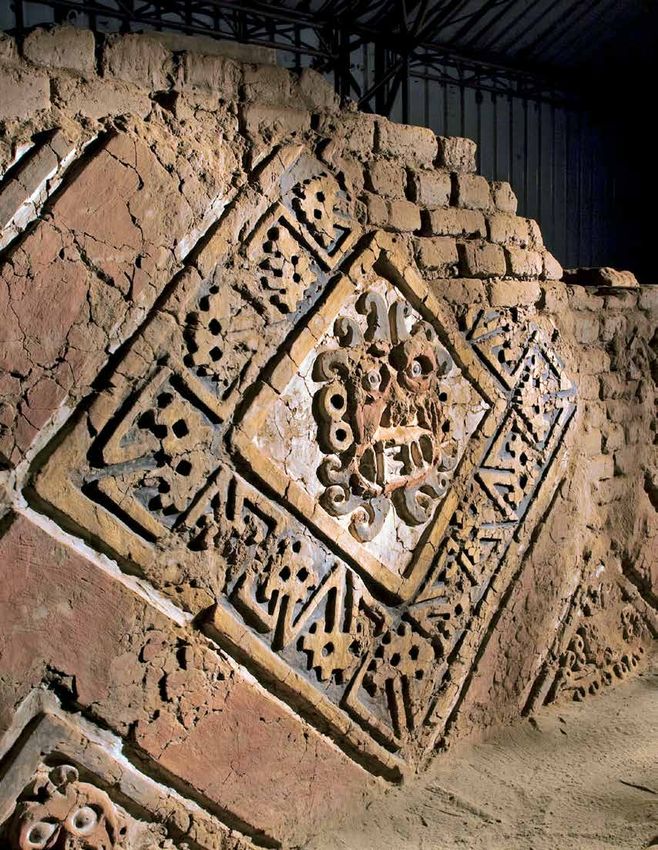
there. Its inaugural project at Huaca de la Luna was
supported by a $1 million grant through the Robert W.
Wilson Challenge to Conserve Our Heritage. In 2014, the
Committee became WMF Peru, establishing WMF’s affiliate
office in the region.

Over the years, WMF Peru has carried out important
recovery projects for historical and archaeological
monuments including the Huaca de la Luna Archaeological
Site, the San Pedro Apóstol de Andahuaylillas Church,
and the Chankillo Archaeological Site. Through these
projects, the affiliate has established partnerships with
public, private, and academic sectors and the surrounding
communities of each project where it works, especially those
in rural areas.

On the occasion of WMF’s 55th anniversary, WMF Peru will
initiate three site-recovery projects, two of them related
to commemorative celebrations of Peru’s Bicentennial
of Independence in July 2021. These projects include the
restoration of the Lima Art Museum’s façade with a grant
from the European Union, and the landscape design and
renovation proposal of the Parque de la Exposición, made
possible by real-estate company Centenario’s donation to the
Metropolitan Municipality of Lima.

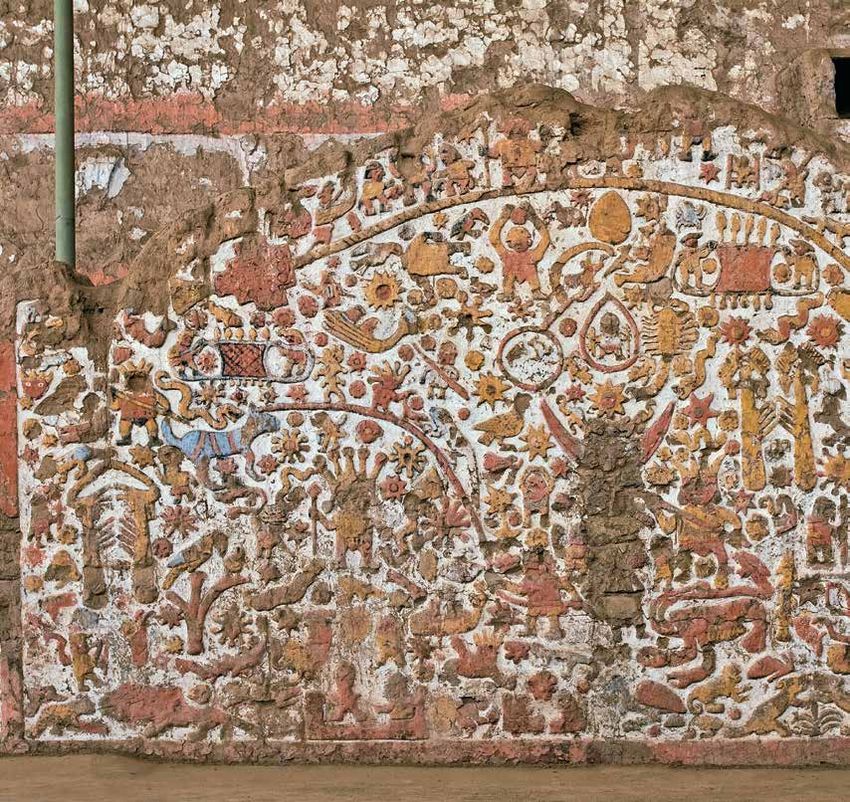
A mural depicting Moche
myths in the ceremonial
plaza at Huaca de la Luna.

                                                               Watch | 2021   21
CHANKILLO ARCHAEOLOGICAL COMPLEX (2010-Present) The archaeological complex of Chankillo in Casma was recognized in 2007 as the most ancient and important solar observatory in the Americas. 2,200 years old, it is shaped by a fortress with three circular defensive walls and thirteen stone towers which allowed their keepers to keep time using accurate determinations of the solstices and equinoxes. After Chankillo’s placement on the 2010 Watch, WMF partnered with the Instituto de Investigaciones Arqueológicas (IDARQ) and Peru’s Ministry of Culture to support the Chankillo Revalorization and Sustainable Development Project thanks to the contributions of French Institute of Andean Studies (IFEA), British Peruvian Cultural Association (Britanico), Antamina, and OHL, leading to Chankillo’s inclusion on Peru’s Tentative List for inscription on the World Heritage List in 2013. With support from the U.S. Department of State’s Ambassadors Fund for Cultural Preservation and the Selz Foundation, in 2017 WMF helped stabilize the thirteen stone towers and develop a conservation management plan in partnership with the Municipality of Casma, essential to Chankillo’s nomination to the UNESCO World Heritage List. In 2019, a second phase of work was conducted on the site thanks to support from the Selz Foundation. 22 wmf.org
ANDAHUAYLILLAS CHURCH
                                                                           (2008-2016)
                                                                           Built by Jesuits between 1570 and 1606 over a pre-Columbian
                                                                           huaca, the San Pedro Apóstol de Andahuaylillas Church is
                                                                           considered the Sistine Chapel of the Americas for the beauty of
                                                                           its Luis de Riaño murals and Mudéjar-style gilded wood ceiling.

                                                                           After the church’s inclusion on the 2008 Watch, WMF funded a
                                                                           project focusing on restoration of the main façade, choir, and
                                                                           chapels; conservation of the sanctuary, nave murals, canvas
                                                                           paintings, and coffered ceiling; artwork documentation; and
                                                                           installation of an alarm system, in partnership with REPSOL,
                                                                           ENDESA, the Peru-France Counter Value Fund, the Ministry
                                                                           of Culture, Fundación Backus, the Parish of Andahuaylillas,
                                                                           Asociación SEMPA, and CCAIJO.

                                                                           In 2012, WMF completed a bilingual publication detailing the
                                                                           history of the town, the church, and the restoration process
                                                                           for the cathedral’s reconsecration. The publication included
                                                                           a chapter on a three-year youth heritage program designed
                                                                           to promote local awareness of cultural heritage conservation,
                                                                           which won a 2012 Global Vision Award from Travel + Leisure.
                                                                           The second edition of the publication is expected to be
                                                                           printed by early 2021. Since its restoration, Andahuaylillas has
                                                                           experienced increased tourism and economic opportunities
                                                                           for locals, including the creation of two gift shops which offer
                                                                           products from communities in the region. Supporting this
                                                                           development, WMF helped create the Andean Baroque Route,
                                                                           which welcomes around 140,000 visitors per year.
HUACA DE LA LUNA
(2002-2011)
Built between the 1st and 8th century CE using millions of
adobe blocks, Huaca de la Luna (Temple of the Moon) was
once part of northern Peru’s ancient Moche capital. After
the temple was abandoned in the 16th century, exposure to
the elements and vandalism eroded its adobe structures,
which lost their uppermost platforms.

From 2002 to 2015, WMF supported an extensive project
of research, conservation, and site management with the
Backus Foundation. Considered a model for integrating
archaeology, conservation, and sustainable tourism, Huaca
de la Luna was named one of Iberian-America’s ten best
managed sites by Spain’s Tourism Secretary and received
the Reina Sofia Award for Conservation and Restoration.

In 2009, a $1 million grant through the Robert W. Wilson
Challenge to Conserve Our Heritage funded a three-year
conservation, interpretation, research, training, and site
management program. In 2011, conservation of the temple’s
façade was completed, and the first phase of a new tourist
circuit was opened.

Clockwise from top left: View of the Thirteen Towers of Chankillo;
debris and sand removal of the north façade of Huaca de la Luna in 1999;
conservation of murals at Huaca de la Luna; nave of San Pedro Apóstol de
Andahuaylillas Church; aerial view of the Fortified Temple of Chankillo.

                                                                                                                            Watch | 2021   23
The Mughal Gardens in Agra. 24 wmf.org
WMF

India                                (Est. 2015)

Board Chair: Shri Gaj Singhji
Executive Director: Amita Baig

I
    n December 1996, the landmark judgment of the
    Supreme Court of India on the Taj Mahal in the case
    of M.C. Mehta vs. Union of India & Others noted that the
Taj was threatened by deterioration caused, in part, by
environmental pollution, quoting WMF’s designation as an
endangered site in its judgment. M.C. Mehta nominated the
site to the first World Monuments Watch that year. Thus
began the work of the World Monuments Fund in India.

In 2015, WMF India became the most recent entry to the
World Monuments Fund family of affiliates, established
under India’s Companies Act, following the country’s
policy to include heritage conservation in corporate social
responsibility programs.

Spearheaded by Maharaja Gaj Singh of Jodhpur, a 2006
Hadrian awardee, WMF India quickly established a
significant presence in the country. Alongside its
conservation work, WMF India has partnered with the
Telangana government to host an evening of music and a
book reading with William Dalrymple to raise awareness
about the historic Osmania Women’s College, currently
under restoration.

More recently, WMF India participated as knowledge
partner at the International Conference on Women in
Design held in 2020 in Mumbai, which brought together
women leaders in design from around the world. WMF
India has also supported the Khasgi Trust in repairing
the Ahilya Temple and Chhatri and Ghats. Funds raised
through American Express India and the Interglobe
Foundation have helped to further expand WMF’s footprint
throughout India.

In the years to come, WMF India will continue to develop its
leadership in conservation and critical thought in multiple
areas. The conservation of historic water bodies will be a
key focus as WMF India tackles the challenges of climate
change and lack of access to potable water in large parts
of India, in line with the Indian Government’s intention to
restore historic water systems.

                                                               Watch | 2021   25
OSMANIA WOMEN’S COLLEGE (2003-Present) Included on the Watch in 2002 and 2004, the Residency Building of Hyderabad, part of Osmania Women’s College since 1949, was the focus of a multi-pronged study culminating in a Comprehensive Management Plan. Conservation began in 2014 when the west wing’s roof collapsed, requiring emergency repairs. The 200-year-old British Residency Building has a towering Palladian-style porch, its pillars rising up to 41 feet. The immense Darbar hall dominates the building’s space, with a patterned roof that has been restored over a two-year period. The challenge in WMF India’s conservation work at the College has been carrying out extensive structural repairs while preserving the building’s historic elements and maintaining the structure’s rich detail. An Interpretation Center, scheduled to be completed in 2021, will highlight these elements, detailing the conservation process while also telling the building’s story over the centuries and underscoring its cultural significance in the city. Clockwise from top left: A government ceremony at Osmania Women’s College; a face carving at Lal Bagh; interior Council Room at Lal Bagh; exterior details of Sardar Vallabhbhai Patel Stadium; a historic view of the grand staircase at Osmania Women’s College. 26 wmf.org
SARDAR VALLABHBHAI PATEL STADIUM
                                                                  (2020-Present)
                                                                  WMF India is excited to start a new project at the Sardar
                                                                  Vallabhbhai Patel Stadium in Ahmedabad this year. Designed
                                                                  by Charles Correa and completed in 1966 with engineering
                                                                  designs by Mahendra Raj, the stadium was cutting edge
                                                                  at the time. Over the years, as the needs of international
                                                                  stadiums grew in scale, Sardar Vallabhbhai Patel Stadium lost
                                                                  its primacy. Today it functions as a facility for schools and
                                                                  colleges and a much-needed green space. Thanks to support
                                                                  from the Getty Foundation, WMF is currently preparing
                                                                  a Comprehensive Conservation Management Plan for the
                                                                  stadium which, once restored, should have state-of-the-
                                                                  art technology, making it a vital resource for the city. Other
                                                                  20th-century buildings in Ahmedabad will also benefit, as
                                                                  the Sardar Vallabhbhai Patel Stadium conservation effort will
                                                                  assert a new model for the cultural and economic importance
                                                                  of the restoration of modern architecture.

LAL BAGH
(2011-Present)
The seat of the former Holkar Maharajas, Lal Bagh is
considered one of the finest garden palaces in Central India.
Built over a hundred years ago in the Italian Renaissance
Revival style, the palace’s interior illustrates the Maharajas’
transition from building forts as their residences to
European-style palaces, a transition encouraged by the
British colonial government.

Occupied until the seventies, the palace interior is decorated
in the French Baroque style, with fine paintings, gilding, and
tapestries. WMF India partnered with the Madhya Pradesh
government over eight years to prepare Conservation Plans
for multiple sites, Lal Bagh among them.

WMF India has partnered with the Interglobe Foundation to
support the restoration of these classical interiors. Sections
of the Palace suffering from extensive fire and water
damage will be repurposed into a cultural center, while the
70-acre grounds surrounding Lal Bagh are set to become a
public park.

                                                                                                                  Watch | 2021     27
An aerial view of Angkor Wat.
LOOKING
TO THE
28
FUTURE
wmf.orgGlobal Challenges to
Cultural Heritage Preservation
A
s World Monuments Fund celebrates
its 55th year, we proudly take stock
of our cumulative impact over these
past five and a half decades and consider
how best to enhance our efforts protecting
and supporting the world’s most incredible
cultural landscapes, architectural marvels,
and places of shared significance. After
decades working to underscore, preserve,
and rehabilitate key cultural heritage in
countries around the world from Albania to
Zimbabwe, our commitment to our planet’s
monuments of cultural expression and
human ingenuity is as strong as ever.
by Jonathan S. Bell,
Vice President of Programs
Watch | 2021 29From left: An empty San Marco We must, however, recognize that the world’s urban centers, and replenished
Square in Venice; Bennerley Viaduct.
global challenges facing the cultural the sense of place and idyllic beauty once
heritage we endeavor to protect have enjoyed by local residents without the
changed and created a new landscape canopy of mass tourism.
across which World Monuments
Fund must operate and demonstrate Amid the throes of this pandemic,
relevance. The global pandemic that has continued police violence toward
plagued the world through most of 2020 people of color in the United States and
has drastically changed the way we all the effective organizing of the Black
work and play. Lives Matter movement sparked an
unprecedented worldwide recognition
Since the international recognition of painful histories embodied in the
of the novel coronavirus at the statues and monuments erected in
beginning of this year, we have public squares and before town halls
witnessed unprecedented changes to around the world. Spurred on by
the interactions between people and social media networks and covered by
places of significance. With fewer visits traditional media, the groundswell call
to historic buildings and archaeological to remove these monuments associated
sites resulting in a dramatic loss of with historic injustice has helped
revenue for these places and their showcase that celebrated heritage often
adjacent communities, the critical link represents privilege. Some stories are
between tourism and local economies told in stone and bronze for the world
has become painfully apparent. At the to see, but many others lack recognition
same time, significantly diminished and remain unseen and unheard.
travel and sparse crowds have led the
way to cleaner air and waterways, While our relationships with our
welcomed frolicking wildlife into the cultural heritage evolved over the
30 wmf.orgpast year, changing rainfall patterns,
intensifying storms, and rising
temperatures continued to pose
challenges. The pervasive nature of
climate change means that no building,
landscape, archaeological site, or
adjacent community is spared the need
to adapt and develop solutions to this
invisible and unpredictable force. Tied
to changing weather patterns is an
increase in disasters from flooding,
sustained high winds, unusual
temperature extremes, and drought,
all of which present distinct challenges
for the places and communities where
World Monuments Fund works.
As we consider the events of this past
year and our priorities for the future,
we recognize that World Monuments
Fund must act as an agent of change.
We remain committed to working
with local partners and communities
to protect the world’s most important
places; this is our mission. Additionally,
we must ensure our impact is not only
measured in finished projects, but in the
cumulative effect of outcomes on some
of the world’s most pressing challenges.
By curating our portfolio of projects
such that multiple places can develop Imbalanced Tourism One strategy lies in developing and
viable mitigation and adaptation The adage that “tourism is a double- coordinating a wide array of visitation
strategies to similar challenges and edged sword” is well known to opportunities at a regional scale, as
threats, World Monuments Fund can preservation professionals, since the opposed to focusing on individual
employ a multiplier effect that has field has long struggled to promote sites. Such an approach requires
widespread and lasting impact. patterns of visitation that can working closely with local and regional
sustainably support heritage places authorities, resident communities, and
To this end, we have identified three with adequate revenue and minimally site managers to coordinate decision-
global challenges that will help shape impact the physical fabric or sense of making and tourism promotion. World
our portfolio of projects, focus our place. As many of us have experienced, Monuments Fund is developing this
resources, and coalesce our individual popular destinations are quickly overrun approach at 2020 Watch sites Bennerley
efforts into far-reaching solutions. and the visitor experience significantly Viaduct (UK) and Canal Nacional
By helping partners develop sound local diminished by large crowds that (Mexico), working closely with local
and regional tourism strategies, we will leave their mark on the monuments, community-based organizations to
work to mitigate the negative impacts exasperate the local community, and enhance and highlight incredible
and harness the economic and social support the local economy with mixed infrastructure that shapes the landscape
potential of imbalanced tourism. In results. For some places, the promised and provides a wide variety of recreation
strengthening our commitment to work economic development never comes, and tourism opportunities. In the Jewish
with unrecognized heritage places and as visitors are few or inconsistent and Mahalla of Bukhara (Uzbekistan) and
integrate diverse perspectives, we will revenue may be funneled to external the historic neighborhood of Axerquía
bolster the role of underrepresented entities or local powerbrokers through in Córdoba (Spain), a similar approach
heritage in global discussions and prepaid packages and foreign tour at the neighborhood levels will help
preservation decision-making. Through operators. At other locations, tourism strengthen interest in and visitation
developing site-specific solutions to leads to rampant growth that gentrifies of traditional houses and streetscapes
changing weather patterns, we will neighborhoods, encourages new that epitomize the local vernacular
underscore the threat that climate development, and forever changes the architecture and culture.
change represents and contribute to composition of local communities and
adaptation strategies around the world. the character of the heritage.
Watch | 2021 31Another tactic that has flourished but also provides for a richer and more rarely recounted stories of servitude,
throughout the pandemic is digital fulfilling visitor experience. World subjugation, and exclusion. These
tourism—experiencing the world’s Monuments Fund will continue to are the stories of the disempowered
cultural treasures from the comfort of work closely with our partners and communities whose land was stolen,
your own home through the marvel of stakeholders on the ground to develop who labored as enslaved people, or
technology. World Monuments Fund is viable visitor management strategies who paid oppressive taxes to fund the
integrating digital documentation and that distribute tourism at a regional opulence and splendor of many feted
the development of virtual experiences scale and help reach new audiences destinations. The artistic achievement
to raise awareness about the places we and supporters of cultural heritage. is lauded, but the associated sacrifice is
work and share the wonder and rich A commitment to balanced tourism often ignored. Despite recent efforts at
history with a broad audience. We have enhances our efforts to support the historic sites to interpret these stories
already developed interactive online places we work. and provide a richer narrative, diverse
experiences for places like San Pedro perspectives and stories of injustice are
Apóstol de Andahuaylillas (Peru), as rarely integrated. Moreover, there are
well as an award-winning virtual visit From left: The remains of Mam many places of significance that do not
Rashan Shrine, destroyed by ISIS;
to La Garma cave (Spain). This approach the Coral Mosques in Maldives,
appear on any sanctioned list and lack
not only allows larger numbers of threatened by climate change. broad support for protection because
they have been sidelined for generations.
These heritage places hold incredible
importance for the communities that
value them and often represent unique
facets of human ingenuity, creativity,
and artistry that are otherwise
unrecognized. Their demise would be an
irrevocable loss for humanity.
Encouraging inclusion of diverse
perspectives and narratives is a crucial
path forward to recognizing and
protecting humanity’s rich heritage.
The most iconic historic places
comprise countless unheard stories
and unrecognized contributions
by disenfranchised communities.
World Monuments Fund renews
our commitment to the heritage of
underrepresented groups exemplified
through previous work in Essaouira
(Morocco) and with Voices of Alabama
(United States). In these projects, the
narratives of minority communities
were recorded and disseminated to
raise awareness of the significant role
their heritage plays in local identity.
Current projects at the Woolworth
Building in San Antonio (United
States) and the Mam Rashan Shrine
in Sinjar (Iraq) underscore the wealth
and distinctiveness of so many
underrepresented heritage sites and
the threats they face, ranging from lack
people to “visit” these incredible places, Underrepresented Heritage of recognition to targeted destruction
but contributes to their protection by As the debate over monuments this year associated with genocide.
preventing high-volume tourism that has clearly demonstrated, power and
could be detrimental to their survival. privilege are often tied to celebrated World Monuments Fund will continue
Altogether, these approaches support cultural heritage. The architectural to engage a wide variety of stakeholders
the development of a more sustainable marvels of the past that regale throngs and capture divergent perspectives as
tourism that not only bolsters of visitors with stories of pageantry an essential component of our work.
destinations and resident communities, and conquest frequently embody Through close collaboration with
32 wmf.orglocal communities, we commit to this Buddhist temple complex from We have the duty to protect the
highlighting the wonder of humanity’s flood events exacerbated by a changing world’s cultural heritage from the
rich accomplishments while denouncing climate. immediate effects of climate change
past and current injustice. Ensuring and the opportunity to emphasize
that recognized cultural heritage Cultural heritage is also emblematic of the need for action through work at
embodies our diversity and portrays the urgency of climate change—iconic these places. World Monuments Fund
the complexities of history enhances its places are dramatically swallowed by is committed to playing a key role in
relevance for communities everywhere. the sea or destroyed by gale force winds. both arenas, working closely with local
Places of importance can serve as and international partners to find
Climate Change rallying cries for global coordination and solutions to immediate needs and to
Our built heritage has always contended commitment to the climate crisis. With contribute to long-term mitigation. Our
with the elements. Crucial components our projects at Blackpool Piers (United approach is to learn from our work and
of local architecture, sense of place, and Kingdom) and the Coral Stone Mosques disseminate the lessons of successful
even cultural mores have developed (Maldives), World Monuments Fund strategies and failed tactics alike to
over centuries in response to climate. has aimed to highlight the plight of our improve our global capacity to safeguard
In recent years, we have seen weather heritage in the face of climate change our places of greatest significance and
patterns change around the globe and work closely with local stakeholders the communities that turn to them for
such that temperatures are shifting, and international institutions to develop affirmation, solace, and the promise of
sea levels are rising, and storms are strategies to save them. cultural resilience.
intensifying. Communities and the
places of importance that help nourish
them must adapt to survive. Despite the
concept of the monument as a beacon
for the ages, extreme temperatures,
violent winds, and excessive or
inadequate rainfall represent new
threats to their longevity. Year after
year, increased flooding and wildfires
damage and even destroy historic sites
in countless nations around the world.
The global nature of our changing
climate underscores the need for
pragmatic, replicable strategies to
safeguard our cultural heritage.
A principal approach lies in the
development of adaptation strategies
that provide historic and cultural
resources with the ability to withstand
climatic changes: shed and drain
larger volumes of water; withstand
stronger winds; tolerate more extreme
temperatures; and endure drought.
In many cases, traditional natural
resource management and building
techniques already provide the answers
and simply require renewal and
strengthening. World Monuments
Fund’s past projects in Kilwa (Tanzania)
and current project at a 2020 Watch
site in Vijayapura, Karnataka (India),
integrate rehabilitation of traditional
land and water management systems as
a strategy to protect and revitalize the
historic sites. In other cases, such as Wat
Chaiwatthanaram (Thailand), modern
engineering solutions and drainage
plans have been implemented to protect
Watch | 2021 33This Year
at WMF
Explore project updates, events, and
notable highlights from the past year.
Right: A student learns preservation
landscaping techniques at WMF’s Bridge
to Crafts Careers Program at Woodlawn
Conservancy in the Bronx, NY.
34 wmf.orgWatch | 2021 35
Responding
                 to a Year of
                Extraordinary
                 Challenges
                    In the face of a global pandemic,
               WMF strengthened its international response
                    and deepened its internal bonds.

36   wmf.org
H
eritage preservation is difficult communications between international
at all times. There is no doubt, and local teams to maximize the efficiency
however, that 2020 marked one of of our response and developed online
the most challenging years yet. trainings to overcome social distancing
and lockdown measures. Our internet
Existing hurdles were exacerbated by presence, likewise, was reformatted and
the collective shutdowns caused by the amplified.
COVID-19 pandemic. Many ongoing
projects were paused, and we were faced And alongside a devastating pandemic,
instead with new, difficult situations. 2020 continued to reveal new crises for
Workers were either stranded on-site WMF to confront. The tragic explosion
or unable to reach their place of work, at the Port of Beirut in August and its
trainees had to find new, digital ways devastating aftermath brought the entire
to develop their conservation skills, heritage protection community together
and fragile sites were left unguarded, in a swift effort to move forward on the
at the mercy of any and all threats. arduous road toward recovery. Heavy
Inauguration festivities for projects slated flooding in late August, compounded by
for 2020 completion were also postponed, severe political and humanitarian crises,
including Osmania Women’s College continues to threaten Yemen’s historic
in Hyderabad, India; the Chancellerie architecture.
d’Orléans in Paris; the Khmer Temple of
Ta Som at Angkor in Cambodia; and the Several sites, such as the flood-ravaged
Qianlong Garden at the Forbidden City Hitoyoshi Ryokan in Japan’s Kumamoto
in Beijing. Prefecture, benefitted from WMF’s Crisis
Response Fund, designed to provide
In order to combat the impact of this resources for early recovery actions
unprecedented state of affairs—not only and help heritage sites become vectors
on the integrity of monuments, but also of community resiliency, economic
on the livelihoods of those who depend on opportunity, and strengthened social
them—WMF was pushed to think flexibly cohesion in the wake of disaster.
and creatively, finding alternative ways
to move forward on its projects while If there is one silver lining to this
ensuring the safety and economic security challenging year, it is the strengthening
of its staff and consultants around the and deepening of the bonds within our
world. WMF community. Together, we found
new ways to work efficiently and stand
In April, the Relief Fund was created—and with our staff and partners all over the
received support from the International world, taking care of present difficulties
Alliance for the Protection of Heritage in while also preparing for the post-COVID
Conflict Areas (ALIPH), among others— world, all anchored in the belief that
in order to assist WMF teams worldwide cultural heritage is necessary and enriches
facing challenges due to the pandemic. people’s lives everywhere.
We drastically reinforced digital
Clockwise from left:
Threatened architecture
in Yemen’s Old City of
Ta’izz; a conservator at Wat
Chaiwatthanaram observes
COVID-19 safety precautions;
citizens of Myanmar cope
with flooding; a mural from
Chancellerie d’Orléans.
Watch | 2021 37You can also read


