Yemen The invisible war - STARTTS
←
→
Page content transcription
If your browser does not render page correctly, please read the page content below
August 2019

        A Publication of the Service for the Treatment and Rehabilitation of Torture and Trauma Survivors

                                                                                                      Issue

Yemen
The invisible war
Let hope triumph over horror
Nyadol Nyuon
—

Multiculturalism Revisited
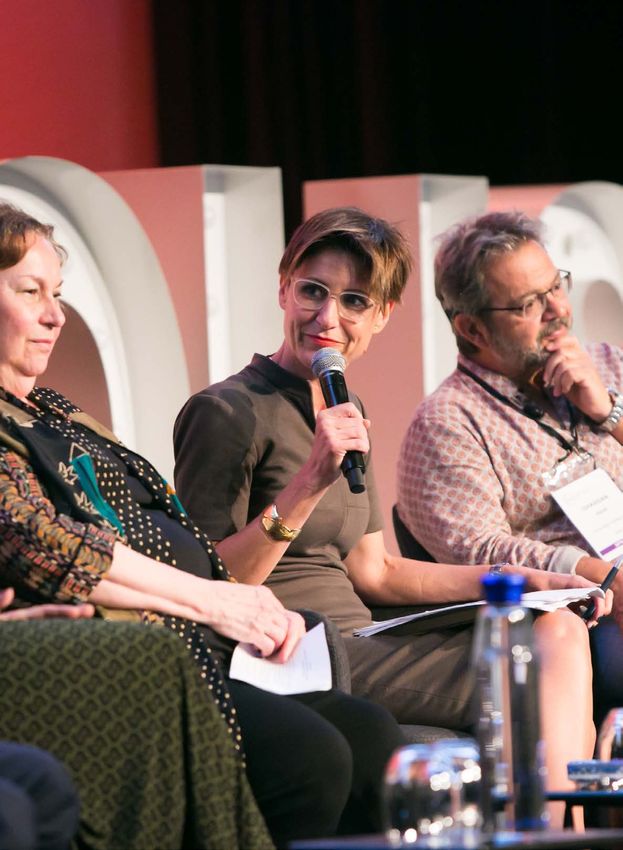
Panel Discussion
—

A reason for hope interview with
Geoffrey Robertson
Refugee Transitions exists to report on a broad range
of human rights issues, focusing attention on the
impact of organised violence on health, analysing
international conflicts and reporting on the latest
clinical research findings, the innovative interventions
that support the settlement of refugees, and their
stories of survival.
Refugee Transitions is published biannually by the
NSW Service for the Treatment and Rehabilitation
of Torture and Trauma Survivors (STARTTS)
All past issues can be found at the STARTTS’
Website www.startts.org.au
Address
PO Box 203 Fairfield NSW 2165
Tel: (02) 9794 1900
ISN 14416247
Editor
Olga Yoldi
Associate Editor
Karen Collier
Sub-editor
John Hampshire
Contributing Authors
Karen Collier, Kevin McGrath, Dunja Karagic,
Nooria Mehraby, Joshua Bird, Lachlan Murdock,
Daniela Aroche, Paul Power.
Art Direction
Miguel Sicari
Cover Image
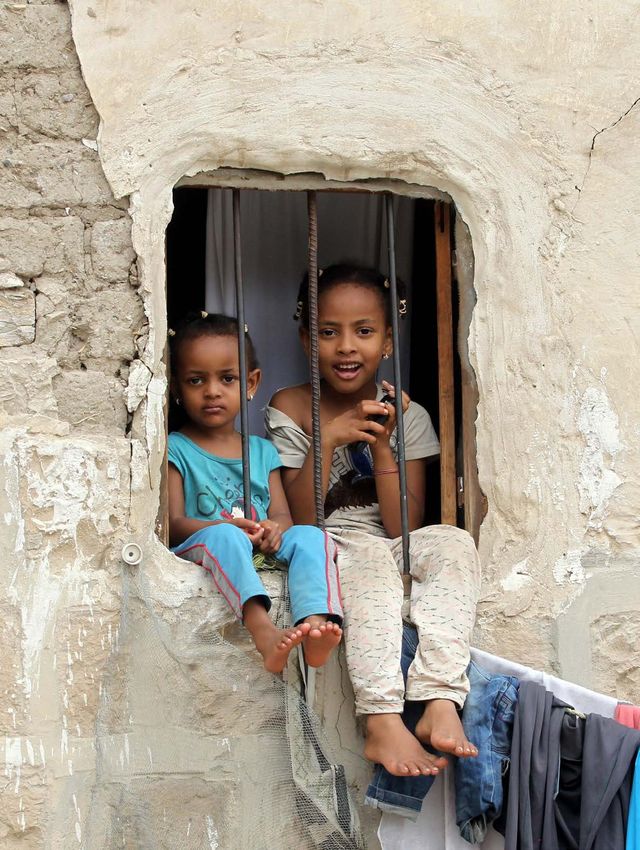
Yemeni children peer out of a window of a historic
building in the old quarter of Sana’a, Yemen, 04 July
2019. YAHYA ARHAB / EPA / AAP PHOTOS
Opinions expressed in Refugee Transitions are those
of the authors and not necessarily the official views of
STARTTS. No material may be reproduced in part or
in whole without written consent from STARTTS
© 2019 STARTTS.
CEO’s Message

Welcome to the 34th edition of
of Refugee Transitions,

    2018 marked the 30th anniversary of STARTTS.                   The war in Yemen features prominently in this issue
Since its humble beginnings in 1988 the organisation has       of Refugee Transitions. As I write these words, Yemen
grown and expanded greatly in the last three decades.          has already entered its fifth year of a brutal war that
This storied milestone has created an opportunity for us       continues to rage unabated causing much pain and
to reflect, look back at our history and take stock of our     suffering to millions of Yemeni civilians. Described as
enduring achievements. It is also a time to decide how we      “the worst humanitarian disaster in recent history”, the
want our role to continue to evolve in order to meet the       conflict has intensified since the Stockholm Agreement
current and future challenges that face our client group       ceasefire and there is no end in sight.
and STARTTS as an organization.                                    This issue of Refugee Transition also features
    Our 30th anniversary celebratory event will be held        interviews with internationally-renowned British
from 10:00 am to 12 noon on the 20th of September 2019         professor of clinical psychology, Dr Paul Gilbert, the
at the Imperial Paradiso venue at 58 Spencer Street,           creator of Compassionate-Focused Therapy. Lawyer
Fairfield. We hope you will all take the opportunity to        Nyadol Nyuon, a South Sudanese refugee shares with
join us at this free event!                                    us her personal journey from a refugee camp in Africa
    Thirty years of uninterrupted growth has opened up         to a Melbourne legal office. Salomon Janvier Lukonga,
opportunities for organisational transformation, innovation    another refugee from Africa, now a well-known fashion
and international collaboration. It has also placed us in a    designer in Brisbane, also shared his story in this issue.
position where we have much to share in terms of expertise         Refugee Council CEO, Paul Powers, writes about
and innovative interventions, not just with our colleagues     the efforts made by refugee advocates and refugees to
working in the rehabilitation of torture and trauma            get their voice heard at international UNHCR meetings.
survivors, but also with those working in the broader              Other stories that feature in this issue include a
trauma field.                                                  traveller’s perspective on CUBA, by Daniela Aroche
    One new forum created to do that is the Forum of           who travelled to the island early this year and Kevin
Australian Services for Survivors of Torture and Trauma        McGrath, who travelled to Poland to get to know his
(FASSTT). Its biennial International conference, which         family left behind by WWII.
STARTTS spearheaded so successfully in 2017 in Sydney,             We are now in the process of organising STARTTS
was followed by another successful conference last March,      next Refugee Ball/Human Rights Dinner to take place
organised by our Queensland Program of Assistance to           this year at the Hyatt Hotel in Darling Harbour on the
Survivors of Torture and Trauma colleagues in Brisbane,        1st of November.
who managed to not only attract local, national and
international participants, including many notable speakers,      I look forward to seeing you there supporting the
but also put on a fantastic show. The conference was as        work of STARTTS!
extensive as it was interesting, and this issue includes an
interview with a keynote speaker, the internationally
recognised, human-rights barrister, Geoffrey Robertson,
who shared his thoughts and views about the practice of
torture in a modern world, the various initiatives to combat
it and the efficacy of international human rights law.
    The next issue of Refugee Transitions will feature a
more in depth coverage of this wonderful event.                Jorge Aroche
Meanwhile, the challenge of hosting the next 3rd FASSTT
International Conference has now moved to our Survivors        Chief Executive Officer / STARTTS
of Torture and Trauma Rehabilitation Service colleagues        President, International Rehabilitation Council
in South Australia, and will take place in Adelaide in 2021.   for Torture Victims, (IRCT)
Contents

     modern conflicts
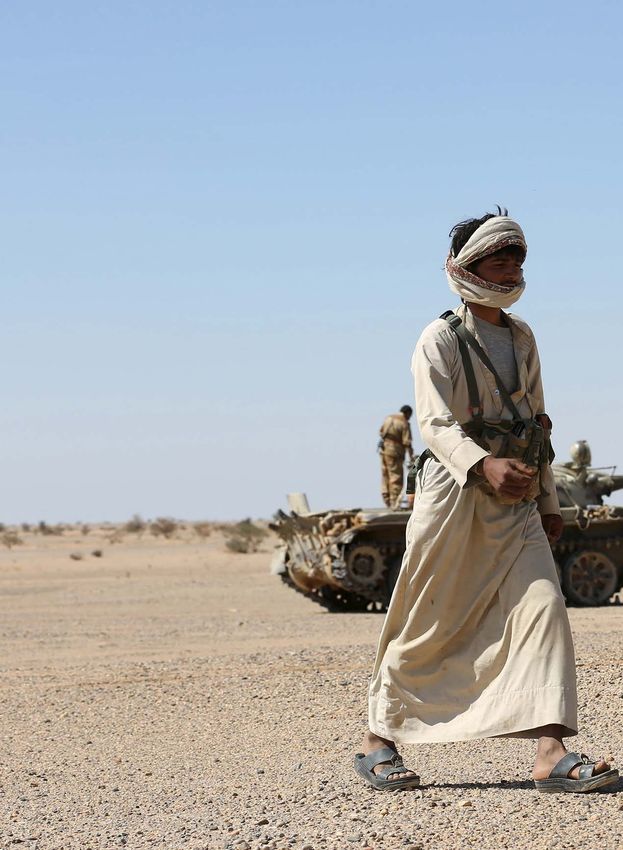
04		Yemen, The Invisible War
		  Olga Yoldi

     human rights
42		 Let hope triumph over horror
		   Nyadol Nyuon
46		Refugees advocate for their rights
		  Paul Power

     health
36		Compassion-focused therapy
		  Dr Paul Gilbert

     profile
16		A reason for hope, interview with
		  Geoffrey Robertson
		  Karen Collier
52		Sewing together a new future
		  Dunja Karagic

     agenda
20		International Metropolis Conference
		  Olga Yoldi
26		Multiculturalism Revisited
		  Panel Discussion
56		Armidale welcomes new arrivals
		  Lachlan Murdoch
58		CUBA: An unforgettable journey
		  Daniela Aroche
68		Poland after World War II: My refugee heritage
		  Dr Kevin F. Mcgrath

     book review
72		The Nonprofit World, Civil Society and the
		  Rise of the Nonprofit Sector By Dr John Casey
		  Olga Yoldi
73		 SAUDADE By Suneeta Peres da Costa
		   Joshua Bird
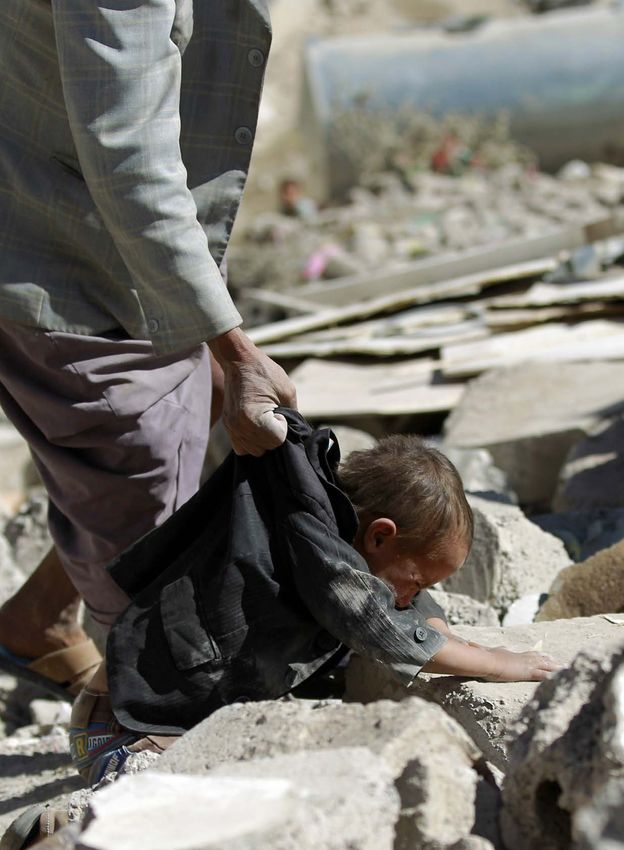
Yemen
 The Invisible War
Y
    MODERN CONFLICTS                                             emen’s devastating conflict originated
                                                                 in the Arab Spring when a wave of
                                                                 popular unrest convulsed the Middle
                                                                 East. Protests against poor economic
After four years of disastrous                                   conditions, corruption and low wages
                                                                 triggered revolutions in many countries.
civil war, Yemen is at breaking               Yemen’s uprising ended up in a proxy war.
                                                  In 2011 protesters launched peaceful protests calling
point, with an estimated                      for the resignation of President Ali Abdullah Saleh, a
                                              dictator who had ruled Yemen for 33 years. After months
233,000 casualties and 10                     of unrest, in 2012 Saleh was forced to transfer power
million on the brink of famine.               to his deputy, Adrabbuh Mansour Hadi, who agreed to
                                              launch a democratic transition. He set up a transitional
Why is the silence of the                     government, created a National Dialogue Conference
                                              as a forum to solve the country’s problems and promised
international community so                    to call elections a year later.
                                                  But the National Dialogue soon fell apart. The new
deafening? OLGA YOLDI                         president struggled with economic challenges, corruption
                                              and constant military attacks from Saleh loyalists and
reports.                                      al-Qaeda. As the economic situation deteriorated
                                              Yemenis became disappointed with Hadi and saw his
                                              rule as a continuation of the old regime.
                                                  Taking advantage of the situation, Houthi rebels (a

6        REFUGEE TRANSITIONS   •   ISSUE 34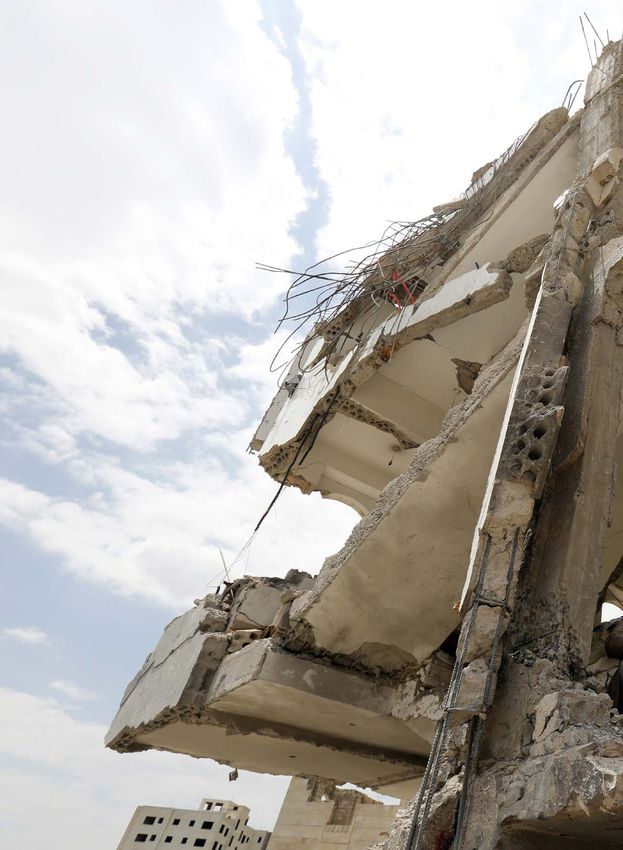
revivalist Shia movement with a strong base in northern        depending on aid to survive and 10 million people
Yemen and ties to Iran), reached Yemen’s capital, Sanaa,       with no reliable access to food. UN Secretary-General
and took control of it in 2014 and the coastal city of         António Guterres has described Yemen as “the world’s
Aden soon after. Saleh allied himself with the Houthis         worst humanitarian catastrophe”.
and his supporters joined the rebels in the fight against          While forces loyal to Hadi and the southern separatists
President Hadi’s troops, forcing the new government            have bombed swathes of the country, it is the Saudi-led
into exile.                                                    Coalition that has caused the most damage. For the past
    Then the Houthi political leadership announced the         four years it has bombed key centres, conducted a ground
dissolution of parliament and the formation of a               war, imposed air and naval blockades of its ports,
revolutionary committee to govern the country. With            destroying vital infrastructure and killing civilians,
Yemen slipping into instability Saudi Arabia feared            showing a total disregard for human life.
Houthi insurgents were gaining control over Yemen,                 According to the Yemen Data Project, an independent
thus giving Iran a foothold in the region, and decided         collection of data on the conduct of the war in Yemen,
to intervene.                                                  Operation Decisive Storm conducted more than 16,749
    The conflict escalated in 2015 when, at the behest         coalition air attacks. Two-thirds have been against non-
of Hadi, the Saudi-led coalition of Saudi Arabia and           military and unknown targets, including places that are
eight mostly Sunni Arab states – United Arab Emirates          generally protected against attacks under international
(UAE), Egypt, Morocco, Sudan, Jordan, Kuwait, Bahrain          humanitarian law such as residential areas, vehicles,
and Qatar (which later withdrew) – and backed by the           market places, mosques, boats, social gatherings and
US, Britain and France, began air strikes against Houthi       camps for internally displaced persons.
positions with the aim of restoring Hadi’s government.             “The coalition isn’t accidentally attacking civilians
The US and Britain provided intelligence and logistical        and civil infrastructure, it is doing it deliberately,” wrote
support for the campaign, called Operation Decisive            Jeff Bachman, a lecturer at the American University
Storm.                                                         School of International Service, in The Conversation.
    This was the beginning of a conflict that has shattered    According to Bachman these attacks, combined with
Yemen. It was supposed to last just weeks, but has now         the blockade, constitute genocide: “Genocide actions
marked four years. It has escalated, spiralled and fractured   in Yemen amount to nothing short of what Raphael
to such an extent that all attempts at peace building          Lemkin, who coined the term ‘genocide’, referred to as
have failed.                                                   a synchronised attack on different aspects of life.”
    Today, press reports describe a chaotic and multisided         The Saudi-led coalition would not have been able
war with many actors and shifting agendas, being fought        to commit these crimes without the material and
on several fronts: the civil war in the north between          logistical support of the US and complicity of the Obama
Houthi rebels and Hadi’s central government forces;            and Trump administrations. Britain and the US sell
another civil war between the central government and           Saudi Arabia and its coalition partners billions of dollars’
the Southern Movement(SM) – a loose coalition of               worth of arms and provide logistical support, intelligence,
separatists centred on Aden; and a nationwide campaign         expedited munitions resupply and maintenance, as
and US-led war against radical Islamist terrorist groups,      well as the mid-flight refuelling of military aircraft,
including al-Qaeda in the Arabian Peninsula (AQAP),            which was recently stopped. President Trump has been
which has expanded to include an ISIS affiliate, Islah,        unwilling to cut the vital support that is fuelling this
an Islamist movement allied to the government. AQAP            brutal and almost invisible war.
has set up local authorities over some areas in the south-         According to human rights reports, violations have
east and Saudi Arabia has allied with AQAP in the fight        been perpetrated by all actors in this conflict. Maggie
against Houthi rebels.                                         Michael from the Associated Press (AP) investigated
    “But there is also a regional conflict, pitting Saudi      UAE-controlled prisons in Yemen in 2017, where
Arabia and the UAE against Iran, as well as UAE proxy          disappearances and widespread torture is regularly
forces and various different militias – some Salafi, some      perpetrated on people suspected of being members of
local and some closer to criminal gangs – all vying to         al-Qaeda.
grab and hold as much territory as they can,” Gregory              The Houthi insurgents have also been accused of
D Johnsen from the Arabia Foundation wrote in Lawfare.         engaging in torture, recruiting child soldiers, bombing
    The combined battles have inflicted serious damage         the homes of local opponents, using weapons in
on the economy and essential services and caused an            unguarded residential areas and using civilians for cover.
unrelenting crisis with three-quarters of the population           The Saudi-led coalition says the Houthis are puppets

                                                                                 YEMEN, THE INVISIBLE WAR                 7
of Iran and Houthi insurgents (an army of about 100,000      vessels seeking entry to Yemen ports are stopped and
fighters) say their war is a form of jihad against the US,   inspected by the coalition to prevent, restrict and delay
but this is a battle that neither side is winning.           the distribution of food, fuel, medical supplies and
    In 2018 the Houthi rebels escalated the conflict         humanitarian aid. Military scholar Martin Fink says the
by firing long-range ballistic missiles across Saudi         blockade causes massive delays and creates uncertainty
Arabia’s southern border. Then Hadi’s forces, supported      about what products will be allowed to enter. “Imports
by the coalition, began attacks to capture the key port      are often held for a long time. In some cases the food
of Hodeidah, controlled by Houthi insurgents and a           that makes it through the blockade is already spoiled.”
strategic centre and entry point for the vast majority of        The food that manages to get past the blockade still
food and lifeline for millions of people depending on        needs to cross many military checkpoints. The World
aid for their survival. Since then Hodeidah has become       Food Program (WFP) has also collected evidence showing
the centre of gravity and the most active theatre in this    that Houthi rebels have diverted shipments of food sent
complex war.                                                 to alleviate the crisis. WFP spokesperson Herve
    Following the Houthi attack the Saudi-led coalition      Verhoosel said their greatest challenge comes from the
imposed a naval and air blockade designed to restrict        obstructive and unco-operative role of some of the
or stop the flow of food aid, which sparked fears of a       Houthi leaders in areas under their control. “If we don’t
catastrophic humanitarian disaster. The International        get the access and freedom to decide who gets this vital
Crisis Group warned that a decisive move on Hodeidah         assistance, then we will have to take the hard decision
would have devastating consequences for all Yemenis,         of implementing a phased suspension in Houthi-
because such an assault would block all roads leading        controlled areas,” Verhoosel said.
from the port to the central highlands – leaving an              To make matters worse, the unrelenting bombing
estimated 18 million people without food supplies.           has destroyed much of Yemen’s transport infrastructure,
    According to the UN panel of experts on Yemen,           making it hard to transport food and other essentials to

8        REFUGEE TRANSITIONS         •   ISSUE 34
“Yemen is the greatest the different governorates. A Save the Children’s report
indicated that commercial imports through Hodeidah
famine atrocity of our had fallen by more than 55,000 metric tons a month –
which only meet the needs of 4.4 million people.
lifetimes used by deliberately At the same time a lack of fresh water has caused
outbreaks of cholera not seen in the past 50 years,
destroying the country’s food-
according to the World Health Organisation. A recent
UN-commissioned report by the University of Denver
producing infrastructure”.
has revealed that more Yemenis are now dying of hunger,
disease and lack of health clinics and other infrastructure
than from fighting.
Alex de Waal Save the Children estimates that 85,000 children
have already died from hunger and disease. It bases its
figures on mortality rates for untreated cases of severe
malnutrition since the Saudi-led coalition joined the
war. “For every child killed by bombs and bullets, dozens
are starving to death and it is entirely preventable,” said
Tamer Kirolos, Save the Children Yemen’s director.
“Children who die of starvation suffer a prolonged agony
as their vital organ functions slow and eventually stop.”
The report revealed that on average, one child dies from
the war and its side effects every 11 minutes and 54
seconds.
YEMEN, THE INVISIBLE WAR 910 REFUGEE TRANSITIONS • ISSUE 34
T
                     his is not the first time food is used as         In May last year the UN Security Council passed a
                     a weapon of war, a bargaining tool and        resolution condemning the starvation of civilians. But
                     an instrument of genocide. Joseph             the UN has been largely ineffective in ending the conflict
                     Stalin used famine in 1932 causing the        in Yemen and the international community has been
                     deaths of about 4 million Ukrainians.         slow to respond. A media focus on the wars in Syria
                     The Nazis Hunger Plan used hunger             and Iraq may have eclipsed the tragedy in Yemen.
in besieged Leningrad where the population decreased                   Press reports say it was the emergence of President
in three years, and recently in Syria civilians were denied        Trump’s son-in-law and senior adviser on Middle East,
food and aid as a tactic of war carried out by the Bashar          Jared Kushner, the Administration’s key figure in Middle
al Assad regime.                                                   East diplomacy, that moved the focus towards Palestine
     Alex de Waal, a renowned expert on humanitarian               and Israel, and away from Yemen. At the same time
crises, in his book Mass Starvation: The History and               Kushner and Trump have warm relations with Saudi
Failure of Famine, writes that while the world almost              Prince Mohammed bin Salman, and that relationship,
conquered famine as a result of the spread of democracy,           analysts say, has shaped US Middle East strategy. On
human rights and the ending of wars, it has made a                 the other hand Trump’s enmity towards Iran has also
comeback and he highlights                                                               shaped his policy towards Yemen as
the elements common to                                                                   a key battleground for countering
all of today’s famines:                                                                  Iran.
“The weaponisation of                                                                        “If under Obama support
starvation and the rollback
of humanitarian norms.”
                                          “One child dies                                assumed the form of enabling the
                                                                                         campaign under President Trump it
     He argues that UN                     from the war                                  has taken the costlier shape of
agencies and the press have                                                              encouraging and emboldening those
been coy about singling out                 and its side                                 who prosecute it framing the conflict
Saudi Arabia, the US and
Britain for their role in                  effects every                                 as a battle against Iran.” Robert
                                                                                         Malley, president of International
precipitating the food crisis.
Often we believe famine
                                          11 minutes and                                 Crisis Group wrote in The Atlantic.
                                                                                             How the US became entangled
is caused by overpopulation
or climate change, yet
                                           54 seconds.”                                  in such a military misadventure and
                                                                                         complicit in such a disastrous war
70 percent of famine deaths
are man-made, according to
                                          -Tamer Kirolos                                 is still hard to understand. Two
                                                                                         administrations have given the
de Waal.“The reason hat famine                                                           Saudi-led coalition a blank cheque:
has not been outlawed under                                                              even when there were signs the war
international law in a strong                                                            would not be won, they continued
manner is that we ourselves                                                              to support the coalition. Four years
– the Western powers, the                                                                later, the US has little to show for its
US and UK – have used hunger and blockade as a                     investment but the horrors of a brutal and protracted war.
weapon of war throughout the 20th century,” he writes,                 It took the murder of Saudi journalist Kamal
“and for that reason the international law books do not            Khashoggi in Istanbul to push Washington into issuing
contain prohibition on starving of the type that is really         the ceasefire call. The US scaled back assistance, but did
warranted.” He describes Yemen as “the greatest famine             not stop it. Attempts to end US involvement in the
atrocity of our lifetimes used by deliberately destroying          Yemen war have so far failed. Last April the US Congress
the country’s food-producing infrastructure”.                      invoked the 1973 War Powers Resolution to pass a bill
     While there has been wide condemnation of the Syrian          to end military assistance in Yemen. But President Trump
government by the international community for starving             vetoed the bill as “an unnecessary, dangerous attempt
its own people, no concerted action has been taken against         to weaken my constitutional powers … It would also
the Saudi-led coalition to stop this in Yemen. “Nikki              imperil American citizens and brave service members
Haley, [then] America’s ambassador to the UN has rightly           today and in the future,” Trump said.
condemned the Syrian government,” de Waal writes. “But                 Political commentator Simon Tindall wrote in The
it is easy to call out villains, like President Bashar al Assad;   Guardian that Trump’s actions amounted to flagrant
it is harder to call out one’s allies.”                            defiance of the Act that checks a president’s ability to

                                                                                     YEMEN, THE INVISIBLE WAR                 11
12 REFUGEE TRANSITIONS • ISSUE 34
13
engage in armed conflict without the express consent          council – the top tier of power where both want
of Congress. “Trump’s veto over Yemen is a scandalous         a majority. There may also be a need to include the
abuse of presidential powers,” Tindall said. “It will         Southern Movement in the ceasefire negotiation, so far
prolong the suffering of millions in Yemen.” Trump            they have been excluded.
has said that cutting military assistance would be                Finding a dignified political exit for all parties will
counterproductive because it would embolden the               be difficult. Any chance of peace must also involve Iran
Houthi insurgents and Iran.                                   suspending military aid to Houthi insurgents, and the
    Last December the UN finally managed a meeting            US and UK stopping arms transfer and other support
with the warring parties in Stockholm. The 2018               to the Saudi-led coalition and therefore giving up
Stockholm Agreement signed at the meeting is described        lucrative arm deals. Let’s not forget that the Security
as a trust-building step aimed at averting a full-scale       Council’s permanent members, the US, Britain, France
assault on Hodeidah. It is also aimed at stopping the         and to a lesser extent China and Russia all supply arms
war by restoring the internationally recognised Hadi          to the Saudi led coalition.
government and paving the way for wider peace talks               “The US and UK officials are now under scrutiny,”
to set up a UN-led transitional authority. The withdrawal     an International Crisis Group report said. “They have
of troops was meant to have been completed by January,        expended major political capital to defend arm sales
but the deadline passed without any forces leaving their      and other support to the Coalition. The UK government
safe havens or abiding by their commitments. Instead,         has gone to high court to argue that licensing arms
violence has intensified.                                     exports to Saudi Arabia for use in Yemen did not violate
    Since May renewed clashes have broken out between         international law.”
Houthi rebel fighters and the coalition in Hodeidah               Concerted effort will be required to push with all
breaching the ceasefire, and complicating the troop           parties to compromise. Mohammed Ali al Houthi, the
withdrawal agreement. Houthi rebels launched a bomb-          head of the Houthi Supreme Revolutionary Council
laden drone into Saudi Arabia, hitting an arms depot          said recently on Twitter that the withdrawal of troops
in a military airport in Najran. Then Riyadh retaliated       would start soon, but that remains to be seen.
by launching strikes in Sanaa killing civilians. Last July        What is clear is that Yemen cannot wait any longer
Abha airport in Saudi Arabia also came under repeated         for peace. It is hard to tell what the future holds for the
missile and drone attacks wounding 26 civilians. Houthi       country. A unified, democratic Yemen with all warring
rebels insist they will continue attacks as long as the       parties having an equal place in Yemen’s future,
Saudi led military intervention persists. This further        commentators say, may be an unrealistic goal as there
increased tensions over the US-Iran standoff, with the        are too many factions that are likely to struggle for
US deploying an aircraft carrier and bombers to the           power.
Gulf after Washington accused Iran of shooting down               “Yemen, which only unified in 1990, is broken and
a US drone over international waters.                         probably will be for years to come” writes Gregory D
    UN envoy Martin Griffiths warned that the alarming        Johnsen in Lawfare. “No one peace agreement, no matter
intensification of violence could wipe out the progress       how comprehensive, will be able to end each of these
made in Hodeidah: “War has a habit of trumping peace          three wars. There are too many armed groups in the
– its impact is more corrosive than the positive impact of    country, none of which is strong enough to impose its
ending wars. We must not let war take peace off the table.”   will upon the entire country, but all of which can act as
    Griffiths, who is working through a series of proposals   spoilers any time they don’t like a particular decision.”
for mutual redeployment, called on the UN Security                However there may be alternatives. According to
Council to urge the warring parties to put in place the       analyst Ariel I Ahman, the best outcome is for Yemen
remaining actions as part of the Stockholm Agreement.         to resemble Somalia, Moldova or Cyprus, where weak
The withdrawal of troops stalled over disagreement on         central states coexist with territories of consolidated
who would control Hodeidah.                                   separatist rule. “De facto states like Somaliland,
    Convincing Houthi insurgents to abandon the port          Transnistria or North Cyprus lack formal recognition by
city in favour of a neutral force might be challenging,       the international community, but they are not geopolitical
as Hodeidah is their primary source of revenue through        black holes or anarchic zones,” he wrote in Lawfare.
customs and duties for funding this war. According to         “These arrangements are far from perfect, but they may
the BBC, the two sides are yet to agree on a sovereign        be better outcomes than further war.”

14       REFUGEE TRANSITIONS         •   ISSUE 34
YEMEN, THE INVISIBLE WAR 15
PROFILE

London-based human rights barrister GEOFFREY ROBERTSON delivered an
international keynote address to the 2nd Australia and New Zealand Refugee Trauma in
Recovery Conference in Brisbane over four days in March. At the close of the conference,
the founder and joint head of Doughty Street Chambers spoke with KAREN COLLIER
exclusively for Refugee Transitions on how, as a movement, we can strengthen the efficacy
of international human rights mechanisms. As he continues to traverse the globe defending
human rights and leading the fight against torture, Robertson shared a few of his thoughts on
where he finds hope during these dark times.

A reason
for hope

16     REFUGEE TRANSITIONS   •   ISSUE 34
KC: How was your experience participating in the 2nd            the cruel and corrupt would be considerably
Australia and New Zealand International Refugee                 diminished”. What is the Magnitsky Act and why does
Trauma in Recovery Conference?                                  Australia need one?
    GR: It’s a wonderful conference and it’s terrific that          The Magnitsky Act is a law named after a man who
people who are assisting immigrants and refugees can            was tortured to death in a Russian prison after exposing
get together and talk about the importance of their work        a criminal behaviour by the very policeman who put him
and to learn different tactics and techniques. There are        in prison. The idea behind the Magnitsky Act is that
problems within – for example, offering therapy to people       they use local law, not international law, but adopt
who are naturally suspicious of authority figures, given        international law definitions in order to punish as best
their experience – that you only get at the sharp end. I’m      we can those people in foreign countries who have made
a lawyer so I’m good with words, but words are not              their money out of abusing human rights, so that there
important when you are in a refugee camp. I mean the            are sanctions that stop them coming into the free world,
law is not important, It’s what works in practice. It was       using its banks, sending their children to its schools or
wonderful to address an audience of 500 school students         their parents to its hospitals.
who were 16 or 17. They are the very people we must                 Particular kinds of Magnitsky laws have now been
encourage, and I thought that was an innovation that            passed, first by President Obama in 2012. Trump has
I’d never had before at this sort of conference, so the         allowed them to continue and indeed has included the
organisers are very much to be congratulated for it.            15 killers from Saudi Arabia who killed Mr Khashoggi
                                                                at the Saudi embassy in Istanbul.
Is the Convention Against Torture still relevant today?             Canada has a very good Magnitsky Act. Britain, after
    It still is relevant, it’s a great document, it’s part of   the attempt to assassinate the Skripals in Salisbury, has
the international rules-based order that emerged after          passed a Sanctions Act that enables human rights abusers
the Second World War when the most horrific tortures            to be sanctioned. The European Union has passed one.
were seen – committed by the Nazis in relation to Jews,         The hope is that over the next few years the countries
Roma, homosexuals in the concentration camps, and by            of the free world will have sanctions bodies that cooperate
the Japanese against, in particular, Australians, who were      and we will be able to draw up a list of human rights
worked to death or marched to death.                            abusers who have no place in our society, and who are
     The Universal Declaration of Human Rights, which           kept out and cannot spend their ill-gotten gains as they
emerged in 1948, categorically condemned the use                wish through our banks and casinos. Australia obviously
of torture. But the Declaration was not law and torture         should join this movement and there was interest earlier
continued, first in Algeria by France, [which] widely           this year in parliament in doing so, and I hope whatever
tortured members of the anti-colonial movement                  new government comes in will join the movement.
barbarically.
    France developed waterboarding and developed the            To this end, are there any updates in relation to
use of electric shocks to the genitals. Then, of course,        Australia? I understand Dr Kerryn Phelps and Michael
Britain used inhumane methods against the IRA. But I            Danby are progressing this?
think the worst forms of torture came in Latin America,             I spoke to Dr Phelps and I know Michael Danby
particularly by General Pinochet in Chile. It was               had introduced it in parliament. I think everything has
widespread use of barbaric torture, against young leftists      gone quiet with the [federal] election. But I hope after
for the most part, that called into being the Torture           the election we can talk seriously about it.
Convention in 1984. As a Convention it is law and 165
states have now ratified it, which gives it a great deal of     How does the Magnitsky Act differ from the principle
force. It defines torture and it prevents, for example,         of universal jurisdiction? Does it supersede universal
sending refugees or immigrants back to countries which          jurisdiction?
will torture them or are likely to torture them. It’s been          Universal jurisdiction is a legal principle from
quite effective in that respective.                             international law which enables torturers to be arrested
                                                                wherever they are and extradited to a country that will
You have said that Australia is behind the rest of the          put them on trial. The Pinochet case is an example. But
free world. In the Australian Quarterly you recently            Magnitsky laws are national laws passed by national
referred to the Magnitsky Act and said that “if all             parliaments, so there is no question that they are binding,
advanced democracies adopted such laws and pooled               but they use and rely upon definitions that have been
information and target lists, the pleasures available to        developed in international law.

                                                                                         A REASON FOR HOPE              17
Your London firm, Doughty Street International [set the Nazis, by the Hutus in Rwanda … we can see that
up in 1990] has been working closely with Yazidi in grainy footage of people of a different race being
torture survivors. Tell us about your work with your slaughtered by machetes. But genocide under the
colleague, Amal Clooney, and Yazidi torture survivor, Genocide Convention doesn’t require the death of most
Nadia Murad, since she was awarded the 2018 Nobel of an ethnic group or even most of an ethnic group; it
Peace Prize. means an intention to kill because of ethnic or religious
I’m joining Amal in New York next month to launch hatreds. So we can see or identify genocide with intent
her TrialWatch Foundation and I know she’s been very in the attitude of Burmese generals to the Rohingya
supportive of the Yazidis, and of course they have been and others. So it can be the subject of misconception,
victims of torture and, I think, genocide. Her work there but it can also be used too loosely. Mass murder is
has been outstanding. She’s someone who uses her sometimes the appropriate term, rather than genocide.
position to help the most downtrodden and does so Mass murder where there is no intention to eliminate
with a legal ability that is quite extraordinary, which is a race is not genocide. Genocide is related to racial or
why I invited her some years ago, before she was married, religious hatred; it does not refer to political hatreds.
to join my chambers. The Yazidis have a very powerful We need a term such as “politicide” perhaps to deal with
supporter in Amal, but she is under great [pressure] – that. [For example,] there is Stalin’s elimination of the
she’s a mother with twins, she has many, many demands Kulaks. Millions were killed, but that wasn’t genocide;
on her time and she has to ration her support, but she’s it was politicide. Genocide is the worst of all crimes
been a great colleague. simply because of our historical knowledge that racial
and religious hatreds are the most inflammatory and
Can you tell us about the TrialWatch Foundation and that is why it is the worst of all crimes.
its purpose?
Yes, it’s starting next month [April 2019], when it’s How is it possible today that states such as Saudi
being set up by George and Amal [Clooney] to observe Arabia and Russia are going beyond their frontiers to
trials because so many of them around the world are kill citizens and perpetrate human rights abuses
unfair. The idea is to project skilled observers who will beyond their borders with impunity, as in the
be able to stay and interpret what is happening and McKinsey-type contractors? Does this trend concern
spotlight unfairness in legal systems around the world. you?
It was a job that started with Amnesty in the 1970s and Yes, of course. They’re breaches of international law,
80s. I was an Amnesty observer of trials in South Africa gross breaches in the case of both countries, both leaders,
and Vietnam and so on, but the problem is I was unpaid and they will continue so long as international law is
and could only stay a few days – you’d parachute in and not enforced and so long as people like Donald Trump
parachute out, do your best to understand what was turn a blind eye to obvious evidence of implication
happening. But the idea of the TrialWatch Foundation of the [Saudi] Crown Prince, for example, so long as
is to have sufficient funds to enable experienced observers Western countries sell them weapons, allow their banks,
to stay and follow the trials – some go on for years – so their hospitals, their schools to be open to these killers.
you can have a much better appreciation of why they
are unfair. Your dear friend, Justice Michael Kirby, once said of
you: “He was always courageous, always ahead of his
It sounds like a timely initiative. We look forward to time.” That you saw issues of White Australia, of
hearing a lot more about the work of the foundation Aboriginal neglect, the need for engagement with
in the future. But for now – is the term genocide being Asia and the rights of women before many people. He
used too loosely today? If so, why? described you as “a very good communicator” from
There are several challenges; one is definition. We the beginning. What will be the focus of your time in
still have arguments with Turkey, for example, over the the future?
Armenian genocide. If ever there was a genocide, it was Primarily, TrialWatch and the Magnitsky Act.
the killing of one million out of one-and-a-half million
Armenians by the Turks in 1915. Even the Pope says it Are we any closer to a national bill of rights as put
was the first genocide of the 20th century. Popes aren’t forth in your 2009 book, The State of Liberty: How
infallible; it was in fact the second. The first was the Australians Can Take Back Their Rights?
killing off of the Herero people in Namibia by the Yes – a Bill of Rights for Australia. Firming up
Germans. And of course genocide was committed by international law, making it more enforceable and I
18 REFUGEE TRANSITIONS • ISSUE 34think the future may be Magnitsky laws and developing I appreciate the sincerity of people’s remarks, I’m starting
them as a way of punishing human rights abusers and to worry about the trial. I’m a barrister, a taxi on the
deterring human rights abuse through use of national rank; I would accept a brief to mitigate, to plead guilty
laws. So that’s my future. for this man who’s obviously guilty, but the problem is
how a court system – which is not devised for hate
What can we expect the theme of your next, and 20th, propaganda from the dock – can avoid that within its
book to be? own traditional rules of fairness. I’m a great advocate
I’m going to write a more philosophical book, of open justice, but I do believe the court system should
perhaps, about who owns the past. It’s about my work not allow racial hatred spewed from the dock.
for the Greek government in getting back the Elgin
Marbles, questions that have been raised about return You once said that we can only do what we think is
of art stolen from African countries in particular, by right at the time in relation to human rights atrocities
colonialist powers. International law is at last moving and injustice. You touched on the imperative of hope
towards the theory about the return of cultural property, in your keynote speech at the FASSTT Conference
so I want to say something about that: the International yesterday. Can we afford not to hope today?
Criminal Court has convicted someone for blowing up People ask me: “Don’t you despair?” I don’t, because
historic mausoleums in the city of Timbouctou in Mali. we have come a long way in a short time. International
law, criminal law and human rights law did not exist
The protection of cultural heritage? until they were brought into being at the Nuremberg
Yes. That’s a developing area, of how international trial, a relatively short time. I remember – I’m getting
law may be able to strengthen it so I think a book on so old now – in 1973 joining Amnesty and my very first
that subject. task was to write a letter to General Pinochet, who had
started his torture camps, asking him to close them. I’m
We are convening at this conference at a time of sure he never read my letter, but 25 years later I acted
regional despair in the wake of the Christchurch terror for Human Rights Watch in a case that resulted in his
attack. Hate speech is on the rise. detention and ultimate discrediting for the crime of
Yes, I’ll probably write something about it. Everyone torture. So I can say that in my own lifetime we have
today at the ceremonies is talking about forgiveness. I come a long way, and in a short time, because 25 years
don’t think a crime of that sort can be forgiven. While is a short time, so I don’t despair.
Street wise
Doughty Street is Europe’s largest human rights practice, known for its commitment to pro bono
work. It has a passion for defending freedom of speech, the rights of journalists to report in the public
interest and a bill of rights in Australia.
The TrialWatch Foundation Courts are increasingly being used as a tool of oppression. In many countries,
prosecutors and judges are used to imprison government critics and minorities. In other places, a judge’s
rulings can be purchased by the highest bidder. Judges can also be complicit in grave human rights abuses
when they convict for “crimes” such as homosexuality or blasphemy, or when they ignore due process for
defendants. Yet judges and prosecutors are rarely held to account. In some countries courtrooms are closed,
and even where trials are open to the public proceedings can be long, convoluted and hard to understand.
In response to these pressing needs, the Clooney Foundation for Justice has developed an initiative
focused on monitoring and responding to trials around the world that pose a high risk of human rights
violations. As an esteemed US Supreme Court judge once noted: “Sunlight is the best disinfectant.” The
TrialWatch Foundation will therefore monitor trials in which the law may be used to target a minority
or silence a government critic, meaning that there is a greater likelihood of a politicised, unfair trial. The
foundation will work to expose injustice and rally support to secure justice for defendants whose rights
have been violated.
A REASON FOR HOPE 19International Metropolis
Conference
AGENDA
More than 700 people gathered at the Sydney International
Conference Centre last October for the International Metropolis
Conference. The five-day event was organised by Settlement
Services International, the Australian Multicultural Foundation
and Multicultural NSW. OLGA YOLDI reports.
20 REFUGEE TRANSITIONS • ISSUE 34G
lobal Migration in Turbulent Times aspiration for dignity, safety and a better future. It is
was the theme of this conference that part of our social fabric and part of our make up as a
attracted participants from many human family”.
nations, as well as international experts, The world as we know it today may not exist
NGO leaders, human rights activists, without migration. “It is our motivation and ability
researchers, health professionals and to migrate that has allowed our ancestors to escape
politicians. famine, drought, pandemics, wars and other disasters and
The presentations, panel discussions and workshops explore new opportunities to populate the planet,” said
covered a large variety of topics, from global migration keynote speaker Dr Ian Goldin, professor of Globalisation
movements, displacement and resettlement to migration and Development, founding director of the Martin
policy and the findings from the latest research. Oxford School, Oxford University, and co-author of
With 258 million migrants, 25.4 million refugees the highly acclaimed book Exceptional People: How
and more than 60 million displaced people around Migration Shaped Our World and Will Def ine Our
the world, migration is one of the key forces shaping Future.
the world today – and this was the main message of Professor Goldin said migration is beneficial for
the conference. Indeed, more people are on the move Western economies. “It has made, and is making, an
around the world than ever before. War, civil unrest, essential contribution to the economic wellbeing
poverty and climate change are combining to create of many Western countries,” he said. “But it is the
massive displacement. But as daunting as it may appear, growing politicisation of migration on a value basis,
we were reminded that migration has existed since rather than an economic one, that is making it difficult
the dawn of time, long before the creation borders to properly highlight the economic case for migration.”
and passports. Former UN Secretary-General Ban Ki Professor Goldin’s research shows that migration has
Moon defined it as “an expression of the human had a substantial impact on recent aggregate economic
METROPOLIS CONFERENCE 21growth. “In Germany and the UK, we estimate that if initiatives that are able to combat or constrain the
migration had been frozen in 1990 their GDPs would spreading of racism and xenophobia.”
have been around €155 billion and £175 billion lower Researcher Franck Düvell from Oxford University
respectively,” he said. “In the US, too, immigration also blames the growing social and economic inequality
has made a substantial contribution to recent economic and slow economic growth in Europe, as people
growth, especially since the financial crisis.” become fearful of the future. He noted that the level
According to Professor Goldin, skilled migrants of inequality in Europe is now at levels last seen in
make a disproportionate contribution to economic the 1920s and 1930s, which brought about an era of
innovation because they introduce diversity to nationalism and populist leaders. This, combined
the workplace, additional skills, new ideas and with the changes in elite party politics and the way
entrepreneurship, as migrants and refugees tend to be nationalism has become more central to political
risk-takers. The McKinsey Global Institute notes that party competition, makes it difficult to eradicate
in the US alone, more than 40 percent of global patent these trends.
applications are led by immigrants. The conference addressed appropriate governmental
This finding mirrors UTS Professor Jock Collins’ responses to such complex and multifaceted issues, with
research on refugees, which shows they have the highest speakers urging governments to exercise good leadership
rates of entrepreneurship of all immigrant arrivals – even through policy and the creation of a narrative that is
though they lack capital, credit history, assets, social positive, instead of adopting restrictive policies and laws.
and business networks, knowledge of Australian It was agreed that enforcing policies such as detention
regulations and familiarity with the market. is not conducive to positive outcomes, simply because
Professor Collins said refugees reported a higher policies that repress migration have not only not
proportion of income from their own businesses, succeeded, but also continue to cause great suffering.
and this income increased sharply after five years of “Deterrence and detention have more of a political
residence: “The agency, resilience of refugees, their value than a policy value,” said Paul Power, CEO of the
determination to make a good life in Australia for their Refugee Council of Australia. “They generate political
families, stood out in the research.” capital for politicians and governments, because putting
Several speakers agreed that migration had also measures in place that are harmful, tough and punitive
become essential to alleviate urgent demographic generate a lot of appeal. This has caused Brexit and
needs. Migrants on average are younger than the host changes in governments in European governments.”
countries’ population, while more than half of all There was a unanimous consensus among speakers
countries in the world have fertility rates below that addressing the root causes of political conflicts that
population replacement levels. The ageing of global lead to war and displacement should be the focus of all
populations will result in a doubling in the number governments. “Over two-thirds of the 25.4 million
of people over 60, from 962 million to more than 2 refugees come from just five countries: Syria, Afghanistan,
billion by 2050. “Migration will help cope with this South Sudan, Somalia and Myanmar,” Mr Power said.
transition and easing the burden on care and social “Addressing the root causes of those conflicts is where
security systems,” Professor Goldin said. the focus needs to be. Regional solutions, rather than a
If migration brings prosperity, innovation and global one, are what is needed. We should think about
much-needed demographic renewal, it is difficult what can be done to build peace in Myanmar, for instance.
to explain the rise of anti-immigration sentiment We should also include the voices of displaced people
spreading across the Western world. Speakers agreed in our national debates.”
that the emergence of nationalist, radical right-wing Paris Aristotle, CEO of the Victorian Foundation
parties in Europe with strong anti-immigration platforms for Survivors of Torture, said increasing funding for aid,
attract voters by promoting the belief that resources – development and education was also crucial: “Educating
particularly jobs – are limited, and that migrants and people all over the world has the potential for those
refugees are a drain on the welfare state and a threat to countries to be far more productive, stable and
national identity. democratic. One of the things our government could
UTS Professor Andrew Jakubowicz blames the do is to triple Australia’s aid funding.”
internet for the spread of this thinking, because it has While the aid budget has decreased over the past
become the primary terrain of ideological contestation. few years, so has the number of resettlement places
“The internet is an out of control space,” he said. “There achieved by the UNHCR, dropping by 54 percent
are no global constraints and few international between 2016 and 2017. “This has a negative impact
22 REFUGEE TRANSITIONS • ISSUE 34“In Germany and the on the wellbeing of refugees,” said UNSW researcher
Dr Belinda Biddle. Of the 25.4 million of refugees
UK, we estimate that if displaced worldwide, only 1 percent is permanently
resettled. “The vast majority of refugees are living in
migration had been frozen sustained displacement and uncertainty about their
future,” Dr Biddle said. “This has long-term impact
in 1990 their GDPs on prolonged insecurity for their mental health,
adaptation and settlement outcomes.”
would have been around Lately, Syrian refugees have been a very visible
by-product of regional power struggles. On the other
€155 billion and £175 side of the world, however, mass displacement
is changing societies. Professor Brenda Yeoh of the
billion lower respectively.” National University of Singapore spoke of the
“permanent transience” of Asian irregular labour, where
Professor Ian Goldin.
migrants are allowed in for work but not to stay – a
type of migration that breaks the family unit when
parents leave children and the elderly behind, and
where professionals are lost to jobs in the West,
leaving those countries without the skills and
expertise they need.
“Migrant workers are treated as disposable labour
governed through revolving door policies, rather than
socio-political subjects with rights to integration,”
METROPOLIS CONFERENCE 2324 REFUGEE TRANSITIONS • ISSUE 34
Professor Yeoh said. In 2017, 110 million of the world’s   access basic services as well as full inclusiveness for
estimated 258 million international migrants originated    migrants to promote social cohesion.
from Asia, while 80 million international migrants also        The Global Compact is gender-responsive, with a
live in Asia. So Asia produces the largest share of        focus on safeguarding children’s rights, a commitment
international migrants on the move and the place of        to ending child detention, protecting migrants in
sojourn for the largest share of migrants.                 vulnerable situations and promoting workers’ rights.
                                                           It also covers the needs of refugees fleeing the effects

T
                    he need for a global governance of     of climate change and the natural disasters that will
                    migration was first brought up by      continue to create displacement and mass movements.
                    then UN Secretary-General Kofi         This is a significant step, as currently international
                    Annan in 2004, when he was charged     law does not grant such people the right to enter and
                    with bringing the issue of migration   remain in another country.
                    to the forefront of the global agenda:     The Compact is non-binding and is described
                    Since the 1990s, migration had been    as “a set of political commitments that carry moral
                    called the missing regime. While the   rather than legal authority”. As UN General Assembly
World Trade Organisation regulates the movement of         President, María Fernanda Espinosa Garcés said:
goods and trade, no organisation regulates the movement    “No state, no matter how powerful, can solve by its
of people.                                                                           own means the challenges of
    Fortunately, new instruments                                                     international migration.”
called the Global Compact for                                                            The adoption of the Global
Refugees and the Global Compact                                                      Compact last December in
for Safe Orderly and Regular                                                         Marrakesh was hailed as
Migration have now been adopted
                                                    “The level of                    a victory, defying the fear-
by 120 countries. They form an                inequality in Europe                   mongering tactics of extreme
intergovernmental framework                   is now at levels last                  right movements in the US,
under the auspices of the UN to                                                      Europe and other parts of the
manage migration at the local,
                                                seen in the 1920s                    world.
national, regional and global                   and 1930s, which                          It will be interesting to see
levels and it is aimed at reducing           brought about an era                    to   what    extent it will be
the risks and protecting the basic                                                   implemented by the states. The
human rights of migrants and
                                               of nationalism and                    UN has committed to helping to
refugees.                                      populist leaders.”                    build mechanisms for states to
    They are based on the                        Professor Franck                    contribute technical, financial
principle that migration should                                                      and human resources and the UN
be well-managed and safe, not
                                                        Düvell.                      Network on Migration will assist
irregular and dangerous, and that                                                    states in the implementation
national policies will have a                                                        process. The US and Australia
greater chance of success with                                                       are not signatories to the Global
international co-operation. No                                                       Compact, although some 120
distinction is made between illegal, legal and economic    nations are. “The Global Compact will be as good as its
migrants or refugees, but they do distinguish between      implementation,” said Carolina Gottardo, of the Jesuit
regular and irregular migrants. The Compact also           Refugee Service in Australia. “Then we will be able to
commits signatories to preventing irregular migration,     see the real effects on the ground.” So In other words,
but does not mention non-refoulement.                      the real work to right the wrongs starts now.
    The Global Compact was described by most speakers          By the end of the conference it became clear that
at the conference as a much-needed progressive             in the era of globalisation, criminalising migration and
framework. There are 23 objectives listed, such as         closing our borders means not only keeping out those
collecting data to develop evidence-based migration        we need to protect, but also as Professor Goldin said:
policy, ensuring all migrants have proof of identity,      “We keep out not only the brains that will help us build
enhancing the availability and flexibility of regular      a better future, but also we close ourselves off from the
migration, encouraging co-operation for tracking missing   ideas and understanding that we require to manage in
migrants and saving lives, and ensuring migrants can       an increasingly interdependent and complex world.”

                                                                              METROPOLIS CONFERENCE                 25
26 REFUGEE TRANSITIONS • ISSUE 34
Multiculturalism
Revisited
  AGENDA

The choice between multiculturalism and nationalism is becoming increasing stark in Australia. What
does “multicultural” really mean in our time? This was the topic of a panel discussion held at the
Metropolis International Conference in Sydney. The pace of migration to Australia, the pressure points
of multiculturalism and the economic and socio-political arguments for and against it were discussed
by a panel including: Randa Abdel Fattah, author and a fellow at Macquarie University researching
the impact of the War on Terror on Muslim and non-Muslim youth; George Megalogenis, journalist,
political commentator and author; Ghassan Hage, author and professor of Anthropology and Social
Theory at the University of Melbourne; Andrew Markus, foundation research professor of Jewish
Civilisation at Monash University and Fellow of the Academy of Social Science in Australia; Nancy
DiTomaso, author and Distinguished Professor of Management and Global Business at Rutgers
Business School Newark and New Brunswick, in the Pratt Foundation; and Linda Burney, a former
NSW Government minister in several portfolios, and the first Indigenous person to be elected to the
NSW Parliament and later the Australian House of Representatives. It was chaired by ABC journalist
EMMA ALBERICI.

EA: The minister [for Immigration, Citizenship and            where migrants are valued purely in terms of their
Multicultural Affairs, David Coleman] recently said           contribution. One often hears that Australia is a
the success of Australia is built on multiculturalism. He     successful multicultural society, the greatest country on
said: “Those that play by the rules do well here.” I wanted   earth, that multiculturalism is working well. Yet those
to get everyone’s take on that comment.                       arguments seem disconnected from the reality of what
    GH: The problem is that your rules might be very          it means to have a truly equitable, multicultural society.
different from my rules. The problem with that reductionist   If we are so successful, why is it that less than 20
language is that it describes something very complex.         members of parliament [out of 200] and only 5 percent
People make their contribution in different ways.             of our CEOs come from CALD [culturally and
                                                              linguistically diverse] communities? Why only one
EA: I wanted to ask you about the language used, because      vice-chancellor in Australia is not from an Anglo
the minister was saying that people predominantly             background? There is that idealisation about what
should come here to make rather than take a contribution.     multiculturalism stands for, but equal opportunity and
   RAF: That’s a typical speech about multiculturalism        access is left out of the discourse.

                                                                          MULTICULTURALISM REVISITED                 27
You can also read


