TOWARDS A WELLBEING ECONOMY THAT SERVES PEOPLE AND NATURE
←
→
Page content transcription
If your browser does not render page correctly, please read the page content below
21 April, 2021

TOWARDS A
WELLBEING
ECONOMY
THAT SERVES
PEOPLE AND
NATURE
BUILDING A HUMAN ENVIRONMENT
THAT IS SOCIALLY JUST AND
ECOLOGICALLY SUSTAINABLE

                 COP 25 climate rally in Madrid, Spain, 2019.
                                     © Pablo Tosco / Oxfam

                                                                           Co-funded by
                                                                           the European Union

             This publication was produced with the financial support of the European Union. Its
             contents are the sole responsibility of Oxfam Germany and the European Environmental
             Bureau and do not necessarily reflect the views of the European Union.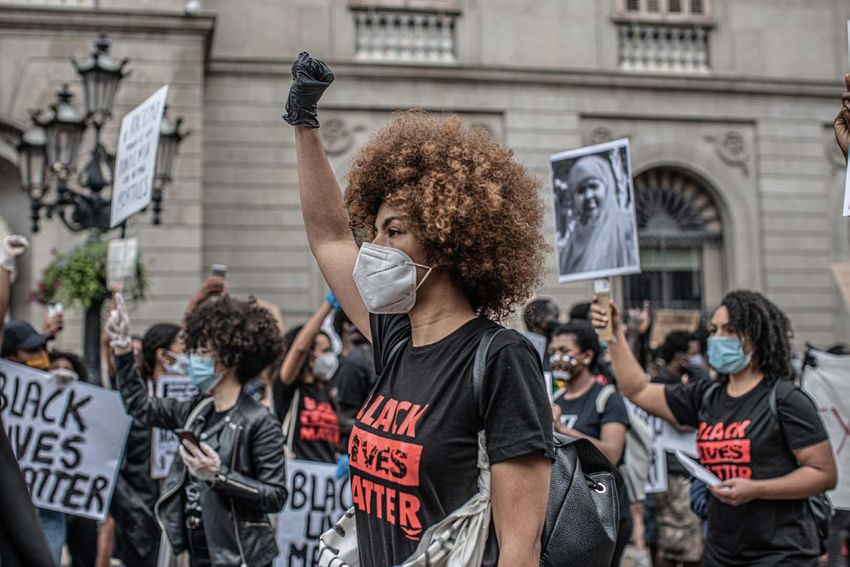
Europe is currently living as though we had 2.8 planets, consuming too
many natural resources and trashing the environment. Exploitation of
the world’s resources is skewed in favour of those who are already rich,
with millions of people in less-advantaged countries toiling to service
high-income country markets while bearing the brunt of worsening
environmental conditions and an unstable climate. But we only have
one Earth, and if we are to sustain it, we need to change our economies
in order to live within planetary boundaries, while ensuring that basic
needs and social wellbeing are taken care of, for everyone. Only in this
way can we avert disaster and ensure a just world for all.
Impressum
This report was written by Barbara Sennholz- The authors wish to thank the following For further information on the issues raised in
Weinhardt, Nick Meynen and Katy Wiese. colleagues for feedback: this paper please email bsennholz@oxfam.de.
Stephane Arditi, Irene Bello, Esme Berkehout,
The illustrative cases were written by Frank Braßel, Rebecca Buchholz, Khaled This publication is copyright but the text may
Jean-Pierre Schweitzer (digitalization), Diab, Saskia Fischer, Patrizia Heidegger, be used free of charge for the purposes of
Yamina Saheb (building), Emily Macintosh Elisa Iori, Eva Izquierdo, Albin Keuc, advocacy, campaigning, education and re-
(textiles) and Barbara Sennholz-Weinhardt Jan Kowalzig, David Labi, Max Lawson, search, provided that the source is acknowl-
(agriculture). The parts on migration and Diego Marin, Maria-Jose Moreno Ruiz, edged in full. The copyright holder requests
labour were written by Sarah Walker. Markus Nitschke, Celia Nyssens, Carolin that all such use be registered with them for
Philipp, Margherita Romanelli, Evelien van impact assessment purposes. For copying in
Some sections of this report are adaptations Roemburg, Anita Rötzer, Gonzalo Sánchez, any other circumstances, or for reuse in other
of published reports by other authors. The Sameerah Siddiqui, Joanna Sullivan, publications, or for translation or adaptation,
section ‘The economics of the climate crisis’ Isabella Szukits, Irit Tamir, Sarah Walker, permission must be secured and a fee may
is based on T. Gore. (2020). Confronting Jeremy Wates, Marita Wiggerthale, be charged.
Carbon Inequality: Putting climate justice at David Wilson and Tim Zahn.
the heart of the COVID-19 recovery, a media A special thanks to Quentin Monsieur Published by Oxfam Germany e.V. and
briefing by Oxfam and the Stockholm for IT assistance. European Environmental Bureau.
Environment Institute (SEI). T. Gore, M.
Alestig. (2020). Confronting Carbon Inequality Layout: Ole Kaleschke V.i.S.d.P.:
in the European Union: Why the European Marion Lieser
Green Deal must tackle inequality while Oxfam Deutschland e.V.
cutting emissions. Media briefing. Oxfam. Am Köllnischen Park 1, 10179 Berlin
(2019). Forced from home: climate-fuelled Tel.: +49 (0)30 45 30 69 0
displacement. Media briefing. E-Mail: info@oxfam.de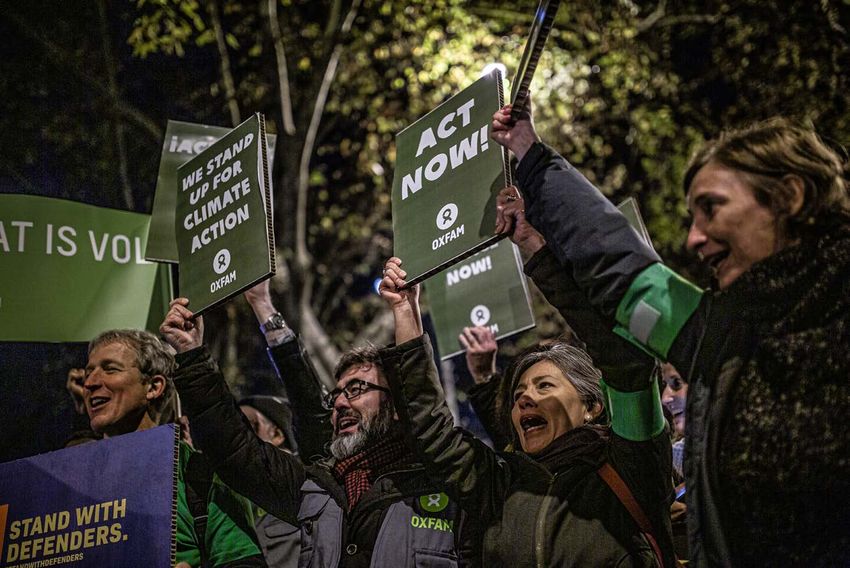
SUMMARY
The economy depends on people, who depend on
nature and the resources taken from it. Decades of
unfettered growth of extraction, production and trade
have fuelled a cycle of large-scale destruction. This          The wealth of European nations partly rests on
overexploitation is the result of political choices.           exploitative global structures that export the worst
We as civil society organisations from many parts              environmental costs to other parts of the world.
of Europe demand political change that will steer us           Meanwhile, the interdependence of economic and
away from the current destructive economy towards a            political power and their concentration lead to a
socially and ecologically just one.                            vicious downward spiral. Maintaining these injustices
                                                               and this dependency on growth are against the
Oxfam Germany and the European Environmental                   interests of the vast majority of people, but very much
Bureau (EEB) have examined the root causes of the              in the narrow, short-term interests of a powerful and
current crisis: past and present injustices between            extremely rich minority.
and within countries, the spiralling social, economic
and political inequality and associated concentration          The economics of the climate crisis are clear: the
of power, and a fixation and structural dependency             world’s richest 10% (around 630 million people)
on economic growth. This report focuses on the                 were responsible for over half of cumulative carbon
European economy and its role and responsibilities,            emissions between 1990 and 2015. The correlation
both globally and locally. It covers the domains               between growth of the global economy and the
in which people produce, distribute and consume                increase in greenhouse gases in the atmosphere is
products and services, whether this is done via the            close to perfect.
market economy or through other mechanisms.
                                                               The world has a problem of extreme affluence. The
The safe and just space for humanity has a just                role of the rich in global warming is symptomatic of a
social foundation and a hard ecological ceiling. To            broader reality: they have largely caused the climate
understand how we can arrive there, we need to see             crisis, and its solution lies mainly in their hands
the bigger picture. Our interconnectedness today is            due to their political power. Meanwhile, hundreds of
unprecedented, but the ugliest realities are kept well         millions still suffer the ravages of extreme poverty.
out of sight and mind for European consumers.
                                                               Oxfam and the EEB investigated four sectors
How we steer our economy, and what corporations                that exemplify the systemic problems plaguing
headquartered in the EU are allowed or not allowed             our economies: farming, textiles, buildings and
to do, affect the lives and livelihoods of people and          digitalisation. These showcase the extent and depth
the integrity of nature around the world. Currently, the       of the changes needed.
economies of the 27 EU member states plus the UK
are massively overshooting planetary boundaries.               Future-proofing farming: For many farming still has a
                                                               rustic image, but industrial farming is fuelling global
For the EU as a whole, we live as if there were 2.8            warming, polluting the environment, destroying
Earths. Overconsumption in Europe and other high-              biodiversity, hurting small farmers, damaging
income regions fuels environmental degradation                 communities and concentrating wealth and power in
elsewhere, which leads to large numbers of people in           the hands of large corporations. Studies and realities
less-privileged countries losing their livelihoods.            on the ground show that through agroecology we can
                                                               feed society, provide farmers with a fair living and
                                                               restore the environment.

                                                               Tailoring the textile sector to the natural world:
                                                               Producing our clothing and footwear consumes vast
                                                               amounts of raw materials, fossil fuels and water and
                                                               generates enormous quantities of waste throughout
                                                               the product lifecycle. Fast fashion is a major culprit.
                                                               Its adverse social footprint is massive, and includes
                                                               sweatshops, dangerous or unhealthy working
                                                               conditions and even forced labour. But there is a way
                                                               to refashion the textiles industry and cut it from a
                                                               different cloth.
                                                           3
Building back better: Buildings swallow up massive
quantities of space and resources, but lockdowns
during the COVID-19 pandemic have also highlighted
the serious impact of unequal access to living space,
daylight and ventilation. A housing crisis, combined
with speculative property markets, has forced
many people into living in substandard housing or
locations. The built environment and the construction
sector have a profound impact on the wider
environment and the climate. But there are ways to
make our built habitats more compatible with our               To break up existing exploitative structures,
natural habitat and to build back better than before.          we urge policy-makers to:

The invisible side-effects of the digital revolution:          •   Reverse financial flows from those countries
The green promises of the digital revolution, such as              that have benefited or are benefiting the
the paperless office, have been overhyped. Negative                most from these unjust structures to those
impacts include the mushrooming energy demands of                  that have been disadvantaged
digital technologies and the destruction and damage            •   Allow for more just trade and associated
caused by extracting the minerals required for their               structures of production
manufacture. At the socioeconomic level, digital               •   Allow people to exercise their freedom to
technologies have a tendency to widen inequalities                 movement
and also to raise serious concerns about privacy.
But we have it within our capacity to upload a new             To democratise the economy and reduce inequality,
operating system and reboot the digital revolution.            we urge policy-makers to:

These examples highlight the three pillars upon                •   Ensure much more equal access to
which a wellbeing economy must be built. We need to                productive assets
dismantle the exploitative structures that perpetuate          •   Ensure universal access to essential
inequality between countries, genders, races and                   services and social security
classes. We need to democratise the economy by
placing greater economic and political power in the            To become independent of the need for continual
hands of the many rather than the few. We need to              growth and to reduce material use, we urge policy-
make the economic system independent of growth to              makers to:
allow for a reduction in the resources it consumes.
                                                               •   Shift the political mindset from ever growing
When thinking about change, we need to think in                    gross domestic product (GDP) to aiming directly
terms of three layers: niches, regimes and cultures.               for wellbeing within planetary limits;
Niches are where the trailblazers operate, sowing the          •   Approach trade not from the perspective
seeds of the new economy. Regimes are the political,               of a fixation with growth but one that
economic and social structures that stabilise the                  realises commerce’s potential to support the
economy. Cultures are the commonly shared values                   transformation towards a wellbeing economy
and worldviews that influence what we are able to
imagine and what we want. Change needs to happen               Let’s be honest: these proposals for change are
at all levels, and change in one layer can often lead to       political at their core and, thus, themselves are a
change in another.                                             question of power. They touch upon questions
                                                               of ownership and privilege, things that are rarely
                                                               surrendered voluntarily. It is, therefore, not just about
                                                               the right argument or the most plausible analysis; it is
                                                               also about building a counterweight – in the political
                                                               sphere, in public discourse and in everyday contexts.
                                                               For this, we need to rally together around this
                                                               common cause: we need organisations that can work
                                                               together in alliances, strong movements that prepare
                                                               the ground for change and people who support the
                                                               fight. We hence invite people to join us or similar
                                                               campaigns and movements that demand those policy
                                                               changes needed to build an ecologically and socially
                                                               just economy.
                                                           4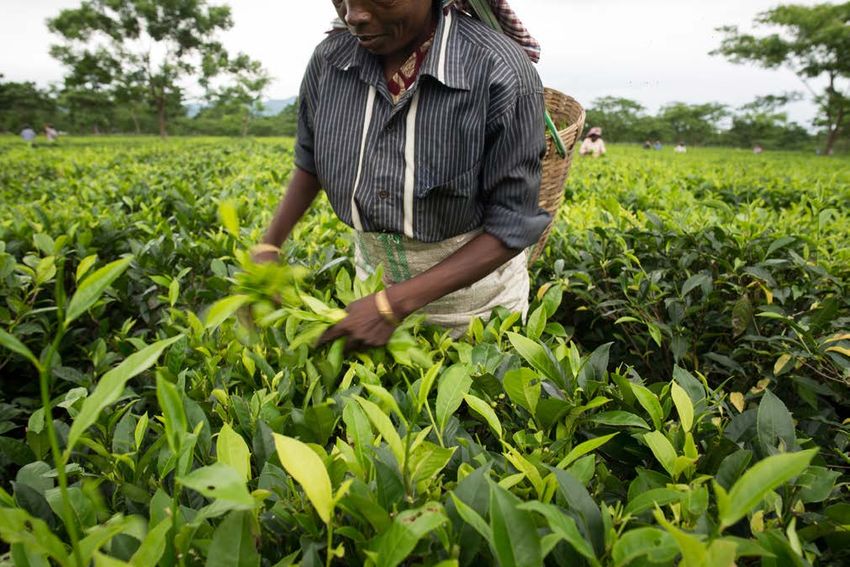
CONTENTS
LIST OF ABBREVIATIONS        6

INTRODUCTION       7

ASSESSING WHERE WE SHOULD BE AND WHERE WE ACTUALLY ARE               9
A new understanding of ‘the economy’       9
The doughnut economy 10

ECONOMIC DANGER ZONES            11
Europe’s global footprint   14

IDENTIFYING ROOT CAUSES          18
The neo-colonial foundations of European wealth 18
      Europe’s unfair advantage 18
      Neo-colonial structures 18
Extreme inequality: Rules and rulers 21
      Economic inequality 21
      The link between economic and political power 23
      Patriarchy and gender injustice 25
Growth dependency and material acceleration 26
The economics of the climate crisis 29
      Who is paying the price for this consumption? 30

ILLUMINATING THE PATH AHEAD           32
The futility of the industrial food system 32
       The trouble with industrial farming 32
       The concentration of power 34
Tailoring the textile sector to the natural world 36
       A threadbare system 36
       Cut from a different cloth 38
Building back better 38
       Impact of the built environment 38
       Boilerplate solutions 39
       Root cause: the market approach to the built environment 40
The invisible side-effects of the digital revolution 40
       Impact of digital technology on people and the planet 40
       The true costs of smartphones 41
       Rebooting the digital revolution 41

THE ROAD TO THE WELLBEING ECONOMY              42
Making change happen 42
The power(lessness) of the individual 43
Grown-up alternatives 44
      Breaking up exploitative structures 44
      Democratizing the economy and deconcentrating power    46
      Reducing the fixation and dependency on growth 47
Making the right political choice at every crossroads 48

REFERENCES      49

                                                      5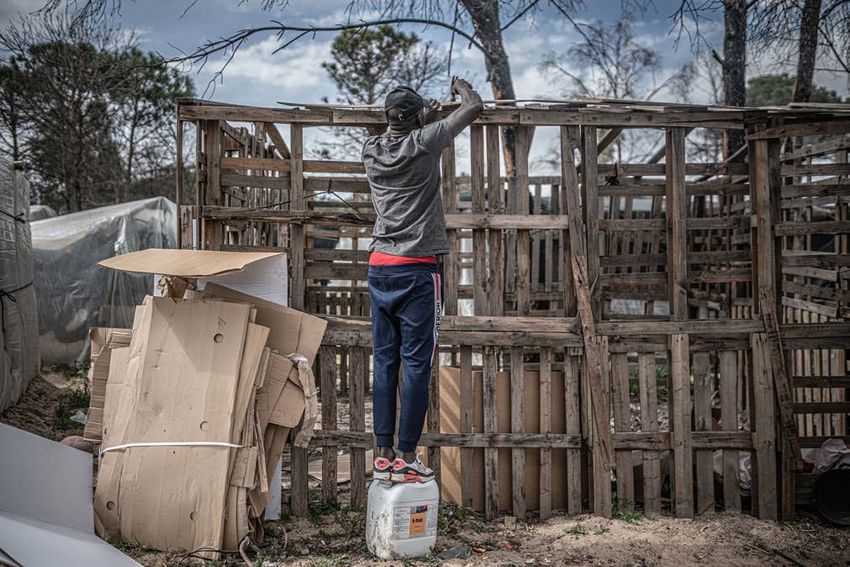
LIST OF ABBREVIATIONS
AI     Artificial intelligence
BIPoC  Black, Indigenous and People of Colour
CAP    Common Agricultural Policy
CSO    Civil society organization
EEA    European Environment Agency
EEB    European Environmental Bureau
EC     European Commission
EU     European Union
FAO    Food and Agriculture Organization
       of the United Nations
FDI    Foreign direct investment
GBV    Gender-based violence
GDP    Gross domestic product
GHG    Greenhouse gas
HDI    Human Development Index
ICT    Information and communications
       technology
ILC    International Land Coalition
ILO    International Labour Organization
IMF    International Monetary Fund
IOM    International Organization for Migration
IPR    Intellectual property rights
M&A    Mergers and acquisitions
MNC    Multinational corporation
MtCO2 Metric tonne carbon dioxide equivalent
NGO    Non-governmental organization
R&D    Research and development
SAP    Structural adjustment programme
SDGs   Sustainable Development Goals
UNCTAD United Nations Conference on Trade
       and Development
UNDP   United Nations Development Programme
UNEP   United Nations Environment Programme
WHO    World Health Organization
WTO    World Trade Organization

                                                  6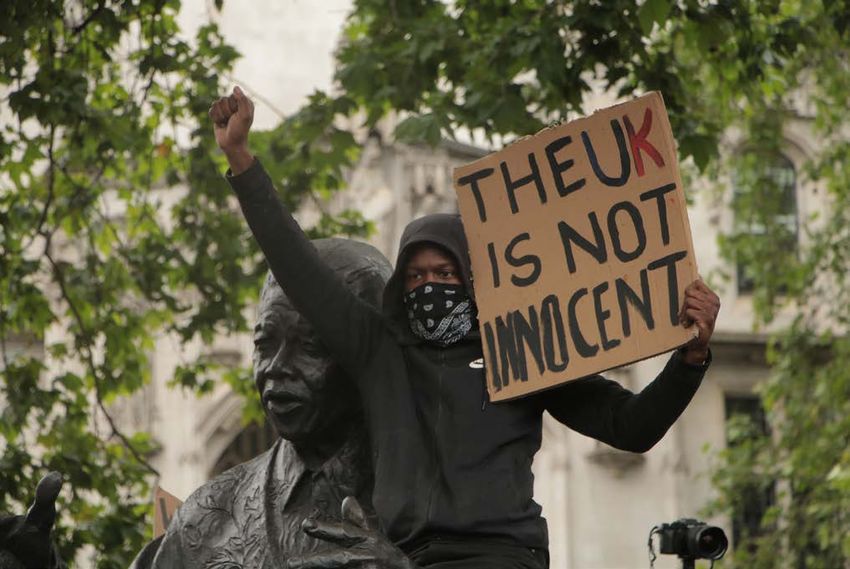
INTRODUCTION
The word ‘economy’ comes from the Greek words for
‘manage’ and ‘household’. A history of globalisation
has given new meanings to concepts of ‘the
household’ – from family and tribe to city and
country. In this hyper-globalised era in which we are
all connected, from resource conflicts to migration
and from climate change to pandemics, the very
meaning of the word ‘economy’ is changing again.
Economy, ‘’the managed household’’ is now about all
of us, humanity. And as humanity is facing growing
risks and widening inequality, we must ask what is
wrong with our current management of our resources
and how to manage things better.

The COVID-19 pandemic has shaken societies                     Our livelihoods and wellbeing, and those of future
worldwide, and more shocks are in store as our                 generations, crucially depend on us now respecting
environment destabilises. But this unfolding disaster          the carrying capacity of the planet to fulfil human
presents an opportunity for constructive change.               needs. We have to stop destroying the things we
We need to rebuild our resilience to cope with                 depend on. Through our economic activities and
the upcoming biological, political and economic                sheer numbers, we have a massive impact on nature,
emergencies.                                                   and with that impact comes great responsibility. To
                                                               transform the system, we need to look for solutions
The economy depends on people, and people depend               that are ambitious and innovative. We need solutions
on nature. Consumption, mining, deforestation,                 that are built on sound science and citizen support.
biodiversity loss and pandemics are                                               We need an economy that is fit
all interlinked.1 Exponential growth of                                           for the most crowded, connected
trade and production oils this wheel of                                           and nature-stressed century in the
destruction. The quantity and quality            We   need  an  economy           history of humankind. The economic
of the things and services we extract           that is fit for the most          model of exponential growth has
from the Earth really matter. Planetary            crowded, connected             brought us to the brink, but we now
health affects human health. Tackling              and nature-stressed            have an opportunity to heal and to
the root causes of climate change                                                 thrive.
                                                 century in the history
does not harm the economy; rather,
it helps to fix the way we live on this                   of humankind.           This report by Oxfam and the
Earth and that truly is ‘the economy’.                                            European Environmental Bureau
                                                                                  (EEB), which looks specifically at the
Exploiting people and the planet until they burn               economy of Europe, shows that no national economy
out is a consequence of political choices. When                is currently in a good state. The next section
governments give businesses money to cut down                  below assesses the current economy, explains our
trees and burn them to make electricity or to grow             understanding of it and introduces the specific
biofuels, what they are subsidising is the destruction         idea of the ‘doughnut economy’ as a way of setting
of the vital ecosystems we rely on and accelerating            concrete criteria and concepts to assess the quality
the ongoing mass extinction of wildlife. This is where         and state of our existing economies. The report then
we get to the ‘why’ of this report. We all shape ‘the          identifies three root causes of the current situation:
economy’, but big political choices steer it in certain        past and perpetuated injustices between and
directions. The economy is not a God-given system or           within countries, a vicious cycle of ever-increasing
one based on natural laws. Different political choices         concentration of economic and political power, and
exist, and everyone has the right to have a say.               a fixation and structural dependency on GDP growth.
‘Political’ means that we as citizens can change this          These ideas are then illustrated by four short and
design.                                                        concise sectoral analyses (farming, textiles, building
                                                               and digitalization). The concluding sections explain
                                                               the authors’ understanding of systemic change,
                                                               envisioning ways forward and identifying key policy
                                                               aims and associated interventions to bring us closer
                                                               to an economy that is socially and ecologically just.
                                                            7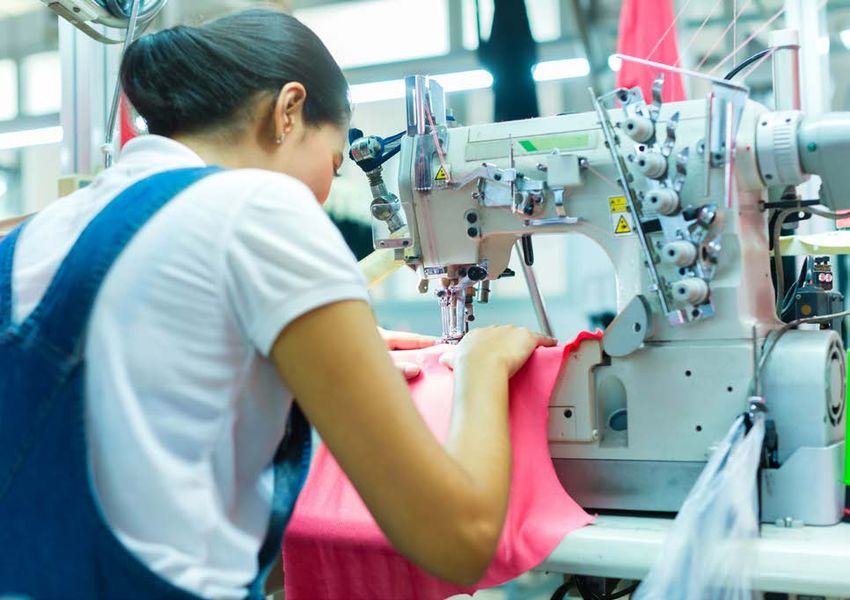
COP 25 climate rally in Madrid, Spain, 2019.
                                                            © Pablo Tosco / Oxfam

Research is never free from a certain degree of
limitations and bias as our findings will always be         South. However, we acknowledge the fact that the
interpretative and partial. It is therefore important       report gives little space for direct voices from the
to reflect about our own identity, biases, cultural         Global South. Hence, this report can be only a first
background as well as data and references.                  step of assessing where we stand today and the
                                                            vision for a future and needs continued work with
Firstly, this report is written by three white              partners and allies in the Global South.
authors from Europe as part of a project with
12 European CSOs from different sectors. The                Finally, we, the EEB and Oxfam, decided to focus
purpose of this report is to clarify the positions          on the wellbeing economy as concept as this
and provide reasoning and evidence for the                  report was written in the context of a European
political conclusions. This report focuses on the           project and with; first and foremost, a European
European economy and its role and responsibility            audience in mind. In a wellbeing economy, all
in the larger world economy, because an impulse             policies are framed in terms of human and
for changes of the global economy can and                   ecological wellbeing, not in terms of economic
should come from Europe due to its economic                 growth. All businesses provide dignified lives for
and political importance. The problematic aspects           their employees and exist to meet social needs and
that it describes – be it the violations of human           contribute to the regeneration of nature. A lot of
rights or the destruction of nature, historical debt        the innovations in economic theory have emerged
from colonial times or the concentration of power           from the academic community that identifies
in ever fewer hands – are by no means unique to             itself under the banner of “degrowth”, where
the European economic system. However, this                 the fundamental operating systems of nature
report is written for an audience living in Europe.         are finally brought into the economic models.
It targets allies and the wider interested public           However, we want to acknowledge the positive
that demands transformative system change. That             reality of many economic wellbeing alternatives
is why the report, focuses on the change needed             from the Global South that are emerging in the
and the changes that are possible in the European           forms of social movements, political parties or
economy, while acknowledging that a socially and            local strategies to transform the economic system
ecologically just global economy requires political         in their best interests. South critiques of growth
struggle and change in all parts of the world.              such as ‘’Buen vivir’’ or ‘’post-extractivism’’ in
                                                            Latin America or ‘’Ubuntu’’ in Southeast Africa are
Secondly, we, the authors, are not free from our            inspiring examples for alternative post-growth
own beliefs. We approached this research with a             frameworks. These alternative practices can open
particular Western perspective which guided the             perspectives in which people from the Global
report process. We attempted to be inclusive by             North and South can work together to challenge
taking into account perspectives from the Global            the status quo.

                                                        8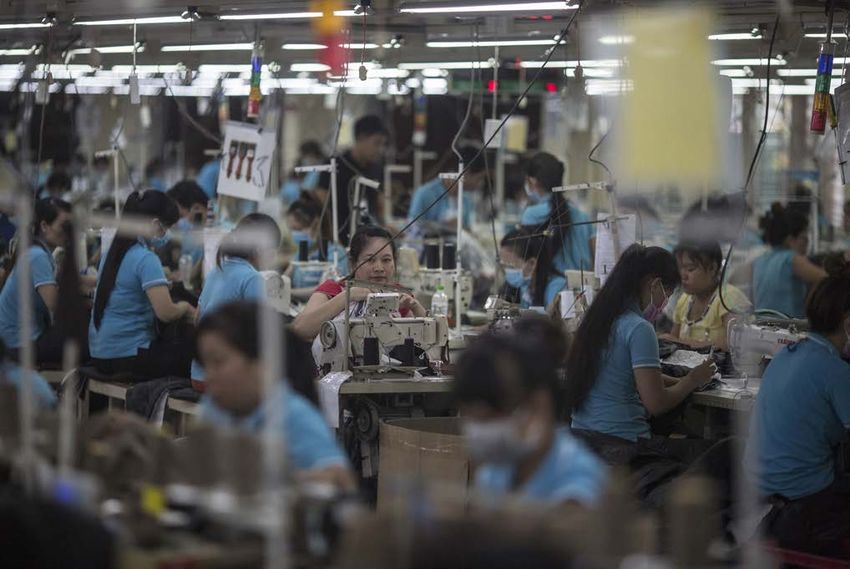
ASSESSING WHERE WE
SHOULD BE AND
WHERE WE ACTUALLY ARE
A NEW UNDERSTANDING OF ‘THE ECONOMY’

An internationally used, and narrow, definition of
‘economy’ is ”the state of a country or region in terms
of the production and consumption of goods and
services and the supply of money”.2 This ‘economy’ is
commonly measured by the even narrower construct
of gross domestic product (GDP). All this narrowing
down of ‘the economy’ obscures the inherently
social dimension of humans interacting to create
the economy. It also treats the goods
and services that nature provides to
people as an abstraction.                                                       ‘
                                                       A socially and
People are intricately linked to                    ecologically just            The economy’ is thus so much
economies in many different ways:              economy allows for a              more than anything a narrow GDP
for example, as consumers buying                                                 figure can capture. In this report,
                                             good life for all, leaving
clothing or food, as workers or                                                  ‘the economy’ is understood in a
entrepreneurs working for businesses              no one behind and              far broader sense: by economy, the
or owning them, as citizens voting or              enhancing gender,             authors mean the entire ‘realm in
actively engaging in the processes             environmental, social             which people produce, distribute
that lead to economic policies,               and global justice, and            and consume products and services
as carers looking after others or                                                that meet their wants and needs’,3
                                              fostering peace rather
engaging in other forms of labour, as                                            regardless of whether or not this is
activists protesting outside corporate                   than conflict           done via the specific mechanism of
headquarters. The economy is far                                                 markets. A socially and ecologically
more than what can be bought and                                                 just economy allows for a good life
sold in shops: of course, it is partly about things           for all, leaving no one behind and enhancing gender,
that come with a price tag, but it is also about the          environmental, social and global justice, and fostering
vital care work done within households, about the             peace rather than conflict. In particular, as this report
joint management of common resources such as                  argues, a socially and ecologically just economy is
lakes and forests, about having access to well-run            organised in such a way that:
schools and hospitals provided by the state or by
communities. It is about having a roof over your              •   It overcomes past injustices and structural
head, having enough healthy food to eat, being safe               discrimination instead of perpetuating or
and being looked after when you need help. Care and               deepening them
community are all a part of this.                             •   It ensures that economic and political decision-
                                                                  making power is dispersed in democratic ways
                                                                  rather than concentrated in ever fewer hands
                                                              •   It ensures that human economic activity is
                                                                  embedded in nature rather than destroying it
                                                                  through never-ending material acceleration and
                                                                  GDP growth.

                                                          9
THE DOUGHNUT ECONOMY

In this understanding, economies are expected                 The great majority of these human rights are
to fulfil the social needs of all people, reflected in        enshrined in international human rights norms and
human rights (the social and political dimension)             laws and are reaffirmed as political aims in the
while respecting planetary boundaries (the ecological         Sustainable Development Goals (SDGs), agreed by all
dimension). The safe and just space for humanity              United Nations member states in 2015.5
has a just social foundation while also respecting
the ecological ceiling, as illustrated in the doughnut        The doughnut’s outer ring – its ecological ceiling
model developed by economist Kate Raworth.                    – builds on the concept of planetary boundaries,
                                                              the nine critical processes identified in 2009 by an
Figure 1: The doughnut economy                                international group of Earth system scientists:

                                                              •   Climate change due to greenhouse gas (GHG)
                                                                  emissions
                                                              •   Ocean acidification, which endangers ocean
                                                                  ecosystems
                                                              •   Chemical pollution of the biosphere, such as by
                                                                  heavy metals and synthetic organic pollutants,
                                                                  which endangers ecosystems on land and in the
                                                                  oceans
                                                              •   Nitrogen and phosphorus loading, mostly from
                                                                  agricultural fertilisers, which leads to toxically
                                                                  low levels of oxygen in water
                                                              •   Freshwater extraction drying up lakes, rivers
                                                                  and aquifers and altering the climate
                                                              •   Land conversions, such as turning forests and
                                                                  wetlands into cities, farmland and roads, which
                                                                  destroy wildlife habitats and undermine the
                                                                  land’s role in continually cycling water, nitrogen
                                                                  and phosphorus
                                                              •   Loss of biodiversity, a declining number and
                                                                  variety of living species, which irreversibly
As Raworth explains, “The doughnut’s inner ring –                 changes ecosystems
its social foundation – sets out the basics of life           •   Air pollution through smoke, dust or pollutant
on which no one should be left falling short.”4 She               gases, which damages ecosystems and affects
defines these 12 basics as:                                       weather patterns, such as the timing and
                                                                  location of monsoon rains
•   Access to sufficient food                                 •   Depletion of the ozone layer through
•   Clean water and decent sanitation                             human-made chemical substances, such as
•   Energy and clean cooking facilities                           chlorofluorocarbons (CFCs), methyl chloroform
•   Adequate education                                            (CH3CCl3) and halon, which exposes us to
•   Healthcare                                                    harmful UV rays6
•   Decent housing
•   A living income and decent work                           With this doughnut concept in mind, the question is
•   Access to networks of information                         to what degree our global economy and the European
    and social support                                        economy, which is part of it, fall within or outside the
•   Gender equality                                           bounds of the doughnut.
•   Social equity
•   Political voice
•   Living in peace and justice

                                                         10
ECONOMIC
DANGER ZONES
Research by a team at the University of Leeds in the This echoes empirical evidence captured by another
UK provides empirical evidence that, while some metric, the Ecological Footprint, as defined by the
countries are doing better than others on the ratio of Global Footprint Network.8 The simplest way to define
social benefits to environmental damage, ultimately, an ecological footprint is the amount of resources
all 151 of the national economies they investigated necessary to produce the goods and services
fall short of being in the ecologically safe and necessary to support a particular lifestyle. It is a very
socially just space of the doughnut. Countries are comprehensive indicator and it is the most commonly
either failing to provide for basic social needs and used as a proxy for all ‘planetary boundaries’.9 Using
violating corresponding human rights or massively this measure, humanity as a whole is currently living
overshooting planetary boundaries, or both.7 as if there were 1.75 planets, instead of just one.
As can be seen from Figure 2, no national economy
is both within environmental limits in terms of its
ecological footprint and sufficiently highly rated
(‘living well’) on the UNDP Human Development Index
(HDI).
Figure 2: Living well vs living within environmental limits
Ecological footprint (hectares per person per year)
10 –
8–
6–
4–
2–
Living within environmental limits
Living well
–| | | | | | | |
0.3 0.4 0.5 0.6 0.7 0.8 0.9 1.0
Human Development Index
EU Member States World biocapacity Very high human development
Source: European Enviroment Agency (2020). SOER Report 2020.10
11The most common way of communicating around
the ecological footprint is through Earth Overshoot
Day, which marks the date each year when humanity’s
demand for ecological resources and services
exceeds what the Earth can regenerate in that year.11
Once we have passed this annual milestone, we
are eating into the Earth’s natural capital, making BOX 1
it harder to achieve future sustainability. In doing ECONOMIC QUICKSAND
this, we are using up some of the stock of natural
materials formed on Earth over the past four billion Overstepping planetary limits always comes with
years. Back in 1970, all was going well until 29 a massive social cost, even if cause and effect
December, but in both 2018 and 2019 the regenerable can be geographically far removed from one
portion of the Earth’s resources was finished up by another. This can be illustrated with the case of
29 July. After decades of this day arriving earlier each sand, the most mined material on earth: more
year and speeding up our decline, 2020 was very than 50bn tonnes of sand and gravel are mined
different. The global economy took a massive hit due every year.15 River sand is used to produce con-
to the coronavirus pandemic, with huge disruptions crete, and this is what most sand is used for.
to supply chains, and as a result Earth Overshoot But the amount of sand extracted from rivers by
Day fell more than three weeks later than the year humanity each year is double the quantity of new
before, on 22 August. This shows how, even in a time sand made by all the rivers in the world. Most
of lockdown and recession, humanity still took far of the world’s beaches are fast disappearing, in
more from the Earth than the Earth can regenerate. It many places directly linked to overextraction of
is as if we only sand from nearby rivers.16 At the mouth of the
briefly slowed Maha Oya river in Sri Lanka, more than 1,000
Environmental down a comet people lost their homes as their beach eroded at
that is still going a rate of 12-15 metres a year due to heavy sand
defenders all around
to hit us, and we mining.17
the world face did it in a way
discrimination and that multiplied Another result is that illegal sand mining is now,
violence, though the human suffering. in economic terms, the largest environmental
threat level varies crime in the world.18 A multitude of sand mafias
The overuse have killed hundreds of people in India alone.19
from place to place,
of resources Thousands are trying to stop them. The bravest,
and female defenders and the such as Sumaira Abdulali, continue their struggle
in particular face transgression even after suffering attacks and intimidation.
gendered challenges of planetary As she was being beaten, one man asked: “Do
rooted in patriarchal boundaries not you know who I am?” His father was the owner
only have an of a construction materials company with a near
cultural norms.
environmental monopoly in the area and also a prominent local
dimension but, politician. The point being hammered home
at their very was: don’t mess with us. But that’s exactly what
heart, also have a social one, as they come with Abdulali did. Two years later, she launched a
massive violations of human rights. Environmental lawsuit and in 2010 the High Court of Bombay
defenders all around the world face discrimination banned sand extraction, a ban which remained in
and violence, though the threat level varies from place until 2015.
place to place, and female defenders in particular
face gendered challenges rooted in patriarchal The reach of the sand mafias does not stop
cultural norms.12 Globally, 13% of the environmental at the country’s borders. One of them tried to
conflicts documented by the Environmental Justice silence an author of this report following the
Atlas involved assassinations of environmental publication about sand mafias on the UK website
defenders.13 Analysing almost 3,000 environmental The Ecologist – by putting pressure to take the
conflicts, researchers have found that Indigenous article down.20 Globally, illegal sand mining is
Peoples in particular face roughly twice the danger of estimated to be the largest environmental crime
criminalisation, violence and assassination as other by far, bigger than all other environmental crimes
communities.14 They face political violence precisely combined.21 There are thousands of stories
because through their actions they are seeking to similar to that of Sumaira Abdulali.
stop the extractivist and destructive economy.
12BOX 2
POOR PICKINGS FOR
INDIAN TEA WORKERS
Workers on tea plantations in the Assam
region of India are being systematically
Tea workers in India. © Roanna Rahman / Oxfam India denied their rights to a living wage and
to decent working and living conditions,
As long as governments fail to regulate so that suffi- according to a 2019 report by Oxfam.33
cient resources are kept in the ground, people will in- The fact that they are unable to cover their
creasingly refuse to sit back and wait until the prover- basic living costs is starkly illustrated by
bial comet hits us. They will take things into their own the finding that 50% of the households
hands, uniting in what scientists are calling ‘”the glob- visited by the researchers owned ‘below
al movement for environmental justice”,22 which has poverty line’ ration cards issued by the
received broad support in the scientific community. state government. Tea workers also
Some systems scientists, like Brad Werner of the Uni- struggle to obtain timely and good quality
versity of California, have stated that our best hope of healthcare, to access clean drinking water
avoiding a total col- and to provide their children with a decent
lapse are resistance education.
movements, which As long as govern-
he describes as ‘en- The root causes of this are deeply embed-
ments fail to regulate
vironmental direct ded in the (colonial) history and evolution
action, resistance so that sufficient of the Indian tea industry, which has led to
taken from outside resources are kept in a pervasive inequality of power between the
the dominant culture, the ground, people will women and men who produce tea and the
as in protests, block- increasingly refuse to Indian as well as international brands and
ades and sabotage by supermarkets that sell it to consumers. For
sit back and wait until
indigenous peoples, every kilogram of packaged Assam tea that
workers, anarchists the proverbial comet is sold, tea brands and supermarkets take
and other activist hits us. the lion’s share – up to 95% in some cases
groups’.23 – while a marginal cut – less than 5% – re-
mains on tea estates to pay workers. These
Human rights violations do not affect only environ- inequalities in how shares of the end con-
mental defenders or local communities negatively sumer price of tea are distributed contrib-
impacted by environmental destruction but are also a ute to poverty and suffering for the women
core feature of working conditions in the global econ- and men working on Assam tea estates,
omy. It is well documented that workers are being descendants of those families brought to
denied basic rights such as freedom of association, Assam as forced labourers under British
adequate health and safety provisions, living wages colonial rule. Additionally, this is creating
or freedom of movement and that they are subject to a sustainability crisis for the wider tea in-
gender discrimination and physical and psychological dustry in parts of India. Women bear the
violence when producing goods and services that heaviest burden of this systemic inequality,
are sold in high-income countries.24 Taking a closer as they are concentrated in the lowest-paid
look at human and workers’ rights in the production tea-plucking roles and must also shoulder
of goods – be it tea from India,25 cacao from West most of the unpaid domestic care work.
Africa,26 pineapples from Costa Rica,27 bananas from Source: Oxfam. (2019). Addressing the Human Cost of
the Philippines,28 grapes from South Africa,29 textiles Assam Tea.
from Pakistan,30 mining in Brazil,31 or meat and poul-
try production in the USA32 – it becomes evident that
the violation of rights is not an aberration but a struc-
tural feature of the global economy.
13Migrant workers from across the world face a of shrimps, which are sold internationally.35
heightened risk of human rights violations because Another example is the lack of protection during
their circumstances render them particularly the COVID-19 pandemic, with protection measures
vulnerable to exploitation and abuse, as elaborated often not covering migrant workers.36 Migrant
in depth in a 2019 report by the International domestic workers in Lebanon, for example, especially
Organisation for Migration (IOM).34 Contemporary Ethiopians and Nigerians, were left stranded on
border controls and immigration regulations shape the streets by their employers, with no shelter or
and regulate market access for migrant labour. compensation and unable to return to their own
Inequalities both globally and within the European countries.37 Migrant workers form a significant part
Union mean that some migrants may be prepared to of the workforce – more than a quarter of the world’s
take on jobs with wages and conditions that many farm work is done by migrants,38 for example – but
nationals would not consider or, for undocumented they are not adequately protected.
migrants, would be illegal under local labour
legislation. This can lead to many migrants becoming Other dimensions of structural discrimination also
’precarious workers’, who are exposed to potentially play an important role here, as analysed by the same
exploitative control by employers. This both produces IOM report, which points to the particular risks faced
and exacerbates the vulnerability of migrant workers. by women and girls.39 Other research commissioned
by Oxfam and undertaken by the French research
This vulnerability institute BASIC came to similar findings. It examined
can have different 12 product sectors across different continents and
For European citizens, specific causes: a found that wages are particularly low in sectors
person’s right to where women form the majority of the workforce.40
just getting dressed in
stay in a country Research also shows that women’s rights are
the morning and having might depend on particularly at risk in the textiles industry.41 One
muesli and coffee for their employment sector where this discrimination is especially visible
breakfast implies, with- status, making them is the care sector, which is explored in more detail
in our current system, wholly dependent below.
on a particular
dozens of transactions
employer. They may EUROPE’S GLOBAL FOOTPRINT
all over the globe. How- have no legal right
ever, the key casualties to stay, making it Globally, economic activities have become so
of these transactions dangerous for them radically intertwined that value chains have become
are not in sight of the to report to the opaque and the harshest negative consequences
authorities in case are geographically removed from their sources. For
same citizens but live
of rights violations. European citizens, just getting dressed in the morning
in the most invisible National laws and having muesli and coffee for breakfast implies,
parts of the world. protecting workers within our current system, dozens of transactions all
in the country of over the globe. However, the key casualties of these
destination may transactions are not in sight of the same citizens but
not apply to migrant live in the most invisible parts of the world.
workers or are not properly enforced, or migrant
workers may not be informed about or aware of The European economy is not just one of many in
their rights. The costs of migrating or arranging an the world: it is one of the largest economic blocs
employment contract mean that they can fall into alongside with the US, China and Japan 42 and the
de facto debt bondage due to excessive fees. They home base of many transnational and multinational
may not speak the local language and there might be corporations whose supply chains span the globe.
structural discrimination and racist attitudes in the For the sake of gains in profit at minimal cost, these
country they migrate to. They are rarely unionised global companies headquarter themselves in high-
and are more likely to be employed on temporary income countries such as those in Europe but largely
contracts, to earn lower wages, to lack job security shift their production into (or ‘invest in’) countries
and to carry out tasks that are not compatible with where they can take advantage of cheap labour,
working from home. lower social contributions and lower environmental
standards. Political elites in economically
One illustrative example are the rights violations disadvantaged countries often perceive foreign direct
in the South Asian seafood sector, where migrant investment (FDI) as the only way to create new jobs,
workers are subject to acute physical and verbal which gives multinationals immense power in the
abuse, unsafe working conditions and deprivation to global economy and creates dependencies.43 The
the point of hunger while working in the production way Europe structures its economy, and what the
14corporations headquartered here are allowed or not As mentioned earlier, humanity as a whole is living
allowed to do, affects the livelihoods of people and as though there were 1.75 planets in terms of its
the integrity of nature around the world. ecological footprint. However, the EU as a whole
is living as if there were 2.8 planets – striking
Economic pathways and individual situations are evidence of our disproportionate claim on nature.
undoubtedly influenced by many different This transgression is taking place while Europe is
factors, and decision-makers in business and failing to meet its own social aspirations. The social
policymakers within the EU and some of its more indicators underpinning the doughnut in Figure 3 are,
influential member states are not the only influencers for reasons of comparability, the absolute minimum
in this game. However, what a number of empirical social thresholds in a worldwide comparison.
studies have found (and as explored below), is A relatively high performance on these minimum
that production and consumption in Europe use standards should not obscure the fact that Europe
up a disproportionate share of the world’s natural is not meeting basic social aims, as indicated by
resources due to the sheer volume of material inputs the EU’s Social Scoreboard – for example, in terms
they use and their partially neocolonial structures of of unmet healthcare needs or the gender gap in
production, which contribute to violations of rights employment.44
and the denial of opportunities in more economically
disadvantaged countries. The human rights violations associated with
environmental destruction and committed against
Using the doughnut concept described earlier, we can environmental and social rights defenders, as well as
see clearly that the economy made up of the 27 EU the violations of workers’ rights, are intimately linked
member states and the UK significantly transgresses to the European economy, as a significant portion
planetary boundaries (Figure 3). of this exploitation occurs across the supply chains
of European companies. For example, violations of
workers’ rights are taking place in the production
Figure 3: EU countries and planetary boundaries, 2018 of goods that are sold in European supermarkets,45
which themselves are failing to transform their
business models and take adequate action to prevent
EU-28 these abuses.46
One does not need to look very far afield, as evidence
is mounting of severe violations of the rights of
migrant workers in the production of fruit and
sphor
us vegetables in the south of Europe itself: these include
Pho Nit
ro
ge violations of health and safety regulations, unsanitary
sical Bound
phy ary living conditions, excessive working hours and pay
Bio
n
ns
below the legal minimum wage, as well as physical
sio
oun
ial F dat
mis
oc NU SA i and sexual violence.47 Again, intersectionality48
CO� E
LE
on
S
B l u e Wa t e r
plays a key role. Precarious working conditions
IN
LS
EN
intersect with race, gender and age. Migrant workers
EM
M ater
ED
Q
face racial discrimination, and instances of sexual
E
DO SS
i al F
harassment are rife across diverse sectors. Migrant
oo
tp
women working in the production of strawberries in
e
ng
ri n
LS Life Satisfaction
ha
C
t
e LE Healthy Life Expectancy
Ec
olo
g ic a d- Us NU Nutrition Spain and tomatoes in Italy can face serious sexual
l Footprint Lan SA Sanitation
IN Income Poverty violence and even rape, while the products they
EN Access to Energy
Source: O’Neill et al. (2018). ED Education help grow are sold by retailers in many EU member
SS Social Support
Graphic: Andrew Fanning.272 The EU28 doughnut
was calculated when the United Kingdom was
DQ Democratic Quality states.49
EQ Equality
still a member of the European Union. EM Employment
This is directly linked to migration policy in Europe.
Criminalising people’s mobility and denying access to
resources, services, and rights to those deemed to be
illegally migrating and residing in a place serves as a
method for the creation of ‘cheap labour’.50 Scholars
argue that Europe’s border regime effectively
produces a clandestine cross-border economy,
and thus “a labour market with no rights, but which
increasingly performs its task within the centre of
Europe’s formal economic growth”.51
15BOX 3
MIGRATION AS AN ACT OF
SURVIVAL AND HOPE
People have always moved, and it is only
more recently that human movement has
been regarded as ‘suspect’.52 For instance,
the 17th and 18th centuries saw vast move-
ments across the globe as a result of European A sub-Saharan migrant builds a shelter next to the strawberry
empire building, slavery and colonialism, as plantation outside Cartaya, Spain, 2020.
© Pablo Tosco / Angular
borders shifted and changed. Today’s migra-
tion flows often follow the trade and social
pathways established during that period.
Rather than signifying mobility, the figure
of the migrant relates more to race, gender, Added to this is the relative disregard for the rights
class and nationality in the European popular and needs of people migrating within the EU. One
imagination. It is a construct that is inherently example of abject working conditions is the meat
racialised, deriving from migration regimes, industry, and in particular its slaughterhouses.
themselves often based upon historical colo- European migrants from member states with lower
nial frames of reference and cultural norms. wage levels, such as Romania or Poland, move to
member states with higher wage levels, such as
Rather than focus upon the migrant as a Germany or the Netherlands, and work in these
problematic figure, as crisis narratives would places in exploitative and abusive conditions. Often
have us do, we would do better to think about these migrants come as own-account workers,
the migrant as simply a person who moves. which allows employers to circumvent regulation on
It is the law that grants some people the minimum wages, paid leave, pensions and health and
right to move and others not, creating global other types of insurance.55
hierarchies of movement. It is not migration
per se that is problematic, but rather the means Another highly problematic form of employment
and conditions under which people migrate. relates to unofficial live-in care workers, who offer
Sociologist Mimi Sheller’s concept of mobility 24-hour support to Europeans who can afford such
justice shows how power and inequality inform care arrangements for their aged parents or relatives.
the governance and control of movement.53 Again, the care providers are often European or non-
Viewing the movement of people through a European migrants, who leave their own children in
lens of historical justice shows how migration the care of relatives at home, thus creating global
is simply a part of human life. It is unjust and care chains.56 More generally, work in the care sector
immoral border controls that make migrants is underpaid and undervalued as well as feminised.
more vulnerable and expose them to harm, Moreover, as both these examples show, even
even death. For example, there is a direct seemingly domestic labour relations and value chains
correlation between the increase in irregular have an international dimension.
migrants in Europe and the implementation
of stricter visa requirements following the The bottom line is that if these violations and
Schengen Agreement which curtailed the ecological destruction were not to occur, some
legal movement of people between North products and services might have a higher price tag
Africa and Europe with seasonal labour status. – not because they would cost more, but because we
Migration can be considered “an act not only would not be able to shift the cost onto other people
of survival but of imagination”,54 and is a or nature. Without the unsustainable extraction
tactic of creating a future and of maintaining of natural resources and the overloading of the
hope. It is simply that, for some, this hope is Earth’s capacity to absorb human-made waste and
not accessible via legal channels, meaning emissions, and the denial of equal rights to most of
that some lives are perceived as being more humanity, the progress in wellbeing that some have
disposable than others. achieved through capitalist production since its very
beginnings would not have been possible.
16Drawing attention to such exploitation sheds light to more environmental degradation, including the
on a perverse aspect of the current global economy: climate crisis, and so the vicious circle continues.
over-consumption in Europe and other high-income
regions as well as by rich elites everywhere is fuelling Assessing the merit of the European economy –
environmental degradation elsewhere, which means namely its ability to fulfil the social needs and rights
that large numbers of people in less privileged of all while remaining within planetary boundaries – it
countries and positions are losing their livelihoods. becomes obvious that a significant part of the wealth
Global production is organised in a way that exploits and well-being of people living in Europe is due not
the vulnerable situation of those at the bottom of to the excellence of the European economic system,
the economic ladder compelled to work for below its efficiency, good governance, innovative potential
living wages or forced to migrate, while restriction of or the skills and willingness of the population to
the ability to move perpetuates and aggravates this work well and hard, but to plain and simple over-
vulnerability. This exploitation allows for such low exploitation of Nature and denial of the rights of large
prices that consumption is further fuelled, leading parts of the world’s population.57
crea
ting
str
uc
domi tu
na n ra
l
uge ence tm
ar
de
H flu aws ke
pe
in n l l a rg e s u m s t
nd
»TOO
BIG TO o for
en
po
FAIL« lo
sit
ce
b
i on
by
ing
LARGE POLITICS
CORPORATIONS
and their owners
ins
in e
uf
ir a t i o u r
exc
ow ns
f fe
fi c
unc
nt
rs
or a v o
es
ie
ct
ins
ta
siv
i
on
ne
co xa
ve
uff
ti o
m
s
dit
ep
f
n an
le
te pe
ici
i
d lo o p h ole s
ro
on
R u corp e
ct tit
en
io io n
al
no
tp
on la w
Infographic: © Oxfam Deutschland e.V. Icons by thenounproject.com
ec
om f in
th
ro
e
larg and
tio tell
te
ic ectu
c
n aid al pro
of m perty
hu eas
ma ures
nr
igh
ts a
nd n
ature
services and infrastructure
for provision of social
Tax incomes lacking
raising profits and
purchasing prices
in poverty harder
destruction hits
and low wages
shareholders
people living
Ecological
value for
ruinous
SOCIAL INEQUALITY
One of the root causes of inequality is the so-called Medici vicious cycle: a situation where the already rich and powerful can disproportionately
influence political rules, which due to their influence, are designed in a way as to ensure that they benefit even more in financial terms. As most of
the world’s riches individuals have attained their position through the ownership of large corporations, corporate wealth and individual wealth – and
influence – are intimately linked.
17IDENTIFYING
ROOT CAUSES
It is impossible to build a socially and ecologically The abolition of slavery and the end of colonialism did
just economy without tackling the root causes of the not end the exploitation of Black people. For example,
persistent, and in key aspects deepening, dynamics racial capitalism, which can be defined as “the process
of exploitation: the dependency on growth and of deriving social and economic value from the racial
associated material acceleration of the economy, the identity of another person” is a very common phenom-
vicious circle of economic and political concentration enon in our everyday lives.61 Using images of Black
of wealth and power and the perpetuation of people in advertising or marketing is a common ex-
exploitative structures, which allow costs to be ample of racial capitalism in practice62 – for instance,
shifted onto others. when a company or a university uses pictures of Black
people in its marketing materials or on its website to
THE NEO-COLONIAL FOUNDATIONS make it appear more diverse, and hence attract more
OF EUROPEAN WEALTH customers or students. The rapid expansion of the
Black Lives Matter (BLM) movement only underscored
Europe’s exploitation of nature and people, shifting this fact. Although BLM emerged as a direct response
costs onto others while accruing benefits and wealth to police violence, it also links economic injustices
for itself, does not come from nowhere. The position and racial capitalism to historic oppression.63
of the EU economy within the world economy is
partly an outcome of past colonial injustices that are Neo-colonial structures
perpetuated today through neocolonial structures.
Political hegemony, structural adjustment, free trade
Europe’s unfair advantage and investor dispute tribunals were common mecha-
nisms for former colonial powers to secure economic
Europe’s present-day prosperity is power in the neocolonial period, and
at least partially shaped by the deep they still are. For example, structur-
historical injustices and inequalities Europe’s present-day al adjustment programmes (SAPs)
on which the economic system is prosperity is at least imposed by the World Bank and the
built. Current distributions of wealth IMF on low-income countries saw
and power can be traced back to a
partially shaped by the loans provided on the condition that
history of classism, slave trading, deep historical injus- recipient governments introduced
colonialism and exploitative terms of tices and inequalities far-reaching policy reforms and lib-
trade in the neo-colonial era. Without on which the economic eralised their economies, including
the expansion of plantations in Africa, system is built. through privatisation, opening their
the Caribbean and South America and markets to trade and financial flows
the exploitation and suffering of Black and making cutbacks in public ex-
slaves, the modern world as we know penditure. However, many of these
it would not exist. Profits from slave trading and from countries soon found that SAPs had detrimental
goods such as sugar, tobacco and cotton harvested effects on livelihoods and led to increasing levels
by Black slaves fuelled industries in Western coun- of inequality.64 The same structural problem applies
tries and helped them to transform their economies. to the global trading system. In many respects, the
In the 18th century, slavery was a significant engine strings attached to so-called ‘free trade’ deals un-
of economic growth in Europe. For example, by 1770, dermine the policy space needed for environmental
around a tenth of GDP in the Netherlands was based protection and for the protection and fulfilment of
on the transatlantic slave trade.58 Britain’s Royal human rights in disadvantaged countries. Trade deals
African Company was able to buy a slave for an av- usually promote economic structures that favour
erage of £3 and sell them for £20, and so the profits large corporations and the tiny elites that own them,
made on each journey were substantial. Some of
59
be it local or international elites, rather than fostering
the wealth and assets accumulated from this trade sustainable and inclusive local and regional econo-
by European countries still exists today. And when mies for the benefit of all. This means that the current
slavery was abolished, it was not slaves who were international trade and investment structure works to
compensated for decades of unpaid forced labour, the detriment of low-income countries, and lower in-
violence and oppression, but slave owners for losing come workers as well as marginalised groups within
their ‘property’.60 those countries, and that financial flows and flows of
resources aggravate injustice.
18You can also read


