2012 KOICA - Korea University Master's Degree Program in International Development - February 16, 2012 February 28, 2013 Seoul, Korea ...
←
→
Page content transcription
If your browser does not render page correctly, please read the page content below
Program Information

              2012 KOICA – Korea University
               Master's Degree Program in
                International Development

                      February 16, 2012 ~ February 28, 2013
                                Seoul, Korea

 Korea International Cooperation Agency               Korea University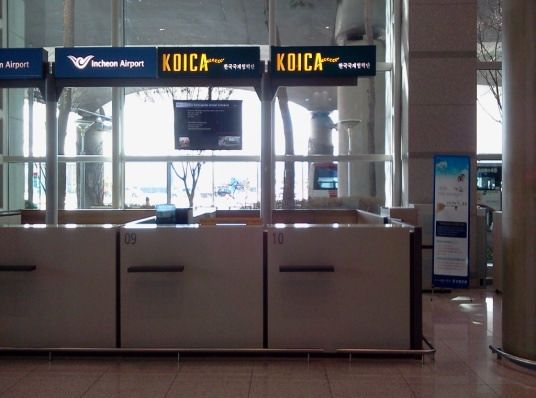
CONTENTS

TABLE OF CONTENTS

PART I. KOICA & SCHOLARSHIP PROGRAM               02
PART II. PROGRAM OVERVIEW                         05

PART III. HOW TO APPLY                            06
        1. APPLICATION ELIGIBLILTY                06
        2. APPLICATION PROCEDURE                  06

PART IV. PROGRAM CONTENTS                         09
        1. ACADEMIC SCHEDULE                      09
        2. ORIENTATION                            10
        3. CURRICULUM                             11
        4. EXTRA CURRICULAR ACTIVITIES            13

PART V. TRAINING INSTITUTE                        14
        1. GENERAL INFORMATION                    14
        2. ACCOMODATIONS                          16
        3. OTHER INFORMATION FOR INT’L STUDENTS   17

PART VI. REGULATIONS & SUPPORT SERVICES           23
        1. REGULATIONS                            23
        2. SUPPORT SERVICES                       24

PART VII. CONTACTS                                29

APPENDIX 1. HOW TO JOIN THE KOICA COMMUNITY       30

APPENDIX 2. STORY ABOUT KOREA & KOICA             31

APPENDIX 3. HOW TO GET TO THE ICC                 33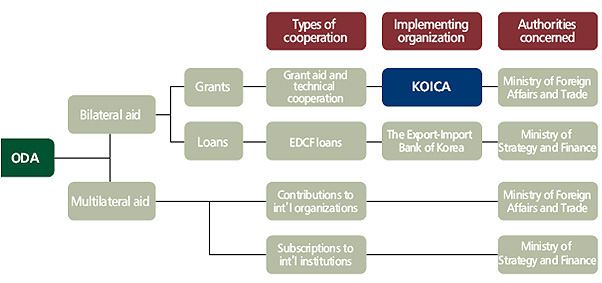
PART I. KOICA & SCHOLARSHIP PROGRAM

        Part I             KOICA & SCHOLARSHIP PROGRAM
              The Korea International Cooperation Agency was founded as a government agency
              on April 1, 1991, to maximize the effectiveness of Korea’s grant aid programs for
              developing countries by implementing the government’s grant aid and technical
              cooperation programs.

              In the past, development cooperation efforts were focused on meeting the Basic
              Human Needs (BHNs) of developing countries and on fostering their Human
              Resources Development (HRD).

              However, the focus has now shifted to promoting sustainable development,
              strengthening partnerships with developing partners, and enhancing the local
              ownership of beneficiaries.

              Additionally, global concerns such as the environment, poverty reduction, gender
              mainstreaming, and population have gained significant importance among donor
              countries.

              Due to the continuously changing trends in development assistance efforts and
              practices, KOICA is striving to adapt to these changes by using its limited financial
              resources effectively on areas where Korea has a comparative advantage.

              In particular, since Korea has the unique experience of developing from one of the
              poorest countries in the world to one of the most economically advanced, this
              knowhow is an invaluable asset that helps KOICA to efficiently support the
              sustainable socio-economic development of its partner countries.

2...Program Information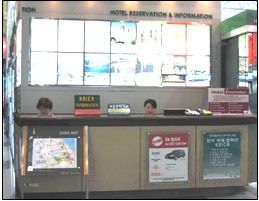
PART I. KOICA & SCHOLARSHIP PROGRAM

Korea’s ODA Framework

Korea’s ODA consists of three types of aid: Bilateral Grants, Bilateral Loans, and
Multilateral assistance.

Bilateral Grant aid comprises of technical cooperation and various types of transfers
(made in cash, goods or services) with no obligation for repayment implemented by
KOICA under the Ministry of Foreign Affairs and Trade. Bilateral Loans are provided
on concessional terms under the name of the EDCF(Economic Cooperation
Development Fund) implemented by The Export-Import Bank of Korea under the
Ministry of Strategy and Finance.

Multilateral assistance is delivered either as financial subscriptions or contributions to
international organizations.

                                                                                Program Information...   3
PART I. KOICA & SCHOLARSHIP PROGRAM
Korea's Experience and KOICA's Program for Human Resources Development
Human Resource Development (HRD) has been the most important factor in Korea's
escape from the vicious cycle of poverty and underdevelopment that had existed for
many decades. With scant natural resources, HRD played a vital role in modern
Korea's development. Clearly, Korea has emerged as an exemplary showcase of
national development powered by human resources development.
From its own development experience, Korea came to fully recognize the
significance of HRD, specifically in regards to Korea's collaboration with other
developing countries. With much experience and know-how in HRD, Korea can
contribute greatly to the international community by sharing its unique development
experience with other nations.
Since its establishment in 1991, KOICA has supported a variety of international
cooperation programs for HRD, mainly in project-type aid form focusing on education
and vocational training with a focus in building a foundation for HRD.
The training and expertise-sharing programs help developing countries build
administrative and technical expertise in both the public and the industrial sectors. In
order to share experience and knowledge at the grass roots level, KOICA dispatches
Korea Overseas Volunteers (KOV’s) to render services in the fields of education,
regional development, computer science, healthcare and nursing. Approximately
3,776 KOV’s have been dispatched to thus far.
The training program provides opportunities to individuals from developing countries
to gain first-hand knowledge of Korea’s development. The purpose of this program is
to enable the trainees to apply what they have learned for the development of their
home country or local community. Between 1991 and 2009, KOICA offered 2,256
training courses to a total of 35,716 trainees from some 167 countries. There is a
wide range of topics covered including administration, economic development,
science and technology, information and communication technology, agriculture/
forestry/fishery, and healthcare. In order to meet the constantly changing needs of its
4...Program InformationPART I. KOICA & SCHOLARSHIP PROGRAM
partner countries, KOICA is always striving to renovate and improve their HRD
programs.
Types of KOICA Training Programs
KOICA offers five major types of training programs:
1. Country Training Program
Tailored programs that are specifically designed for an individual partner country
2. Regular Training Program
Programs that are open to any interested partner countries
3. Special Training Program
Programs that are temporarily available owing to particular commitments of the
Korean as well as partner governments
4. Joint Training Program
Programs conducted in partnership with international organizations and other
agencies
5. Scholarship Program
Master’s degree programs offered to individuals from partner countries
Program Information... 5PART I. KOICA & SCHOLARSHIP PROGRAM
KOICA's Scholarship Program
With a mission to nurture talented students from developing countries, KOICA invites
high-caliber students from developing countries and helps them gain professional
and systematic knowledge that will play a key role in their home country’s
development.
To accomplish this mission, KOICA has been operating master’s degree courses
with leading Korean universities in the fields of economics, trade, women’s
empowerment, rural development, etc.
In particular, this program has significantly strengthened the relationships between
Korea and the students’ home countries. Students, who have been given an
opportunity to see Korea’s experience in poverty reduction and socio-economic
development, will gain a deeper understanding of Korea and contribute to the future
social, political and economic ties between the two nations.
From 1997 to 2009, the program has assisted a total of 771 students through 42
courses. In addition, as of 2010, 220 awardees are currently participating in the
program at 10 different universities.
KOICA Scholarship Program is fully committed to the Millennium Development Goals
(MDGs) and is determined to expand its efforts to nurture future talents from
developing countries to promote their countries’ sustainable economic growth and
social development.
6...Program InformationPART II. PROGRAM OVERVIEW
Part II PROGRAM OVERVIEW
▣ Program Title: Master’s Degree Program in International Development
▣ Duration: February 16, 2012 ~ February 28, 2013 (13 months)
▣ Objectives
- To develop human resources that will contribute to the socio-economic
advancement of developing countries
- To train experts (in the fields of International Development and Trade)
needed by the developing countries
▣ Training Institute: Graduate School of International Studies,
Korea University (http://gsis.korea.ac.kr)
▣ Number of Participants: 20 persons
▣ Language: English
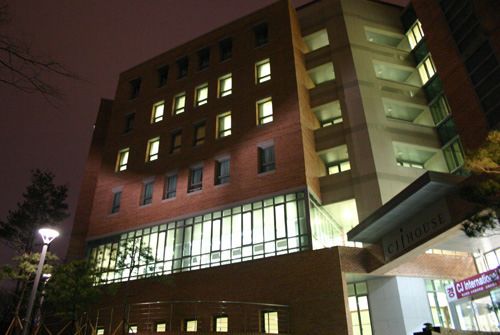
▣ Accommodations: International Cooperation Center (ICC) and at the
Dormitory of Korea University (CJ I House)
Program Information... 5PART III. HOW TO APPLY
Part III HOW TO APPLY
1. APPLICATION ELIGIBILITY
Government officials or researchers working in his/her home country with a
Bachelor’s Degree or higher, and who should:
- Be under the age of 40
- Be nominated by her Government
- Have sufficient command of spoken and written English;
- Be in good health, both physically and mentally, to undergo the course;
- Not have had experience in any of KOICA's training courses within the past
three years in the same field.
2. APPLICATION PROCEDURE
a. Admission Decision Procedure
▪ Round 1: Evaluation of Application Package
▪ Round 2: Interview by phone
*Note: An interview will be conducted only for those applicants who have passed
Round1. The phone interview will be conducted strictly in English and the
applicants’ educational objectives and development potential will primarily be
evaluated.
6...Program InformationPART III. HOW TO APPLY
b. Application & Registration Timetable
Procedure Master’s Degree Program on
Application Submission Due ~ December 6, 2011
Application Document Review by
December 7, 2011 ~ December 13, 2011
KUGSIS committee
Telephone interview by
December 14, 2011 ~ December 15, 2011
KUGSIS committee
Final Admission Decision by KOICA
December 16, 2011 ~ December 23, 2011
Committee
Admission Announcement December 27, 2011
Release of Letter of Admission & Visa
~ January 9, 2012
Document
Arrival in Korea February 16, 2012
th
Preliminary Session 4 week of February, 2012
c. Checklist of Documents to Be Submitted
1. A completed application form (KUGSIS Application Form & KOICA
Application Form)
2. A Statement of Purpose: SOP is the essential part for our evaluation to see
whether you are qualified for this program or not. It should be 3 pages in length,
the font should be 10” and in Times New Roman, 1.5 spaced, describing the
following factors:
- Your objective in applying for this program
- Study plan during your study at KUGSIS
- How your education and work experience qualify you for admission into this
program
- Contribution you hope to make in the field of International Development &
Cooperation; and How KUGSIS KOICA program will support your goals
- Future Career path after participating in this program
3. Two photos, 3 X 4 cm sized
4. Certificate of Degree (or Certificated Expected Graduation form) of all colleges
and graduate schools (should be written in English)
5. Official transcripts of all colleges and graduate schools (should be SEALED by
the issuing institution and written in English)
Program Information... 7PART III. HOW TO APPLY
6. A copy of passport
7. Two letters of recommendation (Download Available), from professors familiar
with the applicant's academic work, or from professional supervisors.
8. TOEFL, TOEIC, IELTS score report
: Native speakers of English or those who graduated from the university which
all courses are conducted in English are exempt from this requirement.
9. Certificate of Employment (if applicable)
※ Please refer to the following site for more information: Application form of the
schools is available.
http://gsis.korea.ac.kr/students/admissions.html
8...Program InformationPART IV. PROGRAM CONTENTS
Part IV PROGRAM CONTENTS
1. ACADEMIC SCHEDULE
Procedure Master’s Degree Program on
Arrival in Korea February 16, 2012
Arrival to KU February 21, 2012
th
School Orientation 4 week of February, 2012
Spring Semester March 2, 2012 ~ June 15, 2012
Summer Session June 18, 2012 ~ July 13, 2012
Summer Break July 15, 2012 ~ Aug 31, 2012
Fall Semester September 1, 2012 ~ December 21, 2012
Winter Session December 24, 2012 ~ January 18, 2013
Special Session for January 21, 2013 ~ Feb 28, 2013
Thesis Writing (Finish Full draft of thesis)
Departure from Korea Feb 28, 2013
▶ The above schedule may be subject to change.
A detailed Program Schedule will be provided upon arrival. ◀
Program Information... 9PART IV. PROGRAM CONTENTS
2. ORIENTATION (KOICA)
When you first arrive, there will be an orientation for 2-3 days for KOICA’s
Scholarship Program at the KOICA International Cooperation Center (ICC). The
orientation aims to provide participants with useful information on the program as
well as general information on living in Korea that you will need during the program.
Usually, the orientation is composed of three parts: KOICA’s welcoming session, a
Seoul City Excursion and a medical checkup. The order of each part is subject to
change.
a. KOICA’s welcoming session
In the first part of the orientation, you will have a welcoming session which includes
KOICA’s welcoming reception, an introduction of KOICA and a course outline.
Through this session, you can have an overview of the Scholarship Program.
Lectures about Korean culture and basic Korean language, as well as general
information regarding daily life in Korea, will also be delivered in this session.
b. Seoul city excursion
KOICA provides a Seoul City Excursion to every participant of the training program.
Seoul is the capital of Korea. You will have a chance to visit the downtown area and
experience the cultural heritage of Seoul. The excursion will help you get
accustomed to the new culture and surroundings in Korea.
C. Medical Checkup
KOICA will implement a medical checkup after each participant’s arrival in Korea to
assure their health condition. After the medical checkup, KOICA will officially accept
each participant as a KOICA trainee for the program. If any case which may
hamper the scholarship in Korea is found in the medical checkup, the participant
will be required to return home. The status as the participant for KOICA’s
Scholarship Program will be finalized and the acceptance for the program will be
confirmed after the medical checkup.
10...Program InformationPART IV. PROGRAM CONTENTS
3. CURRICULUM
A. GRADUATION REQUIREMENT:
All Master's students must complete a minimum of 50 credits including their Thesis.
1) Credits
▪ Requirements for the First 12 Months in Korea:
During the 12 months stay in Korea, students should complete 47 course credits
and finish writing the Thesis (with 3 credits).
The participants in this special program arrive in the last week of February and take
the orientation session before starting the regular courses in March. They will take
courses throughout the year, completing most GSIS course requirements for a
Masters Degree in International Studies (International Development Track).
▪ Requirements for the Second Year:
The participants of the Program return to their home countries in late February
2013. After their departure, participants should submit their thesis to Korea
University later to enroll them at the Ministry of Education in Korea.
The participants will receive their Masters Degree Diploma upon successful
completion and acceptance of a Masters thesis after they go back to their country
Category Credit Hours
Preparatory Non-credit
Core Courses 20 Credit Hours
International Development 15 Credit Hours
Courses
Area Courses 6 Credit Hours
Elective Courses * 9 Credits Hours
Total 50 Credit Hours
Program Information... 11PART IV. PROGRAM CONTENTS
2) Core Courses
Participants through this program should take those courses below as mandatory
▪ International Economics,
▪ International Business,
▪ World Politics,
▪ Colloquium I (Colloquium II)
▪ Research Methods
▪ Thesis Writing Seminar I/ II
# of
Season Credit Courses (Credit)
courses
Preparatory Winter N Korean Language & Culture -
Core Courses (5) 2
International Development Courses (6) 2
Spring 17
Elective Course (3) 1
Area Studies Course (3) 1
Summer 6 Core Courses (6) 3
Curricular Core Courses (6) 2
International Development Courses (6) 2
Fall 18
Area Studies Course (3) 1
Elective Course (3) 1
Winter 3 Elective Course (3) 1
International Development Course (3) 1
Spring 6
Core Course (3) 1
3) Scholarship
KOICA and Korea University Graduate School of International Studies together
provide full tuition coverage for the program participants. KOICA provides financial
support to meet costs of extramural training and to cover allowances and other
related expenses.
Note: More details concerning academic schedules are available below:
http://gsis.korea.ac.kr
12...Program InformationPART IV. PROGRAM CONTENTS
4. EXTRACURRICULAR ACTIVITIES
a. Field Trips
◆ Field Trips (Sites may be subject to change)
- Industrial Sites: Eg. Samsung Electronics, POSCO, Yeosoo Chemical
Complex, Hyundai Motors, Hyundai Heavy Industries, etc.
- Cultural Sites: Eg. Gyeongju City, Folk Village, DMZ, Seoul City Tour, etc.
* Study Visit to public service organizations in various regions will also be
occasionally organized.
b. Events
- Welcome Ceremony and Orientation
- Festivals
- The KO-YON Games: A sporting event that has inspired the nation is held every
year between Korea University and Yonsei University, longstanding rivals and the
nation’s two leading universities. Each Fall, the Ko-Yon Games build friendship
between the universities and serve to develop the Korean university culture and
competitive excellence one step further. A total of five games are played: football
(soccer), baseball, basketball, ice hockey, and rugby.
- A Regular Meeting with Professors
- Farewell Ceremony
Program Information... 13PART V. TRAINING INSTITUTE
Part V TRAINING INSTITUTE
1. GENERAL INFORMAION
1) About Korea University
Korea University, originally founded as Bosung College, (hereafter, KU) was
founded in 1905 by the Treasurer of the Royal household, Young-Ik, Yi, who
believed that educating the young generation was the only way to secure Korea’s
independent status as a nation. Korea University is the country’s first institution of
higher learning funded and administered solely by Koreans. As such, KU has
played a significant role in shaping Korea socially, culturally and academically.
While successive generations of faculty and students remain deeply committed to
the University’s proud national heritage, they have also been at the forefront of
Korea’s globalization. The increasing number of international students on campus
is a testimony to the University’s growing reputation abroad, as well as within Korea.
The year 2005 was the centennial of Korea University. Korea University certainly is
proud to be at the heart of the Global Community.
Korea University has two campuses covering over 182 acres: the Anam and Seo-
Chang campuses. The Anam campus is divided into three sections: the Main
campus, the Science campus, and the Medical campus including a housing facility.
The Seo-Chang campus is in Jo-Chi-Won, Chung-nam province.
The Tiger, the emblem of Korea University and a symbol of dignity and courage,
represents truth and justice. The monument of the tiger over the globe, standing in
the main campus of the University reflects not only the drive for excellence, but also
the University’s global mission.
14...Program InformationPART V. TRAINING INSTITUTE
2) About GSIS (Graduate School of International Studies)
GSIS was established in 1991 in response to the growing forces of globalization
and internationalization. By 1996, the Korean government was calling for experts in
international commerce, international relations, and area studies; and in late 1996,
the Korean Ministry of Education designated KU GSIS as one of Korea’s top five
graduate schools of international studies qualified for a major five-year government
grant.
The major goals of GSIS are to educate and train specialists in international
commerce, international development, international security, and Korean studies. It
offers two master’s degree programs under the departments of International
Studies and Korean Studies. GSIS welcomes all nationalities. All courses are taught
in English.
Program Information... 15PART V. TRAINING INSTITUTE
2. ACCOMMODATION
CJ International House is an air-conditioned, suite style facility for 258 men and
women. CJ International House offers doubles and singles and has semi-private
baths. Bathroom facilities are connected to the suite and are shared by the
suitemates. Housing custodial staff cleans bathroom and inspect room cleanliness
on a weekly basis.
Homepage: http://reslife.korea.ac.kr
< CJ International House >
Dining Services
> Meal Plan at CJ International House
Residents may purchase a meal coupon, which is valid for breakfast at the CJ
International House Cafeteria (KRW 45,000/10 coupons). Coupons can be
purchased at the cafeteria on the 1st floor of CJ International House during the
opening hours (7:30am –9:30am Monday through Saturday).
16...Program InformationPART V. TRAINING INSTITUTE
3. OTHER INFORMATION FOR INTERNATIONAL STUDENTS
1) University Libraries
Korea University library contains more than 1.5 million books, making it the largest
university library in Korea. There are four main university libraries: Central Library
(Building #116), Graduate School Library (Building #102), Science Library (Building
#216), and Medical Library (Building #303). There is also the UN Depository Library,
the Asiatic Research Center Library, the German Law Library, the Public Health
Library and the SeoChang Library.
Central Library
A four-story granite building provides facilities including seven reading rooms, a
reference and electronic database room, a periodical room, an open stacks room,
lounges and a private study room for faculty members. Special services available to
students and faculty include photocopying and use of the seminar and conference
rooms. (Administrations Office: 3290-1491~6)
Library Hours
- Weekday 09:00-21:00
- Saturday 09:00-13:00
- Closed on Sundays & Holidays
- Reading rooms open everyday from 06:30 to 23:00
Program Information... 17PART V. TRAINING INSTITUTE
Libraries Sections Mon-Fri Sat
Loan Office
Reference and Electronic
Database Rooms
Periodicals 09:00 - 21:00 09:00 - 13:00
Central Library
Open-Stacks Rooms
Newspaper
Reading Rooms
UN and EU
09:00 - 17:00 Closed
Reference Rooms
Loan Office
Graduate School Library Thesis and Dissertations 09:00 - 21:00 09:00 - 13:00
Room
Periodicals
Science Library Published Books Room 09:00 - 21:00 09:00 - 13:00
Open Stack Room
Reference Room 09:00 - 18:00 Closed
Periodicals
Medical Library Published Books Room 08:30 - 19:30 Closed
Reference Room
General Reading Rooms Main Campus (06:00 - 23:00) / SeoChang Campus (05:00-24:00)
24-hour Reading Rooms 00:00 - 24:00
GSIS LIBRARY
st
It’s located on the 1 Floor of the International Studies Hall Building. The Library
opens from 9:00AM to 5:30PM on weekdays during semester and 9:00AM to
4:30PM during vacation. The GSIS Reading Room opens from 9:00-23:00 every
day.
☎ Library: 3290-1399 (Room # 121)
18...Program InformationPART V. TRAINING INSTITUTE
2) KU Lyceum
Facility Services Contact
Sells/repairs calculators, watches, home appliances,
Electronic Goods
camera; cassette tapes, CDs & DVD players, 02-3290-2643
Shop
batteries, etc.
Available: airline tickets (international and domestic),
Travel Agency train tickets; arranging overseas group travel; pick-up 02-3290-1864
services for passports and visa DHL services etc.
02-3290-2642(KU
Services include: photocopying, bookbinding books,
Lyceum, 1st floor)
Copy Center fast-steel binding, roll-spring binding, and printing
02-3290-2650(Central
including internet search, etc.
Library, 1st floor)
Available: eyeglasses, sunglasses, contact lenses,
Optician and various accessories and supplies for glasses; 02-922-2285
offers free eye examinations, etc.
Services include taking photographs, developing
Photo Shop films, printing, enlargement, and camera repairs; sells 02-3290-2646
film and disposable cameras.
Sells/repairs computers, printers, copy machines,
Computer Shop facsimiles, scanners, hardware, all-in-one/multi- 02-3290-2648
functional machines, computer-related supplies.
3) Central Square
Facility Services Contact
Convenience Store
Available: soft drinks, snacks, instant food, etc. 02-3290-2654
(Ministop)
Internet Room
Services Available: Internet browsing and games. 02-3290-2655
(Magic Station)
Available: textbooks, study guides, books,
Uni-Store souvenirs, wooden and brass plaques, memorial 02-3290-2640
plaques, sporting goods, stationery, etc.
Coffee Shop [Rose Bud] Available: various kinds of coffee and soft drinks 02-3290-2653
Overseas Study Center
Consultation services: overseas language and
[Sungmun Overseas Study 02-921-0500
special studies programs.
Center]
Services include; emergency aid, health 02-3290-1571
consultations, facilities for temporary rest and (Main Campus)
Health Center
recovery, and information related to health 02-3290-1572
centers, services, etc. (Science Campus)
02-3290-1573
A certain percentage of medical fee paid by the
Student Health Services (Main Campus)
student, will be reimbursed to him/her under the
Payment Deduction Plan 02-3290-1570
plan.
(Science Campus)
Program Information... 19PART V. TRAINING INSTITUTE
4) Snack bars and convenient stores
The menu includes Kimbab (Korean style sushi roll), sandwiches, hot/cold/cup
noodle, soft drinks etc.
Location Contact
Communications Building 02-925-5894
College of Education 02-925-5897
Central Library (Basement, 1st floor) 02-928-0876
Central Square (Basement, 1st floor) 02-3290-2654
Student Union Building (1st floor) 02-3290-1811
New building, College of Business Administration (Basement, 1st floor) 02-3290-2564
College of Law (New Building, 5th floor) 02-3290-1817
Cafeteria (Science Campus, 3rd floor) 02-929-2872
College of Science & Engineering (South Hall) 02-923-4294
College of Life Science & Biotechnology (Basement, 1st floor) 02-3290-4375
University Dormitory (Basement, 1st floor) 02-923-3897
College of Medicine (1st floor) 02-920-6179
5) Cafeteria
Location Contact
International Studies Hall cafeteria (University Staff) 02-3290-1815
Korean Studies Hall set menu (University Staff) 02-3290-1813
Living Plaza Cafeteria for University Staff 02-3290-4351
Student Union Building Cafeteria 02-3290-1811
Student Union Building Snack bar (various snack available)
Living Plaza Cafeteria for Students 02-3290-4351
Lining Plaza Snack bar for Students
Alumni Hall Student Cafeteria 02-921-7218
Techno-complex Research Center Cafeteria 02-3290-4348
College of Medicine 02-920-6165
20...Program InformationPART V. TRAINING INSTITUTE
6) Computer labs
Location Office Hours
Ground Floor, College of Arts Bldg Mon~Fri 09:00~17:00 Sat 09:00~13:00
2nd Floor, Science Library Mon~Fri 09:00~17:00 Sat 09:00~13:00
Each College Mon~Fri 09:00~17:00 Sat 09:00~13:00
Multimedia Room, 2nd Floor,
Mon~Fri 09:00~21:00 Sat 09:00~13:00
Centennial Memorial Samsung Hall
GSIS COMPUTER ROOM
th
The GSIS runs the Computer Room located on the 4 floor of the International
Studies Hall. Only GSIS students are allowed to use it. It opens from 9:00AM to
5:30PM on weekdays during semester and 9:00AM - 4:30PM during vacation.
☎ Computer Room: 3290-2514 (Room # 427)
7) Lounge/Fitness
Facility Location Contact
Each college has a student lounge and is furnished
Student Lounge at
with: sofa, tables, a vending machine for soft drinks,
Each College
and drinking water available.
Faculty and Women Student's Hall,
Science Library (2nd floor),
Female Student Lounge
Cafeteria (3rd floor, Science Campus), and
Communications Building Annex (3rd floor)
This Gymnasium has a Main Stadium, Sub Arena,
Korea University Tiger Dome
Fitness Center, Squash Court, Aerobic Studio, 02-3290-4096
(HwaJeong Gym)
250meter Track and an Indoor Rock-Climbing Facility
The club is located in Hana Square and equipped with
Hana Fitness Center different equipment and shower facilities for both men 02-3290-4027
and women. Fees Charged.
The club is located in the 4.18 Memorial Hall
(Basement, 2nd floor) and equipped with different kinds
KU Fitness Club 02-3290-1762
of health equipments and shower facilities for both men
and women. Fees Charged.
There are five tables in the 4.18 Memorial Hall
Table Tennis
(Basement, 2nd floor). No fees charged.
Ice Rink University Green Campus 02-3290-4243~5
Program Information... 21PART V. TRAINING INSTITUTE
8) Others
Facility Location Contact
Museum Korea University Museum 02-3290-1512~3
Post Office The annex to Communication Building (3rd floor) 02-3290-1820
Music Hall Communication Hall,1st floor 02-922-5204
Auditorium Inchon Memorial Hall 02-3290-1771
The 2nd Student Union Hall
02-3290-1772
(Basement, 2nd floor)
The Alumni Hall (Basement, 1st floor) 02-3290-1771
College of Business Administration
Health Center/Health Central Square, Main Campus
02-3290-1573
Services deduction plan (Basement, 1st floor)
Help for the disabled www.kujang.net 02-3290-1221
9) The Korea University Medical Center
The Korea University Medical Center is closely associated with the Korea
University Medical School. While it is hoped that students would never need the
Center's services, they may be comforted to know that the care provided by the
Center's two general hospitals and two teaching hospitals is the finest in Korea.
Diagnostic and treatment equipment, from Magnetic Resonance Imaging (MRI)
systems to radiation fluoroscopes, represent the latest technologies available for
the detection and treatment of disease. The four hospitals in Anam, Guro, Yeoju
and Ansan have a combined capacity of about 2,000 beds.
Korea University Medical Center
Emergency Room (02) 3290-5373
Student Health Clinic: (02) 3290-1571
22...Program InformationPART VI. REGULATIONS & SUPPORT SERVICES
Part VI REGULATIONS & SUPPORT SERVICES
1. REGULATIONS
Participants are required:
- To take up the scholarship in the academic year for which it is offered (deferral is
not allowed)
- To follow the training program to the best of their ability and abide by the rules of
the training institute and KOICA
- To reside in the accommodation designated by the training institute for the
duration of the course except for holidays or temporary leave
- To maintain an appropriate study load and achieve satisfactory academic
progress for the course. If the participant fails to attain certain grades required by
the university, his or her status as a KOICA program participant may be
suspended
- To participate in all activities associated with the approved course of study
including all lectures and tutorials, submit all work required for the course and sit
for examinations unless approved otherwise by the training institute in advance
- To notify the training institute in advance and get an approval for temporary leave
- To advise KOICA and the training institute of any personal or family
circumstances such as health problems or family problems which may seriously
affect their study
- To refrain from engaging in political activities or any form of employment for profit
or gain
- To agree to KOICA collecting information concerning them and passing that
information onto other relevant parties, if necessary
- To return to their home country upon completion of their training program
- Not to extend the length of their training program or stay for personal
convenience; neither KOICA nor the university will provide any assistance and be
responsible for an extension of their stay
Program Information... 23PART VI. REGULATIONS & SUPPORT SERVICES
- To either return to their original job post or remain employed in a field related to
their degree for at least 3 years.
- To recommend not to purchase personal vehicles with their allowances provided
by KOICA due to safety concerns and concentration on their studies.
2. SUPPORT SERVICES
A. Allowances
▪ Daily Subsistence Allowance (DSA): KRW 17,000 per day
▪ Meal Allowance: KRW 21,600 per day
th
* In case of temporal leave, if the period exceeds 15 days, from the 16 day the
living allowances (DSA, Meal Allowance) are not be paid until he or she comes
back
B. Sundry Expenses
▪ KOICA provides an allowance for sundry expenses incurred between the times of
entry into and departure from Korea (visa fee, taxi fare, passenger service charge,
etc.) The allowance per participant will be 200,000 won.
▪ Textbook and material purchasing expenses: KRW 800,000 for four semesters
C. Other Expenses KOICA will bear for participants
▪ A normal economy class round-trip air ticket between Seoul and international
airport designated by KOICA
▪ Medical Checkup
▪ Dormitory charge
▪ Medical insurance for participants to cover medical treatment during their stay in
Korea (Costs related to pre-existing illness, pregnancy and dental treatment are
not included and Insured persons are responsible for deductibles)
▪ Tuition fee of the program
24...Program InformationPART VI. REGULATIONS & SUPPORT SERVICES
Note: Each participant is advised to maintain some pocket money of their own for
incidental expenses that might be incurred during his or her trip to Korea. Since
banks are closed on the weekends, participants who arrive on the weekend
should exchange money at the airport.
D. Insurance
▪ During the program participants will be covered by the overseas travelers’ health
insurance. The insurance covers expenses for medical treatment and hospital
care caused by diseases or accidents within the scope and limit of insurance
coverage. Participants should pay themselves first and be reimbursed for the
expenses later on the condition that the case falls under the coverage of the
insurance. And Insured persons are responsible for deductibles
▪ Limits of Coverage (subject to change)
- Death or Permanent Disability by Accident: KRW 100 million
- Medical Expenses by Accident: KRW 10 million
- Death by Disease: KRW 50 million
- Liability: KRW 10 million
- Loss of Personal Effects: KRW 1 million
- Airplane Hijacking: KRW 1.4 million
* US$1= approx. KRW 1,150 (as of January 2011)
▪ Main Scope of Coverage
- Death or Permanent Disability by Accident & Death by Disease: The insurance
shall pay the insurance money up to the above limit.
- Medical Expenses by Disease and Accident: The insurance shall cover the
medical expenses at actual cost within the limit of the medical insurance
subscription amount per case (for details, refer to the insurance policy)
- Medical checkup at the participant’s option and the fee for a medical certificate
and diseases caused by pre-existing medical conditions, etc. are not covered
by the insurance.
Program Information... 25PART VI. REGULATIONS & SUPPORT SERVICES
▪ Procedures, Services and Diseases Not Covered by the Insurance
- Mental disease and behavior disorder
- Congenital cerebropathy
- Obesity
- Urinary diseases: Hematuria and urinary incontinence
- Diseases of the rectum and anus
- Tiredness and fatigue
- Freckles, hirsutism, atrichia, canities, mole, wart, pimple, and skin ailments
such as hair loss due to aging
- Medical expenses caused by treatments for enhancing appearance (e.g.,
double-eyelid surgery)
- Costs that are not related to treatments and medical check-up costs that are
not related to a doctor’s diagnosis.
- Diseases that participants already had before arrival in Korea.
▪ Deductibles (Insured persons are responsible for deductibles, as described below)
- Maximum Coverage Limit per Day
Outpatient services: 250,000 won
Medicine: 50,000 won
- Deductible per day (outpatient)
Clinic: 10,000 won
Hospital: 15,000 won
University hospital, level 3 hospital: 20,000 won
- Deductible per day (medicine): 8,000 won
- Dentistry and Oriental (Chinese) medicine: Uninsured items and prosthetic
dentistry
- Hospital treatment
The beneficiary is responsible for 10% of the costs.
- Orthopedics
- Equipment and consumables (e.g., wristbands and cast shoes)
- Fees for issue of certificates
26...Program InformationPART VI. REGULATIONS & SUPPORT SERVICES
- In the case of uninsured items and material costs, a detailed statement must
be submitted..
- Receipts from medical institutions or pharmacies must be submitted. Credit
card receipts will not be accepted..
E. Invitation of Family to Korea and Temporal Leave
▪ KOICA permits participants' invitation of their family to Korea temporarily during
training periods only under the condition that they pay all the expenses
concerned.
▪ KOICA and Korea University GSIS cannot provide any invitation letter or
documentary evidence to get the entry visa of participant's family members.
▪ Participants are thoroughly responsible for all expenses such as airfare,
accommodation, living cost, visa fee, insurance, etc., of their family, and also
security of their family is basically the participant's responsibility.
▪ Participants can have temporal leave (to their home country or a trip abroad) with
the permission of KOICA and Korea University GSIS during the vacation.
▪ KOICA and GSIS will not pay airfare for the trip. If the trip exceeds 15 days,
KOICA will not pay the living allowance and meals for the absent days which
exceed 15 days.
▪ KOICA and GSIS are opposed to and restrict temporal leave or invitation during
semesters for the sake of a good studying atmosphere.
F. Withdrawals
▪ In principle, a participant is not allowed to withdraw from the course at his or her
own option once the course starts.
▪ A participant may withdraw with valid personal or home country’s reasons (such
as health or work issues) when acceptable to KOICA and GSIS. In this case,
Program Information... 27PART VI. REGULATIONS & SUPPORT SERVICES
he/she is not allowed to re-apply for KOICA’s scholarship program for the next
two years after the withdrawal.
▪ If a participant fails to attain certain grades required by the training institute, he or
she may be forced to withdraw and return home upon withdrawal.
▪ Participants who withdraw must return to the school the living & meal allowance
they already received for the remaining period from the date of departure from
Korea.
G. Others
▪ KOICA will assume any responsibility only within the limit and scope of the
insurance for participants.
▪ KOICA is not liable for any damage or loss of the participant’s personal property.
▪ KOICA will not assume any responsibility for illness, injury, or death of the
participants arising from extracurricular activities, willful misconduct, or
undisclosed pre-existing medical conditions.
▪ If the participants break any of the rules of KOICA and the training institute during
their stay in Korea, their status as a KOICA program participant may be
suspended.
28...Program InformationPART VII. CONTACTS
Part VII CONTACTS
❏ Korea International Cooperation Agency (KOICA)
·Program Manager: Ms. Sun-young CHOI
·Phone: +82-31-740-0413
·Fax: +82-31-740-0684
·E-mail: alladina@koica.go.kr
·Home page: http://www.koica.go.kr
· Program Coordinator: Ms. Min-Kyoung KIM
· Phone: +82-31-777-2646
· Fax: +82-31-777-2679
· E-mail: kmk1025@koica.go.kr
❏ Graduate School of International Studies, Korea University
·Program Advisor: Prof. Mi-Kyeng JEONG
·Phone: +82-2-3290-2588(office)
·Fax: +82-2-929-0402
·E-mail: jasmky@korea.ac.kr
·Home page: http://gsis.korea.ac.kr
·Academic Affairs Dept. Coordinator: Ms. Bohyun CHOI
·Phone: +82-2-3290-1396(Administration office)
·Fax: +82-2-929-0402
·E-mail: hikari23@korea.ac.kr
Program Information... 29APPENDIX 1. HOW TO JOIN THE KOICA COMMUNITY
Appendix 1.
HOW TO JOIN THE KOICA COMMUNITY
The KOICA Alumni Community (http://training.koica.go.kr)
KOICA offers you a chance to meet other participants of our training programs online.
We are all friends here. Share your memories, experiences and feelings. Please join
now! The door to the KOICA Alumni Community is open to everyone.
The KOICA Alumni Community is an online extension of the relationship and
friendship formed between former and present participants. By becoming a member
of the KOICA Alumni Community, you can stay in touch with your former classmates
and be informed of what is happening at KOICA and the center. The Community
allows alumni to update their personal information and search for other alumni in an
online directory.
30...Program InformationAPPENDIX 2. STORY ABOUT KOREA & KOICA
Appendix 2.
< Story about Korea & KOICA >
We hope you had an interesting, unique and impressive experience
adjusting to Korean life and participating in the program.
You were probably excited about coming to a new country, meeting new
people and starting your program. However, if this was your first time in
Korea, you might have experienced some culture shock while you stayed in
Korea. Perhaps you found that many social customs, culture, religion, ways
of doing things, and the way things work were different from what you were
used to at home.
["Culture shock" describes the emotional upheaval many people experience
when they move to a country with a different culture from what they are
used to.]
During your stay in Korea you might have noticed many differences, which
may have caused you inconvenience or perhaps were just interesting to
you. For example; people may dress and think differently, and the behavior
of men and women towards each other may be different.
In this regard, we would love to hear your story. Please share your
memories, experiences and feelings with us. Any stories would be
welcome. Your story helps us better understand what is interesting, unique
and impressive about Korea & KOICA's training program to you. We will
help our society have a better understanding of people from other countries
through the publication of your story.
☺ e-mail us your story & photo to story@koica.go.kr
your contributions may be published in a KOICA publication ♥
Program Information... 31APPENDIX 2. STORY ABOUT KOREA & KOICA
Name
Country
Course Title
e-mail
32...Program InformationAPPENDIX 3. HOW TO GET TO THE ICC
Appendix 3.
HOW TO GET TO THE ICC
Route: Incheon International Airport → Korea City Airport, Logis & Terminal
(CALT) → International Cooperation Center (ICC)
Arrival at Incheon International Airport (http://www.airport.kr)
Flow:
▶ Fill out Arrival Card (or Immigration Card), Customs Declaration
Form, Quarantine Questionnaire (on board)
▶ Quarantine including animals and plants (on 2nd Floor)
▶ Present your Arrival Card, Passport and other necessary
document to Passport Control
▶ Claim baggage on 1st Floor
▶ Customs Clearance
▶ Pass an Arrival Gate
▶ Go to the KOICA Counter, which is located between Exit 1~2
Program Information... 33APPENDIX 2. STORY ABOUT KOREA & KOICA
KOICA Counter at Inchon airport
Location : Next to Exit 1 on the 1st
floor (No.9- 10)
Tel. : 82-32-743-5904
Mobile : 82-(0)10-9925-5901
Contact : Ms. Jin-Young YOON
- After passing through Customs Declaration, please go to the KOICA Counter
(located between exit 1~2) at Incheon Airport. At the KOICA Counter, you can get
detailed information about how to get to International Cooperation Center (ICC)
and purchase limousine bus ticket for City Airport, Logis & Travel (CALT).
- All the KOICA staff at the Incheon Airport wears nametags or has signs for
indication. If you cannot meet the KOICA staff at the counter, please purchase a
st
limousine bus ticket from the bus ticket counter (located on the 1 Floor), and go to
CALT Bus Stop No. 4A (or 10B). Please find the bus number 6103 and present
your ticket to the bus driver. From Incheon Airport to CALT, the approximate time
for travel will be between 70 to 90 minutes. When you arrive at CALT, you will find
another KOICA staff who will help you reach the ICC. KOICA will reimburse the
limousine bus fare when you arrive at ICC. Also, please be aware that there may
be illegal taxis at the airport. Even if they approach you first, please do not take
illegal taxis and check to see if they are KOICA staff.
34...Program InformationAPPENDIX 3. HOW TO GET TO THE ICC
KOICA Counter at CALT airport
Location : Lounge on the 1st floor of
CALT airport
Mobile : 82-(0)10-9925-5901
- If the limousine bus is not available due to your early or late arrival from 22:00 to
05:30.
- Please contact the ICC reception desk
(Tel. 031-777-2600 / English announcement service is available 24 hours daily)
- The staff at the ICC reception desk will let you know how to use a taxi. The taxi
fare from the airport to ICC is normally 90,000 Won.
※ KOICA won't reimburse the taxi fare if you use a taxi during the hours of
05: 30 ~ 22:00.
From Incheon International Airport to the ICC through CALT
st
- Take a City Air limousine bus at bus stop No.4A on the 1 Floor. Buses run every
10~15 minutes between the hours of 5:30 and 22:00.
st
- Meet the KOICA staff at the lounge on the 1 Floor of CALT upon arrival.
- Take a car arranged by the KOICA staff to the ICC (Expected time: 20 minutes)
Program Information... 35You can also read


