2020 Santa Cruz County Regional Transportation Improvement Program: State Transportation Improvement Program Proposal - Submitted to the ...
←
→
Page content transcription
If your browser does not render page correctly, please read the page content below
2020 Santa Cruz County
  Regional Transportation Improvement Program:
State Transportation Improvement Program Proposal

                               Submitted to the
                               California Transportation Commission
                               for the 2020 State Transportation
                               Improvement Program (STIP)

                               12/5/2019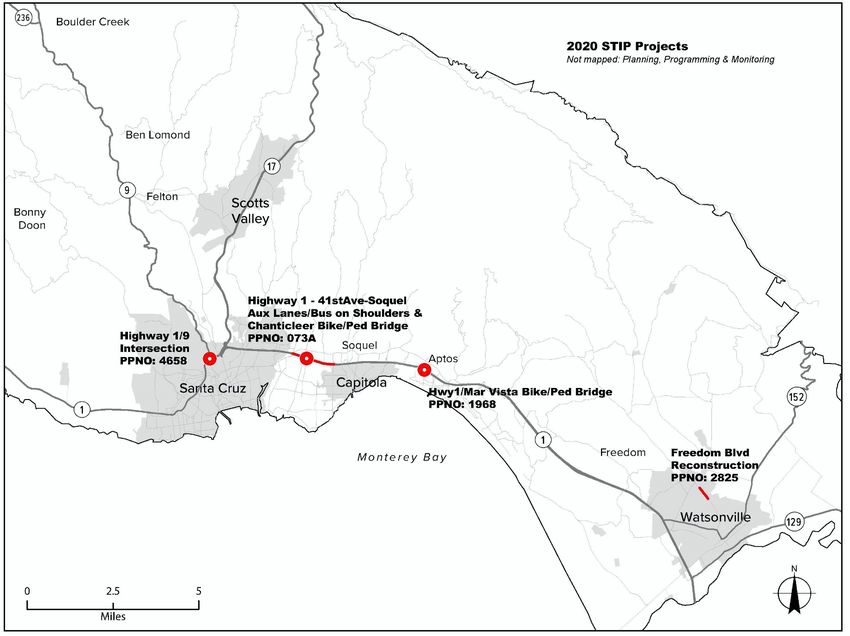
December 13, 2019

Susan Bransen, Executive Director
California Transportation Commission
1120 N Street, Mail Station 52
Sacramento, CA 95814
Attn: Teresa Favila, Assoc. Deputy Director

RE:         2020 Regional Transportation Improvement Program (RTIP) for Santa Cruz County

Dear Director Bransen:

The Santa Cruz County Regional Transportation Commission (RTC) hereby submits the 2020 Santa Cruz County
Regional Transportation Improvement Program (RTIP) for consideration by California Transportation
Commission (CTC). The RTC adopted the 2020 RTIP at its December 5, 2019 meeting, where it selected projects
to receive the region’s targeted share of STIP following a public hearing. The RTC requests that the CTC program
the region’s 2020 STIP Target to the following projects:

      •     Planning, programming, and monitoring (PPM): $169,000
      •     Highway 1, 41st Avenue to Soquel Avenue Auxiliary Lanes, Bus on Shoulder and Chanticleer Bike/Ped
            Bridge: $4,914,000

Projects included in the 2020 RTIP, including projects carried forward from the 2018 STIP, reflect the RTC’s
priorities, which are representative of the broad multimodal transportation needs in Santa Cruz County and focus
on the heavily congested travel corridor between the cities of Santa Cruz and Watsonville. The Highway 1
Auxiliary Lanes/Bus on Shoulders/Chanticleer Bike/Pedestrian Bridge project is part of the region’s three-
pronged Unified Corridor Plan, to improve access, safety, and operations for transit, bicyclists and pedestrian,
goods movement, emergency services, residents and visitors.

RTC and projects sponsors also request modifications to some projects previously programmed for STIP funds in
order to reflect updated project information and to concentrate STIP funds on fewer projects. The RTC requests
that the CTC incorporate these new and amended projects into the 2020 State Transportation Improvement
Program (STIP), as summarized in Appendix F-Section 17.

Thank you for your consideration of our proposal for the 2020 STIP. If you have any questions regarding our
proposal, please contact Rachel Moriconi of my staff at 831-460-3203.

Sincerely,

Guy Preston
Executive Director

cc:       Doris Alkebulan, Caltrans Headquarters STIP Coordinator (2 copies)
          Linda Wilkins, Caltrans District 5

                                                   \\RTCSERV2\INTERNAL\RTIP\2020RTIP\DOCUMENT2020RTIP\2020RTIPSUBMITTALCORR.DOCX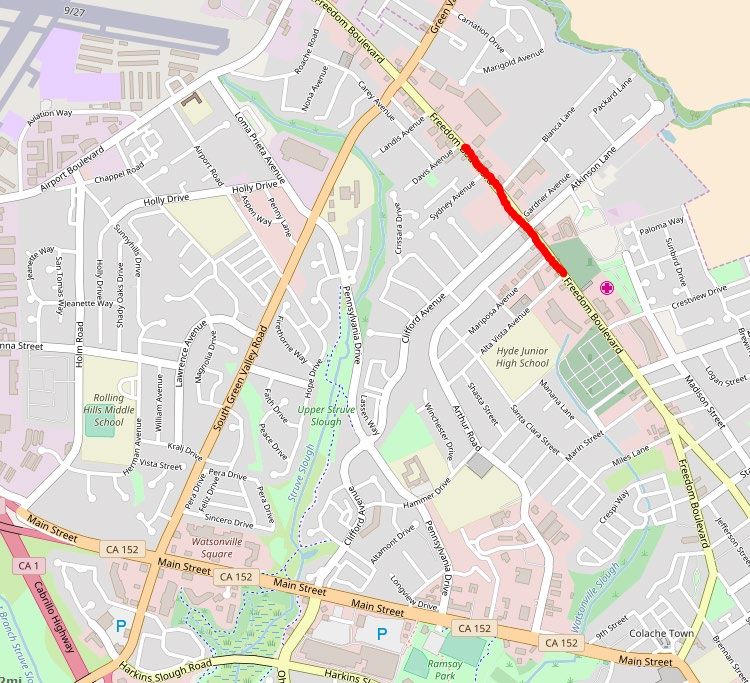
SANTA CRUZ COUNTY
2020 Regional Transportation Improvement Program (RTIP)
 TABLE OF CONTENTS

 A.     Overview and Schedule ................................................................................. 4

         Section 1. Executive Summary ..................................................................... 4

         Section 2. General Information .................................................................... 5

         Section 3. Background of RTIP ..................................................................... 6

         Section 4. Completion of Prior STIP Projects ................................................ 7

         Section 5. RTIP Outreach and Participation .................................................. 8

 B.     2020 STIP Regional Funding Request ........................................................... 9

         Section 6. 2020 STIP Regional Share and Request for Programming ........... 9

         Section 7. Overview of other funding for Regional STIP projects ............... 10

         Section 8. Interregional Improvement Program (ITIP) Funding – N/A ..... 10

         Section 9. Multi-Modal Corridors - Projects Planned within Corridor .......... 11

 C.   Relationship of RTIP to RTP/SCS/APS and Benefits of RTIP .......................... 12

         Section 10. Regional Level Performance Evaluation ................................... 12

         Section 11. Regional and Statewide Benefits of RTIP ................................. 14

 D.   Performance and Effectiveness of RTIP ......................................................... 14

         Section 12. Evaluation of Cost Effectiveness of RTIP .................................. 14

         Section 13. Project Specific Evaluation ...................................................... 15

 E.   Detailed Project Information.......................................................................... 17

         Section 14. Overview of Projects Programmed with STIP Funding ............. 17

 F.   Appendices..................................................................................................... 19

         Section 15. Project Programming Request Forms

         Section 16. Board Resolution of approval of 2020 RTIP

         Section 17. Detailed STIP Project Programming Summary Table

                                                            \\rtcserv2\internal\rtip\2020rtip\document2020rtip\2020-rtip.docx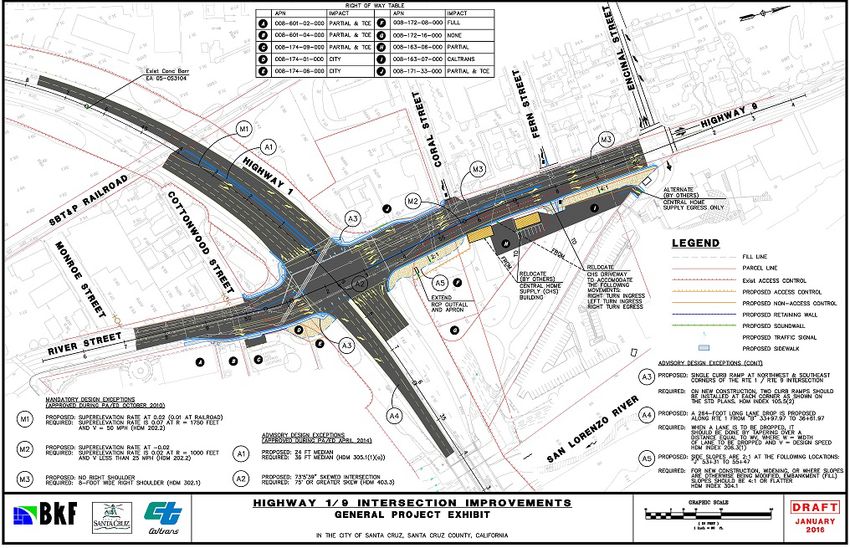
A. Overview and Schedule

Section 1. Executive Summary
The Santa Cruz County Regional Transportation Commission (RTC), as the state-designated
Regional Transportation Planning Agency (RTPA) for Santa Cruz County, is responsible for
selecting projects to receive certain state and federal transportation revenues, including
State Transportation Improvement Program (STIP) funds. The Santa Cruz County Regional
Transportation Commission (RTC) programs funds to specific projects and monitors those
projects through its Regional Transportation Improvement Program (RTIP).

This RTIP document serves as the RTC’s proposal to the California Transportation
Commission (CTC) for the 2020 State Transportation Improvement Program (STIP). The
CTC’s STIP is a planning document for funding five-years of roadway, intercity rail and
transit improvements throughout California. State law requires the CTC and regions to
update these programming documents biennially, with each new STIP adding two new years
to prior programming commitments. STIP funds are primarily generated from the state
excise tax on gasoline, which the state makes available for regional agency priorities in
accordance with formulas and regulations established under Senate Bill 45 (SB 45-1997)
and subsequent laws. SB 1, signed into law on April 28, 2017, provided stability to the STIP
by resetting the price-based excise tax to a traditional excise tax of 17.3 cents per gallon
with the provision to adjust the tax annually for inflation beginning in 2019-20.

Projects in Santa Cruz County that the RTC has proposed to be programmed for STIP funds
reflect the region’s integrated, multimodal system that considers the wide range of access
and mobility needs, with a focus on improving travel between the City of Santa Cruz and
City of Watsonville, one of the most congested corridors on the central coast. The RTC
proposes to use its formula target of 2020 STIP funds on construction of the Highway 1
41st Ave to Soquel Ave Auxiliary Lanes, Bus on Shoulders, and bicycle/pedestrian
overcrossing at Chanticleer Ave. project (41st-Soquel Aux Lanes). The RTC is not
requesting an advance of future funding shares. The 41st -Soquel Aux Lanes project, which
is part of the RTC’s Unified Corridor Plan and voter-approved Measure D sales tax
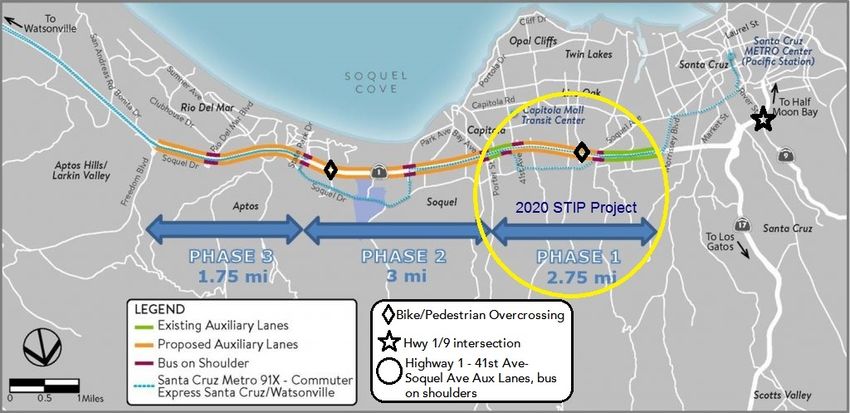
Expenditure Plan, adds approximately 2 miles of Auxiliary Lanes and will allow buses to
operate on shoulders and auxiliary lanes on Highway 1 between interchanges at Morrissey
Boulevard in Santa Cruz and Bay/Porter in Capitola/Soquel. This is Phase 1 of bus on
shoulders plans in Santa Cruz County and will be the first bus on shoulders operating in
California. STIP and other SB1 grants are essential in accelerating delivery of this
project.

In addition to increasing STIP funds for this Highway 1 project and planning, programming,
and monitoring (PPM), the RTC’s proposal for the 2020 STIP carries forward three other
projects along the Santa Cruz to Watsonville travel corridor:

    •   Highway 1/Mar Vista bicycle/pedestrian overcrossing connecting Aptos and Seacliff
        Village (schedule updates for 2020 STIP) – lead agency and fund year updates
    •   Highway 1/9 intersection modifications in Santa Cruz – matching fund updates
    •   Freedom Boulevard reconstruction and improvements in Watsonville – no changes

2020 Santa Cruz County Regional Transportation Improvement Program (RTIP): December 5, 2019   Page 4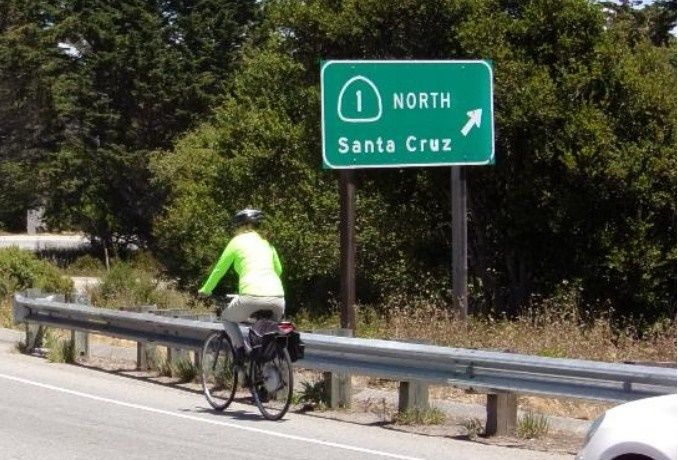
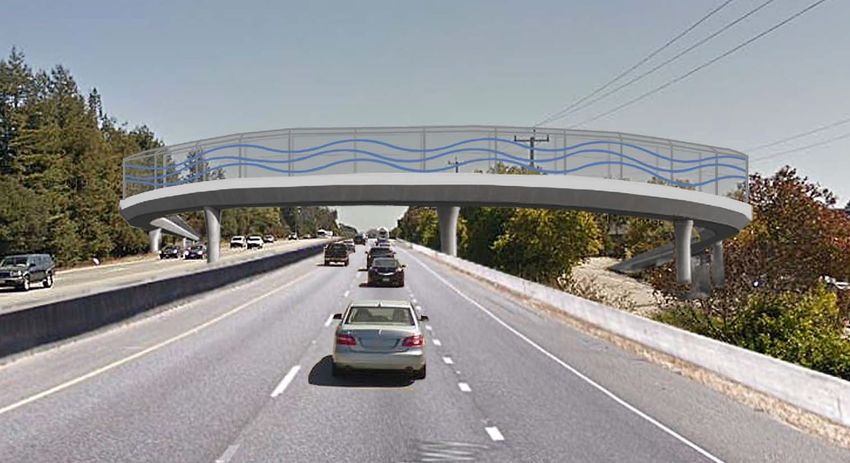
Highway 1 Bus on Shoulders and Auxiliary Lanes Projects and other STIP projects.
Phase 1 proposed for RTC’s 2020 STIP target

The RTC selects projects through an open public process and unanimously approved
programming the 2020 STIP funds to the 41st-Soquel Aux Lanes project following a well-
attended public hearing on December 5, 2019. We appreciate the CTC’s support in including
all of these projects in the 2020 State Transportation Improvement Program (STIP).

Section 2. General Information
Regional Agency: Santa Cruz County Regional Transportation Commission (SCCRTC)
Agency website links:     http://www.sccrtc.org
RTIP document link:       www.sccrtc.org/rtip
RTP link:                 http://www.sccrtc.org/rtp.html
AMBAG MTP/SCS link:
https://ambag.org/programs-services/planning/metro-transport-plan/2040-MTP-SCS

RTC Executive Director Contact Information
Name        Guy Preston
Title       Executive Director
Email       gpreston@sccrtc.org
Telephone   831.460.3200

RTIP Manager Contact Information
Name       Rachel Moriconi
Title      RTIP Program Manager, Senior Transportation Planner
Address    1523 Pacific Ave., Santa Cruz, California, 95060
Email      rmoriconi@sccrtc.org
Telephone  831-460-3200                Fax     831-460-3215

2020 Santa Cruz County Regional Transportation Improvement Program (RTIP): December 5, 2019   Page 5
California Transportation Commission (CTC) Staff Contact Information
Name         Teresa Favila
Title        Associate Deputy Director
Address      1120 N Street , Sacramento, CA, 95814
Email        teresa.favila@catc.ca.gov
Telephone    916-653-2064               Fax    916-653-2134

Section 3. Background of Regional Transportation Improvement Program (RTIP)

a. What is the Regional Transportation Improvement Program?
The Regional Transportation Improvement Program (RTIP) is a list of highway, local road,
transit, and active transportation projects that a region plans to fund with State and Federal
revenue programmed by the California Transportation Commission (CTC) in the State
Transportation Improvement Program (STIP). The RTIP is developed biennially by the
regions and is due to the CTC by December 15 of every odd numbered year. The program of
projects in the RTIP is a subset of projects in the Santa Cruz County Regional Transportation
Plan (RTP), a state-mandated master transportation plan which guides a region’s
transportation investments over a 20 to 25 year period. The RTP is based on all reasonably
anticipated funding, including federal, state, and local sources. Updated every 4 to 5 years,
the RTP is developed through an extensive public participation process in the region and
reflects the unique mobility, sustainability, and air quality needs of each region.

b. RTC’s Historical and Current Approach to developing the RTIP
The process for developing the RTIP and STIP typically begins in the spring of odd
numbered years when the CTC determines the financial assumptions to use in developing
the STIP Fund Estimate. Based on those assumptions, the California Department of
Transportation (Caltrans) estimates the amount of certain state and federal revenues
anticipated for transportation statewide over the next five years. The CTC releases the draft
STIP Fund Estimate, as well as Guidelines for the development of the STIP, during the
summer of odd years for public review and comment. The final fund estimate and guidelines
are adopted by the CTC in late summer/early fall.

After projected state and federal transportation funds are split amongst Caltrans
maintenance, administration, and operations; the State Highway Operation and Protection
Program (SHOPP); various state transit programs; and Local Assistance programs, the
balance is made available for the STIP. Seventy-five percent of the STIP funds are classified
as “regional share” monies and programmed by regional agencies, such as the RTC.
Caltrans identifies projects of statewide and interregional significance to receive the
remaining twenty-five percent of STIP funds through the Interregional Transportation
Improvement Program (ITIP), which includes interregional state highway and rail projects.
The RTC develops its RTIP based on formula shares of funds projected for Santa Cruz
County. The RTC then develops the RTIP project list through a collaborative process with
Caltrans, its committees, member agencies, and transportation planning partners. Any
project proposed in the RTIP must be included in or be consistent with the Regional
Transportation Plan (most recently updated in June 2018).

Santa Cruz County’s list of projects proposed for STIP funds and supporting documentation

2020 Santa Cruz County Regional Transportation Improvement Program (RTIP): December 5, 2019   Page 6

is then submitted to the CTC. After considering proposals submitted by Regional
Transportation Planning Agencies (RTPA) statewide, the CTC makes the final determination
on which projects are included in the STIP, in which year they are programmed, and when
to release (allocate) funds to individual projects. In years when STIP funding requests
exceed projected funds, the CTC may decide not to accommodate all of a region’s proposed
projects and instead redirect funds to other counties.

The CTC adopts the STIP in the spring of even numbered years. The CTC’s adopted STIP
may include only projects that have been nominated by a regional agency in its regional
transportation improvement program (RTIP) or by Caltrans in its interregional
transportation improvement program (ITIP). If the CTC approved projects include federal
funds or are for projects which could affect air quality conformity, those projects are then
incorporated into the Metropolitan Transportation Improvement Program (MTIP), the
federally-mandated programming document prepared by the Association of Monterey Bay
Area Governments (AMBAG).

Section 4. Completion of Prior STIP Projects
The following STIP-funded projects included in the 2018 Regional Transportation
Improvement Program (RTIP) have been completed or will have started construction before
the start of FY20/21. These projects will not be carried forward into the 2020 STIP.

                                                                                 Summary of
Project Name/Location                     Description                            Improvements/
                                                                                 Benefits
Water Street pavement rehabilitation:     Pavement rehabilitation, including
                                                                                 System Preservation –
N. Branciforte Ave-Ocean St, city of      bike & ped treatments at
                                                                                 0.5 miles
Santa Cruz (PPNO 2732)                    intersections
River Street pavement rehabilitation:     Pavement rehabilitation, including
                                                                                 System Preservation –
Water St-Potrero St, city of Santa Cruz   new access ramps, sidewalk
                                                                                 0.4 miles
(PPNO 2824)                               repairs, and restriping
SR17 to Soquel Corridor, chip seal:
Vine Hill Rd, Mt. View Rd, N. Rodeo       Pavement rehabilitation: Digouts,      System Preservation -
Gulch Rd, Laurel Rd, County of SC         Chip Seal, and restriping              5.7 miles
(PPNO 2821)
Zayante Corridor chip seal,               Pavement rehabilitation: Digouts,      System Preservation –
Felton/Zayante (PPNO 2822)                Chip Seal, and restriping              9.1 miles
Scotts Valley Area chip seal, Felton      Pavement rehabilitation: Asphalt       System Preservation –
(PPNO 2823)                               Digout, Surface Seal, and restriping   2.7 miles
SC Metro Bus refurbishments,
                                          Refurbish 4 buses in state of good     System Preservation –
countywide
                                          repair, extend useful life 6-8 years   4 buses
(PPNO 2827)
                                        Automatic vehicle locator (AVL),
                                                                                 Improve transit
                                        annunciating system, on-bus video
SC Metro ITS (PPNO 2828), countywide                                             operations, data
                                        surveillance, auto passenger
100 vehicles                                                                     collection, and traveler
                                        counters, advanced traveler info
                                                                                 information
                                        system
SC Metro Vehicle Replacements,
                                        2 new fixed-route battery-electric       System Preservation –
countywide
                                        buses to replace 1998 diesel buses       2 replacement buses
(PPNO 2829)
Monterey Bay Sanctuary Scenic Trail
Network (MBSST) - Segment 7: Santa      Construct bicycle/pedestrian trail       New bike/walk trail:
Cruz Branch Rail Line - Natural Bridges adjacent to the rail line                1.3 miles
to Bay/California, Santa Cruz

2020 Santa Cruz County Regional Transportation Improvement Program (RTIP): December 5, 2019         Page 7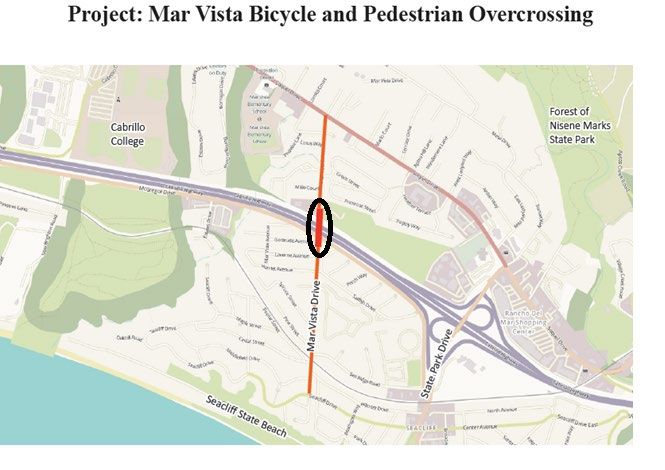
Section 5. RTIP Outreach and Participation

a. RTIP Development and Approval Schedule
 Action                                                                   Date
 CTC Meetings on draft Guidelines and Fund Estimate                       Spring 2019
 Interagency Technical Advisory Committee (ITAC) discusses                April 18, 2019
 proposed process for 2020 RTIP
 RTC discusses priority projects and programming process                  June 6, 2019
 CTC adopts Fund Estimate and Guidelines                                  August 14, 2019
 RTC Approves Process for Programming Funds                               September 5, 2019
 Caltrans identifies State Highway Needs                                  September 15, 2019
 RTC’s Bicycle Committee, Elderly and Disabled Transportation             November 2019
 Advisory Committee (E&D TAC), and ITAC review proposed
 projects and recommendations
 Public Hearing, RTC adopts 2020 RTIP                                     December 5, 2019
 Regions submit RTIP and LPP proposals to CTC                             December 15, 2019
 Caltrans submits ITIP to CTC                                             December 15, 2019
 CTC STIP Hearing, North                                                  January 30, 2020
 CTC STIP Hearing, South                                                  February 6, 2020
 CTC publishes staff recommendations                                      February 28, 2020
 CTC Adopts 2020 STIP                                                     March 25-26, 2020

b. Public Participation/Project Selection Process
The 2020 RTIP was developed in consultation with stakeholders and partner agencies,
including Caltrans, the County of Santa Cruz, the cities of Capitola, Santa Cruz, Scotts
Valley and Watsonville, the Santa Cruz Metropolitan Transit District (SCMTD), the University
of California at Santa Cruz (UCSC), and local non-profits that provide community
transportation services or implement local transportation programs. The 2020 RTIP carries
over projects from the 2018 RTIP and includes proposals for the region’s targeted share of
2020 STIP funds, including programming of lapsed and unprogrammed balances from the
2018 STIP.

The RTC held several public meetings to discuss the process for programming STIP and
other RTC-discretionary funds and decided to focus STIP funds to priority auxiliary lane/bus-
on-shoulders projects on Highway 1. Following evaluation of project benefits, review of
projects by RTC advisory committees (Bicycle Committee, Elderly and Disabled
Transportation Advisory Committee (E&D TAC), and Interagency Technical Advisory
Committee (ITAC)), consideration of comment letters and emails submitted by stakeholder
groups and members of the public, as well as a well-attended public hearing, the RTC
approved projects to receive STIP and Regional Surface Transportation Program Exchange
(RSTPX) funds at its televised December 5, 2019 meeting. As part of adoption of the RTIP,
the RTC also approved amendments to some projects carried over from the 2018 STIP.

As set forth in the California Transportation Commission (CTC) STIP Guidelines, the RTIP is
based on the Regional Transportation Plan that has been developed and updated pursuant
to Government Code Section 65080, and a region-wide assessment of transportation needs
and deficiencies. The 2020 RTIP is reflective of the Santa Cruz County Regional
Transportation Plan (RTP), which calls for a balanced multimodal transportation
system.

2020 Santa Cruz County Regional Transportation Improvement Program (RTIP): December 5, 2019    Page 8
c. Consultation with Caltrans District 5
Consistent with the STIP Guidelines, Caltrans may nominate or recommend State highway
improvement projects for inclusion in the RTIP. Caltrans can also identify any additional
State highway improvement needs within the region that could reasonably be programmed
within the three years beyond the end of the current STIP period. RTC staff met with
Caltrans District 5 several times in 2019 to discuss possible STIP candidates. Caltrans
District 5 concurred that the Highway 1 41st Avenue-Soquel Avenue Auxiliary Lanes,
Bus on Shoulders, Chanticleer Bicycle/Pedestrian Bridge project (PPNO 73A) is the
highest priority for STIP funds in Santa Cruz County. Environmental review of the 41st
Avenue-Soquel Ave auxiliary lane is part of tiered environmental document for the Highway
1 Corridor, primarily funded with Regional Surface Transportation Program (RSTP) funds.
Since the region’s STIP share is insufficient to fully fund the construction phase of this
project, local voters approved Measure D, a new sales tax, to leverage state funds for these
projects. The 2020 RTIP programs an additional $4.9 million in STIP to the project. The RTC
is working in partnership with Caltrans to prepare an application for Senate Bill 1 Solutions
for Congested Corridors and/or Local Partnership Program (LPP) grants for this priority
project in 2020.

The RTIP also carries forward STIP funds for the Highway 1/9 Intersection (PPNO 4658).
Caltrans has been providing oversight to the City of Santa Cruz, which is the lead agency for
that project.

The RTIP also carries forward the Highway 1 - Mar Vista bicycle/pedestrian
overcrossing (PPNO 1968). The lead agency is changing from RTC to the County of Santa
Cruz, with Caltrans oversight.

B. 2020 STIP Regional Funding Request

Section 6. 2020 STIP Regional Share and Request for Programming
a. 2020 Regional Fund Share per 2020 STIP Fund Estimate

The 2020 STIP Fund Estimate identifies Santa Cruz County’s programming target for the 5
years of the 2020 STIP (FY20/21-FY24/25) as $5,083,000. This funding is made up of:

    •   2020 STIP Base Formula Share (FY20/21-23/24): $1,057,000
    •   Formula Distribution FY24/25: $2,317,000
    •   Unprogrammed Balance: $759,000 previously programmed for Highway 1 41st-
        Soquel Aux Lanes right-of-way being reprogrammed to construction
    •   Lapses from FY18/19: $950,000

b. Summary of Requested Programming

The 2020 RTIP increases the amount of STIP funds programmed to two projects carried
over from the 2018 STIP, amends the lead agency and programming years for one project,
and carries over two projects. See Section 14 for detailed proposal.

2020 Santa Cruz County Regional Transportation Improvement Program (RTIP): December 5, 2019   Page 9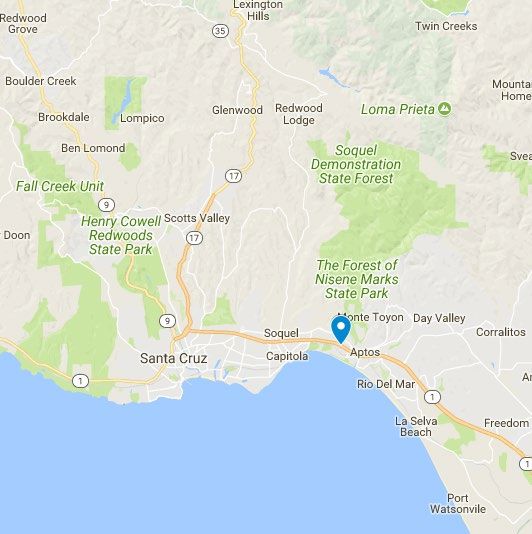
Proposal for 2020 STIP Target
                                                                                          Proposed
 Project         STIP
                          Project                           Proposal                      New STIP
 Sponsor         PPNO
                                                                                          Funds
                                                        Add funds for
                          SR1 41st Ave-Soquel Ave
 SCCRTC/                                                Construction (in
                 073A     Auxiliary Lanes and                                                 $4,914,000
 Caltrans                                               addition to previously
                          Chanticleer Bike/Ped Bridge
                                                        programmed funds
                          Planning, Programming &       Add $169k FY23/24-
 SCCRTC           921                                                                           $169,000
                          Monitoring (PPM)              24/25
                                          Total Proposed for 2020 STIP Target                 $5,083,000

       Projects carried   over from 2018 STIP (Strike though/underline = change from 2018 STIP)
 Project        STIP
                          Project                           Proposal                      Proposed RIP
 Sponsor        PPNO
 SCCRTC                                                     Change lead agency,
                          SR1 Mar Vista Bike/Ped
 County of      1968                                        shift all funds out one           $6,779,000
                          Overcrossing
 Santa Cruz                                                 year
                          SR 1/9 Intersection               No change to STIP
 Santa Cruz      4658                                                                         $2,853,000
                          Improvements                      funds
 Watsonville     2825     Freedom Blvd Reconstruction       No change                         $1,550,000

Section 7. Overview of Other Funding for Delivery of Regional STIP Projects
In addition to regional shares of STIP funds, sometimes also referred to as Regional
Improvement Program (RIP), projects proposed for STIP funds include a combination of
local, state and federal funds.

If the CTC is unable to program STIP funds in the year requested for the Highway 1 41st
Ave-Soquel Ave or other projects, the RTC may request an AB3090 amendment or may
need to delay project implementation. Another option project sponsors may utilize to
expedite delivery will be to utilize the SB184 notice to begin reimbursable expenses in
advance of the STIP allocation.
                                                         Figures shown in $000 ($thousands)
                                                 STIP                                          Total
     Proposed 2020 Regional STIP                             Local           Other
                                                funds                                          Cost
                                                                          1640 (HIP)
SR1 41st Ave-Soquel Ave Auxiliary Lanes,
                                                                        Proposed future       37,051
Bus on Shoulders and Chanticleer Bike/Ped       10,155       5,750
                                                                        SB1 (Measure to
Bridge
                                                                         cover balance)

Planning, Programming & Monitoring (PPM)         578                    Pre FY20 funds         578

SR1 Mar Vista Bike/Ped Overcrossing             6,779        2,000        752 (RSTPX)          7,880

SR 1/9 Intersection Improvements                $2,853       6,805      2,188 (RSTPX)         $11,846
Freedom Blvd Reconstruction
                                                1,550         625                              2,175
(Alta Vista Ave to Davis Rd)

Section 8. Interregional Transportation Improvement Program (ITIP) Funding
The purpose of the Interregional Transportation Improvement Program (ITIP) is to improve
interregional mobility for people and goods in the State of California. As an interregional
program the ITIP is focused on increasing the throughput for highway and rail corridors of
strategic importance outside the urbanized areas of the state. A sound transportation
network between and connecting urbanized areas ports and borders is vital to the state’s

2020 Santa Cruz County Regional Transportation Improvement Program (RTIP): December 5, 2019            Page 10
economic vitality. The ITIP is prepared in accordance with Government Code Section 14526,
Streets and Highways Code Section 164 and the STIP Guidelines. The ITIP is a five-year
program managed by Caltrans and funded with 25% of new STIP revenues in each cycle.
Developed in cooperation with regional transportation planning agencies to ensure an
integrated transportation program, the ITIP promotes the goal of improving interregional
mobility and connectivity across California.
No ITIP funding is proposed for projects in Santa Cruz County in the 2020 STIP.
Section 9. Projects Planned Within the Corridor
Caltrans and regional transportation agencies prepare corridor plans to identify multi-modal
transportation projects that will meet state, regional, and local goals and benefit corridors
around the state. In consideration of the RTC’s Unified Corridor Investment Study (UCS),
2040 Santa Cruz County Regional Transportation Plan (RTP), 2040 Monterey Bay Area
Metropolitan Transportation Plan/Sustainable Communities Strategy (MTP/SCS), the
Highway 1 Corridor Investment Plan, Caltrans’s Proposition 1B Corridor System
Management Plan for the Highway 1-Highway 183 corridor, the Measure D Transportation
Improvement Plan, the Caltrans Transportation Plan (CTP), and other state, regional, and
locals plans, the RTC has prepares a program of multimodal projects to utilize a combination
of formula, discretionary and competitive state, federal, regional, and local funds.
Building upon these other planning efforts, the RTC’s Unified Corridor Investment Study
(UCS) found that the most effective way to tackle transportation challenges along the
region’s most heavily congested travel corridor between the cities of Santa Cruz and
Watsonville is a combination of multi-modal improvements along three (3) parallel routes:
• Highway 1
• Soquel Avenue/Drive- Freedom Boulevard
• Santa Cruz Branch Rail Line/Coastal Rail Trail
The 2020 RTIP reflects priorities that were identified through these major planning efforts.
The following is a description of other projects planned or underway within the unified
Highway 1/Rail/Soquel-Freedom Boulevard corridor:
• Highway 1: The Santa Cruz County Regional Transportation Commission (RTC), in
cooperation with the California Department of Transportation (Caltrans) and the
Federal Highway Administration (FHWA), has analyzed a range of investments to
improve access, safety, and traffic flow on State Route 1 in Santa Cruz County. In
addition to the Highway 1 41st Ave-Soquel Dr Auxiliary Lanes, Bus on Shoulders and
Chanticleer Ave Bicycle/Pedestrian Overcrossing, the next phases of auxiliary lanes
and bus shoulders will extend south between Bay/Porter in Capitola/Soquel and
Freedom Boulevard in Aptos.
• Monterey Bay Sanctuary Scenic Trail Network (MBSST): The MBSST includes a 50-
mile bicycle and pedestrian trail project in Santa Cruz County, which will link to
existing and planned trails in Monterey County. The spine of the trail network is the
32-mile Coastal Rail Trail from Davenport to Watsonville, being built as funding
becomes available within the RTC-owned rail right-of-way. The remaining miles of
trail include connecting paths, sidewalks, bike lanes, other roadway improvements or
unpaved coastal spur trails. The CTC has been
• Transit in the Rail Corridor: The RTC purchased the 32-mile Santa Cruz Branch Rail
Line from Union Pacific in 2012 to expand transportation options in Santa Cruz
2020 Santa Cruz County Regional Transportation Improvement Program (RTIP): December 5, 2019 Page 11County. In addition to the Rail Trail (above), the UCS priority projects included high-
capacity public transit and freight rail in the corridor. In order to answer community
and CTC questions about transit options in the rail corridor, the RTC is currently
conducting a performance-based Alternative Analysis based on a triple bottom line
sustainability framework (balancing environmental, economic, and equitable factors)
will be employed to compare transit alternatives and define a viable project that will
deliver the greatest benefit to Santa Cruz County.
Since STIP and other state and federal funding is insufficient to fund all of the region’s
priority projects, Santa Cruz County voters approved the Measure D sales tax in 2016 to be
used to leverage other grants needed to advance priority projects.
C. Relationship of RTIP to RTP/SCS/APS and Benefits of RTIP
Section 10. Regional Level Performance Evaluation
Performance measures are included in the 2020 RTIP as required in the 2020 STIP
Guidelines. The 2020 RTIP furthers the goals of the 2040 Santa Cruz County Regional
Transportation Plan (RTP) and the Association of Monterey Bay Area Governments’ (AMBAG)
2040 Metropolitan Transportation Plan/Sustainable Communities Strategy (MTP/SCS). The
following table reflects the regional level performance of measures included in the 2040 RTP
and 2040 MTP/SCS. The RTIP will facilitate implementation of the SCS. Notably the SCS
proposes increased housing and other development in STIP project areas.
Consistent with the RTP and state and federal guidance, criteria the RTC considers when
programming funds includes:
1. Number of people served by project
2. Safety and health benefits
3. Preservation of existing infrastructure
4. Reduce vehicle miles traveled, air pollution, greenhouse gas emissions and/or fuel
consumption
5. Improve access for all modes, especially to and within key destinations
6. Change in travel times and travel time reliability and efficiency of the transportation
system, including transit
7. Change in passenger, freight and goods movement efficiency
8. Change in disparities in safety and access for people who are transportation
disadvantaged due to age, income, disability or minority status
9. Inclusion of projects in the Regional Transportation Plan (RTP) “constrained” project
list, which implements the SB375-mandated Sustainable Communities Strategy
(SCS)
10. Consistency with the Monterey Bay Area Complete Streets Guidebook
11. Public engagement - in identification of the project as a priority and planned during
project implementation
12. Funding, including if all other funding is secured and amount of match
13. Deliverability of the project or if there are possible barriers to project schedules.
A. Regional Level Performance Indicators and Measures
The following table summarizes regional-level performance measures from the Santa Cruz
County RTP and Monterey Bay MTP/SCS, where data was available. NA reflects areas where
data is unavailable.
2020 Santa Cruz County Regional Transportation Improvement Program (RTIP): December 5, 2019 Page 12Table B1: Evaluation – Regional Level Performance Indicators and Measures
Goal Indicator/Measure Current System Projected System
Performance Performance
(Baseline) (Year)
Congestion Vehicle Miles Traveled 15.3 13.40 (2035)
Reduction (VMT) per capita/workday (SB 375 VMT miles/capita/workday Reduction: -17.1%
– passenger vehicles and light duty (2005)
trucks and 50% of out of county travel)
VMT per capita/workday – Full fleet, 21.7 18.3
within county borders miles/capita/workday miles/person/day
(2005) (2020) Reduction: -
15%
Percent of congested VMT (at or below NA NA
35 mph)
Commute mode share (travel to work or Drive Alone: 69.9% NA. 2040 target is
school) Carpool: 9.4% reduce Drive Alone to
Transit: 2.9% 55%
Bike: 3.8%
Walk: 3.9%
Other: 2.9%
Work @ home: 7.3%
(2011-2015 ACS)
Infrastructure Percent of distressed state highway D5: Class 1-4%; Class 2- See TAMP
Condition lane-miles 8%; Class 3 – 14% (2015
SOP report)
Pavement Condition Index (local streets 50 (2017) 70 (2040, if
and roads) $44M/year invested);
43 (if only $23M/year
invested)
Percent of highway bridges by deck area 38% TBD
classified in poor condition
Percent of transit assets that have 62.2% Fixed Route Buses TBD
surpassed the FTA useful life period (SCMTD 2017)
72.2% Non-revenue
Vehicles
31.0% Paratransit Vans
(SCMTD 2015)
System Highway Buffer Index (the extra time NA NA
Reliability cushion that most travelers add to their
average travel time when planning trips
to ensure on-time arrival)
Accessibility and on-time performance NA Improved with ITS
for rail and transit and replacement
vehicle projects
Safety Fatalities per capita 0.00007369 Reduce
Injuries per capita 0.00439939 Reduce
Economic Vitality Percent of housing and jobs within 0.5 AMBAG region: 39% 40% (2040)
miles of transit stops with frequent
transit service
Farebox recovery ratio 23.28% (FY16) NA
Mean commute travel time (to work or 26 minutes (2011-2015 NA (Partly dependent
school) ACS) on land use
decisions)
Environmental Change in acres of agricultural land N/A N/C
Sustainability CO2 emissions reduction per capita – 15.02 (2005) 13.05 (2035)
lbs/day/capita – based on SB 375 VMT Reduction: -17.9%
metric
Transit Total operating cost per revenue mile $12.09 Bus, TBD
$12.39 Demand
Response,
$5.50 Commuter Bus,
$7.09 Demand Response
- Taxi
2020 Santa Cruz County Regional Transportation Improvement Program (RTIP): December 5, 2019 Page 13Goal Indicator/Measure Current System Projected System
Performance Performance
(Baseline) (Year)
Land Use Land Use Efficiency (total developed 32,972 acres (51.519 sq TBD
land/population and rate of urbanization mi developed for 262,340
over time. Also, farmland conversion) population = 0.0001963
sq mi per person
Access Percent of population that can bike or Bike- 73.9% Bike – 74.3%
walk within 30-minutes to key Walk – 32.7% Walk – 33.8%
destinations
Section 11. Regional and Statewide Benefits of RTIP
All projects programmed in the Santa Cruz County 2020 RTIP are consistent with the goals
and objectives of the Santa Cruz County Regional Transportation Plan (RTP), the MTP/SCS,
Senate Bill 1, SB375, and state plans. The RTC considered project benefits in advancing
regional and state goals when selecting projects for the STIP. The projected impact of 2020
RTIP projects is summarized in Table B3 below.
D. Performance and Effectiveness of RTIP
Section 12. Evaluation of Cost Effectiveness of RTIP
Per the STIP Guidelines regions shall, if appropriate and to the extent necessary data and
tools are available, use the performance measures in the Table below to evaluate cost-
effectiveness of projects proposed in the STIP on a regional level.
Table B2: Cost-Effectiveness Indicators and Measures
Goal Indicator/Measure Current Level of Projected
Performance (Baseline) Performance
Improvement
Congestion Vehicle Miles Traveled 15.3 (2005) Decrease
Reduction (VMT) per capita/workday
Reduce Percent of congested NA Reduce
VMT (at or below 35 mph)
Change in commute mode share Drive Alone: 69.9% Reduce SOV through
(travel to work or school) Carpool: 9.4% bike/ped projects and
Transit: 2.9% improved transit service
Bike: 3.8% with Bus on Shoulders
Walk: 3.9%
Other: 2.9%
Work @ home: 7.3%
(2011-2015 ACS)
Infrastructure Reduce percent of distressed NA Reduced with new
Condition state highway lane-miles auxiliary lanes and Hwy
1/9 interchange
Improve Pavement Condition 50 (2017) Improved PCI on some
Index (local streets and roads) local roadway
Reduce percent of highway NA No change (NC)
bridge deck area in poor
condition
Reduce percent of transit assets 62.2% Fixed Route Buses Replacement and
that have surpassed the FTA (SCMTD 2017) refurbished buses
useful life period 72.2% Non-revenue Vehicles funded in 2018 STIP
31.0% Paratransit Vans
(SCMTD 2015)
System Reliability Reduce Highway Buffer Index NA NA
(the time cushion added to the
average commute travel times
to ensure on-time arrival).
Improve accessibility and on- NA Bus on shoulders will
time performance for rail and improve transit travel
transit times
2020 Santa Cruz County Regional Transportation Improvement Program (RTIP): December 5, 2019 Page 14Goal Indicator/Measure Current Level of Projected
Performance (Baseline) Performance
Improvement
Safety Fatalities per capita 0.0074% Reduce
Injuries per capita 0.44% Reduce
Economic Vitality Increase percent of housing and NA NA
jobs within 0.5 miles of transit
stops with frequent transit
service
Reduce mean commute travel 26 minutes (2011-2015 ACS) Decrease with improved
time (to work or school) system reliability and
facilities
Increase farebox recovery ratio 23.28% (FY16) Improve. Increase
ridership with bus on
shoulders
Environmental Change in acres of agricultural NA NC
Sustainability land
CO2 emissions reduction per 15.02 (2005) Reduce. Shift more trips
capita to walk, bike, and
transit. Reduce idling
Per Section 19C and Appendix B of the STIP Guidelines regions may, if appropriate and to
the extent necessary data and tools are available, use the benefits or performance
improvements in the table below to evaluate the proposed changes to the built
environment. The 2020 RTIP includes the following:
Table B3: Evaluation – Summary of Changes and Benefits of
2020 RTIP projects Proposed for STIP Funds
Benefits or
Project Type Performance
Or Mode Changes to Built Improvement at
Environment Indicator/Measure Project Completion
State Highway New auxiliary lanes Safety, improved traffic
New lane-miles flow
New or upgrade bicycle Approx. 0.5 mile in Improve safety, access,
lane/sidewalk miles bicycle/pedestrian travel choices, reduce
overcrossings and b/p travel time, reduce VMT
facilities on Highway 9
Operational improvements Intersection Improve LOS through 1/9
improvements intersection
Additional transit efficiencies Bus on shoulders Improve access and
Transit or Intercity operations reliability, improve safety,
Rail reduce travel times
New lane-miles .25 miles New turn lanes
Local Streets and Lane-miles rehabilitated 2 miles System preservation
Roads New or upgrade bicycle and 2 new crossings over Safety and access
pedestrian facilities highway
Operational improvements 2 local intersections Safety
2020 Santa Cruz County Regional Transportation Improvement Program (RTIP): December 5, 2019 Page 15Section 13. Project Specific Evaluation
No project-level analysis is required for projects proposed for STIP funds this cycle.
However the following provides a summary of benefits of STIP-funded projects in Santa
Cruz County.
STIP
Project Summary of Project Benefits
PPNO
Hwy 1 41st Ave-
Approx. 1 lane mile of aux lanes in each direction; new bike/ped connection;
Soquel Ave
interchange modifications to allow bus on shoulders to operate between
Auxiliary Lanes,
Morrissey Blvd and Bay/Porter. Improve traffic flow, safety, travel times and
73A Bus on
reliability for buses and autos, pedestrian/bike access across highway.
Shoulders, and
Heavily traveled - over 100,000 vehicles per day. Daily congestion extends
Chanticleer
over 5 hours per day and results in by-pass traffic on local arterials.
Bike/Ped Bridge
Planning, Secure and maintain state and federal transportation funds for projects in
921 Programming & Santa Cruz County. Keep projects on schedule, meet state and federal
Monitoring (PPM) planning, programming, monitoring mandates.
Reduce trip distance (2-3 miles), improve safety, access, and reduce VMT.
Bike/ped access across highway, access to elementary school. Reduce vehicle
Highway 1 Mar trips, especially morning peak. Provide access to businesses, Mar Vista
1968 Vista Bike/Ped Elementary School, Cabrillo Community College, residential neighborhoods,
Overcrossing State Parks and tourist destinations. Reduce traffic on State Park Dr and
Soquel Dr with the vehicular trips replaced by ped & bike trips. Fill gaps in
the bicycle and pedestrian network.
Operational Improvements; bike/ped safety. Regionally significant
State Routes 1/9
intersection. Improve access and safety, reduce congestion and bottleneck,
4658 Intersection
energy use, and emissions. Heavily traveled, provides access for UCSC,
Improvements
Santa Cruz west side, Harvey West Area, and Downtown.
System preservation (PCI 58) on major arterial (ADT 24,000), ADA upgrades,
Freedom Blvd
2825 sharrows/signage to improve bike safety, crossing feature to improve
Reconstruction
pedestrian safety.
2020 Santa Cruz County Regional Transportation Improvement Program (RTIP): December 5, 2019 Page 16E. Detailed Project Information Section 14. Overview of Projects Programmed with STIP funding – See PPRs for Additional Information 2020 Santa Cruz County Regional Transportation Improvement Program (RTIP): December 5, 2019 Page 17
F. Appendices

Section 15. Project Programming Request Forms (PPR)

All projects proposed for the 2020 STIP are carried over from the 2020 STIP.

 Project         STIP
                          Project
 Sponsor         PPNO

 SCCRTC/                  Hwy 1 41st Ave-Soquel Ave Auxiliary Lanes and Chanticleer
                  73A
 Caltrans                 Bike/Ped Bridge

 SCCRTC           921     Planning, Programming & Monitoring (PPM)

 County of
 Santa Cruz
                 1968     Highway 1 Mar Vista Bike/Ped Overcrossing
 (Caltrans
 oversight)

 Santa Cruz
 (Caltrans       4658     State Routes 1/9 Intersection Improvements
 oversight)

 Watsonville     2732     Freedom Boulevard Rehabilitation

2020 Santa Cruz County Regional Transportation Improvement Program (RTIP): December 5, 2019
STATE OF CALIFORNIA ● DEPARTMENT OF TRANSPORTATION
PROJECT PROGRAMMING REQUEST
DTP-0001 (Revised Mar, 1 2018 v7.08) General Instructions
Amendment (Existing Project) Y/N Date: 10/04/19
District EA Project ID PPNO MPO ID Alt Proj. ID / prg.
05 0C732 0512000228 0073A RTC24fSC
County Route/Corridor PM Bk PM Ahd Project Sponsor/Lead Agency
SCR 1 13.4 14.96 Santa Cruz County Regional Transportation Commission
MPO Element
AMBAG CO
Project Manager/Contact Phone E-mail Address
Luis Duazo (805)542-4678 luis.duazo@dot.ca.gov
Project Title
Highway 1, 41st Avenue to Soquel Avenue Auxiliary Lanes, Bus on Shoulder and Chanticleer Bike/Ped Bridge
Location (Project Limits), Description ( Scope of Work)
Near the city of Santa Cruz and Capitola, from 41st Avenue to Soquel Avenue. Construct auxiliary lanes, bus-on-shoulder, and
bicycle/pedestrian overcrossing near Chanticleer Avenue.
Component Implementing Agency
PA&ED Santa Cruz County Regional Transportation Commission
PS&E Santa Cruz County Regional Transportation Commission
Right of Way Santa Cruz County Regional Transportation Commission
Construction Caltrans
Legislative Districts
Assembly: 27 Senate: 11 Congressional: 17
Project Benefits
Improve traffic flow, increase safety, improve travel times and reliability and improve pedestrian/bike access across highway. Heavily
traveled - over 100,000 vehicles per day. Daily congestion results in by-pass traffic on local arteries. Improves transit travel time and
reliability by implementing bus-on-shoulder improvements.
Purpose and Need
Reduce congestion, improve safety. Reduce delay and collisions, improve pedestrian/bike access across highway.
Project Benefits: Improve traffic flow, increase safety, improve travel times and reliability and improve pedestrian/bike access across
highway. Heavily traveled - over 100,000 vehicles per day. Daily congestion results in by-pass traffic on local arteries.
Outputs/Outcomes: SHRC Auxiliary Lane miles constructed- 1 mile; SHRC Pedestrian/bicycle facilities miles constructed:100 feet
Category Outputs/Outcomes Unit Total
State Highway Road Construction Auxiliary lane mile(s) constructed Miles 1
State Highway Road Construction Pedestrian/Bicycle facilities mile(s) constructed Miles 0.02
ADA Improvements Yes Bike/Ped Improvements Yes Reversible Lane analysis Y/N
Inc. Sustainable Communities Strategy Goals Yes Reduces Greenhouse Gas Emissions Yes
Project Milestone Existing Proposed
Project Study Report Approved 2007
Begin Environmental (PA&ED) Phase 08/01/2011 08/01/11
Circulate Draft Environmental Document Document Type EIS 11/15/2015 11/15/15
Draft Project Report 11/15/2015 11/15/15
End Environmental Phase (PA&ED Milestone) 12/31/2018 12/31/18
Begin Design (PS&E) Phase 02/01/2019 02/01/19
End Design Phase (Ready to List for Advertisement Milestone) 02/01/2021 10/01/20
Begin Right of Way Phase 02/01/2019 02/01/19
End Right of Way Phase (Right of Way Certification Milestone) 02/01/2021 10/01/20
Begin Construction Phase (Contract Award Milestone) 05/31/2021 02/01/21
End Construction Phase (Construction Contract Acceptance Milestone) 01/15/2022 12/01/22
Begin Closeout Phase 02/01/2022 12/15/22
End Closeout Phase (Closeout Report) 07/15/2023 05/15/23
For individuals with sensory disabilities, this document is available in alternate formats. For information call (916)
ADA Notice
654-6410 or TDD (916) 654-3880 or write Records and Forms Management, 1120 N Street, MS-89, Sacramento,STATE OF CALIFORNIA ● DEPARTMENT OF TRANSPORTATION
PROJECT PROGRAMMING REQUEST
DTP-0001 (Revised Mar, 1 2018 v7.08) Date: 10/04/19
Additional Information
LCO - RTC lead for environmental review, design, & ROW. RTC Project Manager: Sarah Christensen; 831-
460-3204. Rachel Moriconi=programming staff.
Luis Duazo is the CTs PM ((805)542-4678; luis.duazo@dot.ca.gov). Caltrans is the lead for construction.
For individuals with sensory disabilities, this document is available in alternate formats. For information call (916) 654-6410 or
ADA Notice TDD (916) 654-3880 or write Records and Forms Management, 1120 N Street, MS-89, Sacramento, CA 95814.STATE OF CALIFORNIA ● DEPARTMENT OF TRANSPORTATION
PROJECT PROGRAMMING REQUEST
DTP-0001 (Revised Mar, 1 2018 v7.08) Date: 10/04/19
District County Route EA Project ID PPNO Alt. ID
05 SCR, , 1, , 0C732 0512000228 0073A
Project Title: Highway 1, 41st Avenue to Soquel Avenue Auxiliary Lanes, Bus on Shoulder and Chanticleer Bike/Ped Bridge
Existing Total Project Cost ($1,000s)
Component Prior 20-21 21-22 22-23 23-24 24-25 25-26+ Total Implementing Agency
E&P (PA&ED) Santa Cruz County Regional
PS&E 2,570 2,570 T t tiCounty
Santa Cruz C Regional
i i
R/W SUP (CT) T i C i i
Santa Cruz County Regional
CON SUP (CT) 3,000 T
3,000 Caltrans t ti C i i
R/W 750 750 Santa Cruz County Regional
CON 25,000 T
25,000 Caltrans i C i i
TOTAL 3,320 28,000 31,320
Proposed Total Project Cost ($1,000s) Notes
E&P (PA&ED)
PS&E 3,620 3,620
R/W SUP (CT)
CON SUP (CT) 4,871 4,871
R/W 750 750
CON 27,810 27,810
TOTAL 4,370 32,681 37,051
Fund No. 1: RIP - National Hwy System (NH) Program Code
Existing Funding ($1,000s) 20.XX.075.600
Component Prior 20-21 21-22 22-23 23-24 24-25 25-26+ Total Funding Agency
E&P (PA&ED) Santa Cruz County Regional Trans
PS&E 2,570 2,570 $2570 PSE voted 01/30/19
R/W SUP (CT) $750 RW voted 01/30/19
CON SUP (CT)
R/W 750 750
CON 1,921 1,921
TOTAL 3,320 1,921 5,241
Proposed Funding ($1,000s) Notes
E&P (PA&ED) 12/19-RTC addded $4914k
PS&E 2,570 2,570 ($759K previously programmed to
ROW + $950k lapsed shares +
R/W SUP (CT)
$3,205k of 2020 target)
CON SUP (CT)
R/W 750 750
CON 6,835 6,835
TOTAL 3,320 6,835 10,155
Fund No. 2: Future Need - Future Funds (NO-FUND) Program Code
Existing Funding ($1,000s) FUTURE
Component Prior 20-21 21-22 22-23 23-24 24-25 25-26+ Total Funding Agency
E&P (PA&ED)
PS&E
R/W SUP (CT)
CON SUP (CT) 3,000 3,000
R/W
CON 11,300 11,300
TOTAL 14,300 14,300
Proposed Funding ($1,000s) Notes
E&P (PA&ED) CON proposed for cycle 2 SB1
PS&E grants (SCCP/LPP-c). RTC will
backfill with other funds if not
R/W SUP (CT)
grants not secured.
CON SUP (CT) 4,171 4,171
R/W
CON 15,335 15,335
TOTAL 19,506 19,506Fund No. 3: Unfunded/require Co-op amendment (HIP) Program Code
Existing Funding ($1,000s)
Component Prior 20-21 21-22 22-23 23-24 24-25 25-26+ Total Funding Agency
E&P (PA&ED)
PS&E
R/W SUP (CT)
CON SUP (CT)
R/W
CON
TOTAL
Proposed Funding ($1,000s) Notes
E&P (PA&ED) New Highway Infrastructure
PS&E Program (HIP) funds have been
programmed by RTC 12/7/19
R/W SUP (CT)
($1,639,608 from FFY18 & 19
CON SUP (CT) shares), will be added to CTs co-
R/W op for construction.
CON 1,640 1,640
TOTAL 1,640 1,640
Fund No. 4: Local Sales Tax Program Code
Existing Funding ($1,000s) 20.XX.400.100
Component Prior 20-21 21-22 22-23 23-24 24-25 25-26+ Total Funding Agency
E&P (PA&ED) Santa Cruz County Regional Trans
PS&E
R/W SUP (CT)
CON SUP (CT)
R/W
CON 11,779 11,779
TOTAL 11,779 11,779
Proposed Funding ($1,000s) Notes
E&P (PA&ED) Updated Measure D-programming
PS&E 1,050 1,050 approved 6/19 and in RTC
Strategic Implementation Plan
R/W SUP (CT)
(SIP). RTC to increase if other
CON SUP (CT) 700 700 grants not secured. $700k CON
R/W Sup=RTC staff time
CON 4,000 4,000
TOTAL 1,050 4,700 5,750STATE OF CALIFORNIA ● DEPARTMENT OF TRANSPORTATION
PROJECT PROGRAMMING REQUEST
DTP-0001 (Revised Mar, 1 2018 v7.08)
Complete this page for amendments only Date: 10/04/19
District County Route EA Project ID PPNO Alt. ID
05 SCR 1 0C732 0512000228 0073A
SECTION 1 - All Projects
Project Background
Carryover from 2018 STIP. Project first programmed in 2012 STIP. 1/19 CTC approved an allocation of $2,570k RIP PS&E
and $750k R/W FY 18/19; RTC requesting to have balance of $759k in ROW funds previously programmed in 2018 STIP
reprogrammed to CON in 2020 STIP, as well as new STIP shares/targets and $950k of funds that lapsed in 2018 STIP.
Programming Change Requested
Modify description to add bus-on-shoulders and update funding information. Add $4,914,00 STIP ($759,000 STIP previously
programmed to ROW +$950k shares lapsed in 2019+ new county share targets) for construction. As discussed in 2018, RTC
plans to seek SCCP and LPP-competitive grants to fund balance of construction, but is committed to backfill with other funds
if grants not secured in 2020.
Reason for Proposed Change
Updated cost estimates from 95% design and updated funding plan for project.
If proposed change will delay one or more components, clearly explain 1) reason the delay, 2) cost increase related
to the delay, and 3) how cost increase will be funded
No delay anticipated. Caltrans and RTC working to accelerate completion of design and initiate construction in early 2021.
Other Significant Information
RTC has programmed its HIP shares ($1,639,608) for construction, but Caltrans recommends funds be shown as unfunded
need until construction co-op with Caltrans is executed - thus funds are shown as unfunded need.
SECTION 2 - For SB1 Projects Only
Project Amendment Request (Please follow the individual SB1 program guidelines for specific criteria)
NA
SECTION 3 - All Projects
Approvals
I hereby certify that the above information is complete and accurate and all approvals have been obtained for the processing
of this amendment request.*
Name (Print or Type) Signature Title Date
Rachel Moriconi Sr. Transportation Planner 12/5/2019
Attachments
1) Concurrence from Implementing Agency and/or Regional Transportation Planning Agency
2) Project Location MapSTATE OF CALIFORNIA ● DEPARTMENT OF TRANSPORTATION
PROJECT PROGRAMMING REQUEST
DTP-0001 (Revised Mar, 1 2018 v7.08) General Instructions
Amendment (Existing Project) Y/N Date: 10/04/19
District EA Project ID PPNO MPO ID Alt Proj. ID / prg.
05 0518000235 0921 RTC04SC
County Route/Corridor PM Bk PM Ahd Project Sponsor/Lead Agency
SCR Santa Cruz County Regional Transportation Commission
MPO Element
AMBAG LA
Project Manager/Contact Phone E-mail Address
Rachel Moriconi (831)460-3200 rmoriconi@sccrtc.org
Project Title
Planning, Programming and Monitoring
Location (Project Limits), Description ( Scope of Work)
Planning, Programming and Monitoring.
Component Implementing Agency
PA&ED
PS&E
Right of Way
Construction Santa Cruz County Regional Transportation Commission
Legislative Districts
Assembly: 27,28 Senate: 11,15 Congressional: 14,17
Project Benefits
Program state and federal funds. Regional Transportation Plan and other planning efforts. Coordination with Caltrans and projects
sponsors. Keep projects on schedule, ensure that state and federal requirements are met for projects, improve efficiencies, monitor
projects, implement SB1, AB32, SB375, etc.
Purpose and Need
Work associated with planning regional projects, programming transportation funds, and monitoring the implementation of programmed
projects. Keep projects on schedule, address state and federal mandates.
Category Outputs/Outcomes Unit Total
ADA Improvements N Bike/Ped Improvements N Reversible Lane analysis N
Inc. Sustainable Communities Strategy Goals N Reduces Greenhouse Gas Emissions N
Project Milestone Existing Proposed
Project Study Report Approved na
Begin Environmental (PA&ED) Phase
Circulate Draft Environmental Document Document Type
Draft Project Report
End Environmental Phase (PA&ED Milestone)
Begin Design (PS&E) Phase
End Design Phase (Ready to List for Advertisement Milestone)
Begin Right of Way Phase
End Right of Way Phase (Right of Way Certification Milestone)
Begin Construction Phase (Contract Award Milestone) Ongoing
End Construction Phase (Construction Contract Acceptance Milestone) Ongoing
Begin Closeout Phase
End Closeout Phase (Closeout Report)
For individuals with sensory disabilities, this document is available in alternate formats. For information call (916)
ADA Notice
654-6410 or TDD (916) 654-3880 or write Records and Forms Management, 1120 N Street, MS-89, Sacramento,STATE OF CALIFORNIA ● DEPARTMENT OF TRANSPORTATION
PROJECT PROGRAMMING REQUEST
DTP-0001 (Revised Mar, 1 2018 v7.08) Date: 10/04/19
District County Route EA Project ID PPNO Alt. ID
05 SCR, , ,, 0518000235 0921
Project Title: Planning, Programming and Monitoring
Existing Total Project Cost ($1,000s)
Component Prior 20-21 21-22 22-23 23-24 24-25 25-26+ Total Implementing Agency
E&P (PA&ED)
PS&E
R/W SUP (CT)
CON SUP (CT) Santa Cruz County Regional
R/W T t ti C i i
CON 3,054 137 136 136 3,463 Santa Cruz County Regional
TOTAL 3,054 137 136 136 3,463 T t ti C i i
Proposed Total Project Cost ($1,000s) Notes
E&P (PA&ED)
PS&E
R/W SUP (CT)
CON SUP (CT)
R/W
CON 3,054 137 136 136 53 116 3,632
TOTAL 3,054 137 136 136 53 116 3,632
Fund No. 1: RIP - State Cash (ST-CASH) Program Code
Existing Funding ($1,000s) 20.30.600.670
Component Prior 20-21 21-22 22-23 23-24 24-25 25-26+ Total Funding Agency
E&P (PA&ED) Santa Cruz County Regional Trans
PS&E $76 CON voted 07/16/98
R/W SUP (CT) $76 CON voted 11/09/99
$76 CON voted 06/15/00
CON SUP (CT)
$76 CON voted 05/05/01
R/W $76 CON voted 06/28/02
CON 3,054 137 136 136 3,463 $76 CON voted 02/26/04
TOTAL 3,054 137 136 136 3,463 $76 CON voted 03/03/05
$77 CON t d 07/14/05
Proposed Funding ($1,000s) Notes
E&P (PA&ED) Add $169k in 2020 STIP
PS&E ($116K=FY24/25 limit;
R/W SUP (CT) $462k=FY20/21-23/24 limit)
CON SUP (CT)
R/W
CON 3,054 137 136 136 53 116 3,632
TOTAL 3,054 137 136 136 53 116 3,632STATE OF CALIFORNIA ● DEPARTMENT OF TRANSPORTATION
PROJECT PROGRAMMING REQUEST
DTP-0001 (Revised Mar, 1 2018 v7.08)
Complete this page for amendments only Date: 10/04/19
District County Route EA Project ID PPNO Alt. ID
05 SCR 0518000235 0921
SECTION 1 - All Projects
Project Background
Ongoing planning, programming, and monitoring (PPM) activities.
Programming Change Requested
Add $169k over last 2 years of 2020 STIP, consistent with county share period limits.
Reason for Proposed Change
Continued activities to meet state and fed requirements.
If proposed change will delay one or more components, clearly explain 1) reason the delay, 2) cost increase related
to the delay, and 3) how cost increase will be funded
NA
Other Significant Information
SECTION 2 - For SB1 Projects Only
Project Amendment Request (Please follow the individual SB1 program guidelines for specific criteria)
SECTION 3 - All Projects
Approvals
I hereby certify that the above information is complete and accurate and all approvals have been obtained for the processing
of this amendment request.*
Name (Print or Type) Signature Title Date
Rachel Moriconi Sr. Transportation Planner 12/5/2019
Attachments
1) Concurrence from Implementing Agency and/or Regional Transportation Planning Agency
2) Project Location MapYou can also read


