Evergreen Line Rapid Transit Project - Project Report: Infrastructure BC
←
→
Page content transcription
If your browser does not render page correctly, please read the page content below
Project Report:

Evergreen Line
Rapid Transit Project
March 2013
EVERGREEN LINE RAPID TRANSIT PROJECT

    Purpose of this Report
    The purpose of this report is to provide key information to the public about the Evergreen Line Rapid
    Transit Project (Evergreen Line or the Project). This report describes the need for the Project and how it will
    be delivered. The report also explains how different procurement delivery methods were analyzed, and
    how project benefits and innovations are expected to be achieved. A summary of the key aspects of the
    project agreement is also provided.

    In all of its procurement processes, the Province of B.C. is committed to a high standard of disclosure
    as part of its accountability for the delivery of public projects. Ministries, Crown Corporations and other
    government agencies are publicly accountable for projects through regular budgeting, auditing and
    reporting processes.

    The Evergreen Line Rapid Transit Project Board, which includes representatives from the Ministry of
    Transportation and Infrastructure, TransLink, and Partnerships BC, is accountable for the contents of this
    report.

    Defined Terms and Abbreviations
    Capitalized terms are defined in the glossary at the end of this report.

    Abbreviations are defined in the table below:

    ALRT           Advanced Light Rapid Transit
    BCRTC          BC Rapid Transit Company
    CPTED          Crime Prevention Through Environmental Design
    DB             Design Build
    DBB            Design Bid Build
    DBF            Design Build Finance
    LRT            Light Rail Transit
    MOTI           Ministry of Transportation and Infrastructure
    NPC            Net Present Cost
    PPP            Public Private Partnership
    RFP            Request for Proposals
    RFQ            Request for Qualifications
    VFM            Value for Money

i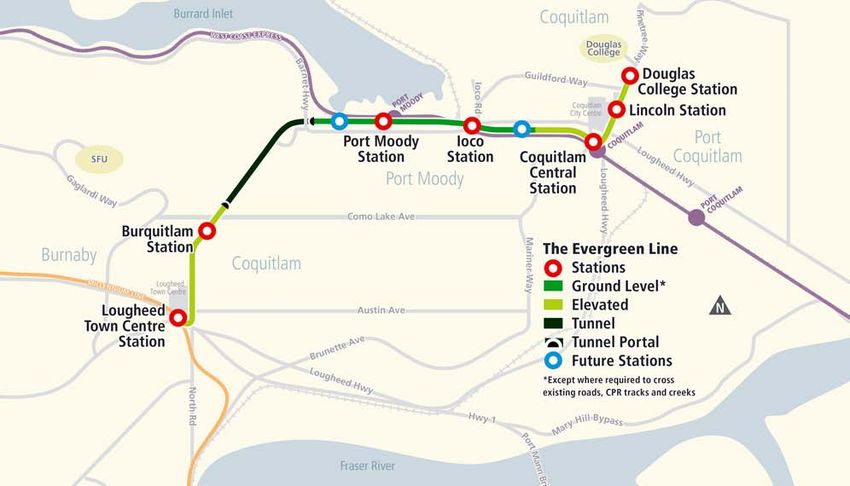
EVERGREEN LINE RAPID TRANSIT PROJECT

Table of Contents

Purpose of this Report.................................................................................................................i

Defined Terms and Abbreviations...............................................................................................i

1       Executive Summary.................................................................................................. 1

2       Project Background and Goals................................................................................. 3

3       Project Scope........................................................................................................... 6

4       Project Benefits and Key Features............................................................................ 8
        4.1 Speed, Convenience and Safety for Users.............................................................. 8
        4.2 Reduced congestion................................................................................................ 8
        4.3 Stimulating Development........................................................................................ 8
        4.4 Employment Impacts............................................................................................... 9

5       Project Delivery Options........................................................................................ 10
        5.1 Methodology (Civil Infrastructure)......................................................................... 10
        5.2 Project Procurement Objectives............................................................................ 12
        5.3 Procurement Options Analyzed............................................................................. 12
        5.4 Results of the Procurement Options Analysis........................................................ 14
        5.5 Achieving Value for Money.................................................................................... 14

6       Competitive Selection Process............................................................................... 15
        6.1 Evaluation of Proposals.......................................................................................... 16
        6.2 Fairness Reviewer.................................................................................................. 17
        6.3 Competitive Selection Costs................................................................................. 17

7       The Final Project Agreement.................................................................................. 18
        7.1 Profile of the Private Sector Partner....................................................................... 18
        7.2 Key Terms of the Project Agreement..................................................................... 19
        7.3 Key Features of the Preferred Proponent’s Proposal............................................. 19
        7.4 Risk Allocation Summary........................................................................................ 20
        7.5 Financial Summary................................................................................................. 21
        7.6 Quantitative Benefits............................................................................................. 21
        7.7 Accounting Treatment........................................................................................... 23

8       Project Agreement and Performance Monitoring.................................................. 24
        8.1 Design and Construction Phase............................................................................. 24
        8.2 Quality Management............................................................................................. 24
        8.3 Project Board......................................................................................................... 24

9       Glossary of Terms................................................................................................... 25

Appendix A: Research and Data Resources.................................................................... 27
    Research......................................................................................................................... 27
    Ministry Data.................................................................................................................. 27

                                                                                                                                           ii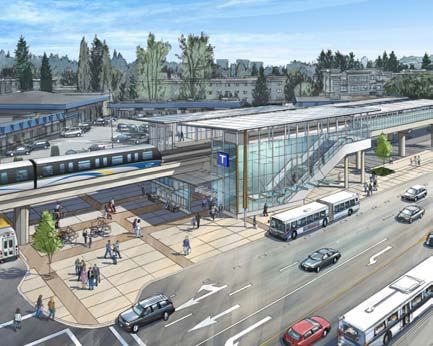
EVERGREEN LINE RAPID TRANSIT PROJECT

    1 Executive Summary
    The Evergreen Line is an 11-kilometre extension to       crown corporation PPP Canada to enable the
    the existing SkyTrain system in Metro Vancouver,         Lincoln Station to be constructed for opening
    seamlessly integrating with the Millennium Line at       day. The Province is responsible for the design
    Lougheed Town Centre Station. It will provide a          and construction of the Project and, following
    fast, frequent and convenient rapid transit service to   completion, TransLink will operate the new line as
    Port Moody and Coquitlam and will integrate with         part of the SkyTrain network.
    regional bus and West Coast Express networks. The
                                                             The Project will be completed in several parts. The
    Evergreen Line is an integral part of the Provincial
                                                             Province has assembled the property required for
    Transit Plan and the broader regional planning
                                                             the route and conducted various advance works
    objectives of Metro Vancouver, which include
                                                             to prepare the site for major construction. The
    connecting regional centres with rapid transit to
                                                             Province and TransLink have together entered
    achieve sustainable growth.
                                                             into a fixed-price contract with Bombardier for the
    The Evergreen Line will take a significant step          supply of 28 new SkyTrain vehicles, and TransLink
    towards achieving the Province’s Transit Plan,           will supply fare collection equipment and faregates
    bringing many benefits to Metro Vancouver and the        for the stations. The majority of the infrastructure
    Northeast sector, including:                             – including guideway, tunnel, stations and systems –
                                                             will be delivered by a single private partner.
    • stimulating community growth and development;
    • creating compact, liveable communities and             The procurement decision to use a Design Build
      shorter commutes;                                      Finance (DBF) partnership delivery model for the
    • providing direct connection, without transfer,         Evergreen Line infrastructure was based on a
      onto the Millennium Line;                              thorough analysis of procurement options. A Design
    • frequent service (every three minutes during peak      Build Finance Operate Maintain (DBFO) model
      periods and service almost 20 hours a day);            (similar to the model used for the Canada Line)
    • increased transportation choice and better             was examined but deemed not appropriate for the
      connections between regional centres in Metro          Project because of the need for full operational
      Vancouver;                                             integration with the existing SkyTrain system. A
    • generating an estimated 8,000 direct and indirect      Design Build Finance Maintain (DBFM) model was
      jobs during construction; and                          rejected on the grounds that there would be greater
    • removing an anticipated 40,000 cars from the           economies of scale if the Evergreen Line was
      road by 2021.                                          maintained as part of the larger SkyTrain system.

    SkyTrain technology was chosen for the Evergreen         A DBF model was chosen because it better met
    Line because it is estimated to have two and a half      the procurement objectives, providing better risk
    times more ridership than a Light Rail Transit (LRT)     transfer related to scope and schedule, as well as
    system; it will provide a direct connection without      opportunities for innovation particularly through
    transfer onto the Millennium Line; and is almost         construction methodology.
    twice as fast as LRT.
                                                             In December 2012, the Province entered into a
    The total Project budget is $1.431 billion, which        performance-based, fixed price project agreement
    includes the base project scope ($1.403 billion)         with the private partner (EGRT Construction) to
    and provision for Lincoln Station ($28 million).         design, build and finance the guideway, tunnel
    Funding for the Project includes contributions           and stations; install the automatic train control
    of $417 million from the Government of Canada,           and other systems; and test and commission
    $400 million from TransLink and $586 million from        the Evergreen Line. The term of the contract is
    the Province of British Columbia. In addition, the       approximately 3.5 years, and the fixed price of the
    City of Coquitlam assembled a unique funding             contract is $889 million.
    arrangement with a private partner and the federal

1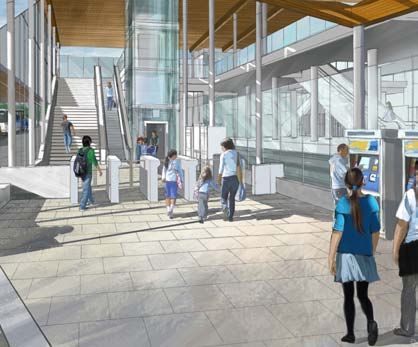
EVERGREEN LINE RAPID TRANSIT PROJECT

During construction, EGRT Construction will receive    The significant factors in achieving this value for
partial progress payments to reflect a proportion of   money include:
the work actually completed. EGRT Construction
                                                       • The use of a single-bore tunnel, as opposed to
will fund the remaining portion and will be repaid
                                                         the twin-bore tunnels envisaged in the reference
when the Evergreen Line is declared substantially
                                                         concept. This approach is expected to result in
complete and meets a range of performance
                                                         a shorter time to bore the tunnel, significantly
requirements. The project agreement includes
                                                         reducing schedule risk and potentially allowing
a range of performance measures – for example
                                                         the work to finish ahead of the required schedule;
traffic management and environmental protection
                                                       • EGRT Construction has accepted the risk of
requirements – which can result in a deduction to
                                                         geotechnical conditions in the tunnel within its
payments to EGRT Construction if those measures
                                                         fixed price – the DB comparator assumed that
are not met.
                                                         the Province would share this risk and retain
The Project is expected to achieve significant value     significant contingency to cover it; and
for taxpayer dollars. In financial terms, the value    • EGRT Construction has included efficient private
for money is estimated at $134 million (net present      financing including a mechanism that matches
cost) when compared to the Design Build (DB)             private finance to the month-by-month credit
comparator.                                              requirements of the Project.

                                                                                                              2
EVERGREEN LINE RAPID TRANSIT PROJECT

    2 Project Background and Goals
    Metro Vancouver’s Northeast sector – including the municipalities of Coquitlam, Port Moody, Port
    Coquitlam, Anmore and Belcarra – has experienced rapid population growth and continues to be one
    of the fastest growing areas in Metro Vancouver. The most recent estimates indicate that the population
    in the Northeast sector will grow by approximately 66% (to 376,000) by 2031, which would represent
    the second highest growth rate in Metro Vancouver. This current and anticipated population growth is
    adding pressure to the regional transportation network as traffic volumes build and congestion increases.
    The Evergreen Line will be one of a series of regional transit and transportation improvements that will
    address these challenges by increasing transportation choice and supporting growth management and
    environmental sustainability objectives. The Evergreen Line is also an integral part of the Provincial Transit
    Plan (www.th.gov.bc.ca/Transit_Plan/) and the broader regional planning objectives of Metro Vancouver,
    which include connecting regional centres with rapid transit to achieve sustainable growth.

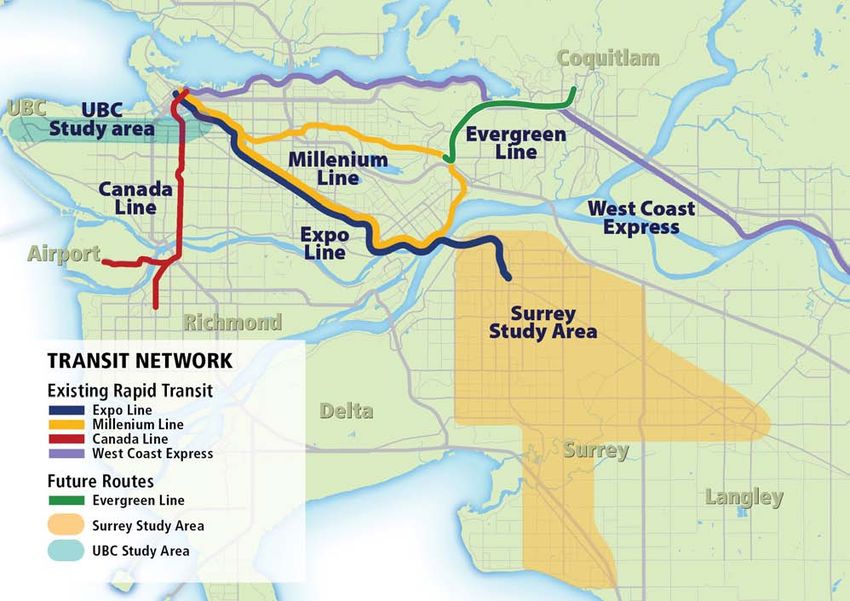
    FIGURE 1 – EVERGREEN LINE REGIONAL INTEGRATION

    Planning for the Evergreen Line has been ongoing for more than 10 years. Early in the planning process,
    the line was conceived as an extension of the SkyTrain system, using advanced light rapid transit (ALRT)
    technology. In 2004, following a review of technology alternatives and in light of the funding envelope of
    $800 million for the project, TransLink decided to move forward with a Light Rail Transit (LRT solution).

    In 2008, work was undertaken by the Province and TransLink to review the choice of technology and route
    for the Evergreen Line (http://www.evergreenline.gov.bc.ca/about.htm), in light of increasing urgency with
    respect to providing viable transportation alternatives and maximizing ridership capacity.

3
EVERGREEN LINE RAPID TRANSIT PROJECT

Project objectives, which were established to guide the review, are set out in Table 1.

TABLE 1 EVERGREEN LINE RAPID TRANSIT PROJECT OBJECTIVES

 PRIMARY OBJECTIVES           DESCRIPTION

 Increase Transportation      • Increase transportation choice
 Choice                       • Support a reduction in auto use by providing an alternative to the single
                                occupancy vehicle
                              • Increase the people-moving capacity in the Northeast sector
                              • Integrate travel modes and provide connectivity to the wider transit network
                              • Ensure speed and reliability of the system

 Support Growth               • Support municipal growth management targets established by the region’s Livable
 Management                     Region Strategic Plan
                              • Contribute to community building by stimulating future concentrated and mixed
                                use development
                              • Support existing development
                              • Provide support for a positive business environment

 Support Environmental        • Support provincial climate action goals by reducing regional car trips
 Sustainability Initiatives   • Meet regional and local environmental objectives to preserve green space
                              • Encourage pedestrian traffic along the corridor

The 2008 review involved an in-depth analysis of          The review recommended the ALRT option as
the LRT and ALRT technology options to determine          the technology choice that would bring the most
which could best meet the Project objectives. Key         benefits, including:
features of each technology are summarized below:
                                                          • two and a half times the ridership of LRT (70,000
• LRT is a driver operated system along a separate          per day by 2021), better meeting the ridership
  right-of-way with grade-level crossings at road           goals of the Provincial Transit Plan;
  intersections. The implementation of LRT would          • improved service as a result of the direct
  be new in Metro Vancouver, and would require              connection, without transfer, onto the Millennium
  dedicated operations and maintenance facilities;          Line and greater frequency of service;
  and                                                     • the ability to move people almost twice as fast as
• ALRT is automated and driverless and runs on a            LRT - from Coquitlam City Centre to Lougheed
  completely separate guideway that will integrate          Town Centre in 15 minutes compared to 24
  with the existing Millennium Line. It would be            minutes by LRT and from Coquitlam City Centre
  operated from the existing SkyTrain operations            to Vancouver in 40 minutes;
  and maintenance facility in Burnaby. Additional         • overall better value, including lower operating
  vehicle storage capacity would be required to             costs ($10 million annually compared to $15 million
  accommodate the additional SkyTrain vehicles.             annually for LRT) and a 40% higher benefit cost
                                                            ratio than LRT (a comparison of project benefits
Analysis included the development of ridership
                                                            such as travel time savings and safety benefits, to
forecasts, capital and operating cost estimates,
                                                            the estimated project capital cost of $1.4 billion
benefit-cost analysis, and a review of the
                                                            for SkyTrain versus $1.25 billion for LRT).
development potential for different corridors. The
review built upon the extensive body of analysis
that had taken place over the previous decade, and
included input from experts with extensive expertise
in the development of rapid transit systems around
the world.

                                                                                                                  4
EVERGREEN LINE RAPID TRANSIT PROJECT
The business case identified two potential routes, In the spring of 2008, the Province announced that
a Northwest route through Port Moody, and a ALRT technology would be used for the Evergreen
Southeast route along Lougheed Highway. After the Line, consistent with the technology used for the
release of the business case, mayors and councils in Expo and Millennium Line components of the
the Northeast sector were invited to provide their existing SkyTrain system. The Province assumed
feedback on the choice of route during a 45-day responsibility for the design and construction of
period. Municipal councils in Port Moody, Port the Project, with TransLink having responsibility
Coquitlam, Burnaby, New Westminster and Belcarra for the ongoing operation and maintenance of the
voiced their unanimous support for the Northwest Evergreen Line as a fully interoperable extension of
route. the existing SkyTrain system.
5EVERGREEN LINE RAPID TRANSIT PROJECT
3 Project Scope
The Evergreen Line will be an 11-kilometre long The Evergreen Line alignment is illustrated in
extension to the existing SkyTrain system in Metro Figure 1. It includes a combination of elevated and
Vancouver. It will connect to the Millennium Line at-grade guideway and tunnel and will encompass
at Lougheed Town Centre Station in Burnaby1, the following three areas:
allowing passengers to travel to Vancouver without
(a) Lougheed/Burquitlam: the line will run north
changing trains or platforms.
from Lougheed Town Centre Station on an
The scope of the Project includes: elevated guideway along the centre of North
Road. Burquitlam Station will be on the east side
• the design and construction of the guideway and
of Clarke Road near Burquitlam Plaza. Leaving
an approximately two-kilometre bored tunnel;
Burquitlam Station, the line will cross to the west
• an expansion of the existing Lougheed Town
side of Clarke Road, before entering a tunnel
Centre Station;
towards Port Moody.
• six new stations;
(b) Port Moody: the line will emerge from the
• provision for two potential future stations; and
tunnel just east of Barnet Highway. It will travel
• a vehicle storage facility.
at ground level along the south side of the
Twenty-eight new SkyTrain vehicles will be procured Canadian Pacific Rail (CPR) tracks to Moody
to accommodate the Evergreen Line service, transit Centre, located at the Port Moody transit
integration facilities will be provided, and fare exchange site. Continuing east, the line will
collection and faregate equipment will be installed cross the CPR tracks just before Inlet Centre
at stations as part of the overall Project scope. Station, located north of Barnet Highway.
(c) Coquitlam: the line will continue along the
north side of the CPR tracks towards Coquitlam
Central Station, located at the Coquitlam transit
exchange site. Turning north, the line will run
on an elevated guideway along the west side of
Pinetree Way, stop at Lincoln Station near the
Coquitlam Centre Mall, then cross to the east
side near Northern Avenue, before ending at
Lafarge Lake-Douglas Station, north of Guilford
Way.
1
The Millennium Line was built in 2000 with a platform and track connections to accommodate a future extension to Coquitlam.
6EVERGREEN LINE RAPID TRANSIT PROJECT
The alignment also includes provision for two potential future stations at West Port Moody and Falcon
Avenue and provision for a potential future extension to Port Coquitlam.
FIGURE 2 – EVERGREEN LINE ALIGNMENT
LINCOLN STATION
The Evergreen Line was originally planned to
have six stations on opening day, but a unique
funding partnership between the City of
Coquitlam, the owners of the Coquitlam Centre
Mall and PPP Canada will deliver a seventh
station – Lincoln Station – at Pinetree Way and
Lincoln Avenue. Lincoln Station is supported Figure 2: Artist Rendering of Lincoln Station
by the recent implementation of a new density Evergreen Line opens is an additional 30%
funding mechanism approved by Coquitlam creating a strong financial benefit to proceeding
City Council, which is aligned with the planning sooner. In addition, the construction of the Lincoln
goals outlined in the City of Coquitlam’s Official Station as part of the current scope eliminates
Community Plan for the City Centre to become a future disruption to transit riders and reduces risk
sustainable, high-density, urban core. Located in associated with design and construction.
the heart of a growing commercial and residential
PPP Canada approved the City of Coquitlam’s
area, the new station will service Coquitlam
application for funding for the Lincoln Station
Centre Mall and more than a dozen existing and
project and will provide 25% (up to $7 million)
planned residential and retail developments
of funding towards the design, construction and
located within a short walk of the station.
financing of Lincoln Station. Costs associated
The inclusion of the new Lincoln Station during with the Lincoln Station will be tracked during
the construction of the Evergreen Line is expected construction and the final contribution by
to cost approximately $28 million. The estimated PPP Canada will be determined at substantial
cost premium of building the station after the completion on the basis of actual costs.
7EVERGREEN LINE RAPID TRANSIT PROJECT
4 Project Benefits and Key Features
4.1 Speed, Convenience and centres in Metro Vancouver, while also supporting
Safety for Users environmental sustainability objectives. The
Evergreen Line is expected to influence the
As an extension of the SkyTrain system, the
travel patterns of current transit users while also
Evergreen Line uses Advanced Light Rapid Transit
attracting new riders to the transit system. Analysis
(ALRT) technology, which is automated, driverless
undertaken as part of the business case estimates
and runs along a separate, dedicated guideway.
that the new system will draw 50,000 riders daily in
The Evergreen Line will have a maximum operating
its first year of operation and 70,000 daily riders by
speed of 80 kilometres per hour, will run every three
2021, resulting in an estimated 40,000 reduction in
minutes during peak periods (with capacity to run
car trips by 2021.
trains less than two minutes apart), and will operate
about 20 hours per day.
4.3 Stimulating Development
Transit passengers will be able to travel from The impact of rapid transit on development has
Coquitlam City Centre to Lougheed Town Centre been demonstrated by the implementation of
in 15 minutes, making it faster and easier for area existing rapid transit lines (Millennium Line and the
residents to commute around the region. The Canada Line), which have shaped development
direct connection between Evergreen Line and the in Metro Vancouver. Official Community Plans in
Millennium Line will allow passengers better access both Port Moody and Coquitlam anticipate the
to other parts of Metro Vancouver. Evergreen Line, and new construction close to
The Evergreen Line is fully separated from street planned station locations is already occurring.
level traffic, making it a very safe form of public Coquitlam has prepared for the Evergreen Line
transportation. The system will include a number by introducing a new bonus density bylaw to
of passenger access and safety technologies, stimulate development around rapid transit
including platform and guideway intrusion and stations. This has led to in excess of 12 highrise
emergency stop systems. Stations will be designed towers within Coquitlam under construction or
in accordance with Crime Prevention Through in the development process as well as a number
Environmental Design (CPTED) guidelines, which of commercial and low-rise residential structures
are intended to reduce opportunities for crime accommodating several thousand units. The
by ensuring that people in the station can easily City of Port Moody is in the process of updating
see one another and be seen through unimpeded their Official Community Plan to increase density
sightlines and security cameras. in Port Moody, particularly around Evergreen
Station locations. Currently, there are three new
4.2 Reduced Congestion developments being constructed adjacent to
Metro Vancouver and the Northeast sector continue Moody Centre Station and Inlet Centre Station.
to experience significant population and economic Significant future residential and commercial
growth that, combined with changing regional development is expected as a direct result of the
travel patterns, places considerable strain on the Evergreen Line and projects already underway
regional transportation network. Without public in Coquitlam and Port Moody include mixed use
transportation system improvements, the trend residential towers with retail and/or office space.
towards increased congestion is expected to Major destination shopping venues such as
continue and will result in the Northeast sector road Lougheed Mall and Coquitlam Centre Mall (as well
network reaching capacity shortly after 2021. as other malls and shops adjacent to those regional
The Evergreen Line will improve the movement centres) will benefit from increased accessibility.
of people, increase transportation choice and Access to office space locations along the corridor,
provide better connections between regional for both local residents and for commuters
throughout Metro Vancouver will be improved.
8EVERGREEN LINE RAPID TRANSIT PROJECT
4.4 Employment Impacts
During construction, the Evergreen Line is forecast
to create 8,000 direct and indirect jobs in B.C.’s
lower mainland. Operation of the Evergreen Line
will generate employment for systems operators
and supervisors as well as light vehicle maintenance
technicians and supervisors.
As well as the direct and indirect jobs associated
with the Evergreen Line itself, The Ministry of Jobs,
Tourism and Skills Training has estimated that the
residential and commercial construction resulting
from the Project will generate more than 7,000
additional person years of employment in the
region.
9EVERGREEN LINE RAPID TRANSIT PROJECT
5 Project Delivery Options
The Evergreen Line Project includes various The evaluation of procurement options involves
elements and will be delivered in several parts: two main steps. The first step identifies key
procurement objectives, and provides a qualitative
• Property. The Province is responsible for
assessment of a wide range of available
assembling the property required for the route
procurement options including both traditional
• Environmental Approvals. The Province is
and partnership methods. The assessment of these
responsible for obtaining the Environmental
procurement options is intended to identify the
Assessment Certificate for the Project.
two procurement methods most appropriate to the
• Advance Works. The Province has undertaken a
project which then form the basis of comparison.
number of advance works with respect to utility
relocations, the widening of North Road, the The second step in the assessment involves a
demolition of buildings and the re-location of more detailed, quantitative analysis that compares
rail tracks in Port Moody in preparation for major the two methods. A comprehensive risk analysis
construction. is conducted and financial models representing
• SkyTrain Vehicles. Following a Request for the two procurement methods are developed and
Expressions of Interest in 2010, it was determined compared. Both procurement methods take into
that the vehicles would be supplied by account detailed financial inputs that reflect key
Bombardier. In November 2012 a fixed-price project components during the construction period,
contract was signed between Bombardier, the as well as associated public sector costs under each
Province and TransLink for the supply of 28 new option.
vehicles. The contract value is $90.7 million.
To ensure that a complete comparison is being
• Civil Infrastructure. This includes the guideway,
made, the analysis also considers inputs that
tunnel, stations and systems, as well as testing
address financing and taxation issues along with
and commissioning. The optimal procurement
adjustments to ensure competitive neutrality that
method for the civil infrastructure for the
include items such as how each model accounts
Evergreen Line was determined as a result of an
for insurance costs. Without these adjustments,
extensive procurement options analysis, which
the traditional procurement method may be
was undertaken by the Province and Partnerships
understated in some areas and consequently would
BC. The methodology used, and the results,
not reflect the true cost to government. A discount
are explained in detail in the remainder of this
rate is applied to the projected future cash flows
section.
to facilitate an accurate comparison of the two
approaches in present day dollars. Discounting
5.1 Methodology
allows procurement methods with different cash
(Civil Infrastructure) flow impacts to be compared on a like-for-like basis.
The evaluation of procurement options is mainly Comparing competing options in this way provides
concerned with identifying the method of an objective means of determining the approach
delivering the project that will result in the greatest that provides the best value in terms of cost.
value for money on both a financial (quantitative)
and qualitative basis. In financial terms, value for The results of this quantitative comparison between
money is established by calculating the estimated the two procurement methods, together with
cost of a project, based on a particular partnership the qualitative criteria, are used to determine
procurement method, and comparing it to the the method that is expected to provide the best
estimated cost if the project were procured using potential value for money.
another method.
10EVERGREEN LINE RAPID TRANSIT PROJECT
The following graphic illustrates the financial modeling approach used to compare two different
procurement models.
DETERMINING THE NPC OF ALTERNATIVE PROCUREMENT APPROACHES - SUMMARY
DB OPTION DBF OPTION
INPUTS
Construction Period Inputs Owner’s Costs
• Duration • Procurement
• Capital Cost • Property Acquisition
• Inflation • Engineering
• Quantified Risks • Project Management
• Contract Management
Financing and Taxation Inputs
Calculate Calculate financed
cash flows for and unfinanced cash flows
term of analysis over the term of the analysis
Competitive Neutrality
Adjustments
Apply Discount Rate
Compare Net Present Costs
11EVERGREEN LINE RAPID TRANSIT PROJECT
5.2 Project Procurement Objectives The preliminary assessment of partnership options
For the Evergreen Line civil infrastructure, concluded that:
procurement options were considered in the • The use of a Design-Build-Finance-Operate-
context of the following procurement and Project Maintain (DBFOM) model (similar to the model
objectives. used for the Canada Line) was not deemed
(1) Facilitate System Integration and appropriate for the Project. This reflects that the
Interoperability: Ensure the ability to deliver Evergreen Line will be integrated into an existing
a seamless integration and interoperability of automated driverless system (the Canada Line
the Evergreen Line with the existing Sky Train is a stand-alone system and is operated and
system. maintained separately). The Evergreen Line will
(2) Operation Integration: Ensure seamless be operated seamlessly with the SkyTrain system.
delivery systems operations and maintenance • The use of a Design-Build-Finance-Maintain
throughout the operating period. (DBFM) model (similar to the model used on
(3) Accommodate System Expansion: Ensure there the Docklands Light Rail system in the United
are no constraints to the future expansion of Kingdom, which also involves extensions to an
services, or future procurements. existing system) was also rejected. A DBFM
(4) Maximize Competition: Ensure an attractive approach was expected to have higher annual
and marketable transaction and ensure a fair and maintenance costs when compared to the
transparent procurement process. economies of scale that would be generated by
(5) Allocation and Management of Risks: Allocate TransLink by maintaining the Evergreen Line as
risk to the party that is best able to manage the part of the SkyTrain system (TransLink has one of
risk and find the optimal risk balance for the the lowest rapid transit operating costs around
project. the world, and has considerable experience and
(6) Schedule and Cost Certainty: Achieve timely expertise in operating and maintain SkyTrain,
delivery and efficient project sequencing. relative to a new concessionaire).
(7) Overall Value for Money: Deliver the best The preliminary analysis did, however, suggest that
quality project for the best price. the partnership options offered benefits relating
to scope and schedule risk, and the project team
5.3 Procurement Options Analyzed determined that a DBF model should be advanced
5.3.1 Preliminary Procurement Assessment as the preferred partnership model for further study.
Prior to completing a procurement options analysis,
the project team considered a number of options The project team undertook a similar preliminary
to determine which traditional and partnership analysis to determine the preferred traditional
models would form the basis for more extensive model to be used as a comparator to the PPP
quantitative and qualitative analysis. model. Design Build (DB), Design Bid Build
(DBB) models, and a combination of DB and DBB
approaches (as was used on the Millennium Line)
were considered. The preliminary assessment of
traditional models concluded that:
12EVERGREEN LINE RAPID TRANSIT PROJECT
• In the case of both the DBB and DB/DBB Design Build Finance (DBF): A DBF model
combination approaches, these multiple contract is similar to a DB option, with the addition of
model approaches would not likely be the best private financing of a portion (or all) of the capital
option to manage Evergreen Line risk in a public requirements during construction. The private
procurement scenario. ALRT is a complex and finance is typically repaid on completion, with the
integrated system, with exceptionally stringent potential for partial hold back during an availability
technical requirements. The implementation demonstration period post substantial completion.
of multiple contracts brings risk at the interface In addition the contract would include a two year
between contracts, and it is difficult to avoid at general warranty and five or 10 year warranties for
least elements of this risk falling to the Province. specific items.
• Internal analysis and market sounding indicated
The DBF option includes greater security around
that project risk could be better managed under
the risk transfer related to cost and schedule,
a DB. In this scenario a single contractor or
in particular, through performance incentives
consortium of contractors would have greater
up to and including project commissioning as
flexibility in managing construction interfaces and
a result of the at-risk private finance. Additional
is required to assume the full risk for managing
benefits of this approach include: the addition of
those interfaces while delivering a fully functional
lender due diligence; limiting scope change; and
system, which provides the Province with greater
enhanced enforceability. Satisfactory performance is
cost and schedule certainty than under a multiple
incentivized as the private partner would receive no
contract scenario.
payment, or reduced payments as a result of work
Following this preliminary analysis, the DBF and
that was incomplete or below a specified standard.
DB models were taken forward for more detailed
analysis. Both the DB and the DBF delivery models are
two-stage procurements, involving a Request for
5.3.2 Detailed Analysis
Qualifications (RFQ) through which respondent
The detailed procurement analysis assumed the
teams submit qualifications for evaluation.
following models:
Shortlisted teams are then invited to participate in
Design Build (DB): Under a DB model, the Province a Request for Proposals (RFP). Following the RFP
would engage engineers and architects to develop stage, the preferred proponent is eligible to enter
a concept design for the project. The Province into a contract with the Province to design, build
would then conduct a competition to select a and finance the Project.
design build team to undertake the detailed
design and construction of the Project, based 5.4 Results of the Procurement
primarily upon the output specifications prepared Options Analysis
by the Province’s compliance team. The successful Based on the procurement options analyzed, the
team would enter into a fixed price contract with DBF method was determined to be the preferred
payments being made by the government at procurement option, expected to best meet the
specific progress milestones. Province’s procurement objectives and overall
In this model, design and construction risk is project objectives.
transferred to the design builder, while the Province
retains life cycle maintenance risks. The DB contract
would include a general two-year warranty, with
five- or ten-year warranties for specific elements.
The benefits of a DB procurement model include
the enhanced risk transfer and innovation that
comes from integrated design and construction.
13EVERGREEN LINE RAPID TRANSIT PROJECT
5.5 Achieving Value for Money
Value for money is a term that captures both
the quantitative and qualitative benefits that
are expected to be achieved by the decision to
deliver the project using the partnership method.
Quantitative value for money is achieved through
the lower project cost resulting from a particular
procurement method. Qualitative value is achieved
when a particular procurement method is best able
to support the broader objectives of a project.
14EVERGREEN LINE RAPID TRANSIT PROJECT
6 Competitive Selection Process
A two-stage competitive selection process was undertaken for the Project2. During the RFQ stage,
respondents were asked to present their qualifications for the Project. Seven teams responded to the RFQ.
A shortlist of three teams was selected and invited to participate in the RFP stage process. The proponent
teams invited to compete are described below.
PROPONENT TEAM MEMBERS
EL Partners Vinci Construction Grands Projects, Vinci Concessions, BA Blacktop Ltd.,
Bombardier Transportation Canada Inc., Ausenco Engineering Canada Inc.,
HNTB Canada Inc., GENIVAR Inc., Merrick Architecture, Borowski Sakumoto
Fligg Ltd., Exp Services Inc., and McElhanney Engineering Services Ltd.
Kiewit/Flatiron Evergreen Line Peter Kiewit Infrastructure Co., Flatiron Constructors Canada Ltd., HOCHTIEF
Aktiengesellschaft, Kiewit Infrastructure Co., Parsons Canada Ltd., Hatch Mott
MacDonald Ltd., and Stantec Consulting Ltd.
SNC-Lavalin Inc. SNC-Lavalin Inc., Graham Building Services (a JV), International Bridge
Technologies Inc., Jacobs Associates Canada Corporation, PCL Constructors
West Coast Inc., Rizzani de Eccher S.p.A., S.E.L.I. Societa Esecuzione Lavori
Idraulici S.p.A., SNC-Lavalin Constructors (Pacific) Inc., SNC-Lavalin Constructors
(Western) Inc., and MMM Group Ltd.
During the RFP stage, workshops and topic meetings were offered so that each team had the opportunity
to discuss issues or concerns related to commercial, legal, design and construction matters. The RFP
included a number of specific features reflecting the unique requirements of the Evergreen Line Project
including:
• processes to allow proponents to propose modifications to the tunnel alignment and to the land
provided for the project. These processes were included to facilitate innovation that would meet the
requirements of the RFP;
• two risk scope levels, relating to the risk of differing geotechnical site conditions in the tunnel.
Proponents could elect to accept the risk of such differing site conditions, or to share the risk with
the Province. If a proponent elected to share this risk, under the RFP, the Province would attribute an
additional cost of $30 million to the proponent’s price proposal for evaluation purposes; and
• a unique process relating to the provision of the automatic train control. To enable the Evergreen Line
to be fully interoperable with the existing SkyTrain system, it must use the proprietary Thales SELTRAC
automatic train control system. The private partner is responsible for the delivery of the automatic train
control as part of the scope of the DBF contract, and to allow, this the RFP included a form of ATC
supply contract and a process through which each of the proponents could undertake confidential
discussions with Thales.
2
The RFQ and RFP procurement documents are publicly available at www.partnershipsbc.ca
15EVERGREEN LINE RAPID TRANSIT PROJECT
The timeline of the competitive selection process is outlined in the table below.
PROCUREMENT STAGE TIMING OUTCOME
Request for Qualifications July 2010 The project was marketed locally, provincially,
nationally, and internationally. Submissions from
seven respondents were evaluated and a shortlist of
three teams was announced on November 9, 2011:
• EL Partners
• Kiewit/Flatiron Evergreen Line
• SNC-Lavalin Inc.
Request for Proposals November 2011 to The three shortlisted teams submitted proposals.
October 2012
Selection of Preferred October 2012 After evaluation of the proposals, SNC-Lavalin Inc.
Proponent was selected as the preferred proponent.
Project Agreement December 2012 The project agreement was signed by the Province,
Finalization BCTFA and Evergreen Rapid Transit Holdings Inc.
(“EGRT Construction”, which was established by
SNC-Lavalin Inc. to deliver the Project)
6.1 Evaluation of Proposals Financial submittals were submitted by the two
The overall objective of the evaluation of remaining proponents. The evaluation included a
technical submittals was to determine whether the ranking process through which the lowest priced
proponent’s proposal: proposal was determined. The proponent that
offered the proposal with the lowest price that
• substantially satisfied the requirements of the RFP met the requirements of the RFP was eligible
and the definitive project agreement; to be selected as preferred proponent under
• demonstrated to the satisfaction of the Province the terms of the RFP. The evaluation committee
that the proponent would be capable of made its recommendation to the Project Board
performing the obligations and responsibilities of (the governing body that provides guidance
the private partner and delivering the Project in and oversight for the implementation of the
accordance with the project agreement; and project) in accordance with both its mandate
• demonstrated a good understanding of the and the provisions of the RFP. Based on that
Project and the work. recommendation, SNC-Lavalin Inc. was identified as
Proponents that submitted technical submittals the preferred proponent for the Project.
meeting these requirements were invited to make
a financial submittal. Financial submittals were
then evaluated and ranked on the basis of whether
the requirements of the RFP had been met, the
selected risk level, and proposal price. The Province
appointed an evaluation committee to evaluate the
proposals based on the criteria set out in the RFP,
and to recommend a preferred proponent.
It was determined that one technical submittal did
not substantially satisfy the requirements of the RFP,
and that proponent was not invited to submit a
financial submittal.
16EVERGREEN LINE RAPID TRANSIT PROJECT
6.2 Fairness Reviewer 6.3 Competitive Selection Costs
A fairness reviewer, Jane Shackell, Q.C. of Miller The cost of the competitive selection process is
Thomson LLP, was engaged to monitor throughout factored into the value for money analysis. The
the implementation of the competitive selection total competitive selection cost for the project
process and offer an assessment as to whether or from approval of the business case to financial
not the selection process was carried out in a fair close is $9.7 million including procurement,
and reasonable manner. The fairness reviewer was legal, evaluation and financial advisory services;
provided access to all documents, meetings and in addition, the unsuccessful RFP proponent that
information related to the evaluation processes met the eligibility requirements will receive a
throughout both the RFQ and RFP stages. The stipend of $1.5 million. The decision to offer partial
fairness reviewer issued reports for both the RFQ compensation is made on a case-by-case basis and
and the RFP stage of the competitive process. In can be used to: encourage competition; ensure the
her report on the RFP stage, the fairness reviewer quality of proposals submitted; secure access to
stated “During the RFP process, I have observed intellectual property; and mitigate costs incurred
that the project team has when necessary discussed by proponents in developing their proposals. In the
and instructed itself appropriately on matters case of the Evergreen Line competitive selection
related to fairness. Periodically, I have been asked process, the conditions to be eligible for a stipend
for, or have offered, comments on fairness issues. were set out in the proponent agreement, released
In each such case, the project team has carefully publicly with the RFQ.
considered my advice and I have been satisfied
with the resolution of the matter.”
The fairness reviewer’s reports are publicly available
at www.partnershipsbc.ca.
17EVERGREEN LINE RAPID TRANSIT PROJECT
7 The Final Project Agreement
QUICK FACTS
Private Partner Evergreen Rapid Transit Holdings Inc. (“EGRT Construction”)
Public partner Province of British Columbia and the BC Transportation Financing
Authority (BCTFA)
Facility owner Province of British Columbia, BCTFA and TransLink (once complete,
TransLink will own part of the line in recognition of its capital
contribution to the Project)
Construction complete 2016
Term of the project agreement 3.5 years
7.1 Profile of the Private Sector Partner
The private partner for the Evergreen Line is Evergreen Rapid Transit Holdings Inc., doing business as
EGRT Construction, which is owned by SNC-Lavalin Inc.. EGRT Construction will deliver the Project
through a series of subcontracts, with key aspects of the project being delivered either by specialist
providers or self-performed by SNC-Lavalin. The EGRT Construction structure is illustrated in Figure 3 below.
FIGURE 3: RELATIONSHIP BETWEEN THE PROVINCE AND EGRT CONSTRUCTION
PROVINCE OF
BRITISH COLUMBIA
FINANCE
PRIMARY CONTRACTOR
National Bank of Canada
EGRT Construction
Alberta Treasury Branches
DESIGN-BUILDER
SNC Lavalin Constructors
(Pacific) Inc.
CASTING AND AT GRADE GUIDEWAY
ERECTION OF AND SPECIAL BORED TUNNEL SYSTEMS / STATIONS
SEGMENTS STRUCTURES SLCW* / SELI JV SLCW*
SLCW* / Rizzani SLCW* / Graham JV
AUTOMATIC TRAIN
CONTROL
Thales Canada Inc.
*SLCW = SNC Lavalin Construction (Western) Inc.
18EVERGREEN LINE RAPID TRANSIT PROJECT
7.2 Key Terms of the Project • A payment mechanism that includes financial
Agreement penalties to EGRT Construction if it fails to
meet performance requirements in the project
Under the terms of the project agreement, EGRT
agreement, such as requirements to effectively
Construction has an obligation to design, construct,
manage traffic during construction or meet
test commission and partially finance the Project
environmental requirements;
in accordance with the specifications set out in the
• EGRT Construction must substantially complete
agreement, and will receive payment for fulfilling
the Project by July 29, 2016 or be subject to a
these obligations. Key features of the project
financial penalty for every day of delay.
agreement include:
Once the project has reached substantial
• The design and construction of the Evergreen
completion, it will be transferred to TransLink.
Line for a fixed price of $889 million excluding
TransLink is required to put the new line into
HST/GST and with the exception of costs
revenue service within one month of the transfer.
associated with risks that are retained by the
TransLink will then operate and maintain the
Province. The price includes the cost of PST
Evergreen Line as part of the overall SkyTrain
following the re-introduction of PST in April 2013;
system.
• EGRT Construction accepted the risk of differing
site conditions in the tunnel, which is a key
7.3 Key Features of the Preferred
project risk, within the fixed price;
• The Province will make partial payments of $582 Proponent’ Proposal
million during construction based upon actual The preferred proponent submitted a strong
progress. These payments will be insufficient to technical submittal that clearly demonstrated the
meet the full cost of constructing the line. EGRT consortium has the expertise and capacity to design
Construction will raise sufficient debt to fund the and construct the Project. The technical submittal
remaining construction costs. This will be paid included a single-bore bored tunnel (as opposed
by the Province once the Project has been built to the twin-bored tunnel contemplated in the
and met specified performance requirements, Province’s reference concept for the Project). This
with $307 million being paid at substantial innovation brings schedule benefits to the Project,
completion. significantly reduces the risk associated with
• At substantial completion, $40 million of this achieving the required summer 2016 substantial
payment (or a letter of credit in this amount) will completion date, and creates an opportunity for
be retained for up to a year after construction is early completion.
complete, pending proof that the Line will meet The construction of the two-kilometre tunnel is one
specified availability requirements under service of the riskiest elements of the construction, partly
conditions. In addition a further $8.9 million will due to the risk of unknown geological conditions
be retained as security for the general warranty being encountered during tunnelling (known as
period; “differing site conditions” risk). The RFP included
• As well as a general two-year work defect two risk scope levels for which the proponents
warranty, the project agreement includes could bid. Risk scope level one involved full
additional specific component warranties (for transfer of all geotechnical risk in relation to the
example longer term warranties for station roofs) bored tunnel; risk scope level two involved a
and a ten-year warranty for specific systems sharing mechanism if differing site conditions are
elements. encountered during tunnelling. The preferred
proponent selected risk scope level one and has
therefore accepted full geotechnical risk in relation
to the bored tunnel, removing the Province’s
exposure to this risk.
19EVERGREEN LINE RAPID TRANSIT PROJECT
The preferred proponent’s proposal contained TRANSFERRED
$255 million of private financing, including TO EGRT RETAINED BY
RISK CONSTRUCTION THE PROVINCE
$80 million underwritten by Alberta Treasury
Branches and $175 million provided by the Design •
National Bank of Canada. The debt pricing offered
is significantly better than Provincial expectations
Construction •
at the business case stage, partly as a result of Functionality of
lower market pricing and partly because the •
design
preferred proponent incorporated a revolving
Ground conditions
credit facility that allows private financing to •
(general)
be drawn, repaid and redrawn throughout the
construction period, matching the month-by- Ground conditions
month credit requirements of the Project. As a
•
(tunnel)
result, significant savings in the interest during
Traffic management
construction costs of the preferred proponent •
during construction
were achieved.
Utilities – foreseen •
7.4 Risk Allocation Summary
Utilities –
The project agreement includes detailed risk • •
unforeseen
allocation provisions. This approach transfers key
risks to the private partner —such as construction, Contamination –
cost and schedule—and adds value through known (removal •
design and construction integration and private and disposal)
sector innovation. Contamination –
•
This risk allocation is supported by the following unknown
provisions in the project agreement: Systems installation
•
• EGRT Construction will receive a portion of and integration
the agreed contract price from the Province Testing and
only after the Evergreen Line is completed •
commissioning
and successfully operating, thus providing an
incentive to complete the Project on time. Proof of
•
• Provisions are in place to reduce the payments performance
to EGRT Construction if the Evergreen Line Private Financing •
does not meet the performance standards in the
project agreement. Property acquisition •
Province scope
•
changes
Compensation
•
Events
Force majeure/
• •
relief events
Schedule •
20EVERGREEN LINE RAPID TRANSIT PROJECT
7.5 Financial Summary
The project agreement between the Province and EGRT Construction includes a fixed price of $889 million.
The graph below demonstrates the cash flows of the payments that are expected to be made to EGRT
Construction under the project agreement. The graph is expressed in nominal dollars, and includes an
inflation adjustment. Payment projections assume no penalties or deductions.
FIGURE 5: PROJECT CASH FLOWS
EVERGREEN LINE RAPID TRANSIT CONTRIBUTIONS BY PROVINCE AND EGRT CONSTRUCTION
350
300
250
Millions
200
150
100
50
0
Eligible Costs Funded by EGRT Construction
Eligible Costs Funded by Provincial Contributions
Substantial Completion Payment to Proponent
7.6 Quantitative Benefits
The estimated net present cost of the Project delivered using the DB procurement is $1,330 million. The
estimated net present cost of the Project delivered using the DBF approach and the preferred proponent’s
proposal is $1,196 million. A comparison of these numbers is provided below. In financial terms, the
final Project is estimated to achieve value for taxpayers’ dollars of $134 million or 10.1 per cent, when
compared to the alternative procurement option.
The high value for money reflects the construction methodologies put forward by the preferred proponent
including the use of a single bore tunnel rather than a twin bore tunnel, which is expected to allow for a
shorter construction schedule. EGRT Construction has assumed differing site condition risk in the tunnel
(the base case for the DB and during the procurement assumed that this risk would be shared with the
Province). Finally, the preferred proponent brought forward excellent financing rates, which contributes to
the value for money achieved.
21EVERGREEN LINE RAPID TRANSIT PROJECT
TABLE 2: VALUE FOR MONEY TABLE (Net Present Costs in $Millions discounted at 3.94% to April 1, 2010)
DB COMPARATOR DBF PROPOSAL
Capital Costs Completion Payment $ 244
$ 849
Transferred Capital Risk & Contingency Federal Funding During Construction
$ 494
Bid Development Costs $ 1 Provincial Funding During Construction
Total Costs $ 850 Total Payments to Private Partner $ 738
Competitive Neutrality Adjusment
Federal Income Taxes $ -
Provincial Income Taxes $ -
Total Adjustment $ -
Retained Owner’s Costs (Capital) $ 376 Retained Owner’s Costs (Capital) $ 376
Retained Owner’s Risks $ 104 Retained Owner’s Risks $ 82
Total Retained Costs $ 480 Total Retained Costs $ 458
Adjusted DB Comparator $ 1,330 Adjusted DBF Proposal $ 1,196
VFM
Adjusted DB Comparator minus Adjusted DBF Proposal $ 134
The Retained Owner’s Costs (Capital) include costs associated with project management, acquisition
of property, and the purchase of 28 new SkyTrain vehicles. These elements of the Project are delivered
outside of the DBF contract and the anticipated costs are considered to be the same for either
procurement method.
The significant value for money in this project is primarily due to the innovative proposal from EGRT
Construction, which offered considerable cost savings compared to the DB comparator and was well below
the affordability ceiling set out in the RFP. The value for money analysis was made following established
methodology.3 The net present cost of the figures described above were developed using a discount rate4
of 3.94 per cent at April 2010, which represents the costs of capital over the life of the Project, taking into
account factors such as inflation and interest rates.
3
Partnerships BC’s Discussion Paper: Methodology for Quantitative Procurement Options Analysis is publicly available at www.
partnershipsbc.ca
4
The discount rate used for the calculation of value for money (VFM) is 3.94 per cent. The 3.94% discount rate is the project Internal
Rate of Return (IRR) which was calculated using the private partner’s financial model cash flows. This calculation was performed using
Partnerships BC’s project IRR calculation methodology.
To test the impact of a change in the discount rate on the quantitative VFM proposition of the DBF model versus the DB model, the
modeling results were re-calculated assuming a discount rate 50 basis points higher and 50 basis points lower than the base discount
rate. It should be noted that no change in the estimated value of risks was undertaken in conjunction with the change in discount
rates used in the sensitivity analysis. A change in the discount rate, either higher or lower, would require a reassessment of the risks of
the project. The results of the Sensitivity analysis of the discount rate showed that the NPC of the final project agreement would have
been approximately $134.5 million less than the PSC if the discount rate was 50 basis points lower, and about $133.3 million less than
the PSC if the discount rate was 50 basis points higher. The narrow range is due to the short length of the project agreement.
22You can also read


