2017-2021 FIVE-YEAR TRANSPORTATION PROGRAM - MICHIGAN DEPARTMENT OF TRANSPORTATION - State of Michigan
←
→
Page content transcription
If your browser does not render page correctly, please read the page content below
MICHIGAN DEPARTMENT OF TRANSPORTATION

2017-2021 FIVE-YEAR
TRANSPORTATION PROGRAM
Approved by the State Transportation Commission on Sept. 22, 2016
Dear Reader:
    I present to you the 2017-2021 Five-Year Transportation Program, a
    detailed accounting of the Michigan Department of Transportation’s
    (MDOT) stewardship of the highway, bridge, public transit, rail,
    aviation, marine, and nonmotorized programs. This transportation
    program represents $10.1 billion in multi-modal transportation
    investments over the next five-year timeframe. MDOT is determined to provide the highest quality inte-
    grated transportation services for economic benefit and improved quality of life in the safest and most
    efficient way possible.
    A new federal transportation funding law called the Fixing America’s Surface Transportation (FAST)
    Act was enacted in December 2015, following a new state revenue package that was signed into law
    in November 2015. The state fuel and vehicle registration tax increases will be phased in beginning
    Jan. 1, 2017, with the full $1.2 billion in state funding not realized until after 2021 when shifts from
    the General Fund are planned to take full effect. Together, these funds will represent one of the largest
    increases in transportation revenues in recent years. State gasoline and diesel taxes and registration
    fees have not been altered since 1997. Following law established in Act 51 of 1951, MDOT will receive
    about 39 percent of these funds.
    It is our responsibility at MDOT to provide the greatest return on investment to Michigan’s taxpayers and
    businesses. In order to accomplish this, MDOT annually updates its Five-Year Transportation Program,
    which provides information on multi-modal revenues available, expected investments, performance
    measures, and a list of planned road and bridge projects. MDOT’s 2017-2021 project lists utilized the
    new anticipated federal and state funding sources in order to deliver a Five-Year Transportation Program
    that will be the largest since the American Recovery and Reinvestment Act (ARRA).
    MDOT consistently works to deliver the program in the most effective and efficient way possible.
    The department is always striving to be better, faster, cheaper, safer, and smarter. Read more about
    MDOT efficiencies on the department’s website at www.michigan.gov/roadfunding.
    Thank you for your interest in the Five-Year Transportation Program.

    									Sincerely,

    									Kirk T. Steudle
    									Director

2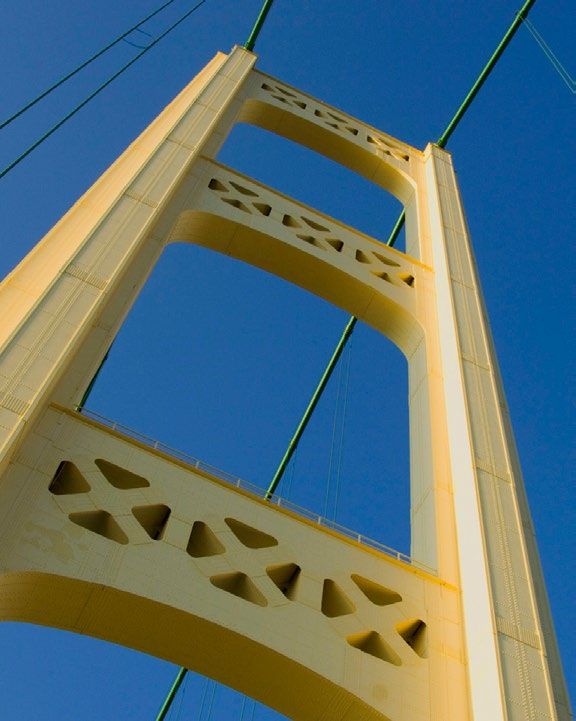
2017-2021 FIVE-YEAR TRANSPORTATION PROGRAM

Table of Contents
 Michigan Mobility Innovations:                                                                                 Performance Measurement and
 The Future is Happening Now..................................4                                                 System Condition................................................. 39

      Gordie Howe International Bridge...............................................6                                MDOT Performance Measurement............................................ 39
      Modernizing the I-75 and I-94 Corridors...................................8                                     Highway Pavement Condition Goal.......................................... 39
      I-75 over the Rouge River............................................................. 10                       Bridge Condition Goal................................................................... 40
      I-75 in Monroe County................................................................... 11                     Safety Goals....................................................................................... 40
      I-94/US-31 in Berrien County....................................................... 12                          Multi-Modal Performance Measures........................................ 42
      US-23 Flex Route............................................................................. 13
      Jackson County - Reynolds Field................................................ 14
                                                                                                                Transportation Funding Generates
      M-1 RAIL/QLINE Streetcar............................................................. 14
      Detroit Bike Share........................................................................... 15
                                                                                                                Michigan Jobs....................................................... 47
      Bus Rapid Transit (BRT) and Regional Transit Planning...... 15
                                                                                                                      Highway Economic Impacts........................................................ 47
      Iron Belle Trail................................................................................... 17
                                                                                                                      Economic Impacts of FY 2017-2021
                                                                                                                      Highway and Bridge Program..................................................... 47
 Five-Year Transportation Program                                                                                     Public Transportation Benefits.................................................... 48
 Process................................................................... 18                                        Economic Impacts of FY 2017-2021 Transit Program.......... 48
                                                                                                                      Aviation Program Benefits............................................................ 49
                                                                                                                      Regional Service Areas.................................................................. 50
 Public Comments..................................................19-20
                                                                                                                Road and Bridge Project Lists................................ 52
 Revenue Assumptions and
 Investment Strategies......................................... 21                                                    Bay Region ........................................................................................ 52
                                                                                                                      Grand Region ................................................................................... 54
      Overview............................................................................................ 21
                                                                                                                      Metro Region ................................................................................... 56
      Highway Program Revenue Assumptions.............................. 22
                                                                                                                      North Region.................................................................................... 61
      Highway Investment Program FY 2017-2021........................ 24
                                                                                                                      Southwest Region........................................................................... 62
      Multi-Modal Programs................................................................... 26
                                                                                                                      Superior Region............................................................................... 64
      Public Transportation Revenue Assumptions
                                                                                                                      University Region............................................................................ 66
      (Bus, Rail, Marine, Port).................................................................. 27
      Aviation Revenue Assumptions................................................. 30
      Public Transportation Investment Strategy............................ 31                                  MDOT Region Contact Information.................... 69
      Aviation Investments..................................................................... 33
      MDOT’s Multi-Modal Investment Strategy............................. 34                                    Acronyms....................................................................... 70

 Highlighting Upcoming FY 2017................ 35-38

                                                                                                                                                                                                                               3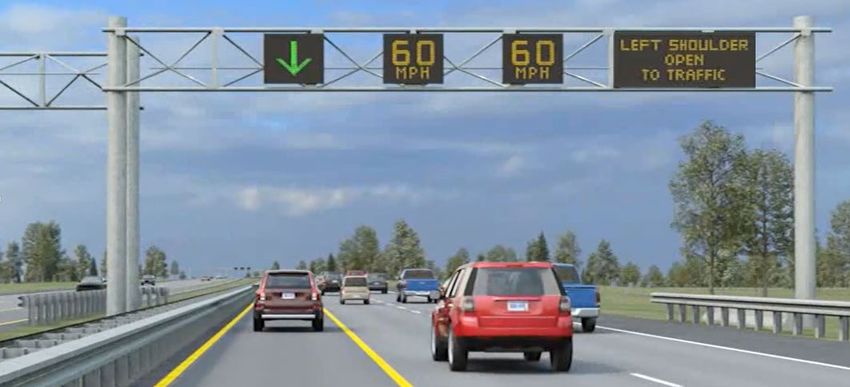
2017-2021 FIVE-YEAR TRANSPORTATION PROGRAM

Michigan Mobility
Innovations:
The Future is
Happening Now
Automotive mobility innovation began in Michigan, now
it is a key part of our future. The Michigan Department
of Transportation (MDOT) is continuously working to
innovate the transportation network, through technology
and infrastructure improvements, to further bolster
Michigan’s position as a major player in the world
economy. This effort aligns with Gov. Rick Snyder’s
strategy to reinvent Michigan by stimulating economic
growth and job creation.
Michigan has an undeniable role in the auto industry
and large concentration of the North American research
and development for automotive technologies.
Gov. Snyder recently announced a mobility initiative
called “Planet M,” the mobility program that encourages
research and development of autonomous vehicles and
technologies for related infrastructure. This “smart            Above photos: Testing the platooning connected vehicles
infrastructure” electronically relates the autonomous
vehicles to surrounding roads, traffic signals, pedestrians,
                                                                Many other mobility innovation efforts are ongoing
bicyclists, trains, buses, etc. Verifying safety is obviously
                                                                or being developed at MDOT. MDOT was awarded a
the primary goal for research and also a better under-
                                                                federal grant to use technology to improve the customer
standing of the connected environment of the future.
                                                                experience for drivers using the Detroit Windsor Tunnel.
For more on these efforts, please visit www.planetm.com.
                                                                MDOT and the Detroit Windsor Tunnel, LLC are partnering
By 2017, autonomous vehicle testing sites will be housed        to provide predictive traffic management for the border
at the University of Michigan in Ann Arbor and at the           crossing, which is significant for daily and event commut-
American Center for Mobility located at Willow Run in           ers and businesses. The “Border Wait Time System” will uti-
Ypsilanti. These research facilities are the main testing       lize Bluetooth, GPS, and cellular-enabled devices placed
laboratories for how driverless vehicles will work in urban     at strategic locations on the Detroit Plaza, the Windsor
and rural environments. These commitments are unprec-           Plaza, and on nearby freeways. These devices will securely
edented within the U.S. New infrastructures are being           and anonymously collect data that will be summarized
designed and tested within Michigan to allow driverless         for effective traffic management. The goal of the system is
vehicle use on a wider scale.                                   not only to provide real-time information, but predictive
                                                                information to allow for greater efficiencies.

 4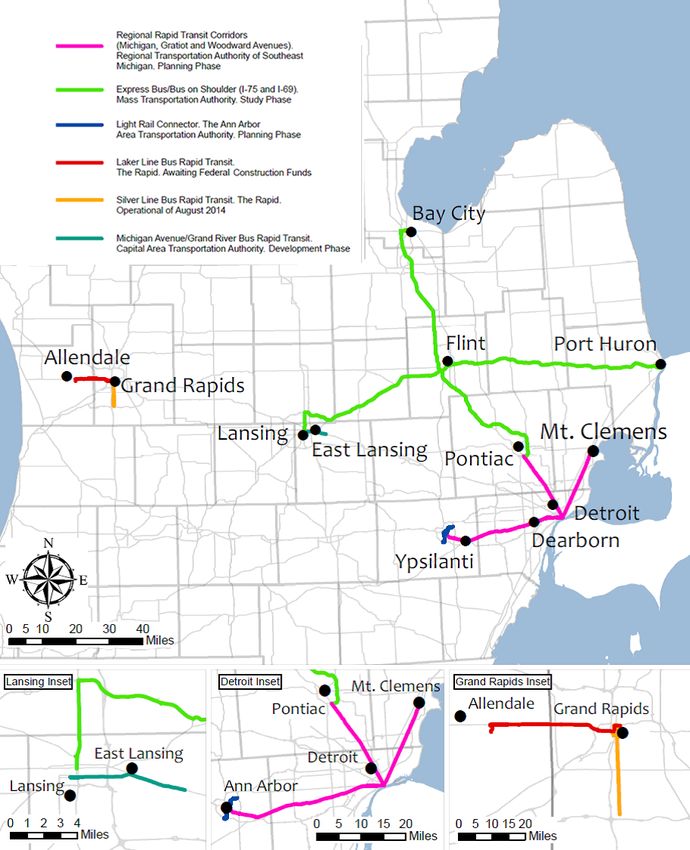
2017-2021 FIVE-YEAR TRANSPORTATION PROGRAM

Recurring traffic congestion adds significant delay           in numerous data collection systems and mapping
to the traveling public and commercial traffic, and           systems, closing facilities, and refinancing bonds, has
this congestion and delay is costly to individuals and        saved MDOT more than $25 million from 2010 to the
businesses in terms of lost time/productivity, crashes,       present. Review this list at www.michigan.gov/documents/
and vehicle operating costs, as well as being detrimental     mdot/MDOT_CumulativeListofEfficiencies_450744_7.pdf.
to the environment. Regional traffic operations centers
(TOCs) in Detroit and Grand Rapids, and a statewide           MDOT is also working toward more efficient modes
TOC in Lansing monitor traffic congestion in real time.       of travel and reduced environmental impacts. The
Innovations include installation of dynamic signs, signals,   Complete Streets initiative is aimed at making Michigan’s
and cameras working together with the TOCs to form a          transportation network work for everyone, with an
more intelligent transportation system. Technological         emphasis on increasing opportunities, mobility and safety
innovations continue to be utilized as an effective           for those who travel by transit, bike or foot. This requires
strategy to minimize these delay costs for the public and     being sensitive to removing obstacles to travel, as well as
businesses. These and other initiatives are centered on       making improvements that improve safety and mobility
the road user to minimize delay on freeways. User delay       for all users. The types of facilities that may be needed are
costs in 2015 were reduced by more than $30 million on        dependent on context, but may include things like better
the trunklines, compared to prior year averages. These        access to transit stops, bike lanes, pedestrian signals and
costs are quantified based on the Federal Highway             crosswalk markings, sidewalks, and connected networks
Administration (FHWA)-released values for passenger and       for travel between places and within communities. MDOT
commercial vehicles based on economic factors and traffic     has been proactively supporting this concept and already
data collected for MDOT by third party contract. Please       has more than 3,000 miles of wide, paved shoulders and
review at http://www.michigan.gov/documents/mdot/             40 miles of marked bicycle lanes on state higways.
Congestion__Mobility_Report_2015_Chapter_1_-_                 MDOT also partners with local agencies and other state
Introduction_523357_7.pdf.                                    agencies to expand the shared-use path network across
                                                              the state. To move people more quickly and, in some
Since 2007, MDOT has used a road weather management           cases, expand the regional reach of bus service, bus rapid
system that employs sensors to alert operations and           transit (BRT) lines are being used, planned and studied
maintenance staff to inclement weather, visibility and        in several urban areas, including Grand Rapids, Lansing,
poor road conditions. This information is relayed to road     and the Detroit metropolitan area. MDOT continues its
users via dynamic message signs. Similarly, the Truck         work to improve 135 miles of state-owned track that will
Parking Management system implemented along I-94 in           enable Amtrak trains to travel at higher speeds between
southwest Michigan alerts truck drivers where overnight       Detroit and Chicago.
parking is available via dynamic message signs on the
freeway and on the Mi Drive website and app. Dynamic          As Michigan continues to reinvent itself to create new jobs
signs update road users with real-time information that       and promote economic growth, a key component remains
helps to minimize unnecessary traffic delay.                  a modern and well-maintained transportation network
                                                              that moves both people and goods dependably and
MDOT is utilizing technologies to promote and build           efficiently. The network includes a variety of transportation
this highly integrated transportation network that will       modes: aviation, rail, marine, highways, transit, and path-
produce efficiencies and maximize the investment of           ways for bicyclists and pedestrians. Following is an update
public funds. From 1997 to today, the MDOT workforce is       on ongoing and future projects to achieve this network for
26 percent smaller. Other innovations, such as                moving goods and, of course, people.
e-Construction, virtual meetings, trainings, improvements

                                                                                                                        5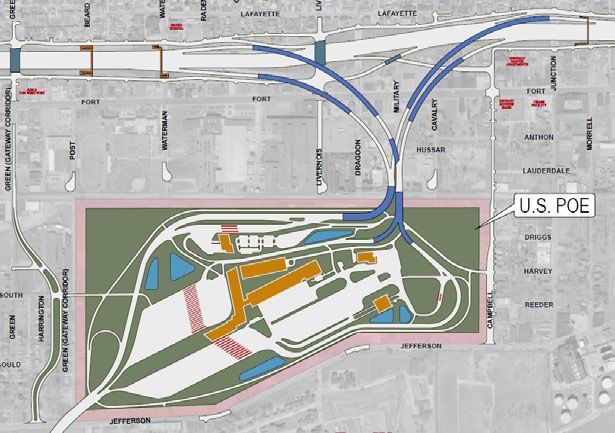
2017-2021 FIVE-YEAR TRANSPORTATION PROGRAM

Gordie Howe
International Bridge
The Gordie Howe International Bridge (GHIB) project is a
new freeway-to-freeway border crossing system between
Detroit, Michigan, and Windsor, Ontario, that will improve
the flow of international trade between the United States
and Canada at the busiest border crossing between the
two countries.
The project has three primary elements: a new Detroit
River crossing (bridge), new state-of-the-art border
inspection areas on each side of the river for the U.S. and
Canadian border services agencies (plazas), and direct
connections to highway systems in each country (I-75 in
the United States and Highway 401 in Canada via the
new $1.4 billion Rt. Hon. Herb Gray Parkway).
Canada has agreed to finance Michigan’s GHIB project
components. This investment would be used for real
estate purchases, utility work, construction of an I-75
interchange, and local road improvements. The agree-
ment ensures that at least $550 million is spent in
Michigan and that the funds are eligible to help match
federal aid for other critical highway projects across the
state that are part of MDOT’s 2017-2021 Five-Year
Transportation Program. The funds will be repaid from
toll revenue generated after the new bridge opens.
On June 15, 2012, an interlocal Crossing Agreement
was signed by Gov. Snyder and Canadian officials to
provide a framework for a Canadian Crossing Authority,
now known as the Windsor-Detroit Bridge Authority
(WDBA), to finance the new crossing under the oversight       Two design types could be used for this
of a jointly established International Authority. Design,     signature bridge:
construction, operation and maintenance of the GHIB will      • Suspension, which is recognized by its elongated
be performed by a private entity through a public-private       “M” shape; or
partnership (P3) agreement.
                                                              • Cable-stayed, which has more of a “A” shape.
All environmental clearances in the United States and         Once complete, the Gordie Howe International
Canada have been secured. All requisite permitting,           Bridge will be among the top five longest bridges
including the presidential permit and the Coast Guard         in North America.
navigational permit, has been obtained.

 6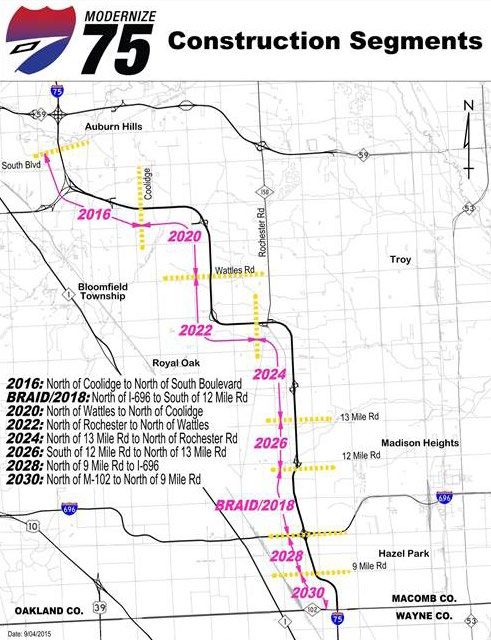
2017-2021 FIVE-YEAR TRANSPORTATION PROGRAM

On July 30, 2014, Gov. Snyder and Lisa Raitt, Canada’s     process. The next step will be release of the request for
Minister of Transport, announced appointments to the       proposals for the concessionaire. The WDBA will oversee
International Authority that will oversee construction     the work of the P3, manage the concession agreement
of the GHIB, as well as oversee and approve key steps in   and payments, and set and collect tolls.
the P3 procurement process for the new Windsor-Detroit
bridge crossing. It also will monitor WDBA compliance      Almost all pre-construction activities in Canada, including
with the Crossing Agreement signed by Canada and           land acquisition, demolition and the construction of
Michigan.                                                  the parkway that will connect Highway 401 to the GHIB,
                                                           have been completed. The WDBA has retained numerous
The WDBA is managing the procurement process for the       consultants, including a general engineering consultant
design, construction, operation and maintenance of the     who will perform important project-related functions.
new bridge through a P3. In July 2015, the procurement     MDOT has retained land acquisition and environmental
process was launched with the issuance of a request        consultants to assist its efforts to acquire properties
for qualifications for the P3 concessionaire. Six North    located in the GHIB footprint on the U.S. side.
American and international respondent teams submitted
responses that were evaluated by WDBA officials and        Implementation of this project will be complex,
partner organizations under the supervision of an          lengthy, and must comply with the Crossing Agreement.
independent fairness monitor. On Jan. 20, 2016, the        Procurement for the P3 concessionaire will take
WDBA announced three short-listed respondents that         approximately two years, with construction taking
would move forward in the competitive procurement          another four to five years.

                                                                                                  Graphic of U.S. Plaza
                                                                                                  and I-75 connection
                                                                                                  to GHIB

                                                                                                                          7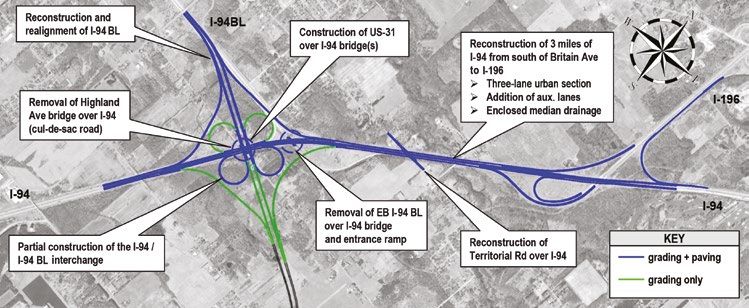
2017-2021 FIVE-YEAR TRANSPORTATION PROGRAM

Modernizing
the I-75 and
I-94 Corridors
The I-75 and I-94 corridors are crucial
segments of Michigan’s portion of
the global transportation network.
I-94 carries more than 20 million
tons of freight annually valued at
$28.7 billion, while I-75 carries
18.5 million tons of freight annually
valued at more than $26 billion.
The corridors are major trade routes
for goods moving across the
Ambassador Bridge in Detroit and
the Blue Water Bridge in Port Huron.

I-75 Modernization in
Oakland County
The I-75 modernization project
focuses on a 17.7-mile section from
M-102 (8 Mile Road) to north of
South Boulevard, which includes
11 interchanges and 16 road
crossings through six communities
within Oakland County. It carries
daily traffic volumes ranging from
103,000 to 178,000 vehicles per day
in the project area. Looking 3 miles
to the east and west of I-75 within
the project limits, this corridor sup-
ports 23,000 businesses and more
than 339,000 employees. The project
is to be delivered in eight segments, starting in 2016 with   operations and safety at the interchange and, along the
a design-build segment from north of Coolidge Road to         I-75 corridor specifically, reduce sideswipe and rear-end
north of South Boulevard (see the above graphic).             crashes, and improve the merge/weave movements
                                                              within this segment. It will also provide the addition of
This first segment will modernize the Square Lake Road        peak hour-only high-occupancy vehicle (HOV) lanes in
interchange with standard right on and off ramps without      each direction through this segment, along with recon-
impacting right of way (ROW) and remains in the existing      struction of existing pavement.
interchange footprint. This modification is to improve

 8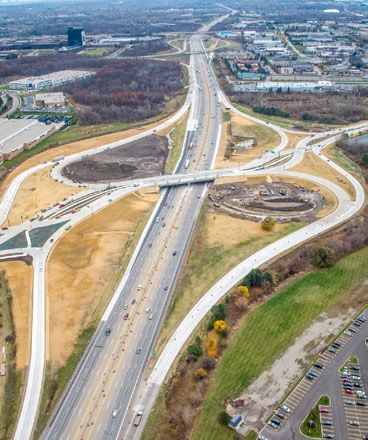
2017-2021 FIVE-YEAR TRANSPORTATION PROGRAM

 I-94 project area

The second segment of construction scheduled for
2018 will extend from I-696 to south of 12 Mile Road.
The redesigned section from the I-696 on ramp to north-
bound I-75 over the northbound 11 Mile Road off ramp
is key to alleviating congestion in this area. This segment
will also include the addition of the peak-hour HOV lane,
pavement reconstruction and drainage improvements.
The third construction segment will begin in 2020 from
north of Wattles Road to north of Coolidge Road. This
segment is adjacent to the 2016 segment, and will in-
clude the addition of the peak-hour HOV lane, pavement
reconstruction, modernization of ramps, replacement
of bridges, and drainage improvements. As illustrated
on the “modernize I-75” map, construction will continue       Trumbull Avenue bridge deck work over I-94.
on the remaining portions of the I-75 Oakland County
corridor outside of this Five-Year Transportation Program     ramps and interchanges, including the elimination of
time frame.                                                   freeway left-lane exits and entrances. Work to improve
                                                              several bridges over I-94 is currently under way. The new
I-94 Modernization in Detroit                                 Van Dyke Bridge at I-94 has been completed. Design has
The I-94 modernization project involves reconstructing        been completed on the Gratiot Avenue bridge.
6.7 miles of I-94 from east of the I-94/I-96 interchange
to east of Conner Avenue in Detroit. This section of I-94     In 2015, the Woodward Avenue overpass was completed
through midtown Detroit needs to be reconstructed to          and built to accommodate M-1 RAIL/QLINE. In 2016,
improve safety, traffic flow, pavement and bridge condi-      construction started on building the new Trumbull
tion, freight mobility, and local access to the freeway.      Avenue bridge. The design of the remaining eight
                                                              priority bridges at Second Avenue, Cass Avenue, Chene
In addition to the reconstruction of the I-94 roadway, the    Street, Brush Street, Mt. Elliott Street, Concord Avenue,
project currently includes rebuilding 67 bridge structures    Cadillac Avenue, and French Road is under way and will
and six railroad overpasses. It also involves local access    be constructed from 2017 to 2019. Construction of the
improvements, including the linking of east/west I-94         eastern portion of the project on I-94 (Chene Street to
services drives, and reconstructing and modernizing the       Conner Street) is expected to begin in 2019.

                                                                                                                      9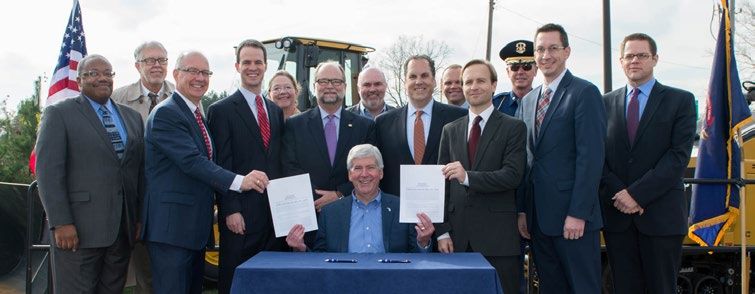
2017-2021 FIVE-YEAR TRANSPORTATION PROGRAM

I-75 over the Rouge River                                        The size, type of work, and physical constraints of these
                                                                 projects limit the ability to perform this work without a
The I-75 bridge over the Rouge River in the city of Detroit      freeway detour. Improving each bridge part-width would
carries 37 million vehicles per year and is 1.6 miles            extend the length of the construction duration, require
long and eight lanes wide. With a deck area equal to 20          multiple stages, put motorists in close proximity to
football fields, this is the largest bridge, in total area,      construction workers, increase traffic delays, and increase
in Michigan. Constructed in 1967, the bridge deck is             the cost of the projects. To determine the best option
nearly 50 years old and in poor condition. Deck patching         for maintaining traffic, 12 concepts were studied and a
and repairs are no longer viable options, so the deck is         detailed traffic analysis was performed on viable options
scheduled for complete replacement beginning in 2017.            to determine the safest option that would minimize traffic
Due to the size of the structure, construction will take two     delays and expedite construction.
years to complete and will require detouring southbound
                                                                 The design plans will include a precast deck panel option
I-75 traffic. Northbound I-75 traffic will be maintained at
                                                                 as another possible method of expediting construction.
all times. Stage I in 2017 will have northbound traffic on
                                                                 With precast deck panels, the deck could be replaced
the northbound bridge while the southbound bridge
                                                                 quicker with less disruption to traffic. The option of either
deck is replaced. For Stage II in 2018, northbound traffic
                                                                 a cast-in-place deck or precast deck allows contractors to
will be shifted onto the southbound bridge while the
                                                                 determine the best approach based on the contractor’s
northbound bridge deck is replaced.
                                                                 available resources and their past experience.
To take advantage of this detour and to reduce future
                                                                 A website will be created to keep the public informed of
impacts on the public, other improvements to this I-75
                                                                 the project’s progress, provide news, updates, frequently
corridor have been packaged together. Significant work
                                                                 asked questions, and provide MDOT contact information.
will take place on I-75 over Fort Street and on I-75 over
                                                                 Twitter and Facebook feeds will also be employed for
Goddard Road and the Sexton-Kilfoil drain, as well as
                                                                 information outreach.
11 other bridges. The investment of these projects is
estimated at more than $135 million.

The I-75 Rouge River bridge today.                             The I-75 Rouge River bridge when constructed 1967.

10
2017-2021 FIVE-YEAR TRANSPORTATION PROGRAM
I-75 in Monroe County Much of the existing pavement is rated in poor con-
dition. The base of this section of I-75 has been failing
I-75 in Monroe County was originally constructed in 1956 as during the last 20 years, and the pavement has required
a four-lane interstate freeway. It was widened to three lanes annual concrete patching, which causes significant
in each direction in 1977, and the pavement was recon- vehicular delay. Bridges in this area are also rated poor,
structed in 1988. I-75 is a vital link to Detroit and to the rest and bridge under clearance needs to be improved to
of the state for vehicular travel and commercial freight. On accommodate modern freight-haulers.
average, it carries 15,500 commercial vehicles per day. The
The I-75 reconstruction project in Monroe County will
route is also crucial for international trade as it provides a link
include the reconstruction of pavement from the Ohio
to the Ambassador Bridge and the future Gordie Howe In-
state line north to Erie Road. The project also includes
ternational Bridge. The Michigan Truck Tonnage map visually
interchange improvements and the replacement of
shows the importance of this link to freight and trade.
11 bridges and two bridge superstructures. The I-75
reconstruction project began
in 2015, and the final phase
will be completed in 2028.
The overall limits of the project are
from the Michigan/Ohio state line
north to Newport Road, approxi-
mately 21 miles. The project passes
through the Monroe urbanized area,
population 51,240.
Michigan
Truck
Tonnage
112017-2021 FIVE-YEAR TRANSPORTATION PROGRAM
I-94/US-31 in
Berrien County
The I-94 freeway project in Berrien County scheduled to
begin in FY 2021 will address poor pavements and bridge
conditions on I-94 from Britain Road to I-196. The pave-
ment within this area is composite, which indicates that
asphalt has been placed over the original concrete, which
dates to the 1960s. Ride quality of this road is poor due to
the failed joints in the underlying concrete.
The reconstruction project within this five-year plan will
include reconfiguring and partial construction of the
I-94 BL interchange. The reconfigured interchange and
bridges will be realigned; however, it will not complete
the connection from I-94 to US-31. The freeway terminus
will remain Napier Avenue.
Top Photo: False decking on the bridge overpass to prevent falling
concrete pieces on eastbound I-94 BL over the I-94 entrance ramp.
Left Photo: View of westbound I-94 from Highland Avenue shows poor
pavements and the need for reconstruction.
122017-2021 FIVE-YEAR TRANSPORTATION PROGRAM
US-23 Flex Route road during an incident. The corridor project also involves
improving interchange ramp operations to meet current
The US-23 corridor from Brighton to Ann Arbor (M-14 to design standards and widening, reconstructing and
I-96) experiences high levels of delay associated with the repairing the corridor’s bridges.
morning and evening peak-hour traffic flows into and out
The US-23 Flex Route will be the first of its kind in the
of Ann Arbor. US-23 currently operates with two lanes
state of Michigan. The first phase of the project will be
in each direction, with daily traffic levels of more than
from M-14 to M-36 and will be complete in 2018.
66,000 vehicles.
The second phase will be from M-36 to I-96. The second
With the current lack of federal and state funding, a wid- phase currently lacks funding and is not scheduled within
ening of the existing US-23 corridor is not feasible. MDOT this five-year program time frame.
is choosing to help alleviate congestion
by using an active traffic management
strategy that consists of widening the
shoulders to carry traffic during peak
hours and during incidents. The shoulder
lanes will be controlled through the in-
stallation of dynamic message signs, lane
control signs (see the following graphic),
and full camera coverage for incident
management. The project will also consist
of new freeway courtesy patrols to service
immobile vehicles and improve traffic
flow. Crash investigation sites will be
installed for motorists to safely pull off the
132017-2021 FIVE-YEAR TRANSPORTATION PROGRAM
Jackson County -
Reynolds Field
Jackson County - Reynolds Field is the
primary airport for Jackson County. It is
located adjacent to I-94 and near M-60,
and is primarily a general aviation airport
with some cargo operations. It is the
primary airport used by race teams and
the public for race weeks at Michigan
International Speedway in the Irish Hills.
The airport’s primary runway is presently
6/24 with a 14/32 crosswind runway. The primary runway
does not currently meet Federal Aviation Administration M-1 RAIL/QLINE Streetcar
(FAA) standards for runway safety areas and runway Working with the state and community partners, M-1 RAIL,
protection zones. The limiting obstruction for meeting now called the QLINE - a 501c3 nonprofit - is developing
the standards is I-94 and the Airport Road interchange. In a 3.3-mile, 11-station light rail/streetcar system along
order to meet FAA standards, the airport is going to shift Woodward Avenue that will become the centerpiece for
the orientation of the primary runway to 7/25. This will economic development and future connectivity in the
provide the room necessary for the runway to meet the Detroit region. The project is an unprecedented P3, fund-
standards. Shifting the runway will be accomplished by ed by $110 million in private philanthropic investments,
building a brand new runway on the new 7/25 orienta- $10 million from MDOT, and $25 million in Federal Transit
tion. The new runway will be built to the same length as Administration (FTA) funds.
the old runway.
Construction is proceeding on schedule and is estimated
A FY 2015 airport capital improvements program (ACIP) to cost $135 million - $145 million. MDOT’s investment
grant of more than $9.5 million will fund the majority of in QLINE includes technical assistance and coordinating
the construction in 2015 and 2016, with additional federal design and engineering with the department’s planned
funds being committed in FY 2016 and FY 2017. Previous reconstruction of Woodward Avenue from Chandler
projects that have supported this realignment includes Street to Sibley Street. Streetcar operations are expected
land acquisition, building relocation, and repair and to begin in spring 2017.
lengthening of the crosswind runway to continue use of
the airport during construction.
This project will enable the airport to continue to support
the economies of the city and county of Jackson. It will
provide a safer environment for larger aircraft currently
using the airport and will encourage even more use,
which will increase the economic benefit the airport
brings to the area.
142017-2021 FIVE-YEAR TRANSPORTATION PROGRAM
Detroit Bike Share
The Detroit Department of Transportation (DDOT), in
coordination with the Downtown Detroit Partnership
(DDP), will install and operate the Detroit Bike Share
System. Bike share offers short-term bike rental at a
network of stations and provides cost-effective and
practical mobility options for trips too far to walk, but
not long enough to take transit or drive a vehicle. The
Detroit Bike Share System supports efforts by the City of
Detroit, MDOT, QLINE, and many other partners to create
a multi-modal transportation network with mobility
options for people who live in, work in, and visit the city.
The Detroit Bike Share System is partially funded with
a Transportation Alternatives grant that includes the
purchase and installation of up to 35 bike share stations
and related bike share amenities.
downtown East Lansing to the Meridian Mall area in
Bus Rapid Transit (BRT) and Meridian Township. The project would replace CATA’s
highest ridership line and would include 28 stations,
Regional Transit Planning park and ride spaces, off-board fare collection, transit
Bus rapid transit (BRT) is express bus service with minimal signal priority, and the procurement of 17 new
stops, enhanced by technology such as signal prioriti- articulated buses.
zation and express ticketing options at accessible bus Regional transit planning is an important element in the
stations/stops with entry level boarding platform. quest to fill service gaps and improve transit options.
The Rapid (the Grand Rapids area transit agency) moves Several urbanized areas are conducting studies to deter-
into the third year of operations of their Silver Line, mine the best solutions for their regional transit needs.
Michigan’s first BRT line, which connects Grand Rapids, In southeast Michigan, the Regional Transportation
Kentwood and Wyoming, mainly servicing the Division Authority of Southeast Michigan (RTA) is planning for the
Avenue corridor with 33 stations along 9.6 miles. Their expansion of regional transit services in Wayne, Oakland,
second BRT line - the Laker Line, designed to enhance Macomb and Washtenaw counties. The RTA will complete
the connection between Grand Valley State University’s a regional transit master plan and corridors study in 2016
Allendale campus and downtown Grand Rapids - is slated and will begin implementing some elements, including
to receive a federal construction grant in FY 2017. regional funding initiatives and selecting service options
for major corridors. The Woodward Avenue study has
In the Lansing area, the Capital Area Transportation already led to the selection of a locally preferred
Authority (CATA) is completing development of their alternative (LPA) - BRT along the 27-mile corridor that
Michigan/Grand River Avenue BRT service in hopes of will operate within the existing right of way, servicing
securing federal construction funds in 2017 or 2018. This 26 stations primarily on Woodward Avenue through
is an 8.5-mile BRT line from the state Capitol in downtown 11 communities in Wayne and Oakland counties, and
Lansing linking Michigan State University (MSU) and environmental work is proceeding.
152017-2021 FIVE-YEAR TRANSPORTATION PROGRAM
Planned Transit Projects Across the State
162017-2021 FIVE-YEAR TRANSPORTATION PROGRAM
Studies have also been conducted for the Michigan
Avenue and Gratiot Avenue corridors. The two studies Iron Belle Trail
evaluated alternatives for reliable, higher-quality transit The Iron Belle Trail is the longest designated state trail
between Detroit and Mt. Clemens, including the portion in the nation and includes a route for hiking and a route
of Gratiot Avenue to M-59 and between Detroit and for biking between Belle Isle Park in Detroit and Ironwood
Ann Arbor, including the Detroit Metropolitan Wayne in the Upper Peninsula. The 1,273-mile hiking route
County (Metro) Airport. Actual service implementation (69 percent complete as of 2016) incorporates a large
will be dependent on their ability to secure federal, state portion of the existing North Country National Scenic
and local funding. The RTA recently announced its intent Trail. It traverses the west side of the Lower Peninsula
to go to local voters in November to secure funding for and borders Lake Superior in the Upper Peninsula. The
their transit operations. 791-mile bicycle route (64 percent complete as of 2016)
uses existing multi-use trails and follows US-2,
In Ann Arbor, an alternatives analysis is under way to
a designated U.S. Bicycle Route in the U.P.
improve and enhance public transit from northeast of
town to south of town, including connections between MDOT is supporting the Michigan Department of Natural
the University of Michigan, downtown, the medical center, Resources (DNR)-led effort, along with multiple local,
the train station and commercial areas. The proposed regional, nonprofit, and corporate partners and sponsors,
service is being referred to as “The Connector” and is to complete the trail. MDOT’s efforts include awarding
proposed to be one or two light rail/streetcar lines. grant funding, as well as providing technical assistance,
design, project management, and construction engineer-
The Flint-area transit agency, The Mass Transportation
ing expertise.
Authority, has commissioned a study of the I-75 corridor
between Bay City and Detroit, which will include the I-69 MDOT is also partnering with the DNR and local partners
corridor from Port Huron to Lansing, to determine the to pair Iron Belle Trail construction with road and bridge
transit needs and how to best address them today and construction projects where feasible. For example, there
into the future. are two major nonmotorized projects planned along US-2
in 2017 and 2018 that will establish new connections for
Two routes, one great trail. the Iron Belle Trail. As part of a major bridge replacement
Jump on the longest designated state trail in the nation as you hike or bike your way between
Belle Isle Park in Detroit and Ironwood in the Upper Peninsula. Explore pristine forests, pass
project on US-2 in Escanaba, a new barrier separated
TM
cool rivers and visit charming towns, and find out why Michigan is known as “The Trails State.”
pathway will be constructed across the Escanaba River.
This project also includes the installation of a short path-
way and box culvert beneath a nearby railroad viaduct
ute
Ro ocks Natio
dR n
ike
re
US-2 B
al
tu
for bicyclists and pedestrians using the Iron Belle Trail.
La
Pic
keshore
ckinac Br
MDOT has also committed Transportation Alternatives
Ma
grant funds for a nonmotorized pathway parallel to US-2
id
ge
y
Tra
il along the shores of Lake Michigan. This pathway will
provide an essential nonmotorized link between the
r
ott Fountain
nt
North Cou
Sc
cities of Gladstone and Escanaba. Both of these projects
The
Hiking Route
The hiking route incorporates a large
were made possible through strong partnerships with
communities and will work in tandem to eliminate major
portion of the existing North Country The
National Scenic Trail. It traverses the west Bicycle Route
side of the Lower Peninsula and borders The bicycle route utilizes existing multi-use
Lake Superior in the Upper Peninsula. trails and follows US-2, a designated national
1,273 miles
69 % complete
bicycling route in the Upper Peninsula.
791 miles
64 % complete
nonmotorized barriers along the Iron Belle Trail system.
www.michigan.gov/ironbelle
Partners
17
MICHIGAN NATURAL
RESOURCES
TRUST FUND2017-2021 FIVE-YEAR TRANSPORTATION PROGRAM
Five-Year The Highway Program development process is a yearlong,
multi-stage process as shown in the below flowchart.
Transportation MDOT strives to continually involve the public and
stakeholders in development of its programs and
Program Process projects. Transportation projects are often many years
in the making, so it is important to engage stakeholders
The Five-Year Transportation Program is an essential part early so that public participation can help shape mutually
of the governor’s plan for economic growth for Michigan, desired outcomes. The Five-Year Transportation Program
and includes planned investments for highways, bridges, creates a continuous, interactive dialogue with the users
public transit, rail, aviation, marine, and nonmotorized of the state transportation system to anchor MDOT’s
transportation. Investments in all of these transportation project development and delivery systems. MDOT’s seven
modes provide important jobs to the Michigan economy, region offices, 22 Transportation Service Centers (TSC)
accessibility to urban and rural development, improved and statewide planning staff work throughout the year to
safety and efficiency of the transportation network, and share project lists with local agencies, stakeholders and
enhanced quality of life for Michigan citizens. the public. In addition to formal presentations, MDOT
staff members informally discuss individual projects
This program implements the state’s vision for transpor- within the plan with economic development and tourism
tation presented within the 2040 MI Transportation Plan, agencies, rural planning agencies, metropolitan planning
which is anticipated to be adopted by the State organizations (MPOs), road commissions, local officials,
Transportation Commission in July 2016. For more tribal governments, businesses, local nonprofit groups,
information on the plan, please visit the website and the general public.
http://www.michigan.gov/documents/mdot/
MDOT_2016SLRP_DRAFT_523728_7.pdf. Public participation in MDOT’s Five-Year Transportation
Program feeds into the State Transportation
The highway portion is a rolling program; each year, the Improvement Program (STIP). The Five-Year
first year is implemented, a new fifth year is added, and Transportation Program serves as an opportunity for
program/project adjustments are made to the other the public to be notified and provide local input to the
years. This document only pertains to that portion of the upcoming STIP. The road and bridge projects proposed in
programs that MDOT delivers. It does not account for the Five-Year Program are incorporated into MDOT’s STIP.
programs delivered locally with state and federal funds Michigan is required to complete this planning process to
that are directly controlled by local agencies, such as receive federal transportation funding.
transit agencies or county road commissions.
Develop Develop Issue Develop Select Scope and Estimate
Revenue Investment Call Condition Candidate Candidate
Estimates Strategies Letter Strategies Projects Projects
Select
Final
State Transportation Plan Public/Stakeholder Input
Projects
and Commission Policies Includes Rural Task Forces and MPO Partners
Submit
Proposed
State Leadership Program
Submit to Draft
Transportation Approval of
the State Transportation
Commission Call for
Legislature Program
Approval Projects
182017-2021 FIVE-YEAR TRANSPORTATION PROGRAM
Public Involvement the interactive maps received about 3,200 visits and
the document was downloaded 675 times within the
comment period.
The public review and comment period for the preliminary
draft of the MDOT 2017-2021 Five-Year Transportation MDOT received public comments on the draft 2017-2021
Program was July 22 – Aug. 26, 2016. On July 22, Five-Year Transportation Program from nine different
MDOT placed the document on the MDOT website and individuals, including respective comments from the
issued a news release and e-mail notification to invite Macatawa Area Coordinating Council and the Washtenaw
comments. Also available on the MDOT website was an County Water Resources Commissioner. Many of the
interactive state map feature, which encouraged users comments were highly substantive and are included in
to view the Five-Year Transportation Program project the following categorized listing. If a person provided
list geographically and quickly locate projects by year. more than one comment, each comment was included
The interactive website containing the document and in the following review.
Safety/Road Conditions Alternatives/Suggestions
• One comment expressed safety concerns over • The Washtenaw County Water Resources
the passing zones along M-26 near Toivola in Commissioner suggests that there be a greater priority
Houghton County. to storm water treatment in future road projects.
• One comment was directed at poor road conditions • One comment suggests that projects in the
on the I-94 Business Loop from Mills Street to Five-Year Transportation Program be posted online
Lake Street in Kalamazoo. as an electronic spreadsheet.
• One comment suggests the intersection of US-131 • The Macatawa Area Coordinating Council
and M-186 near Fife Lake in Grand Traverse County suggested the I-196 reconstruction project from
should be improved due to safety concerns. US-31 to 130th Avenue in Allegan County currently
• One comment suggests the road conditions on on the 2021 project list be advanced.
state trunkline in the northeast Lower Peninsula • One comment suggests that all of I-69 in Flint
be addressed. be reconstructed at once instead of segments.
192017-2021 FIVE-YEAR TRANSPORTATION PROGRAM
Public Involvement continued
Oppose a Project Other
• One comment opposes the M-1 Rail (QLINE) • One comment expressed concerns over changes
project in Detroit due to ridership usage to a local bus route in Detroit.
concerns. • One comment asked if the I-475/I-69 and I-75/I-69
Interchanges in Flint will be reconstructed.
Information and comments received were
directed to appropriate MDOT project areas or MDOT
region planners. Responses were sent to individuals to
acknowledge a comment. Local road comments were
forwarded to the appropriate local offices. MDOT will
work with urban metropolitan planning organizations
(MPOs) and rural transportation agencies to assure the
Five Year Transportation Program list of projects is
consistent with the 2017-2020 STIP.
MDOT appreciates receiving this feedback and looks
forward to providing more avenues for public
involvement through enhancements to the MDOT
website and social media outlets.
202017-2021 FIVE-YEAR TRANSPORTATION PROGRAM
Revenue
Assumptions and
Investment Strategies
Overview
Enhancing economic development by preserving and
maintaining a safe transportation system remains MDOT’s
highest priority. This Five-Year Transportation Program
invests nearly $10.1 billion in MDOT’s transportation
system. This includes investments in the Highway,
Aviation, Bus, Rail, and Marine programs. A total of
$7 billion (including routine maintenance) will be
invested in the 2017-2021 Highway Program. Over these
five years, $880 million will be invested in the Aviation
Program and $2.2 billion will be invested in Bus, Rail, and
Marine/Port programs (see the following pie chart).
The Highway Program focuses on system preservation
through the repair, modernization and maintenance
of Michigan’s roads and bridges. The majority of the
Multi-Modal Program concentrates on system preser-
vation as well. Investments in Michigan’s transportation Total - $10.1 Billion
system focus on a comprehensive safety program and
increased emphasis on mobility and expanded work Aviation Bus, Marine, Rail
zone safety efforts. MDOT strives to reduce travel times $880 M $2,200 M
through construction zones while still making safety a
priorty. The Five-Year Transportation Program documents
that MDOT’s investments in the state transportation
system directly benefit Michigan citizens by providing
them with expanded options, mobility, and access.
Highway $7,041 M
Highway Aviation Bus, Marine, Rail
212017-2021 FIVE-YEAR TRANSPORTATION PROGRAM
Highway Program
Revenue Assumptions
Federal funding
On Dec. 4, 2015, the Fixing America’s Surface Transportation
Act, or the FAST Act, was signed into law. The FAST Act
authorizes the investment of $305 billion in federal
funding in the nation’s surface transportation system
through FY 2020. The legislation breaks the cycle of short-
term funding authorizations that have characterized the
federal program for the past 10 years and, in covering
nearly five full fiscal years, represents the longest surface Michigan. Federal funding is assumed to grow about
transportation authorization bill enacted since 1998. The 2 percent per year for the entire Five-Year Program time
passage of a multi-year federal bill provided for predict- period. It is projected that $4 billion in federal funding
ability and certainty for state and local governments
will be made available to the Highway Program for this
because so much of the capital program funding relies
Five-Year Transportation Program.
upon federal assistance.
The FAST Act builds on the reforms included in the State funding
Moving Ahead for Progress in the 21st Century Act On Nov. 10, 2015, Gov. Snyder signed into law a funding
(MAP-21), which directed agencies to think more about package that will provide more state transportation
freight by interacting more closely with stakeholders and revenue. The nine-bill package includes registration fee
engaging in specific freight planning efforts. The FAST increases, motor fuel tax increases and appropriations
Act continues this focus on freight by creating two new from the General Fund.
programs to better target investments to projects that
promote efficient movement of freight. The FAST Act The gasoline tax will be increased from 18.7 to 26.3 cents
supports performance-based decisions by funding efforts per gallon on Jan. 1, 2017, and the diesel fuel tax will
to collect and manage data for performance analysis, and increase from 15.0 to 26.3 cents per gallon. The motor
to improve capacity of transportation agencies to better fuel tax will be applied to natural gas (CNG) as well. Fuel
link investments with outcomes. tax rates will be tied to inflation beginning in 2022 to
remedy the decline in purchasing power of the fuel tax.
Reliance on non-transportation revenue to support
Registration fees for most cars and trucks will increase by
investments in surface transportation is continued in the
20 percent on Jan. 1, 2017. New electric car fees of $100
FAST Act. It transfers $70 billion from the federal General
per year, and $30 for plug-in hybrid cars, will equalize
Fund into the federal Highway Trust Fund (HTF) to ensure
road-user fees for vehicles that use little or no taxed
that all the investments in highways and transit during
fuel. The user-fee increases will generate an additional
the next five fiscal years are fully paid for. This brings the
$600 million per year for the Michigan Transportation
total amount of non-transportation revenue that has
Fund. Starting Oct. 1, 2019, General Fund revenues will be
supported investments from the HTF during the past
appropriated for roads, increasing from $150 million to
seven years to nearly $145 billion.
$600 million over three years, until 2021. These revenues
The FY 2017-2021 federal-aid revenue estimate is based will be distributed to road agencies only, under the usual
on FAST Act estimates of federal funding available for Act 51 formula.
222017-2021 FIVE-YEAR TRANSPORTATION PROGRAM
The state revenue estimate is based on MDOT’s share of highway funding allocation decisions. MDOT developed
the MTF, as estimated by consensus with the Department an investment strategy process to accomplish the
of Treasury, Economic and Revenue Forecasting Division. effective use of financial resources on the state trunkline
Future state revenue is forecast using a long-range Highway Program. The process allocates an investment
forecasting model managed by MDOT’s Statewide amount to various program categories (bridge, road,
Transportation Planning Division. It is estimated that safety, etc.) annually, based on program improvement
$3.4 billion in state revenue will be available for MDOT’s strategy, goals, and statewide priorities. It sets the level of
Highway Program. funding to achieve highway improvement priorities and
provides a tool to constrain the overall statewide program
Funding Distribution against available revenues.
Public Act 51 of 1951 (Act 51) mandates how transpor-
tation funds are distributed and spent between MDOT MDOT has a pavement preservation formula that allo-
and local entities. The intent of Act 51 in regard to federal cates funding to its seven regions. The formula weighs
highway aid is to distribute approximately 25 percent of four overall factors: pavement condition, eligible lane
federal aid to local jurisdictions for use on federal-aid- miles for pavement reconstruction and repair work, usage
eligible local roads. The remainder is to be used by (average daily traffic volumes), and regional cost. These
MDOT. The funds collected from state fuel tax and vehicle factors form the basis for how pavement preservation
registration revenues are deposited into the Michigan funds are distributed to each region. The formula is
Transportation Fund (MTF), the distribution fund for updated annually with current pavement condition,
transportation revenues. MDOT receives approximately traffic, cost and eligible lane miles.
39 percent of this fund (known as the State Trunkline Bridge funding is distributed to MDOT regions using the
Fund, or STF), county road commissions receive 39 percent, bridge preservation allocation formula. It uses the deck
and cities and villages receive about 22 percent. area of bridges in each National Bridge Inventory condi-
tion to allocate funds to each MDOT region. Funding is
Highway Program Investment Strategy split into investment targets for replacement, repair, and
The State Transportation Commission (STC) establishes preventive maintenance work.
policies, goals, and objectives that provide the basis for
232017-2021 FIVE-YEAR TRANSPORTATION PROGRAM
The following table provides the Highway Program investments strategy for FY 2017-2021.
Highway Investment Program FY 2017-2021
FY 2017-2021 Five-Year Total
Annual Average (millions)
(millions)
REPAIR AND REBUILD ROADS AND BRIDGES
REPAIR AND REBUILD ROADS
Rehabilitation and Reconstruction $385 $1,927
Capital Preventive Maintenance $144 $719
Non-Freeway Resurfacing Program $20 $100
Freeway Lighting $6 $28
Trunkline Modernization $180 $902
TOTAL - Repair and Rebuild Roads $735 $3,676
REPAIR AND REBUILD BRIDGES
Bridge Replacement $62 $310
Bridge Preservation $60 $300
Big Bridges $19 $93
Special Needs $17 $87
Blue Water Bridge-Appropriated Capital Outlay Projects $7 $33
TOTAL - Bridges $165 $823
ROUTINE MAINTENANCE $317 $1,586
TOTAL - REPAIR AND REBUILD ROADS AND BRIDGES $1,217 $6,084
SAFETY AND SYSTEM OPERATIONS $138 $690
TRANSPORTATION ALTERNATIVES $12 $58
ROADSIDE FACILITIES $5 $26
WORKFORCE DEVELOPMENT $7 $35
NON-FEDERALLY FUNDED PROGRAMS $30 $148
TOTAL - FIVE-YEAR TRUNKLINE PROGRAM $1,408 $7,041
242017-2021 FIVE-YEAR TRANSPORTATION PROGRAM
The FY 2017-2021 Five-Year Transportation Program
estimates that investments for the Highway Program total
approximately $7 billion. This total reflects investments
for pre-construction (scoping, design, environmental
clearance and right-of-way acquisition) and construction
activities. This Highway Program investment will provide
Michigan travelers with approximately 304 miles of
improved roads per year over the next five years, and
repairs to 114 bridges per year. MDOT also will manage
its road system by extending the life of approximately
1,800 miles of pavement each year through the CPM
program. The Non-Freeway Resurfacing Program (NFRP)
includes projects to help address surface condition on
low volume roadways that are less likely to be improved
with the current Road R&R program. The Trunkline
Modernization category includes design and construction
for portions of the I-75 corridor in Oakland County, and
design and construction for portions of the I-94 corridor
in Detroit. This document includes a project listing by The following graph illustrates the annual Highway
region for additional projects in major work categories. Program investments by program categories over
These projects also can be viewed on a state map the five-year time frame. The annual investments range
and regional maps on the MDOT website at from a low of $1.2 billion in FY 2017 to a high of
http://mdotnetpublic.state.mi.us/fyp/. $1.6 billion in FY 2021.
Highway Investment Program FY 2017-2021
$1,623
Routine Maintenance Preserve
$1,600
$1,465
$1,370 $1,393
$1,400
$1,189
$1,200
$1,303
Program Level ($ in Millions)
$1,053 $1,074
$1,149
$1,000
$875
$800
$600
$400
$200 $316 $317 $319 $320
$314
$0
Fiscal Year 2017 2018 2019 2020 2021
25You can also read


