2017    IMPACT       REPORT
Cheetah Conservation Fund CANADA
←
→
Page content transcription
If your browser does not render page correctly, please read the page content below
2017 IMPACT REPORT Cheetah Conservation Fund CANADA
Cheetah Conservation Fund Canada (CCFC), aims to save cheetahs
in the wild. Research suggests that cheetahs likely originated in
                                                                       Why Save the Cheetah?
North America and then migrated, in their modern form, to various
                                                                       The cheetah is an apex predator, and plays a vital role in maintaining
regions of the world, reaching Africa. The largest populations can
                                                                       the biodiversity of ecosystems. The balance between predator and
now be found in Namibia and Botswana. Today, there are fewer
                                                                       prey helps ensure healthy food systems and, in turn, the very health
than 7,100 cheetahs in the wild, and their numbers are rapidly
                                                                       of humans.
dwindling.

We partner with and fundraise for a highly innovative wildlife
conservation organization in Namibia, Cheetah Conservation Fund        BUILDING AWARENESS
(CCF). We hold fundraising events and educate Canadians. We are        We have continued to work with the Toronto Zoo and Parc Safari
staffed by Canadian volunteers, and we direct 98% of all funds to      in Hemmingford, Quebec. As part their annual awareness and
charitable programming in Namibia.                                     conservation initiatives, these organizations have raised funds for
                                                                       our charity.
The mission of CCF is to be the internationally recognized center of
excellence in the conservation of cheetahs and their ecosystems.
CCF works with all stakeholders to develop best practices in
research, education and land use to benefit all species, including
people.

Challenges Moving Forward
1 Reduce Conflict Between Humans and Cheetahs in All
Cheetah Range Countries

2 Ensure Sufficient Habitat for Cheetahs
3 Advocacy and Policy Involvement at Regional and National
Levels, Across Cheetah Range Countries

CCF has a proven approach to address these challenges, and there
will be a continuing need to scale up and engage with stakeholders
to provide regional and local capacity to implement change.
Canada Engagement
Cheetah Conservation Fund Canada has selected four CCF
programs to provide funding support. These are key to ensuring
sustainable conservation through education of the youth and
farmers, providing tools to address human-wildlife conflict and
deepen knowledge about the cheetah. These programs include:

School Outreach
Future Farmers of Africa Education
Livestock Guarding Dogs
Cheetah Care

As a Canadian charity, we engage with the public, corporations,
and foundations to raise awareness and gain support through
donations, grants, sponsorships, volunteers, and in-kind support.
Over the past 5 years, we have contributed $309,500 towards
these four programs..

                                                                    DR. LAURIE MARKER IN OTTAWA
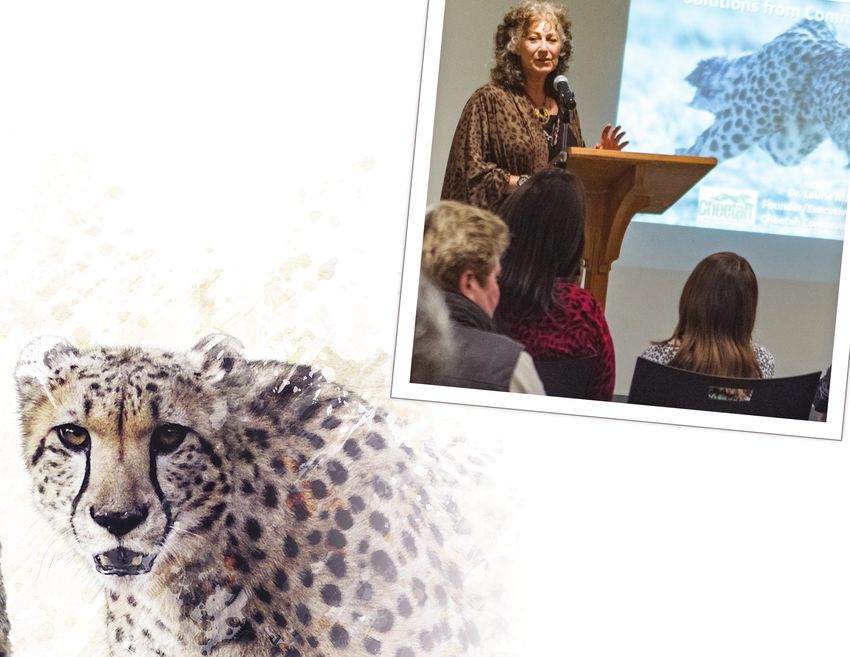
                                                                    In October 2017, we hosted Dr. Laurie Marker, founder and executive
                                                                    director of CCF, for two days in Ottawa. Dr. Marker gave a public
                                                                    talk to Canadian supporters, and was joined by Atlas, an Anatolian
                                                                    Shepherd dog who travelled from Toronto. Meetings were also held
                                                                    with the Canadian head of wildlife enforcement and a Member of
                                                                    Parliament with a leadership role in Canada-Africa relations.
EDUCATION School Outreach - Namibia                                                    CONSERVATION Livestock Guarding Dogs

The youth program is vital in informing and developing future conservationists as      The Livestock Guarding Dog (LGD) Program places Anatolian and Kangal shepherd
they gain better understanding of biodiversity and its importance to their economy     dogs on Namibian farms, with the aim of deterring cheetahs from preying on
and social fabric.                                                                     livestock, thereby helping to reduce individual cheetahs being killed by farmers.
                                                                                       The characteristics and abilities of these dogs make them well suited to the natural
CCF conducts outreach across the country targeting 4th through 12th grade              environment and climate of Namibia, and demands for protecting livestock.
learners. CCF’s education programs focus on Namibian predator identification,
ecological and physiological characteristics of the cheetah, and methods to reduce     CCF raises and trains the puppies on their model farm. At eight weeks of age, after
human/cheetah conflict. This outreach helps raise awareness about the importance       being spayed or neutered, de-wormed and vaccinated, the puppies are donated to
of saving wildlife as well as cheetahs.                                                their new owners. Farmers receiving the puppies are provided with training on care
                                                                                       of these dogs by CCF. CCF provides support and follow-on monitoring to ensure
Number of Direct Beneficiaries                                                         success of the LGD.
In 2017, CCF school outreach touched over 7,000 students across 31 schools.
Canadian support represents about 20% of the student school outreach program.          Number of Direct Beneficiaries
                                                                                       47 puppies were placed with farmers in 2017, for a total of 176 working dogs in the
Indirect Beneficiaries                                                                 program. CCF conducted 230 visits to farmers, ensuring that the dogs are well
Future Conservationists — building interest of local youth in ecology and biology as   taken care of, receiving regular vaccinations, and that the farmers benefits from
areas of study.                                                                        on-going coaching.

Target for 2018                                                                        Number of Indirect Beneficiaries
12,000 students                                                                        Preserving cheetah and other predators; children and farmers can engage in more
                                                                                       productive activities.
OUTCOMES
Impacting more than 350,000 young learners in Namibia since program was                Targets for 2018
launched in 1993.                                                                      Raise 50-60 puppies to distribute to farmers in key human-wildlife conflict areas.
                                                                                       Providing support to LGD program in Botswana, Tanzania and South Africa.

                                                                                       OUTCOMES
                                                                                       Farmers benefiting from LGD have reported a reduction of over 80% predation of
                                                                                       their livestock. Reduction in the killing of cheetahs by farmers.

Canadian Support                                                                       Canadian Support
2013-2017: $79,000 2018 Target: $20,000                                                2013-2017: $101,500 2018 Target: $30,000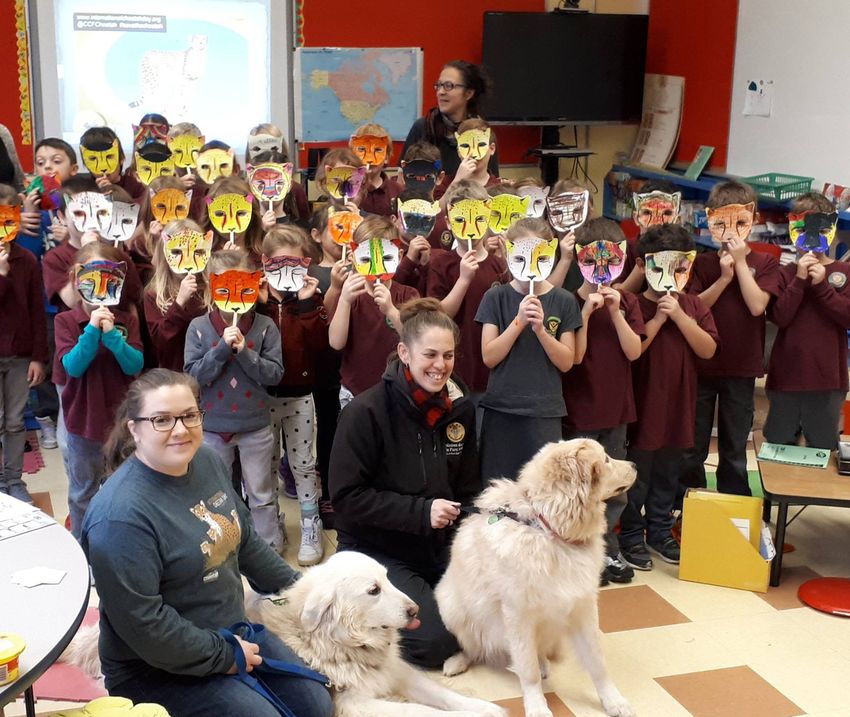
EDUCATION Future Farmers of Africa                                                    CONSERVATION Cheetah Care

CCF demonstrates the value of sustainable practices and methods in farming and        At the end of 2017, CCF had 39 cheetahs in their care. Most are orphaned, old or
conservation. Livestock and wildlife management techniques are taught to current      injured. Each cheetah requires shelter, food, exercise, regular veterinary exams,
and future land users and managers, including best practices in predator-friendly     medical intervention, monitoring, and large spaces to support their innate need
livestock and grasslands management. The aim is to enhance the livelihoods of         to roam. Some cheetahs can be released back into the wild, and these efforts are
Namibian farmers.                                                                     carefully managed by CCF to ensure success.

Training for the farmers is carried out through visits to farming communities, farm   Number of Direct Beneficiaries
association meetings or agricultural shows. The CCF team includes expertise in        39 cheetah receiving care at CCF.
ecology, farming methods and land management.
                                                                                      Number of Indirect Beneficiaries
Number of Direct Beneficiaries                                                        International and local students gain practical experience with cheetah and other
In 2017, over 1,250 farmers benefited from training or consultative workshops.        wildlife, and access to cheetah experts. Annually, over 10,000 visitors and 1,200
Canadians supported 10 workshops, reaching about 250 farmers.                         students visit CCF's Centre to learn about the cheetah.

Indirect Beneficiaries                                                                Target for 2018
Families and communities who benefit from improved livelihoods.                       Soft-release of 10 cheetahs before full release into the wild.

Targets for 2018                                                                      OUTCOMES
Continue technical and consultative workshops with farmers across Greater             CCF's work with cheetahs, including those that have been released or rewilded,
Waterberg Plateau, and expand in areas where human-wildlife conflicts have            have contributed to groundbreaking work on cheetah genetics, physiology,
been identified.                                                                      anatomy and interaction with other wildlife and their ecosystems.

OUTCOMES
Improving livelihoods by: increasing farm productivity, reducing livestock losses
due to diseases, predation and poor sanitation.

Canadian Support                                                                      Canadian Support
2013-2017: $79,000 2018 Target: $50,000                                               2013-2017: $55,500 2018 Target: $25,000
International Cheetah Day
                                                                    In 2017, our supporters celebrated International Cheetah Day by
                                                                    helping spread the word to their friends and families, and fellow
                                                                    students. In a primary school in Kemptville, Ontario, more than
                                                                    eighty 4th to 6th graders learned about the unique characteristics
                                                                    of the cheetah and the threats facing its survival. These youngsters
                                                                    discussed what they personally could do to help save the cheetah

Ontario Veterinary College                                          from extinction.

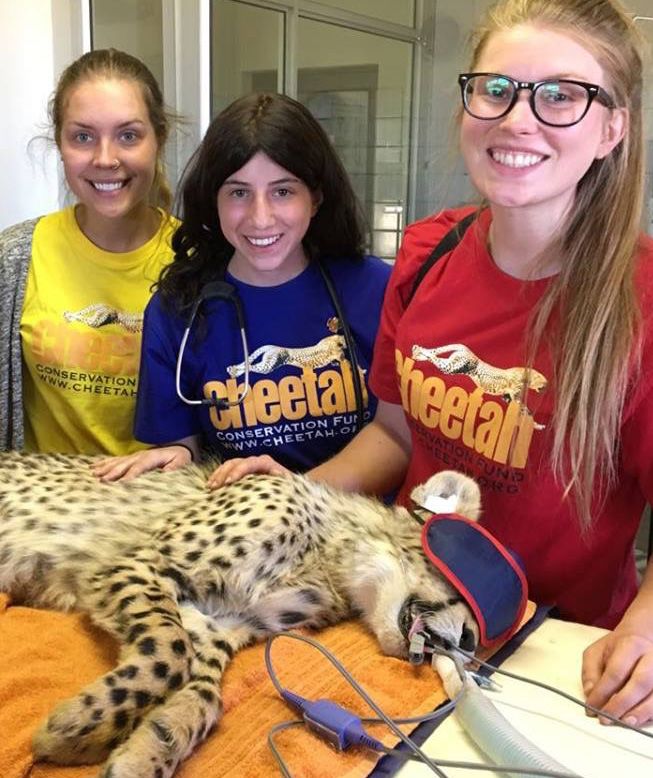
Vet Students at CCF                                                 At the Ontario Veterinary College at the University of Guelph, the
                                                                    vet students raised funds for awareness about these big cats. Those
Five vet students from the Ontario Veterinary College (University   who had traveled to Namibia were able to give first-hand accounts
of Guelph) travelled to CCF Namibia in the summer of 2017. The      of the work involved in saving a species.
two-week placement gave them hands-on experience working
at the CCF Vet Clinic. The students had completed their second      The team from Parc Safari visited the local public school in
year of Ontario Veterinary College’s Doctor of Medicine program,    Hemmingford to introduce a cheetah and two guarding dogs to
and were highly motivated to gain international experience and to   more than 75 middle-school students to help them understand
work with animals in their natural habitats.                        human-wildlife conflict and “how dogs can help save cats!”
A Day with the High Commission for the
United Republic of Tanzania
In July 2017, Cheetah Conservation Fund Canada was an exhibitor
at the Canada 150 – Ottawa Welcomes the World event. Invited
by the High Commissioner, Cheetah Conservation Fund Canada
took part in a full day event that attracted over 500 members of
the public and featured presentations on a wide range of cultural
aspects of Tanzania, including the country’s biodiversity. CCFC
spoke to the attendees about CCF’s work to save the cheetah from
extinction, including the role of livestock guarding dogs in the
Ruaha National Park, in Tanzania.

Corporate Support
Addressing Human-Wildlife Conflict
Last year, B2Gold Corporation, a Canadian company, provided a
$25,000 donation for the support of CCF's innovative Livestock
Guarding Dog Program.

B2Gold's mine is located 25 km from CCF in Namibia. They
have provided support for the work of CCF through donations
and in-kind contributions over the past few years.
We welcome your ideas about collaboration and involvement in helping us achieve our mission.

                           Cheetah Conservation Fund Canada
                       Fond canadien de préservation des guépards
                                    443 Tatlock Road
                               Carleton Place ON K7C 0C5
                                     +1 819 271 8529
                           info@cheetahconservationfund.ca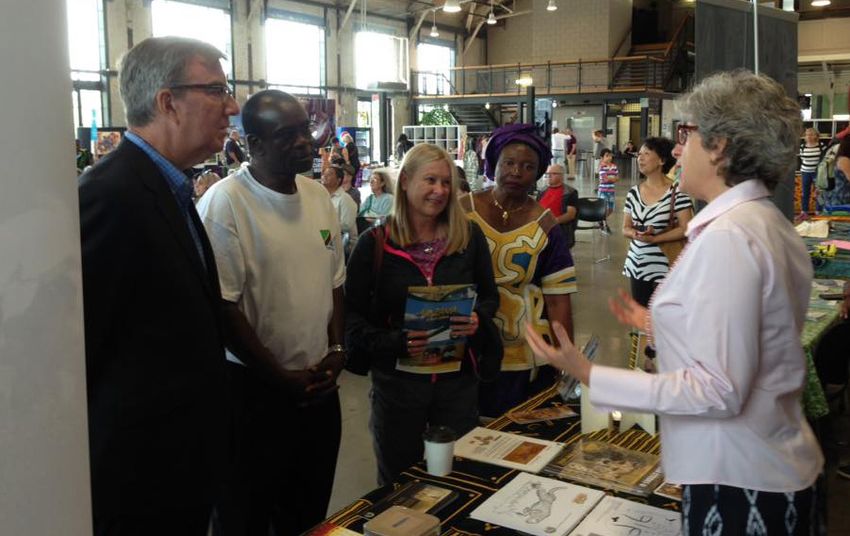
You can also read


