2019-2021 STRATEGIC PLAN - Boston Public Health Commission - Building a Healthy Boston - Boston Public Health ...
←
→
Page content transcription
If your browser does not render page correctly, please read the page content below

Boston Public Health Commission
2019-2021 STRATEGIC PLAN

        Building a Healthy Boston
LETTER FROM MAYOR WALSH

Dear Readers,

We are honored to present to you this ambitious three-year strategic plan for your Boston Public Health
Commission. Our city can and will continue to tackle the major public health challenges of our time, which
include the opioid epidemic and homelessness. To do so, this plan builds on its long history of being an
innovative and compassionate public health leader here in the region as well as across the country.

The priorities set out in this plan are crucial to our success in creating a thriving, healthy and innovative
Boston. This report outlines how BPHC will continue to be our city’s leading voice in driving forward health
equity and racial justice. We are excited to see specific goals in this plan to ensure that we are lifting up the
more than 1,100-person BPHC workforce as they work to improve the health of our families and neighbors.
Positioning BPHC as an organization that makes data-informed decisions and is likewise known across our
region as a collaborative, action-oriented partner will be important outcomes from this plan that we are
confident will drive the health of all Bostonians forward.

The following pages contain major steps forward for our public health commission to lead our city in
addressing root causes of inequities in health, such as racism and poverty. It is important to note as well that
this plan serves an important role as we execute our larger plans for the city, including our exciting Imagine
Boston 2030, Resilient Boston, Go Boston, and other plans that are guiding our city forward.

We want to thank the BPHC staff, Boston residents, hospital and healthcare partners and others who offered
their expertise and support in the development of this important strategic plan.

Sincerely,

Martin J. Walsh                                        Marty Martinez
Mayor of Boston                                        Chief of the Mayor’s Office of Health & Human Services
Letter From Our Executive Director                                                                                 Table Of Contents
                                                                                                                                1    Executive Summary
Dear Reader,
                                                                                                                                2    Introduction
The Boston Public Health Commission (BPHC) has a big mission, to protect, preserve and promote the health                       3    Commission Overview
and well-being of all of Boston’s residents, particularly the most vulnerable. It also has one of the largest                   3      Vision
workforces in the city with more than 1,100 dedicated professionals. While BPHC has more than 200 years                         3      Mission
of history, the challenges we face today are different and require new skills and strategies.                                   3      Accreditation
                                                                                                                                4    The Strategic Planning Process
The strategic plan presented here is an important one, as it outlines a significant path forward for Boston.
                                                                                                                                4      Data Gathering & Key Findings
The plan outlines specific ways in which we will get at the root causes of the inequities in our city that cause
disparities in health outcomes among its residents. BPHC envisions a thriving Boston where all residents                        4      Identification of Priority Areas
live healthy, fulfilling lives free of racism, poverty, violence, and other systems of oppression. Addressing                   5      Cross-Cutting Strategies
systems of oppression like these will lead to better and more equitable health outcomes among the residents                     5      Planning Session
of Boston.                                                                                                                      5      Final Plan Development
                                                                                                                                5      Planning Timeline
The creative ideas and priorities that came out of the strategic planning process are exciting. These include
                                                                                                                                6      Plan Alignment
steps to support our staff, provide training and advancement opportunities and ensure that we represent the
                                                                                                                                7    The Strategic Plan
community we serve in all ways possible. Applying transformative data and technology approaches to public
health is also a priority identified in this plan. The focus on workforce development and informatics will have                 7      Strategic Plan Priorities & Goal Statements
major impacts on our capacity to identify emergent and urgent public health trends and will ensure we have                      8    Strategic Plan Elements by Priority Area
the team in place to rapidly address them.                                                                                      8      Priority Area 1: Racial Justice and Health Equity
                                                                                                                                10     Priority Area 2: Workforce Development
We owe significant thanks to hundreds of our colleagues at BPHC and other city departments, foundations,                        12     Priority Area 3: Informatics and Data
hospitals and health centers for their input into this plan. We leveraged their knowledge through its
                                                                                                                                14     Priority Area 4: Collaborative Partnerships
development and it should come as no surprise that one of the priority areas identified through this process
                                                                                                                                16   Strategic Plan Implementation
is to enhance our collaborative partnerships.
                                                                                                                                16     Action Planning
Over the last several months we have worked together on this three-year plan ensuring that it aligns our                        16     Monitoring and Evaluation
mission and our people to the opportunities to address public health issues existing right now in our city,                     16     Tracking and Reporting
while also planning for future public health needs. We have challenged ourselves to think differently, listen to                18   Year 1 Action Plan
each other more and really talk about what it is going to take to get the work done.                                            22   Acknowledgements
                                                                                                                                22     Board of Health
Whether you are a resident of Boston or a member of the BPHC staff we appreciate your taking an interest
                                                                                                                                22     Senior Leadership Team
in learning more about our strategic plan. We hope you see yourself in this plan and invite you to join all of
us in this execution.                                                                                                           22     Advisory Committee
                                                                                                                                23     Planning Session Participants
Sincerely,                                                                                                                      23     HRiA faciliators
                                                                                                                                24     List of Key Informants
                                                                                                                                25   Appendix A: Strategic Planning Session Agenda
                                                                                                                                26   Appendix B: Glossary of Terms
                                                                                                                                28   Appendix C: Acronyms Found in this Plan
                                                                                                                                28   Appendix D: List of Environmental Scan Documents
                Manny Lopes, Chair                                    Monica Valdes Lupi, Executive Director                    29   Appendix E: Plan Alignment
                Board of Health 		                                    Boston Public Health Commission
Boston Public Health Commission | 2019-2021 Strategic Plan

Executive Summary
This Strategic Plan outlines a bold and action-oriented map that the Boston Public Health
Commission will use to advance its mission from April 1, 2019, through March 31, 2022.

This plan was created using a framework of input that incorporated ideas from a variety of internal and external sources
and elevated those that were aligned with the organization’s mission and other plans enacted in the city to advance
public health outcomes for all Boston residents. There are four priority areas: Racial Justice and Health Equity, Workforce
Development, Informatics and Data, and Collaborative Partnerships.

This plan builds upon BPHC’s history and role as a recognized leader in the creation of public health policy and program
development aimed at addressing social determinants of health (SDOH) here in Boston and across the country. Our
strategic plan focuses on racial justice and health equity, because everyone should have the opportunity to attain
full health potential and not be disadvantaged because of social position (e.g., class, socioeconomic status) or socially
assigned circumstance (e.g., race, gender, ethnicity, religion, sexual orientation, geography). The strategic plan lays out a
series of steps that BPHC can take to become a model leader in addressing racial justice and health equity. Among these
steps is ensuring that BPHC bureaus, divisions and programs as well as many city agencies understand what creates
health, racial justice, health equity and inequities.

Promoting and sustaining a work environment where staff thrive and achieve personal and professional growth is central
to the second priority area of BPHC’s strategic plan. Within this priority area lays guidance on expanding diversity in
management positions at BPHC, specific improvements on how BPHC staff access professional development opportunities,
as well as creating an Emerging Leaders Program at BPHC. These and other steps outlined were created to build BPHC into
a health department that best represents the neighborhoods it serves in order to serve them better.

Prioritizing informatics (the process by which raw data is translated into actionable information) will enhance BPHC and its
partners’ capacity to obtain, understand, and use data towards improving the health of Boston. The third priority area of this
plan defines how BPHC will grow its capacity to utilize technology and data in driving its programming and partnerships.
Objectives range from bringing up to baseline the technology accessible to BPHC staff, increasing BPHC staff knowledge
on how to interact with data so that it informs their decision making, as well as creating transparency of performance
measures and metrics among BPHC programs. A major component of this effort will be making the data collected or
created by BPHC more accessible to people and organizations outside BPHC, expanding the opportunity for more informed
decision making to occur among policy makers and community partners.

As the local health department for the City of Boston, staff across the BPHC play an integral role as “chief health strategists”
in advancing coalition-led efforts that improve the public’s health. Within the new strategic plan BPHC prioritizes taking
specific steps in order to proactively sustain, enhance, and create partnerships to improve the health of Boston. BPHC
will do this by ensuring that its resources advance Mayor Martin J. Walsh’s vision to make Boston a thriving, healthy and
innovative city. Specific ways in which BPHC aims to advance this cause include expanding partnerships with Accountable
Care Organizations, formalizing partnerships with advocacy organizations and community led groups to address racial
justice and SDOH, among others.

The strategic plan was developed at a time when the City of Boston was facing specific public health crises, including the
opioid epidemic and homelessness. The priorities, goals and objectives outlined in this plan will strengthen today’s BPHC
and position it to tackle current and future challenges faced by our city.

                                                                                                                                            1
Boston Public Health Commission | 2019-2021 Strategic Plan

                                                                                               Commission Overview
                                                                                               BPHC traces its roots back to 1799, when Paul Revere was named Boston’s first health officer.

                                                                                               The Board of Health was formed to fight a potential outbreak of cholera. Taking innovative
                                                                                               strides to save lives, health officials posted signs on lampposts, held meetings and led an early-
                                                                                               day public information campaign to reduce deaths due to cholera, a highly preventable disease.

                                                                                               Today, the tradition of taking a neighborhood-level illness prevention and health promotion
                                                                                               approach continues at BPHC. While it is one of the country’s oldest health departments, BPHC
                                                                                               prides itself on providing some of the most innovative services to Boston’s residents.

                                                                                               Vision                                                         Accreditation
                                                                                               BPHC envisions a thriving Boston where all residents live      In November of 2017, BPHC achieved national
                                                                                               healthy, fulfilling lives free of racism, poverty, violence,   accreditation through the Public Health Accreditation
                                                                                               and other systems of oppression. All residents will have       Board (PHAB). The national accreditation program works
                                                                                               equitable opportunities and resources, leading to optimal      to improve and protect the health of the public by
                                                                                               health and well-being.                                         advancing and ultimately transforming the quality and
                                                                                                                                                              performance of the nation’s public health departments.
                                                                                                                                                              BPHC is one of four health departments in Massachusetts
                                                                                               Mission                                                        and one of only 244 health departments nationwide
                                                                                               The mission of BPHC is to protect, preserve, and promote       (209 local, 33 state, and 2 Tribal) that have achieved
                                                                                               the health and well-being of all Boston residents,             accreditation through PHAB since its launch in 2011.
                                                                                               particularly the most vulnerable.
                                                                                                                                                              The national accreditation program, jointly supported
                                                                                               BPHC achieves its mission by providing and supporting          by the Centers for Disease Control and Prevention and
                                                                                               accessible, high quality community-based health and            the Robert Wood Johnson Foundation, sets standards
                                                                                               social services, community engagement and advocacy,            against which the nation’s nearly 3,000 governmental
                                                                                               development of health promoting policies and regulations,      public health departments can continuously improve
                                                                                               disease and injury prevention, emergency services, health      the quality of their services and performance. To receive
                                                                                               promotion, and health education services.                      accreditation, a health department must undergo a
                                                                                                                                                              rigorous, multi-faceted, peer reviewed assessment
                                                                                               Principles                                                     process to ensure it meets or exceeds a set of quality
                                                                                               BPHC is committed to the following principles:                 standards and measures. Deliverables include a
                                                                                                 • Promote the fair treatment of all people.                  community health assessment (CHA), a community health
                                                                                                 • Ensure internal policies, procedures, and practices are    improvement plan (CHIP), and an agency strategic plan.
                                                                                                   fair and equitable.

    Introduction                                                                                 • Continually strive to improve public policies, systems,
                                                                                                   and environments that influence social conditions.
                                                                                                 • Foster mutual respect, transparency, and
                                                                                                   accountability with colleagues, residents, coalitions,
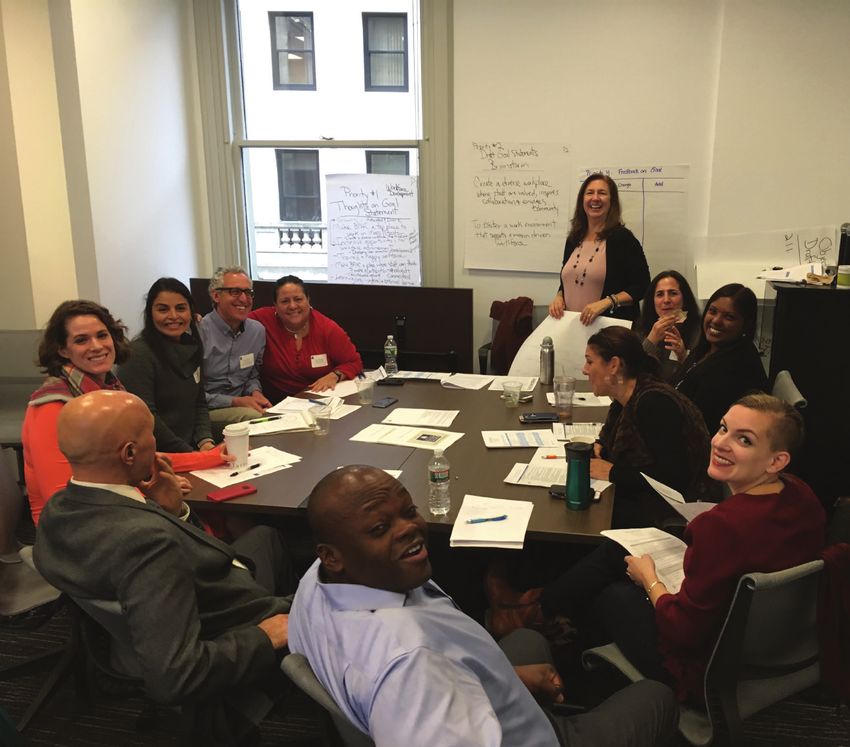
    In October 2018, the Boston Public Health Commission (BPHC) contracted with Health             and other partners.
    Resources in Action, Inc. (HRiA) to develop a three-year strategic plan. The strategic       • Strengthen community capacity and uplift community
                                                                                                   voices.
    planning process included participation from a diverse group of stakeholders from
                                                                                                 • Use the best available scientific evidence to inform
    BPHC staff and leadership, as well as external subject matter experts. This process, and       BPHC’s work.
    the resulting plan, demonstrate the deep interest and commitment of stakeholders to          • Provide culturally and linguistically appropriate
                                                                                                   services to people from all backgrounds.
    work together to advance the mission of BPHC: to protect, preserve and promote the           • Ensure effective communication and coordination
    health and well-being of all of Boston’s residents.                                            with other city agencies, community-based
                                                                                                   organizations, residents, and other partners.

2                                                                                                                                                                                                                                      3
Boston Public Health Commission | 2019-2021 Strategic Plan
The Strategic Planning Process Cross-Cutting Strategies
The following topic areas were identified as key focal
points for integration across all the priority areas in
Planning Session
Members of BPHC staff and leadership then met for
a full-day Strategic Planning Session. HRiA’s strategic
Data Gathering & Key Findings the strategic plan and have been incorporated into planning approach, called Facilitating Alignment and
each priority area as cross-cutting strategies to ensure Strategic Thinking (FAST™), served as the roadmap for
Collecting and synthesizing data is an important foundation for guiding and constructing a consistency throughout the plan: the day’s planning exercises. FAST™ is an efficient and
Strategic Plan. Efforts focused on gathering perspectives on current and emerging factors that • Funding and Sustainability effective rapid strategic planning process, which, unlike a
could influence the success and sustainability of BPHC over the next three years and followed • Communication traditional strategic planning process that can take many
• Leadership months, is a shorter, more cost-effective approach that
a SWOT (Strengths, Weaknesses, Opportunities, and Threats) analysis format, exploring • Operations/Infrastructure produces high-quality results and delivers exceptional
perceptions of current BPHC services and capacity, as well as reflections on successes and value and satisfaction for stakeholders.
challenges.
HRiA facilitators led the all-day FAST™ session, guiding
four working groups, one for each priority area. The
These efforts included over 20 key informant interviews, 6 staff and community engagement
working groups developed draft goals, objectives and
sessions, an online staff survey, and a document review. HRiA synthesized and compiled the strategies for the identified priorities with interactive
key themes from the data gathering into a Key Findings Presentation, which included a set of input from participants across all priority areas.
recommended Priority Areas for strategic planning.
See Appendix A for the agenda from the Strategic
See Acknowledgements for list of key informants who participated in the process. Planning Session.
Identification of Priority Areas The BPHC Steering and Advisory Committee then
In November 2018, HRiA presented the BPHC Steering participated in a multi-voting process to determine the
and Advisory Committee with the key themes from the final Priority Areas for the BPHC Strategic Plan. As a result
data gathering efforts as well as recommended priorities of this inclusive process, the following Priority Areas were
for planning based on those themes. The recommended selected for the BPHC Strategic Plan:
priorities presented were:
1. Racial Justice and Health Equity
• Collaborations and Partnerships 2. Workforce Development
• Communications 3. Informatics and Data Final Plan Development
• Health Systems Transformation 4. Collaborative Partnerships Based on the output from the full-day session, HRiA developed a draft Strategic Plan. The draft
• Data/Informatics plan was circulated to BPHC leadership, planning session participants, and additional staff for
• Racial Justice and Health Equity
• Workforce Development
feedback. Several facilitated review sessions involving staff and leadership were held to refine and
align the goals, objectives and strategies across the plan. HRiA compiled the feedback, revised
HRiA shared criteria for participants to consider as they the plan for overall consistency, and made recommendations for final revisions to BPHC. BPHC
ranked the topic areas presented.
completed a final review of the draft before finalizing the Strategic Plan outlined in this report.
Selection Criteria
a. Alignment Aligns with the vision, mission and values of BPHC.
Planning Timeline
b. Feasibility BPHC has the ability to address this issue (e.g., expertise, experience).
Key Findings & Strategic Strategic Action
Prioritization Planning Plan Review Planning
c. Need Reflective of a demonstrated area of internal and external need. Meetings Session
Sessions
d. Political & Collective Will Both internal and external will to address this issue exists.
e. Impact Impact and results from addressing this issue can be measured and demonstrated. 2018 AUG SEPT OCT NOV DEC JAN FEB 2019
f. Resources There are or will be resources available to address this issue (e.g., funding, staff).
KICK OFF MEETINGS DATA COLLECTION STRATEGIC PLAN DEVELOPMENT ACTION PLAN DEVELOPMENT
g. Visibility Focus in this area will allow us to increase the visibility and awareness of BPHC’s efforts. Interviews. Focus Groups, Draft Report, Review and Feedback, Final Strategic Plan Draft Report, Review and
Staff Engagement Sessions, Feedback, Final Acton Plan
h. Capacity Building Enables BPHC to build/strengthen its capacity to carry out its mission. Document Review
4 5
Boston Public Health Commission | 2019-2021 Strategic Plan

    Plan Alignment
    The BPHC Strategic Plan was developed with alignment and collaboration in mind. The following         The Strategic Plan
    section highlights where this plan is aligned with other internal and external plans, and describes
                                                                                                          A strategic plan includes several key elements: a vision statement that describes a desired future;
    collaboration across other planning processes with other public health entities.
                                                                                                          a mission statement that articulates a central purpose; and a set of core values that guide all
                                                                                                          aspects of planning and implementation. From that, specific goals, objectives, and strategies are
    The BPHC Strategic Plan is aligned with the 2016 Boston Community Health Improvement Plan
                                                                                                          developed to accomplish the mission and vision in alignment with the core values.
    (CHIP), and BPHC is currently an active participant in the Boston CHNA-CHIP Collaborative, an
    exciting new initiative among several stakeholders - community organizations, health centers,
                                                                                                          Priority Areas are key issues that provide a focus for planning. A Goal is a broadly stated, non-
    hospitals and BPHC - formed to undertake the first city-wide Community Health Needs
                                                                                                          measurable change in the Priority Area. It describes the desired outcome of a planning initiative.
    Assessment (CHNA) and Community Health Improvement Plan (CHIP) for the City of Boston.
                                                                                                          Objectives articulate goal-related outcomes in specific and measurable terms. Objectives are
                                                                                                          narrow, precise, tangible, concrete and SMART (specific, measurable, achievable, relevant,
    This innovative Collaborative aims to achieve the benefits of broad partnership around a
                                                                                                          time-phased). Success Measures are measure(s) of progress or completion of a goal or objective.
    Boston-based CHNA and CHIP, including deeper engagement of key community and
                                                                                                          These measures ultimately let your team know if the Goal or Objective was successful in
    organizational stakeholders; enhanced alignment of defined priorities and strategies; maximal
                                                                                                          impacting the Priority Area. A Strategy describes the approach to fulfilling the Objective. It is
    allocation of resources; coordination of implementation strategies for collective impact and a
                                                                                                          less specific than action steps, but tries to broadly answer the question, “How can we get from
    healthier Boston.
                                                                                                          where we are now to where we want to be?”

    While this process is still underway, the first “Shared Value” of the Boston CHNA-CHIP
    Collaborative is to “Focus on inequities that affect health with an emphasis on race and              Strategic Plan Priority Areas & Goal Statements
    ethnicity.” Other Shared Values address inclusion and partnership. The 2019 CHNA is scheduled
    to be completed by September 2019. The forthcoming 2019 CHIP will align with several aspects
                                                                                                            PRIORITY AREA                     PRIORITY AREA                     PRIORITY AREA                        PRIORITY AREA
    of the BPHC Strategic Plan.

    Each of the Priority Areas in the BPHC Strategic Plan include specific objective alignment with
    the 2019-2021 Quality Improvement (QI) Plan. Having been drafted simultaneously with the
    Strategic Plan, the QI plan incorporates many objectives and strategies, including those designed
    to elevate the across the board use of performance measures for programs in a transparent and
    consistent way as well as the application of informatics best practices to drive decision making,
    among others.

    As one of the largest City of Boston Departments, this strategic plan takes into account
    overarching Mayoral Initiatives and takes important steps toward achieving the vision outlined in
    the Imagine Boston 2030 report. Drawing on its national leadership opportunities, the plan also
                                                                                                            RACIAL JUSTICE AND                    WORKFORCE                        INFORMATICS                          COLLABORATIVE
    aligns with national priorities set out in the Public Health 3.0 framework.
                                                                                                              HEALTH EQUITY                      DEVELOPMENT                         AND DATA                           PARTNERSHIPS
                                                                                                          Goal: Make BPHC a model           Goal: Promote and sustain a       Goal: Grow capacity to use          Goal: Proactively sustain,
    The BPHC Strategic Plan alignment with local and national priorities is illustrated in Appendix E.    for racial justice and health     work environment where staff      technology and data to drive        enhance, and create
                                                                                                          equity that advances our vision   thrive and achieve personal and   programming and partnerships        partnerships to improve the
                                                                                                          of achieving optimal health       professional growth.              to improve health outcomes.         health of Boston.
                                                                                                          and well-being for all Boston
                                                                                                          residents.

6                                                                                                                                                                                                                                                       7
Boston Public Health Commission | 2019-2021 Strategic Plan
    Strategic Plan Elements by Priority Area

    Priority Area 01: Racial Justice and Health Equity
    Racial justice is the creation and proactive reinforcement of policies, practices, attitudes
    and actions that produce equitable power, access, opportunity, treatment, and outcomes                        Objective 1.2: By 2021, increase number of City agencies that express an understanding of what creates health,
                                                                                                                                 racial justice, health equity, and inequities.
    for all people regardless of race. Our strategic plan focuses on racial justice and health
                                                                                                                       Success Measures:
    equity because everyone should have the opportunity to attain full health potential and                            • Percent change in understanding of what creates health as measured by the Health Equity in all Policies Survey.
                                                                                                                       • Number of traditional and social media placements leading to positive engagement metrics.
    not be disadvantaged because of social position (e.g., class, socioeconomic status) or                             • Number of Equity Change Projects completed by City agencies.

                                                                                                                       Strategies:
    socially assigned circumstance (e.g., race, gender, ethnicity, religion, sexual orientation,                       1.2.1: Implement communication strategy designed to increase understanding of what creates health, racial
                                                                                                                              justice, health equity, and inequities.
    geography). This plan advances racial justice and health equity through changing business                          1.2.2: Identify, coach and support Champions across City departments toward the implementation of
                                                                                                                              Equity Change Projects.
    practices, (e.g., hiring, promotion), ensuring programs and services are provided equitably
    and working with other sectors to ensure that all Bostonians have access to health                            Objective 1.3: By 2021, all Bureaus incorporate the racial justice and health equity principles and practices outlined
                                                                                                                                 in the BPHC Community Engagement Plan as standard practice.
    promoting resources (e.g., good jobs, affordable housing).
                                                                                                                        Success Measures:
                                                                                                                        • Completion of updated Community Engagement Plan.
                                                                                                                        • Percent of new initiative proposals that reference Community Engagement Plan and practices.
                                                                                                                        • Percent of BPHC funding opportunities that incorporate community engagement best practices.
    Goal 1: Make BPHC a model for racial justice and health equity that advances our vision
                                                                                                                        Strategies:
    of achieving optimal health and well-being for all Boston residents.                                                1.3.1: Establish a baseline level of understanding of current community engagement knowledge practice
                                                                                                                               and resources.
                                                                                                                        1.3.2: Update current Community Engagement Plan.
    Objective 1.1: By 2020, develop a demographically-representative team of Health Equity Champions reflecting         1.3.3: Develop an organizational policy institutionalizing equitable community engagement practices and processes.
                   BPHC locations, shifts, and classifications to support equity practices.                             1.3.4: Foster integration of community engagement principles, internally and externally, through dissemination
                                                                                                                               and support for adoption of community engagement tools.
        Success Measures:                                                                                               1.3.5: Integrate the implementation of community engagement best practices in BPHC funding opportunities.
        • Number of champions; number of BPHC locations with champions.
        • Number of change projects initiated.
        • Number of change projects completed.                                                                    Objective 1.4: Implement strategies to improve culturally sensitive communications and promote
        • Number of requests and downloads for The Guide to Advance Racial Justice and Health Equity.                            equitable conflict resolution.

        Strategies:                                                                                                    Success Measure:
        1.1.1: Disseminate The Guide for use in implementing Equity Change Projects.                                   • Percent of staff trained on culturally sensitive communications topics.
        1.1.2: Identify Health Equity Champions (Champions).
        1.1.3: Coach and support Champions in leading Equity Change Projects.                                          Strategies:
                                                                                                                       1.4.1: Communicate established processes to all staff.
                                                                                                                       1.4.2: Explore processes to improve equitable communications and conflict resolution among staff.
                                                                                                                       1.4.3: Develop opportunities for learning and sharing on topics including cross-cultural communication,
                                                                                                                              implicit bias, cultural humility, racial justice, and inequities.

                                                                                                                  Plan Alignment Key
                                                                                                                      Mayoral Initiatives & Imagine Boston 2030   Public Health 3.0   Boston CHNA-CHIP Collaborative       BPHC Quality Improvement Plan
8                                                                                                                                                                                                                                                               9
Boston Public Health Commission | 2019-2021 Strategic Plan
Strategic Plan Elements by Priority Area
Objective 2.2: By January 2022, ensure that at least 30% of BPHC staff at every level of the organization participate
in professional development opportunities on an annual basis.
Priority Area 02: Workforce Development Success Measures:
• Statement of executive endorsement.
• Percent of staff participating in professional development opportunities annually.
• Number of barriers to participation in professional development opportunities identified and removed.
Achieving the vision of making Boston a city free of racism, poverty, violence and other
Strategies:
systems of oppression requires BPHC to begin by implementing strategic changes 2.2.1: Promote a culture of learning in which staff feel motivated to develop new skills and competencies, and
managers are supported in prioritizing time for staff to participate in professional development activities.
together with its 1,100-person workforce. This includes supporting staff to thrive as 2.2.2: Identify, prioritize, and address barriers that prevent participation in training opportunities, particularly
for front-line staff.
Boston residents as well as public health professionals. It also means attracting the 2.2.3: Identify and implement an electronic system to track personnel data, including staff training records.
most qualified and diverse candidates, nurturing staff satisfaction and advancement, Objective 2.3: Increase the diversity of senior managers to more closely reflect the community BPHC serves.
and supporting staff to succeed in every role at BPHC. Workforce development creates Success Measures:
• Percent increase in diversity among qualified candidates for senior manager positions.
and sustains conditions in which staff can excel, participate in professional development • Participants in the Emerging Leaders Program reflect the community BPHC serves.
activities, and are recognized for contributions. Training develops competencies that Strategies:
2.3.1: Develop and implement organizational guiding principles that drive diversity in managers hired, and
support high quality, equitable services and partnerships. Together, we create our future staff promoted throughout BPHC.
2.3.2: Provide support for hiring managers to increase the diversity of qualified candidates.
as a learning organization. 2.3.3: Proactively recruit participants in the Emerging Leaders Program who reflect the community BPHC serves.
Objective 2.4: By December 2021, meet or improve on national standards for percent of staff who report they are
considering leaving in the next year for reasons other than retirement.
Goal 2: Promote and sustain a work environment where staff thrive and achieve personal
Success Measures:
and professional growth. • Change between 2017 and 2020 data in Public Health Workforce Interests and Needs Survey (PH WINS).
• Positive data trends from new staff satisfaction system.
Objective 2.1: Create a formal system to support professional growth and career pathways.
Strategies:
2.4.1: Support staff to live and thrive in Boston.
Success Measures:
2.4.2: Develop a confidential system to assess staff satisfaction.
• Percent of Bureaus represented on the Professional Development Steering Committee.
2.4.3: Implement three change strategies to increase staff satisfaction.
• Curriculum designed for Emerging Leaders Program.
2.4.4: Implement communication strategy to share hiring and workforce demographic data with all staff.
• Number of new or enhanced professional development opportunities offered.
Strategies:
2.1.1: Launch the Professional Development Steering Committee.
2.1.2: Create and enhance opportunities for learning, coaching, peer networking, and shadowing across BPHC.
2.1.3: Create and enhance management training for new, current, and aspiring supervisors and managers.
2.1.4: Develop an Emerging Leaders Program to support high-potential and high-performing staff in growing
and succeeding in supervisory and management positions.
Plan Alignment Key
Mayoral Initiatives & Imagine Boston 2030 Public Health 3.0 Boston CHNA-CHIP Collaborative BPHC Quality Improvement Plan
10 11Strategic Plan Elements by Priority Area
Boston Public Health Commission | 2019-2021 Strategic Plan
Priority Area 03: Informatics and Data Objective 3.3: By the end of 2021, increase data availability, utility, and accessibility for BPHC and community
partners to improve community health.
Success Measures:
• Number of presentations on how to use Health of Boston or program data.
Improving public health depends on having access to information and data that enable the • Number of data requests and use of BPHC data in planning and decision making.
• Number of Health of Boston or other identified data reports that are available online and the number
identification of which health issues most need attention. These data inform the design, of downloads of each.
• Percent improvement of data availability, utility, and accessibility from among surveyed BPHC and
implementation, and evaluation of efforts that aim to produce desirable health outcomes. community partners.
• Number of RFPs and other proposals that use and require BPHC data.
Prioritizing informatics (the process by which raw data is translated into actionable
Strategies:
information) will enhance BPHC and its partners’ capacity to obtain, understand, and use 3.3.1: Design and launch survey among staff and community partners to understand how they use BPHC data
and what other additional data they need.
3.3.2: Increase accessibility of data using various techniques such as infographics, literacy level, language
data towards improving the health of Boston. translation, ADA compliance strategies, and interactive dashboards.
3.3.3: Promote awareness of the availability and value of data collected by BPHC.
Objective 3.4: By the end of 2021, embed performance measures focused on health-related outcomes in 50% of
Programs and Public Health Service Centers.
Goal 3: Grow capacity to use technology and data to drive programming and partnerships
to improve health outcomes. Success Measures:
• Number of dashboards piloted as part of performance management system.
• Increase percent of measures with a positive trend.
Objective 3.1: By the end of 2021, increase access to technology that meets Program and Public Health • Percent of Programs and Public Health Service Centers with performance measures focused on health outcomes.
Service Centers’ needs.
Strategies:
Success Measures: 3.4.1: Develop an inventory of existing performance measures across Programs and Public Health Service Centers.
• Percent increase of new technology equipment deployed. 3.4.2: Develop performance measures focused on health-related outcomes for programs as needed.
• Percent increase in satisfaction with technology.
• Percent increase in technology related trainings.
Objective 3.34: By the end of 2021, embed performance measures focused on health outcomes in 50% of Programs
Strategies:
3.1.1: Assess current inventory of technology and technology satisfaction.
3.1.2: Determine future training and equipment needs.
3.1.3: Develop and communicate process for prioritizing investments to meet training and equipment needs.
3.1.4: Design and implement tailored training to meet staff needs for accessing new technology.
Objective 3.2: By the end of 2020, increase by 10% overall staff knowledge and skills to collect and use data.
Success Measures:
• Number of staff trained in data collection and use systems.
• Percent change in self-assessment competency scores among staff.
• Percent of staff participating in professional development opportunities annually.
• Number of barriers to participation in professional development opportunities identified and removed.
.
Strategies:
3.2.1: Launch informatics competency self-assessment tool.
3.2.2: Provide trainings that address gaps identified through use of assessment tool.
3.2.3: Increase ability to share internally protected health information of BPHC clients that complies with
state and federal confidentiality laws.
Plan Alignment Key
Mayoral Initiatives & Imagine Boston 2030 Public Health 3.0 Boston CHNA-CHIP Collaborative BPHC Quality Improvement Plan
12 13Boston Public Health Commission | 2019-2021 Strategic Plan
Strategic Plan Elements by Priority Area
Objective 4.2: By 2021, formalize strategic partnerships with advocacy organizations and community-led groups to
address racial justice and social determinants of health.
Priority Area 04: Collaborative Partnerships Success Measures:
• At least one strategic partnership related to housing and anti-displacement.
• At least one strategic partnership related to inclusive economic growth (e.g., employment).
• At least one strategic partnership supporting gun violence prevention efforts.
As the local health department for the City of Boston, staff across BPHC play an integral • At least one strategic partnership related to the built environment.
role as “chief health strategists” in advancing coalition-led efforts that improve the public’s Strategies:
4.2.1: Identify current strategic partnerships across BPHC with advocacy and community-led groups.
health. Traditional public health roles as conveners need to shift to become more strategic 4.2.2: Conduct a gap analysis to identify potential strategic partners.
4.2.3: Conduct outreach strategy to engage with potential partners.
4.2.4: Convene or engage with potential partners to identify shared goals and to identify resources to
collaborators that engage other city departments, public and private community partners accelerate health improvement through policy and systems change.
to diversify resources and foster collective action. Prioritizing strategic collaboration
commission-wide will ensure that we advance programs that proactively sustain, enhance, Objective 4.3: By end of 2021, leverage diverse resources to drive equitable health improvement at the
neighborhood level.
and create partnerships to improve the health of Boston.
Success Measures:
• Number of new or expanded partnerships working at the neighborhood level.
• Establish at least one new initiative that aligns with goals in Imagine Boston 2030 to reduce disparities in premature
Goal 4: Proactively sustain, enhance, and create partnerships to improve the health of Boston. mortality (deaths per 1,000 residents before age 65) in the two Boston neighborhoods with the highest rates.
• Number of initiatives benefitting from multi-source funding distributed by BPHC.
Objective 4.1: Dedicate additional public health resources to advance Mayor Martin J. Walsh’s vision and goal to
make Boston a thriving, healthy and innovative city. Strategies:
4.3.1: Advocate with business, academic, philanthropic, and governmental entities to build funding for equitable
Success Measures: neighborhood-based health improvement.
• Number of policy documents that include BPHC data and analysis. 4.3.2: Strengthen the capacity of partners through non-financial support; including, but not limited to training,
• Number of City departments engaged in Health Equity in All Policies Task Force. technical assistance, informatics, and advocacy.
• Number of BPHC-led initiatives and partnerships with other City departments. 4.3.3: Drive collaborative opportunities across Bureaus and Public Health Service Centers to maximize our
effectiveness as partners.
Strategies:
4.1.1: Provide resources and best practices to other City agencies so that they can better integrate what creates
health, racial justice, health equity, and inequities into their own work. Objective 4.4: By end of 2021, expand partnerships with Accountable Care Organizations (ACOs) to improve health
4.1.2: Institutionalize BPHC involvement in developing policy documents and program design with other City partners. outcomes of marginalized populations.
4.1.3: Increase the visibility of the scope of public health in improving health outcomes in Boston.
Success Measures:
• Number of outreach meetings with ACOs leadership.
• Number of technical assistance and trainings provided to ACOs.
• Number of formalized partnerships with ACOs.
Strategies:
4.4.1: Enhance outreach to ACOs in order to better understand their needs to address racial health inequities and
social determinants of health.
4.4.2: Develop and promote a menu of programs and services, including trainings, that could support ACOs’
activities to address racial health inequities, and social determinants of health.
4.4.3: Formalize partnerships with ACOs to implement initiatives that improve health outcomes related to
racial inequities.
Plan Alignment Key
Mayoral Initiatives & Imagine Boston 2030 Public Health 3.0 Boston CHNA-CHIP Collaborative BPHC Quality Improvement Plan
14 15Boston Public Health Commission | 2019-2021 Strategic Plan
Strategic Plan Implementation
Action Planning
BPHC convened four working groups -- one for each of the priority areas. These groups
developed an action plan for year one (April 1, 2019 -- March 31, 2022) defining action steps
to accomplish each strategy, assigning leads and implementers, and establishing a timeline
for implementation. These workgroups will track progress and learnings quarterly to guide
subsequent, annual implementation planning.
Monitoring and Evaluation
The purpose of monitoring and evaluation is to track
implementation and outputs systematically and
measure the effectiveness of the strategies being
implemented. Monitoring and evaluation helps track
progress and identify when course corrections may
be needed to guide implementation activities.
Monitoring and evaluation activities will follow
PLAN
the processes outlined in BPHC’s 2019-2021
ACT
Quality Improvement Plan, which utilizes the
PDSA Quality Improvement model. The purpose
of Quality Improvement is to achieve measurable
improvements in the efficiency, effectiveness,
• What changes are to be made?
performance, accountability, outcomes and other • Next cycle?
indicators of quality in services or processes which • Plan to carry out the cycle
(who,what, where, when)
achieve equity and improve the health of the
community.
Tracking and Reporting
BPHC priority area leads will complete qualitative
and quantitative reporting on a quarterly basis
• Analyse data • Carry out the plan
to track the progress of implementation efforts
and record successes achieved and challenges • Summarise what was learned • Record data
TU
encountered. Various approaches can be used to
track progress on strategies and activities (e.g.,
DY DO
S
quarterly reports, participant evaluations from
training). Progress should be broadly communicated
internally throughout BPHC, with the Board
of Health, and to external key stakeholders as
appropriate.
16 17Year 1 Action Plan The following table outlines the action plan for the first year of the
three-year strategic plan. Each objective has two columns below; the
Year 1 Action Plan The following table outlines the action plan for the first year of the
three-year strategic plan. Each objective has two columns below; the
(April 1, 2019 – March 31, 2022)
Priority Area 01: Racial Justice and Health Equity strategy is in the left column with action owner(s) in the right. (April 1, 2019 – March 31, 2022) strategy is in the left column with action
Boston owner(s)
Public Health in the| 2019-2021
Commission right. Strategic Plan
Priority Area 02: Workforce Development
Goal 1: Make BPHC a model for racial justice and health equity that advances our vision of Goal 2: Promote and sustain a work environment where staff thrive and achieve
achieving optimal health and well-being for all Boston residents. personal and professional growth.
By 2020, develop a demographically-representative team of Health Equity Champions
1.1 2.1 Create a formal system to support professional growth and career pathways.
reflecting BPHC locations, shifts, and classifications to support equity practices.
Office of Health Equity Consortium for Professional Development
Disseminate The Guide for use in implementing Equity Change Projects. Launch the Professional Development Steering Committee.
Communications Office Senior Leadership Team
Develop a new Emerging Leaders Program to support high potential and Professional Development Steering Committee
Identify Health Equity Champions (Champions). Office of Health Equity Consortium for Professional Development
high performing staff in growing and succeeding in supervisory and
Executive Office Emerging Leaders Program Subcommittee
management positions.
By 2021, increase number of City agencies that express an understanding of what creates By January 2022, ensure that at least 30% of BPHC staff at every level of the organization
1.2 health, racial justice, health equity, and inequities. 2.2
participate in professional development opportunities on an annual basis.
Office of Health Equity Executive Office
Implement communication strategy designed to increase understanding of what Promote a culture of learning in which staff feel motivated to develop new
Communications Office Communications Office
creates health, racial justice, health equity, and inequities. skills and competencies, and managers are supported in prioritizing time
Mayor’s Press Office Consortium for Professional Development
S T R A T E G Y
for staff to participate in professional development activities. Accreditation & Quality Improvement Office
O W N E R ( S )
By 2021, all Bureaus incorporate the racial justice and health equity principles and
1.3
S T R A T E G Y
practices outlined in the BPHC Community Engagement Plan as standard practice.
Labor Relations Office
O W N E R ( S )
Identify, prioritize, and address barriers that prevent participation in Consortium for Professional Development
Establish a baseline level of understanding of current community engagement Office of Health Equity training opportunities, particularly for front-line staff. Professional Development Steering Committee
knowledge practice and resources. Executive Office Office of Accreditation & Quality Improvement
Update current Community Engagement Plan. Office of Health Equity
Executive Office
Increase the diversity of senior managers to more closely reflect the
2.3
community BPHC serves.
Develop an organizational policy institutionalizing equitable community Office of Health Equity
engagement practices and processes. Executive Office
Develop and implement organizational guiding principles that drives Human Resources
diversifying the managers hired, and staff promoted throughout BPHC. Labor Relations
Implement strategies to improve culturally sensitive communications and promote Communications Office
1.4 equitable conflict resolution.
By December 2021, meet or improve on national standards for percent of staff who report
Human Resources
2.4 they are considering leaving in the next year for reasons other than retirement.
Communicate established processes to all staff. Labor Relations Office
Communications Office
Workforce Resilience Workgroup
Explore processes to improve equitable communications and conflict Administration and Finance Department Office of Public Health Preparedness
Support staff to live and thrive in Boston.
resolution among staff. Consortium for Professional Development Communications Office
Consortium for Professional Development
Wellness @ Work Committee
18 19Year 1 Action Plan The following table outlines the action plan for the first year of the
three-year strategic plan. Each objective has two columns below; the
Year 1 Action Plan The following table outlines the action plan for the first year of the
three-year strategic plan. Each objective has two columns below; the
(April 1, 2019 – March 31, 2022) strategy is in the left column with action owner(s) in the right. (April 1, 2019 – March 31, 2022) strategy is in the left column with action
Boston owner(s)
Public Health in the| 2019-2021
Commission right. Strategic Plan
Priority Area 04: Collaborative Partnerships
Priority Area 03: Informatics and Data
Goal 3: Grow capacity to use technology and data to drive programming and partnerships Goal 4: Proactively sustain, enhance, and create partnerships to improve the
to improve health outcomes. health of Boston.
By the end of 2021, increase access to technology that meets Program and Public Health Dedicate additional public health resources to advance Mayor Martin J. Walsh’s vision and
3.1 4.1 goal to make Boston a thriving, healthy and innovative city.
Service Centers’ needs.
Information Technology Services Senior Leadership Team
Informatics Team* Provide resources and best practices to other City agencies so that they Office of Health Equity
Assess current inventory of technology and technology satisfaction. IT Strategic Planning Sub-Committee can better integrate what creates health, racial justice, health equity, and Intergovernmental Relations Office
Office of Accreditation & Quality Improvement inequities into their own work. Research and Evaluation Office
General Counsel’s Office
Program Staff
Determine future training and equipment needs. Information Technology Services
Communications Office
By the end of 2020, increase by 10% overall staff knowledge and skills to collect and Office of Health Equity
3.2 use data. Increase the visibility of the scope of public health in improving health
Intergovernmental Relations Office
Research and Evaluation Office
outcomes in Boston. Senior Leadership Team
Executive Office | General Counsel’s Office
Informatics Team* Board of Health | Program Staff
Launch informatics competency self-assessment tool. Communications Office
By 2021, formalize strategic partnerships with advocacy organizations and community-led
Provide trainings that address gaps identified Informatics Team* 4.2 groups to address racial justice and social determinants of health.
through use of assessment tool. Consortium for Professional Development
Office of Health Equity
General Counsel Office Senior Leadership Team
Increase ability to share internally protected health information of BPHC
HIPPA Sub-Committee** Identify current strategic partnerships across BPHC with advocacy and Information Technology Services
clients that complies with state and federal confidentiality laws.
Information Technology Services community-led groups. Program Staff
Program Directors
S T R A T E G Y
By the end of 2021, increase data availability, utility, and accessibility for BPHC and
3.3
O W N E R ( S )
S T R A T E G Y
community partners to improve community health. Office of Health Equity
Intergovernmental Relations Office
O W N E R ( S )
Conduct a gap analysis to identify potential strategic partners. Information Technology Services
Informatics Team* Executive Office
Design and launch survey among staff and community
Office of Health Equity Program Staff
partners to understand how they use BPHC data and what
Communications Office Program Directors
other additional data they need.
Research and Evaluation Office
By end of 2021, leverage diverse resources to drive equitable health improvement at the
Informatics Team* 4.3 neighborhood level.
Promote awareness of the availability and value of data Communications Office
Administration and Finance Department
General Counsel’s Office Office of Health Equity
Advocate with business, academic, philanthropic, and governmental entities to Executive Office
build funding for equitable neighborhood-based health improvement. Senior Leadership Team
By the end of 2021, embed performance measures focused on health-related outcomes Program Staff
3.4 in 50% of Programs and Public Health Service Centers.
Senior Leadership Team
Executive Office Intergovernmental Relations Office
Develop an inventory of existing performance measures across programs Senior Leadership Team Strengthen the capacity of partners through non-financial support; including, Office of Health Equity
and Public Health Service Centers. AQI Committee but not limited to training, technical assistance, informatics, and advocacy. Research and Evaluation Office
General Counsel’s Office
Executive Office Program Staff
Senior Leadership Team
Develop performance measures focused on health-related outcomes for AQI Committee By end of 2021, expand partnerships with Accountable Care Organizations (ACOs) to
programs as needed. Information Technology Services 4.4 improve health outcomes of marginalized populations.
Research and Evaluation Office
Consortium for Professional Development
Bureau Directors Executive Office
Enhance outreach to ACOs in order to better understand their needs to Office of Health Equity
address racial health inequities and social determinants of health. Program Staff
*Informatics Team: Research and Evaluation Office, Information and Technology Services, Executive Office, Senior Leadership Team
Consorsium for Professional Development, and Infectious Disease Bureau.
Develop and promote a menu of programs and services, including trainings, Intergovernmental Relations Office
**HIPPA Sub Comittee: Part of the Information Management Council
that could support ACOs’ activities to address racial health inequities, and Executive Office
20 social determinants of health. Office of Health Equity 21
Program StaffBoston Public Health Commission | 2019-2021 Strategic Plan
Acknowledgements Planning Session Participants
Priority Area 01: Racial Justice and Health Equity
HRiA Facilitators:
Amanda Ayers, MPH
Board of Health Bureaus Working Group Participants Associate Director, Strategic Planning and
Leon Bethune Margaret Reid Organizational Effectiveness
Jennifer Childs-Roshak, MD, MBA James Hooley PJ McCann
President and Chief Executive Officer Jenifer Leaf Jaeger Catherine Cairns Mo Barbosa
Planned Parenthood League of Massachusetts Devin Larkin Devin Larkin Director, Community Engagement
Anne McHugh Diniz Alves
John Fernandez Gerry Thomas Heather Gasper Donna Burke
President Laura Segal Associate Director, Strategic Planning and
Massachusetts Eye and Ear Advisory Committee Debra Paul Organizational Effectiveness
Darris Jordan
Rebecca Gutman Bureau of Recovery Services Saran Rai Steve Ridini, Ed.D
VP Homecare, 11999SEIU United Yailka Cardenas President & CEO
Healthcare Workers East Jess Nieuwenhuizen Priority Area 02: Workforce Development
Working Group Participants Laurie Jo Wallace, MA
Manny Lopes, chair Child, Adolescent and Family Health Bureau Brad Cohen Managing Director, Training & Capacity Building
Chief Executive Officer Kimberly Langhorn-Harrell Rita Nieves
East Boston Neighborhood Health Center Jenifer Leaf Jaeger
Community Initiatives Bureau Leon Bethune
Myechia Minter-Jordan, MD, MBA Amina Egal Jose Ruiz
President and Chief Executive Officer Darris Jordan Jennifer Tracey
The Dimock Center Stacey Kokaram
Emergency Medical Services Belkis Roman
Kate Walsh Laura Segal Darien Mather
President and Chief Executive Officer Jess Nieuwenhuizen
Boston Medical Center Homeless Services Bureau
Diniz Alves Priority Area 03: Informatics and Data
Courtney Wrenn Working Group Participants
Senior Leadership Team Dan Dooley
Infectious Disease Bureau Monica Valdes Lupi
Executive Office Pam Coppinger Timothy Harrington
Monica Valdes Lupi Saran Rai Gerry Thomas
Catherine Cairns Anne McHugh
Jennifer Lo Public Health Service Centers Amina Egal
Debra Paul Laura Baker Robert Goldstein
Georgina Denis Yailka Cardenas
Public Health Service Centers Katie Donovan Osagie Ebekozien
Grace Connolly Allister Greenidge Pam Coppinger
Dan Dooley Elizabeth Liriano
Osagie Ebekozien Darien Mather Priority Area 04: Collaborative Partnerships
Heather Gasper Belkis Roman Working Group Participants
Robert Goldstein Jose Ruiz Jennifer Lo
Timothy Harrington Kimberley Langhorn Harrell
Stacey Kokaram Grace Connolly
PJ McCann Puneet Sharma
David Pia Allister Greenidge
Margaret Reid James Hooley
Puneet Sharma David Susich
David Susich Courtney Wrenn
Jennifer Tracey Elizabeth Liriano
Katie Donovan
Georgina Denis
22 23Boston Public Health Commission | 2019-2021 Strategic Plan
List of Key Informants
Sector Organization Key Informants Interviewed Appendix A: Strategic Planning Session Agenda
Academia Boston University School of Public Health Sandro Galea, MD, MPH, DrPH, Dean
Boston Public Health CommissionFAST™ Strategic Planning Session
Primary Care Association Massachusetts League of Community Health Centers James W. Hunt, Jr., PhD, President and CEO Health Resources in Action
Kaitlin McColgan, VP Government Affairs and Public Policy
2 Boylston Street, 4th Floor
Advocacy Group Massachusetts Public Health Association Carlene Pavlos, MTS, CEO Boston, MA 02116
Tuesday, November 20, 2018
Boston City Department Health and Human Services Marty Martinez, Chief
8:30 a.m. – 5:00 p.m.
Boston Municipal City of Boston Mayor’s Office David Sweeney, Chief of Staff
Boston City Department Boston Housing Authority William McGonagle, Commissioner
Objectives
Boston City Department Boston Commission for Youth and Families William Morales, Commissioner • Review key findings from Data Gathering and implications for Priority Areas
• Develop strategic framework for the priority areas (goals, objectives, strategies, and
Boston Hospitals Conference of Boston Teaching Hospitals John Erwin, Chair, COBTH
John Fernandez, President, Massachusetts Eye and Ear resources/partners)
Philanthropy The Boston Foundation Nineequa Blanding, MPH, Director, Health & Wellness
8:30 30 Breakfast, Networking, and Sign In
Philanthropy CDC Foundation Judy Monroe, MD, President and CEO 9:00 10 Welcome and Introductions Monica Valdes Lupi
Philanthropy Blue Cross Blue Shield of Massachusetts Foundation Audrey Shelto, President 9:10 35 Key Themes from Data Gathering and Draft Priorities for Planning HRiA & BPHC
Philanthropy Tufts Health Plan Foundation Nora Moreno Cargie, President 9:45 20 Planning Process Overview HRiA
10:05 30 Draft Goals Small Groups
Community Residents Health Equity Advisory Committee Paulette Durrett, John Howard, Kindra Liburd, Damian Lima,
Sindy Ortiz Pimentel, Kristen Risley, Angelica Sierra, Tim Wang.
10:35 15 Review Goals & Provide Feedback Facilitators Rotate
(3 rounds, 4 priorities)
Board Member BPHC Kate Walsh
10:50 15 Break
Board Member BPHC Myechia Minter-Jordan, MD, MBA
11:05 25 Refine Goals Small Groups
Board Member BPHC Manny Lopes 11:30 45 Draft Objectives Small Groups
Board Member BPHC Rebecca Gutman 12:15 30 Lunch (Working lunch if needed to complete drafting of objectives)
Board Member BPHC Jennifer Childs-Roshak, MD, MBA
12:45 45 Review Objectives & Provide Feedback Groups Rotate with
Facilitators
Board Member BPHC John Fernandez
1:30 30 Refine Objectives Small Groups
2:00 45 Draft Strategies for Objectives Small Groups
Executive Office BPHC Internal Monica Valdes Lupi
Catherine Cairns 2:45 15 Break
Jennifer Lo
3:00 50 Review Strategies & Provide Feedback Groups Rotate
Public Health BPHC Internal Grace Connolly
Service Centers James Hooley 4:00 50 Refine Strategies Small Groups
and Bureau Directors Jenifer Leaf Jaeger
Devin Larkin 4:50 10 Next Steps
Anne McHugh
Jennifer Tracey 5:00 Adjourn
24 25You can also read


