My health, Queensland's future: Advancing health 2026 - Queensland Health
←
→
Page content transcription
If your browser does not render page correctly, please read the page content below

Queensland Health

My health, Queensland’s future:
    Advancing health 2026

                                       compassion • inclusion • excellence • empowerment • sustainability

 sustainability • compassion • inclusion • excellence • empowerment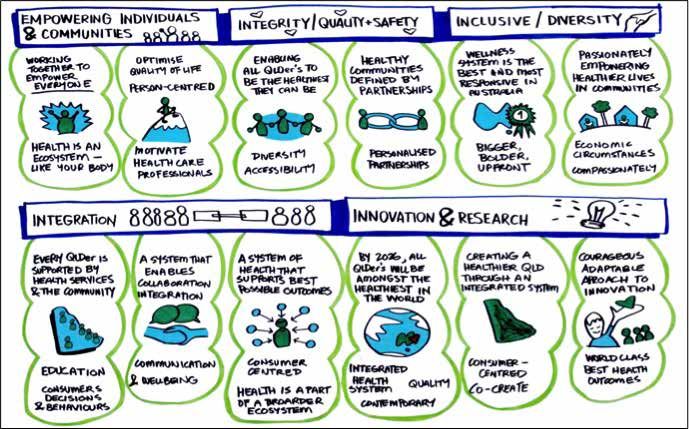
My health, Queensland’s future: Advancing health 2026
Published by the State of Queensland (Queensland Health), May 2016

This document is licensed under a Creative Commons Attribution 3.0
Australia licence.
To view a copy of the licence, visit creativecommons.org/licenses/by/3.0/
au/legalcode
© State of Queensland (Queensland Health) 2016                              Disclaimer:
                                                                            The content presented in this publication is distributed
You are free to copy, communicate and adapt the work, as long as you
                                                                            by the Queensland Government as an information
attribute the State of Queensland (Queensland Health).
                                                                            source only. The State of Queensland makes no
For more information contact:                                               statements, representations or warranties about the
strategicpolicy@health.qld.gov.au                                           accuracy, completeness or reliability of any information
                                                                            contained in this publication. The State of Queensland
                                                                            disclaims all responsibility and all liability (including
An electronic version of this document is available at:                     without limitation for liability in negligence) for all
www.health.qld.gov.au/system-governance/strategic-direction/plans/          expenses, losses, damages and costs you might incur
vision-strategy/                                                            as a result of the information being inaccurate or
                                                                            incomplete in any way, and for any reason reliance was
                                                                            placed on such information.
QH702 05/16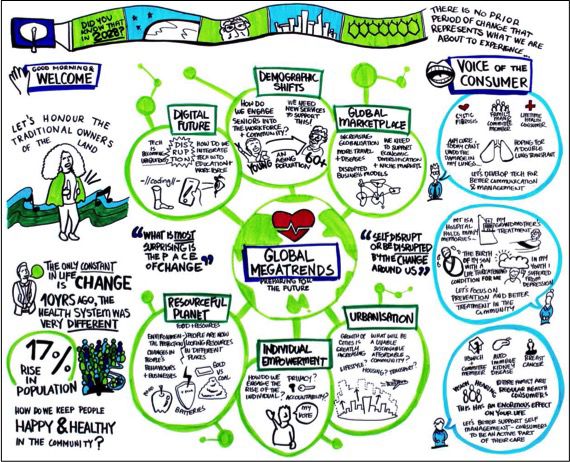
Message from
                     the Minister
On many key measures, Queensland’s health          Today’s healthcare is being transformed by
system ranks among the best in the world.          innovation. By 2026, healthcare will look
However, like healthcare systems everywhere, it    very different than it does today. My health,
is facing significant challenges.                  Queensland’s future: Advancing health 2026 will
                                                   further drive investment in new ideas, research
Our population is ageing. A growing number of      and technology.
Queenslanders live with chronic disease. Better
clinical interventions and new technologies        We will capitalise on the potential of health
offer the prospect of improved health outcomes.    technology and models of care which will
But health costs are rising and we need to be      improve service access and aid our workforce.
smarter about how we deliver healthcare into       New communication technologies will help put
the future.                                        people in control of their decisions, benefiting
                                                   consumers, families and communities.
While I acknowledge these challenges, I have
confidence they can be tackled through             Making Queenslanders among the healthiest
technological advances as well as harnessing       people in the world is an aspirational vision. It
the skill of the entire health system.             can only be achieved by inspiring individuals,
                                                   and making space for us to work collaboratively
Vital to this effort is the knowledge, skill and   to achieve our common goals.
enthusiasm of the entire health workforce.
Success in achieving the vision relies on the
health workforce having the freedom to be          The Hon. Cameron Dick MP
innovative in a supportive environment.            Minister for Health and
                                                   Minister for Ambulance Services

                                                                                                       3
Introduction
    Australia’s health system ranks among the             experience of many Aboriginal people and Torres
    best in the world. In a recent comparison of          Strait Islander people, as it is for many people
    Organisation for Economic Co-operation and            who live in rural and remote areas.
    Development (OECD) countries, Australia
    was found to have one of the best performing          Australia’s health system is complex. It is
    health systems - achieving above average life         funded and administered by several levels
    expectancy with lower than average health             of government and complemented by private
    expenditure.                                          health arrangements. Its reach is universal
                                                          and its delivery mechanisms include both
    The health system relies on highly skilled staff to   government and non-government organisations
    make clinical and management decisions. Every         and the private sector.
    day, these decisions not only affect the health
    outcomes of individuals, but also impact the          Advancing health 2026 was developed to guide
    health of the community and the sustainability        Queensland government investment into health
    of the entire health system.                          over the longer term and to reorient our system
                                                          to be flexible and innovative in taking advantage
    Like all contemporary health systems,                 of new technologies, while improving health
    Queensland is facing significant challenges.          outcomes for the population at large.
    For us, challenges include our ageing
    population, increasing chronic disease rates,         This plan will make real the vision statement
    changing consumer expectations, and finite            which emerged from the consultation process
    resources. Better clinical interventions and new      —‘By 2026 Queenslanders will be among the
    technologies will also present challenges, but        healthiest people in the world’.
    offer the potential to improve health outcomes        In 2016, we have a sense of the challenges
    and transform healthcare as we know it.               facing the healthcare system, but with rapid
    Good health outcomes, however, are not shared         changes in technology and treatment options it
    equally across population groups. People who          is difficult to clearly predict the nature of those
    are socio-economically disadvantaged have             challenges in 10 years time. We need a roadmap
    poorer health and wellbeing outcomes and lower        to this future. Advancing health 2026 gives both
    health status than the rest of the population.        a focus and a process to identify and harness
    Such health inequality is also the lived              the advances which are critical to the future
                                                          wellbeing of the population of this state.

4
Diagram 1 illustrates Queensland’s system of health and wellbeing. It highlights the shared approach
to public health across jurisdictions and the multiple roles and overlapping responsibilities of funders
and providers. Consumers’ use of health services is shaped by current funding models which provide
subsidised access to general practice, hospital care and medications.
E M IN Q U E E N S
H SYST LAN
ALT D
HE
m ent
on
vir Na
En
e
ti
at
on
St
al
t
En
n
me
vi r
on Co
Heal t h S
l and mm
onm
e
r
ita ance Se rvic
th
vi
sp mbul
ie s
onw
En
rv
a r t m e n t o f H e al
A i
en t
an o
Bod
es s
d
over nment Ag enci es
H
Publ ic H ea l t h
ce
ea lt h Gove rnmen t
Re s e a r c h
et wo r ks
Primary Care
Private Services
hospitals
hN
and G
Disability
Dep
Services
alt
ensl
Other private
ies
He
providers Aged Care
e
Services
sit
ar
u
y
Q
er
im
Pr
iv
Un
nt
me
vern
Local Go
Ot
he ies
rS ntit
tate al e
/Ter tion
ritory Other na
jurisdi
ctions
Diagram 1: The Queensland health system
5
6
Health in Queensland: A snapshot
Population % of QLD population Workforce Budget
as of 2015 in 2015–16
The health workforce in Queensland is large and diverse
Health
At $14.18 billion,
and includes a wide range of other professional groups
outcomes such as Allied Health and Dentistry. Queensland Health has the
are poorer
for people
largest budget of any Queensland
55%
growing in very with government department
Projected disability Qld Health Workforce
by 2.5% remote
annually areas Total QLD registered
6 million 17.3% clinicians 70,405
in total
2026
by 2026
13% 12% 20,147 33,452
in in major 17.7% total
2011 4.2% cities 9,234
aged Aboriginal & socioeconomic disability
65+ Torres Strait disadvantage Registered Nurses, Enrolled $9.293
Islander Medical Practitioners billion
Nurses and Midwives
$3.525
billion
Disease Chronic diseases are the primary cause of death in Life expectancy
Queensland and worldwide, with impact increasing
Queensland has the highest
rate of adult obesity in Australia
in 2010–12 in 2010–12
and the incidence of diabetes is Indigenous Indigenous $1.229 billion
projected to double The majority of chronic disease deaths are due to
79.5 years 84.0 years 68.7 years 74.4 years
$0.136 billion
&
Queensland Government funding
3 million cardiovascular disease cancer
Queenslanders will representing a gap of 10.8 years for males and 9.6 years for females
be overweight or Commonwealth Government funding
Survival of acute coronary Survival of common respectively in comparison to non-Indigenous Queenslanders.
obese by 2020. heart disease is increasing, cancers have shown
however rates of coronary improvement, however
heart disease and stroke lung cancer prognosis user charges and fees
rates of risky Smoking rates in teens
are remains poor, with and younger male adults are
2/3 drinking are about
of the burden of 8–9% higher less than 20% 16% higher decreasing faster other revenue
type 2 diabetes in Queensland alive 5 years in Queensland than than other age groups.
than in Australia. after diagnosis.
is due to excess weight national rates.
and physical inactivity.
Development of
Advancing health 2026
Advancing health 2026 was developed to             The ‘aspirations for 2026’ throughout this
respond to the challenges and opportunities we     document summarise key themes from the
face in Queensland. The solutions lie in working   workshop. To prepare for the workshop,
together across our national health system,        participants were given detailed information
within our own state, our own communities and      about the current health system context,
with individuals and families.                     summarised in the diagram titled ‘Health in
                                                   Queensland: A snapshot’.
Advancing health 2026 came together with
participation from health consumers and            Diagrams 2, 3 and 4 illustrate the key themes
clinical and non-clinical representatives of the   discussed during the workshop.
public health system, private and non-profit
health providers, universities, professional
organisations, unions and other key stakeholder
groups, as well as several Queensland
government departments. All of these groups
attended a workshop held in February 2016.

                                                                                                   7
Three health consumers set the scene for the             our society now and into the future gave an
    workshop by detailing their experiences of               insight into life in 2026. The megatrends were:
    the health system and their personal visions             demographic shifts; digitisation; globalisation
    for how they would like the system to serve              of the marketplace; environmental issues;
    consumers in 2026. As well, a presentation               urbanisation and individual empowerment.
    on ‘global megatrends’ that are shaping

    Opening

    Diagram 2: Workshop scene setting – global megatrends and consumer perspectives

8
Next, participants worked in small groups to              the most support formed the basis of the
produce example visions for the Queensland                vision in this document, which is: ‘By 2026
health system to 2026. The vision statements              Queenslanders will be among the healthiest
were voted on, and the statement that gained              people in the world’.

Visions

Diagram 3: Vision options developed during the workshop

                                                                                                        9
Finally, participants worked in groups to develop           and communities; integrity, quality and safety;
     descriptions of what success in achieving the               inclusiveness; integration; and innovation and
     vision would look like in 2026. This was applied            research.
     to the categories of: empowering individuals

     How will we know when we get there?

     Diagram 4: What will healthcare in 2026 in Queensland look like?

     The Vision—My health, Queensland’s future:
     Advancing health 2026
     The following diagram sets out the 2026 vision              The strategic agenda in the diagram comprises
     for Queensland’s health system, as well as                  12 focus areas supported by 16 headline
     directions, strategic agenda and foundation                 measures of success, to be monitored to track
     principles, in response to the challenges                   progress over time.
     Queensland’s health system faces, and the
     opportunities the system can embrace.

10
Vision >> By 2026 Queenslanders will be among the healthiest people in the world
Principles Sustainability Compassion Inclusion Excellence Empowerment
Promoting wellbeing Delivering healthcare Connecting healthcare Pursuing innovation
1 2 3 4
Improving the health of Queenslanders, The core business of the Making the health system work better Developing and capitalising on evidence
through concerted action to promote health system, improving access to for consumers, their families and and models that work, promoting
healthy behaviours, prevent illness communities by tackling the funding, research and translating it into better
Directions
and injury and address the social forms and settings policy and delivery barriers practice and care
determinants of health
“Why do I need to go to a hospital to
“I dream of a seamless interface talk to someone; I already connect
“Health is everyone’s business.” “People think we can’t influence the
for consumers, where there is with people on the other side of
health system. But we can.”
no wrong door.” the world and use mobile apps to
manage my health.”
comment
Consumer
- Harry Pitt - Wynn Te Kani - Helen Mees - Jessica Elise
Health as everyone’s business Consumer voice Simplifying and connecting Smart technology
and infrastructure
Healthy communities Empowering our workforce Funding reform Research and new
ideas into practice
Healthy choices Continuous improvement Being a good partner Personalised health
culture and clinical practice
Headline measures of success Headline measures of success Headline measures of success Headline measures of success
By 2026 we will: By 2026 we will: By 2026 we will: By 2026 we will:
» Reduce childhood obesity by 10% » Have consumers participate at all levels of the » Increase availability of electronic health data » Have the majority of clinical activities supported
» Reduce rate of suicide deaths in Queensland health system to consumers by a digital platform
by 50% » Deliver a 10 year Health Workforce Strategy » Reduce the rate of potentially preventable » Have 20% of National Health and Medical
» Increase life expectancy for Indigenous males by » Attain the lowest rate in Australia of unplanned hospital admissions Research Council (NHMRC) grants awarded
Strategic Agenda
4.8 years and females by 5.1 years readmission rates for selected procedures » Implement new funding models for better to Queensland researchers and the State will
» Publish information on service delivery and connected healthcare and improved health have NHMRC Advanced Health Research and
» Increase levels of physical activity for health Translation Centres
patient outcomes outcomes
» Ensure Queenslanders receive clinical care » Increase the proportion of outpatient care
within an appropriate time regardless of location delivered by Queensland Health via Telehealth
models of care
» Have a strong innovation and research culture
across the health system
11Principles— 3. Inclusion - we will respond to the needs of all
Queenslanders and ensure that, regardless
our foundations of circumstances, we deliver the most
appropriate care and service with the aim of
achieving better health for all.
The five principles underpin this vision,
directions and strategic agenda. They state 4. E
xcellence - we will deliver appropriate,
the values that should guide decision making timely, high quality and evidence-based
and how health system partners work together. care, supported by innovation, research and
These principles will guide service delivery in the application of best practice to improve
the public health system, and we encourage outcomes.
our health system partners to consider the
principles in their work also. 5. Empowerment - we recognise that our
healthcare system is stronger when
1. Sustainability - we will ensure available consumers are at the heart of everything we
resources are used efficiently and effectively do, and they can make informed decisions.
for current and future generations.
2. Compassion - we will apply the highest
ethical standards, recognising the worth and
dignity of the whole person and respecting
and valuing our patients, consumers,
families, carers and health workers.
12Queensland Health
DIRECTION 1
PROMOTING WELLBEING
Improving the health of Queenslanders, through
concerted action to promote healthy behaviours,
prevent illness and injury and address the social
determinants of health.
“Health is everyone’s business.” Improving our health and wellbeing not only
improves our quality of life, it can have societal
Harry Pitt – a representative of the Torres benefits such as better productivity, happier
families, reduced health inequalities, and
Strait Islander community reduced demand on health and social services.
Wellbeing is a complex combination of a Queensland has made progress, such as
person’s physical, mental and emotional health increases in life expectancy and physical
and their social and economic circumstances. activity; an overall decline in smoking rates; and
It is how you feel about yourself and your life immunisation rates above the national average.
and is strongly linked to happiness and life However, there are still a number of challenges
satisfaction. that we must address, including the impact of
the increasing proportion of people who are
Many factors can improve a person’s wellbeing, overweight or obese, the challenges regarding
including regular exercise, a nutritious diet, mental health, and the health inequalities that
sufficient sleep, healthy self-esteem, an exist in many communities in Queensland.
optimistic outlook, realistic and achievable
goals, a sense of purpose and meaning, a sense
of belonging, and a network of close friends.
13Focus area 1.2
Promoting wellbeing: Aspirations for 2026 Healthy communities
• A healthy choice is an easy choice.
Good health in communities is an indication
• A wellness model for healthcare, rather than of a fair and just society. Poor health within
an illness focus. communities, or among specific population
• We need to incentivise a healthy lifestyle. groups, requires many, long term strategies to
reduce social and economic disadvantage. As
well as action within the health system, other
portfolios such as education, employment,
In order to drive change and promote wellbeing housing and transport have key roles to play
of Queenslanders, three areas of focus have to improve people’s daily living conditions and
been identified: Health as everyone’s business, the distribution of resources in the community.
Healthy communities and Healthy choices. Community development approaches and
building community ownership are also
Focus area 1.1 essential to overcoming health inequities.
Health as everyone’s business Data shows that adults in disadvantaged areas
are nearly 80 per cent more likely to report
Beyond individual characteristics and poor health. Obesity, smoking and physical
behaviours, health and wellbeing is determined inactivity all contribute to poorer health and are
by social and economic factors that can more prevalent in lower socio-economic areas
favour health or be harmful to it. These of Queensland. Reducing these risk factors
include education, employment and working can result in better quality of life, increased
conditions, housing and access to and use of wellbeing and satisfaction with health in these
health services. For example, urban design communities.
influences health and wellbeing by encouraging
safe and active lifestyles, better connections, Health and wellbeing outcomes are poorer for
and a sense of belonging. Access to affordable, Aboriginal and Torres Strait Islander people,
healthy food helps the community to make good those who live in rural communities, people from
food choices. culturally and linguistically diverse communities
and people who are economically and socially
Employers can benefit from investing in health disadvantaged. Life expectancy for Indigenous
promotion policies and activities for their people is around 10 years less than that of the
workforce, with research showing a $2.30 return general population. Residents of higher-income
on investment for every $1 invested in creating areas have on average, four additional years of
a healthy workforce1. For instance, although healthy life than those living in disadvantaged
federal, state and local governments have a role parts of Queensland.
to play in immunisations, as does the primary
health sector, employers can also increase Giving all Queenslanders equal opportunities to
immunisation rates through clinics as part of a experience good health and wellbeing demands
wellness program. strategies that cross sectors and governments,
engage communities and businesses, and
Every level of government, every government empower individuals and families.
agency, every employer, every community
and every individual has an important role in
contributing to our health and wellbeing.
1 Source: Journal of Occupational and Environmental
Medicine, 2002; 44:776-80.
14Focus area 1.3 getting enough rest, eating a good diet, regular
exercise, maintaining a close network of friends
Healthy choices and making time for the things you enjoy.
While our health is somewhat determined by The health system has a role in supporting
our own actions, various environmental and Queenslanders to make healthy lifestyle
social factors can help us to enjoy better health choices. This is not only good for individual
and wellbeing throughout our lives. Smoke-free wellbeing, but is also a key foundation to
public places across Queensland help to reduce Queensland’s social fabric and economic
exposure to harmful tobacco smoke and reduce prosperity.
the social acceptability of smoking, helping to
encourage smokers to quit. Queensland state
schools are among the leaders in the promotion
of healthy eating through their implementation Headline Measures of Success
of Smart Choices, the Healthy Food and Drink
The Queensland government will measure
Supply Strategy for Queensland Schools. Similar
progress in promoting wellbeing through
strategies have been shown to reduce the
several success measures that the health
amount of sugar consumed at a population level.
system will work towards. These success
Currently, 2.5 million Queenslanders are measures, listed below, will be monitored
overweight or obese. Obesity is fuelling the over time.
prevalence of chronic conditions such as stroke, By 2026 we will:
hypertension and type 2 diabetes. Reducing
childhood obesity is essential to prevent the • Reduce childhood obesity by 10 per cent.
onset of many chronic conditions. • Reduce the rate of suicide deaths in
Queensland by 50 per cent.
Mental health conditions are also a leading
cause of disability in Queensland. In 2007, • Increase life expectancy for Indigenous
approximately one in two Queenslanders males by 4.8 years and females by 5.1 years.
aged 18–65 years reported a mental health
• Increase levels of physical activity for
disorder at some time in their life. Improving
health benefit by 20 per cent.
our mental wellbeing is something that we all
can do by finding the right work-life balance,
In the future I think we can utilise technology better. Technology
improvements could include making the internet available for
patient use via WiFi hotspots within hospitals. Having internet
access will help the younger people I see with Cystic Fibrosis who
spend years of their lives in and out of hospital to communicate
with each other through cyber support programs as they are
forbidden to do this face to face due to current cross infection
protocols. The mental state of patients when they feel isolated is
utmost to a successful recovery and we all know from personal
experience that support groups lead to improved health outcomes
for most patients.
Douglas Porter – health consumer, Sunshine Coast
15Queensland Health
DIRECTION 2
DELIVERING HEALTHCARE
The core business of the health system and
improving equitable access to quality and safe
healthcare in its different forms and settings.
“People think we can’t influence patient care, through better systems, processes
and teamwork. Changes will also come with a
the health system. But we can.” younger workforce. By 2026 it is estimated that
nearly half of the Queensland Health nursing
Wynn Te Kani – health consumer, Brisbane workforce and three quarters of our medical staff
will be Generation Y and Z. Generation Z will be
Healthcare service delivery in 2026 will be the first generation never to have experienced
very different from today. New diseases the pre-internet world.
will emerge, new treatments and ways of
A strong consumer voice means better
delivering healthcare will be developed, new
healthcare and better health outcomes. As
technologies will change care delivery systems
consumers become more health literate their
and consumers will have greater access to
relationship with health professionals is
information about their health and treatment
stronger. Consumers should consistently be
options. The continuing quality and safety of
influential at all levels of the health system –
healthcare delivery must underpin any change to
contributing ideas about practice, providing
the system.
feedback on quality, and participating in design
Changes to healthcare delivery will be driven of new care models, monitoring and evaluation.
by the health workforce. Clinicians are in the
best position to see how to improve direct
16Queensland’s 16 Hospital and Health Services
Delivering healthcare: Aspirations for 2026 (HHS) are pursuing consumer engagement
strategies, sharing good practice and
• Consumers as partners, not passengers.
continuously improving their approaches. These
• Patients increasingly treated in their own efforts are mirrored in other parts of the health
homes instead of hospital. system – Primary Health Networks, general
practice and private hospitals, as well as the
• Data is routinely used to benefit both many community-based organisations. Health
consumers and providers and improve Consumers Queensland plays an important
health outcomes. role across the state showcasing how to build
a culture of consumer and health service
partnership that delivers tangible benefits.
In order to continue to deliver care effectively,
three areas of focus have been identified:
Consumer voice, Empowering our workforce and Focus area 2.2
Continuous improvement culture and clinical Empowering our workforce
practice.
Our capacity to provide quality care and ensure
Focus area 2.1 patient safety into the future is dependent upon
the availability of a skilled workforce, working
Consumer voice in a culture that values safety, ethical conduct,
autonomy and accountability. Workplaces that
Consumers’ thirst for knowledge will mean that empower staff have higher productivity and
they will be more a driver of their healthcare, morale.
than a passenger. Today 1 in 20 Google searches
involve a quest for health information. New The management of workforce shortages, and
communication technologies bring health the distribution of the health workforce to areas
information into the home, raising health literacy of need, remains a key challenge and requires
levels and driving personal responsibility for Queensland’s health system to explore new
health and greater degrees of self-management. and innovative ways of delivering services. For
Information and knowledge are power. Evidence example, using different kinds of workers or
shows that when information and performance new technologies can improve Queenslanders’
data are presented in a user-friendly format, access to the services they need.
this increases consumer literacy and empowers
people to make more informed care choices. The shift to preventative and primary care also
means changes in roles, skill requirements,
The active involvement of consumers and workplaces for the health workforce. New
individually and collectively through technology is driving consumer expectations
networks and peak bodies is now standard and enabling different service models, while
in Queensland’s health system. Consumer also affecting workforce capability and skill
perspectives on all aspects of the health requirements. Many of these changes demand
system offer a different and invaluable view. greater interdisciplinary collaboration and
This is formally recognised in Standard 2 of team work, and more emphasis on workforce
the National Safety and Quality Health Service innovation, flexibility and responsiveness. Staff
Standards, which involves consumers in the need modern, adaptable technology to support
organisational and strategic processes that them to make the right decisions, to reduce
guide the planning, design and evaluation of duplication and waste and to interact with
health services. consumers in ways that are responsive to
their needs.
17The focus of all workforce reform efforts across Part of continuous improvement is
the health system should be on improving communicating system performance to the
access and outcomes for consumers. To this public. Evidence shows the publication of
end, Queensland Health is developing a 10-year comparative reporting of clinical performance
Health Workforce Strategy which will be available data at hospital and service level influences
later in 2016. clinical practice and improves overall
performance of the health system.
Focus area 2.3
Continuous improvement culture
Headline Measures of Success
and clinical practice
The Queensland government will measure
Queensland’s health system provides the progress in delivering healthcare through
full spectrum of services for both public several success measures that the health
and private patients. Hospitals provide non- system will work towards. These success
admitted patient services such as emergency measures, listed below, will be monitored
department and outpatient clinics, and services over time.
for inpatients such as maternity, mental health,
medical and surgical services. Essential services By 2026 Queensland will:
such as pathology, pharmacy and allied health
support both admitted and non-admitted care • Have consumers participate at all levels of
services. the health system.
In the community, care, advice and treatment • Deliver a 10 year Health Workforce Strategy.
occurs in many settings including at home. • Attain the lowest rate in Australia of
General practice, pharmacies, child health, unplanned readmission rates for selected
aged care, and allied health services such as procedures.
physiotherapy, and others all form the primary
health system. Complementing this is the • Publish information on service delivery and
Queensland Ambulance Service (QAS), providing patient outcomes.
emergency and non-emergency pre-hospital
care and transport services. • Ensure Queenslanders receive clinical care
within an appropriate time regardless of
Research shows that the biggest single driver of location.
quality in healthcare is culture – where everyone
working in the health system is striving to
do their very best for patients. That means
team work and collaboration within services
and across settings; it means investment in
leadership and training in a range of areas; and
it means focussing on the holistic needs of each
health consumer. Fostering such a culture is
likely to increase employee satisfaction as staff
members see the improved health outcomes
and patient safety that result from a focus on
collaboration and continuous improvement.
18Queensland Health
DIRECTION 3
CONNECTING HEALTHCARE
Making the health system work better for consumers,
their families and communities by tackling the
funding, policy and delivery barriers.
“I dream of a seamless occurs within health services and across health
settings, especially between primary and acute
interface for consumers, where care. These arrangements create inefficiencies
and can compromise good healthcare.
there is no wrong door.”
Collaborations between parts of the health
Helen Mees – health consumer, Ipswich system such as Hospital and Health Services
and Primary Health Networks are an important
Because Queensland’s health system is funded building block, and many initiatives are in train.
from multiple sources and delivered through There is no shortage of ideas from consumers
different providers, it is geared more towards and providers – both in the public and private
episodes of care, not continuity of care. For health system – about what would work better
many consumers this works well, but for people at the frontline. However, large scale changes
with complex and chronic conditions, it could will hinge on national reform, requiring the
work better. Consumers talk about fragmented Australian Government to work with States and
care, providers talk about silos, and funders Territories, and also with the private health
talk about duplication. Poorly coordinated care insurance and healthcare sector.
19At the regional level, Primary Health Networks,
Connecting healthcare: Aspirations for 2026 Hospital and Health Services and other
partners are working together to better plan,
• A system where we have a single source
deliver and connect health services, with a
patient record.
focus on reducing potentially preventable
• A sustainable funding model involving hospitalisations through connected programs.
federal, state and local governments’ North Queensland, Western Queensland and
contributions. Darling Downs and West Moreton Primary Health
Networks, all auspiced by local Hospital and
• A whole of government approach to
Health Services, are leading the development of
health where each Department’s/agency’s
more connected and coordinated care in these
decisions reinforce the achievement of
rural and remote areas.
better health outcomes.
At the frontline, an additional 400 Nurse
Navigators across the public health system will
In order to effectively connect care, particularly deliver real benefits for consumers and staff by
for consumers with chronic conditions, three helping to coordinate admission to hospital and
focus areas have been identified: Simplifying discharge from acute care, with the community
and connecting, Funding reform and Being a care back up that is needed.
good partner.
Staff and networks have ideas that they know
can work. A new $35 million Integrated Care
Focus area 3.1 Innovation Fund is designed to help fuel better
Simplifying and connecting practices at all levels of the health system, with
whoever and whatever it takes to better prevent
The Australian Government notes that patients and detect health issues; to share care between
with complex and chronic disease account for hospitals and GPs, between generalists and
10 per cent of the population but for 45 per cent specialists; and to tackle the funding and
of Medicare expenditure. There are no easy organisational structures that get in the way.
solutions, but being able to share information
and data electronically between the consumer
and provider, and between providers, is one of Nurse navigators
the requirements for connecting healthcare.
Nurse navigators work with patients with
eHealth reforms will drive connections through complex health conditions. They will:
sharing of patient information across healthcare
boundaries. This will change the way consumers • monitor high needs patients, identify
and health professionals interact. It could actions required to manage their
mean that patients with complex and chronic healthcare and direct patients to the right
conditions won’t have to remember details in service, at the right time and in the right
their medical record, nor carry diagnostic test place.
results with them. Electronic health records, • provide an end-to-end care coordination
and easy access to full information will enable service along a patient’s entire healthcare
consumers and providers to be more confident journey.
about clinical care decisions.
• educate and help patients to better
At the state public health system level, the understand their health conditions and
Queensland eHealth Investment Strategy enable them to self-manage or participate
establishes the foundations of a digital health in decisions about their healthcare. In
system that will secure access and sharing of some cases, this may even reduce the
medical records for every public patient, and need for hospital admission.
which complements a national eHealth system.
20The Princess Alexandra Hospital Digital Hospital Program
• The Princess Alexandra Hospital Digital • With 100 per cent of inpatient records now
Hospital Program has transformed paper digital, the Princess Alexandra Hospital is
medical records and forms to an integrated recognised as Australia’s first large scale
digital systems to support patient care, digital hospital, thanks to the hard work of
to become a Digital Hospital. A Digital staff and the digital hospital project team.
Hospital has an electronic medical record,
• While historic patient information will remain
integrated digital systems, and a paper-light
in closed paper charts, all new information
environment; for example, reduced use of
on patients and their treatment will be
paper charts and forms.
documented electronically and available
• The Princess Alexandra Hospital Digital on health professional screens across the
Hospital Program is a program of hospital and at the bedside.
transformative changes that will be delivered
• This will allow clinicians to implement more
in phases to provide technology, tools
efficient, effective treatment. It will free up
and real-time information to empower and
more time for staff to spend with patients. It
encourage the best people in healthcare into
will reduce inefficiencies and wastage, and will
new opportunities for innovation.
support world class clinical care and research.
Focus area 3.2
Funding reform
Other
health goods
Diagram 5 illustrates the complexity & services
Administration
of our funding and delivery and research
arrangements, with the Australian
Government, States and Territories,
Medical services Public
private health insurance, private (referred) hospital
Other
providers and individuals all recurrent
services
contributing to our healthcare. 21.3 %
Other health Hospitals
practitioners
Share of expenditure 40.4 %
Hospitals Medical services Primary
(non-referred) health care
Primary health care 38.2 %
Private
Other recurrent hospitals
Medications
Responsibility for services Community
Dental & public health
services
Combined private sector and public sector
—all levels of government
State and territory governments
Private providers
Funding
Diagram 5: Health services—funding and responsibility
(Source: AIHW Australia’s Health 2014)
Australian Government funding share
Note: The inner segments indicate the relative size of expenditure in
State/territory government funding share
each of the 3 main sectors of the health system (‘hospitals’, ‘primary
healthcare’, and ‘other recurrent’). The middle ring indicates the relative
Private funding share
expenditure on each service in the sector (shown by the size of each
segment) and who is responsible for delivering the service (shown by
the colour code). The outer ring indicates the relative size of the funding
(shown by the size of each segment) and the funding source for the
difference services (shown by the colour code).
21If Queensland is to have a sustainable, quality will accelerate over the next few years, driven
health system in 2026 then funding levels not only by evidence and technology, but also by
need to reflect population growth, the age the need to work together and work smarter in
structure of the population, and changes in the interests of better health outcomes.
the rate of disease and costs of technology.
Funding also needs to take account of higher Queensland’s health system is well placed to
healthcare costs incurred by rural and remote support many whole-of-government strategies
Queensland communities, and the inequality where frontline health services and specialist
of health outcomes experienced by Indigenous programs add weight to these important
Queenslanders, people from culturally and initiatives.
linguistically diverse communities and
• Child health nurses help identify and support
people who are economically and socially
vulnerable children and families at risk
disadvantaged.
of abuse and neglect; and mental health
As part of this, health services need to be professionals provide therapeutic services
flexible and adopt better business systems and to young people in out-of-home care. School-
clinical models to reduce costs and increase based youth health nurses work across the
patient throughput and service access. However, State.
efficiencies will only go so far; funding levels at
• Queensland Health’s commitments under the
least need to be maintained.
Queensland Government’s Domestic Violence
It is important that all levels of government Strategy, Not Now, Not Ever; Putting an end to
honour their commitments to funding the Domestic and Family Violence in Queensland
healthcare system over the long term. This will include equipping health professionals to
provide more certainty in the planning and identify domestic and family violence early.
delivery of healthcare. New resources and training will be developed
by the Department of Health and distributed
Over and above funding levels, new funding to private and public health professionals,
models that are sustainable and provide as well as specialist nursing and medical
aligned incentives are needed. For example, colleges.
the treatment of chronic disease is an area that
warrants active and joint consideration. There • The National Disability Insurance Scheme
are opportunities for Queensland to work with (NDIS), due to commence from July 2016, but
the Australian Government to agree on better with an early launch site in North Queensland,
ways to deliver care. Initiatives such as jointly provides the opportunity to drive stronger
funded care plans, coordinated planning and partnerships between the health and
commissioning of services between primary and disability sectors.
acute care organisations have merit.
• A new refugee health policy and framework
Funding and financing reform is integral to a will respond to the expected increase in
sustainable health system in Queensland and refugees in Queensland and ensure frontline
the Queensland government is committed to staff can respond to this group’s particular
achieving this. health needs.
• The Department of Health in consultation with
Focus area 3.3 community partners has developed the draft
Queensland Sexual Health Strategy 2016–2021
Being a good partner that encompasses sexual and reproductive
health. Once finalised, the Strategy will be
Delivering effective healthcare requires formal
complemented by a HIV Action Plan, a Viral
and informal partnerships between the public
Hepatitis Action Plan and a North Queensland
hospital system, governments, non-government
Aboriginal and Torres Strait Islander Sexually
organisations, the private sector and the newly
Transmissible Infections (STI) Action Plan,
established Primary Health Networks. New
providing a comprehensive package to
connected care and chronic disease programs
improve the sexual health of Queenslanders.
22Partnerships for an innovative Headline Measures of Success
healthcare future The Queensland government will measure
progress in connecting healthcare through
The Queensland Government Advance several success measures that the health
Queensland program aims to create the system will work towards. These success
knowledge-based jobs and industries of measures, listed below, will be monitored
the future here in Queensland. Part of the over time.
program is a commitment to partnering
with innovative companies and research By 2026 we will:
institutions to accelerate healthcare
innovation. For example: • Increase availability of electronic health
data to consumers.
• The Advance Queensland Innovation
Partnerships program enables universities • Reduce the rate of potentially preventable
and research institutions to partner hospital admissions e.g. for chronic disease
with industry to apply for Government patients.
funding of up to $1.5 million to accelerate
• Implement new funding models for better
translational research.
connected healthcare and improved health
• The Queensland Government is outcomes.
collaborating with Johnson & Johnson
Innovation to run the Johnson & Johnson
Innovation Quick Fire Challenge, which
will award prize money to help fund
healthcare research with high potential for
commercialisation.
• The University of Queensland has
partnered with US-based Emory
University’s Institute for Drug
Development. The Queensland Emory
Drug Discovery Initiative (QEDDI) will
capitalise on both universities’ success
in translational research to jointly
develop new drugs for conditions such as
cancer, diabetes, infectious disease and
inflammatory conditions such as arthritis.
What do I hope for in the next 10 years? I hope to see an open,
transparent process for moving easily between primary care and
specialist care, between public hospitals and private hospitals, between
health and other government departments as well as non-government
organisations. Where the focus is on what’s best for the consumer,
rather than whose cost centre is this coming from.
Helen Mees – health consumer, Ipswich
23Queensland Health
DIRECTION 4
PURSUING INNOVATION
Developing and capitalising on evidence and
models that work, promoting research and
translating it into better practice and care.
“Why do I need to go Our world is being positively disrupted by new
research, technologies and digital innovations
to a hospital to talk to that have transformed large parts of the
economy and society. Over the next five years
someone; I already connect it is expected that digital innovations will be
responsible for creating five new jobs for every
with people on the other two that disappear.
side of the world and use Queensland’s health system is not immune
mobile apps to manage my to this disruption. Today’s healthcare is being
transformed by innovations which will accelerate
health.” over the next decade. New approaches to
prevention and clinical care are essential if we
Jessica Elise – health consumer, are to meet our health challenges and grasp the
Brisbane opportunities presented by new technologies.
24The hospitals and the health facilities of the
Pursuing innovation: Aspirations for 2026 future will look very different. Digital hospitals
are at the cutting edge and are changing the
• Enabling decision making by health
delivery of healthcare. They can improve
professionals and health consumers
patient safety and quality of care, as well as
through better and more available data and
free up frontline staff to provide more direct
information.
patient care.
• Innovation and research will be demand
driven by the consumer, workforce and Future hospitals and community health facilities
external industries to the health system. will also need to be more flexible in design and
less capital intensive. New health facilities will
• Innovation will translate seamlessly into be modular, multi-purpose and adaptable to
health service delivery and operations. changing clinical practice and community need.
Information technology will also drive new types
of ‘smart infrastructure’ such as expanded
In order to ensure that Queensland’s health community health centres that operate as a one
system is innovative in its pursuit of improving stop shop for healthcare; new mobile services
health outcomes, three focus areas have been (both diagnostic and treatment); and new ways
identified: Smart technology and infrastructure, of delivering rehabilitation and sub-acute care.
Research and new ideas into practice and A status quo approach to infrastructure design
Personalised health. and delivery is not an option.
Digital disruption such as “The Internet of
Focus area 4.1 Healthy Things” is offering consumers and
Smart technology and clinicians new ways to connect wearable
devices, wearable sensors and smartphones to
infrastructure electronic health records, to deliver “anywhere
healthcare” that can be personalised to
There continues to be significant capital
the patient. This form of healthcare will
investment in built infrastructure and
revolutionise the way services are accessed
information and communications technology
and delivered, fundamentally transforming the
(ICT) across the health system. As the use
relationships between clinicians, patients, their
of technology to enable service delivery
families and the broader community.
increases, infrastructure needs will change. We
have entered the age of the digital consumer,
characterised by a strong shift in control over Focus area 4.2
product and service information. The consumer,
together with consumer technology, is now the
Research and new ideas into
major disruptor in determining how services are practice
delivered.
Queensland recognises the importance of
Future service models must empower patients research to improve health and wellbeing. In
and their families to take greater responsibility order to continue to improve health outcomes,
for their healthcare, through access to new overcome existing health challenges and
technologies such as apps, at home or portable deal with emerging challenges, we need new
diagnostics, smart or implantable drug delivery treatments, drugs, methods, equipment and
mechanisms, digital therapeutics and genome models of care.
sequencing. This transformation will drive
investment decisions in smart ICT and smart Clinicians and researchers working in our health
infrastructure. system are vital to our efforts to find new and
different ways to deliver services. They need
to be given the tools and skills to identify and
embed new evidence-based practices into day to
day care, leading to better outcomes for patients
and the health system.
25We have a tremendous opportunity with our As our economy transitions at the end of the
partners in universities, the research sector mining boom our health industries are uniquely
and across the health and care sectors to use placed to capitalise on the export of services to
'big data' and predictive analytics to shift our Asian markets. As a system we need to develop
approach to healthcare from “break-fix” to the next generation of entrepreneurs who can
“predict-prevent”. We also have the opportunity take what they have learned in Queensland to
to embrace patient-led research and care via the rest of the world. We also need to nurture
online communities. For example, in the United the big ideas by creating an environment where
Kingdom, PatientsLikeMe is an online community they can be developed and trialled right here in
where patients are “data donors”, a simple way Queensland. This can’t be done by government
for patients to share their data with researchers. alone. It will require collaborative leadership and
a dedication to constant innovation.
Finding new and innovative ways of delivering
healthcare will ensure that our health system
meets the needs of Queenslanders and is Focus area 4.3
sustainable. We can continue to work smarter by Personalised health
using the results of practice based research to
develop new models of care. Such improvements Personalised healthcare involves tailoring
must be embedded as clinical policy and practice treatments to take into account the individual
across the health system. differences in people’s genes, environments and
lifestyles.
Investing in the future Within standardised pathways, personalised
The health system in Queensland continues to invest treatment options will be vital for some medical
in innovation and skills development. Examples conditions, such as cancer. Consistently curing
include: cancer will only be possible by tailoring treatment
strategies to the genetic makeup of each
• Attracting co-investment in developing innovations
individual’s tumour, and getting this right, first
– the research partnership between Brisbane’s
time, every time. Development of such targeted
Critical Care Research Group (CCRG) based at The
treatments will take time, but Queensland can
Prince Charles Hospital (TPCH) and the Centre for
contribute through undertaking basic and applied
Translational Research in Biomedical Sciences in
research and by working to implement improved
Taiwan to develop advanced treatments for heart
approaches developed elsewhere.
and lung disease.
• Providing leading teaching, education and training
through world-class facilities such as the Clinical Headline Measures of Success
Skills Development Service at the Royal Brisbane The Queensland government will measure
and Women’s Hospital. progress in pursuing innovation through several
• Supporting clinicians to undertake research, and to success measures that the health system will
commercialise research outcomes. work towards. These success measures, listed
• Use of innovative hospital and health facility below, will be monitored over time.
building design – such as Lady Cilento Children’s By 2026 we will:
Hospital and modular building design of Moura • Have the majority of clinical activities
Hospital. supported by a digital platform.
• Have 20 per cent of National Health and
Queensland’s health system is built on the back Medical Research Council (NHMRC) grants
of world class people. We have access to the awarded to Queensland researchers and
world class clinical leaders, hospital managers, the State will have NHMRC Advanced Health
health planners, designers and builders and Research and Translation Centres.
research and biotechnology developers. There is • Increase the proportion of outpatient
a need throughout Asia and the rest of the world care delivered by Queensland Health via
for these skills. The export of services will be the Telehealth models of care.
next frontier in the development of Queensland. • Have a strong innovation and research
culture across the health system.
26MAKING OUR VISION A REALITY
Advancing health 2026 serves as a framework The Minister for Health and Minister for
for current plans and future priorities for health Ambulance Services will establish and
in Queensland. These involve all partners chair a committee to provide oversight of
working collaboratively to improve the broader Advancing health 2026 and our progress. This
health system. Implementing the directions committee will identify future opportunities for
and strategic agenda will involve reshaping collaborative action, monitor performance and
investment over time to ensure we are on track publicly report on progress against the headline
to achieving our vision. measures of success.
Making this vision a reality requires methodical We will work with our partners in the health
planning, sustained effort, regular review, and system and other sectors to align our efforts,
a willingness to adopt different and even bold monitor progress and improve performance. We
approaches. will empower the health workforce to enable
them to contribute to realising our vision. We
The directions, strategic agenda and headline will also continue to work with consumers
measures of success will be reflected in the and consumer organisations such as Health
service agreements that the Department of Consumers Queensland to develop and refine
Health has with each of the 16 Hospital and initiatives as part of Advancing health 2026.
Health Services in Queensland. The headline Collectively we can help all Queenslanders to be
measures of success will also be incorporated among the healthiest people in the world.
in the Department of Health’s performance
management framework, to ensure that the
public health system realises the vision.
My vision for the health system is a system that is adaptive and
responsive to local community needs. That the system is respectful
of all cultures, values diversity and strives for equality. For this to
happen, I believe that there’s a need to build on the relationships we
have with each other, with consumers and particularly with our most
vulnerable groups (such as Indigenous people with disabilities), and
build partnerships with primary healthcare providers, Aboriginal
health service providers as well as community, social and education
service providers. That Aboriginal and Torres Strait Islander people
are encouraged to influence decision making and be a part of
governance across all levels of the health service.
Stephanie King – health consumer, Mt Isa
27You can also read


