Planning for a Resilient Community - 2019-2020 Annual Action Plan: Greensboro-nc.gov
←
→
Page content transcription
If your browser does not render page correctly, please read the page content below
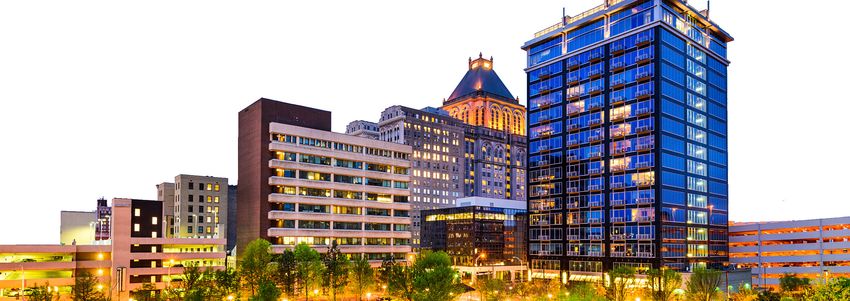
JUNE
                                                                2019

              CITY OF GREENSBORO

2019-2020 Annual Action Plan:
Planning for a Resilient Community

                         MISSION                   VISION
                    Investing throughout         Quality of life is
    NEIGHBORHOOD    Greensboro to build a       enjoyed in every
    DEVELOPMENT       better community      Greensboro neighborhood
Contents
Executive Summary....................................................................................................................................... 3
   AP-05 Executive Summary ....................................................................................................................... 3

   PR-05 Lead & Responsible Agencies ........................................................................................................ 7

   AP-10 Consultation .................................................................................................................................. 8

   AP-12 Participation ................................................................................................................................ 13

   AP-15 Expected Resources ..................................................................................................................... 15

Annual Goals and Objectives ..................................................................................................................... 19
   AP-35 Projects ........................................................................................................................................ 21

   AP-38 Project Summary .......................................................................................................................... 22

   AP-50 Geographic Distribution .............................................................................................................. 25

Affordable Housing ..................................................................................................................................... 27

   AP-55 Affordable Housing ...................................................................................................................... 27

   AP-60 Public Housing ............................................................................................................................. 28

   AP-65 Homeless and Other Special Needs Activities ............................................................................. 30

   AP-70 HOPWA Goals .............................................................................................................................. 35

   AP-75 Barriers to affordable housing ..................................................................................................... 36

   AP-85 Other Actions ............................................................................................................................... 37

Program Specific Requirements.................................................................................................................. 41
Attachments …………………………………………………………………………………………………………………………………………45

    Citizen Participation Comments ……………………………………………………………………………………………………….46

    City Council Resolutions …………………………………………………………………………………………………………………..49

    Public Notice Ad Copies ……………………………………………………………………………………………………………………57

    SF-424 and HUD Certifications …………………………………………………………………………………………………………63

                                                                Annual Action Plan                                                                         2
                                                                      2019
OMB Control No: 2506-0117 (exp. 06/30/2018)
Executive Summary

AP-05 Executive Summary - 91.200(c), 91.220(b)
1.        Introduction

The City of Greensboro (City) receives an annual formula allocation of grant funds from the U.S.
Department of Housing and Urban Development (HUD). The City serves as the lead entity for the
Greensboro HOME Consortium, which includes Guilford County, Alamance County and the City of
Burlington. To receive the funds, the City is required to develop a five-year Consolidated Plan that
identifies community development priorities and multi-year goals through an assessment of affordable
housing and economic development needs, an analysis of housing and economic market conditions, and
available resources. The Consolidated Plan is carried out through Annual Action Plans, which summarize
the specific actions, activities, and financial resources that will be used each year to address the priority
needs and goals identified in the Consolidated Plan. The four grant programs guided by these
regulations are:

Community Development Block Grant (CDBG): CDBG funds are used to develop viable urban
communities by providing decent housing, suitable living environments, and expanding economic
opportunities primarily for low- and moderate-income persons.

HOME Investment Partnerships (HOME): HOME funds are used for a wide range of activities including
acquiring, developing, and/or rehabilitating affordable housing for rent or homeownership.

Emergency Solutions Grant (ESG): ESG funds are used to engage persons and families experiencing
homelessness; improve the number and quality of emergency shelters for persons experiencing
homelessness; help operate shelters; provide essential services to shelter residents; rapidly re-house
persons and families experiencing homelessness; and prevent families and individuals from becoming
homeless.

Housing Opportunities for Persons with AIDS (HOPWA): HOPWA funds provide housing assistance and
related supportive services for low-income persons living with HIV/AIDS and their families.

The FY2019-20 Action Plan represents the fifth year of the City’s 2015-2019 Consolidated Plan, approved
by HUD in July 2015, and proposes programs and services anticipated to be funded during the City’s
2019 fiscal year; July 1, 2019-June 30, 2020.

                                                 Annual Action Plan                                         3
                                                       2019
OMB Control No: 2506-0117 (exp. 06/30/2018)
The overall goal of the community planning and development programs covered by this Annual Plan is
to develop viable communities by providing decent housing, promoting a suitable living environment,
and expanding economic opportunities principally for low and moderate-income persons. The primary
means towards this end is to extend and strengthen partnerships among all levels of government and
the private sector, including for-profit and non-profit organizations, in the production and operation of
affordable housing.

2.        Summarize the objectives and outcomes identified in the Plan

The FY2019-20 Action Plan outlines the various activities the City proposes to carry out to achieve the
federal program objectives required by HUD: provide decent and affordable housing; establish and
maintain a suitable living environment; and expand economic opportunities. These objectives are
combined with three performance outcome categories: availability/accessibility; affordability; and
sustainability. The City will undertake the following activities during Fiscal Year 2019-20 to achieve these
objectives and outcomes:

Based on both the quantitative and qualitative data analyzed and presented in the market analysis and
needs assessment of the 2015-19 Consolidated Plan, Greensboro and Guilford County established three
goal areas for the 2015-19 period:

Increase the Supply of Decent and Affordable Housing

The City will promote affordable housing for low- and moderate-income residents through:

     •    Construction of multi-family properties
     •    Housing counseling and homebuyer education programs
     •    Homeownership programs

Promote a Suitable Living Environment

The City will make suitable living environments more available, accessible and sustainable for low- and
moderate-income residents through:

     •    Rehabilitation of multi- and single-family properties
     •    Shelter and supportive services for the homeless
     •    Tenant-based rental assistance and supportive services for persons with HIV/AIDS.

Expand economic opportunities

The City will promote economic opportunities for low- and moderate- income residents through:

     •    Revitalization of active redevelopment areas
                                              Annual Action Plan                                            4
                                                    2019
OMB Control No: 2506-0117 (exp. 06/30/2018)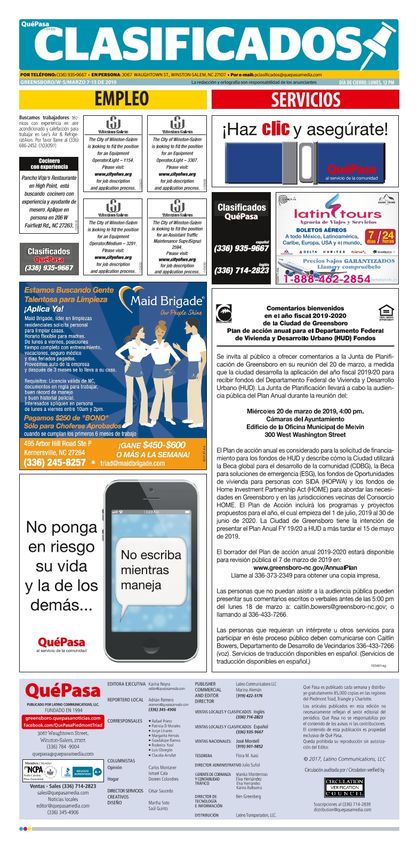
Greensboro and Guilford County will direct resources as appropriate to accomplish these goals from the
2019-2020 Annual Action Plan and will measure progress toward them. The goals and performance
outcomes have been developed based on the resources reasonably expected to be available for
achieving them. Analysis and evaluation of performance data will be used to drive improvements in
implementation. All Goals, Strategies, and Performance Outcomes are based on a one-year time frame
that begins July 1, 2019 and ends June 30, 2020 for FY 2019 through 2020.

3.        Evaluation of past performance

As required by HUD, the City submits a Consolidated Annual Performance and Evaluation Report
(CAPER) in September of each year. The report details funding expenditures for a given program year
and compares actual performance outcomes to those proposed in the Action Plan. A detailed summary
of past performance can be found in the 2018 Consolidated Annual Performance Evaluation Report
(CAPER).

4.        Summary of Citizen Participation Process and consultation process

Each year, the City prepares an annual budget and sets forth a plan to utilize the resources over the
course of the following fiscal year. The City holds two hearings for the public to comment on the
proposed use of CDBG, HOME, ESG, and HOPWA funds. For development of the action plan, the first of
two public hearings is convened for public comments at the March meeting of the Planning Board. The
public comment period was held April 29 – May 29. The second of the two public hearings was
convened at the May City Council meeting and submitted for City Council approval before submission to
HUD. Residents are invited to provide their feedback at public hearings and during the public comment
period. The City uses input from residents and its elected boards to determine housing and community
development needs, set priorities, and develop strategies and actions to address those needs. The
attachment in the AD-26 captures the outcomes.

The City is in compliance with the adopted Citizen Participation Plan, which satisfies the requirements of
24 CFR 91.105.

5.        Summary of public comments

Please see the attachment in AD-26.

6.        Summary of comments or views not accepted and the reasons for not accepting them

The one comment received during the public comment period was accepted. However, there are no
projects planned for the 2019-2020 grant year. See the attached Citizen Participation summary in AD-26.

                                              Annual Action Plan                                         5
                                                    2019
OMB Control No: 2506-0117 (exp. 06/30/2018)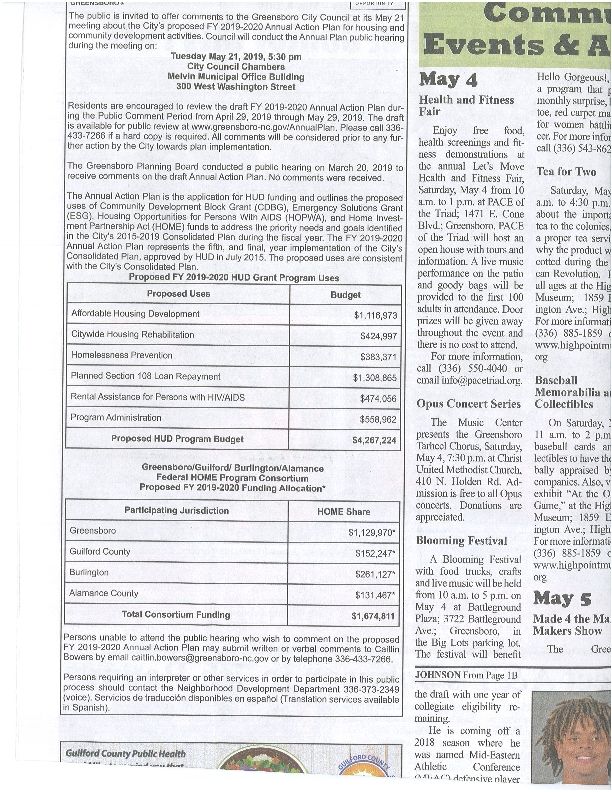
7.        Summary

The City’s 2019 Action Plan identifies the housing and community development needs of predominantly
low-income communities of Greensboro. The objective is to target available resources to meet the
identified needs in order to revitalize neighborhoods and improve the quality of life for Greensboro
residents.

The Action Plan provides a vision for community development and housing actions with the primary
goals of providing affordable housing and public services, revitalizing neighborhoods, supporting
homeless and special needs populations, eliminating slum and blight, and expanding economic
development opportunities.

The Action Plan also identifies funding for projects that address Greensboro’s most critical needs. The
table below lists the amount of entitlement grant funding awarded by HUD for Fiscal Year 2019-20.

                                              Annual Action Plan                                          6
                                                    2019
OMB Control No: 2506-0117 (exp. 06/30/2018)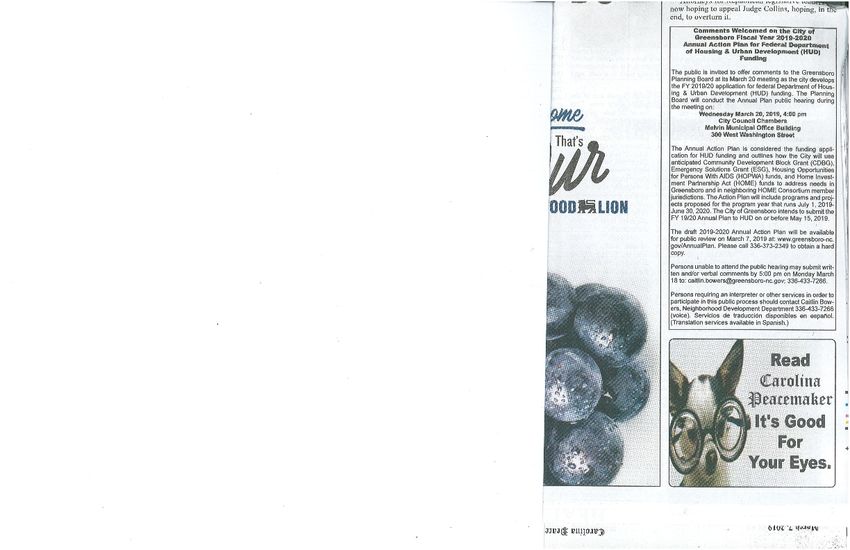
PR-05 Lead & Responsible Agencies - 91.200(b)
1.        Agency/entity responsible for preparing/administering the Consolidated Plan

The following are the agencies/entities responsible for preparing the Consolidated Plan and those responsible for administration of
each grant program and funding source.

                 Agency Role                               Name                                        Department/Agency
     CDBG Administrator                       GREENSBORO                                Neighborhood Development/City of Greensboro
     HOPWA Administrator                      GREENSBORO                                Neighborhood Development/City of Greensboro
     HOME Administrator                       GREENSBORO                                Neighborhood Development/City of Greensboro
     ESG Administrator                        GREENSBORO                                Neighborhood Development/City of Greensboro
                                                       Table 1 – Responsible Agencies

Narrative

The City of Greensboro is responsible for the administration of the CDBG, HOPWA, HOME, and ESG programs and funding sources. To help
facilitate services to Greensboro residents, the City of Greensboro collaborates with other agencies to administer the HOPWA grant.

Consolidated Plan Public Contact Information

Caitlin Bowers, Grant Administrator

Neighborhood Development Department

Caitlin.Bowers@greensboro-nc.gov

336-433-7266

                                                            Annual Action Plan                                          7
                                                                  2019
OMB Control No: 2506-0117 (exp. 06/30/2018)
AP-10 Consultation - 91.100, 91.200(b), 91.215(l)
1.        Introduction

Consultation with key stakeholders is a critical component in the development of the Annual Action
Plan. Consultation allows for the identification and prioritization of community needs, development of
strategies, and coordination of subsequent action plans. This process also allows for the sharing of
information regarding community resources and promotes coordination.

Provide a concise summary of the jurisdiction’s activities to enhance coordination between
public and assisted housing providers and private and governmental health, mental health
and service agencies (91.215(l)).

The City of Greensboro plans to facilitate community housing events focused on fair housing practices.
Activities include community pop-up events to answer fair housing and landlord tenant questions; large
scale community housing education and outreach events; guest speakers/panel discussions at
community sponsored lunch events; community service provider events targeting aid to seniors and
veterans with health, housing, and other life needs; and fair housing trainings for housing providers in
Greensboro and the region.

Coordination between public and assisted housing providers and health service agencies occurred
through public meetings held by local governing bodies. This opened communication regarding
affordable housing in Greensboro and how public and private agencies and concerned residents can
help to increase the affordable housing stock.

Describe coordination with the Continuum of Care and efforts to address the needs of
homeless persons (particularly chronically homeless individuals and families, families with
children, veterans, and unaccompanied youth) and persons at risk of homelessness.

The Guilford County Continuum of Care (CoC) is the planning body in Guilford County, North Carolina
that coordinates the community's policies, strategies, and activities toward ending homelessness of the
chronically homeless; homeless individuals and families; families with children; veterans;
unaccompanied youth; and persons at risk of homelessness. The Guilford CoC offers homeless services
of emergency shelter, rapid re-housing, permanent supportive housing, and transitional housing to the
aforementioned persons.

The CoC's work includes gathering and analyzing information in order to determine the local needs of
people experiencing homelessness, implementing strategic responses, educating the community on
homeless issues, providing advice and input on operations of homeless services, and measuring CoC
performance to ensure the orderly, transparent operations of the CoC governance structure. The
Guilford CoC also carries out the responsibilities of the CoC such as operating the CoC, designating an
                                              Annual Action Plan                                          8
                                                    2019
OMB Control No: 2506-0117 (exp. 06/30/2018)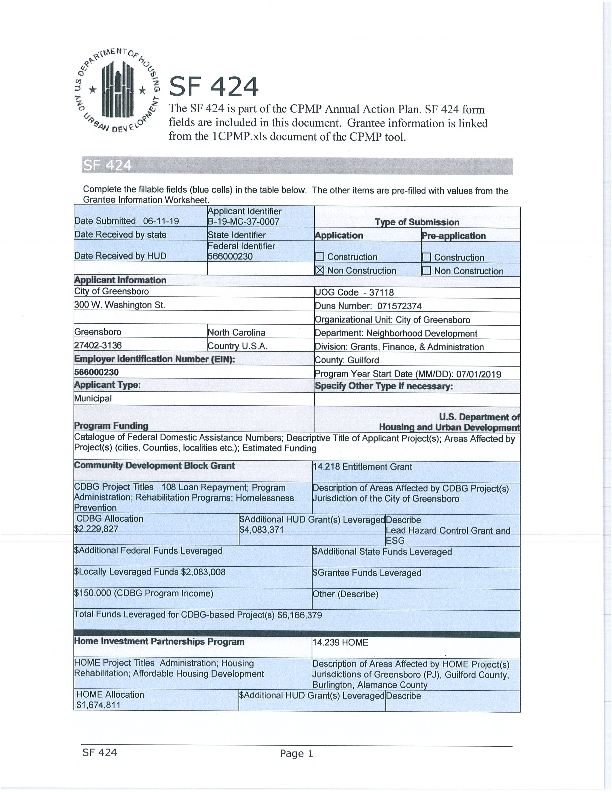
HMIS Lead, designating a coordinated entry lead agent, and designating an entity as a collaborative
applicant to prepare and oversee an application for federal funding. The governance structure consists
of two main bodies, the full CoC membership and the CoC Board.

The City of Greensboro is collaborating with the CoC in the application and funding processes for the
jurisdiction’s homelessness grants. The Guilford County CoC Board of Directors is an independent board,
elected by the CoC to provide oversight and governance of the CoC to represent the geographic,
programmatic, and cultural diversity of the continuum. The priority needs of the community will be
addressed through this collaboration.

Describe consultation with the Continuum(s) of Care that serves the jurisdiction’s area in
determining how to allocate ESG funds, develop performance standards for and evaluate
outcomes of projects and activities assisted by ESG funds, and develop funding, policies and
procedures for the operation and administration of HMIS

The City of Greensboro is collaborating with the CoC in the application and funding process for the ESG
grant allocations. The City of Greensboro will administer funds for homelessness prevention activities
beginning in the 2019-2020 fiscal year. The City of Greensboro will continue to address public service
needs in homelessness prevention by allocating the entire ESG grant to homelessness prevention
services, and by supplementing the ESG funds with a CDBG allocation and funding from the local
Nussbaum Housing Partnership Fund. The City of Greensboro is fortunate to be able to supplement HUD
dollars with local funds.

The housing authority administers rental assistance by providing Section 8 vouchers to participants. As
program participants become stabilized, Greensboro Housing Authority (GHA) attempts to move them
from receiving vouchers through the Shelter Plus Care Program to regular Section 8 housing choice.

                                              Annual Action Plan                                          9
                                                    2019
OMB Control No: 2506-0117 (exp. 06/30/2018)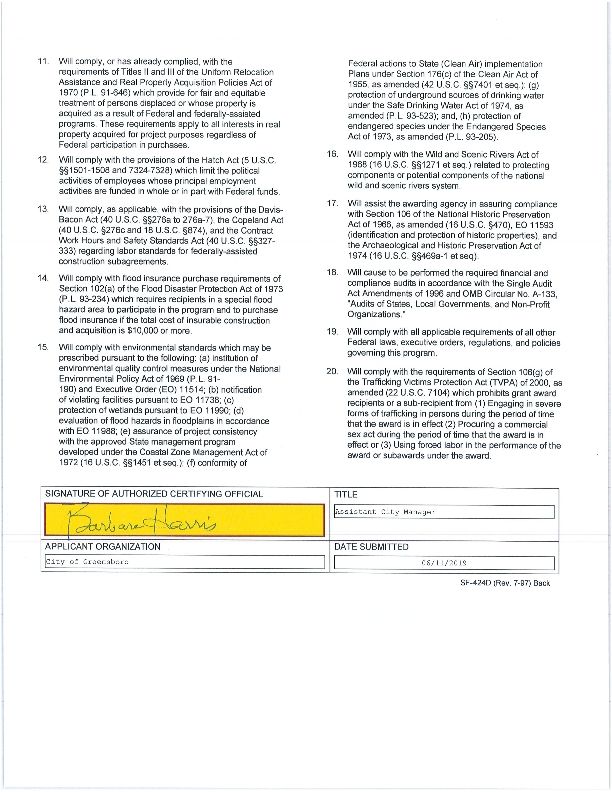
2.     Agencies, groups, organizations and others who participated in the process and
consultations

Table 2 – Agencies, groups, organizations who participated

 1 Agency/Group/Organization                          Greensboro Housing Authority
      Agency/Group/Organization Type                  Housing
                                                      PHA
                                                      Services - Housing
                                                      Services-homeless
                                                      Services-Health
                                                      Services-Education
                                                      Service-Fair Housing
      What section of the Plan was addressed          Public Housing Needs
      by Consultation?
      Briefly describe how the                        The City consulted with the Greensboro Housing
      Agency/Group/Organization was                   Authority to identify and prioritize community
      consulted. What are the anticipated             needs to develop strategies and action plans,
      outcomes of the consultation or areas for       identify community resources, and to promote the
      improved coordination?                          coordination of resources.
 2 Agency/Group/Organization                          Partners Ending Homelessness
      Agency/Group/Organization Type                  Services-Children
                                                      Services-Persons with Disabilities
                                                      Services-Victims of Domestic Violence
                                                      Services-homeless
                                                      Services-Education
                                                      Services-Employment
                                                      Service-Fair Housing
                                                      Services - Victims
      What section of the Plan was addressed          Homeless Needs - Chronically homeless
      by Consultation?                                Homeless Needs - Families with children
                                                      Homelessness Needs - Veterans
                                                      Homelessness Needs - Unaccompanied youth
                                                      Homelessness Strategy
                                                      Non-Homeless Special Needs

                                              Annual Action Plan                                         10
                                                    2019
OMB Control No: 2506-0117 (exp. 06/30/2018)
Briefly describe how the Partners Ending Homelessness was consulted
Agency/Group/Organization was through City dialogue to provide perspectives
consulted. What are the anticipated regarding priority needs in the community; provide
outcomes of the consultation or areas for feedback on analysis and interpretation of data
improved coordination? about housing, employment, socio-economic,
transportation and other conditions and trends.
They also assisted in setting goals for addressing
identified community needs.
3 Agency/Group/Organization Greensboro Planning Board
Agency/Group/Organization Type Other government - Local
Planning organization
What section of the Plan was addressed Recommending body for adoption and comments to
by Consultation? the Annual Plan
Briefly describe how the The Greensboro Planning Board held the initial
Agency/Group/Organization was public hearing for the Annual Plan and was asked to
consulted. What are the anticipated provide feedback or ask questions regarding any
outcomes of the consultation or areas for section of the Annual Plan for the benefit of the
improved coordination? public forum before the final draft was taken to City
Council.
4 Agency/Group/Organization Guilford County Continuum of Care
Agency/Group/Organization Type Services-Persons with Disabilities
Services-Victims of Domestic Violence
Services-homeless
Services-Education
Services-Employment
Service-Fair Housing
Services - Victims
Planning organization
What section of the Plan was addressed Housing Need Assessment
by Consultation? Homeless Needs - Chronically homeless
Homeless Needs - Families with children
Homelessness Needs - Veterans
Homelessness Needs - Unaccompanied youth
Homelessness Strategy
Non-Homeless Special Needs
Annual Action Plan 11
2019
OMB Control No: 2506-0117 (exp. 06/30/2018)Briefly describe how the The City consulted with the Guilford County
Agency/Group/Organization was Continuum of Care to identify and prioritize
consulted. What are the anticipated community needs to develop strategies and action
outcomes of the consultation or areas for plans, identify community resources, and to
improved coordination? promote the coordination of resources.
Other local/regional/state/federal planning efforts considered when preparing the Plan
Name of Plan Lead Organization How do the goals of your Strategic
Plan overlap with the goals of each
plan?
Continuum of Care N/A
This 2014 regional analysis of
Regional Plan - City of
Analysis of impediments and fair housing
Greensboro, City Burlington,
Impediments/Assessment of assessment identifies regional and
City of High Point, & Surry
Fair Housing City goals related to housing
County Consortium
investments.
Table 3 – Other local / regional / federal planning efforts
Narrative
The consultation process satisfies the requirements of 24 CFR 91.105. The City uses input from residents
and its community development partners to determine housing and community development needs, set
priorities, and develop strategies and actions to address those needs.
Annual Action Plan 12
2019
OMB Control No: 2506-0117 (exp. 06/30/2018)AP-12 Participation - 91.401, 91.105, 91.200(c)
1. Summary of citizen participation process/Efforts made to broaden citizen participation
Summarize citizen participation process and how it impacted goal-setting
Residents are invited to provide feedback at public hearings and during the public comment period. The
City uses input from residents and its elected boards to determine housing and community development
needs, set priorities, and develop strategies and actions to address those needs.
The City complies with the adopted Citizen Participation Plan, which satisfies the requirements of 24 CFR
91.105.
Citizen Participation Outreach Table 4
Sort Mode of Target of Summary of Summary of Summary of
Order Outreach Outreach response/attendance comments comments not accepted
received and reasons
Minorities
Non-English
Speaking -
Specify other
language:
Spanish
Persons with No responses or No responses or
Public
1 disabilities attendees attendees
Hearing
recorded. recorded.
Non-
targeted/broad
community
Residents of
Public and
Assisted
Housing
Annual Action Plan 13
2019
OMB Control No: 2506-0117 (exp. 06/30/2018)Sort Mode of Target of Summary of Summary of Summary of
Order Outreach Outreach response/attendance comments comments not accepted
received and reasons
Minorities
Non-English
Speaking -
Specify other
language:
Spanish
Persons with No responses or No responses or
Public
2 disabilities attendees attendees
Hearing
recorded. recorded.
Non-
targeted/broad
community
Residents of
Public and
Assisted
Housing
Minorities
Non-English
Speaking -
The one comment
Specify other
received was accepted
language: The comment
and will be taken into
Spanish received
consideration in future
advocated the
years and during the
Persons with tiny house
Newspaper One comment development process of
3 disabilities movement. Full
Ad received via email the Greensboro
comment in the
Affordable Housing Plan.
Non- Citizen
There are no current City
targeted/broad Participation
of Greensboro
community attachment.
programs/projects for
tiny houses.
Residents of
Public and
Assisted
Housing
Annual Action Plan 14
2019
OMB Control No: 2506-0117 (exp. 06/30/2018)Expected Resources
AP-15 Expected Resources - 91.420(b), 91.220(c)(1,2)
Anticipated Resources
Program Source Uses of Funds Expected Amount Available Year 1 Expected Narrative Description
of Funds Annual Program Prior Year Total: Amount
Allocation: Income: Resources: $ Available
$ $ $ Remainder
of ConPlan
$
CDBG public - Acquisition CDBG funds will be used for housing
federal Admin and rehabilitation, homelessness
Planning prevention, Section 108 loan
Economic repayment and program
Development administration.
Housing
Public
Improvements
Public Services 2,229,827 150,000 1,437,361 3,817,188 0
Annual Action Plan 15
2019
OMB Control No: 2506-0117 (exp. 06/30/2018)Program Source Uses of Funds Expected Amount Available Year 1 Expected Narrative Description
of Funds Annual Program Prior Year Total: Amount
Allocation: Income: Resources: $ Available
$ $ $ Remainder
of ConPlan
$
HOME public - Acquisition HOME funds will be used to develop
federal Homebuyer affordable housing for low-income
assistance families, including new construction
Homeowner rehab & rehabilitation of single- and multi-
Multifamily rental family units.
new construction
Multifamily rental
rehab
New construction
for ownership
TBRA 1,674,811 100,000 1,793,959 3,568,770 0
HOPWA public - Permanent HOPWA funds will be used for
federal housing in tenant-based rental assistance
facilities (TBRA) and supportive services to
Permanent promote a stable and healthy living
housing environment for persons with
placement HIV/AIDS.
Short term or
transitional
housing facilities
STRMU
Supportive
services
TBRA 474,056 0 419,625 893,681 0
Annual Action Plan 16
2019
OMB Control No: 2506-0117 (exp. 06/30/2018)Program Source Uses of Funds Expected Amount Available Year 1 Expected Narrative Description
of Funds Annual Program Prior Year Total: Amount
Allocation: Income: Resources: $ Available
$ $ $ Remainder
of ConPlan
$
ESG public - Conversion and ESG funds will be used to support
federal rehab for shelter operations and rapid re-
transitional housing services for homeless
housing individuals and families.
Financial
Assistance
Overnight shelter
Rapid re-housing
(rental assistance)
Rental Assistance
Services
Transitional
housing 183,371 0 161,693 345,064 0
Table 2 - Expected Resources – Priority Table
Explain how federal funds will leverage those additional resources (private, state and local funds), including a description of how
matching requirements will be satisfied
The federal funds will leverage local resources including the City of Greensboro's local housing bonds, Nussbaum Affordable Housing Partnership
funds, bank funds and grants. Additional funds will be leveraged from state sources (including the Low Income Housing Tax Credit and
Supportive Housing Development programs), private and eligible public investment sources (such as bank or other program loans), and grant or
equity contributions. Matching funds will come from in-kind donations, volunteer labor and grant sources. The ESG match requirements will be
certified by the City of Greensboro Homelessness Prevention Program Coordinator, homelessness prevention subrecipient, and/or the sub-
agencies with an equal amount of other federal, state, or local resources (cash and non-cash) in accordance with the revised match
requirements at 24 CFR 576.201. Greensboro keeps records of the source and use of contributions made to satisfy the matching requirement.
Annual Action Plan 17
2019
OMB Control No: 2506-0117 (exp. 06/30/2018)If appropriate, describe publically owned land or property located within the jurisdiction that
may be used to address the needs identified in the plan
The City, Redevelopment Commission, and Housing Development Partnership together control 220
parcels consisting of 51.28 acres distributed through the geographic target areas. These properties are
available for disposition and use in addressing the needs identified in the 2019-2020 Annual Plan.
Discussion
The anticipated resources reflect current expectations for both funding and programmatic focus for the
next fiscal year.
Annual Action Plan 18
2019
OMB Control No: 2506-0117 (exp. 06/30/2018)Annual Goals and Objectives
AP-20 Annual Goals and Objectives - 91.420, 91.220(c)(3)&(e)
Goals Summary Information
Sort Goal Name Start End Category Geographic Needs Addressed Funding Goal Outcome Indicator
Order Year Year Area
1 Increase the 2015 2019 Affordable Housing Consortium Housing CDBG: Rental units constructed:
Supply of Decent Public Housing Area Affordability & $445,965 83 Household Housing Unit
Affordable Homeless Access HOME: Homeowner Housing
Housing Non-Homeless Special Needs $1,245,480 Added: 4 Household
Housing Unit
Direct Financial Assistance
to Homebuyers: 17
Households Assisted
Other: 2 Admin.
2 Promote a Suitable 2015 2019 Non-Housing Community South Elm Homelessness CDBG: Homeowner Housing
Living Development Willow Oaks Services $1,933,862 Rehabilitated: 32 Household
Environment Spatial deconcentration of low HOPWA Quality Living HOPWA: Housing Unit
and moderate income families EMSA Environments $474,056 Tenant-based rental
and members of disadvantaged ESG: assistance / Rapid
minorities. $183,371 Rehousing: 125 Households
Assisted
Homeless Person Overnight
Shelter: 1200 Persons
Assisted
Other: 3 (Sec. 108 Loan
Repayment & Admin.)
Annual Action Plan 19
2019
OMB Control No: 2506-0117 (exp. 06/30/2018)Table 3 – Goals Summary
Goal Descriptions
1 Goal Name Increase the Supply of Decent Affordable Housing
Goal This year, a total of $1,691,445 in CDBG and HOME funds will be invested in affordable housing development and
Description homeownership activities.
2 Goal Name Promote a Suitable Living Environment
Goal This year, a total of $2,591,289 in CDBG, ESG and HOPWA funds will be invested in activities that support a suitable
Description living environment.
Annual Action Plan 20
2019
OMB Control No: 2506-0117 (exp. 06/30/2018)AP-35 Projects - 91.420, 91.220(d)
Introduction
Following is a list of individual projects recommended for FY 2019-2020 funding. This serves as the
activity descriptions for the Annual Plan and illustrates the relationship of funding and activities to the
2015-2019 Consolidated Plan.
# Project Name
1 FY 19/20 - Greensboro Administration
2 FY 19/20 - Housing Development
3 FY 19/20 - Housing Rehabilitation
4 FY 19/20 - Burlington and Alamance Consortium Activities
5 FY 19/20 - Section 108 Loan Commitments
6 FY 19/20 - Homelessness Prevention
7 FY 19/20 - HOPWA Grant
8 FY 19/20 - Guilford County Consortium Activities
Table 4 – Project Information
Describe the reasons for allocation priorities and any obstacles to addressing underserved
needs
Priority projects are consistent with the Consolidated Plan goals of promoting a suitable living
environment, increasing the supply of decent affordable housing, and expanding economic
opportunities. Allocations are invested geographically as a result of redevelopment plan findings. The
majority of investments are allocated geographically to remove substandard buildings and to encourage
rehabilitation of public infrastructure and private property in order to revitalize low-income areas.
Annual Action Plan 21
2019
OMB Control No: 2506-0117 (exp. 06/30/2018)AP-38 Project Summary
1 Project Name FY 19/20 - Greensboro Administration
Target Area Consortium Area
Goals Supported Increase the Supply of Decent Affordable Housing
Promote a Suitable Living Environment
Needs Addressed Housing Affordability & Access
Quality Living Environments
Homelessness Services
Funding CDBG: $445,965
HOME: $114,548
Description Administration of CDBG and HOME programs and
activities.
Target Date 6/30/2020
Planned Activities Administration of CDBG and HOME programs and
activities.
2 Project Name FY 19/20 - Housing Development
Target Area Consortium Area
Goals Supported Increase the Supply of Decent Affordable Housing
Needs Addressed Housing Affordability & Access
Funding HOME: $1,130,932
Description Multi- and single-family development
Target Date 6/30/2020
Estimate the number and type of families 87
that will benefit from the proposed activities
Planned Activities Multi- and single-family housing development.
3 Project Name FY 19/20 - Housing Rehabilitation
Target Area Consortium Area
Goals Supported Promote a Suitable Living Environment
Needs Addressed Quality Living Environments
Funding CDBG: $424,997
Description Rehabilitation of homeowner and rental housing
including Lead Program match.
Annual Action Plan 22
2019
OMB Control No: 2506-0117 (exp. 06/30/2018)3 Target Date 6/30/2020
Estimate the number and type of families 25
that will benefit from the proposed activities
Planned Activities Rehabilitation of homeowner and rental housing
including Lead Program match.
4 Project Name FY 19/20 - Burlington and Alamance Consortium
Activities
Target Area Consortium Area
Goals Supported Promote a Suitable Living Environment
Needs Addressed Quality Living Environments
Funding HOME: $385,826
Description Homeowner rehabilitation and CHDO activities in the
City of Burlington and Alamance County.
Target Date 6/30/2020
Estimate the number and type of families 5
that will benefit from the proposed activities
Location Description Ctiy of Burlington and Alamance County
Planned Activities Homeowner rehabilitation and CHDO activities in the
City of Burlington and Alamance County.
5 Project Name FY 19/20 - Section 108 Loan Commitments
Target Area South Elm
Willow Oaks
Goals Supported Promote a Suitable Living Environment
Needs Addressed Quality Living Environments
Funding CDBG: $1,308,865
Description Pre-payment of Section 108 Loan commitments
Target Date 6/30/2020
Planned Activities Pre-payment of Section 108 Loan commitments
6 Project Name FY 19/20 - Homelessness Prevention
Target Area Consortium Area
Goals Supported Promote a Suitable Living Environment
Needs Addressed Homelessness Services
Annual Action Plan 23
2019
OMB Control No: 2506-0117 (exp. 06/30/2018)6 Funding CDBG: $200,000
ESG: $183,371
Description Citywide homelessness prevention activities.
Target Date 6/30/2020
Planned Activities Citywide homelessness prevention activities.
7 Project Name FY 19/20 - HOPWA Grant
Target Area HOPWA EMSA
Goals Supported Promote a Suitable Living Environment
Needs Addressed Quality Living Environments
Homelessness Services
Funding HOPWA: $474,056
Description Tenant-based rental assistance for residents living
with HIV/AIDS
Target Date 6/30/2020
Estimate the number and type of families 55
that will benefit from the proposed activities
Planned Activities Tenant-based rental assistance for residents living
with HIV/AIDS
8 Project Name FY 19/20 - Guilford County Consortium Activities
Target Area Consortium Area
Goals Supported Promote a Suitable Living Environment
Needs Addressed Housing Affordability & Access
Funding HOME: $143,505
Description Homebuyer down payment assistance for Guilford
County residents (excluding High Point).
Target Date 6/30/2020
Planned Activities Homebuyer down payment assistance for Guilford
County residents (excluding High Point).
Annual Action Plan 24
2019
OMB Control No: 2506-0117 (exp. 06/30/2018)AP-50 Geographic Distribution - 91.420, 91.220(f)
Description of the geographic areas of the entitlement (including areas of low-income and
minority concentration) where assistance will be directed
All of the geographic areas are either identified target areas within the City of Greensboro, HOME
Consortium boundaries, or the eligible metropolitan statistical area (EMSA) for the HOPWA grant
program. The City of Greensboro target areas (Eastside Park, Ole Asheboro, South Elm, Willow Oaks,
Arlington Park, Heritage House, and Phillips Avenue) have a majority of low-income residents with a high
minority concentration (racially concentrated areas of poverty). As existing commitments in City of
Greensboro target areas are fulfilled, projects and activities will focus increasingly on high opportunity
areas in order to: provide affordable housing that is accessible to job opportunities; increase access to
quality public and private facilities and services; and reduce the isolation of income groups within areas
through spatial deconcentration of housing opportunities for lower income persons.
The HOME Consortium boundaries include the City of Greensboro, Guilford County (excluding the City of
High Point), City of Burlington, and Alamance County. All areas of the consortium have a significant
concentration of low-income individuals with an identified need for new and rehabilitated affordable
housing.
The EMSA for the HOPWA grant encompasses Greensboro/Guilford County, Randolph County, and
Rockingham County. Assistance will be directed mainly through referrals of the respective public
housing authorities for persons with HIV/AIDS.
Geographic Distribution
Target Area Percentage of Funds
South Elm
Phillips Avenue
Eastside Park
Ole Asheboro
Willow Oaks
Arlington Park
Heritage House
Consortium Area 37
HOPWA EMSA 11
Table 5 - Geographic Distribution
Annual Action Plan 25
2019
OMB Control No: 2506-0117 (exp. 06/30/2018)Rationale for the priorities for allocating investments geographically
Allocations are invested geographically as a result of redevelopment plan findings and the boundaries
identified in the 2015-2019 Consolidated Plan for the HOME Consortium and HOPWA EMSA. The
majority of investments are allocated geographically to remove substandard buildings and encourage
rehabilitation of public infrastructure and private property in order to revitalize low-income areas.
Discussion
It has been a long-standing City policy to focus investments in areas with the greatest demonstrated
need. Geographic distribution of funds is based on identified projects and activities, rather than based
on percentages. The remaining percentage of funds will be allocated across all designated target areas
and the City as a whole based on need and anticipated projects.
Annual Action Plan 26
2019
OMB Control No: 2506-0117 (exp. 06/30/2018)Affordable Housing
AP-55 Affordable Housing - 91.420, 91.220(g)
Introduction
Our intended goals and outcomes for affordable housing initiatives include:
• Increase opportunities for choices in housing location, unit type and level of accessibility.
• Continue to ensure that public housing facilities are properly managed and maintained;
continue to encourage public housing residents to take active roles in the management and
maintenance of the facilities in which they reside.
• Increase housing affordability through a combination of housing assistance and reduction in
overall housing related costs through efficiency factors such as: proximity to jobs,
transportation, or services; energy efficiency and resource conservation standards; or reduction
in housing access barriers.
• Improve the resource-efficiency of both new construction and existing housing stock.
• Create healthier homes and neighborhoods with fewer physical, environmental and social
hazards, through an emphasis on prevention measures.
• Decrease barriers to accessing housing and reduce/eliminate discrimination in housing choice.
• Continue to eliminate chronic homelessness and reduce all other forms of homelessness.
• Improve efficiencies in service delivery through enhanced collaboration and partnerships.
One Year Goals for the Number of Households to be Supported
Homeless 1,337
Non-Homeless 15
Special-Needs 166
Total 1,518
Table 6 - One Year Goals for Affordable Housing by Support Requirement
One Year Goals for the Number of Households Supported Through
Rental Assistance 55
The Production of New Units 89
Rehab of Existing Units 42
Acquisition of Existing Units 0
Total 186
Table 7 - One Year Goals for Affordable Housing by Support Type
Annual Action Plan 27
2019
OMB Control No: 2506-0117 (exp. 06/30/2018)AP-60 Public Housing - 91.420, 91.220(h)
Introduction
GREENSBORO:
Public housing provides an important housing safety net for vulnerable populations including low and
very low income households, the elderly and disabled. The Greensboro Housing Authority assists in
meeting the housing needs of the homeless population by providing housing vouchers.
BURLINGTON:
There are two active Public Housing Authorities (PHAs) operating in Alamance County and the City of
Burlington. They are the Burlington Housing Authority and the Graham Housing Authority. These
agencies provide rental assistance through traditional public housing as well as the Section 8 housing
choice voucher program and the Supportive Housing for the Elderly Program (Section 202).
Actions planned during the next year to address the needs to public housing
GREENSBORO:
The Greensboro Housing Authority, (GHA) is continuing its preservation initiative of its affordable
housing communities through the implementation of the Rental Assistance Demonstration Program
(RAD) from the Department of Housing and Urban Development (HUD). RAD has allowed Public Housing
Authorities to convert its Public Housing funding to Project-Based Section 8 funding, thereby converting
its Public Housing Program to the Section 8, Project-Based Voucher (PBV) Program. As a result, GHA is
seeking to preserve its entire housing portfolio through the modernization and rehabilitation of each
community throughout the Greensboro area. The program scope includes moderate to intensive
renovations throughout the Agency’s properties including the implementation of a master planning and
redevelopment program of its oldest community.
GHA is constantly searching for innovative ways to expand the number of affordable housing units in the
Greensboro market area through strategic partnerships with key stakeholders within our community.
Including GHA’s current development of supportive housing units for veterans in conjunction with the
North Carolina Housing Finance Agency, the City of Greensboro and a key local veteran service
provider.
BURLINGTON:
Burlington Development Corporation, a non-profit affiliate of Burlington Housing Authority, will
continue to implement its two grants for supportive housing projects, known as the HOPE and STEPS
programs. The HOPE program grant funds are used to place approximately six disabled chronic homeless
individuals into housing with supportive services. Using the second grant for the STEPS program, the
Annual Action Plan 28
2019
OMB Control No: 2506-0117 (exp. 06/30/2018)housing authority will provide vouchers for four homeless families into permanent supportive housing.
To encourage homeownership, Burlington Housing Authority conducts a Family Self-Sufficiency (FSS)
Program that supports the residents’ efforts to save funds to purchase a home or move into an
unsubsidized dwelling. On average, 30 low-income households enroll in this program annually.
Actions to encourage public housing residents to become more involved in management and
participate in homeownership
GREENSBORO:
GHA continues to operate a homeownership program for its existing participates. GHA is a HUD
approved Housing Counseling Agency that has expanded its capacity by adding additional certified
counselors. GHA will continue to serve as a valued resource to current and future homeowners within
its programs and other citizen throughout the Greensboro area.
BURLINGTON:
The Burlington Housing Authority continues its program efforts to involve residents through resident
councils and its Resident Advisory Council, comprised of representation from various complexes. The
Burlington Housing Authority expects to continue all youth, entrepreneurship, and senior programs with
its capital budget.
If the PHA is designated as troubled, describe the manner in which financial assistance will be
provided or other assistance
N/A
Annual Action Plan 29
2019
OMB Control No: 2506-0117 (exp. 06/30/2018)AP-65 Homeless and Other Special Needs Activities - 91.420, 91.220(i)
Introduction
GREENSBORO:
The annual funding toward rapid re-housing, emergency shelter operations and emergency assistance is
supported by the current Consolidated Plan. The City of Greensboro is collaborating with the Continuum
of Care to reduce homelessness in the jurisdiction. Various segments of the homeless or nearly
homeless populations will be served. This may include veterans, children under 18; single men and
women; families; mothers with children; men and women in recovery; pregnant and homeless teens
and others. Sometimes circumstances arise where a resident may want to reside outside of the
jurisdictional boundaries. Up to 5% of funding for Rapid Re-housing assistances may be used to serve
residents in surrounding areas (including High Point, Winston Salem, Browns Summit, Jamestown,
Gibsonville, and Sedalia).
Potential activities for homelessness prevention include: emergency shelter, rapid rehousing, public
services, homelessness prevention, and coordinated entry.
BURLINGTON:
Poverty is a leading cause of homelessness in the Greensboro HOME Consortium, and both
homelessness and poverty have become increasingly important issues throughout the Consortium,
including the City of Burlington.
Allied Churches of Alamance County is the lead entity behind the new Coordinated Assessment, a
standardized assessment required by HUD’s CoC interim rule. This assessment will use the Balance of
State’s Coordinated Assessment Toolkit: among the priorities it sets for the community are increasing
exits to housing, reducing returns to homelessness, and decreasing the duration of homelessness. The
Coordinated Assessment went in live mode in the summer of 2015 and has been receiving over 30 calls
per day to deal with homeless issues. Improvements in the network coordination, providing permanent
housing for the chronically homeless, permanent housing for clients dealing with mental health and/or
substance abuse issues have started to be implemented through the process.
Describe the jurisdictions one-year goals and actions for reducing and ending homelessness
including: reaching out to homeless persons (especially unsheltered persons) and assessing
their individual needs
GREENSBORO:
The City of Greensboro is collaborating with the Continuum of Care (CoC) to address priority needs
thereby reducing and ending homelessness. The Guilford County CoC goals align with HUD'S System and
Annual Action Plan 30
2019
OMB Control No: 2506-0117 (exp. 06/30/2018)Program Level Measures and Goals of:
1. Ending chronic homelessness
2. Ending homeless among households with children and ending youth homelessness
3. Ending veteran homelessness
High quality supportive services are critical to ensuring that people served are able to move into
permanent homes for a long term. Services are coordinated among community partners receiving CoC
and ESG funding and are available to those who are homeless or at risk of homelessness. Potential
activities for homelessness prevention include: emergency shelter, rapid rehousing, public services,
homelessness prevention, and coordinated entry.
BURLINGTON:
During the next year, the City’s federal funds will continue to support programs to provide decent and
safe living environments for the homeless and those at risk of becoming homeless, through funding such
activities as emergency shelter operations, coordinated assessment funding, housing rehabilitation,
other critical expenses, and rapid re-housing.
Addressing the emergency shelter and transitional housing needs of homeless persons
GREENSBORO:
The Guilford County CoC Board approved the policy and procedures of operating a coordinated entry
system designed locally in response to the local needs and conditions in October 2017. At this time, the
coordinated entry lead agency has not be identified. Once the Guilford County CoC and the CoC Board
have identified a coordinated entry lead agency, the lead agency will use a common assessment tool to
ensure that all people that are homeless or at risk of homelessness will have fair and equal access, and
will be quickly identified, assessed, referred, and connected to housing and homeless assistance based
on their needs and strengths. Coordinated entry system will not assess or prioritize for emergency
shelter beds; but, emergency shelters will play a vital role of the crisis response system and will be
critical to this process. Shelters will communicate immediately and will have low barriers for individuals
and families to access to safe shelter.
All CoC, ESG and City of Greensboro funded programs are required to accept homeless person through
coordinated entry system.
BURLINGTON:
The City of Burlington will continue to fund the emergency shelter operated by Allied
Annual Action Plan 31
2019
OMB Control No: 2506-0117 (exp. 06/30/2018)Churches. Specifically, the City started restroom expansions at the emergency shelter in Fiscal Year
2017, and the renovations were completed in Fiscal Year 2018. The renovations were needed to assist
Allied Churches with the increased flow of homeless persons in the emergency shelter.
Helping homeless persons (especially chronically homeless individuals and families, families
with children, veterans and their families, and unaccompanied youth) make the transition to
permanent housing and independent living, including shortening the period of time that
individuals and families experience homelessness, facilitating access for homeless individuals
and families to affordable housing units, and preventing individuals and families who were
recently homeless from becoming homeless again
GREENSBORO:
Once the Guilford County CoC and the CoC Board have identified a coordinated entry lead agency, the
lead agency will use a common assessment tool to ensure that all people that are homeless or at risk of
homelessness, especially chronically homeless individuals and families, families with children, veterans
and their families, and unaccompanied youth have fair and equal access, and are quickly identified,
assessed, referred, and connected to housing and homeless assistance based on their needs and
strengths. The Coordinated Entry System will have a work group meeting weekly to review all
assessments and will prioritize chronically homeless individuals and families, families with children,
veterans and their families, and unaccompanied youth for housing and services based on the criteria
listed in The Guilford County CoC Coordinated Entry Policy and Procedures. Once an individual and
family is prioritized for a housing program, they are connected to a case manager. The goal is to place
individuals and families in affordable housing units within 30 days and prevent those who were recently
homeless from becoming homeless again. This system will shorten the length of time individuals and
families experience homelessness.
BURLINGTON:
Residential Treatment Services, Burlington Development Corporation, ACAC, and Alamance Housing
Committee are all involved in the housing and supportive services needs in each stage of the
homelessness assistance process to help homeless persons (including chronically homeless individuals
and families, families with children, veterans, and youth) make the transition to permanent housing and
independent living. The City will continue to support initiatives to meet the needs of homeless persons
and those at risk of becoming homeless.
Residents remain in the shelters from several days to months depending on their needs. The shelters
offer supportive services such as counseling and case management to help the homeless persons make
the transition to permanent housing. Through the local continuum of care system, the agencies have
cooperative arrangements with human service agencies, educational institutions, Alamance Regional
Annual Action Plan 32
2019
OMB Control No: 2506-0117 (exp. 06/30/2018)Medical Center, Burlington Police Department, and civic groups to offer various supportive services.
Helping low-income individuals and families avoid becoming homeless, especially extremely
low-income individuals and families and those who are: being discharged from publicly
funded institutions and systems of care (such as health care facilities, mental health facilities,
foster care and other youth facilities, and corrections programs and institutions); or, receiving
assistance from public or private agencies that address housing, health, social services,
employment, education, or youth needs.
GREENSBORO:
Once the Guilford County CoC and the CoC Board have identified a coordinated entry lead agency, the
lead agency will educate the social workers of the points of access for coordinated entry within the
publicly funded institutions and systems of care. Examples of access points include health care facilities;
mental health facilities; foster care and other youth facilities; and corrections programs and
institutions. This awareness will ensure that all people who are homeless or at risk of homelessness,
especially extremely low-income individuals and families and those who are being discharged from
publicly funded institutions and systems of care; or receiving assistance from public or private agencies
that address homeless prevention services have fair and equal access, are quickly identified, assessed,
referred, and connected to housing and homeless assistance based on their needs and strengths.
The coordinated entry system will have a work group meeting weekly to review all assessments and will
prioritize chronically homeless individuals and families; families with children; veterans and their
families; and unaccompanied youth for housing and services based on the criteria listed in The Guilford
County CoC Coordinated Entry Policy and Procedures. Once an individual and family is prioritized for a
housing program, they are connected to a case manager. The goal is to place individuals and families in
affordable housing units within 30 days and prevent those who were recently homeless from becoming
homeless again.
BURLINGTON:
The existing housing and service providers will continue to address the needs of the homeless and
potentially homeless during the program years. Local non-profits, ACAC, and Family Abuse Services,
operate emergency shelters and provide supportive services for the homeless. Residential Treatment
Services provides emergency or crisis beds and transitional housing for substance abusers or the
mentally ill. Piedmont Rescue Mission also offers a permanent supportive housing program.
Discussion
The 2019-2020 Annual Action Plan supports the continued direct funding of rapid re-housing,
emergency shelter operations, and emergency assistance activities in cooperation with the Cities,
Annual Action Plan 33
2019
OMB Control No: 2506-0117 (exp. 06/30/2018)You can also read


