2019 faculty in perspective - Faculty of Engineering and the Built Environment - TUT
←
→
Page content transcription
If your browser does not render page correctly, please read the page content below

Tshwane University   Faculty of Engineering and
of Technology
We empower people
                         the Built Environment

2019 faculty in perspective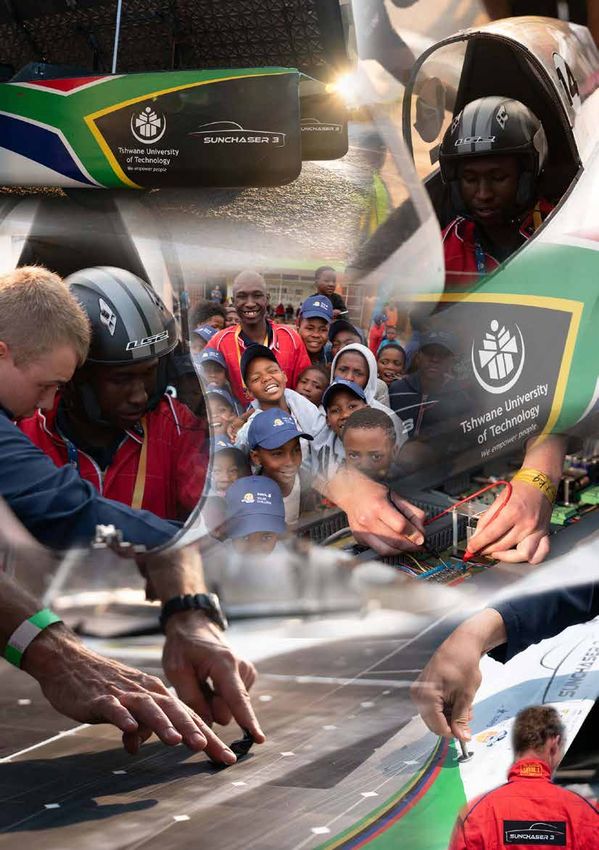
... Message from the Dean
  ... Long Service Awards

     ... General

         ... F’SATI

           ... FEBE Staff Profiles

             ... Faculty Management

             ... Cooperative Education

             ... IndustryGrid

           ... CITSI’s

        ... Research

    ... Community Projects

                                         Editorial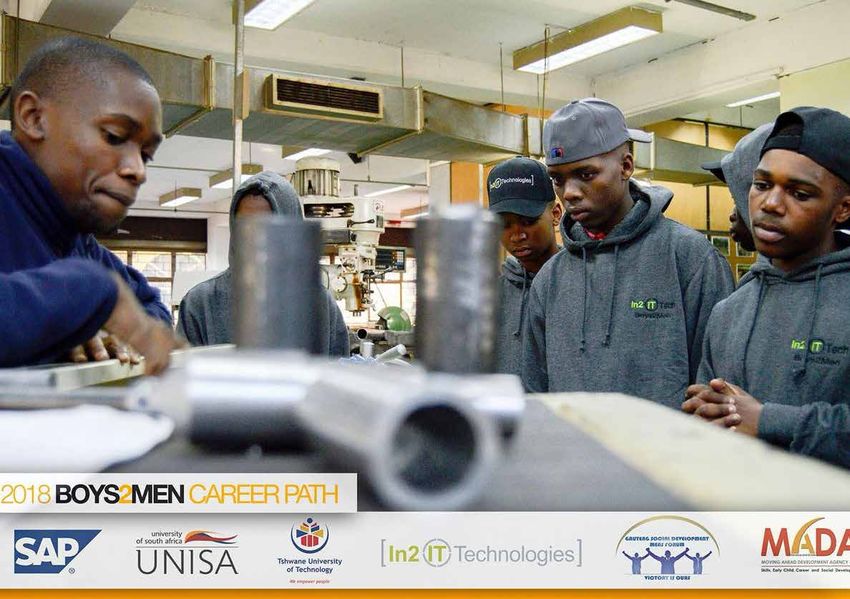
Message from the Dean
T  he Faculty of Engineering and the Built Environment
   is excited about the rollout of the Higher Education
Qualification Sub-Framework (HEQSF) aligned qualifications.
                                                                    students. We do not only link with industry through the ad-
                                                                    visory committees of our departments, but also through a
                                                                    hub called the IndustryGrid. IndustryGrid not only houses our
The Bachelor of Architecture (BArch), Master of Architecture        graduate employment office, but allows us to showcase our
(MArch), Master of Building Science (MBuiSc), Master of             technological achievements and provides a space where staff
Engineering (MEng) and Doctor of Engineering (DEng) and             and students can interact with government, municipalities,
Bachelor of Engineering Technology (BEngTech) -degrees,             parastatals and all kinds of businesses, including Small, Me-
Higher Certificates (HC), and other new qualifications across       dium and Micro Enterprises (SMMEs).
all disciplines in the Faculty. Our eight departments, and 168
                                                                    We are equally proud of our Centres, Institutes, Technology
full-time staff members, create a vibrant presence at the
                                                                    Stations and Incubators (CITSIs), including the Technology
                       Pretoria and eMalahleni campuses and
                                                                    Station in Electronics (TSE), the Technology Station in
                         are excited about the HEQSF rollout.
                                                                    Chemicals (TSC), the Institute for Advanced Tooling (IAT), the
                         TUT would like to emphasise that           Centre for Energy and Electric Power (CEEP), the French South
                         all current NATED qualifications are       African Institute of Technology (F’SATI) and the Institute of
                         still accredited and registered on the     Nano-Engineering Research. The CITSIs are used as a platform
                         National Qualifications Framework          for contract work and research, as a support mechanism for
                        (NQF) and they remain valid and             (SMMEs) needing technical assistance, as a vehicle for training
                              recognised by the Department          undergraduate and postgraduate students and for the delivery
                                of Higher Education and             of Short Learning Programmes.
                                Training (DHET), Council on
                                 Higher Education (CHE), South      I invite you to take our hand to ensure that we keep delivering
                                 African Qualifications Authority   well-rounded and competent graduates for the engineering
                                  (SAQA), professional bodies,      sector.
                                  industry, employers and other
                                  relevant stakeholders.

                                We work closely with indus-         Prof Ben van Wyk
                                try to deliver well-rounded         Executive Dean

LONG SERVICE AWARDS
 5                                               10                                           15
    years

                                                         years

                                                                                                    years

 Mr C Meyer                                   Ms R Madihlaba                               Mr GL Moepi
    Building Science                             TSC                                          Electrical Engineering
 Mr TH Shabangu                               Prof Y Hamam                                 Dr P Van Rhyn
    Electrical Engineering                       Electrical Engineering/ F’SATI               Electrical Engineering
 Mr RA Mogapi                                 Ms DM Mare                                   Mr DP Zikalala
    Mechanical Engineering                       Building Sciences                            Electrical Engineering
 Mr GB Ikokou                                 Mr RFA Berkers                               Mr TA Mokoena
    Geomatics                                    Civil Engineering                            Electrical Engineering
                                                                                           Mr PR Tshubwana
                                                                                              Electrical Engineering
                                                                                           Mr A Whiteford

 20                                              25
                                                                                              Electrical Engineering
                                                                                           Ms HI Van Rooyen
                                                           years
            years

                                                                                              Industrial Engineering
                                                                                           Ms SK Premlall
 Mr DR Shongwe                                Mr GJ Meintjes                                  Chemical, Metallurgy and Materials
    Electrical Engineering                       Building Sciences                            Engineering

                                                                                              35
 Mr T Nenzhelele                              Ms A Marneweck
    Industrial Engineering                       Mechanical Engineering
                                                                                                            years

                                              Mr E Malan
                                                 Electrical Engineering
                                              Mr RC Aylward                                Mr S Schmidt
                                                 Electrical Engineering                       Architecture
                                              Mr PJ Ehlers                                 Mr AL Roodt
                                                 Electrical Engineering                       Architecture

                                                                                                    FACULTY IN PERSPECTIVE
                                                                                                                             /3
4/ FACULTY OF ENGINEERING AND THE BUILT ENVIRONMENT

SunChaser3 is number ONE

                                                                                                                                                        SunChaser 3
                 in South Africa
           SunChaser 3, the Tshwane University of Technology’s low budget, high technology
           solar car, has proved beyond doubt that it is the leading solar car in South Africa.

T
    he TUT solar car took the lead nationally      and very windy routes”, de Vries added.            for calculating the algorithms that enabled
    in the recent Sasol Solar challenge and                                                           better decision making in terms of weather
                                                   In the run-up to the 2018 Sasol Solar Chal-
    obtained a fourth position internation-                                                           predictions.
                                                   lenge, TUT and Meteomatics AG, a Swiss-
ally. The team from the Netherlands won the
                                                   based global weather service provider and          “For the past 18 months, I have developed al-
gruelling weeklong challenge from Pretoria
                                                   weather drone experts, signed a Sponsor-           gorithms and software, as part of my PhD, to
to Stellenbosch, having completed a total of
                                                   ship Agreement, underpinning their strate-         optimise the energy use of SunChaser 3. The
4 147.8km. TUT’s SunChaser 3 completed 2
                                                   gic commitment to the innovation of future         combined use of the Meteomatics data, which
397km, with its major contender, North West
                                                   transportation. The parties formalised their       is a very accurate and stable platform for
University, completing 2 276.3km.
                                                   engagement in order to display their joint         weather data, together with my algorithms,
Among the many international solar vehicle         capabilities with specific emphasis on the         definitely gave us the edge, significantly im-
challenges, the South African-based Sasol Solar    development of solar-powered vehicles. The         proving the performance of our solar car,
Challenge is one of the most famous. The route     strategic alliance focused on Meteomatics          compared to 2016,” he added.
offers unique and challenging geographical         providing highly accurate weather data to the
                                                                                                      He explained that, although the North West
characteristics as well as a rare structure. The   TUT team to use in their advanced route plan-
                                                                                                      University’s solar car was technologically
aim is to cover the furthest distance possible     ning for their solar vehicle in the recent Sasol
                                                                                                      much more advanced than SunChaser 3, TUT’s
in eight days, rather than the shortest time be-   Solar Challenge 2018.
                                                                                                      energy forecasts and decision making topped
tween two points of fixed distance.
                                                                                                      that of other local participants.
Team leader, Johannes de Vries, explained                  Optimising on technology, more
that the challenge requires teams to design,                                                          “This, in combination with the entire team’s
                                                           specifically the use of Meteomatics
build, manage and race their solar vehicles                                                           hardwork and dedication, gave TUT the edge
                                                           AG, played a major role in improving       over other local competitors,” he indicated.
from inland Pretoria, across South Africa to
                                                     the performance of our solar car
Stellenbosch in the coastal region. Along the                                                         According to Johannes de Vries, the new regu-
routes, teams must do careful planning, tak-                                                          lations in terms of solar panel size posed some
ing into account the changing landscape from       “Optimising on technology, more specifically       challenges in the design and manufacture of
a vast flat topography, to mountainous re-         the use of Meteomatics AG, played a major          the solar car. The focus was on increased
gions, ascending and descending hundreds of        role in improving the performance of our so-       aerodynamics as well as reducing the weight
meters at a time.                                  lar car,” said Tiaan Oosthuizen, team member       and size of the car, since there would be less
“The route also offers a broad spectrum of         and PhD student in Mechatronics, responsible       solar energy available to it.
weather conditions near the coastal towns,
leading to challenging situations with at least       Photos and videos of the car taken during the challenge can be accessed here:
a day or two of rain as well as some cloudy           https://drive.google.com/folderview?id=1G-BjV6NDPfMowjfdDMaPymbY3MNJ8C2_

                                                                                                                                      Sun Chaser 3

                                                                                                                FACULTY IN PERSPECTIVE
                                                                                                                                             /5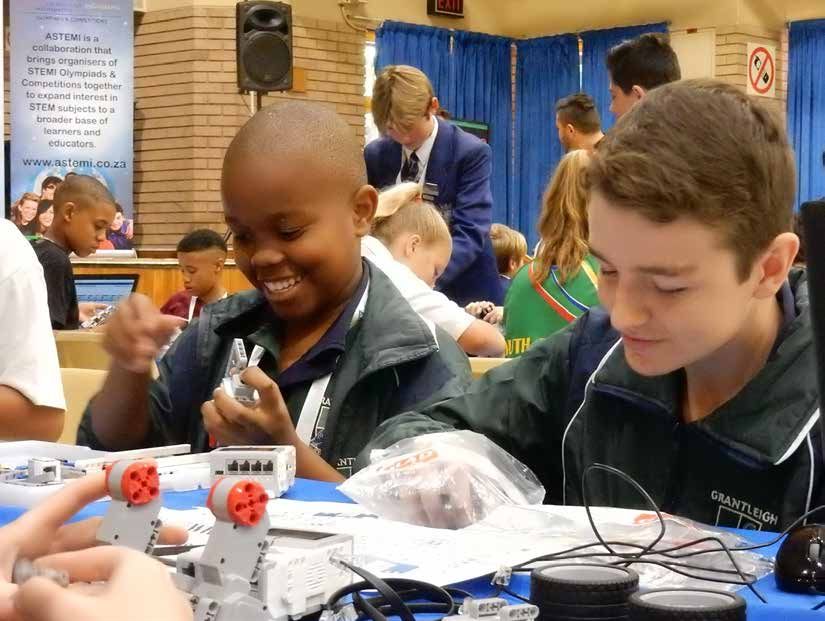
Engineering graduate uses                                                                   DETERMINE
                                                                                         YOUR OWN DESTINY
her trade to generate income                                                             Don’t waste your life. Don’t live
                                                                                          in mediocrity. Don’t just exist!
                                                                                           Make the decisions that will
                                                                                             determine your destiny.

                                                                                        O    n Saturday, 16 June, Phill Mashabane
                                                                                             presented a lecture at the Depart-
                                                                                         ment of Building Sciences’ monthly post-
                                                                                         graduate workshops on “Entrepreneur-
                                                                                         ship: determining your own destiny”,
                                                                                         a most appropriate theme to celebrate
                                                                                         Youth Day. Phill, one of South Africa’s
                                                                                         prominent architects, boasts architec-
                                                                                         ture and law degrees from the famous
                                                      Caroline Mokoena in Italy          universities in Paris, France. Since then,
                                                                                         he has never stopped studying. In 2015,
                                                                                         he received a Master’s degree in Knowl-
                                                                                         edge and Project Management from
                                                                                         the University of Salford in the United
                                                                                         Kingdom. As Professor Steyn, Research
                                                                                         Professor at the Department of Building
                                                                                         Sciences put it in his introduction: “Mr
                                                                                         Mashabane is not a man who waits for
                                                                                         things to happen; he makes them hap-
                                                                                         pen.”

D   ue to the high unemployment rate in
    our country, Caroline Mokoena (25),
uses her skills to create self-employment.
The highly motivated B Tech Civil
Engineering: Construction Management
student, was fortunate to have had an

                                                       If you want
opportunity to do her practical training
in Italy. The skills she acquired were used
                                                                 iving
                                                     to make a l
to help engineering students to improve
their drawing skills and generated a

                                                         from what
small income for herself.
Being passionate about sharing knowledge
                                                                    ng,
                                                       you love doi
and creating work opportunities, she
started her own tutoring company called
                                                                     get
AutoRev Substratum. She gladly shares the
new and easy techniques she mastered                    you need to
with civil and other engineering students
when teaching AutoCAD and Revit.
                                                           good at it.

New strategy flips traditional
teaching on its head
T   he Department of Civil Engineering is reaping the rewards of the so-called flipped
    classroom strategy. Since introducing this strategy in the subject Structures III in the
beginning of the year, students’ marks improved by a phenomenal 16%. A flipped classroom
is described as an instructional strategy and a type of blended learning that reverses the
traditional learning environment by delivering instructional content, often online, outside
of the classroom. It moves activities, including those that may have traditionally been
considered homework, into the classroom. Dirk Bester, lecturer at the Department
said,
                 Typically, a class would have been almost a one-way communication
                from my side. Now, we solve problems together, which resulted in
                students showing more confidence and enthusiasm. We need to
                use methods to work smarter, not harder.

6/      FACULTY OF ENGINEERING AND THE BUILT ENVIRONMENT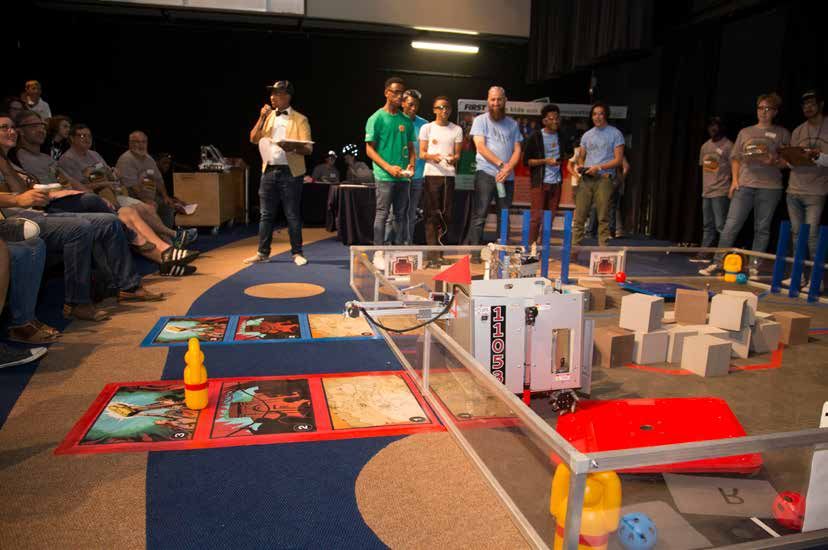
A passion for cars leads to an award                                                      3D printer,
R   eply Mahlangu, an Architecture student, was identified to represent TUT at the
    Corobrik National Student of the Year Awards. This is a very prestigious and much-    Architecture
                                                                                          becomes
anticipated annual event. The quality of work produced by the TUT architecture
students was of a very high standard. Reply produced a project that aimed to support
local car manufacturing through the design of a facility that also had the built-in ca-
pacity to adapt to changes in function over time. His project demonstrates a passion
for cars and the examination panel was impressed by how he spoke with great under-
standing about car design and the car manufacturing process. As one of his examiners
                                                                                          leader in higher
commented, he not only designed the building/factory and the car it produces, but
had also designed the furniture inside the facility.                                      education
                                                                                          T   he Department of Architecture has
                                                                                              just become home to a brand new,
                                                                                          state-of-the-art 3D printer.
                                                                                          The installation of the printer is a
                                                                                          huge step forward in TUT’s digital
                                                                                          transformation to meet the challenges
                                                                                          of the fourth Industrial Revolution.
                                                                                          It also forms part of an institutional
                                                                                          plan for the deployment of minimum
                                                                                          educational    technology   standards
                                                                                          in the classroom, a process that the
                                                                                          Directorate of Teaching and Learning
                                                                                          with Technology manages.
                                                                                          Dr Annette Sadie, Head of the
                                                                                          Department: Educational Technology
                                                                                          Integration, concluded that, “The next
                                                                                          generation of educational technology
                                                                                          will focus more on subject-specific
                                                                                          technologies such as 3D printers and
                                                                                          drones, as well as virtual and augmented
                                                                                          reality to enhance and make digital
                                                                                          content available. Furthermore, more
  CONTINUOUSLY WORKING TO ADDRESS                                                         handheld or smart devices, rather than
                                                                                          data projectors, will form part of the
     THE SHORTAGE OF STEM SKILLS                                                          new classroom technology”.

To inform the public, learners and fellow exhibitors of the new
qualifications, the representatives attended the STEM Conference and
Career Expo at the TicketDome, Johannesburg, on 27 and 28 July.
Zelda Janse van Rensburg, Faculty Marketer, second from the right,
with the student assistants working at the event.

                                                                                          Sieg Schmidt, lecturer and Zander Xander
                                                                                          Truter Jacobs, a student assistant at the
                                                                                          Department of Architecture, responsible for
                                                                                          the management of the printer.

                                                                                                    FACULTY IN PERSPECTIVE
                                                                                                                               /7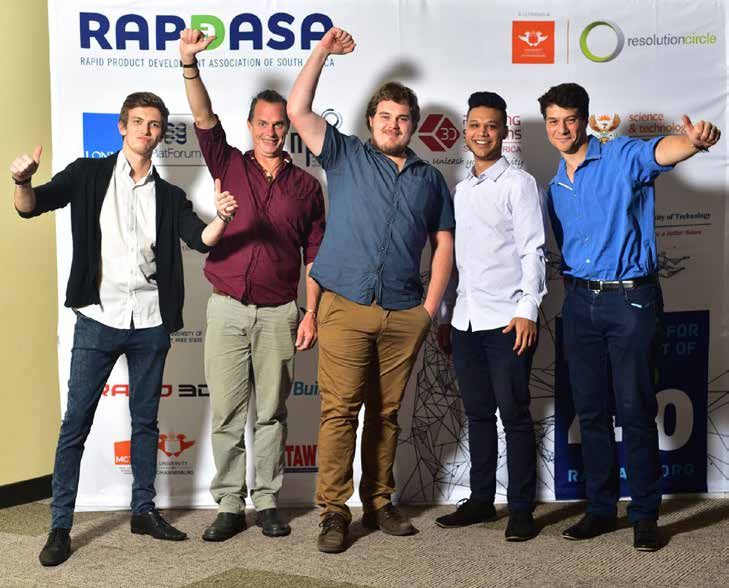
Three from TUT win big at
inaugural international conference

Maurice Conradie an Industrial Design student (far left), was named one of the top 5 with his design of a PlayStation Gaming Analog Extender in a
competition hosted by the Rapid Product Development Association of South Africa (RAPDASA). He won a 3D printer worth more than R10 000 for
his ingenuity. The competition attracted approximately 80 entries.

T   hree students from the Department
    of Chemical, Metallurgical and Mate-
rials Engineering scooped first and second
places at the inaugural African Interna-
tional conference on Industrial Engineer-
ing and Operations Management (IEOM).

Douw Gerbrand Faurie, a B Tech stu-
dent’s presentation about his study of
the sewerage disinfection properties of
Moringa Oleifera leaf powder won him a
first place; and Justin Kasongo Mbwebwe,
B Tech student, shared the second place
with Daphney Hlotse, an M-Eng student.

Reflecting on the event, the three com-
mended the technician, Molelekoa James
Mosesane, for his assistance and super-
vision whilst stressing the importance of        Winner of the award for the presentation on the Evaluation of Chemical Oxygen Demand (COD)
asking for help from those with experi-          Reduction in Distillery Wastewater Treatment Using the Photo-catalysis, Daphney Hlotse with her
ence.                                            supervisor Molelekoa James.

8/       FACULTY OF ENGINEERING AND THE BUILT ENVIRONMENT
Industrial Engineering
recognises its top achievers
                                           Students prepared for their
Industrial Engineering students who
excel in their studies were awarded
                                           future jobs
                                           I
for their hardwork by the Univer-           n an effort to curb youth (graduates) unemployment, Civil Engineering staff and
sity and the Gibela Research Chair in       students took a bold step by preparing and educating future civil technicians and
Manufacturing Skills Development.          technologists on how to sell themselves to the job market.
The recognition function was held at
the Prestige Auditorium on Thursday,       The South African Institute for Civil Engineers (SAICE) conducted their annual career
26 April. Gibela Rail signed a five-year   guidance workshop to help civil engineering students understand the importance of
long partnership with TUT to, among        promoting themselves. The SAICE committee invited guests from companies, former
others, offer internships and job op-      students and the SAICE executive members to share their experiences in the work
portunities to academically achieving      environment. The aim of the workshop was to bridge the gap between employers,
students. Photo: Grace Mukoko (20),        recruiters and industry.
a second-year Industrial Engineering
student, received no fewer than five       Workshops such as this are beneficial to students and the Faculty management would
awards, one of them being the Best         like to encourage all departments to arrange similar opportunities for their students.
First-year Student in 2017.

                                            SAICE Student Chapter Committee members with Dr Chris Ackerman at the centre.

                                           STUDENTS MAKE IT TO THE FINAL
Female students excel in
industrial design competition
                                           T  hird-year Industrial Design students, Oarabile Mokoka and Meliska Meerman, made
                                              it to the final of the Furniture Design competition at the HOMEMAKERS Expo. They

F   emale students innovative, yet
    practical designs in the 2018 As-
sociation of Rotational Moulders of
                                           competed against outstanding designers and students representing other institutions.
                                           The Furniture Design Competition, organised by the Department of Trade and Industry
                                           (DTI), was presented on 23 February, at the Dome in Johannesburg.
South Africa (ARMSA) competition, to-
tally captivated the judges, resulting     The mission of the competition was to identify new talent and elevate South Africa’s
in them winning the top three places.      manufacturing capabilities, locally and abroad. Deputy Minister of Trade and Indus-
Two of TUT’s second year Industrial        try, Bulelani Mgwanishe, said the Department would like to acknowledge the recent
Design students, Rayna Haselum and         formation of the South African furniture initiative. DTI mainly focused on the industry
Michelle Winkworth Rossouw, share          and enterprise development. Industrial Design lecturer, Hein Dubery, encouraged his
the second place in the annual de-         students to enter the competition and motivated them to excel.
sign competition organised by SASOL’s                     I am so proud of them; they invested a lot of time
Polymer Tech Centre. Maurice Con-
radie, a second-year TUT Industrial
                                                                   and dedication in their projects.
Design student, received a commen-         Hein elucidated that by exposing the students to design events, they are able to de-
dation for improving the functionality     velop a name for themselves as upcoming designers.
of the sun lounger design. His design      From left: Beaunard Jansen, Industrial Design alumnus; Hein Dubery, Lecturer in Industrial
of the sun lounger incorporates a          Design; and Oarabile Mokoka, Final-year Industrial Design student
cooler for keeping the drinks cool as
well as keeping valuables locked away
when going for a swim.
  Innovative design students, Michelle
 Winkworth Rossouw and Rayna Haselum.

                                                                                                       FACULTY IN PERSPECTIVE
                                                                                                                                   /9
Industry 4.
is Africa ready for digital transformation?
       Around the world, the traditional manufacturing
industry is in the throes of a digital transformation
                                                                    T   hese were the words of Prof Ahad Ali, Associate Professor
                                                                        and Director of Smart Manufacturing and Lean Systems
                                                                    Research Group, who gave an interesting outlook on the
that is accelerated by the exponential growth of smart              history, current realities, and future challenges facing the rail
                                                                    car manufacturing industry during the 22nd Vice-Chancellor’s
 technologies. Companies and industrial processes
                                                                    Seminar Series.
                                    need to adapt to this           Prof Ali indicated that the merging of the real and virtual
                                    rapid change and                worlds and the networking within an ‘Internet of things,
                                                                    services, data and people’ will transform the future of
                                    exponential growth
                                                                    manufacturing completely, more especially in the commuter
                                   if they are not to               rail car manufacturing industry. This will also make it much
                                                                    more competitive for manufacturers that operate across global
                                   be left behind by
                                                                    and local markets.
                                   developments in their            Prof Ali earned his B.S. in Mechanical Engineering from Khulna
                     sector and by their competitors.               University of Engineering and Technology, Bangladesh, Masters
                                                                    in Systems and Engineering Management from Nanyang
                                                                    Technological University, Singapore and his Ph.D. in Industrial
                                                                    Engineering from the University of Wisconsin-Milwaukee.

 New qualification involves students more in practical work
On 6 September,
35 Civil Engineering
students, who were the
first to enrol for the
Higher Certificate in
Construction Management
at the Department of
Civil Engineering, visited
the Daspoort wastewater
treatment plant.

T  hey were exposed to how
   a wastewater plant works.
Staying true to the undertak-
ing of a university of tech-
nology, students should be
able to apply the theory they
mastered in the course.

Students experienced the        Masilo Shai, the plant operator at the Daspoort wastewater treatment plant explaining and showing the stu-
various processes applied at    dents wastewater treatment processes.
a wastewater plant. This in-
cluded the screening of the     nology in Civil Engineering,        will familiarise students with      Chris Allnautt, a Civil Engi-
water, the biological treat-    they will have the skills to        the industry at the start of        neering lecturer added that
ment as well as the disin-      work in engineering support         their studies.                      even      though   theoretical
fection of the water and        fields such as draftspersons,                                           knowledge leads to better un-
finally the sludge disposal     maintainers of engineering          “Theoretical knowledge of           derstanding of a concept, stu-
process.                        equipment and systems.              skill-based modules need to         dents need to be able to apply
                                                                    be supported by practical           it in industry.
Should these students not       Mpho Muloiwa, Civil Engineer-
be able to proceed with the     ing lecturer, said that they        application,” he said.
Bachelor of Engineering Tech-   believe this new qualification

10 /    FACULTY OF ENGINEERING AND THE BUILT ENVIRONMENT
A picture that speaks a thousand words
T he 2018 October Academic Excellence Awards of the Faculty showcased the cream
of the crop. This elite group of young practitioners and prospective academics
represent less than 2% of graduates of this Faculty. This photo contradicts many
preconceptions. One being the performance of female students in a male dominated
environment. “As the Executive Dean of the Faculty, I would like to personally thank
the FEBE staff for realising the dreams of these young people,” Prof Ben commented.
fashion
ENGINEERING AND SCIENCE TRANSLATED INTO
Architecture students interpreted Professor Ora Joubert’s philosophy of the
buildings she designed through the creation of fashion garments.
The goal of the event was for students to understand the philosophy of the
buildings better and translate their understanding into fashion garments.
Professor Joubert is the esteemed winner of the Sophia Grey prize.
Students were greatly inspired by her work and came up
with brilliant fashion ideas.
Pumla Makhoba, an Architecture student, showcasing her interpretation of a house in Mooikloof.
FACULTY IN PERSPECTIVE
/ 11Motivation and academic success
Orientation Day
take centre stage at Engineering’s
Orientation Day
Make T he Fun Day at the Faculty concludes the Orientation Programme.
This is one of the most exciting days for first-year students. Stu-
dents are in an entirely new environment and the different presen-
every
tations during the Orientation period and the Fun Day event enable
them to make new friends and take on new challenges. This is done
in an effort to motivate students and to impart relevant information
pertaining to their studies.
First-year Building Sciences student, Lindokuhle Xobiso (19), said,
class
I have 100% potential to do anything that I want.
Gopolang Motswai, lecturer at the Department of Architecture, gave
count!
a talk on how to use one’s time fruitfully at the Fun Day. GP, as he is
fondly known, emphasised the importance of time and dedication by
challenging the students to focus on what they are good at doing. GP
said that if you focus on what you are good at, and remain dedicated
for 10 000 hours, it is all you need to become the richest person in
the world.
12 / FACULTY OF ENGINEERING AND THE BUILT ENVIRONMENTCivil Engineering students motivated to serve their society
A non-profitable student organisation,
South African Institute for Civil Engineers (SAICE), I n an effort to empower students with information, events
are organised to assist them with the transition from sec-
ondary schools to higher education institutions and finally to
was designed to cater for the needs of the Civil industry. According to the Chairperson of SAICE, Tumishang
Engineering students. Maputla (21), the Civil Engineering students are their priority.
They motivate them to excel academically and assist them
with their interpersonal skills. Mpho Muloiwa, a lecturer in
Water Engineering, plays a pivotal role in supporting the SAICE
Committee members with advice and promoting events that
are hosted by the Committee. Mpho confirmed that these
members are selfless, sacrificing their own time to attend to
matters they perceive important for their members. Mpho
wished them well and to grow the Civil Engineering industry.
Photo above: The SAICE Committee members for 2018.
Photo right: The staff at the Department of Civil Engineering
celebrated the achievements of the top academic performers at the
annual Academic Excellence Awards event held on 25 May,
at the FNB Auditorium.
S3 Civil Engineering students make a mark after 10 years
C haracterised by thundershowers and heavy rain, Float Your
Boat, the annual Concrete Boat Race hosted by the Inland
Branch Concrete Society of Southern Africa at the East Rand
Prof Jacques Snyman, Head of the Department of Civil Engineer-
ing, said that despite their lack of experience, the team did
exceptionally well in the competition.
Speed Boat Club, was no plain sailing for the participants. For Tsholofelo Tladi and Alison Gopaul, both lecturers in the Depart-
the first time in ten years, TUT participated in the race and ment, supervised the students from the start of building the
against all odds, Dobbertjie, the final-year Civil Engineering concrete boat through to the competition day. They commend-
students’ cement raft, sailed in at second position in the stu- ed the students for their determination, adding that they could
dent category. only supervise but not contribute any physical help.
“Two race finals could not take place due to thunder and lightning,
Prof Snyman continued saying,
which eventually halted the proceedings. I am certain our team
would have won if all the legs of the challenge could have taken Our students were very dedicated and disciplined.
place. Taking into consideration that our team members were be- They were really focused and concentrated on
ginners, they exceeded all expectations,” Prof Snyman said. performing well in the competition.
The team from Tuks in Monster took first position and the Uni-
versity of Johannesburg’s Vikings came in third.
Photo above: TUT’s team participating in the recent Concrete
Boat Race at the East Rand Speed Boat Club.
Photo left: Jones Moloisane, a lecturer at the Department of
Civil Engineering, received the Volunteer of the Year Professional
Engineering Technologist (Pr Tech Eng) award at the ECSA Gala
Awards Dinner on the 1 November.
FACULTY IN PERSPECTIVE
/ 13RESEARCH SEMINARS AND COURSES OFFERED AT F’SATI TUT
F’SATI and TUT hosted a number of visiting professors from various
countries during the year.
F’SATI RESEARCH WORKSHOP
F’SATI
Visitor from École Nationale
D’ingénieurs De Tunis, Tunis During October 2018, F’SATI held a re-
search workshop at TUT. The purpose
Prof Rahma Ben Ayed of École Nationale of the workshop was to give all F’SATI
French South African d’Ingénieurs de Tunis, Tunis (ENIT) with TUT and CPUT partners the opportuni-
expertise in: Artificial Intelligence, In- ty to present their research activities
Institute of Technology formation Systems (Business Informat- in the themes of the Institute and to
ics), visited F’SATI TUT during April. consider new projects.
is a graduate school jointly Prof Ben Ayed currently collaborates
developed by France and South with Prof Karim Djouani on projects re-
lated to the SARChI chair at TUT.
Africa. The initiative was
launched early in 1996 after
a visit by President Nelson
Mandela to France arranged by
the Chamber of Commerce and
industry of Paris (CCIP), with
the objective of developing a
training institute in electronics
in South Africa to present
master’s and doctorates which From left: Prof Dong; Prof van Wyk; Prof
Zhang and Prof Du at TUT Pretoria Campus.
offer a high added value.
Looking back at 2018, it has
been a rewarding year for the VISIT TO F’SATI FRENCH
F’SATI team. PARTNERS
The visit by TUT management to the
F’SATI Executive Management Board Participants at the F’SATI research workshop
provided an opportunity to visit ESIEE and the Loomo that was demonstrated.
F’SATI Paris Executive and UVSQ in Paris and had discussions
Management Board Meeting regarding the future collaborations be-
tween F’SATI and its French Partners. 25TH VICE-CHANCELLOR’S
F’SATI held its bi-annual Executive Man- RESEARCH SEMINAR
agement Board meeting on 4 July. The
meeting endorsed a new strategy aimed Prof Ezio Todini, emeritus Professor of
at ensuring long-term sustainability that Hydrology at the University of Bologna,
will lead to an increase in research col- spoke at TUT’s 25th VC’s Research and
laboration and more opportunities for Innovation Seminar in October 2018.
students to spend time in France. The theme of his talk focused on water
distribution modelling that takes into
account uncertainties that arise due
to many of the challenges faced during
the water distribution process. F’SATI
at TUT currently hosts a project in col-
laboration with the CSIR that focuses on
research work that is aimed at reducing
the amount of water loss experienced in
water distribution networks (Dynamic
Hydraulic Modelling project).
From the right: Prof L van Staden (TUT VC);
F’SATI Executive Management at the meet- Mr A Mahlalela (TUT CFO); Prof A Hamam at
ing members joined by NRF delegation during ESIEE and UVSQ in Paris.
EMB meeting Paris. Prof Ezio Todini during the presentation at
the Research Seminar
14 / FACULTY OF ENGINEERING AND THE BUILT ENVIRONMENTSATN Conference
The South African Technology Net-
FRENCH EXCHANGE STUDENTS work (SATN) is a collective voice of SOUTH AFRICAN EXCHANGE
During the year, F’SATI hosted a num-
Universities of Technologies in South STUDENTS TO UVSQ
Africa. The theme for 2018 was ‘The
ber of French students mainly from 4th Industrial Revolution: The Role of During November, two F’SATI TUT
ESIEE Paris and the Polytech Paris-Sud. Universities’. Dr Nico Steyn presented Co-tutelle doctorate students visited
The students spent 10 weeks at F’SATI the Robotic Rollator, which is part of the LISV laboratory at UVSQ as part
TUT and worked on various projects the assistive driving control system of their Co-tutelle doctoral studies.
covering domains of Energy, Assistive research that is ongoing at F’SATI. Christiaan Oosthuizen, staff member
Driver Aid systems, Brain-Computer The active walker was exhibited at in the Faculty and former F’SATI MSc
Interfacing (BCI) applications as well the Conference and seeks to provide student, is currently working on the
as the integration of BCI algorithms active support in the use of assistive energy modelling aspects based on the
for the control of humanoid. driver technologies. TUT solar car.
Staff and students from ESIEE Paris and Poly- Thapelo Mosethle and Christiaan Oosthuizen
tech Paris-Sud at TUT Pretoria Campus. at UVSQ
Dr Nico Steyn demonstrating the Active
walker at the SATN 2018 Conference
ERASMUS+ Mobility with ESIEE ERASMUS+ YEBO! Project
The Erasmus+ Mobility Interchange As reported previously, the YEBO! proj-
for Credits programme was approved ect is an Erasmus+ Capacity Building
between TUT and ESIEE Paris and be- Visitors from Tianjin project coordinated by the University
of Montpellier that was launched in De-
came active in 2018. The objective of University of Technology
cember 2017. The main purpose of the
the mobility was to strengthen the China YEBO! project is to foster and develop
links between TUT and ESIEE Paris.
During September, two TUT master’s Professors Zhang and Dong from the promotion of the internationalisa-
students, Antonie Smith and Dennies the Tianjin University of Technology, tion of doctoral studies in South Africa
Mokwele, both Faculty staff members, China gave talks to staff and stu- and aims to address problems associ-
were sent. Both Prof Ben van Wyk, dents at F’SATI and the Faculty on ated with doctoral studies. The project
Executive Dean and Prof Shengdzi Du, Panoramic Stereo Sphere Vision and comprises seven universities in South
Research Professor, visited ESIEE to the Study on Hybrid Brain-Computer Africa, five in Europe and is supported
present lectures. A further three stu- Interface in January. by the European University Association
dents will be sent to France to spend (EUA), CIRAD, and the COIMBRA group.
five months and two staff members As part of the project, a first training
will spend 10 days at ESIEE. workshop was hosted by CUT in Bloem-
fontein, which addressed the topic “In-
tercultural Competencies”. Five staff
members from TUT attended the first
training session.
Dr Yves Blanchard with Antonie Smith and
Dennies Mokwele at ESIEE
In the centre Prof Ben Van Wyk, Executive
Dean with F’SATI and TUT members.
TUT staff at the First Training Session
FACULTY IN PERSPECTIVE
/ 15FEBE Staff Profiles
Profiles
of the first people to start its build up in 2005. The first batch of
graduates who came back from India upon successful completion of
the toolmaking scholarship were deployed to build the three IATs in
Gauteng, Eastern and Western Cape provinces. In the Gauteng province,
we spent the first four months at Indlela in Olifantsfontein before TUT
was granted permission to host IAT as part of the technology stations
network.
My IAT journey here at TUT started in November 2005 and I have had a
number of responsibilities as part of building the IAT. My strong passion
had been in Tool Design and I was promoted to Operations Manager
JEFF MAKUBELA before being appointed Station Manager.
STATION MANAGER AT INSTITUTE FOR ADVANCED TOOLING (IAT)
What are some of the funniest childhood moments that you still
Age: 41 hold dearly and have helped to mould you into who you are today or
have taught you valuable lessons about life and/or are still relevant
Hometown: Pretoria
today?
Kindly share your background information (how you grew up): I learnt early in life that one needs to make decisions that please oneself
I am the eldest of five children, two boys and three girls. I come from first before pleasing other people. This helped me to not succumb to
a polygamous family as my dad had two wives. I was born in Alexandra peer pressure while growing up. An example of this was when we had
Township and started my primary schooling there in 1983. At the end to choose school subjects at standard 8 (Gr 10). I chose Mathematics
of 1984, my parents decided that I must stay in a village in Limpopo and Physical Science while all my friends went the other way. I had
(then Gazankulu homeland) due to political situations in the townships no advice from anyone as both my parents were not educated and
at that time. Tiyani village is where I continued my schooling until I teachers had their favourite learners from affluent families.
finished matric (Gr 12) and occasionally visited Alexandra during school
holidays. What are your ambitions/goals/dream?
I would like to own a manufacturing firm in future.
What course(s) did you study at tertiary level?
What is your motto when it comes to living or doing things:
I completed my National Diploma in Mechanical Engineering in 2002 at
Technikon Northern Gauteng (TNG) and finished my B Tech degree at “Help without expecting anything in return”. This has helped me in
TUT in 2009. In between, I worked few jobs and spent a year in India giving back to the community in whichever way possible.
between 2004 and 2005 on a toolmaking scholarship. What are your favourite movies and why?
What drew you into this field of work? • One Love (Jamaican movie) – a Romeo and Juliet type of movie
between a gospel singer (who happens to be the priest’s daughter)
I believe God wanted me to be in this field. It is hard to believe that and a reggae singer.
I didn’t know about toolmaking until I went to India. This was despite • The Good, the Bad and the Ugly – what I love about this movie is
the fact that I had developed an interest in manufacturing during my the fact that there are three different characters precisely named
practical training. The knowledge and experience gained in India made in the movie title pursuing the same goal whichever way possible.
it difficult to see myself working in any other sector than manufactur- • The Pursuit of Happiness.
ing. Now I am fortunate to be doing manufacturing work in an academic
environment. What are your favourite books?
Beside the bible, there are two books I read and found to be more rel-
What other qualifications do you hold? evant in my line of work. Coincidentally, both books were written by
In addition to the engineering qualification, I also hold the following the same author, Eliyahu Goldratt:
certificates: • Critical Chain
• Post Diploma: Tool Design & Manufacturing - Indo German Tool • The Goal
Room, Aurangabad, India;
What do you usually do when you are not at work - hobbies?
• Programme in Project Management (PPM) – University of Pretoria;
I try to read as much as possible. Whenever possible, I do travel around
• Advanced Programme in Project Management (APPM) – University
with the family. I love sports, even though I watch from a couch.
of Pretoria;
• Management Development Programme (MDP) – University of Pre- What is the best thing about your job?
toria. The joy of seeing a happy client when a tool IAT made for them
I am also registered with merSETA as an assessor to conduct assess- produces a product they need. It is a nice feeling when your work helps
ments for the NQF registered unit standards or qualifications in the an entrepreneur and/or SMMEs realise their dreams.
field of tooling and manufacturing.
What are some of the activities on your bucket list?
Why did you choose the course you studied in tertiary? Currently, I am pursuing postgraduate studies (master’s to be exact).
Growing up, I always thought that I would become a doctor. Back then, Are there any hidden talents that you have that no one knows about
becoming a doctor, nurse, teacher or police officer were the sought- or is aware of?
after careers for boys and girls growing up in a rural village. While do-
I used to hate teaching as a profession and never saw myself becoming
ing standard 9 (Gr 11), I attended a career exhibition and got to learn
a teacher. However, with the training done at IAT, circumstances
about engineering courses. Thereafter, my first interest in engineering
forced me to take on some modules and taught Tool Design theory
was Civil. Later I learnt that one of my uncles (cousin to my dad), who
to the trainees. During this period, I realised that there may be some
was working for the then Gazankulu homeland, had actually studied
teaching talent in me.
Mechanical Engineering at college. So my interest switched from Civil
to Mechanical.
What are some of the things you have accomplished?
What form of work were you doing prior to being a station manager • I led IAT to develop a quality management system (QMS) and
(briefly describe your journey)? achieve ISO9001 accreditation.
I can call myself part of the furniture here at IAT, having been one • IAT was awarded a merit certificate as the best performing CITSI at
16 / FACULTY OF ENGINEERING AND THE BUILT ENVIRONMENTthe Academic Excellence Awards 2016.
• In 2015 & 2016, IAT offered training for four modules at Technical
University of Kenya (TUK) in Nairobi, Kenya. I facilitated Theory of
Tool Design in Injection Moulding module.
What are some challenges that you have come across in your field of
work and how have you dealt with them?
IAT’s clientele range from individuals to big companies like OEMs.
Dealing with individual or entrepreneur clients is very difficult. Some
of them feel a need of entitlement when they interact with technology
stations. Technology stations are centres of specialisation, and as such, PROF. CAROLINE KHOATHANE
IAT specialises in tool, die and mould making (or tooling/toolmaking). ACTING ASSISTANT DEAN: TEACHING AND LEARNING
Some clients expect assistance even if their need is not what the
station offers. If we are unable to assist a client, we do our best to Challenges build character and perseverance
connect them with other technology stations that can be of assistance.
For the acting Assistant Dean: Teaching and Learning, Professor
What was the first project you ever worked on?
Caroline Khoathane, a female in a male-dominated industry, says
One of the first projects we did at IAT was for CSIR. At that time, most that it was never easy, but her strong inner self-motivated spirit
of the IAT projects never received payments, even though the projects kept her going. Prof Khoathane spent most of her younger years in
were costed. The idea was to prove IAT’s capability to industry. Soshanguve township where she grew up with her six siblings.
What was it all about? “My father was a bus driver; he wasn’t educated but my mother
CSIR was conducting research in terms of aerospace components made was a primary school teacher. Although my family was very poor,
out of titanium. Since, titanium is a tough material to machine, CSIR they valued education”. Prof Khoathane said. She alluded that her
wanted to test if a component can be cast near to finished size so journey from school to varsity had many challenges, but made her
that there will be less material to machine. IAT was then tasked with just more adamant to succeed.
designing and manufacturing an aluminum mould that was used to pro-
“I did matric in the year of tyre necklace, where massive national
duce wax components of a selected aerospace part.
school boycotts erupted in the township and the government de-
clared a State of Emergency. I survived the necklacing execution
To date, how many projects have you worked on?
and had to move to the rural area during the apartheid era, where
Since 2008, IAT completes on average around 50 projects annually. The there were no good Mathematics teachers,” she explained.
length of the projects varies depending on the scope of work required.
Longer projects can take months to a year to complete, whereas some In 1987, Prof Khoathane enrolled at the former University of the
machining-only projects can be a week. North. Her life felt more difficult by the time she completed her
BSc (Physics & Chemistry) studies. Then, she was unable to secure
What keeps you grounded and motivated to be able to do your day- employment for a period of a year because of her gender and lack
to-day work? of experience. She still did not give up, and furthered her studies at
I am very passionate about manufacturing. the then Technikon Pretoria. After completing her National Diploma
in Plastics Technology, she started her career at the former Atomic
Who are some of the people that make it easy or help in making sure Energy Corporation (now NECSA) in 1994.
that your work becomes easier?
She was the only black female laboratory technician appointed in
Without the IAT team, I would not be a Station Manager. I also get a lot
the surface fluorination division. She was promoted within two years
of support from the Faculty and CITSI offices. To name a few, Prof Ben
to Senior Lab Technician and was one of the people nominated to
van Wyk in his capacity as Executive Dean and Dr Hamilton Mphidi as
study Master of Business Leadership at UNISA (Graduate School of
the chairperson of the CITSI EXCO.
Business Leadership) to become one of the future leaders.
How does your day look like on a day-to-day basis (coming to work In 2000, she became the first black female to be appointed in the
until you knock off)? Polymer Division. Prof Khoathane completed her master’s and doc-
It starts with checking or following up on emails from the previous torate degrees in Polymer Technology at Tshwane University of
day(s). Sometimes there are meetings to attend during the day. Some Technology. She is the first South African female to be awarded
of the meetings are unplanned as we do have clients walking in to make Doctorate in Polymer Technology. She has supervised, to date, more
enquiries. In between, the team also requests my attention on opera- than 50 B Tech and seven master’s and three doctoral students in
tional/technical issues. Being the senior person, I have a responsibility the field of Polymer composites and materials. She has been at the
of checking and approving designs before any machining can commence. forefront in the establishment of a Composite Innovation Centre at
During reporting periods, I then get occupied with drafting, compiling TUT, which will serve as a hub in the research and development
and checking reports before they are sent to stakeholders. of composite materials for automotive and aerospace applications.
When you look at your career, what was the most difficult or painful Prof Khoathane is a strong motivator who inspires students and col-
lessons you have had to learn? leagues to achieve academic excellence and sharing her loving and
assertive personality with everyone who crosses her path. Her goal
In my line of work, I have learnt that one must never promise a client
is to develop women in engineering to be authentic, visionary and
what they cannot deliver. We call it ‘over promise and under deliver’.
brave enough to challenge the status quo. She added that with her
I have had difficult conversations with clients because certain aspects
experience as a female in the engineering field, she knew she has
of their projects were not delivered as promised.
the ability to assist female students following the engineering path
and retain them.
What was the turning point in your career?
Taking that opportunity to leave everything and go to India on Outside of work, she enjoys spending time with family, serving
a scholarship was the turning point in my career. I was even lucky at church, and reading. “I am confident that women are able to
because I had missed a call for an interview and a voicemail message occupy any position regardless of their gender and can add enor-
was left instead. Honestly, I hesitated on following up on that message. mous value to the Engineering profession by holding leadership
There was an admin lady called Yvonne where I was working at the positions. We might even have a female president in future,” she
time. She took up my phone and listened to that voicemail message, concluded.
then she followed it up acting as my sister. To my surprise, she was told
that if I am still interested I must come for an interview the following
day. Luckily, the venue was around Pretoria and as they say, the rest is
FACULTY IN PERSPECTIVE
/ 17What was it all about? Sasol used an oil that flames with lower flame
Profiles
temperature, (almost 40 degrees Celsius) in their hoist production
plant. The preference would be to develop and use an oil that is flam-
mable at more than 100 degrees Celsius. I had to conduct various
chemical trials using different oils that flame at more than 100 degrees
Celsius. During the research trials, I managed to find a solution to re-
place the low temperature oil with high temperature oil that meets
Sasol and SABS specifications. I conducted further trials and presented
a sample to Sasol and the SABS for testing. The results from both in-
stitutions indicated that the improved product complies with all the
VINCENT TAU required specifications. The information was presented to Sasol and
STATION MANAGER the beneficiary, List Cleaning Chemicals. As a result of my work, Sasol
presented the opportunity to List Cleaning Chemicals to supply them
Age: 39 years with the product for five years. List Cleaning Chemicals was the only
Hometown: Soshanguve, Pretoria supplier in the country that can manufacture the product and created
jobs.
Kindly share your background information (how you grew up):
I was born in Soshanguve Pretoria. The firstborn of two children in the To date, how many projects have you worked on? More than 120
family. Born without a silver spoon in my mouth, life was very difficult. [projects].
My mother was a single parent and we stayed with my grandmother.
I fortunately attended good primary and secondary schools in the What keeps you grounded and motivated to be able to do your day-
township. My mother motivated me to study hard, emphasising the to-day work? Realising that as a team, we are impacting the lives of
importance of education and that it was the key to a successful future. individuals, particularly youth, and enterprises on a daily basis as well
Luckily, I enjoyed Mathematics and Physical Science and performed as the fact that I am gaining skills from my team members and seniors.
well. In secondary school, I came up with a business plan, selling
sweets to survive and enjoy the same benefits as other kids who could Who are some of the people that make it easy or help in making sure
afford transport and lunch. A friend and I shared the profits which that your work becomes easier? My team members at the TSC in all
contributed to his transport to school and I could afford to attend extra the departments, subordinates as well as interns.
Physical Science classes on Saturdays. I proceeded with my tertiary
studies at Technikon Pretoria under severe financial pressure for my When you look at your career, what was the most difficult or painful
mother. Finally, NSFAS allowed me to complete my undergraduate lessons you have had to learn? To deliver on annual targets without
diploma in chemistry. receiving any operational funds.
When, where and for how long? In 2003, I started with my B Tech
What was the turning point in your career? Sourcing funds from other
Analytical Chemistry qualification at TUT, which took me five years,
agencies or industry to allow us to offer services which are required by
and in 2010, I proceeded with my studies in Senior Management
industry.
Programme (SMP) at the University of Pretoria.
What drew you into this field of work? I was interested in chemistry Any last words? Nothing good happens without focus, discipline and
and initially wanted to work for a pharmaceutical company. commitment.
What other qualifications do you hold? I am currently busy with my
Master’s in Management of New Venture Creation.
What form of work were you doing prior to being a station manager
(briefly describe your journey)? I was a technical advisor for various
industry partners, working at the Technology Station in Chemicals
(TSC), advising them on technology transfer, improving their factory
processing and testing as well as the testing of the products. I also
assisted my Manager with management activities. I focused on attaining
skills and gaining experience in how an industry function. When my
Manager resigned at TSC, I was appointed as the Station Manager. DR BRENDON SHONGWE
What are your ambitions/goals/dream? My biggest goal in life is to LECTURER
assist TSC to become a commercial entity and to service chemical Born and bred in Malelani (Mpumalanga), Shongwe, a father of two, de-
industries locally as well as satellite campuses. scribes himself as calm but firm. The 33-year-old Chemical, Metallurgy
What is your motto when it comes to living or doing things: Stay and Materials Engineering Section Head is a dedicated lecturer who is
focused and be committed. very passionate about his family, work and church.
What are your favourite books: Good to Great by Jim Collins Shongwe’s career at TUT started in 2011 and has since been a fruitful
journey. He said that when coming to work he looks forward to playing a
What do you usually do when you are not at work/hobbies? I enjoy huge positive role in his students’ lives. He added that contributing and
travelling to other provinces or neighbouring countries for sightseeing. encouraging people is his ultimate goal and that is where contentment
What is the best thing about your job? The diversity of projects. comes from.
What are some of activities on your bucket list? To be active in Shongwe believes that being a motivational speaker is his calling and
Entrepreneurs Coaching and Mentorship he is doing it in an academic form. He said that speaking, motivating
and encouraging his students is what he does effortlessly.
What are some of the things you have accomplished? To travel
abroad, especially to developing counties and secondly, building a Besides being a lecturer, Shongwe is focused on his family above
house from scratch. everything in life. Shongwe said that it is important to spend time with
family in order for him to teach his children family values.
What are some challenges that you have come across in your field
of work and how have you dealt with them? The biggest challenge Clearly, it is not everyone’s dream from the village to live in Gauteng.
I experienced is to find space for the equipment facilitating contract Shongwe enjoys the dusty streets of Malelani much more than Gauteng.
manufacturing. I investigated external space off campus and am “In my spare time I take my family to a farm close to where we live.
financing the rent payment from our project cost recovery budget. The place reminds me of where I come from and how I grew up. I love
the fact that I am from the rural area. When I retire, I want to move
What was the first project you ever worked on? Tests to improve
away from the busy life in the city to the rural area.”
graphite penetrating oil to suit Sasol and SABS specifications on behalf
of a company which was supplying Sasol in Secunda called List Clean- Shongwe said next in his career is climbing the “corporate ladder”,
ing Chemicals. trying out new things and seeing what the future holds.
18 / FACULTY OF ENGINEERING AND THE BUILT ENVIRONMENTPROF. JACQUES SNYMAN PROF. AMIRA OSMAN
ASSOCIATE PROFESSOR, HEAD OF THE DEPARTMENT (HOD) OF PROFESSOR IN ARCHITECTURE
CIVIL ENGINEERING AND ACTING ASSISTANT DEAN: TEACHING AND
LEARNING. Age: 51
Hometown: Pretoria Hometown: Shendi/Khartoum/Pretoria
What has surprised you most about being in academics? The manner What has surprised you most about being in academics? After 30
in which academia and student interaction has evolved over the years, years, nothing much surprises me.
which can be very unpredictable and unexpected. What do you find most challenging about your job? People dynamics.
What do you find most challenging about your job? My job is intel- If you could change one thing about your career, what would it be?
lectually stimulating and fulfilling and this Faculty is a very dynamic I wanted to be an artist before I became an architect. When I was very
one. There is never a dull moment. It continuously challenges one as young, I wanted to be a writer.
an academic and leader. What do you do when you aren’t at work? I am actively participating
If you could change one thing about your career, what would it be? in the Sudanese Community in Gauteng.
I am exceptionally satisfied with how my career has developed. I had a
specific plan on what I wanted to do career wise, and I have achieved
all the goals I set out to achieve. There are of course new short-term
and long-term goals every year because the academic career is never
static, but dynamic and continuously evolving.
If you weren’t here, what would you be doing instead, or what
would your life be like? I would be at a place where I could motivate
and inspire people, particularly young people, to be innovative, or to
think out of the box. I would drive development in the field of engi-
neering by encouraging the youth to invest themselves in this field.
What do you do when you aren’t at work? I spend my leisure time
outdoors – enjoying and appreciating nature with my family. PROF. YSKANDAR HAMAM
What else do you think we should know about you? I am a very dis- PROFESSOR IN ELECTRICAL ENGINEERING
ciplined individual, everything I engage in must be exceptional, never
mediocre.
Engineering professor continues to offer his services post retire-
Is there an achievement or contribution that you are most proud of? ment age
I am proud of the academic status I have achieved thus far as Associ-
ate Professor, HoD and Acting Assistant Dean: Teaching and Learning; While others cannot wait to retire and the University becomes a small
and the value that these leadership positions allow me to add to the chapter in their lives, Professor Yskandar Hamam has kept the ball
Faculty and the University as a whole. rolling.
What is your life philosophy? Your past does not determine your des- Prof Hamam (75), Electrical Engineering Professor, started his aca-
tiny. What you do today determines your future. Everyday should be demic contribution in South Africa in 2007. He occupied various posi-
the first day of your life, a new opportunity to determine your future. tions at international universities, such as the University of Manches-
ter, University of Rio de Janeiro, and ESIEE-Paris, Paris Est University,
where he was Head of Department and Dean of the Faculty.
In 2008, he was appointed as the Scientific Director of the French South
African Institute of Technology (F’SATI), where he played a huge role in
the development of research. His mission was to develop the research
programme by increasing the number of graduates.
Prof Hamam plays a huge role in student academics. “I like students’
interaction and supervision. It brings me great pleasure to see young
researchers becoming independent”, he said. He added that, whenever
students are in doubt and need help, it was his duty to guide them to
PROF. JACO JORDAAN overcome their challenging situations.
ASSOCIATE PROFESSOR IN ELECTRICAL ENGINEERING
Some of his contributions include supervision of master’s and doctorate
Age: 43 students, and the establishment of the dual-doctorate programme with
Hometown: Hotazel, Northern Cape the University of Paris-Est and University of Versailles Saint-Quentin-
Working at the university: Started in 2004 as a part-time lecturer and en-Yvelines.
was permanently appointed in 2009. Prof Hamam contributed to the current research and development of
Studied: Electrical and Electronic Engineering domains and scarce skills in South Africa, like the water distribution
Where: At the Potchefstroom University for Christian Higher Education, networks, electrical power systems and the assistance to handicapped.
now known as the North-West University. He is the main contributor to the analytical methods of water distribu-
His experience as a lecturer: Lecturing was quite a challenge at first. tion networks. His water network analysis, published in 1971, made a
I was uncomfortable with public speaking but when I was appointed breakthrough in the solution of pipping network equations.
as a part-time lecturer, I had to conquer this challenge. Lecturing has He is very keen on assisting the handicapped; this was evident when
grown on me. I now enjoy my job and would not trade it for anything.” he developed a research activity on the domain when he arrived in
Passion: I am passionate about making a positive impact in people’s South Africa, since it was not available in the country at the time.
lives. The novelty of the research resulted in TUT being awarded the Chair
Project developments: I developed database software for a number in Enabled Environment for Assisted Living by the National Research
of clinics in Winterveldt and the surrounding areas. Foundation (NRF).
FACULTY IN PERSPECTIVE
/ 19You can also read


