37th Annual J.P. Morgan Healthcare Conference Howard Robin President & CEO January 8, 2019 - Nektar Therapeutics
←
→
Page content transcription
If your browser does not render page correctly, please read the page content below
37th Annual
J.P. Morgan Healthcare Conference
Howard Robin
President & CEO
January 8, 2019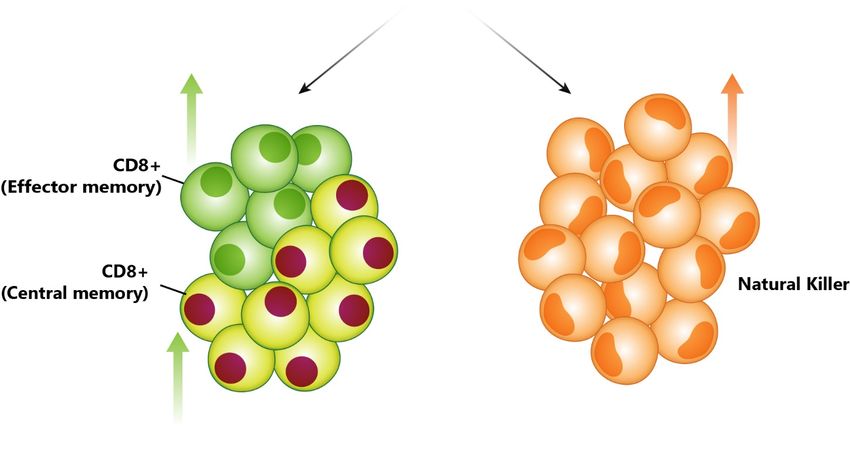
This presentation includes forward-looking statements regarding Nektar’s proprietary drug
candidates, the timing of the start and conclusion of ongoing or planned clinical trials, the timing
and outcome of regulatory decisions, and future availability of clinical trial data. Actual results
could differ materially and these statements are subject to important risks detailed in Nektar's
filings with the SEC including the Form 10-Q filed on November 8, 2018. Nektar undertakes no
obligation to update forward-looking statements as a result of new information or otherwise.

                                                                                                       2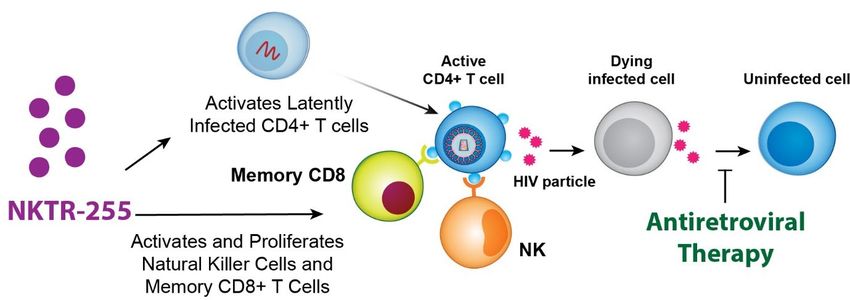
Focus of Nektar Pipeline
Immuno-oncology Immunology Chronic Pain
Target the innate and Harness the immune A next generation opioid
adaptive immune system system to fight auto- molecule
immune disease
NKTR-214 NKTR-358 (Co-Promote) NKTR-181 (Wholly-Owned)
(Co-Develop and Co-Promote)
CD122-Biased Agonist T Regulatory Cell New Opioid Agonist
Multiple Solid Tumors Stimulator Molecule
In Phase 3 Studies Lupus Chronic Low Back Pain
Crohn’s Disease
Rheumatoid Arthritis NDA Filed;
Psoriasis May 29, 2019 PDUFA date
NKTR-262 (Wholly-Owned) In Phase 1 Studies:
TLR 7/8 Agonist SAD ongoing
Multiple Solid Tumors MAD in Lupus patients
Phase 1/2 studies ongoing Initiated April 2018
NKTR-255 (Wholly-Owned)
IL-15 Receptor Agonist
IND in first half of 2019
3
NKTR-181: Potential Novel Pain Therapy for Opioid Naïve Chronic
Low Back Pain Patients
NKTR-181 NDA Package
NKTR-181 designed to separate analgesia >2200 Subjects – 15 Clinical Studies
from euphoria
PDUFA date of May 29, 2019 with Long-Term Safety Study
Phase 3 Efficacy Study
Advisory Committee meeting likely in Chronic Low Back Pain
Chronic Pain Patients
Q1/Q2 2019 New to Opioid Therapy
New to Opioid Therapy &
Opioid Experienced
Two highly productive pre-NDA
meetings completed in 2018 to finalize
Pharmacokinetic & Pharmacodynamic Studies
the NDA data packages for clinical,
nonclinical and CMC
Human Abuse Potential Human Abuse Potential
Formed wholly-owned subsidiary to Study Study
launch NKTR-181 while advancing the Therapeutic NKTR-181 Supratherapeutic & Therapeutic
regulatory process Doses NKTR-181 Doses
In the process of securing one or more capital
partners to support launch within subsidiary
4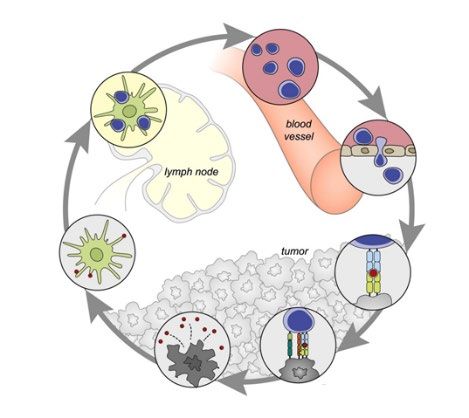
Nektar’s Immuno-Oncology Strategy to Create Therapies that Cover
the Immunity Cycle

                                                                     4. Trafficking of T cells
                                                                         to tumor (CTLs)
                                                  NKTR-214 (CD122-Biased
                                                         Agonist)
                                3. Priming and
                                            Prime, Proliferate, Activate & Increase
                                   activation
                                                                                 5. Infiltration of T
                                                                                 cells into tumors
          Target as many
                               (APCs & T cells)
                                               Tumor-Infiltrating Lymphocytes (CTLs, cells)
                                                                                         endothelial

              steps as                         (TILs), Increase PD-1 expression                                         Therapies need
          possible in the                                                                                                   to be
            cycle with as                                                                                                accessible as
           few therapies                                                                                                  medicines
             as possible      2. Cancer                                                   NKTR-255
                                     NKTR-262                                          (IL-15 Receptor
                               antigen
                            presentation                                                         6. Recognition
                              (dendritic                                                         of cancer cells

                                      (TLR 7/8
                             cells/APCs)
                                                                                           Agonist) by t cells
                                                                                                  (CTLs, cancer

                                      Agonist)
                                                                                                           cells)

                                                                                    Stimulate and expand
                                                                                      NK Cells & Promote
                                 Activate Dendritic                                survival          and    expansion
                                         1. Release of cancer cell                 7. Killing of cancer cells
                                   Cell Response
                                           antigens (cancer cell
                                                                                        of central
                                                                                    (immune and cancer
                                                                                                           memory
                                                    death)                                    cells)
                                                                                              CD8+ T cells

                                                                                                                                         5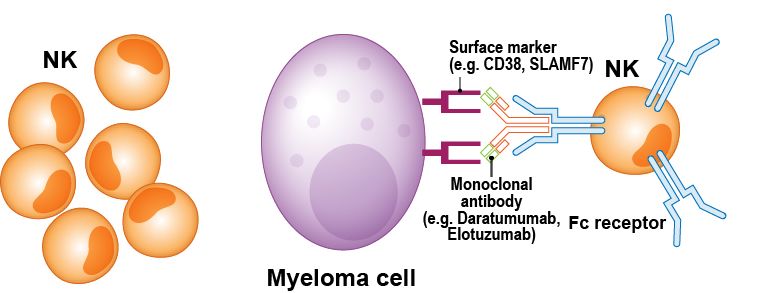
NKTR-214: Biasing Action to CD122, or IL-2R Beta, to Stimulate
T-Cell Proliferation
Biases signaling to favor the CD122
receptor (IL-2Rβγ complex) to NKTR-214
proliferate CD8+ T cells and NK cells
Transient binding to the alpha
receptor retained to enhance priming
in lymph nodes (T cell proliferation to βγ αβγ
CTLs Tregs
new tumor antigen)
CD8+ T-Cells
Prodrug design and receptor bias and NK Cells
CD4+ Regulatory T-Cells
eliminate over-activation of IL-2
pathway that results in serious safety
issues Down-Regulates
Stimulates Immune
Response to Kill Proliferation of CD8+ T-cells
Achieves antibody-like dosing Tumor Cells and Suppresses Immune
schedule in outpatient setting Response
6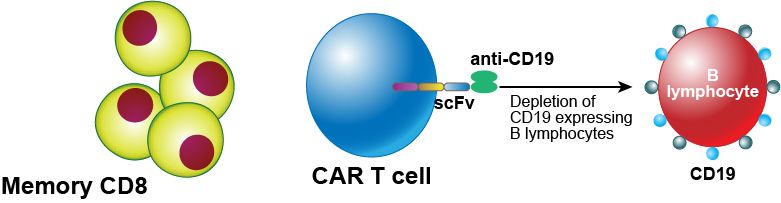
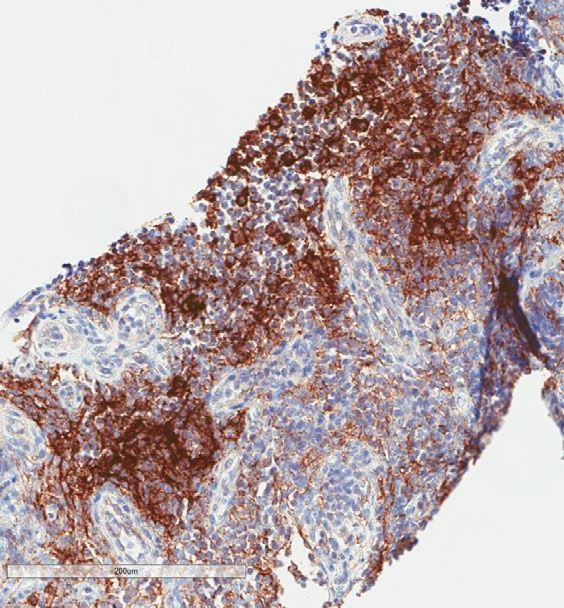
NKTR-214: Conversion of PD-L1(-) to PD-L1(+) in Tumor Biopsies
from Baseline to Week 3 Associated with Clinical Benefit
Patient with Urothelial Carcinoma
Baseline: Week 3:
PD-L1 Negative PD-L1 Positive N=14 N=9 N=8
100 CR+PR
SD
80
PD
% Subjects
60
40
20
0
POSPOS NEGPOS NEGNEG
NKTR-214 + nivolumab can convert PD-L1(-) tumors to PD-L1(+)
PD-L1 negative to positive conversion in 9/17 (53%) of patients
Patients that were PD-L1(+) at baseline, or converted to PD-L1(+) after
start of treatment showed greatest clinical benefit
Source: ASCO 2018, Diab, A., et al.
31 patients were available with matched baseline and week 3 results for PD-L1 status. Of these, 17 were PD-L1 negative at baseline. PD-L1 was assessed on tumor cells using a validated 28-8
method. Example image shown for UC patient at baseline and week 3, 20x magnification. 7NKTR-214 Drives Continuous Mobilization of Lymphocytes After
Every Cycle
NKTR-214 provides
continuous mobilization NKTR-214/Nivolumab Combination NKTR-214 Monotherapy
of the immune system 6 6
Effect of lymphocyte
L y m p h o c y te s (x 1 0 /L )
/L )
mobilization is
9
9
L y m p h o c y te s (x 1 0
consistent and
4 4
maintained with
successive treatment
cycles
2 2
9x 9x
Lymphocyte effects of
the NKTR-214/nivolumab 0
C1 C2-10 0
C1 C2-6
combination are driven
by NKTR-214, as a similar 1 8 15 25 100 175 250 1 8 15 25 75 125
pattern is observed with T im e ( D a y s )
Dose Administration
T im e ( D a y s )
monotherapy
Source: ASCO 2018, Diab, A., et al.
Lymphocyte levels were obtained from standard hematology analysis. All patients with data from the monotherapy trial EXCEL (N=17) and all 1L Melanoma patients in the NKTR-214/nivolumab
combination enrolled in PIVOT-02 (N=41, Mean±SE) were included in the analyses. 8B a s e lin e
NKTR-214 Drives Deepening of Responses over Time
50
25
1L Melanoma Overall Response
(n=38 Efficacy Evaluable) Rate
C h a n g e in T u m o r S iz e (% ) F r o m
# #
Confirmed ORR (CR+PR) 20 (53%)
#
# ##
0
* + + + § § §
CR 9 (24%)
DCR (CR+PR+SD) 29 (76%)
PD-L1 negative (n=14) 6 (43%)
-2 5
PD-L1 positive (n=19) 13 (68%)
PD-L1 unknown (n=5) 1 (20%)
LDH > ULN (n=11) 5 (45%)
-5 0
Liver metastases (n=10) 5 (50%)
Concordance in ORR between
-7 5 independent central radiology (53%) and
12/38 (32%) 100% Reduction Target Lesions investigator-assessed 20/38 (53%).
9/38 (24%) Complete Responses
-1 0 0
SOURCE: SITC 2018, Diab et. al. (amended to update investigator-assessed ORR as of December 2019) 9Establishing NKTR-214 as a Backbone Immuno-Oncology Therapy
Global Development &
Commercialization Agreement
Nektar and BMS pursuing >20 indications in 9 tumor types (~15,000 patients)
Nektar can combine NKTR-214 with any agent other than anti-PD-1/PDL-1 in any indication,
including third party clinical collaborations
Nektar can combine NKTR-214 with other PD-1/PD-L1 agents in indications outside
Joint Development Plan
Nektar retains price control and books global revenue;
Profit split of 65% Nektar/35% BMS;
Development costs shared for trials (32.5% Nektar/67.5% BMS);
Nektar has annual development cost sharing cap of $125M;
$1.4 billion in potential approval milestones
10Nektar-BMS Collaboration: First Set of Registrational Trials Being
Implemented
Number
Patient Population Study Design Start Date
Patients
Melanoma 1 1L metastatic melanoma NKTR-214+Nivo vs. Nivo 764 Q3 2018
2 1L metastatic RCC (intermediate/poor risk) NKTR-214+Nivo vs. Physicians Choice TKI 600 Q4 2018
RCC 3 1L metastatic RCC (intermediate/poor risk) NKTR-214+Nivo+Ipi vs. Nivo+Ipi 820 Q2 2019
4 1L metastatic RCC NKTR-214+Nivo+TKI vs. Nivo+TKI 330 Q1 2019
1L metastatic cis-ineligible urothelial cancer
5 (PD-L1 negative patients)
NKTR-214+Nivo (chemo sparing) with gem/carbo reference arm 165 Q4 2018
Bladder 6 Muscle-invasive bladder cancer Peri-adjuvant NKTR-214 + Nivo vs Nivo vs Surgery 540 Q1 2019
7 1L metastatic urothelial cancer NKTR-214+Nivo+chemo TBD Q2 2019
2L metastatic NSCLC
8 (post CPI/chemo)
New cohort of NKTR-214 + Nivo in PIVOT-02 100 Q4 2018
NSCLC 9 1L metastatic NSCLC NKTR-214+Nivo regimens >700 Q2 2019
10 2L/3L metastatic NSCLC (post CPI) NKTR-214+Nivo regimens >600 Q2 2019
11Nektar-BMS Collaboration: Next Set of Registrational Trials
Being Designed and Implemented by Q2 2019
Patient Population
Bladder 11 1L urothelial cancer
NSCLC 12 Second Study in 1L metastatic NSCLC
SCLC 13 SCLC
Breast 14 Triple Negative Breast Cancer
15 First CRC study
CRC
16 Second CRC Study
Gastric 17 Advanced Gastric Cancer
Sarcoma 18 Advanced Sarcoma
12New Clinical Oncology Collaboration with Pfizer in November 2018
Nektar and Pfizer collaboration to evaluate NKTR-214 with several
combination regimens in Pfizer’s oncology portfolio including:
Avelumab, a human anti-PD-L1 antibody (Merck and Pfizer)
Talazoparib, a poly (ADP-ribose) polymerase (PARP) inhibitor
Enzalutamide, an androgen receptor inhibitor (Pfizer and Astellas)
Multiple indications in squamous cell carcinoma of the head and neck (SCCHN) and metastatic
castration-resistant prostate cancer (mCRPC)
Combinations to be explored:
NKTR-214 + Avelumab in SCCHN
NKTR-214 +Avelumab + Talazoparib in mCRPC
NKTR-214 +Avelumab + Enzalutamide in mCRPC
Pfizer will serve as the sponsor for the Phase 1b/2 trials
Nektar, Pfizer and their respective partners will each maintain global commercial rights to their
respective medicines
13Takeda and Nektar Clinical Trial in Non-Hodgkin Lymphoma (NHL)
Initiating in January 2019
■ Takeda and Nektar collaborating to develop NKTR-214 with TAK-659, a
Dual SYK and FLT-3 inhibitor in a range of liquid tumors
■ Preclinical data demonstrated synergy of two agents in multiple liquid
and solid tumor models (ASCO 2018)
■ Phase 1b study beginning enrollment in January 2019
Dose escalation and safety expansion study of NKTR-214 administered
in combination with TAK-659
~40 patients with advanced NHL
Once RP2D is established, the study will evaluate the safety and
efficacy of the combination
■ Each company is contributing their respective compounds to the clinical
study
■ Takeda and Nektar splitting costs and each will maintain global
commercial rights to respective drugs/candidates
14Additional Combination Clinical Studies Starting in 1H 2019
Vaccibody and Nektar collaborating on combining NKTR-214 with
VB10.NEO, a personalized cancer neoantigen vaccine
Phase 1
Head & Neck SCC Proof-of-concept study evaluating vaccine-specific immune-response
markers in 2L head and neck cancer
BioXcel and Nektar collaborating on combining NKTR-214 with BXCL701,
a small molecule immune-modulator, DPP 8/9 and FAP inhibitor and a
Phase 1 checkpoint inhibitor
Pancreatic Cancer Phase 1 study in patients with 2L pancreatic cancer
15Nektar’s Immuno-Oncology Strategy to Create Therapies that Cover
the Immunity Cycle
4. Trafficking of T cells
to tumor (CTLs)
NKTR-214 (CD122-Biased
Agonist)
3. Priming and
Prime, Proliferate, Activate & Increase
activation
5. Infiltration of T
cells into tumors
Target as many
(APCs & T cells)
Tumor-Infiltrating Lymphocytes (CTLs, cells)
endothelial
steps as (TILs), Increase PD-1 expression Therapies need
possible in the to be
cycle with as accessible as
few therapies medicines
as possible 2. Cancer NKTR-255
NKTR-262
antigen
presentation
(dendritic
NKTR-255 (IL-15)
(IL-15 Receptor
6. Recognition
of cancer cells
(TLR 7/8
cells/APCs)
Agonist)by t cells
(CTLs, cancer
Agonist) Stimulate NK Cells &
cells)
Stimulate and expand
Promote survival and
NK Cells & Promote
Activate Dendritic expansion of central
survival and expansion
1. Release of cancer cell
Cell Response
antigens (cancer cell memory
7.
CD8+
Killing of cancer
(immune and cancer
cells
T-cells
death)
of central
cells) memory
CD8+ T cells
16NKTR-262: A Unique Intratumoral TLR Agonist to Target the Innate
Immune Response
■ Activates myeloid cell response and increases M1 Dendritic
Macrophage Cell
tumor antigen presentation
Overcomes tumor suppressing micro-
environment by mimicking local infection NKTR-262
activates
■ NKTR-262 designed to be synergistic with innate Increase tumor
NKTR-214 and is a novel, wholly-owned I-O immunity antigen expression
combination for Nektar
CD8+
■ NKTR-262 is designed to be retained in the T Cell
tumor and when combined with NKTR-214 Proliferate &
NKTR-214
optimizes abscopal anti-tumor effects activates
activate T Cells
■ Nektar technology results in minimal systemic adaptive
immunity
exposure after intra-tumoral injection
■ Phase 1 REVEAL study of NKTR-262 + NKTR-214
underway
17Complete Regression and Abscopal Effect with Combination of
NKTR-262 and NKTR-214
Dosing
Primary (injected) Tumor
NKTR-262
NKTR-214
Secondary (non-injected) Tumor D0 D9 D 18
Primary (injected) Secondary (non-injected)
CT-26 Colon Tumor CT-26 Colon Tumor
Vehicle
1 000
SEM )
1 000
SEM )
Vehicle
±
±
3
NKTR-214
3
T u m o r V o lu m e (m m
T u m o r V o lu m e (m m
500
500
NKTR-262
NKTR-214
NKTR-262 NKTR-262 + NKTR-214
NKTR-262 + NKTR-214
0
0
0 1 0 20 30 40 50
0 1 0 20 30 40 50
D a y s a f te r fir s t d o s e
D a y s a f te r fir s t d o s e
NKTR-262 0.8 mg in 40 μL volume given in a single IT dose, NKTR-214 0.8 mg/kg q9dx3
IV; N=10 per group
Source: World Preclinical Congress 2017, Zalevsky, J., et al. 18Dose Escalation Stage of REVEAL Phase 1/2 Study of
NKTR-262 + NKTR-214 Doublet Ongoing
PD and Efficacy
■ Dose-dependent induction of interferon genes observed with Both Responders
NKTR-262 demonstrating target engagement Were Refractory to
■ 2 evaluable patients with R/R metastatic melanoma Checkpoint
experienced RECIST responses (non-injected tumors) Inhibitors
Safety
■ No DLTs observed in starting dose cohorts and no
Grade ≥ 3 TRAEs observed to-date
Dose Escalation
No dose delays, no dose reductions and no discontinuations due to Ongoing
TRAEs
MTD Not Reached
■ Most common treatment-related AEs are flu-like symptoms
easily managed with NSAIDs/OTC
19Nektar’s Immuno-Oncology Strategy to Create Therapies that Cover
the Immunity Cycle
4. Trafficking of T cells
NKTR-214 (CD122-Biased
to tumor (CTLs)
Agonist)
3. Priming and
Prime, Proliferate, Activate & Increase
5. Infiltration of T
activation
cells into tumors
Target as many
(APCs & T cells)
Tumor-Infiltrating Lymphocytes (CTLs, endothelial
cells)
steps as (TILs), Increase PD-1 expression Therapies need
possible in the to be
cycle with as accessible as
few therapies medicines
as possible 2. Cancer NKTR-255
NKTR-262 (IL-15 Receptor
antigen
presentation 6. Recognition
(dendritic of cancer cells
(TLR 7/8
cells/APCs) Agonist) by t cells
(CTLs, cancer
Agonist)
cells)
Stimulate and expand
NK Cells & Promote
Activate Dendritic survival
7. and
Killing of cancer expansion
cells
Cell Response
1. Release of cancer cell
antigens (cancer cell
death)
of central
(immune and cancer
cells) memory
CD8+ T cells
20Advantages of Harnessing the IL-15 Pathway
NKTR-255 designed to retain NKTR-255
binding to all IL-15 receptor
complexes to fully harness
IL-15’s biological properties
Strongly enhances survival and
function of Natural Killer cells
Induces survival of both
effector and memory CD8 T
cells
21NKTR-255: Opportunity in Cancer Immune Therapy
Boost NK cell numbers and function
Enhancement of ADCC
Antibodies
Daratumumab
Elotuzumab
Anti-BCMA
Potential to combine with
any targeted antibody that
utilizes an ADCC MOA
NK Cell Boost - Multiple Myeloma
NKTR-255 Increase duration of response for CAR-T
and cellular therapies Enhancement of
CAR-T
CD19 CAR-T
BCMA CAR-T
CD38 CAR-T
Potential to expand into
other hematological and
solid tumor CAR-T and
Memory CD8 Effect – CAR-T cellular therapies
ADCC: Antibody-dependent cellular cytotoxicity 22NKTR-255 Combined with Daratumumab Effectively Depletes
Lymphoma Cells in the Bone Marrow Tissue by Enhancing NK Cells
NK Cell Count Human Lymphoma Cell Count Human B Cell Lymphoma Model
in Bone Marrow# In Mouse Bone Marrow Survival
100 ***
4×10 6 4×10 6
Cell numbers (mean ± SEM)
Cell numbers (mean ± SEM)
3×10 6 *** 3×10 6
75
Percent survival
50
2×10 6 2×10 6 Daratumumab +
NKTR-255
25
1×10 6 1×10 6 Daratumumab
** control
0
0 0
0 7 14 21 28 35 42 49 56 63 70
d
5
ab
R- b +
d
5
ab
R- b +
25
te
25
te
um
um
Daudi Injection NKTR-255 0.3 mg/kg, SC
ea
a
ea
R-
a
5
R-
5
um
um
25
25
tr
m
tr
KT
m
KT
un
un
u
m
u
m
N
N
at
at
Daratumumab 0.5 mg/kg, IP
KT
u
KT
u
ar
at
ar
at
N
N
D
ar
D
ar
D
D
SCID mice (N=6/group) inoculated with Daudi B cell lymphoma cells were treated with single dose of daratumumab (14 days after inoculation) and two doses of SCID mice (N=8/group) inoculated intravenously with Daudi B cell lymphoma cells were
NKTR-255 (14 and 21 days after inoculation). Lymphoma depletion, NK cell expansion and activation in the bone marrow assessed three days after the second NKTR- treated with a single dose of daratumumab (14 days after inoculation) and three doses of
255 dose (day 24) by flow cytometry. NKTR-255 (14, 21 and 28 days after tumor inoculation). Survival of tumor inoculated mice was
*** NKTR-255 with daratumumab significantly increases NK cell numbers compared to NKTR-255 and daratumumab single agent (p=0.0026 and pNKTR-255 Enhances CAR-T Therapy:
Research Collaboration with Fred Hutchinson Cancer Center
Injection of Injection CD19 CAR-T
tumor cells into SCID mice 0.8x10⁶ cells • Model of Diffuse Large B Cell
5x10⁵ CD4/8 ratio 1:1
Raji Lymphoma
• End points are tumor imaging and
CAR-T level in blood
d-7 d0 d6 d13 d20 d27 d34 d41 d47
Human CAR-T Cells
in Mouse Blood
100
T cells in blood [%]
10
1
0.1
0.01
0.001
0 7 14 21 28
Days
Source: Dr. Cameron Turtle - Fred Hutchinson Cancer Center 24NKTR-255 Enhances CAR-T Therapy:
Research Collaboration with Fred Hutchinson Cancer Center
Injection of Injection CD19 CAR-T
NKTR-255
tumor cells into SCID mice 0.8x10⁶ cells
0.3 mg/kg, iv, q7d • Model of Diffuse Large B Cell
5x10⁵ CD4/8 ratio 1:1
Raji Lymphoma
• End points are tumor imaging and
CAR-T level in blood
d-7 d0 d6 d13 d20 d27 d34 d41 d47
Human CAR-T Cells
in Mouse Blood
100
T cells in blood [%]
10
1
0.1
0.01
0.001
0 7 14 21 28
Days
Source: Dr. Cameron Turtle - Fred Hutchinson Cancer Center 25NKTR-255 Enhances CAR-T Therapy:
Research Collaboration with Fred Hutchinson Cancer Center
Injection of Injection CD19 CAR-T
NKTR-255
tumor cells into SCID mice 0.8x10⁶ cells
0.3 mg/kg, iv, q7d • Model of Diffuse Large B Cell
5x10⁵ CD4/8 ratio 1:1
Raji Lymphoma
• End points are tumor imaging and
CAR-T level in blood
d-7 d0 d6 d13 d20 d27 d34 d41 d47
Human CAR-T Cells
Tumor Imaging
in Mouse Blood
100 10 8
Radiance [p/s/cm2/sr]
No CAR-T Control
T cells in blood [%]
10 10 7
CAR-T only
1 10 6
0.1 10 5
0.01 10 4
0.001 10 3
0 7 14 21 28 7 14 21 28 35 42 49 56 63
Days Days N=4
Source: Dr. Cameron Turtle - Fred Hutchinson Cancer Center 26NKTR-255 Enhances CAR-T Therapy:
Research Collaboration with Fred Hutchinson Cancer Center
Injection of Injection CD19 CAR-T
NKTR-255
tumor cells into SCID mice 0.8x10⁶ cells
0.3 mg/kg, iv, q7d • Model of Diffuse Large B Cell
5x10⁵ CD4/8 ratio 1:1
Raji Lymphoma
• End points are tumor imaging and
CAR-T level in blood
d-7 d0 d6 d13 d20 d27 d34 d41 d47
Human CAR-T Cells
Tumor Imaging
in Mouse Blood
100 10 8
Radiance [p/s/cm2/sr]
No CAR-T Control
T cells in blood [%]
10 10 7
CAR-T only
1 10 6 NKTR-255 0.3 mg/kg
0.1 10 5
0.01 10 4
0.001 10 3
0 7 14 21 28 7 14 21 28 35 42 49 56 63
Days Days N=4
Source: Dr. Cameron Turtle - Fred Hutchinson Cancer Center 27NKTR-255: Applications in Virology
NKTR-255 can “uncover” or activate latently infected
memory CD4+ T cells
■ NKTR-255 also activates and proliferates NK cells and
memory CD8+ T cells to target activated CD4+ T cells and kill Anti-retroviral and
infected cells immune modulator
therapies
■ Resistance to
antiretroviral therapy
NKTR-255 occurs when HIV latent
infection exists in a
reservoir of CD4+ T cells
that are in “hiding”
NKTR-255 Potential to
combine with antiviral
therapy
■ Anti-retroviral therapy can then kill the virus when it is out of
hiding before it can re-infect and replicate
Graphic Source (adapted): Deeks, S., et al., 2015 Nature Reviews, HIV Infection Primer; Garrido et. al., Journal of Virology, June 2018; Jones et. al. PLOS Pathogens,
April 2016; 2018 JCI Younes et. al., Perreau et. al., Trends in Molecular Medicine Review, October 2017 28New Collaboration with Gilead to Evaluate NKTR-255 in Virology
■ New collaboration with Gilead Sciences to explore
combination of NKTR-255 with antiviral therapies in the Gilead
portfolio
■ Gilead will conduct preclinical studies and be responsible for 100% of
cost
■ Each company will contribute their respective compounds
■ Collaboration is limited to evaluation of NKTR-255 in the field of
virology
■ Nektar and Gilead will each maintain global commercial rights to their
respective drugs and/or drug candidates
■ During agreement term, if Nektar chooses to partner NKTR-255 in
virology, Gilead has right of first negotiation (specifically excludes the
therapeutic area of oncology)
29NKTR-358: Phase 1b Multiple Ascending Dose Study in
Patients with Lupus Underway
■ First and only native IL-2 conjugate designed to selectively
proliferate and activate T Regulatory cells
■ First-in-human study in healthy volunteers shows multiple-fold
increase in T regulatory cells with no increase in CD8+ or NK cells
following single doses of NKTR-358 with no dose-limiting
toxicities to-date
■ Data from FIH study planned for submission to EULAR 2019
■ Ongoing Phase 1b multiple ascending dose study in patients with
lupus
■ Additional Phase 1b studies to be initiated by Lilly in 2H 2019 in
two new auto-immune indications
302019 Anticipated Milestones
Initiation of new BMS-Nektar registrational trials in renal cell carcinoma, bladder cancer, non-small cell
lung cancer, breast cancer, gastric cancer, colorectal cancer, small cell lung cancer and sarcoma
Presentation of data from PIVOT study of NKTR-214+nivo in patients with bladder cancer at ASCO-GU
Presentation of data from Phase 1 dose-escalation phase of REVEAL study of NKTR-214 + NKTR-262 at
ASCO-SITC
Potential approval and launch of NKTR-181
Initiate first Phase 1 clinical trial of NKTR-255 in multiple myeloma
Data from first-in-human Phase 1 single-ascending dose clinical trial of NKTR-358 at EULAR 2019
PIVOT data presentations in lung cancer (ESMO) as well as other tumor types at major medical
conferences
Lilly to initiate two new Phase 1b studies of NKTR-358 in two new auto-immune conditions
Ended 2018 with $1.92 Billion in Cash & Investments
31You can also read


