2019 Workplace Trends Report - The rise of the human-centered office - HubSpot
←
→
Page content transcription
If your browser does not render page correctly, please read the page content below
2019
Workplace
Trends Report

The rise of the human-centered office
INTRODUCTION
The way we work, and the spaces in which we work, are rapidly evolving. Companies have
become reliant on digital systems and processes to conduct business, whether that’s record
keeping, communication, tracking sales and revenue, marketing, or running their workspace.
The phenomenon has been dubbed the “digital transformation.” The responsive, interactive
technology driving this change has also empowered individuals to seek personalized
experiences, cultivate a greater connection to each other, and demand greater customization
from the services and goods they purchase, especially through social media. This shift has
changed employee expectations for their workplace and as a result, businesses have had to
alter the way they operate to meet those needs and keep pace with the demands of a fast
changing economy and technological landscape.

A higher tech, more personal, and interactive approach to work and life has been one of the
hallmarks of the “millennial” generation. While the millennial generation is still being treated as
a “new” phenomenon at work, they already make up the majority of the workforce. Millennials
are not just early-career professionals, but organizational and cultural leaders including
managers, directors, founders, Vice Presidents, and CEOs. Many of the qualities that have been
attributed specifically to millennials, such as valuing community, desiring purpose-driven work,
and integrating their work and personal lives, are actually attributes that employees of all ages
and generations now value and are actively seeking from their employers.

Staying ahead of these cultural shifts in the workplace is essential for employers of all sizes
and industries that wish to effectively attract and retain top talent. Based on our research
and experience working with thousands of forward-thinking companies across the United
States, we have identified the five workplace trends that forward-thinking companies will need
to effectively integrate into their workspace to keep pace with the ways in which workplace
technology and culture are rapidly evolving.

Managed by Q                                                                                  2019
TRENDS TO WATCH IN 2019

              01
   The technological evolution of
  human-centered workplace design

              02
 The rise of coworking and the focus
      on workplace hospitality

              03
     Flexible workplace policies

              04
  Culture is essential for employee
    recruitment and retention

              05
     Diversity and inclusion are
   fundamental business practices
01
The Technological Evolution of
Human-Centered Workplace Design
Over the past few years, office design          For example, Kickstarter’s headquarters
trends have shifted away from opulent           are located in an old pencil factory in
spaces that may have served to impress          Greenpoint, Brooklyn, while Aeria Games’
clients or bolster a CEO’s ego, and             office occupies in a former warehouse in
now focus on the needs of employees.            Berlin.
Workspaces are being designed to bring
the “dream” office to life and create a space   Even companies that are locked into
where employees actually want to spend          leases in commercial office buildings are
time. Far from simply being a functional        incorporating custom design elements that
place to work, the latest office design aims    set them apart. Office teams are working
to deliver a unique, holistic, and inspiring    with local artists to design decorative
experience to employees.                        and functional pieces, such as a mural
                                                based on the company’s mission and
This design shift is not limited to interior    values, or a custom boardroom table from
decor—office locations are no longer            a local furniture maker. The emphasis
ubiquitous. As formerly industrial              of these spaces is not just on beautiful
neighborhoods in cities large and small         design for design’s sake, but for creating a
are rezoned and revitalized, companies          welcoming and functional environment that
are embracing non-traditional spaces to         communicates a clear sense of place for the
create a unique setting for their office.       people who use them.

Managed by Q                                                                               2019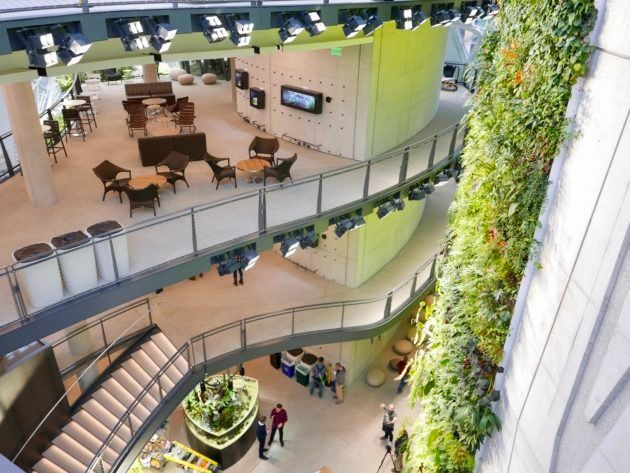
THE TECHNOLOGICAL EVOLUTION OF HUMAN-CENTERED WORKPLACE DESIGN

The shift towards human-centered design          dynamic, flexible, and accommodating of
also comes out of a growing fatigue with         different types of work, working styles, and
the open plan office. An article published       personalities. The goal of these spaces is to
by Inc. in 2016 declared that, “the open         help foster productivity and innovation in
office concept is dead,” and research shows      whatever form it comes in, whether that is
that workers in open plan spaces are less        individual or group work. The office should
focused, experience greater stress, and          also enable employees to shift their focus
get sick more often. Matthew Davis, an           and remain engaged as they stay in the
Organizational Psychologist quoted in the        workplace longer.
article sums it up, writing, “An open plan can
easily fit 300, 400 people in one room—it’s      Companies are adding more spaces for
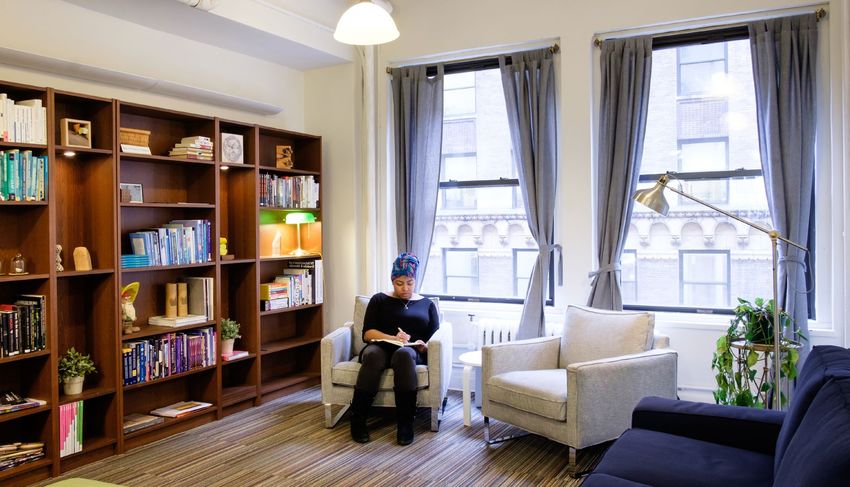
a little bit like chicken factory farms. These   quiet concentration, including libraries,
are not places you want to spend much            phone booths, upholstered pods, and
time.”                                           “secret” nooks away from the commotion
                                                 of the kitchen and lobby. These spaces
And yet time is one of the factors that          support quiet focus, a mode of working
reflect the way work is changing. Workers in     that is becoming increasingly necessary
the United States are working more hours—        in the modern workplace. A Gensler study
an average of 47 hours a week according to       found that workers in 2013 spent 54% of
a recent Gallup poll.                            their time on work requiring individual
                                                 focus, which was up from 48% in 2008.
While the disdain for purely open plan           The drive to create these spaces has also
spaces has been accelerating, they are not       been influenced by cultural attention to
being replaced by the cubicles and private       introverts, especially following Susan
offices of the past. Instead, office layouts     Cain’s 2012 book Quiet, which explores the
feature creatively divided space that is more    ways in which introverts are undervalued

Managed by Q                                                                               2019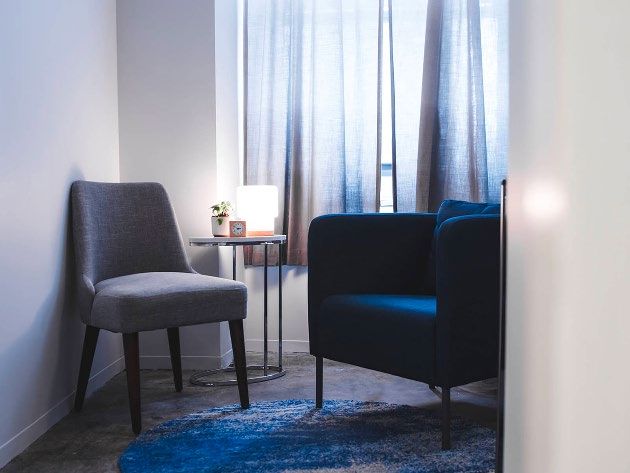
THE TECHNOLOGICAL EVOLUTION OF HUMAN-CENTERED WORKPLACE DESIGN

                                                                      The library at Fractured Atlas

in the workspace and how they can be an        and video conferencing. Companies that are
innovative force when provided the right       focused on physical products, hardware, or
conditions to thrive.                          design are also adding product labs or studio
                                               spaces for prototyping and experimentation
Collaborative spaces have also been            with new ideas and technology. Beyond
reimagined to support different kinds of       conference rooms and studios, more
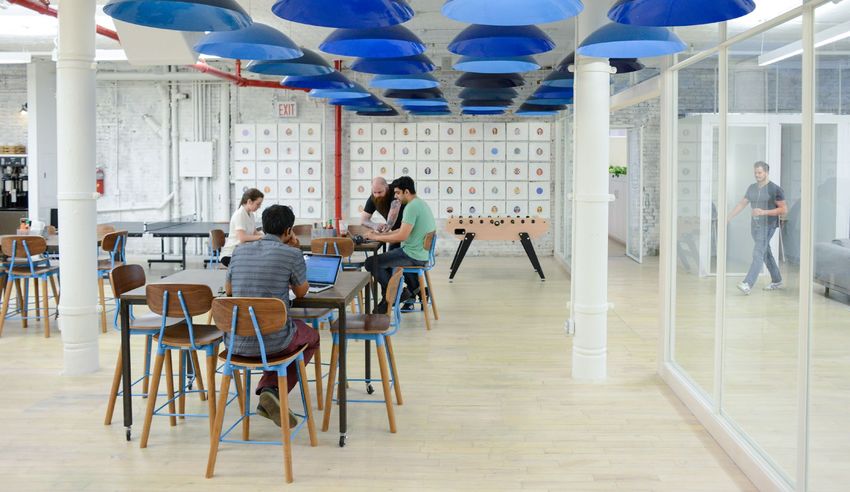
collaboration, both in-person and as well      casual collaborative spaces are also found
as with remote team members and offsite        throughout offices, including clusters of high-
freelancers. With much of these interactions   top desks for standup meetings, comfortable
facilitated by technology, these spaces        seating for relaxed meetings, large work
inherently include large screen TVs and        tables, and white board walls.
hardware for screen sharing, presentations,

Managed by Q                                                                                 2019
THE TECHNOLOGICAL EVOLUTION OF HUMAN-CENTERED WORKPLACE DESIGN

An extreme example of human- and tech-         The increased interest in biophilic, or
centered design is Amazon’s now iconic         plant-centered, design is rooted in more
spheres—a botanical garden-inspired glass      than aesthetics. Plants create a relaxed,
workspace full of tropical plants and water    natural feeling environment, help divide
features, which opened in early 2018. They     open spaces, and filter the air. A study
are perhaps the most prominent example         published in the Journal of Environmental
of the movement to bring immersive             Psychology found that exposure to indoor
environments and lifestyle touch points into   plants helps prevent fatigue and increase
workspace design, a tendency that will only    focus, both of which are essential in the
accelerate in 2019.                            modern workplace.

Source: GeekWire                                                              Amazon Spheres

Managed by Q                                                                             2019
THE TECHNOLOGICAL EVOLUTION OF HUMAN-CENTERED WORKPLACE DESIGN

With so many different spaces to oversee,      These developments will necessitate an
office and operations managers are             adaptable approach to office technology
increasingly relying on technology to          on the part of office managers. Even the
seamlessly manage them. Many offices have      most traditional workplace services, such
an entire “tech stack” to meet employee        as lighting, electricity, and heating and
needs and service their space, which           cooling systems will become tech-driven
includes an employee communication             and “smart.” As a result, office managers
platform such as Slack or Skype, a digital     will need to become savvier technology
workplace request and ticketing system,        managers in addition to people managers.
calendaring and scheduling apps such as        They will need to work hand-in-hand
Calendly and Robin, video conferencing         with their IT department to leverage new
software such as Zoom or Highfive, and an      technologies for the office and ensure they
IT provider to support all of it.              enhance the productivity and comfort of
                                               the workplace. Ideally, increased office
In 2019 and beyond, office technologies will   automation will enable operations teams
become increasingly sophisticated. Software    to spend less time on the physical upkeep
companies will develop further integrations    of their space and more time supporting
to enable more systems to work together        their team members through creating a
simultaneously, while larger tech companies    responsive, welcoming company culture.
will acquire smaller technology startups.

Managed by Q                                                                               2019
02
The Rise of Coworking
and the Focus on Hospitality
Throughout 2018, coworking—already spaces showcase will remain attractive to
a growing market—gained momentum companies of all sizes.
with major investment, acquisitions, and
market expansion. This growth, especially Coworking companies such as Knotel,
among new and non-traditional coworking WeWork, and Spaces added inventory at a
operators, may move the market towards dizzying pace last year. According to the
saturation and a cooling on entrepreneurial Commercial Observer, coworking spaces
investment in 2019. However, the amenities now account for 1.7% of office space in
and style of working that coworking Manhattan and 1.6% of office space in
The percentage of global commercial real estate that is flexible
5%
currently
30%
in 10 Years
Source: JLL
Managed by Q 2019THE RISE OF COWORKING AND THE FOCUS ON HOSPITALITY
Los Angeles. According to a study by real like environments into their offices to spark
estate services firm JLL, “While the percent greater creativity, collaboration, and out-of-
of global commercial real estate that is the box thinking.
currently flexible hovers around 5%, that
number is expected to grow to encompass On the commercial real estate side, CBRE
30% of the market in the next decade.” entered the coworking market with the
launch of subsidiary Hana, which works with
Coworking is especially attractive to landlords to renovate and operate coworking
growing companies who need to be dynamic spaces. Andrew Kupiec, Hana’s CEO,
with their headcount and change size rapidly commented on the turn towards coworking,
based on funding and revenue. Knotel has remarking, “Sophisticated occupiers want
dubbed the turn towards coworking and private space, but they also want the
dynamic offices spaces the “agile space traditional coworking amenities.” However,
movement,” which stands in direct contrast with coworking becoming increasingly
to traditional commercial leases, where a ubiquitous, it may be a less attractive option
company is locked into a long lease and for companies that are looking to create a
must sublet their space if they need to grow truly unique experience for their employees.
or shrink their square footage. In addition, as traditional commercial real
estate companies foray into the space,
The flexibility, amenities, and hospitality entrepreneurial investors may choose to
offered by coworking spaces has caught the back more innovative, disruptive products
attention—and investment—of enterprise- and real estate solutions. This will lead to
level companies and large commercial real slower innovation in the coworking space in
estate firms as well. Companies like HSBC, the years ahead.
Microsoft, and Deutsche Bank have moved
specific teams into coworking spaces, while Beyond the flexibility of not having a
Capital One has incorporated coworking- traditional lease, one of the reasons the
Managed by Q 2019THE RISE OF COWORKING AND THE FOCUS ON HOSPITALITY
coworking model has caught on is that it catching design that includes designer
offers fully managed spaces that emphasize furniture, artwork, and the latest trends in
hospitality in the workspace. Coworking office decor.
operators manage the office infrastructure
such as wifi, video conferencing, and AV The pricing models for coworking spaces
systems, and provide a range of amenities vary from flat, all-inclusive monthly fees,
such as food and beverages. Meanwhile, to a basic membership fee with ad hoc
their community managers cultivate a sense charges for access to conference rooms or
of connection between the companies snacks. The flexibility and “plug and play”
and entrepreneurs in their spaces through nature of these spaces can be appealing
events and activities that facilitate to companies that are just starting out.
networking and community. Coworking However, as a company grows, coworking
spaces package all of this in modern, eye- can become less cost effective and
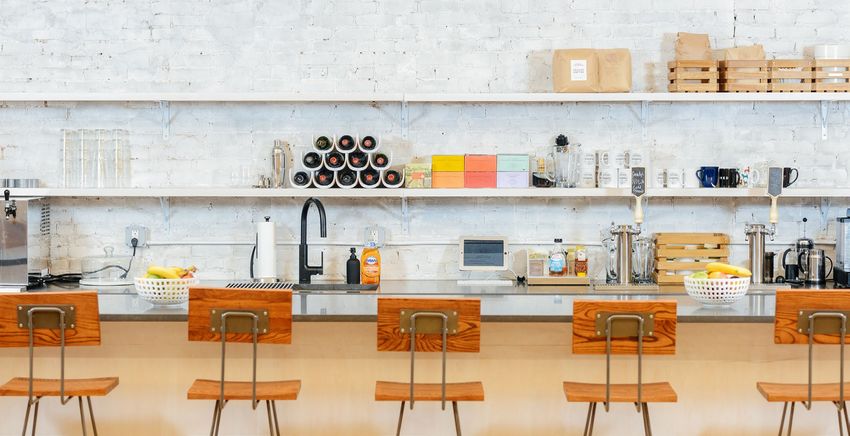
The kitchen at SeatGeek
Managed by Q 2019THE RISE OF COWORKING AND THE FOCUS ON HOSPITALITY desirable. Coworking spaces often squeeze While many companies have chosen to in occupants to maximize space and profits. outsource a high-quality office experience For example, CB Insights reported that in for their employees to coworking operators, WeWork’s buildings, the average square employees are coming to expect coworking- footage per person hovers around 50 square like services in all types of office space. In feet compared to the average of 250 square the year ahead, more established companies feet per person for commercial offices will work to replicate the hospitality aspect industry-wide. This square footage is even of coworking in their offices. To create a smaller than the recommended minimum strategic, coherent experience, companies of 150 square feet per person for “dense” may look to hiring an internal community office layouts. CB Insights also noted that or employee experience manager who despite this small footprint, members can oversee office culture and hospitality. pay an average of $8,000 per year. Such These responsibilities include organizing cramped, shared quarters can also make it events and activities, designing a food and difficult to cultivate and maintain a coherent beverage program, and building a strong company culture. Companies that are based employer brand for a company. Companies in coworking spaces are limited in the ways can also partner with modern service in which they can set up their workspace to providers who understand the needs of reflect and reinforce their culture. Working the technology-enabled, modern office and in a shared space can also create an uneven the importance vendors play in creating a experience for on-site client meetings positive, coherent, and responsive employee and lead to a lack of privacy for company experience. functions. Managed by Q 2019
03
Flexible Workplace Policies

In addition to personalized office spaces,    market, companies are realizing that to
employees are seeking out more flexible       attract and retain the best talent, they must
ways of working, including working remotely   increase options for flexible work to
full- or part-time. As companies implement    support employees’ work/life integration.
more human-centered design, workplace         Flexibility, including the ability to adjust
expectations and policies are also shifting   one’s hours and work remotely, has been
to reflect the needs of their most critical   found to improve employee productivity,
resource—their people. With a tight hiring    health, and wellness. It enables employees to

Managed by Q                                                                                 2019
FLEXIBLE WORKPLACE POLICIES

balance caregiving responsibilities with their   offered flexibility, 83% of respondents saw
paid jobs.                                       an improvement in individual productivity
                                                 and 61% found flexibility led to an increase in
As such, offering flexibility can also improve   profits.
diversity and inclusion efforts, because
employees with caretaking responsibilities       Millennials in particular are seeking greater
are often women. Flexibility also has a          flexibility in working hours and policies.
positive impact on companies’ profitability.     Gallup’s State of the American Workplace
Inc. reported that according to researchers,     report found that 35% of employees polled
working from home appears to make people         said they’d change jobs for a flexible work
“happier and ‘massively’ more productive.”       environment and the ability to work offsite
A 2016 Vodafone study of 8,000 employers         full-time, while an additional 37% said
and employees across small, medium, and          they wanted to be able to choose to work
enterprise-sized businesses in 10 countries      remotely at least part-time. The desire to
supported this, separately finding that when     work at home reflects the developing reality

                                   The benefits flexibility

                             83%
                             improved
                                                                   61%
                                                                    increase in
                            productivity                              profits

Source: Vodafone

Managed by Q                                                                                  2019
FLEXIBLE WORKPLACE POLICIES
of the American workplace—the American back their remote work policies in an effort
Time Use Survey found that 24% of full-time to drive innovation and increase employee
workers did work at home in 2017. A study togetherness. Ironically, part of what drove
by Pepperdine University found that 69% of this policy shift was a need to compete with
millennial workers believe they don’t need to younger, more flexible companies. In 2018,
work in an office regularly to do their jobs. the job search startup Werk commissioned
a study on flexibility in the workplace and
Despite the desirability and benefits of found that 96% of the workforce needs some
flexibility, most companies are not keeping form of flexibility, but only 42% of workers
up with the demand for it. In 2017, large have have access to it, and only 19% have
companies such as Yahoo, Aetna, and Bank access to a full range of flexible options at
of America caused a media storm by rolling work. Unfortunately, flexibility and flexible
Flexibility in the workplace
96%
42%
need flexibilty
19%
have access to
flexibility
have access to a full
range of flexible options
Source: Werk
Managed by Q 2019FLEXIBLE WORKPLACE POLICIES jobs still carry a stigma that workers with To be effective, workplace flexibility needs flexible schedules are somehow working less to be supported by well-defined policies than those with more traditional hours. that apply equally to employees at all levels Flexibility necessitates a culture of trust. and can be customized to employees’ Without it, employees often feel they have specific needs and lives. In the coming to “make up” for the time they are not in the year, companies will continue to become office, and as a result, some workers with more flexible by supporting, and at times flexible schedules tend to work more hours, enforcing, work/life integration through clear according to sociologist Dr. Heejun Chen. policies that they can also use to build their Summarizing her study on flexible work she employer brand, attract new employees, and wrote, “In general, if you have more control retain current employees. This may take over your working hours you tend to worry the shape of “minimum vacation policies,” more when you are not at work—and this implementing “no meeting days,” the ability is especially the case for those workers to work from a variety of locations to with most control over when and where maximize productivity, or shifting work hours they work.” Chung found that the most to accommodate caretaking responsibilities. flexible workers, those employed by the “gig However, it will be up to company leadership economy” were also in the most insecure working with their People and Culture teams positions. She explained, “This increase in with input from all employees to forge tendency to worry seems to be highest in innovative, flexible policies that respond to countries with high unemployment rates, the specific requirements of their company less stable labor market conditions, and if and culture. employees have a lack of negotiating power.” Managed by Q 2019
04
Culture is Essential for Employee
Recruitment and Retention

In 2018 the United States experienced the      can add as an “extra” or a perk, instead it
lowest unemployment rate in 18 years,          must be authentic to the company itself.
at 3.7%. In the technology sector, the         According to the Deloitte Millennial Survey,
unemployment rate dropped to 1.9% in           millennials’ loyalty to companies and trust
May of 2018. As a result of the tight hiring   of businesses’ ethics has deteriorated.
market, companies are competing for talent     However, a study by Pew Research found
and the recruitment and hiring process has     that millennials tend to stay with their
become more candidate driven. According        employers longer than the previous
to the website Talent Now, 86% of the          generation did at the same age. According
most qualified candidates for a company’s      to Pew, “In January 2016, 63.4% of employed
open positions are already employed and        Millennials, the generation born between
not actively seeking a new job. As a result,   1981 and 1998, reported that they had
employers must find ways to distinguish        worked for their current employer at least 13
themselves to candidates and retain            months. In February 2000, somewhat fewer
their current employees, making a robust       18- to 35-year-olds (59.9%)–most of whom
company culture an essential factor in the     are today’s Gen Xers—reported similar
health of their business.                      job tenure. Looking at young workers with
                                               longer tenures, 22% of Millennial workers
Culture is not just something that employers   had been with their employer for at least five

Managed by Q                                                                              2019
CULTURE IS ESSENTIAL FOR EMPLOYEE RECRUITMENT AND RETENTION
years as of 2016, similar to the share of Gen
X workers (21.8%) in 2000.” Pew speculated The cost of
that Millennials may be staying with their employee turnover
employers longer due to their overall higher
levels of education as a generation, which
tends to influence tenure. In addition,
because of the tight hiring market, other
40%
Of Employees
jobs available may not seem as enticing, high Planned a Job Change
paying, or as interesting as their current
20-26
position.
That said, employee churn is expected.
According to a survey by Talent Now, 40% Weeks it Takes to Get
of employees surveyed planned to change a New Hire Up to Speed
jobs in 2018. When employees do leave, it
$7,645
costs about $7,645 to hire a new employee,
according to a study by the National
Association of Colleges and Employers.
Replacing an employee also means a loss The Average Cost to Hire
of productivity, as it takes about 20 to 26 a New Employee
weeks to get a new hire up to speed, during
1-2.5%
which a company loses 1% to 2.5% of their
revenue, according to a study by Mellon
Financial Corporation.
Loss of Revenue During
the Transition
More than a job, employees want to feel
like work gives them personal purpose and
Managed by Q 2019CULTURE IS ESSENTIAL FOR EMPLOYEE RECRUITMENT AND RETENTION
an opportunity to be part of something concerts, they are focusing on the same
larger than themselves. Many candidates idea of building bonding and standout
can have their pick of employers, especially experiences into the workday and office
in low unemployment fields like high culture. Companies are sponsoring and
tech—so companies need to stand out by encouraging employee clubs and activity
appealing to their employees’ personal and groups, such as game nights, running,
professional ambitions. As a result, 2018 yoga, book, and movie clubs, and groups
saw the rise of branded, company-wide that focus on community service. They are
experiences, such as Camp WeWork and also expanding opportunities for learning
Camp Compass, as an essential part of an beyond traditional professional development
employee’s job and company culture. While to include employee-led classes and skill
company retreats have long been part of shares, language lessons, and internal
businesses’ practice, these gatherings not speaker series. For example, Glossier hosted
only focused on an opportunity for creative Samin Nosrat, host of the Netflix show Salt,
thinking and strategy, but reinforced Fat, Acid, Heat for a talk for their employees,
company culture, connected national and and Hubspot’s internal speaker series has
global employees, and established the hosted prominent guests such as the former
companies as desirable places to work. Governor of Massachusetts to the editor of
WeWork flew in teams from all over the the Boston Globe.
world, including from recently acquired
companies like Meetup and Flatiron School, Vanessa Shaw, founder of the Human Side
and brought in pop band Bastille to perform, of Tech, commented, “Employees want
adding a veneer of exclusive cool to their professional development. They want
company-wide retreat. promotions. Millennials, in particular, want
to feel like they’re making an impact.” To
While not all companies can afford, or this end, companies are also incorporating
choose to spend their money on, private volunteering, civic engagement, and social
Managed by Q 2019CULTURE IS ESSENTIAL FOR EMPLOYEE RECRUITMENT AND RETENTION
responsibility into their employee experience bolster their cultural and community efforts
and their employer brand. For example, REI to differentiate themselves and publically
has closed on Black Friday for the past few illustrate their values.
years, publicizing the slogan “Opt Outside,”
to raise awareness about outdoor spaces Another way companies are working to
and activities—and make a bold brand stand out is by building a distinguishable
statement. Employers such as Patagonia brand not only for their customers, but
publicized their decision to close on Election also for their employees and prospective
Day to give their employees the day off to employees. Building an “employer brand”
vote, a trend that is growing. that works alongside the sales-driven
Companies are looking for creative and meaningful
ways to reward and recognize their employees to
highlight the company’s values, support employee
retention, and appeal to potential hires.
A survey by the Society for Human brand has been prioritized in the past
Resources Management found that a record year. In conjunction with employee-centric
44% of U.S. firms gave workers paid time off workplace design and company policies,
on Election Day in 2018, up from 37% in 2016. companies are looking for creative and
Efforts like these not only attract positive meaningful ways to reward and recognize
attention to the company as an employer, their employees to highlight the company’s
but make employees feel like they can not values, support employee retention, and
only express their personal values at work, appeal to potential hires. To this end, more
but through those of their employer. As the companies are creating unique employee
labor market remains tight, companies will gifts that mark personal personal and
Managed by Q 2019CULTURE IS ESSENTIAL FOR EMPLOYEE RECRUITMENT AND RETENTION
professional milestones. These gifts, like forgettable swag of the past and using
custom backpacks, water bottles, jackets, employee gifts and company swag as an
hats, and enamel pins create an air of important part of the overall employee
collectability and exclusivity— experience.
strategies more usually associated with
designer streetwear brands. They also In another effort to differentiate themselves
add to a company’s desirability as an and further showcase their values, companies
employer. In creating these gifts, companies are connecting their in-office amenities to
such as Casper, BARK, and Intercom are their values and ethics. For example, many
emphasizing quality over the disposable, are choosing to order team meals and event
Employee swag at Casper
Managed by Q 2019CULTURE IS ESSENTIAL FOR EMPLOYEE RECRUITMENT AND RETENTION catering from businesses that support the need to order canned drinks. Finally, local farmers and independent restaurants, the vendors and service providers that such as New York City’s Green Top Farms companies choose to maintain their office and FoodtoEat or growing chains like can also reflect their values. Managed by Q Sweetgreen, Dig Inn, and Tender Greens. specifically works with independent, local Some offices may even extend this idea businesses to provide high-quality office by working with farm-to-desk providers services custom to an employer’s space. like Brooklyn-based SquareRoots, which As companies work to strengthen their delivers locally grown greens directly to culture and differentiate themselves as offices. Amenities can also emphasize employers, they will increasingly focus on health and environmental impact. For amplifying their mission and values through example, choosing to have cold brew coffee employer branding, cultural experiences in on tap reduces the need buy coffee in the workplace, and employee services and plastic cups, and having a smart water and amenities that reflect their team’s lifestyle seltzer dispenser like Bevi cuts down on choices. Managed by Q 2019
05
Diversity and Inclusion are
Fundamental Business Practices

Over the past year, the practice and             Reset and reporter Emily Chang’s Brotopia
conversation around building inclusive           brought increased critical attention to
workplaces has evolved rapidly. Efforts to       discrimination in the tech industry. Over the
build strong workplace culture, effectively      past year the #metoo movement has also
recruit and retain employees, and create         exposed employee harassment by company
a human-centered office will not endure          leaders, highlighted weak corporate anti-
without policies that create, support,           discrimination policies, and illustrated how
and enforce an inclusive and respectful          far many industries have to go to create
workplace.                                       safe and inclusive work environments for all
                                                 employees.
Diversity and inclusion are now a
requirement when it comes to the                 Post-#metoo, workplaces and governments,
workplace, both legally and culturally.          including New York State, have implemented
While tech companies have long sponsored         mandatory training on sexual harassment in
events like women’s coding programs or           the workplace. Companies have also begun
conferences in an effort to tip their hat        to scrutinize which aspects of their company
towards diversity efforts, these surface-level   culture could potentially contribute to a
efforts are no longer viewed as sufficient.      hostile work environment. For example,
Books such as venture capitalist Ellen Pao ’s    WeWork put limitations around the hours

Managed by Q                                                                               2019
DIVERSITY AND INCLUSION ARE FUNDAMENTAL BUSINESS PRACTICES
in which their occupants could consume sponsored and employee-driven groups
complimentary beer on tap during the day. that advocate, organize activities, and raise
Companies are also more widely adopting— awareness for employees from diverse
and publicizing—clear codes of conduct, backgrounds. These groups often focus on
which outline unacceptable behavior and its members of underrepresented communities,
consequences. such as veterans, LBGTQIA people, or
specific ethnic groups within the workplace.
As prospective employees scrutinize
employers more heavily based on their Finally, when it comes to equal pay, more
diversity and inclusion policies and companies have been going through
practices, companies will adjust their independent, third-party reviews and audits
recruiting practices to build more diverse of their compensation data, such as those
teams. For example, Facebook has taken offered by bethanye Blount’s company
what they call a “diverse slate” approach to Compaas, to ensure that all employees
hiring where they aim to interview at least are being equally compensated based on
one candidate from an underrepresented their work, position, and experience. These
background for every open role. Other kind of audits will become more common
companies are choosing to lengthen the and companies can use them as another
hiring process for open roles so that they tool for employer branding, so prospective
can ensure they consider a diverse range of employees from diverse backgrounds can
applicants. be confident that they will be compensated
fairly when joining a new company.
To retain employees from diverse
backgrounds, companies are also In addition to being more responsive to
sponsoring groups that help team members employees’ personalities and working
feel welcome and connected. Employee styles, the physical office space must also
Resource Groups (ERGs) are executive- support inclusion. In offices with more than
Managed by Q 2019DIVERSITY AND INCLUSION ARE FUNDAMENTAL BUSINESS PRACTICES 50 employees, the Department of Labor with limited mobility and disabilities. requires a wellness room for nursing parents Companies are becoming more responsive and employees with medical needs that is to employees’ gender identity and separate from the rest of the office, blocked expression through cultural initiatives, from view, has a locking door, comfortable company policy, and workspace changes. seating, and refrigeration. Offices also must This is especially important because ensure that their workstations, common an increasing number of states prohibit areas, conference rooms, and other spaces discrimination based on gender and sexual are accessible and welcoming for people orientation and open legal avenues to Source: Basicspace A private office space at Ordergroove Managed by Q 2019
DIVERSITY AND INCLUSION ARE FUNDAMENTAL BUSINESS PRACTICES

identify as gender non-binary on legal           companies are also adding gender-neutral
documents. During employee onboarding,           restrooms in their offices and informing
office introductions, and at public events       their employees they are welcome to use
that require name tags, more companies           the facilities that correspond to the gender
are inviting employees and guests to self-       with which they identify. As the number
identify with their preferred pronouns,          of Americans who identify as LGBTQIA
including the gender-neutral they/them.          and gender non-conforming increases,
HR departments are also auditing benefit         from 8.1% of millennials according to
packages to ensure they cover health             a 2017 Gallup poll, these practices will
care for transgender employees and               become increasingly important and central
revising dress code policies to ensure           to workplace inclusion and employee
they are gender-neutral. In line with the        recruitment and retention efforts.
Human Rights Campaign’s 2016 report
“Transgender Inclusion in the Workplace,”        Employers need to be intentional,
over 330 companies have adopted “gender          thoughtful, and explicit in their efforts to
transition guidelines” to ensure they are        increase diversity and foster inclusion,
administratively and culturally equipped to      understanding that they are not simply
support employees who undergo a gender           “nice to have,” but factors that are
transition during their tenure. To ensure that   connected to a company’s overall success
transgender and gender non-conforming            and performance.
people feel comfortable and safe at work,

Managed by Q                                                                                2019
CONCLUSION
Throughout 2018, the movement towards more “human-centered” workplace design, policy,
and culture has accelerated. This approach to work spaces and culture contrasts the purely
“open plan,” “hierarchy-free” spaces and organizations that became popular four to ten years
ago. These offices offered little respite for different types of work and different personalities. In
their effort to enforce a feeling that everyone was equal, they instead took a blanket, generic
approach to work and the office. While coworking spaces have been gaining momentum and
major investment, the one-size-fits-all coworking model is also antithetical to this movement
to customize offices to the specific people and companies that are using them. Despite their
trendy design and slick amenities, many of which come at an added cost, coworking spaces
tend to take a cookie-cutter approach to what creativity and collaboration looks like in the
workspace.

Instead of one-size-fits-all or adhering to specific trends, company leaders, office operations
teams, and people and culture departments can feel empowered to create a workspace that
serves their team members, culture, and business needs. Just as the “digital transformation”
has enabled consumers to demand and expect a more personalized experience when it comes
to the goods and services they purchase, these shifting cultural expectations around work
enable companies to look within and see how they can best meet the needs of their employees
and culture. Companies can now fully embrace their own model of hospitality, design, and
culture to highlight their values and differentiate themselves as an employer.

In an era when employees are looking for purpose as well as a profession, and work and personal
life are becoming increasingly integrated, employers will be scrutinized based on how well
they support flexibility and diversity and inclusivity in both their policies and physical office
space. To be successful and remain relevant in 2019 and beyond, companies must embrace
their individuality and create spaces that respond to the needs of their employees and align

Managed by Q                                                                                    2019
In an era when employees are looking for purpose as well as a profession, and work and
personal life are becoming increasingly integrated, employers will be scrutinized based on
how well they support flexibility, diversity, and inclusivity in both their policies and physical
office space. To be successful and remain relevant in 2019 and beyond, companies must
embrace their individuality and create spaces that respond to the needs of their employees
and align with their mission and values.

For companies looking to create a forward-looking experience for their team, Managed by
Q can help manage the entire workplace, from regular maintenance and event planning to
custom design and staffing an employee experience manager. Managed by Q’s services
enable workplace operations and people and culture teams to implement the many features,
amenities, and policies that have quickly become fundamental to the modern, human-centric
workplace.

Managed by Q                                                                                2019
You can also read


