2020 Encouraging positive change and transparency
←
→
Page content transcription
If your browser does not render page correctly, please read the page content below
Annual report

Encouraging positive
                          2020
                          SUS TA I N A BL E OW N E R SH I P T H ROUGH

change and transparency
                          DI A L O GU E A N D E NG AGE M E N T
FOREWORD    •    IN BRIEF   •   OPER ATIONS   •   INTERVIEW   •   PROJEC TS    •     DIALOGUES      •   ONGOING DIALOGUES          •   COMPLETED DIALOGUES     •   OUR HISTORY

Contents                                                                                                                                                                AP1                             AP2
4	The Chair and the Secretary
   General have the floor

5     2020 in brief

6–9   Our operations

10    Interview with Fiona
      Reynolds, CEO, PRI
                                                                                                                                                                        AP4                             AP3
11–29 Projects

                                              10                                    12
30–40 Dialogues

41    Our History                                                                                                                                    Encouraging positive change and transparency
                                                                                                                                                     It is the Swedish National Pension Funds’ (AP Funds AP1, AP2, AP3,
42    Part of the income                                                                                                                             AP4) view that, over time, well-managed companies that integrate
                                          Interview with PRI’s CEO                 The Council on Ethics has received a lot of praise for its        sustainability considerations provide higher returns at lower risk.
      pension system
                                          Fiona Reynolds                           work with the mining industry, but a lot of difficult issues      The Council on Ethics is an ownership collaboration between the AP
                                                                                   remain.                                                           Funds aimed at increasing the leverage to influence companies to
                                                                                                                                                     pursue sustainable value creation and transparency.

                                                                                                                                                     Through dialogues and engagement with companies the Council on
                                                                                                                                                     Ethics is able to make a positive difference and thereby contributing
                                                                                                                                                     to the AP Funds’ long-term returns. The Council on Ethics is a collab-
                                                                                                                                                     oration with regard to the companies in the AP Funds’ portfolios of
                                                                                                                                                     listed equities, primarily the non-Swedish holdings.

                                                                                                                                                     Collaboration - a key for success
                                                                                                                                                     The collaboration with other international investors with a similar
                                                                                                                                                     sustainability agenda, further increases the scope to exert an

                                              14                                                 23
                                                                                                                                                     influence in dialogues with companies for positive change and
                                                                                                                                                     transparency.

                                                                                                                                                     Long-term approach and responsibility are part
                                                                                                                                                     of the mandate
                                          The climate transition is finally picking up          During 2020 there was a lot of focus on tech         The AP Funds’ mandate from the Swedish parliament (Riksdagen)
                                          proper speed globally but there remains a lot         companies and their impact on global society.        is to create high returns at low risk for current and future
                                          of hard work to do.                                                                                        pensioners, which at the same time will contribute to the income
                                                                                                                                                     pension system’s stability.

2                                                                                                                                                     T H E C O U N C I L O N E T H IC S O F T H E A P F U N D S • A N N U A L R E P O R T 2020
FOREWORD   •   IN BRIEF   •   OPER ATIONS   •   INTERVIEW   •   PROJEC TS   •   DIALOGUES   •   ONGOING DIALOGUES   •   COMPLETED DIALOGUES     •   OUR HISTORY

We aspire to make a difference. We seek to exert influence on companies all over the world
in regard to sustainability issues, human rights, ethics, the environment, issues of great
importance to people and society. Issues which can destroy or create value for companies.

We use dialogue to get companies to adopt proactive measures such as policy, processes
and transparent reporting. This is how we can mitigate and prevent problems and accidents
in a range of companies and industries.

And this is how we contribute to sustainable development and importantly, sustainable
pensions for current and future pensioners.

3                                                                                                                                      T H E C O U N C I L O N E T H IC S O F T H E A P F U N D S • A N N U A L R E P O R T 2020
FOREWORD       •   IN BRIEF   •   OPER ATIONS     •     INTERVIEW    •   PROJEC TS   •   DIALOGUES     •   ONGOING DIALOGUES    •   COMPLETED DIALOGUES          •   OUR HISTORY

A historic year
All years are special, but 2020 is a historic year. The pandemic has changed a lot,
given us new perspectives and ways of working. The Council on Ethics, like everyone
else, has had to change and rethink. It is very encouraging that sustainability issues
are stronger than ever and the focus is ”build back better”.

Christina Olivecrona, Chair of the Council                 The Council on Ethics reached a milestone in
on Ethics in 2020, and who also is Senior                  2020, tell more?
Sustainability Analyst at the Second Swed-                 John: Our focus on engagement has over the
ish National Pension Fund (AP2) and John                   years led us from individual companies to the
Howchin, Secretary General of the AP Funds                 entire sector and now to engaging a problem. It
Council on Ethics, highlight and reflect on                is a big step forward, not only for the Council on
some important events.                                     Ethics - but for the movement on responsible
                                                           investments. The AP Funds and the Council on          Of all the issues the Council on Ethics works              ent sectors. The transition has started and there
2020 goes down in history. How have the                    Ethics continue to lead and break new ground,         with, name one that is on the rise?                        is strong pressure on these sectors to change.
consequences from Covid-19 affected the                    and we are proud of that. We are very proud of        John: Traceability and in particular the use
Council on Ethic’s work?                                   the recognition from PRI for the Mining and           of blockchains. Blockchains are, in the eyes of            Tech companies are in focus?
Christina Olivecrona: Covid-19 has put a                   Tailing Safety project to secure the world’s          many, perhaps a hype. But it really looks like             John: And rightly so. For several years, the
focuse on the fragility of society and how we              tailing dams, which the Council on Ethics leads       there are exciting opportunities with these                Council on Ethics has highlighted the lack of
interact with nature and our dependence on                 together with the Church of England Pension           systems. The Council on Ethics continues to                commitment from several companies in this
nature. This in turn has put even more pres-               Fund. Now it is important to learn from what          dig further in order to learn more. What char-             sector. Now we raise the whole issue of the Tech
sure behind the sustainability trend, which                we have done and move forward; we need more           acterizes a good block chain and are there block           companies’ responsibility for human rights and
was already strong and many of the areas in                collaborations like this.                             chains that are not so suitable? It is already             fortunately there are now people to talk to about
which the Council on Ethics is involved have                                                                     a technology that is used by companies to                  these issues at the companies. Difficult ques-
been in focus from responsible investors.                  The Council on Ethics and the AP Funds                achieve traceability in their supply chains and            tions, no simple answers - but a process that over
                                                           held a joint stakeholder dialogue during the          it is important that they deliver.                         time will lead to a level playing field around Tech
If you were to choose one key word to charac-              autumn. What did you learn?                                                                                      and their responsibilities with regard to human
terise 2021, a year that we now long for, what             Christina: It is important for us to periodi-         Transition is the word on everyone’s lips when             rights will become clearer. This is business as
would it be?                                               cally reach out to the different stakeholders         it comes to climate, what does it really mean?             usual for the Council on Ethics.
John Howchin: Collaboration. This planet                   and gain knowledge about how they perceive            Christina: We have a global economy that is
needs cooperation if we are to meet the chal-              our work. In the stakeholder dialogue, it             still largely based on fossil fuels. The transi-           2021, what do we have in front of us?
lenges we face. The AP Funds and the Council               emerged that the following areas were consid-         tion, that has started, is about transforming              Christina and John: After Covid-19, and with
(which is a collaboration) will continue to                ered equally important for all stakeholders:          the global economy to be based on renewable                climate change now happening around us,
press for it, as it is a success factor. Just look at      climate impact, human rights, business eth-           energy. The Council on Ethics focuses on the               biodiversity is coming up on the agenda. And
all the collaboration that the vaccine around              ics, anti-corruption and long-term returns. It        sectors that have large emissions (e.g. heavy              that is good, but it is a very complex issue. At the
Covid-19 has created? If we can get things                 is gratifying that these areas are in agreement       transport, steel, aircraft and cement) and are             Council on Ethics, we are pleased with how the
done at speed here, we can do so in many more              with the Council on Ethic’s focus areas. We           collaborating through the Climate Action 100+              UN Guidelines for Business and Human Rights
areas. A lot of people need to see some hope               received a receipt that we work with the right        project to develop transition plans for these              now begin to be put into practice. It provides
now.                                                       things. It also emerged that we could become          sectors. The plans are based on technological              concrete guidance for companies to work with.
                                                           even better at developing our communication.          alternatives, available today, that are scalable           Maybe could get the UN Guidelines for Business
                                                                                                                 and where there are synergies between differ-              and Biodiversity based on the same structure?

4                                                                                                                                                       T H E C O U N C I L O N E T H IC S O F T H E A P F U N D S • A N N U A L R E P O R T 2020
FOREWORD      •   IN BRIEF   •   OPER ATIONS       •   INTERVIEW   •   PROJEC TS   •   DIALOGUES   •   ONGOING DIALOGUES    •   COMPLETED DIALOGUES         •   OUR HISTORY

2020 in brief
January                                                   the consequences of the accident in Bru-           tation on the standard, but also mining dams
Following the Vale tailing dam accident in Jan-           madinho had to be postponed to the future.         in general.
uary 2019 in Brumadinho, Brazil, the Council
on Ethics initiated a major global project                May                                                September
together with the Church of England Pensions              The Council on Ethics publishes its annual         The Swedish National Audit Office met with
Board to facilitate significant improvements of           report. The Council presents last year’s work      the Council on Ethics as part of their review of
the safety of mining companies’ tailing dams.             to representatives of various interest organiza-   the AP Funds’ sustainability work. The aim of
    On the anniversary of the accident, on 24             tions in an on-line meeeting.                      the review is to investigate if the AP Funds in
January 2020, the Church of England Pen-                                                                     their asset management take sufficient account
sions Board and the Council on Ethics organ-              June                                               of sustainability given the overall objective of          organisation PRI - Principles for Responsible
ised a conference in London, where, among                 The Council on Ethics’ website is updated.         a long-term high return. The National Audit               Investment.
other things, the new database / website on                                                                  Office’s report will be published in the spring              The Secretary General of the Council on
tailing dams was presented. This global data-             July                                               of 2021.                                                  Ethics presents the mining and tailing dam
base is an important part of the work to avoid            The first Global Industry Standard on Tailings                                                               safety project at a number of different confer-
future tailing dam accidents.                                                                                October                                                   ences e.g.: Svemin’s Environment Conference,
                                                          Management, that the Council on Ethics (as
                                                                                                             The Council on Ethics recieved the Steward-               Financial Times Commodities Global Summit
                                                          a representative of PRI) has been involved in
March                                                                                                        ship Project of the Year Award together with              2020 and at the International Mining and
                                                          developing together with ICMM (International
Shutdown due to Covid-19 has affected the                                                                    the Church of England Pensions Bord for the               Resources Conference in Melbourne.
                                                          Council on Metals and Mining) and UNEP
Council on Ethics’ work in various ways. All              (UN Environment Program), is launched. An          mining and tailing dam safety initiative which
meetings, both internal and external, went                independent institute is planned to be set up      aims to make the world’s mining dams safe.                November
digital. A planned trip to Brazil to see on site          in the spring of 2021 to oversee the implemen-     The award is presented by the UN-supported                The AP Funds and the Council on Ethics
                                                                                                                                                                       jointly conducted a stakeholder dialogue with
                                                                                                                                                                       their different stakeholde groups. In these
                                                                                                                                                                       dialogues, it emerged that the following topics
                                                                                                                                                                       were considered equally important for all
                                                                                                                                                                       stakeholders: climate impact, human rights,
                                                                                                                                                                       business ethics, anti-corruption and long-
                                                                                                                                                                       term returns. These are well aligned with the
                                                                                                                                                                       Council on Ethics’ focus areas.

                                                                                                                                                                       December
                                                                                                                                                                       The Council on Ethics, in collaboration
                                                                                                                                                                       with the Danish Institute for Human Rights
                                                                                                                                                                       (DIHR), has developed the document The
                                                                                                                                                                       Investor Expectations on Tech Giants and
                                                                                                                                                                       Human Rights. This document will serve as a
                                                                                                                                                                       platform for dialogue with the tech companies
                                                                                                                                                                       for the Council and other investors. More than
                                                                                                                                                                       ten international investors have backed the
                                                                                                                                                                       document.

5                                                                                                                                                  T H E C O U N C I L O N E T H IC S O F T H E A P F U N D S • A N N U A L R E P O R T 2020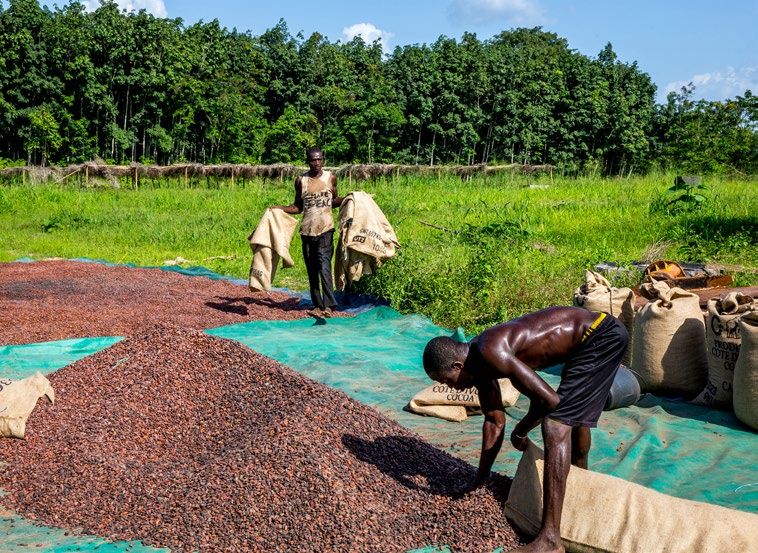
FOREWORD     •   IN BRIEF   •   OPERATIONS   •   INTERVIEW   •   PROJEC TS   •   DIALOGUES   •   ONGOING DIALOGUES     •   COMPLETED DIALOGUES           •   OUR HISTORY

Responsible ownership
The Council on Ethics’ assignment from the AP Funds is to collaborate on dialogues
with non-Swedish listed companies regarding sustainability. The work is based on
the AP Funds’ common values.

The Council on Ethics of the AP Funds (The          lios regarding violations of international con-
Council on Ethics) was formed in 2007 on            ventions ratified by the Swedish Parliament           The Council on Ethics supports transparency
the initiative of the First, Second, Third and      and for conducting dialogues with identified          The Council on Ethics asks for transparency in            time, but if the Council on Ethics can create a
Fourth AP Funds (AP Funds). The role of the         companies. It is also part of the Council on          its dialogues with companies and is well aware            positive climate for the dialogue with the com-
Council is to contribute, through dialogue,         Ethics’ mission to work preventively to pre-          of the merits with transparency. Therefore, the           pany, there is a better chance of bringing about
to the development of sustainability work in        vent violations and serious misconduct. The           Council on Ethics aims to be as transparent as            the needed change. A dialogue with a company
non-Swedish listed companies.                       Council on Ethics can also recommend exclu-           possible and show how its work has progressed             is conducted in confidence and as a result it is
    The Council on Ethics has thus been             sions to the AP Funds if a company is in seri-        during the year.                                          not always possible to report publicly on it.
                                                                                                              At the same time, it is of the utmost impor-              However, the Council on Ethics supports
appointed by the AP Funds to monitor the AP         ous breach with a convention and the dialogue
                                                                                                          tance to safeguard the trust the Council on               transparency and whenever possible aims to
Funds’ listed foreign equity investments. The       is not successful.
                                                                                                          Ethics has attained in a dialogue with a com-             make aspects of its work public.
Funds have other investments for example                The Council on Ethics also has the task of        pany. Work to achieve improvement often takes
in Swedish equities, bonds, real estate, ven-       informing about the work that is done through
ture capital funds that are not covered by the      various channels to strengthen the under-
Council on Ethics’ processes.                       standing and trust in the AP Funds as respon-
                                                    sible asset owners. External information about     quarterly on-line information meetings for the               Control and evalution
Screeening and dialogues                            the Council on Ethics’ activities is provided      staff of the AP Funds and the boards in order                The Council on Ethics’ work is based on a
The Council on Ethics is responsible for            mainly through the annual report and website       to improve communication.                                    principle agreement between the AP Funds.
screening the AP funds’ listed equity portfo-       www.etikradet.se. In the autumn of 2020,                                                                        This agreement states that the Council, for
                                                                       the Council on Ethics also      Organisation                                                 example, shall report quarterly on the work of
                                                                       started a LinkedIn page.        The Council on Ethics works on behalf of the AP              the Council on Ethics to the CEOs and that the
                                                                           Face-to-face communi-       Funds. The respective fund’s CEO appoints one                Council shall have a meeting with the CEOs
                                                                       cation with the Council of      or two employees as members. The Secretary                   once a year. The Council on Ethics is part of the
                                                                       Ethics’ many stakeholders       General works full time for the Council on                   AP Funds and its work is therefore included
                                                                       is important. Represen-         Ethics, while the members have the commit-                   in the evaluations of the Funds, including the
                                                                       tatives of the Council,         ment to the Council on Ethics as part of their               Ministry of Finance’s annual evaluation, which
                                                                       primarily the Secretary         duties. John Howchin has been Secretary Gen-                 is reported to the Swedish Parliament every
                                                                       General of the Council on       eral since 2010 and the following persons were               spring. The Council on Ethics also conducts
                                                                       Ethics and Chairperson,         members in 2020: Ossian Ekdahl (AP1), Mag-                   its own evaluation on how to further develop
                                                                       participate in seminars and     dalena Håkansson (AP1), Christina Olivecrona                 its work. In 2020, the Swedish National Audit
                                                                       dialogues with individual       (AP2), Peter Lundkvist (AP3), Lil Larås Lind-                Office began an evaluation of the work of both
                                                                       stakeholders, including         gren (AP3), Pia Axelsson (AP4 ) and Arne Lööw                the AP Funds and the Council on Ethics. This
                                                                       the media and civil soci-       (AP4). The chairmanship of the Council on Eth-               evaluation is expected to be completed in the
                                                                       ety organisations. In the       ics rotates annually between the Funds. In 2020              first half of 2021.
                                                                       autumn of 2020, the Coun-       Christina Olivecrona (AP2) was chairperson
                                                                       cil on Ethics started with      and in 2021 Peter Lundkvist (AP3) takes over.

6                                                                                                                                               T H E C O U N C I L O N E T H IC S O F T H E A P F U N D S • A N N U A L R E P O R T 2020
FOREWORD     •   IN BRIEF   •   OPERATIONS     •   INTERVIEW   •   PROJEC TS   •   DIALOGUES   •   ONGOING DIALOGUES    •   COMPLETED DIALOGUES         •   OUR HISTORY

How is the work carried out?
The Council on Ethics’ activities can be divided into dialogues and projects. The                        Ethics can recommend the Funds to exclude                 they have. In this way the companies can
                                                                                                         the company from their investment universe.               avoid problems that others in their industry
starting point for the dialogues is primarily the result of the screening for possible
                                                                                                                                                                   have had or problems that other industries
violations of international conventions made by the AP Funds’ listed shareholdings                                                                                 have.
                                                                                                         The Council on Ethics engages with a focus
twice a year by an external supplier. In projects, the Council on Ethics engages                         on policy, implementation and transparency
proactively in dialogue with companies and relevant stakeholders to address a                            The Council on Ethics uses its influence to               Exclusions of sectors
specific problem area. The Council on Ethics always engages with a focus on policy,                      improve companies and encourage them to                   The Council on Ethics often receives ques-
implementation and transparent reporting.                                                                take responsibility for any problems they                 tions from various stakeholders as to why the
                                                                                                         create with their operations. The Council on              Council on Ethics does not recommend the
                                                                                                         Ethics is not the only stakeholder who influ-             exclusion of entire sectors, such as tobacco or
Screening                                             The Council on Ethics always makes its own
                                                                                                         ences companies, employees, other investors.              fossil fuels.
The Council on Ethics screens approximately           assessment and, if necessary, conducts its
                                                                                                         and civil society often also expects companies                A basic principle for the Council on Ethics
3,500 listed companies worldwide with the             own dialogues.
                                                                                                         to take responsibility and develop in a positive          is that all products that are legal in Sweden
help of service providers such as Sustainal-              The Council on Ethics also receives ongo-
                                                                                                         direction.                                                must also be permitted investments for
ytics and ISS-ESG (from 2021). These service          ing information about companies’ actions
                                                                                                             To minimise risk and prevent companies                the AP Funds. It is the Swedish Parliament
providers have a large number of analysts             from other investors and a number of stake-
                                                                                                         from getting in to trouble, the Council on                that decides when tobacco or fossil fuels are
employed who work with analysing com-                 holders from around the world, such as civil
                                                                                                         Ethics works proactively with companies                   banned, not the Council on Ethics.
panies on an ongoing basis. In this way, the          society organizations, trade unions, journal-
                                                                                                         operating in sectors where specific problems                  If Sweden ratifies a convention that clearly
Council on Ethics and the AP Funds can keep           ists etc.
                                                                                                         frequently occur. The Council on Ethics can               bans certain products, such as the convention
costs at a reasonable level but still have acess          The purpose of the screenings is to identify
                                                                                                         then encourage companies to put new or                    on cluster bombs or the conventions concern-
to high quality research in their work.               companies that can be associated with viol-
                                                                                                         updated policies in place, improve processes              ing cannabis, the Council on Ethics can make
   It is important to point out that these            ations of conventions Sweden has ratified. If
                                                                                                         and request the company to report on prog-                broader recommendations on the exclusion of
service providers give the Council on Ethics          a company, following dialogue efforts, is not
                                                                                                         ress and be transparent on any challenges                 products to the AP Funds.
analysis and support in the dialogue work.            willing to address the issue, the Council on

The Council on Ethics’ working process for incident based dialogues.

          Incident Assessment                                          Conclusion                                 Engagement Dialouge

                                                                     Non-compliant
                                 Desktop                                                                                                 Resolved
                                 Research
      Incident
                                                                         Watchlist                             Engage
     Screening
                                Fact finding
                                 Dialouge
                                                                                                                                       Recommend
                                                                        Compliant
                                                                                                                                        Exclusion

7                                                                                                                                              T H E C O U N C I L O N E T H IC S O F T H E A P F U N D S • A N N U A L R E P O R T 2020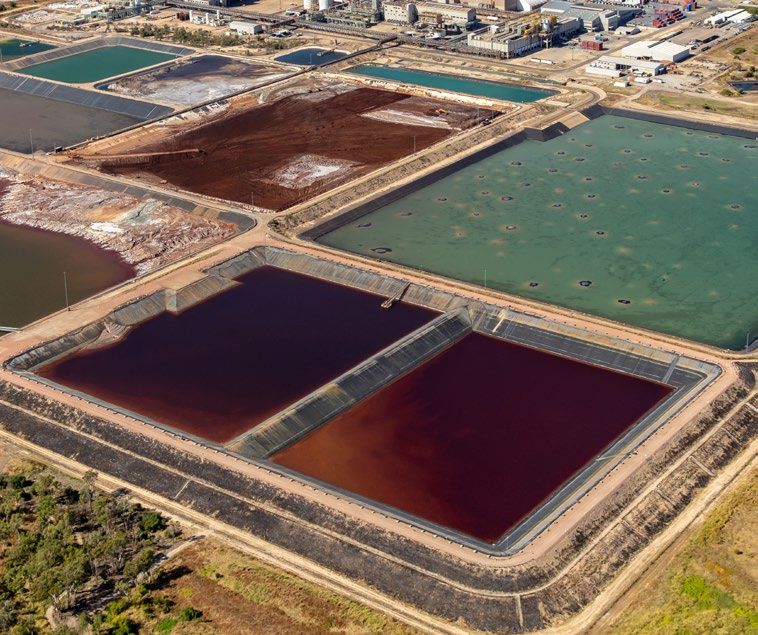
FOREWORD     •   IN BRIEF   •   OPERATIONS   •     INTERVIEW   •   PROJEC TS   •   DIALOGUES   •   ONGOING DIALOGUES      •   COMPLETED DIALOGUES            •   OUR HISTORY

Working process for dialogues                         panies, are usually finally assessed to violate    Projects                                                       Successfactors for projects
Screening for malpractice take place based            international conventions. The Secretary           The Council on Ethics has choosen to work                      Which individual projects the Council on
on conventions or international guidelines            General and members of the Council on Ethics       on projects in certain areas in order to pre-                  Ethics chooses to work on depends on a num-
that Sweden has signed. When a misconduct             are directly involved in approximately 30-50       vent violations and serious misconduct. The                    ber of different factors. A success factor for
is identified, a dialogue is initiated to obtain      company dialogues annually. These compa-           focus areas are: Environment (Biodiversity),                   driving and achieving results is that you have
more information. If the misconduct is serious        nies are selected based on where the Council       Human Rights (Child and Forced Labor and                       a deep knowledge of the problem area and its
and systematic and the company’s actions are          on Ethics’ direct efforts adds most value, and     Health and Safety), Climate (Paris Agree-                      various challenges before initiating the proj-
deemed to be in violation of conventions or           the Council is always involved in the dialogues    ment) and Business Ethics (Anti-corruption                     ect. This means that knowledge and analysis
international guidelines the first objective is       with the companies that have been concluded        and Responsible Business). Preventative                        of the area is suitably built up before a project
to stop the misconduct (if it is still ongoing).      to violate conventions.                            projects can also address more than one focus                  is initiated. An example of a successful project
The next objective is that the company create             The Council on Ethics has a time limit for     area. One such project is the Mining and Tail-                 run by the Council on Ethics is on the Mining
or update its policy. Then the policy has to be       dialogues of approximately four years. If the      ings Safety Initiative.                                        and Tailing Safety Initiative. This project was
implementated and finally the company has             dialogue has not then led to the results that          Over the years, the Council on Ethics’ work                made possible through the Council on Ethics’
to report in a transparent manner in order            the Council on Ethics considers reasonable,        with projects aimed at preventing malpractice and              many years of commitment and dialogues
to show that the company does its utmost to           there is an opportunity to recommend the           violations has developed from sector-specific to               with mining companies and knowledge of the
avoid the violation from being repeated.              Funds to exclude the company. However, this        thematic to problem-solving oriented projects. The             sector.
    Before concluding a dialogue, the com-            is a last resort, and the Council on Ethics sees   Council on Ethics today works with all these differ-           In projects initiated and run by other parties,
pany must show that it has acted to prevent a         it as a failure because the misconduct will        ent forms of projects. Running problem-                        for example the Ethical Council’s service pro-
recurrence. The Council on Ethics focuses on          probably continue.                                 solving oriented projects, where the Council on                viders or PRI, the same prior knowledge on
practical implementation, internal guidlines,             The Council on Ethics does an annually         Ethics works to facilitate that different actors come          the part of the Ethical Council is not required.
third part verification of these and external         follow-up on the companies that have been          together to jointly discuss and develop solutions to           The projects that the Council on Ethics
reporting on progress.                                excluded and if the circumstances have been        major problems, has in recent years been shown                 chooses to work with must also support the
    Of the approximately 3,500 companies,             remedied, the Council on Ethics can recom-         to enable significant positive changes with a real             Council on Ethics’ focus areas. For example,
approximately 300 companies are usually               mend the Funds to re-include the company.          imprint and broad impact.                                      PRI’s palm oil project focus on biodiversity
identified in a screening and about 30 com-                                                                                                                             and Sustainalytic’s projects on child labor
                                                                                                                                                                        vis-à-vis cocoa companies and working condi-
Different ways the Council on Ethics carries out its work                                                                                                               tions in the food industry’s supply chains.

                                                                                                         The Council on Ethics conducts its work through
                                                                                                         various types of dialogue that complement each
                                                                                                         other. The forms of dialogue have been developed
        Incident driven dialogues with                      Facilitating role in projects                over time to effectively address and contribute to
           individual companies                           where problem solving is in focus              solutions to various types of problems. Sometimes
                                                                                                         the problem is specific to a certain company and
                                                                                                         then the Council on Ethics prioritise dialogue with
                                                                                                         the company in question: A problem can also be
                                The Council on Ethics’ dialogues                                         common to an industry and then dialogues multipel
                                      for positive change                                                companies is more suitable. In order to address
                                                                                                         certain problems the Council on Ethics uses its con-
                                                                                                         vening power to bring various players together to
                                                                                                         address the problem. In these cases the Council on
                Projects -                                 Incident driven dialogues with                Ethics main role is to facilitate the project.
             Tematic dialogues                            multipel companies in a sector

8                                                                                                                                                   T H E C O U N C I L O N E T H IC S O F T H E A P F U N D S • A N N U A L R E P O R T 2020
FOREWORD      •   IN BRIEF   •   OPERATIONS     •     INTERVIEW   •   PROJEC TS   •   DIALOGUES   •   ONGOING DIALOGUES   •   COMPLETED DIALOGUES     •   OUR HISTORY

The UN Sustainable Development Goals
part of the framework
The Council on Ethics and thh AP Funds use
the Sustainable Development Goals (SDGs) as
part of their framework for both sustaianbility
work as wll as asset management.
    The 17 SDGs, adopted by 193 member
states at the United Nations in 2015, provide
a globally shared framework to address the
world’s most urgent sustainability challenges.
    Achieving the SDGs, which are divided
into 169 sub-targets, requires commitment
not only from governments and companies,
but also from investors. The SDGs address
global challenges including those to climate,
inequality, environmental degradation, pov-
erty and peace and justice.
    The SDGs have achieved a broad reach and
acceptance among companies and investors
alike. For example, the SDGs are used as a frame-
work for sustainability in dialogues with com-
panies and in the development of financial prod-
ucts. The Council on Ethics indicate in this report
which SDGs the different projects and dialogues
are supportive of.
    The SDGs show that sustainability is fun-
damental to the development of society as they
help to stimulate investments that can con-
tribute to solutions to major global problems.
At the same time, the SDGs help set the condi-
tions for long-term sustainable development.
    There is a strong business case for investing
in opportunities aligned with the SDGs, and
the benefits of meaningful sustainability dis-
closures are well established.

9                                                                                                                                            T H E C O U N C I L O N E T H IC S O F T H E A P F U N D S • A N N U A L R E P O R T 2020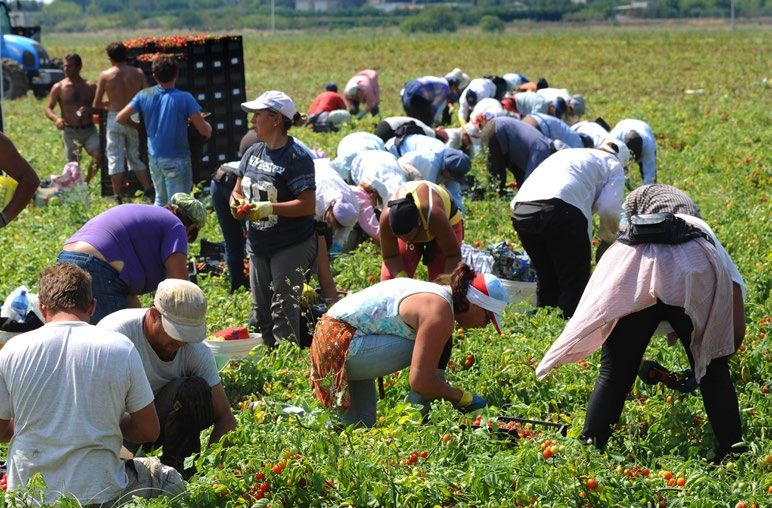
FOREWORD      •   IN BRIEF   •   OPER ATIONS    •    INTERVIEW   •   PROJEC TS   •   DIALOGUES    •   ONGOING DIALOGUES     •   COMPLETED DIALOGUES          •    OUR HISTORY

The importance of investor engagement
Fiona Reynolds, CEO at the Principels for Responsible Investment (PRI) emphasis in this interview with the Council on Ethics
the importance of institutional investors individual and collective engagement efforts to address global challenges.

Thank you for your personal engagement in               Active ownership continues to be a bit of           – Yes, while stewardship is the most powerful
the process of developing the Global Industry           a conundrum for some stakeholders, even             tool investors have to align the economy and
Standard on Tailings Management, do you                 though as a practice it is both logical and has     society with the interests of beneficiaries,
feel this kind of work reflects the Principles for      evolved significantly over the years.               many asset owners are not using it to its fullest
Responsible Investment (PRI) push for Active            – When PRI was established in 2006, its             potential. Institutional investors can contrib-
Ownership 2.0?                                          founders recognised the power and potential         ute more and use the influence they have to
– Yes, we need to achieve real-world outcomes           of active ownership (or ‘stewardship’) and cod-     adress the global challenges we face.
at scale. This is a perfect example of that ambi-       ified it as the second of the six PRI principles.   Many institutional investors have been reluc-
tion and it is also consistent with our Blueprint       Active ownership is the means by which inves-       tant to use their influence. Where they have
for Responsible Investment; we recognize the            tors most directly influence companies, mar-        used this influence, they’ve taken tentative
need to focus on the effectiveness of active            kets, and economies; and, in turn, society and      steps, focusing on the short-term and on indi-
ownership and our own role in better support-           the environment as a whole. In the years since      vidual holdings in their portfolio, not the bigger
ing signatories to deliver them.                        the PRI’s establishment, active ownership           picture. We need more ambition and now there
                                                        has been affirmed by the stewardship codes          seems to more appetite and enough maturity
Strengthened collaboration is a key concept             that financial regulators have introduced in        within many investment organisations to
here. The institutional framework that pro-             many jurisdictions. At the same time, industry      step-up to these challenges. Interesting times
duced this global standard has attracted quite          capabilities have developed to meet this need,      ahead.
some interest and is seen as a possible blue-           in the form of internal stewardship teams and
print for future projects at scale?                     external services. It has also been strength-       Tell us a bit more about Active Ownership 2.0?
– The setup with UN Environment Program,                ened as both individual engagement efforts          – Active Ownership 2.0 is an aspirational stan-
all the major mining companies represented              and new investor networks have reached scale.       dard for improved stewardship that builds on
through International Council on Mining and             With mechanisms and momentum for active             existing practice. It sets a framework for the
Metals (ICMM) and finally the global invest-            ownership now in place, it is time to evaluate      future of stewardship where investors seek out-
ment community is a strong foundational                 how active ownership needs to evolve to realize     comes, prioritise systemic sustainability issues,
framework that we can explore further. It is            its full potential.                                 and use collaboration as an integral tool to over-
important to include other stakeholders in                                                                  come the collective action problem. The imple-
the process, but also to strike that balance            Our own experience here at the Council on           mentation of Active Ownership 2.0 will repre-
between practicality and ambition. I believe we         Ethics and the AP Funds is that there needs to      sent a greater challenge for signatories whose
can explore this further and there will be new          be some institutional maturity and “learn-          responsible investment commitments are still
opportunities to do so. This is a great start.          ing by doing” in order to step up to the really     developing but we believe the programme will
                                                        challenging structural challenges, like setting     provide signatories with greater clarity about
                                                        global frameworks and standards. Do you             the goals they should be aiming to reach.
                                                        agree?

10                                                                                                                                                  T H E C O U N C I L O N E T H IC S O F T H E A P F U N D S • A N N U A L R E P O R T 2020
FOREWORD • IN BRIEF • OPER ATIONS • INTERVIEW • PROJECTS • DIALOGUES • ONGOING DIALOGUES • COMPLETED DIALOGUES • OUR HISTORY Projects The Council on Ethics’ work with projects aims to solve various sustainability challenges. The projects that the Council on Ethics supports, is involved in and/or initiates are mainly within the Council’s focus areas: Climate (the Paris Agreement), Environment (Biodiversity), Human rights (Child & Forced Labour and Health & Safety) and Business ethics (Anti-corruption and Responsible Business) The Council on Ethics’ prioritisation and choice of focus areas takes into account, among other things, financial risks and opportunities, as well as the public’s confidence in the AP Funds’ and the Council on Ethics’ activities. 11 T H E C O U N C I L O N E T H IC S O F T H E A P F U N D S • A N N U A L R E P O R T 2020
FOREWORD     •   IN BRIEF   •   OPER ATIONS   •   INTERVIEW   •   PROJECTS    •   DIALOGUES    •   ONGOING DIALOGUES    •   COMPLETED DIALOGUES            •   OUR HISTORY

Leading a coalition for a
safer mining industry
The Investor Mining and Tailings Safety Initiative is a project which covers in part all
of the Council’s focus areas and is, so far, the largest project ever for the Council on
Ethics to take on.

                                                     earlier and only 80 miles away, in November
Background facts                                     2015 a community near Mariana, Minas
Region: Global                                       Gerais in Brazil had suffered huge destruction
Focus area: Human rights, Environment                due to a collapsed tailings dam. Mariana was
Topics: Transparency, Global standard                operated by Samarco, a company owned by
Number of companies: 726                             Vale and BHP, and that tailings dam failure
UN Sustainable Development Goal:                     had killed 19 people and spread pollutants
                                                     across 415 miles of waterways.

                                                     The project started early 2019
                                                     The Investor Mining & Tailings Safety Ini-
                                                     tiative started early 2019 and is led by the
The Council on Ethics believes that tailings         Council on Ethics and the Church of England
facilities represent an under appreciated            Penions Board. In 2019, four Investor Round-
systemic risk, the neglect of which has been         tables was held in London, which culminated
shown to have catastrophic effects on                with the Mining & Tailings Safety Summit at
people and the environment. In the immedi-           the end of October 2019. All meetings involv-
ate aftermath of the Brumadinho dam fail-            ing global mining companies, government
ure the Council on Ethics and the Church of          regulators of mining, UN experts and global
England Pensions Board were determined to            mining experts – both professional and aca-
step up their efforts and work with partners to      demic as well as representatives from the
ensure such a man-made disaster would not            investment, banking and insurance sectors.
be allowed to happen yet again. The disaster            In response to the investors call for a global
in Brumadinho, Brazil should never have hap-         tailings facilities management standard the
pened. In January 2019 the collapse of a tail-       mining industry represented by the Interna-           What is a tailings dam?
ings storage facility at Vale’s mine caused the      tional Council on Mining and Metals (ICMM),           Tailings is the name given to byproducts of mining operations, which include chemicals, tiny rock
loss of 270 lives, widespread environmental          UN Environment Programme (UNEP) and                   particles and water. Different types of dams can be created to store these waste products, and they
damage, and long-lasting devastation of the          PRI - Principles for Responsible Investment           are some of the world’s largest engineered structures. The cheaper ‘upstream’ variant is constructed
local community.                                     (represented by John Howchin of the Council           from the sediment itself as it settles and solidifies. This type of dam has been involved in a number of
   Compounding the tragedy for the affected          on Ethics and Adam Matthews of the Church             disastrous failures. All dams need regular monitoring and maintenance to ensure that faults are not
families was the knowledge that their suffer-        of England Pensions Board) co-convened a              developing. It is estimated that there are approximately 18,000 tailings storage facilities worldwide, of
ing was not unique: a little over three years        process - The Global Tailings Review (GTR)            which approximately 3,500 are currently active.

12                                                                                                                                                T H E C O U N C I L O N E T H IC S O F T H E A P F U N D S • A N N U A L R E P O R T 2020
FOREWORD • IN BRIEF • OPER ATIONS • INTERVIEW • PROJECTS • DIALOGUES • ONGOING DIALOGUES • COMPLETED DIALOGUES • OUR HISTORY
to develop the first global standard for tailings Accomplishments in 2020 Subsequently, the Council on Ethics and This project continues to be a large-scale,
facilities management. To mark the first anniversary of the the Church of England Pensions Board closed ambitious endeavour, and the Council on
The Investor Initiative contacted 726 listed Brumadhino dam break, in January 2020 out the year by contacting over 350 mining Ethics and the Church of England Pensions
mining as well as oil and gas companies and Church House hosted the Summit on Global companies on behalf of investors with $21 Board where honoured to be jointly rec-
asked for facility-by-facility disclosures of Mining and Tailings Safety, which brought trillion in assets under management, asking ognised by the PRI’s independent judging
all tailings dams within their operations. together community representatives, investors, them to confirm on their company websites panel as Stewardship Project of the Year
Like the Standard, the disclosure cuts across mining companies and international organi- their support for the Standard and to set out a 2020. However, we are acutely conscious that
jurisdictions and geographies, and provides sations to discuss tailings safety and progress timeline for their intended compliance with it. this award stems from suffering that should
investors and other stakeholders with better on the Standard. In August 2020, the Global Compliance with the Standard is already never have occurred, and that our work on
“decision material” information. The database Industry Standard on Tailings Management mandatory for members of the ICCM, but this issue is not yet complete.
is publicly available at tailing.grida.no/ was launched at an online event attended by take-up at a company level across the sector
2,000 participants. will be key to its success.
Lessons learnt
Mining done well can be a powerful force for
development. However, when it goes wrong
it can go badly wrong, causing loss of life
and long-term environmental impacts. The
mining sector provide raw material to prod-
ucts which are in demand in society, many of
which are needed for modern life as well as
the low carbon transition.
Drawing on the lessons learnt in leading
the global engagement on tailings dams
together with the Church of England Pension
Board, the Council on Ethics has learned
that a success factor for the project to be
effective was the creation of a partnership
amongst companies and asset owners and
asset mangers. One other important success
factor is also to be focused on a problem that
is essential and where the actions taken to
address it have the potential to change how
the sector operates
The Council on Ethics is now using the
experience and lessons learnt from the Mining
and Tailings Safety Initiative in a new project
addressing human rights challenges within
the tech-sector. Read more at page 23.
13 T H E C O U N C I L O N E T H IC S O F T H E A P F U N D S • A N N U A L R E P O R T 2020FOREWORD • IN BRIEF • OPER ATIONS • INTERVIEW • PROJECTS • DIALOGUES • ONGOING DIALOGUES • COMPLETED DIALOGUES • OUR HISTORY
Climate
Climate change is a systemic risk that, if not stopped, will adversely affect the living Since the increase in temperature depends zation has more than 270 members, mainly
conditions of current and future generations. The Council on Ethics is working for a on how much greenhouse gases have been pension funds and asset managers, from 16
emitted over time, it is important that emis- countries. The IIGCC’s vision is to mobilize
transition to a low-carbon society and the achievement of the Paris Agreement.
sions are reduced as soon as possible. A major capital for the necessary change and ensure
global initiative that works both to push large, resilience to the effects of a changing climate
In the Paris Agreement concluded in December Transition to low carbon listed companies to reduce their emissions by working with companies, decisionmakers
2015, 195 states, including Sweden, pledged In today’s society, most industries, companies and to increase their reporting on climate and other investors.
to keep the global temperature increase ”well and and consumers/individuals are exposed risks and opportunities is Climate Action IIGCC works to support and influence
below 2 degrees” and to ”strive to limit it to 1.5 to and dependent on fossil energy. Combustion 100+. An initiative in which both the Council decision-makers, companies and investors.
degrees”. When the Intergovermental Panel of fossil fuels is the dominant cause of climate on Ethics and the AP Funds are involved. In 2020, for example, the IIGCC sent letter1
on Climate Change’s (IPCC) special report on change. Regarding industries and companies Read more on next page. to EU leaders to put pressure on it to respond
the effects of a global warming of 1.5 degrees one identifies direct exposure (production sustainably to the challenges posed by Covid-
Celsius was published in 2018, it became even and sale of fossil fuels) and indirect exposure Collaboration needed 19 and to prepare for a sustainable restart.
clearer that a rapid and powerful change is (everything that is manufactured and operated The AP Funds and the Council on Ethics are
required. To stabilise the climate, net emissions using fossil fuels). The risks and opportunities also engaged in the Institutional Investor
have to be zero by 2050. The Swedish Parlia- that follow from the transition differ between Group on Climate Change (IIGCC). IIGCC is 1) https://www.iigcc.org/download/
ment has decided that Sweden will achieve net industries and companies and are affected by a European member organisation for investor iigcc-letter-to-eu-leaders-from-in-
zero emissions of greenhouse gases by 2045. how the transition takes place. cooperation on climate change. The organi-
vestors-on-a-sustainable-recovery-from-covid-19/?wpdm-
dl=3446&refresh=5fbe692ec8dc51606314286
14 T H E C O U N C I L O N E T H IC S O F T H E A P F U N D S • A N N U A L R E P O R T 2020FOREWORD • IN BRIEF • OPER ATIONS • INTERVIEW • PROJECTS • DIALOGUES • ONGOING DIALOGUES • COMPLETED DIALOGUES • OUR HISTORY
Climate – Focus on
transition
To combat climate change, carbon dioxide emissions need to fall sharply over the
next ten years. According to IPCC, emissions in 2030 need to be about half of the
current and net zero in 2050. This requires a significant transition. Governments
need to introduce clear regulations that enable a fair and smooth change.
Companies need to change their business models, consumers and citizens need to
change their consumption and behavior patterns.
dioxide emissions (Scope 1–3, i.e. both the
Background facts companies’ direct emissions, emissions from
Region: Global purchased electricity and all other emissions
Focus area: Climate from purchases and use of products). These
Topics: Transition, the Paris Agreement companies are estimated to account for about
Number of companies: 161 80 percent of the world’s industrial carbon
UN Sustainable Development Goal: dioxide emissions.
The purpose of Climate Action 100+ is to:
• Improve companies’ governance in terms of
climate risks and opportunities,
• Reduce their CO2 emissions in accordance
with accepted climate science, and
of the Paris Agreement. In May 2020, another Later in May the American energy corpo-
A project that the Council on Ethics and the • Report in accordance with the TCFD (Task
global oil and gas corporation, Total, went ration Southern Company followed suit and
AP Funds are involved in is Climate Action Force on Climate related Financial Disclo-
public with a similar decision. After collabo- published the goal climate neutrality by 2050.
100+. It is a five-year global climate initiative sure) which is an international framework
rative investor engagement with the company In total, six American energy corporations
that started in 2017 and is supported by more for climate reporting.
through Climate Action 100+ Total promised have now announced this aim.
than 540 investors with assets under man-
climate neutrality by 2050 in both production Unilever have set their goal of net zero
agement of $52,000 billions. The initiative Dialogues have an impact and products, and to have their oil and gas emissions by 2039 along with plans to estab-
has dialogues with more than 160 companies During 2020 Climate Action 100+ has secured capex allocation to be assessed for consistency lish a €1 billion Climate and Nature Fund. In
around the world. These companies have been several important commitments from com- against the Paris Agreement. the consumer products sector, Woolworths
selected because they have large total carbon panies in industries especially taxing to the They also pledge to support other corpora- has also set a new target to reduce its opera-
climate. Here are some examples. tions and countries in the transition to net zero tional emissions. Other companies that have
In April 2020 Shell announced their plans emissions. Total will revise their targets at least made progress towards the goals of Climate
to achieve climate neutrality, or net zero every five years to follow the development of Action 100+ are Coca Cola, PepsiCo, Walmart,
emissions, by 2050 at the latest. As one of the policy, market, and technology. In the oil and gas Colgate-Palmolive, and Danone.
world’s largest energy companies this com- sector several commitments have been made,
mitment is groundbreaking. They also plan to among others by BP, Repsol and Petrochina.
accelerate the pace of reduction in their car-
bon dioxide emissions to align with the goals
15 T H E C O U N C I L O N E T H IC S O F T H E A P F U N D S • A N N U A L R E P O R T 2020FOREWORD • IN BRIEF • OPER ATIONS • INTERVIEW • PROJECTS • DIALOGUES • ONGOING DIALOGUES • COMPLETED DIALOGUES • OUR HISTORY
Major progress during the year but more is the number of newly announced goals for net Dialogues with companies throughout the Sme of the sectors selected are: Oil and gas,
needed zero emissions, 194 of the oil and gas projects value chain heavy transport, steel, cement, and shipping.
The successes of 2020 have been significant; that have been sanctioned this year are not Collaboration is essential for a smooth tran- The roadmaps will be developed in roundta-
commitments of net zero emissions from aligned with a climate scenario where the sition to net-zero. In 2020, the Council on ble meetings which the stakeholder concerned
these large corporations are not only an temperature increase falls below 1.75⁰C. Ethics has worked within Climate Action participate. In 2020, a first roundtable dis-
important step in slowing climate change but 100+ and together with the Institutional cussion was held for oil and gas, heavy trans-
can also be seen as the beginning of a new Evaluation model Investor Group Climate Change (IIGCC) port and steel sector. In 2021, the work of
standard of conduct in various industries, In 2020, Climate Action 100+ has developed and the Transition Pathway Initiative (TPI) developing action plans for these sectors will
and it puts pressure on other companies to an evaluation model, Net Zero Company to bringing together companies in different continue. The Secretary General of the Coun-
follow suit and revise their climate strategies. Benchmark, to analyse how well companies value chains for energy-intensive sectors in cil on Ethics leads this work together with the
Through Climate Action 100+ and the coordi- live up to the requirements of Climate Action order to develop ways to achieve net-zero Church of England Pensions Board.
nated investor engagement that this initiative 100+. The first scorecards based on this emissions. Achieving net zero requires collab-
makes possible, true change can be achieved. benchmark will be published early in 2021. oration between companies, investors, policy More information www.climateaction100.org
At the same time, Climate Action 100+’s This will provide information to investors on makers and other actors. Therefore there is
annual report emphasizes that there is still a which companies where special commitment new project within Climate Action 100+ with
long way to go and that commitment in words is needed in the future. the purpose to jointly develop action plans for
needs to be followed up with actions. Despite different sectors and then implement them.
16 T H E C O U N C I L O N E T H IC S O F T H E A P F U N D S • A N N U A L R E P O R T 2020FOREWORD • IN BRIEF • OPER ATIONS • INTERVIEW • PROJECTS • DIALOGUES • ONGOING DIALOGUES • COMPLETED DIALOGUES • OUR HISTORY
Human rights
Human rights are universal, mutually interdependent and indivisible. This means rights through their operations, supply chains, Commitment and communication with
they are parts of a whole, that no right is more important than another, and that all interaction with society and stakeholders and stakeholders as well as transparency is neces-
through the use of the company’s products and sary and important. Information relating to
human beings are born free and equal in dignity and rights.
services. Respect for human rights is part of a human rights can be sensitive information for
healthy and sustainable business and risk man- both the company and relevant stakeholders.
Human rights are part of international law UN Guiding Principles on Business and agement. Despite this, the Council on Ethics encourages
and are enshrined in various types of interna- Human Rights companies to be as transparent as possible
tional agreements such as conventions. The companies’ responsibility is to respect The Council on Ethics’ expectations about the dilemmas they face as well as the pri-
Governments therefore have the ultimate human rights. Respecting human rights means The Council on Ethics expects companies to orities they are forced to make regarding human
responsibility for the protection of human that companies must avoid having a negative respect human rights and to work actively to rights.
rights in their respective countries. There are impact on human rights and that companies implement the UNGP. This means that they In the area of human rights, the Council
different types of human rights, including must act to prevent this from happening. This must integrate respect for human rights in their on Ethics has chosen to focus on child and
civil and political rights; economic, social is clarified in the UN Guiding Principles on activities, policies, strategy, risk management forced labour as well as health and safety. In
and cultural rights; and special protection for Business and Human Rights (UNGP) which are and engage and transparently report publicly 2020, the Council on Ethics has started a new
individuals who belong to specific groups. based on international conventions and frame- about them. project concerning human rights issues in the
works. Companies can have an impact on human tech sector.
17 T H E C O U N C I L O N E T H IC S O F T H E A P F U N D S • A N N U A L R E P O R T 2020FOREWORD • IN BRIEF • OPER ATIONS • INTERVIEW • PROJECTS • DIALOGUES • ONGOING DIALOGUES • COMPLETED DIALOGUES • OUR HISTORY
Collaborative efforts to
scale-up interventions
against child labour in cocoa
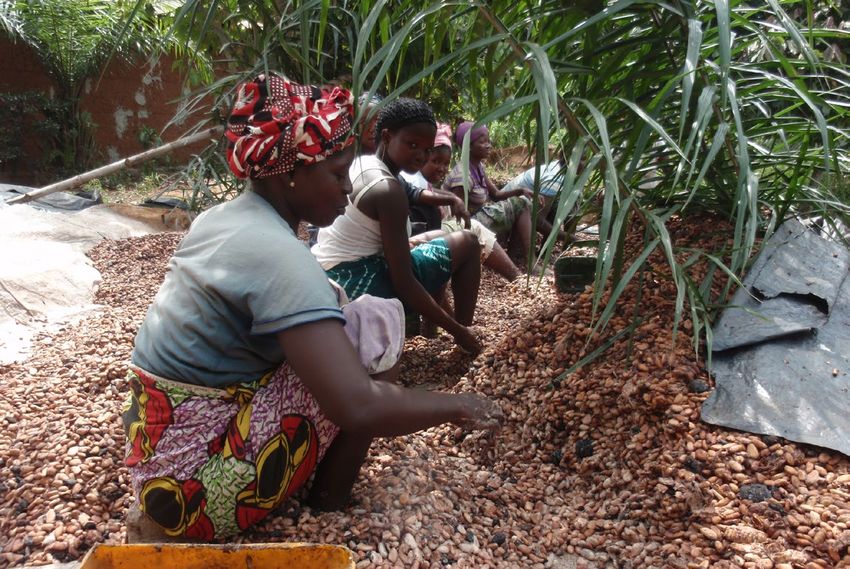
Ivory Coast and Ghana are the world’s leading cocoa producing countries, accounting
for almost 70 percent of cocoa production worldwide. However, it is estimated that in
these countries combined, over 1.5 million children work in hazardous conditions in
the cocoa supply chain alone.
with a pledge by the industry organization
Background facts World Cocoa Foundation to have CLMRS,
Region: West Africa or equivalent systems, in all cocoa-growing
Focus Area: Human rights communities the member companies supply
Topics: Child labour in cocoa supply chain from in Ivory Coast and Ghana by 2025. Some
Number of companies: 7 companies are ahead of schedule to meet the
UN Sustainable Development Goal:
pledge and several companies have initiated
roll-out beyond Ivory Coast and Ghana.
Private sector interventions
While efforts are strengthened against child support to two new programmes by the Jacobs the cocoa supply chains in Ivory Coast and
labour, they are overshadowed by the large- Foundation aiming to support, among other Ghana are covered by such industry pro-
Together with a large group of institutional scale survey released in October 2020 on things, access to quality primary education in grammes preventing and remediating child
investors, the Council on Ethics engaged the status of child labour in cocoa-growing Ivory Coast for five million children. labour.
major cocoa and chocolate companies in three communities in Ivory Coast and Ghana, com- A separate study by the same university,
focus areas: child labour monitoring and missioned by the US Department of Labor and commissioned by the World Cocoa Founda- Living income
remediation, access to education and living conducted by the University of Chicago1. The tion, has assessed the effects of the industry’s It is clear that progress is continuing with
income for cocoa-growing farmers. This results suggested that more than 1.5 million interventions on child labour and suggests that regards to companies’ uptake of living income.
collaboration is led by Sustainalytics. children are still involved in child labour in hazardous child labour has been reduced by Some of the cocoa and chocolate companies
cocoa production in the two countries. one-third in communities where company pro- have strategies in place to improve income
Monitoring and remediation systems On a more positive note, the report stated grammes are in place. According to the study, for cocoa-growing farmers and are explicitly
Most companies apply Child Labour Monitor- that school attendance among children in agri- when multiple interventions were implemented measuring farmer income as part of monitor-
ing and Remediation Systems (CLMRS), or cultural households increased from 58 percent in a community, it led to a statistically sign- ing their farmer programmes in West Africa,
similar, and are continuing roll-outs in line to 80 in Ivory Coast and from 89 to 96 percent ificant reduction in the rates of child labor and including data collection to understand what
in Ghana. An area which the investor col- hazardous child labor in cocoa production. types of interventions are effective.
1) https://www.norc.org/NewsEventsPublications/ laboration has been encouraging companies The International Cocoa Initiative, a In dialogues with companies during 2020,
PressReleases/Pages/increase-in-hazardous-child-la- to contribute to. In spring 2020, several cocoa multi-stakeholder initiative against child insightful studies commissioned by cocoa
bor-in-cocoa-production-amid-an-expansion-of-cocoa-farm-
ing-in-cote-d’ivoire-and-ghana.aspx and chocolate companies also announced their labour in cocoa, estimates that 20 percent of and chocolate companies, as well as promis-
18 T H E C O U N C I L O N E T H IC S O F T H E A P F U N D S • A N N U A L R E P O R T 2020FOREWORD • IN BRIEF • OPER ATIONS • INTERVIEW • PROJECTS • DIALOGUES • ONGOING DIALOGUES • COMPLETED DIALOGUES • OUR HISTORY
ing pilot interventions have been presented Through the latter report, Mondelez calls for positive impact of blockchain solutions. The the economic value that this data has for the
and discussed. Public examples include cross-sector action and concludes that the focus has been on digital identities, aiming farmer and other household members.
Lindts & Sprungli’s impact study carried out annual cost to close the living income gap in not only at addressing child labour but also to With data from different crops connected
by the research institute KIT, which looked Ivory Coast and Ghana can be as much as USD eradicate the root cause of it, poverty. These to the ID of the farmer, he or she can then use
at measuring how the company’s farmer 10 billion. solutions are trying to secure that the small- it to get financial support to make necessary
programmes impact income and yield, and holder farmers’ household data is not kept in investment at the farm and for the household.
Mondelez joint report with the Wageningen Digital identities - a tool for change silos across multiple organisations, but held by It also has the potential to provide the farmer
University and Research - ‘No Silver Bullets: In order to further drive positive change, the the individuals themselves, thereby ensuring with better market access, and thereby a
Closing the $10 billion income gap in cocoa’. Council on Ethics has continued to explore the not only data privacy but more importantly chance to increased profit for agricultural
products. Companies developing or connect-
ing to digital identity solutions that are inclu-
sive to farmers are more likely to build a stable
farmer base, crucial to secure a long-term
supply of agricultural products.
A harmonized solution for a larger number
of farmers and market leading companies
combined also has the potential to facilitate
and bring to scale joint interventions to sup-
port farmers towards more lucrative farming
businesses.
Further engagement effort will be under-
taken with the cocoa industry on the above
matters, until the conclusion of this investor
effort in the latter part of 2022.
19 T H E C O U N C I L O N E T H IC S O F T H E A P F U N D S • A N N U A L R E P O R T 2020You can also read


