BOOKLET (FINAL CONFERENCE EDITION) - # MAY 2021 - NEWHORRIZON
←
→
Page content transcription
If your browser does not render page correctly, please read the page content below
PILOT ACTION
Booklet (Final Conference Edition)
# May 2021

Page 2 Euroexpert and RRI

        SOCIAL LAB 1 ERC
        EURO EXPERT AND RRI
        Researchers might lack expertise how to best             By creating a communicable output and making
        communicate their results and to engage new              legal research more accessible to people outside
        people online. The problem is exacerbated because        the scientific domain it may thus may help the
        of a lack of time and resources and because of a         legal scholarly field to become more inclusive,
        general skepticism among researchers towards             adaptive to social changes and aware of RRI.
        public engagement. Pilot action participants thought     Furthermore, the website and the experiences
        it was important to create a new website which may       gained with developing it may encourage the
        help communicating research results to people            design of templates for other excellent science
        outside the scientific world and increase                projects to develop their own websites. The
        engagement between researchers and information           website can be used as a model for other
        users because research findings can be helpful for       projects that want to engage a wider public and
        legal professionals and people at court to improve       engage stakeholders in their work.
        legal processes by considering cultural expertise.
                                                                 Please follow the link        to   learn   more:
        Pilot action participants created a website of the ERC   https://euro-resp.com/
        funded Euro Expert project that showcases the
        relevance of RRI by sharing research results from
        legal and anthropological research with relevant
        stakeholders such as cultural experts, judges and
        prosecutors. RRI is used as an instrument to increase
        the social impact of research. The website is
        specifically focused on informing a wider audience
        about the role of cultural experts in the context of
        legal decision-making.

        Cultural experts, judges and prosecutors and other
        people who are interested can get the latest relevant
        research results easily from a dedicated website and
        can even contribute insights through blogs. The use
        of an easily accessible online space supports the
        spread of results and therefore increases interaction
        between legal researchers and society. The website
        could help to initiate a wider societal discussion
        about the benefits and challenges of cultural
        expertise in legal settings and the wider questions
        these raise.

Contact: Sabrina Ciolfi (sabrina.ciolfi@csls.ox.ac.uk)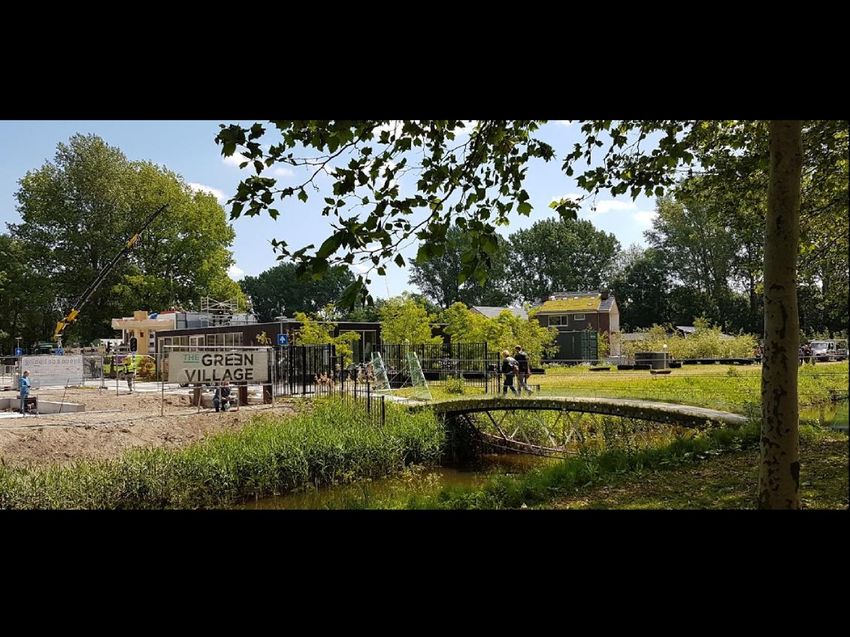
Page 3 Quadralogue

SOcial Lab 1 ERC
QUADRALOGUE
The     Quadralogue        addresses     barriers    of
communication and routine between individuals with
different roles in research and innovation. By bringing
together these individuals who are not typically
incentivized to discuss the bigger picture aspects of
science and research, the Quadralogue seeks to
overcome this barrier by bringing people together to
discuss the social impact of research and innovation.

The design of the Quadralogue is a structured and
facilitated 45-minute dialogue-game. By providing a
unique ‘gamified’ environment to foster these
conversations, the pilot action is a low-threshold way
to bring together people who do not typically have a
chance to share their expertise, concerns,
experiences, and assumptions in their normal day to
day routine. The barriers are removed by the protocol
of the game, as each of the four participants are
responsible for sharing their interpretations and first
impressions of the experiences they share with each
other in plain language.

Quadralogue began targeting researchers, students,
community members and administrators. The
students act as facilitators which empowers them
and contributes to a discussion on an eye level.
Administrators are able to share their experiences
from the typically behind the scenes perspective of
research. Scientists are given a chance to speak as
members of society and not professional scientists.
And community members, which is the most open-
ended subgroup in the Quadralogue, can represent a
cause that is context specific to the community in
which the Quadralogue is taking place. Since its
launch, the Quadralogue has since been taken by up
members of the local municipalities, and                      The lesson learned from this pilot action is that
entrepreneurs who want to know the impact of their            public engagement is a fundamental and very
business.                                                 1   important first step towards doing RRI. Additionally,
                                                              public engagement is a means of breaking
                                                              professionals and students out of their routine and
You can watch a video of Quadralogue on the Ben               can unlock creative reflection and brainstorming on
Gurion University campus:                                     otherwise latent topics.
https://www.youtube.com/watch?v=jqYcPmQvMRI.
To select English subtitles, hover your mouse over the
bottom of the video and select the settings gear.         2   One of the learnings from the pilot action is that these
                                                              conversations can also be fun and interesting for
You can listen to a Quadralogue conversation                  participants, flipping the standard notion of societal
(Hebrew) here:                                                considerations as a researcher’s burden during grant
https://anchor.fm/bgu-radio/episodes/360----1-                applications into an opportunity for exploration.
ebuiuc.

                                                          3   This pilot action should be taken up by others because it
                                                              is an entry point to RRI, can be organized almost
                                                              everywhere and requires minimum financial and
                                                              organizational effort.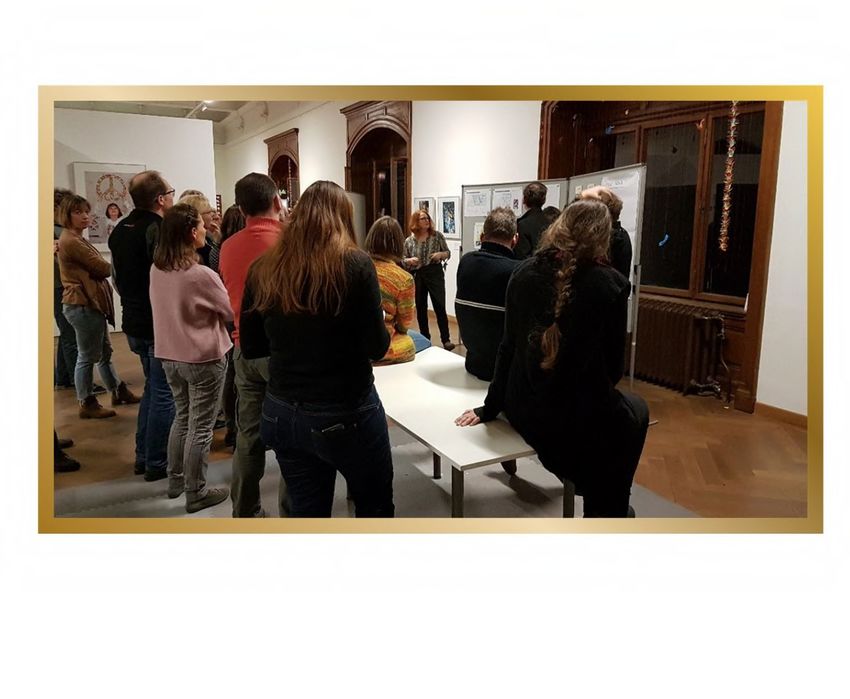
Page 4 Quadralouge

         Follow the QR code to an instruction video on how to play the
         Quadralogue game:

Contact: Eli Lewis (eli.c.lewis@gmail.com)
Page 5 It’s all in the meme

      SOCIAL LAB 2 FET
      IT’S ALL IN THE MEME
                                                                                The specific target group of “It’s all in the meme”
                                                                                are leaders and developers in the field of
                                                                                education, technology, design, art, science,
                                                                                research and innovation. They engage in playful
                                                                                and participatory learning and explore new
                                                                                realms of art, science and philosophy.

                                                                                 The pilot action develops a new understanding
                                                                                of implementing experiential knowledge and
                                                                                new modes of Operandi within the fields of
                                                                                Creative Industries and artistic research. It aligns
                                                                                with the policy of RRI to open up our thinking,
                                                                                collaborate across different disciplines and
                                                                                bridge knowledge domains by interrogating
                                                                                notions of complexity, uncertainty, creativity and
                                                                                innovation.

                                                                                The “It’s all in the meme” is designed as a
                                                                                workshop format for 10-15 participants involving
                                                                                leaders    and    developers    in   education,
                                                                                technology, design, art, science, research and
                                                                                innovation who engage in playful participation
                                                                                and start navigating new level playing field for
                                                                                future policy, organization, collaboration and
                                                                                governance.
     The Pilot Action addresses the issue of prejudices and biases in
                                                                                The workshop was planned for February 2021
     science, research and innovation. Our experience of our actions is
                                                                                but could not happen due to COVID-19
     biased towards what we expect, what we might see, what we
                                                                                situations. The new date is set for May 2021.
     believe. The irony is that prejudice and discrimination are
     inevitable by-products of the efficiency of human cognition.
     Although we like to think we are open-minded and objective,
     research shows consistently across all social groups that this is
     not the case. We are heavily influenced in ways that are
     completely hidden from our conscious minds in how we view and
     evaluate others, our surroundings and ourselves. The pilot action
     consists of developing new perspectives and opening up these
     hidden processes, which deal with our (collective) unconscious
     bias and prejudice.

     The pilot action aims to reflect on emerging perspectives in
     science and philosophy and how this fuels profound insights in
     other domains such as art, culture, technology. The pilot action
     explores playful and participatory learning, in which sharing ideas
     about “cognitive” bias will lead to new ways of understanding
     ourselves through the other and ultimately unravel new ideas on
     what it means to be human in the 21st century.

Contact: Olga Mink (info@baltanlaboratories.org; olga@baltanlaboratories.org)
Page 6 Quantum Rebels

      SOCIAL LAB 2 FET
      QUANTUM REBELS
      The Quantum tech field has for a long time been rather              The specific target groups of the Quantum Rebels are the
      traditional in its culture towards leadership: masculine,           FET coordinators. Strategically, the pilot action would
      competitive, control-oriented, result-driven, arrogant, “I”         leverage participation of multiple Quantum flagship
      over “we,” etc. and the field is very unbalanced in terms of        partners in the Social Lab; coordinate to do a leadership
      gender. With a new generation of leaders in quantum                 training in connection to their main meeting. Since the
                                                                          Quantum flagship program has recently started, it is a
      technologies in Europe, there is a great opportunity to
                                                                          good time to convene the key R&D people on important
      modernize this culture and avoid the risk of repeating it.
                                                                          RRI topic.
      The Quantum Rebels addresses a lack of leadership issues
      in quantum research community for RRI. Leadership with              The Quantum rebels is easy and less time-consuming
      non-authoritarian styles is / will be important to allow for        training workshop format designed and facilitated by
      more open, inclusive and, reflective R&I.                           professional consultant on leadership. Since Quantum
                                                                          flagship program has recently started, it is a good time to
      The Quantum Rebels comprises the design of a leadership             convene the key R&D people on important RRI topic
      training on non-authoritarian leadership styles for FET             allowing for more open, inclusive and, reflective R&I.
      coordinators, through a workshop on best practices in
      leadership for principal investigators within the EU                The Quantum rebels could be iterated in a wider part of
      Quantum Flagship program. To prepare the workshop a                 the Q-community (Quantera, national programs, and
      survey will be sent out to a wider group of prinicipal              institutes, etc.). Subsequent follow-up actions could also be
      investigators, work package leaders and Quantera project            envisaged, possibly with the support of the Quantum CSA
      leaders to find out the views and learning needs from the           (e.g., gender plan, training, annual survey).
      target group themselves. To cross the psychological
      barriers and challenge established habits, the workshop is
      designed to be easily accessible and not too time
      consuming, organized back-to back with a meeting of the
      Science and Engineering Board of the Flagship designed
      and facilitated by professional consultant on leadership.
      Further, the workshop would involve a modern (male)
      leader from an adjacent high-tech R&D field to set an
      example and show the benefits of new modes of
      managements.

Contact: Frank Wilhelm-Mauch (fwm@lusi.uni-sb.de) and Sylwia Kostka (Sylwia.Kostka@ncn.gov.pl)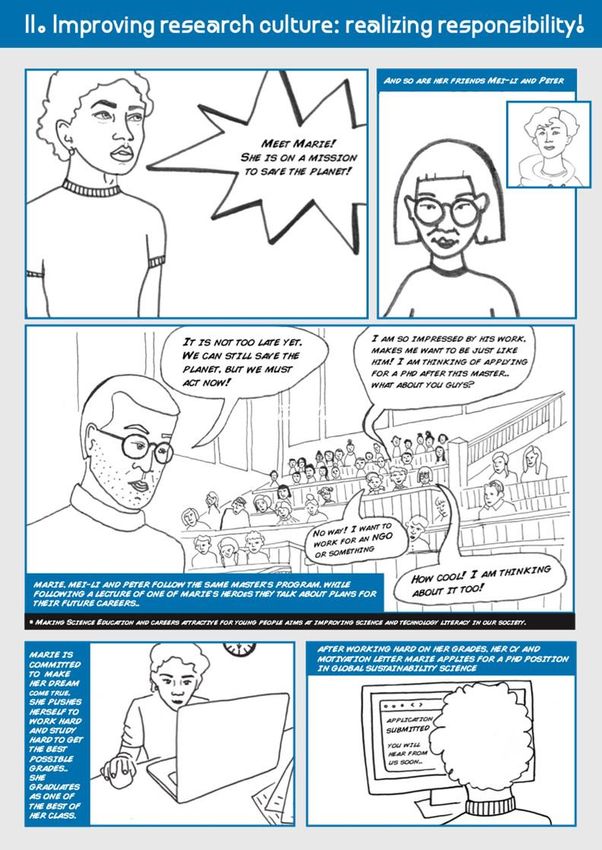
Page 7 RRI Ethics Review

      SOCIAL LAB 2 FET
      RRI ETHICS REVIEW
    The RRI Ethics Review is a survey designed by a group of                 The specific target groups of the RRI ethics review
    researchers working in RMOs with specific questions on the               are the researchers within public research
                                                                             organisations in general and the members of the
    importance of non-regulatory / conventional ethics and research
                                                                             European Technology Transfer Offices (TTO) circle
    integrity issues in research organizations. The survey is easily
                                                                             in particular.
    replicable in any research organization in order to get an overview
    on how the researchers/ research organizations view ethical issues.      The design of the RRI Ethics Review comprised a
                                                                             survey of research management organizations
    The RRI Ethics Review addresses the question of the importance of        (RMOs) and their approaches to ethics monitoring.
    non-regulatory / conventional ethics and research integrity issues in    The analysis was based on a specific set of
    European public research organizations to look beyond standard           situations that were described as potentially
                                                                             ethically problematic.
    ethics regulatory issues and processes. Learning how organisations
    view the ethical issues can help solving the problem of unethical
                                                                             The outcomes of the survey showed that even
    influence of power differentials and meeting structures on research      though the organizations do take ethical issues
    practices. The RRI Ethics Review will help identify as a first step to   into account, there are improvements to be made
    addressing these ethical issues.                                         in the way how organized and transparent are the
                                                                             processes of imposing these onto the research
                                                                             community. Also, in short-term, project-based
                                                                             positions, the role of the project leader in instilling
                                                                             ethical standards is crucial, as staff on shorter
                                                                             contracts are often not integrated in the
                                                                             organization to the same extent as permanent
                                                                             staff. This pilot action should be taken by other
                                                                             research organizations because it provides
                                                                             overview of organizational level of ethical
                                                                             responsibility in research institutions.

                                                                             Results were published in a paper (Spela Stres
                                                                             2020:      Ethics       in  research     issues.
                                                                             Euroscientist.20.1.2020
                                                                             https://www.euroscientist.com/ethics-in-
                                                                             research-issues/)

Contact: Spela Stres (spela.stres18@gmail.com)
Page 8 Knowledge Kiosk

      SOCIAL LAB 3 MSCA
      KNOWLEDGE KIOSK

      Public dialogue is an important scientific responsibility.         The expected impact is that the Research Kiosk leads to
      Among others, it can empower citizens with information             more dialogic engagement between scientists and
      needed to make informed decisions, encourage the public to         citizens. Specific target groups of the Research Kiosk are
      value and be more interested in science issues and                 scientists working at Research Performing Organizations,
      eventually increase citizens’ support for public funding of        innovators, CSOs and local, non-science affiliated citizens.
      research. However, it is hard to find examples of effective
      dialogue systems, in which citizens play an active role and        The Knowledge Kiosk attempts to foster this two-way
      give their voice to science. Additionally, many researchers        engagement between science and society in real life
      would like to contribute to public engagement but they do          through a series of co-creation workshops. The Kiosk is a
      not know how to bring it to practice. We wanted to change          fun and engaging activity in which citizens and scientists
      this by developing the Knowledge Kiosk.                            already engage in dialogue during the design of a long-
                                                                         term engagement format. It uses Design Thinking
      The Knowledge Kiosk is a series of co-creation workshops           methodology and therefore involves the energy and
      organised in Barcelona and Lisbon to design an original and        capacity of local citizens and scientists in shaping possible
      effective dialogue system between citizens and researchers:        prototypes for public engagement. The methodology can
      an accessible, useful, practical and informative resource that     be applied in different cities by researchers, innovators
      favours scientific dissemination and dialogic engagement.          and CSOs across Europe and the resulting prototypes can
      For the implementation of the workshops, we developed our          be adapted to different local circumstances and needs.
      own Design Thinking methodologies: the first workshop              This does need long-term organizational and institutional
      round (in May and July 2019) exclusively targeted citizens,        support for example through funding and by integrating it
      who developed first ideas on how an interaction of citizens        into research requirements and reward structures.
      and scientists on a regular basis could look like. To the
      second round of workshops (in November 2019), we                   The methodology of the workshop series can be taken up
      exclusively invited scientists from all disciplines to choose      as an open tool and shall serve as a “manual” to facilitate
      ideas and develop them further. Finally, in a third round (in      the organisation of the workshops in other cities and
      January 2020) the two groups met to finalize a prototype for       countries to allow the development of different
      Barcelona and Lisbon that ideally can be implemented on            prototypes according to the different local needs and
      the longer-term.                                                   desires of both target groups.

Contact: Jonas Krebs (jonas.krebs@crg.eu) and Cristina Luis (cmluis@fc.ul.pt)
Page 9 RRI Career Assessment Matrix

      SOCIAL LAB 3 MSCA
      RRI CAREER ASSESSMENT MATRIX
     Growing evidence suggests that the evaluation of researchers’       The policy brief contains five recommendations including a call
     careers on the basis of narrow definitions of excellence is         to MSCA policymakers to broaden current excellence
     restricting diversity in academia, both in the development of its   evaluation criteria of MSCA calls in dialogue with all relevant
     labour force and its approaches to address societal challenges.     stakeholders. More broadly, it means that funding institutions
     We wanted to explore directions for change in the current           and research performing organizations need to rethink and
     evaluation frameworks and practices that overemphasize              adapt institutional assessment and reward structures from a
     publications in assessing the quality of research.
                                                                         responsibility perspective, to include elements like responsible
                                                                         research, teaching and community service as an equally
     We wanted to analyse if the Open Science-Career Assessment
     Matrix could and should be adapted to involve more elements         legitimate and rewarding cause for a researcher. Improving the
     of RRI. To spur the debate and gather input we organized a          evaluation system in a concerted effort with research institutes
     plenary session and participatory workshop during the Marie         and other funders will help fully realize a European Research
     Curie Alumni Association Conference in February 2019 in             Area that is open to all talents and knowledge practices. This
     Vienna. On the basis of this input, discussions during the          diversity is essential to sustain academic careers, to strengthen
     second Social Lab Workshop and online discussions we                the relevance and impact of science for society, and to
     produced a policy brief Towards Responsible Research Career         enhance the resilience of our society and environment. Other
     Assessment. The brief contains five recommendations including       organizations could use the policy brief, its sources and the
     a call to MSCA policymakers to broaden current evaluation           process underlying it as an inspiration for improving their
     criteria of MSCA calls in dialogue with all relevant stakeholders   career evaluation system.
     and includes references to current developments in both
     indicator development as well as narrative evaluation.              The RRI-CAM has resulted in a high-level policy brief embraced
                                                                         by both the Marie Curie Alumni Association and the
     The specific target groups of this Pilot are (inter)national
                                                                         NewHoRRIzon project. The brief can be found here.
     research policymakers and (early career) researchers working at
     Research Performing Organizations. The brief has been
     embraced by the Marie Curie Alumni Association and presented
     at the MSCA Stakeholders conference. The hope is that this will
     lead to long-term impact on the evaluation criteria on which
     scientific careers and proposals are assessed.

                                                                                                                                Policy recommendations of the policy brief

Contact: : MCAA Policy Working Group (policy@mariecuriealumni.eu)
Page 10 RRI Manifesto

     SOCIAL LAB 3 MSCA
     RRI MANIFESTO
     Traditionally universities facilitated researchers to train in       The specific target groups are ECRs, research policymakers
     activities only directly related to academic research.               and training institutes. The hope is to involve as many people
     However, only a fraction of the current generation can               as possible to have an impact on training programmes for
     feasibly make a sustainable academic career and many                 ECRs like MSCA and possible throughout Europe.
     young academics are seeking a job outside of the
                                                                          We noted that especially RRI and Open Science training could
     university in business, policy and civil society.
                                                                          contribute to the development of transferable skills such as
     Simultaneously, research funders and policy makers are               being able to communicate and engage with the general
     increasingly paying attention to other activities than pure          public and wider stakeholders, conduct ethically acceptable
     research in their research assessment. This requires more            research and openly share your data, code and wider research
     attention to transferable skills in the training of early-           content. Attention to RRI and Open Science transferable skills
     career researchers.                                                  may thus help to fill the gap that currently exists between
                                                                          academia, business, CSOs and broader society. We discussed
                                                                          how this also means that policymakers, research organizations
     We recognized that young scholars must be enabled more
                                                                          and funders should make a concerted effort to not only
     to learn to speak the language of Open Science & RRI and
                                                                          provide training on RRI and Open Science transferable skills
     develop transferable skills accordingly. To bring the debate         but also think of incentives and change assessment criteria
     further, we organized a panel at the biggest European                accordingly. This is necessary so that the young researchers of
     conference on research and policy: the Euroscience Open              today are prepared for the world of tomorrow.
     Forum in September 2020 in Trieste. The session was
     primarily concerned with how RRI and Open Science will
     align the development of research culture with the needs
     of society and with the needs of young researchers. In the
                                                                         MATERIALS
     session we discussed how RRI/Open Science activities                We organized an ESOF session called Who is responsible for
     enable early career researchers to engage with society by           transferable skills and how can RRI and Open Science help? The
     developing their communication skills, interacting with             session can be viewed on Youtube and one of the session
     stakeholders, publishing open source code, writing data             participants wrote an article on the session for the Euroscientist
     management plans, sharing their datasets through                    website. Next to that, we have also produced an RRI Manifesto
     repositories and so on. Next to organizing this session, we         comic (see next page) which can be used during conferences to
                                                                         start a conversation about problems around RRI amongst early
     also worked on a Manifesto comic about Marie, an early
                                                                         career researchers.
     career researcher who experiences all kinds of RRI-related
     problems in her training and is asking herself whether she
     wants to go on with the PhD trajectory. The comic includes
     the possibility to share your own stories and insights and
     can be used during live conferences to gather further input
     for a final manifesto on RRI.

Contact: Asun López-Varela (alopezva@ucm.es) and Brian Cahill (cahill_brian@hotmail.com)
Page 12 RRI Training
SOCIAL LAB 3 MSCA
RRI TRAINING
The European Commission has asked research funding
applicants to reflect on elements of RRI in their applications.
National Contact Points (NCPs) are funding advisors whose job it
is to provide applicants with the right information to improve
their prospects in getting funding. MSCA NCPs discovered that
they had a lack of knowledge on advising on RRI aspects. As RRI
is becoming more and more important for their everyday advice
work, not knowing how to advise on this aspect therefore
provided a major barrier towards its implementation.
We designed and delivered a full day training on the role of RRI
in MSCA funding practice to funding advisors who were member
of the MSCA NCP network called Net4Mobility+. Multiple calls
were made in preparation; knowledge gaps were identified with Providing funding advisors with the right information and
the help of a questionnaire and a member of the Social Lab examples of RRI is very important as they are central actors in
team provided the interactive training. This included an the European funding ecosystem. By sharing existing materials
overview of the academic and policy background of RRI, best with them and translating it into accessible content, the training
practice examples and concrete, easy to use tools from RRI- helped to close the implementation gap between RRI
tools that NCPs could forward to applicants. In the afternoon we knowledge and funding advice practices. As an example of
presented parts of the diagnosis of MSCA and put MSCA NCPs to training-the-trainer, the Pilot may help increase
work in several interactive formats in which they were asked to knowledgeability of RRI in funding advice. Inspired by this
relate elements of RRI to their advice practice. Next to that, with experience and after feedback from our Social Lab participants,
support from the Marie Curie Alumni Association and we organized a follow-up webinar for prospective MSCA
representatives from two MSCA Innovative Training Networks applicants to share ideas on how RRI may improve the quality
(SAF21 and IMGENE), we conducted a webinar on Winning and competitiveness of their research funding proposals.
Innovative Training Networks (ITNs) with RRI. We explained the
relevance of RRI for proposal writing and (former) grantees The RRI Training has resulted in a fully developed training for
provided examples from their own research practice. MSCA NCPs of which they can appropriate slides for their advice
practice. The webinar has been posted on Youtube with a link
The specific target groups were MSCA funding advisors and
to slides for further reading.
prospective MSCA ITN applicants. The goal was to show the
relevance of RRI for proposal writing. The training for NCPs
resulted in positive reactions from those attending,
development of training materials catered to MSCA and a report
with recommendations for all MSCA NCPs. The hope is that
funding advisors will integrate it in their advice practice. The
webinar resulted in positive reactions by prospective ITN
applicants and slides were shared online for those interested to
involve RRI in their project proposals.
Contact: Joshua Cohen (j.b.cohen@uva.nl)Page 13 Green Village
SOCIAL LAB 4 INFRA
GREEN VILLAGE
The main objective of the Initiative is to disseminate and Workshop I introduced RRI principles to the Green
share knowledge of the Responsible Research and Village and elaborated project-specific RRI approaches in
Innovation (RRI) principles within a highly innovative three selected projects:
research Community, the Green Village at the University of
Delft, in order to make RRI a principle guiding the way • AQUABATTERY, a project that aims at developing a -
innovations can be developed, tested and demonstrated in -------battery that works on water basis,
their experimental real-life setting. • HEMEL(S)WATER, a project in which rain water is ----
-------collected and processed for drinking and
The focus in this Initiative was on societal engagement, one • RADD, a project on automated driving.
of the four cornerstones of the Green Village mission in
relation to ethics, gender equality and open access and In the six months between the two workshops these
governance. Two workshops with social lab team members projects were asked to implement the aspects discussed
on analysing and implementing the RRI framework in an in workshop I and present it in Workshop II to another
experimental innovative technical research community audience, composed by experts on open science, gender
were conducted. and diversity, sustainability management and RRI in
general.Page 14 Green Village
As a result, each of the projects could benefit from the It needs quality Standards for innovation projects that
activity and appreciated the critical evaluation from incorporate RRI principles. The reflection of the projects
outsiders. All three projects included most of the RRI internally and with external experts during workshops and
principles in their procedures and governance and in their the assessment and development of these high innovative
business strategies: One project in its entire business projects will provide important insights and have a guiding
model, one project in the civil society approach and one function for other projects at Green Village.
mainly in their safety (ethical) approach. However, all of All three projects used existing best practices to relate to
them could identify aspects in all RRI keys for further the RRI principles and developed them further according to
improvement. the reflections of the pilot workshops.
One important lesson learnt from the process was the These are projects that are experimenting in a special
stable support of convicted and dedicated individuals, created environment (Green Village) where some general
such as the support of a former director of the TU DELFT guideline rules often are not applicable. Guidelines for a
as well as motivated members of the projects practical use of the RRI principles within such small
participating in Workshop I. Unless RRI is institutionalised, extremely innovative scientific communities with multi
success of RRI implementation actions rests on the stakeholders’ interests based on the pilot experiences will
shoulders of these change agents. be worked out by the local team if additional funding can be
allocated.
Project Managers of three selected research and
innovation projects of the Green Village presented their
project and discussed in small groups how they better
could integrate RRI principles in their work. In preparation
for workshop II, half a year later, they had the opportunity
to de facto consider RRI in their project and discuss the
changes.
Contact: Eileen Focke-Bakker (E.G.A.Focke-Bakker@tudelft.nl)Page 15 Magna Charta
SOCIAL LAB 4 INFRA
MAGNA CHARTA This Charter "sets out non-regulatory principles and
guidelines to be used as a reference when defining Access
policies for Research Infrastructures and related services”
and should although not binding be considered by
research infrastructure providers. Any mentioning and
The European Commission faces the following challenges in consideration of RRI principles will help to spread the word
the realm of research infrastructures (RI): Not all RIs have a on RRI and sustain the important discursive shift towards
defined Access policy, there is fragmentation and responsible research and innovation. Regardless of the
diversification of Access policies, a lack of common take up of the final revised version as offered by our PA
understanding on concepts, and a lack of transparency team, providers and users of RIs might get sensitised to the
(Adam Tyson, Research and Industrial Infrastructures DG RRI approach and adapt their own practices.
Research & Innovation, EC).
Tangible outputs
The main aim of this pilot action was to integrate RRI in the
European Charta for Access to Research Infrastructures - 1. Revised Version of Charta, sent to EC (DG RTD unit), ----
Principles and Guidelines for Access and Related Services -----ESFRI (Jan Hrušák) and others
(EC, 2016), since RRI principles were not sufficiently
represented in the Charta at that moment. As the document 2. Organisation of a workshop as a satellite event of R+I -
has a guiding function for RI the team decided to revise the -----days, 24-26 September 2019, Brussels
document and integrate RRI principles.
As the Charta was designes as a “living document” from its
very first draft, it led itself towards revision and update.
Therefore, a lab team of five people worked together, the
host of the pilot action coming from a funding agency. They
were analyzing the Charta and revised it applying an
internal iterative approach. Afterwards, they developed
reports and presentations on their results. Finally, the
presented their work in Brussels and discussed them with
DG RTD and ESFRI representatives.
As the following actors have been involved in the drafting of
the Charta, they are the main percipients (European
Commission, ESFRI delegations, e-IRG delegations, EARTO
(European Association of Research and Technology
organisations), LERU (League of European Research
Universities), CESAER (Conference of European Schools for
Advanced Engineering Education and Research), EUA
(European University Association), NordForsk (Nordic
Research cooperation), Science Europe. Furthermore, RI
providers and potential users might strongly benefit from a
reword Charta which embraces the open access approach.
The document will be accessible also to a wider international
context (such as OECD-GSF/GSO etc).
Contact: Jiří Kolman (kolman.j@czechglobe.cz)Page 16 Museum Lab
SOCIAL LAB 4 INFRA
MUSEUM LAB
The Natural History Museum Vienna as one of the A multi-stakeholder social lab was set up to strengthen
largest non-university institutions in Austria aims at RRI within the institution at a strategic level. A series of
getting more open and diverse and wants to follow an three workshops was conducted within this social lab.
RRI approach in future initiatives. The main aim of this
pilot action is to create a social lab within the museum, • Workshop 1 addressed stakeholders and optional
including museum staff, but also external stakeholders future collaboration partners,
or optional future collaboration partners to create new
alliances between science and society and intensify • Workshop 2 worked with staff of the museum
communication and awareness raising on actual topics
of science and society, making “the museum leaving its • Workshop 3 brought the two groups together and
ivory tower”. started a co-creation process building up new
collaborations and communication formats to the
museum, by taking the RRI principles into account
Workshop at the Natural History Museum Vienna to make “the museum leaving its ivory towerPage 17 Museum Lab
The Completed Deck 50 © NHM Vienna
The Natural History Museum Vienna as one of the largest Collaboration workshops like the ones in the Museum Lab
non-university institutions in Austria aims at getting more contribute to answering the question how museum and
open and diverse and wants to follow an RRI approach in society could collaboratively get engaged in addressing
future initiatives. The main aim of this pilot The exhibition societal challenges of our time. New understandings of
and education department created a new communication cooperation have to be established, offering new forms of
area within the museum, Deck 50. In the course of outreach and engagement. Such workshops as the ones in
developing this participatory room, new forms of this pilot, help gaining new insight on how to involving
communication and collaboration internally and externally external stakeholders into actual museum work.
could have been experienced and established. The museum
staff opened up to questions, ideas and needs from outside The pilot action organized moderated and documented
the museum, and external multipliers, representing different workshops in the Natural History Museum Vienna, two of
target groups could discuss and contribute to actual topics of them involving external stakeholders who were invited for
the museum and create new collaborations. The workshops future collaborations. These workshops evoked fresh ideas
were moderated by external facilitators which were positively and food for thoughts, as well as concrete new projects, such
accepted. For setting up the programme, applied methods as ”nhm on tour”. These documentations could be used for
and the recruitment procedure the work was carried out in other institutions to set up a similar process.
very close collaboration with museum staff and external
facilitators to combine both internal and external views which The team could launch the topic of science and society. As a
finally allowed for a friction free process.ction is to create a consequence of the “spirit” created among museum staff
social lab within the museum, including museum staff, but during the second Workshop a group of scientists asked for a
also external stakeholders or optional future collaboration new communication format called “science and society”
partners to create new alliances between science and society which will be designed together with external partners and
and intensify communication and awareness raising on will be central to actions on deck 50.
actual topics of science and society, making “the museum
leaving its ivory tower”.
Contact: Sabrina Ciolfi (sabrina.ciolfi@csls.ox.ac.uk)Page 18 Involvement of CSOs/NGOs in Grant Proposal Writing
SOCIAL LAB 5 LEIT
INVOLVEMENT OF CSOS/NGOS IN GRANT
PROPOSAL WRITING NGOs/CSOs are one of the missing stakeholder groups from
the inter-disciplinary multi-stakeholder collaborations in EU
projects. Our diagnosis research highlighted in the
The research conducted during the NewHoRRIzon
requirements, as well as in the interviews the need of
diagnosis revealed the particular need for the
inclusion of NGOs/CSOs into these projects.
involvement of NGOs/CSOs into research and innovation
project proposals, as these groups are the ones mostly
The objectives of our investigation were twofold:
missing. The pilot actions try to address this need by
developing and test-driving such a collaboration.
1
to identify and reflect on the causes of the barriers and
Initially, the main goal of this pilot was to find ways how hurdles of the increased involvement of CSOs/NGOs in
to a higher society engagement into the idea-generation, the initiation of project proposal-writing endeavours, and
project-goals definition, and project proposal submission
together with the public. The involvement of the broadest 2 informed by these reasons, to design a prototype of proposal
writing process that would be successful in inviting
group of parties should be encouraged (NGOs, CSOs, CSOs/NGOs into collaborative projects since their
SMEs, scientists, other relevant stakeholders). This was conception.
planned in experimental sites (e.g. FabLabs, Citizen Labs,
etc. — there are more than 500 labs in the EU). The
These objectives were expected to lead to greater societal
method could be, for example, the so-called sandbox
cohesion and increased efficiency and overall societal
experiments, which we currently actively encouraged by
benefits resulting from challenging R&I developments. Even
the European Committee. This goal was also consistent
so, the Pilot Action stopped after achieving the first objective.
with the aims of the 3 O’s — open science, open
It turned out that participants didn’t find a common ground in
innovation, open to society.
the acquisition of particular proposals. A possible explanation
for not achieving the second objective is that participating
In effect, we organized a closed-door workshop with
stakeholders in the workshop did not necessarily have the
several representatives of NGOs and CSOs to obtain a
same interest in research projects. For instance, Oxfam Novib
deeper understanding of why CSOs and NGOs often do
was involved in the pilot action and had an interest in
not collaborate in grant proposal writing and therefore,
particular calls outside Europe, while other participants such
miss out on opportunities to collaborate in research that
as representatives of a consultancy firm in sustainable food, or
may suit their needs. Through this workshop we found out
a representative of a Higher Education Institution in the field
that CSOs/NGOs have issues relating to funding bodies
of serious gaming, had completely different interests.
and networking. Often times, this comes down to failing
to speak the same language as academics and business
The Pilot Action had partially helped to introduce RRI,
partners have a different working culture; to having
especially for NGOs and CSOs. They became familiarized with
different interests and having a hard time in finding the
the concept of RRI. Normally, these types of organizations
right contacts for collaboration. CSOs/NGOs can also have
assume they engage in RRI because they are doing good or
different needs when it comes to research and innovation
try to do so. However, as RRI is a broader concept including
and its results, because they are more interested in
dimensions like reflection and anticipation, NGO’s/CSO’s were
practical outcomes, often related to issues of social justice
able to broaden their understanding of responsibility and
and social change. The identification of all these barriers
apply this broader understanding in their primary process.
and hurdles opens a new horizon for further discussion
Unfortunately, due to reasons that are unknown to the team,
with CSOs and NGOs and may inform funders and
we were unsuccessful in attracting further collaboration with
policymakers about the type of support that CSOs and
NGO/CSO stakeholders. We repeatedly tried engaging with
NGOs need if they want to become part of research
them in meaningful relationships however, it never properly
consortia.
took off. Therefore, we presented the findings from the
closed-door workshop, which are valuable on their own
regard.
Contact: Dr. Vincent Blok (vincent.blok@wur.nl), Associate Professor, Wageningen UniversityPage 19 Privacy-Preserving Online Identity Verification
SOCIAL LAB 5 LEIT
PRIVACY-PRESERVING ONLINE IDENTITY
VERIFICATION
Multiple European and other countries are exploring the They set-up multiple ways to engage with possible
possibility of checking the age and identity of online users, stakeholders, for instance during the LEIT social lab. They
approving or blocking access to websites. Often, online also worked together with the Responsible Innovation
tools such as digital identity verification applications Compass project and asked an expert to do an algorithm
function as tools for mass surveillance. They soak up impact assessment and working with the Center for
personal data and often use it purely for economic gain, for Democracy and Technology in the US. They found a group
example by selling it to the highest bidder. of angel investors to sponsor the efforts and are now a
certified B Corporation. Their efforts haven’t been without
To this end, the company of YOTI is a member of a B- success: in the past 5 years 6.5 million users have
corporation framework, which tries to focus on ethical and downloaded the app.
responsible innovations, while collaborating with multiple
stakeholders in the process. They have actively
incorporated this framework during their work and are
successful in attracting governmental and non-
governmental actors as their clients. As such, they
developed an age and identity verification platform that can
be used online while preserving the users' privacy. This
includes, for example, vulnerable children and adults.
Multiple collaborators were working on the project of YOTI,
which in turn led to various applications. The presentation
shared with us during the 3rd Social Lab workshop
demonstrated that this solution was already implemented
by both governments and non-governmental sectors.
From YOTI, we learned that responsible business
practices can also create a viable business case and new
and innovative products considering both the economic
aspect as well as staff, consumer and environmental
interests. That is to say, YOTI developed a trusted identity
platform that helps individuals prove who they are
without mass surveillance. They did this by devising an
R&D process that does not only look at the economical
bottom line, but also considers the interests of
consumers, staff, the environment and responsible
governance. To that end, YOTI set up a council that
scrutinizes our business process with people from
background of human rights, open data and consumer
rights. As a core principle, they wanted to put the data into
the hands of the users themselves, thus increasing
transparency on what is done with the data.
Contact: https://www.yoti.com/contact/Page 20 Research Integrity of Early-Career Researchers
SOCIAL LAB 5 LEIT
RESEARCH INTEGRITY OF EARLY-CAREER
RESEARCHERS
There is a unified set of ethical and research integrity We conducted expert interviews with 4 to 5 experts
requirements throughout Europe. However, it is often in both The Netherlands as well as Poland. We found
the experience of researcher that these requirements that the understanding of the concept of research
are implemented and reviewed in various occasions integrity is different in different countries. In the
and degrees. This pilot action tries to review and
Dutch context, people often use the term scientific
understand these differences by conducting online
surveys with questionnaires among early-career integrity. On the other hand, we found that there is no
researchers. Early career researchers are among the formalized training for superiors and advisers who
consistently educated and trained group on research are already working in the scientific enterprise. In
integrity. Understanding the differences, motives, and Poland we found out that research integrity is
degrees of implementation together with practices is integrated in courses of early-career researchers on
crucial and relevant not only for academia but also for research methodology and publishing. Here, there is
businesses, as most of the early-career researchers will the similar problem that supervisors are not trained
work for the latter group at certain moment of their
on research integrity.
career (approx. 96%). If European research & innovation
want to achieve greater responsibility, a deeper insight Interestingly, we also found that not much is known
is needed to the implementation of research integrity about research integrity outside of the academy. This
during the formation years. is important, because many researchers eventually go
In other words, the problem is that throughout Europe, and work outside the academy. An offer to publish
early-career researchers often have to deal with very these results has been exploited by Social Lab
different research integrity requirements. participants and currently the manuscript is
Understanding the differences, motives, and degrees of submitted and accepted (Kersschot et al. 2021).
implementation together with practices is crucial and
relevant not only for academia, but also for businesses.
To this end, a new initiative occurred in our Social Lab
in collaboration with early-career researcher to
investigate the uptake or responsibility in relation to
research integrity. The rationale to conduct this
investigation from the viewpoint of LEIT is that most of
the researchers will at certain stages of their careers
will join business and non-governmental organizations.
Contact: Peter Novitzky (p.novitzky@gmail.com)Page 21 RRI Training
SOCIAL LAB 5 LEIT
RRI TRAINING
Responsibility in research and innovation (R&I) is an essential The aim of this pilot action was to
requirement driving the European R&I agenda since 2010. Either through investigate, facilitate, and enhance
the concept of Responsible Research and Innovation (RRI), open science effective transdisciplinary trainings and
initiative, or increased socio-ethical reflection, the aim of increased discussions of groups with a broad
involvement of stakeholders affected by R&I processes is one of the diversity of stakeholders. These include
driving forces behind this unmet need. The involvement of diverse groups BSc, MSc, PhD students, academic and
and their particular interests incorporates substantial challenges such as: non-academic researchers, innovators,
How can different societal groups be included in sustainability research and businesses (SME/MNE).
and innovation? How can researchers, innovators and policy-makers
collaborate effectively? What collaboration tools are available? How can After conducting conference workshops
resistance to socio-technological innovations for sustainability be eased? and trainings in the Netherlands, Spain
Most importantly, how can we build the necessary capacities for this with and Kazakhstan, mainly at MSc and
the researchers and innovators of tomorrow? Awareness on these issues, professional level, the team of several
and increased capacity to act upon them, are prime challenges to Social Lab participants and a range of
including more stakeholders into research and innovation and allowing university staff to professional trainers,
those affected to have a voice in the process. collected anonymized data. This data can
be used to inform the advancement of
This pilot action explored the opportunities offered by responsibility in further research in cross-disciplinary R&I
research and innovation to deliver impactful and inclusive training to discussions and the effectiveness of
researchers and innovators. By developing and providing trainings on RRI various training approaches in diverse
to students, (early career) researchers and innovators, we learned that RRI discourses. For instance, we applied an
trainings can be integrated at an early stage in the career development of RRI tool in a workshop with engineers in
researchers and innovators, even at the Bachelor’s level. Specifically, cleaner production and consumption in
innovators have tools for collaborating with other actor groups and order to help them to further extent their
thinking of the societal impact of their inventions. awareness and opportunities for
responsible action.
Multiple activities emerged from this pilot
actions, namely, conference workshops
with junior researchers during the
European Roundtable of Sustainable
Consumption and Production in Barcelona
(Spain), October 15-17, 2019, and third-
party training activities involving students
of the Metropolitan Analysis, Design &
Engineering Master program (Amsterdam,
October 2, 2019), executed by
Wageningen University (Blok) and
professionals, innovators in Kazakhstan,
executed by the Ethics school (Malsch,
www.ethicschool.nl). The training is
integrated in curriculum of Wageningen
University and www.ethicsschool.nl offers
tailor made RRI training for professionals
and innovators, based on the PA.Page 22 RRI Training
The evaluations of this pilot action with students, professionals and
innovators helped to further develop the RRI training for various
stakeholders.
The training helped all stakeholders involved in the training process (e.g.
students, professionals, innovators and engineers), mainly in awareness
raising and the provision of strategies for action. For instance, the pilot
action organized a training workshop during a conference in Barcelona on
cleaner production and consumption, which was mainly attended by
engineers. They attended the training workshop because they were
interested in responsible design and here they could learn about how to
operationalize their original responsible intentions.
The training activities will continue as they are taken over by Social Lab
participants and their institutions. One of the participants was Ineke Malsch
representing the Ethic school. She adopted the training in her course
portfolio (www.ethicschool.nl).
Moreover, the output of our work will not only increase the awareness of
the multitude of discursive methods in cross-disciplinary R&I
collaborations, but will also collect valuable insights for future research
relevant to the collaboration between private and public actors for
responsible R&I. For a clear example, see
https://www.tandfonline.com/doi/full/10.1080/23299460.2019.1608785
in which the workings of the RRI tool is explained.
Contact: Dr. Vincent Blok (vincent.blok@wur.nl), Associate Professor, Wageningen University and Dr. Ineke Malsch (postbus@malsch.demon.nl),
Malsch TechnoValuationPage 23 Designing an Experience-Based Training Module for Aspiring
Entrepreneurs
SOCIAL LAB 6 RISK
DESIGNING AN EXPERIENCE-BASED TRAINING
MODULE FOR ASPIRING ENTREPRENEURS
This Pilot Action answers to the challenge In between Workshops and during the second
that there is an absence of training that Workshop further discussions were held to see
would provide people from small and how the action could be taken up by start-up
medium enterprises (SMEs) and other incubators in Poland and Ostrava in the Czech
aspiring entrepreneurs with RRI awareness
Republic. It appeared that there was no general
in a structured and consistent manner. The
entrepreneurs have but few possibilities to agreement on the underlying ideas, and it was
learn how to think about their work with RRI difficult to fully integrate the envisioned ideas in
in mind. As a result, opportunities to build the programmes because they were already set.
responsible businesses are being missed. Therefore, work on the Pilot got stalled. The Pilot
was reinvigorated during the 2nd Social Lab
The objectives of this Pilot Action are to Workshop, but the new leader of the Pilot Action
raise general awareness of RRI among changed employment and thus her priorities and
entrepreneurs, to let entrepreneurs identify
she ceased her involvement.
new opportunities and strengths of their
projects through implementing the RRI
principles and to inspire action towards
practical use of responsible innovation
principles in SMEs.
The actors envisioned to be involved in the
implementation of this Pilot Action included
business incubators, SME representatives
and know-how providers (in the fields of RRI
and entrepreneurship). The impact was
expected to be tangible in terms of early-
stage formation of business ideas and their
implementation as new SMEs are formed
and developed. As the founders are typically
very keen on the role their new businesses
would play in the society and SME
ecosystem, the uptake of RRI principles was
expected to be a welcome guidance and
possibly even considered to be an
advantage in relation both to the public and
funding providers.Page 24 RRI in TA CR Praxis
SOCIAL LAB 6 RISK
RRI IN TA CR PRAXIS
The aim of the Pilot Action is to help TA CR to In 2021, a methodical department was created, which gathered
develop the role of RRI in its activities as a key all people involved in RRI or in RRI-connected projects.
nationwide supporter of R&D. TA CR is a
governmental agency providing support of R&D This pilot action affected mainly the processes and evaluation
in the Czech Republic. It is not the only provider, standards in the funding agency itself. It will have much
but with the number of projects it is running and
broader impact in the long run. Later, it could also serve as an
the volume of funding it maintains, it has become
the main actor focused on SMEs in this field in example of best-practice for other Czech funding agencies and
the country. influence this institutional field.
There has already been some success in This pilot action is a lesson of an institutional change. It can be
implementing RRI in TA CR practice. RRI is inspiring to similar research-funding bodies that wish to
explicitly incorporated in the upcoming implement the RRI principles into their work. The main lessons
framework funding programme Sigma (with learned will be disseminated through RRI Network meetings.
emphasis on gender, open access and
participation).
In 2019 the Social Lab Manager was further asked
to collaborate in cases that were related to Open
Access. For the first time, TA CR took an explicit
standpoint and defended the necessity of a wider
implementation of Open Access, for example in
inter-report preparation proceedings.
There was also a growing interest in Public
Engagement as there would be a Pilot of public
consultations in funding programs Éta and Zéta.
In 2019 the Social Lab manager also started to
collaborate in preparation of internal
development project called SmarterAdmin. The
project is focused on development in two main
areas: implementation of strategic management
and dealing with so-called horizontal agendas
(open access, gender, participation) in TA ČR
guidelines, rules and criteria.
In 2020, TA CR joined a CSA project Pro-Ethics
which is focused on devising an ethics
framework, together with a set of practical
guidelines and actionable criteria for assessing
the quality and ethics of participation processes.
Contact: Zbyněk Machát (zbynekmachat@tacr.cz)Page 25 Talent Management in Innovative SMEs
SOCIAL LAB 6 RISK
TALENT MANAGEMENT IN
INNOVATIVE SMES
The Pilot activity focuses on developing Talent The main target group identified was primarily
Management (TM) on an example of an innovative SME. It management in innovative SMEs (with some potential
builds upon the concept of circular economy, specifically in confirmed also in the institutions that support the
the field of biodegradable polymers. Talent management (a formations and early development of SMEs such as
critical activity for an organization's ability to recruit, retain,
business incubators and accelerators). These people have
and produce the most talented employees available in the
a very strong and direct influence on how these
job market) has been identified as a key factor that enables
SMEs to respond to major societal challenges and to link businesses are run and how their internal culture,
R&D with their actual business. standards and personnel strategies are set. The impact
was therefore expected to be rather significant and
During the Social Lab workshop discussions, the topic of observable in terms of the RRI principles guiding both
innovative Human Resource Management (HRM) was recruitment and HR-development processes.
identified as a particularly problematic one. Further
discussion revealed that a lot of SME representatives are not
Unfortunately, the work on this Pilot Action got stalled
aware of an explicit HRM strategy in their companies and
because of organizational difficulties. Finally, the power
that they feel they have an opportunity to formulate such a
strategy while linking it with RRI principles (such as public sponsor of the Action went on maternity leave and the
engagement, gender equality and ethics). work on the Pilot Action ceased.
Specifically, participants agreed that it would be advisable
to create RRI-inspired guidelines for Talent Management.
During the Lab, it was also confirmed that in order to
successfully implement the new principles, having the
cooperation of an innovative SME would be key in
illustrating the relevance of RRI in TM and TA (talent
acquisition) guidelines. Experts in adult education and HR
development would be invited to think along, as their expert
opinions are crucial for this type of activity.
Contact: Sabrina Ciolfi (sabrina.ciolfi@csls.ox.ac.uk)You can also read


