2020 Environmental, Social and Governance Report - Kroger Sustainability
←
→
Page content transcription
If your browser does not render page correctly, please read the page content below

2020 Environmental, Social and Governance Report

2        2020 Kroger ESG Report                                                                                  Introduction     Our Approach        Environment        Social       Governance          Appendix

    Welcome to our                                          About This Report
                                                            Kroger reports its ESG performance annually. This
                                                                                                                     In This Report
                                                                                                                     5    Our Approach to ESG                       24    Social

    Environmental,
                                                            report covers the Kroger family of companies’            5    Materiality                               25    Food Safety
                                                            2019 fiscal year, which ran from February 3, 2019,       6    Performance & Disclosure                  26    Health & Nutrition
                                                            to February 1, 2020. Unless otherwise noted, data        9    Engagement                                27    Food Access

    Social and
                                                            included in the report reflects this time period.        10 	Contributing to the Sustainable           28    Associate Health & Safety
                                                            Kroger’s financial statements reflect all Kroger              Development Goals                         29    Diversity, Equity & Inclusion

    Governance
                                                            operations, including all banners and divisions,         12	Our Social Impact Plan:                    30    Community Engagement
                                                            unless otherwise noted in the Annual Report.                  Zero Hunger | Zero Waste                  31    Additional Social Disclosures
                                                            This ESG Report incorporates most of our                 13   Zero Heroes Among Us

    Report
                                                            operations, except for certain data sets where                                                          34    Governance
                                                            we are still integrating banners from more recent        14    Environment                              35    ESG Governance
                                                            mergers into our tracking systems. As data               15    Climate Impact                           36    Responsible Sourcing
                                                            access improves or our business changes, we              17    Food Waste                               37    Supply Chain Accountability
                                                            will adjust our performance tracking accordingly         19    Zero Waste                               38    Data Privacy & Cybersecurity

    We are pleased to share this report                     and note this in the relevant report section.            20
                                                                                                                     22
                                                                                                                           Packaging
                                                                                                                           Water                                    39    Appendix
    on our environmental, social and                        GRI Alignment                                            23    Product Sustainability                   39    Material Topics Summary Table
                                                                                                                                                                    41    Energy & Emissions Table
    governance (ESG) performance                            The content in this report and on our
                                                            corresponding website has been prepared in
                                                                                                                                                                    42    SASB Index

    with our shareholders, associates,                      accordance with the Global Reporting Initiative
                                                            (GRI) Global Sustainability Reporting Standards,
    customers, communities, suppliers                       specifically the Core reporting option. We
    and interested non‑governmental                         summarize references to content that aligns with
                                                            the relevant GRI disclosures in the GRI Index.
    organizations (NGOs).
                                                            SASB Standards
    This report builds on Kroger’s 14-year history of       Kroger is currently a member of the
    sustainability reporting, which has tracked our         Sustainability Accounting Standards Board
    journey to becoming more sustainable. As our world      (SASB)’s Standards Advisory Group for the Food
    continues to change, we will continue to invest time,   and Beverage Sector. This group of volunteer
                                                            industry experts are appointed to advise SASB
    resources and energy into making our operations
                                                            on emerging issues that should be considered
    more efficient, using resources more responsibly        in the standards development process. In 2018,
    and improving health, safety and well-being.            SASB released 77 sector-specific standards to
                                                            guide companies in identifying, managing and
    A cross-functional Kroger team of sustainability,       communicating financially material sustainability
    business and functional leaders oversees the            information in a way that is meaningful to
    company’s management approach to and                    investors and relevant to their sector. To review
                                                            our disclosures against the Food Retailers and
    performance on ESG topics. As we near the end
                                                            Distributors Standard, refer to our SASB Index
    of our journey to achieve our 2020 Sustainability       at the end of this report.
    Goals, we are developing new performance targets
    for 2025, 2030 and beyond to help create a more
    sustainable future for people and our planet. More
    details about our management approach to ESG
    topics can be found in our 2019 Sustainability
    Report and online.

    sustainability.kroger.com
3        2020 Kroger ESG Report                                                                        Introduction   Our Approach    Environment   Social    Governance     Appendix

    Q&A                                   How did Kroger Live                           We invested more than $830 million to          How will Kroger lead

    With the                              Our Purpose in 2019?
                                          We Live Our Purpose—to Feed the Human
                                                                                        reward our Associates and safeguard our
                                                                                        teams, Customers and Communities during
                                                                                        the first four months of the COVID-19
                                                                                                                                       in sustainability during
                                                                                                                                       the next decade?

    Chairman
                                          Spirit™—in big and small ways through         pandemic. We also created Sharing What         We continue to accelerate toward our
                                          Kroger’s Zero Hunger | Zero Waste             We’ve Learned: A Blueprint for Businesses,     2020 sustainability goals. At the same
                                          plan, our commitment to help create           which captures our best practices in retail    time, we are developing new ambitious

    and CEO
                                          Communities free of hunger and waste.         operations, sourcing, supply chain and         long-term targets for 2030. These include
                                          I’m proud of our Associates—together          more to help others.                           commitments to reduce greenhouse gases
                                          we achieved our three-year goal to direct                                                    (GHGs) by 30% and transition to 100%
                                          1 billion meals in food and funds to our                                                     recyclable, compostable or reusable
    We are pleased to share               Communities by 2020.                          How will Kroger advance diversity,             Our Brands packaging by 2030.
    Kroger’s 2019 progress on                                                           equity and inclusion?
    ESG topics that matter to our         How have Kroger’s investments                 As a Company, we believe we can and            How is Kroger’s long-term
                                          in sustainability helped                      must do better. We are listening deeply        strategy evolving to address
    Company and stakeholders                                                            to our Black Associates, Customers and
    like you. As I reflect on the first   prepare the Company for                                                                      stakeholder interests?
                                                                                        Allies to learn more and better support the
                                          the COVID-19 pandemic?
    half of 2020, we are grateful                                                       advancement of racial equity. We are also      We are driving the integration of key ESG
                                          Kroger has a rich history of investing in     taking deliberate action to be a catalyst      topics into our business plans and decisions
    for the opportunity to keep
                                          Communities and being there for our           for change in our Communities, in part         over time. Our Zero Hunger | Zero Waste
    our doors open and shelves            Customers. Strategic investments in our       through a $5 million fund in The Kroger Co.    plan, for example, reflects the concept of
    stocked for our Customers             Restock Kroger plan, including alternative    Foundation to advance diversity, equity        shared value in action—working collectively
    during the COVID-19                   shopping modalities, proved critical          and inclusion.                                 toward a common goal that is good
                                          as Customers turned to lower-contact                                                         for both business and society.
    pandemic. I’m incredibly              shopping. Similarly, our Zero Hunger |
    thankful for our Associates’          Zero Waste Food Rescue and Dairy Rescue
    continued dedication and              programs, as well as our charitable giving,
                                          are amplifying our community support at a
    service. Perhaps more than
                                          time when many people are struggling.
    ever before, we are deeply
    committed to our brand
                                          How does Kroger’s pandemic
    ethos—Fresh for EveryoneTM—
                                          response demonstrate
    and to advancing diversity,           Our Purpose?
    equity and inclusion in our
                                          The coronavirus outbreak challenged us
    Company and Communities.              to act quickly and balance the needs of
                                          many stakeholders. As always, protecting
                                          the health and safety of our Associates
                                          and Customers is our top priority.

                                                                                                                                                             Rodney McMullen
                                                                                                                                                                Kroger’s Chairman
                                                                                                                                                        and Chief Executive Officer

    sustainability.kroger.com
4        2020 Kroger ESG Report                                                                                         Introduction   Our Approach     Environment     Social       Governance      Appendix

    About Kroger
    Kroger is America’s favorite grocer. We are committed to delivering fresh food at a fair
    price, simplifying the customer experience and meaningfully giving back to the communities
    in which we operate. We believe no matter who or where you are, you deserve affordable,
    easy-to‑enjoy, fresh food. This idea is embodied in a simple tagline—Fresh for EveryoneTM—
    that represents our egalitarian brand and underscores our commitments to our customers.

    In fulfilling Our Purpose to Feed the Human Spirit™,
    we always live by our Values:

    Respect                                    Honesty
    We treat all with dignity                  We insist on truthfulness with
    and value the opinions and                 each other, with our customers,
    perspectives of others.                    with our vendors and in our
                                               business records. We expect
                                               and value openness.
    Diversity
    We seek and embrace difference
    in the backgrounds, cultures               Integrity
    and ethnicities of all associates,         We act in accordance with our
    customers and vendors.                     values, even when it’s difficult.

    Inclusion                                  Safety
    We encourage and expect                    We protect our customers and
    collaboration, teamwork and                each other from injury with a
    the active involvement of                  safe and secure workplace
    all associates.                            and shopping environment.

                                                                                   Restock Kroger Plan Overview
                                                                                   Kroger’s vision is to serve America through food inspiration and uplift, and Restock Kroger is our three-year
    2,757                       44                          11M                    plan to deliver on that vision. The plan’s four key drivers will help us serve customers anything, anytime,
    retail                      distribution                customers daily        anywhere and are built on the foundation of running great stores:
    locations                   centers

    34                          1,244                       $122.3B
    manufacturing               vehicles in                 Total 2019
    plants operated by          Kroger‑owned                sales
    the Kroger family
                                                                                   Redefine the Grocery          Partner for                   Develop Talent                    Live Our Purpose
                                commercial fleet                                                                                               Develop our high-                 Our Purpose and Promise
    of companies                                                                   Customer Experience           Customer Value
                                                                                   Accelerate our digital        Use more capital to           performance leadership            guide everything we do,
                                                                                   and ecommerce efforts,        fund technology and           culture through future            and Kroger’s Zero Hunger
                                                                                   applying customer data        infrastructure upgrades       talent development and            | Zero Waste social impact
    100.7M                                        180M                             and personalization to        and create alternative        training, and by investing in     plan is how we live that
                                                                                   more aspects of the           revenue streams.              associate pay and benefits.       Purpose every day.
    miles traveled by Kroger‑owned                square feet of
                                                                                   business, and building the
    commercial fleet                              supermarket space
                                                                                   success of Our Brands.

                                                                                   Read more about Restock Kroger in our 2019 Fact Book.

    sustainability.kroger.com
5 2020 Kroger ESG Report Introduction Our Approach Environment Social Governance Appendix
OUR
APPROACH
TO ESG
Materiality 2020 Material Topics
Governance Social Environmental
Our sustainability materiality assessment was updated in early 2020,
in line with the GRI Global Sustainability Reporting Standards. In
partnership with a consultancy, we determined relevant topics by
reviewing the priorities of each stakeholder group through sustainability
reports, sustainability ratings and rankings, reporting frameworks,
Increasing Importance to Stakeholders
industry reports, consumer surveys and media scans. In total,
we identified 32 significant topics.
Climate Impact
Food Safety
To prioritize these topics and apply the We also provide information for several Responsible
Sourcing
Stakeholder Inclusiveness Principle, we Tier 2 and Tier 3 topics of particular Supply Chain Accountability
Packaging
conducted interviews with and distributed interest to our stakeholders. The 2020
Diversity, Equity
surveys to more than 100 internal and materiality assessment was conducted Community Engagement & Inclusion Health & Nutrition
Food Waste
external stakeholders. Analyzing the during the initial stages of the COVID-19 Talent Attraction
Associate Health & Safety
& Retention
input, we prioritized 12 topics as most pandemic, and we recognize that the Human Rights
Associate Training ESG Corporate Governance
“material”—that is, topics foundational context of our ESG work going forward Marketing
& Education
Customer
Food Access
to our license to operate and/or with will continue evolving. Practices
& Product Deforestation &
Labor Relations Experience Data Privacy & Cybersecurity
Land Management
high levels of company-specific risk, Labeling
opportunity or ability to impact. We New Material Issues Water Animal
Ethics & Compliance
Welfare
identified boundaries for each topic Our 2020 materiality assessment resulted Agricultural Product Safety
Practices Operational
based on stakeholder expectations in some topics increasing in priority to GMOs Waste Disaster Resiliency
and our management practices. Tier 1, such as Packaging and Data Privacy Sustainable Seafood
Public Policy
Kroger’s Corporate Affairs team and select & Cybersecurity. Key new topics include Practices
Chemical Management
company leaders reviewed and validated ESG Governance, Ethics & Compliance Retail Security
the prioritized topics. The validated and Agricultural Practices. Food Safety
topics shaped the content of this ESG remains the top overall Tier 1 topic, as it Tier 3 Tier 2 Tier 1
Report, which details the Kroger family of was in 2018. We expect some topics to gain
companies’ management approach and increased importance in the post-COVID Increasing Importance to Kroger
performance for each Tier 1 topic. world, such as Associate Health & Safety
and Disaster Resiliency. To read descriptions of Kroger’s 32 material ESG topics, refer to the table in the Appendix.
sustainability.kroger.com
6        2020 Kroger ESG Report                                                                                                                      Introduction      Our Approach           Environment         Social   Governance   Appendix

    Performance & Disclosure
    As we drive progress toward our 2020 goals, we also look to                                                   During 2020, we are launching new or extended commitments in the areas of:
    what lies ahead. Through engagement with our stakeholders,                                                    • GHG emissions reductions
                                                                                                                  • Sustainable packaging for Our Brands products
    subject matter experts and internal business owners, we are                                                   • Responsible sourcing, including zero deforestation in Our Brands products
    identifying the commitments and goals that will maintain                                                      • Extended zero-waste goals
    Kroger’s sustainability leadership through the next decade.

    Progress on Long-Term Goals
    Goal                                                                                                  2017                           2018                                2019                     Target Year             Trend

     Zero Hunger                 Fiscal year

     Donate 1B cumulative meals (food & funds) to our communities by 2020;                             325M meals                      316M meals                         493M meals                       2020
     3B by 2025
                                                                                                                                                                                                           2025

     Direct as much safe, nutritious food as possible to feed people                               91M lbs food rescued           100M lbs food rescued             101M lbs food rescued                  2025
     in our communities through Zero Hunger | Zero Waste Food Rescue

     Zero Waste               Calendar year

     Company-wide, meet and exceed the Zero Waste threshold of 90%                                    72% diversion                   76% diversion                      80% diversion                     2020
     diversion from landfill

     Recycle over 200M pounds more plastic—cumulatively—by the end                                    45.1M pounds                    52.1M pounds                       53.7M pounds                      2020
     of 2020, from a baseline of 2016

     Continue to integrate reusable plastic containers (RPCs) into our network                         140M RPCs                       160M RPCs                           123M RPCs                       2020
     and test new technologies that reduce waste in the supply chain

     Recover over 3.3B pounds of cardboard annually by the end of 2020                                1.481B pounds                  1.484B pounds                       1.606B pounds                     2020

     50% of new store and remodel construction projects to achieve zero waste                        21% of projects                 40% of projects                     54% of projects                   2019
     in 2019

     Phase out single-use plastic shopping bags                                                               -                             -                       QFC division phaseout                  2025
     Phaseout commitment is in addition to any existing and future legislation for plastic bags.                                                                         complete

            Read more                     Did not achieve                  Continued focus         On track            Achieved             Achieved ahead of schedule           Note: M = million, B = billion

    sustainability.kroger.com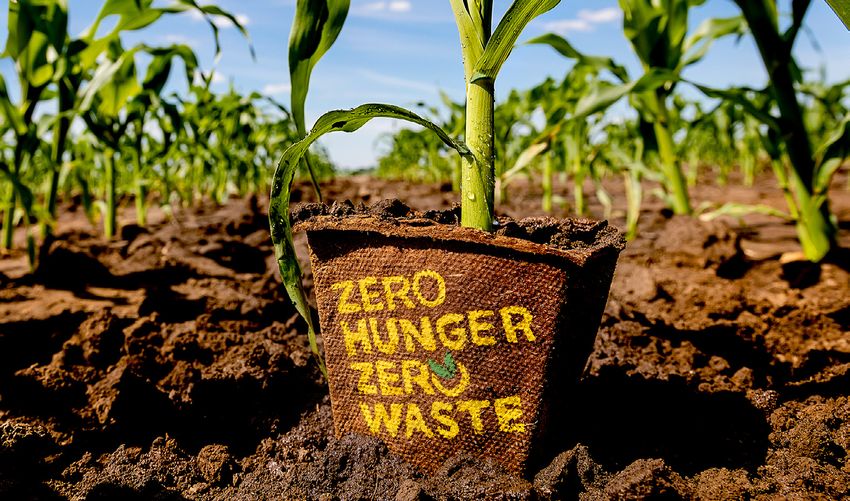
7        2020 Kroger ESG Report                                                                                                    Introduction    Our Approach        Environment     Social   Governance   Appendix

    Goal                                                                                  2017                        2018                                2019              Target Year            Trend

     Food Waste Recycling                   Calendar year

     Achieve zero food waste                                                                                                                                                    2025
     • Reduce total food waste generated in our retail supermarkets.              332,212 tons generated           301,282 tons                        288,966 tons

     • Improve food waste diversion from landfills in retail supermarkets.      27.1% food waste diversion            39.7%                               44.7%

     Expand food waste recycling programs to support zero food waste            98,070 tons to animal feed          101,575 tons                       108,036 tons             2020
     • Expand programs to donate safe and nutritious food scraps to animals.       34,798 tons to AD               62,598 tons                         76,210 tons
     • Leverage anaerobic digestion (AD) technology in additional locations.
                                                                                  14,220 tons to compost            15,965 tons                         15,870 tons
     • Expand composting operations that provide nutrients back
       to our environment.                                                      1,978 stores with food waste       2,039 stores                         2,120 stores
                                                                                     recycling programs

     Climate Impact             Fiscal year

     Improve our ton miles per gallon (TMPG) by 20% by 2020,                                  8.1%                    10.21%                              10.84%                2020
     using a 2010 baseline

     Achieve 40% electricity savings in supermarkets by 2020,                          38% savings                 44.9% savings                       47.4% savings            2020
     using 2000 as a baseline year

     Achieve 3% annual reduction in electricity consumed per unit                        1.86%                       0.36%                               2.47%                  2019
     produced in our plants

     Achieve 3% annual reduction in natural gas consumed per unit                        0.32%                       4.95%                               3.12%                  2019
     produced in our plants

     Reduce refrigerant emissions by 9% in our retail stores annually                     10%                           0%                                  0%                  2019

     Water Reduction               Fiscal year

     Achieve 5% water savings in supermarkets by 2020,                                 0.5% savings                2.2% savings                        5.6% savings             2020
     using a 2015 baseline year

     Achieve 3% annual reduction in water consumed per unit                              2.98%                       3.44%                                1.7%                  2019
     produced in our plants

           Read more              Did not achieve            Continued focus       On track             Achieved          Achieved ahead of schedule

    sustainability.kroger.com
8        2020 Kroger ESG Report                                                                                                                         Introduction      Our Approach             Environment         Social   Governance   Appendix

    Goal                                                                                                      2017                            2018                                2019                     Target Year             Trend

     Responsible Sourcing                             Calendar year

     Source 100% of wild-caught seafood from fisheries that are Marine                                            87%                          88%                                 88%                          2020
     Stewardship Council (MSC) certified, in MSC full assessment, in
     comprehensive fishery improvement projects (FIPs) or certified by other
     Global Sustainable Seafood Initiative (GSSI)-recognized programs by 2020

     Preferentially source MSC-certified wild-caught seafood and, by 2020,                                        74%*                         75%                                 71%                          2020
     source at least 90% of volume from fisheries that are MSC certified

     Source 100% of farm-raised seafood from farms that are Best Aquaculture                                      81%*                         89%                                 96%                          2020
     Practices (BAP) 2-star or greater certified, Aquaculture Stewardship Council
     (ASC) certified or GLOBALG.A.P. certified by 2020

     Source 100% of shelf-stable tuna from companies aligned with                                             100%                            100%                                100%                          2019
     the International Sustainable Seafood Foundation (ISSF)

     Transition to a 100% cage-free egg supply chain by 2025                                                      21%                         23.3%*                              23.1%                         2025
     Data reflects shell eggs. 2018 data point restated. In 2019, 24.5% of all egg types sold
     at Kroger were cage free.

     Source 100% of fresh pork from suppliers and farms that have transitioned                                     –                           38%*                                43%                          2025
     away from gestation crates by 2025
     2019 and 2018 (restated) data points reflect the percentage of Kroger’s fresh pork supply chain
     that has moved sows away from gestation crates for at least part of pregnancy.

     Packaging                 Fiscal year

     Kroger seeks to optimize Our Brands manufactured product packaging                                    4.8M pounds                     9.8M pounds                         10.1M pounds                     2020
     in several ways:                                                                                     plastic reduced                 plastic reduced                     plastic reduced
     • Reduce plastic resin by 10M pounds, from a 2015 baseline.                                      1,310+ items labeled            1,830+ items labeled            3,000+ items labeled
     • Use at least 20% post-consumer recycled (PCR) content.                                         with “Please Recycle”           with “Please Recycle”           with “Please Recycle”
     • Increase the recyclability of plastic packaging.
     • Increase communication about recyclability on all applicable packaging.
     •Increase certified virgin fiber from well-managed forests
       for paperboard packaging.
     •Support the expansion of infrastructure to increase the availability
       and accessibility of recycling for Our Brands product packaging.

    *Restated

            Read more                    Did not achieve                   Continued focus             On track             Achieved             Achieved ahead of schedule          Note: M = million, B = billion

    sustainability.kroger.com
9        2020 Kroger ESG Report                                                                           Introduction       Our Approach     Environment      Social      Governance         Appendix

    Engagement
    As one of the world’s largest         Key Stakeholder   Primary Engagement Methods                                           Engagement Outcomes in 2019
    retailers, Kroger has a large and
    diverse group of stakeholders.         Shareholders     Kroger’s leaders, our Investor Relations team and                     ur comprehensive shareholder engagement plan and
                                                                                                                                 O
                                                            other subject matter experts engage with shareholders                continuous dialogue ensures the company’s strategy is
    We define stakeholders as those                         throughout the year. Key channels include direct investor            informed by our key stakeholders and aligns business, financial
    groups and individuals who affect                       engagement, investor conferences, our annual shareholders’           and investor strategies. In 2019, Kroger met with unique
    our ability to successfully run our                     meeting, quarterly earnings calls, financial reports, investor       investors that managed nearly 70% of the active institutional
                                                            questionnaires about ESG topics, www.thekrogerco.com,                float and with investors holding more than about $50 billion
    business, and who may be affected                       press releases and webcasts.                                         of purchasing power.
    by our business operations. We
    proactively manage a wide variety      NGOs             We engage in long-standing partnerships with many NGOs               Proactive and ongoing dialogue with more than 40 NGOs
                                                            to share the vision for Kroger’s Zero Hunger | Zero Waste            informed Kroger’s ESG priorities, material topics and new
    of stakeholder relationships to                         social impact plan and our performance. We welcome                   long‑term goals regarding carbon reduction, packaging
    foster open dialogue and capture                        dialogue with NGOs on diverse sustainability topics to help          and deforestation.
    feedback on key ESG topics. Our                         advance common goals for people and the planet.

    approach to engagement varies          Associates &     We strive to engage with all Kroger associates in all                Regular engagement with labor union leaders and members
    by stakeholder group.                  Labor Unions     locations. We use employee training, one-on-one                      led to the adoption of 139 new collective bargaining
                                                            discussions and coaching, the company’s intranet, email,             agreements in 2019, covering nearly 96,000 associates.
                                                            leadership meetings and town halls, affinity and inclusion
                                                            groups, internal and external social media and an annual
                                                            employee engagement survey. We also communicate
                                                            with local and international unions through scheduled
                                                            meetings, telephone calls and ongoing collective bargaining
                                                            agreement negotiations.

                                           Customers        We offer customers many ways to engage with us, including            The customer insights team at 84.51° led customer research to
                                                            in-store service counters, surveys, focus groups, websites           inform our Zero Hunger | Zero Waste plan and gauge interest
                                                            and social media, as well as Kroger Customer Connect, our            in transitioning to reusable shopping bags.
                                                            live call center.

                                           Communities      We foster close relationships with the neighborhoods in              Followed Kroger’s established Community Engagement
                                                            which we operate. Key channels include direct engagement,            Principles and gave back meaningfully in the places we
                                                            local giving and fundraising, service and volunteerism,              call home. Our corporate and retail division teams focused
                                                            weekly food donations, hunger relief, ongoing special                on advancing positive impact in our communities through
                                                            events, store openings, media relations and more.                    philanthropy, service and ongoing dialogue.

                                           Suppliers &      Kroger’s engagement with our suppliers is a critical                 Engaged select suppliers in key ESG strategies, including food
                                           Manufacturers    element of our commitment to responsible sourcing and                access and raw milk rescue, food waste reduction, packaging
                                                            supplier accountability. We focus our engagement during              optimization and community development.
                                                            the onboarding process and continue it through ongoing
                                                            meetings, site visits, surveys, audits and scorecards.

    sustainability.kroger.com
10        2020 Kroger ESG Report                                                                                             Introduction    Our Approach       Environment      Social      Governance       Appendix

     Contributing to the Sustainable
     Development Goals
     In 2015, the UN launched the Sustainable Development Goals (SDGs) to                                     Significant Impact
     focus global efforts in 17 key areas to help bring peace and prosperity to                               We have a significant impact on SDGs 2 and 12 through Kroger’s
     people and the planet. Our Purpose—to Feed the Human Spirit™—aligns                                      Zero Hunger | Zero Waste social impact plan:
     with many of the SDGs, and as we commit to doing our part, we call on
     our stakeholders and partners to join us.

                           Zero Hunger                                                                                                Responsible Consumption and Production
                           As America’s grocer, we are committed to creating communities free                                         Kroger has long focused on waste reduction across our food
                           of hunger and waste. This mission is reflected in our brand ethos:                                         production, distribution and retail processes as part of our
                           Fresh for EveryoneTM. We believe in creating solutions that provide                                        sustainability commitment. Our goal is to achieve zero waste
                           access to fresh, nutritious food and improve health for all.                                               by 2020 and zero food waste by 2025.

                           How we’re contributing                                                                                     How we’re contributing
                           SDG Target 2.1                           SDG Target 2.4                                                    SDG Target 12.2                         SDG Target 12.3
                           By 2030, end hunger and ensure           By 2030, ensure sustainable food                                  By 2030, achieve the sustainable        By 2030, halve per capita global
                           access by all people, in particular      production systems and implement                                  management and efficient use of         food waste at the retail and consumer
                           the poor and people in vulnerable        resilient agricultural practices                                  natural resources.                      levels, and reduce food losses along
                           situations, including infants, to        that increase productivity and                                                                            production and supply chains,
                           safe, nutritious and sufficient food     production, that help maintain                                    • Measured and reported progress       including post‑harvest losses.
                           all year round.                          ecosystems, that strengthen                                          on 2020 Sustainability Goals;
                                                                                                                                         set new long-term targets to         • Continued to maximize food rescue,
                                                                    capacity for adaptation to climate
                           • Directed a total of 493 million                                                                            reduce carbon emissions and             reduce the amount of food waste
                                                                    change, extreme weather, drought,
                              meals in food and funds to our                                                                             deforestation, and to improve           generated and improve food-waste
                                                                    flooding and other disasters,                                        packaging sustainability.
                              communities in 2019; exceeded                                                                                                                      diversion from landfill.
                                                                    and that progressively improve
                              three-year goal to donate 1 billion
                                                                    land and soil quality.                                            • Built on our partnership with Fair   • Committed to engage 20 strategic
                              meals to our communities from
                              2017 through 2019.                                                                                        Trade USA to increase community-         Kroger suppliers in the World
                                                                    •C
                                                                      onducted multiple pilots focused                                 development premiums paid                Resources Institute (WRI)’s
                                                                     on reducing food loss and waste                                    through Fair Trade‑certified             10x20x30 Initiative.
                           • Improved the nutritional balance of
                                                                     in our operations.                                                 products. Joined the Sustainable
                              surplus food donated through Zero
                              Hunger | Zero Waste Food Rescue.                                                                          Coffee Challenge to source all        •T
                                                                                                                                                                                he Kroger Co. Foundation partnered
                                                                    • Established The Kroger Co. Zero                                  Fair Trade‑certified coffee for        with World Wildlife Fund (WWF)
                                                                       Hunger | Zero Waste Foundation as                                Kroger’s Simple Truth® brand.          to expand the reach of its Food
                           • Supported national and local
                                                                       a public charity to support partners                                                                    Waste Warrior Toolkit to local
                              non-profit partners—like Feeding
                                                                       improving sustainable practices in                             • Released a No-Deforestation           school districts in major U.S.
                              America, No Kid Hungry and
                                                                       food production and consumption,                                  Commitment for Raw Material           markets. See the report.
                              others—that direct meals to
                                                                       including the Congressional Hunger                                Sourcing in our operations and
                              children, families and individuals
                                                                       Center and IDEO CoLab.                                            completed the membership             • Kroger’s manufacturing plants and
                              in need across the U.S.
                                                                                                                                         process for the Roundtable on           co-packing suppliers are now aligned
                                                                    • Worked with Fair Trade USA to                                     Sustainable Palm Oil (RSPO).            with the standardized date labeling
                                                                      better support global communities                                                                          practice of “Use by” to indicate food
                                                                      from which we source Our Brands                                                                            safety and “Best by” to indicate
                                                                      products and ingredients.                                                                                  quality for Our Brands products.

     sustainability.kroger.com
11 2020 Kroger ESG Report Introduction Our Approach Environment Social Governance Appendix
Business Impact
We contribute to the following five SDGs through our business operations:
Good Health and Well-Being Life Below Water
Kroger’s health, nutrition, pharmacy and The Little For over a decade, Kroger has partnered with WWF, our
Clinic® services help improve our customers’ health and suppliers and others to increase the sustainability of the
wellness. We support a variety of nutritional plans, and seafood we sell. By aligning with third-party certifications
offer vaccinations, physicals, sick visits, prescriptions, for wild-caught and farm-raised seafood, we ensure that
nutrition counseling and our innovative OptUP app. Equally our customers can purchase seafood while advancing
important are our own associates’ health needs. Kroger conservation for future generations. Kroger has supported
offers competitive benefits, including health insurance several fishery improvement projects through sourcing and
options, parental leave, adoption support, well-being financial contributions to help fisheries achieve certification.
assistance and smoking-cessation services, among others. Meanwhile, our sustainable packaging goals are intended to
reduce the amount of plastic packaging in the environment by
Read more about this topic
reducing unnecessary packaging, increasing recyclability, and
giving customers easy ways to reduce, reuse and recycle.
Decent Work and Economic Growth Read more about this topic
We want our associates to come for a job and stay for a career.
We are an equal opportunity employer that seeks to provide
career opportunities and flexibility for associates regardless Life on Land
of gender, race, age, sexual orientation, culture, language or While providing a crucial resource, food production
religion. Kroger’s average hourly wage is over $15, and with can have significant impacts on our natural resources.
comprehensive benefits factored in, our average hourly rate Several of our supply chains are engaged in reducing
is over $20. Kroger’s commitment to protecting human rights their environmental impacts. Kroger is a signatory of the
is reflected both in our Statement on Human Rights and our U.S. Dairy Stewardship Commitment, an industry‑wide
Vendor Code of Conduct, and our Social Compliance Audit initiative, as well as the Sustainable Coffee Challenge.
program verifies suppliers’ conformance with the vendor code. Our No‑Deforestation Commitment addresses
deforestation from palm, soy, beef and pulp/paper,
Read more about this topic
and our sustainable packaging commitments include a
focus on sustainable forestry management in our paper
Climate Action products. We also expanded Kroger’s Pollinator Protection
Statement to encourage suppliers’ conservation efforts.
Kroger uses energy-savings and emissions-reduction
investments to reduce our climate impacts. Our Retail team Read more about this topic
has achieved a 47.4% electricity savings in our supermarkets
since 2000. We also participate in the U.S. Environmental
Protection Agency (EPA)’s GreenChill program, and set
annual goals to reduce refrigerant emissions in our stores.
We have 15 solar power installations across our stores,
distribution centers and plants. In 2019, we also initiated
a carbon risk analysis, which will further inform efforts
to identify and reduce impacts to Kroger from physical,
regulatory and transitional climate risks. In 2020, we set a
new science-based GHG emissions goal to reduce company-
wide emissions by 30% by 2030.
Read more about this topic
sustainability.kroger.com12 2020 Kroger ESG Report Introduction Our Approach Environment Social Governance Appendix
Our Social Impact Plan
Zero Hunger | Zero Waste
Kroger’s Zero Hunger | Zero Waste Zero Hunger | Zero Waste addresses a Read more about how For more details about For details on giving aligned to
fundamental absurdity in our food system: Zero Hunger | Zero Waste Zero Hunger | Zero our social impact plan, please
social impact plan aligns with four Waste, please see see this report on The Kroger
an estimated 40% of the food produced aligns to key ESG topics
of our most material social and in these sections. our 2019 ESG Report Co. Foundation and The
in the U.S. is thrown away, yet one in
environmental issues: food access, nine Americans experiences hunger. As
PDF online. Kroger Co. Zero Hunger |
Zero Waste Foundation.
food waste, health and nutrition, America’s grocer, we have the size, scale,
and community engagement. expertise and local connections to help. We Environment
Inspired by Our Purpose—to Feed are setting ambitious goals, leveraging our
charitable giving and outreach efforts, and
the Human Spirit™—and our brand
bringing long-standing and new partners
promise—Fresh for Everyone™—it on our journey.
is our commitment to help create Social
We are collaborating with partners,
communities free of hunger and advisers and innovators who are helping
waste. This mission is central to solve the complex problems surrounding
the fourth pillar of our Restock food insecurity and waste. Thanks to our
Governance
Kroger plan, Live Our Purpose, dedicated associates, generous customers
and thoughtful partners, we are making
and evolved from a strategic look significant progress on our Zero Hunger |
at what was authentic to our past Zero Waste plan.
and what we, uniquely, can do. Zero Hunger | Zero Waste—introduced
in late 2017—aligns internal teams and
external partners on strategic ways to
improve food security and end waste.
We strive to direct as much food as
possible to its highest purpose: feeding
people. We recognize the need for a better,
more resilient global food system to meet
the needs of an estimated 10 billion people
by 2050.
We are engaging and recognizing
associates and others who are Zero
Heroes among us. Their commitment and
passion for rescuing fresh food, reducing
waste, recycling and serving others is
truly inspiring.
See a list of Kroger’s latest
associate Zero Heroes.
sustainability.kroger.com13 2020 Kroger ESG Report Introduction Our Approach Environment Social Governance Appendix
Zero Heroes Among Us ZERO
Engaging Youth in the SDGs
In 2019, Kroger helped scale In the process, students earn awards and
HERO
the InnerView youth social develop a personal service résumé detailing
their hours of service and areas of positive
responsibility platform social impact.
to amplify community service
Kroger sponsored youth service awards
opportunities related to our aligned with SDG 2: Zero Hunger and SDG 12:
Zero Hunger | Zero Waste plan. Responsible Consumption and Production.
Through InnerView, students For the 2019–2020 school year, 4,702
aged 14 to 24 are encouraged student volunteers at 224 schools in
to explore the UN SDGs and 41 states earned service credit aligned
engage in volunteer efforts that with SDG 2 and hunger relief. Another
356 students at 90 schools in 29 states
align with their personal beliefs earned credit supporting SDG 12 and
and passions. waste reduction.
A total of 960 students earned recognition
as Zero Heroes for achieving specific levels
of service. Students named Zero Heroes
for service aligned with SDG 12 also had
an opportunity to connect with WWF’s
Food Waste team and be recognized as
Citizen Scientists.
Champions of Change: 2019–2020 School Year
Student volunteers 4,914
(Note: some students earned credit for both goals)
Student volunteer hours 37,000
Community impact value More than $1M
Schools with Zero Hunger | Zero Waste activities 231
States with Zero Hunger | Zero Waste activities 41
Total Zero Hero awardees 960
sustainability.kroger.com14 2020 Kroger ESG Report Introduction Our Approach Environment Social Governance Appendix
ENVIRONMENT
In This Section
15 Climate Impact
17 Food Waste
19 Zero Waste
20 Packaging
22 Water
23 Product Sustainability
Total Carbon Emissions (Scope 1 and 2)—Tons CO2e Total Waste Generated—M short tons Amount of Plastic Resin Removed From Packaging for Kroger-
Manufactured Our Brands Products—M lbs, cumulative
3.0
2.913
2019 5,749,758 2.709 9.8 10.1
2018 5,917,427 2.414
2.5
4.8
2017 6,658,109
1.8
2016 7,251,426 2.0
2017 2018 2019 2016 2017 2018 2019
M = million M = million
Normalized Carbon Emissions—Tons CO2e/sq. ft. Diversion From Landfill Rate—% Food Waste Diversion From Landfill Plastic Recycled in Our Operations—M lbs, cumulative
in Kroger Retail Stores—%
31.3 29.8
26 24.9 40.06 85.2 137.35 191.1
72% 76% 80%
39.7% 44.7%
27.1% 2016 2017 2018 2019
2017* 2018 2019
2016 2017 2018 2019 * Restated 2017 2018 2019 M = million
sustainability.kroger.com15 2020 Kroger ESG Report Introduction Our Approach Environment Social Governance Appendix
Climate Impact
Goals Progress in 2019 Target Year
Improve our TMPG by 20% by 2020, using a 2010 baseline Improved fleet efficiency by 10.84% against 2010 baseline, by achieving 8.47 TMPG. 2020
Achieve 40% electricity savings in supermarkets by 2020, using 2000 Achieved 47.4% cumulative annual electricity savings in supermarkets against a 2000 baseline, resulting 2020
as a baseline year in 2.2 billion kWh of cumulative avoided electricity.
Achieve 3% reduction in electricity and natural gas consumed Electricity consumed per unit produced increased by 2.47% (total electricity consumed decreased by 1.94%) 2019
annually per unit produced in our plants and natural gas consumed per unit produced increased by 3.12% (total natural gas consumed decreased by 1.31%).
What we produce, and how much, varies year over year, which impacts our short-term performance trends.
Reduce refrigerant emissions by 9% in our retail stores Company-wide, supermarket refrigerant emissions did not change materially between 2018 and 2019. However, 2019
between 2018 and 2019 nearly half of our retail divisions met or exceeded their division-level emissions reduction goals.
Our large portfolio of stores, We have measured and managed Climate Risk Assessment In 2019, we conducted a qualitative
warehouses and manufacturing our carbon footprint since 2006, and assessment to evaluate the economic,
Our mechanisms to identify and assess
reducing our climate impact is central to transitional and physical risks climate
plants contributes significantly to our sustainability commitment. We have
climate impact risks include:
change poses to our business. In
our energy and carbon impacts. a history of reducing carbon intensity •P
eriodic meetings of the Public partnership with a third-party consultant,
With a large and complex supply through investments in energy efficiency, Responsibilities Committee of the we prioritized risks to our operations and
Board of Directors to elevate and discuss
chain, our carbon footprint also renewable energy and refrigerant emissions supply chain in four key areas: lost revenue,
reduction measures. We continue to current risks and emerging trends. reputational damage, increased costs
includes our products and the
extend proven solutions as well as to • Materiality assessment process to and impact on associates.
suppliers who make them. identify and evaluate new innovations and identify and confirm the most material The assessment confirmed several risks
collaborations with potential to improve sustainability topics for the company. Kroger was already evaluating, such as
our sustainability. •R
egular stakeholder engagement the business impacts of rising and more
to discuss emerging trends, industry variable temperatures, future legislation
Our 2020 Sustainability Goals reflect
benchmarking, and risks and mandating reduced refrigerant emissions
current commitments to reduce energy
opportunities pertaining to and the challenges and opportunities
and carbon impacts. We recently set a
environmental and social impacts. from market shifts towards electric
new science-based goal to reduce absolute
• Dedicated business resiliency vehicles. Discussion about Kroger’s carbon
GHG emissions from our operations by
and continuity planning to assist in impact management activities can be
30% by 2030, from a 2018 baseline.
preparing for potential interruptions found in our CDP Climate response.
to business operations.
sustainability.kroger.com16 2020 Kroger ESG Report Introduction Our Approach Environment Social Governance Appendix
Carbon Emissions Trends Emissions Category 2019 Emissions—tCO2e % Change
Kroger’s carbon emissions for 2019 are summarized to In 2019, Kroger reduced electricity consumption
Scope 1 (stationary, mobile) 771,598 -2.8%
the right, with more details provided in the Appendix by 2.7%, driven primarily by store efficiency
of this report and our latest CDP Climate response. improvements. Updated U.S. EPA eGRID emissions Scope 1 (fugitive) 1,673,928 +10.2%
Between 2018 and 2019, the increase in Kroger’s factors further amplified energy reductions,
resulting in an 8.3% reduction in Scope 2 Scope 2, location based 3,304,231 -8.3%
Scope 1 emissions were partly driven by the transition (purchased electricity)
away from ozone-depleting R-22 refrigerants location‑based emissions.
(not reported per Kroger’s current GHG reporting Kroger’s normalized GHG emissions (tCO2e per Scope 2, market based 3,522,338 +1.8%
protocol) to other refrigerants (which are reported). 1,000 square feet) continue to show a declining (purchased electricity)
Stationary and mobile energy consumption both trend, decreasing from 26.0 in 2018 to 24.9 in 2019.
Total (S1 + S2, location based) 5,749,758 -2.8%
decreased, as did corresponding Scope 1 emissions.
Total (S1 + S2, market based) 5,967,865 +3.4%
Scope 3 2,175,346 -5.3%
Energy Management and Leadership
Stores Plants Supply Chain Operations
Kroger uses the EnergyCAP tool and machine learning Our facilities reduce energy intensity through regular We continuously improve the efficiency of our fleet
to track and actively manage energy use, as well as goal setting, energy tracking, collaborative leadership by replacing old vehicles with newer, more efficient
minimize refrigerant leakage, across our 2,757 stores. and internal benchmarking. vehicles. We invest in truck improvements, optimize
To reduce energy use, new stores are designed with To date, eight Kroger manufacturing plants have routes and limit speeds.
energy-efficient features and existing stores are installed energy management systems (EMS). These We regularly implement energy-efficiency measures,
retrofitted. To date, 821 stores have been certified by systems provide real-time energy data, which allows and we operate solar installations at multiple
the U.S. EPA’s ENERGY STAR program. for immediate correction of energy anomalies and distribution centers.
We also seek to minimize leakage from our air identifies energy-reduction opportunities. In 2019, we activated our largest solar power array
conditioning and refrigeration units, and we participate Our KB Specialty Foods plant has replaced a to date at the Paramount, Calif., Distribution Center.
in the U.S. EPA’s GreenChill program. 5,000-pound R-22 refrigeration system with an The 2-MW installation can generate 4.28 million
The glass door retrofit project rolled out to 250 stores ammonia system, which helps reduce Kroger’s ozone- kWh of solar power annually—about 50% of the
in 2019 and will save an average of 225,000 kWh depleting and GHG impacts. building’s needs. Kroger is also investing in electric
of electricity and 16,000 therms of natural gas per In April 2020, a new solar power installation went live vehicles in our truck fleet, with 10 Tesla vehicles planned
store, annually. at Kroger’s La Habra Bakery in California. The 970‑kW, for our California distribution network.
2,900-panel array will offset 20% of the facility’s
electricity needs.
For more details about our approach to climate impact, please see our 2019 Sustainability Report.
sustainability.kroger.com17 2020 Kroger ESG Report Introduction Our Approach Environment Social Governance Appendix
Food Waste
Goals Progress in 2019 Target Year
Achieve zero food waste • Generated 288,966 tons of food waste in supermarkets (2018: 301,282). 2025
• Reduce total food waste generated in our retail supermarkets. • Diverted 44.7% of food waste in supermarkets (2018: 39.7%).
• Improve food-waste diversion from landfills in retail supermarkets.
Expand food waste recycling programs • Diverted 108,036 tons of food waste to animal feed operations (2018: 101,575 tons). 2020
• Expand programs to donate safe and nutritious food scraps to animals. • Diverted 76,210 tons of food waste to AD (2018: 62,598 tons).
• Leverage AD technology in additional locations. • Diverted 15,870 tons of food waste to composting facilities (2018: 15,965).
• Expand composting operations that provide nutrients back
• Expanded food waste recycling programs to reach 2,120 stores (2018: 2,039).
to our environment.
As a food retailer and manufacturer, we are at the center
of a chain that produces surplus food that may go to waste
unnecessarily, which is why we have committed to eliminating
food waste across the company by 2025.
Reducing and recovering edible surplus Through leadership and associate
food has multiple benefits, including communication, Kroger’s Zero Hunger |
reducing hunger and food insecurity, Zero Waste plan continues to permeate
improving operations efficiency, and our company culture. Our store associates
reducing environmental impacts. are actively engaging in store programs to
As items near their expiration date, we more effectively manage our food rescue
employ item-markdown best practices. and food waste recycling programs.
Many surplus food products that are Between 2018 and 2019, total food waste
still safe to eat are donated through our generated in Kroger-operated stores
Zero Hunger | Zero Waste Food Rescue decreased by 4.1% to 288,966 tons
program. We aim to recycle—through, (2018: 301,282), while the percentage of
in order of priority, animal feed, AD or food waste diverted from landfill improved
composting programs—any food that by 5 percentage points to 44.7%
cannot be donated. (2018: 39.7%). Since 2017, our baseline
We measure and track our food waste year, we have decreased total food waste
footprint annually. With support from our generated in our stores by 13% and
partner WWF, we established our food improved our food-waste diversion rate
waste footprint in 2017 using WRI’s Food by almost 18 percentage points.
Loss & Waste Protocol. The GHG impacts of these improvements
In the last year, our retail stores continued are also notable. As a result of diverting
to show a favorable trend in reducing more than 129,000 tons of retail food waste
total food waste generated and improving from landfill in 2019, we are avoiding an
food waste diversion from landfill. estimated 79,000 metric tons of CO2e.
sustainability.kroger.com18 2020 Kroger ESG Report Introduction Our Approach Environment Social Governance Appendix
Food Waste Management Data Food Rescue and Recycling Value Chain Engagement
In partnership with Feeding America, Food waste happens all the way up the
Destination Food (Short tons) Inedible Parts (Short tons) Total
Kroger introduced our innovative Zero supply chain, which means our vendors can
Hunger | Zero Waste Food Rescue program be among our greatest partners. In 2019,
Animal feed 44,146 10,088 54,233
more than 10 years ago. We partner with Kroger joined WRI’s 10x20x30 Initiative
AD 41,147 41,147 Feeding America-affiliated food banks as a retail partner to contribute toward
across our communities to direct safe, SDG 12 and Target 12.3. We are engaging
Composting 15,876 15,876 wholesome surplus food to individuals 20 suppliers in WRI’s Target, Measure, Act
Bio-diesel production 18,046 18,046 and families in need. In 2019, we donated process to halve global food waste by 2030.
101 million pounds of food to partner food Meanwhile, approximately 40% of food
Landfill 134,124 25,540 159,664 banks company-wide. waste happens at the consumer level. As
Total 235,292 53,674 288,966 We have food waste recycling programs a result, we consider our customers key
in 2,120 stores (2018: 2,039), and aim to partners in our zero-waste vision and share
launch these programs in every store. easy ways to reduce food waste at home.
Most of our stores currently use animal Over time, brands and retailers have
feed—a smaller number of stores use adopted a wide variety of date labeling
Where Is Our Food Waste Going? composting and AD services. practices that cause confusion. Expert
Landfill Diverted organizations recommend the adoption of
a single standard: “Use by” to indicate food
safety, and “Best by” to indicate product
Baseline 2017 72.9% 27.1%
quality. Kroger’s manufacturing plants and
co-packing suppliers are aligned with this
transition to ensure Our Brands products
Progress 2018 60.3% 39.7% reflect the standardized terminology.
For more details about
our approach to food
Progress 2019 55.3% 44.7% waste, please see our
2019 Sustainability Report.
Target 2025 100%
Notes:
1. Food loss diversion data reflects data collected from stores 3. Harris Teeter data is included in landfill and food diversion,
on their composting, animal feed, fat/bone and used cooking but is not included in inedible parts diversion due to
oil recycling programs. insufficient data.
2. The landfill metric shared here is estimated using data 4. The bar length for 2019 progress is proportional relative
captured and synthesized from annual waste audits to the bar length of 2017 baseline.
conducted in a subset of our stores.
sustainability.kroger.com19 2020 Kroger ESG Report Introduction Our Approach Environment Social Governance Appendix
Zero Waste
Goals Progress in 2019 Target Year
Company-wide, meet and exceed the Zero Waste threshold of 90% Achieved a waste diversion rate of 80% (2018: 76%). 2020
diversion from landfill
Source Reduction Supply chain network had 123 million RPCs in circulation to ship products among our suppliers, distribution centers 2020
• Continue to integrate RPCs into our network and test new technologies and stores.
that reduce waste in the supply chain.
Plastic Recycling Recycled over 53.7 million pounds of plastic (cumulative 191 million pounds since 2016). 2020
• Recycle over 200 million pounds more plastic by the end of 2020,
from a baseline of 2016.
Cardboard Recycling Recycled over 1.6 billion pounds of cardboard (2018: 1.48 billion pounds). 2020
• Recover over 3.3 billion pounds of cardboard annually by the end of 2020.
Construction Sites 54% of new stores and remodels achieved zero waste, diverting 68,000 tons of construction waste from landfill. 2019
• 50% of new stores, remodels and construction projects in 2019 to be
zero waste.
Plastic Bags Kroger’s QFC division was the first to phase out single-use plastic bags in 2019. Our Corporate Affairs, 2025
• Phase out single-use plastic shopping bags by 2025. Retail Operations and Sourcing teams are developing a phaseout timeline for the next five years, with input from
Phaseout commitment is in addition to any existing and future legislation for plastic bags.
other stakeholders.
We remain committed to achieving zero waste—diverting 90% Waste-Management Method Weight (Short tons) Notes:
1. Data reflects calendar year 2019.
or more of waste from landfill—and continue to steadily improve 2. W
aste disposal is managed
Waste reduction 123,000
how we manage waste. by and reported to Kroger
by our different waste and
Donation 55,084 recycling haulers.
Our associates recycle much of the waste across all divisions, driving increased 3. W
aste data excludes office
we produce, like cardboard, plastic and participation and higher diversion rates. Animal feed 108,036
locations and salvage centers
(which are very small portions
paper, to increase our landfill-diversion rate. At our distribution centers, teams are of our waste footprint).
We also incorporate reusable items, like installing additional recycling equipment AD 76,210 4. Donation is primarily food
RPCs, wooden pallets and milk crates, to to increase diversion rates. We report our donation with a nominal
amount of non-food donations.
reduce materials needed to ship products waste-management metrics to the EPA Composting 15,870
between suppliers, manufacturing plants, WasteWise program.
distribution centers, and stores. Kroger joined the U.S. Chamber of Other recycling 1,955,627
Our overall waste-diversion rate Commerce Foundation’s Beyond
increased to 80% in 2019 (2018: 76%), 34 initiative, which aims to find scalable Waste-to-energy 7,417
with all business units maintaining or solutions to increase the national recycling
improving their diversion rates. In 2019, rate beyond 34%. As a local champion Landfill 571,837
31 manufacturing plants continued to of the second pilot in Cincinnati, Kroger
achieve zero-waste status. Our Retail is playing a key role in identifying and Total 2,913,080
Operations team rolled out an improved implementing waste reduction and
cardboard recycling tracking program recovery opportunities.
sustainability.kroger.com20 2020 Kroger ESG Report Introduction Our Approach Environment Social Governance Appendix
Packaging
Goals Progress in 2019 Target Year
We seek to optimize packaging for Kroger-manufactured Our Brands •R
educed plastic resin in packaging for Kroger-manufactured products by 10.1 million pounds 2020
products in several ways: between 2015 and 2019, surpassing our goal one year early.
• Reduce the amount of plastic resin by 10 million pounds from • Added PCR content to packaging across dairy, produce and bakery categories.
a 2015 baseline.
• Added “Please Recycle” to additional product packages in 2019—for a total of more than 3,000 items.
• Use at least 20% PCR content.
•M
ajority of paper-based packaging in Kroger’s plants was certified to a sustainable forestry standard
• Increase the recyclability of plastic packaging.
and/or contained recycled content.
• Increase communication about recyclability on all applicable packaging.
• Offered plastic film drop-off recycling program, company-wide.
• Increase certified virgin fiber sourcing from well-managed forests
for paperboard packaging.
• Support the expansion of infrastructure to increase the availability
and accessibility of recycling for Our Brands product packaging.
Sustainable packaging is a core tenet of our zero-waste vision. While
packaging is important for preserving product quality, freshness and
integrity, we also recognize the negative impact packaging—including
plastic packaging—can have on the environment. This is why we are
focused on reducing unnecessary packaging, reusing where we can
and striving for more recyclable packaging.
We continue to drive progress on our To start, we will complete a baseline
current 2020 Sustainability Goals for product packaging footprint to fully
packaging through the end of this year. understand current packaging impacts.
As we look to the future, we recognize that Improving the recyclability of single-use
we still have work to do. We have recently packaging depends on both product
launched new 2030 Sustainable Packaging redesigns and recycling infrastructure
Goals that will pave our way to 2030. improvements. We look forward to
These include: collaborating with our suppliers, the industry
• Seeking to achieve 100% recyclable, and other experts to achieve these goals.
compostable and/or reusable packaging
for Our Brands products.
• Increasing recycled content in packaging
so that the Kroger Our Brands product
portfolio collectively contains at least 10%
recycled content in packaging.
• Reducing unnecessary packaging.
sustainability.kroger.com21 2020 Kroger ESG Report Introduction Our Approach Environment Social Governance Appendix
Packaging Reduction In 2020, Kroger launched a new recycling Increasing Recycled Content Certified Fiber Packaging
mail-back program in partnership with
In 2019, we finished rolling out new milk We are incorporating recycled material in Many Kroger products use paper packaging.
TerraCycle. This solution allows customers
jugs that are 10% lighter to all Kroger family our product packaging to drive demand for Our goal is to increase the amount of
to mail harder‑to-recycle flexible plastic
of companies’ dairy-processing plants, recycled materials and “close the loop.” fiber certified to three sustainable forestry
packaging for popular Simple Truth®
and we recently improved our half-gallon In 2019, we continued adding PCR content standards: the Forest Stewardship Council,
items back to TerraCycle for safe and
juice container—with more improvements to multiple plastic packaging items the Sustainable Forestry Initiative, and
effective recycling.
planned for 2020. manufactured in our plants, including the Programme for the Endorsement of
As a new member of the How2Recycle 25% PCR content into two buttermilk Forest Certification. Our No-Deforestation
Moving Beyond Single-Use program, we will begin adopting the containers, up to 40% PCR in pie Commitment for Raw Material Sourcing
Customers are increasingly concerned program’s label on Our Brands product containers, and up to 20% PCR in several and Sustainable Packaging Goals reiterate
about the environmental impacts of packaging to help customers recycle cake and cookie containers. our commitment to adopt certified fiber
single-use plastics and packaging, and are our product packaging more readily in product packaging.
seeking more sustainable options. In May and accurately.
2019, TerraCycle launched its revolutionary
circular packaging platform Loop in the
U.S. with Kroger as its exclusive grocery
retailer partner. Starting as an e-commerce
pilot in several states in the Northeast,
Loop offers customers popular consumer
goods in durable, refillable packaging.
Kroger was also the first major U.S.
grocery retailer to commit to phase out
single-use plastic bags by 2025. While
there are many challenges ahead, we are
committed to being part of the solution.
In fact, Kroger is the Grocery Sector Lead
Partner for the recently launched Beyond
the Bag Initiative. In a partnership with
other leading retailers convened by Closed
Loop Partners, Kroger is supporting the
development of alternatives to the single-
use plastic grocery bag.
Recycling Solutions
We recognize that recycling infrastructure
is critical for making our products more
recyclable, and we aim to support the
communities in which we operate to
improve this. We are also offering recycling
solutions for our customers.
Our in-store plastic film collection and
recycling program accepts a wide range
of plastic films not currently accepted in
curbside recycling programs, like plastic
grocery bags, produce bags, bread bags,
and plastic overwrap on household tissues,
diapers and bottled water.
sustainability.kroger.comYou can also read


