2021 8TH Charotar Crocodile Count - Voluntary Nature Conservancy - Crocodile Specialist Group
←
→
Page content transcription
If your browser does not render page correctly, please read the page content below
8TH Charotar Crocodile Count

                            2021

                                   2

 Voluntary Nature Conservancy
         www.vncindia.org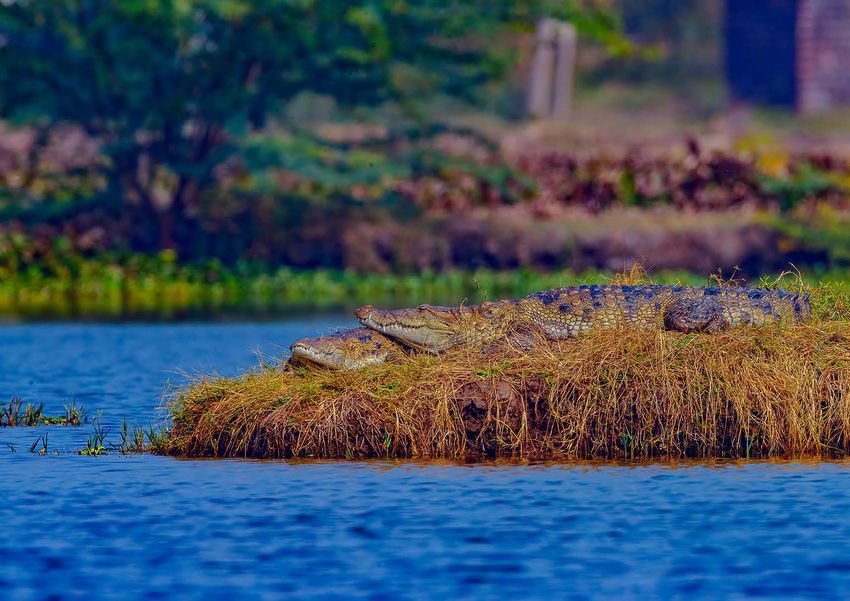
8th Charotar Crocodile Count-2021
                                                                                                                                                                                        Counting crocodile for Conservation
                                                                                                                                                                                         9-10 January 2021

                                                                                                                                                                                    A Citizen Science Initiative By
                                                                                                                                                                                 Voluntary Nature Conservancy

Suggested Citation:
Voluntary Nature Conservancy (2021). 8th Charotar Crocodile Count- 2021, Voluntary Nature Conservancy,VallabhVidyanagar,
Gujarat, India. Pp. 12

                                                                                                                                                                                                                          Photo By: Mehul B. Patel
Report Design & Preparation: Anirudh Vasava

Cover Photo: Mehul B. Patel
Back Cover Photo: Shubham Parmar

Voluntary Nature Conservancy                                                                                               IN COLLABORATION WITH        OUR SUPPORTERS                  PROGRAM PARTNERS
101- Radha Darshan, Behind Union Bank of India,
Vallabh Vidyanagar-388120
Gujarat, India                                                                                                                                                                                                        2
                                                                                                                                                          Duleep Matthai
info@vncindia.org / www.vncindia.org / Phone No. - (+91) 9898142170
                                                                                                                                                     Nature Conservation Trust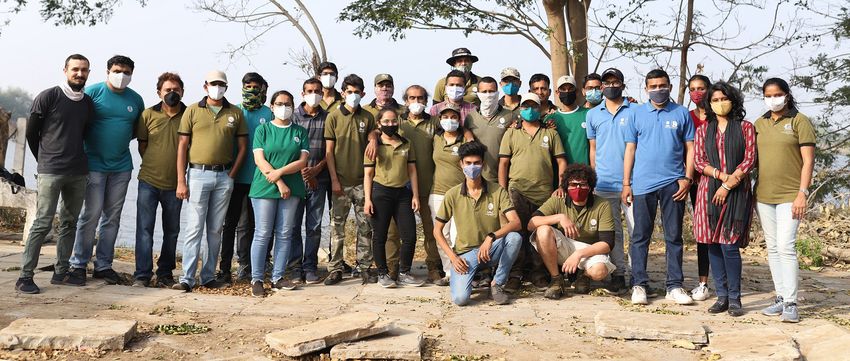
ACKNOWLEDGEMENT
It brings us great joy in bringing this report of the recently concluded 8th Charotar Crocodile
Count-2021.The event was a great success. However, this time it was different than earlier ones.
Because of the Covid-19 Pandemic, we did not invite any participants outside the organisation,
and local volunteers were indulged to count the crocodiles. We hope, once the things become
normal, we again will have a gathering of individuals from across the country, interested in croc-
odile research and conservation here in Charotar.

A major thanks you to Dr. Devang Joshi, Registrar (CHARUSAT) and Dr. Bhaskar Pandya, Prin-
cipal, Indukaka Ipcowala Institute of Management (CHARUSAT) who have been supporting the
event since its inception. We hearty thank them for their valuable support and inspiration.

This program wouldn’t have been possible without the efforts of VNC’s volunteers who helped
manage the count and coordinated the team in the field. We thank all the volunteers for their
liberal help. You guys did an excellent job. Congratulation. (See page 21-22 for the group photo
and list of the volunteers).

We additionally thank numerous organisations who have been supporting our aim of conserving
crocodiles in Charotar. NAJA India (www.naja.in), has been our associate on numerous ventures,
and an ardent supporter in different activities. The Rufford Small Grant Foundation and the Du-
leep Matthai Nature Conservation Trust supported our initial work on conservation of muggers
in Charotar. Further supported was provided by Idea Wild. We are thankful to aforementioned
organisation for supporting us.

At last yet most importantly, we thank the residents of Charotar region who have acknowledged
this species as co-occupant, and are focused on supporting mugger conservation in this area

Crocodile Research Team
Voluntary Nature Conservancy

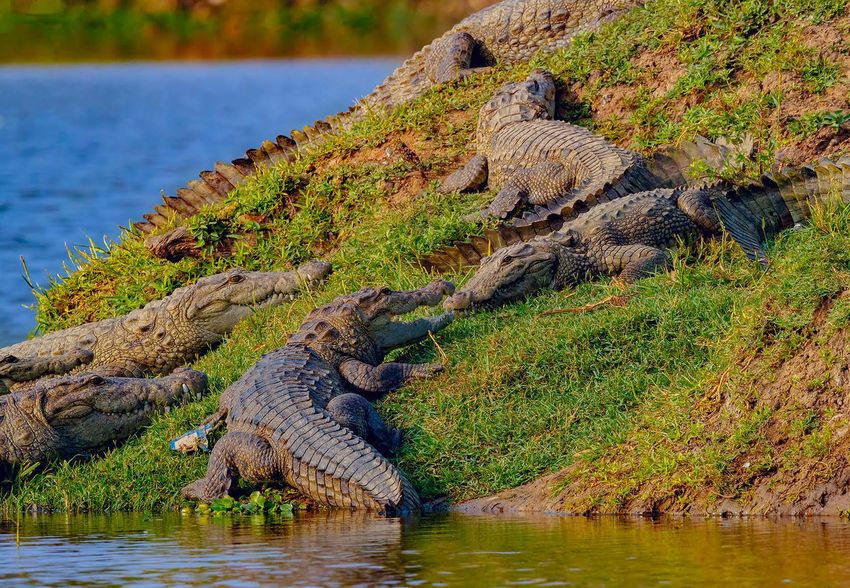
                                                                                                             Photo By: Shubham Parmar
                                                                                                         2

                                                1                                                    2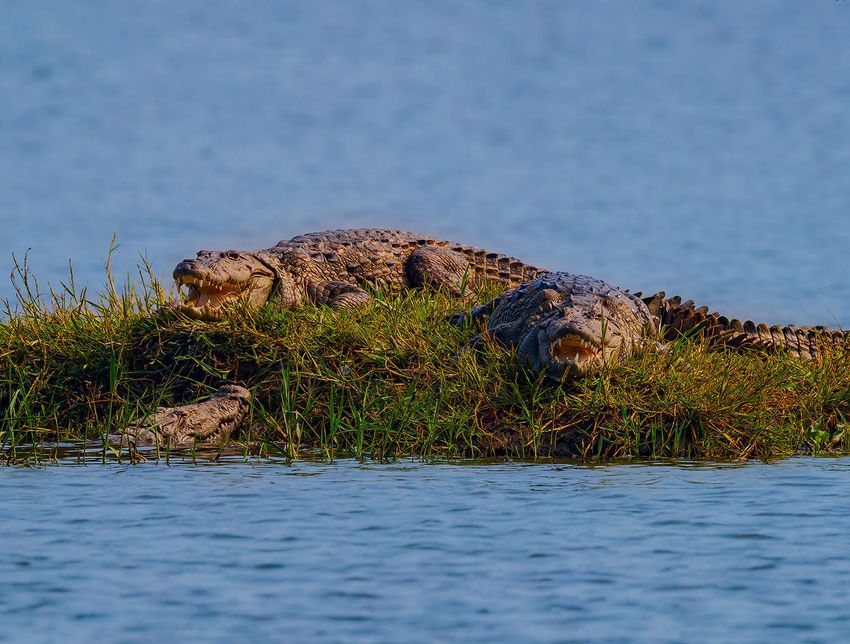
WHAT IS CHAROTAR CROCODILE                                  IMPORTANCE OF CHAROTAR REGION                              CROCODILE POPULATION ASSESMENT                                 HOW DOES THIS CROC COUNT HELPS?
COUNT?                                                                                                                 METHOD?
                                                                                                                       Citizen Science is an exciting, multifaceted way to           The count provides an ideal opportunity to un-
                                                            Charotar region is significant for sustenance of mug-      bring people from all walks of life together for re-          derstand the significance of biodiversity and how
Charotar Crocodile Count, born in 2013, is an
                                                            ger population of Charotar and for meta-population         search and conservation.                                      villagers harmoniously coexist with muggers.
annual event, designed to bring together a diverse
set of participants to understand the importance of         of Central Gujarat. The region is also an important
muggers and wetland in the present day conserva-            dispersal and breeding ground for muggers between          For crocodile counts, a team of 5-12 volunteer, de-
                                                            the meta-populations in Central Gujarat. The region        pending on the size of the water body to be surveyed,         -It also helps participants understand the intimate
tion scenario. This voluntary based initiative while                                                                                                                                 relationship local communities share with ecosys-
helping us to gain a better understanding of croc-          not only hosts an important population of muggers          was allocated to various villages. The crocodile sur-
                                                            but also multitude of fascinating rich faunal diversity,   veys were carried out using the “Day/Basking Survey”,         tem and understand how muggers indirectly man-
odile’s status and distribution across the Charotar                                                                                                                                  age ecosystem by functioning as keystone species.
region and providing participants an opportunity to         especially birds. Notable is the largest population of     wherein the participants scanned the wetland from a
meet people who live alongside crocodiles, aims at          Sarus cranes in the state that survives in Charotar,       suitable vantage point for the presence of crocodiles
inculcating a holistic understanding of the subject         and other parts of Anand-Kheda districts. However,         on the edge of water, basking areas and in water, and
amongst the participants, who can then become               the reason this population is important is that this       collected information on the number of individual,            -All relevant information on population observed
the ambassador of conservation in their respective          population does not survive in any forested or pro-        size, location and activity (if any). The surveys began       during the count will shared with concerned au-
regions. This program is first of its kind in Gujarat       tected area but in village pond and canals amongst         after 9:30 AM and continued till 2:00 PM.                     thorities for the management purposes.
and has generated a very useful population data             the humans.
over the years (2013-2020), which is being used by
wildlife managers, researchers and conservation or-
ganisations alike.

                                                            And the most intriguing aspect of these population
                                                            is that the muggers and the villagers survive along
                                                            each other without much conflicts, setting a fine
                                                            example of what we know as” co-existence”. Mahi
                                                            Irrigation Project irrigates large areas in this region,
                                                            and therefore an intensive irrigation canal network
                                                            interlinks most of the water bodies. This extensive

                                                                                                                                                                                                                                           Photo By: Mehul B. Patel
                                                            network of canal acts as travelling routes for the
                                                            dispersing crocodiles, and thus favours genetic ex-
                                                            change.These wetlands serve as a lifeline for agricul-
                                                            ture in and around the landscape. Our earlier sur-                                                                                                                      2
                                                            veys have found that there exists a high tolerance of
                                                        3   muggers amongst the people of Charotar.                                                                              4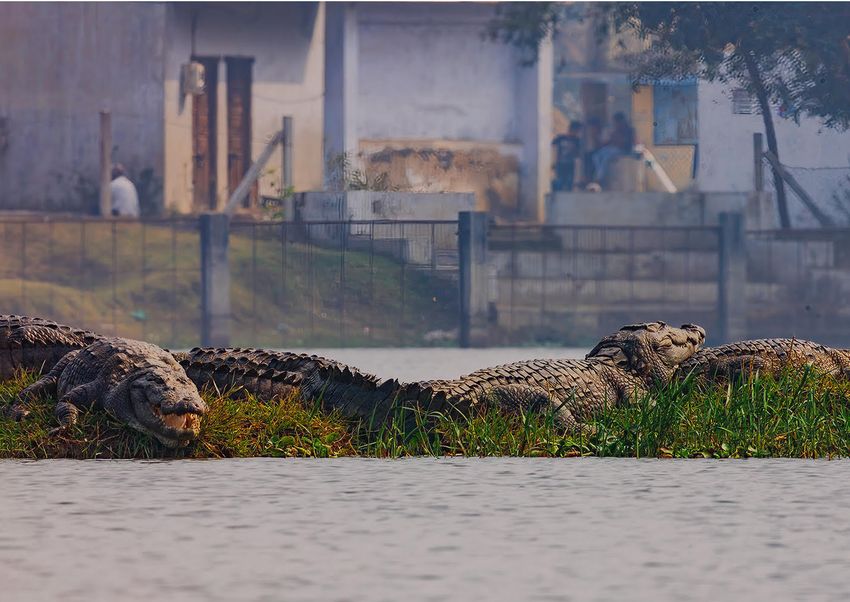
HOW MANY DID YOU COUNT?                   Table 1: Population estimation of mugger crocodiles ( Crocodylus palustris) in various villages
                                                             of Charotar region, Gujarat, India during the 8th Charotar Crocodile Count 2021
Most of the crocodile sightings came from 12 villag-
es, with nearly one third of the population (88/216)
reported from Deva village alone. Significant popula-        NAME OF VILLAGE             >3 mts         2-3 mts           1-2 mts           < 1 mts       Unknown Size   Total
tions (>10 individuals) were reported from places like       Bhadkad                                                                                            1         1
Heranj (27), Traj (24), Malataj (21), Petli (14), Vaso (9)   Changa                                        1                                                              1
and Dabhou (8).                                              Dabhau                        1               3                 4                                            8
                                                             Dali                                                                                               1         1

                                          32
                                                             Deva                          6              18                 35                10               19        88
                                                             Devataj                                                                                            1         1
                                                             Gada
                                                             Heranj                        1               8                 17                1                          27
                                           Participants      Khandhali                                                       1                                            1

                                           2
                                                             Laval                         1               1                                                    1         3
                                                             Malataj                       6               5                 6                 1                3         21
                                                             Maliyataj
                                                             Marala-Naghrama                               1                 2                                            3
                                                  Days       Navagam                                       2                 1                                            3

                                          20
                                                             Petli                         2               4                 6                 2                          14
                                                             Pij                           2               1                 1                                            4
                                                             Sojitra                       1               2                 3                                            6
                                                             Traj                          8               5                 4                 2                5         24
                                         Villages Visited    Tranja-Kathoda                                                  1                                            1
                                                             Vaso                          1               3                 4                                  1         9

                                          25
                                                             Total                        29              54                 85                16               32       216

                                              Wetlands                                      HOW BIG WERE THE CROCDILES?
                                              Surveyed

                               216   Crocodiles Sighted
                                                                       16 85 54 29 32
                                                                         3 m                 Unknown

                                                                                                                                                                                     Photo By: Mehul B. Patel
                                                                                                                                                                                 2

           5                                                                                                          6
COMPARISION OF CROCODILE COUNT DATA (2013-2021)
   2021                                                                  216
   2020                                                164

   2019                                               159

   2018                                         131

   2017                                                163

   2016                                   116

   2015                                         130

   2013                              99

Fig 1. Population estimates of mugger crocodiles in Charotar region counted over the years (2013-2021)
during the Charotar Crocodile Count.

                                                                                                                 Photo By: Mehul B. Patel
                                                                                                             2

                                                  7                                                      8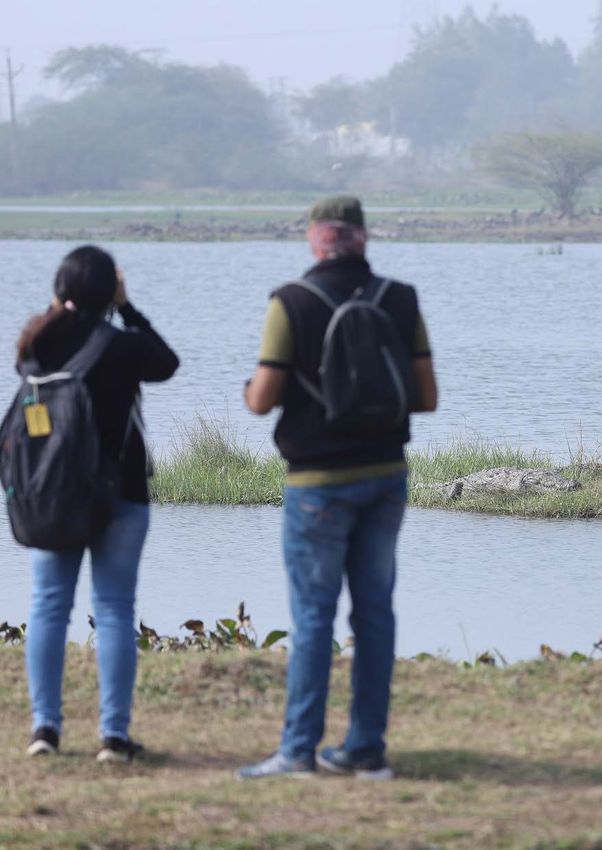
A GLIMPSE....
8TH CHAROTAR CROCODILE COUNT
          2021

                                        Background Photo By: Cassidix Media Works
                                    2

             9                 10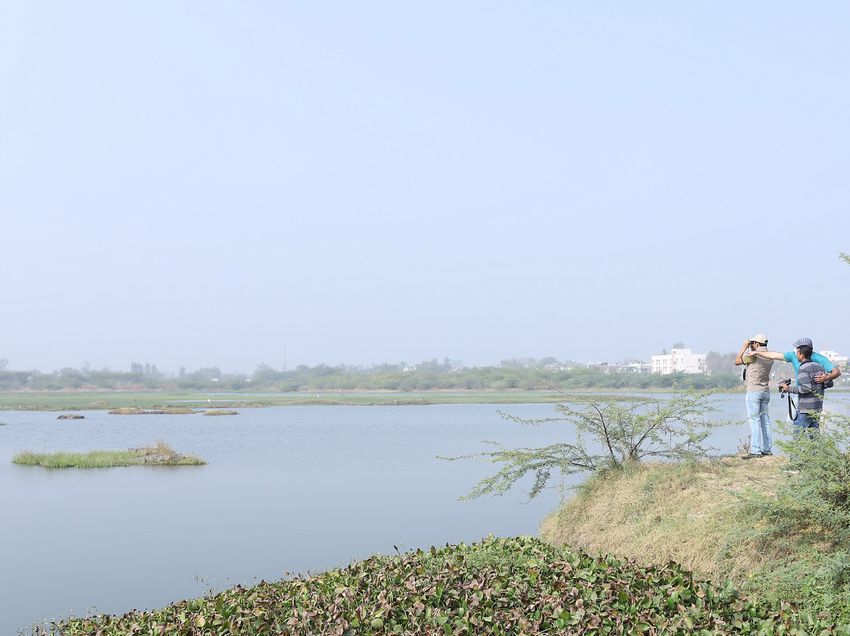
VNC’S TEAM

                                                                                                                                                                              Photo By: Shubham Parmar
Standing (From Left to Right): Malkesh Soni, Gunjan Buch, Mehul B Patel, Anirudh Vasava, Ankur Makwana,       Sitting (From left to right): Shubham Parmar, Mehul Patel
Vicky Bhatia, Megha Patel, Jignesh Patel, Karan Patel, Pruthviraj Patel, Vandan Parekh, Ishani Dave, Mukesh
Dave, Diti Dave, Tejas Patel, Bhaumikchandra Rajdeep, Vishal Mistry, Jaimin Makwana, Sathya Narayanan,
Girish Patel, Bhargesh Shah Neel Talati, Jilesh Patel, Nikhil Parekh, Zarana Desai, Mow Choudhary, Niyati
Patel

                                                                                                                                                                          2

                                                       11                                                                                                         12
Voluntary Nature Conservancy
Vidyanagar Nature Club/Voluntary Nature Conservan-
cy (VNC) is registered as Public Charitable Trust Vides No:
E/2659/Anand under Bombay Public Trusts Act 1950 in the
year 2003 with the main mission of creating environmentally
sensitive society. Located in Vallabh Vidyanagar town of Guja-
rat,VNC has been working actively since its inception with its
primary objectives to inculcate love for the environment, and
appreciate sustainable living. Started with the idea of sharing
the simple joys of bird watching, cycling in the midst of na-
ture, and enjoying being in nature’s lap, VNC has grown into
an organisation whose working areas now broadly include (1)
Environment Education, (2) Research & Conservation, and (3)
Awareness & Advocacy. VNC tries to fill up the prevailing gap
that exist in the society and education system for environment
education and learning, and conducts extensive educational
programs in schools and colleges. VNC’s wildlife related proj-
ects include India wolf monitoring in Kutch, mugger crocodile
conservation in Gujarat, understanding and mitigating crop
depredation in Little Rann of Kutch, forest owlet monitoring
in south Gujarat, assessing and mitigating snakebite in Guja-
rat, capacity building to assist wildlife conservation and citizen
science initiative to promote crocodile conservation. VNC
carries out various campaigns such as the Snakebite Mitiga-
tion Program, Save the Sparrow project, Greenathon (annual
marathon), Save the Vulture program, and drives to reduce
pollution. Besides this, we also deal with ongoing environmen-
tal issues that occur around us, such as illegal cutting of trees,
water pollution, and waste management.VNC is accredited by
GEF, (Global Environment Facility) and is a member of GEA
(Global Environmental Action) & SAYEN (South Asia Youth &
Environment Network). VNC is also registered Non Profit
foundation as Voluntary Nature Conservancy in USA.

Address

101- Radha Darshan, Behind Union Bank of India,
Vallabh Vidyanagar-388120
Gujarat, India

info@vncindia.org
www.vncindia.org
Phone No. - (+91) 9898142170

For further information:

Anirudh Vasava
Coordinator, Research & Conservation
anirudh@vncindia.org

                                                                         Photo By: Mehul B. Patel
Mehul Patel
Coordinator, Awareness & Education
mehul@vncindia.org                                                   2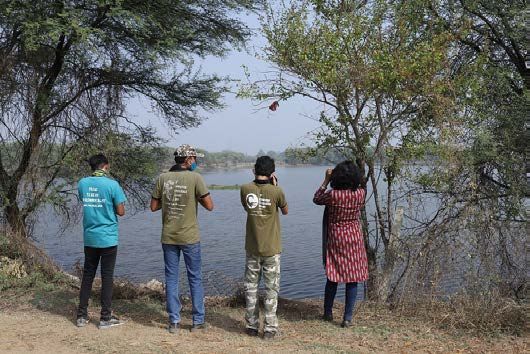
Voluntary Nature Conservancy
101- Radha Darshan, Behind Union Bank
                of India
      Vallabh Vidyanagar- 388120
             Gujarat, India
           www.vncindia.org
You can also read


