2021 PARENT INFORMATION BOOKLET
←
→
Page content transcription
If your browser does not render page correctly, please read the page content below

PARENT INFORMATION BOOKLET
                     2021

   Lovegrove Avenue, BUNBURY, W.A. 6230

   Phone:            (08) 9721 2660
   E-mail:           bunbury.ps@education.wa.edu.au
   School Website:   www.bunburyps.wa.edu.au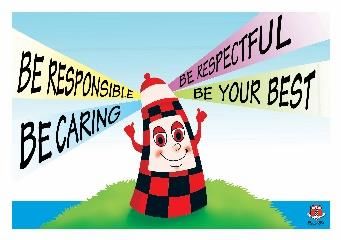
1.0    GENERAL INFORMATION

       1.1       School Contact Information
       1.2       School Times
       1.3       Office Hours
       1.4       Arrival at School
       1.5       Bicycles, Scooters and Skateboards
       1.6       Staff Meetings

2.0    POLICY & PROCEDURES INFORMATION

       2.1       About Our School
       2.2       School Business Plan
       2.3       School Enrolling & Leaving the School
       2.4       Parent/Teacher Meetings
       2.5       Kagan Co-Operative Learning
       2.6       Behaviour Management
       2.7       Sporting Programs
       2.8       Specialist Programs - Physical Education
       2.9       Specialist Programs - Music
       2.10      Specialist Programs - Visual Arts
       2.11      Specialist Programs - Science
       2.12      Specialist Programs - Languages
       2.13      School Dress Code
       2.14      School Car Park
       2.15      School Attendance and Absences
       2.16      Family Holidays
       2.17      Arriving Late to School
       2.18      Leaving School Grounds during School Hours
       2.19      Reporting to Parents Guidelines
       2.20      Homework Guidelines

3.0    COMMUNICATION

       3.1       Newsletters
       3.2       Term Planner
       3.3       Entering the School Grounds
       3.4       Assemblies
       3.5       Contacting Home when Children Become Ill at
                 School
       3.6       Labelling Clothing/Materials

4.0   HEALTH CARE POLICY & PROCEDURES

       4.1       COVID-19 Health Recommendations and
                 Guidelines
       4.2       Sun Safe Guidelines
       4.3       Medication & Critical Allergy Management
       4.4       Head Lice Guidelines
       4.5       Communicable Diseases-Exclusion From School

5.0   MONEY MATTERS

       5.1       Contributions and Charges
       5.2       Money Collection
       5.3       Classroom Requirements
6.0   SCHOOL SERVICES

        6.1        Kindergarten and Pre-Primary
        6.2        Before and After School Care
        6.3        Library
        6.4        School Psychologist Service
        6.5        School Nurse
        6.6        Community Health Services
        6.7        Dental Clinic
        6.8        Canteen Information

7.0   COMMUNITY ENGAGEMENT

        7.1        P & C Association
        7.2        School Board
        7.3        Parent Involvement

8.0   MISCELLANEOUS

        8.1        Working With Children Checks
        8.2        Lost Property
        8.3        School Property
        8.4        Environmental & Sustainable Practices
        8.5        Student Fundraising
        8.6        Regional Programs for Talented Students

        Appendix
                   School Dress Code Guidelines
                   School Homework Guidelines
                   School Head Lice Guidelines
                   Register of Parent School Helpers Form
1.0    GENERAL INFORMATION

1.1    SCHOOL CONTACT INFORMATION

       Principal:                          Shane Doherty
       Associate Principals:               Franca Dillon and Adriana Palermo
       Manager Corporate Services:         Kylie Young
       School Officers:                    Gabriella Wall and Shona Lever
       Address:                            2-18 Lovegrove Avenue
                                           Bunbury WA 6230
       Mail:                               P O Box 1908
                                           Bunbury WA 6231

       Phone:                              9721 2660
       School Email:                       bunbury.ps@education.wa.edu.au
       Website                             https://www.bunburyps.wa.edu.au
       Canteen:                            9791 4660

       Regional Education Office:          South West Education Office
                                           5th Floor, Bunbury Tower
                                           61 Victoria St
                                           BUNBURY WA 6230
                                           Phone: (08) 9791 0300

School Year 2021
These are the dates children attend school

       Term 1         Monday February 1 – Thursday April 1
       Term 2         Monday April 19 - Friday July 2
       Term 3         Monday July 19 - Friday September 24
       Term 4         Monday October 11 - Thursday December 16

School Development Days
Your child does not attend school on school development days. Staff will be involved with
professional learning, school planning, review and school development.
School development days for 2021 will be advised.

Public Holidays (that fall during the term)
       Labour Day                    Monday March 1 (Term1)
       ANZAC Day                     Monday April 26 (Term 2)
       Western Australia Day         Monday June 7 (Term 2)

1.2    SCHOOL TIMES

Student pre class organisation time        8.30am – 8.50am
Start time:                                8.50am
Recess:                                    10.20am – 10.40am
Lunch:                                     12.40pm – 1.20pm
Finish time:                               3.00pm

1.3    OFFICE HOURS

Office hours are as follows:   Monday to Friday          8.30am - 3.30pm
1.4    ARRIVAL AT SCHOOL

Teachers commence classroom duties at 8:30 am, therefore it is expected children will arrive at 8:30 at
the earliest. In some instances, parents do find it necessary to drop children off at school before 8.30am.
In these cases, children should proceed to the lunch area and remain seated until 8.30am.
The time between 8.30am and 8.50am each day is useful for students to organise themselves to
commence their learning program. Many students also complete oral reading or class tasks with
teachers and/or volunteers, spelling/sight word and tables practice.

Due to social distancing requirements, parents are required to remain outside classrooms.

It is important to note that there is no crossing attendant for students crossing at Spencer Street, they
must use the Pedestrian Crossing at the traffic lights. Also see School Attendance 2.13

1.5    BICYCLES, SCOOTERS AND SKATEBOARDS

The bike rack area is near the junior wing boundary fence. Students are asked to secure their bike or
scooter and helmet with a lock. For safety reasons, skateboards are to be kept under the classroom
bench, turned upside down.

1.6    STAFF MEETINGS

Staff meetings are held on several Wednesday afternoons each term. These are held outside of
instructional time. These times should be avoided for meetings.

2.0    POLICY & PROCEDURES INFORMATION

2.1    ABOUT OUR SCHOOL

At Bunbury Primary School we recognise the uniqueness of our children and community. We
acknowledge the qualities they have that contribute to and enhance our school. We want each child to
develop as an independent learner; attain their highest academic achievement possible; develop social
skills, and a positive and caring attitude toward others; and, to have an understanding of, and value,
sustainable practices.
Students are encouraged to regularly participate in the Regional Performing Arts Eisteddfod, Have Sum
Fun Mathematics competition, Numero Competition, University of New South Wales (ICAS)) Academic
Competitions, Sport, Writing, Visual Arts, Speaking, and Technology and Robotics competitions.

A sense of social conscience is fostered through fundraising for charity and we support the development
of relationships across age groups through Buddy Class activities. These are part of our Positive
Behaviour Support (PBS) Program. This is also associated with our Education for Sustainability (E/S)
programs that encompass many social, emotional and environmental projects.

The School offers specialist programs in Physical Education, Visual Arts, Performing Arts (Music),
Science and Languages (Italian).

2.2    SCHOOL BUSINESS PLAN

Bunbury Primary became an Independent Public School (IPS) in 2011. It operates by taking direction
from a Business Plan approved by the School Board. This Plan sets out the focus areas and directions
the school will concentrate on for the three years of the business plan’s cycle.
Each year the school develops operational plans, based on performance data, which works toward
achieving the targets identified in the Business Plan.

2.3    SCHOOL ENROLMENTS & LEAVING THE SCHOOL

When enrolling a child parents need to complete an Application for Enrolment. This is a form that
provides basic information. If you live in the school’s intake area you will also need to provide proof that
the address is your primary place of residence. If you are offered a placement in the school you will
then be asked to complete an Enrolment Form. This will require information about the child, as well as
the parents. Such things as a birth certificate, immunisation records (from The Australian Childhood
Immunisation Register) and any relevant Family court orders must be sighted by a staff member and a
copy kept on the student’s file (all information is confidential).

Should any information on the enrolment need changing during the year, please notify the office
immediately. This information is needed in an emergency situation and is for the safety and well being
of your child.

Where a child does not live within the school's intake area, Department of Education (DoE.) policy
requires parents to complete an Application for Enrolment form to which the school should respond
within 48 hours. If a placement is offered, the parents then complete an Enrolment Application as
outlined above. Should the application be declined, an appeal process is available.

Providing incorrect or misleading information during the enrolment process could result in the offer of
placement being withdrawn by the school.

When leaving the school, parents are requested to notify the school at least a week prior to departure
so that transfer documents can be prepared. Parents may be given an interim report to take to the new
school and are asked to complete an Exit Survey.

Children enrolling from overseas or interstate schools are generally enrolled in classes appropriate to
their age as with children in WA. Copies of any relevant visas may be requested to support the
enrolment application.

Parents of children with special learning needs or health conditions will be requested to complete further
documentation and/or provide information/medical reports from relevant health care professionals. This
may assist with obtaining additional support or resources. (See Health Care section)

2.4    PARENT / TEACHER MEETINGS

Teachers have class meetings at the beginning of each year. Regular contact between teacher and
parents is essential and important. Parents are encouraged to contact their child's teacher regularly on
an informal basis as well as a formal basis. To arrange a meeting, parents should contact the teacher
or school office asking the teacher to ring and arrange a suitable time for a meeting.

Parents are encouraged to make use of teacher meetings to discuss their child's progress or to discuss
any other matter which may be causing concern. A meeting can also be used to celebrate successes
and not just to air concerns. Parents/Carers should avoid interrupting a teacher if they are
preparing lessons or teaching during the school day.

The Principal or Associate Principals are available to assist parents with any concerns. Please see the
front office or contact the school to make an appointment.

Teachers use Seesaw or Connect App as an electronic medium for communicating with parent of
children in their class.

2.5.1 KAGAN CO-OPERATIVE LEARNING

Bunbury Primary School uses Kagan co-operative learning structures to help engage students in their
learning. Co-operative learning increases student engagement, develops social skills and increases
academic performance. All staff are trained in using Kagan structures to support their daily teaching
and learning programs.

2.6    BEHAVIOUR MANAGEMENT

POSITIVE BEHAVIOUR SUPPORT (PBS)
The school has established a Positive Behaviour Support (PBS) program in conjunction with the school
community. PBS establishes a climate in which appropriate behaviour is the norm for all students. It
provides school communities with an effective, evidence based approach to creating positive and
engaging school environments and focuses on three levels of intervention: Primary, Secondary and
Tertiary prevention.
PBS views inappropriate behaviour in the same manner that problems in reading or mathematics are
viewed, as a skill deficit. When a skill deficit exists, we must teach the appropriate skills, which allow a
unified and positive school climate to develop. This informs everyone that appropriate behaviour is a
priority in the school.
School behaviour expectations and agreements are based upon everyone’s right to feel safe at school,
the need to be considerate of others, and our social responsibilities. The following expectations are
observed at our school:

           Be Responsible, Be Respectful.
           Be Caring. Be Your Best

To help children understand the relationship between their feelings and behaviour, we talk
about the Zones of Regulation. The Zones of Regulation Curriculum is designed to teach and
foster self-regulation skills and emotional control. The strategies teach children about
emotions, how these can impact on their behaviour and the tools they can use to get the best
state of alertness for learning. The Zones of Regulation focuses on teaching children how to
recognise and manage their Zone based upon the situation and the people around them. The
four zones are:
       Red Zone: describes extremely heightened states of uncontrolled alertness and
       intense emotion. This covers emotions such as alertness, devastation, terror and over-
       excitement

       Yellow Zone: describes a heightened state of alertness, but the person still has some
       self-control. This includes emotions such as frustration, worry, silliness, anxiety and
       excitement.

       Green Zone: describes a calm state of alertness. This includes being happy, calm,
       focussed and ready to learn

       Blue Zone: describes a low state of alertness and arousal, where a person may be
       sad, tired, sick or bored.

FRIENDLY SCHOOLS PLUS
The Friendly Schools Plus program is an evidence based bullying prevention program and, along with
PBS, Zones of Regulation , and SDERA, forms part of our whole school pastoral care. The program
has been developed in WA and is recognised nationally and internationally. In addition, the school uses
a Restorative Practice approach in mediating and resolving student conflict.

2.7    SPORTING PROGRAMS

SWIMMING:
A series of DoE funded lessons are conducted during the year for students in Years PP - 6. Parents
are advised of exact dates and times and are asked to pay for bus fare and pool entry. There are Faction
and Interschool Swimming Carnivals for Year 4-6 students in term 1. Additional assistance can be
obtained for students with special needs.

ATHLETICS:
The school faction and interschool carnivals are usually in third and/or fourth terms respectively. The
emphasis is on participation by all children in the faction carnival with selection of the best competitors
for the interschool carnival. Students from Years 3-6 participate in the interschool carnival.

CROSS COUNTRY:
This is held toward the end of term 2 and in conjunction with the Interschool Cross-Country Carnival (held later in the term). All students are encouraged to participate in the school faction event with a selected team competing at the interschool level. WINTER SPORTS CARNIVAL: This interschool carnival is usually held in Term 3 and encompasses many of the winter team sports. Teams are made up of Year 5 & 6 students. If there are not enough students to make up teams, then students may be selected from Year 4. 2.8 SPECIALIST PROGRAMS - PHYSICAL EDUCATION All students from years 1 – 6 participate in a specialist physical education lessons each week. The DoE requires that students are involved in at least two hours of physical activity (physical education, sport and fitness activities) weekly. Class teachers also conduct other daily fitness sessions with their class. Fundamental Movement Skills K-3 and Fundamental Movement Games Skills form part of the class instructional Physical Education program 2.9 SPECIALIST PROGRAMS - MUSIC Students from Years P-6 participate in music lessons each week with the school’s music specialist. Students can join the junior or senior school choirs. Students in the upper primary years can also try out for the school Drumming and Marimba group ensemble. These groups also have the chance to perform in the Regional Performing Arts Eisteddfod and for community groups. If selected, students in year 5 and 6 participate in an Instrumental Music program, at school, that is led by peripatetic music teachers based at a high school. 2.10 SPECIALIST PROGRAMS - VISUAL ARTS Students from Years 1-6 participate in visual arts lessons each week. Skills with various mediums are developed over time. The school has a reputation for producing high quality art pieces from the students. Students are given the opportunity to participate in local and state competitions 2.11 SPECIALIST PROGRAMS - SCIENCE Students from Years 1-6 participate in Science lessons each week. As part of the program students are provided with the opportunity to also participate in various Science based competitions and challenges 2.12 SPECIALIST PROGRAMS - LANGUAGES Students from Years 1-6 participate in Languages (Italian) lessons each week. As part of the program students explore the Italian language as well as the cultural aspects of the country. 2.13 SCHOOL DRESS CODE The DoE requires each school to have a School Dress Code that is approved by the School Board. The school expectation is that all students follow the Dress Code. This can only happen if parents support the Dress Code which, in part, is intended to make dressing for school a little easier and give students a sense of belonging to our school. See Appendix
2.14 SCHOOL CAR PARK
The school does not provide parking facilities for parents as there is street parking
available around the school. Parents are asked to use care, courtesy and
consideration when parking (and driving) around the school as it can become very
congested. Parking on some verges is prohibited and the Shire Ranger can issue fines.
The staff car park (in front of the school, off Lovegrove Avenue) is narrow and has
limited space. Any congestion here creates real problems and seriously risks the safety
of the children. For this reason parents are requested NOT to use it to park
or as a “kiss and drive” area.
A designated “kiss and drive” area has been implemented in Reading Street (the cul-de-sac that runs
parallel with the west side of the school). This area is for set down only, at drop off and pick up times.
Students are supervised by Administration staff during after school pick up times.
2.15 SCHOOL ATTENDANCE AND ABSENCES
Parents/Carers are asked to inform the school on the first day of any absence by giving a reason for
the absence and a likely date of return. Please inform the school through the following options (only
one of the options is required):
Contacting the school via telephone: 9721 2660
Using the “Connect” app. available for mobile phones.
Calling in at the school office and completing a note
Speaking with your child’s teacher
Sending a note to the teacher or the school office
Via E-mail: Bunbury.PS@education.wa.edu.au
Providing a medical certificate or doctor’s note
Parents/carers are responsible for ensuring their child:
Attends school regularly
Arrives at school on time each day
Is well rested and ready to learn
Is picked up from school on time or knows how they are getting home
Wears school uniform
Is only absent with reasonable cause and the school is informed on each occasion.
Bunbury Primary School takes school attendance and punctuality very seriously. Ensuring your child
attends school regularly, punctually and is collected on time is an important part of our home/school
partnership.
Attendance is recorded in half days. The school attendance register is marked at the beginning of each
school session both morning and afternoon. Reasons for absences are recorded. Unexplained
absences are followed up with a letter to parents to find out the reason for the absence. Parents/carers
are contacted if their child is frequently late.
The school Parent Attendance Information Book has important information about school attendance.
Please ask the school if you would like a copy of this booklet.
2.16 FAMILY HOLIDAYS
The Department of Education discourages parents from taking children out of school during the term
for family holidays. However, we understand that sometimes holidays during the term are unavoidable.
We appreciate advance notice of planned absences. A discussion with the principal and/or classroom
teacher allows us to plan together to minimise the effect of the absence of your child.
Please remember that every day away from learning programs can impact on your child’s achievement
and progress and social skills development.2.17 ARRIVING LATE TO SCHOOL At Bunbury Primary School students or their carer are required to check into the office and collect a pink Late Card before going to class. This card must be handed to the classroom teacher. If children arrive late to class on a regular basis, it can affect their attitude to learning as well as their work. It disrupts the rest of the class and often upsets the child who has to join in after lessons have started. Students who arrive after the bell are marked as arriving late. Students who regularly arrive late are monitored by the school. Parents/carers are contacted if their child is regularly arriving late. This is to seek parent/carer support in improving the arrival time of their child. 2.18 LEAVING SCHOOL GROUNDS DURING SCHOOL HOURS Sometimes students need to arrive or leave during the school day. This may be for a medical or other appointment or if a child is taken ill during the day. Parent/carers are asked to inform their child’s teacher and the office if, or when, students need to leave the school. This is part of our duty of care and to ensure the safety of students. It is recommended that wherever possible, parents schedule medical and dental appointments outside of school hours. Parents or carers are required to sign their child out at the school office, office staff will then provide the parent/carer with a blue card to give to the teacher to enable the child to be released from class. Children need to be issued with a pass, signed by the principal (or delegate) if they are leaving the school grounds without an adult (even with parent approval). 2.19 REPORTING TO PARENTS GUIDELINES Students are issued with an interim report in term one and a formal report at the end of each semester (term 2 and term 4). Additional methods of reporting which class teachers may choose to include are student work samples/portfolio books, student-parent-teacher interviews or learning journeys. A whole school ‘Celebration of Learning’ parent open night is held towards the end of term three each year. This provides family members with an opportunity to view and celebrate the work students have been completing throughout the year. It is a wonderful way for the school community to demonstrate to the children, how much they value education. 2.20 HOMEWORK GUIDELINES Our school has Homework Guidelines that have been approved by the School Board. See Appendix 3.0 COMMUNICATION PROCEDURES 3.1 NEWSLETTERS The newsletter is available on our website, and via the Connect app (check the Term Planner for dates). Our school newsletters contain updates from the P & C and provide parents with information on community events and/or information from local sporting clubs. We would love to celebrate your child’s achievements outside of school. Please contact the school via email or telephone to give us details (including a photo if you have one).
Additional information is sent home, when necessary, via Connect. It would be appreciated if you
constantly check this App as this will enable us to keep you informed of school events and important
information.

3.2    TERM PLANNER

Each term the school provides parents with a planner of events for the coming term. These are updated
(via the newsletter and Connect) as changes or additions occur. Parents are encouraged to add to and
display the planner in a prominent position at home to act as a reminder of coming events. Copies of
updated planners are also on the school website.

3.3    ENTERING THE SCHOOL GROUNDS

All persons visiting the school must enter through the school office where they are required to
register as a Parent Helper, a Visitor or a Contractor. Badges are issued and need to be worn so staff
members can see the person has registered through the office and is allowed on-site.
Even parents who are just dropping something off for their child need to enter via the school
office.

3.4    ASSEMBLIES

Assemblies are held on Friday mornings on a regular basis commencing at 8.55am. Assemblies are
listed on the term planner. Parents and friends are welcome to attend the school assemblies.

3.5    CONTACTING HOME WHEN CHILDREN BECOME ILL AT SCHOOL

Children often pick up 24hr viruses as well as the usual childhood illnesses. This can make
life difficult at home when both parents work and there is not extended family to help with
the care responsibilities. Whilst the school understands this, the school doesn’t have the
facilities or personnel to cope with children who are unable to participate in normal class
activities because of illness. Should a child become ill during the day (or injure themselves)
the school will contact the parents and request that they come and collect them. Parents
are required to sign a school Student Release Form when doing this.

3.6    LABELLING CLOTHING / MATERIALS

In order to reduce the amount of lost property (especially clothing and lunch boxes) uniforms and other
items should be clearly named. Please use upper and lower case letters to label e.g. Mary T rather
than MARY T. This is important as many children seem to have considerable difficulty recognising their
own belongings. This is particularly important during in-school swimming lessons.

4.0    HEALTH CARE

4.1    COVID-19 HEALTH RECOMMENDATIONS AND GUIDELINES

As per COVID-19 hygiene recommendations, students who present with cold/flu like symptoms will be
required to stay at home. Hand Sanitiser and soaps will be available to students. Students will also be
reminded of good hand washing procedures and hygiene practices.

4.2    SUN SAFE GUIDELINES

As a means of protecting children from sunburn and skin cancer, there is a “NO HAT, NO PLAY IN
THE SUN” policy all year round. Children must wear bucket or broad brim hats all-year-round when in
the sun (visors and caps are not acceptable). Children not wearing hats at recess and lunch times will
be asked to move to a shaded area.
Children without hats will not be able to participate in outdoor physical education and sport. Correct
school hats are available for purchase through the front office at all times.
4.3 MEDICATION & CRITICAL ALLERGY MANAGEMENT
There are an increasing number of children in schools with medical needs including
critical allergies. In some cases, medical conditions and allergic reactions (to different
stimuli) can be life threatening. We manage these situations in conjunction with the
relevant parents.
The following information outlines our key strategies in managing high risk medical
conditions and critical allergies and minimising levels of risk:
Health Care Forms
Parents are required to complete the relevant Heath Care Forms detailing the medical condition and
the procedures required to manage the condition whilst at school. In some cases, parents will be
requested to provide information from the Doctor/Specialist to support the Child’s Health Care Plan.
Short and Long Term Illness, Medical Conditions & Administration of Medicines
Medication which is part of the child’s health plan is required to be provided to the school. The
administration and location of this medication is decided as part of the students’ health care plan, in
consultation with Administration staff.
Parents will need to notify the school of any medications which their child needs to take during the
school day and complete the relevant administration of medication authorisation forms, for short or long
term illness or medical conditions, at the front office. Parents will also need to notify the school if there
are any changes to the student’s medical records. Students should not keep over the counter or
prescription medications in their school bag or be responsible for self administering, unless this has
been previously discussed.
The Health Care Plan is shared with the teachers and staff who have contact with the student to assist
with our duty of care and appropriate medical intervention procedures when required.
Food Allergies
Due to the high risk of serious allergic reaction for a number of students in the school we encourage
parents to recognise and follow our Nut Free practices.
The school will reduce the risk of exposure to severe food allergens by utilising a communication and
preventative education strategy that:
informs the student’s peers, other staff and members of the school community of the medical
condition and possible impacts of the condition;
encourages parents of all children to remove the particular food allergen from their child’s
school-based diet through parent meetings, led by health professionals, about allergies and
anaphylaxis; newsletter items; classroom learning programmes; and individual conversations.
removes the food allergen from the school canteen’s menu.
encourages parents to provide safe snacks and treats to enable the child with allergies to
participate in birthday celebrations and curriculum related activities at school.
requires the parents of the child with the allergy to provide drink containers and lunch boxes
which are clearly labelled with the name of the child.
restricts the use of food in crafts, cooking classes and Science experiments, depending on the
allergies of particular children. Taking care with inadvertent use of artwork materials such as
milk containers, egg cartons, nutshells and eggshells.
encourages children who have used an allergen to wash their hands directly after contact.
The parents of the child with the food allergy will reduce the risk of exposure to severe food allergens
by educating their child on:
the possible foodstuffs that they can reasonably expect to find the allergen in and how to avoid
them
the dangers of swapping food with other children
the signs of the onset of an allergic reaction (where practicable)Medication Allergies
The school will reduce the risk of exposure to severe medication allergens by:
Advising parents that children should not bring any medication to school (prescription
and non-prescription) without prior arrangement with the class teacher or the school
administration.
Maintaining all medications in a locked cabinet and having parents complete the
appropriate Medication Form (unless indicated otherwise in a child’s individual plan).
Insect Sting Allergies
The school will reduce the risk of exposure to severe insect allergens by:
Regularly monitoring the school grounds for infestations of identified allergen insects.
Having infestations reported to the school administration immediately (with relevant children
advised) and having the treatment of infestations followed up promptly
Altering the school ‘environment’, where practicable, to prevent re-infestations occurring.
The school has an emergency Epi1Pen available and staff have been trained on how to
administer it.
4.4 HEAD LICE GUIDELINES
Our school has developed guidelines designed to assist in minimizing the spread of head lice in our
school. The policy reflects the Health Department of WA guidelines. It would be appreciated if parents
would follow these guidelines.
See Appendix
4.5 COMMUNICABLE DISEASES - EXCLUSION FROM SCHOOL
With infectious diseases it is often necessary for children to be excluded from school for a
period of time. Please let us know about any relevant infectious diseases that may affect
your child or other family members in the course of the year. Current Health Department
policy requires schools to temporarily exclude children for a recommended period of time for
different ‘childhood’ diseases. In the case of reportable infectious outbreak, parents will be
notified as per Health Department Policy.
Exclusion Information about Infectious Diseases
Infectious Disease Guidelines for Exclusion
German Measles Exclude from school until fully recovered.
(Rubella) At least 5 days from onset of rash.
Measles Re-admit on medical certificate or 7 days after onset of rash, if child is
well enough.
Whooping Cough Exclude for 2 weeks from the onset of illness or for 5 days after starting
(Pertussis) anti-biotic treatment.
Head Lice Exclude until the day after treatment has commenced.
Hepatitis A Re-admit on medical certificate indicating recovery.
Ringworm Exclude until the day after treatment has commenced.
Scabies Exclude until the day after treatment has commenced.
School Sores Exclude until 24 hours after anti-biotic treatment has commenced.
Lesions on exposed skin must be covered with water proof dressings.
Mumps Re-admit on medical certificate indicating recovery.
Chicken Pox Exclude until fully recovered or until at least 5 days after eruption first
appears.
Conjunctivitis Exclude until the discharge from the eyes has ceased.
Diarrhoea Exclude until diarrhoea has ceased.
Influenza like illness Re-admit on recovery.5.0 MONEY MATTERS
5.1 CONTRIBUTIONS AND CHARGES
The Education Act (1999) allows schools to charge parents for some services and to ask that they
make a voluntary contribution toward meeting the cost of other aspects of providing the school's
educational programme. These costs fall into three categories:
Section 99 (Voluntary School Contributions)
Section 100 (Optional Charges)
Section 108 (Items for Personal Use).
Schools are required to provide this information to parents in the December prior to the contributions
and charges coming in to effect. The schedule of contributions and charges must be approved by the
School Board prior to being distributed to parents.
It is incumbent upon the school to provide parents with a clear indication as to the level of financial
commitment that they may be expected to make in order for their child to fully participate in the learning
and experiential programme that will be offered by the school.
5.2 MONEY COLLECTION
If money is to be sent to school for any purpose, please put it in an envelope and mark the child's
name, year, classroom, amount and purpose of the money on the outside of the envelope. This is to be
handed to the class teacher.
As the school does not hold cash in the building, would you please help by providing the correct amount
of cash, a cheque, utilising the EFTPOS facility or direct credit details available from the school office.
5.3 CLASSROOM REQUIREMENTS
The Department of Education provides funds for resources and school needs. These needs cover many
things such as paper, exercise books, art/craft stocks, teaching resources, reading books, power, water,
postage, rubbish removal and furniture replacement to name just a few.
A Personal Items List, showing the requirements for each year level, is distributed to each child at the
end of the year (for the commencement of the new school year). New students to the school can obtain
a list from the office throughout the year. On occasions, parents may also be asked to provide specific
textbooks or work resources which form part of specific class programs.
Some personal items are consumable and will require replacement during the school year
6.0 SCHOOL SERVICES
6.1 KINDERGARTEN AND PRE-PRIMARY
Our school offers a Kindergarten and Pre-primary program in the early childhood centres. These
children are regarded as an integral part of our school and are included in many school-based activities
that are appropriate to their age groups. More detailed information about the program is available
through the school. If you require further information our school has a parent information book for Pre-
primary and Kindergarten.
Pre-primary is the first year of compulsory schooling. Children who turn 5 years old before
June 30 are required to be enrolled in a full-time Pre-primary program.
The school runs a Play Café during the second semester for children who have been
accepted into the kindergarten program for the following year. Parents attend with the
children. The program is run by our kindergarten teachers. It is a great way to meet other parents in the
community and gives parents and the children an opportunity to become familiar with the school
environment.6.2 BEFORE AND AFTER SCHOOL CARE
Great Beginnings (Bunbury) offer a drop off and pick up service for our school. For more information
you can contact Great Beginnings on Phone: 9795 6122 or Email:
bunbury@greatbeginnings.com.au. Brochures are also available through the school office.
6.3 LIBRARY
All children must have a library bag before they can borrow books. A book can be on loan for a week.
Tapes, games, reference books etc. are available for use in the library only. Waterproof library bags
can be purchased from the uniform shop.
Parent assistance in the library is always welcomed and appreciated. There are many jobs parents can
help with, from helping to cover books, to setting up displays and processing books. Books can also be
taken home to cover.
6.4 SCHOOL PYSCHOLOGIST SERVICE
The School Psychologist is based at the school one day per. The psychologist advises on a wide range
of children's issues including learning difficulties and behaviour. The school psychologist will only work
with children after parental approval has been given. Teachers can refer children to the school
psychologist, through the principal or the school’s student services co-ordinator.
6.5 SCHOOL NURSE
The school nurse visits the school at different times during the year to conduct:
Health assessments on all pre primary students and year ones not seen in pre-primary.
An immunisation programme for all 5 year olds
Health education and health promotion activities.
Vision screening for all year 6 students.
Hearing and vision assessments on kindergarten students and individual children as
requested by parents. (Please note that when requesting either, or both, of these
assessments, to complete a referral form. These forms may be obtained through your class
teacher.)
6.6 COMMUNITY HEALTH SERVICES
Services are available through Hudson Road Community Health centre to support
students who may benefit from further development in Speech Therapy, Occupational
Therapy and Physiotherapy (including fine and gross motor skills, auditory processing
and sensory skills). Where a referral would be seen as beneficial to a child, the
classroom teacher or Student Services Associate Principal will meet with the
parent/carer to complete relevant paperwork prior to submitting the referral.
Triple P Parenting courses are offered throughout the year by Community Health Centres. Information
will be distributed to parents as it is received.
6.7 DENTAL CLINIC
The government provides a free school dental service for its schools. Our school receives this service
through the Dental Clinic (9721 1497) based at South Bunbury Primary School. A registration form and
information sheet is sent home for all new admissions. Appointments are set up, by the dental therapist,
and sent home to parents via their child. It is the parent’s responsibility to take their child to the
appointment and return them to school. Should you wish to change an appointment time you must do
this through the dental clinic. Please complete a blue Absences Form at the front office before taking
your child to the Dentist during school hours.6.8 CANTEEN INFORMATION
A canteen is in operation at the school Tuesday through to Friday and is located near the lunch
undercover area. Lunches and snack type foods are available at morning recess. There is a canteen
menu available in the front office and on the school website.
Children may order their lunch from the school canteen on Tuesday to
Friday. Please order online at home before school. Lunches are delivered to
the classroom (at the designated lunch time).
7.0 COMMUNITY ENGAGEMENT
7.1 P & C ASSOCIATION
All parents are eligible to join the P and C Association (Parents & Citizens Association). Membership
costs $1.00 per year per person and can be paid to the treasurer prior to the commencement of any
meeting.
The Aims of the P & C are to:
a) Provide input to school policy.
b) Raise money to provide materials and resources for the children.
c) Provide a forum for parents and staff.
Parents are requested to support the P & C for the children's benefit. Meetings are held twice per term.
Our Parents and Citizens Association asks all families to contribute to their Dollars for Scholars project
($7.00 per term). This money is used to purchase educational materials and resources for the school.
Support for special projects (such as play equipment, shade cover, grounds development, etc.) comes
from money gained through the P and C’s fund raising.
In order to ensure that the P&C can continue to support the school and the students, they request that
each family make a $50.00 annual voluntary contribution. This contribution will, hopefully, negate the
need for smaller additional fundraisers. Parents and carers can choose to pay more than the suggested
amount or pay it in instalments.
7.2 SCHOOL BOARD
The school operates with a School Board that consists of the Principal, a P & C
representative, teachers, parent representatives and/or a community member where the
Board sees this as appropriate.
Meetings are held each term and provide an opportunity for parents to become more closely
involved in planning and school decision-making.
7.3 PARENT INVOLVEMENT
Class teachers will often request the support of parent/carers with various classroom activities
throughout the year. If you have any special skills, interests, talents or ideas that might enrich class
learning programs during the year, please share them with the class teacher or school staff. Parents
are very welcome to attend excursions and whole school events, such as Athletics carnivals, Winter
Carnival. Please let your child’s class teacher know if you are available to assist.
There are many other ways parents can get involved in the school. If you would like to volunteer your
time and/or expertise, please contact the school. See Attachment8.0 MISCELLANEOUS 8.1 WORKING WITH CHILDREN CHECK (WWCC) It is a legal requirement that any person, who is working with children, or likely to come into contact with children on a school site, has a valid Working With Children Check card. This does not apply to parents who are helping at the school that their child attends or to volunteers under 18 years of age. It does apply to grandparents and other extended family members, parents involved in any overnight camps and anyone on the school site in a paid capacity. (Even if they are also a parent) 8.2 LOST PROPERTY Apart from valuables, children are instructed to leave any items found, where they are. With this policy, children who lose items are able to return to where it has been left and reclaim the item. At the end of the day, items will be collected and placed in a lost property box in the office. Parents and children are welcome to check this box when trying to locate missing items. Please label all personal items and clothing using upper and lower case letters (e.g. Mary T rather than MARY T) as this makes it easier to re-unite items and owners. 8.3 SCHOOL PROPERTY All books, games, sports equipment etc. remain the property of the school. Please encourage your child/children to treat them with respect. Damaged or lost items must be replaced. We would also appreciate the return of any equipment that may have come home by accident. Supplies of such goods can deplete rapidly and are not easily replaced. Your support would be greatly appreciated. 8.4 ENVIRONMENTAL & SUSTAINABLE PRACTICES Our school is an accredited Waste Wise School and is involved in many environmental and sustainable practices. Many of these programs are linked to programs within the community. Some of our waste recycling programs include waste paper recycling; which targets classroom and office paper product waste and involves the whole of the school, ring pulls off aluminium cans, mobile telephones, batteries, printer and copier cartridges, aluminium coffee pods, plastic bottle tops, Redcycle (soft plastics) and TerraCycle (oral care recycling). The ring pulls are a class project and are utilised for various community projects. Mobile phones are collected and sent to a recycling firm to raise money for the school. Printer and copier cartridges are collected at the office and recycled through Planet Ark. Batteries are sent to Battery World. Plastic bottle caps are used by Envision to make hands for children. Other projects include: Terra Cycle Recycling collects old toothbrushes and products, Kids Teaching Kids and a School Garden. 8.5 STUDENT FUNDRAISING Students support many community fundraising events throughout the year (eg Cancer Council, Genes for Genes Day, National Bandana Day). The school also raises money each year for our World Vision Sponsor child, the Solar Buddies Program and Telethon. Information on any of these school community projects events/programs is available from the office. 8.6 REGIONAL STUDENT PROGRAMS FOR TALENTED STUDENTS PEAC Program An academic Primary Extension and Academic Challenge (PEAC) program operates for students in Years 5 and 6 who are academically gifted. Students are selected by sitting assessments in year 4. A Year 4 enrichment program also operates within the Bunbury Area. Instrumental Music Program Students are given an opportunity to be assessed in Year 4 for the school Year 5 and 6 Instrumental music program. The program operates within the school and offers trumpet, flute and clarinet tuition. Students can continue the program into High School.
Talented Young Writers Program
Talented Young Writers is an extension writing program that is offered to a limited number
of Year 6 students. The sessions are held at the local high school once per term.
School Dress Code Guidelines
Rationale/Purpose
The School Education Regulations 2000 empowers school communities to develop a dress code for the children
attending their school. The regulations allow a school to establish what is safe and appropriate to wear at school
and on excursions as well as determine what is inappropriate. The relevant Regulation states:
33. The following matters may be provided for in a government school’s dress code:
a) standards of what is acceptable in relation to the clothing worn by students at the school including
headwear or footwear;
b) standards of what is acceptable in relation to other aspects of the personal presentation of students.
Issues relating to the implementation of a school dress code are covered under Regulations 33 – 36 of the School
Education Regulations 2000.
The School Board determines the standards of what is acceptable clothing to be worn by students at the school.
This includes headwear and footwear, and other aspects of personal presentation of students. Having a policy
that acknowledges school community support allows the school to make a clear statement about its expectations
of the children in this context.
Benefits of Dress Requirements for students:
Dress requirements for students:
define the identity of the school with its community
develop students sense of belonging to the school community’
provide an opportunity to build school spirit
promotes sense of inclusiveness, non-discrimination and equal opportunity
reinforces the perception of the school as an ordered an safe place
enhance the health and safety of students when involved in school activities
increase the personal safety of students and staff by allowing easier identification of visitors and potential
intruders to the school
keep cost of school outfits within reasonable limits for parent/scarers
students learn the importance of appropriate presentation and grooming
students learn to engage with the community
The Department of Education’s Dress Requirements for Students states:
“Denim items must be excluded from all school dress codes and uniforms”
Policy Details
The Bunbury Primary school uniform consists of:
Summer Uniform:
BPS Red (polo style) short sleeve polo with school logo
BPS Black and Red school polo shirt (Year 6 only)
Red Checkered dress
BPS Black skorts skirt
BPS Black Basketball shorts (airflow)
BPS Red Tracksuit Jacket
Black Hat Broad brimmed or bucket
Winter Uniform:
BPS Red Tracksuit Jacket
BPS Red Polar Fleece Jumper
BPS Red (polo style) short sleeve polo with school logo
BPS Black and Red school polo shirt (Year 6 only)
Black Basketball shorts (airflow)
Black Tracksuit Pants or leggings *
Black Hat Broad brimmed or bucket
BPS Black Wet Weather Jacket
Please Note: A black or red skivvy can be worn for extra warmth under Bunbury Primary School polo shirts.
* Leggings and tights are different items of clothing. Tights are only to be worn for extra warmth under
another garment.
In School Faction Sports: Polo shirt (single coloured) in faction colours: yellow, blue, green or red.
Interschool Sports Representation
The school provides school shirts for: e.g. Cross country, Soccer, Hockey, Football, Netball …….
The school uniform is also used for any interschool sporting events or carnivals. Students representing
the school must wear school uniform at any school representation events.Headwear:
Headwear needs to be plain and purposeful (not decorative) and reflect school colours (this includes
headbands, ribbons, hijabs)
Sunsafe hats are defined as broad black brimmed hats or bucket type (see sunsafe section)
Long hair (past shoulder length) to be tied back. This applies to both boys and girls.
Guidelines
Students are encouraged to wear school uniform to school each day;
Students will be required to wear school uniform when on school excursions or representing the school
in public forums.
Footwear:
Students need to wear appropriate footwear for the activities in which they are involved:
Standard school shoes/joggers or sandals-with ankle strap. (Skate shoes, bright coloured, slip on shoes
or fashion shoes are not part of the school uniform.)
White or black ankle length socks need to be worn with shoes and joggers.
Sunsafe:
Students must wear sunsafe hats whilst engaging in outdoor activities, play, recreation and breaks.
Sunsafe hats are defined as broad black brimmed hats or bucket type. Students who fail to wear
suitable sunsafe hats will be excluded from engaging in outdoor activities until they are equipped with
the headwear. The Principal and Teachers can grant exemptions for certain activities in which the
wearing of a hat is impractical; for example, athletics events.
Jewellery:
For reasons of safety:
Sleepers and stud earrings are acceptable
Any items that are likely to catch or snag are not to be worn. This includes fashion wrist jewellery such as
bands and/or bracelets.
Necklaces should not be worn (unless for medical reasons).
Any external body piercing needs to be covered.
Make Up:
Make up is not to be worn at school except where foundation is required for cosmetic reasons, and this has been
discussed with the Principal or Associate Principal.
Exemptions and Non-Compliance
Exemptions
A parent/carer may apply to the principal (on behalf of their child) for an exemption from aspects of the dress code
on any of the following grounds:
A matter relating to the child’s health;
A matter relating to religious beliefs of the child or their family;
A matter relating to the cultural background of the child or their family; and,
Any other matter which, in the principal’s opinion, is sufficient to exempt the child from complying with the
requirements.
Exemptions may be granted on a permanent, defined-period or conditional basis and can be revoked by the
principal at any time.
Non-Compliance with Dress Code Requirements:
Where a student is not following the school dress code (unless they have an exemption):
A school Uniform Note will be sent home (see Appendix 1)
The matter will be discussed with their parent/carer;
The student and their family will be encouraged and counselled to meet the requirements of the dress
code (in a positive and caring way, resolving any concerns);
Students will be unable to publicly represent the school or attend an excursion (unless it is part of the
essential educational programme of the school); and
See DOE Dress Requirements for Students in WA public schools for further information.
Support and Assistance
The school community offers assistance and support to students and their families where difficulties with
compliance arise. Parents/carers will need to discuss any assistance or support needed with the school
principal and/or associate principal.
School uniform Shop provides low cost items through:
bulk purchasing arrangements
clothing exchanges.School Homework Guidelines
Rationale/Purpose
The purpose of this policy document is to lay out some clear parameters within which teachers and
parents/carers can deliver upon their shared responsibilities in the education of each child. These
parameters will reflect the diversity of the children in our school, acknowledge the complexities of out
of school life and give a level of flexibility for individual teaching styles.
Homework should be viewed as a point where the school and the home clearly meet in their shared
responsibility for each child’s learning. This shared responsibility needs to acknowledge the role and
rights of each other. Schools are aware of the pressures homework can create in the home when it
competes against the gamut of out of school activities children are involved in, the time demands on
parents/carers and the need for families to interact informally and to establish an appropriate place for
homework completion.
Parents/Carers need to:
be aware teachers differ in the ways they structure their teaching and learning programmes to
achieve the same outcomes for children.
consider that educators have differing views on the usefulness of traditional homework
be aware that our homework policy is based on the latest research about effective homework
programmes.
know we acknowledge that learning takes place at home and at school. Many aspects of this
homework policy are based on experiences that produce well rounded individuals.
indicate to the teacher if they have any concerns regarding their child participating in any aspect of
their child’s class home work programme
Homework can be an opportunity for parents/carers to participate in their child’s education. The
following activities form part of their homework programme:
Playing games, kicking a ball around, helping around the house, taking on responsibilities, helping
others and exercising are learning opportunities available to all children.
Talking or asking questions with an adult about something they did during the school day.
Home Reading is an essential part of all children’s progress and learning. It needs to occur every
day and can take the form of:
o reading set material,
o reading aloud or silently,
o reading for pleasure
o being read to by and adult or sibling.
Policy Details & Guidelines
At Bunbury Primary School we have broadened the definition of Homework to Home Work. The Home
Work grid approach will be used as part of the school policy. It will provide a balance between
academic and the development of social and emotional skills. The school values working together
with parents as partners in their children’s education and the importance of family time.
The Home Work Grid encourages children to complete other simple home tasks and gives them a
role of responsibility within their family.
Any home work expectations by a teacher or a parent must take into consideration the child’s social,
emotional, civic and academic development;
Teachers will consider the rationale, details and guidelines of this policy, and incorporate it when
informing parents/carers and children of what their homework expectations are;
Research for class projects can be set as home work to promote self planned, individual study
essential for early and late phases of adolescence;
Incomplete class work (where there was adequate time to complete it) can be sent home for completion.
Timeframe to complete a Homework Grid should be a minimum of 7 days eg. Monday to Monday.School Head Lice Guidelines
Support and Assistance
See Ian Lillico’s book for ideas and appendix for examples of Homework Grids
Read a variety of books Be read to by another Shopping with parents
including school books member of the family
Physical activity/ Homework Art
Sport Training
Teach your Parents Play a game with an adult Assignments/Project
Something you were taught at research
school
Meditation/Spiritual/Relaxation Use Computer for work. Cultural/Music practice
Resources
Ian Lilico Homework Grids
BPS School Examples Across Year Levels
Internet examples of Homework Grids
Rationale/Purpose
Head Lice infections are a common occurrence in schools and the wider community. They are
tiny insect parasites that live on the human head, feeding on the scalp several times a day.
Head lice reproduce by laying their eggs (nits) on the hair shaft close to the scalp. They are
not dangerous, they don’t carry diseases and they are not a sign of poor hygiene. The school
requires clear guidelines and processes to reduce the incidences of head lice within the school
and provide information and education in the effective management of head lice.
Policy Details & Guidelines
Identification of head lice by class teacher.
Confirmation of head lice by administration.
Administration contacts parents/carers to determine the next step in dealing with the
matter. Exclusion of a child with head lice is at the discretion of the principal.
Letter A and Head Lice Brochure is sent home with child.
Letter B is sent home with class members.
When treatment has commenced (accepted treatment is per the Health Department
guidelines) and all live head lice have been removed, the child may return to school with
a signed Confirmation of Treatment school slip.
The student must not re-enter school if treatment has not commenced.
If treatment commencement cannot be confirmed, the parents/carers will be contacted.
The principal is to liaise with the school health nurse and contact the family by phone or
arrange a home visit to discuss any undisclosed difficulties.
If no treatment continues the child is to be excluded.
Support and Assistance
If the head lice problem is ongoing after all other avenues have been exhausted, the case is
referred to the Community Health Centre.
Resources
Health Department BrochureYou can also read


