2021 SKILLS CANADA VIRTUAL NATIONAL COMPETITION - PROJECT Cooking - Skills ...
←
→
Page content transcription
If your browser does not render page correctly, please read the page content below

2021 SKILLS CANADA VIRTUAL NATIONAL COMPETITION
                    PROJECT
                     Cooking
                   SECONDARY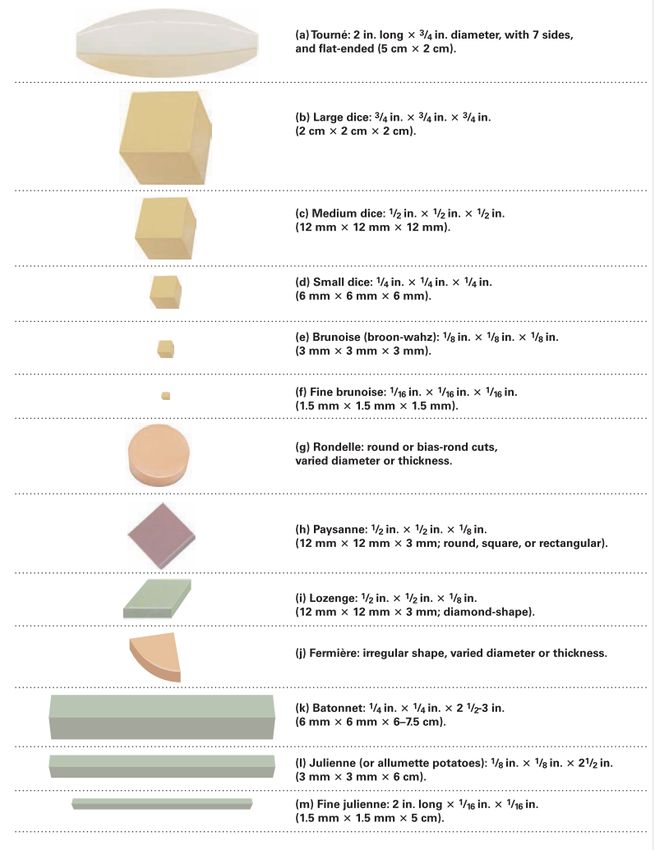
General Information
                                             Important:

This Test Project is based on the Contest Description document for the Canadian Skills
Cooking Competition, and provides detailed information about the contest itself,
whereas the Contest Descriptions provide general information on the SCNC
competitions.

“Canadian Skills Competition / Contest Description / Cooking”
All relevant Documents are available on the Skills Canada’s Website.

All questions must be addressed to the National Technical Chair:
Éric Archambault - archambaulte@cskamloup.qc.ca
and Co-Chair Phillip Lie - plie@vcc.ca

       Module A
                    •   Prepare & Present Competencies
                    •   Complete a recipe conversion exercise
       Module B

               •   Prepare and present a filled, 2 Egg, Classic French Omelette, with Side
                   Salad

               •   Given a whole chicken and demonstrating basic butchery skills,
                   prepare and present a main course,

                        o Main Course – Chicken Stir-fry with Thai Green Curry Sauce
                          and Rice

                                                 Project
                                               34 Cooking
                                               Secondary
Due to unforeseeable COVID-19 regulations/uncertainties, competition documents are subject to change.

                                                                                       Page 1 of 12
Module A -
                      Presentation of Competencies                           Skill 34 – Cooking
                                                                                 Secondary
 Description Competencies, Recipe Conversion, and Mise en Place

                  (Competitors must have a copy of a menu, menu elements and
                  workplan at their station – one copy of each for use by the competitor
                  and one copy to be submitted for use by the judges at the designated
                  time)

                  Competency:          Omelette:                          Competency:

 Service          Recipe yield         Classic French Filled              Vegetable precision
 Details          conversion –         Omelette (see video)               cuts – Presented in
                  worksheet and                                           individual containers –
                  calculator               •   2 egg omelettes            (containers to be
                                           •   Filling to consist of
                  provided                                                provided by the proctor)
                                               Brie style cheese
                  (proctor to                  and mushroom
                  provide)                                                150 gr each of:
                                           •   Prepare two (2)
                                               portions each                  • Green Pepper –
                                               presented on 12”                 lozenge
                                               Dinner Plate                   • Eggplant– large
                  Competitor
                                           •   Side salad                       dice
                  must convert a
                                               accompaniment                  • Zucchini–
                  recipe and                   with Emulsified                  medium dice
                  show                         French Dressing –                Ø to be
                  calculations to              also100 ml                          incorporated
                  convert a                    presented in a                      into the
                  recipe from                  sauce boat for                      chicken stir-
                  original yield to            judges                              fry and sauce
                  a new yield
                                           •   Two (2) plates will            •   Carrot – small
                                               be presented for                   dice
                                               each course, one
                                               (1) for presentation           •   Onion – brunoise
                                               and one (1) for                •   Celery – small
                                               evaluation by the                  dice
                                               proctor.
                                           •   Omelette tutorial
                                                 Project
                                               34 Cooking
                                               Secondary
Due to unforeseeable COVID-19 regulations/uncertainties, competition documents are subject to change.

                                                                                       Page 2 of 12
(Video provided by Ø to be
Rouxbe Online incorporated
Culinary School) into the rice
pilaf
• Tomato –
Concassé – small
dice
Ø to be
incorporated
into the side
salad
Available • A list of all ingredients available for this module is included in the
ingredients common food table document.
Special • Recipes are provided.
equipment • 12” dinner plates for the omelettes and side plates for the
required vegetables precision cut will be provided (by the proctor). No
service wares (china) permitted other than that specified by the
committee.
• 1 ramekin per competitor for salad dressing provided
• Containers for competencies will be provided
Note: Vegetable competencies green pepper, eggplant and zucchini will be
incorporated into preparation of the Chicken Stir-fry and onion, celery, carrot into the
Pilaf during this Module.
Project
34 Cooking
Secondary
Due to unforeseeable COVID-19 regulations/uncertainties, competition documents are subject to change.
Page 3 of 12Module B -
Presentation of Skill 34 – Cooking
Main Course Secondary
Description Prepare two (2) portions each, of the following:
• Main Course:
Thai Style Chicken Stir-fry with Green Curry Sauce and
Brown Rice Pilaf
§ Cooking temperature must meet minimum 74C, to
industry safety standards
§ Completed plates not to exceed 350 g per portion
Service • Main Course:
Details o 12” dinner plate
• Two (2) plates will be presented for each course, one (1) for
presentation and one (1) for evaluation by the proctor.
Main • Recipes supplied by the committee
ingredients • A list of all ingredients available for this module will be included in
required the common food table document.
Project
34 Cooking
Secondary
Due to unforeseeable COVID-19 regulations/uncertainties, competition documents are subject to change.
Page 4 of 12Secondary Competition Schedule
Each participant will compete in their own local time zone. Refer to the schedule
document on our website for more details.
Secondary Competitors and Judges arrive on site and log on. Virtual introduction to
Judges, Proctor and final questions answered. Test system for documents sent /
received.
Assign and send recipe yield conversion exercise.
Competition time,
+00:00hrs Start of competition. Recipe yield conversion exercise sent
to competitor
Set-up workstation - Equipment only.
§ No contact with food is permitted at this time.
§ Only competitors are permitted in the contest
area. No assistance is permitted at this time.
+01:00hrs submit conversion exercise, for judging, submit
menus and menu elements to NTC (English or
French).
No food is to be contacted until competition +01:00 Conversion
exercise is completed. Competitors may present before the
+1:00 hour deadline, any time remaining is to be used for setup
only.
+02:30hrs Submit Video (see proctoring document for details)
Presentation of Vegetable Cuts and clean down.
+03:00hrs Submit Video (see proctoring document for details)
Presentation of filled Omelette with side salad and dressing.
+03:10hrs – +03:40hrs Mandatory break
+04:20hrs Submit Video (see proctoring document for details)
Presentation of Chicken Butchery and clean down.
Project
34 Cooking
Secondary
Due to unforeseeable COVID-19 regulations/uncertainties, competition documents are subject to change.
Page 5 of 12+05:30hrs Submit Video (see proctoring document for details)
Presentation of Main Course Plating and Station clean down.
Timing of Service:
There is a 30-minute “window” past the due time to present your product
without penalty. ITEMS SUBMITTED AFTER THE 30 MINUTE WINDOW
WILL NOT BE MARKED.
+05:30hrs Cleaning, packing
+06:00hrs Competitors leave the site.
Project
34 Cooking
Secondary
Due to unforeseeable COVID-19 regulations/uncertainties, competition documents are subject to change.
Page 6 of 12COOKING
SECONDARY RECIPES
• Recipes are provided by the National Technical Committee and will
source the textbook(s) that the recipe was adapted from.
• The recipes are intended to be followed to produce the appropriate
quantities, flavours and correct seasoning.
• Although recipes are included in this contest project, we recommend that
you refer to a professional textbook such as the “On Cooking” or
“Professional Cooking” for further guidance. Many textbooks include
photographs, text and digital content that will illustrate proper and safe
working techniques as well as important aspects of the module’s
preparation. Correct cooking practices must be respected for all plates.
• Cooking methods and culinary terminologies from the recipes stated
on the Test Project must be respected and used to prepare the
required dishes. However, additional elements may be added to the
dishes to facilitate the competitor’s creativity.
• Food items and quantities are subject to change without notice,
depending on availability and quality; all competitors will have the
same conditions.
Project
34 Cooking
Secondary
Due to unforeseeable COVID-19 regulations/uncertainties, competition documents are subject to change.
Page 7 of 12French Dressing
Professional Cooking 8 – 666A
Salad Dressing
Yield: 1 quart (1litre)
1 Egg 1
1 ½ teaspoon Salt 7 milliliters
1 ½ teaspoon Paprika 7 milliliters
1 ½ teaspoon Dry mustard 7 milliliters
¼ teaspoon Ground pepper 1 milliliter
1 ½ pints Salad oil 700 milliliters
4 fluid ounces Cider vinegar 125 milliliters
2 fluid ounces Lemon juice 60 milliliters
As needed Vinegar, lemon juice, or water As needed
1. Place the egg in the bowl of a mixer and beat with the whip attachment until well
beaten.
2. Mix the dry ingredients and add to the bowl. Beat until well mixed.
3. Turn the mixer to high speed very slowly begin adding the oil, as when making
mayonnaise.
4. When the dressing becomes thick, thin with a little of the vinegar.
5. Gradually beat in the remaining oil alternately with the vinegar.
6. Beat in the lemon juice.
7. The dressing should be pourable, not thick like mayonnaise.
8. If it is too thick, taste for seasonings first. If the dressing is not tart enough, thin
with a little vinegar or lemon juice. If it is tart enough, thin with water.
Project
34 Cooking
Secondary
Due to unforeseeable COVID-19 regulations/uncertainties, competition documents are subject to change.
Page 8 of 12Thai Green Curry Sauce
Professional Cooking 8 –210B
Sauce
Yield: 18 fluid ounces (550 milliliters)
1 fluid ounce Vegetable oil 30 milliliters
1 ½ ounces Green curry paste (PC8 211A) recipe 45 milliliters
included
2 fluid ounces Water or stock 60 milliliters
14 fluid ounces Coconut milk, canned, unsweetened 410 milliliters
1 ½ ounces Nam pla (Thai fish sauce) 45 milliliters
1. Heat the oil over moderate heat in a saucepan.
2. Add the curry paste and cook until aromatic.
3. Stir in the water or stock and bring to a simmer.
4. Add the coconut milk and nam pla. Bring to a simmer and simmer several
minutes to blend flavors.
Note: in Thai cuisine curry sauces are typically made as integral sauces. With a
variety of ready-made curry pastes on hand, it is simple to sauté the desired meat or
seafood, prepare a sauce flavored with a curry paste, and stew the meat in the sauce
with the desired vegetables.
Project
34 Cooking
Secondary
Due to unforeseeable COVID-19 regulations/uncertainties, competition documents are subject to change.
Page 9 of 12Green Curry Paste
Professional Cooking 8 –211A
Sauce
Yield: 15 ounces (475 grams)
5 ounces Serrano chiles, seeded and chopped 150 grams
2 ounces Shallots, chopped 60 grams
2 ounces Garlic, chopped 60 grams
4 Lemongrass stalks, tender parts only, 4
chopped
2 ounces Cilantro, leaves, stems and roots 60 grams
½ ounce Galangal, peeled and chopped 15 grams
2 tablespoons Lime zest, chopped 30 milliliters
1 teaspoon Nutmeg 5 milliliters
3 fluid ounces Vegetable oil 90 milliliters
1. Combine all ingredients in a food processor or blender
2. Refrigerate and use as needed to make curry sauces.
Note: Galangal is a root that resembles fresh ginger in appearance but has a somewhat
different taste. If it is not available use fresh ginger.
Cilantro roots are the roots attached to ordinary cilantro that are usually discarded.
Save, wash thoroughly and use for this preparation. If not available, use cilantro stems.
Project
34 Cooking
Secondary
Due to unforeseeable COVID-19 regulations/uncertainties, competition documents are subject to change.
Page 10 of 12Chicken in Thai curry inspired by western Canada
Professional Cooking 6 – 477A
Poultry
Yield: 12 servings
2 fluid ounces Vegetable oil 75 milliliters
2 ½ pounds Chicken - deboned 1 kilogram
18 fluid ounces Thai green curry sauce (PC8 211A) 525 milliliters
2 ½ pounds Mixed vegetables – previously blanched 1 kilogram
1. Heat the oil in a sauté pan or wok over high heat.
2. Add the chicken and stir-fry until well seared.
3. Add the curry sauce and vegetables. Cook a few minutes longer, until the chicken is
completely cooked.
4. Serve with rice.
Project
34 Cooking
Secondary
Due to unforeseeable COVID-19 regulations/uncertainties, competition documents are subject to change.
Page 11 of 12Brown Rice Pilaf
Professional Cooking 8 – 381 & 384
Rice
Yield: 3 pounds (1,36 kg)
2 ounces Butter 60 grams
3 ounces Brunoise / mirepoix vegetables 90 grams
12 ounces Brown rice 350 grams
1 quart Chicken stock, boiling 1 liter
To taste Salt to taste
1. Heat the butter in a heavy saucepan. Add the vegetables and sauté until they begin
to soften. Do not brown.
2. Add the rice, without washing. Stir over heat until the rice is completely coated with
butter.
3. Pour in the boiling liquid. Return the liquid to a boil with the rice. Test and adjust
seasonings; cover tightly.
4. Place in a 350°F (175°C) oven and bake for 1 hour, or until liquid is absorbed and
rice is dry and fluffy. Taste the rice and, if it is not done, replace in oven 3-5 minutes.
5. Turn out into a hotel pan and fluff the rice with a fork. This releases steam and
prevents furthers cooking. Keep hot for service.
6. If desired, additional whole butter may be stirred into finished rice.
Project
34 Cooking
Secondary
Due to unforeseeable COVID-19 regulations/uncertainties, competition documents are subject to change.
Page 12 of 12You can also read


