L’utilisation de la sève de bouleau en Europe de l’Est: traditions et nouvelles perspectives
←
→
Page content transcription
If your browser does not render page correctly, please read the page content below

L’utilisation de la sève de
bouleau en Europe de l’Est:
traditions et nouvelles
perspectives

Ihor Soloviy
Professeur
Université nationale de foresterie
Ukraine
USE OF BIRCH SAP
IN THE EASTERN EUROPE:
heritage of traditions and
 perspectives for industry
      development

                   Ihor SOLOVIY
Ukrainian National Forestry University, Lviv, Ukraine

Distribution of birch in Europe

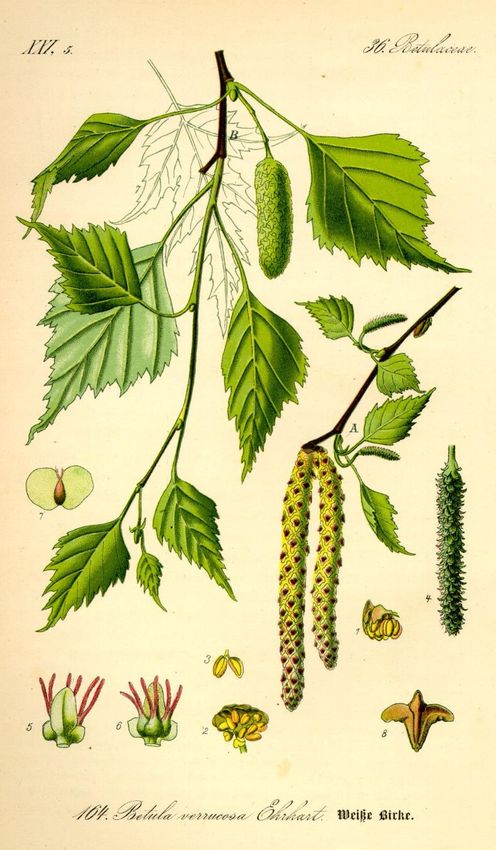
Birch (Betula spp.; UA/RU: bereza; береза)
• European white birch
  (B.verrucosa), which reaches a
  height of 25–28 m and grows
  separately or mixed with other
  species;
• Pilose or Swamp birch
  (B. pubescens), which
reaches 20 m
grows in wet, swampy areas.

Birch wood products
•   pulp & paper
•   solid wood products
•   veneer, plywood and sheetgoods
•   furniture
•   turnery items
•   “Karelian” birch
•   shingles
“Karelian” birch burl
• Fig

                    High-valued figured or
                    decorative birch found in
                    the northern part of the
                    European birch range
                    Scandinavia, Russia, the
                    Baltic countries and the
                    Polissya region of Ukraine
                    and Belarus
Bast shoes – (Личаки – Ukr.)
• Footware -- wooven
  from the bark of trees
  including birch and other
  species; widespread in
  Russia, Belarus and the
  Polissya region of Ukraine
• Raw materials — willow
  reeds, basswood, elm and
  the outer bark of birch
Non-timber products

• The twigs are used for brooms,
• the bark is used in tanning and making birch oil
  and tar.
• Birch charcoal is made into black powder and
  filters for the paint industry.
• Birch sap is consumed as a beverage
• Tea made of birch leaves, buds, and sap is used
  in folk medicine as a cure for stomach ailments
  and rheumatism.
Use of birch sap in early times

• Birch sap has traditionally been a source of nutrients in
  the spring in the boreal and hemiboreal regions as a fresh
  drink, but also as an ingredient in food and beverages

• The famous Arab traveller Ahmad ibn Fadlān observed as
  early as 921 that the Turkish-speaking Bolgars along the
  Volga River used fermented birch sap.

• The German scholar Conrad of Megenberg (14th century)
  mentions its use as a refreshing drink.

      Svanberg et al 2012
Historical notes
• German physician Hieronomys Bock describes, in his
“Kreuterbuch” (1551), birch sap medicinal use.
• Italian botanist Pietro Andrea Mattioli praised its medicinal
properties in 1561. According to him it could be used for
treating stones in the kidney and the bladder, but also to
cure ulcers
• in 1631 in Tartu (Estonia) ,the physician Johannes Raicus
praised birch sap and suggested its use in medicine,
comparing its healing properties with those of mineral
water.
Svanberg et al 2012Tapping birch sap in Golditz, near Leipzig, 1986,
East Germany, Photo Wolfgang Fluge
Collecting birch sap in the early 1990s, Tartu
county, Estonia,, Photo Lembit MichelsonTraditional medicine Birch water recommended as - a tonic and diuretic drink, - for a variety of respiratory diseases, including tuberculosis; kidney stones and gall bladder, gout, rheumatism, swellings, non-healing wounds and ulcers. • It is used topically for eczema and skin herpes, with acne and dark spots.
Medicinal use of birch sap in East European countries
Belarus           lung diseases, gout
Czech Republic poor health, infertility
Estonia        (prevention of) eye diseases, skin diseases, source for vitamins
Hungary        appetizer, stomach and lung diseases
Lithuania      “revitialization”
Poland         “revitalization”, kidney stones
Romania        kidney stones, jaundice, as milk-rennet, scab, diuretic,
               conjunctivitis cold, pneumonia, constipation, struma,wounds,
               headache, weakness in children
Russia         externally against sores, to help children during teething,
               to improve health
Sweden         scurvy, cholera
Ukraine        treating skin diseases (internal, external), source of
               vitamins (especially for children)
United Kingdom tonic, rheumatism, first nourishment for new-born children
                                                Svanberg et al 2012
Birch sap components • natural sugars (glucose, fructose, sucrose); • potassium (K), sodium (Na), magnesium (Mg), calcium (Ca), iron (Fe), aluminium (Al) and other healthful microelements; • over 10 organic acids; • essential oils and phytoncides; • saponins, A, B, C vitamins; • biological active substances.
Birch sap as component of
   drugs and cosmetics
Cosmetologists recommend
          • Cosmetologist recommend
            to wash face with birch
            sap for the improvement
            of the skin, even in the
            absence of disease.
          • Birch water can be
            stored for a long time in
            the form of birch ice .
          • For this purpose it should
            be frozen in tins and used
            as cosmetic ice
Proceedings of
the Conference
“Tapping and
processing of
deciduous tree
sap”
(Lviv Forest
Technical
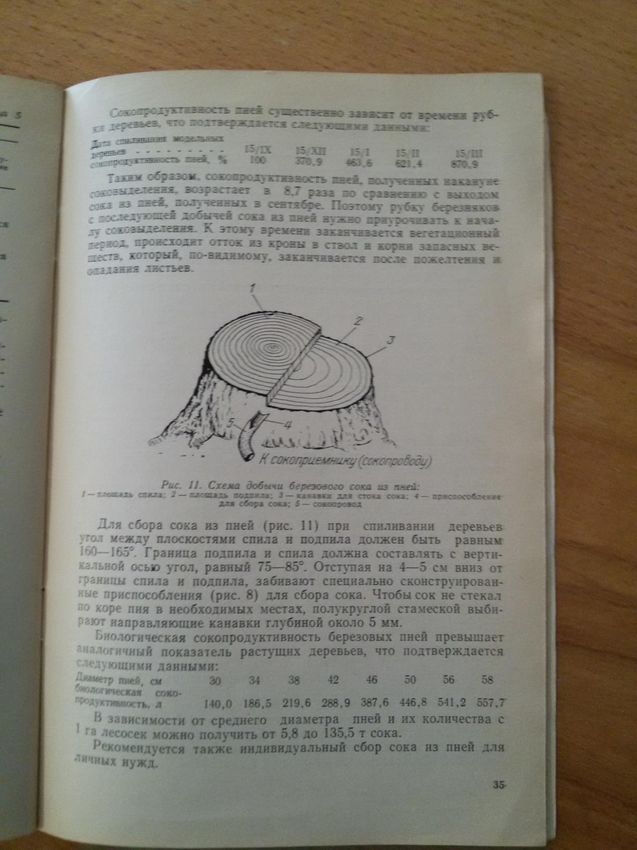
Institute, 1977)In addition to the traditional tapping of the bole of birch trees, a technology for the tapping of birch stumps was proposed at that time.
Sociological study among the foresters in Ukraine

•    90% of respondents drink birch sap
•    63% - prefer natural birch water and beverages
    prepared on its basis over other drinks;
    • One respondent consumes an average of 8 liters of
    birch sap per year;
    • over 30% of respondents in age 20 to 25 years are not
    aware about health benefits of birch sap;
    • Among the factors that reduce consumption of birch
    sap imperfect technology and inconvenient packaging
    often mentioned)

                                          (Dudyuk, 2001)
Practical Recommendations of Birch
Tapping and Sap Harvest
• Birch sap is collected from birch trunks in
the early spring.
• Tap place at diameter breast height (various
tapping instruments)
• The exact time for tapping depends on
weather conditions - usually in the middle
of March. At that time, birch sap moves
intensively in the trunk (referred to as:
“birch tears or weeping”).
• This period lasts for about 15-20 days, and
the sap collected within this period of time
is not only sweet, but also useful.
• The best time of the day to collect the sap
is between noon and 6 p.m., when it runs
mist intensively.Month when birch sap collected • In Belarusian, March is called “сакавiк” [sakavik] - “month of sap” • In Ukrainian the month of March is known as “березень” [berezen'] – “the month of birches”. • In Czech Republic the month of March is called in Czech “březen” – “the month of birches”.
Birch tapping yield
• Birch stands are managed for wood and
  tapped 5-10 years before end of the rotation
• Daily tree yield approx: 5-6 liters
• Seasonal tree yield approx: 100-130 liters
• Seasonal yield of the one ha of forest stand:
  20-30 tones
Silvicultural Demands of Birch Stands
                    • The age of stand
                      no younger than
                      50 years

• The same plot
  used no longer
  than 10 years
Stepwise process of sap collection 1. Tapping & Collection (birch sap is collected directly into glass or plastic containers in the forest) 2. Filtration 3. Collection/Gathering for delivery & processing 4. Transport & Storage 5. Processing 6. Quality Control 7. Distribution to wholesale and retail outlets
One: Tapping & collection
Two: Filtration
Three: Collection for
delivery & processing
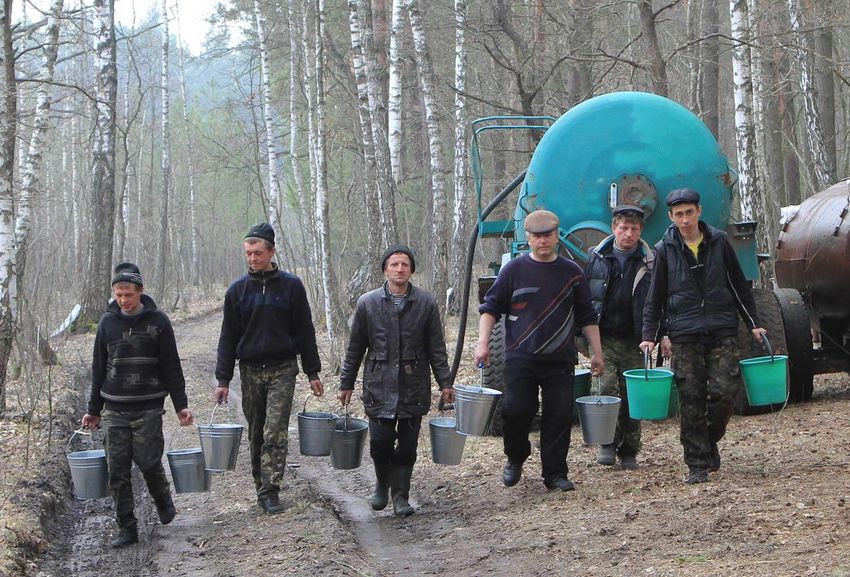
Gathering is Still Done using Manpower
Four: Tansport & storage
            • Birch sap can be stored not
              more that 24 hours (at
              temperature of 0oC +5oC)
              from the moment it is
              collected till being processed.

            • Sap collected during the
              night is delivered from forest
              to the plant in the morning
              and that collected and
              delivered immediately during
              the same day.
Five: Processing
• The processing of sap is
as follows:
- citric acid is added
(natural antioxidant and
preserving compound
letting sap to be stored
during a year),
- sap is sterilized and
cooled,
- bottled in specially
prepared containersSix: Quality control
• Before being preserved, every
container of the primary
product coming from forests
is tested in laboratory to meet
the set quality standards.
• Cloudy sap or having unusual
smell means the fermentation
process has started. Such
product unacceptable by the
laboratory and disposed of.Distribution to wholesale and
retail outlets
• Pure birch sap part make
ups 95-98% of the final
product makes up to
depending on part of other
natural components
concentration, such as rose
hips extract, mint extract,
apple, cherry or lemon
juices, citric acid, sugar,
etc.Birch sap popularity in Poland
30plus Beauty blogSpiritual aspects
Birch sap production in Poland
Component of
“Health Factory”
   complex
 Zestaw
 „Oczyszczenie
 organizmu" - Sok
 z brzozy 3 l,
 Colosan EX z
 probiotykami
 240 g
Line of birch products - “recommended by expert”
Sweden
Björksavsvinäger
Traditional Scandinavian milk product-
       now with birch sap taste
New close to nature generation in
Estonia…..and Denmark
Varieties of birch sap produced by
  forestry enterprises factories
Price-list of the birch saps produced
 by Manevychi Forestry Enterprise
№
               Name of Product            Litters/bottle   Price/unit (/$)
п/п
1     Birch sap with sugar (beet sugar0         3               1,5

2     Birch sap with rose hip infusion          3               1,57

3     Birch sap with blueberry juice            3               1,68

      “Podilla” birch sap with dried
4                                               3                 -
        fruit infusion

5     Birch sap with lemon                      3               1,67

6     Apple-birch sap                           3               1,6
Glass containers traditionally are the most popular for birch sap
Advantages of the glass containers – I
   (as advertised by companies birch sap producers)
• Chemical stability and neutrality of glass ensure
  preserving of food products without considerable
  changes.
• Glass does not evolve any harmful substances,
  has no odour, can be easily washed and
  disinfected;
• Transparency allows customers literally to look
  inside
Advantages of the glass containers- II
• Firmness and steadiness allow pouring, sealing
  and, in some cases, vacuuming;
• Heat-resistance (up to 500oC) allows sterilizing
  during packaging without artificial preservatives
  being added;
• Reusable which allows not only to save money
  but the environment as well.              Glass is
  100% recyclable.
Certification - Gals Ltd as a case
• Integrated quality and food safety
  management system in compliance with
  international Standards ISO 22000 and ISOTS
  22000-2 (certification scheme FSSC 22000).
• Organic Standard - the leader of organic
  certification in Ukraine; officially listed as a
  certification authority recognized in the
  European Union and Switzerland
Branding
• Glybkon TM is the most popular
  brand of birch sap in Ukraine. All
  juices are made of natural birch sap
  and are supplemented with natural
  fruit extracts, thus possess
  numerous valuable properties.

• under Spring Drops TM organic
  birch saps are sold in Ukraine and
  other European countries (Poland,
  Romania, Hungary, Czech Republic,
  France, Italy, Germany, Switzerland
  and some others)
Gals Ltd birch sap sold under other brands
 • Povna Chasha TM (supermarket chains ‘Silpo’, ‘Fora’, ‘Fozzy’
   – Ukraine)
 • Premia TM (supermarket chains ‘Silpo’, ‘Fora’, ‘Fozzy’–
   Ukraine)
 • Po-nashomu TM (‘Karavan’ hypermarket chain – Ukraine)
 • Easy&Good TM (‘Karavan’ hypermarket chain – Ukraine)
 • Chumak TM (JSC ‘Chumak’ – Ukraine)
 • Arax TM (Fooodish s.r.o. – Czech Republic)
 • Oleofarm TM (Oleofarm Sp.z.o.o – Poland)
 • Sapwood TM (Sapwood GmbH – Germany)
 • Birchsap TM (4Saisons DPN – France)
 • Vali TM (TD Vali s.r.o. –Hungary)
Alcohol-based birch sap beverages

             Mead: “The Nectar of
             Longevity” - A popular drink
             based on naturally fermented
             birch water and honey

             Horilka (vodka) infused with
             birch catkins
Recent Trends
Birch sap and birch
sap based
beverages often
served in a
network of stores
near state forests
and forest
enterprisesRoadside to on-line sales
Commercials

Where its hot & steamy, “Glybkon” satisfies
               your thirst…
Commercial for birch sap
Birch sap festivals
Causes for decline of birch sap
              production
• Decline of traditional land use and agrarian
  communities
• Chernobyl disaster influence on some forest
  areas and perceptions of consumers
• Rise of “soft drinks” after collapse of Soviet Union
  and modernization of Ukraine and former Soviet
  Union (FSU) countries
• Availability of “birch sap” soda
• Substitution by other drinks
Challenges • Silvical properties of birch and propensity to damage from tapping • Production and marketing • Modern processing and quality control • Lack of organic certification • Black market substitution • Relative low value material • Lack of investment in value-added processing • New technologies for collection, transport and storage • Substitution and competition from soft drinks industry • Old fashioned
Opportunities
• Nostalgia
• Support for traditional lifestyles and communities
• Supplemental income for forest communities
• Income for state forest enterprises
• Trend toward organic certification and “natural”
  products
• New generation of entrepreneurs
• Nascent back-to-land movement amongst youth
Ihor Soloviy - soloviy@yahoo.co.uk
You can also read


