A Career with the United Nations - Are you a professional with qualification or experience in your area of expertise, interested in working for ...
←
→
Page content transcription
If your browser does not render page correctly, please read the page content below
A Career with the United Nations
                  Are you a professional with qualification or experience in your
                  area of expertise, interested in working for the UN? Find out what
                  a career with the UN entails and how cinfo can support you.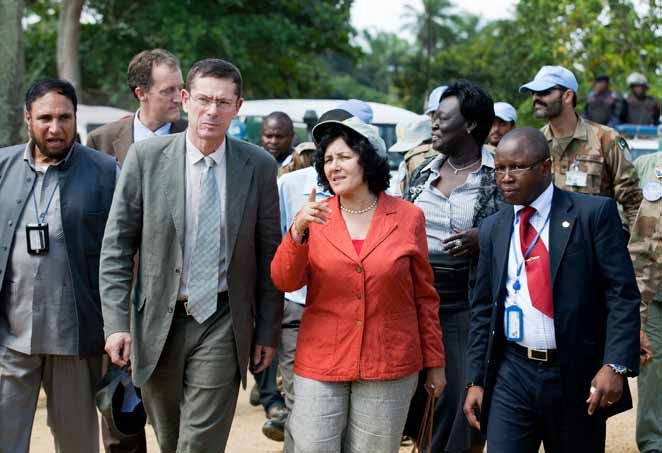
Content

                                     03   Message Joseph Deiss, Former Federal Councillor

                                     04   1. Is the UN for You?
                                     05   1.1   UN Staff Worldwide
                                     05   1.2   UN Professional Profiles
                                     07   1.3   UN Employment Conditions
                                     08   1.4   Entry Opportunities

Text
Caroline Tosti                       11   2. The UN and Swiss Nationals
Nina Prochazka
Jacqueline Breidlid                  11   2.1 Interview: Recruitment Missions and the Mandate of cinfo
Bettina Stauffer                     13   2.2 Staff Needs of UNDP, UNFPA, UNICEF, UNWOMEN
                                     14   2.3 Experiences of Swiss at the UN
Redaction / Graphism
Noëmi Wertenschlag
Anita Langenegger                    20   3. How Can cinfo Support You?
Photos                               20   3.1 cinfo‘s Services: Be Informed, Get the Right Network, Get
UN Photos:	pages 6, 7, 9, 10, 12,            Further
            15, 19, 21               21   3.2 Tips for Professionals
cinfo:      page 21                  22   3.3 The Most Frequently Asked Questions

Cover photos
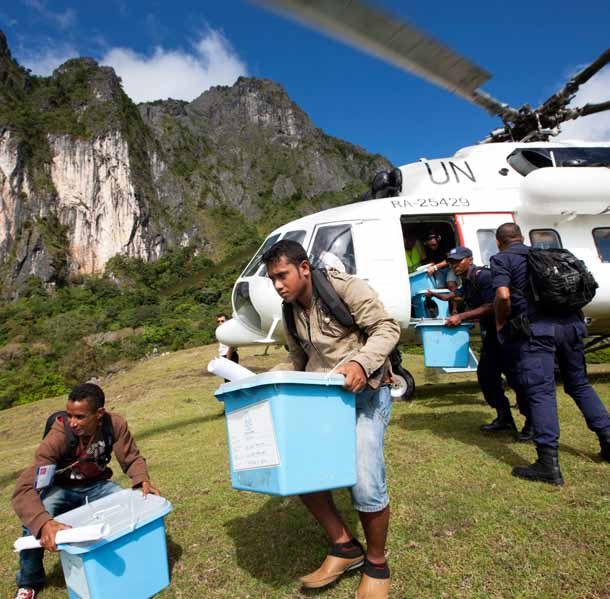
UN Photo:	Timor-Leste holds
           second round of
           presidential election
UN Photo:	Flag of the UN
UN Photo:	UNOCI Head visits
           School in Bonoua,
           Côte d’Ivoire

Print
cinfo

Order
www.cinfo.ch

Center for Information,
Counselling and Training for
Professions relating to
International Cooperation

Rue Centrale 121 | Case postale
2500 Bienne 7, Switzerland
+41 32 365 80 02
info@cinfo.ch | www.cinfo.ch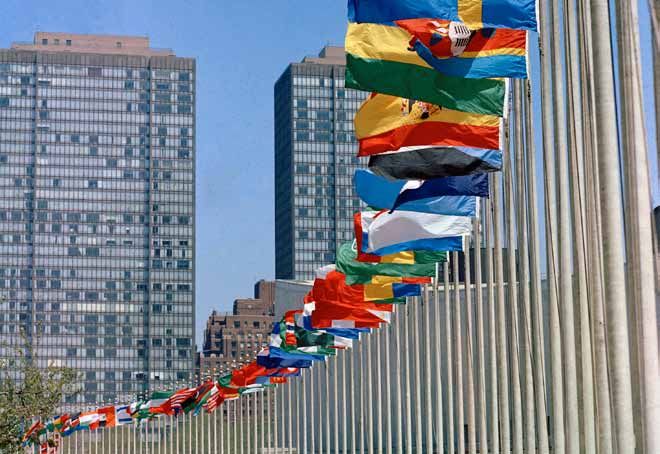
Working with the UN:
a fulfilling challenge for Swiss nationals as well
Switzerland contemplated membership of the UN for a long
time before it finally decided to take the step. Nevertheless,
it has now been ten years since the Swiss delegation, amidst
much applause, took their place among the international
community in the General Assembly hall. I was Foreign Minister
at the time and had the honour of being a member of the
delegation. The emotion I felt in that moment has remained
one of the most moving of my political career. As is typical for
carefully thought-through decisions, this step is connected to
many positive aspects for Switzerland.
I was already then convinced that a job with the UN belongs to
the most challenging, but also the most fulfilling tasks a career
can have. That is why I did not hesitate for a second, when I
was asked by the Federal Council whether I would like to stand
as the Swiss candidate for the Presidency of the UN General
Assembly. When in December 2009 the good news came from
New York, I nearly felt like a newly elected Federal Councillor.
The honour, but also the adventurous aspect, especially for a
Swiss – I thought by myself – almost overwhelmed me.
During my presidency I got acquainted with two important
dimensions of working with the UN. Firstly, for every person,
whatever professional qualification he or she may have, it
is challenging and fulfilling to make a career with the UN.
Secondly, this holds true for Swiss nationals as well as for other
nationals. Those who have had the courage to take this path
have not been disappointed. Some have come a long way and
have proved that there is no task at the UN that does not fit to a
Swiss person.
zVg
This is why I would like to support cinfo – the Centre for
Information, Counselling and Training for Professions Relating
to International Cooperation (IC) – in its task, to motivate fellow
citizens for a job with the UN. I encourage all interested people
to embark a career in international cooperation.
Joseph Deiss
Former Federal Councillor and former President of the Swiss
Confederation
President of the 65th Session of the General Assembly
3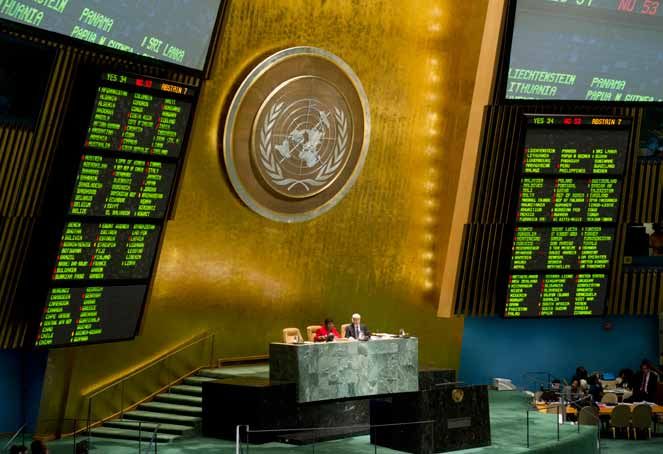
1. Is the UN for You?
The label «United Nations» includes a wide network of Some agencies serve as funds and programmes reporting
organisations dealing with different mandates and areas of directly to the UN General Assembly, one of the five active
interventions, which offer a broad range of employment principal organs of the United Nations system. These include
opportunities with the most diverse professional requirements, for example the UN Development Programme (UNDP), the UN
aspirations and aptitudes. Population Fund (UNFPA) and the UN Childrens Fund (UNICEF).
Other well-known agencies, such as the International Labour
The United Nations (UN), or the United Nations Organisation Organization (ILO) or the Food and Agriculture Organization
(UNO), was founded in 1945, after the second World War to seek (FAO) serve as so-called «specialised agencies». These also
solutions to the three thematic areas outlined in its Charter: include the World Bank Group and the International Monetary
peace and security; the protection and promotion of human Fund (IMF).
rights; and human development. The UNO then, over the years,
created the United Nations system, representing a network of This publication has a specific focus on the following four UN
international organisations, treaties and conventions. Today, agencies: UNDP, UNICEF, UNFPA and the UN Entity for Gender
the work of the various UN organisations touches every corner Equality and the Empowerment of Women (UN WOMEN). The
of the globe with its humanitarian, development and political reason is that cinfo has a mandate to support these agencies
activities (Graph 1). in their personnel marketing in Switzerland and to assist Swiss
candidates in the selection process of these organisations.
The United Nations System
UN Principal
Programmes and Funds
Organs UNCTAD United Nations Conference on Trade and Development
UNODC United Nations Office on Drugs and Crime UNITAR United Nations Institute for Training and Research
UNRWA1 United Nations Relief and Works Agency UNRISD United Nations Research Institute for Social Development
• ITC International Trade Centre (UNCTAD/WTO) for Palestine Refugees in the Near East
UNSSC United Nations System Staff College
UNDP United Nations Development Programme UN-Women United Nations Entity for Gender Equality and the UNU United Nations University
Subsidiary Bodies
General • UNCDF United Nations Capital Development Fund
Empowerment of Women
WFP World Food Programme
Assembly Main and other sessional • UNV United Nations Volunteers
Other Entities
committees
UNEP United Nations Environment Programme
Disarmament Commission
UNFPA United Nations Population Fund Research and Training Institutes UNAIDS Joint United Nations Programme on HIV/AIDS
Human Rights Council
UNISDR United Nations International Strategy for Disaster Reduction
UN-HABITAT United Nations Human Settlements Programme UNICRI United Nations Interregional Crime and Justice Research
International Law Commission
Institute UNOPS United Nations Office for Project Services
Standing committees
UNHCR Office of the United Nations High Commissioner for Refugees
and ad hoc bodies UNICEF United Nations Children’s Fund UNIDIR1 United Nations Institute for Disarmament Research
Security
Council Related Organizations
CTBTO PrepCom Preparatory Commission for the
Advisory Subsidiary Body Comprehensive Nuclear-Test-Ban Treaty Organization
Subsidiary Bodies
IAEA2 International Atomic Energy Agency
Counter-terrorism committees Military Staff Committee United Nations Peacebuilding Commission
OPCW Organisation for the Prohibition of Chemical Weapons
International Criminal Tribunal for Rwanda (ICTR) Peacekeeping operations and political missions
WTO3 World Trade Organization
International Criminal Tribunal Sanctions committees (ad hoc)
Economic and for the former Yugoslavia (ICTY) Standing committees and ad hoc bodies Specialized Agencies4
Social Council ILO International Labour Organization
FAO Food and Agriculture Organization
IMF International Monetary Fund
of the United Nations
UNESCO United Nations Educational, Scientific ICAO International Civil Aviation Organization
Functional Commissions Regional Commissions Other Bodies
Published by the United Nations Department of Public Information DPI/2470 rev.2—11-36429—October 2011
and Cultural Organization IMO International Maritime Organization
Crime Prevention and Criminal Justice ECA Economic Commission for Africa Committee for Development Policy WHO World Health Organization ITU International Telecommunication Union
Narcotic Drugs ECE Economic Commission for Europe Committee of Experts on Public Administration World Bank Group UPU Universal Postal Union
Population and Development Committee on Non-Governmental Organizations • IBRD International Bank for Reconstruction
Secretariat Science and Technology for Development
ECLAC Economic Commission for Latin
America and the Caribbean Permanent Forum on Indigenous Issues and Development
WMO World Meteorological Organization
Social Development
WIPO World Intellectual Property Organization
ESCAP Economic and Social Commission United Nations Group of Experts • IDA International Development Association
Statistics on Geographical Names IFAD International Fund for Agricultural Development
for Asia and the Pacific • IFC International Finance Corporation
Status of Women Other sessional and standing committees UNIDO United Nations Industrial Development
ESCWA Economic and Social Commission • MIGA Multilateral Investment Guarantee Agency
Sustainable Development and expert, ad hoc and related bodies Organization
for Western Asia • ICSID International Centre for Settlement
United Nations Forum on Forests UNWTO World Tourism Organization
of Investment Disputes
International Court NOTES:
of Justice Departments and Offices DPI Department of Public Information OSRSG/CAAC Office of the Special Representative 1 UNRWA and UNIDIR report only to the General Assembly.
of the Secretary-General for Children 2 IAEA reports to the Security Council and the General Assembly.
EOSG Executive Office of the Secretary-General DPKO Department of Peacekeeping Operations
and Armed Conflict 3 WTO has no reporting obligation to the General Assembly (GA) but contributes on an
DSS Department of Safety and Security
DESA Department of Economic and Social Affairs UNODA Office for Disarmament Affairs ad-hoc basis to GA and ECOSOC work inter alia on finance and developmental issues.
OCHA Office for the Coordination of Humanitarian Affairs 4 Specialized agencies are autonomous organizations working with the UN and each other
DFS Department of Field Support UNOG United Nations Office at Geneva
OHCHR Office of the United Nations High Commissioner through the coordinating machinery of ECOSOC at the intergovernmental level, and
DGACM Department for General Assembly UN-OHRLLS Office of the High Representative for through the Chief Executives Board for Coordination (CEB) at the inter-secretariat level.
for Human Rights
and Conference Management the Least Developed Countries, Landlocked Developing This section is listed in order of establishment of these organizations as specialized
OIOS Office of Internal Oversight Services
Trusteeship DM Department of Management
Countries and Small Island Developing States agencies of the United Nations.
OLA Office of Legal Affairs UNON United Nations Office at Nairobi
Council 5 DPA Department of Political Affairs
5 The Trusteeship Council suspended operation on 1 November 1994 with the independence
OSAA Office of the Special Adviser on Africa UNOV United Nations Office at Vienna of Palau, the last remaining United Nations Trust Territory, on 1 October 1994.
This is not an official document of the United Nations, nor is it intended to be all-inclusive.
Graph 1: http://www.un.org/en/aboutun/structure/org_chart.shtml
4
1.1 UN Staff Worldwide 1.2 UN Professional Profiles
Nearly 16,000 people are employed by the UN Secretariat. The Many of the posts available have high-level requirements with
UN System as a whole, the UN and its related progammes and strong academic and professional backgrounds including
specialised agencies, employs some 63,450 people worldwide. several years of international experience in their area of
Close to 60% of them are being deployed in the field. This expertise. Work experience should be relevant to the job for
includes a large number of international civilian personnel which a person is applying. A Masters Degree is generally a
working for currently 16 peacekeeping operations. In the field, must.
country and field offices are responsible for on the ground
implementation of programmes and activities. They are served Areas of Skills and Types of Posts
by Regional Offices that provide technical and operational Among their ranks, UN staff members can monitor disarmament,
support and advisory services. support the organisation of elections, coordinate relief in
humanitarian crises, raise funds for educational projects, and
provide administrative as well as logistical support to carry out
the complex mandates. These are just a few examples.
In principle, every professional with operational or technical
Repartition of Duty Stations of UN Staff skills can apply for a job with the UN. While every organisation
always has need of operational staff such as administration and
Regional finance professionals, each one has different technical needs
commissions according to its areas of intervention. While UNDP may look
Others 7%
9% for governance and climate change experts, UNICEF may need
Field child protection and nutrition officers.
Headquarters Operations
30% 54%
Graph 2: cinfo
In contrast, the headquarters are involved in managerial
overview and back-up work. It is also at headquarters level
where political and institutional activities relating to the Jobs within the UN system can be found on one
functioning of the UN take place. of the following websites:
https://jobs.un.org
While the main headquarters of the UN are in New York, two http://careers.un.org
thirds of the activities of the UN system take place in Geneva1. http://unjobs.org
Around 8,500 staff work for the UN family in Geneva, making it cinfoPoste: www.cinfo.ch
the largest concentration of UN personnel in the world.
1
More information on the United Nations Office at Geneva: www.unog.ch
5
Assistant-Secretary-
General for Human
Rights visits DRC
Soft Skills and Competency-based Interviews
UN Values and Competencies
In addition to hard skills, applicants will often be asked to de-
monstrate a range of soft skills, especially during the interview.
Soft skills may include a strong commitment to development,
leadership capacities, project management skills, planning and
organisational skills or the ability to work in a group. Core Competencies
The interview in the UN system mostly takes place in form of Communication / Teamwork /
Planning & Organising / Accountability /
a so-called «competency-based interview». This means, that Creativity / Client Orientation / Commitment to Managerial
candidates are asked to demonstrate their competencies on Continuous Learning / Technological Competencies
Leadership /
Awareness
the basis of past experiences and ways they dealt with specific Vision / Empowering
situations. For more information about competencies, consult Core Values Others / Building Trust /
Integrity / Professionalism / Judgement/Decision
cinfo′s publication «Competencies – communicate them Respect for Diversity / Making
effectively»
UN Values and Competencies Graph 3: cinfo
To work for the UN, professionals need to have an excellent
command of either English or French, preferably both. The
knowledge of an additional language is an asset but not
required for all jobs. Besides technical skills, the UN also look
for staff showing soft skills such as adaptability and cultural Comparative Advantages
sensitivity. And, with the mobility policy, all staff is expected to Candidates can increase their chance of having their application
move functions, departments, duty stations or organisations considered if they have one of the following comparative
periodically after two to five years. advantages:
The UN seek staff members who are motivated to make a real ▪ Mobility: It is yet another way for candidates to positively
difference through their work, and who possess the core values affect their career in the UN. Career progression to senior
and competencies shown in Graph 3. levels depends, in part, on evidence of mobility, including
service in difficult locations.
▪ Q
uotas: Under-represented nationalities in most UN
organisations such as the Swiss are encouraged to apply.
6
▪ Gender: In 2005 women filled 41.3% of the professional posts Experienced professionals mainly fall under the categories
and 31.8% of senior-level posts in the secretariat2. Although «professional» (P) or «director» (D). The following scheme gives
this is a higher representation than in many other sectors, an overview of the years of work experience needed for each of
this means that women are still underrepresented. The UN the staff categories:
seek to ensure equal opportunity for women. Women are
therefore encouraged to apply to available positions. Entry level professionals
▪ P-2 minimum 2 years of work experience
▪ Other UN official languages: Increasingly there is a demand ▪ P-3 minimum 5 years of work experience
for competency in one or more of the other official UN Mid-level professionals
languages. For example Arabic, Chinese or Russian are often ▪ P-4 minimum 7 years of work experience
being sought. Applicants with fluency in one or more of these ▪ P-5 minimum 10 years of work experience
languages face less competition in their applications. Senior-level professionals
▪ P-6 / D1 minimum 15 years of work experience
▪ P-7 / D2 more than 15 years of work experience
More details on UN structure, careers and The UN system offers less and less long-term employment
opportunities with stable contractual status. There are,
details on employment conditions such as
however, more opportunities for interesting assignments and
holidays and leave, health insurance and for movement across a unique, global organisation.
retirement plans are available here:
▪ www.cinfo.ch → Jobs & Missions There are basically two types of contracts: Fixed-Term
→ International Organisations Appointments (FTA) for a period of one to five years, and
▪ www.un.org/en/aboutun Temporary Appointments (TA) for less than one year, for
▪ http://careers.un.org seasonal or peak workloads as well as for specific short-term
requirements. In general, FTAs are granted for one year. They
can be renewed multiple times, as determined by the needs
of the organisation. The employment period for a TA cannot
exceed two years. It is important to note that one year rarely
remains one year. In general, and provided performance is
1.3 UN Employment Conditions satisfactory, contracts are renewed.
Staff Categories Family Considerations
The United Nations workforce is made up of different categories Many positions with the UN are located in the field, where
of staff. Within each category there are different levels, which working and living conditions vary from one location to another:
reflect increasing levels of responsibilities and requirements. Positions in a humanitarian field operation or in peacekeeping
2
More Information on: www.un.org
Many UN employees start their career with an assignment
in the field.
7
are habitually in a country or region that is emerging from 1.4 Entry Opportunities
conflict or an emergency situation. This means that living
conditions are difficult and the duty station is often categorised There are several ways to enter the UN system. Some of them
as «non-family», which means that family members cannot are presented in this section.
join the staff member at the location. Positions in the wider
development field, on the other hand, are predominantly located Normal Recruitment Process
in countries where staff can bring their family along. Every UN agency has its own system of recruitment. This means
that the procedure and the timeline might vary from one agency
Pay and Benefits to another. Nevertheless, there are some steps that every
The level of pay for staff in the professional and higher agency follows. Graph 4 shows these steps and gives an idea
categories that are recruited internationally is set by reference of how long the selection process might take.
to the highest paying national civil service. The base salary as
described below is supplemented by a post adjustment which
varies according to the cost of living in the duty station and the
exchange rate of the United States Dollar. Staff may also be
entitled to other allowances and benefits such as education UN Recruitment Flow
grant for eligible children at school or travel and shipping
expenses when moving out of duty station.
Vacancy announcement
Annual net base salary ranges approximately in US-Dollar: (3–6 months)
(normally exempt from taxes)
▪ Entry level professionals (P1 – P3): 37,000 – 80,000
▪ Mid-career professionals (P4 – P5): 67,000 – 106,000 Longlisting
▪ Senior level professionals (D1 – D2): 95,000 – 123,000 (3–6 months)
Shortlisting
(2–4 weeks)
Pros and Cons of a UN Career
Working for the United Nations can have both
pros and cons which may have a different Technical test
impact on each individual: (2–4 weeks)
Pros
Interviews
▪ Great opportunities for professional and (2 weeks – 2 months)
personal development
▪ Contributing to a mission beyond economical
benefit Reference check
▪ Deep satisfaction to see the benefits of work (2–4 weeks)
in many cases
▪ A challenging, global and diverse environment
▪ Getting familiar with many countries and their Review by the Compliance Review Body (CRB)1
population (2–4 weeks)
Cons
Letter of offer
▪ Non-family duty stations in some locations, (2–4 weeks)
especially for humanitarian and post-conflict
posts 1
The Compliance Review Body (CRB) checks whether the recruitment process
▪ Sometimes bureaucratic environment was transparent and fair. Compliance criteria include gender balance, family
▪ Low security contexts relationships, years of required relevant experience, the setup of the panel
▪ High mobility policy during the interview, etc.
Graph 4: cinfo
8
UN and IOM officials
brief on repatriation
of South Sudanese
Talent Groups Internships
UN agencies are increasingly working with talent groups when An internship with a UN agency or the UN headquarters can
recruiting new candidates. A talent group is an exclusive roster help especially young professionals to gain valuable first work
of pre-assessed experts from which UN agencies can quickly experience, an understanding of how the UN system functions
select qualified candidates whenever a post becomes available. and important contacts and networking opportunities. The
Graph 5 shows how this recruitment process works on the following publications give an idea about whether an internship
example of UNICEF. Generally a candidate first applies to a generally is a «must» in order to enter into the field of IC and
generic vacancy announcement, which is advertised together how to make the best out of it:
with other vacancies. The candidate then goes through an → Un stage, passage obligé pour un poste dans la coopération
assessment and selection process similar to the one described internationale?
above. If successful, the candidate will be placed in the talent → Ist ein Praktikum ein Muss für einen späteren Job in der IZA?
group. When a relevant post becomes available, the hiring office → How to make the best of your internship
will review the talent group. If they find a suitable candidate, an
offer will be made directly. Talent groups have the advantage Internships are advertised like other positions on the UN
that they reduce recruitment time for the agency and that careers portal. Additionally, some of the UN agencies advertise
a candidate may be considered for a variety of posts having internships on their own careers websites (for example UNDP).
undergone just one application process.
Consultancies
Another popular way of getting a foot into a UN agency is by
working as a consultant. Consultants, in contrast to short-term
employees, are neither staff members nor UN officials, but
independent contractors commissioned for a limited period for
UNICEF Talent Group Recruitment Process very specific assignments.
Offer of Consultancies at the UN
Generic
Assessment
Placement Review for post appointment Once one has made first contacts in a UN agency
Vacancy in Talent (when need (when
Announcement
& Selection
Group arises) successfully an excellent way to keep a foot in the door is
reviewed) to ask for consultancy positions. These are not
always publicly advertised or easily identified,
but some positions may be found here.
Graph 5: cinfo, Source: UNICEF
9
What is challenging about consultant positions is the fact that
not all of them are publicly advertised and that different UN
agencies handle consultancy opportunities and application Social Media Presence
processes in different ways. The office of Human Resources Many of the UN agencies have a strong social
Management of the UN has, however, compiled a list of various media presence through Facebook, Twitter,
websites displaying employment opportunities and vacancies LinkedIn or Youtube. Subscribing to and
for contractual work3. For more detailed information about interacting with these agencies through social
skills, languages and qualifications need, as well as further media can help to get an idea of the organisations
websites and tips and tricks, please consult cinfo’s publication dynamics and even to get noticed. An example
«Consulting to United Nations Organisations».
of such a presence is the facebook page of
UNICEF.
JPO Positions
Junior Professional Officer (JPO), Associate Expert (AssEx) and
Young Professional (YP) positions are interesting entry-level
opportunities into a UN agency or other international
organisations for young professionals with a few years of rele- UNV Specialists and UNV Interns
vant work experience. The confusing issue about these positions, The United Nations Volunteers programme is the UN
however, is that these can be descriptions of very different kinds organisation that promotes volunteerism to support peace
of positions, funded by different actors. Generally one needs to and development worldwide. Every year, UNV mobilize close to
differentiate between posts funded by the Swiss government 8,000 specialist volunteers to work in development assistance
that are reserved for Swiss nationals and programmes by an projects and in humanitarian and peacekeeping operations.
organisation itself that are open to all nationals of the member While the UNV programme does not guarantee a career in
states of the organisation. You find more information on the the UN, it does provide an excellent opportunity to combine
different types of JPO, AssEx and YPP on www.cinfo.ch a volunteer contribution to development and a solid field
→ Jobs & Missions → International Organisations. experience with the UN. Both of these serve as an added value
when competing for UN positions with other candidates.
Additionally to the classical option of applying to a UNV
specialist position through the UN system, Swiss nationals
have a second option: the UNV Internship Programme. This
is targeted at graduates, does not require previous work
experience and is funded by the Swiss government. For more
information, refer to www.cinfo.ch → Jobs & Missions
→ International Organisations.
3
See http://www.un.org/Depts/OHRM/indexpo.htm
102. The UN and Swiss Nationals
The number of Swiss nationals working in the UN has increased cinfo: SDC collaborates
over the past years. Nevertheless, Switzerland is, with the with certain UN agencies
exception of the Secretariat, under-represented in most and through the mandate
UN organisations. The Swiss Agency for Development and to cinfo, directly promotes
Cooperation (SDC), the Federal Department of Foreign Affairs careers within them.
(FDFA) and the State Secretariat for Economic Affairs (SECO) With what criteria did you
have repeatedly mandated cinfo to provide recruitment-related select the agencies?
services to Swiss nationals. One part of these UN-related
mandates targets junior level positions such as AssEx positions Olivier Chave: We have
and JPO positions, while the other is devoted to experienced had a long-standing policy
professionals. of focussing on a limited
number of multilateral
In addition to cinfo’s mandates, the Section Swiss Presence agencies. There are over
in International Organisations of the United Nations and 260 multilateral agencies;
International Organisations Division4 is responsible for Switzerland funds a rather
promoting Swiss applications for international positions and limited selection of 12
zVg
recruitments of Swiss personnel for international organisations. multilateral agencies,
6 of which being part of the UN family. UNDP is our primary
partner, the largest one, which plays an extremely important
role as the coordinator of the UN operational system at country
2.1 Interview: Recruitment Missions and the level; U
NICEF with its focussed mandate on children and their
Mandate of cinfo mothers; and UNFPA focusing on population and development.
These three agencies globally channel about 70% of the entire
Since 2002, when Switzerland joined the amount of the official development assistance expanded
UN, the Swiss Agency for Development and through the UN. They are meaningful and essential agencies
on a political, operational and financial level. You could add
Cooperation (SDC) has been aiming to increase of course the Joint United Nations Programme on HIV/AIDS
Swiss representation within several UN (UNAIDS), the International Fund of Agricultural Development
Development Agencies. For this purpose, SDC (IFAD) and the World Health Organisation (WHO), as well as
mandated cinfo with the task of conducting the UN World Food Programme (WFP), a rather humanitarian
partner to Switzerland. This is, in short, the justification for our
recruitment-related activities and outreach. choices.
Olivier Chave, Head Division Global Institutions /
Global Cooperation SDC, explains why. Through cinfo the SDC is promoting careers within these
agencies. Is the representation of Swiss nationals an issue?
Fundamentally, it’s a political issue. The largest multilateral
4
http://www.eda.admin.ch/eda/en/home/topics/intorg/chprio.html agencies are quite important partners for the SDC, especially
Voting in Ivorian run-off elections (left)
Parliamentary and Presidential elections in the Kurdistan
region of Iraq. Ballot distribution. (right)
11at field level; their leverage, their influence in shaping the Two weeks ago, I was in New York and met the Head of
developmental approaches and policies in the countries Recruitment of UNDP; he was obviously delighted with his
where we operate bilaterally is unarguable. The image of collaboration with cinfo. He told me that in terms of HR issues,
these agencies within the Swiss parliament or public opinion the Swiss are the most attentive and respectful partners; it is a
is however rather poor, and a part of our work is to constantly real pleasure for UNDP to cooperate with Switzerland.
defend these agencies, as well as the critical importance for
Switzerland to continue to finance them. In this context, it What are in your opinion the results of the work SDC and cinfo
is important for us to be able to tell parliamentarians or the have been doing in this domain over the last years?
public that there are many Swiss working in these agencies.
It’s related to the impression many people have that if there I think results cannot be measured in terms of raw figures.
is a Swiss somewhere in the system it must necessarily be cinfo has been able to really start a new approach and a new
functioning better. By the way, you can observe this reflex in attitude especially within these agencies which in turn helps the
many other donor countries. SDC and Swiss professionals at the point where they develop an
interest in a career with these agencies. I understand that there
So, it is mainly a political issue. Or are there other issues as are many other factors limiting a rapid and visible rise in the
well? number of Swiss within the UN agencies. For instance, the fact
that there are quotas in terms of nationalities and gender and,
In the longer run and if the number of Swiss nationals within that Swiss professionals cannot be easily mobilised. Most of
these agencies really grows, that might possibly facilitate them have difficulties imagining leaving the security associated
some sort of staff mobility. Staff exchanges between SDC with working in Switzerland.
and multilateral agencies could be made easier, also on a
temporary basis. And the number of development professionals Let us look at the perception of the UN as an employer: Has
that have a varied institutional experience would increase. We there been a change and do Swiss professionals consider the
could also imagine that the nature of the relationship between UN agencies increasingly as an option for their career?
the agencies with Swiss professionals and SDC at headquarters’
or at field level would be easier and more intense that it is Well, my job is not really to be facing this kind of outside world
today. But I recognise that this is a relatively weak argument in – people rarely discuss career related issues with me. But I
the sense that we already have extremely good relationships can see that there is a lasting if not increasing interest and
with these agencies and their staff. And we live and work in an that there is a progressive understanding amongst the Swiss
environment where the nationality of a collaborator should not population that there are employment opportunities through
really be a fundamental point of observation, I hope. the multilateral agencies.
So why, SDC gave cinfo a mandate with the objective to Is there something Swiss specialists bring to the UN agencies?
increase the number of Swiss nationals within the mentioned
agencies? Swiss professionals are very well educated and they most
often master languages, in particular French, which is much in
We have had a longstanding and mutually agreeable demand in Western Africa. But let’s be frank. I don’t think that
relationship: we trust cinfo’s way of operating; and we have this depends much on the nationality. I believe that in general,
extremely good feedback from professionals and the a gencies. the development profession is evolving towards more local
South Soudan’s Jonglei Communities Sign Agreement
«We all need
outstanding
personalities»
12expertise. What we have noticed is that the persons who were 2.2 Staff Needs of UNDP, UNFPA, UNICEF and
selected5 by cinfo in the course of the last years and ended up UN WOMEN
within the agencies are – as far as I knew them personally –
outstanding personalities. And that’s good for the whole system.
In the multilateral system as well as in bilateral agencies such The SDC’s main partners of collaboration in the field of the UN
as SDC, the jobs are difficult, challenging and necessary. That’s are UNDP, UNFPA, UN WOMEN and UNICEF. These agencies
why all of us, we at the SDC as well as our partner institutions, are especially interested in recruiting staff with the following
all need outstanding personalities. areas of expertise:
5
cinfo regularly (pre-)selects Swiss candidates for UN agencies on the basis
of its mandate from the SDC.
World presence and main areas External recruitment needs and trends
UNDP United Nations Development 158 countries with employees in ▪ french speakers, at all levels
Programme ▪ democratic governance Expertise in:
▪ poverty reduction ▪ environment, energy and climate change
Staff ~ 8,500 ▪ crisis prevention & recovery ▪ operations management, including finance
▪ environment & energy
Profiles for difficult, non-family duty stations
▪ HIV / AIDS
UNFPA United Nations 121 countries with employees in ▪ technical and operational expertise
Population Fund ▪ reproductive health ▪ francophone professionals in public and ma-
▪ women’s empowerment ternal health with management experience
Staff ~ 2,100 ▪ populations and development Profiles for difficult, non-family duty stations
strategies
UNICEF United Nations Children’s 144 countries with employees in Expertise in:
Fund ▪ child survival and development ▪ social and economic policy
▪ basic education and gender ▪ gender
Staff ~ 11,000 equality ▪ human rights
▪ HIV / AIDS and children ▪ child protection and adolescent development
▪ child protection ▪ monitoring and evaluation
▪ policy, advocacy and partnership ▪ planning
▪ communication for development
▪ public-sector alliances and resource
mobilisation
▪ water, sanitation and hygiene
▪ health
▪ nutrition
▪ operation management
Profiles for difficult, non-family duty stations
UN WOMEN United Nations Entity for 80 countries with employees in Expertise in:
Gender Equality and the ▪ violence against women and girls ▪ gender equality
Empowerment of Women ▪ peace and security ▪ women’s empowerment
▪ leadership and participation ▪ human rights
Staff ~ 505 ▪ economic empowerment ▪ civil society
(237 in headquarter, 268 in ▪ national planning and budgeting ▪ UN coordination
field location) ▪ economic security and rights
▪ management and administration (finance,
budget, IT, fund raising, HR)
132.3 Experiences of Swiss at the UN Therefore I currently work with both UNFPA and UN WOMEN to
design joint programmes.
Interviews with three Swiss professionals, working or having I also cover civil society organisations in my portfolio, which
worked in a UN entity are quite weak in the pacific region. That is why I would like to
build up their capacity to start documenting and monitoring
the human rights situation in their country and to advocate for
Simone Troller, Governance Specialist with UNDP changes at the national level.
A lot of this work is in the office but I do travel at least once
«Many people with NGO back- a month because of the coverage of the whole pacific region.
ground are working with the UN» Usually travelling is limited to the capitals of the island states
though, because of infrastructural difficulties in reaching some
islands.
Simone Troller joined the United Nations What motivated you to work with the UN, especially with
Development Programme (UNDP) as UNDP?
Governance Specialist in the field of Human The main motivation to apply for this assignment was that I
Rights and Civil Society in April 2011. Prior to wanted to go back doing programming work, which includes
that, she served close to five years as Senior designing and implementing as well. After having done
Researcher with Human Rights Watch, for two that already in Tajikistan, followed by some years of rather
«typical» human rights work like documentation, advocacy
years as Human Rights Officer with the UN research and analysis – which I loved as well by the way – I
Assistance Mission in Afghanistan (UNAMA) wanted to combine again my background in development and
and for another two years as Gender Issues management with my human rights expertise.
Officer with the Organisation for Security and
Cooperation in Europe (OSCE) in Tajikistan. How did your experiences with Human Rights Watch help you
Originally she studied English and Russian in getting the job with UNDP?
literature. She then successfully completed
I think my specialist background and my specialist position with
a BA in business administration and a Human Rights Watch helped me in getting the job with UNDP.
post-graduate degree in development studies. However, a lot of people with NGO background are working with
the UN, so I would say it was not an unusual step.
cinfo: You work as a
Human Rights Specialist What are the main differences and similarities, in terms of
with UNDP. What are you organisational culture, in working with a NGO like Human
currently doing? Rights Watch and with UNDP?
Simone Troller: Our Human Rights Watch is completely independent from
office is located in Fiji and government and does not accept any governmental funding.
is called Pacific Centre Moreover, it is a very outspoken and public organisation working
because we cover the on the traditional way of naming and shaming governments on
entire pacific region which their human rights abuses. Working there means working with
includes 14, sometimes likeminded people across the board. I think it is an organisation
very tiny, island states. that is extremely effective in how it is doing its work.
There are two aspects of UNDP on the other hand is an intergovernmental organisation,
my work: First I p rovide but it also works across a spectrum of governance actors
advice and support like civil society or parliaments. UNDP is more hesitant to
zVg
regarding human rights take public position as compared to Human Rights Watch.
to governments in the region but also to civil society and UNDP Nevertheless, I think UNDP can be just as effective as an
staff. Second I design programmes and projects to advance NGO, if not more, if its position and relationships are used in a
human rights in the pacific region. Currently I am working strategic way.
for example on human rights impact assessments of trade
agreements. This is an emerging area, also for the UN.
Then I also work with UN WOMEN on ending violence against
women. This work covers on the one hand legislative reforms,
including family law, and on the other hand access to justice.
14Assembly Adopts
Consensus Text on
NGO Accreditation
for Rio+20
Did cinfo support you while searching for opportunities with What tips would you give to professionals, young or
UNDP? experienced, aspiring to work with the UN?
After having applied for my current position I attended an Most important is to get field experience. It does not really
«Information and Networking Mission» and got to know more matter with whom or whether this field experience really
about the competency-based interview procedures. And, as matches your educational profile or not. A lot of people working
a coincidence, shortly after that event I was invited for the with the UN have a background in one area and work in a
interview for my position and I felt being a lot more prepared. completely different sector. Field experience also enables you to
So cinfo was very helpful even though I did not plan this in find out whether this is really the kind of work you want to do.
advance. I personally was very lucky and got my first field experience
through the NADEL6 which helps you to get a post. If you once
got your first field experience your career continues much
easier, although there will always be some «bumps» because
working with international organisations is quite unpredictable.
Another tip is to specialise yourself in one country. Get to know
«UNDP can be this country better and just do what you are most interested in.
Build up the experience and the expertise and at some point
very effective in its – because there is no template to work with the UN and there
are so many different profiles and agencies – you will be able to
work» qualify.
I think it is also important to see the UN once from the outside
in order to be critical as well. When working with other
organisations and NGOs you are able to do this and to see the
strengths and weaknesses.
6
NADEL offers a multi-disciplinary course programme to young and
xperienced professionals working in development cooperation. It belongs
e
to the Swiss Federal Institute of Technology Zurich (ETH).
15Beatrix Attinger Colijn, Gender Capacity Adviser, Coming back to MONUSCO: What motivated you for this
hosted by OCHA deployment?
«The UN offers a wide range of I would say I am a field person. I have almost always worked in
working opportunities» field missions and when having been told about the position in
Kinshasa I was very much interested.
Beatrix Attinger Colijn has been a Gender
Capacity Adviser in Niger since May 2012. «As young
Prior to that, she worked as Head of the Sexual
Violence Unit within the peace keeping mission professional I would
MONUSCO in the Democratic Republic of Congo try to find some
for two years, with the Organisation for Security assignment in the
and Cooperation in Europe (OSCE) for eight
years and with the International Committee of field»
the Red Cross (ICRC) for ten years. She studied
political science and public administration
in Mexico and history, political science and What also motivated me was the fact that coming to the UN
international law at the University of Zurich. means working in a much wider international environment with
local people and colleagues from all over the world. Especially
interesting is the connection to the UN Security Council. As
cinfo: You worked with Head of the Sexual Violence Unit I contributed to reports for the
MONUSCO as Head of Special Representative of the Secretary-General (SRSG) and the
Sexual Violence in the Secretary General, thus what I wrote was reflected in the UN
Democratic Republic of Security Council.
Congo (DRC). What are
you currently doing? What challenges did you encounter in relation to your work and
your environment?
Beatrix Attinger Colijn:
I am now in a position The first challenge is the size of this mission, which contains
as a Gender Capacity of 17.000 troops, a large number of civilians and huge
(GenCap) Adviser and departments. Moreover, the working environment is very
I am hosted by the UN complex: while in the East plain conflicts are going on,
Office for the C
oordination development programmes and a big stabilisation programme,
of H
umanitarian Affairs linked to the national one, are implemented as well. So a lot
(OCHA) in Niger. GenCap of different players with different interests are working on the
advisers are always hosted ground. This leads to interesting working relations and a huge
by a UN agency, and choice of partners, but to some kind of competition as well.
zVg
agencies have to request The second challenge is the size of the country, which is as big
the deployment of such capacity builders if needed. We are a as Europe. For effective programming you cannot consider it as
roster of about 30 people and I have been in there since May homogenous because populations on the ground are isolated
2008. from each other and what applies for one part will not apply for
GenCap advisers usually work with the UN Country Team and another. So doing programming against sexual violence always
stay for 6 to 12 months because they should be present until includes specific local research on the background of this
the main programming for the following year is done. Thus violence, the status of women and so on.
I am meant to build capacities so that the next programme The third challenge includes the military component and
takes gender aspects into account. Moreover, I integrate the language difficulties. When working in the DRC you are most
so-called Gender Marker to measure whether the programmes likely working with English speaking military personnel, who
are c ontributing to gender equality. The programme is then are unable to communicate with the local population, the
submitted to the donors. There are several nowadays, which majority of which does not speak English or French.
demand a high Gender Marker in programming otherwise they
will reconsider funding.
16Sexual violence is a very present topic in the context of the You joined the UN only as a senior professional. What tips
conflict in the DRC. Did you feel that your work had a concrete would you give to Swiss young professionals?
impact on the everyday lives of women?
As young professional I would absolutely try to find some
I am very honest about that: it is like with every programme assignment in the field. It does not really matter with which
of that size. In the end you are in the capital Kinshasa and you organisation or NGO. I have seen over the years that the divide
are very much into policy and paper work. For all that, the between the civil society and the UN became much smaller.
programming is not something imposed from the top, rather International NGOs are very much respected, therefore, starting
projects are designed and developed in the provinces and then your career with a NGO and then applying for the UN is a very
go through a long approval procedure up to the national level. realistic path. Additionally, I advise Swiss professionals to use
This also leads to many opportunities to go on the ground. cinfo to get a good insight into the mandates of UN agencies,
In July 2011 we did a big tour of two weeks to see all the the application procedures and how to apply best. I myself
programmes and I can say that we make a big difference in subscribed to the newsletter many years ago. I applied for some
the sense that the mission is there, it cares and it provides the generic jobs and was interviewed by several of the agencies as
people with important services. People on the ground are very well. Moreover, I would recommend the Swiss Peacebuilding
much dependent on the presence and the work of MONUSCO. Training Course of the Geneva Centre for Security Policy.
However, what these women really need is peace, which the
mission cannot provide on its own.
How did you deal with these challenges at a personal level?
In general, you need to find something about the country that
you like and people with whom you can enjoy and share this. I
am a runner and when I come to a new location one of my first
question is always about possible running locations. You need to
find some kind of a strategy to keep yourself physically healthy
because working hours are long and travelling is often hard.
I was also visiting art exhibitions; my favourite place in Kinshasa
was the Académie des Beaux Arts. I spent most of my free time
and my money on art and got to know some good friends.
Would you like to continue your career with the UN?
You know, I have adolescent girls in Austria and, although I had
«Working with
good opportunities to see them quite often during my time with MONUSCO was
MONUSCO, I had the feeling that I missed a lot of their lives and
how they developed. But the UN is a really good place to work probably the best
because of the wide range of working opportunities going all
the way from the very high political level down to the field. So I
job I have ever had»
think that is what I always will be looking for.
16Marcel Jullier, Certified Expert for Accounting, What did you do in this position, in terms of concrete working
Finance and Controlling tasks?
«You need to have perseverance My main tasks were to provide strategic leadership in the
when looking for a job» financial management of the organisation including grant
management, providing effective and efficient financial services,
developing and monitoring of UNIFEM / UN WOMEN’s budgetary
process, its procurement and general administrative services,
Marcel Jullier worked for UN WOMEN and and ensuring a forward looking information and communication
UNIFEM for three years as Chief of Finance, management. I was also in charge to guide, supervise
and support UNIFEM / UN WOMEN’s field offices and their
Procurement and Administrative Services. programmes regarding all financial and administrative matters.
Prior to that, he was a staff member of the Last but not least I was assigned as Security Coordinator for
International Committee of the Red Cross UNIFEM / UN WOMEN’s headquarters and to coordinate field
(ICRC) for approximately 20 years, both in its security for all sub-regional and country offices.
I also contributed to the preparation of the Management
field delegations as well as at the headquarter Results Framework of UN WOMEN’s first strategic plan,
in Geneva. He is currently leading the family prepared its financial regulations and rules for the adaptation
business Jullier SA, carries out consultancies by the executive board, oversaw the advancement of the
implementation of the International Public Service Accounting
and plans to continue his career within the field Standards (IPSAS). As Chief of Finance, Procurement and
of international cooperation. Marcel Jullier Administration I was the primary interlocutor with the UN
holds a Swiss Federal Diploma in Accounting Board of Auditor and with other UN programmes, funds and
and Controlling with specialisation in Finance, departments. A very interesting and challenging task was
to insure and accomplish a smooth transition and change
and is a Certified Internal Auditor. management from the former UN entities into UN WOMEN
by integrating different financial, budgetary and information
cinfo: From 2008 to technology systems.
2011 you worked for UN
WOMEN. Why and how did You come from the financial and administrative sector. What do
you get there? you think was essential for your success in getting the job with
UN WOMEN?
Marcel Jullier: I had
been working for the Besides covering the educational requirements, one of the key
International C ommittee aspects was that I had specific practical experience in financial
of the Red Cross (ICRC) and administrative decentralisation, experience which I had
for over 20 years of which gained during my previous assignments with the ICRC. UNIFEM
about 15 in its many field was in the middle of such a decentralisation process and
delegations and about 5 at needed additional support, specifically in the decentralisation
its headquarter in Geneva. of its procurement, finance and administration processes.
Through its mandate the
ICRC is working mostly in What would you advise to interested people who have similar
emergency situations, in backgrounds and who aspire to work with the UN?
zVg
countries where there are
conflicts. After all those years I wanted to change to the field Besides covering the educational requirements, there are
of development. Through my many contacts with the UN while basically two ways to get into the system. Either you start as a
working with the ICRC, it was only natural that I applied to UN Junior Professional Officer (JPO), which in most cases needs
organisations working in the development area. the support of the country where the person comes from, or you
The entire process of change took about two to three years. apply to a UN organisation after you have had several years of
I started applying to different positions in the field of Audit, practical experience. The most essential to get a job within the
Finance and Controlling and visited a UN recruitment m ission UN system is that when you apply for a position, your CV should
organised by cinfo. There I was interviewed by UNDP, U NICEF clearly match the TOR. Only in those cases will one ever be
and UNFPA and was accepted by UNDP as an internal short listed.
candidate. Thereafter I had several interviews for applied
positions, with UNFPA and UNDP. However, I also continued to
apply to other UN organisations and was finally employed by
UNIFEM, the organisation which later became UN WOMEN.
18Flags of the United
Nations Member
States
What would you advice especially to Swiss professionals?
When applying to the UN applicants with UN experience
«Do only apply when
have always a strong advantage – although the need for UN
experience is seldom directly mentioned in the TOR. In order
your CV clearly
that outside candidates are still considered to be put on the matches the TOR»
short list, the applicants need to have some e xceptional
additional qualification or experience as some kind of
comparative advantage. Beside this, a very important point is to
have perseverance in sending applications since the application
process may take in some cases more than a year. Also, some
posts are published even though there are already enough
candidates within the UN. Finding a job is sometimes also
connected with a bit of luck by applying to the right position at
the right time with the right organisation. Moreover, I would
definitively advise to take advantage of the support that cinfo
can provide through «Information and Networking Missions»,
where potential candidates can meet representatives of various
organisations.
Why did you leave UN WOMEN?
I left UN WOMEN due to personnel reasons and in order to
reorganise our family business in Switzerland.
Would you like to continue your career with the UN, or what
other options do you aspire?
After the reorganisation of the family business, I definitely like
to continue in one way or another to work within the field of
development or in the field of humanitarian aid, be it through
missions for the Swiss Humanitarian Aid Unit, where I have been
accepted as a member, or through its secondments to the UN.
19You can also read


