LOVE DOGS, LOVE DOGS TRUST - Annual Review 2018
←
→
Page content transcription
If your browser does not render page correctly, please read the page content below
LOVE DOGS, LOVE DOGS TRUST

      Annual Review 2018
CONTENTS
 Annual Report of the Trustee of Dogs Trust

    Chairman’s report                          4
    Interim CEO’s report                       5
       1. At the rehoming centres              6
       2. Veterinary and campaigns            10
       3. Canine behaviour and research       18
       4. Education                           22
       5. Property                            24
       6. International                       26
    Financial review                          30
    Thank you and contacts                    31

Front Cover:
That’s a whole lotta love! Gemma Brazier,
our veterinary nurse assistant, has her
arms full of Phil, a Bernese Mountain
dog. A victim of the puppy smuggling
trade, Phil and his sister had been
intercepted at the UK border, hidden in a
car driven across Europe from Poland, at
just 11 weeks old. After completing their
quarantine, Phil and family were brought
into our Evesham centre, where they
were given plenty of TLC from our staff,
including Gemma, who was smitten
with the giant pup. Both our bernies
have since gone on to find wonderful
homes in the Worcestershire area. Please
see page 13 for more about our work to
prevent the puppy smuggling trade.

2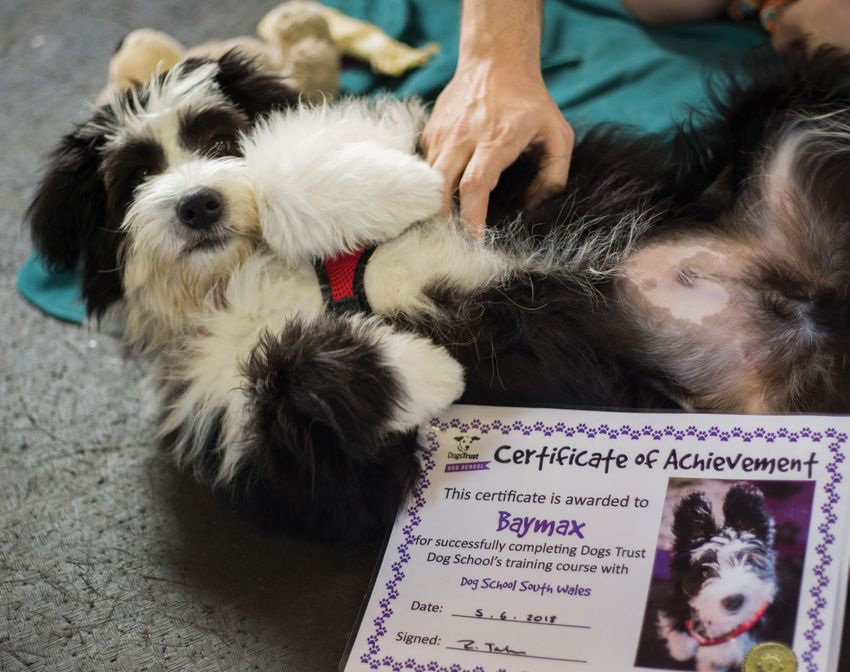
LOVE DOGS, LOVE DOGS TRUST
Our Mission
Interim CEO’s report
Dogs Trust is working towards the day when all dogs can enjoy a happy life, free from the threat of unnecessary destruction. 2018 was another strong year for Dogs Trust, which saw our an overall reduction of 59% in the number of strays – down from
‘prevention and cure’ approach to improving dog welfare keeping us 136,500 to 56,000 - and a reduction of 93% in the number of stray
busy on all fronts. dogs put to sleep by local authorities – down from 21,840 to 1,462
Our Strategy dogs. Although this represents a big step in the right direction, it is still
We also invested resource in more experts to join us in order to help not the final destination; zero dogs put to sleep for want of a home.
To achieve this, we rely on the prevention and cure approach: rescue and rehoming work aims to deal with the immediate needs of
us better understand dogs, but also to give us a greater understanding
abandoned and relinquished dogs; preventative measures, such as dog training, neutering, microchipping, education and lobbying are
of what motivates people to buy and later relinquish dogs. Last year, Our Dog Schools – fun and affordable dog training classes - helped
used as longer-term solutions.
we launched a new system for giving even greater support to those 17,720 owners to strengthen their bond with their pet, while our
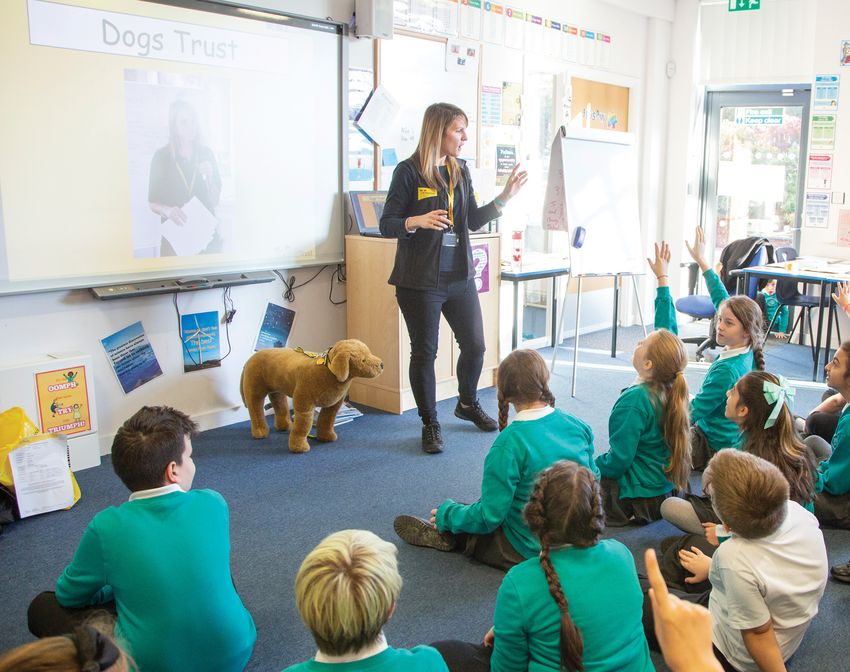
people adopting a dog from us. At regular intervals following the dog education team spoke with 524,500 school age children about the
Through our training and behaviour expertise, including initiatives such as Dog School, we assist existing and potential dog owners and
leaving our care, our specially trained staff now call new adopters to joys and responsibilities of caring properly for a dog. Dog School
ensure their dog is well trained and sociable. We aim to provide dog owners with easily accessible advice to help prevent the occurrence
ask how their dog is settling into their new home. In this way, we is another innovation aimed at improving long term dog welfare,
of the types of behaviours that can lead to dog relinquishment or euthanasia. We also provide financial support in some circumstances
are able to offer behavioural advice and address any potential issues through improving the dog and owner relationship, and thereby
to allow owners to keep their dogs, when they might otherwise have to give them up.
before matters escalate. Our Generation Pup full-life research project eventually reducing the number of dogs which are given up by their
has now enrolled over 2,200 pups onto the study. owners, or put to sleep, for behavioural reasons.
We are committed to ensuring our policy and practice is driven by the best evidence. This is achieved by both funding external academic
institutions and conducting our own non-invasive research to improve canine welfare. We have developed expertise in every area of
Meanwhile, our public affairs team undertook another major Meanwhile, Dogs Trust Ireland found forever homes for 800 dogs via
our operation, which, together with our evidence-based approach, enables us to take a leading role advising on every aspect of dog
investigation into illegal puppy smuggling, presenting their report to the Dublin rehoming centre, and successfully launched an advertising
health, behaviour and care.
government, and encouraged thousands of people to write to their campaign in the lead up to Christmas. Entitled ‘How is that doggie in
MP to bring about the end to this despicable trade. the window?’, the campaign highlighted the upsetting reality behind
Whilst our immediate priority is the UK and Ireland, we will take the prevention/cure approach to as many countries as funds allow,
irresponsible dog breeding in Ireland, while helping educate members
through Dogs Trust Worldwide, which aims to improve dog welfare internationally.
Our rehoming centre staff cared for 15,015 stray, abandoned and of the public as to how they can effect change. Farther afield, our
relinquished dogs last year. This was 2% fewer dogs than in 2017 Dogs Trust Bosnia team launched their first foster care scheme, the
(15,446 dogs), however, our kennel capacity was affected by the very first of its kind in the country, and helped neuter 18,807 street
Chairman’s report major refurbishment projects taking place at two rehoming centres.
Dogs Trust Canterbury reopened in spring 2019, while Dogs Trust
and owned dogs.
Darlington is scheduled to reopen at full capacity in the summer of All of which is merely a snapshot of what we have achieved this year.
2018 was a good year for Dogs Trust, with over 15,000 stray, 2020. We look forward to unveiling these rebuilds, which will give
abandoned and relinquished dogs being cared for by our rehoming our dogs the very best kennel, veterinary and enrichment facilities Thanks to your belief in what we do, we have been able to help so
centre staff, and thousands more reaping the benefits of our while they await their forever homes. Furthermore, we are about to many dogs in need. I’m excited about what the future holds – and
preventative programmes aimed at stopping abandonment and commence construction on our brand-new rehoming centre in the with your help, it will be that much brighter for dogs.
relinquishment. In the UK and Ireland, one of our focuses was on heart of Cardiff.
helping people to understand how they should go about purchasing
a puppy. Our hope is that by providing clear information about the Excitingly, the cumulative effect of our preventative programmes Jim Monteith
poor conditions in which some dogs are bred, we will help owners designed to stop dogs being abandoned, becoming lost or being Interim Chief Executive
avoid the heartbreak of buying a physically or mentally unhealthy relinquished is now being seen in the country’s stray dog population.
puppy – and unwittingly fuelling the evil trades of puppy farming Since we began our preventative work in 1997, there has been
(Ireland) and/or puppy smuggling (UK).
Tragically, our Chief Executive, Adrian Burder, passed away
unexpectedly in late 2018. While we embark on the process of
finding a new chief executive, Dogs Trust staff continue to work
hard, with our interim CEO, Jim Monteith, taking the reins for this
period. We are fortunate that Jim has been with Dogs Trust for 16
years as our finance director and deputy CEO, and is undoubtedly
the safest pair of hands a board of trustees could wish for. No
doubt in next year’s report I’ll be introducing you to our new Chief
Executive, and in the meantime I’ll be working closely with Jim to
ensure Dogs Trust staff and council members continue working hard
to save dogs’ lives.
Finally, I’d like to say a huge thank you on behalf of all the dogs, staff
and council members for supporting the charity throughout 2018.
Without your steadfast support, we could not have helped a single
dog – let alone 15,000.
Adrian Burder, 1964 - 2018
Sadly, 2018 was marred by the untimely death of Adrian Burder, our Chief Executive, in October.
Having worked for Dogs Trust for over 24 years, initially as a fundraising officer and finally as chief
executive, his contribution to the advancement of canine welfare, both in the UK and overseas, is
immeasurable. While reading this report, please bear in mind that every achievement, every small
step towards the day when no healthy dog is destroyed, is thanks in some way to Adrian’s vision,
commitment and sheer hard work. We at Dogs Trust, and his many friends in the world of animal
welfare, miss him enormously.
Graeme Robertson
Chairman
4 Dogs Trust Annual Review 2018 www.dogstrust.org.uk 5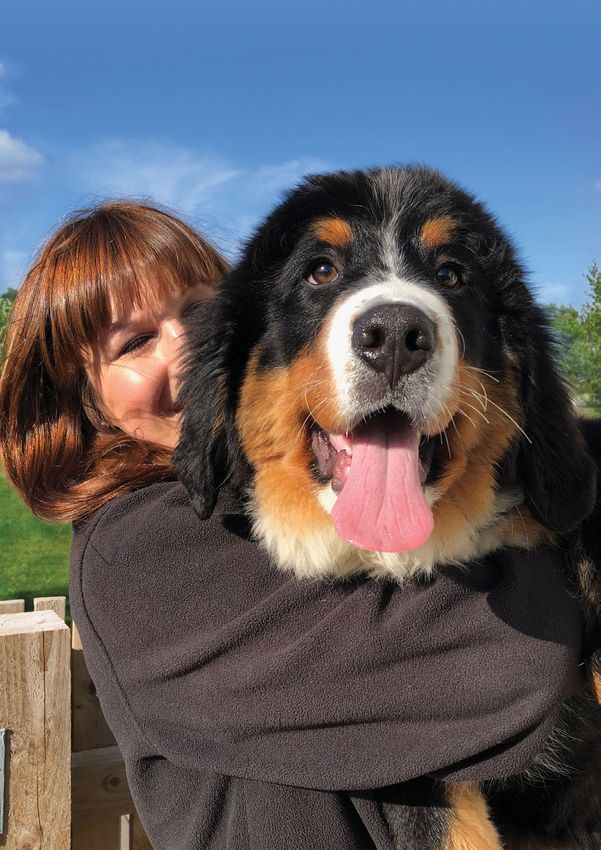
LOVE DOGS, LOVE DOGS TRUST

1.

At the rehoming centres - Highlights
Every dog who comes into our rehoming centres is given everything they need to get back on
their paws and into a great new home.

From veterinary attention to help with their manners and/or confidence, to enriching their
environment, or even extra pats and hugs (but only if we know that’s what they like!); whatever
a dog needs, they will receive. Whether young or old, zoomy or dozy, gregarious or grumpy,
the dogs in our care will always be made to feel like they are ‘number one’ by our rehoming
team.

Our rehoming centre staff in 2018 were greatly helped in their day to day work by a dedicated
squad of volunteers. We were lucky enough to have 2,400 volunteers lend a hand at the
rehoming centres, giving us a combined total of 80,500 hours. These kind-hearted people did
everything from socialising the puppies, to sorting the laundry, to walking the dogs come rain
or shine, and welcoming visitors on arrival into the rehoming centres. Some of our volunteers
have helped us for over 20 years, others have for just a matter of months; but no matter how
long they have been with us, each one is much appreciated.

As a matter of course, every dog in our care will be neutered, microchipped (if not already
done), vaccinated, treated against parasites including fleas and worms, and on being rehomed,
their microchip database details will be changed to their new address. Each of our rehoming
centres has a veterinary nurse, and our Loughborough and Basildon centres each have a
veterinary physio and hydrotherapist on the team.

2018 also saw us recruiting more volunteer foster carers onto our ‘Home from Home’
programme. Shy dogs, nervous dogs, old dogs, young pups and those recovering from surgery
can truly benefit from some one-to-one care in a cosy home, and the people who open their
homes and hearts to these dogs provide invaluable support not only to the dogs whom they
foster, but for the kennel staff too. By the end of the year we had around 1,973 regular foster
carers on the team.

Our national contact centre is the first port of call for many people wishing to hand over their
dog for rehoming. Based at our Manchester rehoming centre, our contact centre staff took
327, 809 calls from members of the public, of which 30,408 - 9% - were from owners wishing
to relinquish their dog.

Whenever possible, our contact centre team ask the caller why they’d like to hand over their
dog for rehoming. Their answers provide a useful insight into how we can do more to prevent
dogs from being handed over, and helps us plan future campaigns, education and lobbying
programmes.

Some of the reasons given are founded on the dog and its health and behaviour (33%), while
others are based on the human and their circumstances, including health, wealth, work and
relationships (66%). And, while we can’t help with people’s relationships, careers or health,
we can certainly offer advice on all matters dog, including training and behavioural advice, and
how to choose the right dog for your lifestyle.

                                                                                                   A sleepy Mrs Claus gets a bump on the nose from one of her eight puppies, born at our Leeds rehoming centre on 23 December.
                                                                                                   The four-year-old snowy white Lurcher had been brought in by her owner when heavily pregnant, and happily our Leeds team were
                                                                                                   on hand to help with this very special Christmas delivery. The pups - Dasher, Dancer, Prancer, Vixen, Comet, Cupid, Donner, Blitzen
                                                                                                   - were expertly cared for by the centre’s puppy rearing team, including Charlotte Allen, pictured holding a snoozy Prancer pup.

6                                                      Dogs Trust Annual Review 2018                                                                       www.dogstrust.org.uk                                                          7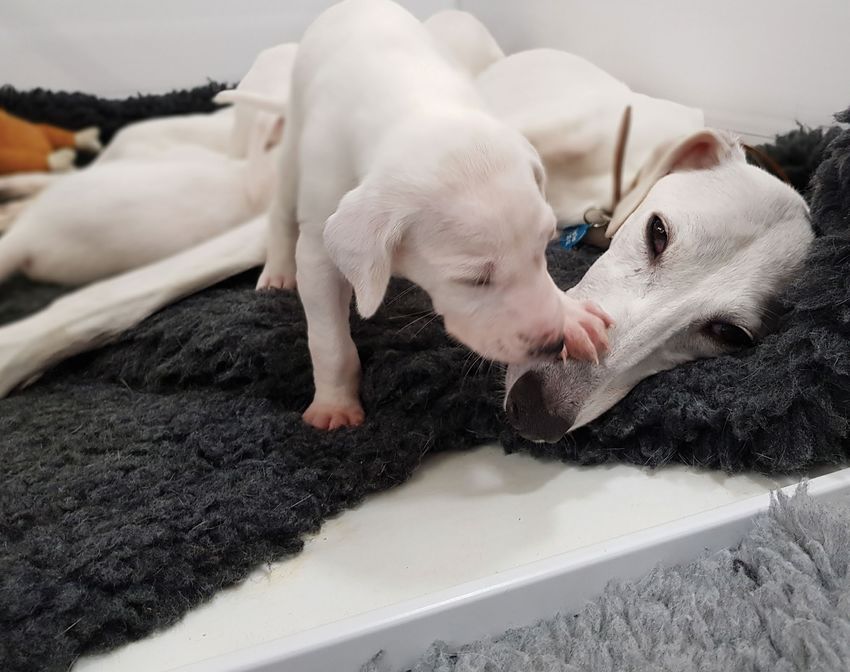
LOVE DOGS, LOVE DOGS TRUST
In 2018
In 2018
we cared
we cared
for 15,015
for 15,015
dogs at
dogs
ourat21our
rehoming
21 rehoming
centres.
centres. WhereWhere
do ourdodogs
our come
dogs come
from?from?
12,624*12,624*
Dogs rehomed
Dogs rehomed
(2017: 13,141)
(2017: 13,141) 7,313 Handed
7,313 Handed
over by their
over by their
owner (2017:
owner6,894)
(2017: 6,894)
310 Dogs310
reunited
Dogs reunited
with owners
with owners
(2017: 242)
(2017: 242) 5,603 Strays
5,603passed
Straysto
passed
us by to us by
local authorities
local authorities
and other
and other
331 Dogs331
died
Dogs
or put
diedtoorsleep**
put to sleep**
charitiescharities
(2017: 6,452)
(2017: 6,452)
(2017: 312)
(2017: 312)
338 Born338
in the
Bornrehoming
in the rehoming
1,740 Dogs
1,740
in Dogs
kennels
in kennels
on 31 Dec
on 2018
31 Dec 2018
centre (2017:
centre320)
(2017: 320)
(2017: 1,780)
(2017: 1,780)
* Lower than
* previous
Lower than
yearprevious
due to ayear
reduction
due to in
a reduction
kennel space
in kennel space
caused by building
causedwork
by building work
**We never **We
destroynever
a healthy
destroy
doga healthy dog
Our national
Our national
contact centre
contactstaff
centre
took 327,
staff 809327,
took calls809
from
calls
members
from members
of the public,
of the public,
of whichof9% were9%
which from
were
owners
from wishing
owners wishing
to relinquish
to relinquish
their dog.
their dog.
Most Most
popular
popular
dog types
dog types
rehomed
rehomed
in 2018
in 2018
33% of 33%
the reasons
of the reasons
given given66% are66% based
areonbased
the human
on the and
human
theirand
circumstances,
their circumstances,
are founded
are founded
on the dog
on the dogincludingincluding
health, wealth,
health, work
wealth,
andwork
relationships.
and relationships.
and its health
and itsand
health and
behaviourbehaviour
*These represent
*These
therepresent
top 7 most
thepopular
top 7 most
dog popular
types rehomed.
dog types
The
rehomed.
remaining
The27%
remaining
of dogs27%
rehomed
of dogs
include
rehomed
a variety
include
of other
a variety
breeds.
of other breeds.
Dogs Dogs
Trust Trust
Rehoming
Rehoming
CentreCentre
staff 2018,
staff 2018,
UK &UK
Ireland
& Ireland In 2018,
In 2018,
the most
the common
most common
reasonreason
given given
by callers
by callers
wishing
wishing
to to
Regional manager 4 hand over
handtheir
over dog
theirwas:
dog was:
Rehoming centre manager 21
Assistant manager 40 Owner no Owner
longer has
no longer has4,057
the time, the time, 4,057
Canine carer 365 Owner hasOwner
health has
problems
healthand
problems
no longer
and able
no longer
to look
able
after
to dog, 3,399dog, 3,399
look after
Veterinary nurse 36
Dog has behaviour issues, 2,432
Dog has behaviour issues, 2,432
Veterinary physio and hydrotherapist 3
Receptionist 54 Dog is aggressive, 2,399
Dog is aggressive, 2,399
Training and behaviour advisor 59
Owner is separating
Owner is separating
from partner,
from1,775
partner, 1,775
Dog trainer 53
Home From Home foster care co-ordinator 22 Owner hasOwner
work commitments, 1,725
has work commitments, 1,725
Volunteer co-ordinator 21
Owner is moving
Owner home, 1,401
is moving home, 1,401
Maintenance operative 33
Transfer driver 8 Other animals
Other
in animals
home (including
in home dogs)
(including
being
dogs)
aggressive
being aggressive dog, 1,106
toward thetoward the dog, 1,106
Dogmobile driver 4
died, 948
Owner hasOwner has died, 948
Rehoming centre staff, part and full time, total 723
Rehoming centre volunteer (NB not staff) 2,536 Tenancy agreement
Tenancy agreement
doesn’t allow
doesn’t
a dog, 848a dog, 848
allow
8 Dogs Trust Annual Review 2018 www.dogstrust.org.uk 9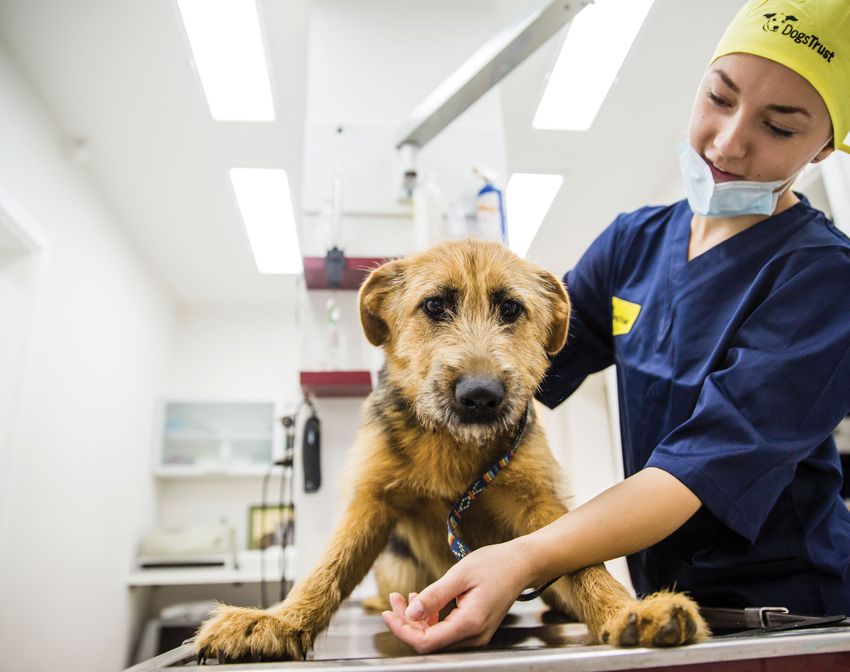
2.

 Veterinary and campaigns – Highlights
 Our veterinary department covers the veterinary, campaigns, public affairs and outreach work of Dogs Trust. The key areas
 covered include the day-to-day care of the dogs at our rehoming centres; financial help towards vet care for rehomed
 dogs via our ‘Shared Adoption Scheme’; advice for politicians, government (UK and EU) and civil service through our public
 affairs team; the funding of veterinary research work though our Canine Welfare Grants Committee; a special investigation
 into puppy smuggling; the ‘Freedom Project’ to help dog owners escaping domestic violence; the ‘Hope Project’ to help
 homeless dog owners; and the ‘Lets with Pets’ programme to assist pet owners and landlords; and a comprehensive range
 of campaigns to improve dog health and welfare in the UK.

10

LOVE DOGS, LOVE DOGS TRUST
Vet care at the rehoming centres Public affairs and special investigations officers for every EU member state. We urged members of the public
to write to their MPs to help stop puppy smuggling, and as a result,
Disease management Public affairs (UK) around 9,000 people contacted their MP by the close of the year.
Unusually, our vet team had to manage suspected outbreaks of We work hard to provide the ‘voice of the dog’ in all legislative matters
distemper at our Loughborough, Evesham and Glasgow rehoming concerning dog health and welfare. Last year, our public affairs team ‘Canine Welfare Grants Committee’
centres. Each of these centres was closed to the public for a period, in provided responses to 22 government consultations, compared to just This committee exists to administer funds for veterinary professionals,
order to manage the situation. Sadly, despite every effort, there was three in 2017, which is due in most part to the government’s increased academics and post-graduate students so that they may further our
one fatality. It is testament to the dedication of the staff at these three focus on animal welfare. understanding of dog health and welfare. We do not support any
centres that the situation was contained, and they were able to reopen project which requires a Home Office licence. Last year, the committee
at the earliest opportunity. Our staff continued finding great homes Briefly, we helped draft the guidance for a new piece of legislation, the received 54 applications for research grants, and awarded 13 new
for the dogs, despite challenging conditions. ‘Licensing of Activities Involving Animals’ regulations, which updates grants. In addition, we are currently funding 33 ongoing research
previous UK legislation covering the breeding, sale, boarding and projects, and 7 projects were completed and made their final reports
‘Shared Adoption Scheme’ day-care of dogs, for the first time. As well as contributing to the to the committee in 2018. ‘Vet Compass’ was one of the projects to
We currently help pay the veterinary fees for over 9,270 dogs through guidelines, we also made sure that those responsible for enforcing submit their final report last year, and this aims to identify trends in
our Shared Adoption Scheme. Under the scheme, after we’ve rehomed the legislation were able to understand what the myriad of changes canine health using data gathered from 1,803 vet practices around
a dog we promise to contribute towards their veterinary treatment would mean for them; to this end, we ran training courses for 320 the UK.
relating to a specific condition for the rest of their life, as long as the local authority enforcement officers.
condition is identified before the dog leaves our care. In this way, we Vet team overseas
help those dogs who may otherwise not be considered for adoption by Additionally, we campaigned in Westminster and Holyrood for a ban The head office vet team, together with rehoming centre vet nurses,
visitors to our centres, for fear of high vet bills. The promise of financial on electric shock collars; and we continue lobbying for a review of the play a large part in scrutinising day-to-day projects, including surgical
assistance for years to come gives peace of mind for potential adopters existing legislation governing the use of fireworks. neutering practices, overseas projects on behalf of our subsidiary
of poorly or elderly dogs. charity, Dogs Trust Worldwide, and also Dogs Trust’s work in Bosnia.
We also supported the government’s intended ban on the third- Last year, some of the team visited projects in Thailand, Bosnia and
Construction party sale of puppies, which we believe will only be effective as India. Our veterinary director delivered workshops on shelter medicine
part of a range of measures, including the regulation of rehoming and overseas rehoming to over 271 delegates at our International
The vet team advised on the design and equipment needed for
organisations and better control of importation. We have provided a Companion Animal Welfare Conference, as well as giving talks to
the new veterinary suite which is being constructed as part of the
raft of suggestions intended to make the proposed legislation more welfare organisations, vets and police forces in Hong Kong.
redevelopment of our Canterbury rehoming centre. They also gave
effective and enforceable.
advice on the hydrotherapy and physiotherapy facilities which will be
installed as part of the major rebuild at our Darlington centre.
We have provided evidence to the EFRA select committee regarding Top: Smuggled Bernese Mountain dog puppies in quarantine kennels, Kent
their Dangerous Dogs enquiry, and submitted written evidence Bottom: Maria Eagle MP supporting our anti-puppy smuggling campaign,
Euthanasia to DEFRA on the welfare of animals in transit. Each of the above Oct 2018
We promise never to destroy a healthy dog in our care. Sadly, on campaigns are continuing throughout 2019, and we hope to be able
occasion a dog comes into our centre which needs to be euthanised, to give more updates in next year’s annual report.
and these decisions are never taken lightly. In such cases, the relevant
staff at the rehoming centre, veterinary teams at the centre and head Public affairs (Ireland)
office, and behavioural staff if appropriate, are all involved in making
In Ireland, we provided advice on the amendment of the Greyhound
the decision. In 2018, we euthanised 230 dogs for physical and/or
Racing Bill at committee stage. We also provided advice to a number
mental health reasons, representing just 1.53% of the dogs for which
of government consultations and had high-level departmental
we cared.
engagement on; the Sale of Pets, Ireland’s Animal Welfare Strategy
and the Dog Breeding Establishment (DBE) Guidelines. Our public
affairs team worked together with the PR team to ensure public
affairs messages were brought into PR efforts, through work with
various politicians on; Dogs Tales newsletter, Dog Friendly Ireland Day,
#DoggieInTheWindow – our Christmas campaign highlighting the
cruelty behind bad breeding. In 2019 we will continue to focus on
the export of Greyhounds, DBE Guidelines and the online sale of pets,
and we will sustain pressure for action, and increased knowledge of
the issues, among key stakeholders in Ireland, including government
departments and Oireachtas committees.
Puppy smuggling investigation
2018 saw us deliver our fourth report to the government on the trade of
puppy smuggling into the UK, which unfortunately is still rife. The report
was launched in October, following undercover work in Serbia, for the
first time, and a return to Hungary. Our investigators found evidence
of vets in eastern Europe continuing to falsify pet passports, plus a
disturbing new trend for pregnant bitches to be transported at a late
stage of pregnancy, with the aim of having them give birth once in the
UK. The investigator also uncovered evidence of overseas vets sedating
puppies so they would lessen the risk of detection at the UK border.
We work very closely with UK border authorities and quarantine
kennels to ensure that whenever smuggled puppies or mothers have
been intercepted at the border, we work to keep them healthy and
well-socialised during their period of quarantine, and then rehome
them via our rehoming centres on completion.
Our public affairs team spoke directly with over 90 MPs, and sent
the report and briefing to 650 MPs, 129 Members of the Scottish
Parliament and 60 Welsh Assembly Members. Additionally, a summary
was created for use by the EU, and was sent to all 751 Members of
the European Parliament, as well as all government chief veterinary
12 Dogs Trust Annual Review 2018 www.dogstrust.org.uk 13
LOVE DOGS, LOVE DOGS TRUST
EU Dog & Cat Alliance Communications Veterinary campaigns
Sadly, at present there is very little EU legislation to protect dog Last year our communications team expanded to include the digital Stray dog survey, UK and Ireland
welfare. The EU Dog & Cat Alliance, chaired by Suzie Carley, Executive team, resulting in more joined-up exposure in support of all aspects of As our mission statement explains, we are working towards the
Director of Dogs Trust Ireland, aims to engage with EU policy makers the charity’s activities, promoting everything from our rehoming work, day when all dogs can enjoy a happy life, free from the threat of
in order to build a better Europe for pets – with one of its focuses on training and behaviour advice, dog care and top tips on how best to unnecessary destruction; and it’s our annual stray dog survey among
the online sale of pets. buy a dog. the UK’s local authorities which provides us with one of the clearest
indicators of the extent of the problem, and helps us plan what we
Research shows that on any given day there are around 400,000 dogs The team also played a vital role in supporting the veterinary and can do to solve it.
for sale on classified websites in Europe. Regulation is much needed, public affairs teams in their anti-puppy smuggling campaign, resulting
as buying a dog, worryingly, is so fast and easy. in widespread media coverage, support from 50 celebrities and over In 1997, when we first began measuring the scale of the stray
11,000 supporters writing to their MP urging them to read our latest population, there were around 136,500 stray dogs collected in the
At the International Companion Animal Welfare Conference (see report and support our recommendations to government. In the run UK. Of these, 21,840 had been put to sleep by local authorities at
page 29), the Alliance and its member Blue Cross ran a workshop to up to Christmas, we actively promote our ‘A dog is for life, not just their dog pounds. In 2018, our latest survey revealed that there were
help delegates learn how to create their own national Pet Advertising for Christmas’ message, and last year was no exception. Our 2018 56,043 strays – representing a reduction of 59%. Of these, just 1,462
Advisory Groups (PAAG). These newly created PAAGs aim to bring campaign included the release of a short film, shown on social media were destroyed by local authorities - a reduction of 93%. Year on
together animal welfare organisations, trade associations and and in cinemas, which used a light-hearted touch to spread the year, the survey shows a steady reduction; in 2017 there had been
veterinary bodies, in order to promote self-regulation among the message that ‘presents aren’t dogs – and dogs aren’t presents.’ The 66,277 stray dogs, of which, 1,819 had been put to sleep by local
classified website in Europe. By the end of the year, regulatory groups film was viewed by 3 million people in cinemas and had achieved 5 authorities in the UK.
had been set up in five countries. million online views by the end of the year.
Dogs Trust Ireland, which has been up and running since 2005, is
We also hosted two events within the European Parliament to engage Ireland’s largest dog welfare charity. With a state-of-the-art rehoming
with EU policy makers, including our regular annual reception, and centre in Dublin and five transfer hubs nationwide, the charity has
a further joint event with Blue Cross and the European Commission found loving homes for more than 8,000 dogs to date. Although
aimed at promoting the regulation of online sales of pets. legislation governing the collection and management of stray dogs
differs to that of the UK, we are nevertheless highly active in trying to
humanely reduce the stray population in Ireland, using the same range
of preventative activities as in the UK. The most recent dog control
statistics released by the Irish government showed that the number
of dogs entering Irish pounds had reduced by 8% - in 2017 there
had been 11,744 dogs entering local authority pounds, compared to
12,833 the previous year. Destruction rates are on their way down
too, with 966 dogs having been put to sleep in 2017, compared to
1,674 in 2016 – a reduction of 40%.
Dog theft
Following a significant increase in the number of dog thefts reported
in the UK, we launched a two-pronged campaign, aimed at helping
dog owners understand how to reduce the risk of their dog being
stolen from their home, while encouraging the government to
increase the severity of sentencing for those convicted of stealing
dogs. We conducted research into the extent of the problem, which
was submitted to the national sentencing council, and also created
a short film which was promoted via social media, receiving around
330,000 views. We continue to work with the national sentencing
council throughout 2019.
Public Spaces Protection Orders
Helping dog owners to be mindful of other’s needs, while seeking not
to excessively limit the number of exercise areas available to dogs, is
very important to us at Dogs Trust. We developed a range of written
materials for dog owners who wish to respond to a consultation on
a Public Space Protection Order (PSPO) planned for their local area. In
2018 we responded to 32 PSPOs, many of which included proposals
to ban dogs from parks or beaches. For example, one local authority
in Essex had issued a PSPO consultation intending to ban all dogs from
all beaches throughout the year; working together with Essex dog
owners, we were able to prevent this order from going ahead.
‘Walk This Way’
2018 saw us partnering Keep Britain Tidy for the second time, with
an extension of our ‘Walk This Way’ joint initiative on dog fouling. In
2017, we piloted the scheme across five popular dog walking routes
in England and one in Wales, placing additional general waste bins
and clearer signage to find them. Data gathered at the beginning and
end of an eight-week period revealed there had been a 38% decrease
in the instances of dog fouling. In 2018, we worked in 15 sites in
England, Scotland and Wales, with the pre and post campaign data
indicating a 40% decrease in the instances of fouling.
14 Dogs Trust Annual Review 2018 www.dogstrust.org.uk 15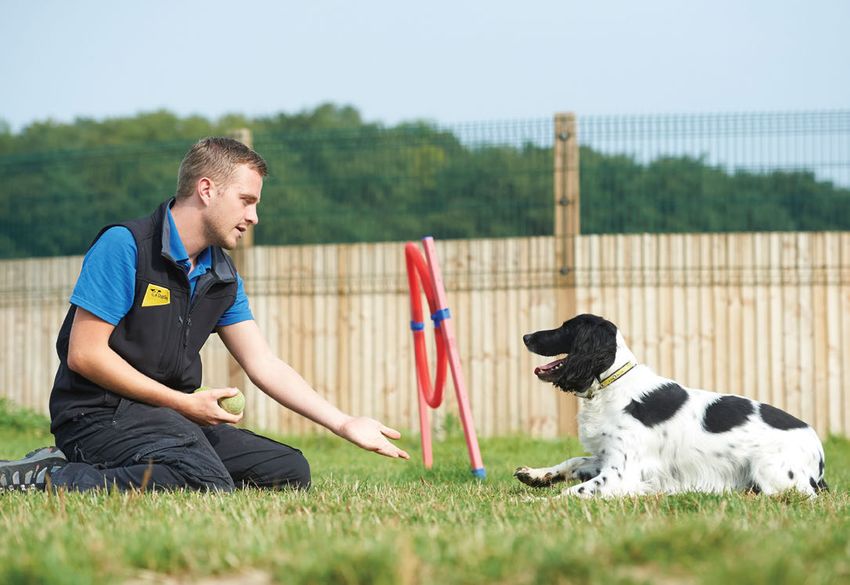
LOVE DOGS, LOVE DOGS TRUST

‘Chip, collar and tag’                                                                     Outreach projects - Highlights
Helping dog owners to be the best owners they can be is the ethos
behind each of our campaigns. Besides showing the size of the stray
                                                                                           ‘Freedom Project’
population, last year’s stray dog survey also showed that 75% of those                     2018 saw the continuing expansion of the Freedom Project into new
stray dogs which were microchipped but not returned to their owners,                       areas of the country, with the inclusion of Scotland, Surrey, Sussex
were not reunited simply because their contact details were out of                         and Kent into the range of areas covered by the project. Sadly, many
date or incorrect. We plan to address this issue in 2019. Last year we                     domestic abuse victims stay trapped in a violent home, as many hostels
also launched our own range of Dogs Trust-branded engravable dog                           don’t allow dogs. This means people and their dogs are at risk of
tags.                                                                                      continued violence. Under the project, a Dogs Trust member of staff
                                                                                           collects a dog from the person needing to flee a violent partner, taking
                                                                                           them to one of our volunteer foster carers, and the dog will stay in
Community events
                                                                                           the foster home for as long as it takes for their owner to get back on
Working together with local authorities and social housing providers,                      their feet. Dogs Trust pays for all food, and any veterinary bills during
we have been running free events for dog owners for around ten                             the placement, and the foster carer regularly writes notes or send
years. These community events offer the chance for dogs to have a free                     photos, which are delivered via the member of staff. Meanwhile, the
health check from a qualified veterinary nurse, plus plenty of advice                      foster carer is assured complete anonymity, and the owner will receive
about neutering operations for dogs, training and tenancy agreements                       regular updates as to how their dog is getting along.
for dog owners. In 2018, we ran 434 free health check events, at
which one of our veterinary nurses carried out basic health checks for                     Typically, a foster placement lasts around seven months. In the majority
7,982 dogs, including checking eyes, ears, teeth and weight, to make                       of cases, the dog is reunited with their owner eventually, and if the
sure dogs are happy and healthy. We also provided vouchers entitling                       owner can’t take their dog back for whatever reason, we promise to
the holder’s dog to a free or subsidised neutering operation. In 2018                      rehome the dog via one of rehoming centres. Last year, the Freedom
we enabled 14,920 dogs in the UK, and 3,208 dogs in Ireland, to be                         Project found foster homes for 182 dogs, helping 101 families. (In
neutered.                                                                                  2017, we fostered 92 dogs and helped 61 families.)

‘Woof, Waggle, Waistline’                                                                  ‘Hope Project’
Launched in April 2017, our ‘Woof, Waggle, Waistline’ campaign                             The Hope Project enables dogs belonging to homeless people, or those
aims to tackle the problem of canine obesity in the north of England.                      in housing crisis, to have free preventative and emergency veterinary
The campaign began in response to the campaigns team spotting                              care. Working closely with homelessness organisations and hostels, we
an increasing number of overweight dogs arriving at the free health                        distribute our veterinary entitlement card to homeless dog owners, and
check events in the area. ‘Woof, Waggle, Waistline’ aims to improve                        last year we helped 467 dogs to have 1,597 veterinary consultations
both owner and dog’s health by encouraging healthy eating and an                           (in 2017, we helped 495 dogs have 1,665 consultations.) We are only
increase in the amount of exercise they take. The campaign launched                        able to offer this service thanks to the generosity of those vets who
in partnership with Durham County Council, Walk4Life and NHS                               often lower their regular fees for Hope Project clients. Last year, we
Wellbeing for Life, and has since been rolled out across the whole of                      worked with 136 veterinary practices in 112 towns and cities in the
the north of England.                                                                      UK. Furthermore, we also distributed doggy gift parcels at Christmas,
                                                                                           using toys, treats and coats generously donated by our supporters. We
Not only has our campaigns team given out advice about healthy                             also distributed around 1,500 Christmas gift parcels to dogs belonging
lifestyles for dogs at our community events, but local health authorities                  to homeless people.
have also offered guidance and free blood pressure tests to dog
owners. Any dogs that were identified as being overweight received                         ‘Lets With Pets’
a free ‘Woof, Waggle, Waistline’ campaign pack, including tips for
                                                                                           Our ‘Lets With Pets’ programme had a good year. This aims to
owners to continue to use at home.
                                                                                           encourage social housing providers and private landlords to accept
                                                                                           dogs in their properties, while giving dog-owning tenants useful tips on
                                                                                           how to make sure their dog is well-behaved in rental accommodation,
                                                                                           had a good year. Last year, around 1,355 people downloaded our
                                                                                           advice booklets from the website. Plans are being made to expand and
                                                                                           relaunch this programme in 2019.

                                                                                                Top: Gemma with Dusty, who was fostered via the Freedom Project,
                                                                                            while Gemma escaped her violent partner. ‘It was really upsetting saying
                                                                                                  goodbye to Dusty, but the updates from the Freedom Project were
                                                                                            fantastic and so reassuring. I was sent photos of him every month, and I
                                                                                                                turned them into a canvas while I was at the refuge.’

                                                                                            Bottom: Karl with his dog Ben, who live together in a hostel in Cornwall.
                                                                                            Ben needed urgent surgery when he developed a large lump on his chin.
                                                                                           Thanks to the Hope Project, Ben was able to have the lump removed, and
                                                                                           is fully recovered. Karl says, ‘Ben and I are eternally grateful to Dogs Trust
                                                                                                                                              for helping with his care.’

  16                                                       Dogs Trust Annual Review 2018                                                                       www.dogstrust.org.uk   17
LOVE DOGS, LOVE DOGS TRUST

3.

 Canine behaviour and research – Highlights
 Post-adoption support
 In April we launched a scheme to provide extra behavioural support for people adopting our dogs, with the aim of significantly
 reducing the number of dogs which are returned to our care due to behavioural reasons. New owners are contacted to offer
 support two days, two weeks and four months following the dog’s adoption, and those needing further advice called back
 by one of a team of six specially trained behaviourists. In this way, we hope to be able to address any problems an owner
 may be experiencing with their new dog’s behaviour or training, and ultimately prevent the dog being brought back to the
 rehoming centre.

 Luckily, the majority of problems can be resolved over the phone, but some cases are more complicated, and we are also able to
 offer one-to-one consultations with one of our clinical behaviourists. We are the only animal welfare organisation offering such
 a service, and since its launch in April until the end of 2018, we made 29,681 calls to new adopters of our dogs; 5,680 call backs
 from specialist teams to offer additional support; and made 201 house visits for consultations with a clinical behaviourist. The
 post-adoption support team sit within the canine behaviour and research department.

18                                                    Dogs Trust Annual Review 2018                                                   www.dogstrust.org.uk   19
LOVE DOGS, LOVE DOGS TRUST

Dog School                                                                    Training and Behaviour Advisors (TBA)
By the end of 2018, we had 29 Dog Schools up and running around               At the rehoming centres it’s our training and behaviour teams
the UK, and our coaches had trained over 13,500 dogs. Dogs Trust              who ensure each dog has everything they need to feel secure and
Dog Schools aim to ensure every dog and their owners have a strong            comfortable in their new surroundings. Not only will they assess
bond of friendship – and are ready to face life together. Dog School          every dog to make sure their behavioural needs are met during
was created in 2016 with the goal of reducing the number of dogs              the duration of their stay, the TBA will also help the new owner to
which are relinquished, or put to sleep, because their owner is unable        understand their dog’s likes, dislikes, worries and quirks, and be
to cope with their behaviour. While we would be thrilled if every dog         available every step of the way. As the canine behaviour and research
owner in the country would attend a Dog School class, we realise it’s         team is very much at the heart of Dogs Trust activities, we held a
simply not possible, which is why 2018 saw us developing a series of          training conference for rehoming centre and head office staff to
short, fun training films, aimed at helping owners to really understand       ensure everyone is up to date with the latest developments in canine
their dogs. These films are available on our website and Youtube. The         behaviour. Subjects covered included recognising different emotional
Dog School classes cost just £50 for six lessons, and we run specially        states in dogs and best practice for introducing dogs to each other in
tailored classes for puppies, adults, adolescents and rescue dogs. We         kennels. Over 100 members of specialist staff attended our second
have plans to open five more Dog Schools in 2019.                             ever behaviour conference.

Generation Pup
                                                                              Specialist Rehabilitation Units (SRU)
This unique ‘cradle to grave’ research project has over 2,200 puppy
                                                                              We have a range of facilities specifically designed to help rehabilitate
owners signed up by the end of 2018. Originally started at Bristol
                                                                              those dogs which don’t settle easily into life in kennels while they
University with funding from Dogs Trust in 2015, it has now been
                                                                              await their forever homes, including our ‘Specialist Rehabilitation
brought entirely in-house at Dogs Trust. This ground-breaking project
                                                                              Units’ (SRU) facilities.
follows puppies, who must be 16 weeks or under when they join the
project, throughout their entire lives. It will look at factors influencing
                                                                              Both our Salisbury and Loughborough rehoming centres have SRU
the health, welfare, training and behaviour, and represents a huge
                                                                              areas, where those dogs which enjoy canine company can live
opportunity for us to learn so much about canine welfare.
                                                                              together in groups, while specialist staff work on their behaviour and
                                                                              training programmes.
A team of five researchers are in regular contact with the puppy
owners, collating information about the pups’ health, training,
                                                                              Additionally, our centres in Evesham, Loughborough, Salisbury,
behaviour, socialisation, environment and exercise at clearly defined
                                                                              Basildon, Newbury, Shoreham and Shrewsbury each have a separate
stages of the pups’ lives, as well as examining biological samples
                                                                              kennel block with extra facilities, where our training and behavioural
where possible. The samples are collected by the owners, gathered
                                                                              staff can give their full attention to those dogs which would really
using non-invasive methods.
                                                                              benefit from extra care. When complete, our rebuilt Darlington centre
                                                                              will include another SRU. Each of these innovations spring directly
Behaviour team
                                                                              from our promise to never destroy a healthy dog, and the belief that
Our central behaviour team create training and behaviour information          while a dog is in our centres, no matter how long, they must receive
resources for all departments around Dogs Trust, as well as                   the very best in care.
providing support for all other teams and responding to behaviour
related enquiries from members of the public.

Research team
The 18-strong team is responsible for conducting long-term research
projects, such as the UK Dog Population survey, which examines
the source, quantity and lifespan of dogs in the UK, and of course,
Generation Pup, as described above. They also provide evidence-
based material to underpin the working practices of the organisation,
helping ensure everything we do has the best outcome for dogs. This
team also looks at the ways in which human behaviour is affected
by various Dogs Trust projects, including our youth education work                                  Left: It’s a family affair - Dog School welcomes dogs
(page 22).                                                                                                                          and owners of all ages!
                                                                                    Right: Our late chief executive, Adrian Burder, with Salisbury centre
                                                                                                          manager, Jacinta Lye, at the reopening of their
                                                                                                                    special rehabilitation unit last summer.

  20                                                         Dogs Trust Annual Review 2018                                                                     www.dogstrust.org.uk   21
LOVE DOGS, LOVE DOGS TRUST 4. Education - Highlights Education 2018 saw the education team undertake a large-scale research project to evaluate the impact of our ‘Be Dog Smart’ and ‘Responsible Dog Ownership’ workshops, devised in conjunction with the canine behaviour and research team (see above.) Using a sample of 4,500 children aged 7 - 11 years in a randomised control trial, researchers found our school workshops are making a notable positive impact on children’s attitudes towards dogs. For around ten years we’ve been focusing our educational efforts on two key aims; creating a new generation of responsible dog owners, while simultaneously reducing the number of injuries to children caused by dogs. We achieve the latter through helping children recognise how to behave safely and respectfully around dogs. Now, as a result of the research, our education teams have adjusted their lesson and workshop plans, to make sure they have maximum impact, with further evaluation work planned for late 2019. Last year, our education team delivered 7,730 workshops and assemblies in schools and alternative education establishments, speaking with a total of 368,350 children and young people. ‘Taking the Lead’ Our the ‘Taking the Lead’ programme aims to help adult and young offenders (or those deemed at risk of offending) to respect and understand dogs. Our seven education and outreach officers worked with 1,616 learners in secure institutions. The learners are recommended for the programme by their key worker, and while the participants do not have to have committed a crime relating to dogs to take part, they do have to have an interest in dogs, have owned a dog or expressed the desire to do so in the future. A typical ‘Taking the Lead’ programme will last for 6 - 8 sessions, covering subjects such as communication, welfare, dog law, nutrition, budgeting, training and responsibility for self and others. 22 Dogs Trust Annual Review 2018 www.dogstrust.org.uk 23
LOVE DOGS, LOVE DOGS TRUST

5.

 Property – Highlights
 Darlington
 The rebuild of our Darlington centre – one of the oldest centres in our network - commenced in the summer.
 Once complete, the new-look Darlington will have modern kennelling areas, complete with underfloor heating,
 a hydro and physiotherapy suite, two ‘Special Training and Rehabilitation’ units, two blocks for new intake dogs
 (designed to stand separately from the rest of the centre, in order to limit the spread of disease), a new rehoming
 building and new puppy and mother rooms.

 The current ‘parasol’ style kennels are outdated, and allow the dogs to face each other, which creates a noisy
 atmosphere and can cause some dogs to become stressed. They will be replaced with glass-fronted kennels,
 positioned to avoid direct lines of sight, and with a low wall placed in front of them – all of which will help
 create a calmer, quieter environment and reduce anxiety. This style of kennelling is now used in each of our
 modern and/ or refurbished rehoming centres. The estimated cost is around £11 million, and when the project
 comes to an end in 2020, will ensure that Darlington is our most modern rehoming centre. The team at this
 centre continue to work hard finding great new homes for our dogs, despite tricky conditions caused by the
 construction work.

 Canterbury
 One of our smaller centres, Canterbury, was in need of modernisation, and last year had a major refurbishment.
 The ‘new intake’ and ‘booked dogs awaiting collection’ blocks were replaced, and work continues through 2019
 to create a new building for our staff to carry out training and behaviour work with our dogs.

 Cardiff
 At the very end of 2017 we were granted planning permission to create a brand-new rehoming centre near
 Cardiff’s city centre. During 2018 we worked with architects to plan this major construction project, and we will
 begin to lay the foundations in April 2019. When complete, by mid-2021, this new centre will be a world-class
 rehoming centre, with the capacity to care for around 1,000 stray, abandoned and relinquished dogs per year,
 and will vastly improve the welfare of dogs in South Wales. We also plan for this centre to host Dog School
 Cardiff classes too.

 Salisbury
 As part of our promise to never destroy a healthy dog, we provide specially designed facilities tailored to cater
 for our long-term residents’ needs. Salisbury’s ‘Stepping Stones’ area, which provides kennelling and plenty of
 outdoor space for those dogs which prefer not to have human company, was refurbished and reopened in the
 autumn. This centre also saw the refurbishment of the training and behaviour blocks and the modernisation of
 existing kennelling.

 Newbury
 The total rebuilding of our Newbury centre was completed in summer 2018, the result of an 18-month
 construction project. The centre now combines modern kennelling facilities and outdoor exercise areas, with an
 attractive rural appearance and setting.

 Bridgend
 An all-weather training hall was constructed during 2018, being completed in January 2019. The building allows
 our dogs to get their essential exercise, whatever the weather.

24                                                    Dogs Trust Annual Review 2018                                    www.dogstrust.org.uk   25
LOVE DOGS, LOVE DOGS TRUST

6.

 International – Highlights
 Our sister organisation, Dogs Trust Worldwide, exists to improve dogs’ lives around the world. Operating
 with precisely the same mission as Dogs Trust - the day when all dogs can enjoy a happy life, free from
 the threat of unnecessary destruction - Dogs Trust Worldwide has expanded in 2018.

26                                                   Dogs Trust Annual Review 2018                          www.dogstrust.org.uk   27
LOVE DOGS, LOVE DOGS TRUST

Dogs Trust Bosnia                                                                        The International Companion Animal Welfare                                    Emergency Relief
Based in Sarajevo, Dogs Trust Bosnia is our long-term programme                          Conference (ICAWC)                                                            In 2018 we provided funding for emergency relief for dogs in need in
designed to improve the health and welfare of dogs in Bosnia and                         A large element of our overseas work run by Dogs Trust Worldwide              disaster-stricken areas. We awarded £2,000 to ‘Bali Animal Welfare
Herzegovina. Based on the lessons learnt from working in the UK,                         involves sharing our knowledge with others, as well as providing a            Association’ in the wake of the Sulawesi earthquake, in order to help a
Malta and Romania, but tailored to address local needs, the programme                    forum - via ICAWC - so that people who work or volunteer in animal            group of volunteers continue to feed the dogs which were left behind
combines subsidised neutering (including publicity thereof), free                        welfare around the world feel able to share their ideas, experiences          after people had fled the region. We also awarded £2,000 to the
microchipping, lobbying, education about responsible dog ownership                       and to know they are not alone.                                               ‘Protect Animals Greece’ group, to provide first aid treatment for dogs
and Dog School Bosnia to help improve welfare.                                                                                                                         caught in the wildfires which swept the country during the summer.
                                                                                         Last year’s conference (our 20th) was held in Krakow, Poland, and             Finally, we awarded £3,488 to ‘the Federation of Indian Animal
Additionally, we also work very closely with the national and regional                   played host to 271 delegates from 39 countries. The two-day                   Protection Organisations’ (FIAPO), to provide food and veterinary
governments, and the University of Sarajevo, to provide training                         programme of workshops covered subjects ranging from ‘challenges              supplies to those dogs affected by floods in the Kerala region.
for vets and vet nurses in surgical neutering skills and anaesthesia.                    of a new clinic from building to fundraising’, ‘making the most of your
Excitingly, 2018 saw us expanding our work further into the country,                     volunteers’ and ‘changing your country, one dog at a time,’ among
with the introduction of training for vets, as well as neutering and                     others. One of the indicators of ICAWC’s success is when conference
education work, in the Banja Luka region.                                                delegates then join us for other training courses course during the
                                                                                         rest of the year. During 2018, we had 32 delegates train through
2018 saw us launching a fostering programme for the first time,                          our International Training Programme, 27 delegates trained through
because while we do not yet operate a rehoming centre, there is                          our Overseas Education Workshops, 84 delegates trained through
clearly a need for a system of rehoming stray and abandoned dogs.                        Overseas Behaviour Workshops and 26 delegates trained in dog-
Last year we placed eight dogs in temporary foster homes, with three                     catching in Thailand.
subsequently finding their forever homes, and we have plans to
increase the number of foster carers in the coming year. The fostering                   International Training Programme
and adoption of stray dogs is a new concept in Bosnia, and as such                       Our intensive programme to provide practical guidance on all aspects
we have invested in a TV, radio and print advertising campaign to                        of shelter management and dog population management takes place
encourage people to consider becoming involved.                                          twice a year, based at our London office and one of our rehoming
                                                                                         centres. Last year, 32 people from 27 countries attended our four-day
In Sarajevo, the Dogs Trust Bosnia education team, together with                         training courses. Dogs Trust covers all UK- related costs for each delegate
two Dogs Trust education officers from the UK, were invited to run                       to attend the programme, which includes sessions on shelter design
workshops for delegates to the annual Bosnian education conference;                      and management, humane dog-catching techniques, fundraising,
which was well received. Last year also saw the launch of our dog                        education, dog training and behaviour and veterinary matters.
population management manual, a step-by-step guide aimed at
local government officials. The guide, which gives practical advice on                   Overseas Workshops
implementing a humane dog population management programme,
is designed to work in conjunction with our vet training scheme. It                      In addition to our UK-based training, we also offer tailor-made training
enables us to train a specific region’s vets to perform high quality                     for animal welfare practitioners in their own countries. Our workshops
neutering operations, and then ask their local authority to implement                    focus either on the practicalities of designing and running education
the stray management system.                                                             programmes, and/or examining canine behaviour. Last year, our UK
                                                                                         education officers ran education workshops in Slovakia and Russia,
Dogs Trust Bosnia in a nutshell:                                                         sharing their knowledge with 27 people. Additionally, our specialist
                                                                                         training and behaviour staff ran workshops in Poland, Bulgaria, Spain
                                                                                         and Zimbabwe, training 84 people in the most up to date theories
                                                                                         and practices regarding canine behaviour. Finally, our training and
                                                                                         behaviour staff, together with an external consultant, trained 26
                                                                                         delegates in the art of humane dog-catching, in Thailand, in relation
                                                                                         to operating a capture/vaccinate/neuter/return (CNVR) programme.

                                                                                         The Grants Programme
                                                                                         Last year, our staff assessed 156 new grant applications, awarding
                                                                                         a total of 43 grants for various projects around the world. Through
                                                                                         our grants programme we enable smaller animal welfare organisations
                                                                                         to implement a wide range of dog welfare projects, including their
                                                                                         own capture/vaccinate/neuter/return programmes; building veterinary
                                                                                         clinics; and helping educate communities about responsible dog
                                                                                         ownership. We carry out a thorough assessment of each application
                                                                                         we receive, and once a grant is agreed, we may carry out monitoring
                                                                                         visits to ensure the award is being used to maximum efficacy.

                                                                                         In 2018 we awarded a total of £3.1 million in grants for medium
                                                                                         and long-term projects overseas. One of our major grant recipients is
                                                                                         ‘Mission Rabies’, which runs mass vaccination programmes designed
                                                                                         to eradicate rabies. We have supported ‘Mission Rabies’ since 2014.
                                                                                         In the areas of India and Malawi where we work with Mission Rabies
                                                                                         there were zero recorded human deaths from rabies in 2018, which is
                                                                                         a huge achievement.

                                                                                                        We funded volunteers to provide food and first aid to dogs
                                                                                                                           affected by the floods in Kerala, India.

  28                                                     Dogs Trust Annual Review 2018                                                                     www.dogstrust.org.uk                                                         29
FINANCIAL REVIEW We would like to thank:
Players of People’s Postcode Lottery, staff and customers of HSBC UK,
Image credits:
Front Cover Joanne Bennett
We are delighted to report an increase in income of £4.7 million to £111.1 million in 2018 (2017: £106.4m). This includes a total of £100.2 Petplan®, Radley London, Cottages.com, Hoseasons and Mint Velvet.
Special thanks to the VIP Club members of Pets at Home and their Page 2-3 Helen Clarkson
million from donations and legacies.
Lifelines for feeding our dogs Wainwright’s dry food at our 20 UK Page 4-5 Richard Murgatroyd (all)
Our charitable expenditure has increased by 12% to £80.4m (2017: £71.4m), as we continue to invest in our rehoming activity (£63.0m in 2018 rehoming centres for the sixth consecutive year.
Page 6-7 Kevin Johnson
compared to £55.3m in 2017) including the expansion of our research work and dog schools.
Page 10-11 Richard Murgatroyd
Work on refurbishing our Newbury and Salisbury centres was completed in summer and autumn 2018 respectively and work on our Canterbury Page 12 Top: Martin Phelps
centre completed in February 2019. Work on our Darlington centre continues into 2019 and the construction of our new rehoming centre in External advisors
Cardiff will commence in April 2019. Total spend on these capital projects during 2018 was £12.5 million. Middle: Richard Murgatroyd
Auditors:
BDO LLP, 55 Baker Street, London W1U 7EU Bottom: Richard Murgatroyd
Page 13 Top: Beth Walsh
Where our income came from Where the money is spent
We receive no direct government funding. It would not be possible to Our total expenditure for the year was £108.6m. These costs are split Investment advisors: Bottom: Clive Tagg
carry out the work we do without the generosity of our supporters; between charitable activities and expenditure to enable us to generate Sarasin and Partners LLP, Juxon house, 100 St Paul’s Churchyard, Page 14 By kind permission, The Sun
over 650,000 people donated in 2018. In order to continue our income. London EC4M 5BU
Page 15 Top: Richard Murgatroyd
mission, we work hard to increase and diversify our sources of funding.
Our income of £111m comes from the following: Middle: Ella Bowden-Williams
Solicitors:
Bottom: Stuart Lanham
Druces, Salisbury House, London Wall, London EC2M 5PS
Page 16 Top: Richard Murgatroyd
Registered address: Middle: Richard Murgatroyd
Clarissa Baldwin House, 17 Wakley Street, London EC1V 7RQ Bottom: Richard Murgatroyd
Tel: 020 7837 0006
Page 17 Top: Francesca Gent
Middle: Francesca Gent
Registered charity no: 227523 (England and Wales)
SC087843 (Scotland) Bottom: Helen Barnecutt
20057978 (Ireland) Page 18-19 Rachel Taunton
Page 20 Left: Rachel Taunton
Right: Clive Tagg
Where to find us: Page 21 Top: Martin Phelps
To find opening times and directions for any of our rehoming Bottom: Peter Cartwright
centres, please visit
Page 22-23 Carly Michael
www.dogstrust.org.uk/our-centres/
To find your nearest Dog School, please visit www. Page 24-25 Paul Wass
dogstrustdogschool.org.uk Bottom inset: Kayleigh Docherty
To find your local Dogs Trust charity shop, please visit Page 26-27 Richard Murgatroyd
www.dogstrust.org.uk/shopping/charityshops/
Page 28 Top: Richard Murgatroyd
Bottom: Haris Calkic
Page 29 FIAPO
Page 32 Top: Robin Huson
Middle: Gemma Day
Bottom: Pete Cartwright
Page 39 Gemma Day
Rehoming centres - includes staff, premises, maintenance, veterinary
costs and vehicle costs. Glasgow West Calder
Preventative work – includes education, microchipping, neutering,
community and outreach work.
International work – includes our long-term programme in Bosnia, Ballymena
Darlington
as well as grants to support approved overseas projects. Most of this
activity is carried out by Dogs Trust Worldwide.
Publicity and information – includes promoting the Charity’s Leeds
messages of raising public awareness on the benefits of rehoming a Merseyside Manchester
rescue dog, helping people understand more about dog behaviour Dublin
and advising government on all dog-related issues. Shrewsbury
Loughborough
Trading – includes the cost of running our charity shop network, Kenilworth
catalogues and raffles. Evesham Snetterton
Generating voluntary income – We continue to invest in a variety of Harefield Basildon
areas in order to fund our work. In 2018 this work led to an increase Bridgend
Newbury
Canterbury
in donations and legacies of 5%. Ilfracombe Salisbury
Other costs – This is the cost of managing our investments. Shoreham
Concept and copy: Deana Selby
Design: Anna Mackee
www.annamackee.com
30 Dogs Trust Annual Review 2018 www.dogstrust.org.uk 31You can also read


