A Global Leader in Gene Therapy - Corporate Presentation March 2020 - uniQure
←
→
Page content transcription
If your browser does not render page correctly, please read the page content below

A Global Leader in
Gene Therapy
Corporate Presentation
March 2020

Forward-looking Statements

                This presentation contains forward-looking statements. All statements other than statements of historical fact are
                forward-looking statements, which are often indicated by terms such as “anticipate,” “believe,” “could,”
                “estimate,” “expect,” “goal,” “intend,” “look forward to,” “may,” “plan,” “potential,” “predict,” “project,” “should,”
                "will,” “would” and similar expressions. Forward-looking statements are based on management's beliefs and
                assumptions and on information available to management only as of the date of this presentation. These forward-
                looking statements include, but are not limited to, statements regarding the development of our gene therapies,
                the success of our collaborations, and the risk of cessation, delay or lack of success of any of our ongoing or
                planned clinical studies and/or development of our product candidates. Our actual results could differ materially
                from those anticipated in these forward-looking statements for many reasons, including, without limitation, risks
                associated with collaboration arrangements, our and our collaborators’ clinical development activities, regulatory
                oversight, development of product candidates, product commercialization and intellectual property claims, as
                well as the risks, uncertainties and other factors described under the heading "Risk Factors" in uniQure’s Annual
                Report on Form 10-K filed on March 2, 2020. Given these risks, uncertainties and other factors, you should not
                place undue reliance on these forward-looking statements, and we assume no obligation to update these
                forward-looking statements, even if new information becomes available in the future.

A GLOBAL LEADER IN GENE THERAPY                                                                                     MARCH 2020     |   2
Our strategy                  Pipeline       Manufacturing

       Enabling                   Intellectual
     Technologies                  Property      Commercialization

A GLOBAL LEADER IN GENE THERAPY                            MARCH 2020   |   3
Key near-term catalysts

                           •   Topline data from HOPE-B pivotal study in late 2020
    Hemophilia B
                           •   BLA submission in 2021

                           •   Initiate dosing in Phase I/II study in early 2020
    Huntington’s
                           •   Early efficacy data on initial patients in 2021

                           •   Submit IND for AMT-180 in 2020
    Hemophilia A
                           •   Begin clinical development in 2021

  Spinocerebellar          •   Initiate IND-enabling study for SCA3 in 2020
Ataxia Type 3 (SCA3)       •   Submit IND application in 2021

                           •   Continue to increase manufacturing scale and capacity
   Manufacturing
                           •   Conduct manufacturing process validation for EtranaDez (AMT-061) in 2020

A GLOBAL LEADER IN GENE THERAPY                                                              MARCH 2020   |   4
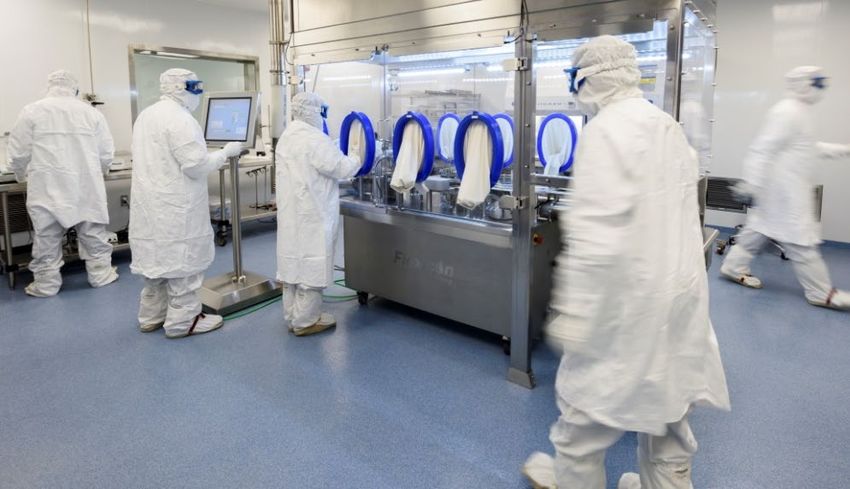
Global leadership in AAV manufacturing

Large-scale AAV Manufacturing
 • Based in Lexington, MA, expanded to 80,000 ft2
 • Proprietary 3rd generation insect cell, baculovirus
 • Demonstrated 500L stirred-tank production
 • Scalable up to 2 x 2,000L
 • Strong intellectual property position
Potential Benefits
 • Control and flexibility
 • Consistent process from small-scale to large-scale
 • Highly scalable, cost-effective
 • High-volume capacity
 • Consistent, stable, high-quality product

A GLOBAL LEADER IN GENE THERAPY                          MARCH 2020   |   5

Leveraging AAV5: a potentially best-in-class vector

AAV5 – Clinically demonstrated tolerability and clinical effects
observed to date
                                                                                             AAV5 Vector
•       Long-term follow-up data demonstrating safety and tolerability
•       25 patients have received AAV5 across 4 clinical studies1
•       Observed clinical effects in the liver and brain
•       Low avidity of pre-existing neutralizing antibodies (NAbs)
•       Favorable immunogenicity profile for systemic, intravenous delivery
•       No confirmed T-cell-mediated immune responses to capsid

1   uniQure clinical trials in Hemophilia B, Sanfilippo B and Acute Intermittent Porphyria

A GLOBAL LEADER IN GENE THERAPY                                                                  MARCH 2020   |   6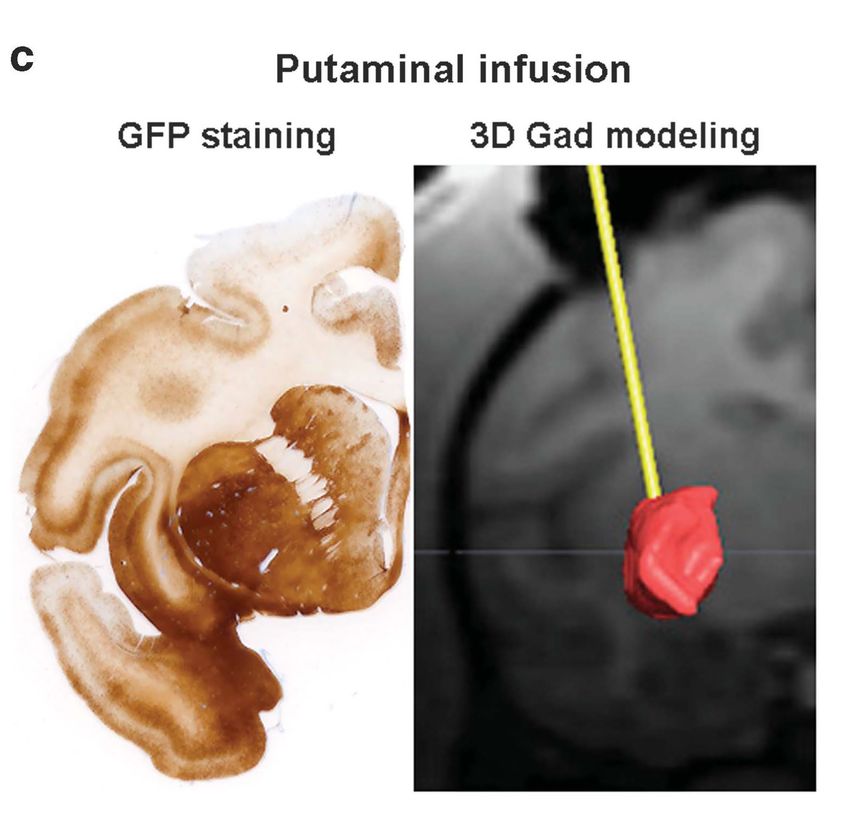
Hemophilia B
Etranacogene dezaparvovec
(AMT-061)
Hemophilia B: significant financial burden and
                            unmet medical needs

   Disease prevalence: ~6,000 patients in the United States1 and ~14,000 patients in Europe2

    Clinical burden                                     Patient burden                                  Economic burden                                        Societal burden

 Lifelong bleeding                                     Cumbersome                                      ~$610,000 annual                                    >$20 million lifetime
  risk with current                                   treatment with                                    cost of factor IX                                     cost per severe
standard of care and                                 adherence issues,                               replacement therapy                                     patient in the US5
   accrual of joint                                  quality of life and                              for severe patients in
      damage3                                              pain3                                             the US4

1. US CDC/ATHN Hemophilia community count, March 2019. 2. Estimated based on population in Europe and prevalence reported in Iorio et al. Ann Intern Med. 2019. doi: 10.7326/M19-1208.
3. VandenDriessche T and Chuah MK. Hum Gene Ther. 2017;28(11):1013-1023. 4. Noone et al. American Society of Hematology annual meeting 2019, Poster 2118. 5. uniQure internal data, cost including
factor therapy and medical costs

A GLOBAL LEADER IN GENE THERAPY                                                                                                                                          MARCH 2020           |   8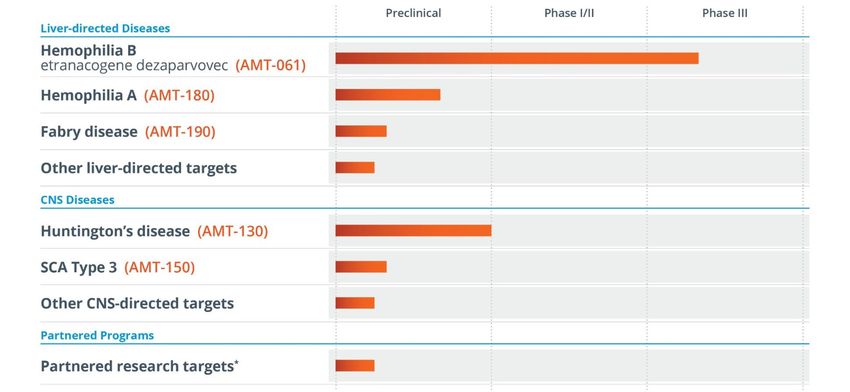
Etranacogene dezaparvovec (AMT-061)

Key Treatment Features
 • Demonstrated ability to increase FIX activity to
   therapeutic levels
 • No bleeding events post-treatment
 • No replacement therapy for bleeds outside surgery
 • No requirement of immunosuppression
 • No exclusion of patients with pre-existing NAbs

Key Safety Features
 • Well-tolerated with no serious adverse events
   related to treatment
 • No inhibitor development

A GLOBAL LEADER IN GENE THERAPY                        MARCH 2020   |   9

AMT-060: sustained dose-dependent increases in
                                                  FIX activity

                                                       Cohort 1                                                                                       Cohort 2
                                        Mean FIX activity (95% CI):                                                                   Mean FIX activity (95% CI):
                                              5.1 (1.6 – 8.6)                                                                              7.5 (4.2 – 10.7)
                          20                                                                                            20
                                        1 (7.1)    2 (5.3)    3* (1.3)   4* (8.2)   5* (3.5)                                          6 (11.1)        7 (7.1)      8 (8.5)   9 (3.9)   10 (6.7)

                                                                                                 FIX activity (IU/dL)
   FIX activity (IU/dL)

                          10                                                                                            10

                           0                                                                                             0
                               0   20       40    60   80    100 120 140 160 180 200 220                                     0   20      40      60     80      100 120 140 160 180 200 220

                                                                             Weeks following AMT-060 treatment
Values in parentheses represent mean FIX activity over time. Only values at least 10 days after last FIX concentrate administration are included. FIX prophylaxis was continued
after AMT-060 and tapered between Weeks 6 and 12. *Patients 3, 4 and 5 retrospectively tested positive for AAV5 neutralizing antibodies using the luciferase-based assay.
Dashed line indicates sample collection occurred after the data cut (09Oct2019). Values after the data cut (Patient 4, year 3.5; Patient 10, year 4) are not included in calculations
of mean
    A G LFIX
         O B activity.
             A L L E AFIX,
                       DER factor
                             IN G IX;E N
                                       CI,
                                         E confidence
                                            T H E R A P Yinterval; IU, international units                                                                 M A R C H 2 0 2 0 | 10
Etranacogene dezaparvovec: Phase 2b sustained FIX
activity in the functionally curative range
Mean FIX activity at 1 year: 41% of normal
FIX activity measured by a one stage clotting assay conducted in a central lab. aPTT, activated partial thromboplastin time
A GLOBAL LEADER IN GENE THERAPY MARCH 2020 | 11Etranacogene dezaparvovec (EtranaDez):
HOPE-B Phase III pivotal study
• Approximately 60 patients enrolled - severe and moderately-severe Hemophilia B
• Nearly all eligible patients treated
• Open label, single-dose, multi-center, multi-national trial
• Patients with AAV5 neutralizing antibodies not excluded
• Patients serve as their own control; 6-month lead-in to establish baseline
• Study objectives:
• Increase FIX activity
• Reduce frequency of bleeding episodes
• Decrease use of FIX replacement therapy
• Assess efficacy and safety
A GLOBAL LEADER IN GENE THERAPY MARCH 2020 | 12Huntington’s Disease AMT-130
Huntington’s disease: prevalence and overview

   • Patient population1:                                • Autosomal dominant neurodegenerative
        • ~25,000 patients in United States                disorder
        • ~25,000 patients in Europe                     • Expansion of CAG trinucleotide huntingtin
                                                           (HTT) exon1
   • Underreported due to lack of treatment
     options                                             • No disease-modifying therapies available

   • Disease stage prevalence2:
        • 30.5% Early stage
        • 35.5% Middle stage
        • 34.0% Late stage

1 Neuroepidemiology 2016;46:144–153
2 Journal of Medical Economics. 2013 Aug;16(8):1043-50

A GLOBAL LEADER IN GENE THERAPY                                                          MARCH 2020   | 14
AMT-130: major gene therapy opportunity
• One-time administration of disease-modifying therapy
• Proprietary miQURETM silencing platform
• Demonstrated strong knockdown at sites of pathology – striatum and cortex
Huntington’s
AMT-130
• Demonstrated restoration of neuronal function in diseased animal model
• Silences both full-length mHTT protein and highly toxic exon1 fragments
• No treatments available
• Strong preclinical data
• No direct miRNA toxicity and no off-target effects
• Near-term goal: Enroll 1st
dose cohort of Phase I/II
• No expected immune-related toxicity
study
• Potential to be first gene therapy to market
A GLOBAL LEADER IN GENE THERAPY MARCH 2020 | 15AMT-130: extensive preclinical validation
Model Efficacy Safety Distribution
Cultured human
neurons
Rodents
(HD rat4)
(4 types HD mouse3)
NHP
(Non-human primate1)
Pig
(tgHD Minipig2)
Recent publications
1. Samaranch L, et al. Gene Ther 2017;24:253-261; 5. Evers MM et al. Mol Ther. 2018;26(9):2163-2177
2. Evers M, et al. Mol Ther 2017;5(Suppl. 1):247; 6. Spronck EA et al. Mol Ther Methods Clin Dev. 2019 Mar 16;13:334-343
3. Spronck EA, et al. Hum Gene Ther 2017;28:A78; 7. Keskin S et al. Mol Ther Methods Clin Dev. 2019 Oct 4;15:275-284
4. Miniarikova J, et al. Gene Therapy 2017;24:630-639 8. Caron NS et al. Nucleic Acids Res. 2019 Nov 20. pii: gkz976. doi: 10.1093/nar/gkz976
A GLOBAL LEADER IN GENE THERAPY MARCH 2020 | 16Huntington’s disease:
expected progression of brain pathology
Somatomotor
• The striatum is the primary site of pathology cortex
Frontal Somatosensory
lobe cortex
2 Parietal
• Premanifest stage: atrophy spreads and 3
3
lobe
cortical thinning occurs
• Motor symptoms manifest as atrophy 1 Occipital
increases lobe
The shading and arrows
indicate the progression of
pathology. Darker shading
represents earlier onset.
1. McColgan P, Tabrizi SJ. Eur J Neurol. 2018;25(1):24-34; 2.Tabrizi SJ, et al. Lancet Neurol 2009;8(9):791-801;
3. Nopoulos PC, et al. Neurobiol Dis 2010;40(3):544-54 Figure adapted from Brundin P, et al. Nat Rev Mol Cell Biol 2010;11:301-7.
A GLOBAL LEADER IN GENE THERAPY MARCH 2020 | 17AMT-130: well-tolerated and widespread distribution in
the non-human primate (NHP) brain
NHP MRI-guided frontal Distribution throughout NHP brain
convection-enhanced delivery
Caudate
nucleus
Thalamus
Putamen
Globus
pallidus
Hippocampus
No procedure-related neurological symptoms Putaminal delivery AAV5-GFP
following infusion into the striatum
uniQure, data on file. MRI, magnetic-resonance imaging Samaranch L. et al, Gene Ther. 2017 Apr;24(4):253-261. Figure 3
A GLOBAL LEADER IN GENE THERAPY MARCH 2020 | 18AMT-130: strong reduction of mutant HTT in the minipig
brain
Libechov transgenic (tgHD) minipigs: Comparable mutant huntingtin protein
• Lifespan: 12-20 years knockdown at 6 and 12 months
• Body weight: 50-140 kg
• Brain weight: 90-100 g
• Highly developed immune system Cortex Striatum
125 6 months
MRI-guided 12 months
mutant HTT protein
100
(% from naive)
Convection-enhanced delivery
75
30%
50 50%
caudate 70%
25
putamen
0
Pu te
us
ns
m
l
Th ala
l
en
M
ra
ta
S/
da
lu
am
Po
on
m
po
d
el
o-
yg
au
ta
r
m
al
eb
at
ef
m
C
Te
m
Pr
er
A
So
C
Bars represent average ± SEM of n=3-4 animals/group
A GLOBAL LEADER IN GENE THERAPY MARCH 2020 | 19AMT-130: neuropathology in diseased mouse model
N-Acetyl Aspartate (tNAA) Myo-Inositol (MI)
Neuronal integrity marker Gliosis marker
6.0 Q175FDN 7 Q175FDN
*** *
Mean concentration
Mean concentration
5.5 6
tNAA (mM)
mI (mM)
5.0 5
4.5 4
4.0 3
9
9
11
11
r
r
l
l
ro
ro
ffe
ffe
0
10
0
0
X1
nt
nt
X1
X1
2X
bu
bu
2
co
co
3
3
5.
5.
n
n
1.
1.
T
T
io
io
W
W
at
at
ul
ul
gc AMT-130 gc AMT-130
rm
rm
Fo
Fo
Leavitt BR, Vallès. et al., Manuscript in preparation
A GLOBAL LEADER IN GENE THERAPY MARCH 2020 | 20AMT-130: full-length and exon1 HTT lowering in striatum
and cortex in diseased mouse model
Full-length HTT mRNA
Full Full lenght
length HTTHTTin
inStriatum
Striatum Full length HTT
Full-length HTT in
in Cortex
Cortex
1.5
Relative expression to Formulation Buffer
Relative expression to Formulation Buffer
1.5
(CAG)n
5’UTR E1 E2 E6 (AAAA)n 1.0
1.0
7
0.5 0.5
0.0 0.0
5UTR Exon 1-2 Exon 64 5UTR Exon 1-2 Exon 64
Exon1
Exon1 HTT
HTT ininStriatum
Striatum Exon1
Exon HTT ininCortex
Relative expression to Formulation Buffer
Relative expression to Formulation Buffer
1.5 1.5
1 HTT Cortex
Exon-1 HTT mRNA
1.0 1.0
(CAG)n
5’UTR E1 Intron 1 (AAAA)n 0.5 0.5
0.0 0.0
Early intron 1 Intron 1 Early intron 1 Intron 1
A GLOBAL LEADER IN GENE THERAPY MARCH 2020 | 21AMT-130: Phase I/II clinical trial Study Overview • Objectives: assess safety, tolerability and efficacy • Multicenter, randomized, double-blinded study • Controlled with imitation surgery • Two dose cohorts with a total of 26 patients • Early manifest patients • 18-month follow-up (5 years for treated patients) A GLOBAL LEADER IN GENE THERAPY MARCH 2020 | 22
AMT-130: Phase I/II clinical trial design

Cohort 1: 10 patients (6 dosed, 4 control)                            Cohort 2: 16 patients (10 dosed, 6 control)

   Subject 1&2          Subject 3&4          Subject 5-10               Subject 11&12       Subject 13&14       Subject 15-26
       1:1                  1:1                  2:1                         1:1                 1:1                 2:1
  randomization        randomization        randomization               randomization       randomization       randomization
     1 dosed              1 dosed              4 dosed                     1 dosed             1 dosed             8 dosed
    1 control            1 control            2 control                   1 control           1 control           4 control

               3-month              3-month               1-month                    1-month             1-month
             enrollment           enrollment            enrollment                 enrollment          enrollment
               stagger              stagger               stagger                    stagger             stagger
             followed by          followed by           followed by                followed by         followed by
            DSMB Review          DSMB Review           DSMB Review                DSMB Review         DSMB Review
                  #1                   #2                    #3                         #4                  #5

 A GLOBAL LEADER IN GENE THERAPY                                                                                     MARCH 2020   | 23
AMT-130: Phase I/II efficacy endpoints
Biomarkers Clinical Parameters*
• NF-L (neurofilament light) • Total motor score
• mHTT in CSF • Total functional capacity
• Other exploratory markers
Imaging (MRI and MRS) Quantitative Motor Function
• Measures of neural function • Finger, hand and foot tapping
• Striatal volume (atrophy) • Grasping and lifting (chorea)
*Unified Huntington’s Disease Rating Scale
A GLOBAL LEADER IN GENE THERAPY MARCH 2020 | 24Research Pipeline
Our proprietary pipeline

        *Collaboration with Bristol-Myers Squibb

A GLOBAL LEADER IN GENE THERAPY                    MARCH 2020   | 26
Key near-term catalysts
• Topline data from HOPE-B pivotal study in late 2020
Hemophilia B
• BLA submission in 2021
• Initiate dosing in Phase I/II study in early 2020
Huntington’s
• Early efficacy data on initial patients in 2021
• Submit IND for AMT-180 in 2020
Hemophilia A
• Begin clinical development in 2021
Spinocerebellar • Initiate IND-enabling study for SCA3 in 2020
Ataxia Type 3 (SCA3) • Submit IND application in 2021
• Continue to increase manufacturing scale and capacity
Manufacturing
• Conduct manufacturing process validation for EtranaDez (AMT-061) in 2020
A GLOBAL LEADER IN GENE THERAPY MARCH 2020 | 27You can also read


