A GUIDE TO ACHIEVING OPTIMAL BLOOD GLUCOSE CONTROL DURING RAMADAN THROUGH NUTRITION
←
→
Page content transcription
If your browser does not render page correctly, please read the page content below
Important Notes for Ramadan

A GUIDE TO ACHIEVING
OPTIMAL BLOOD GLUCOSE
CONTROL DURING RAMADAN
THROUGH NUTRITION

  Adaptasi penerbitan oleh:
  Kumpulan Penyelidik My Dia-RNP
  Jabatan Pemakanan dan Dietetik, Fakulti Perubatan dan Sains Kesihatan, 43400 UPM Serdang, Malaysia

This guide was created to help
you learn more about effective
nutrition when fasting during
Ramadan and, hopefully,
principles that you may also
carry forward into your normal
daily lives.
This guide includes:
1. The Ramadan Nutrition Plan (RNP)
2. Diabetes care during Ramadan
3. The RNP Kit

Preparation before Ramadan
Before participating in Ramadan fasting, you should:
1. Consult your doctor or dietitian to make sure that
   you are fit to fast.
2. Choose a suitable exercise regimen to follow
   during Ramadan.
3. Know how to identify the 2H1D symptoms
   (hypoglycaemia, hyperglycaemia and dehydration).
4. Regularly monitor your blood glucose levels and
   body weight.

Risks associated                                                                          The colour of urine
                                                                                           when healthy and
with fasting over a                                                                        when dehydrated

prolonged period:
                                                                                                        Healthy
Hypoglycaemia                  Causal factors                                  Symptoms
(low blood glucose)            ¥ Too little carbohydrate intake                ¥ Trembling
16.6 mmol/L with or
                                 carbohydrates and sugary                      ¥ Extreme hunger
without symptoms                 food or drinks                                ¥ Frequent urination     Dehydrated
                               ¥ Not taking diabetes                           ¥ Lethargy
                                 medication                                    ¥ Nausea / Vomiting
                               ¥ Sleeping all day or being
                                 inactive

Dehydration                    Causal factors                                  Symptoms
Lack of water                  ¥ Not drinking enough water                     ¥ Urine appears
in the body                      and being exposed to very                       darker (as shown
                                 hot weather                                     to the right)          Severely
                                                                                                        dehydrated
Tips: Maintaining hydration
 1 Apportion your water intake at night, starting from         3 Reduce outdoor activities when
   the time of breaking fast to the pre-dawn meal.               the weather is hot.
 2 Reduce the intake of caffeinated drinks and food            4 Make sure your blood glucose
   high in sodium, such as processed food, fast food             is at optimum levels.
   and salty food.

Important!
  When should you break your fast?
  It is not advisable to continue fasting if you experience:
  1. Hypoglycaemia (blood glucose level is less than 3.9 mmol/L).
  2. Hyperglycaemia (blood glucose level is more than 16.6 mmol/L).
  3. Symptoms of hypoglycaemia, hyperglycaemia, dehydration or acute pain.

Source: International Diabetes Federation, Diabetes and Ramadan (IDF-DAR) International
Alliance. Practical Guidelines, 2016. International Diabetes Federation, Belgium.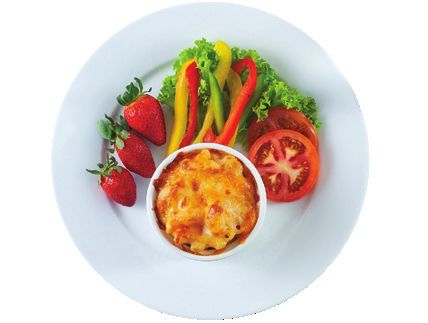
What is the purpose of RNP?
The RNP is designed to help you practise effective
nutrition during Ramadan.
This is important in ensuring:
¥ Adequate calorie intake and a balanced proportion of
  macronutrients
¥ Approximately the same amount of carbohydrates are
  taken at every meal
¥ Other comorbidities such as hypertension and
  dyslipidaemia are under control

RNP kit
This RNP kit is intended as a guide on nutritional care
when fasting during Ramadan.
The RNP kit covers 7 key topics:
Kit 1: The Ramadan Wheel         Kit 5: Diabetes-specific
Kit 2: Carbohydrate Counting            Formula (DSF)

Kit 3: The Ramadan Plate         Kit 6: Syawal Nutrition Plan

Kit 4: Healthier Choices at the Kit 7: Recipes for Ramadan
       Ramadan Bazaar
Kit 1           The Ramadan Wheel
To help with planning a schedule of when to check your
blood glucose levels and when to take the DSF.
      Snack 2 (Supper)

 Breaking fast                                                                  Pre-dawn meal

                                                  Drink DSF
                                                  at 5 AM or
                                                  at 10 PM*

¥ You are encouraged to delay the pre-dawn meal and
  break fast as soon as possible.
¥ Regular monitoring of blood glucose levels during
  Ramadan is important to identify the risk of blood
  glucose imbalance.
¥ It is recommended that blood glucose monitoring be
  done at least once or twice a day, as appropriate, and at
  these times:
            Before the pre-dawn meal                                         Before bed

Important!
   Always remember to take your medication as prescribed by
   your doctor, especially during Ramadan.
* Discuss with your dietitian on when and how much you should be taking of
  Nutren Untuk Diabetik¨

                                                                                           1
Kit 2 Carbohydrate Counting
To identify different sources of carbohydrates and measuring
carbohydrate exchanges.
What are carbohydrates?
They are one of the main classes of food besides protein and fat.
Carbohydrates supply the body with glucose, which will then be
converted into energy to support bodily functions and physical activity.
Sources and measurement of carbohydrates Size of exchange
Sources Measurement for
1 exchange
Wholegrains Carbohydrate
Brown rice / Basmati rice ½ cup 1 exchange
Rice porridge 1 cup
Noodles / Kuetiao / Pasta / ½ cup
Vermicelli noodles / Rice noodles
White bread / Wholemeal bread 1 piece
Raw oats 3 tablespoons
Tosai / Pratha ½ piece
Plain biscuit 3 pieces Carbohydrate
Fruits 2 exchanges
Dates 3 small pieces
Apple / Orange / Pear / Kiwi 1 piece
Banana / Papaya / Watermelon / 1 medium-cut piece
Pineapple
Grapes / Langsat / Longan 8 pieces
Starchy Vegetables Protein
Potato 1 (75 g) 1 serving
Corn ½ cup
Sweet potato / Yam / Cassava ½ cup
Pumpkin 1 cup
Legumes
Baked beans / Green beans (cooked) ½ cup
Red beans (raw) ⅛ cup Fat
Chickpeas, lentils (cooked) 3 tablespoons 1 exchange
Sugar*
White sugar / Brown sugar 3 teaspoons
* Not recommended. Should be limited if choosing to take.
Source: Suzana S, et al. Atlas of Food Exchanges & Portion Sizes (Third Edition), 2015. MDC Publishers
Sdn Bhd, Kuala Lumpur. Malaysian Dietitians« Association. Medical Nutrition Therapy Guidelines for Type 2
Diabetes Malaysia (2nd Edition), 2013. Malaysian Dietitians« Association and Ministry of Health, Putrajaya.
2Kit 3 The Ramadan Plate
To plan a healthy and balanced diet.
Plain water
Always try opting for plain water and also
reduce the intake of caffeinated drinks
¼ Carbohydrate
(Rice, noodles, bread, cereal,
Soup or gravy
Always choose low-fat
cooking methods
cereal products or potatoes)
Best choice: Wholegrains
¼ Protein
(Fish, chicken,
meat or legumes)
Best choice: Meat
cuts with less fat
Fruits
Best choice: Fresh
fruits or dates
½ Vegetables
Start your meal by eating vegetables first
Tips: Healthy eating habits The Ramadan Plate
1 Start by drinking plain water can help you:
and eating a piece of fruit. 1 Eat a variety of food
2 Start by eating vegetables first. 2 Control meal
3 Each meal should include portion size
protein and vegetables. 3 Control your blood
glucose level
3Kit 4 Healthier Choices at the
Ramadan Bazaar
To plan what to buy at the Ramadan bazaar.
Tips when buying at the Ramadan bazaar
¥ Make a list of only the food you need to avoid buying
too much.
¥ Buy dishes that are low in oil and sugar, and make a habit of
picking a variety of fruits and vegetables. The right amount of
food is also important for maintaining a healthy lifestyle.
¥ Pick dishes made using healthier cooking methods
(such as boiled, roasted or steamed dishes) to maintain
a healthy weight.
¥ Try to avoid buying cakes, dessert porridge, or sweet
beverages as they contain carbohydrates that can increase
blood sugar levels.
¥ Some of the healthy and recommended options
at the Ramadan bazaar include: assam laksa
▪ Non-fried spring rolls
▪ Stuffed tofu non-fried spring roll
▪ Assam laksa
▪ Javanese pecel (with less
peanut sauce)
▪ Snacks that do not contain high sugar such as
steamed cakes, curry puffs and vadei
▪ Grilled or roasted chicken (request for breast
meat, skinless and with less gravy) grilled chicken
▪ Fresh fruits or juice
(ask for no
added sugar)
fresh fruits
4Kit 5 Diabetes-specific Formula
(DSF)
To plan your intake of Nutren Untuk Diabetik¨ during
Ramadan to help meet your nutritional needs as well as
control your weight and blood glucose levels.
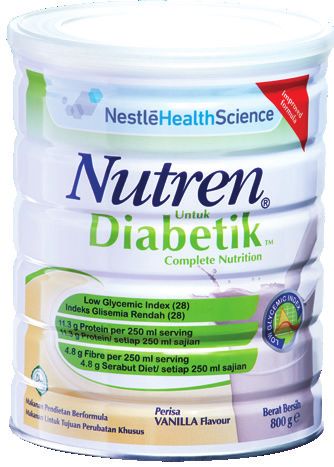
What is Nutren Untuk Diabetik®?
¥ It is a drink specially formulated for
individuals with diabetes.
¥ Contains a unique combination of
nutrients.
¥ Recommended as part of the RNP
with an appropriate calorie content.
¥ Helps in weight control and in
achieving optimal glucose control.
Source: Barakatun-Nisak MY, et al. Nutrients 2020;12:813.
What are the special Recommended Nutren Untuk Diabetik®
nutrients of Nutren intake during Ramadan
Untuk Diabetik®? Total scoops
¥ Slowly digestible Time
(servings)
carbohydrates (low Pre-dawn meal / 7 scoops
glycaemic index) Breaking fast (1 serving)
¥ Soluble fibres and Snack 1 (Mini Iftar) 3.5 scoops
prebiotics / Snack 2 (Supper) (� serving)
¥ Unsaturated fats Drink at least 1 serving a day.
¥ High quality protein 1 serving of Nutren Untuk Diabetik¨
(7 scoops) provides 253 kcal,
24.5 g carbohydrate, 11.3 g protein, 11.0 g fat.
1 scoop of Nutren Untuk Diabetik¨ = 7.9 g powder
5Kit 6 Syawal Nutrition Plan To provide healthy nutrition guidance for the festive season. Quantity of food containing 1 exchange of carbohydrates (equivalent to ½ cup of rice) Hari Raya Delicacies Rice cakes ¾ piece Ketupat palas 1 piece Lemang 3 pieces Peanut sauce 6 tablespoons Burasa 1 piece Porridge 1 cup Rice / Glutinous rice / Noodles / Vermicelli noodles / Tanghoon / Pasta / Rice noodles / ½ cup Laksam / Kuetiao Source: Suzana S, et al. Atlas of Food Exchanges & Portion Sizes (Third Edition), 2015. MDC Publishers Sdn Bhd, Kuala Lumpur. Malaysian Dietitians« Association. Medical Nutrition Therapy Guidelines for Type 2 Diabetes Malaysia (2nd Edition), 2013. Malaysian Dietitians« Association and Ministry of Health, Putrajaya. Tips: Healthy Eating on Hari Raya 1 Control the amount of carbohydrates taken when choosing a raya delicacy. 2 Identify food items that are high in carbohydrate content and be aware of hidden carbohydrate such as in gravy. 3 Use a smaller plate. Food looks more plentiful on a smaller plate than a larger one. 6
Quantity of food containing 1 exchange of
carbohydrate (~½ cup of rice)
   Raya cookies
   Kuih bangkit, Mazola cookies, Arab /
   Makmur cookies, CatÕs tongue cookies,
   London almond, Honey cornflakes,                                           2 pieces
   Pineapple tarts, Chocolate chip cookies,
   Semperit
   Jelly                                                                      2 pieces
   Twisted spring roll, kuih siput                                            3 tablespoons
   Bahulu                                                                     1 piece
   Love letters                                                               2 pieces
   Dodol                                                                      2 small pieces (45 g)
   Wajik                                                                      1 piece (25 g)
   Fruit cake                                                                 1 piece (25 g)
   Sarawak layered cake                                                       2 pieces (25 g)
   Banana chips / Tapioca chips                                               6 pieces
   Kuih cincin, Kuih ros / Loyang, Murukku,
                                                                              1 piece
   Rempenyek
Source: Suzana S, et al. Atlas of Food Exchanges & Portion Sizes (Third Edition), 2015. MDC Publishers Sdn Bhd,
Kuala Lumpur. Malaysian Dietitians« Association. Medical Nutrition Therapy Guidelines for Type 2 Diabetes Malaysia
(2nd Edition), 2013. Malaysian Dietitians« Association and Ministry of Health, Putrajaya.

4 Choose plain water and avoid sweet drinks.
5 Every meal should be complete with vegetables.
6 Eat vegetables first, followed by side dishes and then
  carbohydrates.

                                                                                                                 7
Kit 7 Recipes for Ramadan
To give you samples of a
healthy menu.
Baked Cheese Macaroni with
Nutren Untuk Diabetik®
Breaking fast meal: 1 serving
Ingredients
½ cup of macaroni
10 g mozzarella cheese
10 g cheddar cheese Serving Suggestion
10 g cream cheese
1 scoop of Nutren Untuk Diabetik¨ (mixed with 50 mL of water)
40 g chicken meat (breast part, without fat and skin)
1½ teaspoons of cooking oil
aklumat A Pepinch
makanofansalt Maklumat Pemakanan Nutrition Facts
aran Karbohidrat
A pinch of ~2
black Pertukaran Karbohidrat
pepper powder ~2 Carbohydrate exchanges ~2
220 265 390
h setiap hidangan Jumlah setiap hidangan Total in each meal
ori Kalori Calories
Preparation
% Nilaimethod:
Harian*
% Nilai
Harian*
% Daily
Value*
Lemak 3g 1. Preheat the 2% oven to 170¡C.
Jumlah Lemak 7g 6% Total Fat 17g 13%
k Tepu 1g 4% Lemak Tepu 2g 15% Saturated Fat 5g 42%
k Trans 0g
61mg
2. Boil the macaroni
3%
until tender. Strain the3%
Lemak Trans
Sodium 54mg
0g Trans Fat
Sodium 347mg
0g
17%
Karbohidrat 31g
4g
macaroni10% and
18%
set aside.
Jumlah Karbohidrat 32g
Serat 6g
11%
30%
Total Carbohydrate 37g
Fibre 4g
12%
20%
ah Gula 0g 3. Mix Nutren
masuk 0g Gula Tambahan 1%
UntukTermasuk
Diabetik
Jumlah Gula 3g ¨
with 50 mL10%
0g Gula Tambahan
Sugar Total 2g
Including 0g of Added Sugar 6%
18g of water. 6% Protein 19g
ian% (DV) ini memberitahu anda berapa banyak
6% Protein 22g
* Nilai Harian% (DV) ini memberitahu anda berapa banyak
7%
* Daily Value % (DV) is a guide to the percentage of nutrients
4. Heat the oil and add in the chicken.
lam makanan yang menyumbang kepada diet nutrien dalam makanan yang menyumbang kepada diet contained in each serving of food.
harian.
Ikan panggang
Stir briefly. Ayam panggang Makaroni
5. Pour in the Nutren Untuk Diabetik¨ that has been mixed with water.
aklumat Pemakanan Maklumat Pemakanan Maklumat Pemakanan
aran KarbohidratStir and add
~1 black pepper
Pertukaran powder and salt.
Karbohidrat ~1 Pertukaran Karbohidrat ~1
6. Add 140
h setiap hidangan
the cheese Jumlah
one at a time and stir
setiap hidangan
well
165 so that it does not
Jumlah setiap hidangan
100
ori lumpy. Kalori
become% Nilai Kalori
% Nilai % Nilai
Lemak 5g 7. Finally,Harian*
add
4% the macaroni.
Jumlah Lemak 7gMix well and season
Harian*
6% to taste.
Jumlah Lemak 0g
Harian*
0%
k Tepu 2g 13% Lemak Tepu 1g 8% Lemak Tepu 0g 0%
k Trans 0g 8. Put the macaroniLemak in aTrans
baking
0g tray and bake at 170¡C Lemak forTrans 20Ð30
0g minutes.
166mg 8% Sodium 53mg 3% Sodium 130mg 6%
9. Ready to 5%be served
Karbohidrat 14g Jumlahtogether with vegetables.
Karbohidrat 15g 5% Jumlah Karbohidrat 17g 6%
3g 14% Serat 4g 22% Serat 2g 12%
ah Gula 3g Tip: It is encouraged
masuk 0g Gula Tambahan 9%
to use low-fat and low-sodium
Jumlah Gula 1g
Termasuk 0g Gula Tambahan 3%
cheese.
Jumlah Gula 5g
Termasuk 0g Gula Tambahan 18%
11g 4% Protein 12g 4% Protein 10g 3%
ian% (DV) ini memberitahu anda berapa banyak * Nilai Harian% (DV) ini memberitahu anda berapa banyak * Nilai Harian% (DV) ini memberitahu anda berapa banyak
8
lam makanan yang menyumbang kepada diet nutrien dalam makanan yang menyumbang kepada diet nutrien dalam makanan yang menyumbang kepada diet
harian. harian.
Wrap Ayam Penkek Vietnamese Rollaklumat Pemakanan Maklumat Pemakanan Maklumat Pemakanan M
ukaran Karbohidrat ~1 Pertukaran Karbohidrat ~2 Pertukaran Karbohidrat ~1 Per
100 205 180
ah setiap hidangan Jumlah setiap hidangan Jumlah setiap hidangan Jum
lori Kalori Kalori Ka
% Nilai % Nilai % Nilai
Harian* Harian*Serving Suggestion Harian*
ah Lemak 1g 1% Jumlah Lemak 6g 5% Jumlah Lemak 8g 6% Jum
ak Tepu 0g 0% Lemak Tepu 0g 4% Lemak Tepu 2g 12% Le
ak Trans 0g
m 117mg
ah Karbohidrat 14g
Dates Milkshake 6%
5%
Lemak Trans 0g
Sodium 216mg
Jumlah Karbohidrat 28g
11%
9%
Lemak Trans 0g
Sodium 148mg
Jumlah Karbohidrat 16g
7%
5%
Le
Sod
Jum
at 3g Snack (mini iftar): 1 meal
13% Serat 3g 15% Serat 2g 12% S
mlah Gula 4g Jumlah Gula 0g Jumlah Gula 2g J
masuk 0g Gula Tambahan 13% Termasuk 0g Gula Tambahan 0% Termasuk 0g Gula Tambahan 8% T
in 11g 4% Protein 8g 3% Protein 11g 4% Prot
Ingredients
arian% (DV) ini memberitahu anda berapa banyak
dalam makanan yang menyumbang kepada diet
* Nilai Harian% (DV) ini memberitahu anda berapa banyak
nutrien dalam makanan yang menyumbang kepada diet
* Nilai Harian% (DV) ini memberitahu anda berapa banyak
nutrien dalam makanan yang menyumbang kepada diet
* Nila
nutri
3 dates (21 g) harian. harian. haria
Popia 3.5 scoops of Nutren Untuk Diabetik¨ (mixed with 120 mL
Bubur Barli of water)
Burger
A bit of walnut
aklumat Pemakanan Maklumat Pemakanan Nutrition Facts M
ukaran Karbohidrat ~2 Pertukaran Karbohidrat ~3.5 Carbohydrate exchanges ~2 Per
Preparation method:
190 330 ¨ 190
ah setiap hidangan Jumlah setiap hidangan Total in each meal Jum
lori 1. Mix 3.5 scoops Kalori
of Nutren Untuk Diabetik Calories Ka
% Nilai % Nilai % Nilai
with 120 mL of water.
Harian* Harian* Harian*
ah Lemak 6g 4% Jumlah Lemak 7g 5% Total Fat 6g 4% Jum
ak Tepu 0g 2. Put the
4% dates, walnut
Lemak Tepuand1g mixed 4% Saturated Fat 0g 4% Le
ak Trans 0g Lemak Trans ¨0g Trans Fat 0g Le
m 311mg Nutren
16% Untuk Sodium
Diabetik428mg into a blender.21% Sodium 216mg 11% Sod
ah Karbohidrat 28g 9% Jumlah Karbohidrat 55g 18% Total Carbohydrate 27g 9% Jum
at 2g Blend12% for 30 seconds.
Serat 6g 28% Fibre 3g 14% S
mlah Gula 15g Jumlah Gula 19g Total Sugar 13g J
in 6g
3.
masuk 0g Gula Tambahan Pour 50%
2%
into a glass and chill.
Termasuk 0g Gula Tambahan 63% Including 0g Added Sugar
Protein 6g
45%
2%
T
Prot
Protein 11g 4%
4. Ready to drink.
arian% (DV) ini memberitahu anda berapa banyak
dalam makanan yang menyumbang kepada diet
* Nilai Harian% (DV) ini memberitahu anda berapa banyak
nutrien dalam makanan yang menyumbang kepada diet
* Daily Value % (DV) is a guide to the percentage of nutrients
contained in each serving of food.
* Nila
nutri
haria
harian.
Dadih Overnight Oat Kurma Shake
910 Principles of RNP
To help you control your blood glucose levels and body weight.
1. Consult your doctor or dietitian before deciding to fast.
2. Take a sufficient amount of calories or carbohydrates.
Portion out your calories between the pre-dawn meal,
breaking fast and (if necessary) 1Ð2 snack (Mini Iftar
or Supper).
3. Ensure a balanced
proportion of macronutrients
(recommended
carbohydrates 45Ð50%,
protein 20Ð30% and fat
does not exceed 35% of
total calories).
4. Use the 'Ramadan Plate' as a
guide to ensure pre-dawn and breaking fast meals that
are complete with vegetables, protein, some fat and
carbohydrates. Eat vegetables first.
5. Choose carbohydrates with a low glycaemic index and
are high in fibre (preferably wholegrains).
6. Delay the pre-dawn meal.
7. Start the breaking of fast with Snack 1 (Mini Iftar),
followed by the Maghrib prayer. Then, enjoy your
break fast meal.
108. Drink enough water (without sugar and
reduce caffeinated drinks) between the time
of breaking fast and the pre-dawn meal.
9. Nutren Untuk Diabetik¨ can be used as part
of the pre-dawn meal or snack to ensure
adequate nutrition, as well as blood glucose control
and body weight.
10. If necessary, you can take a healthy snack such as a
piece of fruit, boiled chickpeas or non-fried spring roll.
My Dia-RNP Research Group
Faculty of Medicine and Health Sciences Universiti Putra Malaysia
Project Leader Assoc. Prof. Dr. Siti Nur’Asyura Adznam
Lecturer of the Department of Nutrition and
Assoc. Prof. Dr. Barakatun Nisak Dietetics UPM
Mohd. Yusof
Lecturer of the Department of Nutrition and Dr. Wan Zul Haikal Hafiz Wan Zukiman
Dietetics UPM Lecturer of the Department of Medicine UPM
Dr. Zalina Abu Zaid
Lecturer of the Department of Nutrition and
Project Members Dietetics UPM
Prof Dr. Azrina Azlan
Lecturer of the Department of Nutrition and
Dietetics UPM Research Assistants
Nor Farahain Yahya
Prof. Dr. Firdaus Mukhtar
Lecturer of the Department of Psychiatry UPM Aainaa Syarfa Mohd Shahar
Dr. Noraida Omar Farah Yasmin Hasbullah
Lecturer of the Department of Nutrition and Norkamaliah Hashim
Dietetics UPM
Nur Maziah Hanum Osman
Assoc. Prof. Dr. Norhasmah Sulaiman
Lecturer of the Department of Nutrition and
Dietetics UPM
11Diabetes and Ramadan
For people with diabetes, fasting during the month of
Ramadan requires careful planning together with doctor's
advice. During Ramadan, there are significant changes to
your eating schedule, medicine intake, physical activity
and sleeping patterns. Therefore, proper nutritional
care is very important to enable you to fast safely during
Ramadan. Do consult your doctor before deciding to fast.
Meet with a dietitian to receive a nutrition guide tailored
specifically for Ramadan.
Happy fasting!
Published by: Supported by:
Universiti Putra Malaysia Nestl Health Science
43400 UPM Serdang C/o Nestl Products Sdn. Bhd.
Selangor Darul Ehsan 22-1, 22nd Floor, Menara Surian
No. 1, Jalan PJU 7/3, Mutiara Damansara
47810 Petaling Jaya
Selangor Darul Ehsan
Disclaimer:
The content in this booklet is not a substitute for medical advice, diagnosis, or professional
treatment. Please consult your doctor or a qualified healthcare professional if you have any
questions about your health.You can also read


