A new image for manufacturing - Young people in the South West are amongst the least likely to consider a career in manufacturing. But with ...
←
→
Page content transcription
If your browser does not render page correctly, please read the page content below
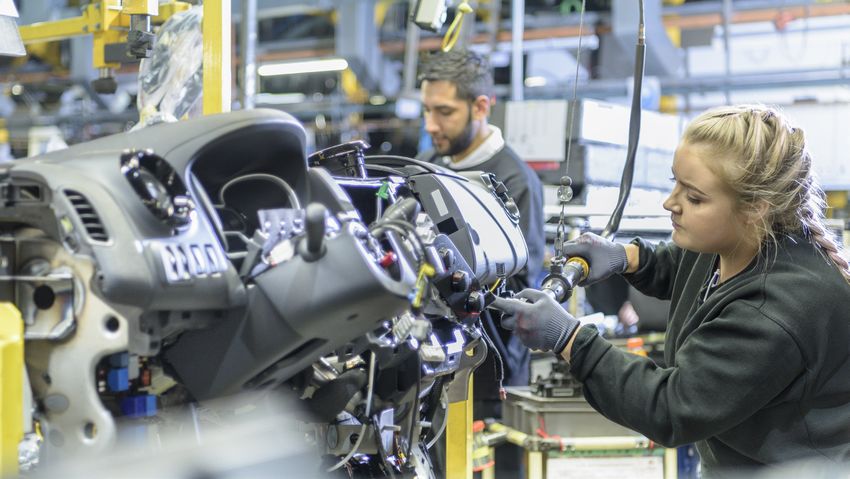
A new image
for manufacturing
Young people in the South West
are amongst the least likely to
consider a career in manufacturing.
But with higher-than-average
proficiency in key skills, this
group is well worth investing in.

Contents

Introduction: The extra £6bn growth prize					                                              3

Regional spotlight: Region’s young turn their backs on manufacturing                        5

Strategies for success								                                                              7

The economic modelling in this report was based on 2016 prices, as this was the year for which the most up-to-date economic output data was available.
Survey respondents aged between 16 and 23 are referred to as ‘Generation Z’ throughout.

The extra £6bn growth prize
Changing young people’s views of manufacturing is key
to addressing its skills challenge.

The UK manufacturing sector must attract              However, skills shortages remain a concern.        The consequences are damaging. Strain on               Young women are especially reluctant to
skilled, versatile and bright young people if it      More than a third of the 504 manufacturing         existing workforces and lower staff morale lead        consider a future in manufacturing. Just 3%
is to continue to thrive. Yet recent research         leaders we surveyed reported that they receive     to a vicious cycle as employees are more likely to     of them would contemplate a career in the
published by Barclays reveals that the                plenty of applications for vacancies – but that    leave. Productivity can also be hit. For a small but   sector, compared with 9% of young men.
vast majority of the youngest workers see             a large number are from people lacking the         significant minority, skills shortages are leading
manufacturing careers as unappealing.                 required skills.                                   to unfulfilled orders and declining revenue.           Perceptions from the past

By targeting Generation Z, the group of people                                                           Careers fail to appeal                                 In part, this outlook is due to an outdated image
aged 16 to 23 born between 1995 and 2010,               “By targeting the ‘Generation Z’                                                                       of manufacturing. For instance, young people
manufacturers could derive extra value                    group, manufacturers could derive              Against this background, it is imperative that         see manufacturing as an environment where
– quantified in our economic modelling at                                                                manufacturing can attract bright people from           they might gain technical skills, or be required to
an extra £6bn a year by 2023.
                                                          an extra £6bn a year by 2023.”                 the newest members of the workforce.                   show physical strength or dexterity. Relatively
                                                                                                                                                                few realise the extent to which advanced
Skills shortages hit growth                                                                              Yet the overwhelming majority of this group see        technology now drives manufacturing.
                                                      Our research suggests skilled tradespeople         manufacturing careers as unappealing, according
UK manufacturers have significant recruitment         and experienced workers are in particularly high   to our interviews with 2,012 people in the       In fact, the main features young people told
needs, both to replace workers leaving as part        demand. More than one fifth of manufacturing       Generation Z age group.                          us they are seeking in their career choices –
of the natural cycle, and to support business         companies lack advanced technology skills.                                                          opportunities to progress, good earnings, the
growth with fresh talent.                             The shortages are most acute in larger firms.      Only 6% are considering a manufacturing career. chance to acquire digital skills, a chance to
                                                                                                         This compares with 23% who are looking to        make a difference to society – might lead them
                                                                                                         digital/technology careers, for example, and 22% naturally to manufacturing, if they had a more
                                                                                                         who are thinking of a future in IT/computing.    rounded view of the sector.

Previous: 2. Contents | 3. Introduction | Next: 4. Introduction (cont.)                                                                                                                                               3
Rewards for reaching out Every region of the UK, and every sub-sector
of manufacturing, stands to gain in both output
Our report suggests some methods and employment. The modelling makes it clear
manufacturers might deploy to help to that widening and deepening manufacturers’
generate that awareness, such as partnerships involvement in strategies to address skills
with universities, colleges and schools. shortages could create significant benefits for
companies and for the economy as a whole.
We commissioned economic modelling to
predict how such action could help the sector. ‘Show them the future’
If manufacturers were to target Generation Z
more directly and in greater numbers, there “Those who work in manufacturing know what
would be substantial gains: manufacturing an exciting, diverse and booming sector it is,”
value could grow by more than £18bn a year says Helena Sans, Head of Manufacturing,
in real terms, £6bn higher than if recruitment Transport and Logistics at Barclays Corporate
follows current trends. Banking. “Robotics, artificial intelligence
and machine learning are in the process of
transforming businesses in every sub-sector
at an accelerating pace.
“The main features young people
told us they are seeking in their “If the sector is to thrive, we must let young
people in on the secret – and show them
career choices might lead them a future in manufacturing.”
naturally to manufacturing,
if they had a more rounded
view of the sector.”
Previous: 3. Introduction | 4. Introduction (cont.) | Next: 5. Regional spotlight 4Region’s young turn their backs on manufacturing
Manufacturing is failing to appeal to young people in the South West, storing
up potential barriers to future growth. Greater engagement efforts by the
sector could trigger a boost to output and jobs in the region.
Manufacturing in the South West has a Young people living in and around Cardiff are This picture represents a loss of future skills
pronounced image problem among local more likely to be open to manufacturing – 6% to employers, since the region’s young people
young people. here would consider a career in the sector, appear to have higher than average proficiency
compared to 3% in Bristol and 1% in Plymouth. in key manufacturing skills. For instance, 29%
While national attitudes make grim reading for And not a single Brighton respondent was rate themselves as having technical skills, and
manufacturing leaders, the regional picture may drawn to the sector. 17% say they have advanced technical skills
be worse. Just 3% of 16-to-23-year-olds in the required for 4IR technologies.
A skills timebomb
jobs
South West are currently considering a career
in the sector – half the national average. Striving to engage
Reasons for disengagement with manufacturing
By contrast, 34% are looking to careers in are varied. Of those who are not contemplating Many of the region’s manufacturers,
the most popular sector, IT or computing. a career in the sector, over half say it simply individually and collectively, strive to reach
30% are considering the digital/technology doesn’t appeal. young audiences and present the benefits of jobs
field and 23% hope for a media career. the sector as an employer.
41% don’t believe they have the right skills,
while 12% don’t envisage acquiring the skills For example, the Cornwall Manufacturers
GVA
they want in manufacturing. Pay is a concern Group has forged links with schools. It supports
“Just 3% of 16-to-23-year-olds for 11%, while the same proportion are unclear activities designed to enable young people to
in the South West are currently what a manufacturing career would involve. understand and plan for careers in the sector –
considering a career in the sector for instance, by helping manufacturers, schools
– half the national average.” and colleges overcome the challenges to
planning site visits.
Previous: 4. Introduction | 5. Regional spotlight | Next: 6. Regional spotlight (cont.) 5The group has also set up a new programme The regional growth prize
to design and pilot training and apprenticeships,
with the aim of improving the relevance of If such efforts were to be intensified and
skills training for manufacturers in the county. adopted more widely, the region could
Over £3m of European Social Funding has been benefit substantially, Barclays’ economic
secured for the project. modelling suggests.
North Devon Manufacturers Association also As things stand, manufacturing output in the
works to promote the industry. It joined forces South West is on course to grow by 7.6% over
with North Devon Plus to produce a booklet the next five years, providing an additional
outlining the benefits of a career in the sector, 3,000 jobs by 2023.
including profiles of employees in various roles.
However, a more focused and widespread
approach to recruitment and engagement
could boost that output growth to 11.6%
“A more focused and widespread and see the sector’s total value grow to
approach to recruitment and over £15.5bn by 2023.
engagement could boost output
growth to 11.6% and see the Under this scenario, employment in the region
would grow by 2.5%, or a total of 5,000 jobs.
sector’s total value grow to over
£15.5bn by 2023.” Given the scale of this opportunity, more
manufacturers in the South West may want
to consider a strategic investment in skills
that will help to secure their future growth.
Previous: 5. Introduction (cont.) | 6. Regional spotlight (cont.) | Next: 7. Strategies for success 6Strategies for success
Manufacturers of all sizes and across all sub-sectors can
address their skills gaps by gaining access to new talent
– and the investment needn’t be huge in financial terms.
An apprenticeship is a long-term Universities and further education New ways to market
investment, but the right recruit can pay colleges are keen to offer students for your business to Generation Z
off by way of bringing new skills to your placements, but the partnership potential could include campaigns that appeal
business. Most companies employing goes much further. Most higher education to digital natives, with an emphasis on
apprentices report benefits in productivity. institutions now have teams dedicated to mobile and app channels. Demonstrate
If your business has not taken on an business liaison. They could help you to how your company meets the top
apprentice in the past year, you may identify academic partners, secure funding aspirations young people have for future
be eligible for a grant to help you do so. for an innovation project, or carry out employers, as revealed in our research.
research for which you lack in-house skills If possible, involve the target age group
or time. They may also offer access in drafting recruitment materials.
to specialist equipment. And think of eye-catching ways to make
your business stand out from the crowd,
such as interactive displays tailored to
For businesses lacking in-house expertise A partnership with local schools careers events.
to develop an idea, a Knowledge Transfer can help to deliver a skilled future
Partnership may be the solution. It creates workforce, while raising the profile of your
three-way collaboration between a business, business locally and going some way
a university or research organisation, and a towards challenging misconceptions about
suitably qualified graduate to help realise manufacturing. It’s important to agree
an innovation project. mutually beneficial goals – consider working
through an external delivery partner or
supporting an existing scheme. The CBI
produces a guide.
Previous: 6. Regional spotlight | 7. Strategies for success | Next: 8. About the author 7About the author
For further information and to find out how our sector-specialist team can
support your business, please contact Steve Gamlin, Relationship Director,
Barclays Corporate Banking.
Steve Gamlin is one of our Bristol-based Relationship Directors
supporting our clients in MTL across the South West where he
To find out more about how Barclays
is responsible for leading and developing the manufacturing
strategy for the region. can support your business, please call
He has 30 years’ experience working in a variety of roles 0800 015 4242* or speak to your local
and organisations within Banking and Finance. These include
Steve Gamlin
Relationship Director,
Corporate Banking, specialist asset based Lending and Relationship Director.
Marketing. Passions include working with business leaders to
Barclays Corporate Banking help define and support the delivery of strategic goals, driving
efficiencies within the working capital cycle and the use of
stephen.gamlin@barclays.com technology and automation to increase productivity and the
Steve Gamlin competitiveness of the manufacturing sector.
*Calls to 0800 numbers are free from UK landlines and personal mobiles, otherwise call charges may apply. To maintain a quality service we may monitor or record phone calls. @Barclayscorp Barclays Corporate Banking. The views expressed in this report are the views of third parties, and do not necessarily reflect the views of Barclays Bank PLC nor should they be taken as statements of policy or intent of Barclays Bank PLC. Barclays Bank PLC takes no responsibility for the veracity of information contained in third-party narrative and no warranties or undertakings of any kind, whether expressed or implied, regarding the accuracy or completeness of the information given. Barclays Bank PLC takes no liability for the impact of any decisions made based on information contained and views expressed in any third-party guides or articles. Barclays Bank PLC is registered in England (Company No. 1026167) with its registered office at 1 Churchill Place, London E14 5HP. Barclays Bank PLC is authorised by the Prudential Regulation Authority, and regulated by the Financial Conduct Authority (Financial Services Register No. 122702) and the Prudential Regulation Authority. Barclays is a trading name and trade mark of Barclays PLC and its subsidiaries.
You can also read


