A Quarterly Technical Assistance Journal on Disaster Behavioral Health Produced by the SAMHSA Disaster Technical Assistance Center - 2021 | ...
←
→
Page content transcription
If your browser does not render page correctly, please read the page content below
A Quarterly Technical Assistance Journal on Disaster Behavioral Health
                                  Produced by the SAMHSA Disaster Technical Assistance Center

    The Dialogue

    2021 | VOLUME 16 | ISSUE 3–4

CCP and Disaster Recovery
CONTENTS
                                                  3 In This Issue
                                                  6 Contributors
                                                  7 Crisis Counseling Assistance and Training Program (CCP)
                                                  8 Needs Assessment in the Crisis Counseling Program
                                                  12 Staying Connected: CCP Fosters Community During COVID-19
                                                  15 CCPs Get Creative
                                                  16 Crisis Counselors Support Communities and Individuals through
                                                     Disaster Anniversaries
                                                  19 Tips for Working With Tribal Communities During a Disaster Response
                                                  22 Crisis Counseling in Rural Wisconsin
                                                  27 Recent Technical Assistance Requests

                                                  Cover photo: Missouri Show Me Hope CCP staff hand out materials at a community
                                                  COVID-19 testing event.

                                                  The Dialogue is a quarterly technical assistance journal on disaster behavioral health which
                                                  is produced by the Substance Abuse and Mental Health Services Administration (SAMHSA)
                                                  Disaster Technical Assistance Center (DTAC). Through the pages of The Dialogue, disaster
                                                  behavioral health professionals share information and resources while examining the
                                                  disaster behavioral health preparedness and response issues that are important to the field.
                                                  The Dialogue also provides a comprehensive look at the disaster training and technical
                                                  assistance services SAMHSA DTAC provides to prepare states, territories, tribes, and local
                                                  entities so they can deliver an effective disaster behavioral health response.
                                                  SAMHSA DTAC provides disaster technical assistance, training, consultation, resources,
                                                  information exchange, and knowledge brokering to help disaster behavioral health
                                                  professionals plan for and respond effectively to mental health and substance misuse needs
                                                  following a disaster.
                                                  To learn more or receive The Dialogue, please call 1–800–308–3515, email dtac@samhsa.
                                                  hhs.gov, or visit the SAMHSA DTAC website at https://www.samhsa.gov/dtac.

The Dialogue is not responsible for the information provided by any web pages, materials, or organizations referenced in this publication. Although
The Dialogue includes valuable articles and collections of information, SAMHSA does not necessarily endorse any specific products or services
provided by public or private organizations unless expressly stated. In addition, SAMHSA does not necessarily endorse the views expressed by such
sites or organizations, nor does SAMHSA warrant the validity of any information or its fitness for any particular purpose.
A Quarterly Technical Assistance Journal on Disaster Behavioral Health
                                     Produced by the SAMHSA Disaster Technical Assistance Center

In This Issue
The Crisis Counseling Assistance and Training Program                  locations such as shelters, homes, faith-based
(CCP) helps individuals and communities recover from                   organizations, and local community events. Teams
natural and human-caused disasters through community                   work to identify tangible needs and link survivors to
outreach, psycho-educational materials, and facilitating               community resources and disaster relief services. CCP
access to mental health services when needed. CCPs                     activities are designed to leave behind a permanent
work to reach large numbers of people affected by                      legacy of improved coping skills, educational and
disasters through face-to-face outreach at convenient                  resource materials, and enhanced community linkages

   States and Territories With Active CCP Grants as of January 2021

                                                                       Natural Disaster
                                             COVID Grant               and COVID Grant

2021 | VOLUME 16 | ISSUE 3–4 | PAGE 3
A Quarterly Technical Assistance Journal on Disaster Behavioral Health
                                               Produced by the SAMHSA Disaster Technical Assistance Center

to improve community and individual resilience in the                            These topics include working with rural and tribal
event of future disasters.                                                       communities, how to address disaster anniversaries,
                                                                                 as well as an interview discussing the challenges of
Currently, nearly all states, several territories, and tribal                    running a CCP during the COVID-19 pandemic. This
nations have CCPs running for disasters including                                issue also features a helpful self-care poster for outreach
flooding, wildfires, hurricanes, and the COVID-19                                workers. Please share it with your team.
pandemic, just to name a few. The Substance Abuse
and Mental Health Services Administration (SAMHSA)                               Have you recently worked on or run a CCP or other
and the SAMHSA Disaster Technical Assistance Center                              disaster recovery program? Other disaster responders
(DTAC) work with states, territories, and tribes to apply                        can learn from your efforts. We encourage you to contact
for, set up, and run the CCP grant.                                              us to share your stories and lessons learned. ■

This double issue of The Dialogue focuses on topics that                         Captain Erik Hierholzer, B.S.N. Program Management
may help current and future CCPs. The issue provides                             Officer, Emergency Mental Health and Traumatic Stress
helpful tips and lessons learned on several topics that                          Services Branch
may be useful during a CCP or other disaster recovery                            erik.hierholzer@samhsa.hhs.gov
effort. We start with background information on what
a CCP is and who can apply for the grant. We then                                Nikki Bellamy, Ph.D. Public Health Advisor,
move on to an article that talks about the importance                            Emergency Mental Health and Traumatic Stress
of the initial needs assessment and continued needs                              Services Branch
assessments to help guide disaster recovery programs.                            nikki.bellamy@samhsa.hhs.gov
Our next several articles touch on topics that all CCPs                          Shannon Loomis, M.A. Director, SAMHSA DTAC
usually address at some point during service delivery.                           dtac@samhsa.hhs.gov

                                                                                                                    CCPs
                                                                                                                  Across the
                                                                                                                   Nation

Images from upper left, clockwise: Nebraska Strong CCP staff conducting outreach with children. Arkansas Promoting Positive Emotions CCP staff and
children at an art event. Missouri Show Me Hope CCP staff at a community vaccination event. Arkansas CCP staff in a nursing home blanket drive.
Nebraska
2021 | CCP      staff conducting
            VOLUME               physically3–4
                         16 | ISSUE         distant
                                                 | outreach.
                                                    PAGE 4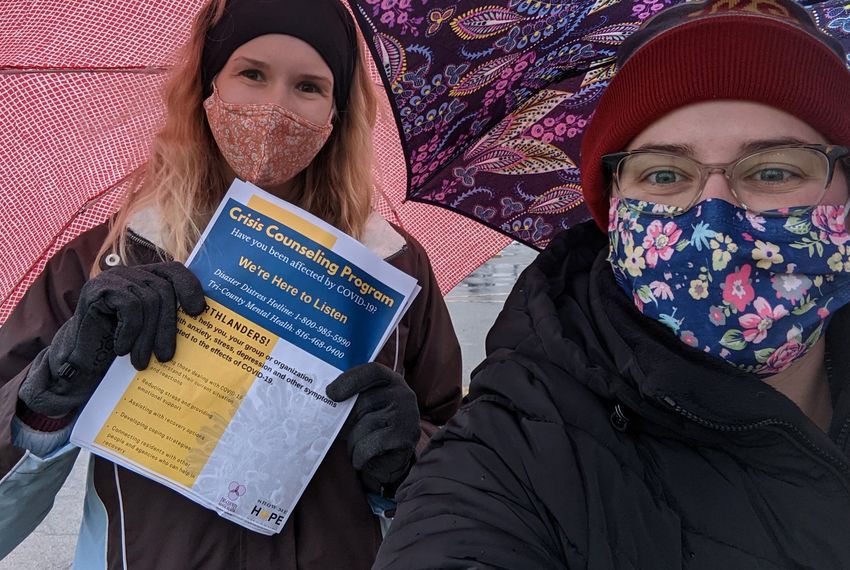
A Quarterly Technical Assistance Journal on Disaster Behavioral Health
                                                    Produced by the SAMHSA Disaster Technical Assistance Center

Images in collage from top to bottom, left to right, row by row: Arkansas CCP honors child mask challenge winners. Missouri CCP staff offer messages of
gratitude to hospital workers. Missouri CCP spotlights staff member Hajal Patel on Facebook. Missouri CCP distributes Super Bowl COVID-19 survival kits.
Puerto Rico’s Proyecto Conéctate CCP offers a virtual workshop about emotional self-care for young children. Missouri CCP staff visit testing site with Missouri
National Guard to provide resources to families.

  2021 | VOLUME 16 | ISSUE 3–4 | PAGE 5
A Quarterly Technical Assistance Journal on Disaster Behavioral Health
                                      Produced by the SAMHSA Disaster Technical Assistance Center

Contributors
               Beckie Gierer, M.S. is the Director for                                   Jane Gaffney is an Independent
                 Continuity of Operations Planning with                                  Contractor with the State of Wisconsin,
                 the Missouri Department of Mental                                       Wisconsin Community Action Program
                 Health (DMH) Office of Public and                                       Association, Inc. (WISCAP). She has
                 Legislative Affairs/Office of Disaster                                  been involved in crisis counseling
Services (ODS). She has an M.S. from the University                     for over 20 years with roles in crisis intake, refugee
of Central Missouri and has worked with the State of                    resettlement, domestic violence, and disaster crisis
Missouri for 18 years. Gierer started her career with                   counseling. She started her career working for Sauk
the Department of Public Safety and worked for the                      County Human Services in Wisconsin as a crisis
Department of Social Services, but she has spent the                    intake worker. Gaffney has worked with Project
majority of her years of service (13) with the DMH.                     Recovery, a grant-funded CCP, after the disasters in
She also serves as grants manager for the Hospital                      Wisconsin in 2007, 2008, 2010, and 2018. Gaffney is
Preparedness Program and Public Health Emergency                        a trainer for the CCP and for the Dementia Friendly
Preparedness grants with ODS and supervises Federal                     program in Wisconsin. Her training has included
Emergency Management Agency (FEMA) Crisis                               topics such as trauma, self-care and team care, disaster
Counseling Assistance and Training Program (CCP)                        preparedness, Skills for Psychological Recovery, and
grants. Gierer is also a contracted trainer with SAMHSA                 suicide prevention. Gaffney is currently working with
for the FEMA CCP and has trained crisis counselors in                   WISCAP to develop a community-based statewide crisis
Missouri, North Carolina, and California.                               counseling program for survivors of disasters, small or
                                                                        large.

               Denise Bulling, Ph.D., LIPC is a Senior                                         Karen Hyatt, M.S.W. is the Emergency
                 Research Director with the University                                  Mental Health Specialist for the
                 of Nebraska Public Policy Center. She                                  Division of Mental Health and Disability
                 joined the university in 2003 after an                                 Services within the Iowa Department
                 over-20-year career as a mental health                                 of Human Services and serves as the
practitioner. Her Ph.D. is in human science with her                    Disaster Behavioral Health Coordinator for the State
dissertation focusing on exploration of training needs                  of Iowa. Hyatt attended the University of Iowa for her
for disaster chaplaincy. Bulling uses her extensive field               undergraduate degree and Iowa State University for
experience in mental health to create bridges between                   her master’s degree. She is a licensed social worker in
practitioners, academicians, and policymakers. She is a                 the State of Iowa and a Certified Resource Specialist
leader in Nebraska’s development of disaster behavioral                 and holds certifications as a Mental Health First Aid
health response capacity, consults and speaks about the                 and Youth Mental Health First Aid Instructor. Hyatt
role of disaster behavioral health within an integrated                 administers the state’s Disaster Behavioral Health
response and recovery system, and is a national                         Response Team and provides training for the FEMA
trainer for the FEMA CCP. She has served as lead for                    CCP and in areas including Psychological First Aid,
several CCPs including one of the first projects in the                 compassion fatigue, and disaster behavioral health.
nation conducted on tribal land. Bulling is a licensed                  Hyatt serves on the Iowa Council of Homelessness, ESF
independent professional counselor (LIPC) and a                         6 Derecho Council, and Preparedness Advisory Council
Certified Threat Manager through the Association of                     for the Iowa Department of Public Health. She has work
Threat Assessment Professionals. She has numerous                       emphases in crisis stabilization services, peer support,
publications related to mental health, disaster, and                    and the Office of Consumer Affairs.
violence.

2021 | VOLUME 16 | ISSUE 3–4 | PAGE 6
A Quarterly Technical Assistance Journal on Disaster Behavioral Health
                                      Produced by the SAMHSA Disaster Technical Assistance Center

Crisis Counseling Assistance and
Training Program (CCP)
What is the CCP?                           • Assisting survivors in reviewing                        The CCP offers services to
The CCP is a short-term disaster             their disaster recovery options                         disaster survivors in their
relief grant for states, U.S.                                                                        homes, shelters, temporary
                                           • Promoting the use or development                        living sites, or houses of
territories, and federally recognized        of coping strategies
tribes designed to help individuals                                                                  worship. Funded CCP services
and communities recover from               • Connecting survivors with other                         include the following:
natural and human-caused disasters           people and agencies who can help                        • Individual and group crisis
through community-based outreach             them in their recovery process                            counseling
and psycho-educational services.
These entities may apply for a CCP         The CCP follows key principles                            • Basic supportive or educational
grant after a Presidential disaster        that make it different from                                 contact
declaration.                               other survivor support
                                           programs. The CCP is:                                     • Community networking and
The Emergency Mental Health and                                                                        support
                                           • Strengths-based: CCP services
Traumatic Stress Services Branch             promote resilience, empowerment,                        • Assessments, referrals, and
of the SAMHSA Center for Mental              and recovery.                                             resources
Health Services (CMHS) and the
Federal Emergency Management               • Anonymous: Crisis counselors                            • Development and distribution of
Agency (FEMA) work together                  do not classify, label, or diagnose                       educational materials
to provide technical assistance,             people. No records or case files are
consultation, and training for state         kept.                                                   • Media and public service
and local mental health personnel                                                                      announcements
involved in the CCP.                       • Outreach-oriented: Crisis
                                             counselors deliver services in the                      To learn more about the CCP, visit
How does the CCP help                        communities rather than wait for                        the CCP toolkit at https://www.
disaster survivors?                          survivors to seek their assistance.                     samhsa.gov/dtac/ccp-toolkit. ■

The CCP helps people recover               • Conducted in nontraditional
and rebuild their lives after a              settings: Crisis counselors make
disaster. The CCP supports short-            contact in homes and communities,
term interventions that involve the          not in clinical or office settings.
following counseling goals:
                                           • Designed to strengthen existing
• Helping disaster survivors                 community support systems: The
  understand their current situation         CCP supplements, but does not
  and reactions                              end or replace, existing community
• Reducing stress and providing              systems.
  emotional support

2021 | VOLUME 16 | ISSUE 3–4 | PAGE 7
A Quarterly Technical Assistance Journal on Disaster Behavioral Health
                                       Produced by the SAMHSA Disaster Technical Assistance Center

Needs Assessment in the Crisis
Counseling Program
By Denise Bulling, Ph.D., LIPC

Conceptualizing and conducting
mental health and substance use-
related needs assessments after a
disaster can be daunting. This is
particularly challenging for state
level personnel who are charged with
determining the need for a Crisis
Counseling Assistance and Training
Program (CCP) grant. The current
CCP needs assessment schemas
are guided by research (Norris,
Friedman, & Watson, 2002; Norris
et.al., 2002; North & Pfefferbaum,
2013). The literature points to
individual and community level
indicators of need related to mental
health after a disaster. Much of our
CCP needs assessment activities             assessed and monitored.                                   disaster mental health responders
center on understanding who is in the                                                                 deployed, and their impressions of
                                            Assessing Needs Before a                                  what is going on in the community.
community and is most vulnerable            Disaster Declaration
to the effects of disaster, and what                                                                  If possible, ask these responders to
resources and capacities for response       Many disasters never rise to the                          count the number of people they talk
are accessible after the disaster.          level of receiving a Presidential                         to and the materials they distribute.
Individual level needs assessments          disaster declaration. Each state                          Some states and localities are
for the CCP focus on identifying            has its own disaster behavioral                           organized enough to ask deployed
psychosocial stressors, individual          health plan to guide how local- and                       mental health responders to collect
connections, and vulnerabilities. An        state-level mental health resources                       additional data about the type of
entire special issue of the Journal of      respond to the disaster. Most states                      reactions they are seeing in the field.
Psychiatric Research (Volume 17,            have capabilities for immediate                           Set the stage early and expect local
Issue S2) focuses on post-disaster          outreach but few can sustain it over                      providers to use incident command
mental health needs assessments for         time. Building needs assessment                           principles where deployed personnel
individuals at the clinical level. From     in all smaller disaster behavioral                        report up to a team leader who can
all of these sources we know there          health outreach activities will make                      collect and report data to the state
are key activities that state-level         it easier to pull together data for                       lead. Asking deployed personnel to
personnel can take early to ensure          large responses that are eligible for                     write a short paragraph about what
mental health and substance use-            the CCP application. The most basic                       they experienced in the field can
related needs in the affected area are      data to collect is the number of                          paint a picture of what survivors

2021 | VOLUME 16 | ISSUE 3–4 | PAGE 8
A Quarterly Technical Assistance Journal on Disaster Behavioral Health
                                      Produced by the SAMHSA Disaster Technical Assistance Center

  Needs Assessment
     The following are helpful resources for conducting a needs assessment:

           Community Assessment for Public Health Emergency Response (CASPER)

           Federal Emergency Management Agency Damage Assessment Manual

           Comprehensive Disaster Assessment and Readiness Tools (CDART)

           Rapid Environmental Assessment Tool (REA)

are experiencing. These paragraphs         ahead of any disaster so they know                        to start.
can sometimes be more informative          who you are when you call and ask
than check boxes on a form for risk        for information about the disaster                        There is no single formula that
factors or reactions. Ask for the          (e.g., damage, areas affected).                           captures all of the mental health
same information from the lead of                                                                    needs after a disaster. In the past the
the American Red Cross Disaster            Assessing Needs for the CCP                               CCP application included tables that
Mental Health function or other            Immediate Services Program                                helped organize effects by reporting
agencies that have deployed mental         (ISP) Application                                         losses such as the number of deaths,
health in the disaster area.               We all know the hallmark of disaster                      injuries, and homes destroyed. The
                                           is chaos. Responders and emergency                        most recent application form for
State leaders should be                    managers are busy keeping people                          the ISP is less prescriptive. Instead,
simultaneously asking someone              safe and assessing damage so they                         applicants are asked to describe
to collect news stories from and           may not prioritize assessment of                          current services and explain why
about the disaster area. Pull out          social or emotional issues when you                       they can’t meet the disaster-related
information from the articles that         need it the most. State mental health                     mental health needs caused or
illustrates the effect on individuals      program directors often experience                        aggravated by the disaster. There is
and communities and cite the source.       challenges getting meaningful data                        also a box to describe any special
This will position you to write the        in the days immediately following a                       circumstances affecting the need
CCP application if needed and              disaster (Elrod, Hamblen, & Norris,                       for crisis counseling services. In
you will be better informed about          2006). You are ahead of the game if                       the early days after a disaster, it is
the potential strain on survivors,         you started collecting news stories at                    often difficult to get exact numbers
responders, and the mental                 the disaster onset and have a system                      and data that illustrate these needs.
health and substance use disorder          for collecting basic data from mental                     However, you can often get ballpark
treatment workforce. Cultivate good        health personnel who are already                          estimates of how many communities
relationships locally and at the state     in the field. If you have not been                        are affected from the state, Federal
level with emergency management            collecting this data, now is the time                     Emergency Management Agency
                                                                                                     (FEMA), and via news reports.

2021 | VOLUME 16 | ISSUE 3–4 | PAGE 9
A Quarterly Technical Assistance Journal on Disaster Behavioral Health
                                       Produced by the SAMHSA Disaster Technical Assistance Center

Identify census information for
each county in your area ahead of
any disaster, or be ready to have
someone look up census information
using the Census Data website
(https://data.census.gov/cedsci).
This website provides community-,
county-, or state-level data about
the population in the disaster area.
Consider pulling out data about
groups most vulnerable to the effects
of disaster (e.g., number of youth,
seniors, households in poverty,
renters, people with limited English
proficiency, different cultural groups,
veteran status). This data coupled
with the narratives you have from           CCP staff conduct outreach, identify local needs. Photo provided by Puerto Rico Proyecto Conéctate CCP.
the field and news reports will help
you tell the story about the social,        in the affected areas. Usually this                       to coincide with due dates for the
emotional, and psychological needs          capacity is limited to the immediate                      RSP grant. Ideally, you will have
of survivors and responders.                response period. Project how many                         ISP outreach data to substantiate
                                            outreach workers you need to serve                        your need for the RSP. However,
Estimating the population to be             an area, recognizing that two people                      this data may not yet be available to
served by your ISP starts with the          are deployed together for safety                          you. Between the ISP and the RSP
overall census numbers for the              reasons. If you propose to fund one                       applications, you should continue
disaster areas. Estimate the effect         full-time equivalent (FTE) or less,                       to monitor news sources and focus
in each area you intend to serve by         be ready to describe how you plan                         on strengthening your connections
reviewing (1) the characteristics           to meet this safety standard. Consult                     with emergency management and
of the disaster (e.g., warning,             with your proposed provider of                            voluntary organization partners
displacements, damage, deaths,              CCP services during the writing                           who are still in the field. The FEMA
and injuries) side by side with             of the grant so they can give you                         joint field office will likely be set
(2) the census information about            information about their local area,                       up by now and there will be a lead
the populations most vulnerable             its disaster related needs, and their                     identified for individual assistance.
to the influences of disaster and           staffing capabilities. Local providers                    This person will have access to
(3) the impressions or data you             can also add to the needs assessment                      information that can help you
have from those in the field.               by describing how damage to local                         direct local mental health outreach
Describing the interplay of these           gathering places and culturally                           activities to areas most affected by
factors is especially important for         important places may affect                               the disaster. You should be getting
rural areas with low population             community cohesion and recovery.                          regular reports from any local
numbers but high effects. A fourth                                                                    mental health assets still responding
(4) consideration is to realistically       Regrouping for the CCP                                    to the disaster. SAMHSA and
describe the capabilities of mental         Regular Services Program                                  the SAMHSA Disaster Technical
health providers to do extended             (RSP) Application                                         Assistance Center will likely be
outreach and psychosocial education         It is not unusual for the ISP training                    working with the state contact now

2021 | VOLUME 16 | ISSUE 3–4 | PAGE 10
A Quarterly Technical Assistance Journal on Disaster Behavioral Health
Produced by the SAMHSA Disaster Technical Assistance Center
as the next grant is taking shape. more detail. managers and team leads can
The RSP grant package contains respond by creating different types
supplemental instructions about Using CCP Data to Adjust of educational materials based on
the needs assessment including a Programming emerging trends or guide training
worksheet to help you consider how Needs assessment never stops. The for crisis counselors. Consider
the impacts of the disaster affect the CCP data collection tools provide a asking crisis counselors in the field
risk of trauma for the population. wealth of information to help you to supplement the data with regular,
I recommend revisiting the four adjust programming as the program brief paragraphs about their
factors you considered in the ISP unfolds. The reports generated by experiences in the field. This helps
application and updating it as new the data system are helpful, but not provide context for the numbers
information comes in. Damage the only way to view data. Consider and simultaneously helps identify
assessments will be done or in downloading the data into an Excel situations that are stressful and
progress, so emergency management spreadsheet so you can view it in rewarding for the CCP workforce.
contacts should be able to provide different ways. For example, you can All of the data helps the state and
more precise information about create graphs showing the trajectory local providers identify next steps
which neighborhoods or areas were of the four reaction types tracked and crucial partners to move the
hit the hardest. This enables you to in individual and group crisis community through recovery when
describe the mental health influences counseling contacts to show how the CCP ends.■
on facilities and populations with reactions change over time. Program
REACTIONS OVER TIME – PROVIDER A
August 18, 2019 through February 18, 2020
100%
90%
Behavioral Emotional Physical Cognitive
80%
70%
60%
REACTIONS
50%
40%
30%
20%
10%
0%
AUG 18 – SEP 18 – OCT 18 – NOV 19 – DEC 19 (2019) – JAN 19 –
SEP 17 OCT 17 NOV 18 DEC 18 JAN 18 (2020) FEB 18
An example of how a CCP might illustrate reactions over time to understand community needs and guide programming.
2021 | VOLUME 16 | ISSUE 3–4 | PAGE 11A Quarterly Technical Assistance Journal on Disaster Behavioral Health
Produced by the SAMHSA Disaster Technical Assistance Center
Staying Connected: CCP Fosters Community
During COVID-19
By Karen Hyatt, M.S.W.
In 2020, a historic number of all over the state, and with all kinds and the groups we set up there.
states launched Federal Emergency of different backgrounds, so we can
Management Agency (FEMA) Crisis honestly say to people across the We have a website (https://www.
Counseling Assistance and Training state that we’re just like you. covidrecoveryiowa.org) with
Program (CCP) grants related to information in over 60 languages
the COVID-19 pandemic. At the Many of our staff have worked on and materials about our program.
same time, to reduce the spread of a Project Recovery Iowa CCP from The website includes a contact
the disease, states and localities 2008 to today. I’m proud of that, that form. When someone fills it out, the
implemented physical distancing they have such a good association request comes to me. I send requests
guidelines and orders, and much of with the grant. to team leaders and we disseminate
the nation spent a lot more time at them to staff, so no request sits for
How have you adapted typical more than 2 hours, except overnight.
home. The CCP is based on in- CCP services to a virtual
person contact, as well as helping environment? We have over 20 groups on social
communities tap into and strengthen media. The Media page of our
existing social networks. What does I recruited our social media liaison,
who has done wonderful things. website (https://covidrecoveryiowa.
such a program look like during a org/media-center) links to a lot
pandemic? She held Zoom sessions with staff
to teach them to use social media. of the Facebook groups. We have
Even if staff said they didn’t like groups on meditation and yoga,
To find out, The Dialogue recently music, and a book club for older
spoke with Karen Hyatt, Iowa’s Facebook, we told them to like
our program page (https://www. adults.
State Disaster Behavioral Health
Coordinator, who leads the COVID facebook.com/covidrecoveryIowa)
Recovery Iowa CCP. Since 2008
Hyatt has worked on six Iowa CCPs,
many branded as Project Recovery
Iowa. She described how COVID
Recovery Iowa is different, including
innovations in staffing, virtual
services, and creative ways the
program has found to reach disaster-
affected communities.
How is your current COVID-19
grant structured?
We have five providers and 105 staff
members. As in past CCPs, we have
tried really hard to hire people from
2021 | VOLUME 16 | ISSUE 3–4 | PAGE 12A Quarterly Technical Assistance Journal on Disaster Behavioral Health
Produced by the SAMHSA Disaster Technical Assistance Center
Have there been other staffing This structure is new, and it’s communicate, mainly by text,
changes for the CCP during worked so well that I think I will with people with developmental
the pandemic? do it again. The specialty areas help disabilities who are isolated because
We have the social media staff staff focus. Staff are not limited to of the pandemic from their normal
member I mentioned on this grant, one specialty area; they can serve support groups or work clubs. Our
along with a great graphic designer, people outside of their area. The staff had to set limits on how much
who is also a high school teacher. reality is that a lot of families have time they spent, because participants
He has taken our print material and members who fall into all of the really wanted to interact with them.
given it a really strong, consistent, categories. We had to bring in additional staff
professional look. and train them, because staff we had
What have staff done in the couldn’t handle all the requests. We
We added a layer to our CCP that’s specific specialty category put together a training on adaptive
unique; it’s the only one in the areas? technologies to help our staff in this
country right now with specialty In the area of older adults and area.
coordinators, who are subject matter individuals with developmental
experts in six categories: agriculture disabilities, we have a pen pal We also have song-o-grams, where
and rural mental health; domestic program. Since the program started a person can ask for someone’s
violence, homelessness, and urban a few months ago, staff have sent favorite song. We recently had a
mental health; children and families; well over 400 handwritten letters, request from a gentleman for a song-
military families and veterans; and people in nursing homes have o-gram for his wife, who was in a
older adults and individuals with started writing back. One of our staff nursing home and on a ventilator,
developmental disabilities; and has legacy training, which helps for their 63rd anniversary. A phone
workforce. Also, one person works with asking questions to get a person was brought to the woman on the
exclusively on self-care for staff. to tell his or her story, and then they ventilator, and our staff sang the song
The specialty coordinators don’t transcribe it and give it back to the that the woman and her husband had
supervise—we have team leads who individual. Especially for people danced to at their wedding.
do that—but we ask all of our staff who are isolated, this work gives In agriculture and rural mental
to select a specialty area when they them a purpose, reminding them that health, we have support groups for
are hired. The specialty coordinators their life has meaning and someone families of farmers. Staff have done
come up with programming and wants to hear about it. a lot of work with suicidal ideation in
guide and give assignments to other farming. We partner with Iowa State
staff. We have a book club focused on
older adults. We partnered with the University Extension and Outreach,
library association to send copies including hiring some of their staff to
Special populations are groups of the first book to nursing homes. help with rural programming, such as
who may be at greater risk in and after Out of that group came a lot of Stress on the Farm sessions.
a disaster. Special populations vary by discussion that kind of turned into Staff in this area have done a lot of
disaster. They may include: a support group. It’s a Zoom group, work with the meat packing plants,
¨ Children and youth and people can also attend by phone. where high numbers are testing
They have met several times. positive for COVID, and the majority
¨ Older adults
¨ People with past trauma The developmental disabilities of workers do not speak English. It’s
area has a program, Chat Buddies, been hard to reach this population.
¨ Public safety workers
that has really taken off. Staff Many don’t have internet access, and
¨ People experiencing homelessness
2021 | VOLUME 16 | ISSUE 3–4 | PAGE 13A Quarterly Technical Assistance Journal on Disaster Behavioral Health
Produced by the SAMHSA Disaster Technical Assistance Center
they’re not going to do something We started these sessions because
other than work while they’re at Homeland Security and Emergency
work, so we try to go to places they Management staff asked for them,
naturally would go for information, and they really liked them. We
like laundromats and small grocery have had sessions for staff in other
stores. The staff that work there are state departments. We have also
in the know, and they get in over developed sessions for nursing home
their head because people come to staff, breaking the full session into
them for everything. We tried at 10-minute recordings that staff can
first to work through the two big listen to over six to eight days to
Video posted to Facebook by COVID Recovery
employers in the state, and we didn’t Iowa of a reading of Salam Alaikum by Harris J. cover the material. These sessions
make an impact at all. By partnering have been well-received, and some
with other agencies we have done families. One child said, “I don’t are reaching out in their private time
more, and we have hired people want anything for me, but if you to schedule counseling sessions.
from Somalia and other countries could bring my mom a box of
that plant workers also come from. Kleenex, because she cries every How have you gotten the word
night, that would be good.” The out about your CCP?
In the area of children and families, mom didn’t know the child knew We have engaged the media in some
we have a series of readings of that, but kids do know. One of the of our groups. Then they promote
children’s books by our staff and wives and the mom separately from our program on the radio for free.
others. The readings are recorded Santa had their own conversation. Celebrity involvement has also been
and posted each day at 10 a.m. Out of the Santa visits, we have helpful.
(https://www.facebook.com/ gotten 40 requests for one-on-one
groups/1581970971987124). We counseling for parents. The Governor has regular press
have had famous people in Iowa, conferences. She recently invited
or with a connection to the state, In the military families and veterans me to one, held at the Iowa public
including Ashton Kutcher, reading category, two people share the television station, to talk briefly
children’s books. His first cousin specialty coordinator position—one about our work. By the time I got to
is married to one of the executive with a husband in the military, the my car after the press conference, I
directors of a provider organization other a Vietnam War veteran. A lot already had calls from five agencies
for our grant. Miss Iowa has read, of veterans with disabilities and wanting more information. By the
and all the university coaches, and older veterans are involved, and they time I got back to my computer, 45
now we’re moving on to mascots. participate in the pen pal and legacy people had gone to our website and
programs, as well as some Facebook asked for one-on-one counseling,
We’re offering virtual visits with groups. We found that military and by the next morning it was 212.
Santa through Facebook. In two families didn’t always know about I emailed the Governor’s Office staff
weeks we served 248 kids, and resources available to them outside and told them what had happened
another 100 are already scheduled of the military. We’ve been letting and how many people had contacted
for the upcoming week and a half. them know about community-based me. Later the Governor mentioned
Both Santas are staff, counselors services where they are. our CCP again, and I noticed an
with backgrounds in disaster, and increase in requests through our
both are married to wives who are In the workforce category, staff have website. She said they would
also counselors for us. The kids been holding 1- to 1.5-hour sessions have us back after the holidays, in
tell Santa the real deal about their on self-care and anxiety reduction. February.■
2021 | VOLUME 16 | ISSUE 3–4 | PAGE 14CCPs Get Creative A Quarterly Technical Assistance Journal on Disaster Behavioral Health
Produced by the SAMHSA Disaster Technical Assistance Center
CCPs Get Creative!
Across the country, CCPs are coming up with creative ways to
provide outreach and services to people struggling during the
COVID-19 global pandemic. The virtual nature of the current
programs has encouraged CCP leadership to explore new ways
to reach their target audience. Here are a few of their strategies.
Partner with utility companies to
include program information in
their customer communications
such as billing statements or
payment receipts.
Start or participate in a pen pal Partner with state department of
program between CCP staff and transportation (DOT) divisions
residents in nursing homes and to include program messaging
assisted living facilities. on DOT electronic billboards.
Convene collaborative Coordinate with an in-state
conference calls with other emergency rental assistance
states in the region to discuss program to distribute resources
best practices, brainstorm, and Identify warming locations for and reach out to individuals and
share resources. individuals who are homeless families served by the program.
during the winter months and
use those sites to distribute
resources and connect with
them.
Collaborate with retired
educators to establish response
teams that can be deployed to
Offer resources, a hotline
schools affected by COVID-19,
number, and virtual groups
taking help directly to educators CALL YOUR LOCAL CCP TO CONNECT TO SUPPORT SERVICES
as needed for department of
and school support staff.
corrections staff in places Partner with professional sports
where COVID-19 cases have teams to mention the program
spread rapidly within these or promote the program when
environments. airing games.
2021 | VOLUME 16 | ISSUE 3–4 | PAGE 15A Quarterly Technical Assistance Journal on Disaster Behavioral Health
Produced by the SAMHSA Disaster Technical Assistance Center
Crisis Counselors Support Communities and
Individuals through Disaster Anniversaries
By Beckie Gierer, M.S.
In every disaster, there comes a
time to commemorate the event that
led an individual or community to
where they are in their recovery
journey. Anniversaries are met with
many emotions, celebrated in a
variety of ways, and held at various
points. In Missouri, there have been
several federally declared disasters
in the last 8 years. Missouri has seen
tornadoes in 2011, severe flooding in
2015, 2017, and 2019, and tornadoes
in 2019.
In 2011, one of the deadliest
tornadoes (an EF-5) went through
Joplin. On the same day,
8 years later, in 2019, a
storm system went through Crisis Counseling Assistance
Missouri that produced several and Training Program (CCP) staff
tornadoes. Three tornadoes participate in a required disaster
went through communities anniversary training that focuses
on helping crisis counseling What is an anniversary event?
right outside of Joplin that took
the lives of three people and staff anticipate and respond When thinking about anniversaries,
brought back many painful to possible individual and an important thing to remember is
emotions and memories on the community reactions, including that it can mean different things to
disaster anniversary. Anxiety adapting public education and different people. The community
was already at a heightened media messaging to match may decide to host an event to
state when the storm system changing needs. remember what happened or the
pushed through the area in community may decide to let the
the late evening. Loved ones were areas on the eighth anniversary, anniversary pass with each person
frantically texting each other to some 143 miles away, another round doing their own unique thing. An
check on their safety and people of tornadic activity was starting in anniversary event may be held at
were rushing to their safe locations; central Missouri. That same storm different times depending on the
the fear and anxiety was evident as system produced a tornado in Eldon community and the disaster. One
the storm system mounted. While and Jefferson City that left a trail of community may choose to not do
response was happening in these damage in those communities. anything formal for an anniversary
2021 | VOLUME 16 | ISSUE 3–4 | PAGE 16A Quarterly Technical Assistance Journal on Disaster Behavioral Health
Produced by the SAMHSA Disaster Technical Assistance Center
hosting. This can create challenges anniversary reactions. During one
for the counselors as they determine of the Joplin anniversary events,
Examples of anniversary how to best reach the community CCP staff collaborated with other
events include: members at an anniversary event. organizations to provide assistance
¨ Anniversary unity walk As most mental health professionals at a children’s block party. The
¨ Children’s block party will tell you, people don’t typically children talked about the school they
¨ Neighborhood lunches walk up to a mental health table and lost, their memories, and shared
reach out for assistance. However, stories while having a fun time on
¨ Fish fry event
if the crisis counselors are standing what was a sad day for many of
¨ Anniversary riverfront event or walking in the crowd, among the the parents. The crisis counselors
survivors and community members, handed out pinwheels and bubbles to
while another community may do they are more likely to be able to the kids to help ease the stress of the
multiple events over the course of reach that population. anniversary and the reactions by the
several days. adults. The pinwheels and bubbles
How can outreach staff help were used to help promote positive
Events range in size, location, type, during an anniversary event? thoughts about wind and weather.
and formality. The type of event a When communities start
community holds depends on what planning the anniversary events, Another area that CCP staff need to
works for that community. Crisis crisis counselors should start consider is what types of reactions
counselors participate in anniversary brainstorming ideas for how they they may see around an anniversary.
events by providing much needed will reach out to the community In Joplin, referrals and calls to
emotional support. This is done in members attending. This could the hotline increased when storm
a variety of ways and often requires be something as simple as doing systems moved through the area and
crisis counselors to think outside games or activities, giving away when the anniversary approached.
the box. For example, in Joplin, information on reactions while As the anniversary passed, staff
crisis counselors participated in walking around the crowd, giving began to see a decrease in contacts
the anniversary unity walk where a presentation, or setting up a and referrals. As anniversaries
staff were stationed at several table with information about approach, survivors may have more
locations along the walking route to
offer water and emotional support
to both volunteers and citizens
participating in the event. Crisis
counselors have also participated
in less formal events like a fish fry
where a community just wanted
to come together to be in a central
location during a hard time.
Missouri CCP staff have also been
a part of anniversary riverfront
events, children’s block parties,
and neighborhood lunches. These
events present a unique opportunity
for the crisis counselors to become
a part of the event without actually
2021 | VOLUME 16 | ISSUE 3–4 | PAGE 17A Quarterly Technical Assistance Journal on Disaster Behavioral Health
Produced by the SAMHSA Disaster Technical Assistance Center
startled reactions and an increase Missouri, we see reactions around and partners remain sensitive to
around fear. The anniversary may fear, anxiety, and frustration in the these reactions in the survivors and
also bring back memories around survivors. Community members themselves. ■
possessions or loved ones that were
lost during the event. Depending
Total Reactions Reported Across CCPs During COVID-19 Pandemic
on the time of the anniversary (1 200K
month, 6 months, 1 year, etc.), these 180K
JANUARY 20, 2020
TOTAL REACTIONS REPORTED
reactions may be more difficult 160K FIRST CASE OF
COVID-19 REPORTED
depending on where the survivor 140K
IN THE U.S.
120K
is in their recovery journey. For
100K
someone who isn’t fully recovered
80K
emotionally, anniversaries can be MARCH 2020 YEAR
60K LOCKDOWN AND ANNIVERSARY
more difficult. Other survivors 40K
RESTRICTIONS BEGIN OF FIRST CASE
may use the anniversary as a time 20K
to reflect and remember what they 0K
MAR APR MAY JUN JUL AUG SEP OCT NOV DEC JAN FEB MAR APR
have lost, what they experienced, 2020 2020 2020 2020 2020 2020 2020 2020 2020 2020 2021 2021 2021 2021
and look at where they are at now. A spike in disaster reactions in early 2021 corresponds to the anniversary of the start of
As anniversaries approach in pandemic impacts in different parts of the country.
Disaster anniversaries
Coping strategies to help people through traumatic anniversaries include the following:
Recognize and Find healthy Remember and Use your
acknowledge ways to cope with celebrate the support system.
feelings you may your distress. lives of your Reach out to friends
experience. Share memories and loved ones. and family. Don’t
Understand that your feelings with someone Anniversaries of a isolate yourself.
feelings are part of the you trust or just spend lost loved one can
recovery process. time with friends and be a difficult time for
family. Avoid negative friends and family, but
ways to cope such it can also be a time
as drinking or using for remembrance and
drugs. honoring them.
Source: https://www.apa.org/topics/anniversary-traumatic-event
2021 | VOLUME 16 | ISSUE 3–4 | PAGE 18A Quarterly Technical Assistance Journal on Disaster Behavioral Health
Produced by the SAMHSA Disaster Technical Assistance Center
Tips for Working With Tribal Communities
During a Disaster Response
By SAMHSA Tribal Training and Technical Assistance Center
Applying cultural considerations is principles of cultural proficiency: This information is important
recommended when working with for disaster behavioral health
American Indian and/or Alaska 1. Culture is the predominant force coordinators, disaster technical
Native (AI/AN) communities. in people’s lives. assistance providers, and/or anyone
Cultural considerations are 2. The dominant culture serves providing support or working with
especially important when people in various ways. AI/AN communities before, during,
responding to emergency or disaster or after a disaster or emergency.
situations affecting AI/AN people. 3. People have both personal Keeping these principles in mind,
identities and group identities. the following considerations can be
Five Principles of Cultural helpful when working with AI/AN
Proficiency 4. Diversity within cultures can be communities.
Cultural Competency for vast and significant.
Emergency Management (EM) and Engage and request support
5. Each individual and each group from tribal governments and
Consequence Management (CM) have unique cultural values and
(Bergeron) defines the following five leadership.
needs.
There are 573 federally recognized
and 63 state-recognized tribes in the
United States:
Each tribe is a sovereign
government.
Each tribe is different, even if
there are similarities in culture or
cultural values.
Engage tribal leadership first,
especially for EM or when
responding to disaster.
Tribal leadership may be an
elected chairperson and/or board
of directors.
Develop a relationship with
leadership prior to a disaster or
emergency.
Image courtesy of SAMHSA Tribal Training and Technical Assistance Center.
2021 | VOLUME 16 | ISSUE 3–4 | PAGE 19A Quarterly Technical Assistance Journal on Disaster Behavioral Health
Produced by the SAMHSA Disaster Technical Assistance Center
Inquire
if the tribe has a current
EM plan or needs support
developing one.
Many tribes have various
departments, programs,
and resources to assist with
emergency response and/or crisis
management.
Engage in effective
communication, using multiple
methods.
One of the most important areas to
address is effective communication.
Emergency responders and other
CM officials must be prepared to use
multiple communication methods
and consider different levels of
literacy:
Information should be conveyed
Funeral ceremonies help people Ceremonial washing of the
in languages other than English,
cope with the loss of their family deceased and other customs or
including sign language, as
members. These practices have rituals
needed.
been developed and refined over
Cultural items left or placed with
EM and CM officials may need generations. Dealing with casualties
and death can be where cultural the dead
to quickly identify key leaders
and communicators who are able proficiency has the most effect: Understand the importance of
to deliver culturally appropriate family roles, responsibilities,
Religious and cultural beliefs and
messages (in the correct language and support structures.
death practices will be important
and cultural context) to inform the
to survivors. Traditional cultures may use
affected population and prompt
matriarchal or patriarchal decision-
desired actions and results. There may be a strong making methods and include
psychological need to quickly extended family or clans:
Education and literacy, as well as
identify lost loved ones and to
socio-economic status, may play a
grieve for them in specific cultural Officials may need to specifically
role in effective CM, particularly
ways. engage these individuals or
in the mid- to long-term recovery
familial leaders.
phases. There may be conflicts concerning
the following: During a mandated evacuation
Remember the importance
or emergency shelter situation,
of culturally specific funeral Autopsies, timeframe, and keeping all members of extended
rituals and/or ceremonies. handling of the body families together may prove to be
2021 | VOLUME 16 | ISSUE 3–4 | PAGE 20A Quarterly Technical Assistance Journal on Disaster Behavioral Health
Produced by the SAMHSA Disaster Technical Assistance Center
a critical component in families’ Work directly with individual EM and CM officials may have
compliance with CM official’s tribes to address these topics and the ability to enhance the readiness
instructions. ask questions. and flexibility of the populations
they protect and serve through a
Ask or rely on tribal leadership In summary, consider the following: culturally appropriate dialogue.
to share the importance of these
Encourage incorporating cultural
practices. Cultural considerations allow
considerations into everyday individuals and organizations to
Each AI/AN community may be efforts and interactions, as well as interact effectively. It is an approach
different or have varying cultural crisis response operations. for addressing the issues that emerge
values. in diverse environments. Taking
Include crisis responders and
Learn how others define cultural brokers (e.g., community cultural considerations into account
“household” and gender roles. leaders) from the affected cultural in your approach is proactive and
groups before, during, and in the can provide framework for seamless
AI/AN communities may have sustainable interactions and
differing or opposing definitions aftermath of any crisis.
partnerships. ■
depending on culture. These Community-based groups
definitions can affect the following: can provide an important
Distributionof relief supplies in communication link with the
the immediate aftermath of the cultural groups they represent.
incident and/or the disbursement
of longer-term recovery funds.
Culturally,“household” may be
defined by family ties related
to the eldest male member,
depending on AI/AN tribe:
This can be problematic when
considering single mothers with
children or newly widowed
women, with no remaining male
family ties.
Example influencing resource
support: The “Household Rule”
and the aftermath of Hurricane
Katrina.
Cultural
gender roles may also
cause additional complications.
Female survivors may not feel
comfortable receiving treatment
from male first responders.
2021 | VOLUME 16 | ISSUE 3–4 | PAGE 21A Quarterly Technical Assistance Journal on Disaster Behavioral Health
Produced by the SAMHSA Disaster Technical Assistance Center
Crisis Counseling in Rural Wisconsin
By Jane Gaffney
In Wisconsin, residents have a for assistance in coping with the
bootstrap mentality, meaning COVID-19 pandemic. The CCP was
that they “pull themselves up by implemented to help all residents of
their bootstraps”—an old saying, Wisconsin, with a focus on areas that
but very applicable today. Rural had a surge in cases of the disease. According to the U.S. Census
Wisconsinites take care of what The CCP in each of the disasters was Bureau in 2017, 1 in 5
needs to be done and continue to branded as Project Recovery. In all Americans lives in a
try to make a living, no matter of the CCPs, crisis counselors have rural area.
how challenging the times. The been hired, trained, and deployed
Source: U.S. Census Bureau, Population
State of Wisconsin applied for to the areas included in Presidential Division, 2018
Federal Emergency Management disaster declarations for storms and
Agency (FEMA) Crisis Counseling the pandemic. The COVID-19 pandemic has
Assistance and Training Program further broken down the fabric
(CCP) grant funding in 2007, Storms Hit Hard of communities in the state.
2008, 2010, and 2018 due to Flooding, straight-line winds, and Resources have been depleted. In
severe storms and flooding. In tornadoes have severely affected rural communities, many roads
2020, the state applied for a grant rural communities in Wisconsin. were washed out, homes flooded,
2021 | VOLUME 16 | ISSUE 3–4 | PAGE 22A Quarterly Technical Assistance Journal on Disaster Behavioral Health
Produced by the SAMHSA Disaster Technical Assistance Center
and animals stranded when storms
hit. Some survivors were trapped
in their homes for days because Rural residents, communities, local governments, and others
of road closures. Vehicles and involved in emergency preparedness and response face
possessions were washed away challenges that can include:
in the floodwaters. Wisconsinites
now face isolation, depression, and
• Resource limitations, such as equipment and
supplies, training, and infrastructure
anxiety due to the need for physical
distancing and risk of infection • Access to health care for higher levels of care
during the pandemic.
• Remoteness and geography
Survivors often tell crisis counselors,
“I’m fine, but my neighbor got a lot
• Low population density
of damage.” Since the pandemic • Communication issues
hit, we are hearing “I’m fine, but
my friend/relative/coworker is
really depressed or has the virus.”
Crisis counselors are trained to Source: https://www.ruralhealthinfo.org/topics/emergency-preparedness-and-response
listen to each person’s story. As
crisis counselors spend time with Weather. One of the biggest the pandemic. They attended church
survivors, they hear more about challenges in Wisconsin has always services and talked to survivors
the struggles survivors are facing. been the weather. Winters can be before and after services. They
The crisis counselors help with very harsh. In November 2018, crisis went to feed mills and co-ops where
goal setting and suggest ways to counselors deployed in response farmers regularly gathered. Flyers
handle stress. Crisis counselors to late August flooding faced low were put in bags at food pantries,
have learned that listening to temperatures and heavy snowfall, grocery stores, and thrift stores.
the survivor’s story is crucial to making outreach very difficult. In The crisis counselors attended local
emotional healing. With patience January 2019, the polar vortex hit events, including “coffee with a
and diligence, crisis counselors are Wisconsin. Crisis counselors were cop” gatherings; county fairs; town,
able to correct misinformation and unable to perform canvassing for city, and county meetings; and
give survivors a sense of hope. over a week with windchill factors anniversary events. They reached
of -30 to -60 degrees. The threat of out to schools and libraries to
Challenges Faced in Rural
flooding in the spring and summer of perform puppet shows that focused
Areas
2019 was also daunting. on hope and flexibility after a
Although survivors are flexible and disaster. They held after-school
resilient in Wisconsin, storms and Distrust. At times, survivors will programs as well as day camps in
flooding have continued to affect not answer the door due to mistrust. the summer and fall.
the same areas of the state. Crisis Crisis counselors connect with
counselors report that survivors are local and county law enforcement Difficulty in contacting survivors.
worn out physically, emotionally, to introduce themselves to the area Farmers and rural survivors were
and financially. Following are where they are working to help sometimes very difficult to reach.
some of the major challenges crisis build trust. Crisis counselors in Two crisis counselors attended a
counselors have faced and worked to Wisconsin became very resourceful farm auction to try to connect with
overcome: in reaching out to survivors prior to as many farmers as they could.
2021 | VOLUME 16 | ISSUE 3–4 | PAGE 23You can also read


