Academic year 2019-2020 Guidelines for our Swiss European Mobility Partners - University of Fribourg - Switzerland visit www.unifr.ch/mobility ...
←
→
Page content transcription
If your browser does not render page correctly, please read the page content below
Academic year 2019-2020
       Guidelines for our
Swiss European Mobility Partners

University of Fribourg – Switzerland
    visit www.unifr.ch/mobility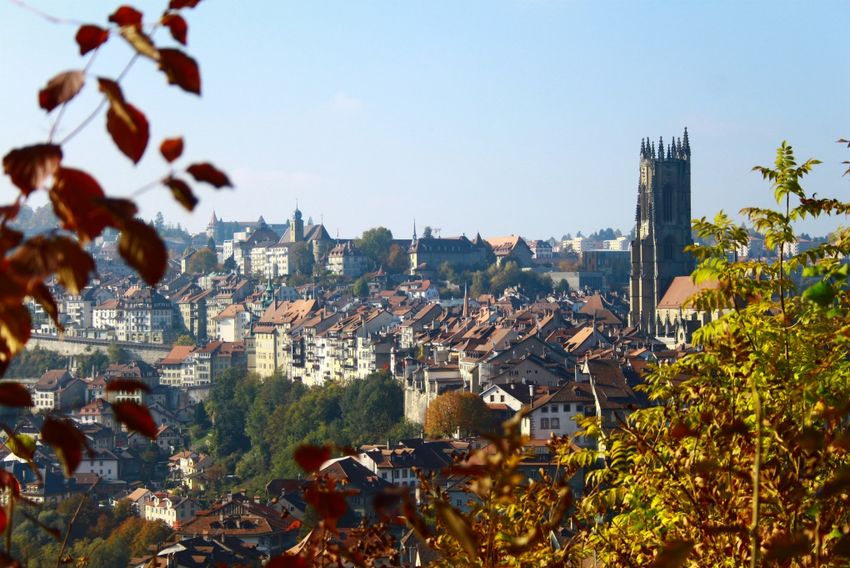
Content

1.        Fribourg: City and University ...............................................................................................2
2.        Academic Year 2019-2020 ..................................................................................................3
3.        Deadlines ............................................................................................................................4
4.        Application Process for the Student .....................................................................................4
     a.          Application link ............................................................................................................4
     b.          Online application ........................................................................................................4
5.        Special Needs .....................................................................................................................5
6.        Grants .................................................................................................................................5
7.        Traineeship .........................................................................................................................6
8.        Language Policy..................................................................................................................7
     a.          Pre-semester language course ....................................................................................7
     b.          Language classes during the semester .......................................................................8
9.        Study Offer ..........................................................................................................................8
10. Course Catalogue ...............................................................................................................9
11. How to Find the English Taught Classes .............................................................................9
12. Exams, Credits and Transcripts ..........................................................................................9
13. Housing .............................................................................................................................10
14. Visa – Student Residence Permit ......................................................................................11
     a.          Visa procedure for non-EU and non-EFTA students ..................................................11
15. Insurance ..........................................................................................................................14
16. Cost of Living ....................................................................................................................14
17. Key Data ...........................................................................................................................15

                                                                       1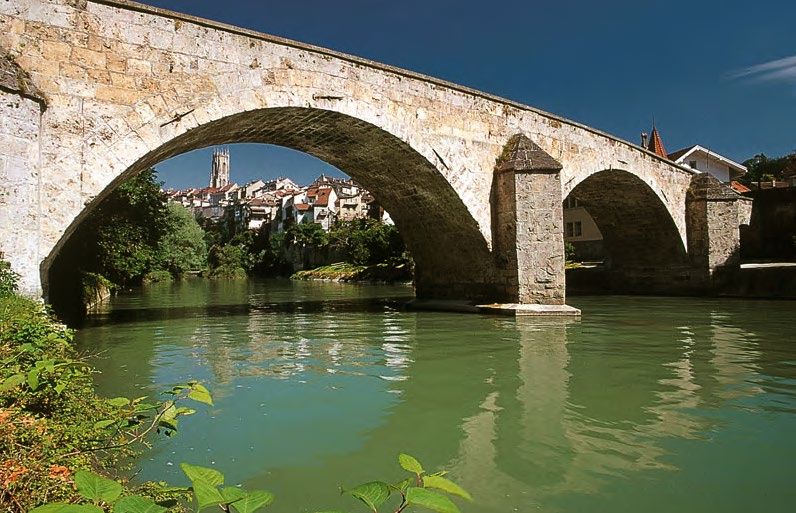
INTERNATIONAL RELATIONS OFFICE

1. Fribourg: City and University
Fribourg, or Freiburg in German, is one of Europe’s most beautiful and best-preserved medieval
towns. Yet the city moves to the beat of its students. With over a third of its population being
                                     students, this ancient city is truly young at heart.
                                     Located at the crossroads of the German and French
                                     speaking regions of Switzerland, and nestled between
                                     Northern and southern Europe, Fribourg is a bridge
                                     between cultures and languages.
                                   Fribourg hosts a multitude of festivals and cultural events
                                   throughout the year, cafés and restaurants that serve first-
                                   class delicacies, and is a veritable sporting paradise. It is
                                   easily accessible by road, rail, and air from Geneva, Zurich,
Lausanne and the Swiss capital, Bern.

The University
Fribourg reflects the perfect example of Switzerland’s long tradition of unity in diversity. With a
strong commitment to international relations, the University is part of several strategic networks
and has exchange partnerships with more than 150 universities worldwide.
In the past 15 years, the University’s student population has more than doubled. Its students and
professors hail from 110 countries. Approximately 45% students speak German as their native
language, 35% French, and 20% other languages. Students can study in French and/or German
as well as in English in some Master’s programs.
The curricula are modular, which allow for specialization, and are spread over three years for
Bachelor’s degrees with an additional average of 18 months for Master’s degrees. PhD’s are
offered in all disciplines, and doctoral students can network by participation with doctoral
programs with national and international partners.

For One and All
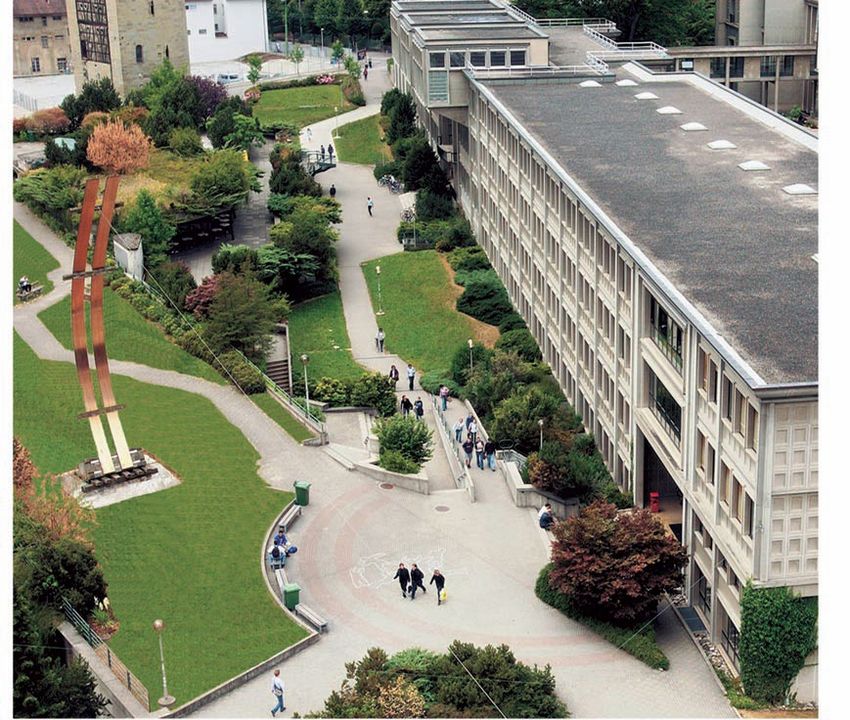
The University ensures that adequate infrastructure is available for all students at all times. There
are numerous libraries, reading rooms, computer rooms and a foreign-language media centre on
campus. Institutions for social advice, grants, study and career guidance, psychological
counselling, a nursery, and spiritual guidance, support the students in their day-to-day life. The
AGEF (General Student’s Association) helps students find jobs, lodging or even books.

                                             Mens Sana In Corpore Sano
                                             The University Sports Institute offers a range of classes
                                             in 30 different sports: The “Mountain and Sports”
                                             programme includes activities like snow-shoe walking (at
                                             night when there is a full moon), rock climbing on
                                             weekends, paddle, etc.: see the programme on:
                                             www.unifr.ch/sportuni).
                                             Musical talent finds expression in choirs and in the
                                             University of Fribourg and city orchestras. There are
                                             many associations promoting leisure activities.

                                                    2
INTERNATIONAL RELATIONS OFFICE

2. Academic Year 2019-2020
Fall semester 2019

                                  26.08.2019 - 13.09.2019 / 6 ECTS / more information and fees
Pre-semester intensive
                                  in chapter 8 and on the following website:
language course, 3 weeks
                                  https://www3.unifr.ch/centredelangues/en/courses/intensive/

                                  EITHER 26.08.2019 for those attending the Pre-semester
Orientation is compulsory         French language course
                                  OR 13.09.2019 for others (Friday before the semester starts)

Course period                     16.09.2019 - 20.12.2019

Christmas break                   20.12.2019 - 05.01.2020

                                  End of December and/or January, February:
Exams period                      dates to be checked on each Departments webpage,
                                  see chapter 9

Spring semester 2020

                                  03.02.2020 - 14.02.2020 / 4 ECTS / more information and fees
Pre-semester intensive
                                  in chapter 7 and on the following website:
language course, 2 weeks
                                  http://www.unifr.ch/centredelangues/en/courses/mobilite

                                  EITHER 03.02.2020 for those attending the Pre-semester
Orientation is compulsory         French language course
                                  OR 14.02.2020 for others (before the semester starts)

Course period                     17.02.2020 - 29.05.2020

Spring break                      10.04.2020 - 19.04.2020

                                  End of May and/or June, July,
Exams period                      dates to be checked on each departments webpage,
                                  see chapter 12

Expected arrival dates
24 to 48 hours prior to the start of the course – see above

Orientation session is compulsory to the benefit of the students.
The International Relations Office organises orientation sessions at the beginning of the
semester and is the point of contact for students and their administrative issues. The IRO
helps students understand the ways on “how to” within the administration. It will also inform
them to whom to address their questions during their stay.

                                                  3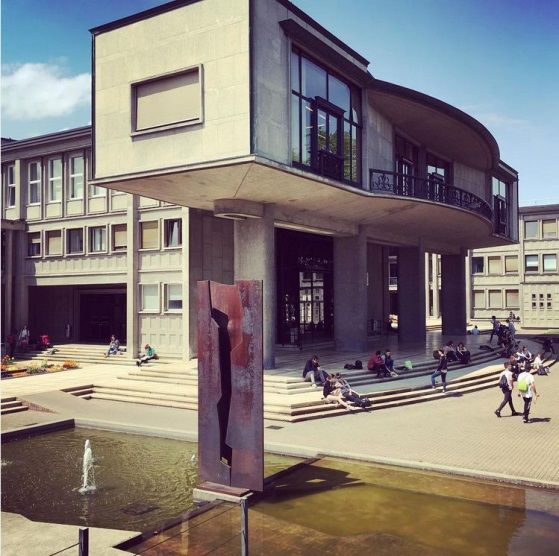
INTERNATIONAL RELATIONS OFFICE

3. Deadlines

 Details of the nominated students

 31.04.2019                    For the full Academic Year 2019-2020 or the Fall semester 2019

 15.09.2019                    For the Spring semester 2020

 Email address to send
                               international-incoming@unifr.ch
 the nomination

                               Name, e-mail address, date of birth, nationality of the student,
 Needed information            study period, study level, study field of the agreement AND study
                               field of the student

 Application from the students

 31.05.2019                    For the full Academic Year 2019-2020 or the Fall semester 2019

 31.10.2019                    For the Spring semester 2020

                               Every nominated student receives a personal e-mail with a link for
 Online Application
                               the online application.

                               All the relevant information about the stay are to be found on
 Incoming students             www.unifr.ch/international/en/in (also available in French and
                               German)

4. Application Process for the Student

   a.      Application link
The IRO will send the online application link to the student by email. This is a personal link,
which can be used only once.

   b.      Online application
The student has to register online until the application deadline. At the end of the online
application, a PDF document is created called “Application for a student mobility period”. This
document has to be signed and uploaded into the online application together with the following
documents:

                                                    4
INTERNATIONAL RELATIONS OFFICE

   • Application Form, signed by the student and by the home coordinator (the document
     is automatically created at the end of the online application)
   • List of courses the student wants to attend in Fribourg (or the Learning Agreement if the
     courses are already available)
   • Official Transcript of former records
   • Copy of the passport or identity card
   • Language knowledge the evaluation form of the
     Europass Language passport (to be found in the online
     application)

5. Special Needs
The University of Fribourg can cater for students and staff with
special needs on individual request.
In the framework of the Swiss European Mobility Programme students with special needs can ask
for an additional funding to cover additional cost during their stay at the University of Fribourg.
Please contact the International relations office as early as possible: international-
incoming@unifr.ch.

In general, the University of Fribourg offers its help to people with a disability regarding the access
to buildings or accommodation, as well as in case of questions relating to special consideration
of disability in the course of study or exams.
More information: www.unifr.ch/uni-info/en/index/disability.
Students can communicate any disability while filling the online application.

6. Grants
Swiss European Mobility Programme (SEM) is the name of the programme replacing the
ERASMUS+ Programme for Swiss higher education institutions. Since the exclusion of
Switzerland in 2014/2015 the Swiss government is bearing the costs of the activities with EU
partners for the outgoing and incoming exchange students and staff. The amounts are fixed for
one, respectively two semesters. The University of Fribourg is in charge of delivering the grant to
the student.

                                                    5
INTERNATIONAL RELATIONS OFFICE

      Country of the home                            Grants for studying               Grant per
          University                                                                 month for an
                                             1 semester           2 semesters         internship

    Denmark, Finland, Island,
  Ireland, Luxembourg, Norway                CHF 1600.-            CHF 3800.-
     Sweden, United Kingdom

   Austria, Belgium, Bulgaria,
    Cyprus, Czech Republic,
  Germany, Greece, Estonia,                                                            CHF 440.-
 France, Latvia, Spain, Croatia,
Hungary, Italy, Latvia, Lithuania,           CHF 2200.-            CHF 4400.-
Macedonia, Malta, Netherlands,
  Poland, Portugal, Romania,
    Serbia, Slovenia, Slovak
       Republic, Turkey

Procedure to receive the grant:
All the incoming students coming throughout the Swiss European Mobility Programme receive a
grant; there is no selection for the grant. Before their arrival, incoming students receive an e-mail
with the procedure to open a Swiss bank account. At the Welcome Day they receive a Grant
Agreement. As soon as the IRO has received the signed Grant Agreement and the bank account
details, the full amount of the grant will be transferred. Students who stay two semesters receive
the grant in two halves (first in September, second in February).
If a student does interrupt her or his stay at the University of Fribourg without any major reason
or does not fulfil certain conditions (e.g. does not attend a single course), she or he has to refund
the full amount or a part of the grant to the IRO.

7. Traineeship
Students from our partner university can receive a grant from the Swiss European Mobility
Programme for a traineeship at the University of Fribourg or at an organisation or enterprise in
Fribourg and its surroundings.
The students have to look for a traineeship by themselves and ask for a SEMP traineeship once
they have found an internship.
The IRO can grant a scholarship under the following conditions:
    - The traineeship lasts a least 8 weeks and maximal 12 months.
    - The traineeship is recognized by the home university and part of the curriculum.
    - The funding for incoming traineeships is not exhausted (“first come, first served”)
For more information check here: http://www.unifr.ch/international/en/in/exchange/stagein

                                                    6
INTERNATIONAL RELATIONS OFFICE

8. Language Policy
The official teaching languages of the University are French and German and English. All most
all study programmes are offered in French and German and exchange students can choose if
they want to study in French or German or if they want to mix both languages.
In the Faculty of Science and Medicine courses on BA level are taught in French and German,
it’s preferable if students have knowledge in both languages. On MA level all courses are taught
in English.
All the other Faculties offer a variety of courses taught in English, mainly on MA level. Some
faculties allow BA student in this MA courses taught in English.

Students must have sufficient oral and written proficiency in French or German (and English) to
be able to take notes, and to take written or oral exams without too many difficulties. We
recommend a level of B2 for studies. Basic knowledge in French is useful for daily life in Fribourg.
No official language certificate has to be presented. We trust our partner universities in nominating
students with adequate language knowledge.
The self-evaluation form of the European Language Passport is to be attached to the application
form.

   a. Pre-semester language course

Together with the language centre of the University of Fribourg we organise three different
courses:

                          •   Highly recommended for students who attend lectures in French
                              or German
                          •   Goal is to refresh French or German knowledge, enable to be
 Fresh-Up course for          exposed to an introduction to the Swiss way of life, to the city of
 German or French             Fribourg and to some Swiss customs
                          •   Different levels, but not open for beginners
                          •   Very useful in taking the first steps towards integration in Fribourg
                              and its university
                          •   Tailored for student without knowledge of French or German and
                              taking English taught classes
 Language course for      •   Will teach basic knowledge of the language for the everyday life,
 beginners                    including an introduction to the Swiss way of life, to the city of
                              Fribourg and to some Swiss customs
                          •   Very useful for becoming part of the community

                                   Fall Semester 2019                Spring Semester 2020

                          26.08.2019 - 13.09.2019               03.02.2020 - 14.02.2020
 Dates
                          (3 weeks = 90 hours)                  (2 weeks = 60 hours)

 Description              Language course and cultural programme
                          Courses in class, self-learning at the multimedia library, homework.

                                                    7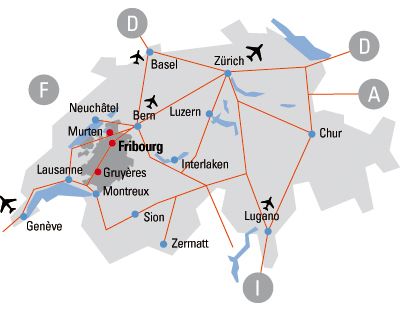
INTERNATIONAL RELATIONS OFFICE

                           Discovery of social and cultural environment of Switzerland and
                           Canton of Fribourg (conferences, sport and cultural activities)
                           One class for Beginners and classes with different levels depending
 Levels
                           on the number of students enrolled: A2 – B1 – B2 – C1
                           Course credited with 6 ECTS             Course credited with 4 ECTS

 Evaluation                Only students participating actively in class and during the activities
                           without missing will be receiving a certificate attesting their
                           participation.
 Costs                     CHF 400.-                               CHF 300.-
 Registration              The form is to be found within the online application
 Orientation Day           26.08.2019                              03.02.2020

   b. Language classes during the semester
Classes of French, German, Italian and English are open to students from any Faculty. Please
check on the following link to find the list of the current classes offered: Language Courses for
Students

No extra fee for the classes at the Language Center.

9. Study Offer
Most of the programs offered at Bachelor and Master level are open to exchange students.
 Faculties (Schools) and Language Centre Web sites
 Five Faculties subdivided in Departments and Institutes

 Bachelor and Master study offer            http://studies.unifr.ch/en

 Economics and Social Sciences              www.unifr.ch/ses

 Law                                        www.unifr.ch/ius

 Humanities                                 www.unifr.ch/lettres

 Sciences and Medicine                      www.unifr.ch/scimed

 Theology                                   www.unifr.ch/theo

 Language Center                            www.unifr.ch/centredelangues/en/

                                                    8
INTERNATIONAL RELATIONS OFFICE
10. Course Catalogue
Weblink: www.unifr.ch/timetable
The way courses are articulated within a degree that has the same name is different from one
university to the other. The exchange student has to figure out what is expected from her or his
home University while away. Are the language classes recognised? Is it the course that will be
recognised or the number of credits? The transfer from ECTS – European Credits to “local” credits
is the responsibility of the home Institution.
Attention: In the Faculty of Economics and Social Sciences there are courses with limited
participant number (i.e. seminars, practical courses). Mobility students have to contact the
professor and request the authorization to attend the course. In the course programme these
courses are listed as not open for mobility student.
All study departments have academic advisors who counsel exchange students regarding their
choice of courses: list of academic advisors.
BeNeFri: The University of Fribourg forms with the University of Bern and the University of
Neuchâtel the network BeNeFri. Within this network, students can attend some of the courses
offered at the other two universities and receive a financial aid for the travel costs. Exchange
students can also participate in BeNeFri, but the majority of the courses has to be taken at the
University of Fribourg. Please contact the study advisor of the study programme at Unifr to know
more about it.
11. How to Find the English Taught Classes
The list of courses for the next academic year might not be available at the time students are
applying; the best in that case is to consult the year in progress: www.unifr.ch/timetable.
Good to know:
Intensive courses / Conferences in English (Cours intensifs bloc – Block Kurse) are offered and
are to be found on the web sites of the departments. Guest professors generally teach those
and the schedule is not always available until the beginning of the semester.
12. Exams, Credits and Transcripts
Students are assessed either by oral or written exams, or by papers.
The credit system is based on the European Credit Transfer System ECTS.
One ECTS credit corresponds to a workload of 25 to 30 hours. A degree-
seeking student would have 30 ECTS per semester.
Exchange Students usually take less as the teaching and learning is in
another language. This has to be discussed prior to departure with the home
coordinator.
Each exchange student will receive a Transcript of Records - ToR, where all
the courses and succeeded exams will be listed. Once all results are known,
9INTERNATIONAL RELATIONS OFFICE
the transcript will be issued (but not before February, 15 for the Fall Semester and July, 15 for the
Spring Semester or Academic Year).
Faculties
Each faculty of the University of Fribourg has its own regulations and calendar for exams.
Please check on the websites below for more information.
Economics and http://www3.unifr.ch/ses/web2015/index.php?page=examens-et-
Social Sciences travaux&slang=en
Law https://www3.unifr.ch/ius/fr/etudes/coursexamens/infoexamens
Please contact the secretariat of each study department for precise
Humanities
information (https://www3.unifr.ch/lettres/fr/etudes/cours-et-examens/)
Science and
https://www3.unifr.ch/scimed/fr/studies/practical/
Medicine
Theology https://www3.unifr.ch/theo/de/ausbildung/studierende/studienberater.html
13. Housing
Housing facilities are good but one has to book early. The IRO provides the students a list of
housing and it is the student’s responsibility to choose the type of housing:
https://www3.unifr.ch/studies/en/mobility/incoming/practical-information/preparer-
sejour/accommodation-and-living-in-fribourg.html
Types of Accommodation
APARTIS APARTIS is a non-profit organisation, partner of the IRO. A limited number
(student’s of fully furnished apartments are pre-booked for exchange students. 4 to 6
residence with bedrooms flat, see www.unifr.ch/apartis (look under “à louer / Logement
shared ERASMUS“, available in English, French and German).
apartments)
Registration: The link for the online application is part of the APARTIS fact
sheet at the end of the online application process as exchange students at
the Unifr.
Attention: There is no guarantee for placement in a student residence.
10INTERNATIONAL RELATIONS OFFICE
Student’s Individual room with shared bathroom and common kitchen facilities (Foyer
Residences and St Justin, Foyer Beau-Séjour). Meal plan available in some cases. A limited
Foyers number of rooms have their own bathrooms.
Private Rooms in private homes or apartments available through the internet:
Accommodation https://www3.unifr.ch/agef/fr/prestations/logements.html
Renting contracts usually start September 1st for the Fall semester and February 1st for the
Spring semester. A deposit of 1 to 2 months of the lease is usually charged at the beginning
of the lease period and will be refunded at the end under the condition that no damages were
made. It is recommended to check carefully upon arrival, to take pictures of the apartment
and have the inventory signed by both parties. It is necessary to request it sometimes.
14. Visa – Student Residence Permit
Weblink: https://www3.unifr.ch/studies/en/mobility/incoming/practical-information/preparer-
sejour/residence-permit.html
EU students No visa is required to enter Switzerland
Non-EU students A visa is required and the process lasts from 2 to 4 months. Please
contact the Swiss diplomatic local authority (Embassy, Consulate
General or Consulate).
Upon request to the International Relations Office of the University of
Fribourg, the students will be provided with a letter of acceptance
(Attestation – Bescheinigung) that has often to be joined to the visa
application.
All students The local authorities request each student to have a Student Residence
Permit. Upon arrival, students have to process the papers at the Office
called the Service de la population et des migrants/Amt für Bevölkerung
und Migration (SPOMI).
Fee for students EU/EFTA: CHF 95.-
Fee for students non EU/EFTA: CHF 172.30
www.fr.ch/spomi (available in French and German).
Please note that the Student Residence Permit does not allow the student to remain longer
than the dates for which it has been delivered. Fines can be applied in case of non-respect.
a. Visa procedure for non-EU and non-EFTA students
Weblink: https://www3.unifr.ch/studies/en/mobility/incoming/practical-information/preparer-
sejour/visa.html
11INTERNATIONAL RELATIONS OFFICE
Switzerland is a Federal country with 3 layers of government:
- Federal
- Cantonal
- Municipal
The Visa procedure includes all level
OVERVIEW OF THE STEPS
VISA procedure can take up to 3 months
IRO SWISS
University of STUDENT EMBASSY/
Fribourg CONSULATE SPOMI
Sends per postal Hands over the visa application If file complete, sends
mail the attestation with all required documents the application
IRO
Sends the fee of CHF 95.-
SPOMI
SPOMI
Pays the fee of CHF 95 (Student will repay once in Fribourg)
Student can SWISS
enter EMBASSY /
Switzerland CONSULATE
Delivers the VISA Verifies and approves
the visa application
According to the procedure, the student applies for the visa at the Embassy or Consulate in the
home country. This request is forwarded to the Cantonal authority in Fribourg for approval and
then sent back to the Embassy or Consulate with the Cantonal authority’s decision.
12INTERNATIONAL RELATIONS OFFICE
A fee is requested at the Cantonal level which the University will pay and invoice the student
upon arrival (ca. CHF 95.-).
Documents to join to the visa application must be translated in French or German, even if this is
not in writing and clear – do not submit the documents mentioned below in English!
The procedure is the following for the student:
a. The student prepares the visa application
according to the requirements of the Swiss
Embassy or Consulate in the home country.
b. The student adds the following documents to
the visa application of the Embassy:
1. the letter of confirmation sent by the IRO
2. a letter in which the student commits themself
to leave Switzerland after their study period
3. the proposed study plan for their study period
at our University
4. a brief overview with the schools attended and
certificates if any, description of the current
studies, the languages learned, and if applies
internships and/or professional engagements,
etc. It also must include the objectives of the
study period which is a mobility study period, and that the aim is not to obtain a
University degree or University certificate at the end of the mobility study period.
The stay is within a degree delivered in the home country.
5. a proof of financial resources: CHF 21’900.- for the whole academic year / CHF
10’950.- for a semester. This must be stated via a bank statement in either a Swiss
bank or a bank in the home country that has a representation in Switzerland. Please
consult the list of the officially accredited banks by the FINMA (Swiss Financial Market
Supervisory Authority), see:
https://www.finma.ch/en/~/media/finma/dokumente/bewilligungstraeger/pdf/beh.pdf?l
a=en.
6. additional documents can be requested by the Swiss Embassy or Consulate
The SPoMi (Service de la population et des migrants du Canton de Fribourg) is the Cantonal
Authority who will make the decision. On the following page, the student will find the information
(French or German) regarding the documents they have to provide with the application.
Important information about SPoMi:
• On the homepage of the SPoMi it is specified that: “The documents must be
translated in one of our national languages (French or German) and authenticated
by the Swiss representation” (see above the recommendation for the visa application).
• The SPoMi confirms that one cannot contact them first, and then only apply for the visa at
the Swiss Representation. Visa must be applied at the Embassy or Swiss representation
in the home country.
13INTERNATIONAL RELATIONS OFFICE
15. Insurance
Health Insurance: The coverage has to be for illness, accidents in Switzerland and
repatriation to the home country.
Either the European Health Insurance Card EHIC (Credit Card size) is
available and if not the "temporary Certificate replacing the European
EU and EFTA Health Card” must be signed by the health insurance company.
countries
More information: http://www.kvg.org/en/temporary-stay-in-switzerland-
_content---1--1078--103.html
Enrolment in a health insurance plan in Switzerland is compulsory. More
information regarding health insurance enrolment and companies can be
non EU and found on our Website:
EFTA countries
https://www3.unifr.ch/studies/en/mobility/incoming/practical-
information/preparer-sejour/insurance.html
Upon arrival, the relevant local authorities will check each exchange student’s health coverage.
Please make sure to bring the relevant information from your health insurance.
Civil liability: The civil liability insurance covers all or part of the costs resulting from
damages caused to third parties. In some cases it is included in the lease when you rent a
room.
16. Cost of Living
Living costs are expensive but there are ways to participate in cultural life and sports thanks to
the student organisations. We advise students to budget around CHF 1400 to 1600 p/month.
Figures may vary according to the student’s personal lifestyle.
Approximate living costs
Average costs are given for a period of one month – in CHF– and for information only
Housing 450 – 600
Food 400 – 600
Phone, Internet 50 – 100
Public transportation 60 – 100
Books, study material 80 – 200
Student Residence Permit See details on page 5, point 9.
14INTERNATIONAL RELATIONS OFFICE
17. Key Data
Key Data on the Institution
Full legal name of Institution Université de Fribourg / Universität Freiburg
Erasmus ID Code CH FRIBOUR01
Head of the Institution Prof. Astrid Epiney
Head of the International Relations
Mrs. Marielle de Dardel
Office
Avenue de l’Europe 20
Address
1700 Fribourg – Switzerland
Website www.unifr.ch
Key Data on the International Relations Office (IRO)
Avenue de l’Europe 20
Address
1700 Fribourg – Switzerland
Phone +41 26 300 70 47
Website www.unifr.ch/international or www.unifr.ch/mobility
Specific Information for INcomings https://www3.unifr.ch/studies/en/mobility/incoming/
Email for INcomings international-incoming@unifr.ch
Email concerning our OUTgoings international-outgoing@unifr.ch
Head of Office and Institutional Mrs. Marielle de Dardel
Coordinator +41 26 300 70 28
Mrs. Elisabeth Zbinden
Administration Incoming Students
international-incoming@unifr.ch
(except for the Faculty of Law)
+41 26 300 70 25
Transcripts of Records international-incoming@unifr.ch
Mrs. Veronika Favre
Agreements, Staff Mobility,
international@unifr.ch
Traineeship Mobility
+41 26 300 70 46
Key Data on the Erasmus and International Office of the Faculty of Law
Avenue de l’Europe 20, Office 4060
Address
1700 Fribourg – Switzerland
Contact person for incoming law students Ms. Ingrid Kramer
Phone +41 26 300 81 12
Email ius-mobility@unifr.ch
15INTERNATIONAL RELATIONS OFFICE
WELCOME TO FRIBOURG!
16You can also read


