Africa Centre
for Evidence
←
→
Page content transcription
If your browser does not render page correctly, please read the page content below
Africa Centre for Evidence

“We rededicate
ourselves to the
enduring Pan African
vision of an integrated,
prosperous and peaceful
Africa, driven by its own
citizens and representing
a dynamic force in the
international arena.”
 - African Union’s Agenda 2063

Contents
Message from our director                                                                               02

ACE’s values                                                                                            03

ACE’s history, position, and future                                                                     04

ACE’s top 10 accomplishments in 2019                                                                    06

ACE’s people                                                                                            08
Team members                                                                                             08
Distinguished visiting professors                                                                        09
Advisory committee                                                                                       10
Research associates                                                                                      10

Academic citizenship                                                                                    11
International visitors                                                                                   11
National visitors                                                                                        12
Hosted Interns                                                                                           12

Our work                                                                                                13
Art and science of evidence-informed decision-making                                                     13
Evidence capacities portfolio                                                                            14
Evidence communities portfolio                                                                           16
Evidence synthesis portfolio                                                                             17
                                                                                                         19
ACE engages audiences
Conferences and meetings                                                                                22
Committee involvement                                                                                    24
ACE on social media                                                                                      24

ACE’s funding                                                                                           25

ACE’s outputs for 2019                                                                                  27
Academic publications                                                                                    27
Conference presentations and posters of ACE team members                                                 28
Popular writing                                                                                          29

                                                           AFRICA CENTRE FOR EVIDENCE 2019 ANNUAL REPORT 01
Message from
our director
ACE is committed to its mission to reduce
poverty and inequality by increasing the use
of research evidence.

2019 saw us making valuable contributions through the
work of our four portfolios: advancing the art and science
of evidence-informed decision-making in Africa, building
evidence capacities, supporting evidence communities, and
conducting evidence synthesis.

In 2019 we at the Africa Centre for Evidence (ACE) provided
responsive evidence services that shaped national and
international policy and practice. We moved forward the
evidence capacity agenda in Africa and mentored, trained,
and supported others in both the generation and use of
evidence. We supported the development and strengthening
of communities and networks across the African evidence
ecosystem. We conducted research and published articles
on evidence-informed decision-making for a wide range of
audiences and hosted the first-ever virtual Africa Evidence
Week.

Perhaps most striking as I look back over ACE’s achievements
of 2019 is the potential that we have built, in our work, our
partnerships, and our team members: potential to support
the response to the COVID-19 pandemic facing the world in
2020 at both local and global levels.

Looking back over ACE’s
achievements in 2019 and
reflecting on the role that
evidence is now playing as the
world addresses the COVID-19
pandemic, I am extremely proud.
I am honoured to lead such a talented group of individuals,
to receive guidance from such distinguished and
experienced advisors, and to work alongside so many
partners and colleagues all around the world. To them I
extend my thanks and my congratulations on a successful
year. We are ACE!

Prof Ruth Stewart
ACE Director

02 AFRICA CENTRE FOR EVIDENCE 2019 ANNUAL REPORT
ACE’s values
ACE strives to be a values-centred organisation, encouraging our team to commit to living out,
taking on work that espouses, and engaging with partners that do not flout any of the values or
motivations below.

We actively work as team members to achieve ACE’s mission of contributing to reducing poverty and inequality by increasing
the use of evidence in decision-making, a mission that supports ACE’s vision – to see an end to poverty and inequality in South
Africa and across the continent.

           THE AFRICA CENTRE FOR EVIDENCE IS:

•    Motivated by making a positive, rights-based, and socially-just difference
•    Committed to equity and equality
•    Focussed on building trust and relationships
•    Dedicated to sharing capacity and opportunity
•    Respectful of others’ expertise, experiences, and perspectives
•    Committed to zero tolerance for any form of discrimination, harassment, or abuse
•    Unwavering in delivering high-quality work, on time, and to budget

           THE AFRICA CENTRE FOR EVIDENCE IS MOTIVATED BY:

•    Methodological rigour
•    Innovative thinking
•    Reflective practices
•    Transparent practices and reporting

                                                               AFRICA CENTRE FOR EVIDENCE 2019 ANNUAL REPORT 03
ACE’s history, position, and future
Poverty and inequality are complex and
profound challenges for South Africa, and for
Africa more broadly.

Evidence-informed decision-making has the potential to
make a meaningful contribution to the reduction of poverty
and inequality in the region. There is therefore a need for
African organisations to work to increase the use of evidence
for decision-making to address the priorities of the region,
and ensure Africa’s participation in the wider global evidence
movement.

Over the last 20 years there have been a number of initiatives
in South Africa to contribute to reductions in poverty and
inequality through an increase in the use of evidence in decision-
making. Many of our staff members have contributed to these
initiatives, establishing deep relationships across the spectrum of
evidence producers and users, building valuable experience and
expertise in the evidence ecosystem, and establishing a strong
standing amongst the wider evidence community.

The Africa Centre for Evidence (ACE) was established as a
research centre within the University of Johannesburg’s Faculty
of Humanities in 2017. The establishment of ACE came as a
culmination of team members’ involvement in initiatives to
support the growing evidence ecosystem in South Africa and
Africa. ACE’s birth also reflects a recognition of the critical mass
of experience, expertise, and networks that we had established
by 2016. Professor Ruth Stewart has been at the helm of ACE
since its inception.

ACE’s mission is to reduce poverty and inequality in South
Africa and across the region by increasing the use of research
evidence. We work towards this mission by aiming to achieve
a spectrum of outcomes. These outcomes include raised
awareness of evidence-informed decision-making, enhanced
capability in using evidence in decision-making, or the actual
use of evidence for decisions. We recognise and advocate
that progress towards each of these outcomes is incremental,
incorporating many small shifts that need to be measured and
valued individually; success is not only a new evidence-informed
policy.

To these ends, the Africa Centre for Evidence focusses on
four strategic goals, aligned to ACE’s four portfolios of work:

1. Better understanding the art and science of evidence-
   informed decision-making in Africa
2. Building stronger evidence capacities
3. Supporting meaningful evidence communities
4. Producing rigorous and relevant evidence syntheses

This annual report describes ACE’s progress towards each of
these goals achieved during 2019.

04 AFRICA CENTRE FOR EVIDENCE 2019 ANNUAL REPORT
ACE’S CONTRIBUTION TO SOUTH AFRICA’S NATIONAL
DEVELOPMENT PLAN
ACE is committed to addressing poverty and inequality in our continent. As this is our overarching aim, we use the Sustainable
Development Goals (SDGs) to orient all our work. The SDGs are a call to all countries to commit to ending poverty, ensuring
prosperity and peace for all people, and protecting the environment. As you read our annual report, you will see how in 2019
each of our projects has contributed to various SDGs. As part of our strategy as we become more sustainable, ACE is exploring
ways to incorporate the African Union’s Agenda 2063 into our project implementation and reporting also.

Closer to home, we are working with colleagues in South Africa’s government to ensure our work is aligned with, and contributes
to, the National Development Plan (NDP) of South Africa. The NDP aims to eliminate poverty and reduce inequality in South
Africa by 2030. According to the plan, “South Africa can realise these goals by drawing on the energies of its people, growing
an inclusive economy, building capabilities, enhancing the capacity of the state, and promoting leadership and partnerships
throughout society.” ACE is working to contribute to this realisation of the NDP goals by keeping the plan at the forefront of our
agenda.

In 2019, ACE’s work contributed to nine of the NDP’s objectives: policy-making in a complex environment (chapter 1); economy
and employment (chapter 3); economy infrastructure (chapter 4); environmental sustainability (chapter 5); transforming human
settlement and the national space economy (chapter 8); improving education, training and innovation (chapter 9); promoting
health (chapter 10); and building a capable and developmental state (chapter 13). And, in all our work, we aim to position South
Africa in the world (chapter 7).

                                        In 2019 we contributed to the use of
                                        evidence to tackle SDGs: 1, 3, 4, 5, 6, 7, 8,
                                        9, 10, 13, 14, 15, 16, 17

                                                                 AFRICA CENTRE FOR EVIDENCE 2019 ANNUAL REPORT 05
ACE’s top 10 accomplishments in 2019
1.      We hosted the first-ever Africa Evidence Week
        – a virtual engagement event – which received
                                                            6.    We developed a chapter on implementing
                                                                  evidence-based policy-making in South Africa
        overwhelming attention from our stakeholders              for the Department of Planning, Monitoring and
        on Twitter with over 4,651,218 impressions                Evaluation which is part of a guidebook for all
        and 2,493 engagements. We also supported                  public servants in South Africa.

                                                            7.
        – through the Faculty of Humanities at the
        University of Johannesburg (UJ) – African talent
                                                                  ACE’s director was invited as a thought leader
        to attend the second international Evidence
                                                                  in EIDM to give a guest lecture by the Centre
        Synthesis Hackathon, a boundary-breaking 4IR
                                                                  for Excellence in Development Impact and
        event that brings together synthesis researchers
                                                                  Learning and the London School of Hygiene
        and software development specialists from
                                                                  and Tropical Medicine.
        across the globe.

2.      ACE’s teams were successful in 2019 in raising
                                                            8.    We were invited by Nature’s Palgrave
                                                                  Communications to write a paper on South
        funding to the total value of R20,391,963
                                                                  Africa’s evidence ecosystem with colleagues
        (USD1,295,612), which included one R3,5
                                                                  from South Africa’s Department of Planning,
        million project on understanding the art and
                                                                  Monitoring and Evaluation, which ended up
        science of using evidence in low- and middle-
                                                                  being one of two articles published in Nature by
        income countries, and a R14,2 million project to
                                                                  ACE team members in 2019.
        support the Africa Evidence Network for the next
        three years.
                                                            9.
3.
                                                                  ACE director Professor Ruth Stewart was
                                                                  awarded a B1 rating from the National
        The membership of the Africa Evidence Network
                                                                  Research Foundation of South Africa, and we
        (AEN) – one of ACE’s largest projects – reached
                                                                  received support the Faculty of Humanities
        3000 members in 2019 with significant pan-
                                                                  Dean at UJ to develop a new postgraduate
        African representation; the AEN also hosted the
                                                                  qualification in EIDM under the facilitation of
        first in-person meeting of its reference group,
                                                                  UJ’s Professional Staff Development Unit.
        bringing together over 30 leading evidence-
        informed decision-making (EIDM) professionals
        from across Africa.                                 10.   We developed a methodology for evidence

4.
                                                                  maps and rapid evidence responses to be
                                                                  embedded in government departments and
        To further enhance Africa’s leading position in
                                                                  hosted a joint learning exchange on this method
        the EIDM field, we collaborated with major
                                                                  in collaboration with colleagues from the African
        EIDM stakeholders such as the African Institute
                                                                  Centre for Rapid Evidence Syntheses and the
        for Development Policy, the African Evaluation
                                                                  Department for Planning, Monitoring and
        Association and Twende Mbele, and produced
                                                                  Evaluation.
        the first geo-map of over 150 EIDM institutions
        in Africa.

5.      We produced and launched seven evidence
        maps in a single calendar year, with some maps
        being specifically requested by colleagues within
        South African government departments. We
        conducted a policy-relevant evidence map and
        responsive evidence synthesis that informed
        the South African Presidential Advisory
        Panel on Land Reform and Agriculture,
        and we integrated a policy-relevant evidence
        map within the South African Department of
        Human Settlement’s Socio-Economic Impact
        Assessment process.

06 AFRICA CENTRE FOR EVIDENCE 2019 ANNUAL REPORT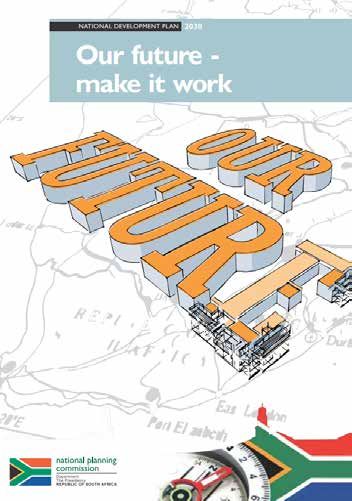
AFRICA CENTRE FOR EVIDENCE 2019 ANNUAL REPORT 07
ACE’s people
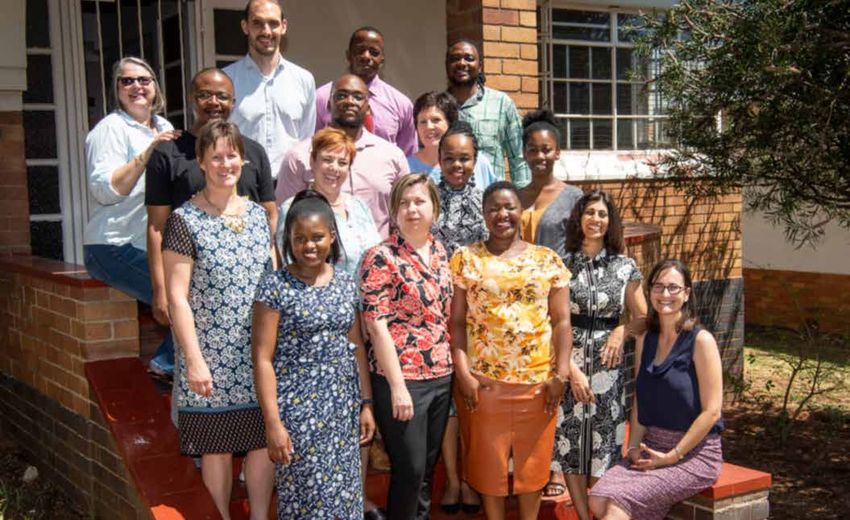
We are a multi-disciplinary team and in all our work, we collaborate with other institutions.

This collaboration helps us to continuously learn and improve our work. Our team consists of full-time and part-time staff
members. We have an in-house mentorship programme that enables our team to develop their careers further and reach their
full potential.

TEAM MEMBERS

Likhwa Ncube             Nkululeko Tshabalala     Sunet Jordaan             Yvonne Erasmus           Zafeer Ravat
Evidence capacities,     Evidence capacities,     Evidence capacities,      Evidence capacities,     Evidence capacities,
Evidence synthesis       Evidence synthesis       ACE operations            Evidence synthesis       Evidence synthesis

Charity Chisoro          Linda Etale              Nasreen Jessani           Precious Motha           Siziwe Ngcwabe
Evidence communities     Evidence communities     Evidence communities      Evidence communities     Evidence communities

Laurenz Langer           Natalie Tannous          Promise Nduku             Carina van Rooyen        Ruth Stewart
Art and science of       Evidence synthesis,      Art and science of        Evidence communities,    ACE operations,
using evidence,          Evidence communities,    using evidence,           Evidence synthesis,      Art and science of
Evidence capacities,     ACE operations           Evidence capacities,      Evidence capacities,     using evidence,
Evidence synthesis                                Evidence synthesis        Art and science of       Evidence capacities,
                                                                            using evidence           Evidence communities,
                                                                                                     Evidence synthesis

Christa Heyneke          Elton Mpinyuri           Shona Putuka
ACE operations           ACE operations           Evidence synthesis

08 AFRICA CENTRE FOR EVIDENCE 2019 ANNUAL REPORT
DISTINGUISHED VISITING PROFESSORS
Professor Sandy Oliver is a distinguished Professor John Lavis is a distinguished
visiting professor at the Faculty of visiting professor at the Faculty of
Humanities, University of Johannesburg. Humanities, University of Johannesburg.
She is Director of the Social Science Research Unit, and He holds the Canada Research Chair in Evidence-Informed
Deputy Director of the EPPI- Centre (Evidence for Policy Health Systems. He is the Director of the McMaster Health
and Practice Information and Coordinating Centre), at Forum | Forum+, Co-Lead of Rapid-Improvement Support
University College London (UCL) Institute of Education, and Exchange (RISE), Co-Director of the World Health
London. Organisation Collaborating Centre for Evidence-Informed
Policy, and Professor in the Department of Health Evidence
For thirty years, her interests have focused on the and Impact at McMaster University. John supports policy-
interaction between researchers and people making makers and stakeholders to harness research evidence,
decisions in their professional and personal lives. With citizen values and stakeholder insights to strengthen health
this in mind she has been developing methods to collate and social systems and get the right programs, services and
knowledge from whole bodies of research – systematic products to the people who need them. He holds an MD
reviews – not just single studies. Most recently this has from Queen’s University, an MSc from the London School of
been in the area of international health systems and Economics, and a PhD from Harvard University.
development where she has conducted systematic reviews
and built up a programme of support for research teams He is committed to helping policy-makers and stakeholders
conducting reviews elsewhere. She is a member of the to: 1) learn how to make decisions based on the best
Board of the Campbell Collaboration, a Cochrane editor available research evidence; 2) find evidence through
with their Consumers and Communication Review Group, the McMaster Health Forum’s own products and the best
and a member of the Centre for Excellence in Development available sources of pre-appraised, synthesised research
Impact and Learning. She has been working with the UK evidence (including the Forum’s Health Systems Evidence,
Department for International Development, the Alliance for and Social Systems Evidence, and the Forum-supported
Health Policy and Systems Research at the World Health and citizen-targeted McMaster Optimal Aging Portal); 3)
Organisation (WHO), and the Research, Evidence and spark action through stakeholder dialogues, citizen panels
Development Initiative (READ-It) to strengthen capacity in and more; 4) embed supports for evidence-informed
systematic reviewing in low- and middle-income countries. decision-making, by institutionalising promising and proven
approaches; and 5) evaluate innovations in supporting
evidence-informed decision-making.
AFRICA CENTRE FOR EVIDENCE 2019 ANNUAL REPORT 09ADVISORY COMMITTEE The ACE Advisory Committee provides advice and guidance to ACE on its strategic direction, and on the design and implementation of ACE portfolios. Members of the Advisory Committee act as ambassadors for ACE. The Advisory Committee was deliberately invited to reflect the various stakeholders that ACE engages with; it consists of three members from outside of Africa, three members from within wider Africa, three members from within South Africa, and one University of Johannesburg representative. The members come from various sectors including academia, government, and civil society. As part of ACE’s commitment to collaborating across borders both physical and sectoral, we were excited to host our Advisory Committee members at an in-person meeting during 2019. HARSHA DAYAL, South African National Department for Planning, Monitoring and Evaluation, South Africa SHANIL HARICHARAN, Nelson Mandela School of Public Governancea, South Africa JOHN LAVIS, McMaster University, Canada BERYL LEACH, International Initiative for Impact Evaluation, India RHONA MIJUMBI-DEVE, Makerere University, Uganda KAMMILA NAIDOO, University of Johannesburg, South Africa SANDY OLIVER, University College London, United Kingdom ROSE ORONJE, African Institute for Development Policy, Kenya JOSEPHINE WATERA, Parliament of Uganda, Uganda TARYN YOUNG, Stellenbosch University, South Africa RESEARCH ASSOCIATES ACE maintained the number of our research associates in 2019, with a few high-level collaborations both within academia and outside of it. Ekwaro Obuku, Makerere University, Uganda Desyree Lötter, independent consultant, South Africa Mapula Tshangela, National Department of Environment, Forestry and Fisheries, South Africa Neal Haddaway, Stockholm Environment Institute, Sweden Shanil Haricharan, Nelson Mandela School of Public Governance, South Africa Harsha Dayal, National Department for Planning, Monitoring and Evaluation, South Africa 10 AFRICA CENTRE FOR EVIDENCE 2019 ANNUAL REPORT
Academic citizenship
During the year, 10 visitors spent extended time with us at ACE.

These visits were central to supporting ACE’s ability to collaborate at an international scale as the Centre works towards its
mission of contributing to the reduction of poverty and inequality in the wider-Africa region.

INTERNATIONAL VISITORS
Professor Sandy Oliver                                               Dr Majella McCloskey
DVP at UJ, Director of the Social Science Research Unit,             Senior manager at the Center for Effective Services, Ireland
University College of London                                         Purpose: Winston Churchill fellow seeking to understand
Purpose: building ACE through one-on-one mentoring                   the use of evidence in post-conflict environments
sessions with ACE staff
                                                                     Professor of Practice Beryl Leach
Professor Nancy Cartwright                                           Outgoing Executive Director of the International Initiative
Professor of Philosophy at Durham University, Distinguished          for Impact Evaluation
Professor at the University of California                            Purpose: exploration of the possibility of becoming
Purpose: seminar on the nature of evidence, co-hosted with           established as a UJ professor of practice
the UJ African Centre for Epistemology and Philosophy of
Science                                                              Dr Marie Gaarder
                                                                     Incoming Executive Director of the International Initiative
Professor Nelson Sewankambo                                          for Impact Evaluation (3ie)
Principal of Makerere University College of Health Sciences          Purpose: exploration of an organisational partnership
Purpose: mentorship on ACE’s proposed new MA                         between 3ie and ACE

                                                                     Dr Lindsay Walker
                                                                     PhD candidate at the University of Exeter
                                                                     Purpose: learning from the work ACE has done with various
                                                                     government departments in South Africa

                                                                 AFRICA CENTRE FOR EVIDENCE 2019 ANNUAL REPORT 11
NATIONAL VISITORS Mapula Tshangela National Department of Environment, Forestry and Fisheries: Director of Climate Change Mitigation Sector Plan Implementation Purpose: collaboration on producing an environmental evidence map Dr Kiruben Naicker National Department of Environment, Forestry and Fisheries: Director of Science-Policy Interface in the Biodiversity and Conservation Unit Purpose: collaboration on producing an environmental evidence map Rina Taviv Gauteng Department for Agriculture and Rural Development: Deputy Director of Climate Change and Environmental Information Management (GDARD) Purpose: collaboration between UJ and the GDARD unit HOSTED INTERNS Partnering with the McMaster Health Forum, ACE welcomed three interns from McMaster University in Canada on Queen Elizabeth Scholarships. These interns selected ACE as the organisation where they wanted to carry out their internships, before returning to further their studies in Canada. The interns contributed to ACE’s work across different portfolios, and drew on their experiences of doing evidence synthesis at the Health Forum. In 2019, ACE welcomed three interns: Kartik Sharma, Peter Belesiotis, and Natalie Tchakarian. 12 AFRICA CENTRE FOR EVIDENCE 2019 ANNUAL REPORT
Our work                                                          Misinformation on the continent: research
                                                                  and country briefs

ACE’s projects are structured according to four
portfolios: advancing the art and science of
evidence-informed decision-making, building
evidence capacities, supporting evidence
communities, and conducting evidence                              LED BY: Ruth Stewart
syntheses.                                                        TEAM: Peter Belesiotis, Natalie Tannous, Natalie Tchakarian
                                                                  DATES: July 2019 – October 2019
                                                                  FUNDED BY: Africa Check
ART AND SCIENCE OF
EVIDENCE-INFORMED                                                 In 2019 ACE was part of a programme of research in
                                                                  partnership with Africa Check, Full Fact, and Chequeado
DECISION-MAKING PORTFOLIO                                         Series to produce and contribute to research briefings for
                                                                  practitioners that explored the available evidence for fact-
                                                                  checking organisations in different countries. The research
We aim to advance the art and science of supporting EIDM,
                                                                  briefings included doing country context essays and
with a particular focus on evidence capacities, evidence
                                                                  identifying the research gaps for different topics, such as
communities, and evidence synthesis. To these ends we
                                                                  health and education.
research and review: the practical experiences and tacit
knowledge of people across Africa; the evidence about
what works for supporting evidence-use, how and why;              Database of rapid response synthesis
and the context in which evidence-informed decision-
                                                                  services
making takes place, including political analysis. We also
contribute to the development of theory and methods
about evidence-use for decisions. In 2019, we undertook
the following work within this portfolio.

Collating the art and science on evidence-
informed decision-making in Africa
                                                                  LED BY: Carina van Rooyen
                                                                  TEAM: Steven Chen, Lihkwa Ncube, Natalie Tchakarian
                                                                  (McMaster University QES scholars)
                                                                  DATES: 2018 - 2019
                                                                  FUNDED BY: University of Johannesburg

                                                                  The database of rapid response services was developed to
LED BY: Laurenz Langer
                                                                  support the responsive evidence synthesis service (RESS)
TEAM: Laurenz Langer, Lihkwa Ncube, Promise Nduku,                project. The overall goal of the RESS project is to strengthen
Ruth Stewart                                                      South African environmental policy-makers to self-help
DATES: June 2016 – ongoing                                        and self-serve regarding the use of research evidence in
FUNDED BY: Various                                                various parts of a policy process. UJ’s University Research
                                                                  Committee is providing financial support for this project.

ACE has been working to collate knowledge on the art (tacit
evidence) and the science (research evidence) on evidence-
informed decision-making in Africa. We continue to carve
out some pieces of work towards this end. In 2019, this
included a detailed EIDM stakeholder engagement exercise
conducted by the AEN. This involved over 30 in-depth
interviews with African EIDM organisations to elicit their
perception of the evidence ecosystem on the continent. We
also produced an evidence map on all evidence (research
and tacit knowledge) on EIDM interventions in Africa and
successfully applied for funding to synthesise this evidence.

                                                                AFRICA CENTRE FOR EVIDENCE 2019 ANNUAL REPORT 13
Mid-term review of South Africa’s National Supporting African delegates to attend the
Biodiversity Research and Evidence Strategy Evidence Synthesis Hackathon 2019
LED BY: Carina van Rooyen and Laurenz Langer LED BY: Carina van Rooyen
DATES: October 2019 – March 2020 TEAM: Neal Haddaway, Witness Mapanga, Mandlenkosi
FUNDED BY: South African Department of Environment, Ngwenya, Chris Penkin, Ruth Stewart
Forestry and Fisheries (DEFF) DATES: March 2019
FUNDED BY: University of Johannesburg, Faculty of
ACE was contracted by DEFF in 2019 to conduct the Humanities
mid-term review of the National Biodiversity Research and
Evidence Strategy (NBRES), to guide the refinement of the ACE arranged funding for African participation at the
NBRES for its second five-year implementation period. Evidence Synthesis Hackathon 2019 in Canberra, Australia.
We also hosted a celebration event for the Hackathon
Chapter on Evidence-Based Policy-Making in at the University of Johannesburg, where two African
participants demonstrated the beta version of two
South Africa for public servants technologies conceptualised and developed as a direct
result of their attendance at the event.
External professional capacity sharing
LED BY: Laurenz Langer
TEAM: Laurenz Langer, Likhwa Ncube, Ruth Stewart
DATES: January – March 2020
FUNDED BY: South African Department for Planning, LED BY: Carina van Rooyen
Monitoring and Evaluation
DATES: Ongoing
FUNDED BY: Unfunded
We developed a chapter on implementing evidence-
based policy-making in South Africa for the Department of
Planning, Monitoring and Evaluation in South Africa, which Within the Capacities portfolio, ACE provided mentoring
is part of a guidebook for all public servants in South Africa. support to two teams of Inter-governmental Panel of
Climate Change authors undertaking climate change
evidence syntheses through our research associate Dr
EVIDENCE CAPACITIES Neal Haddaway. Through its collaboration with McMaster
University in Canada, ACE also provided internships for
PORTFOLIO three Queen Elizabeth Scholars who gained working
experience by participating in ACE’s various projects. It is
At ACE, the evidence capacities portfolio focusses on also within this portfolio that ACE contributed external
strengthening evidence ecosystem(s) through enhancing examination to six postgraduate courses offered at South
individual, organisational, and network capacities. We African universities, a mixture of courses, and dissertations
do this through: (1) strengthening and sharing capacities and theses.
for evidence synthesis, ranging from capacity to conduct
full systematic reviews to evidence maps and responsive
evidence synthesis services; (2) strengthening and sharing
capacities to build and support evidence communities, from
communities of practice to broader evidence networks; and
(3) strengthening and sharing capacities for evidence-use in
decision- and policy-making.
14 AFRICA CENTRE FOR EVIDENCE 2019 ANNUAL REPORTScholarship on Teaching and Learning (SOTL) Whitney Noble, supervised by Carina van Rooyen, MA
Anthropology, UJ, The entangled lives of humans and
mosquitoes at UJ – An environmental anthropological
perspective, completed.
Paseka Pharumele, supervised by Carina van Rooyen, MA
Anthropology, UJ, A kae Meetse? A social anthropological
study of local knowledges on changing climate and water in
Leeuwfontein, Sekhukhune District, completed.
LED BY: Carina van Rooyen
FUNDED BY: University of Johannesburg Charne Smith, supervised by Carina van Rooyen, MA
Anthropology, UJ, The gendered experiences of women
professional hunters in South Africa, completed.
ACE secured funding from UJ’s Teaching and Innovation
Fund for a research project that explores postgraduate
student support. DOCTORAL CANDIDATES
Sunet Jordaan, supervised by Carina van Rooyen and Ruth
Internal professional development Stewart, PhD Development Studies, UJ, How mentorship
programmes increase the use of evidence in
decisionmaking in South African government, ongoing.
Sophia Marks, supervised by Ruth Stewart, PhD
Sociology, Institute of Education, Department for Social
Sciences, University College London, ‘A raw experience’ –
biographical disruption in a group of women
living with HIV/AIDS in Jos, Nigeria: An interpretative
LED BY: Carina van Rooyen
phenomenological analysis, ongoing.
TEAM: Laurenz Langer, Siziwe Ngcwabe, Natalie Tannous,
Carina van Rooyen Suvania Naidoo, supervised by Carina van Rooyen, PhD
DATES: Ongoing Development Studies, UJ, Social constructions of water
FUNDED BY: Unfunded quality in the Blesbokspruit in the context of acid mine
drainage and its treatment, ongoing.
As part of its ongoing commitment to enhancing its Karen Nortje, supervised by Carina van Rooyen, PhD
internal staff capacity, ACE continued to run a mentorship Anthropology, UJ, The social construction of natural
programme in 2019 that saw individual team members resource scarcity – A qualitative study of three case
teamed off with either internal or external mentors to work examples from Venda, completed.
on development issues. ACE also organised two work
retreats that focussed on producing academic papers, Sebeka Plaatjiie, supervised by Carina van Rooyen, PhD
deepening the Centre’s strategic direction and team- Development Studies, UJ, Contestations about
building. the meaning of local economic development: A case of
the Aerotropolis Project in the Ekurhuleni Metropolitan
Supervision of postgraduate students Municipality, revising following examination.
Takatso Semenya, supervised by Laurenz Langer, PhD
Sefako Makgatho Health Sciences University, Knowledge
translation in the obesity research sector in South Africa,
ongoing.
Luvuyo Zigana, supervised by Laurenz Langer and Carina
van Rooyen, PhD Development Studies, UJ, A mixed
As part of the evidence capacities portfolio, ACE supervised methods systematic review of successful interventions for
five Masters students and eight PhD candidates in 2019. integrated water resources management, ongoing.
Of these, three MA students and one PhD candidate
completed their qualifications in 2019, indicated in the Metoh Azuini, supervised by Carina van Rooyen
following list. and Laurenz Langer, PhD Development Studies, UJ,
mplementation of climate change mitigation projects by
local government: Learnings for the City of Johannesburg,
MASTERS STUDENTS
proposal phase.
Nina Noyahi, co-supervised by Carina van Rooyen, MA
Development Studies, UJ, Refugeeship as adaptation to a
changing environment, ongoing.
AFRICA CENTRE FOR EVIDENCE 2019 ANNUAL REPORT 15Providing training and capacity support SEPTEMBER: Public seminar on evidence databases, maps
and repositories: fit-for-purpose to respond rapidly to policy-
makers’ evidence needs?
SEPTEMBER - OCTOBER: Three-part webinar series on
Introduction and overview of evidence gap maps, rapid
response and rapid systematic reviews co-facilitated with the
International Initiative for Impact Evaluation.
Within the evidence capacities portfolio and over the
course of 2019, ACE facilitated and supported the following OCTOBER: Day-long workshop at the annual South African
training and capacity support sessions. Monitoring and Evaluation Association conference on the
systematic use of evidence delivered in conjunction with
FEBRUARY: A webinar hosted by the Africa Evidence colleagues from the South African Department for Planning,
Network secretariat entitled ‘Capacity sharing for the use of Monitoring and Evaluation.
evidence’.
OCTOBER: Workshop delivered in conjunction with the
FEBRUARY: Facilitated two sessions in UJ’s Academic research team at the South African National Department
Preparation Programme on complexity of learning and of Planning, Monitoring and Evaluation at the What Works
teaching with technology. Global Summit on evidence mapping and rapid response
services.
FEBRUARY: Facilitated workshop at the South African
national Department for Environment, Forestry and Fisheries OCTOBER: Practical workshop delivered at the What
for around 30 participants on an evidence map of South Works Global Summit on a rapid systematic review on
African environmental evidence. preventing intimate partner violence with colleagues from
the International Initiative for Impact Evaluation and the
Education Endowment Foundation.
FEBRUARY-APRIL: Evidence mapping training clinics
hosted on a weekly basis with the Gauteng Department for
Agriculture and Rural Development. OCTOBER: Workshop delivered in partnership with Professor
Sandy Oliver at the What Works Global Summit on engaging
stakeholders with evidence and uncertainty.
MARCH: An introduction to evidence mapping training
course delivered for three provincial Departments of Health
in collaboration with the South African Evidence Synthesis OCTOBER: Workshop delivered in conjunction with the
Centres. research team at the South African National Department
of Planning, Monitoring and Evaluation at the Qualitative
Evidence Synthesis Symposium on embedded co-production
MARCH: Evidence mapping training workshop at the between government and academia.
Cochrane Africa 2019 Indaba.
OCTOBER: Workshop delivered in conjunction with the
MARCH: A webinar hosted by the Africa Evidence Network Partners for Evidence-driven Rapid Learning in Social
secretariat entitled ‘Enabling engagement and fostering Systems (PERLSS) partners at the Qualitative Evidence
collaboration: Evidence 2020’. Synthesis Symposium on mechanisms for evidence-informed
policy-making.
APRIL: Weeklong in-depth training course on evidence
mapping for 20 participants at the Council for Scientific and DECEMBER: Three-day learning exchange on evidence
Industrial Research. maps and rapid response services between Zeipnet and
ACE.
JUNE: Week-long in-depth training course on evidence
mapping for the Health Systems Trust. DECEMBER: One-day workshop on evidence systems in
South Africa for the Ethiopian Public Health Institute.
AUGUST: Three-day learning exchange on evidence maps
and rapid response services between the African Centre
for Rapid Evidence Synthesis, Department for Planning,
Monitoring and Evaluation, and ACE.
16 AFRICA CENTRE FOR EVIDENCE 2019 ANNUAL REPORTEVIDENCE COMMUNITIES This meeting was a gathering of pan-African decision-
makers, researchers, and evidence-informed decision-
PORTFOLIO making advocates from over 11 countries. To recognise the
growth of innovation in evidence-informed decision-making
in Africa observed throughout the Network, the AEN in 2018
We aim to nurture evidence communities, from broad open established the first award for evidence-informed decision-
networks to smaller more focussed communities of practice. making in Africa. The second winner of the Africa Evidence
To achieve this nurturing, we foster collaboration amongst Leadership Award was Ms Mapula Tshangela from the South
those engaged in or supporting evidence-informed African Department of Environment, Forestry and Fisheries
decision-making. We work to increase knowledge and who received the award in 2019.
understanding of evidence-informed decision-making, and
we support the broader evidence ecosystem by advocating
for using evidence in decisions in Africa. We also advocate Collaboration for Environmental Evidence’s
for Africa’s full voice and participation in the national, Johannesburg Centre (CEE Joburg)
regional, and global movements that aim to increase how
evidence is used in decision-making. In 2019, this portfolio
included the following communities.
Africa Evidence Network
LED BY: Siziwe Ngcwabe and Nasreen Jessani
TEAM: Charity Chisoro, Linda Etale, Laurenz Langer,
LED BY: Carina van Rooyen and Ruth Stewart
Precious Motha, Ruth Stewart, Natalie Tannous, Carina Van
TEAM: Likhwa Ncube, Natalie Tannous
Rooyen
DATES: April 2012 – ongoing
DATES: December 2012 – ongoing
FUNDED BY: Unfunded
FUNDED BY: The William and Flora Hewlett Foundation
(with the exception of support from the United Kingdom
Department for International Development from 2014 to ACE hosts the Collaboration for Environmental Evidence’s
2016) only centre in Africa, CEE Joburg. The main mandate of
CEE Joburg is to support the need for and capacity to
do systematic reviews to inform environmental policy and
ACE provides the secretariat to the Africa Evidence Network
practice in Africa. As a team of experienced reviewers, CEE
(AEN), a community of over 3000 people with an interest
Joburg works closely with colleagues from other research
in evidence, its production, and use in decision-making
centres or within different levels of government to offer
in Africa. Members include researchers, practitioners,
training and support to undertake or use evidence syntheses
and decision-makers from universities, civil society, and
in their decision-making. In 2019, CEE Joburg continued
government who are based in 42 African countries and 19
with its establishment of a responsive evidence synthesis
countries outside Africa. The AEN is one of the most diverse
service for environmental decision-makers in South Africa;
evidence-for-decisions communities in the world.
read more about this specific project in the evidence
synthesis portfolio section of this report.
Highlights for the AEN in 2019 included the successful
hosting of its inaugural virtual Africa Evidence Week, which
reached 4,651,218 impressions on Twitter in under seven
days. The AEN also collaborated in various conferences
and events such as the African Evaluation Association’s 9th
international conference and the South African Monitoring
and Evaluation Association’s conference. Through our
webinar series we facilitated five discussions and debates
with our members and the wider evidence community. In
2019 we also strengthened our Advisory and Reference
Groups made up of representatives from across the
continent, and hosted the first in-person meeting between
the member of the Reference Group.
AFRICA CENTRE FOR EVIDENCE 2019 ANNUAL REPORT 17Participating in the evidence synthesis Convening Africa Evidence Week 2019
community in South Africa and further afield
The Africa Evidence Network secretariat in partnership
LED BY: Laurenz Langer and Ruth Stewart
with collaborators from across Africa hosted the first-ever
DATES: June 2017 – ongoing Africa Evidence Week. The Week was designed as a virtual
FUNDED BY: Unfunded celebration of Africa’s evidence-informed decision-making;
Network members were invited to participate in this week-
long event which took place from 9-13 September 2019.
The South African Medical Research Council, the Centre
The secretariat coordinated the Week by promoting the
for Evidence-based Health Care at Stellenbosch University,
content of participating organisations on its communication
Cochrane South Africa, the Wits Centre for Health Policy,
platforms, such as the Africa Evidence Network evidence-
and ACE have started a joint South African Evidence
informed decision-making hub, GoToMeeting, and social
Synthesis Group. This group aims to present a forum for
media. With overwhelming support from 399 online
collaboration and discussion on evidence synthesis in South
participants and 91 of their organisations, the Week
Africa. After meeting together for an inaugural meeting
showcased over 64 incredible evidence-informed decision-
in June 2018, the five centres have since collaborated on
making activities from across 15 African countries. The
two training courses for evidence synthesis and conducted
Africa Evidence Week programme included in-country
catch-up calls to keep up to date on one another’s
events, Twitter conversation starters, webinars, live-streamed
activities and offer support when appropriate. In 2019,
events, blog posts, and videos. In under a week, the event
ACE participated in a joint week long training on evidence-
generated 4,651,218 impressions and 2,493 engagements
informed decision-making for three South African provincial
on Twitter alone.
Departments of Health.
Participating in the Global Evidence Exploration of institutional capacity, demand,
Synthesis Initiative (GESI) and opportunity for collaboration with the
Africa Evidence Network
LED BY: Laurenz Langer and Ruth Stewart
DATES: March 2017 – ongoing LED BY: Nasreen Jessani
FUNDED BY: Unfunded TEAM: Linda Etale
DATES: June 2019 – February 2020
The Global Evidence Synthesis Initiative (GESI) is an FUNDING: The William and Flora Hewlett Foundation
international collaboration to support the growth of capacity
to undertake systematic reviews and other evidence The overall goal of the study is to understand the scope of
syntheses in low- and middle-income countries. Along with work on EIDM across 90 identified organisations across all
other centres in LMICs, ACE is a member of their global 54 African countries, their reach, their activities, and how
network and in 2019, participated in this community’s scale can be met through engagement with the AEN. This
activities by presenting a webinar on stakeholder study aims to explore the views, demands, capacities, and
engagement. potential for collaboration across institutions working in a
similar space on the continent.
18 AFRICA CENTRE FOR EVIDENCE 2019 ANNUAL REPORTEVIDENCE SYNTHESIS A policy-relevant evidence map on science,
technology and innovation (STI) in South
PORTFOLIO Africa
We undertake and support rigorous and relevant evidence
syntheses. To this end, we conduct evidence synthesis
that is responsive to the needs and contexts of African
decision-makers. We also develop and refine technologies
for evidence synthesis production that is suitable to African
contexts. Our synthesis team also produces ‘global good’
evidence synthesis that address broader questions of
importance to African populations. In 2019, this portfolio LED BY: Promise Nduku
included the following projects: TEAM: Laurenz Langer, Shona Putuka, Zafeer Ravat,
Nkululeko Tshabalala
DATES: October 2018 – December 2019
A policy-relevant evidence map on land
FUNDED BY: South African Research Chair in Industrial
reform in South Africa
Development
In collaboration with the South African Research Chair in
Industrial Development, we produced a policy-relevant
evidence map on STI in South Africa. The map was launched
to an innovation and industrial development audience in
December 2019. The map contained over 2,189 studies and
was launched to an innovation and industrial development
LED BY: Promise Nduku
audience in December 2020.
TEAM: Laurenz Langer, Shona Putuka, Nkululeko Tshabalala
DATES: February - March 2019
Violence against women and children
FUNDED BY: Conducted under the Partners for Evidence-
driven Rapid Learning in Social Systems grant (VAWC) evidence map
In collaboration with the South African Department for
Planning, Monitoring and Evaluation, we co-produced
a policy-relevant evidence map on land reform in South
Africa. This map contained over 300 studies and was used to
inform the report of the Presidential Advisory Panel on Land
Reform and Agriculture submitted to Cabinet.
LED BY: Laurenz Langer
TEAM: Shona Putuka, Promise Nduku, Nkululeko Tshabalala
DATES: January 2019 - December 2019
FUNDED BY: Hans Seidel Foundation
For this project, the ACE synthesis team conducted
an evidence map of the available research on violence
against women and children (VAWC) in South Africa. We
mapped over 80 studies and launched the evidence map in
collaboration with CLEAR-AA in December 2019.
AFRICA CENTRE FOR EVIDENCE 2019 ANNUAL REPORT 19Integrating evidence maps into the Socio- South African environmental evidence map
Economic Impact Assessment System (SEIAS)
process in the Human Settlements sector
LED BY: Carina van Rooyen
TEAM: Peter Belesiotis (McMaster University QE scholar),
Charity Chisoro, Lihkwa Ncube, Natalie Tchakarian
LED BY: Laurenz Langer
(McMaster University QE scholar)
TEAM: Shona Putuka, Promise Nduku, Nkululeko Tshabalala
DATES: Ongoing
DATES: June 2019 - ongoing
FUNDED BY: UJ’s University Research Committee
FUNDED BY: Conducted under the Partners for Evidence-
PARTNERS: National government Department of
driven Rapid Learning in Social Systems grant
Environment, Forestry and Fisheries (DEFF), and Gauteng
Department of Agriculture and Rural Development
This project explored the feasibility of integrating evidence
maps into the SEIAS process in the Human Settlements
The mega map on environmental evidence in South Africa is
sector. We updated our 2016 policy-relevant evidence map
being co-produced with government colleagues. A draft of
on Human Settlements in South Africa and explored to
the map was presented to the national Biodiversity Research
what extent it can be used to support the submission of the
and Evidence Indaba, and to the Gauteng Environment
revised White Paper of the Department to the SEIAS process.
Research Symposium.
An evidence map of energy sufficiency
Global teaching and learning effect size
measures, their savings potential and related
coding
costs in mitigation pathways
LED BY: Laurenz Langer
LED BY: Yamina Shaheb of OpenExp TEAM: Promise Nduku, Shona Putuka, Nkululeko Tshabalala
TEAM: Carina van Rooyen DATES: July 2019 – ongoing
DATES: May 2019 - April 2020 FUNDED BY: Education Endowment Foundation
FUNDED BY: Unfunded
This project entailed the data extraction for
We are producing a systematic map of the energy sufficiency effect size calculation in support of the Education
measures, their savings potential and related costs in Endowment Foundation’s production of a global
mitigation pathways aiming at meeting the Paris Climate teaching and learning toolkit.
target.
20 AFRICA CENTRE FOR EVIDENCE 2019 ANNUAL REPORTCollaborating with Partners for Evidence-
driven Rapid Learning in Social Systems
(PERLSS)
LED BY: Laurenz Langer and Ruth Stewart
TEAM: Promise Nduku, Nkululeko Tshabalala
DATES: November 2018 – October 2021
FUNDED BY: The William and Flora Hewlett Foundation
and the International Development Research Centre
Along with partners from 13 other countries, ACE supported
evidence-informed decision-making in the non-health
related Sustainable Development Goals. In our respective
countries, each partner team in this project was responsible
for forming partnerships across the evidence ecosystem and
providing responsive evidence services to meet the needs of
government colleagues.
Coding support to Global Goods
international development reviews
LED BY: Promise Nduku and Nkululeko Tshabalala
TEAM: Shona Putuka, Zafeer Ravat
DATES: 2018 – ongoing
FUNDED BY: International Initiative for Impact Evaluation
Starting in 2018 and continuing in 2019, ACE collaborated
with 3ie on a range of evidence synthesis projects by
conducting joint review steps such screening, cataloguing of
studies, and data extraction.
AFRICA CENTRE FOR EVIDENCE 2019 ANNUAL REPORT 21ACE engages audiences
Our work is useful and applicable to many different contexts.
ACE engages a wide variety of audiences including academic professionals, individuals and teams working within government
departments, and practitioners from different backgrounds.
CONFERENCES AND MEETINGS
ACE delivered numerous presentations as part of roundtables, panel discussions, and oral presentations at conferences and
indabas in 2019, which included:
FEBRUARY: Delivered an online talk as part of the McMaster AUGUST: Hosted a public seminar on evidence maps and
Top Ten Insights series, online. rapid response services in Pretoria, South Africa.
FEBRUARY: Presented on the experience of building SEPTEMBER: Hosted a public seminar on the PERLSS’s
relationships between different stakeholders at the Twende contribution to evidence-use in Africa, Johannesburg, South
Mbele stakeholder workshop, Johannesburg, South Africa. Africa.
MARCH: Co-chaired the opening panel at the Cochrane OCTOBER: Keynote presentation on embedded co-
Africa Indaba, Cape Town, South Africa. production between government and academics at the
Qualitative Evidence Synthesis Symposium, Brasilia, Brazil.
MARCH: Participated in the 9th international conference of
the African Evaluation Association, Abidjan, Ivory Coast. OCTOBER: Presented at the What Works Global Summit
on the ‘Art and Science of Using Evidence in Africa’, Mexico
MARCH: Participated in the 2019 Africa Young Graduates City, Mexico.
and Scholars Conference, Johannesburg, South Africa.
OCTOBER: Facilitated a panel at the What Works Global
MARCH: Facilitated a dialogue on skills, relationships, Summit on policy-relevant evidence mapping, Mexico City,
and interactions for EIDM at the 9th AfrEA international Mexico.
conference, Abidjan, Corte d’ Ivoire.
OCTOBER: Presented on policy-relevant evidence mapping
APRIL: Gave a high-level presentation on ‘The Science of for knowledge synthesis to the Medical Research Council
Using Science’ to the Thabo Mbeki Leadership Institute, Knowledge Day, Cape Town, South Africa.
Pretoria, South Africa.
OCTOBER: Presented the mega map of South African
APRIL: Chaired a session on the effectiveness of various environmental evidence at the What Works Global Summit,
innovative approaches to evidence-informed decision- Mexico City, Mexico.
making in Africa at an event of the Partnership for African
Social and Governance Research. OCTOBER: Presented as a guest speaker in the Centre for
Excellence in Development Impact and Learning / London
MAY: Presented on experiences of creating a community School of Health & Tropical Medicine lecture series, online.
of practice in evidence-informed decision-making at the
African Institute for Development Policy, online. OCTOBER: Presented in the Cochrane Collaboration’s
Colloquium, which was redesigned as a virtual event after
JUNE: Presented at the Centre for Social Development in being cancelled due to civil unrest, Santiago, Chile.
Africa’s Youth Colloquium, Johannesburg, South Africa.
OCTOBER: Participated in the Education Endowment
JUNE: Participated in a high-level invitation-only panel Foundation‘s Global Partners meeting, London, United
discussion at the Partnership for Economic Policy Kingdom.
conference, Cape Town, South Africa.
OCTOBER: Acted as members of the board at the Centre
AUGUST: Participated in the Citizen Science Innovation Lab, for Excellence in Development Impact and Learning board
Pretoria, South Africa. meeting, London, United Kingdom.
22 AFRICA CENTRE FOR EVIDENCE 2019 ANNUAL REPORTOCTOBER: Presented and facilitated at the International
Network for Government Science Advisors workshop series
designed for policy-makers and scientists living or working
in North Eastern Africa to enhance capacities in embedding
evidence in policy-making at all levels of government, Addis
Ababa, Ethiopia.
OCTOBER: Participated at the South African Monitoring and
Evaluation Association’s conference, Johannesburg, South
Africa.
NOVEMBER: Presented on policy-relevant evidence
mapping to the South African Evidence-Based Policing
Forum.
NOVEMBER: Participated in the Annual Gauteng Climate
Change Indaba as a member of the panel on climate change
governance, research, awareness and capacity building,
Pretoria, South Africa.
NOVEMBER: Launched an evidence map of all Gauteng
environmental evidence at the the fourth annual Biodiversity
Research and Evidence Indaba, Pretoria, South Africa.
NOVEMBER: Participated in the first Gauteng Environment
Research Symposium, Johannesburg, South Africa.
DECEMBER: Launching of a policy-relevant evidence map
on Innovation and Inclusive Industrialisation in South Africa
in partnership with the UJ SARCHI Industrial Development.
DECEMBER: Launching of an evidence map on violence
against women and children in South Africa in partnership
with CLEAR-AA.
DECEMBER: Participated in the PERLSS second annual
meeting in Addis Ababa, Ethiopia.
AFRICA CENTRE FOR EVIDENCE 2019 ANNUAL REPORT 23COMMITTEE INVOLVEMENT
ACE ON SOCIAL MEDIA
ACE is committed to sharing capacity
which is why senior team members at ACE ACE continued to be active on its
continued to act on various boards or various social media platforms during
scientific advisory committees of numerous 2019, particularly on Twitter using the
academic, professional, and topic bodies in handles @ACE_UJ, @Africa_ Evidence,
2019. and @CEEJoburg.
• Board member of the South African SDG Hub at the The most dominant highlight from our social media
University of Pretoria, South Africa since July 2019 engagement in 2019 were the impressions and
• Scientific Oversight Committee member of the Vaccines engagements generated from the hosting the virtual
for Africa Wellcome Grant initiative at the University of Africa Evidence Week, which totalled 4,651,218
Cape Town, South Africa since November 2019 impressions and 2,493 engagements respectively in
• Board member of the Africa Check / Full Fact / fewer than seven days. The cumulative numbers for
Chequeado joint research programme to develop the 2019 from our social media and digital presence are
evidence base for tackling misinformation in Africa, Latin reported below (as of 31 December 2019).
America and Europe, global since January 2019
• Editorial Board of the international journal Environmental
Evidence
• Reference group member for two Water Research
•
Commission projects
Panel member of the National Research Foundation’s
17,999
WEBSITE VIEWS ACROSS
virtual review of doctoral applications
www.africacentreforevidence.org
• Member of the UJ Academy of Distinguished Teachers
www.africaevidencenetwork.org*
• Associate Editor Campbell Collaboration
www.ceejoburg.com
• Board of Faculty of Humanities at the University of
Johannesburg, South Africa
• Editor for the Cochrane Consumers and Communication
Review Group since 2006
3,954
• Fellow of the UK Higher Education Academy since 2002 VISITORS TO
• Associate Editor of the Research for All Journal www.africacentreforevidence.org
published by University College London since 2016 www.africaevidencenetwork.org*
www.ceejoburg.com
These roles are in addition to the bodies senior ACE
members have participated in since ACE’s inception. 7 278
TWITTER FOLLOWERS ACROSS
• Board member of Evidence Synthesis International,
@ACE_UJ
Norway since November 2018
@Africa_Evidence
• Trustee of the Collaboration for Environmental Evidence,
@CEEJoburg
global since November 2018
• Board member of the Centre of Excellence for
Development Impact and Learning (CEDIL), global since
October 2018
1,140
• International Trustee of the Zimbabwean Evidence- YOUTUBE VIEWS FOR
Informed Policy Network, Zimbabwe since 2017 Africa Evidence Network
387
LINKEDIN VIEWS FOR
Africa Evidence Network
*Views reported here reflect visitors from September 2019
till December 2019 as analytics tracker changed when this
website was relaunched.
24 AFRICA CENTRE FOR EVIDENCE 2019 ANNUAL REPORTACE’s funding
During 2019, ACE received funding from a total of 11 organisations; below is a list of who we
received our funding from and the total values of that funding.
The majority of ACE’s funding remains externally won grants. The reporting of the rand and US dollar values of ACE’s
funding were calculated according to the rand-dollar exchange rate at the time of writing; differences between reported and
actual amounts are unintentional as we have tried to be as accurate as possible in our reporting.
UNIVERSITY OF JOHANNESBURG CENTRE FOR LEARNING, EVALUATION AND RESULTS
The University of Johannesburg provides our office FOR ANGLOPHONE AFRICA (CLEAR-AA), UNIVERSITY
space, as well as other structural support such as access OF THE WITSWATERSRAND
to libraries and an academic community. In 2019 the CLEAR-AA and ACE collaborated on an evidence map
university – through its University Research Committee on Violence Against Women & Children in South Africa
– provided financial support to ACE to the value of funded by the ISS and Hans Seidel Foundation. ACE
more than R1,145,000 (USD66,441) during the course received a total of R60,000 (USD3,480) from January until
of 2019. This funding supported the development of a December 2019.
responsive evidence synthesis service for environmental
decision-makers in South Africa, as well as the continued
development of the Masters-level postgraduate
qualification in evidence-informed decision-making, the
continued support of evidence-use among decision-
makers in government, the production an evidence map
on research that investigates the 4IR in South Africa (the
project runs from June 2020 to December 2020), and
research into mentorships as an approach to build the INTERNATIONAL INITIATIVE FOR IMPACT EVALUATION
capacities of evidence-users. Through the UJ Teaching The International Initiative for Impact Evaluation funded
Innovation Fund, ACE was awarded R47,560 (USD3,029) for ACE for systematic review coding and quality assurance to
research on postgraduate student support. the value of R700,000 (USD 44,494).
DEPARTMENT FOR PLANNING, MONITORING AND
EDUCATION ENDOWMENT FOUNDATION
EVALUATION
ACE received a R101,703 (USD5898) grant
The Department for Plannning, Monitoring and Evaluation in
from the EEF to support effect size data
South African government funded ACE through an evidence
extraction and calculation for the EFF toolkit
consultancy grant to the total value of R97,950 (USD6,238)
from June to December 2019.
to develop a chapter on evidence-based policy-making in
South Africa for all public servants.
AFRICA CENTRE FOR EVIDENCE 2019 ANNUAL REPORT 25You can also read


