Agency of Commerce & Department of Health Webinar Series - February 24, 2021
←
→
Page content transcription
If your browser does not render page correctly, please read the page content below

Agency of
            Commerce &
            Department of
            Health Webinar
            Series
            February 24, 2021

2/24/2021
Dr. Patsy Kelso                                OVERVIEW AND
            State Epidemiologist for Infectious Disease,   UPDATE OF STATE’S
            Vermont Department of Health
                                                           VACCINATION POLICY

2   2/24/2021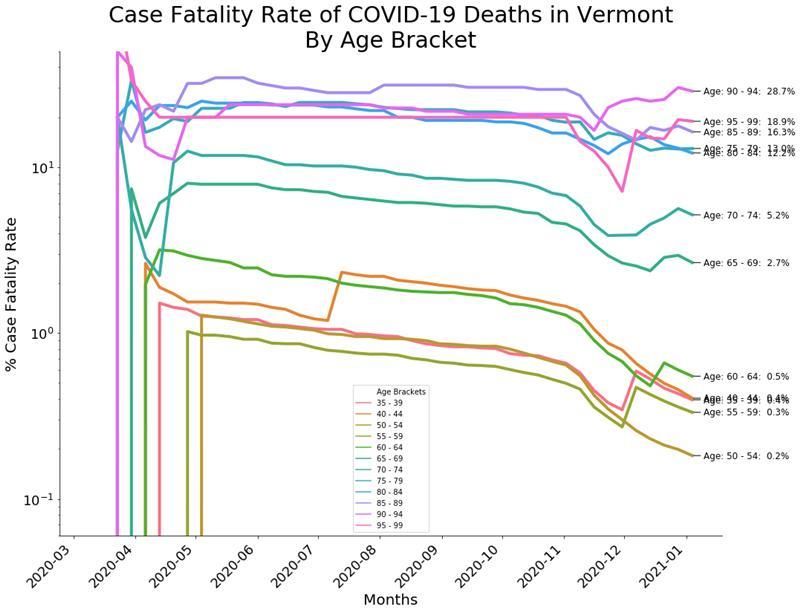
COVID-19 Vaccination Update
                                    February 24, 2021

                                     OVERVIEW OF STRATEGY
                                    “Age Banding”
• Vermont has worked hard to take a data-driven approach in our vaccination delivery
  strategy.
• Our primary strategy with vaccinations is to prevent deaths among Vermonters and we
  are honing our strategy to prioritize saving lives, and ensure the next phases are easy to
  implement, communicate, and understand.
• Based on data and our goal to prevent deaths – Vermont is taking an approach in
  delivery that is based on age group and chronic conditions at this time.

            Vermonters who are 70+ can sign up for a vaccine appointment here:
    https://www.healthvermont.gov/covid-19/vaccine/about-covid-19-vaccines-vermont
3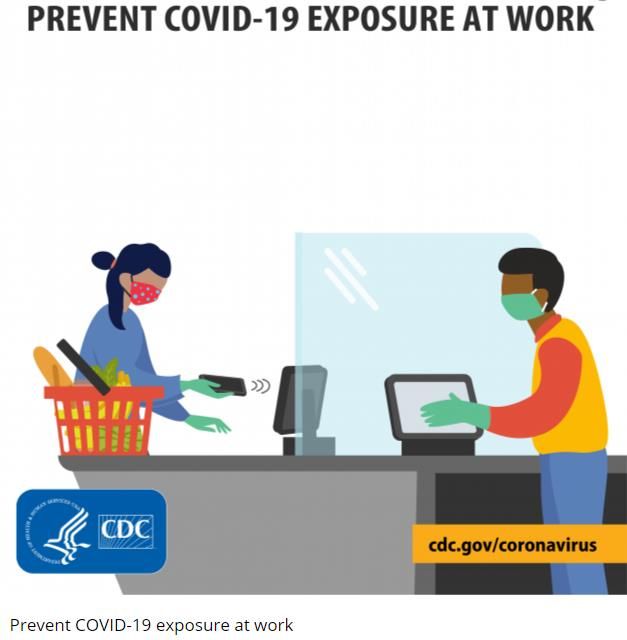
COVID-19 Vaccination Update
                       February 24, 2021

4   2/24/2021
COVID-19 Vaccination Update
                           February 24, 2021

                                               VT CFR 1.9%

                                               Age 95-99: 18.9%
                                               Age 90-94: 28.7%
                                               Age 85-89: 16.3%
                                               Age 80-84: 12.2%
                                               Age 75-79: 13.0%
                                               Age 70-74: 5.2%
                                               Age 65-69: 2.7%
                                               Age 60-64: .5%
                                               Age 55-59: .4%
                                               Age 50-54: .2%
                                               Age 45-49: .4%
                                               Age 40-44: .4%

Updated: 1/3/2021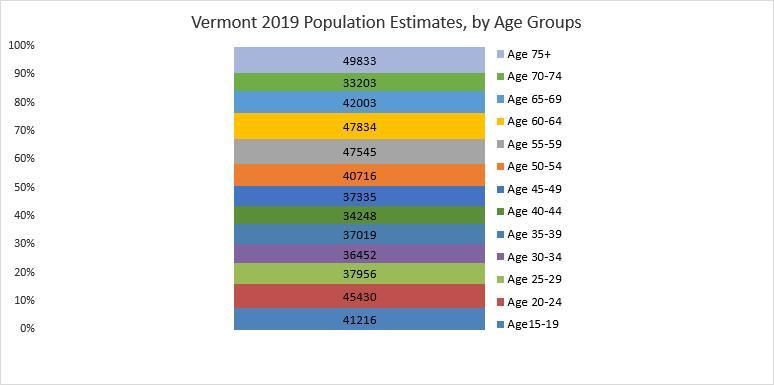
COVID-19 Vaccination Update
                         February 24, 2021
    Demographics by Age-bands

6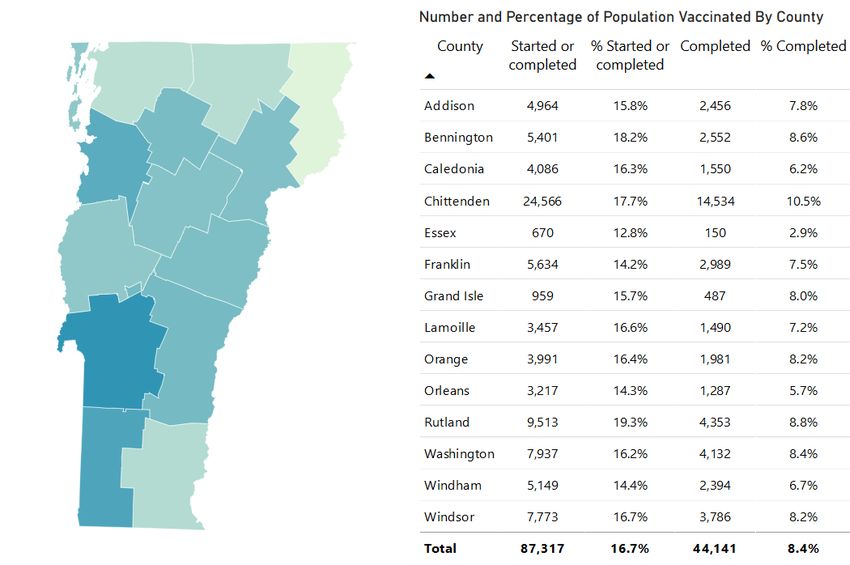
COVID-19 Vaccination Update
           February 24, 2021

7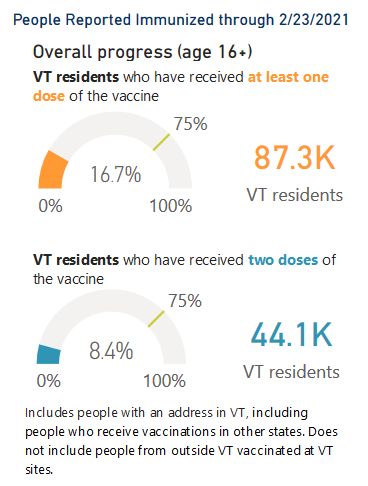
COVID-19 Vaccination Update
              February 24, 2021
      Long-term Care Vaccination Progress

8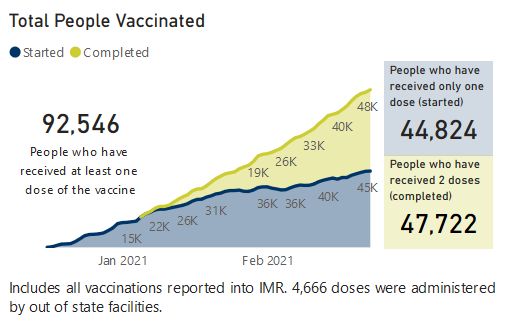
9 2/24/2021
COVID-19 Prevention for Grocery
and Food Retail Workers
 COVID-19 Response – Primary Prevention Team
 Vermont Department of Health
 February 17, 2021
Primary Prevention Team’s
          Role and Responsibilities
• The Vermont Department of Health’s Primary Prevention Team:
• Works with groups, facilities, agencies, and other entities to help them prepare prior
  to cases being identified.

• Creates guidance documents, presentations, and reference materials for specific
  populations.

• Answers questions about COVID-19 prevention.

• Reviews and provides feedback on documents, plans, and protocols.

 Vermont Department of Health                                                              11
Resources for Information and Support
• CDC Guidance for Grocery and Food Retail Workers
• https://www.cdc.gov/coronavirus/2019-
ncov/community/organizations/grocery-food-retail-
workers.html
• Primary Prevention
• Can provide individualized support for implementing prevention
plans.
Vermont Department of Health 12Create plans and educate employees
Cover topics like staying home when sick, physical distancing, how to
wear face coverings and proper hand hygiene.
Provide materials in multiple formats and languages if necessary.
Resources
Plan how to continue essential business functions with a reduced Businesses & Employees
workforce.
Checklist for Employers: COVID-19
Cross-train workers to perform critical duties. in the Workplace
Prepare for how to respond if there is a positive case on site.
Make sure staff understand that if they are identified as a close contact
of someone with COVID they will need to quarantine.
Vermont Department of Health 13Screen employees for potential COVID-19
symptoms before they enter the workplace
Develop a standardized process for screening employees prior to
entering the facility.
Support sick leave and other programs to encourage sick Resources
employees to stay home.
VDH FAQs - Work and Employees
Send employees with symptoms home immediately.
Anyone who has symptoms of COVID, even mild ones, are
encouraged to contact their health care provider.
Vermont Department of Health 14Masks
Make sure face coverings are worn properly
• Two or more layers of washable, breathable
fabric. Resources
• Completely cover nose and mouth. VDH – Wear a Face Mask to Keep COVID-19 from
• Fit snugly against the sides of your face and Spreading
don’t have gaps.
• Masks that have a nose wire help prevent air
from leaking out the top of the mask. CDC – Use Masks to Slow the Spread of COVID-19
Replace when wet, dirty, or contaminated.
Vermont Department of Health 15Promote proper hand hygiene
Provide access to running water, soap, paper Key times to clean hands include:
towels and trash cans. • Before, during and after preparing food
• Before eating food
Use no-touch trash cans, soap dispensers, • After using the toilet
• After blowing your nose, coughing, or sneezing
hand sanitizer dispensers etc. if possible. • After putting on, touching, or removing cloth face
coverings
Have employees wash hands for at least 20
seconds. Additional workplace-specific times to clean hands
include:
• Before and after work shifts and periodically throughout shift
Increase the number of hand sanitizer • Before and after works breaks
stations. • After touching money or objects that have been handled by
customers, such as reusable grocery bags
Provide alcohol-based hand sanitizer that • Before putting on and taking off disposable gloves when
performing food prep
contains at least 60% alcohol.
Vermont Department of Health 16Increase distance between people
Use verbal announcements on the loudspeaker and place signage throughout the establishment, at entrances, in
restrooms, and in breakrooms to remind employees and customers to maintain distances of 6 feet from others.
Place visual cues such as floor decals, colored tape, or signs to indicate to customers where they should stand during
check out.
Use every other check-out lane to aid distancing.
Move the electronic payment terminal/credit card reader farther away from the cashier if possible.
Remove or rearrange chairs and tables or add visual cue marks in employee break rooms to support social distancing
practices between employees.
Shift primary stocking activities to off-peak or after hours when possible, to reduce contact with customers.
Provide remote shopping alternatives for customers.
Vermont Department of Health 17Increase frequency of cleaning and disinfection in
shared spaces
Create list of high-touch surfaces and develop
schedule for when to clean:
Workstations
Resources
Cash registers
CDC - Cleaning and Disinfecting Your Facility
Payment terminals
EPA - Disinfectants for Coronavirus
Door handles
Tables
Countertops
Vermont Department of Health 18AHS.VDHCOVID19PreventionResponse@vermont.gov healthvermont.gov/covid-19
FAMILIES FIRST CORONAVIRUS RELIEF ACT

   FFCRA Paid Sick Leave required covered employers to provide 80 hours of paid sick leave for COVID-19
  related reasons, plus an additional 10 weeks of paid family and medical leave at 2/3 pay for employees
                 needing to care for a child due to a school or child care provider closure.
                           These requirements expired on December 31, 2020.

• The Consolidated Appropriations Act (2021), did not extend the requirement that employers make paid
  sick leave and expanded family and medical leave available to employees.
• However, it did extend the tax credit available to employers for payments made to employees as paid
  sick leave or expanded family and medical leave through March 31, 2021.

Thus, employers may voluntarily elect to provide paid sick leave and expanded family and medical leave to
employees and will receive tax credits for doing so through March 31, 2021. There is no legal requirement
that they do so.

Any paid sick leave or expanded family and medical leave taken by employees up to December 31, 2020
must still be paid by employers despite the expiration of the FFCRA.

 Vermont Department of Health                                                                               20
You can also read


