AL MAMOURA
ACADEMY
MIDDLE SCHOOL
PROSPECTUS
2020-2021
←
→
Page content transcription
If your browser does not render page correctly, please read the page content below
AL MAMOURA ACADEMY MIDDLE SCHOOL PROSPECTUS 2020-2021
MIDDLE SCHOOL PROSPECTUS 2020-2021

WHAT IS THE MIDDLE SCHOOL AT AL MAMOURA ACADEMY?

A FUTURE SHAPED BY OUR STUDENTS: Motivate and inspire our students
through an excellent educational experience.

   • To provide a modern, innovative and challenging curriculum which is adapted to meet
     the needs of individuals and prepares them for their future

   • To set high expectations and high standards in all areas of the curriculum and Extra-
     curricular provision

   • Staff to have high aspirations and to set challenging targets for all students in academic
     areas

   • For all members of the school community to do their best in everything they do

   • For students to achieve high standards in all assessments and tests and to make
     excellent progress across their 4 years at Middle School

   • For students to demonstrate clear progress from their starting points in Maths,
     English and Science

   • To work with all students to build their resilience, self-esteem and confidence

   • To develop and use the reward system effectively to motivate students in their learning
     and behaviour

   • To encourage students to share and appreciate the achievements of others

   • For emotional well-being to be strong within the context of a supportive and
     challenging learning environment

   • For succession planning to be in place for staff, enabling everyone to achieve their best
     and develop their career

   • The learning environment is modern, inspiring and supports learning for all

2|Page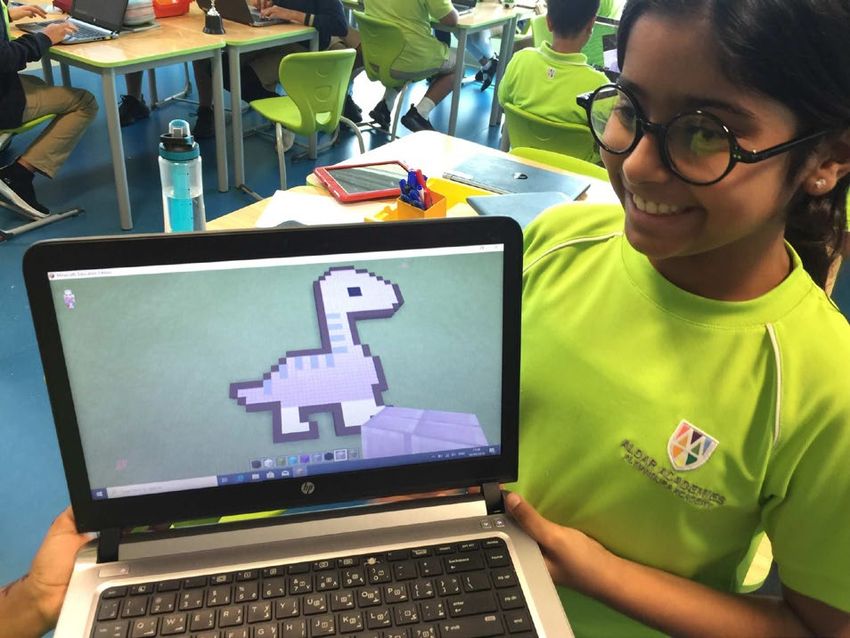
MIDDLE SCHOOL PROSPECTUS 2020-2021

 THE PASTORAL SUPPORT SYSTEM
 All of our Year 5 - 8 students have a supportive and dynamic pastoral care system which offers
 leadership, support and advice throughout this crucial period.

 Pastoral Care
    • There will be two tutors who will be the first point of contact for students and their
       parents if there are problems or concerns;

     •   Tutors facilitate a purposeful morning registration programme/planned learning activity;

     •   Provide help, support and guidance to students and parents;

     •   Ensure that students are wearing the correct uniform and that they have all the
         necessary books and equipment for the day’s lessons;

     •   Encourage students to take advantage of the opportunities at Al Mamoura such as
         taking part in the Extra-curricular programmes;

     •   Newly joined students will be inducted into the Tutor Group, e.g. appoint a ‘buddy’ who
         will take them on a tour of school and help them settle in;

     •   All students are made aware that bullying in any form will not be tolerated at Al
         Mamoura Academy. We have produced an ‘Anti bullying guide’ for students and parents
         which is shared at the start of each academic year;

     •   All staff are aware of the impact of bullying and, if it happens, it is dealt with firmly. We
         encourage everyone to report bullying incidents as quickly as possible so that issues
         can be resolved.

 Academic Monitoring
   • We support the progress of our students by securing time with form tutors who help
      improve the learning and performance of individuals and discuss any issues or problems.
      The form tutors are all core-subject teachers who are purposefully selected to support
      KS2 and KS3 students academically as well as pastorally;

    •    Monitor students’ academic progress and support them in achieving their targets;
         discuss any concerns with parents. They will interview students regularly to help
         overcome any barriers to students learning and to offer guidance and advice to
         individuals.
 Citizenship and Moral Education
    • Tutors will support the delivery, development, monitoring and evaluation of the
       Citizenship and Moral Education programmes.

3|Page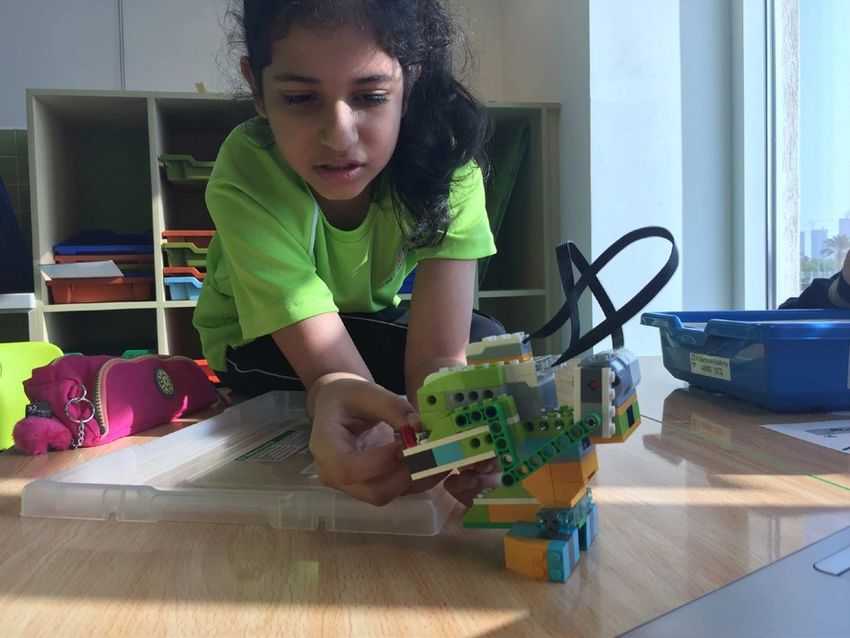
MIDDLE SCHOOL PROSPECTUS 2020-2021

 WHAT PARENTS CAN DO TO SUPPORT THE LEARNING:
 Parental support from home is fundamental in student progress, particularly with homework
 and identifying any areas that students may need help with. Revision and practice is offered
 after school for those that need help or simply wish to progress further.

 Attendance at all Parents Evening is highly encouraged, it helps to understand student
 progression and of course, celebrate, effort and success within the subject.

 Other things to help support your child in their education:

  •    Encourage your child to read a range of fiction and non-fiction texts, from a variety of
       genres. Parents can ensure their child has access to a range of reading material by
       encouraging them to use the school library or buying books themselves.

  •    Get your child to teach you new ideas and concepts – talk to them about what they are
       learning and get them to show you their folder and classwork.

  •    Support them in acquiring new vocabulary and use it in the house, or when visiting
       friends and family.

  •    Encourage them to speak in English.

  •    Read course texts alongside your child and encourage them to talk about what they are
       learning – character, theme, language.

  •    Take interest in your child’s assignments and classwork – get them to show you what
       they are learning and get them to teach you new concepts.

  •    Devise fun ways to test them e.g. flash cards, quizzes.

  •    Watch History documentaries with them and discuss afterwards.

  •    Take them on educational trips.

  •    Encourage dinner table debate.

  •    Have access to a computer and specific software studied on the course.

  •    Encourage your child to attend computing club and Extra-curricular activities to enhance
       their skills.

4|Page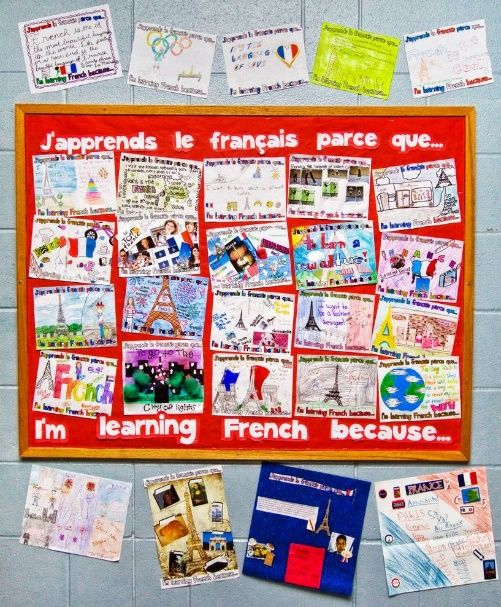
MIDDLE SCHOOL PROSPECTUS 2020-2021

SUBJECT CONTENTS
Year 5 – homeroom teaching with some specialist
lessons. These will include:
  •    Arabic
  •    Art – specialist
  •    Computing
  •    Design and Technology – specialist
  •    English
  •    Islamic
  •    Mathematics
  •    Moral Education
  •    Music – specialist
  •    Physical Education – specialist
  •    Science – 2 homeroom and 1 specialist
  •    Social Studies
  •    Topic

Year 6 – 8 – specialist curriculum lessons for all
subjects. These will be:
  •    Arabic
  •    Art
  •    Computing
  •    Design & Technology
  •    Drama
  •    English
  •    French
  •    Geography
  •    History
  •    Islamic
  •    Maths
  •    Moral Education
  •    Music
  •    PE
  •    Science
  •    Social Studies

5|Page
MIDDLE SCHOOL PROSPECTUS 2020-2021

MEET THE MIDDLE SCHOOL PASTORAL TEAM
                   Mr. Philip Davies – Director of Middle School
                   I am an extremely passionate and forward-thinking educator; with twelve
                   years’ experience of delivering innovative lessons for PE and curriculum
                   subjects across multiple Key Stages. My approach to delivering Learning and
                   Teaching is to ensure an individualised and personal approach to every child’s
                   education. My teaching strategies reflect this ethos and I embrace every
                   child’s needs to ensure they can fully access, progress and develop in a
                   secure and modern learning environment. I believe that if we can enhance
                   opportunity and engagement within the classroom, we will provide students
                   with the tools to become independent learners, with a lifelong passion for
                   learning. I have worked at a management level during my time in Abu Dhabi,
                   as a Head of Department and Assistant Deputy Head of Secondary School.
                   PDavies@almamouraacademy.sch.ae
                   Mr. John Coughlan – Head of Year 5
                   I come from Cork in the South of Ireland. I have been teaching for seven
                   years, three of which I have spent in the UAE. I love being a teacher as every
                   day I get to facilitate and guide students on their learning journey. In my
                   spare time I enjoy reading books, watching movies and keeping fit. I train in
                   Brazilian Jiu-Jitsu and I spent many years training and competing as a rower
                   in Ireland and the UK. I am looking forward to another fantastic, educational
                   and fun filled year in Al Mamoura Academy.
                   JCoughlan@almamouraacademy.sch.ae

                   Mr. Kevin Forrey – Head of Year 6
                   I have been in the UAE for one year and has been teaching for five years,
                   four of those years spent in London, UK. My teacher training practice took
                   place in the Centre of National Excellence for Furniture Production in Ireland.
                   I have a great interest in the world of design and engineering and seeing the
                   built environment that the major cities around the world provide for us. I also
                   have a huge interest in aviation, sports and astronomy. Teaching is very
                   important to me and I am fully vested in teaching to the mental, moral and
                   physical attributes of my students, ensuring that they get an all rounded
                   education. I am keen to ensure that when students leave my lessons, they
                   have a respect for their environment and the people around them.
                   KForrey@almamouraacademy.sch.ae

6|Page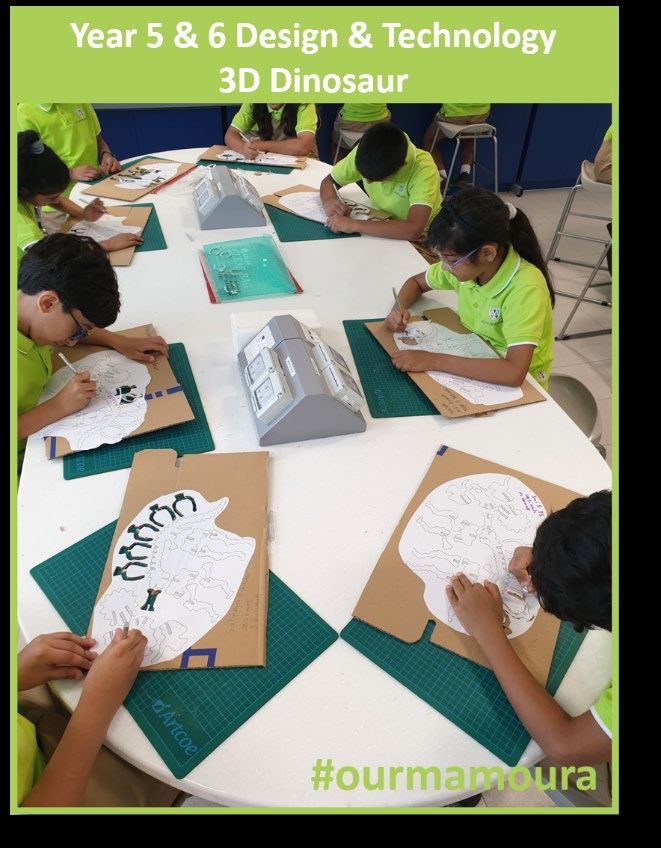
MIDDLE SCHOOL PROSPECTUS 2020-2021

                    Ms. Emma Gibbins – Head of Year 7
                    I have taught PE and been a Year 7 tutor for nine years in the UK and one
                    year in the UAE. I love all sports and play rugby and hockey here in the UAE.
                    I am passionate about education and my teaching philosophy derives from
                    educating the whole child. My aim is that when students leave Al Mamoura
                    Academy, they leave as well rounded, independent, resilient young adults
                    with a passion for life and learning. They will leave as confident young
                    women with all the skill sets to make them successful in whatever they want
                    to achieve in life. EGibbins@almamouraacademy.sch.ae

                    Ms. Natalie Spendlove – Head of Year 8
                    I have been in the teaching profession for sixteen years delivering physical
                    education across all key stages. My first ten years were spent at an all-girls
                    school in my hometown of Liverpool, UK; followed by six years here in Abu
                    Dhabi - a place I now call home. My international career started at Al Bateen
                    Academy in 2013, where I had the responsibility for leading on Academic PE and
                    the IB Sports Science Programme. When Al Mamoura Academy opened, I was
                    excited to be a part of the growth and change that a new school brings and have
                    enjoyed every part of the journey. Outside of school, physical activity has
                    always played a central role in my life especially team sports and swimming. As
                    an individual I am energetic, personable and approachable. I am looking forward
                    to getting to know you all in the upcoming year as I support your daughter
                    through her academic and personal journey to be the best that she can be.
                    NSpendlove@almamouraacademy.sch.ae

 TRANSITION
If your child already attends Al Mamoura Primary, they will take part in a number of transition days
within the Academy. These days will be tailored around; getting to know their new learning area,
meeting teachers, taster lessons, working in new areas of the school, learning about the expectations
of their new year group and the level of work they will be expected to produce;

      - This will prepare your child better for their future learning;
      - Allow your child to experience new skills earlier in their learning;
      - Exposure to greater responsibilities in their learning.

If your child is new to Al Mamoura Academy, they will have the opportunity to come and tour the
Academy. We will also have ‘Taster Sessions’, which will take place throughout the school day. Upon
arrival for the academic year, your child will be placed into a form class, introduced to a ‘School
Buddy’, who will support from a student perspective. There will also be a ‘settling in phase’ where
your child will be monitored and supported pastorally by their Year Group Team.

7|Page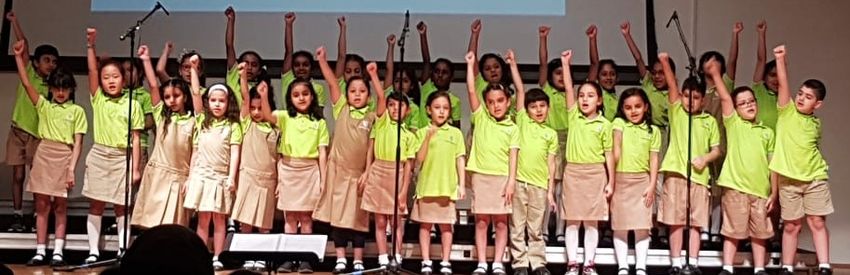
MIDDLE SCHOOL PROSPECTUS 2020-2021

SUBJECT INFORMATION
ARABIC NATIVE & NON-NATIVE
AIMS OF SUBJECT:
The Arabic Language Curriculum is designed to offer a distinctive modern learning that is based
on teaching the four main skills: reading, writing, listening and speaking, and we follow the
national curriculum for native and non-native students. Additional enhancement units are also
being adapted to support students' reading and speaking skills in accordance with international
standards.

The National Curriculum for UAE aims to ensure that all students:

   -   To read easily, fluently and with good understanding
   -   To analyse a variety of literary texts from: (the Holy Qur’an / ancient and modern Arabic
       poetry / literary and informational texts / stories / novels)
   -   To clarify the correct meaning of the new vocabulary through: (linguistic contexts /
       linguistic dictionary)
   -   Use discussion in order to learn; they should be able to elaborate and explain clearly their
       understanding and ideas by using a formal language “Fasiha”
   -   To competent in the arts of speaking and listening, and making formal presentations,
       demonstrating to others and participating in debate.’

Curriculum Coverage:

The school has a well-resourced library with a variety of
collections of books, which are constantly updated, and
suitable for students within each year group. The Arabic
Language Department offers various events and activities
each year; including multi-purpose school trips and school
events suitable for national and international events.

A range of Extra-curricular clubs are allocated annually to
promote and develop various language skills such as the
Arabic Calligraphy Club, the Grammar Club and others. Our
students are also involved in various internal and external
competitions such as: ALDAR Writing Competition, ALDAR
Writing Competition and Arabic Reading Challenge. At this stage, our students are subjected to
international competency measurement tests such as IBT tests, and our students have achieved
with a good result this year as our results in understanding literary texts appear to be higher than
the overall average of Middle Eastern students' results.

8|Page
MIDDLE SCHOOL PROSPECTUS 2020-2021

We believe we can make Arabic language more interesting and
fun for our Non-Native students. We enable them to
communicate confidently within the community in Arabic. We
aim to develop students’ potential; allowing students to use
their ability to develop literacy skills competently and
effectively in their learning. Therefore, our school represents
an important step toward fulfilling the needs of our students
for Arabic as an additional language, we follow the Ministry of
Education Curriculum at Al Mamoura Academy, taking into
consideration the number of years each student has been
studying Arabic.

ART
AIMS OF SUBJECT:
The Art curriculum enables all students to develop an understanding about Art, Craft and Design.
The projects are designed to ensure students experience a broad and varied curriculum
throughout their middle school journey, equipping them with key skills through transition into Key
Stage 3.

The school has two dedicated Art rooms which are well resourced with specialist equipment.

From Year 5 through to Year 8, each student will receive one
lesson each week, taught by our specialist trained Art
Teacher.

Art in the Middle School follows the English National
Curriculum strategy, which requires students to develop
their techniques including their control and use of materials,
with creativity, experimentation and an increasing
awareness of different art, craft and design.

Art gives students the opportunity to work both
independently and collaboratively. It encourages students to
experiment and to not be afraid of making mistakes. Extra-
curricular art activities, house art competitions and trips take
place throughout the year to enhance students’ art education.

9|Page

MIDDLE SCHOOL PROSPECTUS 2020-2021

COMPUTING
AIMS OF SUBJECT:
Computing is one of the fastest growing, sustainable sectors of the economy. We aim to enable
our pupils to capitalise on this growth and to develop productive members of modern society. All
young people need to be digitally literate and have an understanding of how computers can be
used as part of their everyday lives and in the world of
work. Computational thinking is important for
developing a student’s ability to solve problems and to
think logically.

This is a subject that will allow students to work within
a real life context and provide practical programming
techniques that give them a good understanding of
what makes technology work. Students can design
and create programs that can achieve specific goals in
visual and text-based language. Students will be
taught using a range of different strategies including
student led activities, group work, paired work and whole class interactive activities. A range of
practical activities will be undertaken by the students in order to develop their computational
thinking ability as well as developing their skills and understanding of the units taught. Tasks are
designed to engage students and to ensure that all the needs of students are met whilst ensuring
the content of the specification is also covered.

In Year 5, students will have one computing lesson per week with their class teacher and in Years
6, 7 and 8 they will receive one computing lesson per week with their designated computing
teacher.

Students will have the opportunity to study programming and coding in a wide variety of ways.
We have a bespoke curriculum for programming robotics, coding simple and complex strings of
input through Minecraft Education Edition, opportunities to code drones and creating video games,
puzzles and interactive media through scratch.

We also offer practical forms of computing through
building customisable robots using Lego WeDo/Lego
Mindstorm kits. Students will have the chance to
create unique working structures and solve real world
problems by building and programming their own
inventions.

There a lots of exciting pieces of technology at Al
Mamoura Academy, including virtual reality headsets,
an iMac suite, windows suite, coding kits, Lego WeDo

10 | P a g e
MIDDLE SCHOOL PROSPECTUS 2020-2021

kits and more. Students will also have access to iPads and laptops for their studies outside of
computing.

We have a range of digital art platforms on offer,
from building simple 3D structures using Minecraft
Education Edition to photo editing using Photoshop
and digital artwork using Adobe Illustrator. Students
will also have the opportunity to 3D print their
creations using a range of 3D modelling tools and
software. Students in the Middle School will be invited
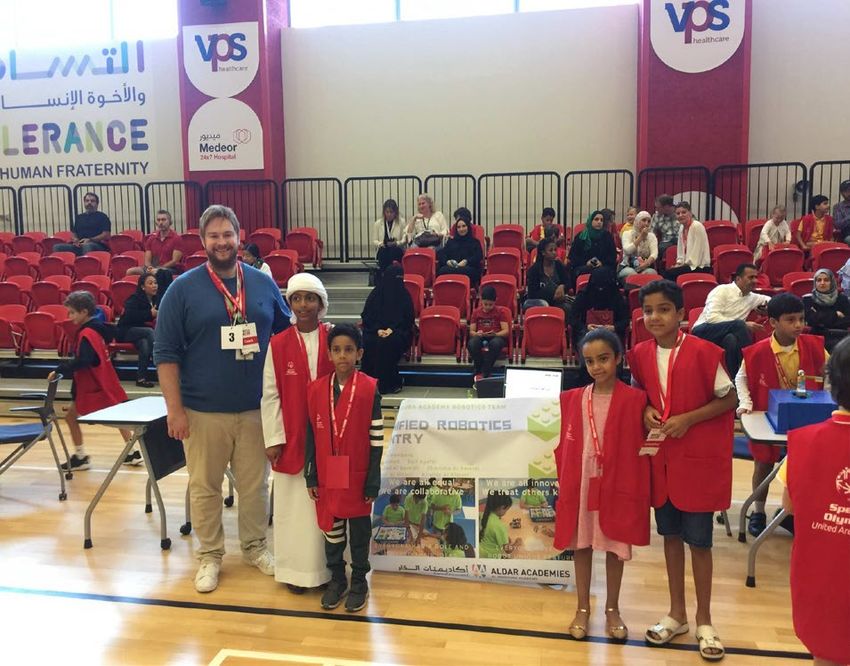
to take part in one of our two First Lego League
teams, either in the junior or senior category where
they will build and program their own Lego robot and
compete against other schools to complete a
challenge course. Other extra-curricular options on
offer include drone clubs, computing skills and Minecraft. Our Middle school computing students
have competed in the First Lego League, Robotics Special Olympics and the Expo 2020 young
innovators competition.

DESIGN & TECHNOLOGY
AIMS OF SUBJECT:
The design and technology (D&T) curriculum enables all students to develop practical and
                                       technological skills in order to create products and
                                       systems that meet a particular need. The creative and
                                        design process is at the heart of the subject and
                                        students’ development is encouraged by being
                                        engaged in practical activities which combine
                                        designing, making and evaluating.

                                          The school has a purpose-built technology department
                                          including 2 fully equipped kitchens, a textiles lab and a
                                          spacious product design room. Students experience
                                          the three main areas of design technology - food,
                                          textiles and resistant materials in all year groups. They
                                          are timetabled on a rotational basis in and receive two,
                                          D&T lessons each week as a class, except in Year 5,
                                          whom have one lesson per week.

                                          All design technology courses follow the British
                                          National Curriculum strategy, which requires students
to build knowledge and understanding through design and make tasks, gaining independence to
explore the subject further as they progress.

11 | P a g e
MIDDLE SCHOOL PROSPECTUS 2020-2021 Food technology provides a broad spectrum of experience in practical and theoretical work covering aspects of health, hygiene and nutrition. Designing and making tasks are used to further students existing skills and encourage an investigative approach to food in terms of quality and function. In textiles we provide a broad introduction to the subject; building on experience gained in lower years. Studies in both Key Stages cover properties of fabrics and yarns. Practical skills are developed through focused ‘design and make’ tasks which include the use of the sewing machine. Product design provides a breadth of practical and theoretical experience covering aspects of graphics, electronics and the environment. DRAMA AIMS OF SUBJECT: The curriculum for drama encourages all students to develop practical and technical skills in performance. The creative process is at the heart of the subject and students’ development is encouraged through workshopping group practical activities which combine devising, performing and evaluating. The school has a purpose-built dance/drama studio, as well as a 500-seater auditorium. Students in Years 6, 7 and 8 will be taught drama once a week in their class by a specialist teacher. The scheme of work for drama follows the expectations of the British National Curriculum, which requires students to build knowledge and understanding of different theatre and performance techniques and develop their skills through collaborative and independent scripted and improvised tasks. 12 | P a g e
MIDDLE SCHOOL PROSPECTUS 2020-2021

                                                Drama promotes collaborative working and helps
                                                to boost the confidence and self-esteem of all
                                                students. Games and workshop activities will
                                                engage students and give them the opportunity
                                                to use their imaginations to produce something
                                                really creative. An annual school production
                                                allows all students to demonstrate the
                                                performance and technical skills they have
                                                developed for the whole school community to
                                                enjoy.

ENGLISH
AIMS OF SUBJECT:
The principle aim for English is to promote high standards of language and literacy by equipping
students with a strong command of the spoken and written word, and to develop their love of
literature through widespread reading for enjoyment.

The National Curriculum for English aims to ensure that all students:
    -   Read easily, fluently and with good understanding.
    -   Develop the habit of reading widely and often, for pleasure and information.
    -   Acquire a wide vocabulary, an understanding of grammar and knowledge of linguistic
        conventions for reading, writing and spoken language.
    -   Appreciate a rich and varied literary heritage.
    -   Write clearly, accurately and coherently, adapting their language and style in and for a range
        of contexts, purposes and audiences.
    -   Use discussion in order to learn; they should be able to elaborate and explain clearly their
        understanding and ideas.
    -   Are competent in the arts of speaking and listening, making formal presentations,
        demonstrating to others and participating in debate.

Example Year 6 syllabus:

 Term 1                        Term 2                      Term 3
 1a – An introduction to       2a – Back to the            3a – Introduction to
 Secondary English             Future: An Intro to Sci-    Short Stories or Poetry
 (reading, writing and         Fi and dystopian fiction    OR
 grammar skills)                                           Film Study
                                                           (Diary of a Wimpy Kid)
 1b - Fiction novel: Holes     2b – Imaginative
 by Louis Sachar or Skellig    Writing                     3b – EOY revision
 by David Almond
13 | P a g e
MIDDLE SCHOOL PROSPECTUS 2020-2021
Useful websites/ Reading resources:
• Spelling, punctuation and grammar workbook (CGP)
• BBC Bitesize https://www.bbc.com/bitesize/subjects/z3kw2hv
• Accelerated Reader
https://ukhosted101.renlearn.co.uk/3361916/Public/RPM/Login/Login.aspx?srcID=t
• Holes by Louis Sachar (Year 6 text)
• Skellig by David Almond (Year 6 text)
FRENCH
AIMS OF SUBJECT:
The French curriculum enables all students to develop their language skills in a fun and interactive
way. Its main purpose is to make Student’s early encounter with French a positive and enjoyable
one. Through lively and varied lessons, activities and games young learners are introduced to a
whole new language and culture.
Students will have plenty of opportunities to focus on the different skills starting from listening
and speaking then moving onto reading and writing in a progressive way and with a range of
strategies to suit all learning styles.
Within listening, students will be exposed to video clips
and soundtracks in the target language and in authentic
settings, in order to get used to French sounds and
develop listening strategies throughout guess work and
discussion.
In speaking, accurate pronunciation and intonation will
be encouraged from the start with games and engaging
group activities. Learners will be provided with plenty of
opportunities for repetition in order to make them feel
gradually more confident.
In reading, students will be introduced to the written
word through colourful and engaging resources to
increase awareness of sound-spelling links that will help
them learn and memorise the language. This will help
their pronunciation too.
In writing, students will be expected to produce progressive work, from manipulating whole
words into sentences and making their own language record or portfolio, using all the available
tools. Modelling will take place through written resources within the classroom.
14 | P a g eMIDDLE SCHOOL PROSPECTUS 2020-2021
The topics covered will include a variety of everyday life aspects such as greetings,
introductions, giving one’s age, numbers, birthdays, school life, family, pets and free time
activities. Students will receive one lesson a week, starting from Year 6 through to Year 8.
GEOGRAPHY
AIMS OF SUBJECT:
The geography curriculum gives Middle School students the opportunity to gain knowledge of
places, people, resources and natural and human environments. This is regarded as the basis on
which understanding of the human and physical processes that create places and shape
landscapes must be developed. Geographical topics are defined as being either ‘human’ or
‘physical’ with links between them identified where appropriate.
Skills such as mapping will be used to interpret
data, together with a requirement for ‘extended
writing’. There is a requirement to carry out
fieldwork so that primary data can be acquired,
processed, presented and analysed.
In addition to this, students’ will also develop
their geographical skills. These skills include
how to describe a map, a graph and a location
amongst many others. The students will learn
how to write an explanation using connectives
to help explain the causes and consequences. They will learn how to use examples and data, both
of which are used as evidence to support their point.
The students will also learn how to write an explanation and an evaluation that includes a
balanced argument looking at both sides. Again they will learn how to use connectives to help
explain causes and consequences, data, evidence and they will learn how to make suggestions
and offer their opinions to make improvements.
Middle School geography students will study 2 or 3 different countries within each theme. The
themes are;
• Changing World
• Destructive World
• Natural World
• Social World and
• Resourceful World.
Students are assessed continuously through 6 key geographic skills that we call our Assessment
Focus (AF). These are: AF1 – Draw, AF2 - Map Skills, AF3 – Describe, AF4 – Explain, AF5 –
Evaluate, AF6 - Spelling, Punctuation, Grammar and Vocabulary.
15 | P a g eMIDDLE SCHOOL PROSPECTUS 2020-2021 For the students to be successful in geography, they will need to have certain materials with them in class each time they are taught. These materials include pens, a pencil for drawing/sketching, coloured pencils, a ruler, an eraser, a pencil sharpener and a compass for drawing. HISTORY AIMS OF SUBJECT: The history curriculum in the Middle School aims to ensure all students have a burning passion for learning about the past and how it can help us understand the world we live in today. The course introduces students to a broad range of topics from across world history, giving successful learners a solid foundation in how the way we live has changed over the last two thousand years. Students work as real Middle School historians, using primary and secondary sources to build their own knowledge and understanding of each topic. As such, by the end of Year 8 students should be able to consider not just what they can learn, but also reflect on the possible values and limitations of a range of different sources. Lessons are designed to engage and challenge, with a big focus on enjoyable, creative and active learning that develops key thinking skills in history. Typical activities include investigations, role plays, debates and ICT-based learning. Historical thinking includes: explaining why certain events happened; analysing the consequences of people’s actions and events; judging how much life changed in the past; reflecting on how different or similar the past was from life today; and evaluating how important certain events or people were in the past. Ensuring excellent progression to the iGCSE course is also a key priority of Middle School history. Students work on core writing skills throughout the programme, such as using detail to describe, linking ideas when explaining, and developing balanced, evidence-based arguments. Lessons run once a week, with a range of assessments being used to ensure student learning fully reflects their knowledge, thinking, creativity and passion. 16 | P a g e
MIDDLE SCHOOL PROSPECTUS 2020-2021

ISLAMIC (NATIVE AND NON-NATIVE)
AIMS OF SUBJECT:
Islamic Studies aims to prepare students to meet the challenges of the future by building a
personality that is open to the outside world, contributing to the preparation of a generation loyal
to their country and which preserves and participates in its renaissance by providing it with the
necessary knowledge, skills, values, and directions.

Al Mamoura Academy offers Islamic Studies classes in the Middle School twice a week for native
and non-native students. The school has separate prayer rooms for girls and boys to instil Islamic
values and establish the value of prayer in the hearts of students.

Al Mamoura Academy opens up the
opportunity for students to contribute to
competitions that link them to their Islamic
faith, including the Aldar Qur'an
competition, as well as participation in
morning assemblies and religious events
that contribute to instilling Islamic values
and enhancing student’s self-confidence.

Islamic Studies follows the standards of the United Arab Emirates, providing students with the
cognitive skills necessary to solve difficulties, resist challenges, solve problems and contribute
positively to society. The standards focus on six areas of learning that represent the components
of the subject: divine revelation, faith, values and morals of Islam, the provisions and purposes of
Islam, biography and personalities, and identity and issues of the times.

Islamic Studies provides a wide range of practical and theoretical expertise by acquiring 21st
century skills using modern and interesting strategies, using electronic programmes and
experiences that help students become well rounded citizen in their community.

17 | P a g e
MIDDLE SCHOOL PROSPECTUS 2020-2021

MATHEMATICS
AIMS OF SUBJECT:
At Al Mamoura Academy the Mathematics department want to help students become assured,
happy and resilient mathematicians who relish the challenge of mathematics. We are using
modern techniques to help students gain a deeper understanding of every aspects of mathematics
which in turn improves each student’s independence and reflective thinking which can help
improve their ability across each individual subject they take.
Students will be following the White Rose Maths scheme of work. The aim of this is to make
mathematics more visual for each student and help relate each topic to real life practices. The
scheme of work covers the four main aspects of Mathematics: Number, Algebra, Geometry and
Statistics. During each topic we will put a lot of time into problem solving questions and how to
solve them, this aligns with the new national curriculum which has an emphasis on problem
solving.
One of our aims in mathematics is to make it fun for each student, this is to remove the stigma
that mathematics is a boring and difficult subject. As a department we have a range of different
activities that excite students but also to provide the stretch and challenge needed to help them
make progress.
Curriculum Coverage
Students in Year 5 are in their home-room every day by their classroom teacher. In Year 6
students will be prepared for the end of Key Stage 2 assessment and will have access to the
specialist mathematics learning area. Students in Years 7 and 8 learning is extended from the
work completed in Key Stage 2. Students have time to develop key skills to enable them to access
all areas of the subject.
RESOURCES ADVISED FOR SUPPORT:

   Casio FX-300 Plus               Casio FX-115 Plus            Casio FX-991 CEX
Parents can support learning by helping students organise their work and make sure they are
completing the homework.

18 | P a g e
MIDDLE SCHOOL PROSPECTUS 2020-2021

MORAL EDUCATION
AIMS OF SUBJECT:
Moral education is an innovative, engaging curriculum designed to develop young people of all
nationalities and ages in the UAE with universal principles and values, that reflect the shared
experiences of humanity.

The moral education programme covers four main pillars – character and morality; the individual
and the community; civic studies; cultural studies. In the Middle School at Al Mamoura Academy
the ultimate outcome for Moral Education is:

    -   To create a generation of citizens who have strong character traits, including resilience,
        perseverance, work ethic, critical thinking and discipline;
    -   To develop practical and ethical values including tolerance, honesty, dignity, respect and
        humility;
    -   To encourage and enable students to become active members of their community;
    -   To teach students about various cultures both of the UAE and the wider world;
    -   Moral Education is taught on a weekly basis by the classroom teacher and students are
        given opportunities to discuss, debate and design in these lessons.

        Content Coverage:

    -   In Year 5 students will focus on developing
        compassion and empathy while also learning
        about how trade, travel and how communication
        has influenced culture.
    -   In Year 6 the students will focus on taking
        responsibility for oneself and others while also
        learning about settlement, family and kinship in
        the UAE.
    -   In Year 7 the students will study how the UAE
        grew into the diverse inclusive society it is today
        while also studying the effects of diet and
        physical health.
    -   In Year 8 the students will look at how the UAE
        is now part of an increasingly globalized and
        interconnected world. They will also look at
        individual moral responsibilities, duties and
        obligations.

19 | P a g e
MIDDLE SCHOOL PROSPECTUS 2020-2021
MUSIC
AIMS OF SUBJECT:
The curriculum for music encourages students to develop their skills across all three strands:
listening and appraising, performance, and composition. Being creative is at the heart of the
subject and students’ development is encouraged through a variety of activities including but not
limited to: whole class composition and performances, paired-work and independent study.
The school has outstanding facilities in the music department.
These facilities include an iMac suite, a keyboard suite, a full
samba kit, a class set of djembes and a combination of
xylophones and metallophones.
Students across the Middle School are taught music once a
week in their class group by a specialist teacher. There are
numerous additional extra-curricular activities students can get involved in too, including joining
one of the choirs or bands, or taking individual instrumental or singing lessons with a specialist
teacher from IMIG.
The scheme of work for music
follows the expectations of the
British National Curriculum, which
is built on throughout their time at
Al Mamoura Academy.
Music promotes collaborative working and active listening and also helps to boost the confidence
and self-esteem of all students. Regular concerts, competitions, and annual school productions
allow all students to demonstrate the performance skills they have developed for the whole school
community to enjoy.
20 | P a g eMIDDLE SCHOOL PROSPECTUS 2020-2021 PHYSICAL EDUCTION AIMS OF SUBJECT: The physical education curriculum aims to inspire all students to succeed in a range of physical activities and in a variety of different capacities. It provides opportunities for students to become physically confident in a way which supports their health and fitness in the longer term. Through the PE curriculum offered students will have the opportunity to: • Develop competence to achieve success in a broad range of physical activities. • Learn how to be physically active for sustained periods of time. • Engage in competitive sports and activities. • Lead healthy, active lives. Physical education is such a valuable subject for all students to have access to; instilling such varied key skills including communication, collaboration, respect, creativity, resilience, perseverance, decision making and leadership to name but a few. Opportunities are provided for all students to compete in sport and other activities outside of the school day which will continue to build a students’ character and help to embed values such as fairness and respect. Students use the wonderful facilities that Al Mamoura Academy has. The Academy has a purpose- built sports hall, an Auditorium, two outdoor AstroTurf pitches and two outdoor hard surface courts. In addition to these facilities Al Mamoura Academy has two indoor swimming pools, one 25m pool and one smaller development pool. Students will have the opportunity to take part in a number of outstanding extra-curricular activities (ECAs). We offer a number of teacher led activities, as well as some paid external activities through our sporting links. We have a wide range of school teams and compete against schools from across Abu Dhabi, in the Abu Dhabi School Sports Association (ADDISA). 21 | P a g e
MIDDLE SCHOOL PROSPECTUS 2020-2021

SCIENCE
AIMS OF SUBJECT:
Science in the new Middle School at Al Mamoura explores the wonders of the world through the
                        study of living things, materials and physical processes. It aims to
                        develop students understanding to become scientifically literate and be
                        able to face the future needs of modern society. Science is taught in a
                        variety of ways to suit both the class and the individual.
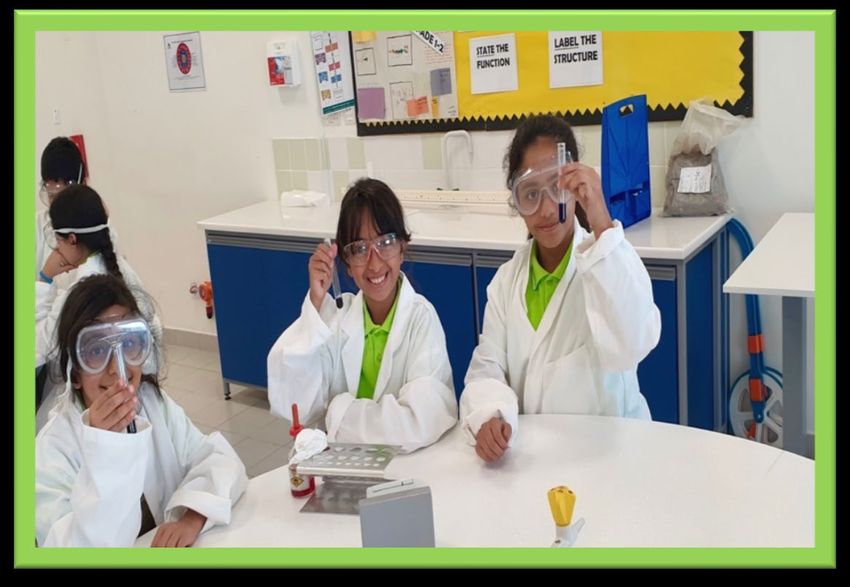
                           There is a large emphasis on the practical experience within lessons,
                           ensuring learning is both engaging and effective, whilst using individual,
                           paired and group work, discussions and questioning, as well as self and
                           peer assessment. The science department has two fully equipped
                           laboratories specifically allocated to Year 5 and 6 practical learning as
                           part of the new Middle School approach.

 In Year 5 students will have 1 specialist lesson          Working scientifically is a theme throughout
 per week taught in mixed ability groups in the           all topics encouraging students in Year 6 to:
Science laboratory and 2 lessons with their class              develop skills, start to plan their own
   teacher. Students are guided to develop an                  experiments and present their results
understanding of science through various topics          appropriately. They will be assigned their own
and to gain practical skills that will allow them to        Science teacher and will receive 3 Science
     move forward in their science education.             lessons per week in the science department.

In Years 7 and 8 students have 3 lessons per week taught in mixed ability groups. The principle
aim is to develop a deeper understanding of a
range of scientific concepts in the discipline
areas of biology, chemistry and physics.
Students are encouraged to relate their
understanding to phenomena in the world
around them and make connections in their
learning between different topic areas. There is
a focus on developing the pupil’s investigative
skills, including criticising results and evaluating
both evidence and the experimental method.
There is also a popular Extra-curricular science
clubs where middle school students have the
opportunity to undertake more exciting practical tasks that they would not necessarily do in their
lessons as well as to support students to advance their scientific knowledge even further. This
new approach has been designed to fully engage and enthuse all students in the middle school at
Al Mamoura Academy.

22 | P a g e
MIDDLE SCHOOL PROSPECTUS 2020-2021 SOCIAL STUDIES AIMS OF SUBJECT: The subject of social studies provides an in-depth systematic study of information, skills and concepts in: history, geography, economics, and social studies. Specialties that focus attention on the links and relationships that bring together different people and nations; the relationship between Science, Technology and Society, and how to practice good citizenship. Social studies help young people develop their knowledge and skills necessary to make the right decisions as active members of a society of cultural diversity within a connected world. Al Mamoura Academy provides social studies classes in Middle School once a week for all students and provides students with the opportunity to contribute to national and social celebrations that promote their national identity. Linking them to their heritage such as National Day, Martyr's Day, and Flag Day; which contributes to enhancing their self-confidence and their nationalisation. Social studies is a coherent subject from Year 5 through to Year 8, focusing on the skill of reading different maps and graphs. This gives students the tools and methods of clear and disciplined thinking to help them achieve success in today's world. Social studies subject provides a wide range of practical and theoretical experiences in the field. Where its topics depend on creativity, cultural communication, innovation, and the responsibility to prepare for the future. There are many topics that concern sustainability and motivation, in addition to the topics of Emirati women and their community status and their impact on economic achievements. 23 | P a g e
MIDDLE SCHOOL PROSPECTUS 2020-2021

DEPARTMENT                           EMAIL                TELEPHONE

Parent Relations                                           +971 2 885
                          PRE@almamouraacademy.sch.ae
Executive (PRE)                                              7110

                                                           +971 2 885
  Admissions         admissions@almamouraacademy.sch.ae      7138

                                                           +971 2 885
   Reception          reception@almamouraacademy.sch.ae      7100

                                                           +971 2 885
     Finance            finance@almamouraacademy.sch.ae      7126

24 | P a g e
You can also read


