2021 2022 Graduation Requirements & Course Offerings Guide Grades 6 - 2022 Graduation Requirements & Course Offerings ...
←
→
Page content transcription
If your browser does not render page correctly, please read the page content below

2021 - 2022
     Graduation
    Requirements
          &
Course Offerings Guide
    Grades 6 - 12

      All information in this catalog is current as of January 2021 and is subject to change

                          School Counseling & BRACE Advisement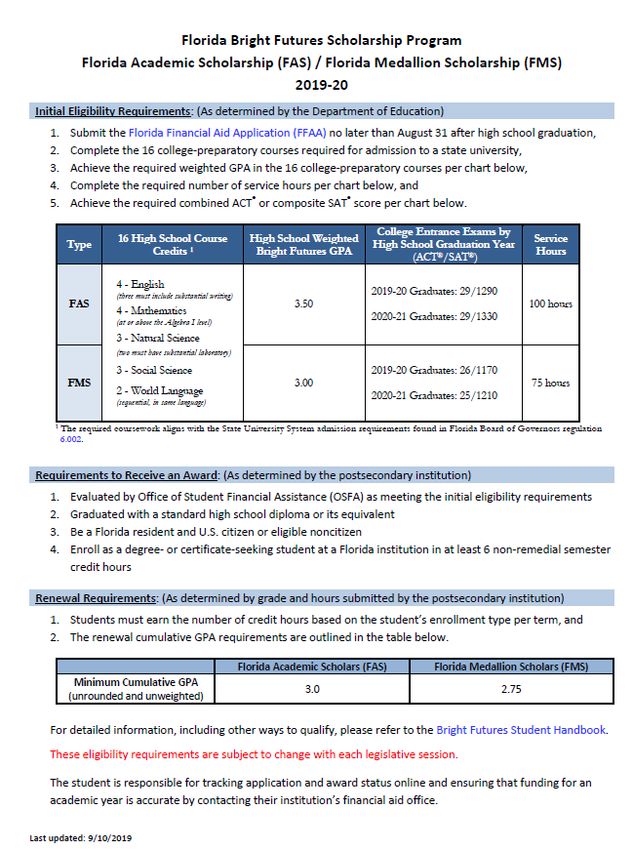
GRADUATION REQUIREMENTS AND COURSE OFFERINGS GUIDE, 2021-2022

                                 The School Board of Broward County, Florida

                                                         Dr. Rosalind Osgood, Chair
                                                       Laurie Rich Levinson, Vice Chair

                                                                            Lori Alhadeff
                                                                            Patricia Good
                                                                            Debra Hixon
                                                                           Donna P. Korn
                                                                           Sarah Leonardi
                                                                            Ann Murray
                                                                            Nora Rupert

                                                                          Robert W. Runcie
                                                                     Superintendent of Schools

  The School Board of Broward County, Florida, prohibits any policy or procedure, which results in discrimination on
    the basis of age, color, disability, gender identity, gender expression, national origin, marital status, race, religion,
    sex or sexual orientation. Individuals who wish to file a discrimination and/or harassment complaint may call the
     Director, Equal Educational Opportunities/ADA Compliance Department at 754-321-2150 or Teletype Machine
                                                     (TTY) 754-321-2158.

       Individuals with disabilities requesting accommodations under the Americans with Disabilities Act of 2008
     (ADAAA) may call Equal Educational Opportunities/ADA Compliance Department at 754-321-2150 or Teletype
                                              Machine (TTY) 754-321-2158.
                                                                   www.browardschools.com

                                                                                              2
                                                     All information in this catalog is current as of January 2021 and is subject to change

                                                                         School Counseling & BRACE Advisement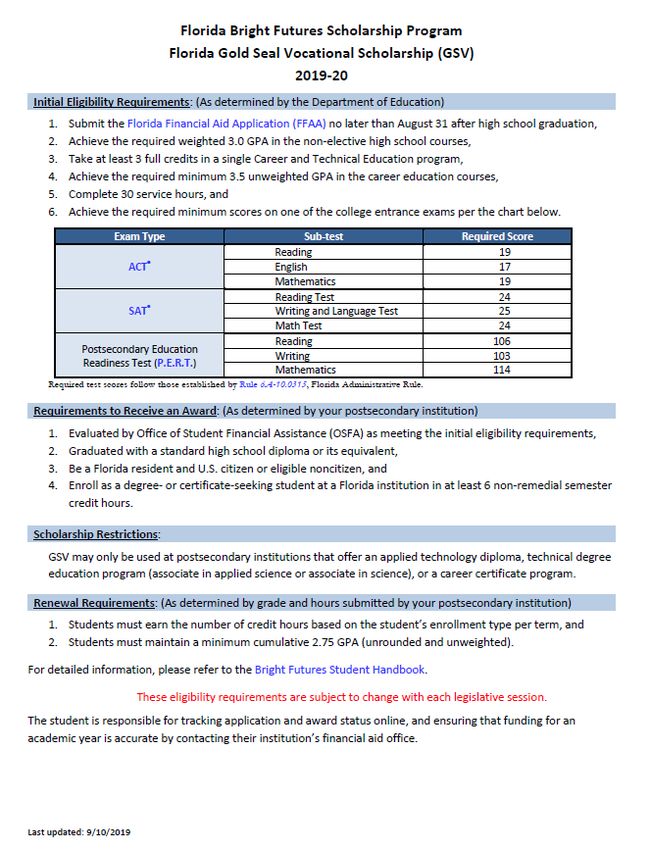
GRADUATION REQUIREMENTS AND COURSE OFFERINGS GUIDE, 2021-2022

                                                                   Principal’s Message

Greetings Bobcats,

West Broward High School’s Mission is to promote integrity, respect, and dignity by creating
lifelong learners in a safe and trusting environment. With our vision being to build a spirit of
collaboration and pride.

Building on the solid foundation established by Mr. Traeger and Mrs. Hall throughout our first
decade of excellence, our teachers, students, and parents have worked together to continue to build
a tradition of lifelong learners, in cooperation with the community’s support. West Broward
emphasizes that the strengths of our students are built both on and off campus, and that it truly
takes a village to help our students reach their full potential. This sense of community is essential to
the familial safety our Bobcat students need to flourish in an environment that embraces the
essence of pride that transcends for years beyond their graduation.

Our school's highly qualified and dedicated staff, compassionate school counselors, and extra-
curricular opportunities and many mentoring programs all work in unison to ensure that students'
emotional and social needs are met. West Broward has established a culture that fosters
personalization for academic and social-emotional learning.

As a Bobcat, expectations are set high and success is yours to achieve. It is the pride and success of
West Broward’s history that offers you the path to continue with strength in creating your own
legacy, adding your mark to the map. It is your turn to make history, be there for each other, and
continue to build on the rich traditions that have become the Bobcat Way!

Make friends and say hello to everyone on campus. Offer a smile and a high five as you walk the
hallways. We are one family on this campus. Live each day with purpose and an attitude of
gratitude, remembering that tomorrow is not promised!

Welcome home to West Broward! Our home to share together as one family of BOBCATS! Let’s do
this!

Go Bobcats!

Brad Fatout
West Broward Principal

                                                                                              3
                                                     All information in this catalog is current as of January 2021 and is subject to change

                                                                         School Counseling & BRACE Advisement
GRADUATION REQUIREMENTS AND COURSE OFFERINGS GUIDE, 2021-2022
L EADERSHIP T EAM
ADMINISTRATION
Brad Fatout, Principal
Diana Hurtado, Assistant Principal
Frank Jones, Assistant Principal
Casey Pacella, Assistant Principal
Wendolynn Sanchez, Assistant Principal
Gloria Basulto-Arencibia, Behavior Specialist
Elizabeth Rivero, Literacy Coach
SCHOOL COUNSELING DEPARTMENT
Mishele DiFede, School Counseling Director
Lazaro Porto, 9th Grade, School Counselor
Martha Fernandez, 10th – 12th Grade (A – Gl), School Counselor
Joy Brown-Cooper, 10th – 12th Grade (Go – O), School Counselor
Michelle Bellamy, 10th – 12th Grade (P – Z), School Counselor
Vanessa Longhi, BRACE Advisor
Tina Hartzell-Strauss, BRACE Advisor
DEPARTMENT CHAIRPERSONS
Sarah Zorn- Milmed, Science
Lisa Brown, Mathematics
Gina Cunicelli, Social Studies
James Darr, P.E.
Javier Diaz, Fine Arts
TBA, ESLS Specialist
Lorraine Liverpool, Language Arts
Norma Tchir, Media
Ilene Torraca, World Languages
Tara Terribile/Jodi Tesser, CTE
4
All information in this catalog is current as of January 2021 and is subject to change
School Counseling & BRACE AdvisementGRADUATION REQUIREMENTS AND COURSE OFFERINGS GUIDE, 2021-2022
MIDDLE SCHOOL PROMOTION REQUIREMENTS
Promotion to Grades 7 and 8
Middle school students must meet course requirements for grade level promotion. In order to promote to Grades 7
and 8, students must pass a total of four (4) courses, two (2) of which must be “core” courses. Core courses are
those classes that fall within the English, Mathematics, Science, and Social Studies subject areas.
Promotion to Grade 9
For promotion to Grade 9, students must successfully complete:
• 3 courses in Language Arts
• 3 courses in Mathematics
• 3 courses in Science
• 3 courses in Social Studies, which must include a course in Civics
• Career Planning
Course Recovery
Students who do not pass a core course will have the opportunity for “recovery.” Recovery programs differ at each
school. See your school counselor for the recovery options available at your school.
MIDDLE SCHOOL STUDENTS HEADING TO HIGH SCHOOL
It is very important for middle school students to begin planning and preparing for their high school coursework in
order to eventually meet their personal post-secondary goals. Recent legislation has redesigned the high school
graduation requirements for each cohort over the next several years. The course and assessment requirements will
change every year. Therefore, it is imperative that middle school students know and understand their expected
graduation requirements for the year in which they first enter 9th grade. The chart on the next page represents the
graduation requirements for the incoming freshmen class. Subsequent cohorts should see their school counselor for
revised graduation requirements.
End-of-Course (EOC) exams are for specific high school courses. The EOCs are given to students in the following
high school level courses:
• Algebra 1, Algebra 1 Honors, Algebra 1B, Pre-AP Algebra, Pre-AICE Math 1, IB Middle Years Program
Algebra 1
• Geometry, Geometry Honors, IB Middle Years Program Geometry, Pre AICE Math 2
• Biology, Biology Honors, Pre-AICE Biology, Pre- AP Biology, IB Middle Years Program Biology,
Biology 1 Pre IB
• US History, US History Honors, Visions & Countervisions
All students enrolled in these courses will be required to take the EOC. The results of the EOC will count for 30%
of the student’s final course grade.
5
All information in this catalog is current as of January 2021 and is subject to change
School Counseling & BRACE AdvisementGRADUATION REQUIREMENTS AND COURSE OFFERINGS GUIDE, 2021-2022
MIDDLE SCHOOL GEM PROGRAM (Great Explorations in Math)
The GEM Program is designed to allow students to move faster than they would in a regular program. Since some
students are already good technicians, they can follow rules and apply those rules to routine exercises. GEM
students need to go one step further, analyzing non-routine problems and digging beneath the surface in order to see
the beauty, elegance, and application of the mathematics being learned.
The GEM Program condenses the regular three-year middle school mathematics program into 6th grade.
Students in 7th grade take Algebra I, a mathematics "gatekeeper course"; one has to go through it to reach the
possibilities beyond. Algebra is the problem solving language of mathematics and science. It is an abstract language
that uses letters to generalize mathematical operations. The purpose of the GEM Algebra curriculum is not merely
to create computationally efficient students, but to offer a learning environment where students are challenged and
engaged in complex mathematics problems that can be directly applied to real-world settings. In a technologically-
fueled society, not knowing algebra limits what one can do in life. Students in GEM-7 (Algebra I Honors) will be
required to take a State end-of-course exam (EOC). The student’s score on the Algebra I EOC will be included as
30% of the final Algebra I Honors course grade. Passing the Algebra I EOC is also a high school graduation
requirement.
Students in 8th grade take Geometry, a mathematics course that is the study of visual patterns. The textbook that the
students use is unique in that the students actually create geometry for themselves as they proceed through the
activities and problems. Concepts are first introduced visually, then analytically, then inductively, and, finally
deductively. Students are first involved in investigating and conjecturing before they are exposed to formal proofs.
The purpose of the GEM geometry curriculum is not merely to create computationally efficient students, but to
offer a learning environment where students are challenged and engaged in complex mathematics problems that can
be directly applied to real-world settings. Students in GEM-8 (Geometry Honors) will be required to take a State
Geometry EOC. The score on the Geometry EOC will be included as 30% of the final Geometry Honors course
grade.
6
All information in this catalog is current as of January 2021 and is subject to change
School Counseling & BRACE AdvisementGRADUATION REQUIREMENTS AND COURSE OFFERINGS GUIDE, 2021-2022
HIGH SCHOOL GRADUATION REQUIREMENTS AND DIPLOMA OPTIONS
Florida law provides students the right to choose a diploma option:
• 4-year (24 credit) standard high school diploma
• 18 credit ACCEL Diploma
• Career and Technical Education Pathway
• Complete AICE Curriculum
• Complete IB Curriculum
The right graduation program for a particular student is one that best fits the abilities, interests, and goals of the
individual student. Families should consider the educational benefits of each program and choose the program that
will best prepare the student for his or her postsecondary education or career plan. Families and students should
work with their school counselor on a regular basis to get more information about graduation options, financial aid
opportunities, acceleration programs, and college or career plans to help make this important decision.
Please note that each student is governed by the policies from the year in which they first entered ninth grade. This
year of high school entry determines the student’s “cohort.” Each cohort may have different graduation
requirements. The charts on the following pages should be used as a guide when planning your academic program.
It is very important that students become aware of the specific graduation requirements for their diploma option and
cohort.
International Baccalaureate (IB) Curriculum
Please refer to the IB Organization website for the most current diploma requirements for this graduation
option.
Advanced International Certificate of Education (AICE) Curriculum
Please refer to the AICE Organization website for the most current diploma requirements for this
graduation option.
Early High School Graduation
A high school student who pursues the four-year 24-credit or 18 credit ACCEL high school graduation program
may have the option to participate in early graduation (graduating in less than 8 semesters). A student who
completes a minimum of 24 (or 18 for ACCEL) credits, achieves a cumulative GPA of 2.0 on a 4.0 scale,
completes the service learning requirement (not required for ACCEL) and earns a passing score on the statewide
assessments required for high school graduation may have this option outlined in s. 1003.4281, F.S.
A student who graduates early may continue to participate in school activities and social events and attend and
participate in graduation events with the student’s cohort, as if the student were still enrolled in high school. A
student who graduates early will be included in class ranking, honors, and award determinations for the student’s
cohort. A student who graduates early must comply with district school board rules and policies regarding access to
the school facilities and grounds during normal operating hours.
7
All information in this catalog is current as of January 2021 and is subject to change
School Counseling & BRACE AdvisementGRADUATION REQUIREMENTS AND COURSE OFFERINGS GUIDE, 2021-2022
Graduation Requirements Charts
The following charts display the requirements for each type of diploma and cohort. This information is current as
of January 2021 and may be subject to change dependent upon new legislation.
24-Credit Standard Diploma Graduation Requirements
English 4 Credits
1 Credit Algebra (EOC=30% of final grade)
Mathematics 1 Credit Geometry (EOC=30% of final grade)
2 Credits Additional Math
1 Credit Biology (EOC=30% of final grade)
Science
2 Credits Additional Science identified as Equally Rigorous
1 Credit World History
1 Credit United States History (EOC =30% of final grade)
Social Studies
.5 Credit United States Gov’t
.5 Credit Economics
Not required for graduation. Minimum 2 years of the same language required for admission
World Languages into most universities and some Bright Futures Scholarships.
Fine and Performing 1 Credit in Fine or Performing Arts, Speech and Debate, or eligible Practical Arts
Arts, Speech/Debate, or
Practical Arts
Option 1: 1 Credit in Physical Education to include the integration of Health (HOPE)
Option 2: 0.5 Credit Personal Fitness; and 0.5 Credit PE Elective (may be satisfied thru
Marching Band or Dance)
Physical Education
Option 3: Complete 2 full years of JROTC
Option 4: Complete 2 full seasons of a Junior Varsity or Varsity Sport
Option 5: Choose the ACCEL 18-Credit Option
Electives 8 Credits
TOTAL 24 Credits
Students must earn a passing score on the Grade 10 ELA statewide standardized assessment
State Assessments
or concordant
Students must earn a passing score on the Algebra 1 EOC or concordant
On-Line Course Requires a full course to be completed
Grade Point Average Cumulative GPA of 2.0 on a 4.0 scale (unweighted)
Service Hours 40 hours required
Diploma Designations
In addition to meeting the standard high school diploma requirements:
-Algebra II
-Pass the Geometry EOC
-Statistics or equally rigorous math
Scholar Designation -Chemistry or Physics and another equally rigorous science
-2 credits in the same world language
-Earn at least one credit in AP, IB, AICE or a dual enrollment course
-Pass Biology EOC or earn minimum score required to earn college credit on AP, IB or AICE exam
-Pass US History EOC or earn minimum score required to earn college credit on AP, IB or AICE exam
In addition to meeting the standard high school diploma requirements:
Merit Designation
Attain one or more industry certifications from the list established
8
All information in this catalog is current as of January 2021 and is subject to change
School Counseling & BRACE AdvisementGRADUATION REQUIREMENTS AND COURSE OFFERINGS GUIDE, 2021-2022
18 Credit ACCEL Graduation Requirements
Students Entering Grade Nine in School Year 2014 – 2015 and After
English 4 Credits
1 Credit Algebra (EOC=30% of final grade)
Mathematics 1 Credit Geometry (EOC=30% of final grade)
2 Credits Additional Math
1 Credit Biology (EOC=30% of final grade)
Science
2 Credits Additional Science identified as Equally Rigorous
1 Credit World History
1 Credit United States History (EOC =30% of final grade)
Social Studies
.5 Credit United States Gov’t
.5 Credit Economics
Not required for graduation. Minimum 2 years of the same language required for admission
World Languages
into most universities and some Bright Futures Scholarships.
Fine and Performing 1 Credit in Fine or Performing Arts, Speech and Debate, or eligible Practical Arts
Arts, Speech/Debate, or
Practical Arts
Electives 3 Credits
TOTAL 18 Credits
Students must earn a passing score on the Grade 10 ELA statewide standardized assessment
State Assessments
or concordant
Students must earn a passing score on the Algebra 1 EOC or concordant
Grade Point Average Cumulative GPA of 2.0 on a 4.0 scale (unweighted)
Diploma Designations
In addition to meeting the standard high school diploma requirements:
-Algebra II
-Pass the Geometry EOC
-Statistics or equally rigorous math
Scholar Designation -Chemistry or Physics and another equally rigorous science
-2 credits in the same world language
-Earn at least one credit in AP, IB, AICE or a dual enrollment course
-Pass Biology EOC or earn minimum score required to earn college credit on AP, IB or AICE exam
-Pass US History EOC or earn minimum score required to earn college credit on AP, IB or AICE exam
In addition to meeting the standard high school diploma requirements:
Merit Designation
Attain one or more industry certifications from the list established
9
All information in this catalog is current as of January 2021 and is subject to change
School Counseling & BRACE AdvisementGRADUATION REQUIREMENTS AND COURSE OFFERINGS GUIDE, 2021-2022
Career and Technical Pathway Graduation Requirements
Students Entering Grade Nine in School Year 2014 – 2015 and After
English 4 Credits
1 Credit Algebra (EOC=30% of final grade)
Mathematics 1 Credit Geometry (EOC=30% of final grade)
2 Credits Additional Math
1 Credit Biology (EOC=30% of final grade)
Science
2 Credits Additional Science identified as Equally Rigorous
1 Credit World History
1 Credit United States History (EOC =30% of final grade)
Social Studies
.5 Credit United States Gov’t
.5 Credit Economics
Not required for graduation. Minimum 2 years of the same language required for admission
World Languages
into most universities and some Bright Futures Scholarships.
4 Credits: 2 credits in CTE courses that must result in completion and Industry Certification
Electives and 2 credits in work-based learning programs or up to two elective credits including financial
literacy
TOTAL 18 Credits
Students must earn a passing score on the Grade 10 ELA statewide standardized assessment
State Assessments
or concordant
Students must earn a passing score on the Algebra 1 EOC or concordant
Grade Point Average Cumulative GPA of 2.0 on a 4.0 scale (unweighted)
Diploma Designations
In addition to meeting the standard high school diploma requirements:
-Algebra II
-Pass the Geometry EOC
-Statistics or equally rigorous math
Scholar Designation -Chemistry or Physics and another equally rigorous science
-2 credits in the same world language
-Earn at least one credit in AP, IB, AICE or a dual enrollment course
-Pass Biology EOC or earn minimum score required to earn college credit on AP, IB or AICE exam
-Pass US History EOC or earn minimum score required to earn college credit on AP, IB or AICE exam
In addition to meeting the standard high school diploma requirements:
Merit Designation
Attain one or more industry certifications from the list established
10
All information in this catalog is current as of January 2021 and is subject to change
School Counseling & BRACE AdvisementGRADUATION REQUIREMENTS AND COURSE OFFERINGS GUIDE, 2021-2022
2021-2022 Standard Diploma Graduation Requirements
Exceptional Student Education
In accordance with s. 1003.4282(11),F.S
Students Entering Grade Nine in 2014 – 2015 and After
English 4 Credits
1 Credit Algebra (EOC=30% of final grade)
Mathematics 1 Credit Geometry (EOC=30% of final grade)
2 Credits Additional Math
1 Credit Biology (EOC=30% of final grade)
Science
2 Credits Additional Science identified as Equally Rigorous
1 Credit World History
Social Studies 1 Credit United States History (EOC =30% of final grade)
.5 Credit United States Gov’t and .5 Credit Economics
Not required for graduation. Minimum 2 years of the same language required for admission into most universities
World Languages and some Bright Futures Scholarships.
Fine and Performing Arts, 1 Credit in Fine or Performing Arts, Speech and Debate, or eligible Practical Arts
Speech/Debate, or Pract. Arts
Option 1: 1 Credit in Physical Education to include the integration of Health (HOPE)
Option 2: 0.5 Credit Personal Fitness; and 0.5 Credit PE Elective (may be satisfied thru Marching Band or Dance)
Physical Education Option 3: Complete 2 full years of JROTC
Option 4: Complete 2 full seasons of a Junior Varsity or Varsity Sport
Option 5: Choose the ACCEL 18-Credit Option
Electives 8 Credits
TOTAL 24 Credits
Participation in the Florida Alternate Assessments in English Language Arts I, II, and III, Algebra I, Geometry, Biology I, and
United States History.
A score of at least three (3) on the Florida Alternate Assessments in 10 English Language Arts alternate assessment and the End-of-
Course (EOC) assessment for Access Algebra I, unless assessment results are waived in accordance with Section 1008.22(3)(c), F.S.
A waiver of the results of the statewide, standardized assessment requirements by the IEP team, pursuant to Section 1008.22(3)(c),
State Assessments F.S., must be approved by the parents and is subject to verification for appropriateness by an independent reviewer selected by the
parents as provided for in Section 1003.572, F.S.
For those students whose performance on standardized assessments are waived by the IEP team as approved by the parent, the
development of a graduation portfolio of quantifiable evidence of achievement is required. The portfolio must include a listing of
courses the student has taken, grades received, student work samples and other materials that demonstrate growth, improvement, and
mastery of required course standards. Multi-media portfolios that contain electronic evidence of progress, including videos and audio
recordings, are permissible. Community based instruction, MOCPs, work experience, internships, community service, and
postsecondary credit, if any, must be documented in the portfolio.
On-Line Course Requires a full course to be completed *May be waived
Grade Point Average Cumulative GPA of 2.0 on a 4.0 scale (unweighted)
Service Hours 40 hours required *May be waived
Requirements for a standard diploma for students with disabilities for whom the IEP team has determined that participation in the
Florida Alternate Assessment is the most appropriate measure of the student’s skills, in accordance with Rule 6A-1.0943(5), F.A.C,
and instruction in the access points is the most appropriate means of providing the student access to the general curriculum. Students
Access Points and FAA must meet the graduation requirements specified in Section 1003.4282(1)-(9), F.S., or Section 1002.3105(5), F.S., through the access
(s. 1003.4282(11)(b)1) course specified for each required core course, through more rigorous ESE courses in the same content area or through core
academic courses.
Eligible CTE courses, as defined in paragraph (2)(d) of this rule, may substitute for Access English IV; one (1) mathematics credit,
with the exception of Access Algebra 1A and Access Algebra 1B and Access Geometry; one (1) science credit, with the exception of
Access Biology; and one (1) social studies credit with the exception of Access United States History. Eligible courses are described
in the Course Code Directory and Instructional Personnel Assignments, in accordance with Rule 6A-1.09441, F.A.C.
Requirements for a standard diploma for students with disabilities for whom the IEP team has determined that mastery of both
academic and employment competencies is the most appropriate way for the student to demonstrate his or her skills. A student must
meet all of the graduation requirements specified in Section 1003.4282(1)-(9), F.S. or Section 1002.3105(5), F.S. Eligible courses
are described in the Course Code Directory and Instructional Personnel Assignments, in accordance with Rule 6A-1.09441, F.A.C.
Eligible CTE courses, as defined in paragraph (2)(d) of this rule, may substitute for English IV; one (1) mathematics credit, with the
exception of Algebra and Geometry; one (1) science credit, with the exception of Biology; and one (1) social studies credit with the
Employment Competencies exception of United States History. Eligible courses are described in the Course Code Directory and Instructional Personnel
Assignments, in accordance with Rule 6A-1.09441, F.A.C.
(s. 1003.4282(11)(b)2)
Students must earn a minimum of one-half (.5) credit in a course that includes employment. Such employment must be at a
minimum wage or above in compliance with the requirements of the Federal Fair Labor Standards Act, for the number of hours a
week specified in the student’s completed and signed employment transition plan, as specified in Section 1003.4282(11)(b)2.d., F.S.,
for the equivalent of at least one (1) semester. Additional credits in employment-based courses are permitted as electives.
Documented achievement of all components defined in Section 1003.4282(11)(b)2.b., F.S., on the student’s employment transition
plan.
11
All information in this catalog is current as of January 2021 and is subject to change
School Counseling & BRACE AdvisementGRADUATION REQUIREMENTS AND COURSE OFFERINGS GUIDE, 2021-2022
Online Course Graduation Requirement
Florida Statute 1003.428 (2)(a) requires of high school students who entered grade nine in 2011-12 and thereafter,
that at least “one full course,” included in the 24 credits required for graduation, be successfully completed in an
online environment.
Recently, the State clarified the meaning of “one full course” as a course listed in the State’s Course Code
Dictionary, whether it carries one credit or one-half credit. “Full course completion” occurs when the credits
attempted by the student match the credits earned by the student. A student who takes a half-credit course and
successfully earns the half-credit has completed a “full course.” A student who takes a full-credit course and only
earns one-half of the credit has not completed a full course. A full-course, whether it carries a half-credit or one
credit, will fulfill the online learning requirement for high school graduation. If a student takes a course such as
English I, a one-credit course, the student must pass both semesters of this course in a virtual environment to meet
the online learning requirement.
ACADEM ICALLY CHALLENGING CURRICULUM TO E NHANCE LEARNING (ACCEL)
An Overview of ACCEL Legislation:
• ACCEL Options:
o Educational options that provide academically challenging curriculum or accelerated instruction to
eligible K-12 students.
o Minimum options:
§ Whole grade and mid-year promotions
§ Subject-matter acceleration
§ Virtual instruction in higher grade level subjects
§ Credit Acceleration Program (under 1003.4295,(F.S.))
o Additional options:
§ Enriched science
§ STEM coursework
§ Enrichment programs
§ Flexible groups
§ Advanced academic coursework
§ Combined classes
§ Self-paced instruction
§ Curriculum compacting
§ Advanced- content instruction
§ Telescoping curriculum
• Each high school is required to advise each student of programs through which a high school student can
earn college credit, including AP, IB, AICE, dual enrollment and early admission courses, career academy
courses, and courses that lead to national industry certification, as well as the availability of course
offerings through virtual instruction as specified in ss. 1003.4295, F.S. Each high school is also required to
advise each student of the early and accelerated graduation options under ss. 1003.4281 and 1003.429, F.S.
• Parents and students may contact the principal at the student’s school for information related to the
school’s process by which a parent may request student participation in whole-grade promotion, midyear
promotion, and subject-matter acceleration when the promotion or acceleration occurs within the
principal’s school; virtual instruction in higher grade level subjects; and any other ACCEL options offered
by the principal.
• Additional ACCEL options may be available at the student’s school. Please contact the school counselor
for all additional options available.
12
All information in this catalog is current as of January 2021 and is subject to change
School Counseling & BRACE AdvisementGRADUATION REQUIREMENTS AND COURSE OFFERINGS GUIDE, 2021-2022
Making the Right Choice
The right graduation program for a particular student is the one that best fits the abilities, interests, and goals of the
individual student. Families should consider the educational benefits of each program and choose the program that
will best prepare the student for his/her postsecondary education or career plan. Here are some things that students
and families should consider:
• What are the student’s postsecondary education and career goals?
• Is the student prepared to make a choice about postsecondary education and possible career paths?
• If the student is planning to attend a postsecondary institution away from home, does he/she have the
mature decision-making skills needed to make the informed, safe choices required for independent living?
• Are three electives enough or is the student interested in taking additional courses to explore his/her
interests?
• Does the student want to participate in sports or other extracurricular activities for four years, or are three
years enough?
• Does the student intend to play college-level sports and need to meet National Collegiate Athletic
Association (NCAA) course eligibility requirements?
• Can the student meet admission requirements for postsecondary education institutions of his/her choice by
choosing a three-year, 18-credit graduation program?
• Has the family considered expenses and possible financial aid needs that may result from the student
starting postsecondary education a year early?
• Is the student going to compete for scholarships that require certain academic core courses, community
service experiences, demonstrated leadership skills, or participation in extracurricular activities?
• Has the family considered that the student has the option of taking an additional year of academic or
technical courses through dual enrollment or AP courses to earn college credit by choosing the 24-credit
program?
• If the student is enrolled in a prepaid college tuition plan, can the family pay off the balance a year early?
Families and students are encouraged to contact the school counselor or career specialist on a regular basis during
the middle and high school years to get more information about graduation programs, financial aid opportunities,
acceleration programs, and college or career plans to help make this important decision.
13
All information in this catalog is current as of January 2021 and is subject to change
School Counseling & BRACE AdvisementGRADUATION REQUIREMENTS AND COURSE OFFERINGS GUIDE, 2021-2022
Points To Remember When Choosing a Graduation Program
• Students who choose the ACCEL 18 credit graduation program may still qualify for acceleration programs
(e.g., AP, dual enrollment, IB, and AICE) and for a Florida Bright Futures Scholarship if they meet the
eligibility and/or admission requirements for those programs and scholarships.
• Students who choose the ACCEL 18 credit graduation program can participate in the National Merit
Scholarship Program if they take the PSAT/National Merit Scholarship Qualifying Test (NMSQT) in either
the next-to-last year or the last year they are enrolled in high school. Those who take the PSAT/NMSQT in
their last year of high school will be entering competition for awards to be offered as they are completing
their first year of college.
• Students who choose the ACCEL program and complete the requirements within three years can choose to
graduate in three years. Students who choose this option are not required to graduate early and may elect to
stay in school for a fourth year. However, once a student chooses to graduate and earns a diploma, they
cannot remain in school for an additional year. Students will lose a year of potential athletic eligibility by
opting for the three-year program.
• High school credits awarded before grade nine shall be counted toward the required credits for all
graduation programs.
• The ACCEL 18 credit graduation program is only available to students who will receive a standard
diploma.
• Students who plan to apply to an out-of-state or private in-state college or university and who are interested
in the three-year graduation program should contact those institutions as early as possible for specific
admission requirements.
• Students who choose the ACCEL 18 credit graduation program must be treated equally in all ways with
students who choose the 24-credit program, including eligibility for valedictorian or salutatorian ranking,
Talented 20, and Bright Futures. Students are ranked within their cohort.
• The student and student's parent(s) must meet with designated school personnel to receive an explanation of
the relative requirements, advantages, and disadvantages of each program option.
Diploma Designations
Each standard high school diploma shall include, as applicable:
• A designation reflecting the Scholar Diploma
• A designation reflecting the Merit Diploma
• Florida Seal of Biliteracy
14
All information in this catalog is current as of January 2021 and is subject to change
School Counseling & BRACE AdvisementGRADUATION REQUIREMENTS AND COURSE OFFERINGS GUIDE, 2021-2022
GRADING AND PROMOTION
Grading
The grading system used will be as follows:
Numeric Letter
Grade Grade
90 – 100 A
87 – 89 B+
80 – 86 B
77 – 79 C+
70 – 76 C
67 – 69 D+
60 – 66 D
0 – 59 F
Incomplete I
Please note: Letter grades displaying plus signs (+) shall be used in the calculation of the local (District) weighted
grade point average for the purpose of determining class rank in high school. Plus grades may not be used for
meeting the graduation requirements, determining athletic eligibility, the Bright Futures Scholarship Program,
Florida’s State University System, or the NCAA Clearinghouse.
Weighted Quality Points for High School Class Ranking
It is recognized that students who choose a more rigorous course of study will be required to do additional class
work, homework, tests, projects, etc. to meet the requirements of the class. Therefore, students in rigorous courses
are rewarded with additional quality points for grades of a C and above. These additional quality points are called,
“weighted” points. The following chart outlines when students earn weighted points:
Type of Course Weighted Points
Honors or Local Honors +1
Foreign Language above second year +1
Dual Enrollment 2006-07 and prior, 1000 level +1
Dual Enrollment 2006-07 and prior, 2000 level or higher +2
All college level Dual Enrollment 2007-08 and thereafter +2
Pre-AICE or Pre-IB or Pre-AP +1
AP, IB, or AICE +2
AP, IB, or AICE without the exam +1
Please note: The above weighted quality points shall be used in the calculation of the local (District) weighted
grade point average for the purpose of determining class rank. Weighted quality points will not be used for meeting
the graduation requirements or determining athletic eligibility. The Bright Futures Scholarship Program, Florida’s
State University System, and the NCAA Clearinghouse employ different weighted point systems for their
respective institutions.
15
All information in this catalog is current as of January 2021 and is subject to change
School Counseling & BRACE AdvisementGRADUATION REQUIREMENTS AND COURSE OFFERINGS GUIDE, 2021-2022
High School Courses in Middle School
High school courses taken by middle school students are calculated into the student’s weighted (local) GPA.
Please note: Grades earned in high school courses during middle school also count toward all other important
GPAs, including but not limited to:
• State of Florida’s unweighted GPA
Ø This GPA is used for high school graduation.
• Bright Futures Scholarships
Ø These Scholarships are funded by the State of Florida and students become eligible by earning specific
credits, GPA, and test scores.
• State University System admissions
Ø There are 12 public universities in Florida. Students become eligible for admission by earning specific
credits, GPA, and test scores.
• Florida High School Athletic Association eligibility
Ø The FHSAA is the governing body for high school athletic competition. Students must maintain at least a
2.0 unweighted GPA to be eligible to play sports.
• Extracurricular activity eligibility
Ø In order to participate in any extracurricular activity (e.g., band, clubs) students must maintain at least a
2.0 unweighted GPA.
• NCAA Clearinghouse eligibility
Ø The NCAA is the governing body for Division 1 and 2 athletic competitions in college. Students become
eligible to play sports in college by earning specific credits, GPA, and test scores.
• Core course GPA
Ø Core courses are academic courses (e.g., English, Math, Science, Social Studies, and World Languages) as
identified by the Florida Board of Regents for university admissions. This GPA gives students an
indication of their academic GPA without including elective courses that might inflate the GPA. This
GPA was created because many colleges and scholarships only use these academic “core” courses when
they recalculate student GPA’s.
16
All information in this catalog is current as of January 2021 and is subject to change
School Counseling & BRACE AdvisementGRADUATION REQUIREMENTS AND COURSE OFFERINGS GUIDE, 2021-2022
GRADE FORGIVENESS POLICY
High School Grade Forgiveness Policy:
A forgiveness policy for required core courses shall be limited to replacing a grade of:
Ø D or the grade equivalent 60-69, or
Ø F or the grade equivalent 0-59
with a grade of C or the grade equivalent 70-79 or higher, earned subsequently in the same or comparable course.
The student’s record however, will show all courses taken.
A forgiveness policy for elective courses shall be limited to replacing a grade of:
Ø D or the grade equivalent 60-69, or
Ø F or the grade equivalent 0-59
with a grade of C or the grade equivalent 70-79 or higher, earned subsequently in another course. The student’s
record however, will show all courses taken.
Middle School Grade Forgiveness Policy:
A district forgiveness policy for a middle school student who takes any high school course for high school credit
and earns a grade of:
Ø C or the grade equivalent 70-79,
Ø D or the grade equivalent 60-69, or
Ø F or the grade equivalent 0-59
must allow the replacement of the grade with a grade of C or the grade equivalent 70-79 or higher, earned
subsequently in the same or comparable course. The student’s record however, will show all courses taken.
Middle school students taking high school courses, earning a B or B+ will be able to repeat those classes in high
school, but not for credit or grade.
Any course grade not replaced according to a district school board forgiveness policy shall be included in the
calculation of the 2.0 cumulative GPA required for graduation.
GENERAL INFORMATION
Advanced Placement Program
The Advanced Placement Program consists of over 37 college level courses and exams across 22 subject areas that
are offered at high schools. Courses are available in several subject areas from art to statistics. Participation in AP
courses gives students an excellent preparation for college and university studies. Successful completion of the
course and receipt of a qualifying score on the national AP exam may result in college credit or advanced
placement in college courses at many colleges and universities.
Advanced Placement courses are offered to all interested and qualified students wishing to pursue the most rigorous
course of study. The prerequisites vary according to each discipline. Students who select an AP course are
17
All information in this catalog is current as of January 2021 and is subject to change
School Counseling & BRACE AdvisementGRADUATION REQUIREMENTS AND COURSE OFFERINGS GUIDE, 2021-2022
expected to complete the course and sit for the AP Exam. Students who do not sit for the AP exam will forfeit one
extra quality point in the calculation of the district weighted gpa.
Honors Program
Honors courses are also offered in most subjects for students wishing to pursue a more rigorous course of study.
Placement in Honors courses is based upon many factors including previous academic record and standardized test
results. All students are strongly urged to challenge themselves by attempting Honors level courses.
Local Honors Courses
Each year, Broward County high schools have the opportunity to apply for Local Designation of Honors for any
course that the State Course Directory does not recognize as honors. Any course that was approved, as a local
honors course will have a local honors designation of “LH” added to the district course code title.
If the District has designated a course as “Local Honors”, it is because it contains rigor that supports the awarding
of an extra quality point towards the District’s weighted grade point average (GPA), which is used for class rank.
These courses however, are not considered “honors” for State University Admissions, NCAA Clearinghouse
Eligibility, or for Bright Futures Scholarship purposes and will not be awarded the extra quality point in these
programs’ recalculated GPAs.
Exceptional Student Education
Eligibility for the ESE Program is based on district and state requirements. The Individual Educational Plan (IEP)
Committee is responsible for making educational placement decisions, determining appropriate educational
services, and developing an IEP for eligible students. The school's ESE Specialist will offer assistance in
determining the appropriate placement of ESE students.
English Language Learners
Students whose language of origin is other than English have educational needs that are somewhat different from
those of native English-speaking students. Students in the English for Speakers of Other Languages (ESOL)
program are required to meet the same curriculum standards as any other student in English and content area
instruction. English Language Learners shall have equal access to appropriate programs which shall include state
funded English for Speakers of Other Languages (ESOL) instruction and instruction in basic subject areas which
are understandable to English Language Learners and equal and comparable in amount, scope, sequence and quality
to that provided to English proficient students. Teachers provide comprehensible instruction to English Language
Learners through the use of ESOL instructional strategies. The School Counseling Department and ELL contact
personnel will offer assistance in determining the appropriate placement, testing, and language assessment of ELLs.
Career and Technical Education (CTE)
Through Career and Technical Education programs of study, students graduate from high school academically and
technologically prepared for postsecondary education/college and to begin their career. Students who select a
career and technical education program and who successfully complete the prescribed sequence of courses will
have the opportunity to work towards:
18
All information in this catalog is current as of January 2021 and is subject to change
School Counseling & BRACE AdvisementGRADUATION REQUIREMENTS AND COURSE OFFERINGS GUIDE, 2021-2022
• A diploma that includes high rigor academics and a career and technical education (CTE) program of study,
with work-based experiences through an internship, O-J-T (On the Job Training), clinical rotations, or job
shadowing.
• The award of a technical program certificate.
• Articulated postsecondary/college credits at recognized institutions of higher learning that will save students
time and money in the pursuit of their post secondary education.
• One or more credentials/licenses recognized by business and industry.
• A Florida Ready to Work Certificate signed by the governor and recognized by a multitude of businesses
throughout Florida, documenting mastery of the requisite skills required for entry into their chosen
profession.
• The Florida Bright Futures/Gold Seal Scholarship Award.
Students who earn a Gold Standard Industry Certification, also earn articulated credits to the state colleges.
Innovative Programs
Innovative programs are in schools that provide thematic instruction for the students living within the boundary.
These programs offer in-depth study and experiences that lead to post-secondary education and careers for the 21st
Century.
Magnet Programs
Magnet programs expand educational choices for students. The programs offer students unique opportunities for
in-depth experiences and study in specific areas of interest. Each Magnet program emphasizes a specialized theme.
The programs set high expectations for all students to improve student achievement, prepare for college careers of
the 21st Century. In addition, Magnet programs offer students real-world and hands-on experiences through
internship and mentorship opportunities. To learn more about how to apply and program details, please visit
https://www.browardschools.com/innovative-programs
Share Time Programs
Earn your high school diploma, complete a technical program, obtain an industry credential or license, and earn
college credit all while in high school. Broward Technical Colleges (Atlantic, McFatter & Sheridan) can help you
meet these goals and prepare for your future. As a Share Time student, you will share your day between a Broward
Technical College and your high school. This means you will be able to complete an industry approved, high-skill,
high-wage technical program while you are completing high school graduation requirements at your home high
school.
Share Time opportunities are open to all Broward County full time high school students, age 16 years or older and
having earned at least 11 credits. Transportation may be provided to and from your home high school to one of the
Center’s college-like campuses.
19
All information in this catalog is current as of January 2021 and is subject to change
School Counseling & BRACE AdvisementGRADUATION REQUIREMENTS AND COURSE OFFERINGS GUIDE, 2021-2022
Dual Enrollment Program
Dual enrollment is an acceleration program that allows students in grades 6-12 to simultaneously earn credit toward
high school completion and a career certificate or an associate or baccalaureate degree at a Florida public
postsecondary institution. Students who meet program requirements may concurrently enroll in courses that are
creditable toward a post-secondary certificate, Associate’s degree, or Bachelor’s degree at technical college,
Broward College, and state universities.
Students must meet the following requirements:
• Earn a minimum 3.0 unweighted grade point average prior to enrollment (2.0 for technical dual enrollment).
• Obtain approval from parent and from the high school principal.
• Obtain minimum ACT, SAT or PERT placement scores prior to enrollment.
• Select courses from the approved list
• Satisfy any required prerequisites.
• Maintain a 3.0 unweighted GPA (2.0 in technical dual enrollment) in high school coursework and a 2.0
college GPA in order to continue in the program.
• The 3.0 high school GPA is inclusive of any Dual Enrollment college courses taken.
• Conform to all School Board and post-secondary institution policies and procedures.
Three-credit (or equivalent) postsecondary courses taken through dual enrollment that are not listed on the
FLORIDA DOE DUAL ENROLLMENT COURSE – HIGH SCHOOL SUBJECT AREA EQUIVALENCY LIST
shall be awarded 0.5 high school credit, either as an elective or as designated in the local interinstitutional
articulation agreement.
NOTE: Most three credit hour dual enrollment courses equate to one-half (.5) high school credit, but some three
and four credit hour dual enrollment courses equate to one (1.0) high school credit. See your school counselor for a
listing.
Early Admissions Program
Early admission is another form of dual enrollment through which eligible students enroll in a college on a full-time
basis during the last year of high school. Both high school and college credit will be awarded when attending
colleges where an articulation agreement in is force.
Students must meet the following requirements:
• Must be entering the last year of high school based upon declared graduation date prior to enrollment
• Must complete all graduation requirements with the exception of those requirements that can be met in the last
year of high school prior to enrollment in early admission
• Must be enrolled in a Broward County public high school at least one semester prior to seeking early
admission
• Earn a minimum 3.0 unweighted grade point average prior to enrollment
• Must be accepted by a post-secondary institution authorized by Florida law or accredited
• Obtain approval from the high school principal and parent
• Select appropriate courses to satisfy graduation requirements
20
All information in this catalog is current as of January 2021 and is subject to change
School Counseling & BRACE AdvisementGRADUATION REQUIREMENTS AND COURSE OFFERINGS GUIDE, 2021-2022
• Maintain a 2.0 GPA in college coursework in order to continue in the program
• Conform to all School Board and post-secondary institution policies and procedures
College Academy at Broward College
The College Academy@ BC (CA), located on the central campus of Broward College, is a full-time dual
enrollment program for Broward County high school students. Students must meet eligibility requirements.
All college and high school courses are taught on the college campus. The program offers qualified students the
opportunity to receive a high school diploma and an Associate of Arts (AA) degree concurrently. The quality of
the College Academy program is demonstrated by the success of its graduates. Students attend classes from late
August through late June, taking a minimum of 15 college credits per semester and a minimum of six college
credits in the first summer term. Students must maintain a 2.5 college grade point average in order to remain at
The College Academy.
The College Academy is designed for students who have the maturity required for college campus life, the
discipline to use their time wisely and the academic ability to handle the rigor of college work.
For further information, contact The College Academy @ BC Central (754) 321-6900 or visit the College
Academy website: https://www.browardschools.com/collegeacademy
CREDIT ACCELERATION AND RECOVERY
Broward Virtual School
Broward Virtual School (BVS) offers full-time and part-time enrollment to students in grades K-12 through an
online educational delivery system. BVS offers equitable access to high quality, individualized education, through
the internet and other distance learning technologies where students have the opportunity to earn a standard high
school diploma entirely online. Students must meet eligibility criteria. The virtual environment provides flexibility
of time and location. Students may learn wherever they are, whenever they choose, maintaining a specified course
pace. Successful online students are self-disciplined, motivated to learn, possess time management skills, and 21st
century technology skills.
Broward Virtual School is a franchise partner with Florida Virtual School for middle and high school curriculum.
BVS partners with K12 Inc. for its elementary school program. For course offerings please visit our website at
www.bved.net or call 754-321-1100.
Co-Enrollment
High school students who are deficient in credits needed to graduate, or who need to improve their cumulative
grade point average in order to meet graduation requirements, may take up to two courses per year while co-
enrolled in an adult secondary education program.
• The student must be deficient in the credits required for graduation.
• The student must be attempting a full load of required credits at the home high school during the co-
enrollment period.
• The student must have written authorization for entrance into each course in the co-enrollment program
from the home school principal (or designee).
21
All information in this catalog is current as of January 2021 and is subject to change
School Counseling & BRACE AdvisementGRADUATION REQUIREMENTS AND COURSE OFFERINGS GUIDE, 2021-2022
• The student's credit deficiencies have not resulted from an intentional, willful neglect of studies as
determined by the principal (or designee).
POST SECONDARY PLANNING
Getting Started
To access Naviance, you must have the following:
• A computer that is connected to the Internet
Logging in to Naviance
1. Students can log into Naviance through their Single Sign On (SSO)
FloridaShines
FloridaShines exists to empower all of Florida's 20,000,000 residents to earn a college degree and find a bright
career. Whether you're in high school just starting to think about college or you're already working and ready to
earn or complete your degree, FloridaShines can help.
22
All information in this catalog is current as of January 2021 and is subject to change
School Counseling & BRACE AdvisementGRADUATION REQUIREMENTS AND COURSE OFFERINGS GUIDE, 2021-2022
FloridaShines works with the state's 40 colleges and universities and other partners to help you succeed in school
and beyond. Check your transcript. Register for an online course. Search libraries across the state. And a whole lot
more. All designed to help you shine.
Broward Advisors for Continuing Education (BRACE)
The BRACE Program is unique to the Broward County School System. BRACE Advisors provide students with
information on scholarships, financial aid, and the college application process. Advisors also provide information
on technical schools, military options, and direct workforce entry.
• BRACE Advisors help to successfully bridge a high school graduate to his/her postsecondary choice.
• BRACE Advisors help students explore their options, ranging from apprenticeships and college/university
enrollment to workforce entrance, military or technical schools.
• BRACE Advisors also review job applications, college applications and advise on grants, scholarships and
financial aid.
State University System (SUS) Admission Requirements
There are twelve public universities in Florida. Admission into Florida’s state universities is limited by available
space. Competition for space depends on the number and qualifications of those who apply for admission. To
increase the chance of admission, high school students should try to exceed the minimum requirements and apply to
more than one university.
Admission decisions are based on: 1) high school graduation; 2) grade point average in academic core courses; 3)
admission test scores; 4) course distribution requirements; and 5) student portfolios including extra-curricular
activities, essays, etc.
Students must complete at least 18 units of high school work in the five core areas listed below in addition to two or
three additional electives:
• 4 credits – English/Language Arts (three of which must have included substantial writing requirements);
• 3 credits – Natural Science (two of which must have included substantial laboratory requirements);
• 3 credits – Social Science (to include anthropology, history, civics, political science, economics, sociology,
psychology, and/or geography);
• 2 credits – Foreign Language (Both credits must have been in the same language. Students may not have
one high school credit and one 3-4 credit hour postsecondary foreign language course unless the college
credit course is at least at the second level of a foreign language);
• 4 credits – Mathematics (at or above the Algebra I level)
• 2 credits – Additional Academic Credits:
o 2 credits among Level II courses in Department of Education Course Code Directory in
English/Language Arts, Mathematics, Natural Science, Social Science, Foreign Language, Fine
Arts; Level III courses listed in the Directory in any academic credited discipline; or Dual
Enrollment courses for which both high school and postsecondary academic credits are granted;
OR
o One credit from the list directly above and one credit from grade nine or above in ROTC/Military
Training, or an equivalent course in any discipline as determined by the Articulation Coordinating
Committee and listed in the Florida Counseling for Future Education Handbook.
23
All information in this catalog is current as of January 2021 and is subject to change
School Counseling & BRACE AdvisementYou can also read


